Heterotaxy syndrome refers to the abnormal arrangement of organs along the left–right axis that is neither situs solitus nor inversus. Reference Raya and Izpisua Belmonte1,Reference Raya and Izpisua Belmonte2 Birth incidence is reported as 1:10,000. Reference Lin, Ticho, Houde, Westgate and Holmes3,Reference Salavitabar, Anderson, Aspelund, Starc and Lai4 Heterotaxy syndrome can be further divided in two diagnostic categories: right atrial isomerism (RAI) and left atrial isomerism (LAI). In LAI, there is dominance of left-sided structures, typically associated with multiple spleens (polysplenia), bilateral bilobed lungs, bilateral hyparterial bronchi, and two morphological left atria. The inferior vena cava is interrupted with azygos continuation to the superior vena cava. In RAI, there is dominance of right-sided structures with bilateral trilobed lungs, bilateral eparterial bronchi, and two morphological right atria. Asplenia is common and often there are bilateral superior vena cavas. Reference Yu, Thiagarajan, Laussen, Laussen, Jaksic and Weldon5 The cardiac development in heterotaxy is often abnormal and leads to a wide spectrum of cardiac defects. CHD is common in both LAI and RAI and often more complex in RAI. Reference Lim, McCrindle and Smallhorn6
Heterotaxy syndrome is often associated with abnormal rotation and fixation of the intestine, termed malrotation. Gut malrotation is thought to occur in 40–90% of patients with heterotaxy syndrome. Reference Nakada, Kawaguchi, Wakisaka, Nakada, Enami and Yamate7–Reference Graziano, Islam and Dasgupta12 Any disruption to the processes of rotation or fixation results in intestinal rotational abnormality of the small bowel. This is not a single distinct entity but rather a spectrum of disease that depends on the stage of intestinal rotation or fixation that was interrupted. Reference Pockett, Dicken, Rebeyka, Ross and Ryerson13,Reference McVay, Kokoska and Jackson14 In its severe form, intestinal rotational abnormality results in a narrow mesenteric pedicle and predisposes to mid-gut volvulus, thus leading to small bowel ischaemia and infarction. Little is known regarding the diversity of intestinal disease in heterotaxy syndrome. Reference Hill, Heiss and Mittal15
The primary aim of this research project was to investigate the impact of gastrointestinal abnormalities on patients with heterotaxy syndrome, to inform prenatal counselling of heterotaxy syndrome cases with less severe form of CHD.
Methods
This is a retrospective study of patients with known RAI or LAI, identified from paediatric and fetal cardiac databases in our tertiary institutions, Royal Brompton Hospital and St George’s University Hospital. The diagnosis of heterotaxy syndrome was determined by previous criteria reported in the literature. Reference Cohen16,Reference Van Praagh, Santini and Sanders17 We included patients born after 1971, the year when the paediatric cardiology service was established at the Royal Brompton Hospital. For those patients, we expected to have fully updated medical records from birth onwards. All available medical records were reviewed regarding abdominal symptoms, investigations, diagnosis, surgical interventions, and documentation of any related major complications. Definition of abdominal symptomatology was challenging as it often overlaps with cardiac symptomatology in neonatal life. Therefore, we only included cases where medical notes explicitly described symptoms of malrotation, namely vomiting, bilious vomiting, abdominal distention, and reported in the context of suspected malrotation. Information regarding presence of CHD, cardiac diagnosis, need, and time for cardiac surgery was also recorded.
Outcome (alive or dead) at the time of data review was noted and all live patients under the age of 18 years living in the United Kingdom were identified. A letter was posted to parents inviting them to complete a questionnaire (Supplementary materials 1 and 2) regarding their child’s abdominal symptoms, date and time of any screening test for abdominal problems, date and type of any abdominal surgery, and known complications following surgery. Two different questionnaires were designed, which reflected if the child was known to have undergone previous abdominal surgery (Supplementary material 1) or not (Supplementary material 2), based on their medical records.
The study was approved by the National Research Ethics Committee (Reference: 15-SC-0504). The need for informed consent for retrospective review of data was waived, but consent was obtained from those contacted by post.
Statistical analysis
Categorical data are presented as number (n, %) and comparisons between groups are made using the chi-squared or Fisher’s exact test. Numeric data are presented as median (interquartile range).
Kaplan–Meier survival curves were plotted to assess freedom from cardiac intervention, any gastrointestinal surgery, and Ladd surgery for the whole cohort and for RAI versus LAI patients. The Log-rank test was used to assess difference in freedom from intervention between these two groups. All tests were two-sided and significance was set at p < 0.05. The analysis was done using STATA version 14.1 and Prism 9 version 9.1.2 software.
Results
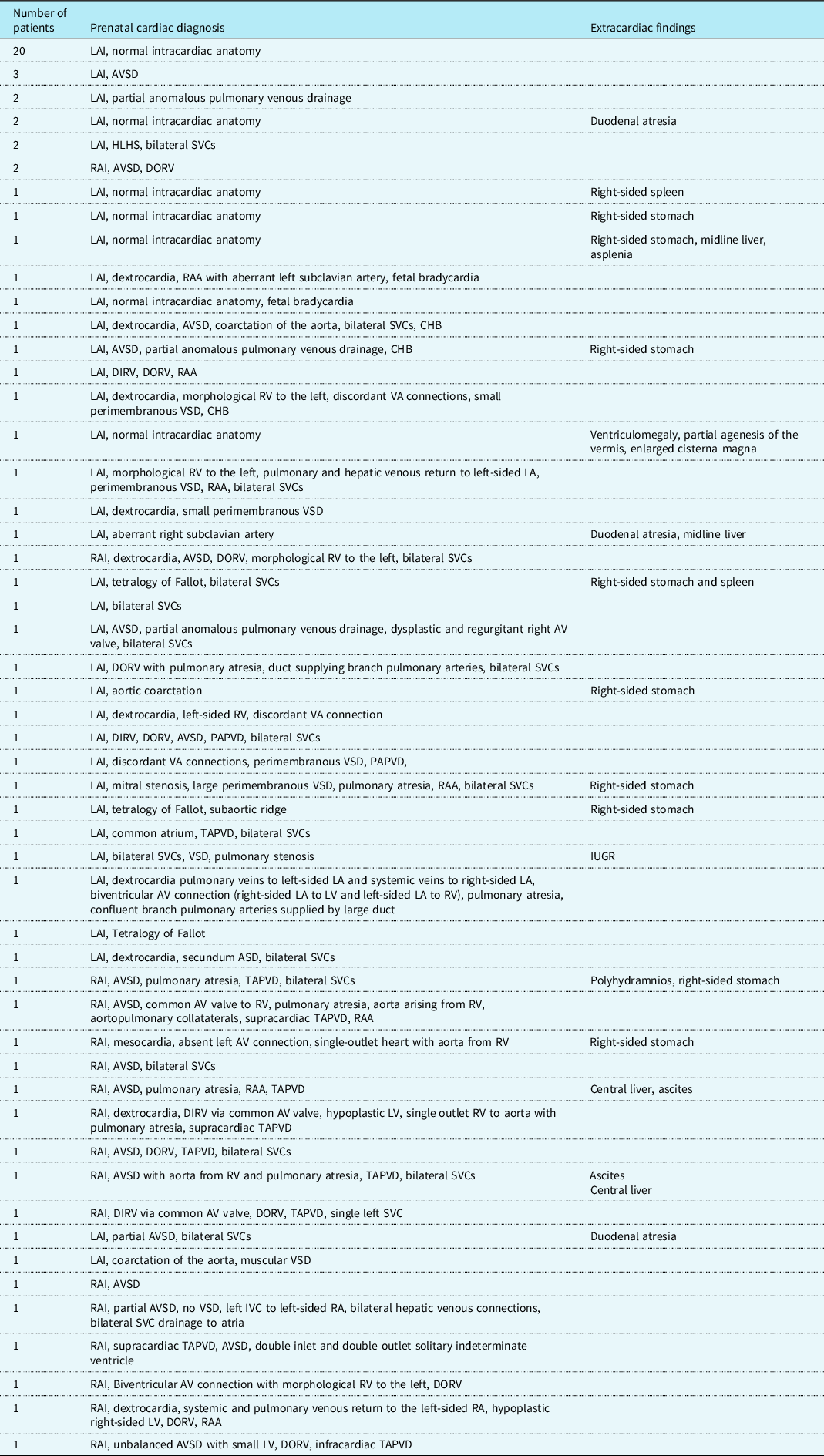
A total of 247 patients with the diagnosis of RAI or LAI were identified. Of these, 182 patients were included in this study and constituted our cohort. Sixty-five patients were excluded from the study due to insufficient information in medical notes (n = 45), patients being born before 1971 (n = 13), or the diagnosis of isomerism was unclear (n = 7). The oldest patient was born in 1971 and the youngest in 2015. A significant proportion of our cohort, 42.3% (77/182) presented due to abnormal findings in prenatal screening. The cardiac fetal scan diagnosis and non-cardiac comorbidities are presented in Table 1.
Fetal cardiac scan findings and non-cardiac comorbidities

ASD = atrial septal defect; AV = atrioventricular; AVSD = Atrioventricular septal defect; CHB = complete heart block; CS = Coronary sinus; DIRV = Double inlet right ventricle; DORV = Double outlet right ventricle; HLHS = hypoplastic left heart syndrome; IUGR = Intrauterine growth restriction; IVC = Inferior vena cava; LA = left atrium; LAI = left atrial isomerism; LV = left ventricle;PAPVD = Partial anomalous pulmonary venous drainage; RA = right atrium; RAA = right aortic arch; RAI = right atrial isomerism; RV = right ventricle; SVC = Superior Vena Cava; TAPVD = total anomalous pulmonary venous drainage; VA = ventriculoarterial; VSD = ventricular septal defect.
Letters and appropriate questionnaires were posted to patients that were alive and under 18 years old living in the United Kingdom (n = 77). A total of 45 (58%) families replied. Their answers were in agreement with the information obtained from the medical notes in all but one case, where the child had surgery for duodenal atresia and malrotation, which was not reported in the cardiac records.
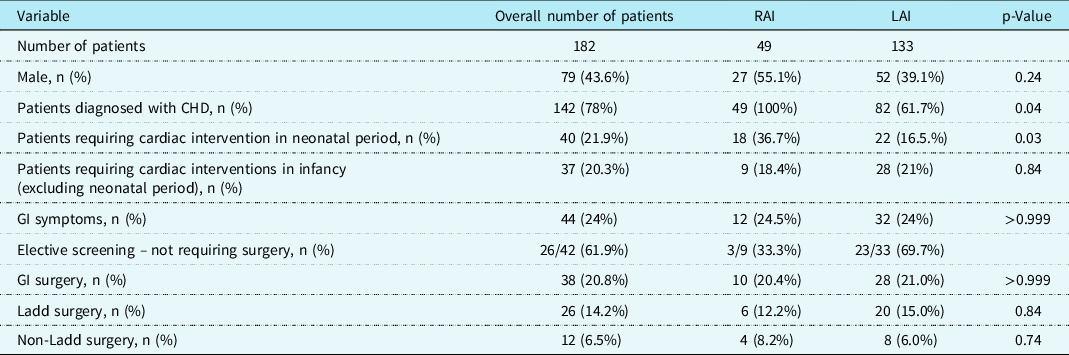
Of the 182 cases, 133 patients had LAI (73.0%) and 49 had RAI (26.9%). CHD was present in all cases with RAI, compared to 61.7% of cases with LAI.
Gastrointestinal symptoms
Abdominal symptoms were not consistently documented in the records that go back to approximately a 50-year time span. Symptoms were recorded in 24.2% of patients (44/182). In the majority (29/44, 65.9%), symptoms developed during the first year of life. Four cases of duodenal atresia were suspected prenatally due to symptomatic polyhydramnios. The diagnosis was confirmed postnatally.
Gastrointestinal investigations
Abdominal investigations to rule out rotational abnormalities were carried out in 42 of 182 (23%) patients: 29 had an upper gastrointestinal contrast study and 13 underwent abdominal ultrasound. Twenty-two symptomatic patients were investigated: 12 had malrotation, but in 2 cases, surgery was not performed as patients died due to associated CHD. In eight patients, malrotation was excluded; however, two did have surgery due to persistent symptoms. Two additional patients had surgery, but the results of the investigations were not recorded. Of the 20 asymptomatic patients that were investigated, none was found to have malrotation.
Surgery (gastrointestinal)
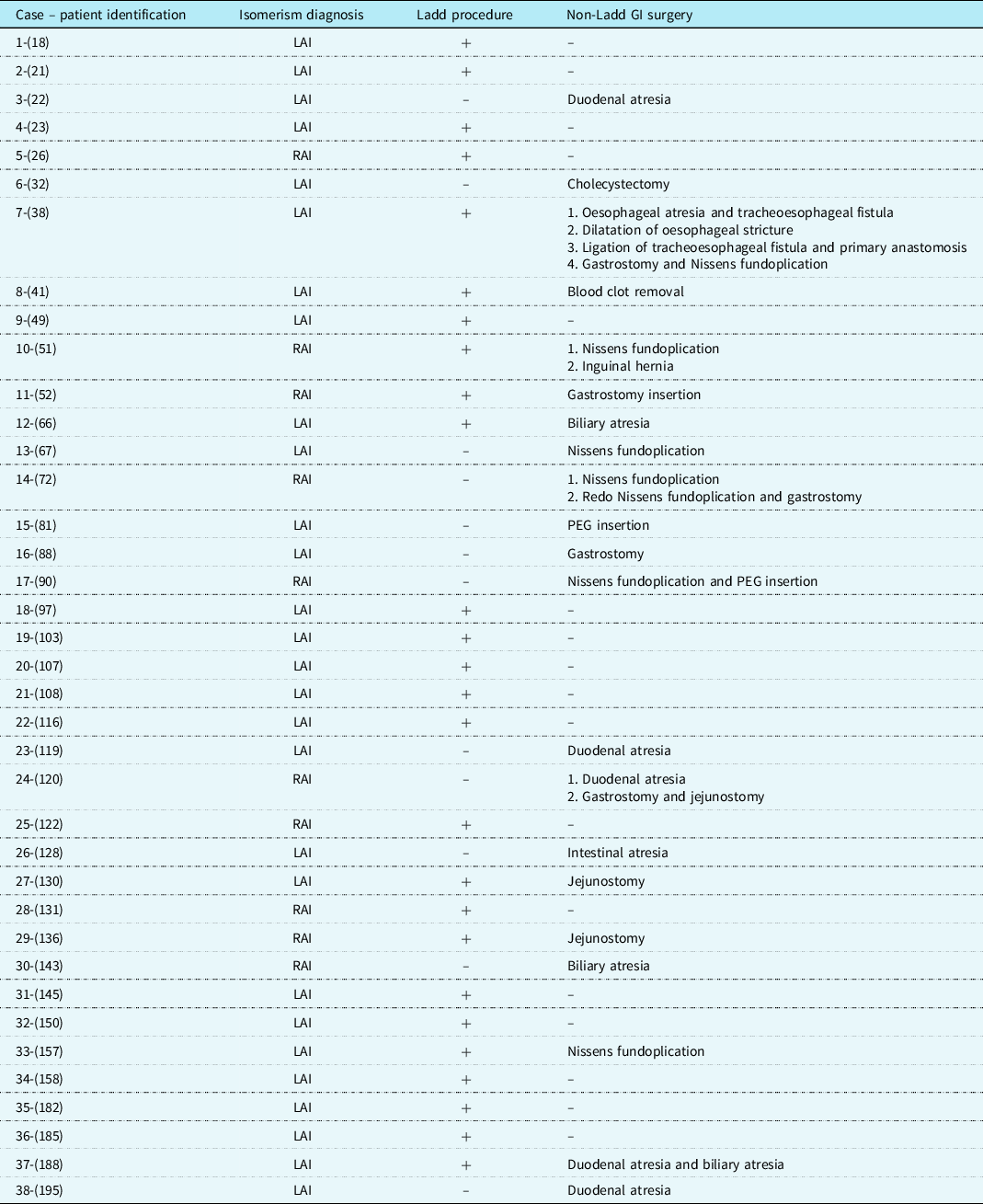
From our total cohort, 38 patients (20.8%) had abdominal surgery, 28 of the 133 cases of LAI (21%) and 10 of the 49 patients with RAI (20.4%) (Tables 2 and 3). Thirteen presented with vomiting, which was bilious in two. Four cases presented antenatally with suspected diagnosis of duodenal atresia and were all postnatally confirmed and underwent successful surgery in the first few days of life. For the remaining surgical cases, no relevant symptomatology was reported in the cardiac notes. Of all surgical cases, 17 (44.7%) underwent the Ladd procedure only; nine (23.7%) had both Ladd and non-Ladd abdominal surgeries and 12 (31.5%) had non-Ladd surgery only (Table 2 and 3).
Demographic data and information related to heterotaxy, gastrointestinal symptoms, investigations, and surgery
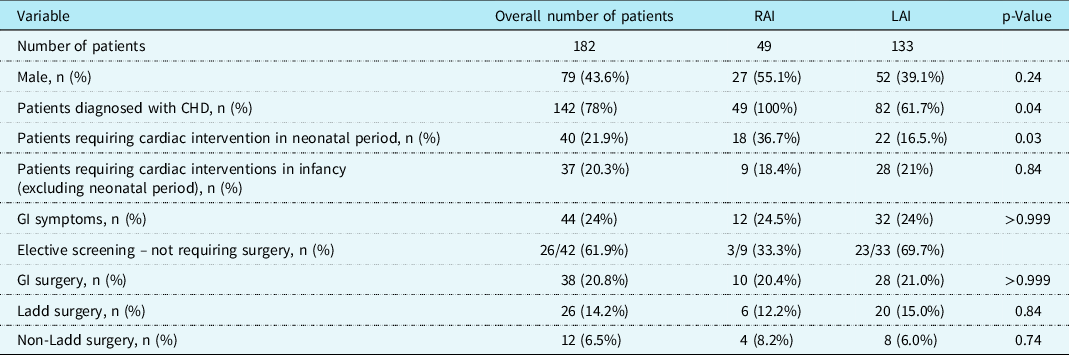
GI = gastrointestinal; LAI = left atrial isomerism; n = number; RAI = right atrial isomerism.
Data regarding detailed description of the abdominal surgeries performed in right and left isomerism patients
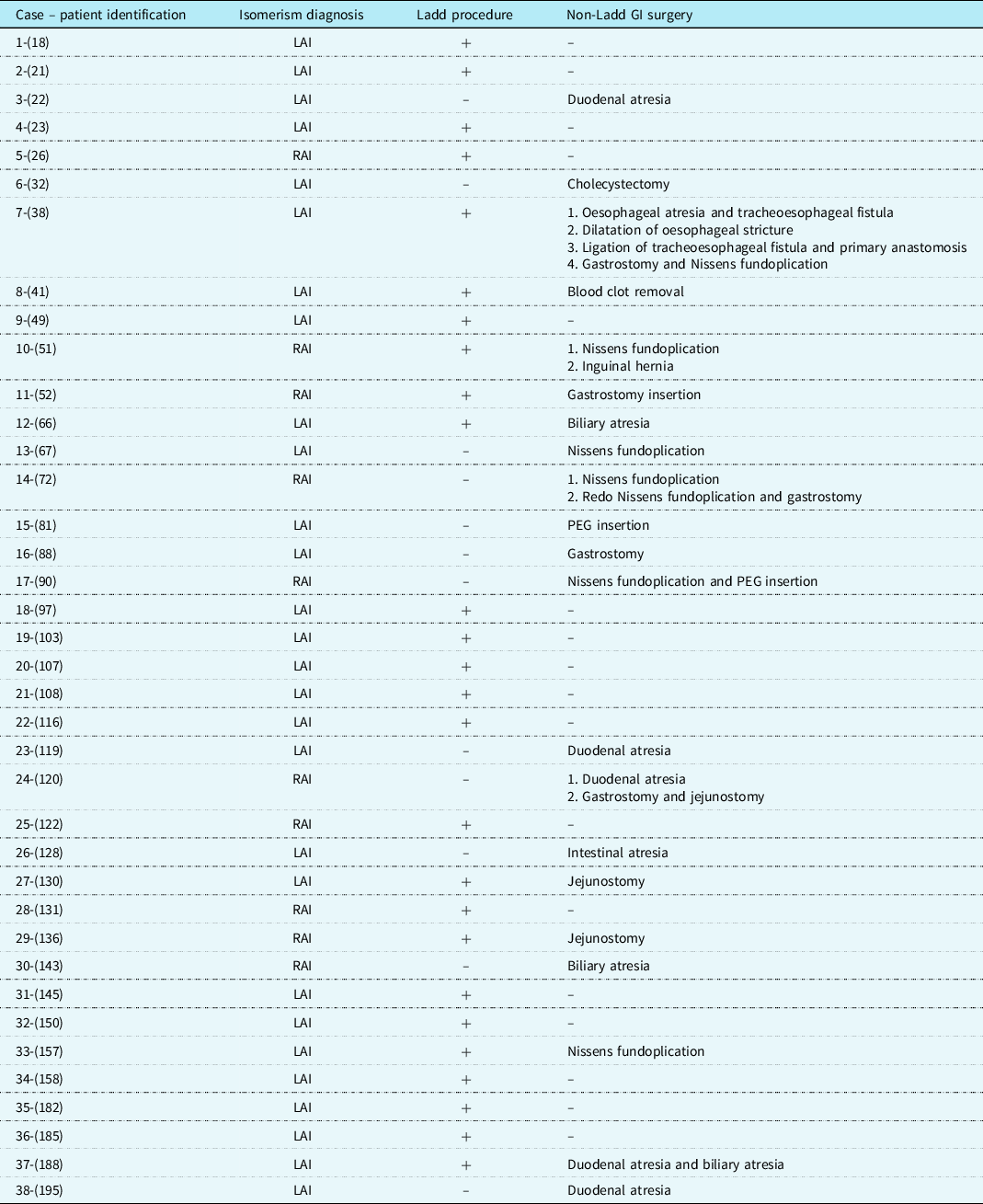
GI = gastrointestinal; LAI = left atrial isomerism; PEG = percutaneous endoscopic gastrostomy; RAI = right atrial isomerism; + = yes; – = no.
A total of 27 non-Ladd surgical procedures were performed in 21 patients. Nine had duodenal or intestinal atresia, six required gastrostomy insertion or gastropexy, six had Nissen’s fundoplication, and four procedures were performed to treat biliary atresia and gall bladder pathology.
Follow up and outcome (Kaplan-Meier survival curves)
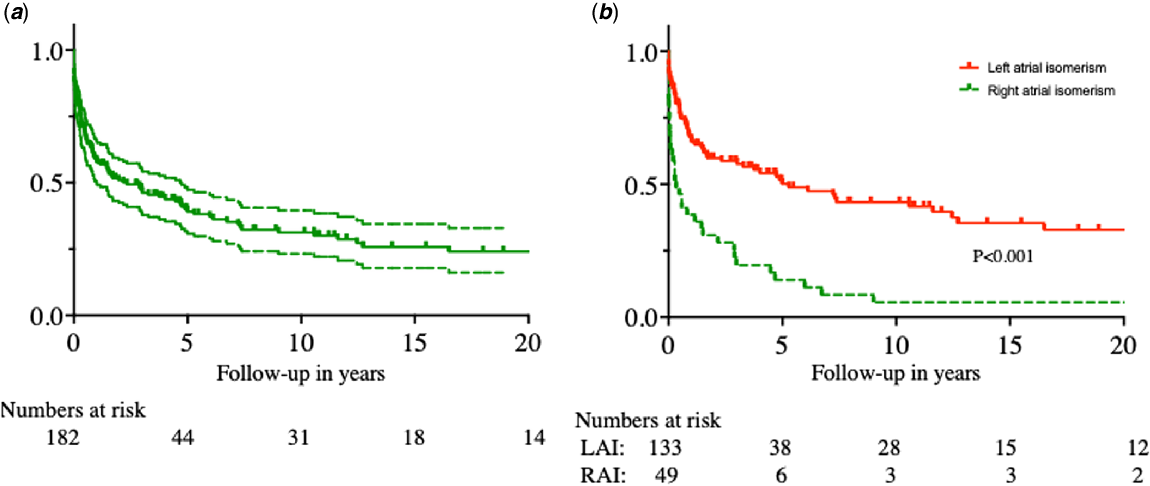
Of the initial cohort, 149 patients were alive. The median follow-up time was 8.9 years (interquartile range = 2.74–21.7). The median survival for patients without the need for cardiac intervention was 0.76 years, (interquartile range = 0.05–4.7). Figure 1a and b are Kaplan–Meier curves, showing freedom from cardiac intervention for the whole cohort and comparison between RAI and LAI, respectively. Ten-year freedom from cardiac surgery was 31% (95% CI = 23–39%) for the whole cohort, for RAI 6% (95% CI = 1–16%), and for LAI 43% (95% CI = 33–53%), p < 0.0001.
(a) Kaplan–Meier curve, showing freedom from cardiac intervention for the whole cohort. (b) Kaplan–Meier curve, comparing freedom from cardiac intervention for RAI versus LAI.

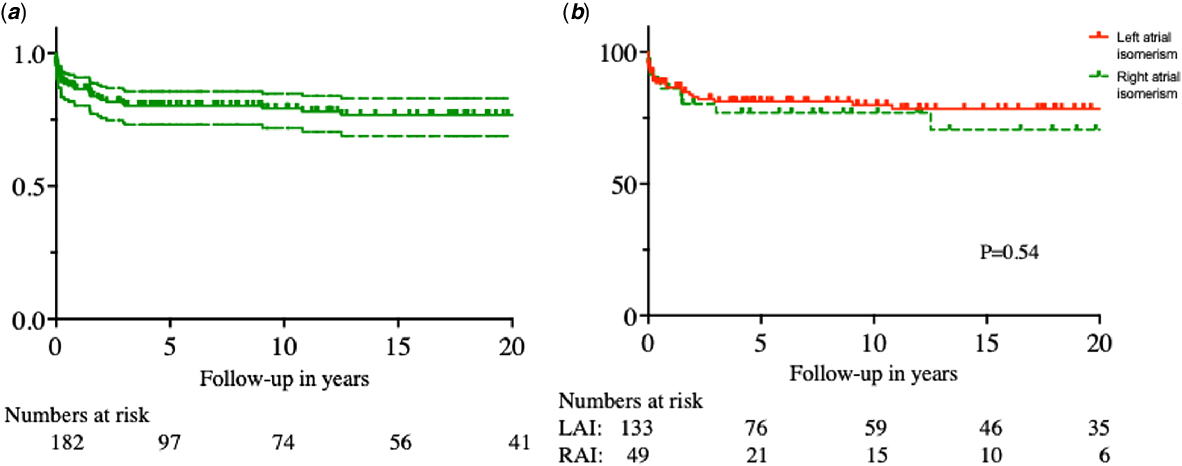
Figure 2a and b represent Kaplan–Meier curves for freedom from any gastrointestinal surgery for the whole cohort and comparison of RAI and LAI cohorts, respectively. Freedom from any gastrointestinal surgery for the whole cohort at 1 year was 87% (95% CI = 80–91%), for RAI 86% (95% CI = 76–96%) and for LAI 87% (95% CI = 81–92%), p = 0.54. Freedom at 10 years was 79% (95% CI = 72–85%) for all patients, and 77% (95% CI = 64–90%) and 80% (95% CI = 73–87%) for RAI and LAI respectively, p = 0.54. At 20 years, overall freedom from any gastrointestinal surgery was 77% (95% CI = 69–83%) for all patients, and 71% (95% CI = 54–89%) and 79% (95% CI = 71–87%) for RAI and LAI respectively, p = 0.54.
( a ) Kaplan–Meier curve, showing freedom from any GI surgery for the whole cohort. ( b ) Kaplan–Meier curve, comparing freedom from any GI surgery for RAI versus LAI. GI: gastrointestinal.

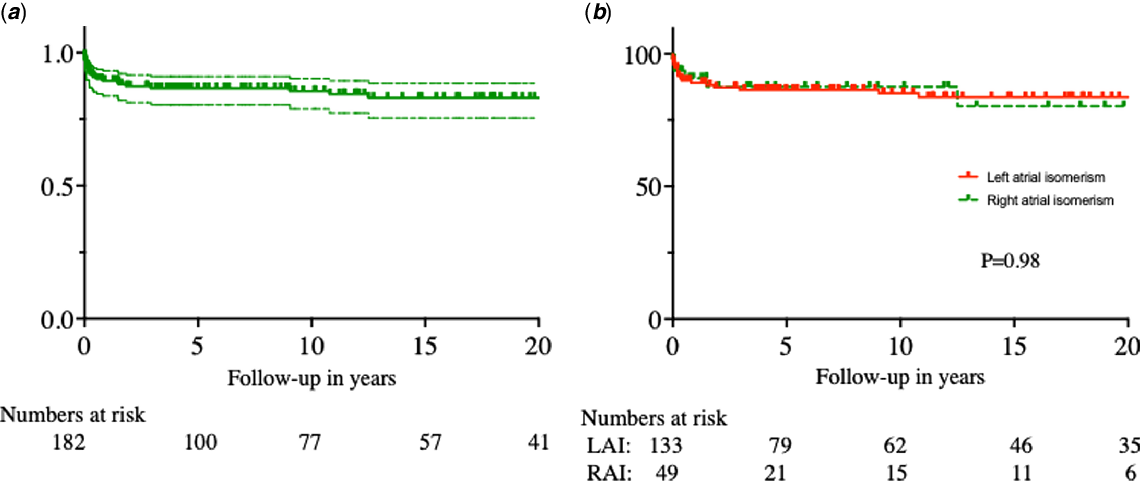
Figure 3a and b show freedom from Ladd procedure for the whole heterotaxy syndrome population and comparison of RAI and LAI cohorts, respectively. Freedom from Ladd procedure for the whole cohort at 1 year was 89% (95% CI = 84–93%), for RAI was 91% (95% CI = 77–96%), and for LAI was 89% (95% CI = 82–93%), p = 0.98. Overall freedom from Ladd procedure at 10 years was 86% (95% CI = 79–90%), for RAI 87% (95% CI = 72–94%), and for LAI 85% (95% CI = 77–90%). At 20 years freedom from Ladd procedure was overall 83% (95% CI = 78–91%) for the whole cohort, for RAI 80% (95% CI = 57–92%) and for LAI 83% (95% CI = 76–89%), p = 0.98.
( a ) Kaplan–Meier curve, showing freedom from Ladd surgery for the whole cohort. ( b ) Kaplan–Meier curve, comparing freedom from Ladd surgery for RAI versus LAI.

Discussion
Our study comprises to date the largest series of heterotaxy syndrome patients from cardiology hospital databases, exploring combined cardiac and gastrointestinal outcomes. The medium-term gastrointestinal-related outcome for patients with heterotaxy syndrome is encouraging. In our series, approximately 20% required gastrointestinal surgery due to symptoms. Freedom from any gastrointestinal surgery at 10 years was almost 80% reflecting low impact on outcome. This information is useful to guide parental counselling following antenatal diagnosis of heterotaxy syndrome, especially because cases of LAI with no associated major CHD are increasingly identified prenatally. Reference D’Emidio and Carvalho18 Our results indicate the spectrum of gastrointestinal morbidity. We have shown that among operated cases, the Ladd procedure for classic malrotation was required in approximately 2/3 of cases, whereas non-Ladd interventions were performed in about half, including surgery for intestinal atresia in 43% of operated cases.
The mechanisms regulating abdominal lateralisation are complex and yet not fully understood. Rotation of the intestine in the embryo is a long process starting during the 5th week of gestation and continuing into infancy Reference McVay, Kokoska and Jackson14 and is defined by genetic and molecular factors. Reference Kloesel, DiNardo and Body19 The exact pathophysiological pathway that leads to the increased need for non-Ladd abdominal surgery and particularly for duodenal atresia in this patient group has not been elucidated yet, although there have been previous reports. Reference McVay, Kokoska and Jackson14 The continuum of the embryological intestinal rotation has been elaborately described and gives insight into the mechanical aspects of the spectrum of the intestinal rotational abnormality. It can be presented as movement of two leading loops, the duodenojejunal and the cecocolic loop, around the superior mesenteric artery through an arc of 270 degrees in a counterclockwvise direction. Reference Snyder and Chaffin20 The artery runs at right angles with the posterior wall and is to be considered the axis of rotation. The duodenojejunal loop starts superior to the superior mesenteric artery and comes to lie to the left of the artery. The cecocolic loop starts inferior to the artery, lying on the right of the artery. Any disruption in the process of rotation tends to prevent attachment of the mesentery (fixation) of the small and large bowel, resulting in mobile intestine and predisposing to volvulus. Reference Snyder and Chaffin20 Abnormalities due to the failure of rotation and/or fixation can occur at any phase of the above-described process and may involve only a part or all of the mid-gut. This leads to several variations of malrotation and/or malfixation and accounts for the spectrum of clinical presentations varying in severity from asymptomatic malrotation to complete non-rotation, namely atresia at multiple intestinal levels.
We found no significant difference in gastrointestinal comorbidity between cases of RAI and LAI. This is in agreement with Lim et al. Reference Lim, McCrindle and Smallhorn6 Nevertheless, Hill et al, Reference Hill, Heiss and Mittal15 showed that malrotation was seen more often in RAI than LAI among patients who underwent abdominal exploration. The difference could be due to the smaller size cohort in their study (n = 38) or different characteristics of the populations studied.
The overall better cardiac outcome in LAI compared to RAI is well known. Reference Lim, McCrindle and Smallhorn6,Reference Escobar-Diaz, Friedman and Salem21,Reference Serraf, Bensari and Houyel22 In accordance with this, our 10-year freedom from cardiac surgery was 31%, with striking difference between RAI and LAI (6% versus 43%, p < 0.0001). This also highlights the need to better understand the risk faced by LAI patients related to potential gastrointestinal complications. Reference Pepes, Zidere and Allan23
Although the existing literature comprises several articles regarding the outcome of heterotaxy syndrome patients, there is controversial quantification of the impact of gastrointestinal abnormalities. Escobar-Diaz et al offers a comprehensive study on the outcome of patients diagnosed prenatally, and reports increased hazard ratio for postnatal death when extracardiac anomalies (gastrointestinal anomalies, genetic defects, Central Nervous System anomalies, and others) are present, with no subgroup analysis regarding gastrointestinal morbidity. Reference Escobar-Diaz, Friedman and Salem21 In a univariate analysis and in the multi-variate analysis model excluding the variable of the birth weight from Gilljam et al, biliary atresia and gastrointestinal abnormalities were associated with increased mortality. Reference Gilljam, Mccrindle, Smallhorn, Williams and Freedom24 This is not supported by other studies. Reference Lim, McCrindle and Smallhorn6,Reference White, Dean, McGahren, Gangemi and Vergales25
Our study contributes to current literature. It comprised a larger patient cohort, with a longer follow-up time and included questionnaires to families along with the retrospective review of patients’ records. We sought to elaborate on the impact of gastrointestinal disease on morbidity and mortality, offering an overview of the symptomatology and investigations recorded, the gastrointestinal procedures undertaken, and event-free survival from cardiac and gastrointestinal surgery during an average period of 10 years (a span of 2.74–21.7 years) in the LAI and RAI patient cohort.
Gastrointestinal management in heterotaxy syndrome has been controversial, Reference Yu, Thiagarajan, Laussen, Laussen, Jaksic and Weldon5,Reference D’Emidio and Carvalho18,Reference Escobar-Diaz, Friedman and Salem21 with no consensus concerning screening asymptomatic patients Reference Yu, Thiagarajan, Laussen, Laussen, Jaksic and Weldon5,Reference Graziano, Islam and Dasgupta12,Reference Hill, Heiss and Mittal15,Reference White, Dean, McGahren, Gangemi and Vergales25,Reference Papillon, Goodhue and Zmora26 or operating asymptomatic malrotation. Reference Salavitabar, Anderson, Aspelund, Starc and Lai4,Reference Yu, Thiagarajan, Laussen, Laussen, Jaksic and Weldon5,Reference Tashjian, Weeks, Brueckner and Touloukian11,Reference Graziano, Islam and Dasgupta12,Reference McVay, Kokoska and Jackson14,Reference Pockett, Dicken, Rebeyka, Ross and Ryerson27,Reference Choi, Borenstein, Hornberger and Langer28 Concerns exist about higher morbidity associated with the Ladd procedure in asymptomatic patients including post-operative small bowel obstruction, Reference Pockett, Dicken, Rebeyka, Ross and Ryerson27 which needs to be balanced against the risk of mid-gut volvulus in the unoperated malrotation. In our study group, there were no major gastrointestinal surgical complications, but no patient was treated prophylactically. There was no patient presenting with acute mid-gut volvulus. This is in agreement with a review by Elder and colleagues. Reference Elder, Metzger, Arrington, Rollins and Scaife29 However, in view of the design of this study, the optimal treatment strategy for gastrointestinal disease cannot be gauged from our series. A larger, prospective series is needed to determine an evidence-based treatment paradigm. Reference Tan, Khalil and Kakade30
Limitations of our study include the retrospective review of the paediatric cardiology notes, particularly due to occasional brief reports on abdominal symptomatology and complications after gastrointestinal procedures. This is likely due to changes over time in the understanding of the importance of the association between CHD and gastrointestinal abnormalities in the heterotaxy syndrome. Therefore, we only included cases where medical notes explicitly described symptoms of malrotation, namely vomiting, bilious vomiting, and abdominal symptoms, and were reported in the context of suspected malrotation. We tried to overcome this limitation, by including relevant questions on the symptomatology and on the surgical complications in the questionnaires we sent to parents. For patients who died from CHD in the neonatal period, autopsy findings to confirm or not the presence of malrotation are not available. Although death was mostly attributable to cardiac cause, it is impossible to completely exclude the stress of surgery as an impetus for abdominal decompensation.
Conclusions
In our cohort, one in five patients required abdominal surgery, the majority in their first year, similar to RAI and LAI. Between 1 and 20 years of follow-up, the impact of gastrointestinal abnormalities on outcome was minimal. Medium term survival was related to CHD.
Acknowledgements
The authors would like to thank Late Debbie Rolfe, Senior Regulatory Assurance Manager, St. George’s University Hospitals NHS Foundation Trust, for guidance with Integrated Research Application System and Research Governance. The authors also thank Medical Records Department, Royal Brompton & Harefield NHS Foundation Trust for assistance in locating and retrieving paper notes.
Financial support
Dr Fotaki was funded by the European Society of Cardiology – Young Researcher Grant. Dr Doughty was partially supported by the ‘Elliot Shinebourne Research Fund’, Royal Brompton & Harefield Hospitals Charity, Registered Charity number 1053584.
Conflicts of interest
None.
Ethical standards
The authors assert that all procedures contributing to this work comply with the ethical standards of the relevant national guidelines on human experimentation [UK Medicines for Human Use (Clinical Trials) Regulations] and with the Helsinki Declaration of 1975, as revised in 2008, and have been approved by the institutional National Research Ethics Committee (Reference: 15-SC-0504).