Implications
Our results indicated that retained placenta (RP) in dairy cows is preceded by alterations in multiple metabolites starting from 8 weeks before parturition. Identification of early metabolic alterations preceding RP are helpful in pinpointing potential causative agents involved in retention of fetal membranes and might be used to early identify cows at risk of developing RP. This information might help dairy scientists in the future to develop better management and preventive interventions for RP in dairy cows.
Introduction
Retained placenta is a pathological condition defined as failure to expel fetal membranes within 24 h after parturition. During the last few decades many hypotheses have been proposed and a great number of studies have been conducted in order to understand the etiological factors and pathobiology of RP. In addition, a number of blood biomarkers have been proposed as indicators of risk of RP in dairy cows.
Metabolomics is a fairly new science and together with the other omics technologies constitutes one of the building blocks of systems biology (Ametaj, Reference Ametaj2015). Previously we reported that several blood metabolic alterations occurred in dairy cows before the onset of the clinical signs of multiple peripartal diseases (Hailemariam et al. Reference Hailemariam, Mandal, Saleem, Dunn, Wishart and Ametaj2014a and Reference Hailemariam, Mandal, Saleem, Dunn, Wishart and Ametaj2014b). Metabolomics investigations in regards to identification of screening biomarkers for risk of developing RP have not been reported yet. In a recent companion article, we showed that several proinflammatory cytokines including tumor necrosis factor (TNF), interleukin (IL) -1 and IL-6 as well as an acute-phase protein serum amyloid A (SAA) were higher in dairy cows before occurrence of RP starting from −8 weeks before disease incidence (Dervishi et al., Reference Dervishi, Zhang, Hailemariam, Dunn and Ametaj2016). We hypothesized that retention of fetal membranes might be preceded and associated with multiple alterations in various metabolic pathways related to amino acid (AA), lipid and carbohydrate metabolism that can be used to early identify cows at risk of developing RP as well as in better understanding the etiopathology and pathophysiological processes involved in retention of fetal membranes. Such information might help dairy scientists in the future to design better management and preventive practices for RP in dairy cows. Therefore, in the present study we employed a targeted quantitative metabolomics approach using a combination of direct injection and tandem MS with a reverse-phase liquid chromatography and tandem MS to detect metabolite signatures during the transition period in cows that expelled their fetal membranes normally and those that retained their fetal membranes. More specifically, we aimed at identifying alterations in the concentrations of AAs, acylcarnitines (ACs), biogenic amines (BAs), glycerophospholipids, sphingolipids (SM) and hexose (sugars) starting at −8 and −4 weeks before the expected day of parturition, during the week of RP, and at +4 and +8 weeks after diagnosis of RP in Holstein dairy cows. Moreover, in the present study we intended to identify serum biomarkers that can be used in the future to predict the risk of RP in transition dairy cows.
Material and methods
This study was part of a larger project designed to study the pathobiology of multiple diseases of transition dairy cows and identify potential predictive biomarkers of risk of periparturient diseases. All experimental procedures were approved by the University of Alberta Animal Policy and Welfare Committee for Livestock, and animals were cared for in accordance with the guidelines of the Canadian Council on Animal Care (1993). The metabolomics analyses were performed at the Metabolomics Innovation Centre, University of Alberta, Edmonton, AB, Canada.
The experimental procedures, management of the animals’ diet and sample details for each group are described in detail in Dervishi et al. (Reference Dervishi, Zhang, Hailemariam, Dunn and Ametaj2016). Briefly, 100 pregnant Holstein dairy cows, at the Dairy Research and Technology Centre, University of Alberta (Edmonton, AB, Canada), were used in a longitudinal study. The total experimental period for each cow was 17 weeks, starting from −8 weeks before the expected day of parturition until +8 weeks postpartum. Six pregnant multiparous Holstein dairy cows that were diagnosed with RP and 20 healthy control cows (CON) that were similar in parity (the mean parity of CON group is 3.2±0.3 and the mean parity of RP group is 3.1±0.3), age and body condition score (BCS; the mean BCS for both groups was 3.17) were selected. Healthy cows expelled the placenta within 12 h. Retained placenta (RP) cows had RP for 1 to 3 weeks. Specifically, four cows had RP for 1 week and two cows had RP for 2 weeks (11 to 17 days). Neither healthy nor RP cows were treated for other diseases. When cows were diagnosed with RP they were treated with Tetrabol (Vetoquinol N.-A. Inc., Lavatrie, Quebec, Canada) in the uterine cavity, according to the veterinary protocol. Blood samples were obtained from the coccygeal vein once per week at 0700 h before the morning feeding at −8 and −4 weeks before parturition, during the week of RP, and at +4 and +8 weeks postpartum.
Metabolomic analysis
Extended details about the protocols adopted for metabolomics analyses are reported in Supplementary Material S1. Briefly, to determine concentrations of ACs, BAs, glycerophospholipids, SMs, AAs and hexose in the serum samples, a targeted quantitative metabolomics approach was applied using a combination of direct injection and tandem MS with a reverse-phase liquid chromatography and tandem MS using AbsoluteIDQ 180 kit (BIOCRATES Life Science AG, Innsbruck, Austria).
Statistical analysis
Univariate analysis of data was performed using Wilcoxon–Mann–Whitney (rank sum) test provided by R (Version 3.0.3, R Development Core Team, 2008). All metabolomic data were analyzed using the MetaboAnalyst software. Metabolites that were frequently (>20%) below the limit of detection or with at least 20% missing values were removed from consideration. Statistical significance was declared when P<0.05. Extended details about the statistical analysis adopted for univariate and multivariate analyses are reported in Supplementary Material S1.
Results
Metabolic alterations before disease diagnosis
Dry matter intake, milk production, temperature, BCS, milk composition, lactate, non-esterified fatty acid (NEFA), β-hydroxybutyric acid (BHBA), IL-1, IL-6, TNFα, haptoglobin and SAA were measured for the same cows and have been published in a companion article (Dervishi et al., Reference Dervishi, Zhang, Hailemariam, Dunn and Ametaj2016). Dry matter intake and milk production were significantly lower in RP cows when compared with healthy cows.
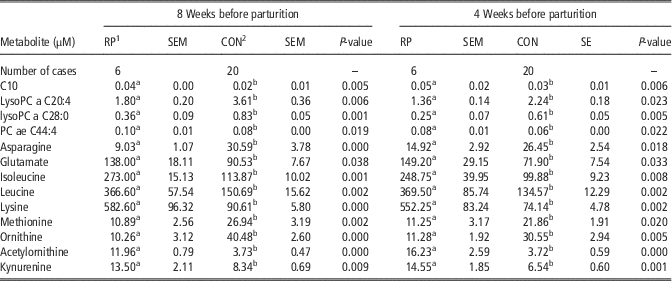
The total number of metabolites that were identified and quantified in the serum was 128. Results of univariate analysis indicated that there were 28 and 19 altered metabolites at −8 and −4 weeks prepartum between the two groups. The concentration of metabolites that were significantly altered at 4 and 8 weeks before disease diagnosis are shown in Table 1. Concentration of metabolites that were altered only at 4 or 8 weeks before parturition are shown in Supplementary Table S1. Specifically, AC (C10), phosphatidylcholines (PC) (PC aa C30:2 and PC ae C44:4), SM (SM (OH) C24:1 and SM C26:0), AAs (Arg, Asn, Glu, Ile, Leu, Lys), BAs (acetylornithine and kynurenine (Kyn)) were higher, whereas LysoPCs a C18:2, C20:3, C20:4, C28:0 and C28:1, PCs aa C34:2, C34:3, C36:4, 36:5 and PCs ae C32:1 and C34:1, sphingolipid SM C20:2, AAs (Asn, Met, Orn and Trp) were lower at −8 weeks before parturition in the serum of pre-RP cows (Table 1 and Supplementary Table S1).
Concentrations of significant serum metabolites (mean and SEM) in healthy control (CON) and retain placenta (RP) cows before parturition (−8 and −4 weeks)

1 Cows with RP.
2 Healthy cows.
a,bValues within a row with different superscripts differ significantly at P<0.05.
Similarly, at −4 weeks before occurrence of RP, AC (C10), LysoPC a C17:0, PC ae C44:4, AAs: Ala, Glu, Ile, Leu, Lys, Phe, and Ser and BAs (acetylornithine, total dimethylarginine, carnosine and Kyn) were lower. On the other hand, glycerophospholipids (LysoPC a C20:4 and C28:0) and AAs (Asn, Met and Orn) were lower in pre-RP cows (Table 1 and Supplementary Table S1).
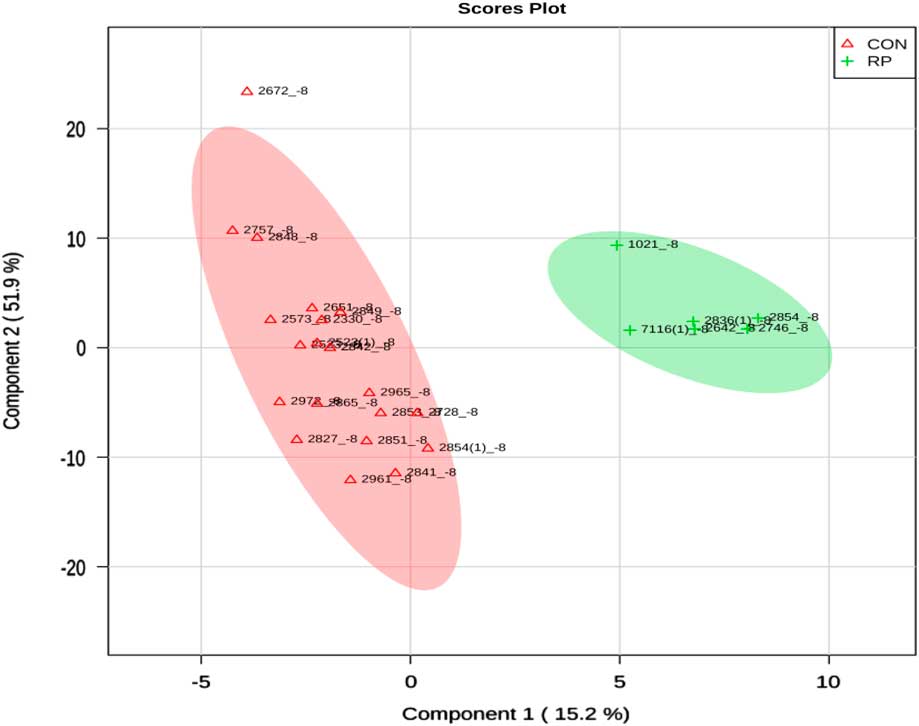
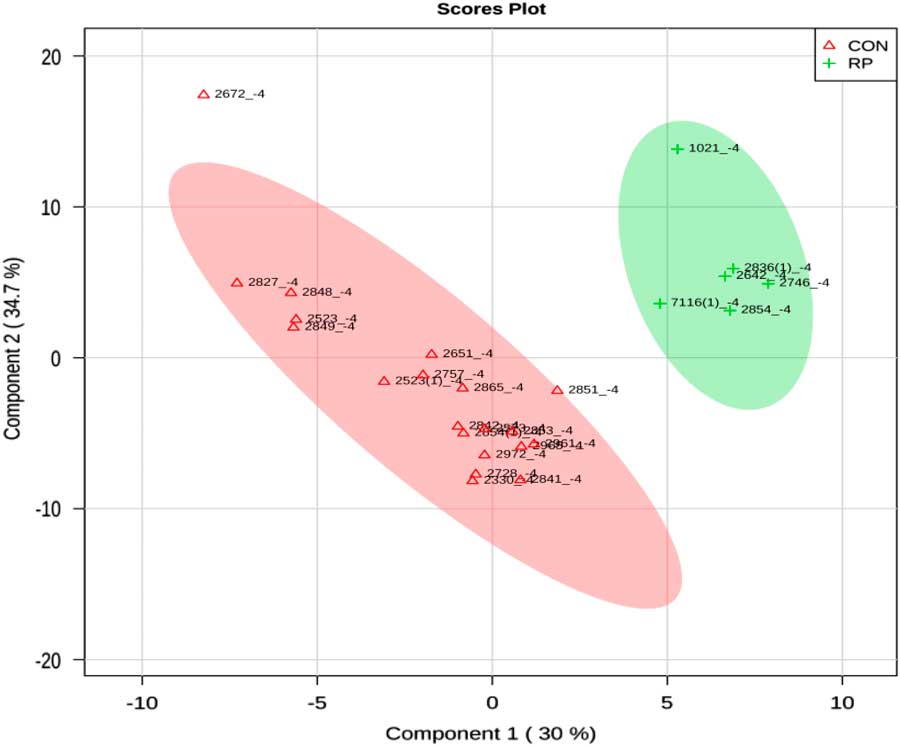
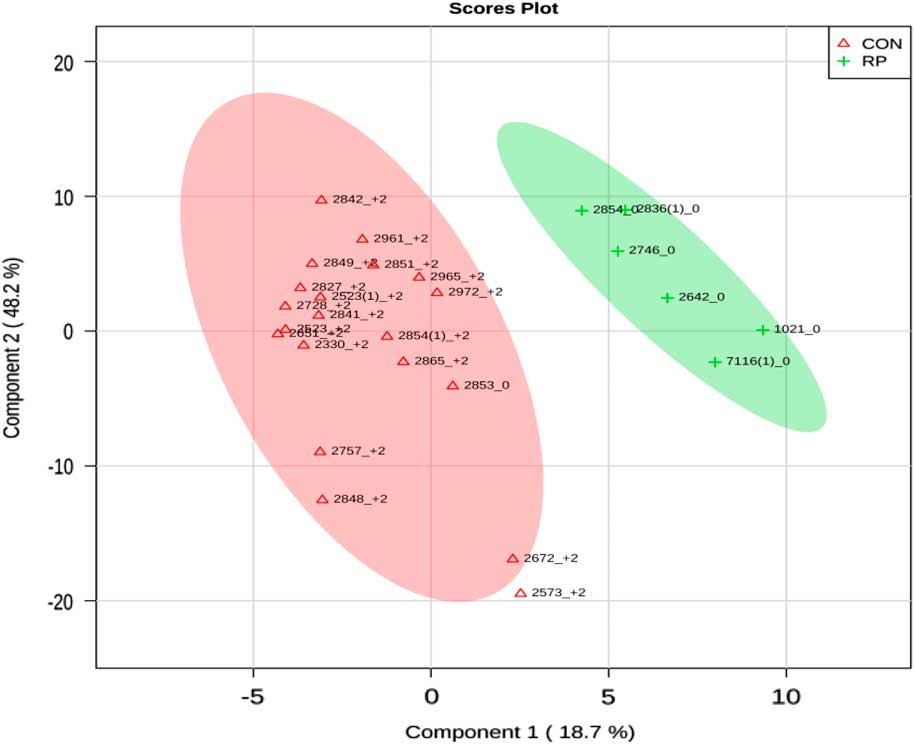
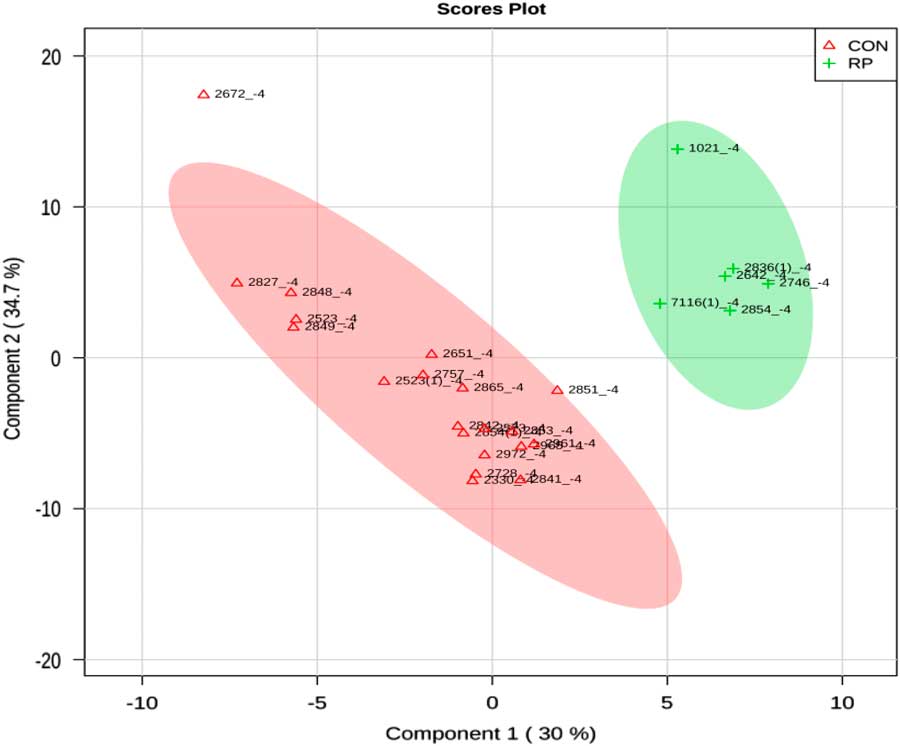
Multivariate analysis showed separation of pre-RP cows v. CON ones based on metabolites measured. Both score plots of principal component analysis (PCA; Supplementary Figure S1) and partial least squares-discriminant analysis (PLS-DA) had two separated clusters at −8 weeks before parturition (Figure 1). At −4 weeks, score plot of PCA did not show a clear separation between CON and RP cows (Supplementary Figure S2). However in PLS-DA it can be observed that healthy cows group together (Figure 2).
Partial least squares-discriminant analysis (permutation test: P<0.05) of 20 control (CON) and six retain placenta (RP) cows at −8 weeks before parturition showing two separated clusters for two groups.

Partial least squares-discriminant analysis (permutation test: P<0.05) of 20 control (CON) and six retain placenta (RP) cows at −4 weeks before parturition.
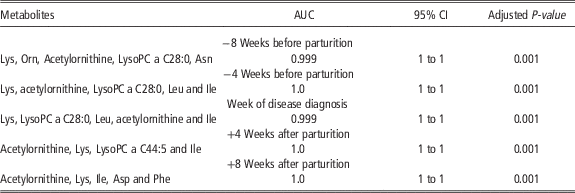
The top 15 important metabolites that separated the two groups at −8 weeks were Lys, Orn and acetylornithine which had the highest variable importance in the projection (VIP score 2.8) followed by LysoPC a C28:0, and Asn (Table 2). At −4 weeks Lys had the highest VIP score (3.0), followed by acetylornithine, LysoPC a C28:0, Leu and Ile (Table 2).
Biomarker profiles and the quality of the biomarker sets using receiver-operator characteristic curves

AUC=Area under the curve; CI=confidence interval.
A receiver-operator characteristic (ROC) curve plot results with the performance of the top five metabolites at −8 weeks (Lys, Orn, acetylornithine, LysoPC a C28:0 and Asn) and −4 weeks (Lys, acetylornithine, LysoPC a C28:0, Leu and Ile) (empirical P=0.001) are summarized in Table 2. The AUC for the curves were 0.999 (95% CI, 1 to 1) at −8 weeks and 1.0 (95% CI, 1 to 1) at −4 weeks, which indicates that those serum metabolites could have a predictive value.
Metabolic alterations at the week of diagnosis of retained placenta
The greatest number of altered metabolites in this study was found during the week of diagnosis of RP, with a total of 40 metabolites. Cows with RP were characterized by higher concentration of ACs (C10, C2 and C3), PC aa C30:2, sphingolipids (SM (OH) C22:1, C22:2, C24:1 and SM C24:1, C26:0, C26:1), hexose, AAs (Arg, His, Ile, Leu, Lys, Phe and Ser) and BAs (acetylornithine, total dimethylarginine, carnosine, creatinine, Kyn and sarcosine). The RP cows showed lower concentrations of glycerophospholipids LysoPC a C18:2, C20:3, C20:4, C28:0, C28:1, PC aa C32:1, C34:2, C34:3, C36:5, C40:3 and PC ae C32:1, C36:0, and C36:3 when compared with healthy cows. In addition, Asn, Orn and Trp were also lower in RP cows when compared with healthy cows (Supplementary Table S2).
Both score plots of PCA (Supplementary Figure S3) and PLS-DA (Figure 3) had two separated clusters during the week of RP diagnosis. During the week of disease, Lys had the highest VIP score (2.8) followed by LysoPC a C28:0, Leu, acetylornithine, Ile, LysoPC a C20:4. A ROC curve plot results and the performance of the top 5 metabolites at the week of RP diagnosis (Lys, LysoPC a C28:0, Leu, acetylornithine and Ile are summarized in Table 2 (empirical P=0.001) with AUC for the curves at 0.999 (95% CI, 1 to 1).
Partial least squares-discriminant analysis (permutation test: P<0.05) of 20 control (CON) and six retain placenta (RP) cows at disease week.

Metabolic alterations after diagnosis of retained placenta
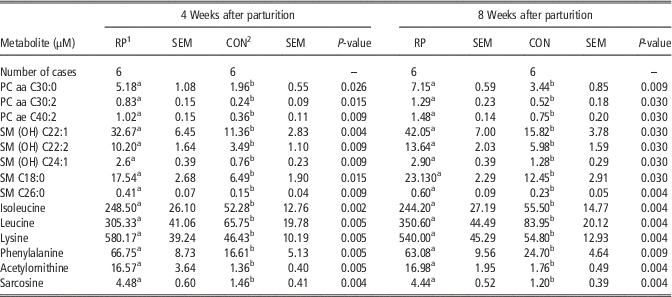
Results showed that disturbances in the metabolite concentrations in cows with RP continued even at +4 and +8 weeks after parturition. The concentration of metabolites that were significantly altered at both, +4 and +8 weeks after disease diagnosis are shown in Table 3 and the concentration of metabolites that were altered only at +4 or +8 weeks after parturition are shown in Supplementary Table S3. At +4 weeks the number of altered metabolites remained high (i.e. 34) and it was characterized by a general higher concentrations of AC (C4), glycerophospholipids including LysoPC a C16:0 and C18:0, PC aa C30:0, C30:2, C36:0, C40:2, C40:5, C40:6, C42:1, C42:2, C42:4, and PC ae C40:2, C44:4, C44:5; sphingolipids (SM OH C16:1, C22:1, C22:2, C24:1, and SM C16:0, C18:0, C18:1, C24:0, C24:1, and C26:0), AAs (His, Ile, Leu, Lys, Phe and Val), and BAs (acetylornithine, sarcosine and taurine).
Concentrations of significant serum metabolites (mean and SEM), in healthy control (CON) and retain placenta (RP) cows after parturition (+4 and +8 weeks)

1 Cows with RP
2 Healthy cows.
a,bValues within a row with different superscripts differ significantly at P<0.05.
The number of disturbed metabolites at +8 weeks after parturition was 18. Cows with RP still experienced higher concentrations of four glycerophospholipids (PC aa C30:0, C30:2 and PC ae C38:1 and C40:2), five sphingolipids (SM OH C22:1, C22:2, and C24:1, and SM C18:0 and C26:0), five AAs (Ile, Leu, Lys, Phe and Ser) and two BAs (acetylornithine and sarcosine), whereas Asp and Orn were lower in RP cows at +8 weeks after parturition. Details about concentrations of metabolites identified and measured are given in Supplementary Table S3.
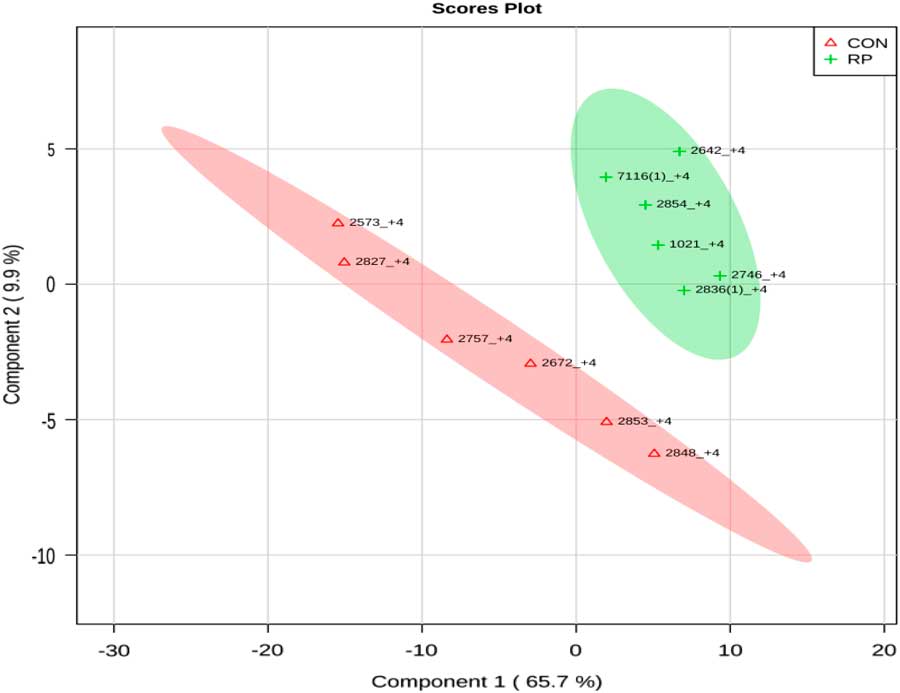
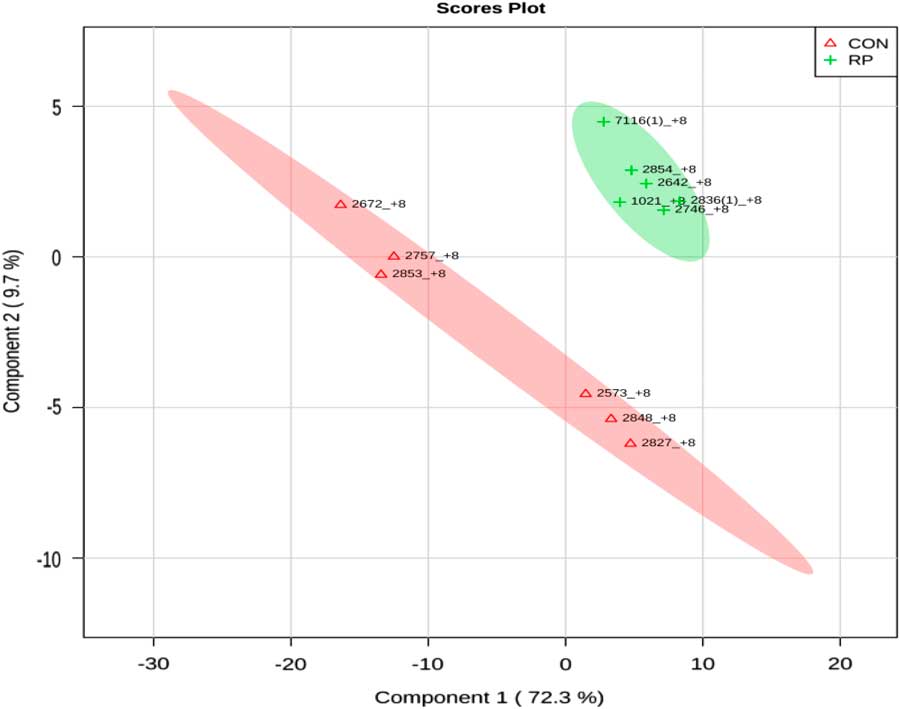
Multivariate analysis showed that post-RP cows when compared with CON ones at +4 and +8 weeks after parturition continued to have alterations in metabolite concentrations. At +4 weeks the score plot of PCA (Supplementary Figure S4) did not show a clear separation between CON and RP cows. However, PLS-DA enhanced the separation of the two groups (Figure 4). At +4 weeks postpartum, acetylornithine and Lys had the highest VIP score (1.7) followed by LysoPC a C44:5, Ile, Leu, PC aa C42:2 and C42:1, Phe, PC ae C40:2, sarcosine, SM C24:1 and C24:1, and PC ae C44:4. Both score plots of PCA (Supplementary Figure S5) and PLS-DA (Figure 5) had two separated clusters at +8 weeks after parturition. At +8 weeks postpartum acetylornithine and Lys had the highest VIP score (1.8), followed by Ile, Asp, Leu, Phe, SM C26:0, SM (OH) C22:2, Ser, Orn, SM (OH) C24:1, PC aa C30:0, SM (OH) C22:2, Met, and sarcosine.
Partial least squares-discriminant analysis (permutation test: P<0.05) of six control (CON) and six retain placenta (RP) cows at +4 weeks after parturition showing two separated clusters for two groups.

Partial least squares-discriminant analysis (permutation test: P<0.05) of six control (CON) and six retain placenta (RP) cows at +8 weeks after parturition showing two separated clusters for two groups.

A ROC curve plot results showing the performance of the top 4 metabolites at +4 weeks and top four metabolites +8 weeks postpartum are summarized in Table 2. The AUC for the curves were 1.0 (95% CI, 1 to 1; empirical P=0.001) at +4 weeks and 1.0 (95% CI, 1 to 1) at +8 weeks postpartum.
Finally, hierarchical analysis of metabolites was able to cluster and to classify correctly the serum samples within CON and RP group (Supplementary Figure S6). The heatmap shows the presence of two different clusters containing different metabolites. More specifically the first cluster groups the AAs Lys, Ile, Leu and acetylornithine. The concentration of these metabolites was higher in the serum of RP cows during all the experimental period. Meanwhile the second cluster grouped the metabolites LysoPC a C28:0, LysoPC a C20:3, LysoPC a C20:4, Orn, tryptophan and Asn, which were lower before parturition and at the disease diagnosis week.
Discussion
We hypothesized that multiple metabolite alterations would precede, associate and follow occurrence of RP in transition dairy cows. We used targeted metabolomics to screen for a total of 180 serum metabolites in 20 cows that normally expelled fetal membranes (CON) and six cows that developed RP. The screening of cows started at −8 weeks before parturition and ended by +8 weeks after calving, during five time points. Indeed, data confirmed that pre-RP, RP, and post-RP cows had multiple groups of metabolites that were found to be significantly altered before, during and after the incidence of RP. The main groups of metabolites altered were medium- and short-chain fatty acid ACs, several glycerophospholipids and sphingolipids, multiple AAs, and BAs. The results are discussed in detail below.
One of the metabolites that separated pre-RP cows and cows that expelled the placenta normally at −8, −4 weeks prepartum and during the week of RP was the medium-chain AC C10 (decanoylacylcarnitine). During the week of incidence of RP another two short-chain ACs C2 (acetylcarnitine) and C3 (propionylcarnitine) were higher during the week of diagnosis of RP, and C4 (butyrylcarnitine) increased at +4 weeks postpartum. Both short- and medium-chain ACs in the serum are indicative of defective β-oxidation of long-chain fatty acids in mitochondria (Sim et al., Reference Sim, Hammond and Wilcken2002; Wajner and Amaral, Reference Wajner and Amaral2015). Dysfunction of mitochondria has been related to endogenous and exogenous toxins (Shah and Iqbal, Reference Shah and Iqbal2010). Intriguingly, human subjects treated with lipopolysaccharide (LPS; 2 ng/kg) had higher concentrations of multiple short- and medium-chain ACs in blood (Kamisoglu et al., Reference Kamisoglu, Haimovich, Calvano, Coyle, Corbett, Langley, Kingsmore and Androulakis2015). Given the growing evidence for a potential role of bacterial endotoxins in the etiopathology of multiple periparturient diseases of dairy cows including RP (Eckel and Ametaj, Reference Eckel and Ametaj2016) it is speculated that bacterial endotoxins might have played a potential role in the elevation of ACs. The same cows in the experiment had higher proinflammatory cytokines and acute-phase proteins including IL-1, TNF, haptoglobin, and SAA at −8 and −4 weeks before parturition suggesting presence of an inflammatory factor in pre-RP and cows with retention of fetal membranes. In addition, we analyzed the correlations between ACs and BHBA, NEFA, SAA, haptoglobin, TNF, IL-1 and IL-6 reported in Dervishi et al. (Reference Dervishi, Zhang, Hailemariam, Dunn and Ametaj2016). Interestingly medium-chain AC C10 correlated negatively with concentrations of BHBA (r=−0.959; P<0.01), and with NEFA (−0.780; P<0.01) at −8 weeks before parturition. In addition, AC C10 strongly correlated with SAA concentrations at −4 weeks before parturition (r=0.98; P=0.01) suggesting that both SAA and ACs participate in inflammatory conditions, the first as anti-inflammatory and the second as proinflammatory (Rutkowsky et al., Reference Rutkowsky, Knotts, Ono-Moore, McCoin, Huang, Schneider, Singh, Adams and Hwang2014).
Moreover, previously we reported that repeated parenteral administration of LPS during the last two weeks of dry off period in transition dairy cows was associated with increased incidence of RP (Zebeli et al., Reference Zebeli, Sivaraman, Dunn and Ametaj2011). The source of serum endotoxins or other potential inflammatory triggers during the dry off period is not known yet and warrants further investigation.
Results of this study also showed that cows with RP had lower concentrations of several serum lysophosphatidylcholines starting at −8 and −4 weeks before parturition as well as at the week of diagnosis of RP. More specifically, cows with RP were characterized by a lower concentration in LysoPC a C18:2, C20:3, C20:4, C28:0 and C28:1 at −8 weeks before parturition and at the week of diagnosis of RP. Two lysophophatidylcholine (LPC) also were lowered at −4 weeks before calving including LysoPC a C20:4 and C28:0. We also found that at −4 weeks before parturition, LysoPC a C28:0 was correlated with concentrations of haptoglobin (r=0.68; P=0.02). In addition, LysoPC a 28:0 and LysoPC a 20:4 were negatively correlated with BHBA (r=−0.96 and −0.96, P<0.01; respectively) and NEFA (r=−0.804 and −0.773, P<0.01; respectively) at −8 weeks before disease diagnosis. This trend continued at −4 weeks and at the disease diagnosis week. Lysophosphatidylcholines derive from PC metabolism, in which a fatty acyl moiety has been removed from the C2 position of the glycerol group through the activity of phospholipase A2 producing free fatty acids and LPC. In the blood, LPC are bound to albumin or are part of lipoproteins especially LDL (Wiesner et al., Reference Wiesner, Leidl, Boettcher, Schmitz and Liebisch2009). Infection of mice with Gram-negative bacterium Acinetobacter baumanii was associated with increased concentrations of TNF and IL-6 and lower levels of LPCs in the serum. Intriguingly, parenteral administration of LPCs in rodents was able to protect them from induced endotoxemia or sepsis (Smani et al., Reference Smani, Domínguez-Herrera, Ibáñez-Martínez and Pachóna2015). Lysophosphatidylcholines have been reported to have stimulatory effects on a variety of immune cells including monocytes, macrophages, neutrophils, and T-lymphocytes (Li et al., Reference Li, Fang, Li, Kuo, Andrews, Nanayakkara, Johnson, Fu, Shan, Du, Hoffman, Yu, Eguchi, Madesh, Koch, Sun, Jiang, Wang and Yang2016). Our data further support our speculation of potential involvement of an unidentified inflammatory trigger, during the dry off period, in the pathophysiology of RP.
Another significant finding of this study was that pre-RP and RP cows had lower concentrations of multiple species of PCs in the serum at −8, −4 and RP weeks, respectively. Concentrations of serum PCs changed completely after calving with 12 and 4 species of PCs were higher at +4 weeks and +8 weeks after calving, respectively. Phosphatidylcholines belong to the class of glycerophospholipids that contain choline and two subclasses of lipid metabolites, PC diacyl (PC aa) and PC acyl-alkyl (PC ae). The dominant serum PC aa species in dairy cows in this study were C36:2, C34:2, C36:1 and C34:1, whereas the PC ae dominant species were C36:2, C34:3, C34:2 and C36:1. Phosphatidylcholine is an essential phospholipid and synthesized from choline pathway in most cells (Li and Vance, Reference Li and Vance2008). Intriguingly, choline deficiency has been implicated in the etiopathology of fatty liver in transition dairy cows. Supplementation of dairy cows with choline has lowered the amount of TG in the liver and eased the already developed fatty liver (Cooke et al., Reference Cooke, Silva Del Rio, Caraviello, Bertics, Ramos and Grummer2007). It is known that RP is highly associated with fatty liver (Oikawa and Katoh, Reference Oikawa and Katoh1997; Katoh, Reference Katoh2002). Lower serum PCs species during all the dry off sampling periods in the study and during RP week suggests impaired choline metabolism in pre-RP and RP cows. Choline deficiency has been associated with increased serum concentrations of TNF-α and liver injury in rats (Eastin et al., Reference Eastin, McClain, Lee, Bagby and Chawla1997). In this study rats provided with choline deficient diet were intravenously administered either saline or LPS. Administration of LPS in choline deficient diet rats was associated with a 280-fold increase in the circulatory TNF-α when compared to saline rats (Eastin et al., Reference Eastin, McClain, Lee, Bagby and Chawla1997). The fact that RP cows had higher concentrations of TNF and IL-1 during the −8 and −4 weeks before parturition might suggest that a combination of an impaired choline metabolism and an inflammatory trigger might have played a role in the pathomechanism of both RP and fatty liver.
Cows with RP were characterized by increased concentrations of SMs in the serum with 3, 6, 10 and 5 metabolites reaching significant difference during the −8 weeks prior to parturition, the week of RP, and at +4 and +8 weeks after parturition, respectively. Sphingomyelins are synthesized by the transfer of phosphorylcholine from PC to ceramide in a reaction catalyzed by sphingomyelin synthase. The dominant species of SM in the serum of both groups of cows was C16:0. Sphingomyelins are synthesized in the liver and are transported in the blood by all circulating lipoprotein particles (VLDL, LDL, and HDL) and are the second most important lipids after PC. It has been reported that during acute-phase response besides higher secretion of several acute-phase proteins, there is also an increased synthesis and release of sphingolipids including SM into systemic circulation (Memon et al., Reference Memon, Holleran, Moser, Seki, Uchida, Fuller, Shigenaga, Grunfeld and Feingold1998). Increased hepatic secretion of SM and ceramide during infection or inflammation is part of acute-phase response and innate immunity (Memon et al., Reference Memon, Holleran, Moser, Seki, Uchida, Fuller, Shigenaga, Grunfeld and Feingold1998). A wealth of studies has shown the important roles of SM-derived metabolites in the priming and inactivation of neutrophils and macrophages, in the chemotactic motility of various immune cells, differentiation of monocytes into macrophage or granulocyte lineages, regulation of apoptotic cell death, and survival of lymphocytes and macrophages, suggesting an important role of sphingolipids in the regulation of various aspects of immune functions (Olivera and Rivera, Reference Olivera and Rivera2005). Cows with RP in our study were characterized by higher serum concentrations of SAA, TNF and IL-1 (Dervishi et al., Reference Dervishi, Zhang, Hailemariam, Dunn and Ametaj2016) supporting our speculation that RP is preceded by an acute-phase response potentially related to a bacterial infection or endotoxins.
Three essential AAs including Lys, Ile, Leu, were higher in cows diagnosed with RP during all time points of this study. Intriguingly, the three most dominant AAs in the serum of RP cows were Lys, Leu and Gly, whereas in healthy cows were Glu, Gly and Val. Although Lys and Leu are the only purely ketogenic AAs we did not find evidence that these AAs were used for β-hydroxybutyrate production because concentrations of BHBA in the serum of RP were not different from those of CON cows during the entire study period, as reported previously (Dervishi et al., Reference Dervishi, Zhang, Hailemariam, Dunn and Ametaj2016). This suggests that these AAs were used for other purposes. In a recent article Iseri and Klasing (Reference Iseri and Klasing2014) reported a substantial increase in the amount of Lys going for synthesis of acute-phase proteins in response to Escherichia coli challenge in poultry. Indeed, an increase in the size of the liver (hypertrophy) during acute-phase response was reported. Then, adaptive immunity started utilizing significant quantities of Lys (Iseri and Klasing Reference Iseri and Klasing2014). The amount of Lys in B cells almost doubled 5 to 7 days after E. coli challenge (Iseri and Klasing Reference Iseri and Klasing2014). In heterophils the amount of Lys increased sixfold 18 h after the challenge. Moreover, the amount of Lys in splenic B cells increased by fivefold and tenfold at 1 and 5 days after the challenge. There are no data regarding Lys utilization by immune system in cattle, humans, or other animal species. Since pre-RP cows in our study had an activated acute-phase response during −8 and −4 weeks before parturition and at the week of diagnosis of disease (Dervishi et al., Reference Dervishi, Zhang, Hailemariam, Dunn and Ametaj2016) it is speculated that higher levels of Lys in the serum might support synthesis of acute-phase proteins and mounting of an immune response in those cows.
The other AA of interest for its higher concentration in RP cows was Arg. Arginine was higher in the serum of pre-RP and RP cows during the prepartum weeks (−8 and −4 weeks) and the week of its diagnosis. Arginine is known as the sole AA substrate for production of nitric oxide (NO) by all isoforms of nitric oxide synthase (Förstermann and Sessa, Reference Förstermann and Sessa2012). Nitric oxide is a key player of innate immunity for its antimicrobial activities. Arginine also supports polarization of macrophages to M1 type, which are proinflammatory in nature, produce NO and NO-derived peroxynitrite, and can lead to a Th1 microbicidal immune response (Mills et al., Reference Mills, Kincaid, Alt, Heilman and Hill2000). These data further support the hypothesis that activation of immunity precedes occurrence of RP. Therefore, the potential role of Arg in the pathomechanism of RP needs to be explored further.
Isoleucine and Leu were higher in the serum of RP cows at all time points studied. These two AAs are classified as branched-chain AAs. Isoleucine is both ketogenic and glucogenic, giving rise to acetyl CoA and propionyl CoA and Leu is a ketogenic AA, metabolized into acetyl CoA and acetoacetate (Bender, Reference Bender2012). Cow with RP were in a state of negative energy balance starting at −8 weeks before parturition until RP diagnosis week as suggested by lower DMI intake (Dervishi et al. Reference Dervishi, Zhang, Hailemariam, Dunn and Ametaj2016). Therefore, higher BCAAs might suggest that pre-RP cows had increased mobilization of muscle proteins starting at −8 weeks before parturition.
Of the eight BAs measured in the serum Kyn deserves a more detailed discussion, because of its reported role in regulation of immunity and overall health. Kynurenine was significantly higher in the serum of pre-RP cows during weeks −8 and −4 and at diagnosis week; however, no differences in Trp or Kyn between the two groups were observed at +4 and +8 weeks after parturition. Kynurenine and several other derivatives are all Trp catabolites. Tryptophan is one of the 10 essential AAs of cattle. Although it is one of the least abundant AA, Trp plays a considerable role in health and in disease given its roles in protein synthesis and the Kyn pathway (KP). The KP converts Trp into active catabolites, including Kyn, kynurenic acid, 3-hydroxy Kyn, picolinic acid, quinolinic acid and NAD. This process lowers concentrations of Trp in the serum, which is the case with pre-RP and RP cows in our study. The KP metabolites have been shown to suppress CD4+ and CD8+ T cell proliferation and induce apoptosis. Moreover, Trp catabolites induce death of Th1 cells but not Th2 cell clones, preventing a Th1-mediated response (Fallarino et al., Reference Fallarino, Grohmann, Vacca, Bianchi, Orabona, Spreca, Fioretti and Puccetti2002). In addition to T cells, Kyns also suppress natural killer cell function and induces B cell death (Frumento et al., Reference Frumento, Rotondo, Tonetti, Damonte, Benatti and Ferrara2002). It is intriguing to mention that in our study, at −4 weeks before parturition, Kyn was negatively correlated with haptoglobin concentration (r=−0.80; P=0.005). It is possible that higher Kyn in the serum of pre-RP and RP cows might contribute to suppression of their immune response and can partly explain the commonly reported finding of suppressed immunity in cows around calving.
Biogenic amines, acetylornithine, asymmetric dimethylarginine, total dimethylarginine, carnosine, creatinine and sarcosine were higher in RP cows especially during diagnosis week. Interestingly, cows with RP had higher concentrations of acetylornithine during all five time points studied reaching the highest concentrations after parturition. Specifically, acetylornithine was 3.2-, 4.4-, 5.0-, 12.0- and 9.6-fold higher in RP cows during −8, −4, week of RP, +4 and +8 weeks around calving. Results of VIP analysis and ROC curve demonstrated that acetylornithine was one of the top five metabolites responsible for separation of the two clusters and its relevance as possible predictive biomarkers for RP deserves further investigation in the future. Acetylornithine is an intermediate metabolite of Arg and Orn metabolism and it is interesting to point out that RP cows were characterized by a higher concentration in acetylornithine and a lower in ornithine concentration in almost all experimental time points. Ornithine plays a central role in the urea cycle. When AAs are broken down they generate ammonia which is toxic to the host. Liver metabolizes ammonia into urea which circulates through the blood stream to the kidneys and is eliminated via urine. Ornithine is transformed to l-arginine through urea cycle, assisting in detoxification process, and therefore contributes to liver health. In addition, ornithine is a precursor for the synthesis of polyamines like putrescine, spermine and spermidine, and for the synthesis of proline. Ornithine also can be converted to Arg as already discussed. Pre-RP cows in this study had an increase in Arg concentration at −8 weeks before parturition and at the week of disease diagnosis. The results suggest that pre-RP cows might direct conversion of Orn to Arg synthesis. More research with regards to the precise role of acetylornithine in transition dairy cows is warranted.
It is intriguing that pre-RP, RP and post-RP cows showed an increased concentration of Lys, Ile, Leu and acetylornithine during all experimental time points studied. Moreover, LysoPC a C20:4 and C28:0, Orn, and Asn were lower before parturition, and at the disease diagnosis week. In addition, those compounds are among the top five metabolites listed on the VIP-score graph and ROC curve. Previously our group reported that carnitine (C0), propionylcarnitine (C3) and LysoPC a C14:0 could be used as biomarkers for overall disease state of dairy cows at −4 weeks before the onset of multiple periparturient diseases (i.e. mastitis, metritis, RP and laminitis) (Hailemariam et al., Reference Hailemariam, Mandal, Saleem, Dunn, Wishart and Ametaj2014a).
In conclusion, results of this study provide new insights into the pathobiology of RP in transition dairy cows. Serum metabotyping during the transition period can help in better understanding the metabolic status of pre-RP, RP and post-RP cows. Moreover, results of this study demonstrated that occurrence of RP is proceeded and associated with alterations in multiple species of ACs, PCs, LPCs, AAs and BAs starting from −8 weeks before parturition. It should be noted that biomarker candidates found in this study, are mainly biomarkers of inflammation which might not be specific to RP. Therefore, the relevance of serum Lys, Orn, acetylornithine, LysoPC a C28:0, Asp, Leu and Ile as potential serum biomarkers for prediction of risk of RP in dairy cows will have to be tested in the future. Because of the low number of cows with RP in this study future work should validate these results in a larger cohort of cows.
Acknowledgments
This research work was funded by Alberta Livestock and Meat Agency Ltd (ALMA, Edmonton, AB, Canada), Genome Alberta (Calgary, AB, Canada), and Natural Sciences and Engineering Research Council of Canada (Ottawa, ON, Canada) with Dr Burim N. Ametaj and Dr David S. Wishart as Principal Investigators. The authors acknowledge the full or partial help of D. Hailemariam, S. A. Goldansaz, Q. Deng and J. F. Odhiambo in collection of samples. The authors are grateful to the technical staff at Dairy Research and Technology Center, University of Alberta, for their help and care with the cows. E. D. and G. Z. contributed equally to the manuscript.
Supplementary material
To view supplementary material for this article, please visit https://doi.org/10.1017/S1751731117002506