Introduction
Maize is an important staple food crop in the traditional farming systems in West Africa. This crop was introduced into Africa during the 15th century as part of the global ecological and demographic transformation (McCann, Reference McCann2005). The present local maize varieties grown by farmers in Africa are products of a combined natural and farmers' selection processes to fit the crop into the different farming systems (Wellhausen, Reference Wellhausen and Walden1978) and to meet the requirements of diverse climatic conditions (Sanou et al., Reference Sanou, Gouesnard and Charrier1997). Such local maize varieties represent reservoirs of novel alleles to breed maize for better adaptation to stressful growing conditions (Framkel et al., Reference Framkel, Brown and Burdon1998).
Maize production has further expanded considerably in many countries of West Africa since the 1980s (Menkir and Kling, Reference Menkir and Kling1999). The development of early and extra-early maize varieties has allowed maize production to expand into new areas of the savannas where the short rainy season hitherto had precluded maize cultivation. These areas are characterized by frequent droughts due to erratic and inadequate rainfall, high evaporative demand of the atmosphere and low water-holding capacity of the soils. On the average, drought occurs two to three times per decade in sub-Saharan West Africa (DNRP-GAPCC, 2000). Furthermore, the projected increase in temperature and decrease in precipitation resulting from global warming are likely to increase the intensity and unpredictability of drought and decrease the length of the growing season in this part of Africa (DNRP-GAPCC, 2000). It is often argued that early maturity maize varieties are tolerant to drought stress. Although many of them can escape the effect of drought, yield losses could be significant if drought occurs from a few days before anthesis to the beginning of grain filling, which are the most sensitive stages of the maize crop (NeSmith and Ritchie, Reference NeSmith and Ritchie1992). Therefore, this study can provide an opportunity to assess whether early maturity is related to drought tolerance.
Selection and use of suitable base material with high frequency of alleles for drought tolerance are critical for sustained genetic improvement of maize under moisture deficit. Adapted early maturing improved maize varieties can be utilized as base materials to impart to their progeny a high level of agronomic performance and adaptability in this zone. Farmers' local varieties from marginal growing environments can also be valuable sources of unique physiological attributes and alleles for adaptation to drought not present in the improved early maturing maize varieties (Blum and Sullivan, Reference Blum and Sullivan1986; Ceccarelli and Grando, Reference Ceccarelli and Grando1989; Ceccarelli et al., Reference Ceccarelli, Grando and Hamblin1992). As improved cultivars and landraces exhibit a broad range of sensitivity to drought stress (Blum et al., Reference Blum, Golan and Mayer1991; Denčić et al., Reference Denčić, Kastori, Kobiljski and Duggan2000; Menkir and Akintunde, Reference Menkir and Akintunde2001), screening them under carefully controlled moisture deficit can facilitate the selection of suitable parental materials to bred maize for drought-affected areas. The development of drought-tolerant early maize varieties may allow further expansion of maize production into large unexploited areas with short growing season. Studies have shown that improved cultivars of barley and wheat were more adapted to favourable growing environments, whereas landraces evolved in marginal production environments had higher and more stable yields under drought stress (Ceccarelli et al., Reference Ceccarelli, Grando and Hamblin1992; Ceccarelli, Reference Ceccarelli1996; Blum, Reference Blum, Edmeades, Bänziger, Mickelson and Pena-Valdivia1997). However, improved sorghum and later-maturing maize varieties produced higher grain yields than farmers' local varieties under both sufficient water supply and drought stress (Blum et al., Reference Blum, Golan and Mayer1991; Menkir and Akintunde, Reference Menkir and Akintunde2001). The limited availability of such comparative assessment studies of early maize and the contradictory research results underscores the need to evaluate the two groups of maize varieties under different levels of moisture supply. The main objectives of this study were to (i) assess the extent of variation in performance of early maturing improved and farmers' local maize varieties under moisture deficit and sufficient water supply and (ii) identify suitable source germplasm to breed early maize with higher levels of drought tolerance.
Materials and methods
Two groups of early maturing open-pollinated maize varieties were used in this experiment (Supplemental Table S1, available online only at http://journals.cambridge.org). The first group consisted of 10 improved varieties (IV01–IV10), while the second was made up of 25 local maize varieties collected from farmers' fields (LA01–LA25) in the drier parts of Senegal. The improved early maturing varieties were developed at International Institute of Tropical Agriculture (IITA) from diverse sources of germplasm by inter-crossing the best families selected based on trial results obtained at one or multiple testing locations over the years (1986–1997). The farmers' varieties were obtained from the national maize improvement programs of Senegal and were increased at IITA through bulk pollination.
The 35 early maturing maize varieties were evaluated in sets of trials under different moisture supply during the dry seasons of 1999 and 2000 at the IITA experiment station in Ikenne (6°53′N, 3°42′E, altitude of 60 m). At this station, there was no rainfall during the dry season (December–March). Therefore, the maize crop planted during this period was completely dependent on irrigated water. The soil in the experiment station is eutric nitosol (FAO classification) and the experimental fields in the station are flat and fairly uniform. The 1999 trial sets were planted on 19 December 1998, while the 2000 trial sets were planted on 8 December 1999. The trials were planted in two adjacent blocks in the same field that received different irrigation treatments. The blocks were separated by four ranges each of 4.25 m wide planted to a commercial hybrid to minimize lateral movement of water from the well watered to the drought stress block. Sprinkler irrigation was used to supply adequate water every week to all the blocks of the two sets of this trial from planting to the end of the fourth week (28 d). One of the two blocks, hereafter referred to as well-watered condition, continued to receive irrigated water every week until the varieties attained physiological maturity. In the second block, moisture deficit (drought stress) was imposed by terminating irrigation from 35 d after planting (14–20 d before anthesis) and the crop was allowed to mature without any additional irrigation.
The 35 early maturing varieties were arranged in a randomized complete block design with four replications in each irrigation treatment (block). Each variety was planted in two 3 m rows spaced 0.75 m apart with 0.25 m spacing between plants. Within a row, two seeds were planted in a hill and thinned to one plant after emergence to attain a population density of 53,000 plants/ha. A compound fertilizer was applied at the rate of 60 kg N, 60 kg P and 60 kg K/ha at the time of sowing. An additional 60 kg N/ha was applied as top dressing 4 weeks later. In each trial, gramazone and atrazine were applied as pre-emergence herbicides at 5 l/ha each of Paraquat and Primextra. Subsequently, manual weeding was done to keep the trials weed-free.
In each plot, days to anthesis and days to silking were recorded as the number of days from planting to when 50% of the plants had shed pollen and showed emerged silks, respectively. ASI was calculated as interval in days between dates of 50% silking and anthesis. Plant and ear heights were measured in cm as the distance from the base of the plant to the height of the first tassel branch and the node bearing an upper ear, respectively. Leaf death scores were recorded in the moisture deficit treatments at 65 (score 1) and 72 (score 2) days after planting in 1999 and at 72 (score 1) and 79 (score 2) days after planting in 2000 on a scale of 1–10, where 1 = almost all leaves were green and 10 = virtually all leaves were dead. The total number of plants and ears were counted in each plot at the time of harvest. The number of ears per plant was then calculated as the proportion of the total number of ears at harvest divided by the total number of plants. All ears harvested from each plot were shelled to determine per cent moisture. Grain yield adjusted to 15% moisture was, thus, computed from the shelled grain.
All traits recorded in each irrigation treatment, combined over 2 years, were subjected to separate covariance analyses with days to anthesis as a covariate using PROC GLM in Statistical Analysis Software (SAS Institute, 2001) to remove the effect of large differences in days to anthesis on traits recorded in each irrigation treatment. In the analysis of covariance, varieties were considered as fixed effects, while replications and years were considered as random effects. For each trait, Spearman's rank correlation coefficients were computed between adjusted variety means for the 2 years within each irrigation treatment and between those of the two irrigation treatments recorded in each year.
Phenotypic diversity between pairs of varieties was calculated based on adjusted trait means for each irriga tion treatment using Euclidean distance. Each trait was standardized with a mean of zero and standard deviation of one before estimating Euclidean distances. The Euclidean distance matrix for each irrigation treatment was then subjected to cluster analysis with Unweighted pair group method using arithmetic means (UPGMA) to stratify the varieties into groups. Adjusted trait means of the variety groups predefined by cluster analysis were averaged over years and genotypes under each irrigation treatment using the univariate procedure of SAS Institute (2001). Simple correlation analysis between adjusted mean grain yield and other traits was computed using PROC CORR of SAS for each irrigation treatment (SAS Institute, 2001).
Results
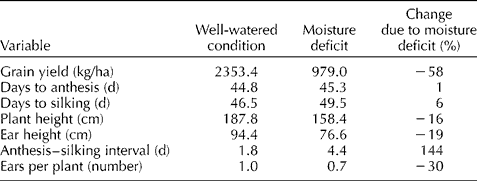
This experiment did not receive any rain during flowering and grain filling stages of the maize crop in 1999 and 2000 at Ikenne. The observed responses of the early maturing improved and farmers' local maize varieties to drought stress were thus mainly dependent on stored moisture in the soil. The impact of moisture deficit varied depending on the sensitivity of the trait recorded under moisture deficit. On the average, moisture deficit reduced grain yield by 58%, plant height by 16%, ear height by 19% and ears per plant by 30%, while increasing days to silking by 6% and ASI by 144% in comparison with well-watered condition (Table 1). Moisture deficit had little effect on days to anthesis in comparison with well-watered condition (Table 1).
Means of traits averaged over 2 years (1999 and 2000) recorded in 35 early maturing varieties tested under well-watered conditions and moisture deficit at Ikenne in Nigeria

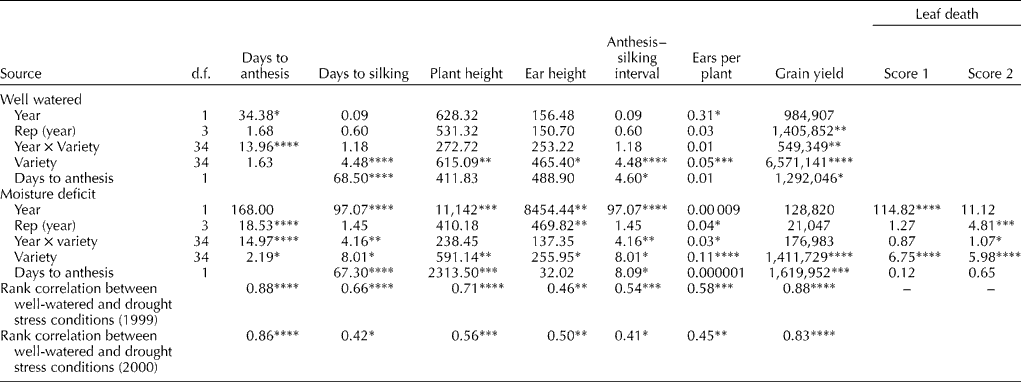
In the combined analyses of variance, year had significantly affected days to anthesis and ears per plant under well-watered condition (Table 2). Its effect was significant on all the traits recorded under moisture deficit, except on days to anthesis, ears per plant, grain yield and leaf death score 2. The effect of days to anthesis as a covariate was significant on days to silking, ASI and grain yield under both well-watered condition and moisture deficit and on plant height under moisture deficit. The mean squares for varieties were significant for all the traits measured under well-watered condition and moisture deficit. The interaction of year with varieties was significant for days to anthesis and grain yield under well-watered conditions and for days to anthesis, days to silking, ASI, ears per plant and leaf death score 2 under moisture deficit (Table 2). However, the relative rankings of the varieties in the 2 years was significantly correlated (r = 0.46–0.89, P < 0.01) for all traits measured under both well-watered condition and moisture deficit, except for days to anthesis and ASI under well-watered condition. Also the rankings of the varieties under moisture deficit was significantly correlated (r = 0.41–0.88, P < 0.01) with their rankings in well-watered condition for all seven traits recorded in each year (Table 2)
Mean squares for selected sources of variation from the combined analysis of covariance (variance) for grain yield and other agronomic traits of 35 maize varieties evaluated in 1999 and 2000 at Ikenne in Nigeria under moisture deficit and well-watered condition

Significane levels are: *, **, ***, **** P < 0.05, P < 0.01, P < 0.001 and P < 0.0001, respectively.
d.f., degree of freedom; Rep, replication.
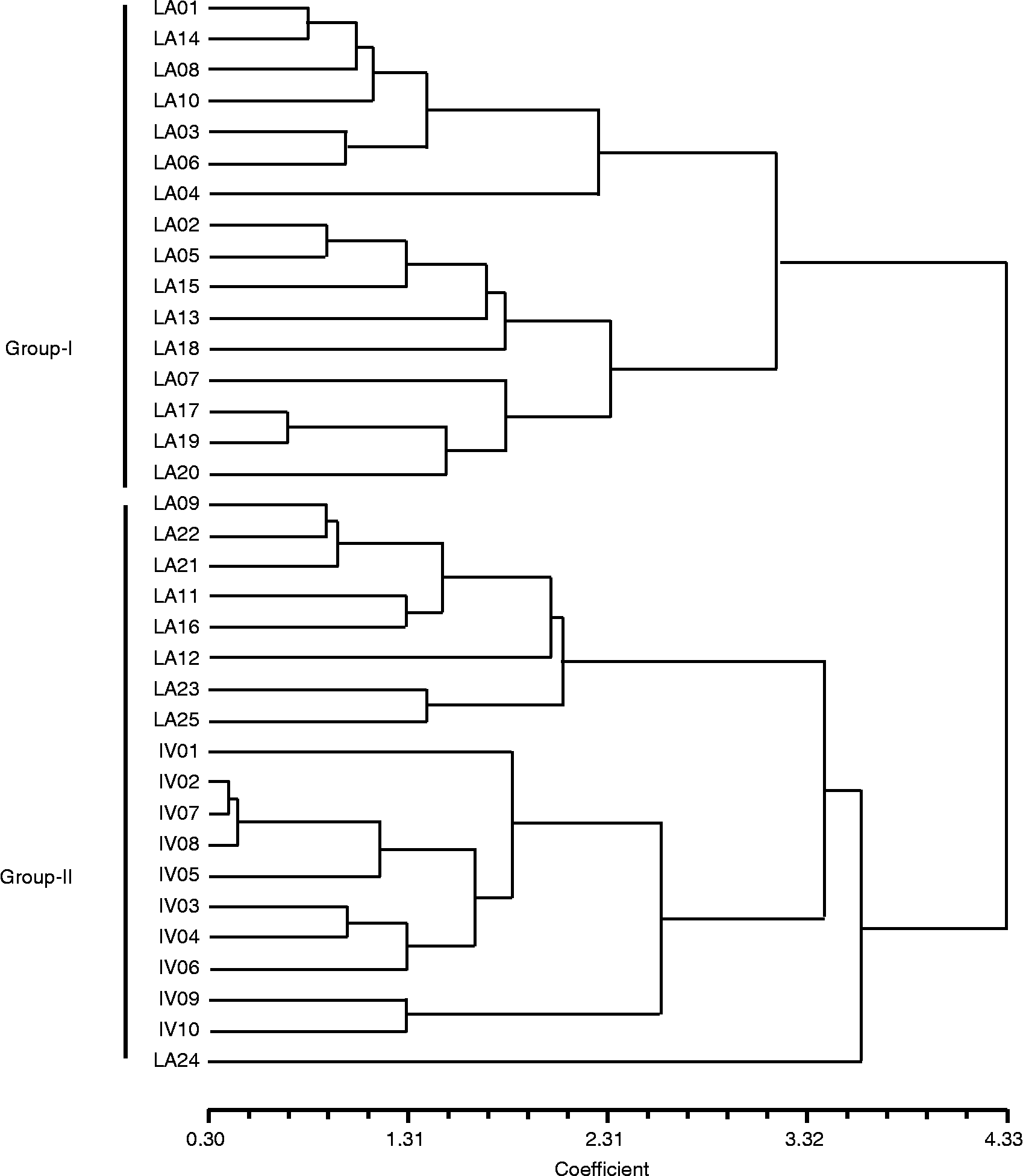
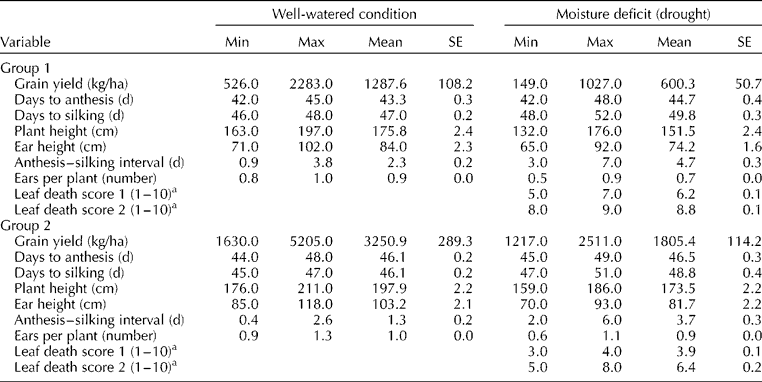
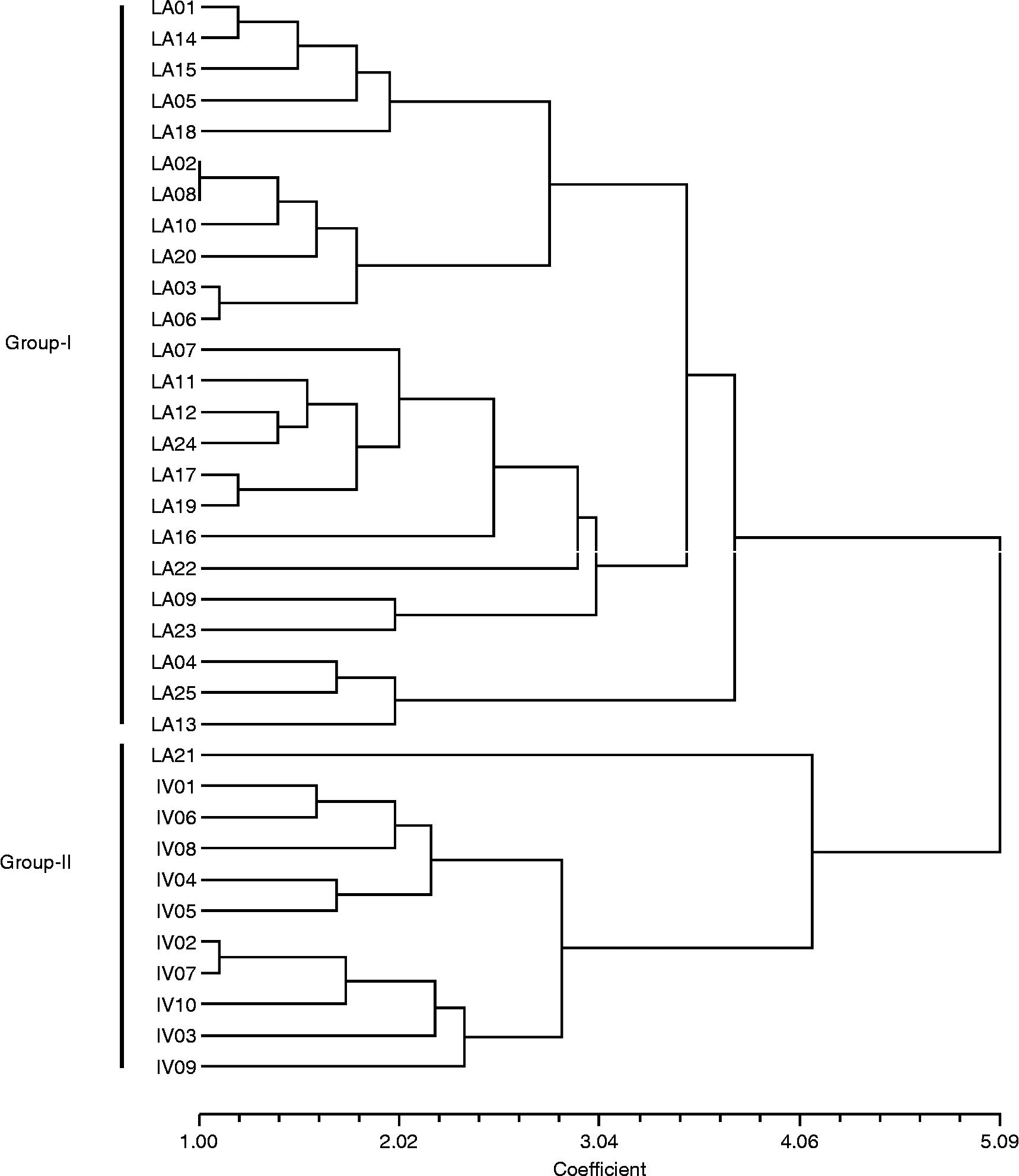
The significant differences among varieties observed for all the traits recorded under each irrigation treatment prompted the use of hierarchical cluster analysis to stratify the early maturing maize varieties into groups based on combination of traits. As shown in Fig. 1, the cluster analysis separated the varieties into two major groups under well-watered conditions. Large differences in grain yield and other traits were observed among the early maturing varieties within each group under well-watered condition (Table 3). Group 1 comprised 16 farmers' varieties, which were characterized by lower grain yield, earlier flowering, shorter plants, lower ear placement and longer ASI (Table 3). Group II consisted of nine farmers' and all improved varieties, which produced higher grain yields, flowered later, grew taller, had higher ear placement and shorter ASI in comparison with those in group I. The two major groups each had two distinct subgroups with the improved varieties clustered together as a subgroup in group II (Fig. 1).
Dendrogram of early maturing varieties classified according to their performance under well-watered conditions for 2 years at Ikenne in Nigeria.

Means of traits averaged over 2 years and their standard errors as well as the corresponding ranges for variety groups formed by cluster analysis of data recorded under well-watered conditions and moisture deficit in 1999 and 2000 at Ikenne in Nigeria

Min, minimum; Max, maximum; SE, standard error.
a Leaf death score 1 and 2 = A scale of 1–10, where 1 = only 10% of the leaves were green and 10 = 100% of all leaves were dead at 72 and 79 days after planting, respectively.
The early maturing maize varieties evaluated under moisture deficit were also stratified into two major groups based on cluster analysis (Fig. 2). Marked differences were detected among the varieties within each of the two groups predefined by cluster analysis (Table 3). Group I was composed of 24 farmers' varieties that produced lower grain yield, had earlier flowering, shorter plants, lower ear placement, longer ASI and higher leaf death scores compared to those in group II (Table 3). All improved and one farmers' varieties were included in group II, which produced higher yields, flowered later, grew taller and had higher ear placement, shorter ASI, slightly higher number of ears per plant and lower leaf death scores, as opposed to those in group I. Group I had three distinct subgroups under moisture deficit, while group II was not separated into subgroups (Fig. 2). Farmers' varieties included in group II under well-watered condition were incorporated into group I under moisture deficit (Figs 1 and 2).
Dendrogram of early maturing varieties classified according to their performance under moisture deficit for 2 years at Ikenne in Nigeria.

Correlation analysis between grain yield and other traits was computed to identify traits associated with productivity under the two irrigation treatments. Grain yield under well-watered condition was positively correlated with days to anthesis (r = 0.59, P = 0002), plant height (r = 0.60, P = 0.002), ear height (r = 0.44, P = 0.0077), ears per plant (r = 0.73, P < 0.0001) and negatively correlated with days to silking (r = − 0.67, P < 0.0001) and ASI (r = − 0.65, P < 0.0001). Grain yield under moisture deficit was positively correlated with days to anthesis (r = 0.57, P < 0.0004) plant height (r = 0.81, P < 0.0001), ear height (r = 0.61, P < 0.0001) and ears per plant (r = 0.68, P < 0.0001) and negatively correlated with days to silking (r = − 0.45, P = 0.0064) ASI (r = − 0.42, P < 0.05), leaf death score 1 (r = − 0.87, P < 0.0001) and leaf death score 2 (r = − 0.89, P < 0.0001).
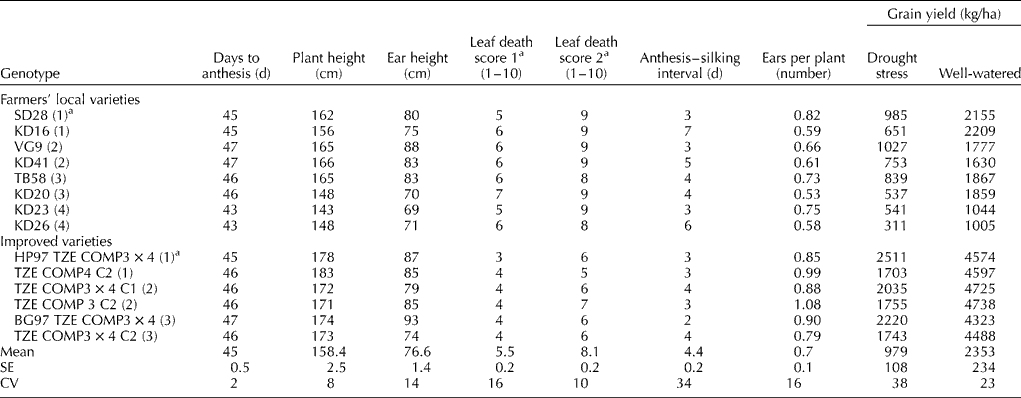
On the average, early maturing varieties in group II out-yielded the farmers' varieties in group I by 1963 kg/ha under well-watered conditions (Table 3). The varieties in group II attained 50% anthesis and silking 1–3 d later, grew taller and had higher ear placement, shorter ASI and increased ears per plant in comparison with the varieties included in group I under sufficient water supply (Table 3). Group II, which contained mainly improved varieties, produced 1205 kg/ha more grain yield under moisture deficit without showing marked delays in days to anthesis and silking but with increased plant size and ears per plant, shorter ASI and delayed leaf senescence compared with those included in group I (Table 3). Means of selected pairs of early maturing farmers' and improved maize varieties with differential performance under moisture deficit are presented in Table 4. Each variety pair had similar days to anthesis and grain yield under well-watered condition. But the first variety in each pair produced from 230 to 808 kg/ha more grain yield than the second variety under moisture deficit. In most cases, the first farmer variety in each pair also exhibited delayed leaf senescence (score 1), shorter ASI and more ears per plant than the second variety under moisture deficit. On the other hand, the difference between selected pairs of improved varieties in ASI, ears per plant and leaf death score did not follow any consistent trend.
Means averaged over years for selected genotypes with differential responses to moisture deficit evaluated at Ikenne in Nigeria in 1999 and 2000

SE, standard error; CV, coefficient of variation.
a Numbers in parenthesis represent lines belonging to a particular pair.
Discussion
In this study, traits known to be sensitive to moisture deficit were assessed in farmers' local and improved early maturing maize varieties of diverse genetic backgrounds. The withdrawal of irrigation water from the fifth week after planting to harvest induced moisture deficit, which reduced grain yield, plant size and ear number, increased ASI and hastened leaf senescence. In spite of this, trait expression under moisture deficit showed strong correlation, particularly for days to anthesis and grain yield, with that under sufficient water supply among the early maturing maize varieties. These results are consistent with the reports from numerous studies that did not find significant crossover interactions for grain yield and other traits across stress levels (Castleberry et al., Reference Castleberry, Crum and Krull1984; Austin et al., Reference Austin, Ford and Morgan1989; Khan and Spilde, Reference Khan and Spilde1992; Bulman et al., Reference Bulman, Mather and Smith1993; Shroyer and Cox, Reference Shroyer and Cox1993; Menkir and Akintunde, Reference Menkir and Akintunde2001; Muñoz-Perea et al., Reference Muñoz-Perea, Terán, Allen, Wright, Westermann and Singh2006). It thus appeared that the response of these sets of varieties to drought stress was conferred by alleles that were also constitutively expressed under well-watered conditions to maintain consistent performance across the two levels of moisture supply (Blum, Reference Blum, Edmeades, Bänziger, Mickelson and Pena-Valdivia1997).
Farmers consider drought-tolerant cereal cultivars as those that are higher yielding than other available cultivars under limited moisture supply (Blum, Reference Blum and Ribaut2006). The early maturing maize varieties included in our studies exhibited a broad range of variation in grain yield and other traits recorded under both moisture deficit and sufficient water supply. Though grain yield under moisture deficit represented 42% of the yield under well-watered conditions, the rank order of the varieties did not change significantly across the different levels of moisture supply as indicated by the strong rank correlations of yields recorded in the two test environments. It is interesting to note that the correlations of five traits with yield were significant and had the same signs under both moisture deficit and sufficient water supply. High yield was associated with late flowering, tall plants, high ear placement, early silking, short ASI and increased ear number per plant under both well-watered condition and moisture deficit and with increased retention of green leaf under moisture deficit. These results suggest that some common traits played significant roles in maximizing grain yield under both moisture deficit and sufficient moisture supply. Blum (Reference Blum, Edmeades, Bänziger, Mickelson and Pena-Valdivia1997) pointed out that drought tolerance in cereal cultivars is mainly derived from constitutive traits, such as seedling vigour, synchronized flowering, potential root length, potential plant size and leaf area, rather than from drought adaptive traits that can also be beneficial under sufficient water supply.
The two irrigation treatments differentiated the varieties into two distinct groups based on combination of traits. The improved varieties were clearly separated from the farmers' varieties under moisture deficit but not under sufficient water supply. The difference between improved varieties and landraces in grain yield, anthesis–silking internal and leaf death scores was substantial under moisture deficit. These contrasting results of the farmers' local varieties with improved varieties for grain yield and other traits were consistent with the results reported in other studies of maize (Duvick and Cassman, Reference Duvick and Cassman1999; Tollenaar and Wu, Reference Tollenaar and Wu1999; Menkir and Akintunde, Reference Menkir and Akintunde2001; Duvick et al., Reference Duvick, Smith and Cooper2004), sorghum (Blum et al., Reference Blum, Golan and Mayer1991) and wheat (Denčić et al., Reference Denčić, Kastori, Kobiljski and Duggan2000).
The improved varieties were developed from different source populations that had undergone at least one cycle of selection and testing over diverse growing conditions in multiple locations for superior performance. Selecting progenies with consistently higher grain yields and other desirable traits across multiple locations as parents to form improved varieties may indirectly enhance their performance under both moisture deficit and sufficient water supply. Such a selection scheme may attain significant improvement in grain yield of improved varieties possibly due to progressive accumulation of favourable alleles mainly with additive effects (Hallauer, Reference Hallauer, Stalker and Murphy1991; Edmeades et al., Reference Edmeades, Bolaños, Bänziger, Chapman, Ortega, Lafitte, Fischer, Pandy, Edmeades, Bänziger, Mickelson and Pena-Valdivia1997). Furthermore, desirable changes in other traits such as resistance to biotic constraints and lodging may also confer yield advantage across different growing environments. The findings of this study are consistent with those studies showing that selection based on the results of multi-location evaluation increased grain yield under drought stress that occurs at or near flowering through improvement in yield potential, seed set, silk exertion and barrenness (Tollenaar and Wu, Reference Tollenaar and Wu1999; Campos et al., Reference Campos, Cooper, Habben, Edmeades and Schussler2004). Ceccarelli et al. (Reference Ceccarelli, Grando and Hamblin1992) pointed out that barley lines selected through repeated testing for superior performance across seasons in a target environment will be tolerant to variable types, intensity, duration and timing of drought stress. Lynch and Frey (Reference Lynch and Frey1993) also concluded that the advances made in breeding oat cultivars for desirable agronomic traits improved their capacity to tolerate stressful environments.
The marked increase in grain yield of the improved varieties recorded under both moisture deficit and sufficient water supply was accompanied by improvement in synchrony between pollen shed and silking and good retention of green leaf area. Short ASI has been implicated in reduced bareness, which is indicative of increased partitioning of assimilates to the developing ear at flowering leading to reduced abortion of fertilized embryos under drought and maintenance of higher harvest index and grain yield both in the presence and absence of drought stress (Bolaños and Edmeades, Reference Bolaños and Edmeades1993a, Reference Bolaños and Edmeadesb). Retention of green leaf area for a long period may also increase the duration of photosynthetic activity that results in increased assimilate supply to the developing ear and increased seed set in maize (Johnson et al., Reference Johnson, Fischer, Edmeades and Palmer1986; Evans and Fischer, Reference Evans and Fischer1999). Longer leaf area duration has been associated with improved performance under stressful conditions in oats (Lynch and Frey, Reference Lynch and Frey1993) sorghum (Borrell et al., Reference Borrell, Hammer and Henzell2000) and maize (Bolaños and Edmeades, Reference Bolaños and Edmeades1993a, Reference Bolaños and Edmeadesb; Bänziger et al., Reference Bänziger, Edmeades and Lafitte2002).
The early maturing maize varieties exhibited considerable differences in grain yield and other traits under drought stress. Among these, we found some farmers' and improved varieties with similar yield potential and flowering time under well-watered conditions but with marked differences in grain yield under moisture deficit. The observed superior performance of improved varieties, which also possess resistance to the major diseases and pests prevailing in the savannas, and identification of high-yielding landraces under drought stress, which could also be invaluable sources of desirable farmers-preferred end-use quality traits, such as grain colour and kernel texture, offer good opportunity to bring together complementary drought-tolerant alleles in broad-based populations. Such broad-based populations may form the basis not only for long-term sustained genetic gain from selection for drought tolerance (Hallauer, Reference Hallauer, Stalker and Murphy1991) but also as potential direct sources of drought-tolerant maize inbred lines, hybrids and synthetics. Drought-tolerant maize varieties and hybrids containing desirable farmer-preferred end-use quality traits may have a better chance of being adopted by farming communities. Based on the results of this study, some farmers' local varieties were selected and incorporated into the best early maturing varieties to improve drought tolerance and farmers' preferences. Furthermore, several experimental varieties extracted from the populations containing farmers' local varieties are being evaluated for their performance in multiple locations.
Acknowledgements
This research was conducted at the IITA and financed by IITA, UNDP and IFAD. The authors express their appreciation to all the staff members who were involved in carrying out field trials.