On September 20, 2017, Hurricane Maria made landfall causing significant destruction and mass flooding in Puerto Rico. While the true influence of the pre-disaster situation in Puerto Rico is unknown, medical needs in the immediate aftermath of natural disasters commonly range from treatment of minor injuries to infectious diseases and preventive services.Reference Henderson, Lillibridge and Salinas1 The National Disaster Medical System (NDMS) primarily coordinates the organization of medical aid to areas impacted by the crippling effects of such natural disasters. These services include the deployment of federal multidisciplinary disaster medical teams (DMT) to provide medical treatment in affected areas through field hospitals or brigades.Reference Arziman2 Despite having the infrastructure, the mobilization of federal aid in the acute phase of Hurricane Maria was reported as being delayed with heartbreaking stories that referenced significant physical and psychosocial trauma to Puerto Ricans, coupled with rising death tolls.Reference Cota3
Under these circumstances, the solicitation and inclusion of non-governmental organizations (NGOs) has been known to be effective in providing health services.Reference Gellert4 Still, gaps in the literature address that there is paucity in research pertaining to DMTs. This is especially true among DMTs that are NGO-based or independent from the NDMS. To add to this knowledge base, the objective of this report is to (1) describe the lived experience of a non-governmental DMT through a research lens and (2) share practical lessons learned based on the DMT’s experience to support and inform future response teams.
METHODS
Design
The descriptive design included observational data collected by a multidisciplinary, grassroots non-governmental DMT 45 days post Hurricane Maria through pop-up health clinics and home visitations over 5 days. The DMT from the mainland included a pediatric nurse practitioner, medical technologist, street medic, public health educator, International Board Certified Lactation Consultant (IBCLC), and a physician living and practicing in Puerto Rico.
Setting
By leveraging an existing partnership, a professional network between colleagues on the mainland and the island led to the selection of 2 NGO community leaders in Vega Baja. The municipality of Vega Baja is located 30.9 miles west of San Juan. Prior to the hurricane, the municipality was home to 52436 persons with a median household income of US $16453 and 50.6% of persons below the poverty line. Sixty percent of the population was between the ages of 18 and 65 with 52% women.5 Based on the community leaders’ needs assessment, 5 lower income areas with no power were selected for medical relief: Los Naranjos, Sabana, El Ojo de Agua, Sandin, and a local residential addiction rehabilitation center.
Protection of Human Subjects
Participation in this public health intervention was minimal risk. Residents seeking medical attention signed a waiver of liability upon registration at pop-up clinics. Minors under the age of 18 were seen with a parent or legal guardian present. No participant identifiable information was collected. Verbal consent was obtained from members of the DMT prior to the first debriefing meeting to participate in discussions and documentation of the lived experience.
Medical Aid Procedures
Pop-up clinics were open during daytime hours to maximize daylight, in case there was no access to electricity (ie, Monday to Thursday from 9:00 AM to 3:00 PM). On Friday, hours were set from 9:00 AM to 1:00 PM to allow time for the DMT to prepare for departure. Extended health care services were provided to local homebound residents identified by community leaders after scheduled clinic hours. Setup for each clinic day included designated areas for registration, vitals, laboratory testing, health education, supply distribution, and medical consultation for private exams and treatments like nebulizers. Promotion of pop-up clinics was announced via a mobile loudspeaker announcement.
Response Team Debriefings
The response team held 4 semi-structured debriefings that lasted approximately 30 minutes post public health interventions. The lead of the response team served as a moderator, and the public health educator primarily recorded responses in the response team daily log. At the close of each debriefing session, images and debriefing notes were reviewed by the team for accuracy and corrections.
Data Analysis
From registration data provided by one of the community leaders, Microsoft Excel software was used to determine descriptive statistics for sample size, age, and gender. Field notes were manually coded by 2 members of the team using descriptive coding methodsReference Saldaña6 to identify primary topics of field note excerpts. After reviewing coded data, items were categorized into 2 domains. Domain 1 referred to public health observations, and Domain 2 referred to medical diagnoses, triggers, and treatment observations.
RESULTS
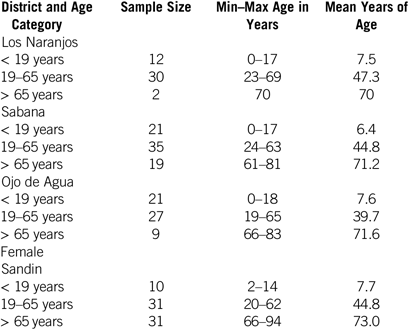
Medical aid was provided to nearly 300 (N = 296) residents. The minimum and maximum age range per district is provided in Table 1. The majority of residents who received medical attention were between the ages of 19 and 65. There were more adults (n = 184) than children (n = 64) and slightly more females (n = 169) than males (n = 103). All but 2 members of the DMT were of Puerto Rican descent, and 4 out of the 5 spoke fluent Spanish.
District Area Sample Descriptive Statistics (N = 246)

Note: 0 = less than 1 year old; rehabilitation center (N = 25) and home visits (N = 23) are not included.
Public Health Observations From the Field
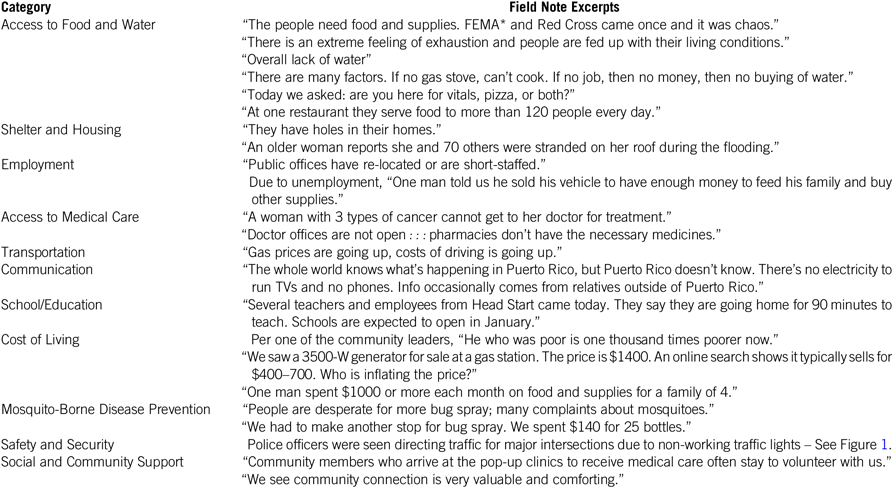
Field note excerpts were divided into 11 public health categories (Table 2). Lack of access to medical care, difficulty securing transportation, severed communication, unemployment, damaged housing, school closures, and cost of living were salient items. Excerpts of exhaustion, lack of support from the Federal Emergency Management Agency (FEMA), and frustration related to the extended period of time residents suffered lack of access to basic needs (ie, food, water, and electricity) accounted for the major findings.
“The people need food and supplies. FEMA and Red Cross came once and it was chaos. There is an extreme feeling of exhaustion and people are fed up with their living conditions.” – IBCLC, DMT member
Public Health Observations From the Field

Note: *FEMA = Federal Emergency Management Agency.
Apart from these less supportive items, a strengthened social network and community support did emerge.
“We see community connection is very valuable and comforting.” – Public Health Educator, DMT member
Medical Diagnoses, Triggers, and Treatment Observations in the Field
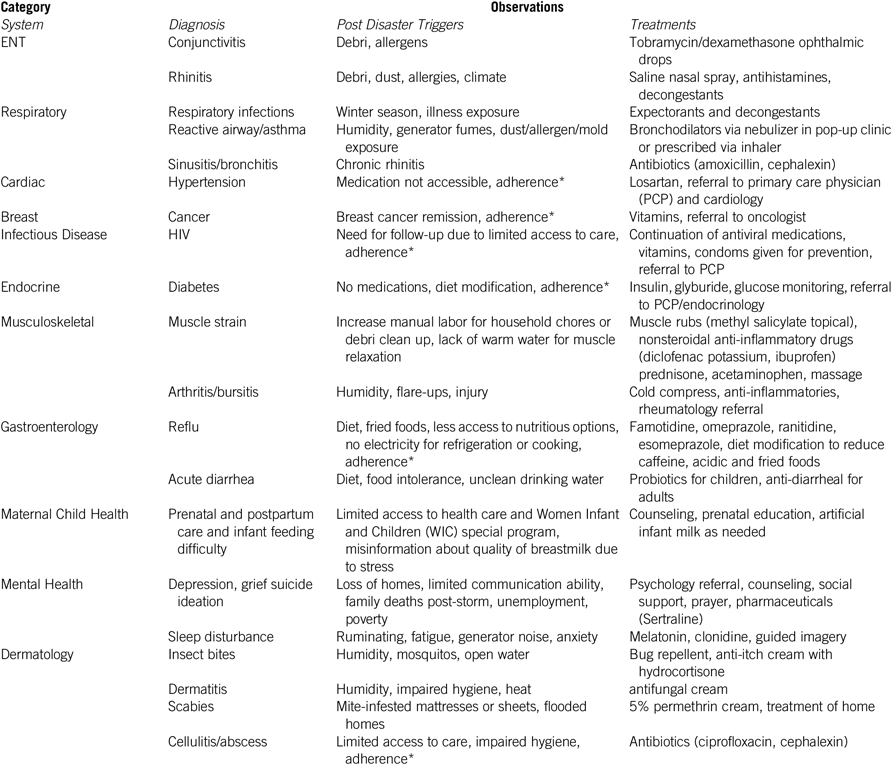
Common medical diagnoses were categorized in 11 areas and linked to post-disaster triggers and treatments in Table 3. Among participants with underlying conditions, the response team observed exacerbations of reactive airway diseases, diabetes, hypertension, and depression associated with post-disaster triggers. These triggers included limited access to health care due medical facility closures, no availability of nutritious foods, heat exhaustion, and humidity because of lack of power, as well as damaged homes with continuous roof leakage, and generator noise triggering sleep disturbance.
Medical Diagnosis, Triggers, and Treatment Observations From the Field

Notes: *Poor medical care adherence; ENT = ear, nose, threat.
Poor medical adherence was identified as one of the major items that impacted medical health due to the compounding effects of post-disaster conditions. For instance, unemployment directly affected transportation. No transportation led to no access to care. No access to care generated the omission of medication, thus exacerbating medical health. These compounding effects, in addition to other triggers identified, were often associated with the DMT’s observations of recurring mental health concerns reported daily.
“High rates of depression, and grief … anxiety and stress” – Public Health Educator, DMT member
Observations From Home Visits
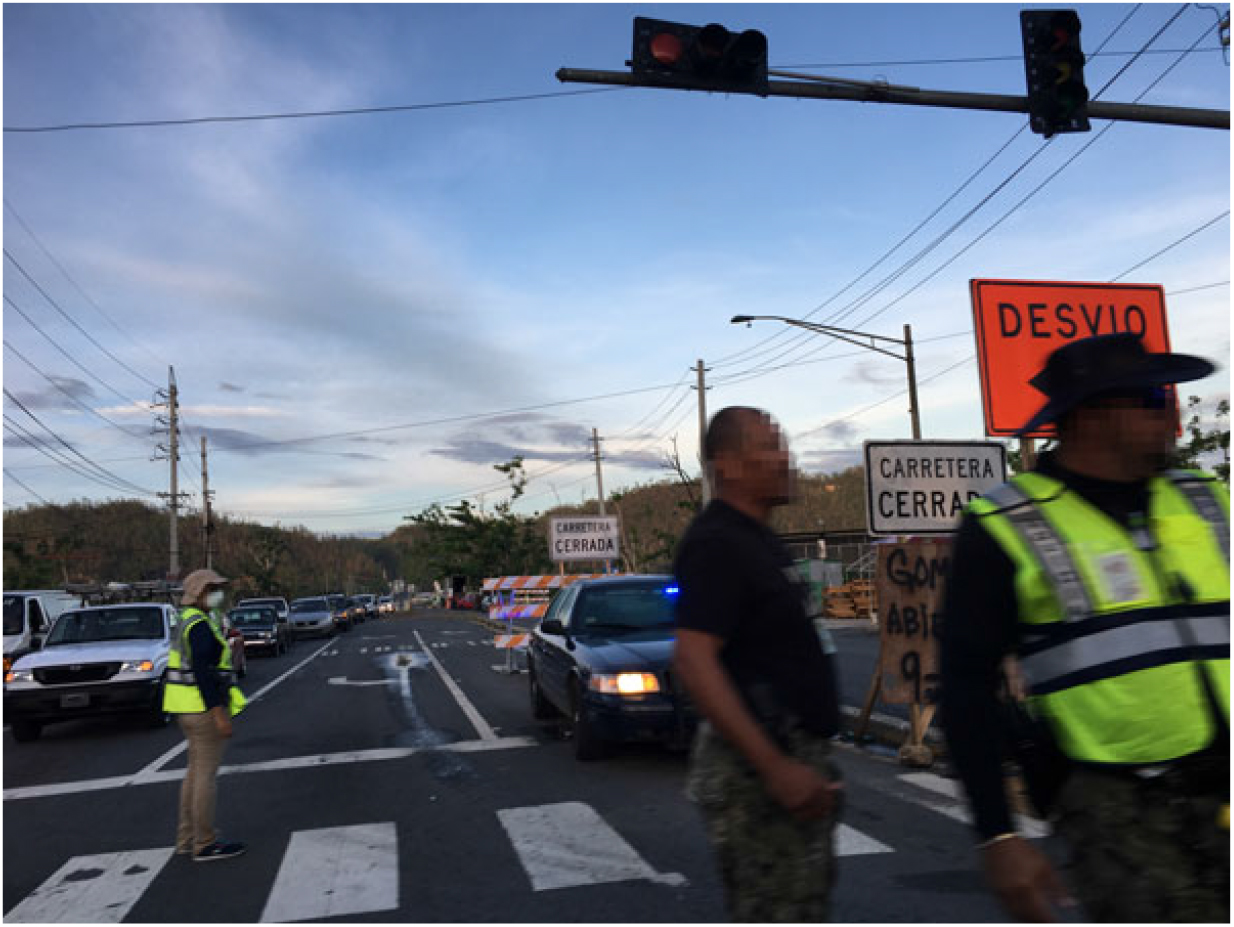
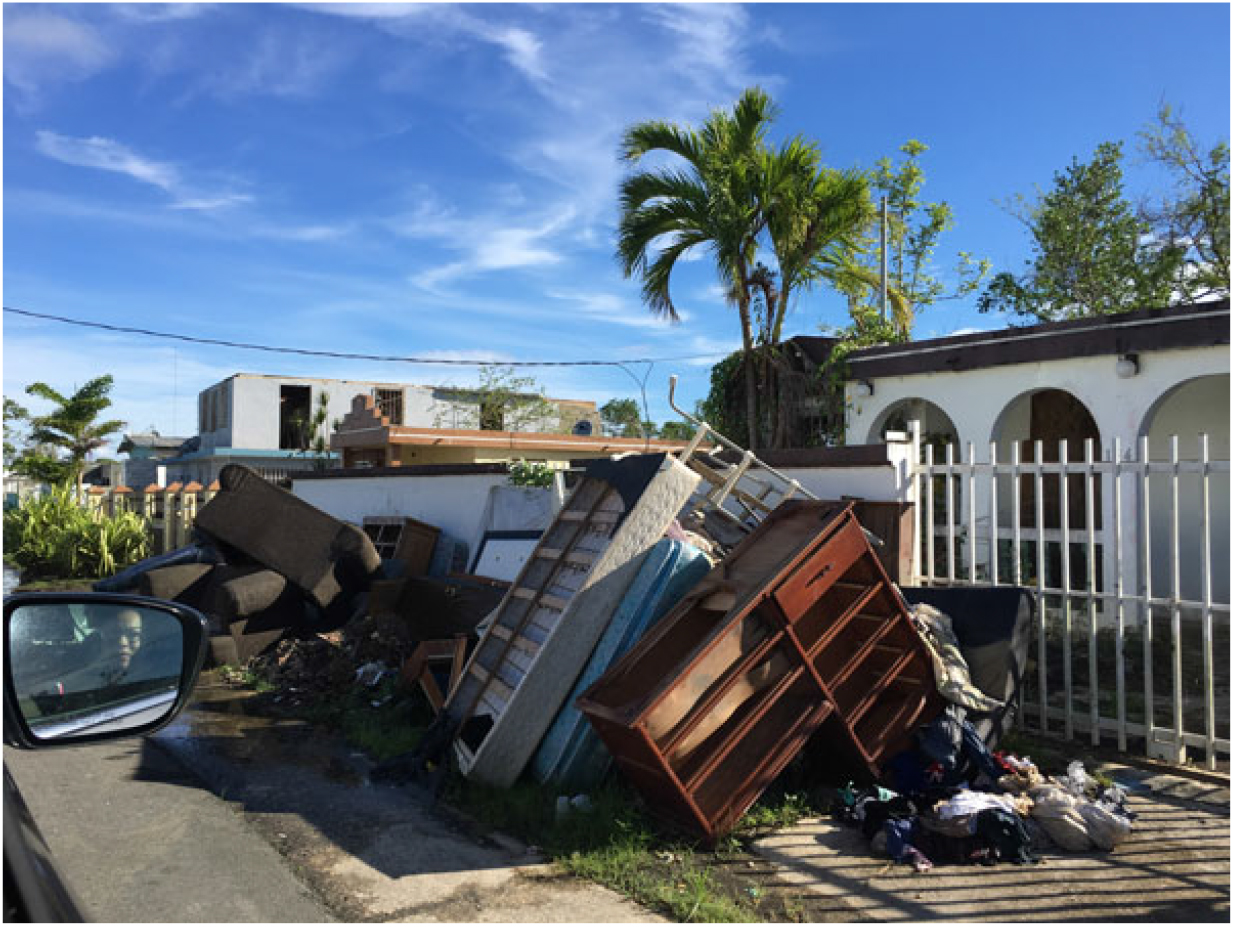
A total of 23 home visitations were performed; 16 homes were missed in Sandin because names and addresses were not provided. The majority of patients seen were elderly, bedridden, and stable. Images collected by the DMT provided further information regarding living conditions. The streets were lined with piles of debris, full-sized furniture, mattresses, tree branches, and trash compared with other metropolitan areas (Figure 2). Power lines were broken with traffic lights not working. Homes that experienced mass flooding had bare walls with chipped paint and visible water lines 6 to 8 feet high. In 1 house, the bedrooms were stripped with only mattresses on the floor. No mold was observed at the time of the assessment. Trauma was commonly reported from hurricane survivors and caregivers in the home.
“Many elderly traumatized by the loss of their homes, items of sentimental value [and] death of family” – Public Health Educator, DMT member
Officers Directing Traffic at a Busy Intersection Due to Non-Functioning Traffic Lights and Widespread Power Outages.

Debris and Damaged Furniture Observed by a DMT Member (See Sideview Mirror) During a Home Visitation.

The DMT’s response regarding home visits included feelings of sadness, helplessness, as well as joy.
“Sad to see so many people not living in their houses. Some don’t even want to go back because it is so depressing, some have nightmares and can’t sleep. Wish I could do more but I had to accept that I couldn’t fix it and bring joy and compassion in the moments we had together.” – Medical Technologist, DMT member
DISCUSSION
Observations stemming from this report highlight the lived experience of a multidisciplinary non-governmental DMT 45 days post Hurricane Maria in Puerto Rico. The age and gender of our sample were representative of the population of Vega Baja based on demographic data obtained from the most recent U.S. census. The inclusion of a physician living in Vega Baja, as well as DMT members of Puerto Rican descent, maintained a community connection and culturally competent care – an important factor commonly reported post Hurricane Maria.Reference Rodríguez-Díaz7
The widespread impact of Hurricane Maria significantly influenced public health conditions that exacerbated medical health. The public health intervention of pop-up clinics helped mobilize medical relief to low-income areas still in need after the storm. Similar to a non-governmental DMT that provided mobile medical care post Hurricane Katrina, our DMT also encountered chronic medical problems, including hypertension, diabetes, and asthma.Reference Krol, Redlener and Shario8 In contrast to the Katrina DMT, the Puerto Rico DMT emphasized the need for mental health support due to encounters of depression, grief, or suicide ideation. Considering the Katrina DMT response occurred less than 30 days post-disaster and the Puerto Rico DMT responded greater than 30 days, it is likely that the amount of time post natural disaster could be a determining factor for the exclusion of mental health. Longitudinally, studies post Hurricane Sandy support the significance of mental health well beyond 6 months past the storm.Reference Schwartz, Gillezeau and Liu9
A limitation of this recommendation is the lack of quantifiable data eligible to determine the frequency of medical diagnosis. Pop-up clinic forms were not retrieved to protect the identity of participants. The descriptive design of this report also lends to the lack of quantifiable measures. Also missing was the analysis of field notes through computer-assisted qualitative data analysis. While the purpose of the design did not require it, future research should transcribe field notes through computer programs to enhance grassroots DMT theory development. Submission for expedited review through the Institutional Review Board (IRB) would have been ideal prior to departure but not feasible due to time constraints and severed communication with community leaders on the island. Policies to accommodate IRB-approval and research development post natural disaster may help narrow the gap and paucity of research related to DMTs. Despite the challenges and limitations discussed, our DMT portrayed similar characteristics commonly found among government DMTs by being adaptable, flexible, creative, and innovative as referenced in the following practical lessons learned.Reference Oldenburger, Baumann and Banfield10
Lessons Learned
1. Adaptability – Conduct a pre-departure community needs assessment with community leaders on the ground to adapt and prepare for the community’s needs.
2. Creativity – Set up pop-up clinics in creative areas to provide accessible medical care to the community post-disaster (ie, local community centers, faith-based organizations, or restaurants).
3. Flexibility – Expect access to minimal resources and exhaustion experienced among the people secondary to living conditions. Be prepared to tend to hurricane survivors of all ages.
4. Innovation – Provide innovative options for delivery of care to promote medical adherence (ie, home visits). Include multidisciplinary team members on the DMT, and train in emergency mental health or suicide prevention trainings pre-departure.
CONCLUSION
Observations from the DMT mimic those of Hurricane Katrina and Hurricane Sandy with common medical and mental health exacerbations, as well as underlying issues of lack of trust among government agencies that create significant disparities in low-income populations. When challenged with obstacles associated with environmental conditions, severed communication, and time constraints, our non-governmental DMT displayed similar characteristics demonstrated by federal DMTs post natural disaster. The application of a research lens provided insight on the experience of DMT pop-up clinics and the need for future research that supports the deployment of such teams. Applying lessons learned offers future grassroots non-governmental DMTs a means to prepare for deployment post natural disasters.
Acknowledgments
Authors would like to thank Willmarie and Diana Negron for their assistance in coordinating our team’s disaster relief efforts in Vega Baja; Marcos Cruz Molina, Alcalde de el Municipio de Vega Baja for providing security for our team and marketing of disaster relief activities within designated district areas; and Jimmy Dunson with Mutual Aid Disaster Relief and Pastor Russel Meyer, St Paul Lutheran Church for aid and financial support.
Conflict of Interest Statement
The authors have no conflicts of interest to declare.