Introduction
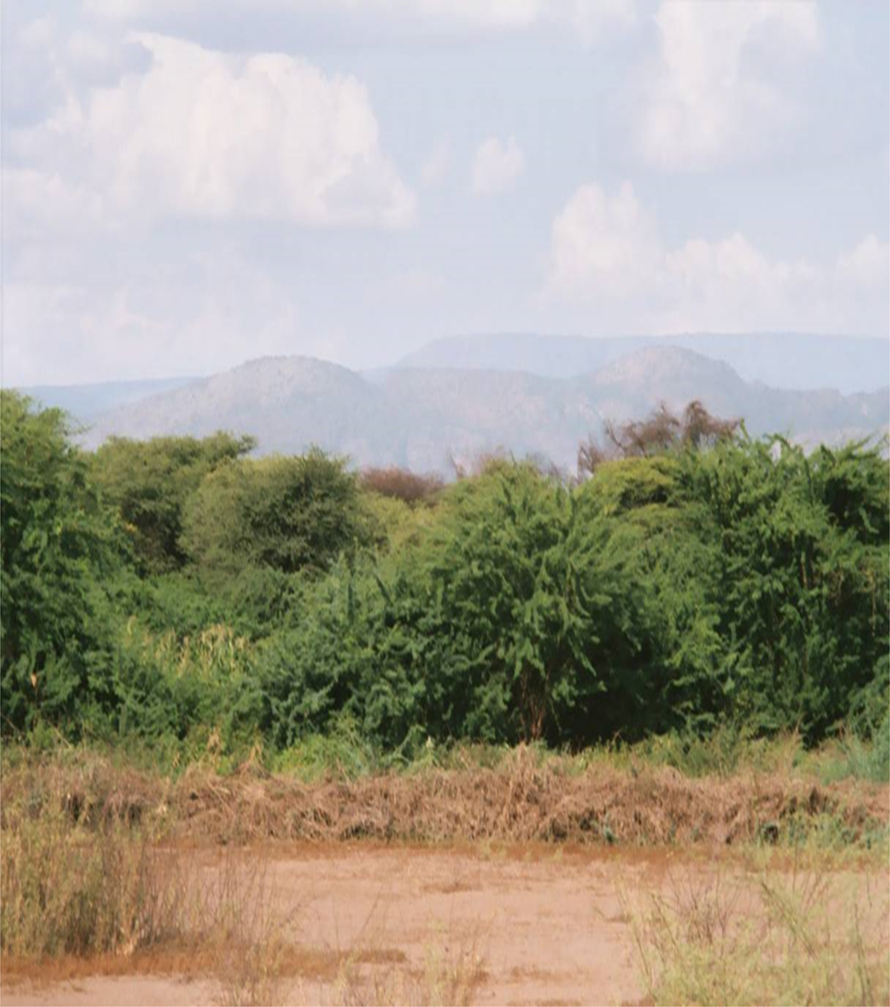
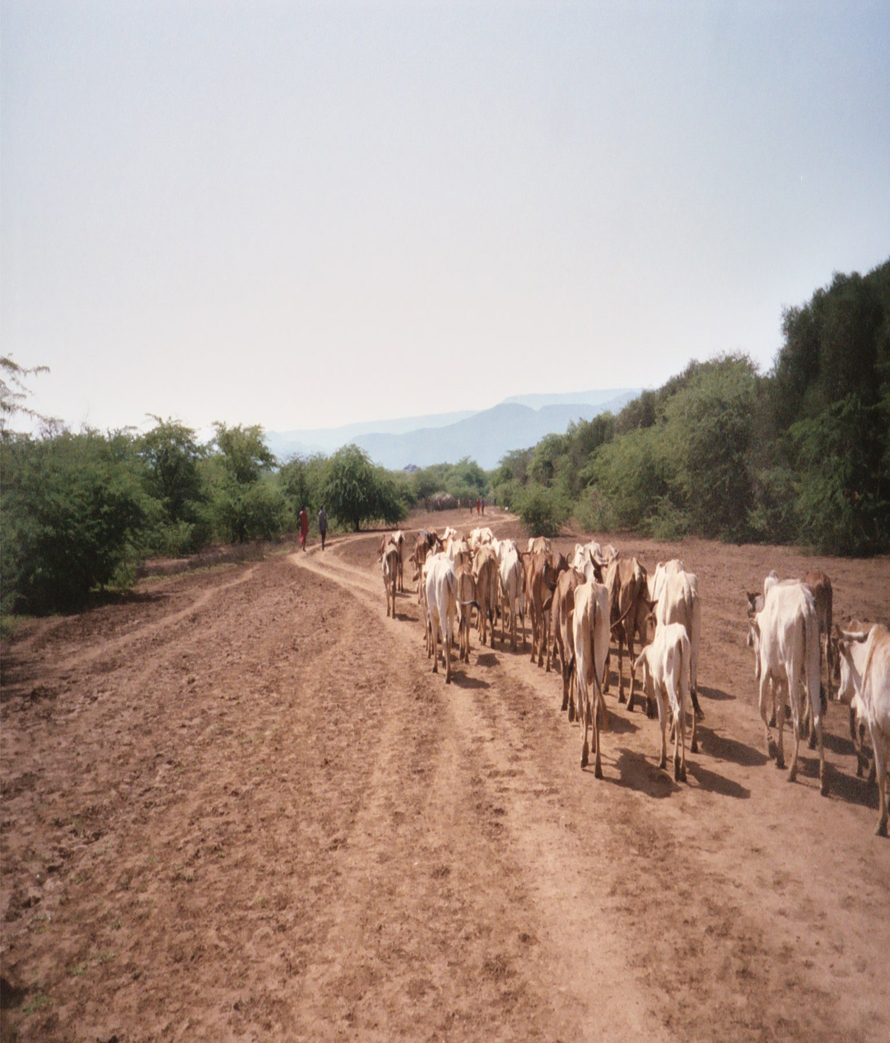
On a scorching Sunday morning at Marigat, Kenya, in June of 2017, I was asked by a local chief if I would meet with the Council of Il Chamus Elders in a small settlement about twelve kilometers away.Footnote 1 At that time, the area was just recovering from a two-year drought and was experiencing prolonged problems of violence and insecurity. As I bounced down a dirt road en route to the meeting, I prepared myself for the common but deserving community requests for development assistance, especially for schools, health clinics, and roads. Upon my arrival, I saw five elderly men sitting on two wooden benches next to the chief’s small office and a mud-walled church. The chief, whom I have known for more than thirty-five years, gave a quick update of the area’s two major problems. One problem noted was environmental, the invasion of the prosopis juliflora plant (hereafter referred to as prosopis) which has taken over many of the community’s settlements and key grazing zones; the other was political, the violent attacks by a neighboring ethnic group coupled with large losses of valuable lands.Footnote 2 Gesturing to the proliferation of prosopis in the area and to a nearby camp of Internally Displaced Persons (IDPs), he could visually emphasize his points.
Rather than making the expected appeals for funding assistance, the elders had requested the meeting to inquire about publications and old colonial maps that could document the ethnic (“tribal”) boundaries in the area, so that they could build a legal case to recover their lands and, they hoped, halt further conflict. They said that they wanted to demonstrate that their larger neighbors were not abiding by the official boundaries of the colonially-imposed “native reserves,” which at one time were a source of strong local contention in the area (see Kenya [Carter] Land Commission 1934; Anderson Reference Anderson2002; Berman & Lonsdale Reference Berman and Lonsdale1992). In the past fifteen years, the leader of the council already had been involved in two significant legal cases brought by the community against the government of Kenya: one associated with the introduction of the destructive prosopis plant and the other with political discrimination. The distinguished individual seemed aware that the prosopis invasion and the violent attacks and associated land loss were intricately related.
To place this recent encounter in historical context, it is important to note that environmental issues, especially concerns about soil erosion, overgrazing, and desertification, were fixations of British colonial officers throughout dry areas of sub-Saharan Africa (Beinart & McGregor Reference Beinart and McGregor2003; Stebbing Reference Stebbing1938; Mortimore Reference Mortimore1989). In the Colony of Kenya, Baringo County (hereafter referred to as Baringo) was “ground zero” for negative depictions of environmental degradation and assumed African complicity, and for pilot schemes of environmental rehabilitation (Maher Reference Maher1937; Brown Reference Brown1963; Pratt Reference Pratt1963). Baringo is a territory of 11,015 square km located in north-central Kenya about 270 km north of Nairobi (Kenya Information Guide 2019). Photos and vivid descriptions of bare lands, eroded valleys, and goats grazing on barren hillsides were featured in a range of government publications about Baringo dating back to the 1930s (Maher Reference Maher1937). Early accounts referred to the area as an “overgrazing end point (Brown Reference Brown1963),” the “agricultural slums of Kenya” (Maher Reference Maher1937), and an “ecological emergency area” (Kenya 1974). Adverse descriptions such as these empower officials to intervene in local livelihoods often through draconian measures, such as population resettlement and forced labor for conservation schemes, both common themes in colonial environmental histories throughout eastern and southern Africa (Beinart Reference Beinart2008; Anderson Reference Anderson2002).
Many of these narratives, often backed up by dubious Western science, have endured into the post-colonial era. One with special relevance for this article is desertification, the idea that human agency and mismanagement is advancing deserts across vast landscapes. Desertification is an extraordinarily difficult concept to define (Behnke & Mortimore Reference Behnke and Mortimore2016; Little Reference Little, Arizpe, Stone and Major1994; Verstraete et al. Reference Verstraete, Scholes and Smith2009). What often is called man-made desertification has more to do with natural factors, such as the heterogeneous nature of dry landscapes and the uneven pattern of rainfall. The assumed reality of desertification by national governments and international bodies spurred and continues to instigate a complex set of environmental experiments in East Africa, including using Il Chamus as a pilot “desertification control” site by the United Nations Environmental Programme (UNEP) (Odingo Reference Odingo1990; Nguru & Rono Reference Nguru, Rono, Ali Heshmati and Squires2013).Footnote 3 In terms of interventions, the introduction of the invasive plant species prosopis juliflora was the boldest and most pernicious attempt at “curbing desertification” (Wabuysa Reference Wabusya2013:ix). One will note that while the theme of Africa as a “laboratory” for Western science and practice also has a long and tragic history, this theme still persists today with development experiments, biomedical testing, and, as this article suggests, environmental experiments.
This study uses the example of a forestry project based on the introduction of prosopis to explore wider issues of significance to African Studies, including the hegemony of Western science, human rights, political violence, and growing contestations over land. It will be argued that a focus on this thorny plant exposes a range of prickly political, social, and humanitarian issues that are difficult to disentangle from each other, but which need to be understood against broader struggles for political representation, resources (especially land), and cultural identity by minority and indigenous groups in Kenya and throughout Africa. The analysis draws on theoretical insights from the field of political ecology to address how unequal and often violent power relations can reshape environmental landscapes and the local cultures and livelihoods that depend on them (Peet et al. Reference Peet, Watts and Robbins2011; Peluso & Watts Reference Peluso, Watts, Peluso and Watts2001; Watts Reference Watts, Sheppard and Barnes2003). Based on long-term research in the Il Chamus area, this article employs ethnographic, archival, and visual materials that demonstrate the broad regional and national political ramifications of what was initially conceived as a non-political, technical intervention at “greening” the environment (Food and Agriculture Organization [FAO] 1985; Odhiambo Reference Odhiambo2015).
An Unknowing Witness
Let me begin by providing a brief overview of the Il Chamus community, a Maa (Maasai) speaking group of about 35,000, where the prosopis tree was introduced in the 1980s. The Il Chamus are considered to be the second-smallest ethnic group in Kenya, after the El Molo people who reside along the shores of Lake Turkana in far northwestern Kenya. The history and ethnography of Il Chamus are documented in detail by David Anderson (Reference Anderson2002), Michael R. Odhiambo (Reference Odhiambo2015), and Peter D. Little (Reference Little1992, Reference Little1996, Reference Little1998). There will not be an attempt to summarize these materials here, but only to note that for a relatively small group they have a complicated system of age sets and clans, a legacy of incorporating clans and families from other ethnic groups, and a longstanding dependence on government assistance for resolving inter-ethnic conflict (colonial and post-colonial) with larger groups, most importantly Kalenjin-speaking Pokot and Tugen. Hemmed in during the colonial period by European settlements to the east, Tugen settlements to the south and west, and Pokot pastoralists to the north, the growing pastoral sector of the Il Chamus had little possibility of territorial expansion beyond the borders of the state-demarcated Njemps Reserve.Footnote 4 Prior to colonialism, the rangelands of Baringo were the site of numerous conflicts and ethnic boundary marking by a number of powerful pastoralist societies, including Pokot, Maasai, and Turkana (Anderson Reference Anderson2002; Bollig Reference Bollig2016; Little Reference Little1992).
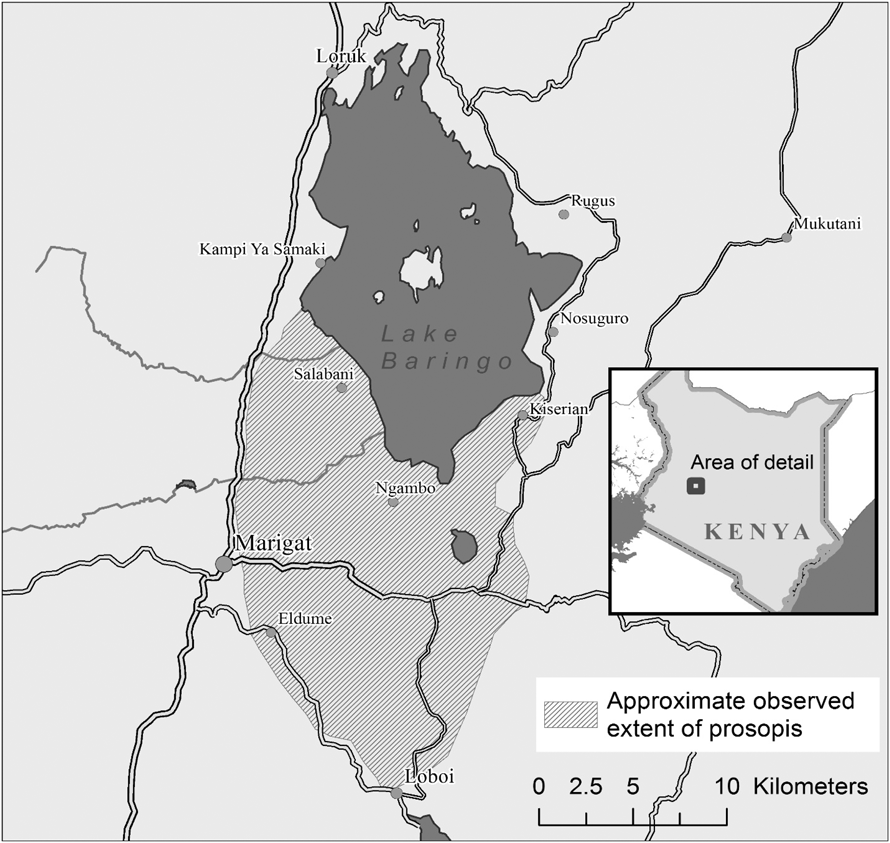
Concerns about environmental degradation gained momentum in the post-colonial period in Kenya. As part of a national effort to combat desertification and improve the management of trees for fuelwood, the United Nations Food and Agriculture Organization (FAO), in partnership with the Forestry Department of Kenya, initiated the Fuelwood Afforestation Extension (FAE) project in 1982, with sites in rangeland areas of Turkana, Garissa, and Baringo counties. Because of its ability to grow fast and withstand arid conditions, the prosopis tree was the main species promoted by this project.Footnote 5 In lowland Baringo, tree planting did not begin until 1983 and 1984 (Mwangi & Swallow Reference Mwangi and Swallow2005) (see figure 1). To acquire access to the communally-held lands of Il Chamus, the project negotiated with community leaders to make available several hundred hectares of land for tree growing. The World Food Programme (WFP), in turn, made available food to employ about 1,000 workers on a food-for-work basis for tree planting. Unwittingly, local laborers were planting a tree that would eventually wreak havoc on their own livelihoods and the area’s ecology.
Map indicating extent of prosopis expansion in Il Chamus area
Source: Map made by Daniel K. Thompson based on author’s observations.

The planting of prosopis at the time was not considered controversial, although there was evidence from neighboring Sudan and Ethiopia around the same time as well as from India of the potential for environmental damage if it were to spread (Mwangi & Swallow Reference Mwangi and Swallow2005; Robbins Reference Robbins, Zimmerer and Bassett2003; Shiferaw et al. Reference Shiferaw, Teketay, Nemomissa and Assefa2004). One elder who recalls the project negotiations with the community in the 1980s remarked: “The people trusted the government so we supported the project. . . . When the government brings a project you do not expect it to bring you harm” (field notes, September 2008). As a plant, prosopis not only grows very fast and tolerates arid conditions, but it also fixes deep root systems that compete for water with indigenous trees and grasses, as well as sheds leaves and pods that are unpalatable to livestock without extensive processing (Kahi et al. Reference Kahi, Ngugi, Mureithi and Ng’ethe2009; Mwangi & Swallow Reference Mwangi and Swallow2005).
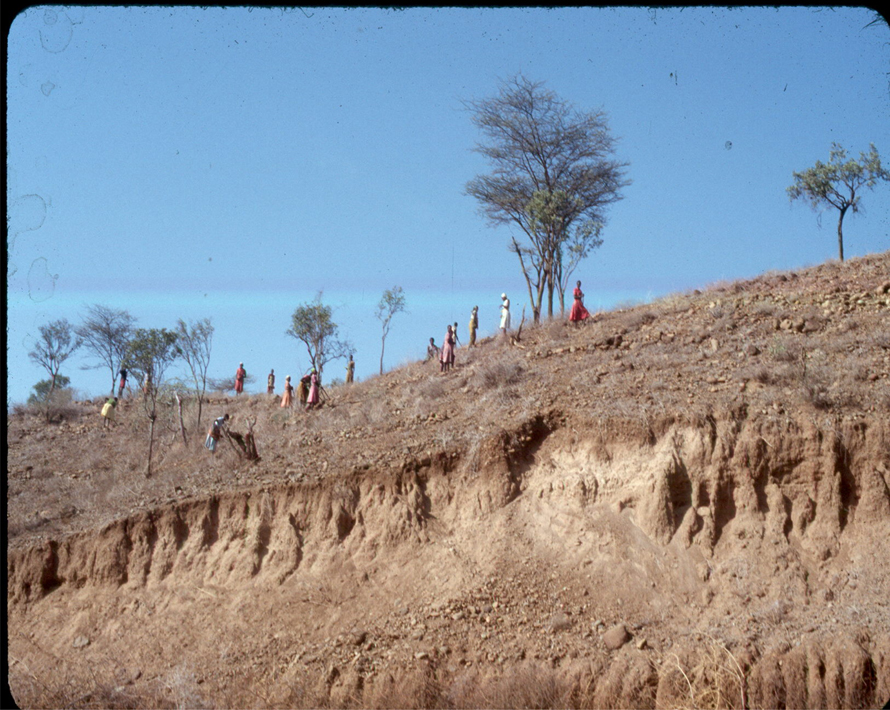
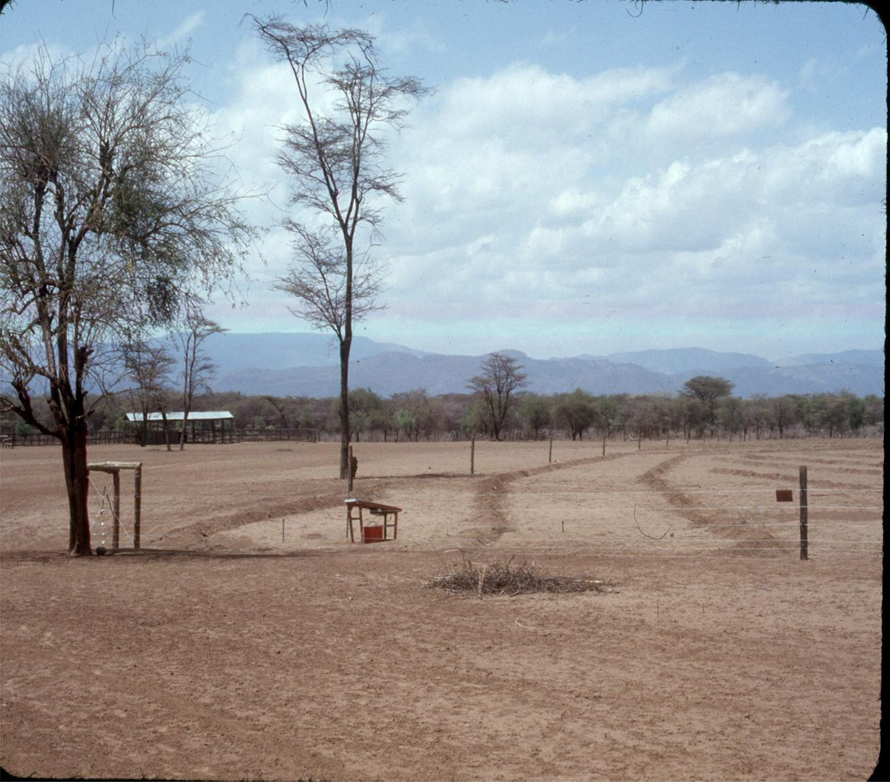
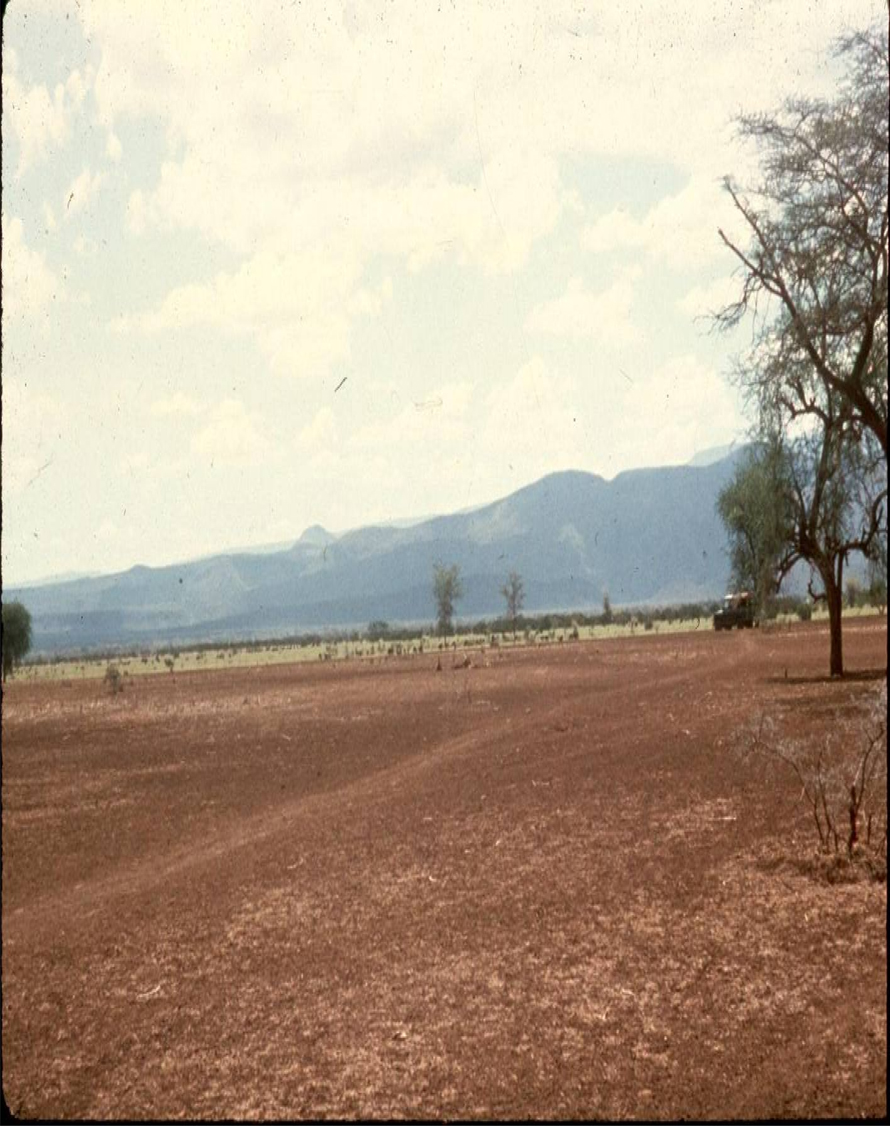
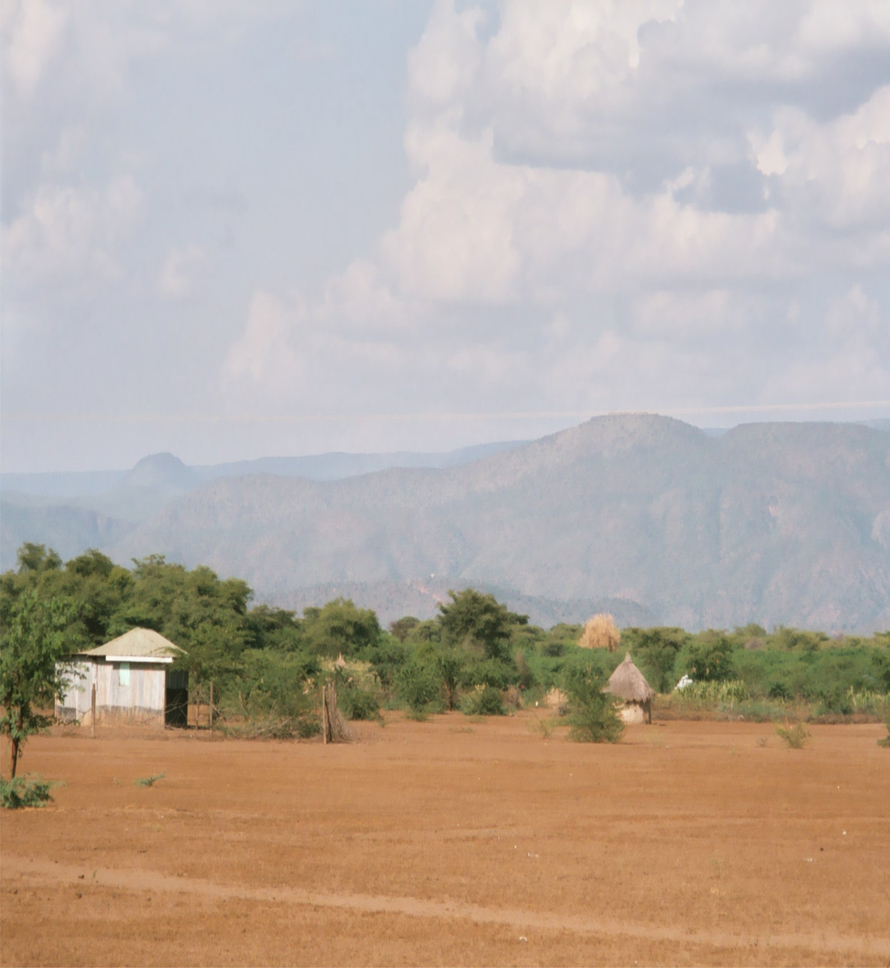
Between 1984 and 1999, research visits were made to the Il Chamus area on six different occasions for periods of up to four or five weeks. During the summer of 1984, it was observed that many of the pilot plots had just been planted or were in the process of being planted, and there was not much spreading of the plant beyond the original areas of planting (see figures 2 and 3). For the next three years, the project was perceived as a success and was renewed for another three years in 1986 (FAO 1986). When it finally ended in 1990, about 740 hectares of prosopis had been planted in the area (Mwangi & Swallow Reference Mwangi and Swallow2005:31).
Photo of tree planting near Marigat, Kenya, 1984 (Photo by author)

Photo of fenced tree plot, Salabani, Baringo, Kenya, 1984 (Photo by author)

In reviewing field notes from June of 1989, I have found that little mention is made of the forestry project, except to indicate that “in Ngambo, the largest settlement in Il Chamus, the FAO project has planted some very impressive tree areas that are fenced off and in the dry season the animals are allowed to graze in them” (field notes, June 1989). However, during a visit eight years later, field notes indicate the significant dispersion of the plant and that “there does not seem to be much open swamp grazing now” (field notes, June 1997). The seasonal swamps (called ilmanie) are key elements of the pastoral ecology of the area, providing an oasis of grazing in an otherwise dry landscape. During that visit, a senior Il Chamus leader, resting under a prosopis tree near his house, remarked about the cool shade and breezes that the tree provides. Only six years later, in 2003, this same leader was one of the main initiators of a movement to eradicate prosopis and an eventual signatory to a lawsuit against the government.
The Spread of Dissent
By 2000, the prosopis issue had become a concern to the community. The unprecedented El Nino floods of 1997 and 1998 in Baringo led to the rapid spread of prosopis, which often disperses along seasonally-flooded streams. Later studies by ecologists would confirm that the central flatlands and seasonally-flooded pastures of Il Chamus are highly conducive to the spread of prosopis (Andersson Reference Andersson2005), suggesting that the plant should never have been introduced to the area. By 2004, Stefan Andersson reported that “P. juliflora was spreading at a high rate in the area causing many annoyances to local people and livestock (2005:15).” Field notes from 2003 and beyond continually reference the growing prosopis problem in Il Chamus. In June of 2004, it was observed that “they [Il Chamus] complain about nowhere to graze cattle because there is no grass due to prosopis trees. . . .I would say that more than half of the wetland grazing has been removed due to prosopis tree encroachment” (field notes, June 2004).
In 2002, local leaders wrote a letter to the FAO demanding that it eradicate prosopis or they would sue them. By 2003 they bitterly complained in interviews about human infections caused by the sharp thorns, continued loss of valuable pastures, and the harmful effects to livestock from consuming the tree’s sugary pods. With the decline in power in the early 2000s of central Baringo’s most famous denizen, President Daniel arap Moi, and his pending retirement in 2002, the community was emboldened to seek justice (Mwangi Reference Mwangi2002). The government, however, was trying to dilute tensions over prosopis by publicizing its potential benefits to the community, including improved supplies of fuelwood, reduced aridity, and the “greening” effect on the area. During the first half of 2003, there were numerous meetings between the Forestry Department and the Il Chamus community to seek possible solutions.
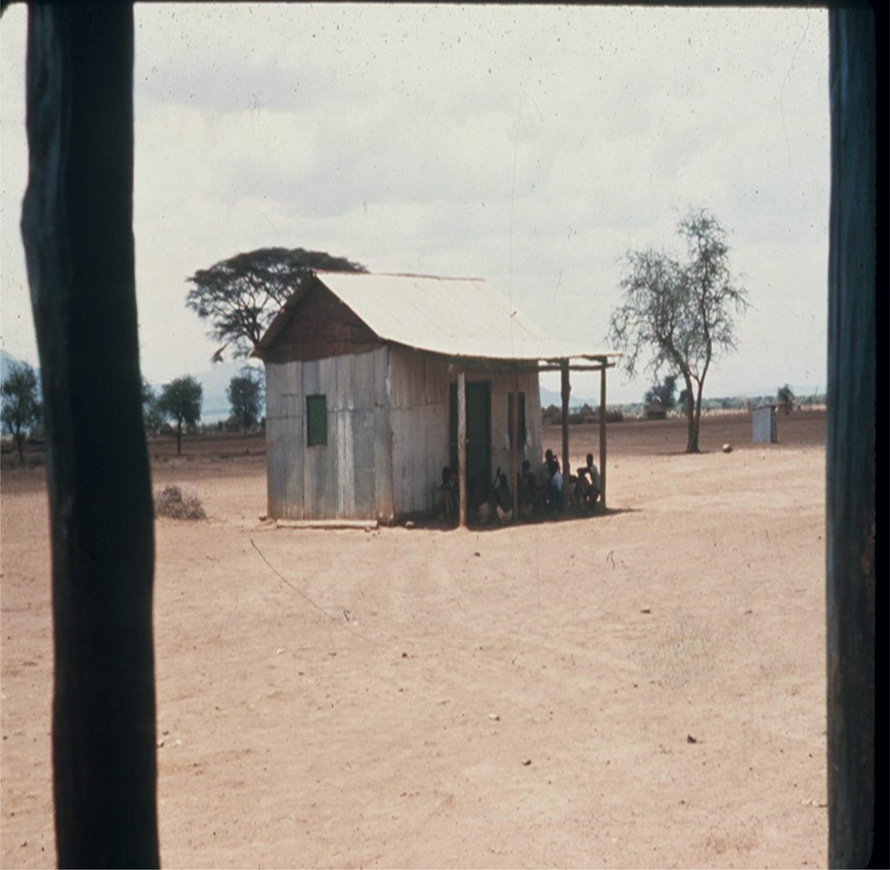
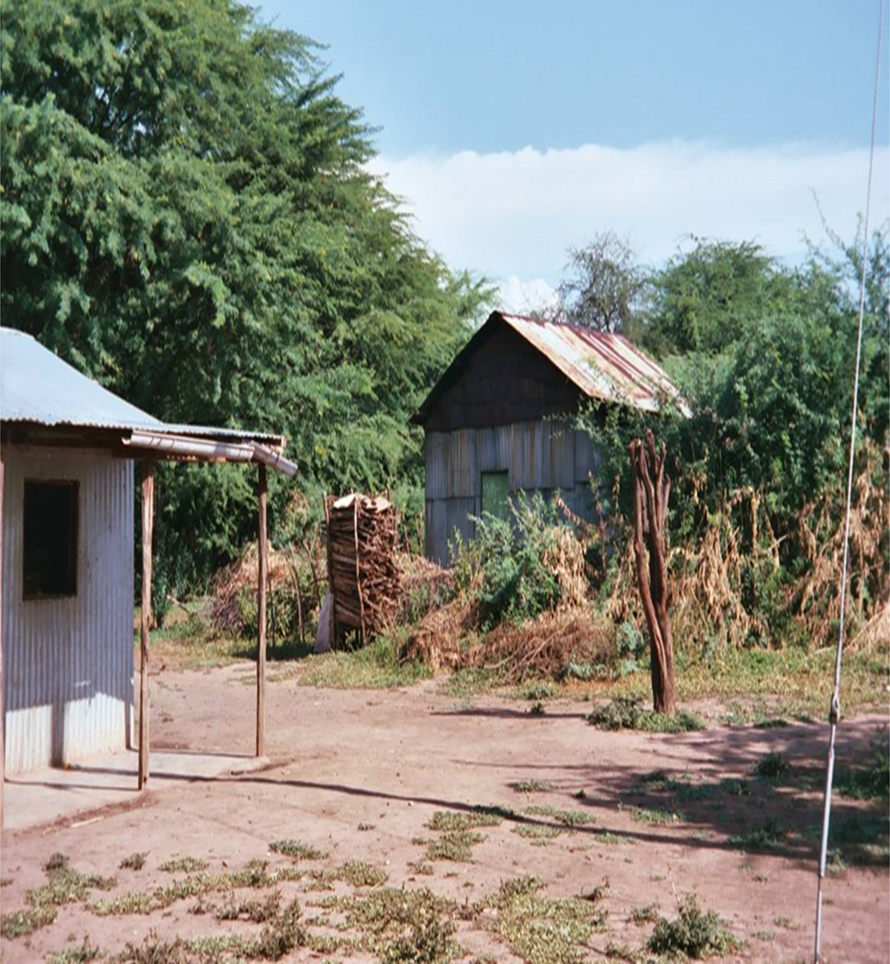
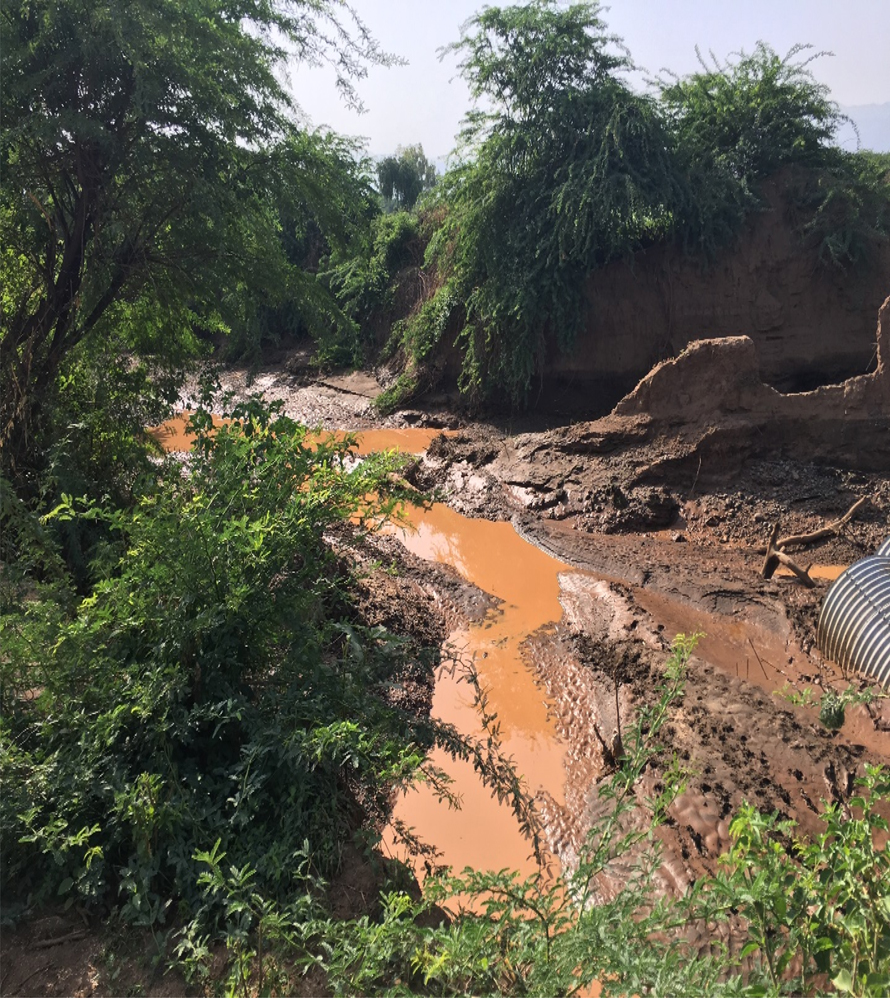
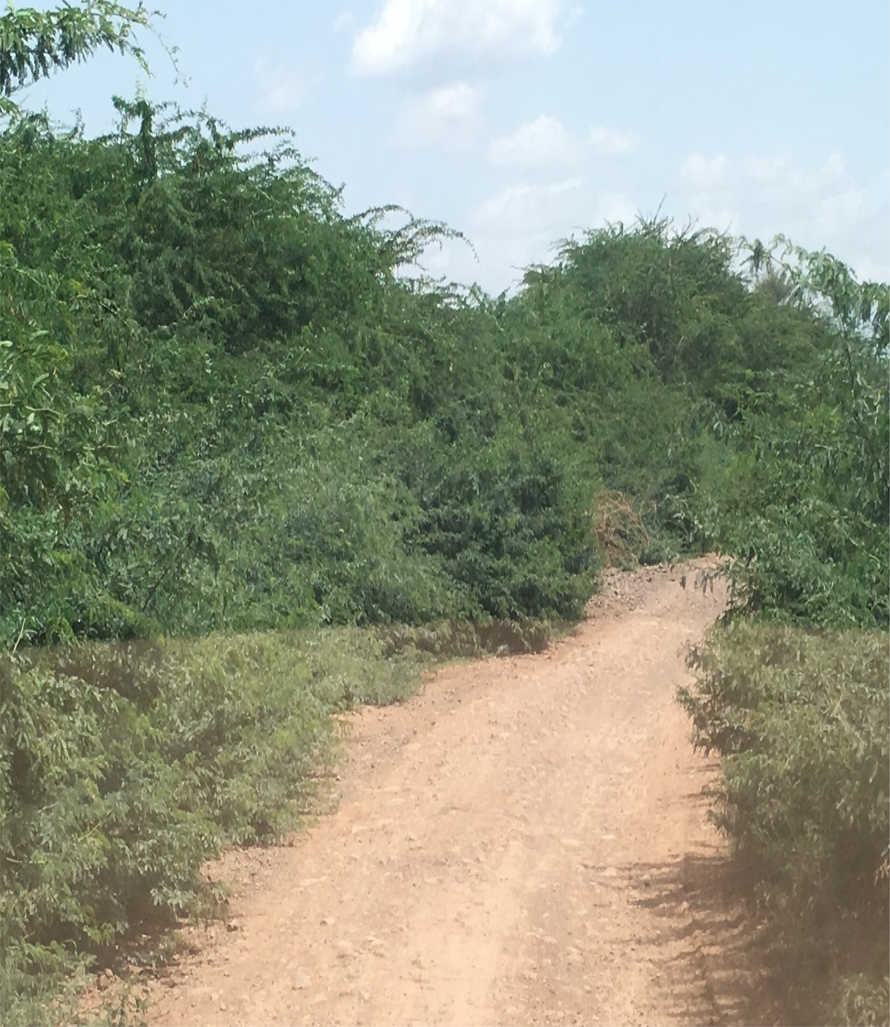
To document the many important visual changes in the area, the author took photos in 2004 of the same landscapes and structures that had been photographed in previous studies during 1980 to 1981 and 1984. What was clearly evident from the pictures was the alarming effect of prosopis on the environment over the twenty-plus-year period (see figures 4 through 10). Additional photos taken in 2007 to 2008 and 2017 to 2018 show that ecological damage caused by prosopis continued unabated (see figures 11 and 12). The community also had experienced massive river and lake flooding at least four times since 2002, with the spread of prosopis partially to blame.Footnote 6 What had once been an open landscape with patches of acacia trees was now a mass of gnarly, bushy trees subject to damaging floods, of little utility for a livestock-based economy. As will be discussed below, the photos showing pre- and post-prosopis landscapes were of great interest to community leaders in their struggle for justice.
Photo of Sintaan grazing site, 1981 (Photo by author)

Photo of Sintaan grazing site with prosopis, 2004 (Photo by author)

Photo of Ngambo grazing site, 1980 (Photo by author)

Photo of Ngambo grazing site with prosopis, 2004 (below) (Photo by author)

Photo of Ngambo grazing site with prosopis, 2005 (Photo by author)

Photo of Ngambo shop, 1980 (Photo by author)

Photo of Ngambo shop encroached by prosopis, 2004 (Photo by author)

Photo of prosopis and flooded area, 2017 (Photo by author)

Photo of road encroached by prosopis, 2017 (Photo by author)

“We Will Sue”
In 2003, it was ruled that FAO as a UN organization has diplomatic immunity and, therefore, cannot be subject to a lawsuit. In a testimony before the government’s National Environmental Management Authority (NEMA), the FAO Deputy Representative at the time claimed that they worked at the invitation of the Kenya government. I quote: “FAO never engages in any project that is not requested by member governments. In this case, the prosopis project was requested by the Kenya government and all that we did was to channel the project’s finances to Kenya from the Australian government” (Mbaria Reference Mbaria2004). The consensus after this response was that the community needed to take the government to court to resolve the prosopis problem.
By 2004, the government was increasingly aware that the community might seek legal action and, thus, it began to finance studies and workshops to see how the prosopis problem might be resolved (Pasiecznik et al. Reference Pasiecznik, Choge, Muthike, Chesang, Fehr, Bakewell-Stone, Wright and Harris2006; Mwangi & Swallow Reference Mwangi and Swallow2005). Heated accusations at the time were circulating as to who was responsible for introducing the invasive plant and who should be responsible for resolving the problem, including any financial compensation to the community. The government’s position was that it was not to blame. With support from FAO, which many local residents still hold accountable for the problem, and other donor agencies, the government embarked on a multi-year initiative to identify ways to manage the tree for the benefit of the community and the environment (Mwangi & Swallow Reference Mwangi and Swallow2005).
Around the same time, the community sought legal counsel from the only Il Chamus lawyer in the country. They also received help from a Kenya-based NGO, called the Community Museum of Kenya (CMK), which eventually helped to bring the legal case against the government. In 2004, a formal complaint was taken to NEMA, the country’s environmental regulatory agency. The goal was to demonstrate the toxic nature of the plant and its negative impacts, as well as to provide the groundwork for a legal case against the state if it became necessary (Odhiambo Reference Odhiambo2015:167). Following a lengthy deliberation, NEMA recommended that prosopis be declared a toxic weed under Kenya’s Noxious Weeds Act and that it be eradicated. Despite this judgment, the government still insisted that prosopis was bringing benefits to the area, including reducing desert-like conditions and soil erosion (Odhiambo Reference Odhiambo2015:175–77).
The government did not implement the actions recommended by NEMA, leaving the community with few options but to pursue its lawsuit against the state. With the support of CMK, the Il Chamus lawyer and his firm formally brought the case against the state in early 2006 (Kenya 2006b). It sought several actions from the government, including acknowledgement that the government was responsible for the harm done to the community, for the costs of eradicating the plant, and for compensating the community for damages (Kenya 2006a). The case was initially dismissed on a technicality in July of 2006, but a second case was quickly filed within two months.
During an interview in 2005, the senior Il Chamus chief requested copies of my photos that documented landscape changes since the introduction of prosopis in the 1980s. The local leader made it clear that the visual materials would help in the preparation of their legal case against the government. Later that year, an additional CD with the photos was made and given to another signatory to the case, in this instance an Il Chamus graduate student who eventually served as an expert witness at the hearing. The visual evidence made them even more confident that they had a strong legal case.
The subsequent judicial hearings became national and international news as one of the country’s smallest ethnic groups took on a government that only four years earlier was forcefully led by the area’s Member of Parliament (MP), President Moi. The prosopis issue became so hotly politicized that the national parliament debated it for two days in July 2006 and declared that the government would provide three billion Kenya Shillings (KSH), equivalent to USD46.15 million at the time, to rectify the problem (Wabuysa Reference Wabusya2013:22). One British Broadcasting Corporation (BBC) story at the time described how “when the plant was introduced to Kenya twenty years ago, it was supposed to stop the deserts in their track. But twenty years later, it has become a nightmare for residents of Kenya’s dry lands” (Mawathe Reference Mawathe2006). Dressed in their customary bright red cloaks and elaborate beaded jewelry, many Il Chamus from Baringo attended the Nairobi court hearings. One day a toothless goat was brought to court to show how consumption of the sugary prosopis pods had damaged their livestock. The national and international media were drawn to the case, especially the spectacle of “a toothless goat’s day in court” (Mawathe Reference Mawathe2006). One Kenyan news service proclaimed that: “Standing before three distinguished judges in court yesterday, was a toothless goat, said to be a victim of a weed gone berserk. Its owners braved a four-hour dawn chill, covering more than 300 kilometres from Baringo to Nairobi to present the unusual exhibit in court” (Kadida Reference Kadida2006). At play in accounts like this was a “tongue and cheek” disparaging of Il Chamus culture, with its toothless goats and customary dress in a modern court in the center of cosmopolitan Nairobi. When one educated Il Chamus leader was asked by the author about some of the comical portrayals in the press, including editorial cartoons about the goat in court, the individual remarked: “The Il Chamus have received a lot of publicity about the problem in national and even international networks and that is good. The goat in court has been good because it gives publicity to the court case” (interview, June 2007).
In their complaint to the court, the legal team argued that the government had violated international human rights and environmental laws by denying the community the right to live in a healthy environment and by spoiling the area’s biodiversity. They noted that the government had breached the international conventions on biodiversity and environment and development, and that the right of the Il Chamus community “to a clean and healthy environment is being breached by its [prosopis] unabated spread” (Kenya 2007:8). The defense team also pointed to the Stockholm Declaration on Human Environment of 1972 and the Rio Declaration on Sustainable Development of 1992, to which Kenya was signatory, to further support their claim that the rights of the Il Chamus to a sustainable and healthy environment had been violated (Kenya 2007:6). In the words of legal anthropologist Michael Odhiambo, “the execution by the Il Chamus of their case against the government was ingenious because it deployed legal arguments that linked the negative effects of Prosopis on the environment to breaches of the constitutionally guaranteed rights to life and property as well as to fundamental principles of environmental law and international conventions” (2015:165).
To make matters even more interesting, the defense lawyers for the government took a similar approach of drawing on international protocols in their arguments. According to the defense, “Kenya was a signatory to the United Nations Framework convention on climate change and the Kyoto Protocol to the same convention” (Kenya 2007:19). They claimed that reversing desert-like conditions through the introduction of prosopis was consistent with sustainable development and global environmental goals, such as combatting climate change. From the government’s position, prosopis can be “used in a positive way to sustain development, control climate change and reduce greenhouse gasses in the atmosphere” (Kenya 2007:58). By highlighting the greening of the Il Chamus landscape and invoking global discourses about climate change, the government argued that the introduction of prosopis had achieved important environmental goals without admission of damages to local livelihoods.
The judges in the case were not convinced of the government’s argument. On December 11, 2007, they surprisingly ruled in favor of the Il Chamus community, sparking a community-wide celebration. According to the ruling, the government should be “held accountable for the damages caused by the introduction of Prosopis Juliflora to the region” ( Kenya 2007:66) and immediately form a commission of experts under terms of the court to quantify the damages and costs to the Il Chamus community (Kenya 2007:84). As Odhiambo notes, “in legal terms, the case was a major victory for the Il Chamus” (2015:183), although it was soon apparent that the court orders were not to be implemented. The only meaningful action taken by the government as a result of the case was to eliminate strict regulations on charcoal exports from prosopis-affected counties, such as Baringo. It should be noted that the government has rarely implemented judicial rulings in favor of indigenous communities in Kenya, including a recent legal victory awarding the return of ancestral lands to the Okiek community (Vigliar Reference Vigliar2017). (The Okiek are a Kalenjin speaking group of former hunters and gatherers who once occupied large expanses of western Kenya’s highland forests.)
With support from international agencies, the government continued to look at a range of uses of the so-called “devil” bush, including using it in processed cattle feed and in the making of furniture. Total eradication of prosopis from such a large area as Il Chamus would be extremely costly, and while some populist politicians from the region continue to advocate for this action, it never has been seriously considered by the state. The findings of most studies point to management of the plant as the only viable alternative (Choge & Pasiecznik Reference Choge and Pasiecznik2006), even though most Il Chamus are very skeptical about managing prosopis. One elder complained:
It is very bad and it is in the swamps. The pods are very sugary and hurt our goats teeth. ….This talk of management is just a small thing… We prefer our local trees. (interview, June 2007)
Another individual explained:
We have seen the bushes grow very fast and only the mature trees can be used for charcoal. The government says it is too expensive [to eradicate] so we must learn to manage it. That is not possible—we need total eradication. (interview, September 2008)
Charcoal making and sales is a set of income-generating activities that prosopis provides. However, for many Il Chamus with their pastoralist legacy, charcoal making is a culturally inferior activity and even to this day several families want nothing to do with it. An assessment of a government initiative to turn Il Chamus into charcoal makers noted that “there was little uptake of charcoal making in the area, generally believed to be because the local people are pastoralists and would not change the activities of their ancestry” (Pasiecznik et al. Reference Pasiecznik, Choge, Muthike, Chesang, Fehr, Bakewell-Stone, Wright and Harris2006:8). Although Il Chamus consider charcoal making as culturally inferior, many are forced to pursue it due to a decline in livestock numbers and increased poverty as a result of the destructive impacts of the prosopis plant.
The government continued to refer to the benefits of prosopis in halting desertification in the area, increasing vegetation cover, and providing a source of income for the poor. When questioned about these claims in 2008, one Il Chamus elder explained: “NEMA says that the prosopis helps to stabilize soils and land and if there is total removal then it will be like a desert here. We would rather live with sand, then to have our livestock die from this problem—even the thorns are poisonous to people” (interview, September 2008). According to some community members, the introduction of prosopis also allowed the government to achieve its ultimate goal of forcing Il Chamus out of pastoralism, a livelihood that Kenya and other African states generally disdain.
“Who Will Speak for Us”
Around the same time that major concerns about prosopis were being expressed, the community also began to explore the possibility of petitioning for its own political constituency in central Baringo. If approved, this measure would allow them to have a nominated Member of Parliament (MP) who could represent the community and seek justice in the prosopis case, including compensation for damages to their livelihood and environment. Once again, the timing coincided with the pending retirement of the former MP of central Baringo, President Moi, since a new constituency would have to be carved out of his political constituency. The need for political representation took on special urgency with the prosopis problem. Many individuals whom I interviewed between 2006 and 2008 suggested that if they had their own MP the prosopis catastrophe would have been resolved without need for a lawsuit. One individual remarked: “We have not had the MP to let the country know about our problems and to get the funds to do something about the prosopis” (interview, September 2008).
The Il Chamus lawsuit against the government for political discrimination and a lack of political representation was formally filed in March 2004. The constitution at the time allowed for a minority (indigenous) group to have a designated political representative, such as an MP, if it could be shown that their community is discriminated against under the current electoral system (Little Reference Little2016). The same Il Chamus lawyer from the prosopis case was involved in this one also, but the lead attorney was Kenya’s leading human rights lawyer, Pheroze Nowrojee, who often takes up discrimination cases against indigenous communities. The legal team argued that the Il Chamus should be granted an autonomous political constituency to elect their own MP or be designated an MP under the constitution. The political representation case also centered on issues of human rights with references to international protocols of the UN and other global institutions. Despite political pressure, the judges, after lengthy proceedings, ruled in favor of the Il Chamus’ petition and directed the Election Commission of Kenya (ECK) to allocate the Il Chamus its own political constituency when new ones are created in the future. Once again, national and international media covered the court case, with the headlines of one BBC news story noting “Landmark ruling for Kenya nomads” (BBC 2006).
Similar to the prosopis case, this judicial ruling also was never implemented. Even when new political constituencies were created in 2009 and 2012, the community was not allocated one. To quote one Kenyan journalist: “The quest for justice for the minority Ilchamus community in Baringo seems to be a pipe dream as two landmark rulings in their favour are yet to be implemented” (Masibo Reference Masibo2008). When interviewed at his Nairobi office after both positive rulings, the Il Chamus lawyer lamented: “In Kenya it is one thing to win a ruling and another to actually get something done. We won in theory, but in practice still no commission [or constituency] has been formed….We are a marginal group and nobody listens to us even when we win our case” (field notes, June 2008). This lack of action suggests the Kenyan state espouses “a political culture where real power and political intent are masked by democratic and legal performances and rituals that seemingly support citizens’ rights, but in reality constrain them” (Little Reference Little2016:190).
Beyond the Nairobi courts and legal grievances, conflict and insecurity in the Baringo region increasingly occupied the attention of the community. And these problems are not unrelated to the legal struggles of Il Chamus. Livestock raiding had always been an issue in Baringo, as it has been throughout the region, but it reached a new level in 2005, when twelve Il Chamus were killed and more than two thousand cattle taken in one attack. This was a “tipping point” for insecurity in the area. The scale of this attack was unprecedented, as was the occupation of Il Chamus lands by its neighbors in subsequent years. Many Il Chamus leaders felt that it was not a coincidence that the attack happened soon after they brought a legal case for political representation: “Some powerful people do not want us to form our own constituency” said one community member (interview, June 2007, cited in Little Reference Little2016:195). After 2005, many Il Chamus began to arm themselves for the first time with modern weapons, such as the prevalent AK-47 (Kalashnikov) and engage in small retaliatory attacks.
The prosopis problem has direct links to increased insecurity in the area. Because of the invasive plant, the best remaining pastures now are in the eastern rangelands of the Il Chamus area, bordering well-armed and numerically superior Pokot communities. Despite the insecurity of the border zone, many herders from prosopis-ravaged lands feel the necessity to move their animals there to graze, which elevates the risk of attacks. In an interview about the problems, one Il Chamus herder complained:
It is terrible and we need our own representative to protect us. We need to stop the encroachment by Pokot. . . and this only will happen if we have support of government and a representative. If we do not put a stop to the insecurity, we will continue to lose our land [and] …pastoralism will be finished. . . .[But] [If] we have an MP we can stop the Pokot from taking our areas and killing our people. . . .We can get some action on the prosopis problem. (interview, June 2007)
From the perspective of the livestock herders, one hears similar comments about the relationship among prosopis, insecurity, and political marginalization: “Where can I shift to, there is nowhere to go. The Pokot have taken over, the prosopis have hurt our grazing and now there are many people. . . .But we have nobody in parliament who says a word for us; nobody defends us” (interview, September 2008). With fewer livestock because of prosopis and raids, Il Chamus are unable to effectively utilize their customary grazing areas. This shortcoming allows Pokot to move into those areas left unoccupied by Il Chamus herders, affirming what has always been the norm in northern Kenya, that vacant pastures are quickly occupied by other often more powerful pastoralist groups (Little Reference Little, Bassett and Crummey2003; McPeak et al. Reference McPeak, Little and Doss2012).
Deadly conflicts between Il Chamus and Pokot have occurred in almost every year since 2008. In contrast to raids in the past, the recent raids are much more violent, entailing burning houses and schools, terrorizing women and children, and taking over farms and settlements. It is now about controlling territory and adjusting ethnic borders, a form of boundary marking through violence and criminality that Charles Tilly (Reference Tilly1990) wrote about with regard to “state making” in Europe. This form of political violence has characterized much of northern Kenya for the past forty years, but it has only reached the Il Chamus area in the past decade. It is suggested here that central and south Baringo became part of northern Kenya at this time, or what the media calls the “badlands” (Straight Reference Straight2009:21), a region less defined by geography and fixed boundaries than by weak state authority, multiple parties who control violence, and the arming of local communities for defense. In this sense, the so-called “AK-47 frontier,” demarcating where weapons are prevalent and often openly displayed, has moved markedly south in Kenya. Like most areas of northern Kenya, the state’s inability to provide security for Il Chamus requires a reliance on local cooperation and community policing for defense against violence. In 2018, the government formed a brigade of home guards, officially called Kenya Police Reservists, in the area. They are a community force of lightly trained guards tasked with protecting rural residents against attacks, that are commonly found in counties throughout northern Kenya. Currently there are about fifty Il Chamus home guards with weapons supplied by the government, but they are unlikely to be a strong deterrent against threats from groups that are larger and better armed.
It should be noted that the discussion of conflict here represents perspectives of Il Chamus rather than those of other groups, such as Pokot. This is not disputed, since research has been conducted among the former rather than latter community. However, what cannot be questioned are the attacks by Pokot and loss of Il Chamus livestock and lives. Some of the claims for territory, in turn, have deep historical roots, and both Pokot and Il Chamus feel discriminated against by the government. The anthropologist Clemens Grenier, who has worked among Pokot, does “not see the Pokot as the main aggressors, let alone as ‘the region’s most formidable and battle-hardened ethnic war machine’” (2013:231). On the other hand, the Pokot are a considerably larger and better-armed community than the Il Chamus and have inflicted considerably more suffering on the Il Chamus people than vice-versa. Moreover, both locally and nationally, Pokot have considerably more political power than Il Chamus, which advantages them in political disputes.
The insecurity and prosopis issues in Baringo are embedded in viscous local and national politics and land issues that leave Il Chamus increasingly vulnerable. Land is in short supply and heavily contested in Kenya, with widespread land-based conflicts occurring throughout the country since the early 1990s. This was the period when multi-party elections were introduced, and identity politics around ethnicity and customary claims to land were sharpened. In fact, one could easily argue that the country’s post-election violence of 2007 and 2008, when Kenya was on the brink of civil war, was as much about land as it was about politics (Boone Reference Boone2012). In Baringo County, the discovery of commercially viable sources of geothermal energy, intermittent rumors of oil potential, and a massive national infrastructure project of roads and railroads (the Lamu Port-South Sudan-Ethiopia-Transport [LAPSSET] Corridor project) that will transverse the county further heighten the economic and political stakes for control of land.
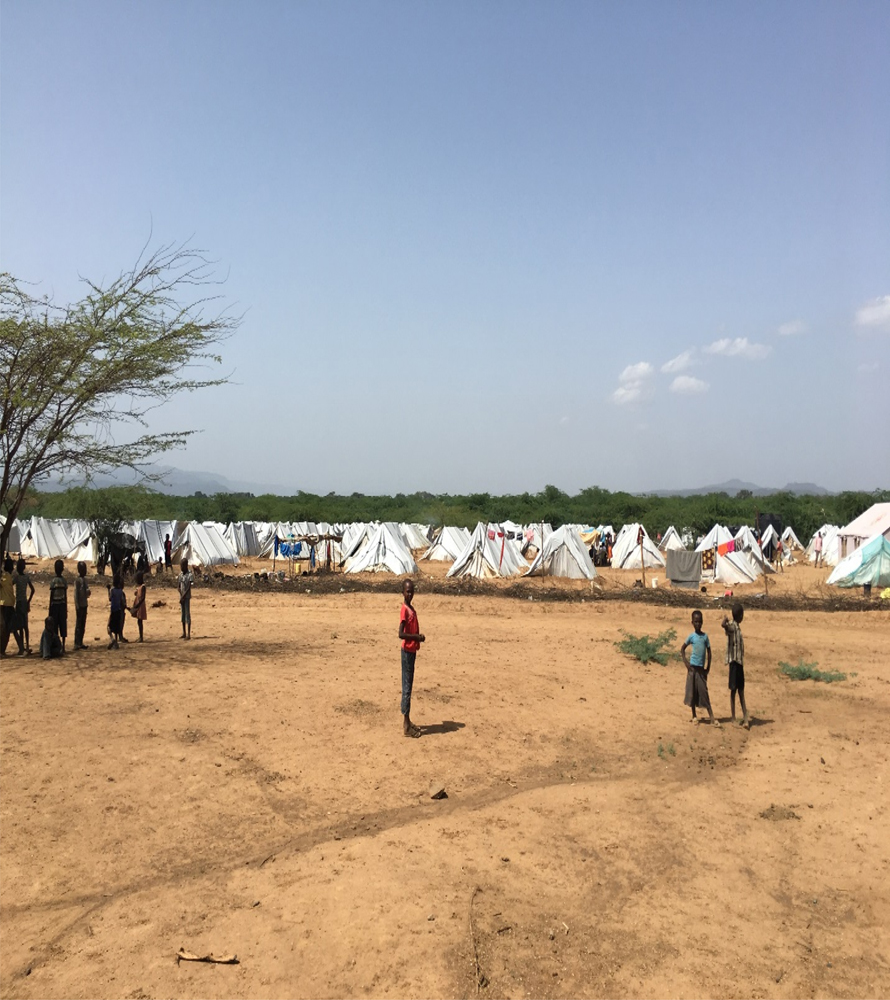
Although on the periphery of Kalenjin politics, Pokot are still part of the larger Kalenjin community, and both Kenya’s vice president, William Ruto, and Baringo County’s senator, Gideon Moi, the son of the former president, are Kalenjin with noted presidential aspirations (Kipsang & Koech Reference Kipsang and Koech2018).Footnote 7 Despite claims to the contrary, they and their elected local counterparts have done little to stop the land invasions and insecurity in the area (Daily Nation 2017; Langat Reference Langat2016). Pokot attacks on Il Chamus have been spurred in part by their need for arable lands, which politicians recognize but avoid addressing (see Grenier Reference Greiner2013). Consequently, with ongoing insecurity and the forceful expropriation of their land, many Il Chamus have been forced to stay at an IDP camp or with relatives in relatively secure settlements (see figure 13). Since 2006, displaced families have been able to move back to their homes every twelve to fifteen months with the intermittent support of the Kenya army, but this pattern is unsustainable.
IDP Camp, Eldume, 2017 (Photo by author)

Heightened Inequality and Poverty
The two legal cases discussed in the article have spotlighted the glaring inequality in the area and in Kenya generally, which has among the highest levels of inequality on the continent (United Nations Development Programme [UNDP] 2017). Without sufficient livestock, charcoal making has become an important income source for increasingly large numbers of poor in the area, especially widows and female household heads. Those Il Chamus who have been able to attain education and acquire salaried positions outside the area—and many of the elite families have done so—are buttressed against the hardships caused by prosopis and insecurity and the state’s recalcitrance with regard to implementing the court’s rulings. With increasingly large numbers of youth, especially young males, outside the area in schools and/or working, minimal numbers remain to protect against land invasions and violent raids. Local respondents note how this leaves their rangelands unprotected and subject to attacks by neighboring youth, who often are neither in school nor employed (field notes, July 2017).
Those individuals with salaried jobs outside Baringo regularly remit money to family members in the rural areas, and until recently they often invested in the area. In fact, more than 60 percent of Il Chamus households reported receiving remittances from individuals working outside their home area during 2017. These revenue flows represent a significant source of survival and investment capital for the area, but they are threatened by the area’s problems. With decreased grazing areas and land productivity due to prosopis and ongoing insecurity, many educated elite are re-thinking investments in the area. Many of them have begun to move and build homes outside the area to avoid insecurity, representing a significant loss of investment and political capital for the community. Other elites are reluctant to invest and build homes in the area due to flooding and the prosopis problem. One wealthy individual with a senior government job in Nairobi explained that there might not be “any good investments left in Baringo whether in livestock or anything else” (field notes, June 2017).
As early as the mid-2000s, a number of Il Chamus perceived this pattern of investment and relocation outside Baringo as a serious problem:
We need to keep our assets in Baringo. I do not think it is a good thing to build houses to live outside Baringo to leave our people there with nothing. What will happen if all those working at good jobs did not come back but built houses and lived elsewhere. . .Our people will be left with nothing—they depend on us who work outside and have good education. (interview, June 2007)
The withdrawal of human and financial capital from Il Chamus has increased in the past ten years with the growing environmental and security problems. Already many Il Chamus are investing in real estate in Marigat town and neighboring Nakuru County, where land prices increased by more than 12 percent per year between 2012 and 2017, a pattern not unusual for high-demand areas of Kenya (Tubei Reference Tubei2018). Those elite families with land and investments outside Baringo perceive these economic opportunities as considerably preferable to those in Il Chamus. This troubling trend also exposes the widening socioeconomic gap between rural and urban Il Chamus, including those living near large cities. When asked about this pattern, one elder complained to me that: “there are many educated in Nairobi but the educated Chamus are not helping the community. . . .Those people in Nairobi are disconnected from the community” (interview, July 2017). This increased fracturing of relations between rural Baringo and urban Kenya does not bode well for potential political gains in the future, since those urban Il Chamus theoretically have the political capital and connections to make a difference, if they persist in their efforts.
Thus, along with other problems associated with prosopis, the plant’s destructive impact also is intensifying class and rural-urban divisions. Even the Nairobi-based lawyer who was the lead attorney in the prosopis case and who assisted in the political constituency matter has significant investments and his main residence outside Baringo County. He also has socially and politically fallen out of favor with his own community. At an elaborate Il Chamus ceremony in 2007, the lawyer was awarded special elder status for his legal work, but in August 2016 he was publicly cursed by many of the same elders, an event that also was reported widely in the media.Footnote 8 It was noted that the community feels swindled by their own lawyer who took advantage of their illiteracy and sought payments for himself (Miningwo Reference Miningwo2016). One distressed elder explained that “the system is corrupt: we had 2 rulings, the constituency and prosopis ruling. What happened with the money?” (interview, July 2017). Thus, as far away as Nairobi, the political and social divisions and conflicts that prosopis has spawned are being felt by both the powerful and the vulnerable.
The legal cases outlined above have sparked the political ambitions of several Il Chamus elite, including the Il Chamus lawyer discussed above, who view the creation of a political constituency as their chance to obtain a political post. To be elected or nominated to political office in Kenya, including at the county level, comes with extremely lucrative political and economic benefits. These include exceptionally high salaries and allowances that, according to one estimate, make political office holders in Kenya among the highest paid in the world, measured as a percentage of the country’s gross domestic product (GDP) (Ngugi Reference Ngugi2018). The positions also come with the capacity to reward clients and supportive communities with jobs and development projects, as well as a Constituency Development Fund (CDF) equivalent to millions of Kenya Shillings to allocate (Kangogo Reference Kangogo2018).Footnote 9
The competition for political office, as well as the government’s “waiting game” over the court’s rulings, has diluted some of the demands for justice in both the prosopis and constituency cases, especially from educated elites residing outside the area. Their concern with prosopis removal and compensation is less urgent than it was ten years ago, although the related issue of political representation remains a key issue for them, since they would potentially benefit from it. The government still points to the positive aspects of prosopis, even arguing that their efforts in Baringo are a model for other counties in Kenya that face similar challenges with the invasive plant (Chebet Reference Chebet2018). Those in the rural areas of Il Chamus, in turn, continue to live with the hardships of prosopis, insecurity, and poverty.
Conclusions
The introduction of a thorny, quick-growing plant to combat perceived “desertification” instigated a plethora of problems and issues that echoed and continue to reverberate well beyond the small Il Chamus community. Africa is full of development and environmental experiments that disguise the politics and potential violence behind technical interventions, a point that James Ferguson (Reference Ferguson1990) made more than twenty-five years ago. As Nancy Peluso and Michael J. Watts (Reference Peluso, Watts, Peluso and Watts2001) have shown, political interventions under the guise of green environment and conservation goals have a record of violence and dispossession around the world. In Africa, they have been associated with militaristic anti-poaching units (Duffy et al. Reference Duffy, John, Büscher and Brockington2015), land grabbing on an enormous scale (Fairhead et al. Reference Fairhead, Leach and Scoones2012), “green” energy projects that displace large numbers of families (Mwebe & Jika Reference Mwebe and Jika2018), and wildlife conservation schemes that criminalize herders and farmers on their own customary lands (Brockington Reference Brockington2002). All of these symptoms are found in northern Kenya and increasingly alienate the region from the rest of the country. In the Il Chamus case, the original intentions of a forestry project may not have been overtly political—albeit the political theme of settling pastoralists was obvious to many—but it has since been imbricated with power struggles and violence. The government’s unwillingness to deal with the prosopis and insecurity problems in a sustained manner reflect larger political agendas that reach the highest levels of the government. As this article has argued, the prosopis and related problems in Il Chamus expose a national political culture where the government performs rituals of forming commissions, making promises, and allowing judicial victories to occur in the highest courts with little intention of implementing any meaningful action. Instead, politicians and other opportunists pursue agendas that leave communities to fend for themselves even when they hold out hope for social justice based on legal victories.
The use of litigation as a strategy to gain a political voice against injustice is increasingly pursued by Il Chamus and other indigenous groups in Africa and around the globe (Comaroff & Comaroff Reference Comaroff and Comaroff2009; Goodale & Merry Reference Goodale and Merry2007; Speed et al. Reference Speed, Ramirez, Blackwell, Macleod, Castillo, Sieder, Sierra and Herrera2009). In Kenya alone, more than fifteen different indigenous groups have sought legal recourse for their own political constituencies, but in only one case have they been successful (Little Reference Little2016). Odhiambo points out that the increasingly litigious nature of Il Chamus society reflects a wider trend in the use of legal instruments by indigenous, minority communities around the world, with some achieving successful actions (2015:57). He especially references the Comaroffs’ concept of “lawfare” and how many indigenous groups increasingly pursue their political and economic goals by relying on courts, often with support from NGOs and activists (see Comaroff & Comaroff Reference Comaroff and Comaroff2009:56–57). The use of “lawfare” by Il Chamus as a political tactic provides a glimmer of hope and purpose for the community, although the strategy so far has been frustrated by prevailing political and economic interests. In the Kenyan context, courtroom victories and sympathetic journalists and activists have not translated into meaningful responses for minority (indigenous) groups.
Finally, the frequently heard narrative of “Africa rising” mainly captures urban areas in this case and, as this article suggests, highlights the growing socioeconomic gap between rural and urban Kenya. This discrepancy is associated with increased inequality and discontent. This is especially the case for residents of northern Kenya, who have benefited little from the economic and urban growth that has taken place elsewhere in Kenya and who continue to absorb the costs associated with environmental programs of wildlife conservation, anti-desertification, or climate change mitigation. In the past, much innovative research in Africa, including in Kenya, focused on what has been called rural-urban linkages, and it underscored the beneficial social and economic ties between town and country (Evans & Ngau Reference Evans and Ngau1991; Bigsten Reference Bigsten1996; Neves & du Toit Reference Neves and du Toit2013). The concept of African families with “one foot in the rural sphere” and “one in the city” that allowed many rural poor to escape poverty in Kenya may be less applicable today. As one salaried worker in Nairobi explained, one month’s salary or revenue from an urban investment “can buy the equivalent of 20 cows, so why do I need to invest in rural Baringo?” (interview, March 2017). Push back in the form of armed banditry, violence, and political disaffection from northern Kenya, as well as other marginalized dryland areas of eastern and western Africa (Lecocq Reference Lecocq2010), point to humanitarian and political stability factors that influence why investments and attention to these regions are warranted. They also graphically highlight why external interventions in these territories, even under the pretense of environmental “greening,” always have a political dimension.
Acknowledgments
Over the years there are many institutions and individuals who have aided my work in Baringo. I am grateful for the institutional support provided by Egerton University under the Pastoral Risk Management in East Africa (PARIMA) program between 1998 and 2008, especially to Professor Abdillahi Aboud. I also acknowledge the following individuals who have helped with the research in Il Chamus: Lempaysan Keis, Eunice Lepariyo, Clement Lenachuru, Nickson Lolgisoi, Calvin Longeshele, John McPeak, and Samuel Sekeu. Recent fieldwork in Kenya has been supported by a grant from the John Templeton Foundation under a project titled “Cross-Cultural Insights into Well-being among Vulnerable Populations in Eastern Africa.” I wish to thank my colleagues on this project, including Abdillahi Aboud, Eunice Lepariyo, Mark Risjord, and Danielle Veal. I also am appreciative of the valuable comments on this paper provided by colleagues at the Institute of African Studies, Emory University—especially Clifton Crais, Susan Gagliardi, Shreyas Sreenath, and Benjamin Twagira. Finally, I wish to thank Benjamin Lawrance, who invited me to present the African Studies Review Distinguished Lecture at the 2018 annual meetings of the African Studies Association, and the four anonymous reviewers who commented on the manuscript. Although the support provided by the above institutions and individuals is much appreciated, the author is solely responsible for the contents of this article.