Introduction
During their life cycle, plants are exposed to a variety of abiotic stresses, such as salinity, UV irradiation, supra- and sub-optimal temperatures, drought and heavy metals. These abiotic stresses have a profound effect on plant morphology, growth and production (Vicuña et al., Reference Vicuña, Garreaud and McPhee2011). Various stages of the plant life cycle, such as seed germination, seedling growth and vegetative growth, are affected by abiotic stresses (Chandra et al., Reference Chandra, Bhargava, Yadav and Mohan2009). Stresses cause physiological changes such as reduced transport and uptake of nutrients and accumulation of chemicals in plant tissues (Nagajyoti et al., Reference Nagajyoti, Lee and Sreekanth2010). γ-Aminobutyrate production via the gamma-aminobutyric acid (GABA) pathway acts as accumulative adaptive metabolite in plants in response to various environmental stimuli such as cold, heat, drought, hypoxia and mechanical wounding. In this respect, it is necessary to investigate the relationship between abiotic stresses and GABA accumulation at various stages of the plant life cycle, especially seed germination and seedling growth (Shelp et al., Reference Shelp, Bozzo, Trobacher, Zarei, Deyman and Brikis2012).
GABA is a four-carbon non-protein amino acid conserved from bacteria to vertebrates and plants (Fait et al., Reference Fait, Fromm, Walter, Galili and Fernie2008). It is usually metabolized via a short pathway which consists of three enzymes (Shelp et al., Reference Shelp, Walton, Snedden, Tuin, Oresnik and Layzell1995). For decades, GABA has been treated mostly as a metabolite, but evidence after the exploitation of the functional genomic tools of Arabidopsis thaliana points to a new possible role of the GABA metabolic pathway in response to stress and signalling (Fait et al., Reference Fait, Fromm, Walter, Galili and Fernie2008). GABA production and accumulation is involved in many aspects of the plant life cycle, especially under abiotic stresses (Kinnersley and Turano, Reference Kinnersley and Turano2000). Recent combined physiological and genetic studies of the GABA shunt pathway showed that its function is required for proper growth in response to abiotic stresses such as extreme temperatures and salt (Shelp et al., Reference Shelp, Bozzo, Trobacher, Zarei, Deyman and Brikis2012; Bown and Shelp, Reference Bown and Shelp2016; AL-Quraan et al., Reference AL-Quraan, Sartawe and Qaryouti2013).
Unfavourable environmental conditions such as salinity and drought stresses are among the most widespread abiotic factors that affect agricultural communities and limit crop productivity (Abebe et al., Reference Abebe, Guenzi, Martin and Cushman2003; Zammani et al., Reference Zammani, Niazi, Moghadam, Deihimi and Ebrahimie2013). The exposure to prolonged osmotic pressure and salinity leads to plant growth retardation and death. A study on cultivated lentil (Lens culinaris Medik) to investigate its tolerance under prolonged exposure to temperature, salinity and osmotic stress showed that there is a direct effect of temperature, salt and osmotic stress on growth in terms of seed germination, seedling growth and photosynthetic pigments (AL-Quraan et al., Reference AL-Quraan, Al-Sharbati, Dababneh and Al-Olabi2014).
Abiotic stresses lead to a series of physiological, biochemical, morphological and molecular changes in crop productivity and growth (Wang et al., Reference Wang, Vinocur and Altman2003). Salinity and drought induce cellular damage comparable to that produced by osmotic stress which leads to homeostasis disturbance (Moghadam et al., Reference Moghadam, Ebrahimie, Taghavi, Niazi and Djavaheri2012) and production of reactive oxygen species (ROS) (Seppanen et al., Reference Seppanen, Cardi, Hyokki and Pehu2000; Uquillas et al., Reference Uquillas, Letelier, Blanco, Jordana and Holuigue2004; Zhao et al., Reference Zhao, Sun, Liu, Liu, Liu, Yan and Zhou2006; AL-Quraan and AL-Omari, Reference AL-Quraan and Al-Omari2017). High soil salinity is a major cause of decreasing crop production and has deleterious effects on biochemical and physiological processes, seed germination, seedling growth and development of plants due to the effects of both specific ion toxicity and osmotic pressure (Ramden et al., Reference Ramden, Niemi and Hadathi1986; Grieve and Suarez, Reference Grieve and Suarez1997; Munns, Reference Munns2002). In addition, all metabolic and biosynthetic processes such as protein synthesis, photosynthesis and lipid metabolism are influenced by elevated soil salinity (Parvaiz and Satyawati, Reference Parvaiz and Satyavati2008). A previous study examined the molecular response of seeds from five wheat (Triticum aestivum L.) cultivars to salt and osmotic stresses, and the role of the GABA shunt pathway and its effects on seed germination, seedling growth and oxidative damage (AL-Quraan et al., Reference AL-Quraan, Sartawe and Qaryouti2013). The data showed an increase in GABA, oxidative damage and the enzyme glutamate decarboxylase (GAD) mRNA under salt and osmotic stresses. In three Arabidopsis thaliana pop2 mutant lines, various abiotic stresses caused reduction in seed germination, accumulation of GABA and production of oxidative damage in terms of ROS accumulation compared with wild-type (AL-Quraan and AL-Share, Reference AL-Quraan and AL-Share2016). Almansouri et al. (Reference Almansouri, Kinet and Lutts2001) tested the importance of ionic toxicity compared with osmotic salt stress on seed germination in three cultivars of durum wheat (Triticum durum L.) seeds that differed in their salt and drought resistance. The results showed that moderate stress intensities delayed seed germination but had no effects on its percentage, while the highest concentration of NaCl and polyethylene glycol (PEG) reduced seed germination, which indicated that osmotic stress impact on germination could be linked to short-term effects while accumulated toxic ions have more long-term effects. Such studies indicate that new layers of regulation and complexity in molecular mechanisms have a degree of involvement in plant response and adaptation to abiotic stress.
NaCl stress may result in the disturbance of photosynthetic mechanisms via a combination of H2O2-mediated oxidation and superoxide production (Hasegawa et al., Reference Hasegawa, Bressan, Zhu and Bohnert2000), although elevated concentrations of these molecules are a common cause of plant tissue damage (Asada et al., Reference Asada1999). Other studies showed that various NaCl concentrations have different effects on seed germination. Moderate concentrations of salinity showed slowed down germination, whereas higher salt concentrations reduced the final germination percentages, either by limiting water absorption (Dodd and Donovan, Reference Dodd and Donovan1999) or by directly affecting the synthesis of proteins or the structural organization in germinating embryos (Ramagopal, Reference Ramagopal1990). Such effects of NaCl might be related to long-term effects of accumulated toxic ions (Almansouri et al., Reference Almansouri, Kinet and Lutts2001). Furthermore, treatment of cereal seedlings with various concentrations of sorbitol reduced the rate of germination and decreased root and shoot length (Jain et al., Reference Jain, Tiwary and Gadre2010; Noiraud et al., Reference Noiraud, Maurousset and Lemonie2001).
In this study we investigated the response of the GABA shunt pathway during seed germination of three wheat cultivars (Triticum aestivum L.) (Hurani75, Um Qayes and Sham1) and three barley cultivars (Hordeum vulgare L.) (Rum, Acsad175 and Athrouh) under various degrees of salt stress (NaCl) through the characterization of the seed germination pattern, GABA-shunt metabolite abundance (GABA, Glut and Ala) and GAD gene expression using RT-PCR.
Materials and methods
Plant materials and growth conditions
Three wheat cultivars (Triticum aestiveum L.) (Hurani75, Um Qayes and Sham1) and three barley cultivars (Hordeum vulgare L.) (Rum, Acsad175 and Athrouh) were obtained from Jordan National Center for Agricultural Research (NCAR), harvested in 2017. All experiments were conducted in the laboratory using artificial growth substratum (filter paper) supplemented with sodium chloride (NaCl) at 0, 25, 50, 75, 100 and 200 mM, separately for 5 days. Seeds were grown under continuous illumination (40 μmol m–2 s–1) provided by cool white fluorescent lamps at 25°C.
Seed sensitivity to salt stress assay
Twenty-five surface sterilized seeds of three wheat cultivars (Hurani75, Um Qayes and Sham1) and three barley cultivars (Rum, Acsad175 and Athrouh) were plated on one filter paper as artificial growth surface, supplemented with 0, 25, 50, 75, 100 and 200 mM NaCl for 5 days and allowed to grow under continuous light at 25°C. Emergence of radicles from germinating seeds was scored daily for 5 days. The effect of NaCl on seed germination was calculated.
Metabolite extraction
Metabolites were extracted according to Zhang and Bown (Reference Zhang and Bown1997) with the following modifications. Seeds were ground in 1.5 ml microfuge tubes under LN2 until a fine powder was obtained. To each tube 400 µl methanol was added, and the samples were mixed for 10 min. Liquid from samples was removed by vacuum drying or by regular evaporation overnight. 500 µl of 70 mM lanthanum chloride was added to each tube: the tubes were mixed for 15 min, and subsequently centrifuged at full speed for 5 min. Supernatants were removed and transferred to new tubes and mixed with 160 µl of 1 M KOH. After 10 min of mixing, tubes were centrifuged at full speed for 5 min. The supernatant containing metabolites was transferred to a new tube and used to determine the quantity of GABA shunt metabolites.
Determination of GABA, alanine and glutamate abundance
GABA was measured according to Zhang and Bown (Reference Zhang and Bown1997) with the following modifications: the reaction mixture contained 50 µl of sample extract, 14 µl of 4 mM NADP+, 19 µl of 0.5 M potassium pyrophosphate, pH 8.6, 10 µl of (2 u/μl) GABASE enzyme (GABASE enzyme was suspended in 0.1 M potassium pyrophosphate, pH 7.2 containing 12.5% glycerol and 5 mM β-mercaptoethanol), and 10 µl of α-ketogluarate. The change in absorbance at 340 nm after addition of α-ketogluarate was recorded after 90 min incubation at 25°C using a microplate reader. The abundance of GABA as nmol/mg FW was determined using an NADPH standard curve.
Ala was measured according to Bergmeyer (Reference Bergmeyer1983) with the following modifications: the reaction mixture contained 180 µl of 0.05 M Na-carbonate buffer, pH 10, 7 µl of 30 mM β-NAD+, 10 µl of sample extract, and 1 µl of 0.3 u/μl Ala dehydrogenase (Sigma-Aldrich) enzyme suspension. Change in absorbance at 340 nm after addition of Ala dehydrogenase was recorded after 60 min incubation at 25°C using a microplate reader. Abundance of Ala as nmol/mg FW was determined using an NADH standard curve.
Glu was measured according to Bergmeyer (Reference Bergmeyer1983) with the following modifications: the deamination reaction mix contained 180 µl of 0.1 M Tris-HCl, pH 8.3, 8 µl of 7.5 mM β-NAD+, 10 µl of sample extract, and 1 µl of 0.8 u/ml Glu dehydrogenase enzyme suspension (Sigma-Aldrich). Glu content was determined at 340 nm after 60 min incubation using a microplate reader. Abundance of Glu was determined as nmol/mg FW using an NADH standard curve.
Total RNA extraction
Total RNA was extracted by using the Plant RNA Extraction Kit (Mini-prep, easy-spin™ IIP, Intron Biotechnology, Korea) according to the manufacturer's instructions. Total RNA was suspended in RNase-free water. RNA concentrations were determined by their absorbance at 260 nm, using a Nanodrop spectrophotometer (ND-1000), and the integrity of RNA was determined after separation of RNA on a 2% (w/v) agarose gel after electrophoresis and staining with ethidium bromide and visualized using a UV transilluminator detection system.
Determination of glutamate decarboxylase (GAD) mRNA abundance by reverse transcriptase-PCR
Gene specific primers for wheat GAD (forward primer 5′-TGC CGG AGA ACT CGA TCC CCA AG-3′) (reverse primer 5′-CGG TTC TGG AGC TCG GTG GTG AC-3′) were used for RT-PCR analysis of steady-state mRNA abundance in all wheat cultivars. The same primers were also used for GAD in barley cultivars. Xu et al. (Reference Xu, Liao, Xiao, Zhang, Dong and Kai2010) found a high percentage of homology in all sequenced GAD genes in many plants. One-step reverse transcriptase-PCR (RT-PCR) was performed using primer pairs specific for the wheat GAD gene (Mazzucotelli et al., Reference Mazzucotelli, Tartari, Cattivelli and Forlani2006) in the SuperScript III One-step RT-PCR system with platinum Taq DNA polymerase (Intron Biotechnology, Korea) according to the manufacturer's instructions. A primer pair for the CBP20 protein (Marín-Vinader et al., Reference Marín-Vinader, Van Genesen and Lubsen2006) was used as an internal control to normalize RNA concentrations in each reaction tube. RT-PCR amplification products were separated on 2% agarose gels and stained with ethidium bromide. Transcript abundance of GAD in the wheat and barley cultivars was calculated according to AL-Quraan et al. (Reference AL-Quraan, Locy and Singh2010). Transcript abundance was measured using the amount of the fluorescence in the cDNA amplicon. The fluorescence of the CBP20 internal control in each tube was used to normalize the abundance of RNA. The background fluorescence was subtracted from the fluorescence value of each DNA band. Data were calculated as Log2 fold change in the abundance of GAD gene expression daily in germinating seeds after each NaCl treatments (0, 25, 50, 75, 100 and 200 mM) for 5 days.
Experimental design and data analysis
The experimental design for all studies was a randomized complete block. Treatments were replicated three times. All assays were conducted in triplicate. Mean and standard deviation (SD) values were determined for all assay parameters. Results were expressed as means ± SD. Normality tests of one-way analysis of variance (ANOVA) using the least significant difference (LSD) multiple comparison tests on the means were used for data analysis. All statistical analyses were done using the SPSS version 16.0 software. P-values ≤ 0.05–0.01 were considered significant and a P-value ≤ 0.01 was considered highly significant in all data analyses.
Results and Discussion
Wheat and barley seed germination sensitivity to salt stress in a time-dependent manner
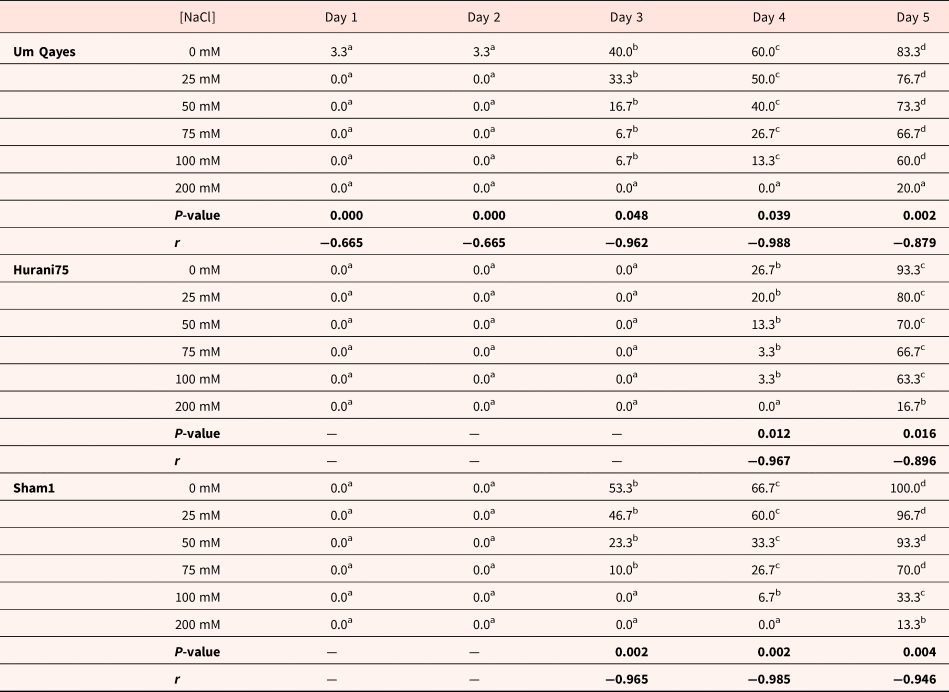
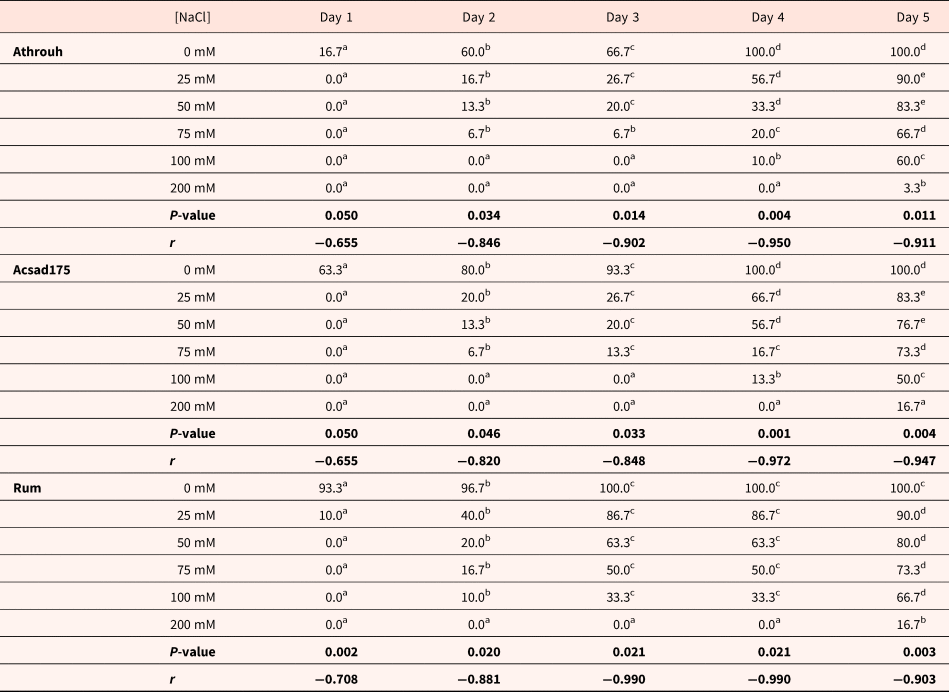
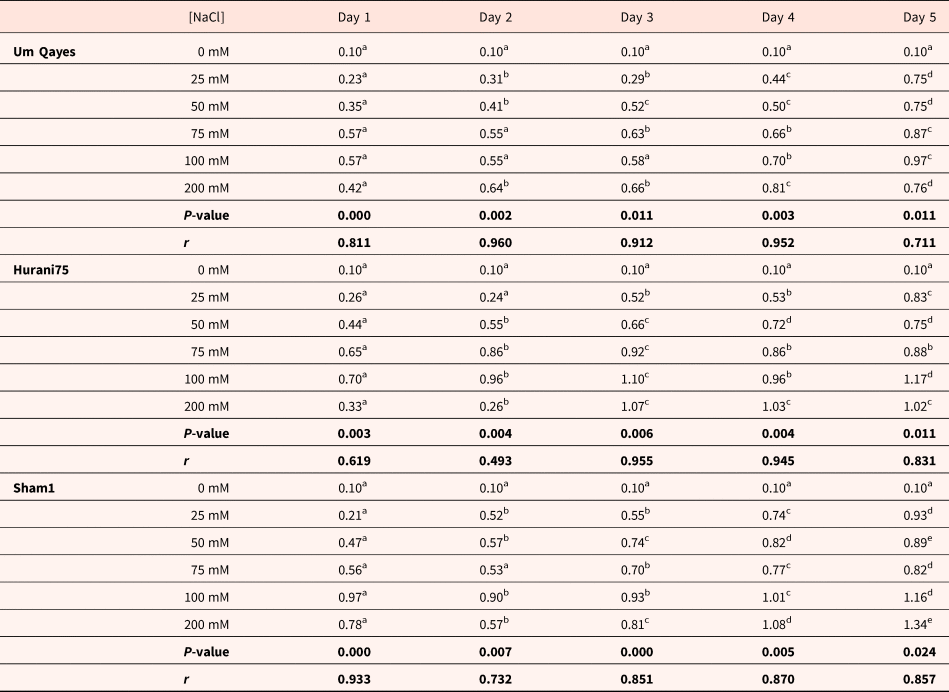
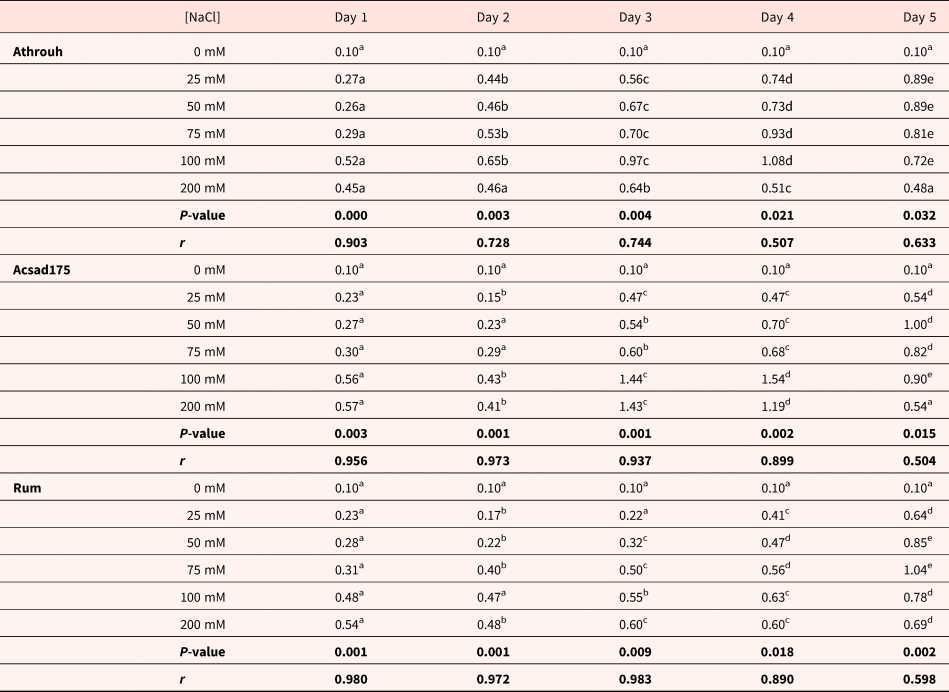
The effect of increasing salinity on germination percentage of wheat (Triticum aestivum L.) and barley (Hordeum vulgare L.) is presented in Tables 1 and 2, respectively. A trend of decreasing germination percentage with increasing NaCl concentrations was observed in all wheat and barley cultivars. At 200 mM NaCl, germination was highly inhibited. The sensitivity to salt was highest in wheat when compared with barley in all cultivars under all NaCl treatments. No emergence of radicles in all wheat cultivars was observed until day 3 under all NaCl treatments. We observed a highly significant (P ≤ 0.01) reduction in seed germination from day 3 until day 5, in all cultivars but Hurani75 which only showed significant (P ≤ 0.01–0.05) difference starting from day 4 (Table 1). On the other hand, in all barley cultivars, emergence of radicles occurred from day 2 and a significant (P ≤ 0.01–0.05) reduction in seed germination was recorded from day 2 until day 5 under all NaCl treatments (Table 2). In general, there was a negative correlation (r = –0.655 to –0.990) between seed germination percentage and NaCl concentration in all wheat and barley cultivars.
Germination percentage of seeds of three wheat cultivars (Um Qayes, Hurani75 and Sham1) supplemented with 0, 25, 50, 75, 100 or 200 mM of NaCl under continuous light at 25°C. Radical emergence was scored daily for 5 days

Within each NaCl treatment, rows with different letter superscripts differ significantly (P ≤ 0.05).
Germination percentage of seeds of three barley cultivars (Athrouh, Acsad175 and Rum) supplemented with 0, 25, 50, 75, 100 or 200 mM of NaCl under continuous light at 25°C. Radicle emergence was scored daily for 5 days

Within each NaCl treatment, rows with different letter superscripts differ significantly (P ≤ 0.05).
Seed germination is vital for plant development and growth, resulting in new plant production, and is affected by many environmental factors with often a critical impact on germination (Hampson and Simpson, Reference Hampson and Simpson1990; Miransari and Smith, Reference Miransari and Smith2014). The seed germination phase is susceptible to salt stress, which causes biochemical and physiological changes during seed germination (Ibrahim, Reference Ibrahim2016). Previous studies have reported reduced germination rates with increasing salt concentration (Veer and Sharma, Reference Veer and Sharma2010; Hadi et al, Reference Hadi, Ahmed, Hameed, Khan and Gul2018). Wheat and barley exhibit halophyte-type germination and are sensitive to salinity, mainly due to osmotic effects (Romo and Haferkamp, Reference Romo and Haferkamp1987; Almansouri et al., Reference Almansouri, Kinet and Lutts2001; AL-Quraan et al., Reference AL-Quraan, Sartawe and Qaryouti2013; Cheeseman, Reference Cheeseman2015). The reduction in seed germination in response to increasing salinity might be due to reduction of water uptake as a result of lowered osmotic potential of the medium as a result of changes in metabolic activity and associated osmolyte synthesis (Abdul Jaleel et al., Reference Abdul Jaleel, Gopi, Sankar, Manivannan, Kishorekumar, Sridharan and Panneerselvam2007; Zhang et al., Reference Zhang, Irving, McGill, Matthew, Zhou and Kemp2010), which in turn reduces the utilization of seed reserves (Cramer et al., Reference Cramer, Ergül, Grimplet, Tillett, Tattersall, Bohlman, Vincent, Sonderegger, Evans, Osborne, Quilici, Schlauch, Schooley and Cushman2007; Ibrahim, Reference Ibrahim2016).
GABA shunt metabolism in wheat and barley early seed germination under salt stress
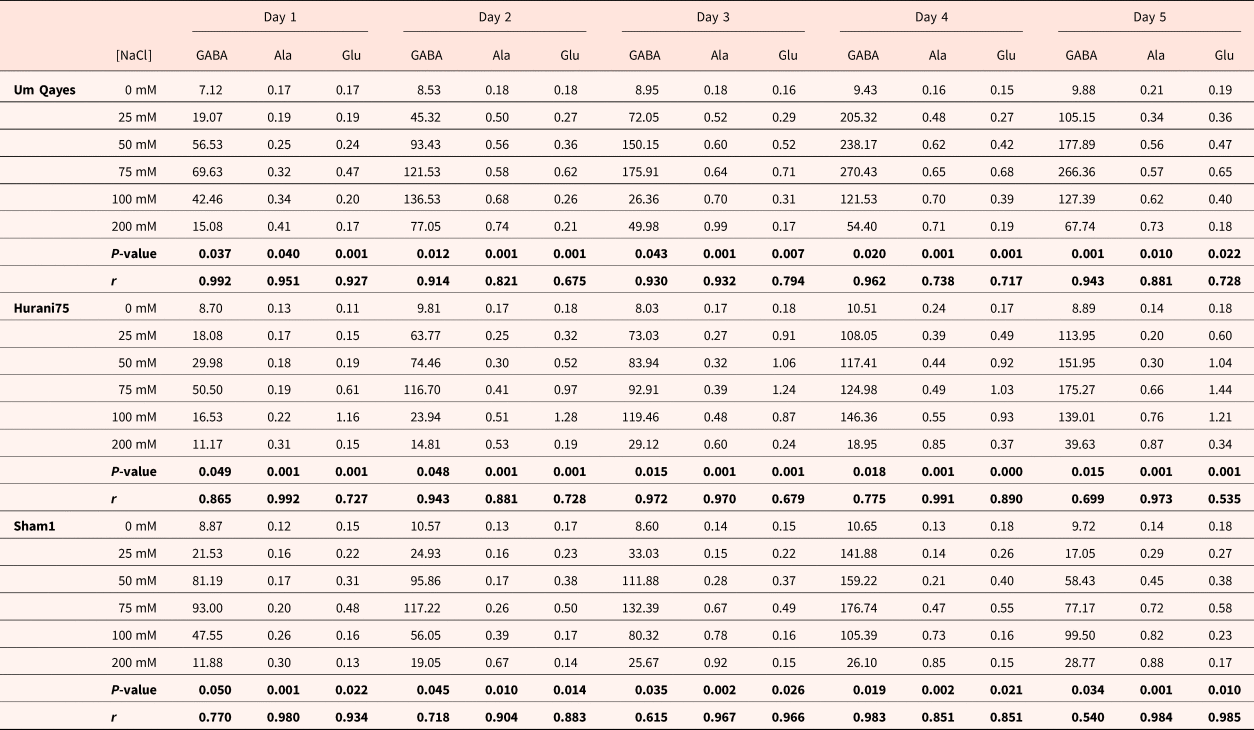
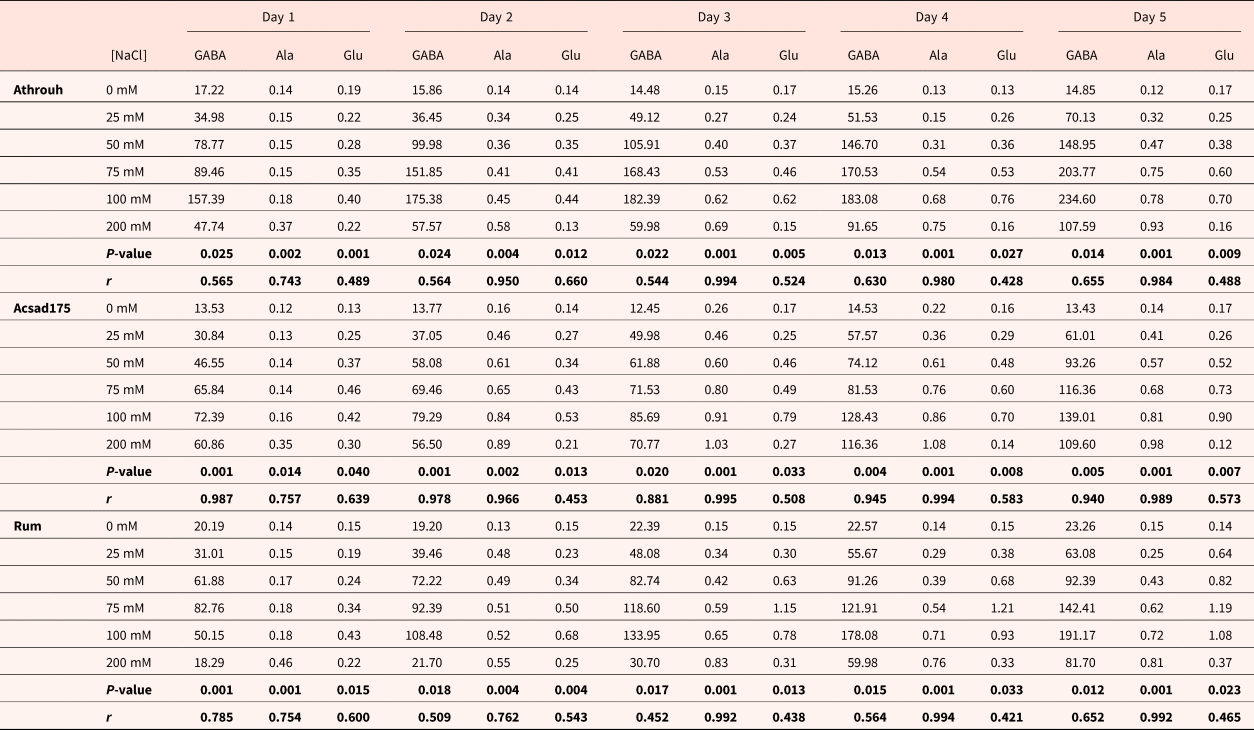
One of the most important mechanisms exerted by higher plants under salt stress conditions is the activation of the GABA shunt pathway. Under all salt stress treatments, our data showed significant (P ≤ 0.01–0.05) increase with positive linear correlation (r = 0.50–0.99) between abundance of GABA shunt metabolites (GABA, Ala and Glu) and salt concentration in all wheat (Table 3) and barley (Table 4) cultivars, except at 200 mM NaCl. At 200 mM NaCl, the GABA and Glu metabolites were significantly (P ≤ 0.01–0.05) decreased. Increased GABA abundance was associated with a small but significant (P ≤ 0.01–0.05) increase in the content of Ala and Glu for 5 days in all wheat and barley cultivars. The substantial accumulation of GABA shunt metabolites could be due to the supply of metabolic intermediates to feed the TCA cycle of respiration, amino acid and sugar metabolism during long-term salt stress, thereby maintaining metabolic homeostasis during seed germination under salt stress.
Level of GABA shunt metabolites (GABA, alanine and glutamate) in three wheat cultivars (Um Qayes, Hurani75 and Sham1) supplemented with 0, 25, 50, 75, 100 and 200 mM of NaCl for 5 days under continuous light at 25°C.

Metabolite levels were calculated as nmol/mg FW. GABA, gamma-aminobutyric acid; Ala,alanine; Glu, glutamate. A P-value ≤ 0.05–0.01 was considered significant and P-value ≤ 0.01 was considered highly significant in all metabolite analyses; r is the correlation coefficient.
Level of GABA shunt metabolites (GABA, alanine and glutamate) in three barley cultivars (Athrouh, Acsad175 and Rum) supplemented with 0, 25, 50, 75, 100 or 200 mM of NaCl for 5 days under continuous light at 25°C.

Metabolite levels were calculated as nmol/mg FW. GABA, gamma-aminobutyric acid; Ala, alanine; Glu, glutamate. A P-value ≤ 0.05–0.01 was considered significant and a P-value ≤ 0.01 was considered highly significant in all metabolite analyses; r is the correlation coefficient.
The GABA pathway works as a plant accumulative adaptive metabolite in response to numerous environmental stimuli (Shelp et al., Reference Shelp, Bown and McLean1999; Scholz et al., Reference Scholz, Malabarba, Reichelt, Heyer, Ludewig and Mithöfer2017). GABA accumulation and metabolism play a vital role in plant nitrogen metabolism, osmotic regulation and pH regulation under salt stress (Akçay et al., Reference Akçay, Bor, Karabudak, Özdemir and Türkan2012) particularly during seed germination and seedling growth (Bown and Shelp, Reference Bown and Shelp2016). Physiological and genetic studies of the GABA shunt demonstrate that its function is obligatory for proper plant growth in response to salt stress (Kinnersley and Turano, Reference Kinnersley and Turano2000). NaCl acts as a strong effector increasing GABA content (Xing et al., Reference Xing, Jun, Hau and Liang2007; Allan et al., Reference Allan, Simpson, Clark and Shelp2008; Bor et al., Reference Bor, Seckin, Ozgur, Yılmaz, Ozdemir and Turkan2009; Renault et al., Reference Renault, El Amrani, Berger, Mouille, Soubigou-Taconnat, Bouchereau and Deleu2013; Wang et al., Reference Wang, Gu, Meng, Xie, Li, Li and Wei2017). A significant increase in GABA abundance has been shown in five wheat cultivars under salt and osmotic stress treatments (AL-Quraan et al., Reference AL-Quraan, Sartawe and Qaryouti2013). The present study shows an increase in GABA shunt metabolite content during seed germination in wheat and barley. GABA accumulation in response to NaCl treatment might serve as a temporary nitrogen supply to decrease the excess of ammonium accumulated due to protein and amino acid catabolism and photorespiration under salt stress (Woodrow et al., Reference Woodrow, Ciarmiello, Annunziata, Pacifico, Iannuzzi, Mirto, D'Amelia, Dell'Aversana, Piccolella, Fuggi and Carillo2017; Carillo, Reference Carillo2018). Furthermore, GABA shunt activation might be part of a biochemical mechanism enabling the stationary control of pH to counteract stress-induced cytosolic acidosis (Fait et al., Reference Fait, Fromm, Walter, Galili and Fernie2008; Molina-Rueda et al., Reference Molina-Rueda, Garrido-Aranda, Gallardo and D'Mello2015). Fait et al. (Reference Fait, Nesi, Angelovici, Lehmann, Pham, Song, Haslam, Napier, Galili and Fernie2011) directly confirmed that GABA accumulation over other amino acids was significantly associated with early seed germination metabolic processes, replenishing the TCA cycle and contributing to amino acid biosynthesis. Moreover, Che-Othman et al. (Reference Che-Othman, Jacoby, Millar and Taylor2019) showed that increased GABA shunt activity delivers a substitute carbon source for mitochondria to increased respiration to overcome the salt-inhibited enzyme activity in wheat leaves.
Expression of GAD in germinating wheat and barley seeds in response to salt stress
Glutamate decarboxylase (GAD) RNA transcript abundance was determined in germinating seeds of wheat (Table 5) and barley (Table 6) (see also Fig. 1). GAD catalyses the decarboxylation of Glu to CO2 and GABA (Fait et al., Reference Fait, Fromm, Walter, Galili and Fernie2008). Under all NaCl treatments, the transcription of GAD in terms of RNA abundance showed significant (P ≤ 0.01–0.05) increase in all cultivars with positive correlation (r = 0.50–0.98). At 200 mM NaCl, GAD transcript abundance was significantly (P ≤ 0.01–0.05) decreased. There were increased changes in GAD expression with time because of increasing salt stress (Tables 5 and 6). Data showed an association between GAD transcript abundance and the response of germinating seeds to salt stress in terms of GABA shunt metabolite accumulation. The elevated expression of GAD under salinity stress suggests the need for higher activity of the GAD-mediated conversion of Glu to GABA during seed germination, which provides an alternative metabolic route to the respiratory machinery, balancing carbon and nitrogen metabolism and osmolyte synthesis. GAD is a pyridoxal 5′-phosphate (PLP)-dependent enzyme involved in the synthesis of GABA from Glu in the cytosol after which it is transported to the mitochondria (Krasensky and Jonak, Reference Krasensky and Jonak2012). In plants, various stresses such as heat shock (Mayer et al., Reference Mayer, Cherry and Rhodes1990), salt stress (AL-Quraan et al., Reference AL-Quraan, Sartawe and Qaryouti2013), low pH (Bown et al., Reference Bown, MacGregor and Shelp2006) and chlorsulfuron herbicide treatment (AL-Quraan et al., Reference AL-Quraan, Ghunaim and Alkhatib2015) are responsible for GAD activation via calmodulin (CaM) binding (Astegno et al., Reference Astegno, Capitani and Dominici2015). These studies reported that expression of GAD increased simultaneously with environmental conditions which led to an increase in GABA abundance. Furthermore, Renault et al. (Reference Renault, Roussel, El Amrani, Arzel, Renault, Bouchereau and Deleu2010) found that the expression of GAD, GABA-T and SSADH (succinic semialdehyde dehydrogenase) genes were up-regulated under salt stress in cultured Arabidopsis cells. Increased GAD activity correlated with GAD gene expression in Nicotiana sylvestris under salt stress (Akçay et al., Reference Akçay, Bor, Karabudak, Özdemir and Türkan2012). Our data corroborate these observations by the increasing GAD expression and GABA abundance in all wheat and barley cultivars germinating seeds under NaCl treatment. GABA accumulation closely matched GAD expression, with high abundance in the root and during lignification of the hypocotyl in seedling organs of Pinus pinaster, suggesting a significant role of GAD and GABA shunt in hypocotyl and stem development in pine (Molina-Rueda et al., Reference Molina-Rueda, Pascual, Cánovas and Gallardo2010). The increase in GAD expression that was observed in germinating seeds under salt stress suggests a key role of GABA in carbon and nitrogen metabolism during seed germination associated with the input cargo of amino acids for the production of new plant structures (Pascual et al., Reference Pascual, Molina-Rueda, Cánovas and Gallardo2008; Che-Othman et al., Reference Che-Othman, Jacoby, Millar and Taylor2019).
Transcript abundance of GAD (log2 fold expression) in germinating seeds of three wheat (Um Qayes, Hurani75 and Sham1) and three barley cultivars (Athrouh, Acsad175 and Rum) supplemented with 0, 25, 50, 75, 100 or 200 mM of NaCl after 5 days under continuous light at 25°C. Within each cultivar, columns with different letters differ statistically (P ≤ 0.05). *P ≤ 0.05–0.01, **P < 0.01.

GAD transcript abundance (log2 fold expression) in germinating seeds of three wheat cultivars (Um Qayes, Hurani75 and Sham1) supplemented with 0, 25, 50, 75, 100 or 200 mM of NaCl for 5 days under continuous light at 25°C

Within each NaCl treatment, rows with different letter superscripts differ significantly (P ≤ 0.05).
GAD transcript abundance (log2 fold expression) in germinating seeds of three barley cultivars (Athrouh, Acsad175 and Rum) supplemented with 0, 25, 50, 75, 100, and 200 mM of NaCl for 5 days under continuous light at 25°C

Within each NaCl treatment, rows with different letter superscripts differ significantly (P ≤ 0.05).
In conclusion, we show here an association between GAD RNA transcription and the response of germinating seeds to salt stress in relation to GABA shunt metabolite accumulation. The elevated expression of GAD under salinity stress suggests the need for increased activity of the GAD-mediated conversion of Glu to GABA during seed germination, which provides an alternative metabolic route to the respiratory machinery, balancing carbon and nitrogen metabolism and osmolyte synthesis in germinating wheat and barley seeds under NaCl stress. Generally, the barley cultivars were more tolerant towards salinity during seed germination than the wheat cultivars.
Financial support
This work was funded by grant number 342/2017 from the Deanship of Research, Jordan University of Science and Technology, Jordan.