INTRODUCTION
The funerary practices of different societies have varying styles and meanings, but usually involve complex, ritualized social behaviors that are preserved to varying degrees in archaeological remains, presenting the opportunity to yield much information on the ritual behavior and religious beliefs of past societies.
This contribution has two objectives. The first is to describe a highly unusual type of interment of disarticulated, cleaned, specially arranged and wrapped bundle burials that have been discovered thus far in four cemeteries of West Mexico. Two of these cemeteries (El Embocadero II and Los Tanques) are in the Mascota valley of Jalisco. A third (La Peña) is in the Sayula Basin of Jalisco and the fourth is the burial mound (El Ombligo) at Guasave in Sinaloa. Evidence indicates this custom to be datable to the Middle Formative, around 800 b.c. The second objective is to place this unusual type of human burial within in the broader context of Middle Formative and Late Formative burials in West Mexico, as well as suggest some possible avenues for the interpretation of this distinctive kind of Middle Formative wrapped bundled burial.
For the purposes of this study, a primary burial is considered to be the interment of an articulated corpse that occurs within a short period from the time of death. In such cases, burial occurs close enough to the time of death that joint articulations and anatomical orientation are largely maintained in the corpse. A secondary burial is considered to be the interment of disarticulated remains, represented through an assemblage of non-articulated bones. Typical secondary burials occur after a greater length of time from death and represent different stages in a multistage process of burial (Hutchinson and Aragon Reference Hutchinson, Aragon, Silverman and Small2002; Ubelaker Reference Ubelaker1978). Some mortuary programs involve the intentional removal of soft tissues, resulting in an interment that mimics a typical secondary burial but occurring closer to death than would be typical. In these cases, the process used for defleshing will generally leave a characteristic signature on the bones (Cook Reference Cook, Pike and Gitin1999). As will be demonstrated here, there are no such marks on the bones recovered from secondary burials, indicating a significant time interval as the explanation for the differences in articulated and non-articulated burials.
An examination of Middle Formative burial practices in West Mexico reveals a variety of interment practices. Burial may be in a shaft and chamber tomb, a pottery urn, or a simple subsoil pit. Some remains found in urns or shaft and chamber tombs have been cremated. Often one finds both articulated corpses and disarticulated burials together in the same chamber or pit. Some of the disarticulated secondary burials are described as being “bundle burials” (Mountjoy Reference Mountjoy2012). However, the term “bundle burial” should be treated as a general descriptive term and not a specific mortuary phenomenon. A cross-cultural investigation of described bundle burials reveals differences in the appearance of the remains and the amount of secondary processing, thereby identifying differences in the mortuary programs, their meaning, and significance. One can view the manipulation and alteration of the corpse through different post-mortem processing and disposition as an aspect of cultural identity (Buikstra and Scott Reference Buikstra, Scott, Knudson and Stojanowski2009). Therefore, here we consider the phenomenon of secondary bundling generally and specifically as it pertains to body modification in the mortuary customs relating to the West Mexican Middle Formative cemeteries of El Embocadero II and Los Tanques in the valley of Mascota, Jalisco.
BUNDLE BURIALS AND THE INTERMENT OF DISARTICULATED REMAINS IN WEST MEXICO
The term bundle burial encompasses a range of interment types and is not exclusive to disarticulated interments. Bundle burials are recorded from across the Americas, with different styles typical of the various time periods and regions. Therefore, this term cannot be applied as a singular mortuary phenomenon. Some bundle burials have minimal body processing, such as the flexed, textile wrapped burials documented from the Windover site in Florida (6000–5000 b.c.) and in southwest Texas in the Middle (5500–2500 b.c.) and Late Archaic (2300–1300 b.c.) periods (Dickel Reference Dickel and Doran2002; Turpin Reference Turpin, Elliott and Veni1994; Turpin Reference Turpin2012). Others have more elaborate body processing such as the South American mummy bundles documented as a mortuary phenomenon in the Early Horizon period (900–200 b.c.) and were a widespread practices across the Andes by the Middle Horizon (a.d. 600–1000) (Isbell Reference Isbell1997; Vreeland Reference Vreeland1978). These were composed primarily of flexed or seated corpses wrapped in layers of cloth, matting, and grass (Vreeland Reference Vreeland1978).
In North America, the term bundle burial is synonymous with secondary burial and appears to indicate a gathered pile of disarticulated human remains that may or may not have been wrapped. If bundled, the remains appear only loosely gathered and preservation is typical of a secondary interment with the bones of the hands, feet and vertebral column either absent or underrepresented (Miller and Gill Reference Miller and Gill1980). Secondary bundle burials are common in North American Woodland period populations with bundle burials found in Late Woodland period effigy mounds extending from the Great Lakes down to Florida (Charles and Buikstra Reference Charles, Buikstra, Silverman and Small2002; Hutchinson and Aragon Reference Hutchinson, Aragon, Silverman and Small2002). In the American southeast, bundle burials from ca. A.D 1400. have a dual identity and can serve as identifiers of warfare and interpersonal conflict. Secondary bundling in these cases serves to facilitate transportation of the decomposing remains of a warrior who died in conflict away from the village (Hogue Reference Hogue2006). There are similar practices reported from the eighteenth century among the Chickasaw, although rather than being an exclusively male (warrior) mortuary program, there are also bundled burials of women and children showing they were unable to escape conflict (Johnson et al. Reference Johnson, Yearous and Ross-Stallings1994). Therefore, bundled burials may indicate not just death away from home but, in some contexts, also have an association of death from conflict.
In West Mexico, bundle burials make up one interment style in a mortuary landscape typified by a variety of burial practices including direct interment, graves, shaft tombs, subsoil pits, and urns (Mountjoy, Reference Mountjoy2012; Pickering and Cabrero Reference Pickering, Cabrero and Townsend1998). The interment of disarticulated human remains is common. The earliest instance recorded is from El Opeño in Michoacán with tombs dated to between 1400–1000 b.c. (Oliveros Morales and de los Ríos Paredes Reference Oliveros Morales and de los Ríos Paredes1993). These shaft tombs are described as the possible antecedent of the shaft-chamber tomb tradition that fully develops in the Late Formative period, showing cultural continuity between periods (Mountjoy Reference Mountjoy2012, Reference Mountjoy2014; Toby-Evans Reference Toby Evans2008). La Campaña, in Colima is a shaft tomb site although, in contrast to El Opeño, the human remains were represented as a scattering of primarily smaller bones with long bones and crania virtually absent (Pickering and Cabrero Reference Pickering, Cabrero and Townsend1998). There are also 144 burials, both articulated and secondary disarticulated interments, from the Middle Formative period site of Las Fuentes in Colima, although the authors do not give a breakdown for how many of the burials were secondary (Olay et al. Reference Olay Barrientos, Salinas, López and Valverde2010).
El Pantano is a large Middle Formative period cemetery located on the northern side of the Mascota valley, in close proximity to El Embocadero II (Mountjoy Reference Mountjoy2012). Approximately 24 primary burials of adults and subadults and 130 secondary burials of adults and subadults were found there, with deliberate arrangement of some secondary burial remains, including a mandible balanced on the forehead of a cranium in one burial, and two crania arranged with long bones in what appear to be a phallic representation in another burial. However, no elaborately wrapped and bundled burials as defined here were found at El Pantano.
In the Late Formative period, disarticulated burial continued to be common throughout this region, but elaborately processed wrapped bundled burials have not been discovered in any Late Formative burial contexts (Rhodes and Mountjoy Reference Rhodes and Mountjoy2012). Disarticulated burials or “bundle” burials in West Mexico are also noted from Chupicuaro (Guanajuato), Tingambato (Michoacán), Santa María (Jalisco), and Autlán-Tuxcacuesco (Jalisco) (Cabrero Reference Cabrero and Teresa1989). Similar to the sites described here, these show little spatial distinction between burial styles, with primary articulated and secondary disarticulated interments often found in the same chamber or pit.
Secondary burials at El Embocadero II and Los Tanques are found both on their own as well as with articulated burials. Most resemble a loosely gathered burial, as if the bones were collected and transported in some type of wrapping. The skull is typically on one end and the long bones and other smaller bones at the other. These skeletons are often less complete, with the bones of the hands, feet and ribs often missing. Preservation in these burials varies according to soil conditions and some bones show signs of taphonomic alteration with possible sun bleaching and possible rodent gnawing, but this is infrequent.
In contrast, the wrapped bundle burials are largely complete, with the smaller bones and even isolated teeth included. The processing of the wrapped bundled burials creates a compact bundle, with the bones neatly arranged and the cranium positioned on one end. Within the bundle, the long bones are central with various small bones of the hands and feet placed on top. Vertebrae, scapulae, os coxae and other irregular bones form the sides and top layer. In the majority of the cases, the ribs are then wrapped around the outside of the bundle, preserving them intact. This is then wrapped tightly and presumably tied. While uniquely different from the standard secondary gathered burial, the wrapped bundled burials described here look remarkably similar to each other regardless of the which site they are from.
One would suspect that burials wrapped so tightly must have been wrapped in a fine-textured textile. However, there is no evidence that Middle Formative period people in the Mascota valley wove textiles, for no spindle whorls have been found in the four cemeteries excavated nor have any been reported from any of the 42 sites with Middle Formative materials thus far registered in the region (Mountjoy Reference Mountjoy2015). If textiles were used as wrappings they would have been imported from elsewhere. Due to the far-flung external contacts of these people, the use of textiles woven elsewhere cannot be discounted. But lacking such textiles, the use of animal skins or fine fiber mats would be the most logical alternatives.
Although the interment of disarticulated human remains in bundles is common in West Mexico, the closest parallels to the wrapped bundled burials described here are found at the sites of La Peña in the Sayula basin of Jalisco and Guasave in Sinaloa. The La Peña remains are from the Middle Formative and are described as being packaged in a textile and then tied to allow the assemblage to remain gathered together. The processing of the remains is less complete, though; cervical vertebrae are still connected to the cranium. There are also differences in the bundling style, with a looser, less well-packaged bundle and no ribs surrounding the bundle. However, the presence of metacarpals and metatarsals shows an attempt to include the full body in the bundle (Liot and Acosta Reference Liot, Reveles, Acosta, Liot, Ramírez, Reveles and Schöndube2006).
There are eleven wrapped secondary bundled burials described from Guasave in Sinaloa on the Pacific coastal plain about twenty kilometers east of the coast (Ekholm Reference Ekholm1942). Over 200 burials were recovered, and, originally, all were thought to date to the Postclassic period. However a review of Ekholm's (Reference Ekholm1942) report reveals that there was a discovery of Capacha-style, highly diagnostic “trifid” pottery at a location near the Guasave burial mound, as well as wrapped bundled burials in the burial mound, none of which are associated with Late Postclassic offerings and thus may indicate an earlier, Middle Formative period use of the mound for burial. These wrapped bundled burials found in the Guasave mound appear closely similar to the wrapped bundled Middle Formative burials discovered in the Mascota valley.
BIOARCHAEOLOGY OF MIDDLE FORMATIVE CEMETERIES WITH BUNDLE BURIALS IN WEST MEXICO
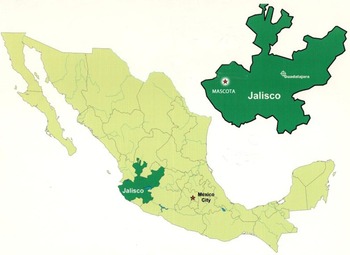
The sites of El Embocadero II and Los Tanques are found on the south side of the Mascota river valley in the western sierra of the state of Jalisco near the town of Mascota (Figures 1 and 2). El Embocadero II is located at an elevation of 1270 meters above sea level while Los Tanques is 1157 meters above sea level. Both sites date to the Middle Formative period, ca. 800 b.c. (Mountjoy Reference Mountjoy2012).
Map of Mexico showing the location of Mascota in the state of Jalisco. Map by Cupul-Magaña.

The sites of El Embocadero II and Los Tanques in the Mascota river valley. Map by Mountjoy.

El Embocadero II and Los Tanques bear cultural similarities to the larger Middle Formative site of El Pantano, located on the northern side of the Mascota valley, only about five kilometers to the east (Figure 2). There were no tightly wrapped bundled burials found at El Pantano but disarticulated burials, some bundled loosely, were the norm among the remains of the 175 or 176 individuals buried there.
From evidence found at El Pantano, it is known that Middle Formative people in the Mascota valley were growing several varieties of maize as well as beans. They also ate meat from turtles and deer, and were likely utilizing many local wild plants for food, as well as for medicinal purposes (Mountjoy Reference Mountjoy2012). The people lived in what one could call hamlets, probably varying in size from around 100 to 500 people.
There is considerable evidence of contacts and trade networks that linked the sites of El Pantano and El Embocadero II in a Middle Formative network of exchange that covered a large part of Mesoamerica and even beyond. Most of the obsidian that was sourced came from Ixtlán del Río to the north of Mascota, in Nayarit. Jadeite jewelry and probably the jewelry of other stones and of iron pyrite came from Guatemala. Other cultural ties reached into Nayarit, Colima, Michoacán, the central Mexican highlands, and even northwestern South America, probably southern Ecuador (Mountjoy Reference Mountjoy2012).
Standard osteometric methods were used in the analysis of the skeletal remains (Buikstra and Ubelaker Reference Buikstra and Ubelaker1994). Sex is reported for the adults, as there are no reliable methods for identifying sex in the skeletal remains of subadults. The human remains are reported by site and pit number and are described in some detail, as the individual demographics, health, nutritional status, and grave goods are key to the discussion and interpretations. Dental hypoplastic defects are reported, as these serve as nonspecific markers of stress and deprivation, representing illness or malnutrition during childhood growth and development. These linear defects in the dental enamel may serve as a proxy for status in infancy and childhood (Goodman and Rose Reference Goodman and Rose1990). Cranial modification is another biological marker than may identify differences in status in some societies. Those individuals preserving crania intact enough for observation demonstrate the Mesoamerican “tabular oblique” style of modification (Tiesler Reference Tiesler2012). Unless specified otherwise, any cranial modification noted is in the tabular oblique style, with band imprints generally visible. Pathological conditions are noted where relevant but do not form the focus of this contribution.
El Embocadero II
El Embocadero II was excavated during the field season of 2005. The site is more extensive than Los Tanques, consisting of fourteen pits, (numbered from Pit 2 through Pit 15) with the remains of 25 individuals interred in a mix of articulated (primary) burials and disarticulated (secondary) burials with five wrapped bundled burials. Five burial pits (1, 2, 4, 5, and 12) had been looted and much of the original burial context lost, but this looting did not affect the two burial pits with the tightly wrapped bundled burials.
Although looters disturbed Pit 2, the burial context was still apparent. It included two articulated burials and one secondary, disarticulated burial, each apparently in a separate chamber of this shaft-and-chamber tomb. Individual 1 consists of the articulated remains of a probable female, aged 30 to 40 years. Individual 2 is an articulated burial of a child aged 9 to 10 years old. Both of these burials were severely disturbed by the looters. The third interment, Individual 3, consists of a loosely gathered secondary burial of a 35 to 45 year old female with cranial modification. Although looted, offerings recovered from these three chambers, include 28 small naturally formed (non-turquoise) blue stones, six pierced canine tooth pendants (Mountjoy et al. Reference Mountjoy, Cupul-Magana and Rhodes2014), two tubular beads of bone, the body of a figurine, and one cruciform of agate stone. Looters were reported to have removed six faceted quartz pendants, a pottery figurine, and a dove carved from stone that they found in a pottery jar from this burial context.
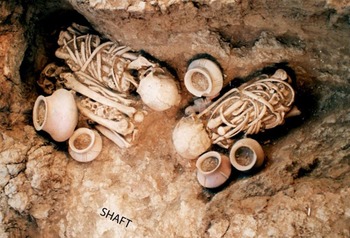
Pit 3 contained three elaborate wrapped bundled burials (Figure 3). Individual 1 is the least artistically bundled with no ribs enveloping this bundle. The remains were less than 75 percent complete. However, all regions of the body were represented, including vertebrae and bones from the hands and feet. There are also isolated teeth belonging to Individual 3 included in this bundle. The cranium was too damaged to reconstruct to investigate cranial modification. This male was of advanced age (40 to 55 years) and showed signs of periodontal disease, heavy dental attrition, and degenerative joint disease (DJD) in the vertebral column, ankles and feet. There were multiple hypoplastic defects in various teeth and he also demonstrated a number of pathological conditions that will be described elsewhere.
Pit 3 at El Embocadero II, showing the three wrapped bundled burials. Photograph by Mountjoy.

Individual 2 is a robust male aged between 20 and 40 years. More than 75 percent of the skeleton was recovered. Cranial modification was noted. However, he has been previously described as having an Andean appearance, not in the style of cranial modification, but the general morphology of his skull (Mountjoy Reference Mountjoy2012). He had poor dental health, with antemortem tooth loss, dental caries, periapical abscesses and periodontal disease, but presents no enamel hypoplastic defects. Degenerative joint disease present in the vertebral column and left knee indicates his age was likely at the older end of this range.
Individual 3 is a female who died at 20 to 25 years of age. This individual also displays the tabular oblique style of cranial modification. Completeness was scored as 75+ percent, with the hands and feet particularly well represented. There were numerous dental caries and three teeth each bearing two hypoplastic defects of the enamel, marking a childhood illness or stress event.
Pit 6 contained a single articulated burial of a middle-aged female. Pit 7 contained the remains of two individuals, both articulated (primary) burials. Individual 1 is probably a female, 30 to 45 years of age, with enamel hypoplastic defects on multiple teeth and dental caries present. Individual 2 is an older (50+ years) male with extensive antemortem tooth loss and degenerative joint disease present in both the shoulders and hips.
Pit 8 contained two burials, one the articulated remains of an older male, 50+ years of age, demonstrating degenerative joint disease in the vertebral column and glenoid fossa (shoulder). Interestingly, there were three teeth from a different individual included in this burial. Individual 2 consists of the disarticulated remains of a child aged 4.5 years of age. This context is notable due to the presence of 11 offerings in the grave of the articulated male burial.
Pit 9 is a single burial of the articulated remains of a female. The presence of a conch shell trumpet in this grave identifies this female as a shaman (Furst Reference Furst1966). She was between the ages of 35 to 50 years at death and presented with degenerative joint disease in the shoulders and also in the tarsal bones (feet). There are a few anatomical differences in this woman that would have served to visually set her apart from the rest of her society.
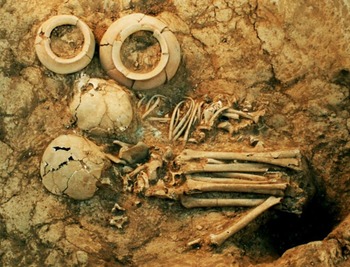
There are two disarticulated secondary burials in Pit 11. These are both more organized than the other secondary burials in this cemetery and are thus classified as wrapped bundle burials, although one is more typical of the style (Individual 2) than the other (Individual 1) (Figure 4). These interments are the only evidence of this mortuary program used for subadult remains. The bones of Individual 1 are arranged in three discrete groups, with the cranium on one end, followed by the axial remains, and then the long bones. This is a more orderly arrangement and more similar to the wrapped bundled burials. The body is also largely complete, with over 75 percent recovered. This individual was aged between 9 and 15 years at death.
Pit 11 at El Embocadero II, with the two subadult secondary burials. The smaller bundle (Individual 2) is processed in a similar fashion to the wrapped bundled burials in Pit 3. Photograph by Mountjoy.

Individual 2 is a child aged between 3 and 5 years. The skull is placed at one end of the bundle followed by a gathering of the remains with the characteristic signature of the ribs wrapped around the bundle. Completeness is scored at 75+ percent. In the attempt to include the various small bones of the hands and feet, one of the tarsals included with this interment belongs to the other burial in this pit. The cranium displays evidence of modification. There was also reactive bone visible on the cranium, indicating a chronic pathological condition (Ortner Reference Ortner2003). Slight rodent gnawing was also visible.
Pit 13 contained a single disarticulated interment of a child 6.5 to 7.5 years of age. The remains were gathered in a loose pile, with no signs of bundling. Skeletal completeness is somewhat in between the two secondary interment styles, with more bones of the axial skeleton represented than typical, but less bones of the appendicular skeleton. Numerous cranial and postcranial bones show marked periosteal reactive bone, including the presence of cribra orbitalia in the frontal bone, identifying a chronic pathological condition (Ortner Reference Ortner2003).
Pit 14 contained a single articulated burial of a female aged between 35 and 50 years old. Pit 15 also contains an articulated skeleton, however this one stands out by the number of grave goods — 11 offerings were placed in this single grave, compared with the typical two or three objects per pit. The burial is a child aged between 10 to 11 years at death.
Los Tanques
The burial site at Los Tanques was accidentally uncovered in the summer of 2012 during the course of hydroelectric dam construction work. The in situ cemetery population consists of five individuals from two pits; four adults and one child. The remains of one additional adult were identified in a deposit of human bones in a small pot that was placed in Pit 1 with the wrapped bundled burial. Additional human remains of a child were recovered in ex-situ backfill from the site. The child is 5 to 8 years of age and is represented only in the backfill recovered from the south bank of the trench. The total assemblage of remains from this site is then five adults, one subadult and one infant.
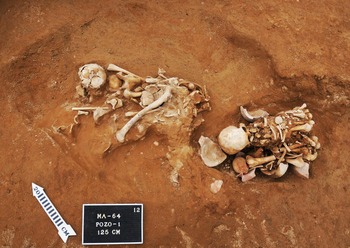
Pit 1 contained the burials of four individuals, with additional bones recovered from a pot placed beside Individual 1. The burials were of disarticulated remains in secondary deposits with one wrapped bundled burial (Individual 1) and another assemblage consisting of the disarticulated, comingled remains of three individuals: two adults and an infant (Figures 5 and 6). There were some attempts at organization and compactness of this wrapped bundle burial, with a femur, tibia, ulna and ribs wrapped up within the mandible, using it as a protective cradle. Ribs were placed around the outside of the grouping of long bones, but not as meticulously arranged with the ribs pointing in different directions. While there were some similarities in processing between the two secondary assemblages, the comingled interment was not as carefully arranged as that of the wrapped burial.
Pit 1 at Los Tanques, with the wrapped bundled burial and the other secondary burials. Photograph by Mountjoy.

Burial plan of Pit 1 at Los Tanques, showing the location of grave goods in relation to human remains. Map by Mountjoy.

Individual 1 is a wrapped bundled burial of a young male aged between 19 and 25 years. Despite demonstrating robust muscle markings, the overall size of the skeleton is not strongly masculine. Over 75 percent of the body was recovered. There was also a long pendant made from the wing bone of a golden eagle found in the core of the bundle. The cranium shows the same style of modification as seen in the burials at El Embocadero II. Dental health in this population was not as poor as seen at El Embocadero II, although this individual demonstrates multiple enamel hypoplastic defects.
Individual 2 is a female aged 20 to 24 years of age. Completeness was calculated to be about 75 percent. The comingling of the remains influences this score. There are two females of similar size present in this secondary interment. This female was identifiable by thicker cortical bone and the presence of annular rings fusing on the vertebrae. The other (Individual 4) was older and showed signs of osteopenia (bone thinning). It was not possible to individuate ribs. This female also presents with multiple hypoplastic defects. The cranium was damaged, so it was not possible to identify if there was any modification.
Individual 3 is an infant aged between 1 and 2 years. The bones of the cranium were disarticulated and stacked upon each other along to form a basin holding other remains of this individual.
Pit 1 Individual 4 is a largely complete (ca. 75 percent) older female aged 35 to 39 years old. Advanced age is supported by the presence of Schmorl's nodes and degenerative joint disease in the lumbar vertebrae. One lumbar vertebra demonstrates an asymmetrical wedge fracture. There is also degenerative change (DJD) in the temporomandibular joint. There is extensive antemortem tooth loss, dental caries, and periodontal disease noted.
Pit 2 contained a single articulated burial, a male aged between 20 and 30 years with evidence of a congenital developmental malformation in his vertebral column, likely Klippel-Feil syndrome (Rhodes and Mountjoy Reference Rhodes and Mountjoy2015). This burial was truncated by machinery, removing most of the postcranial skeleton, leaving less than 35 percent of the skeleton.
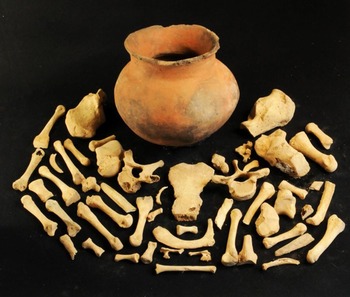
A small pot (Figure 6A-4) filled with human bone was included with the wrapped bundled burial (Individual 1; Figures 6 and 7). In secondary, or disarticulated burial contexts, small bones are often lost in the transfer of remains from the initial repository to the final interment. However, in this case, the bones were gathered into a pot and placed in the burial pit. The pot primarily held various bones of the hands and feet, although there were other elements from the postcranial skeleton including one sternum, two patellae (all adult) and vertebrae from the infant in Pit 1. There are four left adult second metatarsals in the pot, supporting a minimum number of individuals (MNI) of four adults represented in the pot. Individual 1 has a left second metatarsal present, bringing the total adult MNI of the cemetery to five. This assumes that the primary burial in Pit 2 was complete upon interment and that an isolated foot bone was not left from a previous burial season. Comparative examination of the bones in the pot show that all are consistent with having belonged to the individuals previously described in the cemetery, although it was not possible to match them up with specific individuals.
Jar (A-4 of Figure 6) from the wrapped burial at Los Tanques with the contents. Photograph by Mountjoy.

DISCUSSION
Body Manipulation in Mortuary Processing
Because of the planning and cooperation required in secondary disarticulated burials, manipulation of the body in this type of mortuary processing is seen as a community activity. Processing is a multistage event, involving defleshing, disarticulation, gathering and preparation for burial, and the preparation of the transportation materials. These activities can leave different signatures on the bone. The removal of soft tissues can be done either naturally through the decomposition process or more rapidly through interventional processes including tool use. Tool use can then be identified by the presence of cut marks and scrape marks on the bones (Martínez et al. Reference Martínez, Flensborg and Bayala2012; White et al. Reference White, Black and Folkens2011).
There are no cut marks or scrape marks visible on the bones in the any of the secondary burials at El Embocadero II or Los Tanques. There are some taphonomic signs of exposure to the elements but these are limited, suggesting the use of a mortuary hut or charnel house serving as a place for storage, processing of the corpse and possibly social display. This process then indicates an extended time period from the occurrence of death.
It is possible to employ a processing method to clean the soft tissue from the remains without leaving a marked taphonomic signature. Ubelaker (Reference Ubelaker1978) reports of body processing by North American Choctaw and Huron tribes where following an initial decomposition period, remains were processed by travelling specialists using an elongated fingernail to scrape away the remaining tissue. This processing method would not leave any visible cut marks on the bone, although some scraping might be visible. It is possible that this process was used to clean the bones of the wrapped bundled burials. There are ethnohistorical accounts of defleshing and organ removal as part of the later Maya mortuary rituals (McAnany et al. Reference McAnay, Storey and Lockard1999), although there are no indications of this practice occurring in earlier time periods.
Decomposition and disarticulation can occur naturally if an individual dies away from home. A number of disarticulated secondary burials are attributed to death elsewhere, including a North American assemblage of “bundle” burials from St. Catherine's Island, Georgia. In the earlier inhabitation periods, the Amerindians are thought to have practiced seasonal resource exploitation travelling between the island and the mainland. There is no evidence for the use of a charnel house for processing, but, instead, the bundle burials are thought to be group members who died during a mainland encampment phase. In this case, the bundle burials represent individuals who died away from home and whose bodies were curated and processed for return to the island. They were likely then interred with other individuals who died immediately prior to the construction of the burial mound, thus explaining a mix of primary and secondary interments (Thomas and Larsen Reference Thomas and Larsen1979). This pattern of mixed interments is also reported in a Woodland mound group burial from northern Iowa (Beaubien Reference Beaubien1953). This suggests the possibility that a mix of primary and secondary interments represent differences in the location of the individual when death occurred.
Transportation is an important topic to consider when examining the occurrence of bundle burials. Johnson and colleagues (Reference Johnson, Yearous and Ross-Stallings1994) and Hogue (Reference Hogue2006) both describe bundle burials as a phenomenon associated with increased warfare and death away from the village. In these cases, the bundling is for transportation rather than ritual. Among the Aztec though, this bundling had a higher ritual purpose with the bundling symbolically representing a butterfly chrysalis. Different codices reinforce this with images showing bundles decorated with butterfly imagery (Huchet et. al. Reference Huchet, Pereira, Gomy, Philips, Alatorre-Bracamontes, Vásquez-Bolaños and Mansilla2013). As the materials used to wrap the bone assemblages are not preserved in any of the Middle Formative period burials, it is impossible to know if there were any similar cultural markings that could help indicate the ritual significance of the activity.
Bundle burials vary from limited processing of the corpse all the way to the elaborately processed remains described here. Most of the secondary bundle burials, if wrapped, only appear to have been loosely gathered. In these cases, any wrapping appears to be a means of transportation of the remains to the grave from the initial mortuary processing location. The wrapped bundled burials of West Mexico underwent an additional processing stage with the careful arrangement of the bones in the bundle, which was then tightly wrapped and tied together, possibly with imported textiles. Indication of the ritual process can be found in the objects recovered in the bundled burials from Los Tanques and La Peña. The presence of the pot of bones at Los Tanques gives strong evidence for the use of a mortuary hut or charnel house as a temporary housing for the dead prior to interment, as well as shows the importance of interring all of the remains with the elaborately bundled burial. This suggests ritual as a greater motivation than transportation.
Wrapped mummy bundles were part of an ancestor cult recorded among the Cora and Huichol Indians of Nayarit and Jalisco from the sixteenth to the eighteenth centuries. Mortuary processing involved the wrapping of mummified remains into a bundle of cloths and sashes. The gradual desiccation of the body was considered a stage towards the solidification of the soul of the deceased and part of the process of becoming a wise and venerated ancestor (Neurath Reference Neurath2010). This ethnographic model may help explain the bundling of some human remains in the Middle Formative period.
Interpretations
Body transformations (modification) in mortuary programs are linked with identity (Geller Reference Geller2012). Aspects of identity include gender, age, status, ethnic affiliation, community, and religion (Buikstra and Scott Reference Buikstra, Scott, Knudson and Stojanowski2009). Other explanations for the differences in mortuary programs include the location of the death, the identity of the primary interment in mixed groups, and ritual seasonal interment. These aspects must be considered in the interpretation of the wrapped bundle burials from El Embocadero II and Los Tanques.
There is no consistent association between gender or age group for those to be factors considered in this mortuary program. Most, but not all, of the bundled interments from El Embocadero II and Los Tanques are male. There is no apparent relationship between any burial style and age, with wrapped bundled burials of all ages. Therefore, these aspects of identity do not appear to be a factor in determining this special interment style.
There is a general correlation between time and energy invested in burial and the status or wealth of the individual (Parker Pearson Reference Parker-Pearson1999). Examining the bundled burials from this context, there are no markers of special status apparent beyond the different interment style. There is very little evidence in the skeletal remains to identify why these people were singled out for a special burial. If the internment style reflects a different (higher) social status, it is one that did not protect the person from illness or malnutrition. The presence of multiple hypoplastic defects in the dentition of the wrapped bundled burials, along with the various pathological conditions present suggests that, in these societies, status was earned rather than ascribed. Two of the wrapped individuals at El Embocadero II (Pit 3, Individual 2 and Pit 11, Individual 2) also had active pathological conditions at death. The poor dental health, common across the cemetery at El Embocadero II, also indicates these individuals consumed a similar diet, with no preferential access to food. There are also no differences in stature, a biological marker of socioeconomic status (Larsen Reference Larsen1997), between the wrapped bundled burials and the others in the cemetery.
Cranial modification can also be viewed as a biological marker of status. In Andean societies, it serves as a permanent visual marker of social identity (Torres-Rouff Reference Torres-Rouff2002). However, in Mesoamerican populations, cranial modification is ubiquitous with no differences identified between elite and non-elite groups. In Formative and Classic period Mesoamerica, cranial modification is related to preservation of the infant's tonalli or spiritual energy, thought to be vulnerable to escape through the fontanelles of the frontal and occipital bones (Tiesler Reference Tiesler2012). Therefore the presence or absence of cranial modification cannot elucidate any differences in status in these populations.
Quantity and/or quality of grave goods might indicate the relative importance of the deceased in the Middle Formative society represented at El Embocadero II. If that were so, the individuals buried in Pit 2 would seem to have been important. However, some of the importance of this singular three chambered shaft tomb may stem from it having been the “founding” tomb of the cemetery. This seems to have been the case with an exceptionally rich tomb (Pit 1) located near the center of the cemetery at El Pantano (Mountjoy Reference Mountjoy2012).
Pit 15 at El Embocadero II also stands out due to its offerings. They included two faceted quartz pendants, two jars, one figurine and one obsidian point, all accompanying the single primary interment of a child age 10 to 11 years. Likewise, the single older male interred extended and fully articulated in Pit 8 along with four jars, one axe, one pottery figurine and a faceted quartz pendant would have been important, as would have the middle-aged female buried in Pit 9, based on the conch shell trumpet that accompanied her. By comparison, the two pits with bundled burials, Pit 3 and Pit 1, are both relatively undistinguished, with six offerings in Pit 3 and three in Pit 11. All Pit 3 offerings were jars, with the exception of a single pottery figurine.
At Los Tanques, the tightly wrapped bundled burial (Figure 6, Bundle 2) of a single individual had more offerings than the loosely wrapped bundle containing three individuals (Figure 6, Bundle 1). With the tightly wrapped bundled burial there were three jars, one large lump of red pigment, and bone pendant made from a wing bone of a golden eagle sealed in the middle of the bundle. The other bundle containing three individuals was only accompanied by two pottery vessels and a stone flake, suggesting that in this instance the wrapped bundled burial was of a more important individual.
There was a cult of the dead present across Mesoamerica at different times. It is described in Late Formative period Huizilapa as involving food offering and in making the offerings, replicated the material conditions the deceased held in life. Thus, in this context, any differences in mortuary processing reflect the social standing the individual had in life (López Mestas and de la Vega Reference López Mestas, de la Vega and Townsend1998). However, such an argument cannot likely be sustained for the sites in the Middle Formative period. The burials at Late Formative period site at Huizilapa, located about fifty-five km northwest of Guadalajara, are particularly wealthy and reflect a more complex, stratified society than was present in the earlier period. Regardless, increased social and cultural complexity such as that which would be reflected in a hierarchical burial pattern only is only seen from the Late Formative to Late Classic periods. It is argued that the Early to Middle Formative periods (1200–400 b.c.) tombs such as El Opeño established family claims on the landscape with the various burial chambers representing family groups. In the Middle Formative period, the process towards increased social complexity was beginning in the highlands, but any differences in wealth and status were defined through membership in corporate social groups and not held individually (Beekman Reference Beekman2010).
The Huichol, as well as the Cora of West Mexico, are likely descendants from the Formative period populations of this region. Up until recent years, these tribal groups have remained an unstratified, egalitarian society with all men participating equally in the various roles involved with hunting, agriculture, and ceremonial activities. Any specialized role was only held part-time and there were limited positions of permanent authority leading to little differences in status or wealth (Lewis Reference Lewis1982). Therefore, it is likely that whatever agency was responsible for the different interment practices, it was unlikely related to higher status or wealth.
The wrapped bundled burials might be migrants or traders from Central or South America. While one of males from Pozo 3 at El Embocadero II is described as having an Andean cranial morphology (Mountjoy Reference Mountjoy2012), and there were trade networks that extended down to northwestern South America (Beekman Reference Beekman2010; Mountjoy Reference Mountjoy2012), there are no similar ritualized burials identified in the Andean regions. As previously established, the style of cranial modification is typically Mesoamerican and not Andean. Therefore, it is unlikely that these burials represent Andean traders who died in West Mexico. The bundled interment of the pathological young child (Pit 11, Individual 2) serves as further confirmation. It is unlikely to be travelling great distances with a chronically ill young child. If these bundled burials represent individuals from a different region, there is nothing biologically or skeletally different about them to mark this.
It is possible that wrapped secondary burials represent individuals who died elsewhere and the bundling facilitated transportation of their remains. However this does not fully explain both the completeness of the remains or the time and energy invested in the bundling. In cases such as among the warriors who died afield, the full body was not removed for transportation (Hogue Reference Hogue2006). The care taken to preserve the completeness of the remains in the Middle Formative bundled burials of the Mascota valley belie this possibility.
The mix of articulated and disarticulated interments in the different tombs may reflect family groups. If there was a familial relationship between the dead, then perhaps the remains of those who died first were curated to be buried later with other family members. However, there is no strong evidence for family groups in the tombs. Instead the preservation and processing of the remains likely represents seasonal interment with the opening of a new tomb or pit associated with the new season. Regardless, the identity of the primary interment has little relevance in making interpretations about the identity of the wrapped bundled burials, as these are not associated with primary interments.
The best possible explanation for this burial phenomenon in the Mascota valley may lie in community or ethnic affiliation, perhaps related to ancestor worship. In mortuary programs, the body can be viewed as a material culture object, an important aspect of community identity and one that serves to facilitate group cohesion (Martínez et al. Reference Martínez, Flensborg and Bayala2012). What makes these wrapped bundled burials unique is not the status of the individual interred, but rather the evidence of ritual involved. This indicates that the processing of the bundled burials was part of a mortuary program with an aim to create a social symbol. There are striking similarities in ritual and processing between the cemeteries in Jalisco and the wrapped bundled burials from Guasave in Sinaloa, some 800 km to the north of the Mascota valley. These similarities imply a more regulated social meaning to the interment style and also may indicate ethnic or community ties between the two regions.
The community ties may be linked by shared ritual or religious ideology. The more tightly regulated morphology of the wrapped bundled burials, along with the inclusions into the bundle, implies a ritual social purpose or function. In secondary interments from the lower Illinois river valley, curation of the dead along with the location of the cemeteries are said to suggest visits to view the remains (Charles and Buikstra Reference Charles, Buikstra, Silverman and Small2002). Perhaps the wrapped bundled burials also incorporated a visual element as part of the mortuary program. In highland Ecuador, the use of different ossuaries and secondary burials are described as indicating ritual use of the bones by a shaman to communicate with the dead and ask for intercession on behalf of the living (Stothert Reference Stothert, Raymond and Burger2003). Among the Cora and Huichol Indians, gradual desiccation of the bones was a key stage in the process to becoming a venerated ancestor (Neurath Reference Neurath2010). In this context then, the disarticulated bundles further serve as evidence for the curation of the dead as part of an ancestor cult.
It has been argued that in the Middle and Late Formative periods of Jalisco, Mexico, interment occurs as a one-time event linked with the end of the dry season. In this way, the “planting” of the dead at the same time as the planting of the crops allow the ancestors to provide sustenance for the group across the rainy season (Mountjoy Reference Mountjoy2012; Mountjoy and Sandford Reference Mountjoy and Sandford2006). Huichol beliefs see the bones as seeds bearing the souls and life essence of the dead with images of the skeleton associated with fertility and regeneration (Furst Reference Furst1978; Furst and Nahmad Reference Furst and Nahmad1972). The association between death and the dry season is not unique. Peterson Royce (Reference Peterson Royce2011) documents Zapotec funerary customs that view wetness associated with life and the living, while death is a process of becoming dry. In the mortuary customs of Formative West Mexico, we see the physical transformation from wet to dry occurring across the curation period with the end of the dry season resulting in the deposition of the “dry” to reverse the process and provide the seeds for sustenance in “wetness.”
CONCLUSIONS
All evidence indicates the importance of seasonality taking precedence over other mortuary rituals. The mortuary program in West Mexico during the Middle Formative involved interment of those who died in the burying season and, thus, are reflected by the articulated, primary burials. Those who died out of season were curated with compelling evidence for the use of a mortuary hut. The largely taphonomically unaltered remains in the disarticulated secondary interments indicate protection while “drying.” There are various examples of inclusion of body parts from one corpse in the interment of another. Most conclusive is the gathering of remaining loose bones for interment in a pot alongside the bundled interment at Los Tanques. The remarkable preservation and retention even of small bones in the wrapped bundled burials suggests that these are not remains of people who died elsewhere, nor do they appear to be from somewhere else. They may reflect a different ethnic or community group living among others, or they may represent the creation of a social symbol as part of an ancestor cult.
While the wrapped bundle burials seem to be a regional phenomenon limited to the Middle Formative period, by the Late Formative period the ritual of seasonal interment is a well-established practice, marked by the interment of both primary and secondary burials in the burial tombs and pits, as seen from sites in the Banderas valley (Mountjoy and Sandford Reference Mountjoy and Sandford2006), Los Reyes valley (Rhodes and Mountjoy Reference Rhodes and Mountjoy2012), and probably at many other sites as well (Mountjoy Reference Mountjoy2014).
RESUMEN
En este artículo reportamos sobre el descubrimiento de un tipo inusual de enterramiento secundario encontrado en dos sitios del Formativo Medio (circa 800 a.C.) en el valle de Mascota, Jalisco, Occidente de México y examinamos estos entierros dentro de un contexto no sólo dentro del periodo Formativo sino también dentro de un contexto temporal más ámplio de costumbres mortuorias que incluyen enterramientos secundarios. Enterramientos secundarios de restos humanos elaboradamente procesados, acomodados y envueldos apretados en un bulto fueron recuperados de los cemeterios de El Embocadero II y Los Tanques. Reportamos sobre estos restos humanos y examinamos el contexto funerario y la identidad biológica de las personas para tratar de explicar el por qué de este tipo de trato mortuorio tan inusual. Los indivíduos seleccionados para recibir este trato inusual no son comunmente asociados a indicadores de estatus elevado. Estos entierros posiblemente representen diferencias de identidad étnica, familiar, comunitaria o ancestral, y consideramos el fenómeno más ámplio de enterramiento secundario como la possible expressión de un ritual de enterramiento estacional asociado con el uso de una chosa mortuoria para guardar y procesar los cuerpos.
ACKNOWLEDGMENTS
This research was supported by a Drew University Faculty Travel Grant. The authors would like to recognize the help of Dr. Patricia Escalante and Marco Antonio Gurrola of the Colección Nacional de Aves (CNAV), Instituto de Biología de la Universidad Nacional Autónoma de México in facilitating the identification of the Golden Eagle bone. The excavations at El Embocadero II were supported by a grant to Joseph B. Mountjoy from the Foundation for the Advancement of Mesoamerican Archaeology Inc. (FAMSI) and the salvage excavation at the Los Tanques cemetery was part of an Instituto Nacional de Antropología e Historia, Centro Jalisco project directed by Joseph B. Mountjoy and Otto Schöndube B. Special appreciation is due Javier Ruiz of Mascota, Jalisco who risked losing his job by reporting the accidental find at Los Tanques, took photographs of the burials and offerings at the time of their discovery and helped us recover some of the offerings that had been subsequently removed and hidden nearby. We would also like to recognize the work of Drew University students Barbara Omay and Christina Leriche for their assistance in the skeletal analysis, and thank Dr. Jane Buikstra for insightful comments and suggestions.