With the rise of the human sciences in the late nineteenth century, children became objects of empirical scientific investigation. A multitude of new disciplines, including paediatrics, child studies, child psychology, pedagogy and ergonomics, inaugurated experimental and psychophysical exploration. The performance of children was measured with new technological devices such as the ergograph and the Ästhesiometer; the working of their minds was analysed in drawings and toy usage; their learning abilities were assessed in laboratories and experimental settings; their behaviour was disciplined through educational programmes and ergonomically designed working environments.Footnote 1 This developing scientific and material culture focused on the child was mirrored, multiplied and countered in artistic, cultural and social discourses; be it in the booming genre of school literature, reform pedagogical projects, or political agendas of Staatsbürgerliche Erziehung, knowledge about children figured centrally in the public sphere.Footnote 2
The diversity of discourse and practice shaping modern knowledge about childhood makes childhood a test case for recent historiographical approaches and methodological discussions in the history of science. In particular, it lends itself to histories of knowledge that no longer conceptualize science as a distinct enterprise but rather as a cultural practice that does not necessarily differ fundamentally from other cultural practices, including literature, the arts and even household activities.Footnote 3 However, approaching scientific and cultural practices as part of an interdisciplinary history of knowledge poses particular methodological challenges. How do we deal, for instance, with a diverse set of analytical tools and how do we relate different forms of knowledge to one another? What kind of historical claims can be made on the basis of literary (i.e. fictional) texts and objects of art? How exactly do these sources relate to scientific and medical discourses and practices? And how can we assess the materiality and mediality of knowledge production?
The following conversation addresses these and other questions through the example of the history of childhood in western Europe and the USA since the late nineteenth century. It draws on discussions and results of the Childhood: Between Material Culture and Cultural Representation conference which took place in May 2014 at Princeton University.Footnote 4 The participants are Caroline Arni (University of Basel), a historian of the human sciences; Daniel Thomas Cook (Rutgers University), a child studies scholar; Davide Giuriato (University of Zurich), a German literature scholar; Novina Göhlsdorf (Humboldt University of Berlin), a scholar in cultural history and theory; and Wangui Muigai (Princeton University), a historian of medicine. The questions were asked and the article was edited by Felix Rietmann (Princeton University), a historian of medicine, and Mareike Schildmann (Humboldt University of Berlin/University of Zurich), a German literature scholar.
FR, MS: To open the discussion, we would like to start with a basic question that lies at the heart of recent methodological concerns but is rarely directly addressed: how can we understand the relationship between material culture, including objects, material practices and spatial set-ups, on the one hand, and theoretical concepts, images and ideas of childhood on the other hand?Footnote 5 Is the distinction between the material and the conceptual helpful for understanding, both historically and theoretically, the generation of knowledge about childhood?
If we consider the scholarly field of childhood studies, we see a distinctive openness to material and medial conditions of both experience and representations of childhood.Footnote 6 Dan, your work, for example, explores various aspects of material culture in the history of childhood. You specifically focus on spatial configurations: you argue, based on a reading of consumer periodicals and architectural designs, that the emergence of children's rooms in the USA in the late nineteenth and early twentieth centuries went hand in hand with the rise of new moral attitudes towards children. Could you elaborate on how you approach architectural drawings, and how these drawings and your analysis of spatial settings inform your evaluation of conceptual changes in the history of childhood?
DC: My intent, at this stage of thinking, centred on discerning the broad contours of how something that may be identified as a ‘child's room’ came into social being. The vast array of social arrangements of the nineteenth-century United States complicates matters quite a bit – i.e. urban and rural geographies, the industrially developed Northeast in contrast to the developing Midwest and West; the American South undergoing a long, enduring transformation from plantation, slavery economies and Civil War. Hence it is important to keep in mind that the ‘child’ occupied multiple social locations as regards these and other configurations. That said, I decided initially to work on relatively easily accessible public sources from consumer-oriented periodical magazines, speciality magazines on home furnishings and architecture, and newspapers, to glean a sense of when and how the ‘child's room’ arose as an object of discourse in and for an arising middle class. At issue in this discussion, then, is how writers of public advice framed the contents, purpose and context of ‘children's rooms’, understood as domestic spaces (as opposed to schoolrooms, for instance). The study draws upon these materials as a way of assessing how the child's room arose as a cultural object to be negotiated and shaped through discourse as well as through paint, rugs, objects and design.
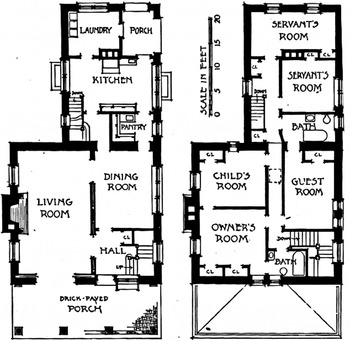
For the period that I investigate, the child's room is most notable by its absence in architectural design, rather than by its presence. Specifically dedicated nurseries had been in evidence in English, Continental and New World contexts in homes occupied by the well-to-do, but [in the US] there were few renderings of rooms or domestic spaces specifically designated for children beyond the infant stage until the early twentieth century. Farmhouses, country houses, city houses and apartments were not designed to accommodate children, and definitely not designed to accommodate childhood. Rather, children of various ages were fitted into existing structures occupying the smaller bedrooms, side rooms and lofts, often sleeping many to a room. For example, the 1850 pattern book on country houses by Alexander Jackson Downing, noted architect and landscape designer, included suggested space for a nursery on the principal floor to assist the women (or nursemaid) in taking care of infants.Footnote 7 It is not until the early twentieth century in the US context that rooms for children begin to appear in design renderings for newly built homes and it isn't until after the Second World War that a consideration of children – their ‘needs’, ‘wants’ and activities – comes to be incorporated into the consideration of the overall social and functional shape of domestic spaces.Footnote 8 Figure 1, taken from a consumer magazine in 1905, offers an early example of a designated ‘child's room’, purposefully incorporated into the redesign of living space in a house converted from a stable.
Floor plan for converted stable showing child's room on the second floor. House & Garden, September 1905, p. 55.

When specific rooms in the home had not regularly been assigned to children, one is in a position to observe an ongoing process of the social definition of spaces, of children and childhoods and of their intersections and interactions, including especially those referencing gender. Writings in consumer-oriented publications from the 1860s to the 1910s increasingly attend to configuring childhood spatially and morally with regard to the ‘proper’ spaces and their furnishings within the physical home, and thus, I argue, in relation to social life generally. The notion that the child ‘needs’ its own space for aesthetic experience and pedagogy found another, supplementary function – that of providing the developing child an arena, in which, in a sense, to auto-cultivate without the interference of outmoded, parental directives. These discourses, naturally, should be approached as ideological and aspirational, rather than simply as statements of fact. The point is that architectural drawings, in the period covered, speak at once to the cultural momentum of an absence and the moral projection of a new presence. The general implication revolves around the ways in which emergent recognitions of the ‘child’ and of childhood engage in mutual definition and fabrication at moral, social and spatial registers.
FR, MS: Wangui, the role of material environments in shaping ideas about childhood also informs your research on the history of African American childhood in the early twentieth century. How do considerations of material and visual culture figure in your work?
WM: I share Dan's interest in material and visual culture, but I think that the African American context affords a particular view on symbolic aspects linked to the sociopolitics of racial identity.
As Dan has mentioned, at the turn of the century Americans struggled to understand what children's lives, livelihoods and deaths meant in an increasingly commercial and urban world. A network of individuals and institutions, including social reformers, charities, medical associations and public agencies, established programmes to protect the economically ‘worthless’, but emotionally ‘priceless’, child.Footnote 9 Calls to ‘save the babies’ filled black and white newspapers alike, further endorsing national and local efforts to safeguard young lives.
However, African American infants and children occupied an ambiguous position within these movements. They stood in the crosshairs of fierce, conflicting efforts to protect children's lives, efforts to maintain racial segregation, and threats of racial violence. Blacks in the South and North could, for instance, only gain access, if at all, to certain hospitals and maternal and infant health services. Black political leaders responded with conflicting views. On the one hand, activists such as W.E.B. Du Bois embraced positive eugenic positions, encouraging members of the race to build healthy families.Footnote 10 On the other hand, many African Americans questioned and challenged the underlying assumptions of Progressive Era campaigns. Through a range of media – short stories, poems, plays, and memoirs – African American women such as Georgia Douglas Johnson, Nella Larsen, Angelina Weld Grimké and Mary Church Terrell argued that, for black infants, being ‘saved’ still meant facing a life of racial discrimination and violence. Such protests linked concerns about infants’ lives to the hardening of Jim Crow laws and the increased attention to and surveillance of women's reproductive bodies.Footnote 11
Visual and material sources offer additional perspectives on these politics of childhood and racial identity. One example comes from the rise of African American funeral homes and the circulation of funeral portraits. In the early twentieth century, funeral homes emerged as the central site for embalming, casket viewing and ceremonies; funeral directors no longer travelled to individual homes to care for the deceased, but instead worked out of parlours where they coordinated the transport, preparation and display of bodies from hospital to parlour to cemetery.Footnote 12 Families made use of this site to visit and take final photographs of their deceased.Footnote 13
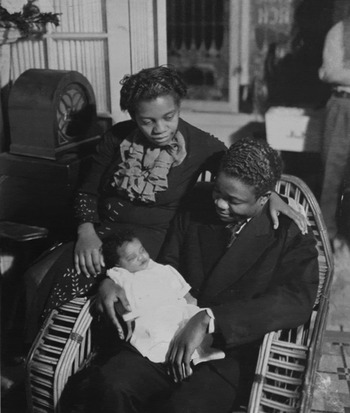
James Van Der Zee's Harlem photographs from the 1920s and 1930s portray some of these families and the ways they wanted to memorialize their children. Through deliberate choices in attire, backdrop, posture, material objects (toys, clothes, household furniture) and facial expression, as well as photomontage techniques, Van Der Zee's photographs of deceased infants projected a dignified image of African American mourning rituals (Figure 2).
Funeral photograph of deceased child. James Van Der Zee, Owen Dodson and Camille Billops, The Harlem Book of the Dead, New York: Morgan & Morgan, 1978, p. 37. Photographer James Van der Zee. Courtesy of Donna Mussenden Van Der Zee.

While these portraits were set in funeral homes, they maintained the appearance of intimate family portraits. Underneath their often highly stylized aesthetics, the photos pointed to the harsh realities that African American families living in densely populated urban neighbourhoods faced. According to Van Der Zee, ‘Most of these babies died of pneumonia; chest gets filled up with colds because they were living in cold flats. It was a very common thing in those days for people to be without heat’.Footnote 14 And while Van Der Zee refrained from characterizing his clients as extremely poor or wealthy, they were able to afford his thirty-five-dollar photographs at a time when a black family living in Harlem earned an average twenty-five dollars per week and paid forty dollars a month for rent.Footnote 15
At the same time, the photographs reveal how black families sought to demonstrate their social status. African American parents strove to establish middle-class lifestyles in neighbourhoods like Harlem, and Van Der Zee's emotionally charged depictions emphasized these families’ efforts to maintain poise and their tenuous social position, in the face of death.
This convergence of material culture and race consciousness is evident not only in the context surrounding the construction of the photographs, but also in how they were displayed. Visual objects, particularly photographs, of African American children are part of a long history of representing the political stakes of African American freedom and destiny.Footnote 16 And as Michelle Mitchell has argued, the placement of ‘certain forms of material culture within domestic spaces’, such as books and coloured dolls, in African American homes was a symbol of racial progress as much as a tool for self-education.Footnote 17 The circulation and exhibition of funeral photographs – whether privately kept, prominently displayed in the home or mailed to relatives – conveyed a family's losses as well as their aspirations and achievements. In other words, the photographs symbolically maintained the materiality of the child and I use them to establish a link between the politics of race survival and the visual and material culture of childhood, African American life, and death.
FR, MS: Caroline, while Dan and Wangui both explore the relationship between material cultures and social identities (concerning children in the American middle classes and African American communities respectively), your work addresses questions about the generation of knowledge about childhood in science and medicine. In this context, your study of the history of the ‘prenatal’ investigates the relationship between particular research practices and broad conceptual changes. Drawing on the work of Reinhart Koselleck, you argue that a shift in the temporal structure of the concept of the ‘unborn’ is key for understanding research in nineteenth-century sciences of development. How do you relate this conceptual change to scientific and medical practice?
CA: Before I turn to the question of research practice, let me give some background about how I got interested in the ‘prenatal’ or ‘antenatal’. It came to my attention in the work of the French alienist Charles Féré, who in the 1880s conducted research on degeneration, approaching it from a physiological perspective. As characteristic of the French medical community at that time, he understood morphological and functional anomalies in the child as being caused by toxic influences on the germ, the embryo or the foetus, transmitted by the paternal and the maternal organisms.Footnote 18 As I have argued elsewhere, it was within this physiological framework that long-standing ideas about ‘maternal impression’ gained new plausibility throughout the nineteenth century: not only alcohol or malnutrition, but also the physiological expression of mental states could count as a toxic influence.Footnote 19 Against this background, Féré experimentally extended teratological research on malformation (in the vein of Etienne Geoffroy Saint-Hilaire and Camille Dareste) to the question of congenital pathology, conceptualizing both as injuries to development.Footnote 20 Féré’s experiments yielded the conclusion that the specific nature of the agent was important for defining the injury and its effect, but even more important was the time of its occurrence during gestation.Footnote 21 When the Scottish gynaecologist John William Ballantyne subsequently launched a novel medical subdiscipline called ‘antenatal pathology’, he relied on Féré’s work by putting forward a temporal concept of anomalies in the child: they had to be explained by accidental events before birth, troubling ‘normal’ development and playing out after birth.Footnote 22
While the temporal notion of the ‘antenatal’ was, at the time, a neologism that slowly displaced the hitherto common and spatial notion of the ‘intrauterine’, it codified a conceptual shift in the history of the ‘unborn’ that had been under way for more than a century. From the beginning of the nineteenth century, and in close connection with the emergence of evolutionary thought, embryologists ‘produced development’ – to make use of Nick Hopwood's felicitous phrasing – by gathering embryos from women's bodies and dissecting specimens.Footnote 23 In development, time is a productive process that makes the embryo by relating past, present and future to each other in a specific mode: a phenomenon is understood through how it has been conditioned by what preceded it and how it sets conditions for what will follow. This is what Koselleck analysed as the ‘historical’ configuration of time, not only providing, throughout the nineteenth century, the foundation for history as a scientific discipline, but also organizing emerging life and human sciences where, as Foucault famously argued, ‘history’ came to define ‘the birthplace of the empirical’.Footnote 24
However, to fully grasp how the ‘prenatal’ emerged as an explanatory framework that accounts for anomalies in the child we have to move beyond embryology. At the same time as embryology made development with regard to morphogenesis, physiologists concerned themselves with the genesis of vital functions.Footnote 25 For example, in the 1820s, a young Johannes Müller examined ‘foetal respiration’ by cutting foetuses from sheep and placing them under a bell jar in order to manipulate oxygen supply.Footnote 26 Such research, through its very practice (replacing the mother sheep by a bell jar), shifted the ‘epistemic thing’ (Hans-Jörg Rheinberger) by specifying the ‘developing organism’ as a ‘developing organism in a milieu’.Footnote 27 This provided the framework for the question of ‘influence’, constituting, for its part, the conceptual grounds on which ‘prenatal pathology’ could eventually systematize research on pathogenic transmission and congenital disease/anomaly.
If, at the beginning of the twentieth century, the temporal notion of the ‘prenatal’ came to denominate the question of what shapes – besides hereditary traits and education – the abilities of the child, this was not just a simple shift ‘from space to time’. I rather try to think about it as an inversion of the relationship between time and space: Barbara Duden has shown how turning the ‘unborn’ into a biological object – defined as a developing organism – replaced what before had been the becoming of a child understood as an ‘enclosed beginning’.Footnote 28 There, space surrounded time, while in the developing organism in its milieu time surrounded space. This inversion went along with transformations of space and time. The visible but opaque space of a woman's body became the non-visible but knowable space of a gestational milieu, and the experienced time of expectation became the time productive of stages and phases. In that sense, gestation became ‘historical’: gestation as an unborn child's present that conditions its future. These shifts both shaped, and emerged through, research practices such as those to which I have briefly alluded.
FR, MS: You not only include physiological and medical but also child-psychological perspectives into your examination of the prenatal. Where do you see the link?
CA: What I have described above had implications for how birth was conceived. If the unborn is an organism specified by how its development unfolds in the milieu of the maternal body, birth constitutes a rupture; yet this rupture is realized by an organism whose development does not stop at birth – as psychologists were making clear in the second half of the nineteenth century, adding a next step to a developmental continuum that began with conception.Footnote 29 The psychological perspective did not just project development beyond birth. Given the temporal structure of development, it had to take into account what had come before. Hence, as the concept of development expanded from the genesis of anatomical forms, to the genesis of physiological functions, to the genesis of psychic activities, child psychologists worked their way backwards on the developmental continuum, tying each developmental state to its antecedent precondition: from the child to the foetus to the embryo. In this sense William Thierry Preyer claimed that the division between his famous Seele des Kindes (The Mind of the Child) (1882) and his lesser known but very influential Specielle Physiologie des Embryo (Special Physiology of the Embryo) (1883) was merely technical in that it facilitated his work (and that of his readers). Both books, he insisted, treated one and the same topic: the coming into being of a human subject.
Now, again, if the developmental continuum across birth was a concept, it came about through practice more than through anything else: namely where human newborns, animal foetuses and human preterm infants not only became objects of experimentation in the respective fields of child psychology (newborns) and foetal physiology (animal foetuses/human preterm infants), but moreover served as ersatz objects for each other in a research strategy that was obsessed with what was ‘already there’ or ‘not yet there’ at birth.Footnote 30 At the core of such research was the question of ‘sensibility’ as the capacity of the organism through which physiology turned into psychology. In this vein, Preyer concluded his Specielle Physiologie des Embryo with a chapter on ‘embryonic sensibility’, after opening Die Seele des Kindes with one on the ‘development of senses and feelings’ in the newborn/infant. However, if a developmental continuum leads from physiology to psychology, it undermines the very possibility of relegating the former to the unborn and reserving the latter to the born. Considering that the emergence of psychic activity during infancy presupposes the emergence of a physiological capacity during gestation, where does psychogenesis begin? After or before birth? By providing a link between before and after birth, the developmental continuum yielded the question of when the human organism became a human subject. And it did so through practice: if the experimental object of a concrete foetus/newborn stands in for the epistemic thing of development, then it refers the researcher constantly to its past and future states – it is always more than what it is at a given moment. This is why I think that when writing the history of the ‘prenatal’ we have to investigate the intersection not only between embryology and foetal physiology but also between foetal physiology and child psychology. This sheds light on how nascent child psychology, in the nineteenth and early twentieth centuries, was linked to the larger question of the coming-into-being of new humans.
FR, MS: Caroline's emphasis on research practices in the establishment of child-psychological knowledge is fascinating, especially if we consider the long cultural history of depicting the child as a strange and inaccessible being. Caroline's contribution resonates here with Carolyn Steedmann's Strange Dislocations, which directly links nineteenth-century research on development and growth in the life sciences to a modern notion of childhood: through the developmental paradigm the child became the figure of a remote past, constitutive of the history within individuals and at the origin of an interiorized self.Footnote 31
Novina, your current research on the history of autism also explores the remoteness or ‘otherness’ of childhood, albeit in the very different context of the disciplinary formation of child psychiatry in the 1930s and 1940s. You suggest not only that the elusiveness of the child remained a pertinent epistemological problem but also that the autistic child carried the problem of accessibility to the extreme, making medical and scientific investigation even more dependent on methods and technologies of (non-verbal) mediation. How would you locate the initial descriptions and conceptualization of infantile autism within a broader history of knowledge of the child and in relation to the history of child psychiatry?
NG: The figure of the autistic child emerged, indeed, as a strange new kind of being in psychiatric literature around 1940, almost simultaneously described by Hans Asperger in Austria and Leo Kanner in the USA.Footnote 32 We have to keep in mind that, at that time, child psychiatry was only at the verge of its formation as a medical speciality. Care for children considered mentally ill or troublesome was provided in multiple institutional settings, both old and new. These included adult psychiatry and paediatrics, but also new interdisciplinary structures that developed with the child study movements and the formation of child psychology in the late nineteenth and early twentieth centuries. Most important among the latter were child guidance clinics in the USA and wards for Heilpädagogik (remedial pedagogy) in Germany and Austria.Footnote 33
Hans Asperger, a paediatrician at the University Children's Hospital in Vienna and influential in the school of remedial pedagogy, first applied the term ‘autistic psychopaths’ to children in 1938. Asperger was describing patients whose ‘relations to the world’ appeared ‘limited’ to him.Footnote 34 In 1943, Austrian-born physician Leo Kanner released case histories of children from the first child ‘Psychiatric Consultation Clinic’ in the USA, founded in 1930 at Johns Hopkins Hospital in Baltimore. He believed the children incapable of forming affective relationships, and, perhaps most shockingly, unwilling to do so. ‘Total strangers’ by birth, psychotic in his view, these subjects were defined by a disorder that Kanner dubbed ‘early infantile autism’.Footnote 35 Kanner's and Asperger's contemporaneous portrayals of inaccessible children call up older figurations of the child as mysterious ‘other’.
This is remarkable when we consider that the notion of ‘the unintelligible child’ – alongside the question of psychogenesis that Caroline emphasizes – can be linked to the establishment of child psychology: from the turn of the twentieth century, pedagogues, paediatricians, child psychologists and social workers sought systematically to explore the child, to map its behaviour and development and to differentiate normal from supposedly abnormal mental states within it. Strategies included examining the specific language and ‘mind’ of the child, and analysing play and intelligence.Footnote 36 So the unintelligibility of the child had decreased by the time infantile autism was characterized as a disorder marked by lack of comprehensible language, a ‘closed’ mind, absence of play, and resistance to the measure of cognitive abilities. On the one hand, observation of irregularities was made possible by knowledge concerning the ‘normal’, non-pathological child; on the other hand, the autistic child undermined the scientific methods by which children had been approached, creating new epistemological problems.
As such, the challenge of conceptualizing and diagnosing autism triggered knowledge production and impacted upon scientific developments. We can interpret the first descriptions of infantile autism as early signs of the nascent discipline of child psychiatry, given that Kanner and Asperger both were key protagonists in the discipline's establishment. The influence of the unintelligible child in stimulating the rise of child psychology is here comparable to the role of the autistic child in fostering the consolidation of child psychiatry as a specialized field of knowledge.Footnote 37
FR, MS: You suggest that inscription practices, i.e. methods and technologies of writing, note taking, and archiving, played a pivotal role in this process, already shaping the earliest conceptions of infantile autism in the 1940s. Inscription and ‘paper’ practices as basic forms of research practice became the focus of scholarly attention in the 1980s and 1990s with Bruno Latour's study of ‘paperwork’ and Friedrich Kittler's exploration of ‘notation systems’ in the history of science and media studies respectively.Footnote 38 Recent scholarship has significantly extended these works, now exploring the role of ‘paper tools’ (Ursula Klein) for the generation of knowledge in a dizzying variety of contexts, disciplines and medial settings, ranging from notes in laboratories and hospitals to children's drawings in schoolrooms.Footnote 39 How do you understand the significance of notation systems for the emergence of autism as a childhood disorder?
NG: Notation systems were crucial for the clinical categorization of infantile autism: they form the basis of Asperger's and Kanner's case studies and provided a framework for the views of newly emerging child psychiatrists. However, the limits of notation – the difficulties of observation and recording – also played a significant role in shaping early concepts of infantile autism. Asperger and Kanner were writing about children characterized by their ‘aloneness’, by a lack of exchange and social connections.Footnote 40 The children's symptoms hindered their examination and representation – making a hindered examination and representation in itself symptomatic.
This is particularly manifest in the medical records of the children Kanner diagnosed with autism. The Psychiatric Consultation Clinic was attached to a pre-existing paediatric division, aiming for an ‘alliance’ between paediatrics and psychiatry.Footnote 41 Patient files were essential paper tools for this alliance. They ensured the collection, combination and dispersal of all available information on each child – statements from parents and social workers, dialogues with the children, notes made by physicians or child psychiatrists.Footnote 42 The files were part of a strategy of intense monitoring of patients: Kanner demanded that detailed notes be taken, believing that any marginal behaviour could turn out to be meaningful.Footnote 43 As such, the files contain abundant, often redundant, notes, much of which consists in copied and re-edited written data. These practices of inscription can be understood as a notation system in Kittler's use of the term: Kittler employs the term ‘notation system’ (in German Aufschreibesystem) to point out that any medium – be it alphabetic scripture or the gramophone – always already precedes the epistemic outcome it effectuates.Footnote 44
In the files of the patients eventually diagnosed with autism the gathered data are often interrupted by comments on how difficult it was to gather data at all. The absence of any interpretable utterance and the inability to communicate with these children apparently forced the psychiatrists to approach them in an experimental way, confronting them with stimuli within a standardized setting in an attempt to register any reaction. The protocols of these examinations reveal that it was the lack of any striking occurrence that was most striking. What could be observed was neither spectacular nor of any hermeneutic value, and what made those non-events worth recording was their unrelatedness to the situation and their resistance to interpretation. These children remained enigmatic – even within the writing itself.
FR, MS: Davide, the relationship between practices of writing and knowledge about childhood is also relevant for your work in German literature studies. You draw here on a wealth of scholarship that has, since Kittler, explored the importance of ‘notation systems’, viz. of institutional, technological and material conditions of writing, not only for scientific but also for poetic production. You pay particular attention to the ‘writing scene’ of the child – a concept that stems from the scholar of German literature Rüdiger Campe. How does an investigation of the ‘writing scene’ help you to relate the discursive framework of (German) literature around 1900 to a broader history of knowledge about childhood?
DG: My research on the ‘writing scene’ is part of a broader inquiry into the relationship between childhood and the symbolic orders of language and writing that I will briefly outline. My interest in childhood was sparked about fifteen years ago, as I began my dissertation project in German literature, in which I focused on Walter Benjamin's Berlin Childhood around 1900 (written in the 1930s and published post-mortem in 1950). A little later I translated Giorgio Agamben's book Infancy and History (1978).Footnote 45 Taking his orientation from the meaning of the Latin word infans, Agamben develops a theory of infancy focusing on the child as a ‘non-speaking’ being. The figure of the child marks an origin that language cannot recover and thus opens the possibility of conceptualizing the human as an originally insubstantial empty space.Footnote 46 Agamben's conceptualization of the child in terms of language theory greatly helped me with my own reflections on Benjamin's memories of childhood. Benjamin's goal was not to follow the conventional autobiography and reconstruct the history of his own childhood. Rather, the memories are directed towards a ‘space before representation’ (Barbara Wittmann), a space that is anonymous and cannot be recaptured.Footnote 47 This has two implications which specifically determine poetical writing about childhood: first, the elusive infantile sphere necessitates a mode of representation characterized by leaps, interruptions and discontinuities, as if any talk about childhood is ultimately condemned to run aground on the limits of the sayable; second, the impossibility of completely getting hold of childhood in and through memory leads to a writing process that testifies to the difficulties of arriving at an end. It is thus no surprise that Benjamin never finished Berlin Childhood, always returning to the text and rewriting it or adding more. His childhood memories are a series of drafts, as if something provisional might inhere in all writing about childhood.Footnote 48
Another factor of Berlin Childhood seemed important to me, namely the particular attention Benjamin pays to how a child actually deals with language and writing. This interest is not directed towards a transcendental origin of language, but stems from empirical observations of a child's life-world: watching his son Stefan, who was born in 1918, Benjamin develops an acute sense for the particularities of a human being who stands on the threshold to symbolic order. Because children access the world through the senses, for them language is not some abstract system of invariable meanings. Delighting in wordplays, creative misunderstandings and the coining of new words, the child maintains a sense for the materiality of language, which adults usually forget and suppress. With critical intent, Benjamin recalls the merits of the child's life-world – and from this stems his immersion in the material aspect of writing, with which he experimented repeatedly, for instance in his characteristic micro-sized handwriting.
Rüdiger Campe coined the concept of the ‘writing scene’ to understand the act of writing as a constitutive relationship between physical, techno-instrumental and cognitive aspects.Footnote 49 The concept allowed me to look at Benjamin's writing practice in its medial and material particularities and relate it to a conceptual curiosity about the world of the child. Thus Benjamin's characteristic micrography can be read as an abstract, but also a concrete and playful, approach to how the child deals with writing. This approach was not only biographically conditioned, but also ran parallel to investigations in contemporary child psychology. This latter was, for example, strongly interested in the phenomenon of scribbling in children – see the work of Karl Bühler. Akin to Novina's study of scientific practice, the study of notation systems in literary practice can also reveal unexpected insights into the case-specific engagement with the mysterious ‘other’.
In a further step for my research, it was important to see that Benjamin's reflections on the world of a child are in fact also part of a broader historical discourse. When one considers the works of authors such as Rainer Maria Rilke, Robert Walser and Franz Kafka, it becomes apparent that literature around 1900 was in the process of developing a new view on childhood and – moreover – that it did so by drawing on the scientific innovations of the time. What emerges here is nothing other than an epochal change in knowledge about children and childhood – for the first time, in both literature and the human sciences, childhood is approached separate from issues of education and upbringing. This is, of course, not a specifically German phenomenon. For example, Sally Shuttleworth has shown that we can observe the emergence of a similar interest in the ‘mind of the child’ in the works of British and American authors such as Charles Dickens and Henry James.Footnote 50 Decisive in this process is the rise of child psychology and pathology in the second half of the nineteenth century, as Caroline has described; another contributing factor, especially for the German context, is the movement for pedagogical reform (Reformpädagogik) at the turn of the twentieth century. Taking up and rearticulating educational ideas of Jean-Jacques Rousseau, the movement aimed at ‘liberating’ the child and enabling its autonomous self-development. Not only was the child considered to have its own ways of seeing, feeling and thinking, but also educational reformers now emphatically argued that if one wanted to change the world, it was first necessary to see it through a child's eyes.Footnote 51 Literature around 1900 – and Kittler was the first to show this, using the example of Rilke – embraced this claim, and so it not only mirrors shifts in the knowledge about childhood but also is indeed actively involved.Footnote 52
CA: I find it very interesting how Davide approaches the making of childhood in literary and scientific discourse around 1900 by examining the perception of the alterity of the child and its elusiveness. In my research on how the unborn was configured as a developmental phase, constituting the origin of the child, I have come to see the question of alterity as something that posed itself as an unresolvable problem to human scientific research.
When it came to how the born was related to the unborn and vice versa, it seems to me that my protagonists dealt with more than the question of how to describe, analyse and explain this relation. They actually faced an ontological challenge that had emerged when the unborn became a biological object around 1800. It was difficult enough, for embryologists, to detect a human organism in early embryonic states, which differed so much from the final human form.Footnote 53 The concept of development did the job, making evident organismal continuity through morphogenesis in the Entwicklungsserie. But what about the interiority which distinguished the human from other organisms (animals, plants)? In traditional theories, where ‘ensoulment’ went along with the maternal experience of ‘quickening’, the unborn had been considered to gain such interiority during gestation.Footnote 54 Yet within the context of the science de l'homme, ‘man’ had lost his transcendence and the soul was to be replaced by the psyche as one organic function among others. The question emerged: how to assess the ontological status of the unborn, which had yet to gain the very subjectivity that defined the human?Footnote 55 In other words, what is a human organism that will be a human subject? This ontological question was explicit around 1800, when physiologists like Xavier Bichat debated whether the unborn led the life of a plant, an animal or a dormant human. In the following decades this question informed the situation I have outlined above: an intense concern with conceptualizing a psychophysiological continuum that would make for an ontological continuum across birth. It is telling that psychoanalyst Siegfried Bernfeld, in 1925, spoke of ‘fear’ as that which makes ‘us’ shy away from ‘having to deny the newborn psychic capacities’.Footnote 56 In his ontological indeterminacy, the unborn was an ‘internal other’ to Western ontology.Footnote 57 I think we have to explore further the historicity of this ontological problem as something at the core of research on development across human and life-scientific disciplines. It might further elucidate the correspondences we observe between literature and the sciences by considering them both as constituting ontological practices.Footnote 58
FR, MS: It seems to us that the idea of exploring the correspondences between literature and the sciences through practice comes with a methodological challenge. So far we have looked at a multitude of different contexts, including architectural journals in middle-class America, funeral photographs in African American communities, literary discourses in turn-of-the-century Germany, and scientific and medical practices in Europe and the USA. This diversity of historical discourse and practice raises the question of how to approach the relationship between different fields of knowledge and how to handle sources of different types from an interdisciplinary perspective. Novina, what roles do the correlations of various domains and disciplines play for your research on the history of autism? And how do you deal with the challenging heterogeneity of sources?
NG: In my research, I take several domains and their interrelations into consideration, assuming that the psychiatric conceptualization of infantile autism in the 1940s can be understood against the background of a growing interest in questions of interpersonal communication. I suggest that the ‘rise’ of the autistic child as discursive figure and the fascination with it can be seen in light of contemporaneous debates about the social bond and its fissures. The early child psychiatrists represented autistic children as ‘total strangers’ at a time when literary and scholarly works were also evoking strangers and abysses between people.Footnote 59 I am thinking of texts like Albert Camus's The Stranger or Georg Simmel's treatise with the same title.Footnote 60 I see knowledge about autism as a specific kind of knowledge about social cohesion, and I explore it in relation to knowledge produced in multiple fields, as far as they all focus on human social connectivity.Footnote 61
To further explain this point with reference to the history of autism, Kanner and Asperger presupposed an early, perhaps prenatal, interest in exchanging messages with one's surroundings. Asperger assumed the existence of an ‘instinct’ by which children are ‘normally’ connected to the outside world and highlighted the deviance of autistic patients:
Long before the child understands the words of the educator … he learns to obey – not to abstract words, but to the look of the mother, the tone of her voice, her face and her gestures, in short: the indescribable display of her expressive appearances … In our case, however, it is precisely this magnificent regulatory mechanism that is defective.Footnote 62
By declaring this ability to interact a pre-verbal ‘regulatory mechanism’, and its dysfunction a pathological disorder, Asperger contributed to the normalization, even anthropologization, of communicative potentials. Like Kanner, he enforced the understanding of sociability as sane human nature. Without explicitly naming it as such, Asperger and Kanner identified autism as a disorder of communication. In doing so, they touched on questions that were being discussed simultaneously in other areas and continued to be of relevance in the post-war period.
The ‘regulatory mechanism’ that Asperger missed in his autistic patients can be seen as anticipating certain feedback processes that, in the wake of the first cybernetic debates, informed theories and practices engineering group dynamics. After the Second World War, cybernetics reflected on the ‘regulation of individuals and the optimization of their traffic’, and for anthropologist and psychiatrist Gregory Bateson, member of the first cybernetic generation, the ‘social man’ stood at the centre of these discussions.Footnote 63 ‘Communication’, Bateson suggested, ‘has become the social matrix of modern life’.Footnote 64 In my view, the phenomenon of infantile autism can be read against this background of a cultural and technological history of communication and within the context of debates about social coherence.
This does not, however, imply that the heterogeneity of the sources may be neglected; it is not the occurrence of similar issues within various domains but the differences in how those issues are being displayed which is of interest.
FR, MS: Dan and Wangui, you both work with sources that predominantly figure in popular (rather than professional) discourses, such as periodical magazines, funeral photographs, advice literature and newspapers. On the one hand, these sources offer a perspective on notions of childhood beyond rigid disciplinary borders and can, for example, give voice to underrepresented groups, such as the African American community in Wangui's study. On the other hand, they pose heuristic challenges: rather than explicitly articulating knowledge about childhood (as scientific and pedagogical texts tend to do), they implicitly embed such knowledge in pragmatic questions about everyday life and education.Footnote 65 How do you extract from these sources underlying conceptual issues? What are the advantages and what are the challenges in working with them?
DC: As mentioned above, to glean a sense of when and how the ‘child's room’ arose as an object of discourse, I initially decided to work on relatively easily accessible public sources from consumer-oriented periodical magazines, mothering magazines and speciality magazines focusing on home furnishings and architecture, as well as newspapers. As modes of public discourse, I think that they enact certain kinds of truth directed at particular audiences who often are selectively engaged in the topic or issue at hand. One might say the same of an academic journal. The targeted nature of the audience and the allied set of concerns in these publications together craft something of a sieve or filter which, at once, distils the problem or question at hand into relevant categories and bits and, in so doing, provides evidence of perspective and social practice. For instance, an article in an 1890 women's magazine addressing the moral dimensions of taste as they can be found in the materiality of a girl's room evinces a perspective, ideology and position in and toward a particular social world and – importantly – enunciates the cultural impetus and legitimacy to address such issues in the first place. The difficulty lies in avoiding the pitfalls of apprehending these texts simply as mirrors or windows providing direct access to some apparent transcendent truth, while nonetheless grasping from them traces of various heterogeneous social truths. Such texts must always be put in relation to other texts and materials from different sources, and sources of different kinds – governmental, visual, testimonial, archival – in a tireless effort to ascertain the specific slice of the world to which they refer and from which they speak.
Getting hold of the public discussion on a topic like ‘children's rooms’ helps direct me to the questions and problems asked and not asked, posed and not posed. Materials found in public magazines provide a kind of baseline, if you will, of framing, metaphor, elision and association, which give the reader clues to social practice, without causing them to mistake the magazines and articles for everyday social practice. Yet they constitute forms of social practice in the way authors voice interconnectivities – interconnectivities of the ‘child’, of senses of a moral–material order, of the place that parents and (later) manufacturers have in the fabrication of a particular version of childhood. In brief, children's rooms reside in narratives – narratives which entangle childhood, itself narratively construed, with such things as social class, taste, gender, beauty, education and (often) unnamed racial and ethnic identities. Collectively and over time, one gleans something of a convergence in narratives about children's rooms, even as there remain divergent and contradictory strands.
FR, MS: Wangui, how do you deal with the diversity of your source material, and how do different narratives intersect in your research?
WM: What were the concerns, ideals and anxieties that African American parents faced when raising children? Where did they turn for guidance, advice and comfort? How did they translate those ideas into day-to-day practices? These are some of the questions I try to grapple with, and in doing so I find myself turning not only to social-scientific texts and sociological studies, but also to visual sources, written and oral texts such as memoirs, advice columns, health guides, photographs, songs and plays. African Americans articulated their ideas and experiences with infant life and death through a variety of media. Considering multiple sources of evidence, rather than focusing primarily on professional publications, reveals a rich and complex set of ideas about health, death and the lives that ordinary African Americans sought for themselves and their offspring.
I'll use the example of baby-contest images to demonstrate how I approach popular visual sources and how I embed them into narratives. Black organizations such as the National Urban League held baby contests in community health centres and housing complexes, and the contests took place alongside maternal and infant clinics and other health-related events. In addition to receiving prizes, the winning African American babies and their mothers were often featured in nationally circulating publications such as Opportunity, the NUL's monthly journal, and Crisis, the official magazine of the National Association for the Advancement of Colored People.
From 1912 to 1934, each October issue of Crisis was devoted to parenting and childhood and featured selected photographs of healthy infants and children from ‘degreed and pedigreed’ African American homes. On one level such images provided visual models for how black families should present and represent themselves.Footnote 66 But the photographs also open a window onto a world where African American women, regardless of literacy or educational and economic means, sought out hygienic instruction and health supplies, revealing some of the material circumstances surrounding early twentieth-century healthcare for African Americans.Footnote 67
These images appeared alongside articles written by black intellectuals and local community leaders, blurring the distinction between popular and professional discourses on African American children. Reviewing these issues of Crisis and other black publications, I noticed that images of black babies and young children appeared on the same pages as advertisements and articles on birth control, northern migration and lynching. Images of children were thus woven into broad discussions of the problems and opportunities facing blacks.Footnote 68 In the eyes of magazine editors such as Du Bois, ‘black children were both the inspiration for political action and the course through which change would come’, and editors pleaded with their readership to submit photographs of African American children, writing, ‘we want all the good clear pictures of healthy human babies that we can get’.Footnote 69 In this way, visual sources and material practices illuminate some of the sociopolitics of affirming racial identity, combating negative portrayals of blacks and protecting infant life.
FR, MS: Davide, while most of our participants work with factual texts, your contribution explicitly addresses literary fiction. How would you describe the role and status of literary texts in the history of knowledge about childhood? Do you understand representations of childhood in literary works as comments on or even parts of contemporary (scientific) discourses about childhood, or do you rather see them as alternative images and a different kind of knowledge from that in non-artistic fields?
DG: It is my assumption that the literary discourse is very important for a general history of childhood and other knowledge-based discourses on the child. There are – at least – two reasons for this: first, literature enables us to corroborate cultural and social-historical theses on childhood because it absorbs and mirrors discussions in other discourses such as anthropology, pedagogy and sociology. To take one example, literary history underpins Philippe Ariès's famous thesis that childhood needs to be examined as a cultural phenomenon, and not as a biological fact, and that as a cultural phenomenon it possesses a history, emerging in conjunction with the formation of the bourgeois subject in the mid-eighteenth century.Footnote 70 Even though Ariès's claim has rightly been challenged by pointing out depictions of childhood and children in antiquity and the Middle Ages, it is simply irrefutable that literature first begins to take a substantial interest in childhood as a form of existence sui generis from around the 1750s onwards.Footnote 71 The boom in autobiographical childhood memories and the rise of the Bildungsroman, such as Goethe's Wilhelm Meister Apprenticeship, are only two particularly illustrative symptoms of this development, which runs parallel to the shift in society from the traditional extended family to the modern nuclear family and the associated centring of social attention onto the child.Footnote 72
Second, literary texts shape and propagate a reservoir of ideas, and as such they are a contributing factor to social processes. Part of the allure of thinking about childhood was that its discovery in the eighteenth century is tantamount to the discovery of a realm which is inaccessible to adults. One could even go so far as to say that as a space not readily accessible, and situated prior to the onset of a stable cultural order, ‘childhood’ represents one of the greatest enigmas faced by modernity. This is why our understanding of childhood is determined by ‘gigantic projections’ (Dieter Richter), and why these are a genuinely poetic act.Footnote 73 It is characteristic that the founding document of modern pedagogy, Jean-Jacques Rousseau's Emile, is a mixture of tractate and fictional text. And it is characteristic that, since the mid-eighteenth century, different competing images of childhood have been in circulation, and have been significantly influenced by literature: the Enlightenment's view of the child as an unformed and thus inferior being; and the Romantic myth of childhood as an unspoiled and thus higher, innocent, creative and poetic form of existence. These are two diametrically opposed constructs, both of which reveal, however, a fundamental distance from the early phase of human development. As a literary scholar, one almost inevitably concludes that any discourse on the child possesses the status of a fiction. In my view, both poetical and scientific texts are indispensable for a history of knowledge about childhood – what is decisive for me is that we explore the text with attention to which image of childhood is conveyed, because these images reveal to us how, since the late eighteenth century, the individual imagines their origins and culture its history.
I would therefore not say that images of childhood in literary discourses hold an alternative position to those in scientific discourses – the common basis of interests, questions, and ideas is too large. However, literary discourse differs from scientific language in being unburdened by the dominance of conceptual understanding, simply because its purpose is less practical. Thus authors such as Hölderlin, Hoffmann, Stifter, Kafka or R. Walser may insist on the mysteriousness of the child and develop distinctly personal perspectives on the world of the child.Footnote 74
FR, MS: Davide described, how, on the one hand, literary texts can be understood as media, which mirror and shape cultural or scientific knowledge. On the other hand, he also argues that scientific discourses necessarily contain fictional elements, and he sees here a need for the specific competence of literature scholars. Novina, you take both literary texts and the rhetorical dimensions of scientific texts into account, focusing, for example, on the use of certain technical metaphors in early psychiatric articles on autism. What status do these metaphors have for you and how do they help you to think about the relation between different fields of knowledge?
NG: As mentioned above, I attempt to locate the early discourse on infantile autism within a broad cultural discussion of the human as a communicative creature, a discussion that was taking place in various domains. I do not claim, however, that there was necessarily any explicit transfer of ideas, models or metaphors between the different fields of knowledge or disciplines. For example, when Asperger describes an autistic child as ‘turned off’ and grasps interpersonal dynamics in terms of technological processes, his use of this metaphor expresses his own embeddedness within a culture that was increasingly determined by telecommunication; that is, these texts were produced within a specific cultural and epistemological context.
With regard to the literary writings I am exploring in my work on autism, I fully agree with Davide's argument about literature as an important source within a history of knowledge. In novels like Camus's The Stranger, one does indeed find figures that might have been or would today be considered autistic. However, I don't wish to imply that those fictitious figures should be diagnosed in this way, but rather seen as evidence of phenomena being simultaneously, albeit differently, enacted in science and literature.
FR, MS: Novina's contribution points to several stakes in the framing of autism – a cultural preoccupation with communication, a social quest for coherence, and a disciplinary interest in the formation of child psychiatry. During this discussion, all of you have mentioned similar scientific, moral, and/or political investments in images of childhood, be it the social status of African Americans or the pedagogical reforms at the turn of the century. We think that one central question emerging from these considerations concerns the implications for our present knowledge about childhood: how do the various historical transformations that you have mentioned shape our present understanding of childhood? How would you describe their larger political and cultural implications? Dan, your study seems here particularly concerned with moral and pedagogical issues.
DC: Indeed, and more specifically I think that the view of the child arising in the late 1800s, and coming into robust delineation in the 1920s in the US context, manifests as transformations in a number of cultural practices and beliefs which were definitive of middle-class Victorian life mid-century. The most relevant and prominent of these transformations centres on the relationship between taste and materiality. A clear segment of Victorian life understood taste as the dynamic relationship between inner character and outer appearance. These Victorians were never certain whether character completely determined one's relation to the material world, but they clearly worried that material things could overtake taste. Hence the ambiguity of what things mean, and how – i.e. what they indicate – remained at the forefront of consideration.
At the time when consideration began to turn toward what is right and proper for young children to have in their rooms, there was an increasingly noticeable commercial culture of ready-made and popular things. Writers – many self-proclaimed ‘mother’ or child specialists – understood the child's room not simply as a place to store children but as an incubator of character. ‘Nice’ things, it was asserted, would help mould the child's character and ultimately win out against any inclinations toward the ugly and the untidy. The Victorian faith in the power of beauty and simplicity transformed into a pedagogic discourse, whereby transcendent ‘taste’ gives way to the notion that the child contains within itself all it needs to become fully human.
These Victorians, perhaps more self-consciously than other ‘Westerners’, considered objects – in their very presence as materials – active in the construction and construal of self and other.Footnote 75 They were not just dead ‘matter’ to be taken up or disregarded by agentive human beings; rather, things and goods formed key substances from which character was made and remade. Part of the trick, skill and distinction of taste resided in being able to negotiate the delicate dance between internal disposition and external life. An ever-increasing material-consumer world made these efforts progressively fraught with uncertainty, especially when the children's sensibilities were at issue. Here, in what I call the ‘soft pedagogy of things’, resides an underlying logic and dynamic of childhood – i.e., since children could not avoid the materiality of the world, they would need to engage in and with it, but to do so with a purposefulness and under guidance, in order to ensure a properly moral trajectory.Footnote 76
By the 1920s, the power and lure of things and the ability to source and curate ‘proper’ things became, at once, both more evident and more opaque. Discourses on taste were replaced with discourses on the child as a knowing active being who requires ‘his’ own space for exploration and development. The invocation of the viewpoint and voice of the child as primary and authoritative in decor – and, as such, as indicative of a deep truth about the child's self-knowledge – was part of a larger cultural arc of privileging the ‘child's’ perspective in the context of popular, material and commercial culture.Footnote 77 The figure of the child in the rising US middle-class culture at this time was increasingly individualized and analytically extracted from the context of home, family and community. It was to be observed and understood as something self-contained, best understood by experts who could complement primitive, natural growth with the introduction of well-designed things – things which the child instinctively would appreciate. These notions certainly find an echo in the contemporary obsession with discerning what constitutes authentic play for children – i.e. whether and how ‘real’ play includes engagement with digital technologies, and to what extent the child needs to be directed and guided, or simply sheltered from moral pollutants.
FR, MS: Moving from pedagogy to politics, Davide, in your research you relate the figure of the saved child in Adalbert Stifter's Der Waldgänger to a new bio-political paradigm that emerged after about 1800. What would you describe as the bio-political perspective on the child in Stifter's text? Do you think that this perspective has implications for the meaning of childhood in the twentieth century?
DG: Stifter's story reflects on different facets of childhood and is ideally suited for understanding post-Romantic perceptions, which emerged around the middle of the nineteenth century. Research on Stifter has primarily focused on the story of the wild gamekeeper's son, in which he examined the peculiar language world of children. As in other stories from his middle and later work, Stifter takes up a classical–Romantic topos; circulating since the mid-1750s, it imagines childhood to be a primordial poetical existence by virtue of the child's spontaneous creativity. However, in Stifter's stories the children are no geniuses; they are not the creators of a higher and purer art, as for example Goethe's Mignon is. Whenever they poeticize, they disturb or unsettle, for their language is opaque and confused. Hence they are more or less latently pathologized, always pushed onto the margins of society, standing as strangers on the edge of civilized society and defying integration. As such they are like Kaspar Hauser, with whom the Romantic idealizations of childhood are shattered and irreversible experiences of alienation become etched in the mind of modern subjects.Footnote 78
In my research I also attempt to show how Stifter's Der Waldgänger places the question of the possibility of socialization in a broader framework.Footnote 79 The text is not only modern because the process of culturation reveals traits of crisis. If we consider that the story possesses a political dimension, then the issue of human propagation, which had become increasingly pressing for modern politics of population, is quickly discernible. Drawing on legal and sociological texts of the time, such as Wilhelm Riehl's Die Familie (1861) or Lorenz von Stein's System der Staatswissenschaft (1852), the playing field on which the narrative takes place is the ‘biological threshold of modernity’.Footnote 80 The main conflict in Der Waldgänger emerges from the demand that marriage ultimately aims at having children and securing their existence; moreover, a rigid biologizing looms when broaching the question of what a child ‘really’ is – for example, when it is denied that adopted children can take the place of biological children. Here Stifter raises questions as to the political status of the family, and these are just as topical today when we consider how much importance is attached to demographic discussions. For all those who ask themselves whether they have to produce children in order to be regarded as useful members of society, Stifter's story is a reference text rich in content.
FR, MS: Wangui, concerns about reproduction also figure predominantly in the political struggles that you have mentioned above – whether in the eugenic views promoted by progressive black leaders, or in the radical critique of these views advanced by black female activists such as Nella Larsen. How would you describe the legacy of these debates?
WM: African American infant death is an issue of continuing concern in US society, where health inequities across race and class persist. Infant mortality rates in the United States are higher than in most industrialized countries, with African American infant mortality more than twice the rate for whites.Footnote 81 I think that my study can contribute to a critical awareness of the historical dimensions of these disparities, by offering a historical context to demonstrate how race does not operate as a naturalized, statistical variable but partakes in a complex sociopolitical process that is constantly being remade and renegotiated.
At the turn of the century, African Americans sought to make sense of high infant death tolls while challenging ideas that high mortality rates were evidence of racial degeneracy, maternal ignorance, familial instability, behavioural vices and lack of hygienic knowledge.Footnote 82 The underlying question turned around the value of life, and how age, in addition to race and gender, shaped beliefs about the lives considered worth saving. Black laywomen played key roles in organizing community health programmes, and black female intellectuals and artists articulated the challenges that motherhood posed to their physical, professional and political values.Footnote 83 As some remarked, despite Progressive Era campaigns to ‘save the babies’, black children still faced a future of racial discrimination and violence.Footnote 84
Blacks questioned what type of world their children were being born into, which can be considered a different facet of the pronatalist paradigm that Davide has pointed out. For example, reflecting on the death of his firstborn, Du Bois recalled his fruitless attempts to find a physician willing to treat his black son. On the day of the burial, he felt his heart filled with an ‘awful gladness’, a sense of relief in knowing that his son had escaped a life within the Veil – that he had left ‘before the world had dubbed [his] ambition insolence, had held [his] ideals unattainable, and taught [him] to cringe and bow’. He added, ‘Better far this nameless void that stops my life than a sea of sorrow for you’.Footnote 85 This paradoxical phrase – the feeling of ‘awful gladness’ – raised a painful and troubling question that haunted Du Bois and other African Americans: was it better for their young to die than to endure a life of racial discrimination and disappointment? In fiction we see Helen Crane, the protagonist of Nella Larsen's 1928 novel Quicksand, posing a similar question when she asks, ‘marriage – that means children to me. And why add more suffering to the world? Why add any more unwanted, tortured Negroes to America? Why do Negroes have children?’Footnote 86
Such perspectives contain a lesson for contemporary public-policy debates, which tend to focus on black women's (in)ability to secure reliable medical care.Footnote 87 The focus on individual action often obscures a host of other factors, including the role of disease, family and neighbourhood resources, and economic environments that influence infant survival. And, as the history of infant mortality reduction campaigns demonstrates, these are only the latest iteration of concerns based on changing ideas about race, family structure, causes of death, government responsibility and the place of children in society. Attention to the sociopolitical consequences of rationalizing health disparities is thus crucial for identifying productive, rather than stigmatizing, interventions.
FR, MS: Caroline, how do we understand the larger cultural and political implications of a change in the temporality of a concept such as the unborn? Are there any consequences for our present knowledge about childhood?
CA: I do indeed think that there are larger implications not just for knowledge about childhood but for childhood itself – or perhaps, I should rather say, for children. I have argued that the (un)born child is invested with a temporal concept that constantly relates past, present and future, and that this conception is furthermore invested with a concern about detrimental impacts. ‘Development’ temporally structures such impacts by transforming events in the present into future features or behaviours – a transformation which led psychologist Jerome Kagan to call development a ‘cryptograph’ in 1964.Footnote 88 Féré’s research on prenatal pathology was set off by exactly such an encryption, since his motivating concern was to find out how the ‘trauma’ experienced by pregnant women during the Prussian siege of Paris and the revolutionary events of the Commune in 1870–1871 possibly resulted in the disproportionate amount of physical and behavioural anomalies that could be observed in children in the 1880s.
Vincanne Adams, Michelle Murphy and Adele E. Clarke have recently described, in terms of ‘anticipation’, a chronopolitical regime that lets the present be determined by a possible future. I do agree with them that such a regime is a ‘defining quality’ of our time.Footnote 89 However, I think it is not novel. It corresponds to the way the concept of development has, in the nineteenth century, come to encode time or – to put it the other way round – to the way time has encoded the coming-into-being of humans. From the outset, research into prenatal pathology was concerned with how to prevent harmful influence. We know the way this shaped – within a biopolitical framework – policies of pregnancy, establishing the idea of ‘antenatal care’ which today feeds into a thoroughly commodified promise of ‘optimization’.Footnote 90 It may be interesting to think about how this temporal regime denies children (as well as pregnant women, for that matter) the experience of a present in its own right.
FR, MS: We introduced this conversation by pointing to the historiographical challenge posed by the diversity of practices and discourses around modern knowledge about childhood. This round table has amply shown us that we may understand this diversity not so much as a challenge but rather as a – still too rarely used – opportunity for engaging with the symmetries and references among scientific, material, literary and artistic cultures, and with their respective forms of knowledge – ranging from spatial and visual representations, patient files and literary texts to long-term conceptual changes. The last section especially highlighted the continuing relevance of these explorations for both the humanities and the social sciences. We hope that this discussion will spark further investigations, which we think can only benefit from interdisciplinary perspectives.