Brief report
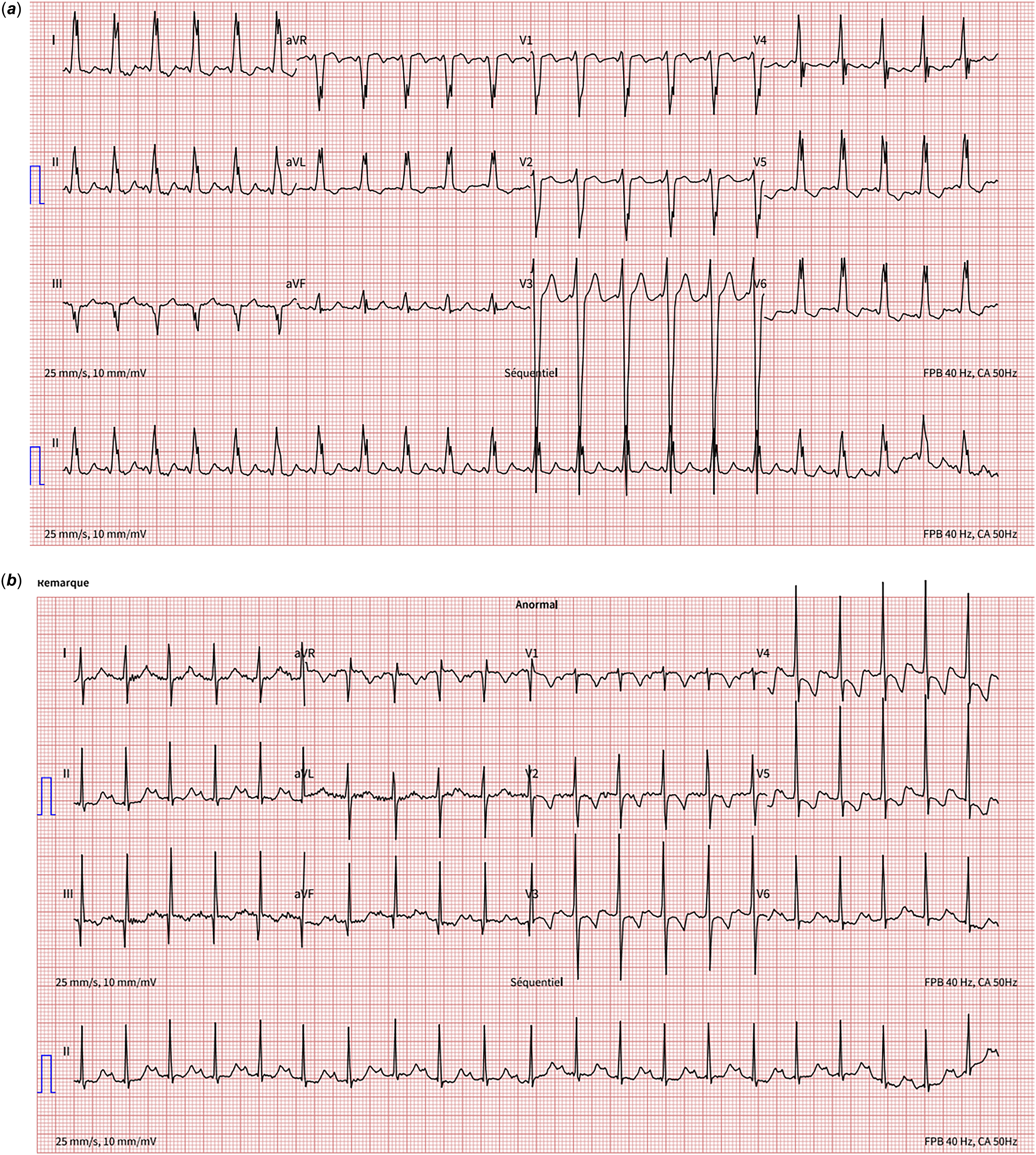
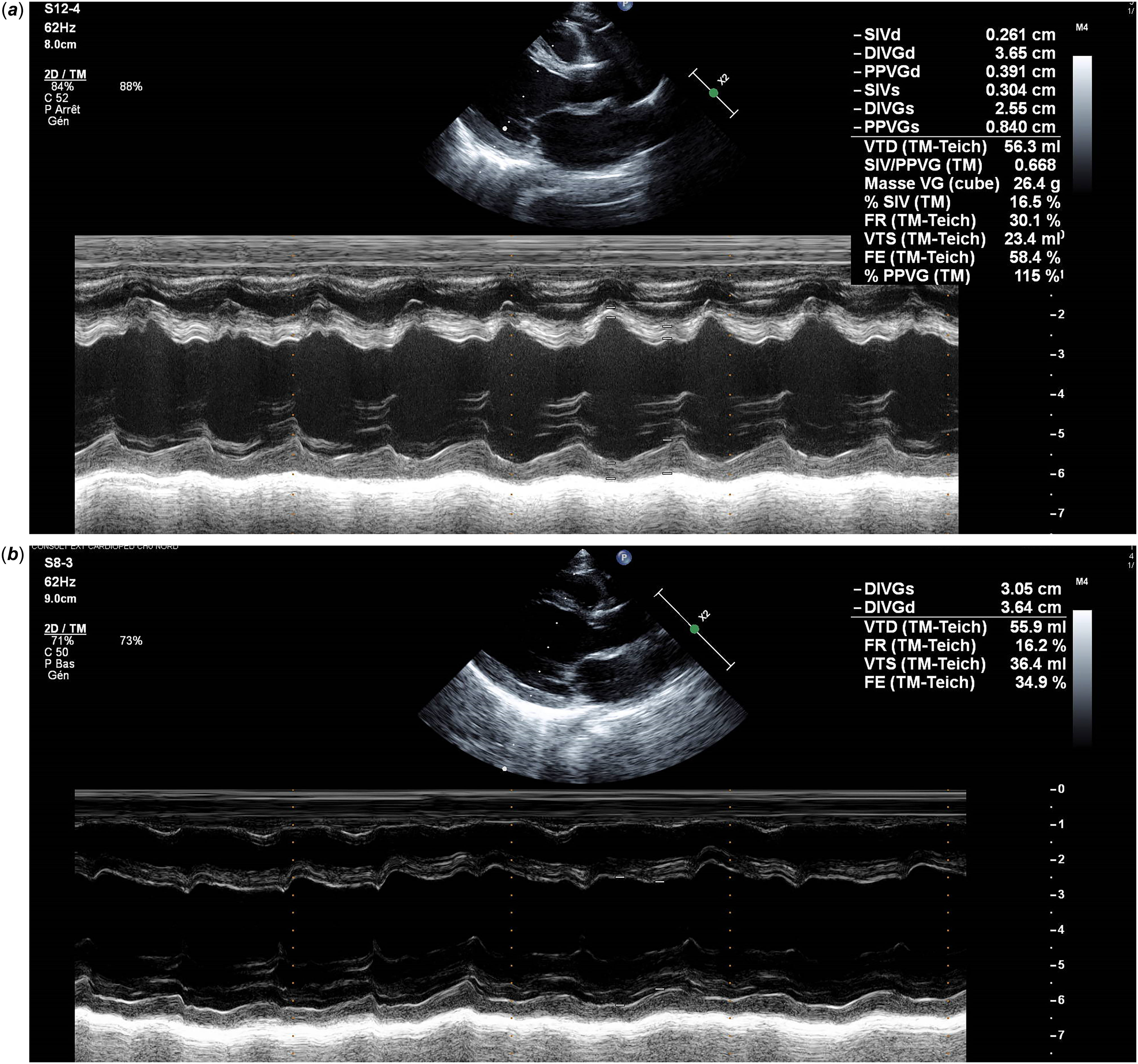
We report the case of a female infant who presented at two months of age at the paediatric cardiology consultation due to a cardiac murmur. The infant was asymptomatic, exhibiting good growth in both weight and height. Her electrocardiogram (ECG) showed a regular sinus rhythm at 126 beats per minute, a PR interval of 63 ms, and a QRS duration of 108 ms, with a pattern of left ventricular conduction delay corresponding to ventricular pre-excitation. The delta wave morphology suggested an anteroseptal accessory pathway Figure 1(a). Transthoracic echocardiography (TTE) revealed a patent ductus arteriosus with a high velocity exceeding 4 m/s, a maximum velocity in the pulmonary veins of 0.8 m/s, left atrial dilation (left atrial/aortic root ratio: 1.5), and left ventricular (LV) dilation (z-score +3). Despite the septal dyssynchrony observed on M-mode imaging, the left ventricular systolic function remained preserved, with an ejection fraction (LVEF) between 58 and 64% (Figure 2(a)).
( a ) Electrocardiogram prior to oral flecainide administration showing a pattern of left ventricular conduction delay consistent with ventricular pre-excitation. ( b ) Normalisation of the electrocardiogram following oral administration of flecainide, marked by the disappearance of ventricular pre-excitation, prolongation of the PR interval, and narrowing of the QRS complexes.

( a ) Echocardiography, parasternal long-axis view, M-mode at the time of percutaneous patent ductus arteriosus closure, showing left ventricular dilation with preserved left ventricular ejection fraction. ( b ) Echocardiography, parasternal long-axis view, M-mode, at six months after patent ductus arteriosus closure, prior to initiation of flecainide therapy, showing left ventricular dilation with impaired left ventricular systolic function.

The percutaneous closure of the patent ductus arteriosus was successfully performed at 4 months of age without complications. One month after cardiac catheterisation, transthoracic echocardiography (TTE) showed persistent left ventricular (LV) dilation with a preserved LV ejection fraction (LVEF) of 62%. At 10 months of age—six months post-closure—TTE revealed worsening LV dilation (z-score + 4) and a decreased LVEF of 35% (Figure 2(b); Video S1). Additionally, the infant exhibited slowed weight gain since 6 months of age, with a recorded weight of 7.8 kg. ECG continued to show ventricular pre-excitation.
A comprehensive cardiomyopathy evaluation ruled out infectious, immunological, metabolic, and genetic aetiologies. Cardiac MRI estimated an LVEF of 43%, revealing significant septal dyssynchrony but no late gadolinium enhancement. Pharmacological management was initiated with an angiotensin-converting enzyme inhibitor and an aldosterone antagonist.
Given that accessory pathway-mediated dyssynchrony and LV dysfunction were the most likely diagnoses, antiarrhythmic therapy with oral flecainide was introduced at a dose of 3 mg/kg/day in three daily doses (60 mg/m2/day). The treatment was well tolerated, and within 24 hours, ECG demonstrated the disappearance of ventricular pre-excitation, an increased PR interval (143 ms), and narrowing of the QRS complexes (69 ms) (Figure 1(b)).
Regular Holter monitoring was performed, and the flecainide dosage was gradually increased to 6 mg/kg/day in two daily doses due to the persistence of intermittent pre-excitation, which disappeared during sinus tachycardia but remained absent of atrioventricular reentrant tachycardia (AVRT). Six months following flecainide therapy initiation, TTE parameters showed normalisation, with an LV end-diastolic dimension z-score of 1.8, an improved LVEF of 72%, and resolution of septal dyssynchrony (Video S2). Concurrently, the infant exhibited weight gain.
Comment
This case highlights an infant under 12 months of age presenting with LV dysfunction caused by septal dyssynchrony secondary to a right anteroseptal accessory pathway, without any episodes of AVRT. Flecainide therapy successfully blocked antegrade conduction through the accessory pathway, resolving the septal dyssynchrony responsible for the cardiomyopathy.
This condition is rare and less recognised compared to arrhythmia-induced cardiomyopathies associated with AVRT; however, a few cases have been reported in the literature. Ventricular dyssynchrony, particularly intraventricular, is known to contribute to ventricular remodelling and heart failure. Reference Udink, Kruessell and Wagner1–Reference Couchonnal, Chicos and Knight4 A distinguishing aspect of this case was the coexistence of a patent ductus arteriosus with left-to-right shunting, which led to LV dilation and likely masked the initial impact of the accessory pathway.
Following multidisciplinary discussion, pharmacological therapy with oral flecainide was chosen over percutaneous ablation, particularly due to the patient’s young age and the potential for spontaneous regression of the accessory pathway within the first years of life. Additionally, catheter ablation of an anteroseptal accessory pathway carries a risk of iatrogenic atrioventricular (AV) block.
Yi Zhang et al. recently reported their experience with right accessory pathway ablation in 10 infants (mean age: 6.7 months, average weight: 8.1 kg) with LV dysfunction, with no notable complications. Reference Zhang, Jiang, Cui, Li, Zhou and Li5 The recovery time for LV function depended on initial LVEF severity; patients with mild LV dysfunction (40 ≤ LVEF < 50%) showed rapid recovery within one week, similar to our patient, whose improvement occurred later with oral flecainide therapy requiring dosage adjustments based on Holter monitoring due to intermittent pre-excitation.
The use of flecainide for this indication was first successfully reported in two infants without congenital heart defects in 2019 Reference Sekine, Masutani and Imamura6 and later in 2024 in an infant with Ebstein’s anomaly. Reference Uthayakumaran, Asakai and Gnanappa7 Flecainide is generally not a first-line therapy in patients with LV dysfunction due to potential proarrhythmic effects. 8 However, given the unique mechanism of accessory-pathway-mediated LV dysfunction in this case, flecainide was deemed the most appropriate choice.
For our patient, the therapeutic plan involves monitoring for spontaneous regression of the accessory pathway in the coming years. If it persists, catheter ablation may be considered when the risk of AV block is lower. Several studies have demonstrated the efficacy and clinical safety of oral flecainide in infants for AVRT management. Reference Cunningham, Uzun and Morris9,Reference Kohli10 The choice between pharmacological therapy and percutaneous ablation in infants with accessory pathway-related dilated cardiomyopathy depends on each centre’s expertise, as this condition remains rare. Reference Miyazaki and Uemura2
We believe that using flecainide—which was very well tolerated—as a first-line therapy to block the accessory pathway and restore good left ventricular function was the appropriate therapeutic choice. This approach allowed us to avoid the potential risk of atrioventricular block associated with a percutaneous procedure in this 10-month-old infant, especially considering the possibility of spontaneous regression of the accessory pathway.
Financial support
This research received no specific grant from any funding agency, commercial or not-for-profit sectors.
Competing interests
None.