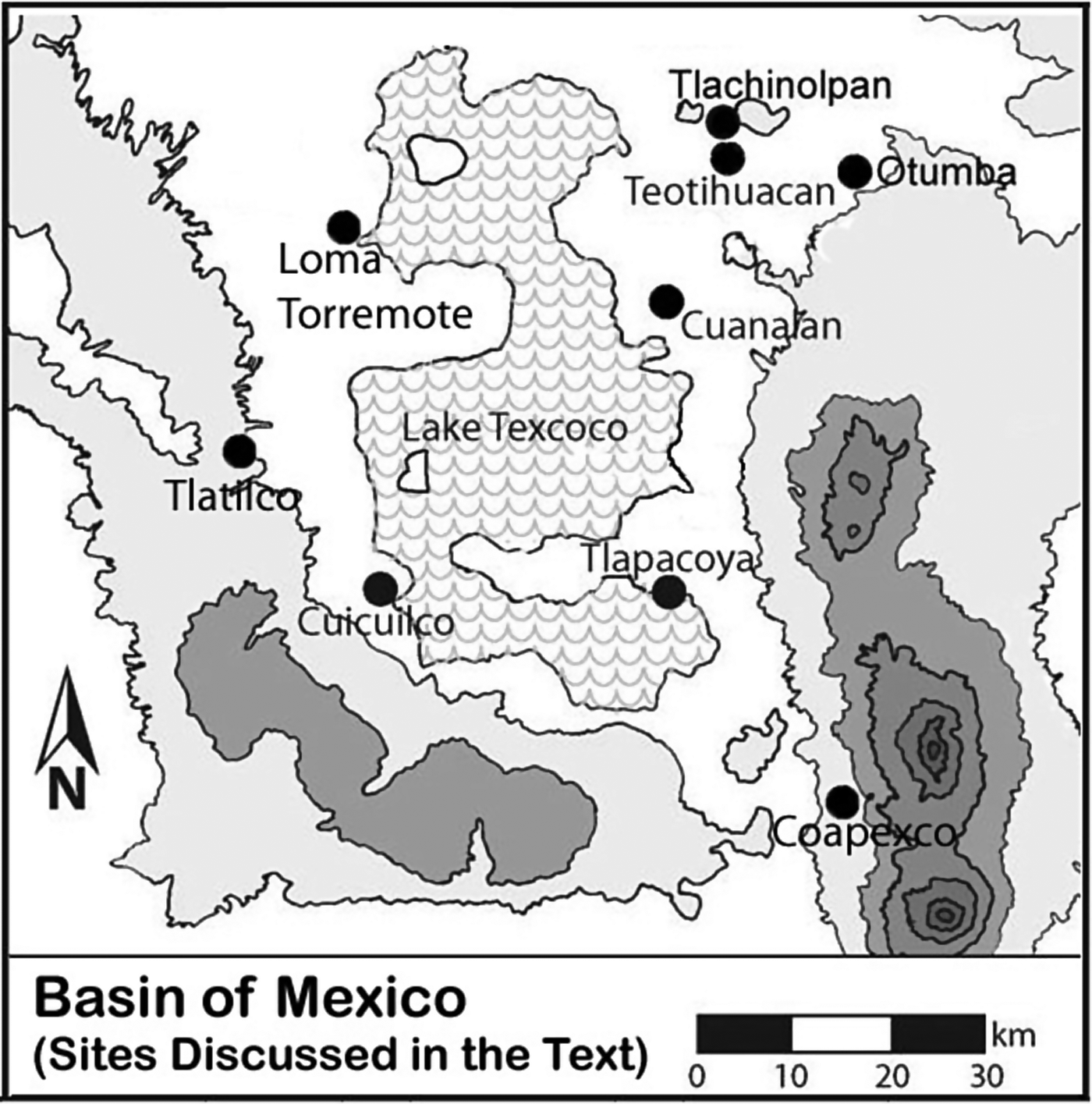
In recent decades, archaeologists have pursued many kinds of studies of ancient economies in the Basin of Mexico (Figure 1). One assumption underlying much of the planning and prioritization of this work is the assumption that unresolved questions might be addressed through additional fieldwork. Unfortunately, because of the growth of modern settlement and the expansion of modern agriculture, this assumption is becoming less tenable. As a result, archaeologists must plan for a future with decreased opportunities to find new answers through field research. Charting a suitable course requires reflection about possible future directions of regional economic research and how we might prioritize research to limit the loss of information through neglect or missed opportunities. This paper begins this task by considering the kinds of data requirements future research may generate. It also examines the development of the regional economy and highlights some examples of issues still in need of resolution.
The Basin of Mexico and sites discussed in text.

Prescribing a course of action is complicated by many factors. One is the difficulty of anticipating the needs of future researchers studying the economy. The vast changes which transformed economic research in recent decades (Earle Reference Earle and Earle2002) highlight the difficulty of predicting what future researchers even will consider relevant and feasible in studying ancient economies. For example, a 1960s archaeologist studying cultural ecology or investigating the Irrigation Hypothesis (Wittfogel Reference Wittfogel1957) might not recognize more recent studies of political and ritual economies. Likewise research ranging from discussions of “value” (Bailey and Mills Reference Bailey and Mills1998; Graeber Reference Graeber2001) to applications of theoretical constructs such as World Systems Theory (Smith and Berdan Reference Smith, Berdan, Smith and Berdan2003a) would have seemed at best unduly optimistic. In order to begin the process of planning for the future, this paper examines some trends in economic research and also looks at certain unresolved issues.
A second complication is the diversity of past societies in the basin. The pre-Columbian sequence begins with pre-Clovis peoples and finishes with an expansionist empire whose complexity and sophistication rivaled ancient Old World civilizations. As a result, regional economic research covers topics ranging from foraging group subsistence to the realpolitik tribute-gathering and market manipulation of early states. The historical archaeology of the postconquest period adds to the variety of research problems. Out of necessity, the latter part of this paper, which addresses some unresolved problems in regional economic research, focuses chronologically on the period between the emergence of agricultural settlements and the collapse of Teotihuacan, with a particular emphasis on issues of concern to the author. The actual range of issues in regional economic research is far broader and more diverse than can be addressed here.
CHANGING ECONOMIC PERSPECTIVES AND FUTURE WORK
One of the difficulties of anticipating the needs of economic research in the Basin of Mexico is that it involves hitting a target moving in many different dimensions. One dimension is the changing goals and perspectives of economic research. Since the first Basin of Mexico conferences in the 1960s and 1970s, economic research in the region has continued to evolve. More than a decade ago, Webster (Reference Webster, Mastache, Parsons, Santley and Puche1996) also encountered this difficulty while summarizing economic research in the region. In particular, Webster acknowledged the emergence of new perspectives advocated by Brumfiel (Reference Brumfiel1992) which recognized the importance of “gender, class, and faction” as social groups whose distinct viewpoints influenced economic decision-making in ways which had been poorly addressed. Webster intentionally sidestepped the problem, however, posed by newly evolving research in order to focus explicitly on regional cultural ecology. A similarly focused approach will not work well here given this paper's particular concern with anticipating the needs of future researchers, and the following discussion is intentionally broad and general. Some more specific concerns are addressed in the latter half of this paper.
For many decades, analyses of ancient economies were inspired by developments in economic anthropology (Halperin Reference Halperin1994; Polanyi Reference Polanyi, Polanyi, Arensberg and Pearson1957; Sahlins Reference Sahlins1972; Smith Reference Smith and Smith1976), but it is doubtful that archaeological research will develop in a parallel manner. Economic anthropology focuses on issues in the modern world, and a side effect of its efforts to facilitate development in traditional societies was to create important tools for thinking about the past. Concepts such as modes of exchange, corporate organization, and market formation became useful building blocks for understanding ancient economies. Many recent directions in economic anthropology focusing on globalization and similar phenomena, however, have less immediate applicability to the ancient world.
Another way to assess the future course of economic research in the basin is by examining its history, which provides examples of successful long-term planning and identifiable trends in the transformation of research. The research conducted in the 1960s and 1970s (Millon et al. Reference Millon, Drewitt and Cowgill1973; Sanders et al. Reference Sanders, Parsons and Santley1979) laid the foundation for much of what we now know about pre-Columbian economies of the Basin of Mexico and makes a useful starting point, especially since this work also arose out of planning in the early 1960s. Much of this research was guided by the principles of cultural ecology, and by the 1980s, many of the oversimplifications of this research had been exposed. Given how much was not known when these projects were undertaken, it seems inevitable that some overly simplified paradigm needed to be used to tie together what was known. In the 1960s, the chronology of Teotihuacan's ceramic phases was still being established, as were many of the parameters of the site as an urban center (Millon Reference Millon1960, Reference Millon1964). Fundamental questions about the origins of agriculture in the New World (Mangelsdorf et al. Reference Mangelsdorf, MacNeish and Galinot1964), and even possible Old World influences on Mesoamerican civilization (Eckholm Reference Eckholm, Jennings and Norbeck1964), were still being answered. In planning the Basin of Mexico surveys and the Teotihuacan Mapping Project, cultural ecology provided an initial framework for organizing what was known, evaluating its relevance, and guiding what kinds of additional information needed to be sought.
The culmination of these projects created rich data sets particularly well-suited for pursuing broad-context economic analyses. For example, the Basin of Mexico survey data allowed Brumfiel (Reference Brumfiel and Flannery1976) and Earle (Reference Earle and Flannery1976) to apply models from economic geography to characterizing different aspects of the regional economy. But as new advances in theory and methodology emerged, archaeological approaches to economic research moved towards more specific, nuanced questions. By the late 1970s and early 1980s, researchers in Mesoamerica and other regions increasingly borrowed from debates and distinctions arising in economic anthropology and were refining methods to allow them to achieve their new goals.These included methods for measuring the skill and expertise of craftsmen (Feinman et al. Reference Feinman, Upham and Lightfoot1981), measuring the labor invested in construction (Abrams Reference Abrams1984, Reference Abrams and Schiffer1989; Arnold and Ford Reference Arnold and Ford1980), and estimating the costs of producing and transporting valued commodities (Sanders and Santley Reference Sanders, Santley, Vogt and Leventhal1983). This growing sophistication in dealing with economic issues was not confined to Mesoamerica but reflected a broad trend as researchers in many regions began tracing the flow of goods through systems of exchange (Earle and Ericson Reference Earle and Ericson1977) and looking closely at the social contexts of production and exchange (Ericson and Earle Reference Ericson and Earle1982).
This trend towards investigating finer-grained questions marks an important divergence from earlier research. The Basin of Mexico surveys, the Teotihuacan Mapping Project, and other contemporaneous projects collected data and materials in a way that reflects awareness of the relevance of important economic processes. But the researchers executing these projects had much more basic questions to answer and were in no position to anticipate the specificity of later research questions. The overriding priority in executing these projects was establishing a baseline history of the settlement system. The continued usefulness of these projects’ data and materials in pursuing research beyond those basic goals (Robertson Reference Robertson2001) owes much to the thoroughness of these projects. In general, they are an encouraging example about how researchers can fulfill their ethical obligations to future researchers. The record of these projects is not perfect. For example, in my own research I have been buoyed by the Teotihuacan Mapping Project's systematic collection of more than 14,000 metates, manos, and other grinding tools. On the other hand, the Basin of Mexico survey crews failed to collect grinding tools, obsidian, and many other archaeological materials. This was justified given the logistics of survey work and the need to prioritize collections which aided the immediate goal of defining regional culture history. Despite such omissions, the record of these projects in supporting subsequent work remains very good.
Many changes in economic research can be viewed as a progression towards more complete and accurate depictions that focus more closely on the circumstances that influenced individual decision-making. In this sense, one might trace the development of regional obsidian research from a widget (property-less commodity) phase in which obsidian was viewed as something which ancient peoples apparently needed and traded, to examining more closely the contexts of production, exchange, and consumption in the 1980s (Charlton Reference Charlton and Hirth1984; Clark Reference Clark and Isaac1986; Sanders and Santley Reference Sanders, Santley, Vogt and Leventhal1983; Santley Reference Santley and Hirth1984; Spence Reference Spence1981, Reference Spence and Hirth1984). Questions about the motivations of and constraints on the people who produced and/or consumed goods eventually required more refined characterizations of the decision-makers according to their apparent socioeconomic status (Brumfiel Reference Brumfiel, Brumfiel and Earle1987), special relationships within the economies of households, communities, or regions (Manzanilla Reference Manzanilla1996; Otis Charlton et al. Reference Otis Charlton, Charlton, Nichols, Santley and Hirth1993), and their ethnicity, political faction, and gender (Brumfiel Reference Brumfiel1992, Reference Brumfiel, Brumfiel and Fox1994). The special role of obsidian goods as ideological symbols and as economic commodities deserving special management by early state institutions continues to be a theme in recent research (Carballo Reference Carballo2007; Pastrana and Dominguez Reference Pastrana and Dominguez2009).
As archaeologists increasingly aim toward identifying and characterizing more precisely relevant sets of actors/decision-makers and the contexts in which they lived, the informational requirements of economic research will grow. In recent years, archaeologists have begun to view the past through the prisms of agency (Dobres Reference Dobres2000; Dobres and Robb Reference Dobres, Robb, Dobres and Robb2002), operational chains (Bar-Yosef and Kuhn Reference Bar-Yosef and Kuhn1999; Dobres Reference Dobres, Goldsmith, Garvie, Selin and Smith1992; Jennings et al. Reference Jennings, Antrobus, Atencio, Glavich, Johnson, Loffler and Luu2005; Schlanger Reference Schlanger, Renfrew and Zubrow1994), and related concepts. The informational demand that arises from applying such concepts can be substantial. Efforts to operationalize such concepts into consistent methodology (Read Reference Read2007:188–198) demonstrate the need to make multiple distinctions among agents or within sequences of production. But working with increasingly complex patterns from archaeological evidence inevitably requires larger amounts of data in which to identify and test those patterns.
In this manner, the increasingly detailed approaches to economic research have been accompanied by a corresponding growth in the data which archaeologists desire to collect and analyze. As long as opportunities for additional field work remain available, we might expect to meet this demand, or at least to believe that uncertain conclusions and speculations might be subject to further testing. But this open-ended research process may not be sustainable, and to the extent that adequate data become unavailable, researchers will be forced to reduce the detail of their inquiries or to accept a premature endpoint to their investigations.
This is particularly unfortunate since many advances have made the use of more abundant and better detailed data more desirable and feasible. In some cases, experience and greater meticulousness are now employed in important tasks (for example, the identification of craft workshops; Clark Reference Clark, Gaxiola and Clark1989, Reference Clark, Yamamoto, Carmen and Puche1990; Costin Reference Costin and Schiffer1991). In other cases, technological and methodological innovations have created new opportunities. For example, geographic information systems are now employed for both regional (Carballo and Pluckhahn Reference Carballo and Pluckhahn2007) and intrasite analyses (Robertson Reference Robertson1999); spatial data bases and related tools have long been employed to study spatial patterning of artifact distributions at Teotihuacan (Biskowski Reference Biskowski2004; Cowgill et al. Reference Cowgill, Altschul, Sload and Hietala1984; Manzanilla et al. Reference Manzanilla, Butrón, Jiménez and Manzanilla1993), Otumba (Biskowski Reference Biskowski2000), and other sites. Other GIS-oriented applications may facilitate research in the basin in the future. For example, detailed geographic data lie at the core simulations of the emergence of the complex settlement systems around Tiwanaku (Griffin Reference Griffin2011; Griffin and Stanish Reference Griffin and Stanish2007) and in the Southwest (Kohler et al. Reference Kohler, Kresl, Van West, Carr, Wilshusen, Kohler and Gumerman2000). These approaches can be adapted to research problems in the Basin of Mexico provided appropriate data are available.
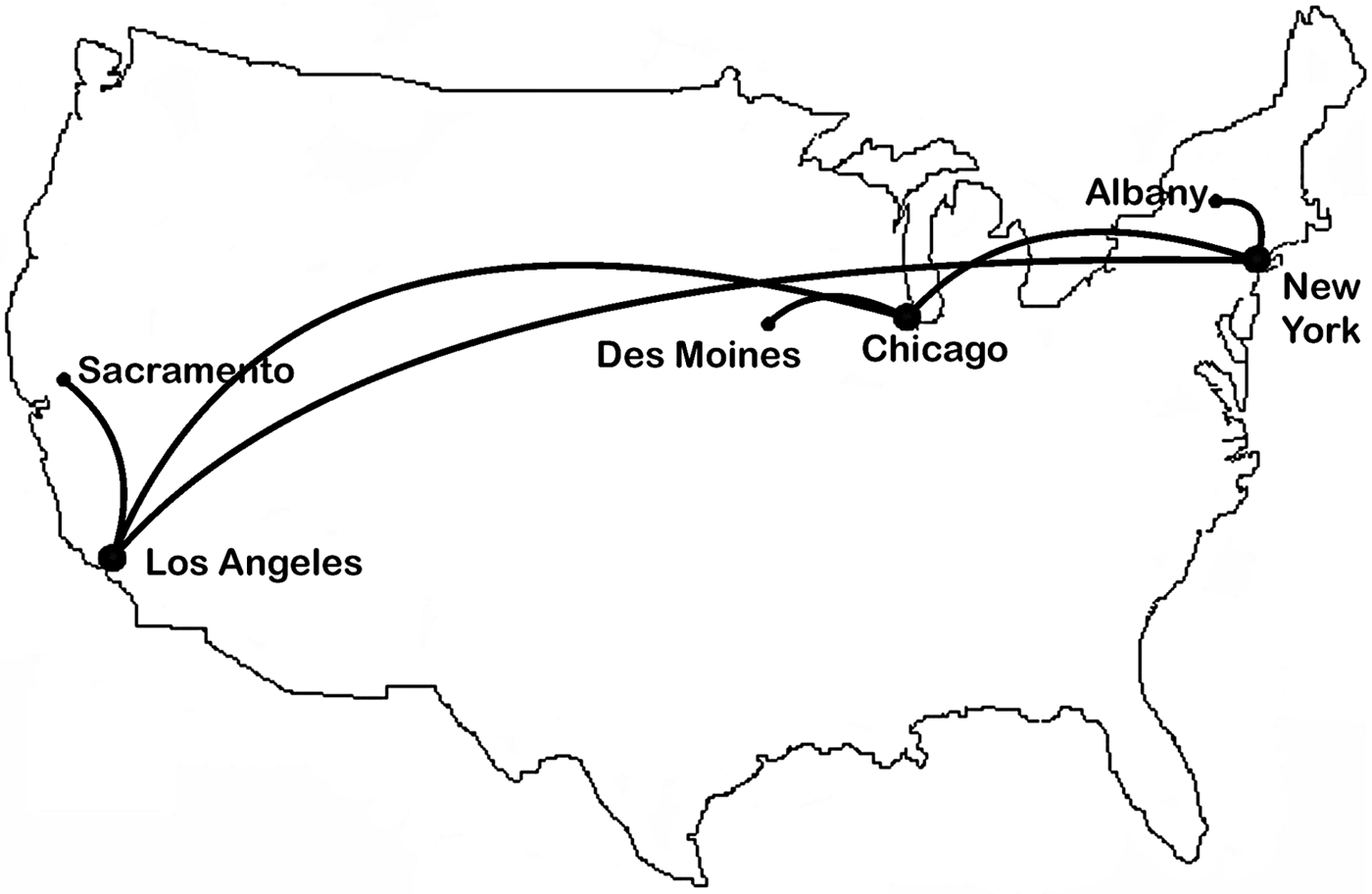
More recently, archaeologists have begun to explore the value of complexity theory and its applications (Bentley and Maschner Reference Bentley and Maschner2003, Reference Bentley, Maschner, Bentley, Maschner and Chippindale2008; Kohler and Gumerman Reference Kohler and Gumerman2000). The potential importance of this body of theory for understanding the pre-Columbian economies of the basin can be illustrated by discussing a couple of classes of models. The first class is scale-free network growth models. A specific kind of network (small world networks) can grow following a specific pattern (scale-free growth) whose mathematical properties have important and generally overlooked implications for real world situations (Bentley Reference Bentley, Bentley and Maschner2003). Airport networks provide a commonly used means of visualizing the dynamics of this network growth pattern (Figure 2). When a new airport is added to a network, it is more likely to be connected by direct flights to airports which already are major nodes with numerous connections (for example, Los Angeles, Chicago, New York) than to secondary nodes (for example, Sacramento, Des Moines, Albany). This rich-grow-richer dynamic is a common component in the growth of many kinds of networks, including human ones. Scale-free network growth has important implications in the study of socioeconomic differentiation in the ancient world since this pattern of growth amplifies existing inequalities with little intentionality of planning by individual members of the network. But testing whether scale-free growth really occurred requires much evidence. Maschner and Bentley (Reference Maschner, Bentley, Bentley and Maschner2003) recommended using the fit of the fall-off distribution for some surrogate measure of wealth (for example, house-size) since under conditions of scale-free growth, the fall-off in wealth should following a power-law distribution. Although Maschner and Bentley applied this method successfully to Northern Pacific house sites, in general it requires confidence in one's measure of wealth and a reasonably complete inventory of relevant sites.
Example of scale-free network growth in an airport network.

Another class of models derived from complexity theory is complex adaptive systems. Anthropologists have found these systems useful for modeling the dynamics of cultural and societal change. Complex adaptive systems are “…groups of agents engaged in a process of coadaptation in which adaptive moves by individuals have consequences for the group” (Lansing Reference Lansing, Kohler and Gumerman2000). Typically, researchers work with complex adaptive systems in order to understand emergent properties: the unexpected consequences which could not be predicted simply from knowledge of how the individual agents will act. In this sense, the emergent properties reflect how the relationships among agents, their goals, and the information available to them make these systems more than the sum of their parts.
Anthropologists have invoked models of complex adaptive systems to study the management of large irrigation systems and explain the apparently coordinated action arising from seemingly uncoordinated managers (Lansing Reference Lansing1991, Reference Lansing, Kohler and Gumerman2000). Archaeologists likewise have used these models to understand better the segmentary system of household/community organization and land management across pharaonic Egypt (Lehner Reference Lehner, Kohler and Gumerman2000). Frequently, researchers pursue this work using multi-agent simulations. These programs provide simulated agents—representing people, households, or some other decision-making unit—with a suite of potential behaviors to be implemented in response to information from the environment and interactions with other agents. Within the simulation, the agents are then sent out to act upon their world and each other, transforming their world in sometimes unpredictable ways. In this way, archaeologists can explore whether comparatively simple behaviors and agendas and relationships among agents and between agents and their landscape can yield unexpected results. In the geographic information systems-related research discussed earlier, multi-agent simulations were employed to study the growth of a regional settlement system (Kohler et al. Reference Kohler, Kresl, Van West, Carr, Wilshusen, Kohler and Gumerman2000) in the American Southwest and the role of trade in the emergence of complex societies in the Lake Titicaca Basin in Bolivia (Griffin Reference Griffin2011; Griffin and Stanish Reference Griffin and Stanish2007). And new applications are appearing with growing frequency (Kohler and van der Leeuw Reference Kohler and van der Leeuw2007).
Although the potential value to the Basin of Mexico of the kinds of research discussed in the last several paragraphs is clear, the future prospects remain cloudy. Because the data requirements are so heavy, researchers not just in archaeology but in many other fields typically pursue plausibility modeling which only depicts events which might happen if the model conditions hold. This tendency led John Maynard Smith (Reference Maynard Smith1995) to characterize the study of complex adaptive systems as “fact-free science.” Archaeologists can avoid the underlying issue of detachment from reality by gathering the detailed data needed to test these models and validate their relationship to past situations. At present, researchers seeking to apply complexity theory to the study of past economies in the Basin of Mexico will benefit from the unusually complete regional and settlement surveys which were conducted here in the 1960's and 1970's. On the other hand, researchers needing to differentiate groups of sites using criteria not envisioned during the regional surveys will not be able to gather the missing data from where sites no longer exist.
Other examples of information-heavy research directions already or potentially applicable in the basin range from applications of World Systems Theory (Smith and Berdan Reference Smith and Berdan2003b) to studies of biodiversity, sustainability, and long-term agrarian transformation (Redman Reference Redman2001; Redman and Foster Reference Redman and Foster2008). Enabling future researchers to pursue such avenues of study is a difficult task. No amount of foresighted work can replace the ability to conduct new field research as needed. Still, we need to take available steps while we can, and hopefully the preceding discussion will facilitate planning.
THE DEVELOPMENT OF THE REGIONAL ECONOMY AND UNRESOLVED PROBLEMS
Anticipating the needs of future researchers is one way of preparing for a future of diminished opportunities for field work in the Basin of Mexico. Another task must be identifying and addressing incompletely resolved issues left behind by the ebb and flow of research. Some are important issues abandoned due to paradigm shifts, problem intractability, human mortality, and other factors. These circumstances created a corpus of problems which ordinarily might remain ignored until a more suitable time for revisiting them. But such problems may no longer be kept on an indefinite schedule.
Given the breadth of economic research in the Basin of Mexico, these issues are too numerous and varied to be explored here. Instead, the remainder of this paper examines the development of the regional economy in the basin's earlier periods and uses this discussion to highlight some examples of work which still needs completion. To make even this limited task manageable, this discussion does not extend beyond the collapse of Teotihuacan, and it focuses primarily on areas of my own interest in the subsistence economy, including several examples associated with food preparation technologies. Nonetheless, these examples illustrate some of the work which archaeologists still should complete.
The Foundations of Economic Complexity in the Archaic Period
Even during the Paleoindian period, the Basin of Mexico probably was an important focus of human activity. The Basin of Mexico was a rich source of natural foods, and the region would have been attractive to ancient foraging peoples. Evidence of mammoth kill sites and early human remains were recovered in the mid-twentieth century (Arellano Reference Arellano1946; Aveleyra and Maldonado-Koerdell Reference Aveleyra Arroyo de Anda and Maldonado-Koerdell1953). Unfortunately, not enough is known about the earliest peoples who inhabited the region. At a general level, simply identifying the first people in Mesoamerica remains an issue (Acosta Reference Acosta Ochoa, Nichols and Pool2012). A problem more specific to the early basin is that much material from the early periods is buried under alluvium or substantial later occupations. With fewer obstacles, the region would be a more valuable place to pursue studies of the economic organization of simple foraging groups commonly pursued elsewhere (Zeanah Reference Zeanah2004).
At the heart of the basin is a series of shallow lakes (see Figure 1). The lakes themselves were a source of many foods, and their fringes were a natural hunting ground for large game animals. As the inhabitants grew more sedentary and began to reap the benefits of food storage, salt from the lake became valuable as a preservative. The surrounding uplands provided additional subsistence opportunities, obsidian, and other resources.
The richness of this ancient landscape played an important role throughout the development of the basin. Even after these lands were transformed by agriculture, natural resources continued to sustain the civilizations which grew there. These resources also made the region attractive to newcomers and provided a bridge between the foraging life of migratory peoples and the intensive food production. Much of the history of the Postclassic period was shaped by the efforts of outsiders to enter and settle in the region. Peoples like the immigrating Mexica exploited niches not being used by the established farming populations. Over centuries, numerous groups flowed into the region out of the northern deserts and discovered subsistence opportunities which eased the process of assimilation.
With the development of more permanent settlements in the basin, we see the emergence of some simple grinding equipment. The Archaic period was a time when people settled down and migrated less, and economically this required becoming more efficient in the exploitation of local food resources. The creation and development of new technologies are the most visible part of this transformation. Grinding tools were useful for breaking down seeds, roots, and other plant matter. It is possible, also, that the Archaic grinding tools also processed occasional small animals and fish, although this and other possibilities still require investigation through residue analysis (Fullager et al. Reference Fullager, Furby and Hardy1996). Frequently, the metates and mortars were simple, unspecialized basins and were little modified from boulders. These simple tools provide little evidence of expertise in the production process.
Culturally, life during the Archaic period saw the flowering of what Johnson and Earle (Reference Johnson and Earle1987:20) called local group societies. This name emphasizes the common importance of location-based resources (for example, food storage) and mutual defense and various corollaries such as the frequent territoriality embraced by people fixed to a specific place and the food available nearby and the need to develop cultural tools to cope with the bickering, theft, adultery, and other problems which no longer can be resolved simply by walking away. From the effort to cope with these conditions sprang many adaptations and other developments intrinsic to the later regional economy. Group ceremonialism and the use of highly symbolic items reinforced group identity and helped reduce dangerous internal friction. Individuals seeking to differentiate themselves from others for political or economic advantage sought prestige items which visually communicate their power and prowess. For these and other reasons, the long-distance trading networks involving prestige goods so visible in later periods have their origins in the Archaic period. Part of this evolution may be visible in the basin at Zohapilco where Playa phase obsidian came exclusively from nearby Otumba, but green obsidian is found in the later Zohapilco Phase occupation (Niederberger Reference Niederberger1979). The corporate organization of lineages and communities exemplified later by Aztec calpulli also had its roots in the Archaic period. These broad changes in social and economic organization were accompanied by the slow courtship of ancient peoples and domesticated plant foods. In short, developments in the Archaic period set the stage for the subsequent growth of complex societies in Mesoamerica.
Whether facilitating the future study of the Archaic/Formative transition should be an important priority is less clear. Settlement in the Basin of Mexico apparently was disrupted by a volcanic eruption around 3000 BC, and farming groups did not recolonize the region for more than a thousand years (Sanders et al. Reference Sanders, Parsons and Santley1979:183). In this sense, the implications of Archaic period research in the Basin of Mexico are more limited. The economic transformations which shaped the lives of the returning settlers occurred elsewhere and are more amenable to study in adjacent regions. In general, Archaic period research in the basin adds to our picture of this crucial time period, and regional research has a more specific importance given the unique ecology and subsistence opportunities available in the basin. But in evaluating future priorities, these contributions should be considered mainly for their own intrinsic value unless a clearer connection can be drawn between Archaic and Formative period settlement.
The Formative Period
Understanding the economy of the basin during the Formative period requires viewing the region first from the perspective of simple rainfall farmers. In general, the fringes of the lake contained some of the best natural cropland. Alluvial fans from small rivers running into the lake provide good soil. Further up the slope away from the lake, the soil remained suitable for agriculture provided that enough water is available. Nearly all the early agricultural settlements were small villages and hamlets located in what Tolstoy (Reference Tolstoy1975) called the Lake Fringe and Inland Rainy zones. These areas, along the lakeshore and in the lower piedmont, provided immediate access to lacustrine resources (Serra Puche Reference Serra Puche1988), permanent streams, and high rainfall (Parsons et al. Reference Parsons, Brumfiel, Parsons and Wilson1982:316).
Natural rainfall on average is most abundant in the southern part of the basin and decreases northward, with the consequence that farming became difficult without augmentation from streams, springs, and/or irrigation works. Initially, the growth of settlement mirrored this gradient, as decisions about settlement had to balance decreasing availability of land in the south versus declining productivity of land in the north. This rainfall gradient particularly shaped the growth of settlement and the development of farming strategies in northern areas such as the Teotihuacan Valley where rainfall farming was feasible only in limited zones, and irrigation systems were needed to bring more land under cultivation (Sanders Reference Sanders and Sabloff1981).
For the early farmers of the basin, both short- and long-distance exchange already were important. Hirth (Reference Hirth and Hirth2009) argues that craft production in Mesoamerica emerged from household strategies aimed at more fully utilizing household labor, maximizing production while minimizing risk. Domestic craft production probably was important from the beginning of settled life, and circumstances in the basin over time accelerated its contributions to the regional economy. The resources of the basin are distributed heterogeneously. Initially some settlements had broad access to lacustrine, alluvial, piedmont, and mountain resources. But self-sufficiency decreased as settlements filled in the landscape, and as a result local economic specialization and intraregional exchange increased. Likewise, as the regional population grew, the demands on the prestige economy to provide symbolic means of social differentiation promoted the growth of long-distance trade networks which distributed obsidian and other local goods to distant locales while delivering exotic items to the basin.
The importance of trade and the general economic complexity of the inhabitants are apparent at Coapexco, an Early Formative period village lying on the flank of Iztaccihuatl at an elevation of 2600 m. Coapexco is among the earliest known sedentary communities in the basin (Tolstoy and Fish Reference Tolstoy and Fish1975). Both Grove (Reference Grove and Benson1968) and Parsons et al. (Reference Parsons, Brumfiel, Parsons and Wilson1982:318) suggest that the settlement was part of the initial, pioneering occupation of the basin by agriculturalists. The nature of the site indicates a degree of economic and social sophistication which may have accompanied the immigrants returning to the basin. Coapexco was not just a farming settlement. The site is far removed from the lakes and good farmland but is close to a major exit route from the basin. Tolstoy (Reference Tolstoy, Sharer and Grove1989) also argues that the patterns of association of artifactual debris are consistent with mild status differentiation. Well-decorated ceramics are associated in space with fully formed metates, and relatively plain wares are associated with use-shaped cobbles and slabs.
The location of Coapexco and the materials recovered there indicate that the site may have been a special-purpose settlement which existed to support long-distance trade. Analyses of the obsidian industries (Boksenbaum Reference Boksenbaum1978; Boksenbaum et al. Reference Boksenbaum, Tolstoy, Harbottle, Kimberlin and Neivens1987) indicate the frequency of exotic obsidian is exceptionally high. Over half of the obsidian fragments came from the distant Zinapecuaro and Altotonga sources, and another 18.5% came from Paredon. The inhabitants of Coapexco apparently traded in obsidian, including finished blades, in a network which extended from Michoacan to Veracruz. The ceramics, though locally made, strongly resemble the Gulf Coast San Lorenzo phase ceramics and indicate some contact with the Olmec heartland. Later, the presence of Olmec and Olmec-style goods at Coapexco, Tlatilco (Faulhaber Reference Faulhaber1965; Garcia Moll Reference Garcia Moll1991; Piña Chan Reference Piña Chan1958) and many other sites attests to the significance of this trade. Despite the recent controversy over the directionality of Olmec contributions and the ideas associated with them (Neff et al. Reference Neff, Blomster, Glascock, Bishop, Blackman, Coe, Cowgill, Cyphers, Diehl, Houston, Joyce, Lipo and Winter2006; Sharer et al. Reference Sharer, Balkansky, Burton, Feinman, Flannery, Grove, Marcus, Moyle, Price, Redmond, Reynolds, Rice, Spencer, Stoltman and Yaeger2006), it is important to recognize the key economic dynamic of valuable goods circulating in both directions between the basin and the Olmec heartland.
One curious aspect of the economic activity at Coapexco is the production of metates and manos (Tolstoy et al. Reference Tolstoy, Fish, Boksenbaum, Vaughn and Smith1977). In addition to a large number of these grinding tools, Tolstoy reported many unfinished artifacts and manufacturing tools (hammerstones, end- and side-grinders). The indication of even a moderate amount of specialized production of these tools is surprising if viewed simply from a supply-versus-demand perspective. Because of the lengthy use-lives of metates, which last as long as 30 years (Hayden Reference Hayden and Hayden1987), elsewhere I estimated that a population of 120,000 people could have been supplied by the equivalent of 16–32 full-time metateros (Biskowski Reference Biskowski, Rowan and Ebeling2008). But Sanders et al. (Reference Sanders, Parsons and Santley1979:183) estimated the Early Horizon population of the whole Basin of Mexico at only 5,000 people, and the population did not reach 25,000 until around 650 b.c. In other words, assuming a comparable durability of Early Formative metates, the entire Early Formative population of the basin might have been supplied by the full-time output of 1–2 craftsmen or its equivalent from part-time craftsmen. Of course, these are rough projections, but viewed in terms of simple supply-demand dynamics, the whole basin could have supported only a small number of specialists at any given time. Consequently, finding evidence of this kind of specialized production at Coapexco is surprising and noteworthy.
Coapexco provides an example of old research which deserves to be revisited to utilize methodological advances and to address questions that were not yet on the horizon when Coapexco originally was studied. In the specific case of the grinding tools, archaeologists knew little about the analysis of these artifacts before the 1980's, and both morphological and geological analyses now provide better opportunities for research. Among the substantive issues needing to be addressed is a clarification of the relationship between Coapexco and the settlements of the basin floor. This relationship is relevant to understanding the emerging economic and political organization of Early and Middle Formative period societies. One way by which this organization might be studied is via source analyses of grinding tools from Coapexco and other contemporary sites. This industry probably differed from ethnographic cases (Cook Reference Cook1970, Reference Cook1982; García Chavez Reference García Chavez, Montes and Zuñiga2002; Hayden Reference Hayden and Hayden1987; Searcy Reference Searcy2005, Reference Searcy2011) in which metateros supply substantial consumer populations within economies shaped by markets. The site's connection with the long distance exchange of prestige goods suggests sponsorship of metate production by an elite patron or polity. Given the small size of the consumer population, this industry also may have formed part of the prestige economy at this time. Because of their necessary and long-lasting role in household production, grinding tools may be important gifts of both symbolic and functional value to newly established households. Whether the production and exchange conformed to this or some other model can be tested using geochemical and petrographic analyses, but only if sufficient artifacts are collected from contemporary settlement sites.
Considerable economic sophistication continued to emerge throughout the Formative period. In subsequent centuries, multiple levels of economic specialization continued to emerge, including specialized production sites for salt and obsidian (for example, Altica and Loma de Atoto; Tolstoy et al. Reference Tolstoy, Fish, Boksenbaum, Vaughn and Smith1977:102). These developments were accompanied by a considerable expansion in the political economy. Progressively greater status differentiation consistent with social ranking is apparent at El Arbolillo (Vaillant Reference Vaillant1935:165–188), Tlatilco, and other Formative period sites. The construction of major monuments at Tlapacoya, Cuicuilco, and other sites attests to the growing ability of ruling elites to mobilize resources for political purposes.
In the subsistence economy, even maize underwent a final transformation during the Formative period. Excavations at Coapexco (Tolstoy et al. Reference Tolstoy, Fish, Boksenbaum, Vaughn and Smith1977) and Tlatilco (Piña Chan Reference Piña Chan1958) indicate that early maize forms were still in use throughout much of the Formative period. Early varieties of maize were characterized by their overall low productivity, and they possessed small ears and small, hard kernels. The kernels had a low moisture content, allowing underground storage. The sites associated with this early maize tend to contain truncated conical storage pits (Sanders et al. Reference Sanders, Parsons and Santley1979:235). The kernel structure was significant because the protein coat was mostly zein, an indigestible protein, and the thickness of the protein layer displaces starch, lowering the carbohydrate nutritional value of the kernel. Early maize continued in use at some Late Formative contexts, including Loma Torremote (Santley Reference Santley1977) and Cuanalan (Manzanilla Reference Manzanilla, Monjarás-Ruiz, Paz and Pérez-Rocha1985) even though the more modern nal tel-chapalote maize complex already was in use (Sanders et al. Reference Sanders, Parsons and Santley1979:235). The appearance of a productive, highland-adapted maize roughly coincides with the rise of Teotihuacan (Sanders Reference Sanders and Sabloff1981).
Unsurprisingly, this transformation in maize also was accompanied by changes in maize-grinding. Early maize was physically different and nutritiously less valuable than more modern forms. From an economic standpoint, it was less likely to reward intensive preparation. Simple and available methods of maize preparation ranged from various kinds of direct cooking (for example, roasting, boiling) to fermenting in standing water (Yen Reference Yen1959). The primary function of maize-grinding is particle size reduction to facilitate cooking and aid digestion, and this function was particularly important in later subsistence as both cooking fuel and alternative foods became less available. Compared to later periods, the attributes of the earliest grinding tools seem oriented towards brief coarse-grinding of loose plant matter. Even Late and Terminal Formative period metates from the Teotihuacan Valley tend to be more concave and have rougher textures than later artifacts (Biskowski Reference Biskowski1997; Biskowski et al. Reference Biskowski, Glascock and Neff1992).
Near the basin in northern Tlaxcala, where grinding tool analyses extended even earlier, sharper differences reflect the growing intensification of maize-grinding. Analyses of Middle Formative (Amomoloc Phase; 900–600 BC) maize kernels there (Lesure et al. Reference Lesure, Borejsza, Carballo, Frederick, Popper and Wake2006) suggest a resemblance to those from El Arbolillo (Smith and Tolstoy Reference Smith and Tolstoy1981) in the Basin of Mexico. The earliest Middle Formative artifacts were unlike later grinding tools in many attributes related to efficiency of tool function and degree of use; the earliest metates were more concave and uniformly lacked feet, and the manos commonly were used on only one face (Biskowski and Watson Reference Biskowski and Watson2007). Later grinding tools possessed more efficient designs, and this probably reflects a growing reliance on maize subsistence. By the end of the Middle Formative period, footed metates were in use in northern Tlaxcala. Intriguingly, geochemical and mineralogical analyses indicate they are the product of a single quarrying area (Watson Reference Watson2011:76); unfooted slab metates were made elsewhere.
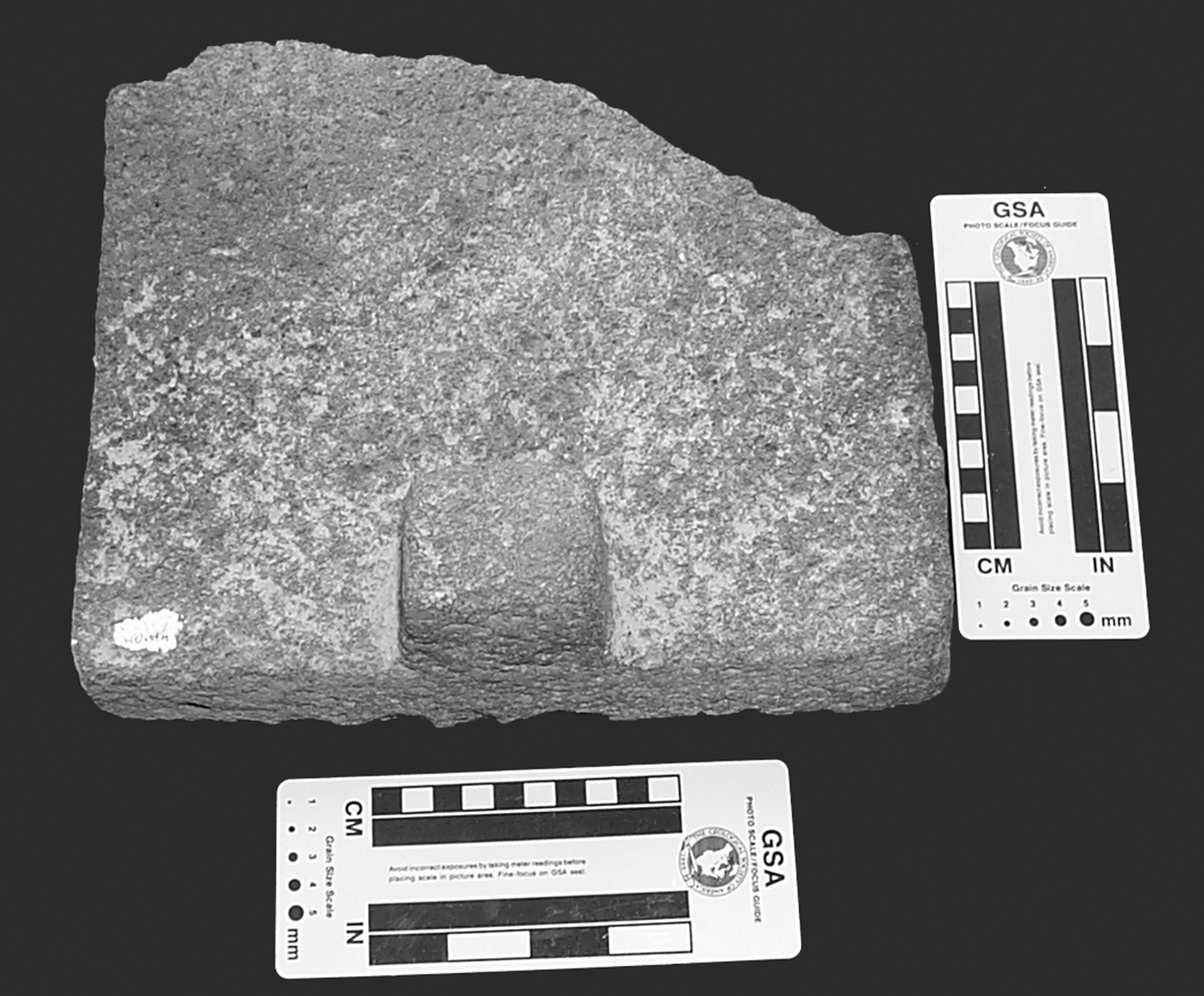
As maize-grinding became an increasingly important part of the life in central Mexico, by the Late Formative period there was a flowering of metate craftmanship to a degree not paralleled again until Aztec times (Biskowski Reference Biskowski1997). Production-step based measurements (compare Feinman et al. Reference Feinman, Upham and Lightfoot1981) indicate that metateros spent considerable time flattening surfaces, squaring corners, hollowing out feet, and otherwise perfecting the shape of these artifacts. For example, up to 90% of the metates from Blucher's (Reference Blucher1971) excavations at Tlachinolpan possessed feet (Figure 3). Late Formative metates in Tlaxcala likewise were well-made. Grinding tool production probably was a small-scale industry and quite possibly still linked to the gift/prestige economy. But this needs to be established by further studies. Subsequently, the quality of craftsmanship declined sharply following the rise of Teotihuacan.
Ventral surface of finely-made Late/ Early Terminal Formative period footed metate from Tlachinolpan.
The Rise of Teotihuacan
From the end of the Formative period to the beginning of the Classic period, the Basin of Mexico and the Teotihuacan Valley in particular underwent a radical series of changes which, despite much attention (Cowgill Reference Cowgill2008; Headrick Reference Headrick2007; López Luján et al. Reference López Luján, Nadal, Fash, Fash and Hernández2006; Manzanilla Reference Manzanilla2006; Sugiyama Reference Sugiyama2005; Sugiyama and Cabrera Reference Sugiyama and Castro2007), archaeologists are still unraveling. During the initial stage in the early Terminal Formative period, Cuicuilco and Teotihuacan occupied opposite corners of the basin with a number of smaller polities rimming the lakes in between. The competitive nature of these polities can be inferred from ethnographies of chiefdoms and early state societies. One peculiarity of the settlement pattern of this time, the “Tezoyuca hilltop centers” (Sanders Reference Sanders and Sabloff1981:165, Figure 6–13), may reflect the dangers of this time period. These 13 small residential sites with ceremonial architecture sit on good defensive locations and may have served as refuges in times of trouble. After Teotihuacan achieved hegemony, these sites were abandoned.
Teotihuacan's rapid ascent might be traced to many factors. The Teotihuacan Valley is situated on one of the major exits from the basin and, thus, was situated to dominate the flow of trade goods, especially obsidian. But the full use of these of locational advantages only became viable when Teotihuacan had grown sufficiently to defend itself from initially larger polities whose trade would be affected. So much of the credit for Teotihuacan's rapid ascent also must go to Teotihuacan's ability to expand its irrigation system rapidly and to absorb population from the southern basin. As a result of these advantages, Teotihuacan quickly emerged as a large polity from a few Late Formative period villages.
Then something happened that disrupted human settlement in the southern basin and led to the relocation of tens of thousands of people to Terminal Formative period Teotihuacan. Formerly, researchers thought that the eruption of the volcano Xitle caused depopulation of the southern basin which led to the rapid growth of Teotihuacan (Millon Reference Millon and Sabloff1981; Sanders et al. Reference Sanders, Parsons and Santley1979:107); Cholula also may have absorbed new immigrants at the same time (Plunket and Uruñela Reference Plunket and Uruñela2006). But Siebe's (Reference Siebe2000; Siebe et al. Reference Siebe, Abrams, Macías and Obenholzner1996) studies of the volcanoes showed that the eruption of Xitle which buried Cuicuilco occurred centuries too late to have caused this shift in settlement. Instead, an eruption of the more distant Popocatepetl and the damage and demoralization it caused in the southern basin apparently set the stage for the transformation of the region.
Identifying the mechanisms by which this transformation was achieved is a major problem with important implications for understanding the political and economic capabilities of the ascending city. Polities approach opportunities to dominate regions in different ways, depending on the effectiveness of their organization. The Aztecs pursued a complex range of strategies when they conquered a region (Hassig Reference Hassig1985; Smith and Berdan Reference Smith, Berdan, Berdan, Blanton, Boone, Hodge, Smith and Umberger1996). But where it profited them, the Aztecs left conquered populations intact and capable of utilizing the existing infrastructure to generate tribute. This was possible because they possessed the organization needed to maintain control at a distance—a system of governors, garrisons and other military forces, open communications, and a bureaucracy to manage all of it. In contrast, warfare among the Classic-period Maya polities (Webster Reference Webster2000) often lacked the enduring political consequences crucial to the fusing of smaller states into larger ones. Defeated city-states like Tikal in AD 562 might pay tribute to conquerors, endure civil wars, and suffer humiliations. But to a large extent, they were left to manage their own affairs, and over time they often could rebound and overcome their rivals.
Teotihuacan's case seemingly lies in between the Aztecs and Classic Maya since Teotihuacan permanently reshaped the political landscape of the basin. If this change was completed by a forcible relocation, bringing the southern basin population to Teotihuacan decreased its potential economic value but completely neutralized any future threat from what had been a homeland of rival polities. Comparable strategies of population removal and/or elimination were employed by many early empires to deal with hostile populations in regions where maintaining control was too difficult due to distance or topography. But the distance between Teotihuacan and the southern basin is very small, so relocation for this kind of purpose would indicate an institutional unpreparedness to administer lands and peoples much beyond the Teotihuacan Valley. Significantly, the Basin of Mexico survey maps show that the southern basin remained mostly depopulated for more than a century, long after Popocatepetl subsided. It is difficult to imagine why this would have been the case if the Teotihuacan state did not actively block resettlement. The southern basin includes some of the best agricultural land in the region, along with higher rainfall than in the north, and these lands would have been desirable to some settlers despite fears of further eruptions, religious taboos, and other obstacles.
Of course, forces other than coercion motivated the shift of population into Teotihuacan. The volcanic eruption certainly gave the inhabitants strong, immediate motivation for going elsewhere. Plunket and Uruñela (Reference Plunket and Uruñela2006) further argue that forcible relocation is not easily achieved, citing the considerable resistance encountered by the Mexican government to removing less than 5,000 people from the vicinity of the Paricutín volcano during the 1940s. Still, this may not be a valid parallel since ancient states often acted with little restraint, and even more recent twentieth century history provides numerous examples of ruthlessly engineered relocations (for example, by Nazi Germany and the Soviet Union). Even if the new inhabitants arrived at Teotihuacan voluntarily, it is odd that so many remained and did not return to rural locations. Preindustrial cities encounter many problems related to logistics, sanitation, disease, and public safety. As an early city, Teotihuacan probably lacked the institutional experience and technology for coping with these problems satisfactorily, and a massive influx of population would have caused increased difficulties. Although the city clearly possessed many kinds of social, economic, and spiritual attractions, these by themselves are unlikely to have prevented the emergence of discontent, heresy, and other factors which drive people to live elsewhere. Thus, in many ways, the initial relocation of population to Teotihuacan is less noteworthy than the apparent failure of the new inhabitants to return within a generation to healthier, more independent lives in rural settlements. Something apparently limited this demographic backflow until the beginning of the Classic period.
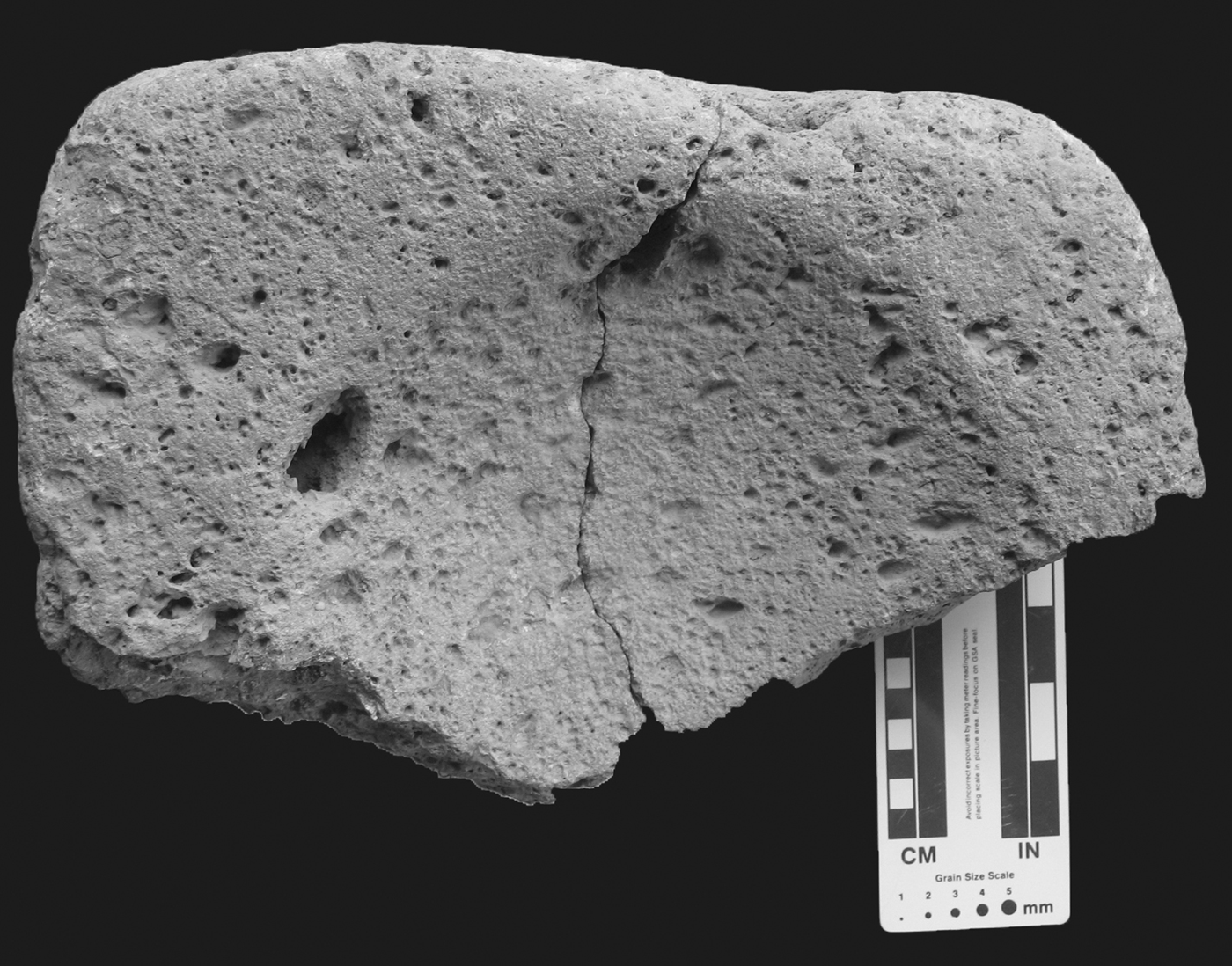
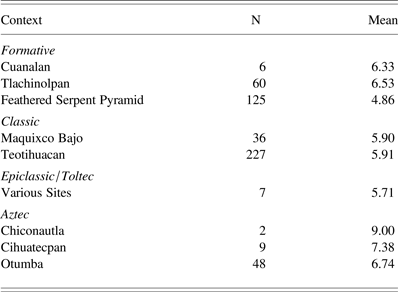
Another argument against a forcible relocation of population to Teotihuacan is the inevitable damage to Teotihuacan's economy (Plunket and Uruñela Reference Plunket and Uruñela2006). But there is evidence that such damage was acceptable. One sign, simply, is the heavily urbanized primate center itself; creating such a concentration of population makes little formal economic sense since it inevitably decreased the per capita availability of local resources. Interestingly, the city's response to this situation often seems indifferent to the expanded demand. For example, we might expect that the meteoric growth of the city would be accompanied by a matching expansion of the city's food catchment. But there is no sudden increase in the use of faunal resources from outside the Teotihuacan Valley (Starbuck Reference Starbuck1975:181–2; Reference Starbuck, de Tapia and Rattray1987). Finally, at least one craft industry—grinding tool production—may have collapsed under pressure from the influx of new population. The metates recovered from the fill of the Feathered Serpent Pyramid (Cabrera et al. Reference Cabrera Castro, Sugiyama and Cowgill1991; Sugiyama Reference Sugiyama1989, Reference Sugiyama2005) can be linked to this time period. They vary considerably in the apparent energy and expertise invested in the production process, but only a few artifacts in this collection match the quality of earlier Late/Early Terminal Formative period production, and a substantial fraction are minimally modified boulder forms (Figure 4). The workmanship scores (Table 1) for this collection have a lower average than any other collection from the Late Formative through the Aztec periods (Biskowski Reference Biskowski1997). This decline in workmanship can be explained as a consequence of the influx in population. Metate production is generally geared to a low replacement life given that these artifacts can have use-lives of 30 years. The sudden arrival of a new household in need of a metate thus might generate as much short-term demand as thirty households already present, and the existing metateros might not have been able to meet the demand from tens of thousands of newcomers. Thus, the poorly made metates in the Feathered Serpent collection may reflect expedient and perhaps unskilled production aimed at meeting this increase in demand.
Dorsal (Grinding) surface of boulder metate from the Feathered Serpent Pyramid, Teotihuacan.
Mean Workmanship Scores of Metates and Mortars from Teotihuacan Valley Contexts (from Biskowski Reference Biskowski1997: Table 8.6)
Possibly the trauma of surviving the volcanic eruption and subsequent difficulties prompted the newcomers to accept difficult circumstances in the city. Plunkett and Uruñela (Reference Plunket and Uruñela2006: 24) note that in the Paricutín case the experience promoted “…a general tendency for villagers to reject local community isolation in favor of greater interaction with national, Mexican society…”. But if people were free to come and go as they pleased, many aspects of the regional settlement pattern are difficult to explain. As noted before, resettlement of the southern basin was delayed by more than a century. Furthermore, the rural settlement pattern contains almost nothing but small, isolated farming hamlets (Sanders et al. Reference Sanders, Parsons and Santley1979: Map 13). Intermediate-sized, secondary centers containing craft workshops, civic-ceremonial structures—of the kind which emerge later in the Classic-period settlement pattern—are noticeably missing. A tier of secondary centers would have facilitated the management of hinterland affairs and the funneling of resources into the city. Such settlements also may have provided political, judicial, economic, and sacred services to rural inhabitants and niches for specialists seeking opportunities outside the city. Without them, the rural farming communities would have remained much more directly dependent on the city, and this may have been a desired result. Keeping the rural population distributed into small, isolated pockets dependent on the city would have facilitated control and discouraged insurrection. But if people were free to come and go, it is not clear why they would cooperate with such arrangements.
Teotihuacan's relationships with its new inhabitants and with its hinterland area during the late Terminal Formative period are crucially important to understanding the subsequent growth of the city. Both relationships require more attention, and addressing them properly will require further work at Teotihuacan and its hinterland sites.
The Classic-Period Transformation
Towards the end of the Terminal Formative period, Teotihuacan underwent a political reorganization. Around the same time, the city and its hinterland also underwent a series of changes which led to the stability of the Classic period. Although the motivations for these changes are not clear, many can be linked to a desire to improve the general quality of life in the city. Inside the city, these changes include:
1. The decline of major monument construction (especially pyramids).
2. The widespread construction of multifamily apartment compounds and the general reorganization of residential patterns.
And outside the city:
1. The recolonization of lands vacated during Teotihuacan's initial achievement of hegemony. Many of these areas contained some of the most productive croplands in the basin and consequently had been settled long before Teotihuacan.
2. The settling of new colonies near strategic resources (for example, lime for plaster and food additives; Barba and Córdova Reference Barba and Frunz1999; Santley and Rose Reference Santley and Rose1979).
3. The growth of a more natural settlement hierarchy with intermediate level villages and even provincial centers (Sanders Reference Sanders and Sabloff1981; Sanders et al. Reference Sanders, Parsons and Santley1979). These intermediate settlements should have brought organization to hinterland areas and facilitated Teotihuacan's extraction of food and other resources.
Collectively, these and other roughly contemporaneous changes might be labeled the Classic period transformation. This grouping contains seemingly unconnected processes, but they may share a common goal. Each may have improved the quality of domestic life in the city, whether by relieving the population of burdensome work, focusing labor on more substantial housing, allowing discontented inhabitants to depart, and improving the flow of food and other needed goods into the city.
In the long run, these developments probably improved life but still left many problems unresolved. For example, Storey's (Reference Storey1992) study of the skeletal population from Tlajinga 33 paints a dark picture of malnutrition and disease among the low-to-middle status inhabitants of Teotihuacan. Virtually every skeleton showed signs of growth interruptions in the teeth and long bones. These problems may reflect a combination of food shortages and poor sanitation. The excavation of Tlajinga 33 underscored a long-term bias in the study of Teotihuacan residences. Archaeologists understandably gravitate towards excavating residences which can provide more copious evidence (for example, decorated pottery, stone tools figurines, murals) since this richness ensures that archaeological analysis can determine chronology and generate a good picture of residential life. This bias usually led to the excavation of wealthier, higher status apartment compounds which can provide only limited information about the urban economy and the everyday problems which confronted Teotihuacanos. Residential excavations in recent decades (Cabrera Castro Reference Cabrera Castro, Carrasco, Jones and Sessions2000; Cabrera Cortes Reference Cabrera Cortes2011; Gómez Chávez Reference Gómez Chávez2000; Manzanilla Reference Manzanilla1993, Reference Manzanilla, Manzanilla and Chapdelaine2009; Sullivan Reference Sullivan2007) have expanded our picture of domestic life at Teotihuacan, but much study remains to obtain a clearer picture of economic life across the spectrum of Teotihuacan society.
Wood fuel and lime are two commodities that have received increasing attention from Teotihuacan researchers. Sheehy's (Reference Sheehy1992) ceramic re-firing analyses suggest that access to firewood declined steadily during the Classic period. Several factors may have contributed to local deforestation. Barba and Córdova Frunz (Reference Barba and Frunz1999) estimated that meeting Teotihuacan's demand for plaster required the annual consumption of 30,000 metric tons of wood. But they also point out that there is little evidence that the necessary lime production occurred near Teotihuacan. Since the limestone itself comes from the northern basin, burning down the forests near there and delivering the lime to Teotihuacan is an alternative strategy as long as the lime could be transported safely. Of course, such practices might have alienated outlying populations and contributed eventually to Teotihuacan's collapse, but they also would have reduced deforestation near Teotihuacan itself.
Wherever lime was produced, the burning of fuel for Teotihuacan's domestic needs probably far exceeded what was used for making lime. A conservative estimate of per capita domestic consumption—2 kg per person per day—applied to an estimate of Teotihuacan's Classic period population of 100,000 people and multiplied by 365 days a year results in an annual demand for 73,000 metric tons. Simulation analyses using simple models of direct firewood extraction and regeneration based on this level of consumption yield deforestation more than 15 km from the city's center within around 125 years (Biskowski Reference Biskowski1998). Contrary to this estimate as well as Sheehy's results, an analysis of botanical remains in charcoal from Teotihuacan Valley contexts concluded that total deforestation did not take place at this time (Adriano-Moran and McClung de Tapia Reference Adriano-Morán and de Tapia2008). This conclusion may be premature, however. The contexts from which the samples were obtained do not adequately represent the Teotihuacan residences consuming wood. Of 13 Teotihuacan locales, three are pyramid or tunnel excavations. Of the remaining contexts, most are elite status residences. Only Oztoyahualco was a low-status apartment compound whose residents would have suffered most from declining availabilities of primary firewood.
The procurement of firewood and other fuels necessarily diverted much labor in ways which have implication for understanding the economic organization of the city. If the inhabitants had to go far outside the city to obtain firewood, then the corporate organization and flexible internal division of labor of the apartment compounds may have facilitated obtaining a consistent supply. Adriano-Moran and McClung de Tapia (Reference Adriano-Morán and de Tapia2008) suggest that total deforestation was avoided through sylviculture and related land management efforts. The pursuit of these strategies likewise would have benefited from the oversight of barrio leaders whose duties included maintaining the welfare of corporately owned lands. Access to firewood also would have shaped the organization of many kinds of production. Differential access to firewood and related specialization in maize preparation might account for low frequencies of maize-grinding tools in apparently well- populated zones of Teotihuacan (Biskowski Reference Biskowski2004) and Aztec Otumba (Biskowski Reference Biskowski2000). Likewise, fuel scarcity may have contributed to the growth of Classic period specialization in some crafts, especially ceramic production. Multicrafting in Teotihuacan apartment compounds may be due in part to differential control of key production resources like firewood needed for several kinds of products.
Fuel scarcity during the Classic period and other periods has other implications which bear further investigation. For example, one strategy for dealing with local deforestation is charcoal production at a distance from the consumption site. Conversion of firewood to charcoal makes energy more compact and transportable in terms of joules per kilogram—effectively enlarging the fuel catchment—but at the cost of consuming three or four times as many trees for the same amount of energy. Thus, like the distant production of lime, charcoal production is a reasonable strategy whose long-term effects nonetheless may have alienated hinterland populations whose forests disappeared. In Aztec times, access to firewood clearly was a major economic concern. It is often a substantial part of the burden delivered in tribute, and the selling of secondary fuels such as dried stalks in the markets is consistent with efforts to reduce the consumption of primary fuels. In sum, although some research has begun to study fuel consumption, much work remains to clarify patterns of fuel consumption across the complex socioeconomic strata at Teotihuacan and elsewhere.
Many other dimensions of the subsistence economy remain imperfectly studied. My own concern with fuel consumption arose from attempts to understand how maize was prepared and who prepared it. Modern ethnographic literature indicates that traditional methods of preparing maize and other foods require the consumption of much fuel. In maize preparation, lime treatment is a major fuel expense, representing in one case 40% of the fuel cost of making tortillas (Masera Reference Masera1995). Other maize products such as tamales and atoles also entail additional fuel consumption arising from heating water, but the significance needs to be addressed by research. The preparation of beans—another important component of the Mesoamerican diet—is even costlier than maize.
Although the beginnings of tortilla production at Teotihuacan can be identified from comales, the beginnings of the alkalinization of maize are less clear. Even before lime was shipped to the city, wood ash was available and might have been used for the same purpose. Using either alkalinizing agent, however, meant embracing a considerable added cost in fuel consumption. This choice, whether or not to burn fuel and alkalinize maize, was an important one for households throughout the subsequent history of the Basin of Mexico. Of course, the benefits of nixtamalization are important in evaluating this choice, and these benefits have been misunderstood by archaeologists for several decades.
More than three decades ago, Katz et. al. (Reference Katz, Hediger and Valleroy1974) observed that alkali treatments were pervasive throughout the Americas and more common among people dependent on maize. The general outlines of their explanation—that alkali treatments are a kind of intensification valuable to maize-dependent peoples—probably is correct. But Katz et al. (Reference Katz, Hediger and Valleroy1974) based their explanation on an earlier study (Bressani et al. Reference Bressani, Paz and Scrimshaw1958) which reported that alkali treatments apparently enhanced the availability of important amino acids (lysine and tryptophan). The earlier research was flawed since it compared growth in pigs fed lime-treated tortillas versus pigs fed maize that not only lacked lime-treatment but also lacked other processing, such as grinding and cooking. More recent research on the specific protein consequences of lime treatment (Serna-Saldivar et al. Reference Serna-Saldivar, Knabe, Rooney and Tanksley1987) shows that protein utilization remains the same or decreases slightly as a result of lime treatment.
Instead of improved protein availability, the simplest explanation for the prevalence of alkali treatments in maize-dependent populations is its role in fiber-removal. Fiber is undesirable in the diet when people do not have enough to eat. Another benefit of lime treatment is niacin enhancement which helps prevent the deficiency disease pellagra and its associated dermatitis, dysentery, and dementia. One benefit specific to lime treatment versus other alkali treatments is calcium supplementation. Singly or cumulatively, these benefits eventually led the people of the basin to burn a lot of firewood.
At Teotihuacan, identifying nixtamalization is problematic, but the existing evidence of maize preparation still paints a complex picture. Comales first appear in the Miccaotli phase (Cowgill Reference Cowgill1983), and since much of the distribution of comal sherds lies in the vicinity of the Street of the Dead, the Teotihuacan state may have been involved in the introduction of tortillas at Teotihuacan. This observation parallels evidence of early tortilla-making in state-sponsored contexts at Monte Alban during Phase I (Marcus and Flannery Reference Marcus and Flannery1996:46).
The distribution of grinding tools at Teotihuacan indicates that the burdens of maize preparation were felt unequally among different socioeconomic classes within the city (Biskowski Reference Biskowski1997). Metates with attributes associated with efficient intensive grinding—particularly fine-textured stone and footed shapes—are found more often in low status households. Intensive grinding is one way of reducing fuel consumption, and since low status households probably had less access to fuel, this pattern is not surprising. Interestingly, this pattern holds even though metates with feet are costlier to produce. The longevity of the metates and their long hours of regular use justified additional expense.
The spatial distribution of grinding tools at Teotihuacan also seems inconsistent with every household engaging in maize-grinding (Biskowski Reference Biskowski2004). Metate fragments are clustered in several locations and virtually absent from many densely inhabited areas of the city. Unfortunately, archaeologists still have little experience with the site formation processes which might affect the distribution of grinding tools. For example, decreased grinding tool frequencies might arise from field-clearing and wall construction in some areas. Still, this spatial distribution raises questions about the uniformity of household maize-grinding.
Differentiation in maize preparation also is visible in the excavated evidence at Teotihuacan. The only comales reported from Oztoyahualco originated after the Classic period (Manzanilla et al. Reference Manzanilla, Butrón, Jiménez and Manzanilla1993). This might mean that the inhabitants of this compound consumed their maize only in non-tortilla forms. Within a complex urban economy, the inhabitants of Oztoyahualco also may have obtained tortillas prepared by specialists and distributed either through the market or more traditional exchange relationships.
The appearance of specialized maize preparation at Teotihuacan probably is linked to a combination of the demand generated by high status individuals for conspicuous consumption and to problems of firewood acquisition. The use of food for feasting and prestige is well known and needs no further discussion here. In terms of addressing firewood scarcity, specialization is one way by which Teotihuacanos may have reorganized their lives to create economies of scale in maize preparation. Producing larger batches of maize (and other foods) can decrease the amount of fuel consumed per kilo of food. Specialized maize preparation for the market is familiar (for example, Sahagun's tortilla vendor) and fits well with other kinds of occupational specialization in Teotihuacan's economy. But economies of scale in maize preparation may have been organized in other ways that warrant consideration and investigation:
1. The simplest, most direct method of achieving an economy of scale is for individual households to prepare more maize less often. With tortillas, and presumably other foods, the consumption of stale food is not simply unpleasant but also unhealthy. Microflora in the water used to prepare tortillas can return to precooking concentrations after just 24 hours (Capparelli and Mata Reference Capparelli and Mata1975). Given the sanitation issues posed by 100,000 people, this probably was not a minor problem. Although reheating can reduce this problem, reheating also works against fuel conservation unless secondary fuels are abundant and can be used for this purpose.
2. Multifamily cooperation is an obvious strategy to suggest at Teotihuacan since the apartment compound residential pattern facilitated corporately organized production activities. Projecting that this cooperation sometimes included the shared production and consumption of prepared maize seems reasonable.
3. Both specialized production for neighborhood distribution and production for nonresident craftsmen and other clients might have developed easily as an outgrowth of apartment compound-oriented multifamily production. In the latter case, it is helpful to remember that maize preparation and certain kinds of craft production, such as ceramic production, require access to firewood. For example, it may not be an accident that one of the zones with high frequencies of maize-grinding tools is the pottery-producing Tlajinga district.
4. The last method of generating economies of scale in maize preparation is state-organized production. The introduction of tortillas during Miccaotli phase may have been associated with maize preparation to feed large numbers of state workers. Clearly the Teotihuacan state may have had many rationales for feeding military and other personnel working in large numbers on behalf of the state.
Overall, for Teotihuacan, the logistics of fuel supply may have influenced subsistence decisions, socioeconomic organization, and even the city's collapse in more ways than previously have been credited. This point might easily apply also to later developments in the Basin of Mexico. Our ability to study this problem at Teotihuacan is unusually promising because of the conscientious effort given to collecting maize-grinding tools and other evidence by the Teotihuacan Mapping Project back in the 1960s and 1970s. This has not been always been the case elsewhere in the basin. It is only more recently that effective methodologies for gathering evidence from grinding tools have begun to emerge, and these should become more useful in the future—provided that appropriate collections are available for study.
SUMMARY
Neither the development of the regional economy nor the problems of its study end with Teotihuacan. A continuation of the preceding discussion might examine how patterns of agricultural intensification, urban craft production, market formation, and other economic developments already present at Teotihuacan were elaborated in the Epiclassic and Postclassic city-states of the basin. It might also address fundamentally new phenomena, such as the growth of state institutions capable of supporting empire-building and reaping the benefits of expansion. In addition to covering only part of the pre-Columbian period, by necessity many issues have been lightly addressed or omitted in favor of others.
This paper has presented some initial considerations to help plan for a future when the study of pre-Columbian economies will be limited by decreasing opportunities to conduct field work. There is no completely adequate way to address this problem. But by examining what might be needed and lost, we can at least begin to prioritize the information which we should salvage. The importance of doing so is difficult to overstate. Judging from the last several decades of research, the kinds of questions researchers will want to address will require increasingly broad and more detailed data. Of course, archaeologists frequently encounter research problems in which crucial information is no longer available, but this not the same situation. The door is closing, but has not yet closed. Whatever the deficiencies of the regional research executed in the 1960s and 1970s, it remained conscious of the needs of future archaeologists working in the Basin of Mexico, and we need to do the same.
Many outstanding research problems also remain to be addressed. The ones presented here reflect my own concerns. Comparable issues undoubtedly can and should be raised by researchers concerned with other aspects of the regional economies. That a variety of incomplete research exists is not surprising; it is simply an outgrowth of the normal, incremental progression of research. Gven the changing circumstances confronting the region, however, our attitudes and aims about the progression of research also must change. Since new research questions arise from answering old ones, it is impossible to abandon open-ended research. But we can begin to prioritize research problems keeping in mind those problems which will need data collected from unprotected areas endangered by ongoing site destruction. Despite such steps, we will run into situations now and later where appropriate data no longer can be obtained. But by moving forward in this manner, we will pass along to future scholars the best legacy that we can.
RESUMEN
Para poder continuar con estudios futuros sobre las economías prehispánicas en la Cuenca de México, los arqueólogos tendrán que tomar medidas proactivas para lidiar con las consecuencias de la destrucción continúa de los sitios. Una de las suposiciones subyacentes a la planificación de las investigaciones regionales tradicionalmente ha sido que, de ser necesario, podríamos realizar más investigaciones arqueológicas. Ahora que esta suposición se ha vuelto menos sostenible, los arqueólogos tenemos que desarrollar estrategias para priorizar el trabajo de campo antes de que sea imposible.
Es difícil anticipar las necesidades de los futuros investigadores. Hace 50 años, muchas de las preguntas actuales habrían parecido excesivamente optimistas o hasta esotéricas. Conforme se ha vuelto más sofisticada la investigación económica, los datos requeridos para este análisis también se han vuelto más amplios tanto en escala como en detalle. A nivel teórico, las nuevas maneras de conceptualizar las economías antiguas han ocasionado que los investigadores se enfoquen de forma más detallada en los contextos de actividades económicas importantes y que identifiquen las perspectivas decisorias que dieron forma a la vida económica. Además, nuevas herramientas metodológicas han surgido, resaltando el valor de grandes conjuntos de datos. En general, podemos esperar que los futuros investigadores quieran realizar estudios que requieren del uso intensivo de datos, pero la mayoría de los futuros estudios serán menoscabados si los datos requeridos no existen o no pueden ser obtenidos. Por otra parte, muchos temas específicos deben ser estudiados mientras exista la posibilidad de realizar las investigaciones necesarias. Los ejemplos presentados aquí se enfocan en el desarrollo de una economía regional y, por lo general, reflejan el interés del autor por la economía de subsistencia. Este interés incluye la caracterización de la relación entre Coapexco y otros sitios en el interior de la Cuenca, la aclaración de aspectos de la relación que Teotihuacan sostenía con otras partes de la Cuenca y la obtención de una imagen más completa de la vida de la gente de la clase media-baja dentro de la ciudad. Existen demasiados temas relacionados para poder presentar todos en un solo artículo. Sin embargo, los arqueólogos debemos pensar cuidadosamente sobre cuáles investigaciones tendrán que realizarse mientras exista la posibilidad de hacerlo.