

Introduction
Morbidity and mortality of wild birds can be attributed to a variety of causes, some of which are anthropogenic (e.g., illegal shooting, poisoning, electrocution or collisions with power lines, vehicles, human structures and fences), while many are natural (e.g. metabolic or nutritional causes, disease) (Foufopoulos et al. Reference Foufopoulos, Wobeser and McCallum2022). Furthermore, emerging diseases and epizootics are known to have a significant impact on populations of endangered species (Daszak et al. Reference Daszak, Cunningham and Hyatt2000), with modern human activities and climate change considered to be driving forces in their evolution (Newman et al. Reference Newman, Chmura, Converse, Kilpatrick, Patel and Lammers2007). In Greece, avian morbidity and mortality have been studied previously (Xirouchakis Reference Xirouchakis, Chancellor and Meyburg2004; Kalpakis et al. Reference Kalpakis, Mazaris, Mamakis and Poulopoulos2009). Some studies focused on specific causes, such as poisoning (Ntemiri et al. Reference Ntemiri, Saravia, Angelidis, Baxevani, Probonas and Kret2018), wind turbine collision (Xirouchakis et al. Reference Xirouchakis, Armeni, Nikolopoulou and Halley2019), environmental pesticides (Hela et al. Reference Hela, Konstantinou, Sakellarides, Lambropoulou, Akriotis and Albanis2006) or general anthropogenic mortality (Mazaris et al. Reference Mazaris, Mamakis, Kalpakis, Poulopoulos and Matsinos2008). Pelican mass mortality related to power line collisions, winter conditions, botulism and cyanotoxins has also been reported (Crivelli et al. Reference Crivelli, Jerrentrup and Mitchev1988; Pyrovetsi et al. Reference Pyrovetsi and Papazahariadou1995; Birtsas et al. Reference Birtsas, Sokos and Skordas2005; Papadimitriou et al. Reference Papadimitriou, Katsiapi, Vlachopoulos, Christopoulos, Laspidou and Moustaka-Gouni2018).
The eight extant pelican species are widely distributed across the globe, with the known causes of morbidity and mortality varying across their ranges. The anthropogenic causes of mortality that have been recorded in various pelican species are fishing-related injuries, illegal shooting, power line collision, windfarm collision, traffic accidents and captivity (McNeil Reference McNeil, Rodriguez and Ouellet1985; Owens and James Reference Owens and James1990; Carapetis et al. Reference Carapetis, Machado, Braun and Byard2014; Johnston et al. Reference Johnston, Waterman and Manning2015). Environmental causes include drought (Johnston Reference Johnston2016; Kumar et al. Reference Kumar, Periyasamy, Rao, Sunil, Kumara and Sundararaj2019), habitat loss or degradation (Friend Reference Friend, Barnum, Elder, Stephens and Friend2002), winter severity (Nevins et al. Reference Nevins, Miller, Henkel, Jessup, Carion and Meteyer2011), changes in upwelling water temperatures (Crivelli Reference Crivelli1994), cyclones (Ramamohan and Rao Reference Ramamohan and Rao2017), hailstorms (Rocke et al. Reference Rocke, Converse, Meteyer and McLean2005), natural predation (Nevins et al. Reference Nevins, Miller, Henkel, Jessup, Carion and Meteyer2011, Johnston Reference Johnston2016) and, lastly, biotoxins. Infectious diseases that have been recorded in pelicans are viral, bacterial, fungal and parasitic (Newman et al. Reference Newman, Chmura, Converse, Kilpatrick, Patel and Lammers2007; Gottdenker et al. Reference Gottdenker, Walsh, Jiménez-Uzcátegui, Betancourt, Cruz and Soos2008; Sovada et al. Reference Sovada, Pietz, Converse, King, Hofmeister, Scherr and Ip2008; Hoque et al. Reference Hoque, Burgess, Greenhil, Hedlefs and Skerratt2012; Balam et al. Reference Balam, Ratnamma, Isloor, Veeregowda and Himaja2021).
The Dalmatian Pelican Pelecanus crispus has a Eurasian distribution, ranging from Montenegro in the west to China in the east. Its global conservation status was downgraded from Vulnerable to Near Threatened in 2017 (BirdLife International 2023), following successful long-term conservation work carried out principally in its southeastern European range. After Kazakhstan and Russia, Greece is the third most important country for this species in the world, as it hosts 20–25% of the global population (Catsadorakis and Portolou Reference Catsadorakis and Portolou2018) and is the species’ stronghold in the Black Sea/Mediterranean flyway, with six nesting colonies in the country (Lesser Prespa Lake, Lake Kerkini, Karla Reservoir, Lake Cheimaditis, Amvrakikos wetlands and Messolonghi lagoons) (Catsadorakis et al. Reference Catsadorakis, Alexandrou, Hatzilacou, Kasvikis, Katsikatsou and Konstas2024). The main threats in Greece are high pathogenecity avian influenza (hereafter AIV), cyanotoxins, disturbance/persecution/nest destruction, climate change/droughts, reedbed fires, drainage and habitat degradation, power line collision, flooding of nesting sites and heavy metal pollution (Catsadorakis and Portolou Reference Catsadorakis and Portolou2018; Alexandrou et al. Reference Alexandrou, Malakou and Catsadorakis2022).
The Great White Pelican Pelecanus onocrotalus is listed in the IUCN Red List as Least Concern (Birdlife International 2018) and has a very large distribution extending from southeast Europe through Asia and Africa. In the Black Sea/Mediterranean flyway, Romania, Greece and Turkey are the most important countries for the species (Crivelli et al. Reference Crivelli, Yésou and Sultana2000).
The aim of this study was to explore and analyse the various causes of mortality and morbidity in the two pelican species living in Greece and contribute to the conservation of the species by suggesting measures for the mitigation of threats, as well as to highlight the need for proper veterinary involvement in species conservation programmes and future steps to tackle pelican mortality.
Methods
The study was conducted in Greece, which is known for its ornithological value and biodiversity based on the habitat mosaic and combination of microenvironments found in the country. Moreover, it lies on the eastern flyway of many migratory bird species, while the numerous isolated Aegean islands create a unique pelagic ecosystem. In the large wetlands of northern and central Greece there are six Dalmatian Pelican, and three Great White Pelican breeding colonies.
Data on dead and sick pelicans were compiled from various sources: (1) long-term records of the Society for the Protection of Prespa, an environmental non-governmental organisation based in the Greek part of the transboundary Prespa lakes, whose wetlands host the largest Dalmatian Pelican breeding colony; (2) records kept by the Management Units (Natural Environment and Climate Change Agency – NECCA) for the protected areas/wetlands used by pelicans; (3) information provided by individuals and Hellenic Ornithological Society volunteers, mainly birdwatchers and wetland scientists; (4) records kept by wildlife rehabilitation NGOs (Action for Wildlife, ANIMA); (5) records from the Clinic of Poultry Pathology and the Clinic of Exotics/Wildlife at the Veterinary Faculty of the Aristotle University of Thessaloniki; and (6) records from the National Reference Laboratory for Avian Influenza (Public Veterinary Services). Two special questionnaires (one for living/sick pelicans and one for dead pelicans) were created and disseminated to the above-mentioned institutions.
The data were classified in two major categories: cases that involved dead pelicans (mortality) and cases that involved injured or moribund pelicans (morbidity). The data requested on each mortality case included date, species, age, number of individuals involved, administrative unit, location, reporter and presumed cause of death according to the reporter. Data on sex were not available in most cases and were therefore not included in the analysis. Three age groups (adult, immature and juvenile) were defined, plus the category ‘unknown’ when age was not provided. The term ‘immature’ refers to second calendar year birds. When photos, videos or other material were available, these were further evaluated. Additional information was collected if the dead pelican had been referred to a veterinary institute for autopsy. In the latter case, the autopsy report and the results of any additional microbiological tests were requested. Mass mortality events were handled separately, and all available related epidemiological/medical data were used to determine the cause of mortality for each event. A mass mortality event was defined as an incidence that involved three or more dead pelicans found at the same location in a short period of time (within a few days). In the case that such events included dead, moribund and sick/living pelicans that were further referred to a rehabilitation or veterinary facility, the data were crosschecked and the medical data correlated.
The morbidity cases included the aforementioned general data, as well as facility, admission date, presumed cause of admission, treatment, ancillary and advanced diagnostic procedures, days under care, outcome of the case (classified as released, died, euthanised, captive). The presumptive causes of morbidity and mortality were classified according to Newman et al. (Reference Newman, Chmura, Converse, Kilpatrick, Patel and Lammers2007) in five major categories (environmental, anthropogenic, infectious, toxic, unidentified/other) and eleven sub-categories; trauma (accident), disease, emaciation/starvation, illegal shooting, poisoning, exposure to oil spills, captivity, drowning by net entanglement, electrocution (including the collision with power lines), collision with wind turbines, combinations of two causes and undetermined. Botulism was classified under environmental causes rather than infectious causes, as it was strongly associated with climatic conditions and water quality. All acquired data were carefully examined to identify the cause of admission. It was beyond the scope of this research to evaluate the level of rescue response, quality of treatment or rehabilitation methods. Pelicans that were found moribund, or succumbed after their admission to a rescue facility, were included in the mortality data.
The data were analysed for the whole study period, but for part of the analyses they were divided into two periods, namely 1998–2009 and 2010–2021, to enable temporal comparisons. This division also elucidated differences in past and modern mortality/morbidity, following crucial developments in the number of colonies and breeding population size. In 2011, two new breeding colonies were added to the three existing ones, without any human intervention (Catsadorakis et al. Reference Catsadorakis, Alexandrou, Hatzilacou, Kasvikis, Katsikatsou and Konstas2024) and, secondly, in 2011, the breeding population of Dalmatian Pelican in Greece had doubled since 1998, rising from 686 to 1,426 nesting pairs. Moreover, a new national environmental law (3937/2011) was implemented in 2011 and a new administrative system for managing protected areas was designated. The new system was presumed to have led to more consistent pelican population field monitoring and increased reporting of morbidity/mortality events (Catsadorakis et al. Reference Catsadorakis, Alexandrou, Hatzilacou, Kasvikis, Katsikatsou and Konstas2024). All percentages were calculated based on the total estimated pelican population size for the study period or its sub-periods (i.e. average annual estimated population size for the period 1998–2009 and for the period 2010–2021). The estimated population size was always calculated as the number of breeding pairs in the country during that period multiplied by three, as suggested by Meininger et al. Reference Meininger, Schekkerman and van Roomen1995. Event locations were classified as ‘pelican area’ or ‘non-pelican area’. All wetlands where pelicans breed, winter, feed or stage during migration were considered to be a ‘pelican area’. The term ‘non-pelican areas’ refers either to very small wetlands, not suitable for staging/feeding and very rarely used by pelicans, or areas that have no suitable habitats for pelicans at all and are mainly located along their movement corridors. A temporal and geospatial analysis was performed based on date and location. The overall number of pelicans and their age were quantified in all events. Apart from descriptive quantitative analysis, statistical analysis was conducted utilising the chi-square test for nominal variables and the z for comparing two proportions to obtain the P value. The significance level was set at 0.05. Furthermore, for continuous variables, the normality of the distribution was tested using the Kolmogorov-Smirnov test. In some comparisons Kruskal-Wallis’s test, the Mann-Whitney U test and the Wilcoxon W test were applied. To calculate the odd-risks, we used the Likelihood Ratio. The Linear-by-Linear Association test for trend were used to test for model likelihood ratio and goodness-of-fit. Statistical analysis was performed using IBM SPSS Statistics software, version 24.0 (IBM Corp., Armonk, N.Y., USA).
Results
Data collection
Based on the data kept over the 24-year period, 316 incidents of morbidity and mortality in pelicans were recorded, resulting in a total of 243 mortality incidents in Dalmatian Pelicans, which resulted in 1,068 deaths and 55 rescue admissions (41 alive), while 49 mortality incidents were recorded in Great White Pelicans, which resulted in 57 deaths and 26 rescue admissions (20 alive). Another 15 incidents resulting in 25 pelican deaths were recorded but species identification was inconclusive. From the 292 mortality incidents for both species, 83% involved only Dalmatian Pelicans, 16.7% Great White Pelicans and 1.36% both species, while in 5.1% the species was unidentified. From the 1,211 dead and injured pelicans, 67% (811) occurred during mass mortality events, and of these 99% (803 birds) were Dalmatian Pelicans and 1% (8 birds) Great White Pelicans (z = 27.9, P = 0.001). Ninety-eight records were provided by wildlife rehabilitation NGOs, 74 records by environmental NGOs, 80 records by various protected area management units, 39 records by civilians and 46 records by state veterinary facilities.
Dalmatian Pelican
Temporal and geospatial trends of morbidity/mortality
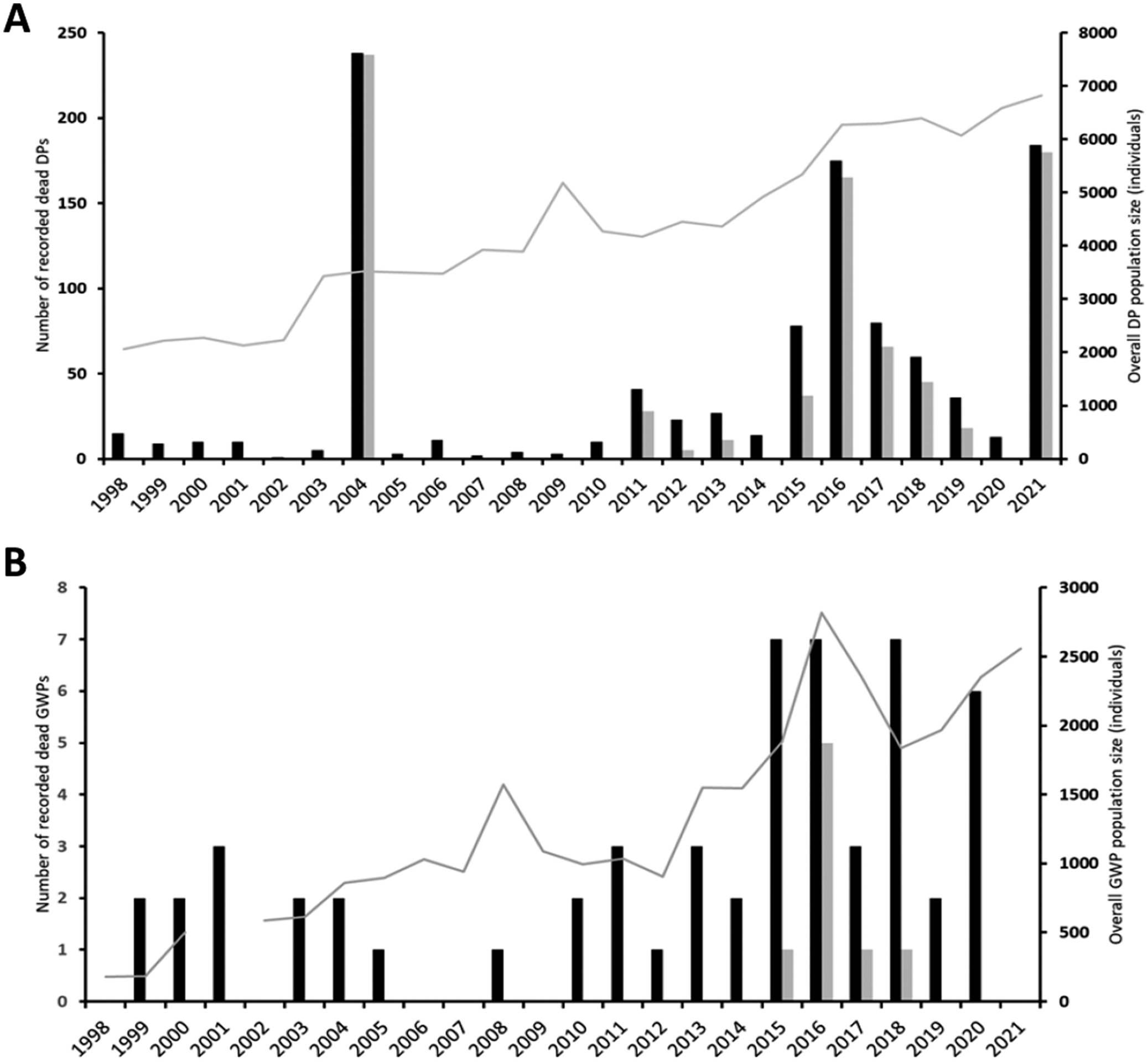
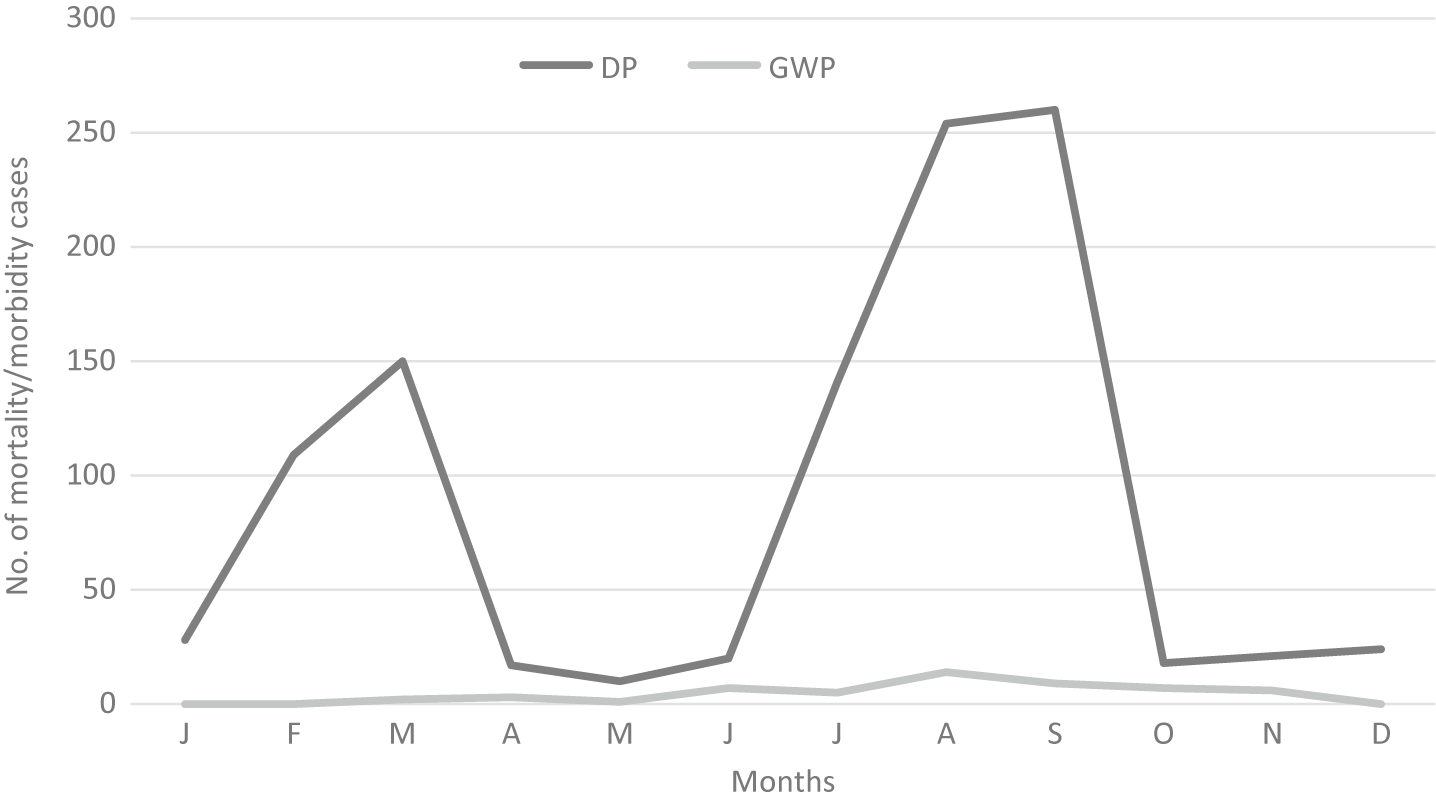
The temporal, seasonal and geospatial distribution of mortality and morbidity in Dalmatian Pelicans are presented in Figure 1a, Figure 2 and Figure S1 in Supplemenatery materials respectively. Almost two thirds of Dalmatian Pelican mortality (64.6%) occurred from July to September, at the end of the breeding period, and another 24.3% during February and March, at its beginning. There was a statistically significant difference between these two peak seasonal periods (z = 12.84, P = 0.001). The fewest mortality incidents were recorded during the core of the breeding period and during winter. Viral disease mortality occurrence during spring was statistically significant (χ2 = 642.1, df = 3, P = 0.001) while biotoxin mortality occurrence was statistically significant during autumn followed by summer (χ2= 439.9, df = 3, P = 0.001). Illegal shooting and emaciation prevailed during the winter to a statistically significant extent (χ2= 254.2, df = 3, P = 0.001), while entanglement/entrapment was significant during autumn (χ2= 24.67, df = 3, P = 0.001). There was no specific seasonality related to trauma or powerline collision (see also Supplementary material Table S2).
Total recorded deaths (black column) and number of deaths in mass mortality events (grey column) in relation to the overall estimated population size (grey line) in the period 1998–2021 (Number of breeding pairs x 3, according to Meininger et al. Reference Meininger, Schekkerman and van Roomen1995) for the Dalmatian Pelican (A) and the Great White Pelican (B).

Figure 1. Long description
The figure consists of two panels, A and B, both sharing a horizontal X-axis representing years from 1998 to 2021.
Panel A: Dalmatian Pelicans (D P s).
- The left Y-axis measures the Number of recorded dead D P s from 0 to 250.
- The right Y-axis measures the Overall D P population size (individuals) from 0 to 8000.
- Data: A grey line shows a steady increase in population from approximately 2000 in 1998 to nearly 7000 in 2021. Black bars (total deaths) and grey bars (mass mortality events) show major spikes in 2004 (approximately 240 deaths), 2015-2018, and a significant rise in 2021 reaching nearly 200 deaths.
Panel B: Great White Pelicans (G W P s).
- The left Y-axis measures the Number of recorded dead G W P s from 0 to 8.
- The right Y-axis measures the Overall G W P population size (individuals) from 0 to 3000.
- Data: A grey line shows a fluctuating but upward trend in population, starting near 200 and peaking around 2800 in 2016 before settling near 2500 in 2021. Black bars show sporadic mortality with peaks of 7 deaths in 2015, 2016, and 2018. Grey bars indicating mass mortality events are only present in 2015, 2016, 2017, and 2018, with the highest value in 2016 at 5 deaths.
Monthly distribution of recorded mortality/morbidity cases for the Dalmatian Pelican (black) and the Great White Pelican (grey) in the period 1998–2021.

Figure 2. Long description
The line graph features a horizontal X axis labeled Months with single-letter abbreviations from J for January to D for December. The vertical Y axis is labeled No. of mortality forward slash morbidity cases with a scale from 0 to 300 in increments of 50.
Two data series are plotted:
1. D P (Dalmatian Pelican) represented by a dark grey line. It begins at approximately 30 in January, rises to a local peak of 150 in March, and drops to a low of 10 in May. It then rises sharply through June and July to reach a primary peak of approximately 260 in September before dropping abruptly to below 25 in October and remaining low through December.
2. G W P (Great White Pelican) represented by a light grey line. This series remains consistently low near the baseline throughout the year. It starts at 0 in January, shows a minor increase to approximately 15 in August, and returns to 0 by December.
Half of the mortality incidents (52.8%) were recorded at colonies, with the rest in other wetlands used by pelicans for feeding, resting or as stop-over sites. Moreover, the percentage of mortality between pelican areas (97%) and non-pelican areas (2%) differed to a statistically significant extent (U= 3.107, P = 0.001). Lake Koroneia in Central Macedonia accounted for the largest mortality recorded, as a major mass mortality event took place there in 2004, showing a statistically significant difference from other areas (z = 33.3, P =0.001).
Age variation of Dalmatian Pelican mortality
The age classes involved in the recorded cases of Dalmatian Pelican mortality were identified as 36.6% adults, 2.8% immature and 15.9% juveniles, while in 44.7% of cases the age was not determined. Mortality percentages between all three age classes (adult, immature, juvenile) had a statistically significant difference (H= 23.516, df = 3, P =0.001). Similarly, in the mass mortality events the identified age classes were adults (39.6%) followed by juveniles (14.4%), which also showed a statistically significant difference (P =0.001), while the majority consisted of Dalmatian Pelicans of an unidentified age class (45.9%). Adult Dalmatian Pelicans had a 9% higher risk of succumbing to viral disease and a 96% higher risk of succumbing to a biotoxin than the other age classes (juveniles, immatures). Juveniles had a 20% higher risk of succumbing to viral disease than adults, as well as a 46% higher risk of succumbing to a biotoxin and a 21% higher risk of being illegally shot (see also Supplementary material Table S1)
Causes of mortality in the Dalmatian Pelican
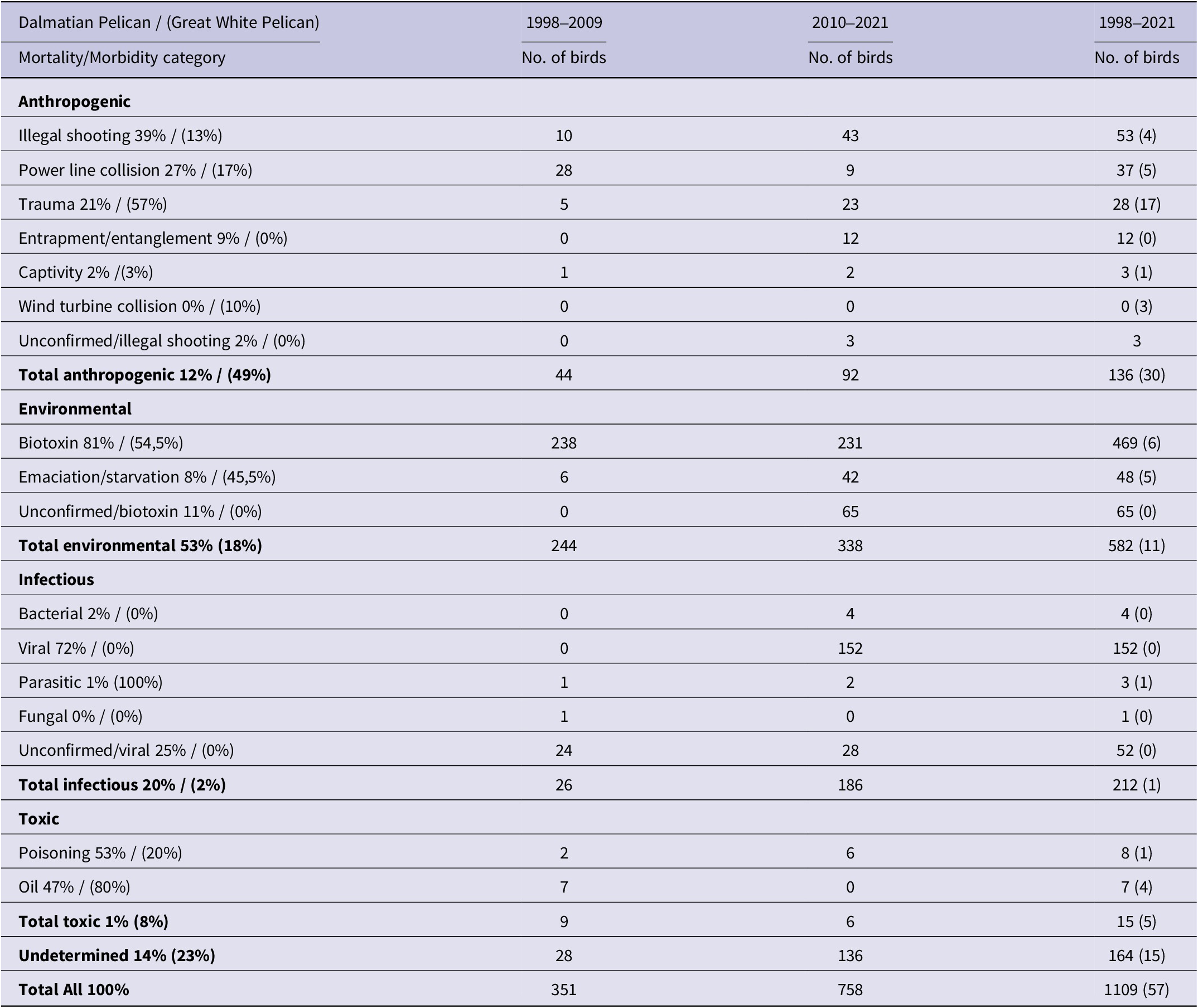
The contribution of each presumptive cause of morbidity/mortality for the whole study period is summarised in Table 1. The overall recorded mortality of Dalmatian Pelicans in Greece between 1998 and 2021 was 1.03% of the average total Dalmatian Pelican population from the same time period. Only 1% of the total number of dead pelicans underwent a postmortem examination and/or toxicological examination. During the first sub-period (1998–2009) a total of 311 Dalmatian Pelicans (representing 0.82% of the average total Dalmatian Pelican population during the sub-period) were found dead, with an annual rate of 25.9 deaths per annum. The major causes of mortality were disease (botulism) and collision with power lines. Mortality from illegal shooting and starvation were quite low. No cyanotoxin-related cases were recorded during this period. In the period 2002–2005, an outbreak of a viral disease with dermatologic symptoms (poxvirus or papillomavirus) was recorded in the Amvrakikos colony (Western Greece). Seven oiled birds were also locally recorded at Lake Kerkini (Northern Greece).
Categories and sub-categories (according to Newman et al. Reference Newman, Chmura, Converse, Kilpatrick, Patel and Lammers2007) of the presumptive causes of morbidity/mortality for the Dalmatian Pelican in Greece during 1998-2021. Equivalent values for the Great White Pelican appear in brackets . The numbers reflect all dead and injured or rescued pelicans.

Table 1. Long description
The table is organized into four columns: Mortality/Morbidity category, 1998-2009, 2010-2021, and 1998-2021. Data for Dalmatian Pelicans is listed as a primary number, while Great White Pelican data is in parentheses.
* Anthropogenic (12 percent Dalmatian / 49 percent Great White): Includes illegal shooting (53 Dalmatian, 4 Great White), power line collision (37 Dalmatian, 5 Great White), trauma (28 Dalmatian, 17 Great White), and entrapment (12 Dalmatian, 0 Great White). Total anthropogenic cases: 136 Dalmatian, 30 Great White.
* Environmental (53 percent Dalmatian / 18 percent Great White): Dominated by biotoxins (469 Dalmatian, 6 Great White) and emaciation (48 Dalmatian, 5 Great White). Total environmental cases: 582 Dalmatian, 11 Great White.
* Infectious (20 percent Dalmatian / 2 percent Great White): Primarily viral (152 Dalmatian, 0 Great White) and unconfirmed viral (52 Dalmatian, 0 Great White). Total infectious cases: 212 Dalmatian, 1 Great White.
* Toxic (1 percent Dalmatian / 8 percent Great White): Includes poisoning (8 Dalmatian, 1 Great White) and oil (7 Dalmatian, 4 Great White). Total toxic cases: 15 Dalmatian, 5 Great White.
* Undetermined (14 percent Dalmatian / 23 percent Great White): 164 Dalmatian, 15 Great White.
Total birds across all categories: 1109 Dalmatian Pelicans and 57 Great White Pelicans.
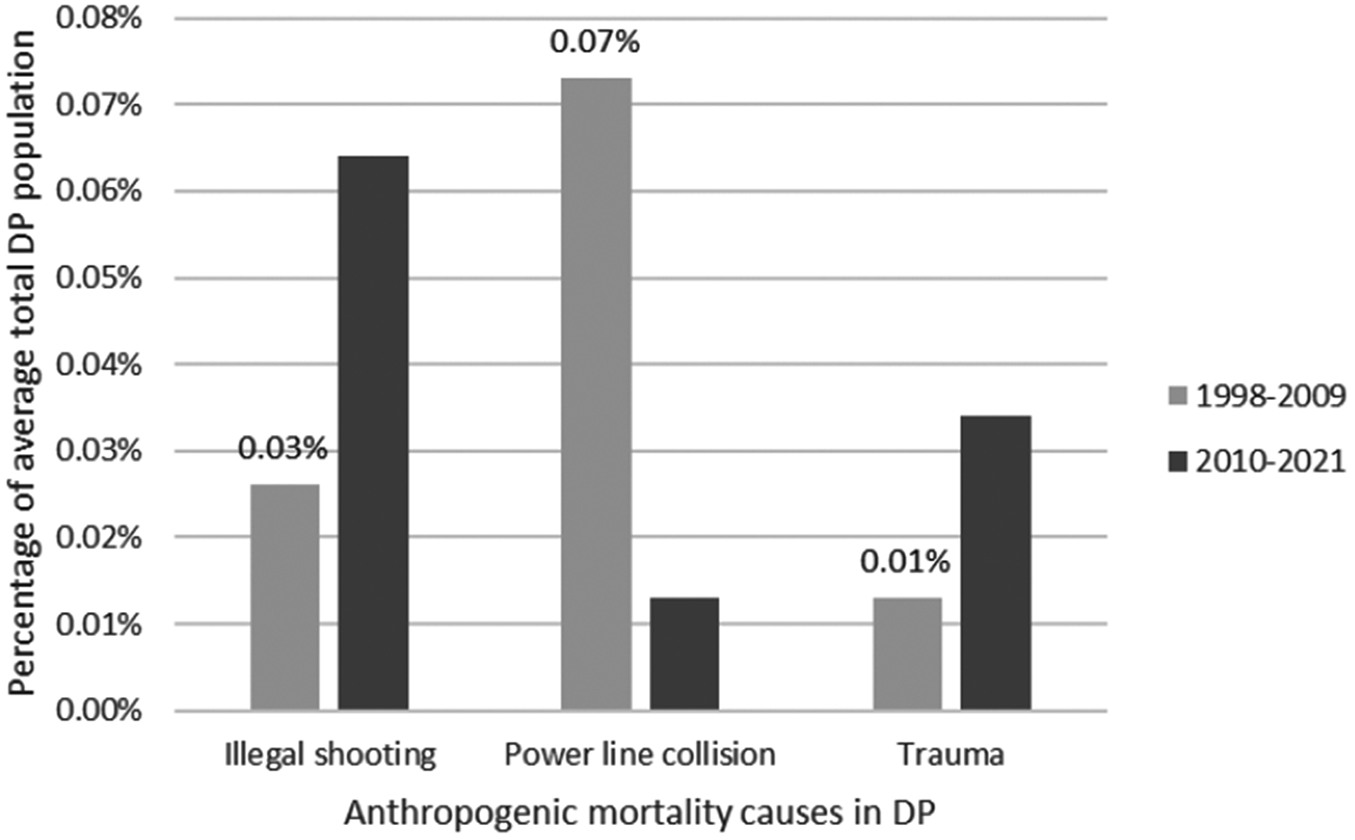
During the second sub-period (2010–2021), 757 Dalmatian Pelican deaths were recorded (1.13% of the average total Dalmatian Pelican breeding population during the sub-period), with an annual rate of 63.1 deaths per annum. The major causes were cyanotoxins (2016–2017) and disease (AIV). Illegal shooting (43 individuals) increased notably in the second period compared to the first (10 individuals), as well as starvation (42 individuals versus 6 individuals). Accidents were also recorded more frequently in the second period. Electrocution and/or power line collision was reduced in comparison to the first period (28 individuals versus 9 individuals) (Figure 3). Net drowning was also recorded in this decade. No oiled birds were recorded. In the case of mass mortality (2016–2017) due to cyanotoxins, only one Dalmatian Pelican carcass was fully examined and Moraxella sp. and Staphylococcus sciuri were cultured in the pericardial fluid, while the fluid tested negative for West Nile Virus (hereafter WNV) and AIV (Michalakis et al. Reference Michalakis, Chatzopoulos, Tsokana, Valiakos and Vergos2016).
Comparison of major anthropogenic mortality/morbidity causes in Dalmatian Pelicans in Greece between the two study sub-periods. The percentage is expressed as a ratio of the average total pelican population per sub-period.

Figure 3. Long description
The Y-axis is labeled Percentage of average total D P population, ranging from 0.00 percent to 0.08 percent with increments of 0.01 percent. The X-axis is labeled Anthropogenic mortality causes in D P. A legend on the right identifies light gray bars as the 1998 to 2009 period and dark gray bars as the 2010 to 2021 period.
* Illegal shooting: The 1998 to 2009 period shows approximately 0.03 percent, while the 2010 to 2021 period shows a significant increase to over 0.06 percent.
* Power line collision: The 1998 to 2009 period shows the highest overall value at 0.07 percent, which drops sharply to approximately 0.01 percent in the 2010 to 2021 period.
* Trauma: The 1998 to 2009 period shows approximately 0.01 percent, which increases to over 0.03 percent in the 2010 to 2021 period.
Mortality rates between the two subperiods differed to a statistically significant extent (z = 2.17, P =0.03). The second subperiod had statistically significant higher figures for mortality (z = 2.58, P = 0.01) and morbidity/rescue (z = 3.27, P =0.001). Statistical analysis of the categories for causes of mortality (anthropogenic, infectious, environmental, toxic) showed statistically significant differences between all four categories. In more detail, amongst the anthropogenic causes of mortality there were statistically significant differences between all causes (illegal shooting, entrapment/entanglement, trauma, power line collision, captivity, unconfirmed/probable illegal shooting), except between power line collision and trauma (χ2= 1.32, df =1, P =0.25). Amongst the environmental causes, there was a statistically significant difference between biotoxin and emaciation mortality (χ2 = 10.8, df = 1, P = 0.001), but not between emaciation and unconfirmed/biotoxin mortality (χ2 = 2.88, df= 1, P = 0.09). Similarly, amongst the infectious agents, viral mortality was higher than bacterial and parasitic mortality to a statistically significant extent.
In total, 23 mass mortality/morbidity events (involving >3 dead/moribund pelicans) occurred during the study period. One major event happened during the first sub-period (in 2004), while all the rest took place in the second sub-period (2010–2021). There was a statistically significant difference in the number of mass mortality incidents between the two sub-periods. The mass mortality events were recorded mostly in the wetlands/colonies of northern Greece. Ten lakes were involved in these events, with two water bodies (Karla Reservoir and Lake Koroneia) having the most fatal and repeated events, attributed to both botulism and/or biotoxin ingestion, reflecting the poor water quality and degradation of these water bodies in the last decade. In five events, cyanotoxin poisoning was highly suspected (season, water quality, mortality, clinical signs of moribund pelicans), but it was neither confirmed nor differentiated from botulism, due to a lack of specific laboratory examinations. Nevertheless, there was no statistically significant difference between mass mortality events according to their aetiological category (i.e. anthropogenic, infectious, environmental, unknown). January–February mass mortality was mainly due to anthropogenic causes (illegal shooting). March mortality was mainly due to infectious causes (AIV) and July–September mortality to environmental causes (biotoxins).
Causes of morbidity of rescued and rehabilitated Dalmatian Pelicans
In total, 55 Dalmatian Pelicans were transferred from the wild to a rehabilitation centre during 1998–2021. Six birds were rescued during the first sub-period (1998–2009), while the rest (49) were rescued during the second (2010–2021). There was a statistically significant difference (z = 5.8, P = 0.001) between the percentage of the rescued birds in the two sub-periods. The main reasons for admission, as registered by the staff of the rehabilitation NGOs, were accidents (31%), gunshot wounds (14%), ingestion of toxins (13%), electrocution (5.5%), starvation (5.5%) and captivity (5.4%). The latter is a new reason for admission that had not been previously recorded for this species. In 31% of the cases the reason for admission was unknown. The rescued pelicans were 21.8% adults, 14.5% immatures, 47.2% juveniles and 16.3% of unidentified age class, and there was a statistically significant difference between all three age classes. The release rate was 25%, while 21.8% died despite treatment, 5.5% were euthanised, 18% remained in captivity due to permanent disability and for 30% of the cases the outcome was unregistered. Again, the differences between the outcomes of the rehabilitation were statistically significant (χ2 = 9.09, df = 4, P = 0.001).
Great White Pelican
Temporal and geospatial trends of morbidity/mortality
The temporal, seasonal and geospatial distribution of dead/moribund Great White Pelicans in Greece is depicted in Figures 1b and 2, and Supplementary material Figure S2. Nearly two thirds of Great White Pelican mortality (66.6%) occurred from August to November, which coincided with the end of the breeding period, high pre-migratory concentrations and the influx of high numbers of individuals during their southbound autumn migration. There was no statistically significant seasonal difference in mortality attributed to trauma (χ2 = 1.531, df = 3, P = 0.675), biotoxin (χ2= 7.45, df = 3, P = 0.059), powerline collision (χ2= 1.335, df = 3, P = 0.721) and wind turbine collision (χ2= 3.519, df = 3, P = 0.318). However, the occurrence of illegal shooting in spring was statistically significant (χ2 = 8.186, df = 3, P = 0.042).
One third of the Great White Pelican mortality (33%, 19 deaths) took place in the three breeding colonies, while 16% (9 deaths) occurred outside of them, but within pelican areas. There was no statistically significant difference in mortality between pelican and non-pelican areas (50% each U= 363, P =0.21). Interestingly, 23% of the Great White Pelican mortality occurred on the Aegean islands and 30% in Southern Greece (mainland and islands). Fewer than 150 individuals spend the winter in Greece. Mortality incidents during the early stages of the breeding period were few.
Age variation of Great White Pelican mortality
The age classes involved in the recorded cases of Great White Pelican mortality were identified as 18% adults, 2% immature and 37% juveniles, while in 43% of cases the age was not determined. There was a statistically significant relation between age and mortality (H= 97.82, P = 0.001), with juveniles being the most affected group. Moreover, the juveniles had a 2% higher risk of succumbing to biotoxins, while for trauma there was no correlation with age (either adults or juveniles).
Causes of morbidity and mortality
In total, 57 Great White Pelican were found dead during the study period (1998-2021) (Table 1). Thirteen cases were recorded in the first sub-period (1998–2009), with the rest (44) recorded during the second (2010–2021) (z = 3.29, P =0.001).
Anthropogenic causes of mortality for the Great White Pelican (Table 1) from trauma and illegal shooting, represented 70% of the cases of mortality and the difference from infectious (z = 3.29, P =0.001), environmental (z = 2.75, P =0.006) and toxic (z = 3.29, P =0.001) causes of mortality was statistically significant. Notably, no fishing gear injuries were found in Great White Pelicans. Two new anthropogenic causes (illegal captivity, wind turbine collision) were identified for the Great White Pelican compared to the Dalmatian Pelican. One Great White Pelican was admitted to a rehabilitation centre from illegal captivity. This is a practice encountered in some islands, in which Great White Pelicans are kept as tourist attractions, after partially cutting the primary feathers to prevent flight. Three adult birds were victims of wind turbine collisions (5.26% of all mortality). Among the above-mentioned anthropogenic causes there was a statistically significant difference between illegal shooting and trauma (z = 3, P = 0.0025), powerline collision and trauma (z = 2.75, P = 0.006), and trauma and wind turbine (z = 3.29, P = 0.001), while there was no statistically significant difference between mortality from illegal shooting and powerline collision, illegal shooting and wind turbines or powerline collision and wind turbines. The only disease recorded, in six Great White Pelicans, was attributed to cyanotoxins in a mass mortality event involving mostly Dalmatian Pelicans at the Karla Reservoir (2016–2017). In this case Moraxella spp. and Staphylococcus sciuri were cultured from the pericardial fluid of one of the Great White Pelican examined, while the fluid tested negative for WNV and HPAIV (Michalakis et al. Reference Michalakis, Chatzopoulos, Tsokana, Valiakos and Vergos2016). There was a statistically significant difference between environmental and infectious causes (z = 3.09, P = 0.002). The difference between the percentage of mortality of the Great White Pelican during mass mortality events and the percentage of mortality of the Dalmatian Pelican was statistically significant (z = 3.29, P = 0.001). Twenty-six Great White Pelicans were rescued during the study period 1998–2021. Six of these during the first sub-period and 20 during the second, a difference which was also statistically significant (z = 3.29, P = 0.001).
Discussion
Spatiotemporal and age trends of morbidity/mortality
The temporal distribution of Dalmatian Pelican morbidity and mortality patterns showed two seasonal peaks. The first, in February–March, could be associated with various stressors, such as the peak impact of harsh winters on the physical condition of birds, increased mobility due to the start of the breeding season and the seasonality of various viruses, such as HPAIV. The second, higher and more prevalent, peak in July–September could be associated with the seasonality of infectious diseases such as botulism, the peak season of biotoxins, such as cyanotoxins, and juvenile dispersal. The fact that the Dalmatian Pelican mortality occurs mostly within the breeding colonies and pelican areas might be attributed to the higher densities and the short-distance migratory movements of the Dalmatian Pelican. The low occurrence of casualties at the two Dalmatian Pelican colonies in western Greece could be associated with lower pelican and observer densities (pelican density at western colonies is 3–4 times lower than in eastern colonies), as well as probable lower discoverability, partly because the two western colonies are located inside large lagoon systems with difficult access. The prevalent mortality of adult Dalmatian Pelicans, either in single incidents or in mass incidents, warrants more research, as it is commonly hypothesised that juveniles tend to be less experienced in flight and foraging, or are immunologically naïve. This hypothesis does not seem to be borne out by the Dalmatian Pelican mortality rate but is evident in the morbidity figures. A possible explanation could be that the proximity of the birds in their colonial concentrations increases transmission of viral or toxic components, thus increasing the virulence potential in the resident adult Dalmatian Pelicans, while juveniles have either not been born or have dispersed from the colony.
The higher mortality and morbidity rate of the second sub-period could be attributed to the proportionally higher average population size, an accidentally higher occurrence of mass mortality incidents or to more effective public awareness and citizen engagement activities, which increased detectability and reporting.
The proportionally low mortality and morbidity of the Great White Pelican does not allow reliable detailed conclusions. The peak in August–September may be associated with many reasons, but the most plausible explanation is that during this period there is an increased influx of pelicans in Greece, especially using Lake Kerkini as a stop-over site during their southbound migration (Catsadorakis et al. Reference Catsadorakis, Alexandrou, Th, Ioannidis, Makrigianni, Nikolaou and Vokou2016). Outside this period there has been practically negligible mortality or morbidity. Although the long-distance migrant Great White Pelican is probably present in Greece for fewer days per capita than the resident and short-distance migrant Dalmatian Pelican, the overall days of pelican presence in Greece of the two species are comparable and it is noteworthy that the overall morbidity/mortality observed in the Great White Pelican is 17 times smaller than that of the Dalmatian Pelican. Even though Great White Pelican mortality and morbidity is equally distributed between pelican and non-pelican areas, there is a clear difference in the spatial distribution of mortality and morbidity in the two species, with Great White Pelicans found tending to be found dead or injured in non-pelican areas in the southern half of Greece, the Aegean islands and Crete, whereas Dalmatian Pelican casualties are completely absent there. As Great White Pelican mortality and morbidity predominantly impacts juveniles, it is safe to assume that these naïve birds, probably late, disoriented fledglings, are suffering during the southbound autumn migration, in which they fail to follow the experienced adults through the Bosporus strait to Africa and disperse directly south to end up on the Aegean islands (Catsadorakis Reference Catsadorakis2002). Similar to the Dalmatian Pelican, the higher Great White Pelican morbidity and mortality rates in the second sub-period is proportional to the average population size growth and potentially more effective public awareness activities; however, in contrast to the Dalmatian Pelican, it is not related to mass mortality incidents.
Morbidity and mortality causes
The causes of morbidity/mortality presented similar aetiological categories (anthropogenic, environmental, infectious, toxic) as in other pelican species worldwide. In more detail, Dalmatian Pelican mortality in Greece is mainly attributed to environmental causes, followed by infectious causes, while anthropogenic mortality, although it may play a significant role locally, does not result in significant losses. These results contrast with previous research in Greece (during the first sub-period), which recorded mainly anthropogenic (power line collision, illegal shooting) and environmental causes (harsh winter, botulism) as the main mortality categories (Crivelli et al. Reference Crivelli, Jerrentrup and Mitchev1988; Hatzilacou Reference Hatzilacou1992; Pyrovetsi and Papazahariadou Reference Pyrovetsi and Papazahariadou1995; Birtsas et al. Reference Birtsas, Sokos and Skordas2005; Papadimitriou et al. Reference Papadimitriou, Katsiapi, Vlachopoulos, Christopoulos, Laspidou and Moustaka-Gouni2018). In contrast, mortality of the Great White Pelican population in Greece was mostly due to anthropogenic causes, followed by an unidentified cause (possibly also related to anthropogenic mortality but conclusive evidence was lacking). Environmental and infectious factors did not cause significant mortality (2% of cases). It is noteworthy that in three mass mortality events, caused by virus and biotoxins, which took place in mixed colonies of the two species, each of which attended the colony in comparable population sizes during the outbreaks, only Dalmatian Pelicans died while Great White Pelicans remained unaffected, indicating the immunological robustness of the Great White Pelican. This higher susceptibility of the Dalmatian Pelican is deemed worthy of further investigation, while a plausible hypothesis is that the long-distance migrant Great White Pelicans, which are exposed to more varied different environments and possible pathogens, have developed higher immunity in comparison to the largely resident and/or short-distance migrant, and therefore more immunologically naïve, Dalmatian Pelican.
Mass mortality events contributed to the majority of Dalmatian Pelican deaths, with biotoxins and viral disease having been identified as the two major causes. Our results are in accordance with other studies in which biotoxin outbreaks were the commonest causes (Work et al. Reference Work, Barr, Beale, Fritz, Quilliam and Wright1993; Beltran et al. Reference Beltrán, Palafox-Uribe, Grajales-Montiel, Cruz-Villacorta and Ochoa1997; Rocke et al. Reference Rocke, Converse, Meteyer and McLean2005; Newmann et al. Reference Newman, Chmura, Converse, Kilpatrick, Patel and Lammers2007), while viral outbreaks were the second most common mortality category (Rocke et al. Reference Rocke, Converse, Meteyer and McLean2005; Newmann et al. Reference Newman, Chmura, Converse, Kilpatrick, Patel and Lammers2007). Although other categories (i.e. Illegal shooting, coating in oil and net/fishing gear entrapment) were recorded, they did not have a severe impact on the Greek population compared with other species such as the American White Pelican Pelecanus erythrorhynchos, the Brown Pelican Pelecanus occidentalis or the Australian Pelican Pelecanus conspicillatus (King Reference King2001; Ferris and Ferris Reference Ferris and Ferris2004; Hoque et al. Reference Hoque, Burgess, Greenhil, Hedlefs and Skerratt2012; Carapetis et al. Reference Carapetis, Machado, Braun and Byard2014; Paruk et al. Reference Paruk, Stenhouse, Sigel, Adams, Montevecchi and Evers2020; Fiorello et al. Reference Fiorello, Jodice, Lamb, Satgé, Mills and Ziccardi2021; Thomas and Forys Reference Thomas and Forys2022).
Major biotoxins identified in the two outbreaks (Birtsas et al. Reference Birtsas, Sokos and Skordas2005; Papadimitriou et al. Reference Papadimitriou, Katsiapi, Vlachopoulos, Christopoulos, Laspidou and Moustaka-Gouni2018) were respectively botulism toxin type C and cyanotoxins (microcystins, saxitoxin and cylindrospermopsin). Botulism type C toxin has been reported to have caused a 15–20% loss of the western population of the American White Pelican and the death of 1,000 Californian Brown Pelicans P. o. californicus (Friend Reference Friend, Barnum, Elder, Stephens and Friend2002; Rocke et al. Reference Rocke, Converse, Meteyer and McLean2005). Microcystins have been suspected to cause rhabdomyolysis and death in American White Pelicans (McCain et al. Reference McCain, Sim, Howerth, Aschenbroich, Kirejczyk and McHale2020). Other algal toxins, mainly domoic acid and brevetoxin, which have impacted the American White Pelican and the Brown Pelican (Work et al. Reference Work, Barr, Beale, Fritz, Quilliam and Wright1993; Beltran et al. Reference Beltrán, Palafox-Uribe, Grajales-Montiel, Cruz-Villacorta and Ochoa1997; Nunez-Vasquez et al. Reference Núñez-Vázquez, Gárate-Lizarraga, Band-Schmidt, Cordero-Tapia, Lopez-Cortes and Sandoval2011; Fauquier et al. Reference Fauquier, Flewelling, Maucher, Keller, Kinsel and Johnson2013), were not recorded in our study. Biotoxins are associated with poor water quality, especially in shallow lakes. Prior to the mass mortality event at Karla Reservoir (Central Greece, Papadimitriou et al. Reference Papadimitriou, Katsiapi, Vlachopoulos, Christopoulos, Laspidou and Moustaka-Gouni2018), the water quality had been monitored for three years (2013–2015), with detection of high levels of microcystins, cylindrospermopsins, saxitoxins, neo-saxitoxins and anatoxins-a indicating intense deterioration of water quality (Gkelis et al. Reference Gkelis, Panou, Chronis, Zervou, Christophoridis and Manolidi2017). Moreover, guanotrophication (from pelican and other waterbird droppings) in Lesser Prespa Lake may influence the cyanobacterial dynamics, as well as their toxic profile, significantly increasing the algal biomass (Maliaka et al. Reference Maliaka, Verstijnen, Faassen, Smolders and Lürling2020) and raising the risk of a possible future outbreak.
Avian influenza was the only viral disease confirmed to cause mortality in the Dalmatian Pelican population during the study period, particularly the highly pathogenic strains H5N8 and H5N1. This contrasts with other pelican populations, such as the American White Pelican, where three viruses have been involved: AIV, WNV and the Newcastle/Avulavirus (NDV) (Wobeser et al. Reference Wobeser, Leighton, Norman, Myers, Onderka and Pybus1993; Rocke et al. Reference Rocke, Converse, Meteyer and McLean2005; Sovada et al. Reference Sovada, Pietz, Converse, King, Hofmeister, Scherr and Ip2008; Lebarbenchon et al. Reference Lebarbenchon, Feare, Renaud, Thomas and Gauthier-Clerc2010; Sovada et al. Reference Sovada, Pietz, Hofmeister and Bartos2013). The latter two viruses are known to circulate in Greece (Alexander Reference Alexander2011; Valiakos et al. Reference Valiakos, Touloudi, Athanasiou, Giannakopoulos, Iacovakis and Birtsas2012; Mavrouli et al. Reference Mavrouli, Vrioni, Kapsimali, Tsiamis, Mavroulis and Pervanidou2019), but their possible impact on the Dalmatian Pelican population has scarcely been investigated. Poxvirus outbreaks have been suspected in Greece (Amvrakikos, Kerkini and Prespa), as well as in Montenegro (Lake Skadar) (B. Prakljacic, pers. comm.), as adult pelicans have been observed with ‘external tumours’ which do not prevent normal feeding/breeding behaviour (O. Alexandrou, Th. Naziridis and D. Hatzilacou, pers. comm.). Poxvirus is naturally self-limiting, but may have caused unconfirmed Dalmatian Pelican chick mortality in the Amvrakikos Dalmatian Pelican colony (D. Hatzilacou, pers. comm.). In general, an increase in viral outbreaks could be attributed to various causes, e.g. virus survivability and epidemiology, climate change, land-use change, habitat destruction/degradation, overpopulation, migration flyway changes, lower immunity due to various factors, globalisation and human and livestock movements. Avian influenza virus has a global distribution and has caused six outbreaks in other countries which host Dalmatian Pelican populations (Romania, Bulgaria, Ukraine, Russia) (WOAH 2015-2017; Stoimenov et al. Reference Stoimenov, Goujgoulova, Hristov and Teneva2018), as well as in African countries (Simulundu et al. Reference Simulundu, Mweene, Tomabechi, Hang’ombe, Ishii and Suzuki2009; Lo et al. Reference Lo, Zecchin, Diallo, Racky, Tassoni and Diop2022) hosting the Great White Pelican. More recently, in winter-spring 2022, AIV caused severe mass mortality in Dalmatian Pelicans in most of their European range. The Lesser Prespa Lake colony in Greece, hosting the species’ largest colony on Earth, lost 60% of the breeding population (1,734 recorded deaths) and in total >40% of the south-eastern European population was lost, representing circa 10% of the global Dalmatian Pelican population (Alexandrou et al. Reference Alexandrou, Malakou and Catsadorakis2022). The same AIV strain was recorded in 24 European countries, causing severe mortalities in many wild bird species in Europe, especially seabirds, and also affected the Peruvian Pelican Pelecanus thagus in South America (EFSA Reference Adlhoch, Fusaro, Gonzales, Kuiken, Marangon, Stahl, Niqueux, Staubach, Terregino, Mirinaviciute, Aznar, Broglia and Baldinelli2023). The high level of intermingling in the SE European pelican populations (Bounas et al. Reference Bounas, Catsadoraksi, Naziridis, Bino, Hatzilacou and Malakou2022) may have played an important role in the rapid transmission of the disease. Moreover, AIV is known to be transferred over large distances, as the recent example in Senegal shows, where AIV appears to have moved from Russia to Central Europe and then Southwest Europe from where it passed to Africa (Lo et al. Reference Lo, Zecchin, Diallo, Racky, Tassoni and Diop2022).
Lastly, the major anthropogenic cause of Dalmatian Pelican mortality in this study was gunshot trauma from illegal shooting, representing 39–41% of the anthropogenic cases of morbidity/mortality. Illegal shooting was either not reported at all in North America or Australia, or it represented a low percentage of the anthropogenic mortality (King Reference King2001; Rocke et al. Reference Rocke, Converse, Meteyer and McLean2005, Newman et al. Reference Newman, Chmura, Converse, Kilpatrick, Patel and Lammers2007). There was also a significant difference between countries with different law enforcement levels; in the USA only 2% American White Pelicans were shot, while in Mexico, Central America and Cuba 46% of casualties in migrating American White Pelicans were attributed to illegal shooting (King Reference King2001). Notably, in the second study sub-period (2010–2021) illegal shooting and trauma increased, indicating that public awareness activities and law enforcement were not effective. Power line collision was the second most common morbidity/mortality cause in specific areas of Dalmatian Pelican distribution and had already been a well-known problem (Crivelli et al. Reference Crivelli, Jerrentrup and Mitchev1988). The frequency of this mortality cause (6.2%) was similar to other studies in the USA (Savereno et al. Reference Savereno, Savereno, Boettcher and Haig1996; Rocke et al. Reference Rocke, Converse, Meteyer and McLean2005). Power line collisions were reduced in the second sub-period, due to the installation of thick, insulated and highly visible cables or the dismantling of aerial power lines in Prespa, Amvrakikos and Porto Lagos, though a few cases of hazardous lines were still recorded in Messolonghi, Amvrakikos and a few other areas. Other collisions, such as with road bridges and vehicles, were not reported in Greece as they were for the Californian Brown Pelican in the USA (Owens and James Reference Owens and James1990). In many cases unidentified trauma could also be possibly associated with collision with power lines or illegal shooting, but missing evidence prevented accurate classification. This category needs further investigation, with appropriate diagnostics (radiography, histopathology) to uncover the cause of the trauma. Fishing-net entanglement and injuries from fishing/angling gear, although recorded, were either at a statistically significant lower percentage (9%) in comparison to other pelican populations, such as the Australian Pelican 40%–94% (Ferris and Ferris Reference Ferris and Ferris2004; Carapetis et al. Reference Carapetis, Machado, Braun and Byard2014), or similar to it (7%), as in BP near fishing docks (Thomas and Forys Reference Thomas and Forys2022). The huge difference in observed frequencies probably reflects the local environmental differences, behavioural differences between pelican species and possibly different awareness levels of anglers in various countries. For Greece, the relative low percentage indicates a rather non-conflictual attitude of professional fishermen towards pelicans. Another explanation for this low percentage might be that most professional fishermen and amateur anglers in Greece fish in the coastal marine areas, which are little used by Dalmatian Pelicans. Oil coating from spills was rarely observed in Dalmatian Pelicans in Greece (1%) in comparison with the American species (Newman et al. Reference Newman, Chmura, Converse, Kilpatrick, Patel and Lammers2007; Paruk et al. Reference Paruk, Stenhouse, Sigel, Adams, Montevecchi and Evers2020), and might thus pose a limited danger for the Dalmatian Pelican population in Greece, as the bulk of the species resides in inland lakes and only rarely uses open sea waters, with their greater possibility of oil spilling from tanker accidents or petroleum drilling platforms.
The Great White Pelican population faces higher anthropogenic mortality, probably due to its migratory nature. Wind turbine collision should be further investigated for both species, as it is emerging as a new threat, following the recent installation of industrial-sized wind farms on pelican migratory pathways or on hills/mountains around breeding areas.
Conclusion and proposals
This study reveals quantitative, temporospatial, age-class and aetiologically based differences in morbidity and mortality between Dalmatian Pelicans and Great White Pelicans, thus justifying different approaches, management and mitigation measures for the two species in Greece. A serious effort to increase veterinary input in both mortality investigation, with the use of advanced diagnostic tools to determine the cause(s) of death accurately, and morbidity management, through increased specialist clinical practices during admission and rehabilitation, is badly needed. A multi-level scheme for monitoring water quality, annual pelican mortality, local water management practices, nitrate and cyanotoxin levels and the impact of guanotrophication around pelican colonies in small shallow inland lakes could predict mass mortality events due to increased biotoxin load. A national protocol and local preparedness/outbreak management plans should be developed, involving the competent authorities, stakeholders and NGOs, based on international experience (Nevins et al. Reference Nevins, Miller, Henkel, Jessup, Carion and Meteyer2011; Paruk et al. Reference Paruk, Stenhouse, Sigel, Adams, Montevecchi and Evers2020; Kelly et al. Reference Kelly, Pandit, Carion, Dombrowski, Rogers and McMillin2021). A national wildlife health monitoring programme could be implemented by the authorities (Lawson et al. Reference Lawson, Neimanis, Lavazza, López-Olvera, Tavernier and Billinis2021), while interdisciplinary teams should try to establish a baseline population health status for each pelican colony and the national population in relation to infectious diseases, heavy metals and immunocompetence. Lastly, targeted measures for the mitigation and reduction of human-pelican conflict, such as electric pylon insulation, carefully planned wind farm establishment, hunter education, stricter law enforcement and removal of ghost nets, could reduce the anthropogenic mortality of both species (Catsadorakis and Portolou Reference Catsadorakis and Portolou2018).
Acknowledgements
The authors would like to thank Ms M. Ganoti (ANIMA), Dr G. Georgiadis (Avian Pathology and National Reference Laboratory for AIV, Hellenic Ministry of Rural Development and Food), Professor A. Komnenou (Exotic and Wildlife Unit, Veterinary Faculty, Aristotle University of Thessaloniki), S. Prousali (Action for Wildlife) and Associate Professor V. Tsiouris (Poultry Unit, Veterinary Faculty, Aristotle University of Thessaloniki). Special thanks to Dr A. J. Crivelli (project leader), Dr D. Hatzilacou and Dr Th. Naziridis (International Pelican Research and Conservation Project - IPRCP (1983–2016)), who generously contributed their data. The IPRCP project was supported by Tour du Valat. We would also like to thank the following Protected Areas’ Management Units (Natural Environment and Climate Change Agency - NECCA) in Greece for kindly providing their data: Evros Delta and Dadia National Parks; Nestos-Vistonida and Rhodope National Parks; Protected Areas of Central Macedonia; Prespa National Park and Protected Areas of Western Macedonia; Protected Areas of Epirus; Protected Areas of Thessaly; Acheloos Valley and Amvrakikos Gulf Protected Areas; Messolonghi National Park and Protected Areas of Western Central Greece; Strofylia Wetlands National Park and Protected Areas of Western Peloponnese. In addition, we would like to thank the Hellenic Ornithological Society/BirdLife partner and its volunteers, namely Nikos Noulas, Nikos Panagiotopoulos, Christos Toskos, Rigas Tsiakiris and Konstantinos Vlachopoulos, for their contribution in reporting incidences. The work of the Society for the Protection of Prespa on pelicans was funded by MAVA until 2018, and thereafter by the Prespa Ohrid Nature Trust (PONT). We thank Myrsini Malakou, Haris Nikolaou and Lazaros Nikolaou for their help in the field. The authors would also like to thank Foteini Papanousi for preparing the maps and Julia Henderson for improving the English of the article.
Supplementary material
The supplementary material for this article can be found at https://doi.org/10.1017/S0959270926100549.