Introduction
The success of biological specimen collection is determined by the quality of the specimens and participant satisfaction with the process. The attitudes of participants toward initial and continued participation in longitudinal studies are influenced by many factors. The 2003 Health Care in Canada survey reported that 83 per cent of Canadians value and support health research (1), and Canadians perceive a link between health research and the quality of health care they receive (2). The collection of biological specimens for genetic and other testing adds complexity to the decision to participate. There may be concerns about consent and privacy, the discomfort accompanying specimen collection, the inconvenience of fasting, the total volume collected, and the expected time commitment.
The collection protocol must efficiently and effectively maximize the variety of specimen types, number of aliquots, and specimen volume for proposed biomarker testing in order to provide versatility for evolving technology and emergence of new biomarkers throughout the life of the study. The majority of testing will be conducted some time after recruitment, and therefore the methods of collection, processing, shipment, and storage of the specimens must be developed to attain long-term sample integrity for accuracy of biomarker measurement.
Efficient use of current laboratory infrastructure is preferred to establishing an independent facility to collect biological specimens for a study. Setting up a dedicated study collection facility would necessitate finding an adequate space and maintaining the operating requirements, which may vary depending on the frequency and regularity of participant specimen collection. Blood collection services in Canada are provided by the laboratory medicine service within hospitals and also by private laboratories.
Accordingly, we designed a feasibility study to evaluate the proposed biological specimen collection protocol for the Canadian Longitudinal Study on Aging (CLSA), a national multidisciplinary study that will follow 50,000 men and women between the ages of 40 and 85 years over two decades. The protocol involves (a) collection of blood (approximately 100 mL) and urine, (b) an oral glucose tolerance test (OGTT), and (c) the processing, shipment, storage, and tracking of the biological specimens. We determined whether this protocol would be acceptable to participants and assessed the ability of clinical laboratories to execute the standard operating procedures and provide samples of high quality.
Methods
Study Design
A randomized controlled trial (RCT) was used to assess laboratory performance with respect to adherence to a blood and urine collection protocol, specimen quality, and participant satisfaction. The study was also designed to determine the impact of the OGTT on these factors. The 2 × 2 factorial design was both laboratory setting (hospital and private) and specimen collection protocol (with and without the OGTT).
Laboratory Selection
One public hospital-based and one private community-based clinical laboratory in Hamilton were selected to participate in the study on the basis of (a) cost estimate per participant, (b) location (within one block of one another), (c) research experience, and (d) ability to initiate and complete the study within the timeline of the study. These laboratories are licensed in Ontario by the Ministry of Health and Long-Term Care, Licensing and Inspection Branch, and accredited by the Quality Management Program – Laboratory Service, Ontario Laboratory Accreditation.
Recruitment of Physicians
Study participants were recruited by family physicians to ensure that each participant was healthy enough to undergo an overnight fast, blood draw, OGTT, and self-administered questionnaire. A list of family and general physicians in Hamilton was created using data from the Ontario College of Physicians and Surgeons. A random sample of 200 physicians was drawn, and each physician was then randomized to the order in which they were called. Initial telephone contact used a standard script, and physicians who requested more information about the study were faxed a standard letter. Physicians who agreed to participate were couriered the materials for participant recruitment, informed consent, and laboratory referral. A follow-up call was made one week later to each physician to initiate recruitment. Each physician was initially asked to recruit 10 participants; those who successfully recruited 10 participants were then asked if they would continue until recruitment for the study was terminated. An honorarium of $25 was provided to each physician per recruited participant to defray practice expenses for staff time.
Participant Recruitment and Randomization
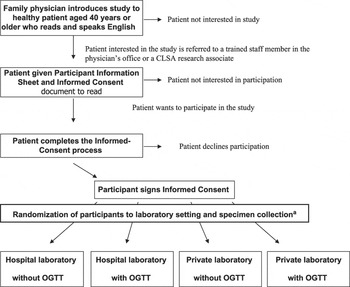
A schematic representation of recruitment, informed consent, and randomization is presented in Figure 1. Eligible adults were aged 40 and older, read and spoke English, and attended the office of a physician participating in recruitment. Exclusion criteria included (a) medical, language, or educational barriers that would preclude understanding of the informed-consent process, or (b) medical conditions that would render the participant unable to undergo the 12-hour fast, OGTT, or blood collection. Only those participants the family physician deemed able to undergo the study procedures were introduced to the study and invited to participate. A trained staff member or CLSA research assistant completed informed consent in each family physician’s office.
Participant recruitment and randomization. a, Specimen collection refers to a laboratory visit for 93-mL blood and urine specimen collection. OGTT = oral glucose tolerance test.

Each participant was randomized to laboratory setting (hospital versus private) and specimen collection type (specimen collection with OGTT versus specimen collection without OGTT) by way of sealed and sequentially numbered randomization envelopes. For each medical practice, the envelopes were randomized in sequence to one of four options using a random number generator: (a) hospital laboratory collection without OGTT, (b) private laboratory collection without OGTT, (c) hospital laboratory collection with OGTT, or (d) private laboratory collection with OGTT. Each participant chose the date and time of their laboratory visit before opening the randomization envelope. A single follow-up call was made to each participant the afternoon before their clinical laboratory appointment to (a) confirm the time and date, (b) reschedule if necessary, (c) give the participant a further opportunity to ask questions about the visit and the study, and (d) review fasting instructions. Each participant was reimbursed $25 for study-visit-related expenses such as transportation, parking, and child or elder care.
Specimen Collection Protocol
The list of biomarkers proposed for collection in the CLSA determined the volume and types of biological specimens to be collected, as well as the materials needed. Standardized protocols designed to maximize specimen integrity through appropriate collection, processing, freezing, and transfer of frozen specimens to a centralized laboratory were provided to laboratory managers. Materials that the laboratory managers were provided included (a) an instruction manual, (b) a wall chart for specimen processing, (c) laboratory requisitions, (d) standardized specimen collection kits, and (e) shipment supplies. Detailed instructions were designed to minimize error, give consistent specimen quality, and allow evaluation of the ability of clinical laboratories to execute standardized “best practice” protocols for the CLSA.
Provision of Standardized Supplies
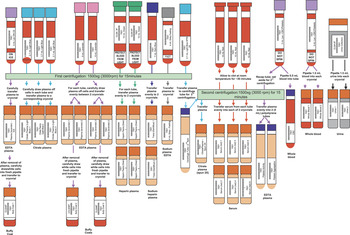
Each laboratory was provided with standardized pre-packaged kits for each study participant to maintain consistency in the collection, processing, and separation of the specimens (see Figure 2). Each kit contained a set of unique barcode labels to be affixed to each collection tube and container, aliquot tube, and study document, ensuring that specimens and documents for each individual were linked. Barcode labels also assured anonymity after the collection.
Specimen collection and processing protocol

Collection and Handling of Blood and Urine Specimens
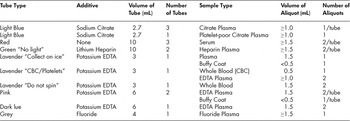
Standard blood collection technique was used to draw blood into the vacutainers in each Specimen Collection Kit. Table 1 lists the specimen collection containers collected from each participant. Special handling procedures were required for some specimens, such as collection on ice and protection from light. All blood and urine specimens required processing within 2 hours of collection, including centrifugation, aliquoting, and freezing. Specimen collection and processing is represented in Figure 2. Specimens collected at the private laboratory were frozen in a box of dry ice and transferred in this box to the hospital laboratory the same day for quality assessment. Specimens were placed into temporary storage at –70º C for a maximum of 7 days. No biochemical analyses were performed, and all specimens were destroyed after quality assessments were completed.
Type of blood tubes collected in order of draw sequence, including additive, special handling, volume and number of tubes

Quality of Clinical Laboratory Performance
Laboratory Processing Time
Laboratory staff manually recorded times at which key steps of the laboratory protocol were initiated and finished, allowing calculation of the following five time intervals: (a) arrival at the laboratory to completion of fasting blood collection, (b) completion of blood collection to centrifugation, (c) completion of blood collection to placement of specimens into the freezer, (d) time required for participants to consume the glucose drink (Glucodex), and (e) the interval from Glucodex consumption to 2-hour post-prandial specimen collection.
Evaluation of Specimen Quality
Blood and urine specimens from each participant were evaluated for compliance with nine parameters: (a) volume requirements (Table 1), (b) no visible hemolysis (slight or gross), (c) no missing aliquots, (d) even volume distribution between aliquots (within 0.25 mL), (e) correct label applied, (f) label applied in the correct orientation, (g) no external contamination, (h) no centrifugation of whole blood, and (i) absence of plasma or excessive red blood cells from buffy coat.
Laboratory Staff Feedback
At the end of the study, participating clinical laboratory staff members were asked to complete a questionnaire to facilitate feedback for improvements to the study protocol, materials, and implementation. Questions were specific to the clinical laboratory receptionist, laboratory staff performing the phlebotomy and specimen processing, and the laboratory supervisor or manager.
Participant Satisfaction with Proposed Laboratory Collections
After completion of the blood and urine collection, each participant was given a self-administered questionnaire specific to the visit (with or without OGTT) and asked to complete and return it to the laboratory staff in the sealed envelope provided. Whenever possible, reasons for withdrawal of a participant were recorded on a form by the phlebotomist. The only unique identifier on the questionnaire was a barcode number, allowing participants to answer freely and anonymously, skip questions they did not wish to answer, and be confident in giving an honest assessment without direct response from laboratory staff.
Questions were designed to determine participant acceptability of a 12-hour fast and no alcohol for at least 24 hours prior to clinical laboratory visit; attendance at a clinical laboratory visit; and collection of approximately 100 mL of blood, a urine specimen, and for half of the participants, an OGTT. The questionnaires also documented the participant’s perception of 12 study-related factors: (a) accessibility to the clinical laboratory, (b) wait times, (c) ease of movement, (d) anxiety, (e) satisfaction with service provided by each of the clinical laboratory staff members, (f) satisfaction with the informed consent process, (g) degree of discomfort experienced during clinical laboratory procedures, (h) general comfort in the laboratory setting, (i) privacy, (j) reimbursement for costs, (k) provision of refreshments, and (l) willingness to complete the clinical laboratory collection on a regular (one to three year) basis. Finally, the questionnaire gave each participant an opportunity to suggest improvements.
Statistical Analysis
For descriptive analyses, we summarized continuous variables using means, standard deviation or medians, and interquartile ranges where appropriate. Bivariate comparisons were made using either t-tests or Wilcoxon rank-sum tests. Categorical variables were reported as frequencies and percentages. Differences in the categorical outcomes were compared using either a chi-square test or a Fisher’s exact test if any expected cell frequency was less than five. If more than one independent variable was being considered, multiple logistic regression was used. All statistical tests were two-sided; there was no adjustment for multiple testing.
Adherence to Specimen Collection Protocol
To examine adherence to the collection protocol, we calculated the per cent of aliquots meeting each of the specimen collection criteria both overall and separately for hospital and private laboratories. The numerator for each criterion was the number of aliquots meeting the criterion, and the denominator was total number of aliquots for which the criterion was relevant (e.g., hemolysis applied only to plasma and serum). Percentages were calculated overall and separately for each specimen type. The median per cent of aliquots with protocol adherence per participant was compared between the hospital and private laboratories using a Wilcoxon rank-sum test.
Six Sigma metrics were also calculated. Six Sigma refers to a quality performance target of 3.4 defects per million (Reference Breyfogle3). This is equivalent to the area of the tails of a Gaussian distribution at 6 standard deviations from the target mean. The process Sigma was calculated using the norminsv function of the equation (1 – ((errors)/ (sample size)) + 1.5). The norminsv function returns the inverse of the standard normal cumulative distribution.
Participant Satisfaction
Each aspect of participant satisfaction was measured on a 5-point scale, categorized into excellent versus less than excellent (i.e., good, average, tolerable, or poor). We examined sex whether the hospital or private laboratory setting or having to undergo the OGTT affected aspects of participant satisfaction using Fisher’s exact tests. If there was a statistically significant difference between laboratories (p < 0.05), logistic regression analysis was performed to see if the level of satisfaction between the hospital and private laboratories could be explained by the logistical, convenience, or comfort factors or by the age or sex of the participants.
Results
Participant Recruitment
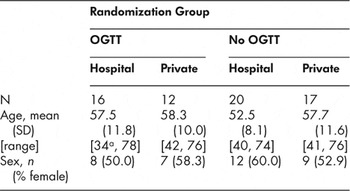
We contacted a total of 191 Hamilton physicians to recruit 11 physicians willing to participate in the study; of these, 3 withdrew before recruiting participants and 2 did not recruit any patients. The two most common reasons cited for declining participation were (a) lack of time to meet existing patient needs and (b) lack of resources to deal with research subjects. The number of participants recruited per physician ranged from 2 to 35, for a total of 85 participants. Ultimately, 20 participants withdrew from the study: 14 prior to their laboratory appointment, 3 at the laboratory appointment, and 3 due to laboratory scheduling errors, leaving 65 participants who completed laboratory visits. Of these 65 participants, 14 participants re-booked their appointment once; 3 re-booked their appointment twice. Nine participants who re-booked missed their first appointments. The percentage of withdrawals did not differ between randomization groups (with OGTT versus without OGTT, p = 0.12; private versus public laboratory, p = 0.31) or by recruiting physician (p = 0.84). All participants were between 40 and 78 years of age, except for one who was 34 years old; 55 per cent were women (Table 2).
Participant characteristics
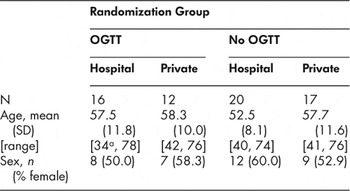
a Only one participant was under 40 years of age
Quality of Specimen Collection
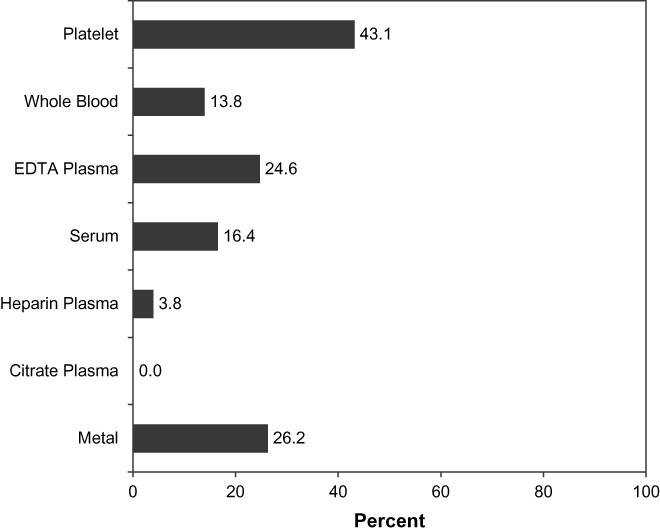
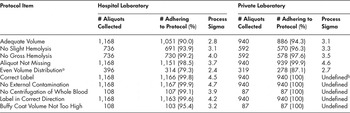
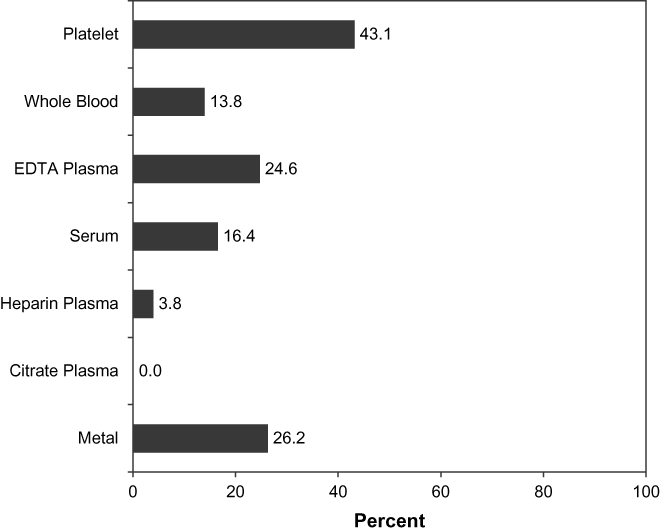
There were 2,108 aliquots collected, and more than 90 per cent met all standards except for even volume distribution (reached for 83% of aliquot pairs). Adherence to protocol by each laboratory is displayed in Table 3. The incidence of protocol violations differed by specimen type. For example, although overall adherence to adequate volume was high, 70 per cent of the whole blood aliquots had a low volume. Similarly, hemolysis was found most often in the EDTA aliquots (83%). Uneven volume occurred most often in pairs of platelet aliquots (43%), but was also an issue in about 25 per cent of the metal and EDTA plasma aliquot pairs (see Figure 3).
Incidence of uneven volume by specimen type
Quality of aliquots collected in the hospital and private laboratories

a Denominators are pairs of aliquots
b The calculation for process Sigma cannot be done if no errors are found
The median percentage of aliquots per participant meeting the specimen collection protocol standards ranged from 82 per cent for uneven volume distribution between matched pairs to 99.9 per cent for correct labelling and no external contamination. Although the medians were the same for both groups (93.8%), participants attending the private laboratory had fewer protocol deviations for adequate volume (p = 0.04). Almost 15 per cent of those attending a hospital laboratory had insufficient volume in more than 80 per cent of their aliquots whereas all participants at the private laboratory had sufficient volume in 80 per cent or more of their aliquots. Participants attending the private laboratory had more aliquots with gross hemolysis (p = 0.04). Although the medians were similar (95%), approximately 16 per cent of hospital participants had one or more aliquots with gross hemolysis compared to almost 45 per cent of collections for participants attending the private laboratory. There was, however, some evidence that participants attending the hospital laboratory had more aliquots without slight hemolysis (p = 0.08). There were no statistically significant differences between groups for any other measure of specimen quality.
Estimates for adherence to protocol were much lower when we used the stricter criterion of the proportion of participants with all aliquots meeting protocol standards. Adequate volume, lack of slight hemolysis, and even volume distribution criteria were met for all aliquots for less than a third of the participants (17%, 32%, and 22% respectively). Eight specimens were missing, five of which belonged to one participant whose veins collapsed.
Another way to assess quality is to determine the Sigma metric for each process (quality measure). Table 3 shows that the private laboratory achieved higher Sigma values for almost all quality items compared to the hospital laboratory, and several were undefined because no errors were detected.
Laboratory Processing Time Intervals
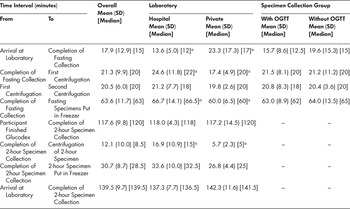
Time interval data for participant visits and specimen processing is presented in Table 4. The median time from participant arrival to completion of the fasting collection was significantly shorter (p < 0.05) and more consistent in the hospital (12 minutes) compared to the private laboratory (17.3 minutes). A room was booked at the hospital laboratory and staff prepared to collect specimens 15 minutes before the first scheduled visit, allowing participants to be greeted on arrival and the specimen collection completed efficiently. Participants were in the waiting room longer at the private laboratory, as the phlebotomist came to the laboratory only when participants were booked.
Time intervals for participants and the collection and processing of samples

a Wilcoxon rank-sum test p-value < 0.05
The study protocol required that specimens be frozen within 2 hours of collection to maximize specimen integrity; both laboratories consistently met this standard. The median time between completion of fasting collection and first centrifugation was significantly greater (p < 0.05) in the hospital (22 minutes) compared to the private laboratory (20 minutes), as was the median time from completion of fasting collection to placement of the specimens in the freezer (p < 0.05; 66.5 minutes for hospital and 60 minutes for private laboratory). The hospital also had a longer median time from completion of the 2-hour specimen collection in the OGTT group to centrifugation of the specimen (p < 0.05; 15 minutes) relative to the private laboratory (5 minutes). The longer specimen processing times at the hospital laboratory arose because specimens were carried to another building for processing, while in the private laboratory a centrifuge was located in the specimen collection room used exclusively for the study. The longest time a participant in the OGTT group needed to consume the glucose drink was 10 minutes; overall, participants took 5 to 6 minutes. The time from consumption of the glucose drink to post-prandial specimen collection was similar for both laboratories. The interval from “participant arrival” to “completion of the 2-hour specimen collection” represents the duration of the laboratory visit for participants in the “with OGTT” group; there was no significant difference between the hospital and private laboratories.
Laboratory Staff Feedback
Questionnaire data were obtained from four staff from the hospital laboratory (three phlebotomists, one manager) and three staff from the private laboratory (one phlebotomist, one manager, one receptionist). Integrating study participants in the routine workflow in the hospital laboratory required delegation of concurrent activities by the phlebotomists to other staff. In contrast, the private laboratory had a dedicated phlebotomist and expressed no concerns integrating study participants. The phlebotomist and receptionist at the private laboratory indicated the study ran smoothly.
The specimen collection and processing instructions were rated lower by the three hospital phlebotomists compared to the one private laboratory phlebotomist. Suggestions for improvement included simpler instructions (point form, more flow charts), and input from the laboratory staff that will be doing the collections for the CLSA. Phlebotomists had equal preference for the wall chart (n = 2) and instruction manual version of processing instructions (n = 2). Use of larger print in standard orientation was the only suggested improvement for the wall chart. One hospital phlebotomist suggested the use of fewer tubes but with larger volume. This was suggested because blood collected in heparinized tubes frequently yielded more plasma than needed for each aliquot. The private laboratory had no issues with freezing or shipping aliquots.
Also, butterfly infusion sets were initially used for participant comfort during the blood collection; however, blood clotted in the tubing, requiring a second venipuncture to finish the collection. After the first few participants, both laboratories performed the full collection using straight needles.
The main concerns expressed by the laboratory managers were staffing and space. It was difficult to integrate the study participants into the hospital workflow when more than one participant was booked per morning because of the considerable time required for the collection and processing of specimens. The private laboratory manager dealt with this concern by assigning a dedicated staff member for the study, allowing for up to eight participants per morning. Both managers suggested that accommodation of study participants would be best facilitated if a set number of participants were scheduled daily. The suggested time per participant was 60 and 75 minutes for the hospital and private laboratory respectively. Hospital laboratory resources currently allow one participant per morning; however, the manager felt that up to 13 participants (the potential number that could be seen when the CLSA begins recruiting) could be accommodated per morning by hiring CLSA-dedicated staff and identifying more space for the specimen collection and processing. The manager at the private laboratory echoed this latter comment and specified that one full-time phlebotomist and one part-time laboratory assistant would be needed.
Participant Assessment of Laboratory Visit
Participant Satisfaction
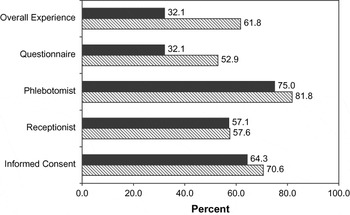
Overall satisfaction with the study was very high with between 89 and 98 per cent of participants rating their overall experience, the questionnaire, the phlebotomist, the receptionist, and the informed consent process as good or excellent. Excellent ratings ranged from 44 per cent for the questionnaire to 79 per cent for the phlebotomist. The only satisfaction difference by OGTT status was that almost 90 per cent of the without-OGTT group rated the phlebotomist as excellent compared to 63 per cent of those having an OGTT (p = 0.02). Fewer participants randomized to the private laboratory rated their overall level of satisfaction as excellent compared to those attending the hospital laboratory (82% versus 100%, p = 0.02) (see Figure 4). This difference persisted after adjustment for age, sex, and OGTT status (OR 3.6, p = 0.02). Neither age (p = 0.68) nor sex (p = 0.99) was related to participant satisfaction. None of the factors related to the logistics, convenience, or comfort explained the difference in satisfaction between the hospital laboratory and private laboratory.
Percentage of participants rating experience excellent in the private laboratory and hospital laboratory. Solid bars represent participants attending a private laboratory, and the hatched bars represent participants attending the hospital laboratory. The Fisher’s exact P-value for overall experience = 0.02; all other comparisons were not statistically significant.

Participants were also asked if they had anxiety or concerns about participating in this study before and after the laboratory visit. Data were available from 62 participants. Six participants answered that they had concerns prior to the laboratory visit, citing (a) the length of time for the OGTT (n = 1), (b) fear of the unknown (n = 1), (c) concerns about drinking the glucose drink (n = 2), and (d) fear of needles (n = 2). After the laboratory visit, these six participants said they did not have any anxiety or concerns, but three additional participants reported they had concerns. Of these, only one gave a reason: concern about the blood collection and glucose drink.
None of the participants felt embarrassed at any time during the laboratory visit. When asked whether their privacy was protected at all times, 58 participants (89%) agreed; 2 participants who attended the hospital laboratory did not agree but did not give a reason. When asked if the phlebotomist had asked if they had any questions, 53 participants (82%) responded affirmatively. Of these, all but one indicated the phlebotomist answered all of their questions; the question the phlebotomist was unable to answer was why the samples were not being tested.
Specimen Collection Protocol
All participants completed the overnight (12 hour) fast, and 51 of 61 participants who responded felt it was not a problem or gave a neutral response (used to fasting because of diabetes; late riser; it was necessary). Of the remaining 10 participants, 5 gave negative feedback (hungry but OK; thirsty; missed my coffee; fast was too long), and 5 gave qualified responses indicating the fast was “fine” for early morning laboratory visits, but they might not feel that way if they had appointments later in the day when they would be hungry.
Laboratory appointment time preferences were obtained from all 65 participants (one participant did not provide an answer); 12 indicated any time would be acceptable, 31 preferred early mornings before rush hour, 19 could attend any time in the morning, and 3 could attend any time in the afternoon. When asked if there was a time they could not attend the laboratory, 19 of 61 participants answered “yes”; 13 indicated they could not attend during work hours (day, afternoon, and night shifts; specific days of the week), and 5 of the remaining 6 had other time commitments during the day or evening.
Discomfort during the fasting blood draw was reported by 8 of 63 participants who answered this question. Of 26 participants in the OGTT group, 5 (19%) reported discomfort during the 2-hour draw: 4 indicated the glucose drink was very sweet on an empty stomach, and 1 experienced discomfort after the final draw due to four attempts at venipuncture. Overall, 35 per cent of participants reported feeling uncomfortable during the 2-hour wait period after consuming the glucose drink but none found it necessary to lie down. Most participants (61%) spent the waiting period outside the laboratory waiting area.
The number of participants requiring a second venipuncture to complete the fasting blood collection was similar between the laboratories (four at the hospital, three at the private laboratory). One participant who attended the hospital laboratory was willing to undergo more than two venipunctures, but the phlebotomist declined for ethical reasons.
Laboratory Location and Comfort
Participants from both the hospital (n = 4) and private (n = 5) laboratories found the laboratory location to be inconvenient, and seven preferred a laboratory closer to home. This was consistent with longer mean travel times for those indicating the location was not convenient (29 minutes versus 21 minutes). Only two people gave reasons for the inconvenience: cost (hospital parking and taxi fare expense) and distance (the bus stop was too far). Of those who indicated the location was inconvenient, seven drove their own cars, one had a ride from another person, and one took a taxi. Of those who indicated the laboratory was convenient (n = 54), 38 drove their own car, 6 had a ride from another person, 1 took a taxi, 5 walked, and 4 took the bus.
Some of the participants (n = 7) had trouble finding the laboratory despite provision of a street map indicating the location of the building and an interior map to direct participants to the laboratory; two attended the private laboratory and five attended the hospital laboratory. Participants indicated the problem was due to insufficient signage. Also, two participants went to the wrong laboratory. All participants indicated the washroom was located conveniently. One person had trouble moving in the private laboratory, but did not give a reason. The only participant using a mobility aid (a cane) did not report trouble moving in the laboratory space.
Most of the participants (n = 50) found the rest area suitable; four participants indicated the private laboratory lacked a suitable area in which to spend 2 hours, and two hospital participants indicated the chairs were too uncomfortable. Suggestions included placing couches in a larger room with a television and a small table where coffee and snacks could be placed after the final venipuncture.
Improvements to the Laboratory Visit
Participants were asked if the participant experience could be improved; 50 said “no” and 8 (14%) answered yes. Six hospital laboratory participants made suggestions: (a) more comfortable chairs with back support, (b) a more private waiting area, (c) provision of food and drink at the end of the visit, and (d) entertainment such as magazines or television. Four participants at the private laboratory suggested better scheduling to reduce the long wait, a more relaxing waiting area, and provision of food and drink; one participant said the 2-hour wait was too long.
Participant comments indicated that, in our study, additional information on the participant information sheet would be helpful (e.g., drink as much water as you wish, take medications at your normal times, and urine does not have to be the first of the morning). Also, given the difficulties encountered by participants locating the laboratory, improvement to the maps, such as “to scale” maps and landmarks, as well as highly visible signage, would be helpful.
Willingness to Participate in a Similar Study
More than 80 per cent of participants indicated that they would be willing to take part in a study where they would complete laboratory visits every 1 to 3 years over a 20-year period. Only 3 per cent said they would not participate in such a study, and the remainder indicated they might participate. These percentages did not differ by laboratory setting, OGTT status, sex, or age. Of those indicating they might participate, their concerns centered mostly on the time involved and availability due to work commitments.
More than half of the participants who had the OGTT indicated the additional 2-hour wait time would not influence future willingness to participate or have a little influence, 29 per cent said it would have some influence, and 17 per cent said it would definitely or greatly impact their willingness to repeat the laboratory visit.
Discussion
Important goals of the CLSA are to ensure that participants are comfortable with the biological specimen collection protocol and to maximize future use of stored samples. The protocol requires provision of approximately 100 mL of blood, a urine sample, and an OGTT to provide the widest range of high-quality samples to accommodate multiple broad-range research questions on aging Canadians. This strategy is similar to other epidemiological studies that have biorepositories such as the National Health and Nutrition Examination Survey (NHANES) (4), the newly launched UK BioBank, and others (5).
Quality of Biological Specimen Collection
The specimen collection protocol developed for the CLSA was tested in two existing laboratory settings. The private laboratory offers multiple sites for patient specimen collection that may facilitate geographic flexibility in collecting biological specimens whereas each hospital laboratory is a single-centre facility. Both laboratories scored very high in compliance with the specimen protocol including collection, processing, and shipment of specimens. The private laboratory demonstrated slightly higher Sigma process values compared to the hospital laboratory. This type of quality assessment for biological specimen collection has not been done before, but values around 3.5 are considered good (22,700 errors per million). In a study that looked at different laboratory quality indicators (e.g., order accuracy, chemistry sample acceptability), the Sigma values were typically 3 to 4 (Reference Nevalainen, Berte, Kraft, Leigh, Picaso and Morgan6).
All samples were frozen within the strict standard of 2 hours from collection (mean of 64 ± 12 minutes) demonstrating that despite the size and complexity of the specimen collection (16 tubes, 7 tube types, 32 aliquots, and 2 centrifugations), efficient collection was achieved, thereby preserving specimen integrity. Subsequent storage of specimens for the CLSA study will be at –150º C in the vapour phase of liquid nitrogen maximizing the long-term quality of the specimens for accurate biomarker analysis in the future.
Specimen quality was assessed by a variety of measures, and more than 90 per cent of the 2,108 aliquots met all these standards, except for even volume distribution (difference > 0.25 mL for 17% of paired aliquots). If the volumes for specific specimen types given in a protocol are met (i.e., adequate draw) and volume is evenly split between each pair of cryovials, a good estimation of sample volume is possible, allowing researchers to determine the maximum number of tests that could be performed on each aliquot. Current practice for aliquoting does not involve exact volume measurement, as this would increase processing time substantially. However, automated technology can dispense exact volumes of a sample into tubes, multi-well plates, or straws with minimal labour. Straw technology has been used successfully for cryopreservation of cells for many years, and some biorepositories are beginning to use this method of storage for all sample types (Reference Luc, Ferrières, Evans, Amouyel, Arveiler and Cambien7). The added expense of these methods may be justified by time savings in specimen processing and provision of exact aliquot volumes. Generation of more numerous, smaller volume aliquots also minimizes specimen exposure to repeated freeze-thaw cycles over several rounds of specimen analysis.
Hemolysis (slight or gross) affected primarily the last collection tube (81% of the collections), which would be used to measure fasting glucose. The identical tube type collected as the only tube at the 2-hour post-prandial collection was affected by hemolysis by about half as much (48%) of the collections. Gross hemolysis occurred in 27 per cent of the fasting compared with only 4 per cent (one tube) of the 2-hour specimens. This suggests the hemolysis may have been related to prolonged tourniquet use and difficulty with the draw. The tube for fasting glucose should be earlier in the collection sequence since it is the most likely to be missed in a difficult draw and would require the participant to attend a second visit to undergo the OGTT. One 40-year-old participant had a difficult draw (five tubes not collected) in this study; the participant population for the CLSA includes elderly persons who pose a greater blood sampling challenge because of fragile skin and small or calcified blood vessels, and could represent the greater percentage of hemolyzed and missed samples for the CLSA. No association between age and hemolysis was found in this study (data not shown).
Feedback from the laboratories highlighted the need for (a) a central booking centre, (b) adequate space for study participants and specimen processing, (c) dedicated staff, and (d) longer time allocated per participant (60 to 75 minutes) for the full CLSA. The number of dedicated staff required would depend on the number of study participants scheduled per day. A central booking centre will be in place for the CLSA, and the laboratories indicated they could organize space and personnel as needed if selected to be one of the collection sites. It is not known whether staff increases would affect the cost per participant collection.
Participant Satisfaction
Participant satisfaction with all aspects of the study was very high (89 to 98% for overall experience, questionnaire, phlebotomist, receptionist, and informed consent). The only difference in satisfaction between the two randomized study groups was in a lower rating of the phlebotomist by the OGTT group (63% rated as excellent) compared to the fasting-specimen-only group (almost 90%), possibly indicating a more negative impression after undergoing the second venipuncture for the 2-hour blood collection. If ratings of “good” and “excellent” were combined, this effect was no longer statistically significant.
One concern with inclusion of an OGTT in the CLSA biological specimen protocol was a substantially increased participant burden as a result of consumption of a glucose load and an additional 2-hour wait for a second (post-prandial) venipuncture. We found no difference in withdrawal rates between the participants randomized to “without OGTT” and those randomized to “with OGTT,” indicating perceptions about the extra time and procedures did not affect the willingness of participants to complete the laboratory visit. Furthermore, more than 50 per cent of participants randomized to the “with OGTT” group indicated the additional 2-hour wait would have little or no influence on the decision to participate in ongoing laboratory visits proposed for the CLSA; 29 per cent indicated the additional time would have some influence; and 17 per cent indicated it would definitely impact their willingness to repeat the laboratory visit.
Wait times in the private laboratory compared to the hospital laboratory averaged about 10 minutes longer (p < 0.05). In their 2005 review of longitudinal birth cohort studies, Eskenazi et al. (Reference Eskenazi, Gladstone, Berkowitz, Drew, Faustman and Holland8) found that one of the most important barriers to participation in this study was the time required for study visits, especially for women who worked. In our study, the median wait times from arrival to blood collection was considered short (1 and 5 minutes for the hospital and private laboratory respectively), and there was no significant correlation between wait times and overall participant satisfaction.
All participants who attended the laboratory reported compliance with the 12-hour fast and avoidance of alcohol consumption for 24 hours prior to their laboratory visit, with the exception of two participants who consumed a beverage other than water during the fast. Only 8 per cent of study participants reported a negative experience with the fasting, and an additional 8 per cent indicated they could undergo the fast only if they had a morning laboratory visit. This is consistent with the results from the UK BioBank phase-one pilot study (5); in that study, self-reported compliance with a 4-hour fast was high, but many participants volunteered that they found fasting to be inconvenient and uncomfortable, especially for late morning and afternoon visits.
More than 80 per cent of participants indicated they would be totally willing to complete laboratory visits every 1 to 3 years over a 20-year period. Only 3 per cent indicated they would decline; the remainder indicated they might participate, but they were most concerned about the time involved and possible conflicts with work commitments. Data from other longitudinal studies demonstrate a willingness to participate if appropriate accommodations are made. For example, contacting each participant prior to their visit can minimize missed appointments. (Reference Eskenazi, Gladstone, Berkowitz, Drew, Faustman and Holland8) In our study, participants were contacted the day before their appointment; six withdrew at this time, and nine (14%) failed to attend their appointment the following day. Furthermore, we also provided a contact number to allow participants to change their appointment. Exit questionnaires for participants in The Canadian Health Measures Survey Pre-Test (9), which included a 2-hour fast prior to collection of urine, blood, and an OGTT, reported only 60 per cent of participants would have come if only morning appointments were available, emphasizing the need to provide flexible scheduling.
Limitations
The results of this feasibility study were based on 65 participants with the oldest being 78 years. This study was originally designed to gather data from four cities: Vancouver, Hamilton, Montreal, and Halifax. However, because of difficulties in recruiting laboratories, and in recruiting family physicians willing to participate in this pilot study, as well as high regional laboratory expenses, it was conducted only in Hamilton, Ontario. Of the physicians contacted in Hamilton, only 6 per cent agreed to participate; this will not be a limitation for recruitment of CLSA participants because potential participants will be contacted directly from lists generated by Statistics Canada. Subgroup analysis (e.g., effect of age) was not possible due to the small number of participants. The age distribution for the proposed CLSA is 50 per cent for the 40–59 year group, 33 per cent for the 60–79 year group, and 17 per cent for the group 80 years and older. However, in this study there were no participants in the last group, and therefore it is not known if there are unique issues with biological specimen collection not found in the other two age groups.
Furthermore, our study did not explore cultural and religious factors. Although this study was conducted in only one Canadian city, the standard of phlebotomy services in private and hospital laboratories across the country is similar due to regulatory control of laboratory practices. Therefore, the quality of blood collection is expected to be similar in all CLSA collection sites. The assessment of aliquot quality was done only by visual inspection and not by performing any specific tests to assess the integrity of the sample. However, the design and adherence to the specimen collection protocol would suggest that sample integrity was preserved. Also, it is not known if participant withdrawals would have been affected if participants knew their samples would be tested.
In conclusion, this study found that the quality of samples collected using the draft CLSA biological specimen protocol was similar if undertaken in the private or hospital laboratory. The choice of which laboratory type the CLSA will use will depend on the final structure of the study protocol and the data that are to be collected. It may be more efficient to have the participants come to one laboratory for the collection of all information and measurements including the specimen collection. Alternatively, participants could be given a specimen collection requisition to attend a CLSA-designated laboratory at another time. Participants in this study found the specimen collection protocol to be acceptable and reported that they would be willing to repeat this collection every 1 to 3 years.