Introduction
As a result of climate change, weather-related natural disasters are increasing in frequency and severity.Reference Sauerborn and Ebi 1 – Reference Costello, Abbas and Allen 8 Disaster risk reduction is now recognized as a global priority. In total, 187 countries recently signed the Sendai Framework for Disaster Risk Reduction by 2030, in testament to the recognition of this global priority. 9 The aim of the Sendai Framework is to reduce the impact of disasters on loss of life, health, and livelihood within communities and countries. 10 To achieve this, there needs to be a reduction in the vulnerability; the most effective way of attaining this is by employing prevention measures.Reference Keim 11 To counteract the vulnerability of communities due to the aging population and the increase in chronic disease prevalence,Reference Steffen and Hughes 12 communities can build resilience to decrease the impact of disasters. Prevention measures in terms of mitigating the health impacts of disasters can be vaccinations and educating the members of the communities on how to prepare their health for a potential disasterReference Chan 13 – especially those with chronic diseases requiring medications.
Following disasters, one of the leading causes of death is the lack of access to every-day health care.Reference Mokdad, Mensah and Posner 14 In acknowledgement of this, the Sendai Framework calls for health care services to become more resilient to ensure that the provision of basic life-saving services continues during and after a disaster. 10 However, with the limited resources available in times of crises, it is vital to attend to not only the high-acuity patients, but also to the disproportionately large number of low-acuity patients adversely affected.Reference Chan 13 Vulnerable groups are known to be at increased risk of experiencing adverse health outcomes during a disaster. These individuals include: the elderly; the very young; individuals with reduced mobility; individuals who are isolated or who don’t speak the native language; those who ignore advice and warnings about the emergency; the homeless; and individuals with pre-existing chronic diseases.Reference Chan 13 – 16 Also, medications used to treat some chronic diseases can impair a person’s ability to adequately cope with, or respond to, the disaster or emergency.Reference Horton, Hanna and Kelly 17 The exacerbations of non-communicable diseases (NCDs) with their acute-on-chronic complications in multi-hazard disasters are well-studied and mostly preventable with adequate management and preparedness.Reference Chan 13
Pharmacists are regarded as drug experts and have extensive knowledge of medications.Reference Patwardhan, Duncan, Murphy and Pegus 18 , Reference Tahaineh, Wazaify, Albsoul-Younes, Khader and Zaidan 19 They are the third largest health care profession after doctors and nurses internationally, and they are the most accessible health care professional to members of the community.Reference Patwardhan, Duncan, Murphy and Pegus 18 , Reference Paolini and Rouse 20 – 24 Pharmacists are considered members of the multi-disciplinary health care team managing every-day adverse health events.Reference Chan 13 However, in the context of disasters, pharmacists are often forgotten or disregarded as a necessary disaster health care team member. The current “disaster medicine” health care model is focused primarily on the high-acuity patients with services provided by emergency services, doctors, and nurses. This “disaster medicine” model has successfully responded to the health needs of people affected by simple disasters. However, the demographic of those adversely affected in a disaster is shifting from acute traumas to exacerbations of chronic diseases triggered by disruptions to continuity of care.Reference Jhung, Shehab and Rohr-Allegrini 25 As the health system and resources become increasingly stretched, and as disasters increase in frequency and severity, there is an opportunity for pharmacists to make a more significant contribution to caring for this change in the community’s health.
To date, pharmacists have had a minor role in disasters assisting with the logistics of drug acquisition and supply chain managementReference Babb and Downs 26 , Reference Anderson 27 - a role occupied in many cases by a logistician.Reference Sheu and Pan 28 Arising after the events of September 11, 2001 in the United States (US), pharmacists have begun to be more actively involved in disaster medical assistance teams. Despite their increased involvement, their role is still primarily logistical in nature, focusing on the procurement of drugs and medical supplies. Recently, there have been reports of pharmacists undertaking more clinical roles in disasters (eg, focusing on optimizing medication management and patient care). 29 – Reference Hogue, Hogue, Lander, Avent and Fleenor 36 However, to-date, these “new” roles have been poorly documented and would appear to have taken place in an ad-hoc fashion during the response phase of a disaster. The acknowledgment, or acceptance, of pharmacists and their contributions during disasters by the wider disaster health community is not well-understood.
When a disaster strikes a community, in many circumstances, those affected seek the assistance of pharmacists first before potentially being referred on to a doctor or hospital.Reference Mossialos, Naci and Courtin 22 , Reference Apollonio 37 In the aftermath of a disaster and the potential collapse of the health care system, 38 pharmacists are on the frontline of continuity of care due to their accessibility to the community. 39 The US state of Alabama recognized the invaluable assistance pharmacists could provide in reducing the over-crowding of the emergency departments (EDs) caused by the presentation of low-acuity NCD patients who had lost their chronic disease medications.Reference Hogue, Hogue, Lander, Avent and Fleenor 36 The three-day emergency supply legislation was temporarily extended to 30 days for the duration of the declared disaster. This allowed pharmacists to attend to those patients often neglected during disasters - chronic disease patients.Reference Hogue, Hogue, Lander, Avent and Fleenor 36
The anthrax crisis in Washington, DC (USA) in 2001 saw a role expansion for pharmacists in developing screening tools and drug algorithms to streamline the drug treatment and prophylaxis choice based on patient NCD comorbidities and other co-factors.Reference Montello, Ostroff, Frank and Haffer 31 It has been proposed that pharmacists in bioterrorism events could be involved in the triaging, counselling, educating of the public, and coordinating with other health care providers.Reference Setlak 40 During Hurricane Katrina (2005), pharmacists were reported to have assisted in a range of roles due to the limited health care resources available. They consulted on injuries, provided wound care, mixed intravenous medications, vaccinated patients, and set up pharmacy services in evacuation centres.Reference Young 33 , Reference Hogue, Hogue, Lander, Avent and Fleenor 36 Pharmacists also assisted with triaging patients. This triaging role involved obtaining a medication history, assessing patients’ medication needs, and where required, referring patients to physicians for further assessment or to pharmacists to obtain refills of their NCD medications.Reference Velazquez, Dallas and Rose 32
There has been a shift in community pharmacists’ roles expanding public health access to the community. Pharmacies have become a pillar of the public health system providing vaccinations, health and medication education, and participating in national or epidemic initiatives.Reference Meyerson, Ryder and Richey-Smith 41 These public health roles facilitate a disease prevention focus which aligns with the first of the four phases in disaster management – prevention/mitigation. Following this shift in role expansion, the International Pharmaceutical Federation (FIP; The Hague, Netherlands) released guidelines on the next two phases of disaster management, pharmacy preparedness and response. 39 , 42 Despite this, there has been no significant change in the role of pharmacists in disasters since the 1960s.Reference Ford, Dallas and Harris 43 Hospital pharmacies generally have developed their own emergency management plans in the event of a disaster, 44 but they are rarely included in broader disaster management policy within their health care system. Community pharmacies are generally not well-prepared with disaster and emergency plans or business continuity plans,Reference Austin, Martin and Gregory 45 and they are not included in the wider community disaster policy.Reference Mak and Singleton 46
One of the significant barriers identified with the expansion of pharmacists into public health and disasters is that pharmacists are one of the only health care professionals providing health services to members of the community not recognized as a practitioner or health care provider.Reference Giberson, Yoder and Lee 47 Meaning pharmacists are limited by policy and legislation for the essential services they provide to the general public and community.Reference Giberson, Yoder and Lee 47 There are no current mechanisms in place for the reimbursement for pharmacies from local, state, or federal governments when they supply essential services, medications, and pharmacy-related supplies to patients and members of the community who are unable to pay during a disaster.Reference Mak and Singleton 46 , Reference Giberson, Yoder and Lee 47
To address the apparent lack of evidence on the engagement of pharmacists in disaster events, this study sought to determine the international opinion of disaster and health professionals working within the disaster health management field regarding the roles of pharmacists in disasters. The following research questions were addressed:
1. Is there a role for pharmacists in disasters apart from logistics and supply chain management?
2. Do the roles pharmacists have performed in disasters and reported in the literature align with the opinions of international disaster management and health professionals regarding the roles they believe pharmacists can undertake during a disaster?
Methods
Study Design and Participant Recruitment
This study utilized quantitative research methodology to survey the international disaster health community on their opinions of the roles they believe pharmacists could undertake in disasters. A convenience sample of individuals attending the 20th World Association of Disaster and Emergency Medicine (WADEM; Madison, Wisconsin USA) Congress in Toronto, Canada from April 25-30, 2017 was utilized for this study. The anonymous and confidential survey allowed for a free expression of attitudes and beliefs that may not be expressed in a more intimidating setting, like an interview.
The Congress attendees comprised 900 delegates representing over 60 nationalities. There were 222 paper copies of the survey randomly handed out to attendees. Survey participation was limited to the physical distribution of the survey by two researchers to the conference delegates. Individuals were provided with a participant information sheet with the survey, and consent was implied by the returning of a completed or partially completed survey. Participants’ confidentiality was ensured though the use of an anonymous survey. This study had ethics approval from Queensland University Technology Health Research Ethics Committee (Brisbane, Australia) - Approval Number 1700000048.
Data Collection Instrument and Data Analysis
In the absence of an existing survey tool to gauge disaster and health care professionals’ opinions on the role of pharmacists in disasters, a survey was developed and pilot tested prior to release for this conference. This survey comprised 11 demographic questions and eight questions on the participant’s opinion as to the role of pharmacists in disasters. The survey included a question which listed all the roles undertaken by pharmacists in disasters identified in the literature. Participants indicated their level of agreement with each of these roles on a 5-point Likert scale (1=strongly disagree, 2=disagree, 3=neutral, 4=agree, 5=strongly agree, and N/A=not applicable). The demographic questions assessed the participant’s age, gender, health care profession, experience in previous disasters (natural and man-made), and pharmacist involvement in disasters in their country. Completed surveys were handed into the WADEM exhibit stand, which was located at the entrance to the foyer of the trade exhibition of the conference. The responses were then manually entered into KeySurvey (an online data collection survey tool [KeySurvey; Braintree, Massachusetts USA]). Each question was analyzed separately for its respective sample size to account for any missing data. Internal reliability of the 5-item Likert scale instrument in this sample was tested using IBM SPSS statistical software version 23 Cronbach’s alpha reliability statistic, which was 0.79. All quantitative data were analyzed using the IBM SPSS statistical software version 23. The qualitative questions were manually coded and categorized by two researchers for inter-rater reliability and presented as themes.
Results
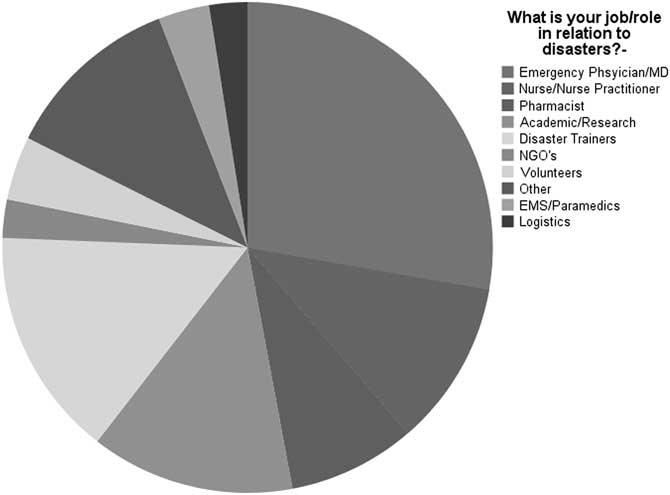
Of the 222 surveys handed out, 126 survey responses were collected – yielding a response rate of 56.8%. Of the 126 survey participants, 27.7% (33/119) were emergency physicians or general practitioners, 10.9% (13/119) were nurses or nurse practitioners, 8.4% (10/119) were pharmacists, and seven participants (7/126) opted not to disclose their profession (Figure 1). The sample size varied for some survey questions as respondents chose not to answer a question.
Disaster Management and Health Professionals who Participated in the Study.
Abbreviations: EMS, Emergency Medical Services; NGO, nongovernmental organization.

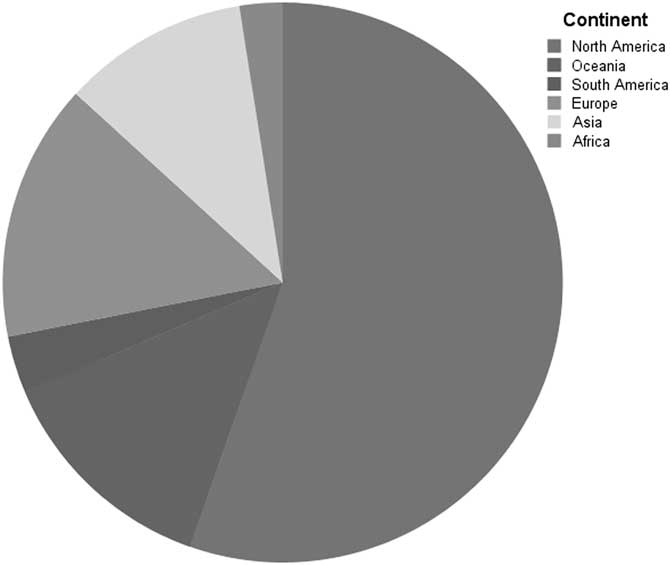
Respondents represented 22 different countries with the largest representation of 31.1% (38/122) being from the Congress host country Canada, followed by 23.8% (29/122) from the US (Figure 2). All respondents were over the age of 21, with 43.7% (55/126) being in the>51 years of age bracket. Gender was fairly even with 51.6% (65/126) male and 48.4% (61/126) were female.
Continents Represented by Participants.

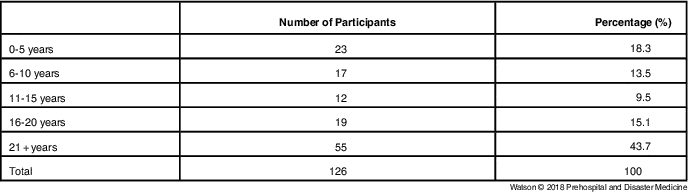
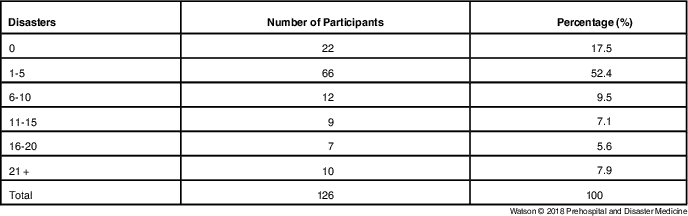
Of the respondents, 43.7% (55/126) had been in their respective professions for 21 or more years (Table 1). Most of the participants (52.4%; 66/126) had responded to between one and five disasters in an official capacity relating to their stated profession, while 17.5% (22/126) of the participants may have responded to a disaster, but not in an official capacity related to their profession (Table 2).
Years of Experience in Profession

How Many Disasters Participants Had Officially Responded to in Profession

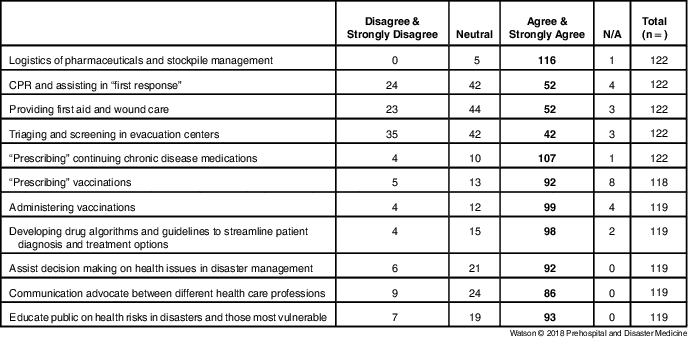
In this study, 96.8% (122/126) of respondents believed pharmacists had a role in disasters additional to the logistics and supply chain management and 87.9% (109/124) believed assisting in disasters was within a pharmacist’s current scope of practice. With regards to specific roles that pharmacists could have in disasters, roles that pharmacists have previously performed in disasters were collated from an extensive review of the literature. Table 3 rates the opinions of the participants on whether pharmacists are capable of undertaking these specific roles in a disaster or emergency setting. Eight of the listed roles were given a rating of “Agree” or “Strongly Agree” by 72.4% or more of the participants.
Health Professional Opinion Ratings on Specific Roles Pharmacists Have Undertaken in the Literature from Previous Disasters

Abbreviation: CPR, cardiopulmonary resuscitation.
The results presented in Table 3 suggest that there was an overall acknowledgement that pharmacists are capable of doing more than just logistic and supply chain management in disasters. Triaging and screening in evacuation centers received equal participant ratings of 34.5% (42/122) “Neutral” to 34.5% (42/122) “Agree/Strongly Agree.” The cardiopulmonary resuscitation (CPR) and first aid/wound care roles were only moderately higher with an “Agree” or “Strongly Agree” rating by 42.6% (52/122) of the participants. Just over one-half (57.1%; 68/119) of the respondents had prior knowledge of pharmacists undertaking these types of roles in a disaster.
Participants had the opportunity to answer open-ended questions in the survey on their opinions of roles pharmacists could perform in preparing for and responding to a disaster and what they believed to be some of the barriers to pharmacists undertaking additional roles to logistics and supply chain management in disasters.
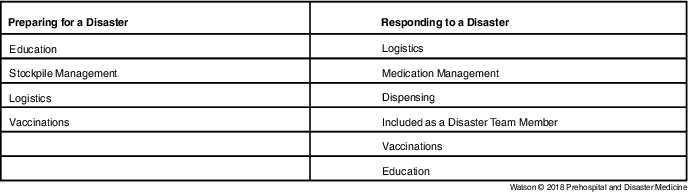
Table 4 outlines the major themes identified by participants of roles pharmacists could undertake in preparing for and then in responding to disasters. Educating patients, especially those requiring on-going medications and with chronic diseases, was the most suggested role pharmacists could assist within their current scope of practice in preparing for a disaster. Ensuring continuity of care with supply of medications through logistics and medication management was considered the most valued roles in the response phase of a disaster for pharmacists. A physician from Canada suggested:
Education. Helping community prepare by ensuring medications always filled, facilitate and encourage vaccination, logistics during response, patient advocate in response, help assist and facilitate pt/md [patient and doctor] relationship. Some community response for low-acuity patients.
Themes Identified for Pharmacists’ Roles in Preparing and Responding to Disasters

A public health professional from Canada identified:
[A] key issue for many [patients/disaster victims] is medication renewal including Methadone/opiate to decrease withdrawal.
A disaster volunteer pharmacist from the United Kingdom (UK) recommended pharmacists could fulfil roles in:
Logistics/supply chain management, medicines management, clinical input (triage, assessment, prescribing), educator of public, and other health care professionals providing expertise in medicines/medicine management and optimization.
Ninety-five participants elected to share their opinions on the barriers to pharmacists being involved in disasters. The two main barriers themes identified by the respondents were “lack of understanding of the value pharmacists can provide in disasters,” and “prejudices of other health care professionals.” Other barrier themes that emerged were: “lack of inclusion as a disaster team member,” “lack of pharmacy disaster training or education,” “insufficient interest from the pharmacy profession,” “legislative constraints,” and “funding or reimbursement issues.” Some participants claimed there shouldn’t be any barriers holding pharmacists back from being more involved in disasters, as response is the first priority.
A volunteer from South America wrote:
In my country, they are perceived as actual part of the health team, but I don’t think they normally include in disaster preparedness plans. There is a belief that disaster preparedness is all about rescue.
A pharmacist from the UK suggested the barrier is because there is:
No defined role other than as logisticians and supply chain managers; other health professionals don’t know what pharmacists can contribute. This is changing slowly in the UK among aid organizations as some of them recognize the value pharmacists bring.
An Australian academic stated that the barrier is the:
Perception that they only count pills and have no real medical knowledge. STIGMA.
Discussion
The level of experience these study participants have in this field, both in their respective professions and in responding to disasters, gives credibility to the results of this survey. Having been in disaster zones themselves, they are aware of what works and what doesn’t, and what is needed to provide optimal health care to mass casualties with limited resources. This study demonstrated that the international disaster health community believes pharmacists should have more roles in disasters, in addition to logistics, and should be more regularly included in the disaster management team. The international disaster health professionals rated the pharmacist’s roles in a disaster - CPR, first aid/wound care, and triage - lower on the consensus. This is not suggesting pharmacists are unable to perform these roles, but rather, questioning where on the priority list of high importance these roles are for pharmacists in a disaster. It is recognized that optimal health care requires a multi-disciplinary team approach to increase the health care professional resources available.Reference Chan 13
Including pharmacists in the local, state, and national disaster plans of the four phases of a disaster (disaster prevention/mitigation, preparedness, response, and recovery [PPRR]) would help in achieving the Sendai Framework’s target of decreasing the disruption to basic health services. 10 Access to medications can have a significant impact on the overall outcome for a patient and the health care system in terms of adequate response and recovery. But without proper prevention and preparedness steps that include pharmacists, the health response and recovery actions risk being inadequate or inappropriate. Pharmacists “triage” and “prescribe” on a daily basis in the community setting, recommending over-the-counter medications and referring to other health care providers where necessary. Their professional experience in this area lends voice to the argument for utilizing them in this role in a disaster setting. This was evident in the “Thunderstorm Asthma” event in Melbourne, Australia in 2016 where community pharmacists were crucial in aiding in this health crisis. Without their involvement, the health impact and mortality rate could have been significantly higher. 48 This greater contribution pharmacists have been making needs to be recognized and written into disaster management plans, in the preparedness phase, or the response to a disaster will be inappropriate and suboptimal.
If the international disaster health community is in agreement with increasing the scope of pharmacists’ involvement in disaster management, what are the barriers preventing pharmacists from being further included in these disaster health teams? Several issues were raised by the study participants as to why pharmacists are not included to a larger extent. The two major barriers to greater participation by pharmacists in disaster health management identified in this study were the “lack of understanding of what roles pharmacists are capable of performing during a disaster,” and the “perceived turf encroachment or prejudices by other health professions.” This could be due to a lack of awareness of pharmacists’ total skillset. Some physicians, nurses, and members of the public believe pharmacists are best to continue with the mechanical functions of pharmacy - dispensing and labelling medications or coordinating the logistics and supply chain management of drugs - rather than the clinical aspects of pharmacy which require more independent judgement or access to patient records.Reference Iversen, Mollison and MacLeod 49 , Reference Adamcik, Ransford, Oppenheimer, Brown, Eagan and Weissman 50 The clinical roles pharmacists can and have been performing in disasters have only recently been incorporated into the PPRR phases in guidance provided by FIP in 2016. 42 Pharmacists need to embrace an advocacy role to communicate how they can contribute to disaster management within their local, state, and federal disaster health teams and their community. They could begin by effectively engaging in state and federal planning activities.
The perceived prejudices of other health care professionals and alleged “turf” encroachment over pharmacists being included in disaster health teams causes concern for some participants. Some of the other barriers mentioned in this study (legislative constraints, funding/reimbursement issues, lack of disaster training, and potential lack of pharmacy interest) could explain why even with overwhelming support from the international disaster health community identified in this study, pharmacists are not further integrated in disaster management. Current legislation allows pharmacists to use their clinical judgement in providing up to (in most countries/states) a three-day emergency supply of essential, on-going medications. Some countries and states have introduced an extension to this legislation, allowing in a state-declared disaster for the three-days to be extended up to 30 days.Reference Ford, Trent and Wickizer 51 However, with the limitation of the three-day emergency supply rule in most countries and states, pharmacists are hindered in their ability to ensure continuity of care for patients with chronic diseases as the impact of disasters generally lasts longer than three days. Some US states have recognized the valuable assistance pharmacists can provide in reducing the large number of patients with chronic diseases presenting to hospital EDs by allowing for temporary amendment to the legislation (eg, extending the three-day emergency supply rule up to 30 days).Reference Ford, Trent and Wickizer 51 A clinical audit of community pharmacies in England discovered emergency supplies were most often accessed by the elderly for long-term chronic conditions.Reference Morecroft, Mackridge and Stokes 52 Reason for requesting emergency supplies were related to delays with prescriptions and needing supplies over weekends or holidays.Reference Morecroft, Mackridge and Stokes 52 A pharmacist’s role in providing emergency supplies is identified as important for potentially alleviating the burden on other health care services (ie, hospitals and after-hours general practitioners).Reference Morecroft, Mackridge and Stokes 52
Communities can have an expectation that pharmacies will be open during and after a disaster and will supply medications (prescriptions and over-the-counter medications) and pharmacy-related items (ie, nappies, oral rehydration, sanitary products, and water) for other health-related needs during the crisis.Reference Mak and Singleton 46 There is currently no financial reimbursement from governments for pharmacies when they provide essential services and supplies to patients in need during a disaster.Reference Mak and Singleton 46 Some pharmacies may not be able to survive this financial impact on their business or will choose not to assist their communities in a disaster based on this financial burden.Reference Mak and Singleton 46 Essential services provided by health care businesses should be included in disaster funding arrangements to ensure continuation of primary health care in times of crisis.
Limitations
Due to the similar nature of the professional backgrounds of the conference attendees, the use of a convergence sample from this single conference may limit the extrapolation of the international results to the larger global disaster health community. However, the WADEM congresses attract different health and emergency service professions from many different countries. This study covered 22 countries and eight different professions related to disaster and emergency medicine, allowing for some generalization of the results from the cross-section sample. The advantage of this study was that its scope was not limited to a single disaster event. Participants based their responses on experiences across a number of disasters, taking an all-hazard approach. Participants were not defending actions taken in the aftermath of a single event.
It should also be noted that the term “triage” has a different connotation depending on the perspective of the profession and without further explanation in the survey to the role pharmacists would specifically have in “triaging and screening in evacuation centers;” this could have affected the survey response. Therefore, the authors recommend defining this term in future surveys asking this question.
Further research could continue to unpack the effectiveness of new roles of pharmacists in disasters. Improved understanding of the barriers to better integration of the profession in disaster management and response teams is also required. Clarification on pharmacist’s roles and responsibilities could aid the utilization of pharmacists’ extensive skillsets in disasters.
Conclusion
Pharmacists have historically been involved in disasters in logistics and supply chain management roles. They have not been included as a member of disaster health teams until recently; however, the role is still largely logistical in nature. There is strong consensus among the international disaster health community that pharmacists should have a clinical role in disaster management with greater integration as regular team members in disaster health teams. The international disaster health community acknowledged and agreed on several roles pharmacists could be undertaking in a disaster. However, several barriers were identified potentially impeding pharmacists from undertaking these roles. These hindrances to further acceptance of pharmacists as an essential disaster health team member could be overcome with role clarification of the roles and responsibilities of pharmacists in a disaster. Pharmacists can increase awareness through advocacy in their local, state, and federal communities.