Introduction
Treatment interruptions are one of the earliest signs of non-adherence among patients diagnosed with schizophrenia or bipolar disorder (BPD) (Reference Woltmann, Valenstein and Welsh1–Reference Scott and Pope3) and frequently result in relapse or recurrence. In people with schizophrenia, long-acting injectible medication (LAIM, often termed ‘depot neuroleptics') offers an approach to rectify this serious clinical issue. Compared with oral formulations, LAIM was found to be a better treatment option by 2–48% for a range of clinical outcomes in persons with schizophrenia Reference Davis, Kane and Marder(4). In randomised clinical trials, even if the results were not statistically significant in favour of LAIM, the mean relapse rate after a year across several studies was 42% for oral antipsychotic agents versus 27% for LAIM-treated patients with schizophrenia Reference Schooler(5).
Interestingly, the LAIM strategy has not been given serious clinical consideration in persons with BPD. Nonetheless, there have been a few studies involving LAIM in BPD. Trials using LAIM in BPD patients have shown a reduction in the frequency and duration of manic episodes Reference Ahlfors, Baastrup and Dencker(6,Reference White, Cheung and Silverstone7) and a record review suggested prophylactic effectiveness Reference Littlejohn, Leslie and Cookson(8).
Many, if not most, of the oral formulations of second-generation antipsychotic agents have shown efficacy for the manic or mixed episodes of BPD, fewer have received approval for the maintenance or relapse prevention phase and fewer still for the depressed phase (Reference Tohen, Sanger and McElroy9–Reference Calabrese, Keck and Macfadden15). Among the second-generation antipsychotic agents, risperidone long-acting injection (RLAI) has been available for a few years as a biweekly intramuscular injection for persons with schizophrenia Reference Kane, Eerdekens and Lindenmayer(16). In an open, 12-month trial where 615 patients with schizophrenia were assessed with RLAI, 65% completed the trial and only 18% of the patients were re-hospitalised Reference Fleischhacker, Eerdekens and Karcher(17).
Given the more extensive background data on LAIM or RLAI in schizophrenia but sparse data available for BPD patients, our primary objective was to assess whether RLAI would provide better clinical outcomes than those offered by oral atypical antipsychotic agents (AAP) in persons with BPD. This study was conceptualised as a randomised but open-label pilot effectiveness clinical trial of 15-month duration. The study provided for a 3-month titration and stabilisation phase followed by a 1-year extension phase.
We hypothesised that BPD patients assigned to RLAI would experience fewer negative clinical events than AAP-treated patients in the 1-year extension phase.
At the time this study was planned, there was no data on the effectiveness of this agent for long-term treatment of persons with BPD. So, one of the goals of this study was to determine the size of the treatment effect to determine sample sizes for future studies.
Methods
Study overview
The duration of the entire study was 15 months and comprised 20 visits: screening at the first visit to confirm eligibility, randomisation at the second visit and titration and stabilisation of the assigned antipsychotic occurred from visits 2–8 during a 3-month period. The first eight visits were spaced 2 weeks apart. Assessment visits 8–20 occurred over a 1-year follow-up period at monthly intervals. RLAI-treated patients received injections every 2 weeks. Physical examinations, laboratory measures and electrocardiogram were performed during the screening visit as well as during visits 8 and 20. Psychopathology and side-effect rating scales were carried out at each visit, as were measurements for blood pressure, pulse, respiration, temperature and body weight. During the screening visit, urine was tested for drugs and a pregnancy test was carried out in women of reproductive age.
Psychopathology and side-effect rating scales
At screening and at each visit, the Young Mania Rating Scale (YMRS), Montgomery-Asberg Depression Scale (MADRS) and Clinical Global Impressions (CGI) rating scales were administered by the study staff (Reference Young, Biggs, Ziegler and Meyer18–Reference Guy20). Inter-rater reliability for these scales were established prior to study initiation and re-established during the course of the study. The severity of extra pyramidal symptoms (EPS) was assessed using the Simpson–Angus Scale (SAS) and the Reference Simpson and Angus(21) Barnes Akathisia Rating Scale, Reference Barnes(22) and involuntary movements were measured using the Abnormal Involuntary Movement Scale (AIMS) Reference Guy(23).
Injection site pain was assessed by the patients randomised to risperidone using a cartoon drawing of a face –‘terrible to delightful’, on a scale of 10 points: 0 – no pain, 2 – annoying, 4 – uncomfortable, 6 – dreadful, 8 – horrible and 10 – agonising. During the injection, the nurse administering the injection also filled out a form that assessed redness, swelling and induration on a 1–5 scale (1 = none, 5 maximum pain). The injection nurses also assessed pain that was reported to them by the patients on a scale that described pain as absent, mild, moderate or severe.
Participants
Enrollment began late in 2004 and the last subject completed the study in 2008. Subjects were from Western Psychiatric Institute & Clinic of the University of Pittsburgh Medical Center, the Mon-Yough Community Services, Inc. or Mayview State Hospital – all in the Pittsburgh area – or from the Dubois Regional Medical Center, Dubois, Pennsylvania. They were aged 18 years or older and were diagnosed with DSM-IV TR bipolar I or II disorder (24). The diagnosis was affirmed by a careful review of the medical records and/or by discussions with the referring psychiatrist. All subjects provided written informed consent approved by the University of Pittsburgh's Institutional Review Board and the Office of Mental Health and Substance Abuse Services, Harrisburg, or the Institutional Review Board at Dubois Regional Medical Center, Dubois, Pennsylvania.
Patients could enter the study in a DSM-IV TR hypomanic, manic or mixed episode, but this could not be their first episode of illness; and the YMRS total score on entry had to be >15. Co-morbid alcohol or substance use or dependence was permitted as long as it was not the main focus of treatment as judged by study staff and referring clinicians, who reviewed each case individually for inclusion or exclusion.
Pregnant or lactating women were excluded from the study. Women of child-bearing potential were required to test negative for pregnancy and were they to become pregnant during the study, they were advised that they would be removed from the study to standard care. Subjects receiving clozapine were excluded. In addition, subjects who had previously experienced serious side-effects (e.g. neuroleptic malignant syndrome) with antipsychotic agents, had cooccurring medical conditions that were recently diagnosed or had other evidence of medical instability were excluded. Subjects who were actively suicidal or homicidal and those receiving older depot neuroleptic agents (haloperidol or fluphenazine decanoate) were also excluded.
Phases of the Study
Titration and stabilisation phase – 3 months
Following randomisation, oral risperidone was initiated at a 1–3 mg/day dosage range and titrated up to 6 mg/day within days based on either response or side-effects; typically a dosage of 2–6 mg/day was used. Two weeks after receiving oral risperidone, RLAI was administered at a dose of 25 mg intramuscularly in the gluteal region. Oral risperidone was continued for 3 weeks after the first injection. Thereafter, RLAI was administered every 2 weeks. Rescue oral risperidone was permitted for up to 10 days each month at a dosage of 2–4 mg/day during the first 3 months. Increases in dosages of RLAI (first to 37.5 mg and then to 50 mg) were permitted for increase in YMRS total scores by ≥ 25% and/or if the CGI severity score was ≥ 1 from earlier visits, but this was allowed only if at least two injection cycles were administered at the lower dosage and rescue oral risperidone had failed to diminish the symptoms. The decision to increase the dosage was based on clinical meetings held between investigators and study staff in consultation with the referring physician.
Subjects assigned to other AAP (olanzapine, quetiapine, ziprasidone or aripiprazole) could choose the antipsychotic agent they were to receive based on a discussion with their referring psychiatrist. Subjects randomised to other AAP could be titrated within days to a range of dosages; olanzapine (10–25 mg/day), quetiapine (400–800 mg/day), ziprasidone (80–160 mg/day) or aripiprazole (10–30 mg/day), based on response and side-effects.
Patients switching from a previous antipsychotic agent to the randomly assigned drug were switched over during a titration and cross-tapering phase of 3 months. The study physicians worked in tandem with the referring clinicians and no specific protocol was followed. On the contrary, an individual patient's response and side-effects dictated the speed of titration or dosage adjustment of the assigned antipsychotic agent and/or cross-taper of the previous antipsychotic agent. However, by the end of the 3-month period, all subjects had to be successfully transitioned to one antipsychotic agent (monotherapy). Intra-class antipsychotic polypharmacy was not permitted after that period.
Concomitant psychotropic medication usage
Study physicians in conjunction with treating clinicians took a case-by-case approach to continue or taper and/or stop anticholinergic agents, hypnotic agents or antianxiety agents. This was achieved during the first 3 months. Antidepressant agents were tapered and stopped as patients entered the study in a hypomanic, manic or mixed episode. Drugs for alcohol or opioid abstinence were permitted if they were already being used. Use of lithium, valproate, lamotrigine or carbamazepine or any combination of these agents as maintenance treatment for BPD was continued unchanged.
Declaration of clinical events in the 1-year extension phase
Once patients completed the titration and stabilisation phase and if they had responded partially (i.e. at least ≥ 25% improvement in pre-randomisation YMRS total scores), they entered a 1-year extension phase. Any clinical event that occurred during this follow-up phase was summarised by the study staff. Demographic and clinical details gathered on individual subjects, for example, psychopathology rating scale scores (e.g. YMRS, MADRS and CGI), intensity and duration of symptoms (e.g. mood, neurovegetative symptoms and others) and any interventions (pharmacological or non-pharmacological), were all reported succinctly and consistently during monthly conference calls to an independent board of psychiatrists and nurses. Particular care was taken to conceal the identity of the randomly assigned medication (i.e. RLAI or AAP) in the summary or during the phone discussions. The independent board was comprised of senior academic research and clinical psychiatrists, and senior nurse clinicians with decades of experience in the treatment of persons with BPD and substance abuse, and in the conduct of clinical trials.
Based on the presentation and clarification of any clinical details, the chair asked the board to vote if an event could be declared a negative (or positive) clinical event, and also if the negative event could be classified into a specific category or not. Examples of clinical events are provided later in this work. The vote was based on a simple majority of board members and a tie was decided by the vote of the chair. When there was inadequate information available during a conference call, the decision was deferred by the board until more information was made available, typically at the next monthly conference call.
Categories of negative clinical events included episodes of hypomania, mania or mixed states or major depressive episode (as defined by the DSM IV-TR) or subsyndromal depression (not meeting the criteria for a DSM IV-TR episode of major depression); lapses in alcohol/drug abuse or dependence and miscellaneous events (e.g. antidepressant-induced mood disorder, re-emergence of anxiety symptoms requiring treatment or legal charges because of an altercation).
Positive clinical events included the following: significant improvement in privileges and diminished restrictions for subjects in carefully monitored settings (i.e. the ability to come to the outpatient clinic or move about more freely in the community without staff escorts); significant decrease in random urine and alcohol testing (these were clinical interventions outside of the study protocol) and a decrease in inter-class polypharmacy (the referring physician undertook successful reductions in non-study medicine psychotropic regimens such as benzodiazepines or anticholinergics, this was during the 1-year extension phase).
Events declared by the board were discrete events; for example, hypomanic or depressive episodes were separated by clear time periods. Similarly, lapses in alcohol or drug dependence were counted as one event if they occurred more than once in a day or if they occurred many times over a 3- to 4-day period; the next event of a lapse in drug or alcohol abuse – dependence – was declared for the same person only after a clear period (≥ 4 weeks) of sobriety. Depressive symptoms that fell short of the duration and/or other criteria for a DSM IV-TR episode were declared sub-syndromal depressive symptoms. Some events, for instance, manic or mixed episodes or lapses in drug or alcohol use, that led to crisis visits or hospitalisation were enumerated as part of that single event and not separately. Miscellaneous events were not linked to the negative or positive clinical events, so these were categorised separately.
Statistical methods
Continuous or categorical variables were summarised using descriptive statistics or frequency counts and/or percentages. Statistical tests were two-sided, and the Type I error rate was set at 0.05, with 95% percentile confidence intervals. The primary analyses included a comparison of the mean number of negative clinical events (pooled) between the two treatment groups that occurred in the 1-year follow-up phase using the student t-test. The size of treatment effect was estimated using group mean differences in the number of events divided by the pooled standard deviation for enumerating Cohen's d. Data that were normally distributed were analysed using parametric statistics and data that were not were analysed using non-parametric statistics. All other analyses were geared towards secondary outcomes as noted below.
Variables such as the psychopathology rating scale scores were also compared between treatments over time with mixed effect statistical models. The analysis included a between group factor, a repeated time factor and a group-by-time interaction. In measures obtained at each visit, a random intercept and slope for time were included. In measures obtained only at defined time points, a random intercept was included and time was treated as a fixed effect. In terms of EPS and tardive dyskinesia, thresholds and cut offs as previously reported in the literature were utilised (Reference Lejoyeux, Gorwood, Stalla-Bourdillon and Ades25–Reference Gharabawi, Bossie and Lasser27). We chose these cut offs as they provide a clearer clinical characterisation of specific extra pyramidal symptoms such as akathisia or parkinsonian symptoms. Similarly, cut-off points were used for tardive dyskinesia that were clinically relevant based on reports in the literature and discussions with Dr Nina Schooler (SUNY, Brooklyn, NY).
Laboratory abnormalities were reviewed in terms of laboratory reference ranges for individual measures, correlated with any clinically significant signs or symptoms or pre-existing medical conditions and recorded as either normal or abnormal.
Results
Patient disposition
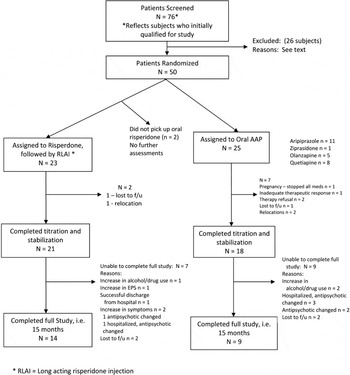
As noted in Fig. 1, of the 76 patients who were either referred by their clinicians or who approached the study staff in response to approved advertisements and who were potentially eligible for study participation, 26 subjects did not proceed to randomisation. Reasons for this included the following among others: did not want to receive an injection, history of side-effects with risperidone or other AAP or low YMRS scores.
Patient Disposition.

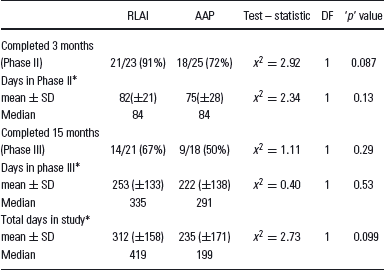
Completion rates and days in study
In total, 50 subjects were randomly assigned to receive either oral risperidone followed by RLAI (n = 25, RLAI) or AAPs (n = 25) (Table 1). However, two subjects assigned to receive oral risperidone did not pick up their prescription and could not be contacted thereafter, and hence no further assessments were available. The remaining 23 patients were assigned to risperidone and also received RLAI, and had subsequent assessments. In all, 21 RLAI-treated subjects (91%) completed the titration and stabilisation phase (3 months) compared with 18 AAP-treated patients (72%). Fourteen RLAI patients (67%) completed the 1-year follow-up compared with nine AAP-treated patients (50%). RLAI-treated subjects spent 312 ± 158 days in the entire study compared with 235 ± 171 days for the AAP cohort. None of these differences were statistically significant between the treatment groups.
Completion rates and days in study
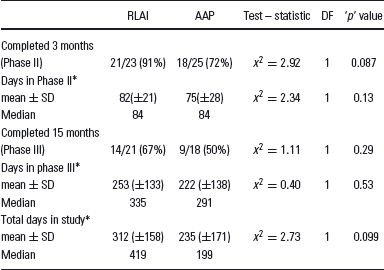
AAP, oral atypical antipsychotic agent;
DF, degrees of freedom;
RLAI, long-acting injectible risperidone.
* Wilcoxon Rank sum test.
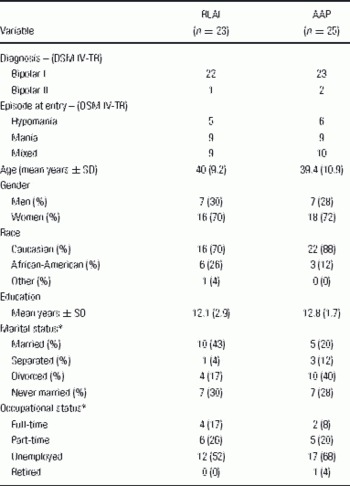
Demographic and diagnosis variables
The mean age of the patients was 40 (± 10) years. Approximately 80% were Caucasians and 70% were women (Table 2). On average, they had 12.5 (± 2.3) years of education. In all, 32% were married, 40% were separated or divorced and the rest were never married. Nearly 38% were working full- or part-time or had retired, and the majority were unemployed. Forty-five subjects had a diagnosis of BP I Disorder, and three subjects had a diagnosis of BP II Disorder (DSM IV-TR). These patients are representative of the population of patients from where they were recruited. However, no specific measurement was made to determine if this group of patients was more or less adherent than other groups of patients attending these clinics. Eighteen subjects entered the study in a manic episode, 19 in a mixed episode and 11 in a hypomanic episode. Among the subjects with comorbid medical disorders, nine had pre-existing hyperlipidaemia, and received RLAI (n = 7) or AAP (n = 2). Seven subjects were previously diagnosed with essential hypertension, drawn mostly from the AAP group (n = 5). In addition, seven subjects were diagnosed with hypothyroidism (n = 5, RLAI, n = 2, AAP). Other comorbid medical conditions among subjects in the study included migraine, hyperthyroidism, diabetes mellitus and chronic back pain. None of these demographic or diagnostic variables differed significantly between the two treatment assignments.
Diagnosis and demography

AAP, oral atypical antipsychotic agent;
RLAI, long-acting injectible risperidone.
* Data missing in individual subjects.
Dosage of RLAI
Nine subjects received RLAI at a dosage of 25-mg IM q 2 weeks throughout the study, eight subjects achieved a dosage of 37.5-mg IM q 2 weeks, and six subjects eventually received 50-mg IM q 2 weeks.
Four RLAI subjects required oral risperidone beyond the second injection during the titration phase. These subjects did not stabilise adequately on the 25-mg or the 37.5-mg dosage and went on to receive the next higher dosage, i.e. 37.5 or 50 mg IM q 2 weeks, respectively.
In the 1-year extension phase, four RLAI patients required rescue oral risperidone for 5–10 days. One subject met the criteria for hypomania, another for mania and two subjects for mixed episodes, and in each subject, these episodes and use of oral risperidone led to a higher dosage of the RLAI injection, 25–37.5 mg (n = 2) and 37.5–50 mg (n = 2).
Dosage of AAP
Eleven subjects received aripiprazole (15–30 mg/ day), eight received quetiapine (300–700 mg/day), five received olanzapine (15–25 mg/day) and one received ziprasidone (160 mg/day).
During the titration and stabilisation phase, the doses of the AAP patients could go up to the maximum doses of the individual agents (per the US package insert, one exception was olanzapine which was permitted to 25 mg/day) based on individual response or dose-limiting side-effects. In addition, use of benzodiazepines was permitted for both the RLAI- and the AAP-treated group.
In the 1-year extension, for clinical events, nine AAP patients required either an increase in their daily antipsychotic drug dosage and/or the addition of benzodiazepines for hypomania, mania or mixed episodes.
Six RLAI and four AAP patients received antidepressants for a major depressive episode or for depressive symptoms not meeting the criteria for a major depressive episode.
Concomitant mood-stabiliser medications
In total, 34 subjects were receiving lithium or other anticonvulsant mood stabilisers, mostly for several months to years; half of these patients were receiving these agents as monotherapy (valproate, n = 8, lithium, n = 5 and lamotrigine, n = 4). The rest were receiving combinations of these agents; valproate and lithium (n = 5), valproate and lamotrigine (n = 5), lithium + lamotrigine (n = 4), and individual subjects received carbamazepine + lithium or carbamazepine + lamotrigine or lithium + valproate + lamotrigine.
Valproate levels throughout the study ranged from 52 to 114 ug/ml, with no significant differences between the RLAI- or AAP-treated groups. Lithium levels ranged from 0.58 to 1.08 mEq/l and there were no significant differences in lithium levels between the treatment assignments. The modal daily dose of lamotrigine was 200 mg/day and that of carbamazepine was 800 mg/day.
Other concomitant psychotropic medications
Three subjects received medications for ADHD (attention deficit hyperactivity disorder), including methylphenidate, mixed amphetamine salts and atomoxetine, and these agents were continued unchanged.
Thirteen RLAI subjects received benzodiazepines and most continued taking these agents throughout the study. Two RLAI subjects were tapered off benzodiazepines successfully. Thirteen AAP subjects received benzodiazepines and one subject was successfully tapered from alprazolam. Seven RLAI patients received hypnotic agents (zolpidem, low-dose trazodone and temazepam) and 11 AAP subjects received similar hypnotic agents. Three subjects received medicines for alcohol abstinence, two RLAI subjects received naltrexone and one AAP subject received acamprosate. Eight RLAI subjects received anticholinergic agents and two were successfully tapered, and two AAP subjects received anticholinergic agents (benztropine or trihexyphenidyl).
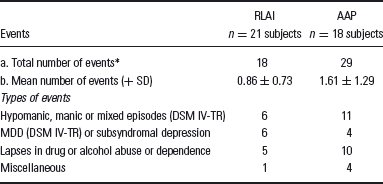
Declaration of clinical events
1 No Events: 11 of 39 subjects (28%) in the 1-year follow-up phase of this study experienced no clinical events, seven subjects were assigned to RLAI and four subjects received AAP.
2 Positive Events: A total of eight positive events were recorded in the study. Seven RLAI-treated subjects experienced positive events compared with one AAP subject (Fisher's exact p = 0.049).
3 Negative Events: A total of 47 negative events were declared. Seventeen events (36%) were categorised as being a hypomanic, a manic or a mixed episode per DSM IV-TR (Table 3). Ten events (21%) were declared as either a major depressive episode (DSM IV-TR) or subsyndromal depressive symptoms (i.e. did not meet full criteria of DSM IV-TR for a major depressive episode). Fifteen events (32%) were lapses in drug or alcohol abuse or dependence and 5 events (11%) were categorised as miscellaneous.
Declaration of clinical events
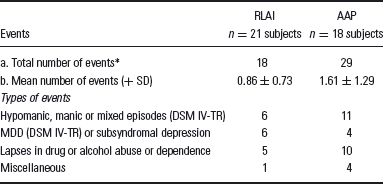
AAP, oral atypical antipsychotic agents (olanzapine, quetiapine, aripiprazole, ziprasidone);
MDD, major depressive episode (DSM IV-TR);
miscellaneous, antidepressant induced hypomania, anxiety disorder requiring treatment, altercation leading to legal charges;
RLAI, long acting risperidone injection.
* All events declared by the independent clinician board with the treatment assignment concealed.
Miscellaneous events included, for instance, pharmacological treatment of newly emergent anxiety symptoms, pharmacological treatment of newly emergent insomnia and an altercation leading to legal charges.
Five subjects in the AAP-treated group required a change in their assigned antipsychotic agent, and three of these subjects were hospitalised during the 1-year follow-up (Fig. 1). Two RLAI subjects required a change in their antipsychotic agent, one of whom was hospitalised. These events were captured as events that coincided with manic or mixed episodes or lapses in drug or alcohol abuse dependence.
Primary outcomes
When the pooled negative events were assessed in patients who entered the 1-year extension phase (n = 39), there was a statistically significant difference between the mean number of total events in the RLAI-treated group (mean = 0.86 ± 0.73) versus the AAP-treated patients (1.61 ± 1.29), t = 2.29, d.f. = 37, p = 0.028 (95% CI = 0.087–1.421) (Table 3). The size of the treatment effect (Cohen's d) was 0.74, suggesting a medium to large effect. The statistically significant differences between the two groups persisted even if the statistical analyses were restricted only to those who had any events (n = 28), RLAI (mean = 1.29 ± 0.47) versus AAP (2.07 ± 1.07), t = 2.51, d.f. = 26, p = 0.018 (95% CI = 0.143–1.428).
Secondary outcomes
Individual categories of events such as hypomania, mania or mixed episodes were less common in the RLAI group (mean = 0.43 ± 0.51) compared with that in the AAP group (0.79 ± 0.89), but the differences were not statistically significant. Major depressive episodes or subsyndromal depressive symptoms were less common in AAP subjects (mean = 0.29 ± 0.47) versus RLAI subjects (0.43 ± 0.51) but this difference was not statistically significant either. Lapses in alcohol or drug abuse – dependence were less common among RLAI subjects (mean = 0.36 ± 0.50) versus AAP subjects (0.71 ± 1.14), but again these differences were not statistically significant. Similarly, there were no statistically significant differences between the treatment groups for the miscellaneous events category.
Psychopathology rating scale scores
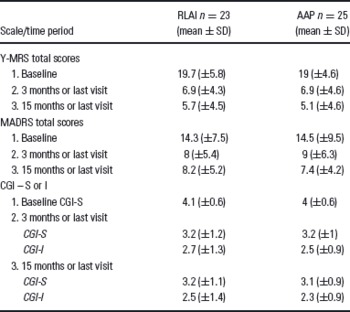
At baseline, patients entering the clinical trial were moderately symptomatic (YMRS total scores >19, MADRS total scores >14 and a CGI severity score of 4) and were experiencing a recent episode, i.e. a hypomanic, manic or mixed episode (Table 4). There were no statistically significant differences in the baseline scores of the rating scales between the two treatment groups. In terms of overall changes in psychopathology ratings, patients in each treatment group improved but there were no statistically significant differences between the treatment groups on any of the psychopathology rating scale scores. Improvements in rating scale scores for each group were fully evident by 3 months, and continued for both treatment groups throughout the study. Individual patients had exacerbations, including manic or depressive episodes, and these coincided with events declared by the independent clinician board.
Psychopathology rating scale scores*

CGI-I, clinical global impression scale improvement;
CGI-S, clinical global impression scale severity.
* Subjects dropped out by 3 or 15 months, so there were fewer subjects with assessments at later visits.
EPS/Tardive Dyskinesia (TD) rating scale results
After randomisation, one RLAI subject experienced mild akathisia early in the titration phase, and this resolved within two injection cycles. Post-randomisation, one subject receiving aripiprazole (20 mg/d) experienced mild akathisia and another subject receiving olanzapine (15 mg/day) experienced mild akathisia, both resolved within a few visits.
During the early course of the study, three RLAI subjects achieved mean SAS scores ≥ 0.3 during the study, one each on 25, 37.5 and 50-mg IM q 2 weeks; benztropine or trihexyphenidyl was used to treat the EPS symptoms successfully.
Two AAP subjects developed mean SAS total scores ≥ 0.3 during the course of the study (aripiprazole 20 mg; olanzapine 15 mg), and EPS resolved with time for the subject receiving olanzapine, and with benztropine for the subject receiving aripiprazole.
AIMS ratings were conducted at fewer time points in the study. AIMS total scores for items one through seven (a composite score of facial/oral, extremity and trunkal dyskinesias) ranged from 0 to 12 in the RLAI group at baseline (mean: 1.13 ± 2.88) and ranged from 0 to 2 at endpoint (mean 0.33 ± 0.78). In the AAP group, total AIMS scores ranged from 0 to 1 (mean 0.05 ± 0.22) at baseline and were 0 at endpoint.
One RLAI subject who had zero scores on AIMS total and global severity scores at baseline had scores of 2 (items 1–7) and 1 (item 8 score, minimal) at the end of the study.
Body mass index (BMI) and weight
From the study baseline to endpoint (i.e. including the 1-year extension phase), the proportion of RLAI subjects with ≥ 7% weight gain was 38% (8/21), whereas those with clinically significant weight gain in the AAP group was 50% (9/18), a difference that was not statistically significant. Among the nine AAP subjects who gained ≥ 7% of their baseline body weight, six received aripiprazole, two also received lithium, one received olanzapine and two received quetiapine.
In the intent-to-treat population (n = 48), the RLAI-treated subjects (n = 23) had a mean baseline body mass index (BMI) in the obese category (31.05 ± 7.20, range = 18.08–47.82) and the AAP subjects (n = 25) had a mean baseline BMI in the overweight category (29.86 ± 6.86, range 17.66–44.48). At the end of the study, the mean BMI in the RLAI-treated subjects (n = 21) was 32.27 ± 8.31, range 18.30–50.48, and among the AAP-treated subjects (n = 18) it was 32 ± 7.40, range 18.79–47.1.
The mixed effect model showed a significant time effect in the overall analyses (p = 0.0005), which was confirmed in phase two, or after 3 months (p = 0.0001). No time effect was noted in phase three, or by the 1-year follow-up (p = 0.22). There was no significant group or group-by-time interaction for BMI in the mixed effects statistical analyses.
Vital signs
Mixed model analyses did not indicate any statistically significant group or time, or group by time interactions between treatments for pulse, blood pressure or respiratory rate (data not shown). Overall, there were no major safety issues in the assessment of these vital signs between the treatment groups.
Cholesterol and glucose measures
Mixed model statistical analysis did not reveal any group or time, or group-by-time interactions of significance between treatments for blood glucose, or lipid measures (total cholesterol, total triglycerides, low-density lipoprotein and high-density lipoprotein cholesterol), data not shown. However, not all patients were fasting and not all variables measured were available for individual patients, and as the study progressed, the sample size decreased because of dropouts. There were no treatment emergent cases with hyperglycaemia or diabetes mellitus. Among the pre-existing cases with diabetes mellitus, two subjects (one RLAI and one aripiprazole) had more blood glucose instability and required upward dosage adjustment of the oral hypoglycaemic agents.
Adverse events
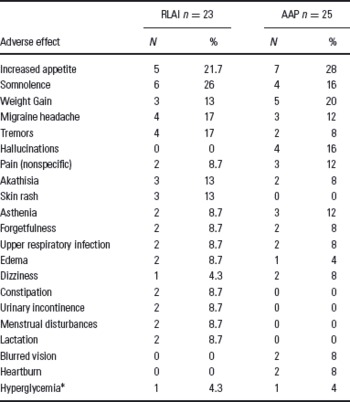
There were no statistically significant differences between the treatment groups in patient-reported or staff-elicited adverse events (Table 5). Events that occurred at a rate ≥ 10% in either group included increased appetite, somnolence, weight gain, migraine headaches, tremors, hallucinations, akathisia, rash and asthenia. There were no suicidal and homicidal attempts or acts in the study.
Adverse events in those receiving RLAI or oral AAP at any time after randomization

* Preexisting diabetes mellitus in both subjects with greater glucose level instability during study (AAP patient was receiving aripiprazole −30 mg/day and lithium).
Injection site pain – patient assessment
Twelve patients rated their injection site pain as ‘0’ (none) or ‘2’ (annoying), seven rated their pain from 0 up to 4 (uncomfortable), the majority of the 3 or 4 scores were reported at the initial injections. Two patients rated their initial injections up to 6 (dreadful) but then dropped to zero scores at later injections. Two subjects rated their injection as an 8 (horrible) on the first injection but rated in the 1–3 range thereafter. None of the patients used a score of 9 or 10 (agonising). Moreover, none of the patients discontinued the study because of injection site pain.
Injection site evaluations – nurse assessments
The injection site was assessed by the injection nurse for redness, pain, swelling and induration after each injection and before the next injection on a 0 (none) to 4 scale (maximum). The vast majority of scores were ‘0’ for most variables, except an occasional injection that was rated as ‘1’ (mild pain) and a rare injection rated as ‘2’ (moderate pain) in three subjects.
Discussion
Treatment gaps – a clear indication of non-adherence with pharmacological treatment – are fairly common in persons with BPD (Reference Woltmann, Valenstein and Welsh1–Reference Scott and Pope3). Rates of non-adherence have been estimated from relatively low figures up to 66% (Reference Scott and Pope3,Reference Keck, McElroy, Strakowski, Bourne and West28–Reference Lingam and Scott29). Not unexpectedly, non-adherence or partial adherence to treatment leads to high rates of re-hospitalisation in BPD Reference Scott and Pope(3).
There have been studies of the older depot neuroleptics, including one blinded study in persons with BPD. Esparon and colleagues assessed depot flupenthixol (used in many countries but not in the USA) as an add-on to 15 BPD subjects receiving lithium maintenance treatment Reference Esparon, Kolloori and Naylor(30). Subjects received the combination for a year and placebo plus lithium for another year, and the authors found that both the lithium only and the lithium plus flupenthixol time periods benefited the study participants. Ahlfors and colleagues assessed 33 BPD patients prospectively Reference Ahlfors, Baastrup and Dencker(6). Both depot flupenthixol-treated (n = 19) and lithium-treated subjects (n = 14) who were followed for 16 months did well in terms of numbers of episodes/year, with no statistical differences between treatments Reference Ahlfors, Baastrup and Dencker(6). Ahlfors and colleagues also evaluated 85 BPD subjects who were either poorly compliant or experienced side-effects with lithium and were switched to depot flupenthixol and followed for 14 months. There was a significant reduction in manic episodes during the flupenthixol depot time period compared with that during the pre-study year. However, there was an increase in depressive episodes during the study year compared with that during the pre-study year.
Utilising a retrospective record review, Littlejohn and colleagues noted that depot antipsychotic usage (mean: 6.3 years) was associated with significantly fewer hospitalisations, including fewer manic, mixed or depressive episodes, compared with time off the depot neuroleptic agents (mean: 8.2 years) Reference Littlejohn, Leslie and Cookson(8). White and colleagues utilised a mirror image study design in 16 BPD patients who were inadequately responsive to lithium or carbamazepine. During the 44 months of the haloperidol decanoate treatment, subjects had significantly fewer manic episodes or time spent manic, even though the number of depressive episodes and time spent depressed increased but was not statistically significant Reference White, Cheung and Silverstone(7).
During the recruitment period for this study, a Canadian study involving RLAI versus AAPs was conducted in BPD patients Reference Yatham, Fallu and Binder(31). This study was randomised and open label similar to our study. However, it was of a shorter duration (6 months) and included two patient populations – mildly symptomatic (CGI severity ≥ 3 and YMRS ≥ 13) and a protocol-amended second wave of patients (CGI severity score ≤ 4 and YMRS and MADRS scores ≤ 19). As the authors noted, the baseline scores of these two patient populations resulted in mean baseline total YMRS scores of approximately 6, resulting in a ‘floor’ effect with not much room for improvement, and consequently there were no between-group differences for key efficacy variables. However, no major safety concerns emerged in the Canadian study Reference Yatham, Fallu and Binder(31).
This pilot study indicates that RLAI-treated subjects had significantly fewer negative clinical events than AAP-treated patients, and remained an average of 2.5 months longer in the study. The size of the treatment effect for the primary outcome was 0.74, i.e. medium effect, in favour of RLAI over oral AAP. As this was a pilot study, it was not statistically powered to determine if RLAI would outperform AAP on individual types of mood episodes, i.e. mania versus mixed or mania versus depression, or yet other events. In keeping with previous results of risperidone trials in BPD, it appears that RLAI's benefits in this study were driven mostly by fewer manic or mixed episodes, fewer lapses in alcohol or substance dependence, etc.
Certain issues with long-acting antipsychotic injections are pertinent to point out. Subjects who experience adverse events such as neuroleptic malignant syndrome will probably require longer monitoring if these occur with long-acting injectible agents compared with oral agents, and this may also be the case with certain drug–drug interactions or certain neurological or other adverse events. Some BPD patients may be averse to taking medicines by injection, and yet other BPD patients may find such injections painful; therefore, these issues could be barriers to acceptance of this treatment strategy by some patients.
Limitations of this study include a relatively small sample size and an open design. Randomisation likely helped diminish some baseline confounding factors between treatment assignments. The rationale for a randomised but open design for this study was to conduct an effectiveness trial that would more closely mimic clinical practice. Moreover, the use of a placebo injection for 3–15 months in manic or mixed episodes, especially in ambulatory care settings, would have posed several clinical, ethical and study design challenges. In addition, to our knowledge, the randomised comparison of RLAI with oral AAPs in BPD patients had not been undertaken in a 15-month effectiveness trial utilising an independent clinician board to declare the primary outcomes of interest and from whom the treatment assignment was concealed.
Although the identity of the randomly assigned antipsychotic agent was concealed from the independent clinician board during case conferences or in written summaries, it is possible that subtle biases favouring hypothesised outcomes may have played a role in this study. For example, as the research staff were not ‘blind’ to treatment assignment, it is possible that the summary presented to the independent board favoured the RLAI-treated group. Moreover, the extra staff contact and attention may enhance adherence in patients receiving injections compared with that in those receiving oral agents, an issue noted in the earlier depot neuroleptic injection era. This aspect could have favoured the RLAI over the AAP-treated group in this study. We did not characterise the past treatment history of patients in this study except to confirm the diagnosis. So, we were unable to assess if specific sub-types of BPD patients would benefit from the RLAI strategy – e.g. rapid-cycling course, multiple episodes or those willing to take a long-acting injection. Moreover, as patients entered this study in either a hypomanic, manic or mixed episode, the benefits (or lack of benefits) of RLAI in either treating or preventing depressive episodes cannot be addressed by this study; especially as several studies have indicated that future polarity is predicted strongly by the index episode in longitudinal clinical trials. Furthermore, prior to recruitment, we did not assess whether this group of patients, who were either referred by clinicians or self-referred, was more or less adherent to treatment. Doing so may have helped characterise a sub-group of persons with BPD who may benefit from RLAI or LAIM.
Significant increases in body weight in both treatment groups remain clinical concerns that require careful monitoring and/or intervention. Similar to persons with schizophrenia, persons with metabolic issues need careful monitoring and follow-up with the use of psychotropic agents in BPD Reference Weiden and Preskorn(32). Although this study lasted 15 months, it is still inadequate in capturing longer term neurological side-effects such as tardive dyskinesia.
In spite of several advantages for LAIM or RLAI over oral antipsychotic agents in persons with schizophrenia, the actual rates of LAIM or RLAI usage remain low in the United States. Although patient, clinician or system (or a combination thereof) factors may be responsible, two additional key elements that are responsible include ‘patient acceptance’ of long-acting injections administered on a regularly scheduled basis and a ‘paradigm shift' among clinicians who may not typically consider this strategy for BPD patients. Using principles of treatment from addiction psychiatry such as motivational enhancement therapy and a patient-centred communication strategy, listen-empathise-agree-partner, one research group, Reference Lasser, Schooler and Kujawa(33) has proposed using a psychosocial tool – goal-setting, action planning, initiating treatment, nurturing motivation (GAIN) – to improve patient acceptance of long-acting antipsychotic injections. Although the GAIN tool was developed for RLAI trials in schizophrenia, it could probably be adapted for use in BPD.
Similar to the previous findings of LAIM usage in persons with schizophrenia, Reference Davis, Kane and Marder(4,Reference Schooler5) or more specifically of RLAI use in schizophrenia, Reference Kane, Eerdekens and Lindenmayer(16,Reference Fleischhacker, Eerdekens and Karcher17) these data suggest that BPD patients may also benefit from RLAI. A larger study of RLAI versus placebo added to standard mood-stabiliser treatment for BPD patients experiencing multiple episodes also supports the use of RLAI in this condition Reference Macfadden, Alphs and Haskins(34). The updated CANMAT guidelines for the management of patients with BPD suggest that there is good evidence for the use of RLAI in the maintenance treatment of BPD Reference Yatham, Kennedy and Schaffer(35). Future work will need to characterise which subtypes of BPD patients may benefit from a RLAI strategy and importantly how best to engage them in initiating this treatment approach.
Role of the funding source
Funding for this study was provided mostly by Ortho-McNeil Janssen Scientific Affairs (OMJ), LLC, Titusville, NJ 08560, USA. As per the original contract agreement between the University of Pittsburgh and Ortho McNeil Janssen, an earlier draft of this manuscript was sent to OMJ, Janssen Scientific and Medical Affairs, for review. Their input comprised changes in language, sentence structure and some elaboration of results in tables. These did not influence the conduct of the study and were not involved in data analyses, and their recommendations have not materially changed the reported results or interpretation, for which we as investigators and authors take responsibility.
Clinical Trials Registry # NCT00177164 Presented at: 49th Annual NCDEU Meeting June 29-July 2, 2009 Hollywood, Florida
Acknowledgements
We would like to thank Ms. Joan Spinogatti for typing the manuscript and coordinating the author contributions, corrections and submission. We would like to thank Drs. Jonathan Bear, MD, PhD; Asha Prabhu, MD and Nelia San Jose, MD, for help with recruiting subjects. We would also like to acknowledge study support from the Medical and Scientific Affairs staff at Ortho-McNeil Janssen Scientific Affairs, LLC – Robert Jones, Randy Morrison, PhD (Director) and Lisa Strouss, Pharm. D; Seema Bhat, PhD, Deborah Mesiano for data entry and the DSMB members – Samuel Gershon, MD, Joan Buttenfield, BSN, Ihsan Salloum, MD, MPH, Aziz Gopalani, MD, Kenneth Vanderporten, MD, PhD; past study staff – Carrie Heasley, Michelle Hetrick, Monica Solomon and past Ortho-McNeil Janssen Scientific Affairs staff – Jack Sedor and Robert Lasser, MD.