

1. Introduction
Pharmaceutical companies use different pricing strategies including profit maximization, return on investment and value-based pricingFootnote 1 to set their prices. Recently, some pharmaceutical companies have announced substantial price increases for existing branded and generic drugs. In the space of branded drugs, new specialty drugs entering the market show prices between $50,000 and $750,000. This rapid increase in prices in both branded and generic drugs have caught the attention of the public and policy makers and have resulted in a flurry of legislative activity. Most economists are trained to study markets, the laws of supply and demand, having buyers and sellers agree on a price (Arrow, Reference Arrow1963). However, some economists also study distributional equity, which, like efficiency, is an outcome of markets that individuals and societies care about. We examine if economists perceive the pharmaceutical market differently from the public and legislators.
More specifically, the article focuses on the “fairness” of pharmaceutical prices. A simple question can illustrate the fairness issue for economists – is it fair to significantly raise the price of sand bags during a hurricane? To some economists, the answer is a firm yes because the market sets the price and a person is willing to purchase the sand bag at that price. Prices signal what the purchaser values and allows for more innovation – better and more prevalent sand bags in the future. We anticipate that some economists will support the view that these economic principles apply to all goods and services including prescription drugs. Other may argue that prices are unfair when providers are taking advantage of inelastic demand. On the other hand, other economists may perceive these entry prices and price increases as being unfair because it interferes with the trust relationship necessary for health care services to be effective. In addition, some economists suggest that considering fairness may have an economic value. Lack of fairness in pricing practices would create anger among customers and the public’s perception of a company as an unfair player would decrease its value as it diminishes the long-term loyalty of its customers (Rotemberg, Reference Rotemberg2008; Thaler, Reference Thaler2015).
The public and policy makers often take the position that raising the price in an emergency is price gouging and should be prohibited. For example, there are laws that prevent companies from raising prices for sand bags during a hurricane. This reflects the concern that raising prices during an emergency is not “fair” and this is because the seller is taking advantage of a demand which has become very inelastic due to the emergency. Therefore, an important question becomes when economists believe the laws of supply and demand and when concerns over unfair pricing and perhaps price gouging apply to pharmaceuticals.
The field of behavioral economics has developed a theory about fairness called dual entitlement theory (Kahneman et al., Reference Kahneman, Knetsch and Thaler1986a,b; Xia et al., Reference Xia, Monroe and Cox2004). The theory suggests that both consumers and providers are entitled to a final price according to a buyers’ reference price and providers’ reference profit. A consumer uses the reference price as an anchor to evaluate her gains and costs. The consumer’s reference price reflects the value of the drug in terms of health outcomes as well as the existence of alternatives. At the same time, consumers use their knowledge about providers’ reference profit to evaluate gain and losses for providers. According to the dual entitlement principle, increasing a price without adding value would be perceived as unfair by consumers according to their starting reference point. Increasing the prices when alternatives are not available is perceived as unfair based on the buyer’s reference point. Likewise, an increase in prices would be accepted as fair by consumers if they are necessary to maintain the provider’s reference profit. Under this view, increase in prices to completely compensate increases in costs would be perceived by consumers as fair.
In short, this theory posits that determining fair prices involves three elements: the outcomes to the participants (e.g. value to patient and producers), the element of reference transactions (e.g. prices of other drugs) and finally, changing circumstances for the company (e.g. higher production costs). Under this theory, how individuals weight these three elements according to their reference points in a specific case will define how people assess fairness. While these concepts may be difficult for the public to understand, they are quite clear to economists and therefore we elected to ask economists about their perceptions of fairness in pharmaceutical pricing.
Economists have used dual entitlement theory to assess fairness in multiple sectors of the economy including housing, food and the automotive industry (Dickson and Kalapurakal, Reference Dickson and Kalapurakal1994; Campbell, Reference Campbell1999; Schein, Reference Schein2002; Bolton et al., Reference Bolton, Warlop and Alba2003; Xia et al., Reference Xia, Monroe and Cox2004; Heo and Lee, Reference Heo and Lee2011). We have been unable to identify any examples in prescription drugs. Pharmaceuticals are an area that could be appropriate for this analysis given that they are a commodity and have shown rapid price increases in recent years.
Usually, the approach involves field experiments where respondents answer several questions involving hypothetical transactions (Kachelmeier et al., Reference Kachelmeier, Limberg and Schadewald1991; Maxwell et al., Reference Maxwell, Nye and Maxwell1999; Vaidyanathan and Aggarwal, Reference Vaidyanathan and Aggarwal2003; Dekhili and Achabou, Reference Dekhili and Achabou2013). Others have used opinion surveys to assess fairness using this framework (Frey and Pommerehne, Reference Frey and Pommerehne1993; Schein, Reference Schein2002). We chose to use opinion surveys to be able to compare the responses of economists with the responses of the public.
An alternative approach is to compare the value to the price of the drug and there are emerging approaches to assess the value of drugs from an individual or system perspective that go beyond traditional cost-effectiveness analysis (Neumann and Cohen, Reference Neumann, Cohen and Weinstein2014; Neumann and Weinstein, Reference Neumann and Weinstein2010). However, estimating the value relative to its price is plagued with multiple challenges (Philips et al., Reference Philips, Ginnelly, Sculpher, Claxton, Golder, Woolacott and Glanville2004). First, there is often a high uncertainty around clinical outcomes. Second, identifying subgroups of individuals who may derive greater benefit from the drug is a challenge when determining value. Third, there is often insufficient data to make conclusions about important outcomes such as patients’ quality of life. Lastly, evidence may be lacking regarding long-term outcomes. Even if one could solve these problems and assess the short and long-term benefits of the drug, there is still the pending issue of who should receive the consumer surplus of the new product – the drug company, the payer, or the person. To complicate matters even more, it is necessary to consider the budgetary effect of the new drug on the health care system (Mauskopf et al., Reference Mauskopf, Earnshaw and Mullins2005; Chhatwal et al., Reference Chhatwal, Kanwal, Roberts and Dunn2015; Pearson, Reference Pearson2016). Without considering these factors, comparison of the value and the price has limitations. (Murteira et al., Reference Murteira, Ghezaiel, Karray and Lamure2013).
We see two reasons why this paper may be appealing for an international audience. US market for prescription drugs is important for international companies so that consumers’ perception of fairness in the US market may be relevant for them. Second, the methodology used in this paper can be used to assess fairness in international settings.
2. Defining fairness
In designing the questionnaire about fairness, we focus on the three principles of the dual entitlement theory and try to measure each component – measuring the value of the drug to the patient, assessing the price of the drug relative to other treatment options and reasons for the price increases or initial list prices of a drug. We asked some additional questions to be able to compare the results to the existing surveys.
An increase in prices without providing any additional value to the patient may be perceived as unfair. Increases in profit motivated by improvements in health status or productivity may be perceived as justifiable while price increases simply to increase profit may be considered unfair. Recently, Turing Pharmaceuticals raised the price of Daraprim (a drug for the treatment of toxoplasmosis) from $13.50 to $750 a tablet (Greene and Padula, Reference Greene and Padula2017). Given that there were no changes made to the actual product; it was an off-patent drug so no research and development was involved; the increase in price was neither motivated by greater treatment value of the drug nor by any change in the quality of the product, there was widespread condemnation of the price increase in the media and by policy makers.Footnote 2 The company could increase the price because it had identified and exploited market failures in the distribution of this drug (exclusivity rights); identified a critical drug with no competitors and a small market; and knew there were barriers to import similar drugs. In the context of the first principle of the dual-entitlement theory, many people perceived this move as unfair. The question is whether this also applies to economists.
A second principle of dual entitlement theory is that individuals may perceive the price as being unfair if the price increase happens when there are no viable alternatives. This was the case of Daraprim an off-patent drug that has no competitors. More commonly, however, this occurs with branded drugs where the government has given the company a patent to sell the drug. The question is whether the patent gives the company the right to set whatever price the company wants to set. In this case, people may assess the value of the drug and lack of access to the drug because of the high price as the key factors in assessing fairness. The recent advances in the treatment of Hepatitis C are good examples of the second principle in assessing fairness. Chronic Hepatitis C is an infectious disease that kills more people each year than any other infectious disease including AIDS.
Sovaldi (sofosbuvir), a drug sold by Gilead, effectively cures hepatitis C, but the list price for the treatment is approximately $80,000 (Chhatwal et al., Reference Chhatwal, Kanwal, Roberts and Dunn2015). Until last year, there were no competing drugs that provided equally effective treatment at a lower price. A report by the Senate Finance Committee showed that Gilead chose to set a high price to maximize profits recognizing that it would keep many people from accessing the drug (Carey and Harvey, Reference Carey and Harvey2015). The high prices mean that fewer than 20% of people with hepatitis C, an infectious disease, are getting the drug (Yehia et al., Reference Yehia, Schranz and Umscheid2014). One reason is that many of the people with hepatitis C are in prisons, are uninsured or on Medicaid and the states do not have the resources to pay for the drugs at the current prices. Under the second principle of the dual-entitlement theory, it is of interest to determine if economists perceive this strategy as being unfair since it follows the principle of profit maximization rather than the objective of maximizing access to effective treatment.
Companies may justify their increase in prices due to an increase in production costs or to attract capital in a competitive capital market. People may perceive that it is fair to raise prices if the cost increases are caused by factors external to the company such as an increase in the cost of a component of the drug. More questionable is whether it is permissible to raise prices after the drug has been launched to support research and development.
Some drug companies argue that large research and development costs (R&D) justify their high prices (Moses et al., Reference Moses, Matheson, Cairns-Smith, George, Palisch and Dorsey2015; DiMasi et al., Reference DiMasi, Grabowski and Hansen2016; Kesselheim et al., Reference Kesselheim, Avorn and Sarpatwari2016). More recently, drug companies have argued that to attract sufficient capital, they need to provide investors with a return commensurate with other industries (Schuhmacher et al., Reference Schuhmacher, Gassmann and Hinder2016). The argument is that manufacturers produce several drugs with varying profit potential. Under these circumstances, prices of drugs need to be considered in a broader economic context rather than as an isolated case. High prices are associated with a few specialty drugs (Barlas, Reference Barlas2014). From an economics perspective; however, R&D is a sunk cost and should not be considered in determining prices (Morgan et al., 2011; Fellows and Hollis, Reference Fellows and Hollis2013).Footnote 3 Under the third principle of fairness, people turn to the reasons that motivate the increase in production cost to assess fairness in drug prices.
People and economists may perceive a situation as an extreme case of unfairness when all three factors manifest themselves at the same time. Once again, the case of Daraprim illustrates this point. The increases in prices were not motivated by higher value (Principle 1) since this is an off-patent drug and the company does not engage in R&D. There are no close substitutes as importation is not feasible and the company used a variety of mechanisms to keep other companies from obtaining the drug to determine bioequivalence so they can apply to the FDA and compete against Turing (Principle 2). Finally, there was no apparent increase in input prices that may have motivated the price hike (Principle 3). Therefore, this case may be perceived as a highly sensitive public opinion issue involving all three fairness principles. However, from an economics perspective, it could simply be an issue of supply and demand or profit maximization. In this case, the drug was off patent so theoretically there could be competition.
In this paper, we investigate what economists think about the fairness of drug prices – more specifically under what circumstances are drug prices unfair. We depart from the topic of affordability that is most commonly used in the public health field (Bundorf and Pauly, Reference Bundorf and Pauly2006; Cameron et al., Reference Cameron, Ewen, Ross-Degna, Ball and Laing2009). Affordability is just one aspect of fairness. The three principles of the dual entitlement theory allow us to assess the broader, more subjective concept of fairness.
In this paper, we assess the view of economists for three reasons. First, economists are usually asked to participate in the policy debate around prescription drugs. Second, many economists have a definition of an efficient allocation of resources using a cost-effectiveness ratio or a dollar per life saved threshold (Neumann and Cohen, Reference Neumann, Cohen and Weinstein2014). Therefore, it is important to understand how this approach may vary when one introduces the judgment of fairness into the calculation as the cost to achieve fairness may influence cost considerations. Third, it may be relevant to explore if economists are incorporating a utilitarian view including an individual’s value of fairness into their standard analysis of efficiency. Finally, we want to compare the views of economists and the public with respect to fairness.
3. Survey design and data
We designed a 20-question survey to assess how economists perceive different aspects of fairness in the prescription drug market. Our questions focus on the fairness for branded, on-patent drugs in the United States. The survey has three fundamental components.
The first part includes questions about economists’ general beliefs regarding the prices of branded drugs – specifically, if they believe they are reasonable. This section examines the factors that determine the prices of branded drugs. For example, economists were asked if drug prices in the United States were fair (like the question asked of the public) and whether there should be a dollar threshold in determining the fair value of a drug.
The second part of the survey asks economists the reasons behind their assessment. We posed questions linked to the three principles of fairness: when the new drug does not create additional value over the old one (Principle 1); does it matter if low-income individuals cannot afford the drugs (Principle 2); and third if it matters that prices are driven purely by profit motives (Principle 3).
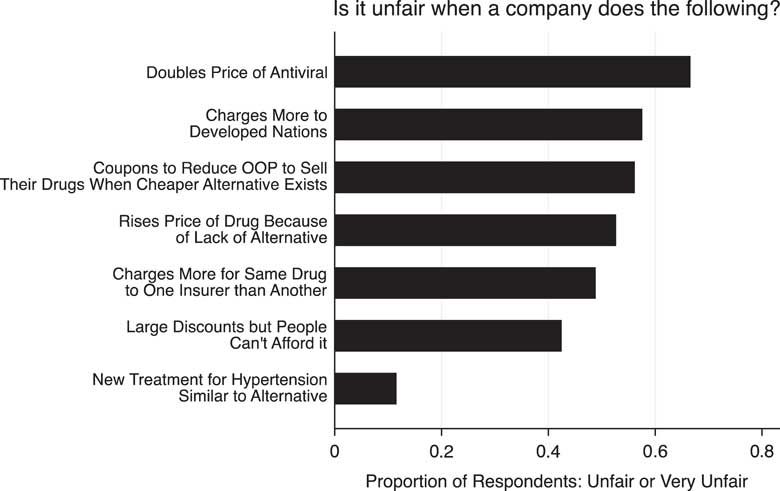
The third part asks economists to assess a pharmaceutical manufacturer’s actions from a fairness perspective. For example, we asked economists to react when a company doubles the price of antiviral medication during flu season – an example of Principle 3 of the dual entitlement theory. We also asked respondents to react when a company charges three times what patients pay for the same drug in other developed nations. Finally, we asked economists to indicate their level of support for a variety of policy proposals to reduce branded drug prices. These included ideas frequently discussed in current policy literature such as empowering the federal government to negotiate drug prices and asking manufacturers to report research and development costs. Lastly, we asked for demographic characteristics to better describe our study sample.
We identified economists associated with the National Bureau of Economic Research (NBER). Economists are nominated to be members of the NBER, which represents a prestigious society of economists. We sampled a total of 800 economists from the following disciplines: health economics, health care, labor studies, public economics, aging, industrial organization, development economics, productivity/innovation/entrepreneurship, law and economics and political economy. We also randomly sampled 200 economists from other research disciplines such as international trade or monetary policy. We first sent an initial email to explore their interest in participating in the opinion survey. There were 77 participants with an inactive email address. As a result, our final tally of potential respondents was 923. The Johns Hopkins IRB approved this survey before we implemented the fieldwork.
We followed common protocol recommended in the literature to maximize our response rates as well as quality of the responses and overall validity of the survey (Thorpe et al., Reference Thorpe, McLean, Burt, Stewart, Brown, Reid and Harris2009). First, we piloted the instrument to over 150 medical students and public health students at Johns Hopkins. Second, we reviewed the questions concerning drug pricing that have been asked of the public. After testing the questions, we included a few modifications to clarify the meaning and scope of some questions. We then administered the survey by email four times over a period of 3 months. We sent reminders every other week to those who did not respond. We also sent a printed version of the opinion survey to those who did not respond to the online request. We included a two-dollar bill as an incentive and as a novelty to incentivize their effort to complete the print survey. A return stamp was included to facilitate the return. The fieldwork lasted six months. The final response rate was 34% or 310 completed surveys.
For two questions, we compared the results to a survey conducted by the Kaiser Family Foundation. This survey was conducted among a nationally representative random digit dial telephone sample of 1201 adults ages 18 and older, living in the United States, including Alaska and Hawaii.
4. Results
All respondents were members of the NBER. Most of them reside in the United States (98%) and most are affiliated with an academic institution (97%). The most prevalent field of interest in the response is health economics followed by applied economics. Approximately 65% of respondents had a family member that is taking branded prescription medicines.
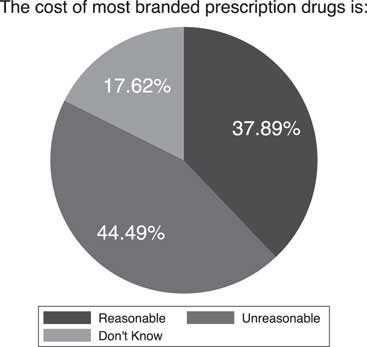
Approximately 45% of the economists perceive branded drug prices are unreasonable or unfair. For comparison, the Kaiser Family Foundation Health Tracking Poll found that 81% of the public believes branded drug prices are unreasonable. The survey of medical students and public health students had similar perspectives as the public. One possible reason for the lower percentage is that economists are generally in agreement that prices should be viewed as signaling mechanisms and therefore should not be altered. It is interesting to note that 18% of economists chose the “don’t know” option indicating the difficulty of formally defining fairness in the prescription drug market.
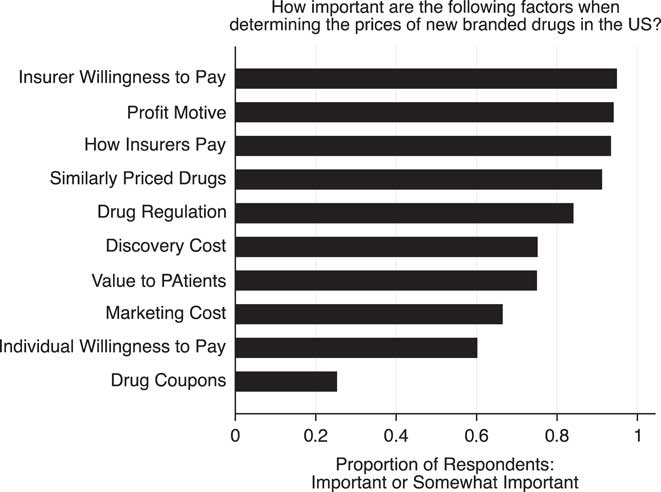
According to economists, the main forces behind high drug prices are how insurers pay for drugs and profit motives (Figure 1). In comparison, the Kaiser Family Foundation Health Tracking Poll found that the main forces behind high drug prices are the costs of discovering new drugs and insurers willingness to pay for drugs. Economists do not perceive research and development as a top justification to increase the price (Figure 2).
Are the costs of branded prescription drugs reasonable?

Factors determining prices of branded drugs.

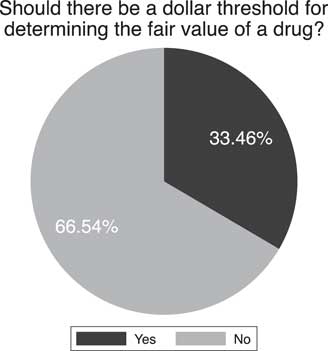
Economists do not believe that a dollar per life-year threshold should be used to determine a fair price and for those who believe a threshold is appropriate, there was little agreement on the exact value of that threshold. Most economists do not support resource allocation based on value per dollar spent, which is consistent with the first principle of the dual-entitlement theory (Figure 3). Perhaps this can be explained because most of our respondents are based in the United States, which does not allocate resource using a value-based approach like the United Kingdom or Canada.
Dollar threshold for assigning value to a drug.

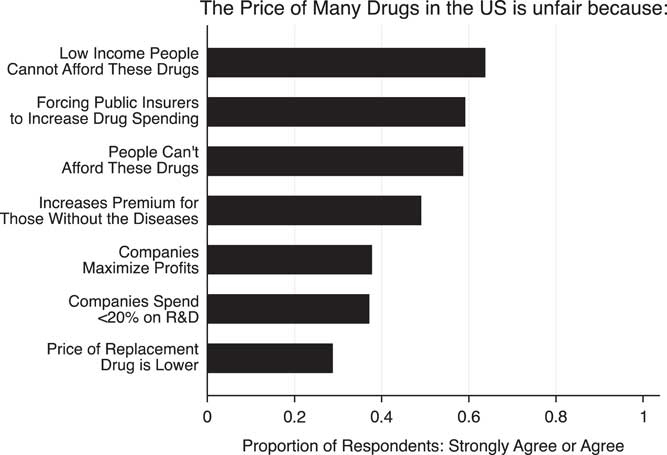
The fact that many people cannot afford their drugs, particularly low-income individuals, are the main reasons why economists perceive drug prices as being unfair (Figure 4). This result suggests that affordability or access to drugs (Principle 2 in the dual-entitlement theory) is the main reason why economists may want to intervene in the market. This does not indicate that economists support policies that distort prices. Instead, they may support policies to increase access without changing prices or total spending on drugs. This could include programs to support low-income individuals to reduce out-of-pocket expenditures or programs to subsidize health insurance.
Why are prices unfair?

Economists perceive prices are unfair when they are increased during stochastic events tied to demand; an example being a flu outbreak. There is also the perception of unfairness when other developed nations pay less for the same drugs (Figure 5). This is even more evidence that economists’ view of fairness is driven by Principle 3 of the dual-entitlement theory where careful consideration should be given to the reasons for the increases of branded drugs.
Unfair practices by pharmaceutical manufacturers.

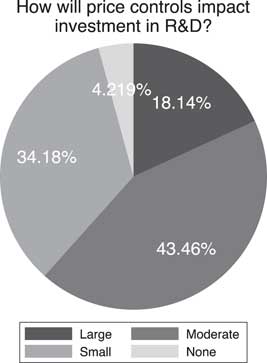
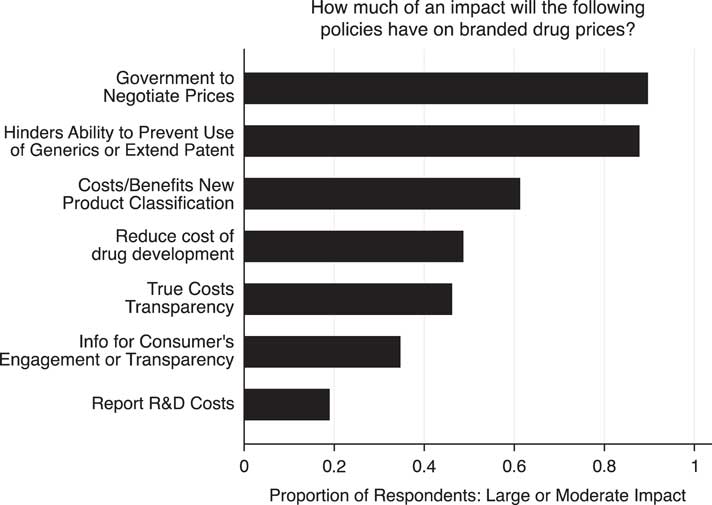
Interestingly, about 62% (43.46% + 18.14%) of the economists believe that price controls would have a large or moderate impact on research and development (Figure 6). Among economists, the policies receiving the most support were allowing the government to negotiate prices and limiting pay-for-delay mechanisms (Figure 7). Rather than distort prices by regulating prices, economists hold the view that regulations that accelerate entrance to the market and use of federal government power to influence the price of drugs may be more effective tools to reduce high prices. Lastly, among the economists, increasing price transparency was not perceived to have a large impact on drug costs.
Impact of price controls on research development.

Impact of policies on branded drug prices.

Among economists we surveyed, there is still much work to be done to defining and assess fairness in the branded prescription drug market. Due to the multitude of factors that contribute to the drug prices, it is a complex task to label a drug price as “fair” or “unfair.” Given that there are so many parties that play a role in determining drug prices, a multifaceted policy solution is required. Using the dual-entitlement theory as a lens to assess the perspective of economic experts is an important first step in developing a paradigm of fairness in a sector of the economy where government regulation and many other factors are important.
5. Discussion
Policy makers are concerned about the high prices and price increases of branded drugs. Anti-gouging laws are usually designed to protect consumers from excessive increases in prices in certain circumstances. These conditions are met most frequently when the good is question is a key staple in a time of emergency or is chronically necessary or essential to survival. Economists have justified price-gouging laws based on several arguments. First, anti-gouging laws may prevent consumer losses from excessive purchases of certain goods before the emergency (Fleck, Reference Fleck2014) – specifically in those case where the demand becomes very inelastic due to the emergency. Second, gouging practices may produce repugnance in consumers and distort market efficient operations over the long-run (Roth, Reference Roth2007). Third, the power of consumers’ anger and regret may not be sufficient to deter firms to increase prices during emergencies in which case, additional regulations are necessary to discipline markets (Rotemberg, Reference Rotemberg2008).
Price-gouging laws have not been traditionally applied to pharmaceuticals; however, as discussed earlier Martin Shkreli’s choice to increase the price of Daraprim from $13.50 to $750.00 may have violated all three fairness principles in dual entitlement. Maryland recently passed anti-gouging legislation to tackle the issue of high drug prices (Greene and Padula, Reference Greene and Padula2017). The law gives the Attorney General the power to investigate possible price-gouging practices by companies selling off-patent drugs. The law defines gouging when the price of a drug increases beyond an “unconscionable” amount – for example, 50% increase over the course of one year. According to the law, contracts may be found unconscionable if the transaction entails an absence of meaningful choice on the part of one of the parties together with contract terms that are unreasonably favorable to the other party. The law requires pharmaceutical companies to announce such increases 60 days prior to the increase and potentially justify such increases to the Attorney General. It only applies to off-patent drugs because prior state attempts to introduce price-gouging laws for on-patent pharmaceuticals have been superseded by federal patent law and invalidated.
There are multiple challenges to structuring the price-gouging law. First, pharmaceutical companies will oppose the law because it interferes with the way they operate. Second, a lack of price transparency makes it hard to establish and differentiate retail prices from list prices. Third, it is difficult to establish what is considered price gouging when drugs priced routinely at or above US $150,000 and yet they offer significant clinical benefits. Fourth, it remains to be understood what the consequences of this law will be on innovation and the dynamics of the pharmaceutical industry. Currently, the law only applies to off-patent drugs but there is concern about the fairness of branded drugs.
Price-gouging legislation in other states may benefit from incorporating the principles of fairness described in this paper as criterion to determine when drug company is price gouging. Fairness principles, such as those presented in the dual-entitlement theory could be used as the foundation for price transparency legislation as well. While the economists in this study did not think transparency legislation would be as successful as other policy options, fundamental economic concepts may favor this option. One of the key characteristics of a functioning competitive market is when consumers have full information regarding the product they are buying. Given the variety of prices in the prescription drug market – wholesale acquisition costs, average wholesale price, actual transaction prices, etc. – there is limited knowledge of what is the price of the drug and how the priced impacts the cost sharing that the patient pays. Regulators could use transparency legislation to enforce justifications for increase in prices. One possible modification to the current law is to trigger a review when the increased prices do not relate to additional value they provide.
In this work, we do not assess salience (strength) of preferences toward fairness. Certainly, salience, or relevance of the preferences toward fairness, matters (Hatton, Reference Hatton2017). Preferences, and the strength of those preferences, are important to design public policy. Also, preferences and salience toward fairness are fluid over time. Therefore, one could envision a system where public opinion on fairness is measured over time and across groups in society to weight and compare policies. Policies may respond to trends in opinion. Lastly, future research should consider the idea of combining in an index individuals’ preferences toward fairness as well as the salience of those preferences.
6. Concluding remarks
According to our opinion survey, an important percentage of economists perceive current drug prices as unfair. For economists, access is an important factor to consider in determining fairness. This is consistent with the second principle from the dual entitlement theory, which implies that individuals consider access to effective treatment as a key element in assessing fairness. Economists perceived insurers’ payments as the main reason for the high prices.
The existence of cases where the three principles of fairness work against consumers seem to have the worse negative reaction among economists. From the survey, we derived that economists are less inclined to support direct price control mechanisms.
It is important to note that given the variability in how drugs are priced, economists do not perceive there is no single threshold that can simply deem a price as being fair or unfair. The framework for understanding the fairness of a drug price is multifactorial and must take into consideration the different characteristics of the drug and the market and the reasons for the price increases. Although economists do not believe that price reporting is likely to be effective it may provide the necessary information for other policies that economists support. The dual entitlement theory is one such framework that provides the foundation for understanding the complexity of this concept. Reframing the discussion on fairness from an often-subjective one to an objective methodology of assessment will be an ongoing endeavor – especially during a time when every new blockbuster drug is more expensive than the last.
Acknowledgements
This work was supported by the Laura and John Arnold Foundation. The funding sources had no role in the design and conduct of the study, analysis or interpretation of the data; and preparation or final approval of the manuscript prior to publication.