Immunisation is one of the most effective public health strategies for disease prevention. Annually, vaccines prevent an estimated 6 million deaths worldwide from diseases that disproportionately affect infants, including pertussis, influenza, rotavirus, and invasive pneumococcal and Haemophilus influenzae type B disease. Reference Ehreth1,Reference Andre, Booy and Bock2 Infants with CHD, the most common major congenital anomaly, are at risk for significant morbidity and mortality from vaccine-preventable diseases. Reference van der Linde, Konings and Slager3–Reference Ingels, Lambertsen and Harboe6 CHD is not a contraindication to the routine childhood immunisations recommended by the Advisory Committee on Immunization Practices. 7 However, infants with CHD manifest broad anatomical and physiological heterogeneity, making decision-making about vaccinations complex. Reference Anderson, Beekman and Kugler8
Limited data suggest that infants with CHD and other children with chronic medical conditions are undervaccinated. Reference Nakamura and Lee9–Reference Shao, Wu, Wang, Hsu, Huang and Chiu12 A 2007 study examining the relationship between immunisations and adverse events in infants with single-ventricle congenital heart defects found that 17% of the study population had received no routine immunisations prior to their bidirectional Glenn procedure at age 3–6.8 months. Reference McAlvin, Clabby, Kirshbom, Kanter, Kogon and Mahle13 Decision-making about vaccinations for infants with CHD may be influenced by concerns about vaccine safety and efficacy in the setting of inflammatory responses or hypothesised impaired immune function due to recent or anticipated surgery, exposure to cardiopulmonary bypass, and anaesthesia. Reference Takanashi, Ogata and Honda14–Reference Short, van der Walt and Zoanetti16
Although studies have examined vaccination rates in the general US paediatric population, including patients with high-risk conditions, none have focused specifically on coverage in infants with CHD. 17–Reference Kurosky, Davis and Krishnarajah20 Given prolonged hospitalisations and surgical procedures early in life and the associated complexity of healthcare delivery, we hypothesised that infants with CHD are at high risk for undervaccination. We sought to assess vaccination rates for infants with CHD during the first year of life, identify vaccines with lowest coverage, and evaluate potential predictors of undervaccination, including cardiac surgery with cardiopulmonary bypass.
Material and methods
Study population
We prospectively enrolled infants with CHD who were born between 1 January, 2012 and 31 December, 2015 and seen between 15 February, 2016 and 28 February, 2017 at the cardiology clinic at Boston Children’s Hospital, one of the highest-volume paediatric heart centres worldwide (from 2016 to 2020, the average annual volume of heart surgeries performed was 1277). Because we wished to assess cardiac surgery with cardiopulmonary bypass as a potential risk factor for undervaccination, we specifically recruited infants presenting for pre-procedural evaluation; patients could be scheduled for either surgical or cardiac catheterisation procedures, thus comprising a varied cohort in which to analyse the impact of cardiac surgery with cardiopulmonary bypass exposure. Patients were excluded if they had undergone an organ or haematopoietic cell transplant or received primary care outside of the USA, given that Advisory Committee on Immunization Practices recommendations for routine vaccination would not apply.
Data collection
We performed chart reviews to determine CHD diagnosis, dates and types of procedures requiring anaesthesia, exposure to cardiac surgery with cardiopulmonary bypass, and types of chronic comorbid conditions as represented by the Chronic Condition Indicator system, which classifies each International Classification of Diseases, Ninth revision, Clinical Modification diagnosis code as acute or chronic and places it into 1 of 18 mutually exclusive categories (organ systems, disease categories, or other categories). 21 We collected gender, race/ethnicity, gestational age, and primary care location from a parent survey at the time of enrolment, administered immediately after check-in for a cardiology clinic visit while the family was waiting to be seen by providers. Although parental beliefs about vaccination are an important potential predictor of infant vaccination status, we did not include this topic in the survey due to the infeasibility of addressing this complex and controversial subject in the limited time available, as well as the challenges of representing nuanced beliefs in planned regression modelling. For patients ≥1 year of age at enrolment, we estimated the percentage of time spent hospitalised during the first year of life from the parent survey and chart review. For patients enrolled at <1 year of age, we estimated this variable from chart review alone. We requested immunisation histories directly from primary care providers, who supplied these data from the patients’ primary care records via fax.
To characterise CHD in the study population, we assigned Risk Adjustment for Congenital Heart Surgery scores based on surgical history for each subject and then categorised cases into one of four categories: two-ventricle heart disease requiring no repair during the first year of life (Risk Adjustment for Congenital Heart Surgery-1 score not applicable), two-ventricle heart disease requiring simple repair (Risk Adjustment for Congenital Heart Surgery-1 score 1 or 2), two-ventricle heart disease requiring complex repair (Risk Adjustment for Congenital Heart Surgery-1 score ≥3), or single-ventricle physiology. Reference Jenkins, Gauvreau, Newburger, Spray, Moller and Iezzoni22,Reference Daymont, Neal, Prosnitz and Cohen23
Study data were collected and managed using REDCap (Research Electronic Data Capture) tools hosted at Boston Children’s Hospital. Reference Harris, Taylor, Thielke, Payne, Gonzalez and Conde24 REDCap is a secure, web-based application designed to support data capture for research studies. The Boston Children’s Hospital Institutional Review Board reviewed and approved the study. Informed consent for the study was obtained at the time of enrolment.
Study definitions
Subjects were considered fully vaccinated if by age 1 year they had received all routine immunisation doses recommended during the first 6 months of life by the Advisory Committee on Immunization Practices: 2 hepatitis B; 2 rotavirus; 3 diphtheria, tetanus, and acellular pertussis; 3 H. influenzae type b; 3 pneumococcal conjugate, 13-valent; and 2 inactivated poliovirus. 7 We chose vaccination status at age 1 year as a metric that provided a generous period for catch-up doses while avoiding the implication that even longer delays are acceptable durations for children to remain susceptible to vaccine-preventable diseases. In addition, this approach permitted assessment of vaccination status before booster doses, as well as initial doses of measles, mumps, rubella, and varicella vaccines, became due at age 12–15 months. We did not include influenza vaccination in the definition of ‘fully vaccinated’ since it is recommended only starting at age 6 months, with timing of vaccination based on the influenza season. However, we did separately evaluate for receipt of 2 doses of influenza vaccine during subjects’ first eligible influenza season, defined as the first September-through-April period after the patient had reached 6 months of age.
Statistical analysis
We summarised continuous variables with means and 95% confidence intervals and categorical variables with frequencies and percentages. Where appropriate, Wald 95% confidence limits for proportions were calculated.
Our primary outcome, the overall vaccination rate, was calculated as the percentage of subjects who met the ‘fully vaccinated’ definition detailed above. Rates for individual vaccines were calculated as the percentage of subjects who had received by 1 year of age the number of doses recommended within the first 6 months of life. The influenza vaccination rate was calculated as the percentage of subjects who had received 2 doses during their first eligible influenza season.
To characterise delays in vaccination, we calculated days of undervaccination for all vaccines but excluded influenza given the unique seasonal recommendations and minimum age of 6 months for this vaccine. Subjects were considered undervaccinated for dose 1 of a vaccine starting at day 93 of age and for dose 2 starting at day 154 of age, a metric for undervaccination used by Luman et al. Reference Luman, Barker, Shaw, McCauley, Buehler and Pickering18 Days of undervaccination were counted cumulatively until the patient received the vaccine or reached 1 year of age. The total days of undervaccination for a given vaccine were calculated by summing the days of undervaccination for each dose, capped at 273 total days, the difference in days between 92 days of life and 1 year.
To perform univariable and multivariable analyses of potential predictors of undervaccination (i.e. not being fully vaccinated as defined above), we used the χ2 test and logistic regression, respectively. To select covariates, we used the purposeful selection approach and variable inclusion criteria described by Bursac et al. Reference Bursac, Gauss, Williams and Hosmer25 We fitted an initial model with all predictors related to undervaccination with p < 0.25 on univariable analysis. Once in the model, any variables with p > 0.10, or that affected the parameter estimate of the cardiac surgery with cardiopulmonary bypass variable in the model by <20% when removed, were eliminated. We next re-fitted the model, keeping the significant covariates and confounders retained previously and adding variables one at a time that were not selected for the original multivariable model (i.e. those with p ≥ 0.25 on univariate analysis), again eliminating those variables with p > 0.10 or that altered the parameter estimate of the cardiac surgery with cardiopulmonary bypass variable by <20% when removed. The final multivariable model therefore only included statistically significant variables and those found to be confounders.
For all analyses, p < 0.05 was used as the criterion for statistical significance. All p-values were two-sided, and confidence intervals were 95%. We used SAS Version 9.4., SAS Institute Inc., Cary, NC, USA.
Results
Subject characteristics
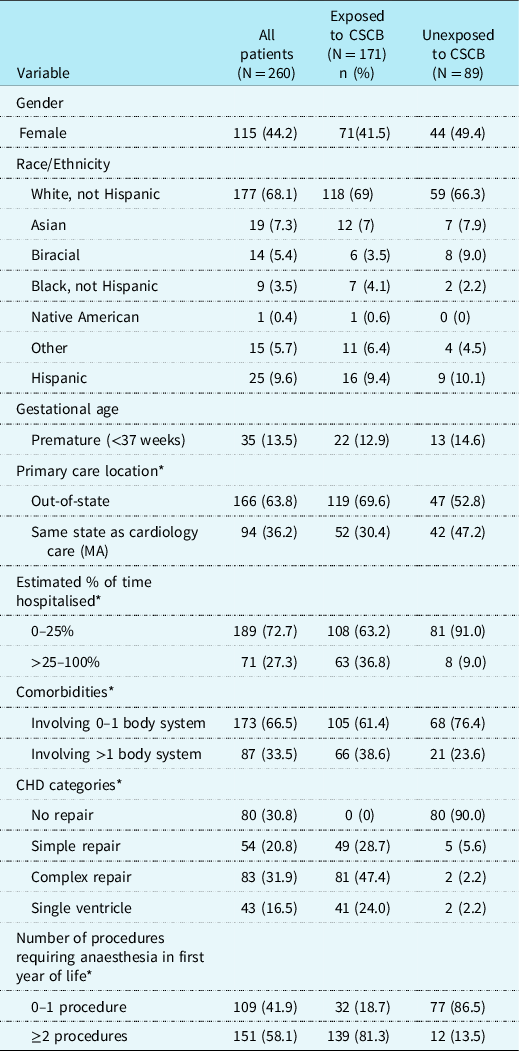
A total of 260 infants with CHD were enrolled, a majority (65.8%) of whom underwent cardiac surgery with cardiopulmonary bypass during the first year of life (Table 1). Primary care was received outside of Massachusetts by 63.8% of subjects. One-third of subjects had >1 non-cardiac comorbidity, consisting most often of gastrointestinal (23.0%), neurologic (16.6%), or pulmonary (9.6%) conditions. Approximately one-fourth were hospitalised for >25% of the first year of life, and 58.1% had undergone ≥2 procedures requiring anaesthesia before age 1 year. Eighty (30.8%) infants had disease requiring no repair during the first year of life, 54 (20.8%) had two-ventricle disease requiring simple repair, 83 (31.9%) had two-ventricle disease requiring complex repair, and 43 (16.5%) had single-ventricle physiology.
Patient characteristics (N = 260 patients with CHD with mean age of 27 ± 14 months at enrolment).
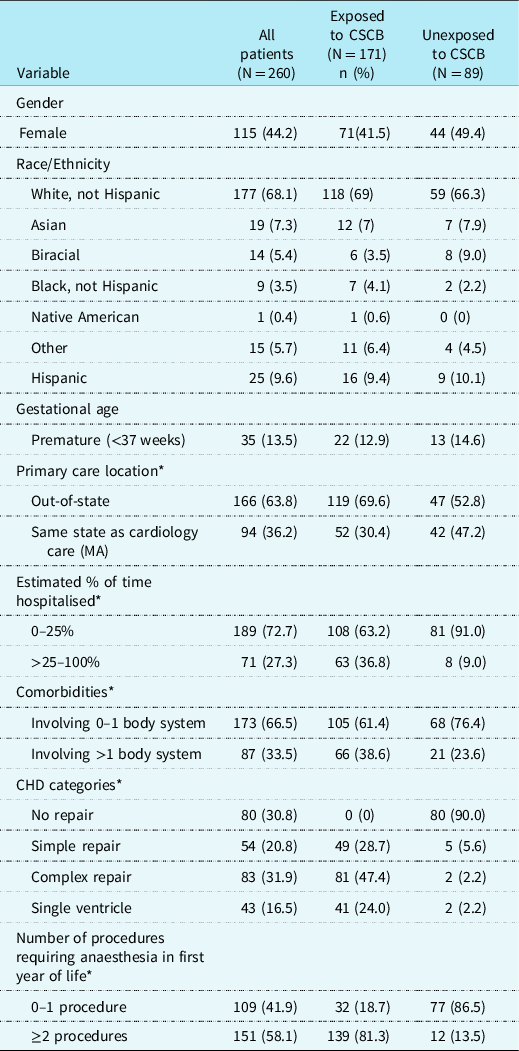
* Significant difference at p < 0.05 between group exposed to cardiac surgery and cardiopulmonary bypass (CSCB, second column) versus unexposed group (third column)
Vaccination rates
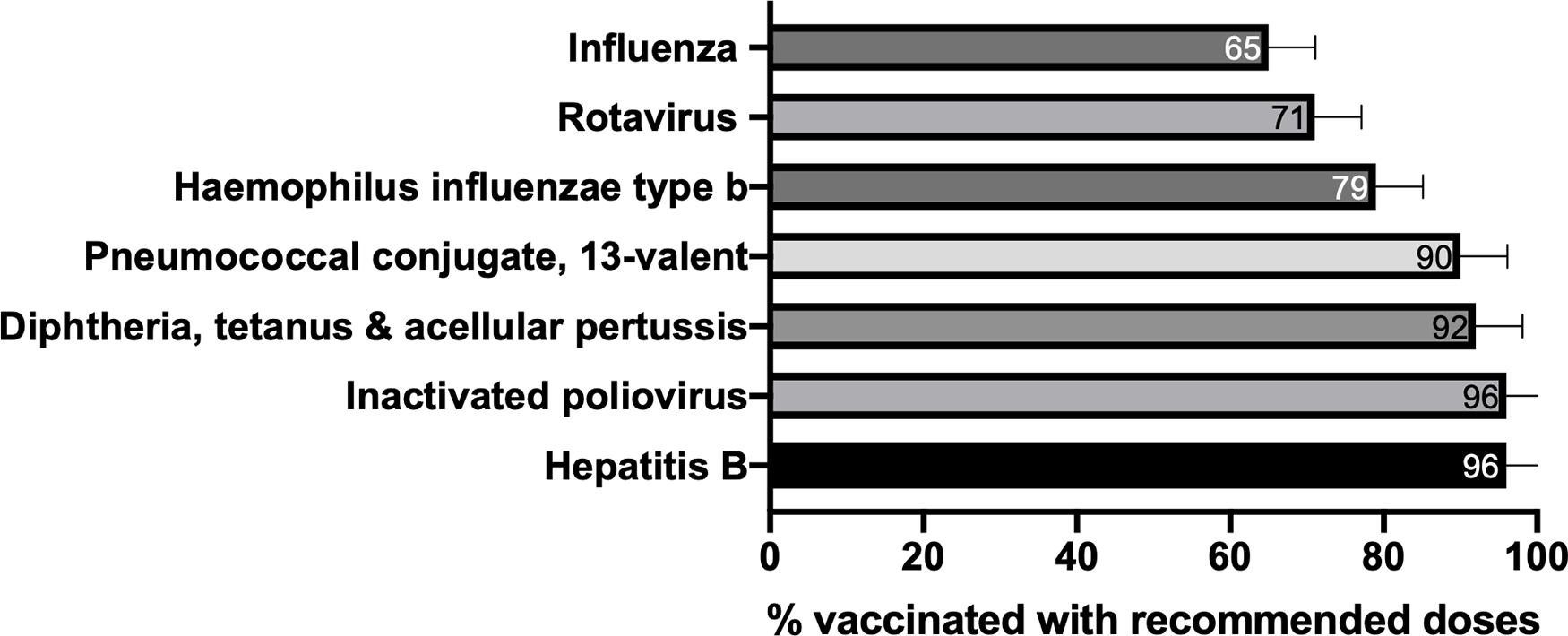
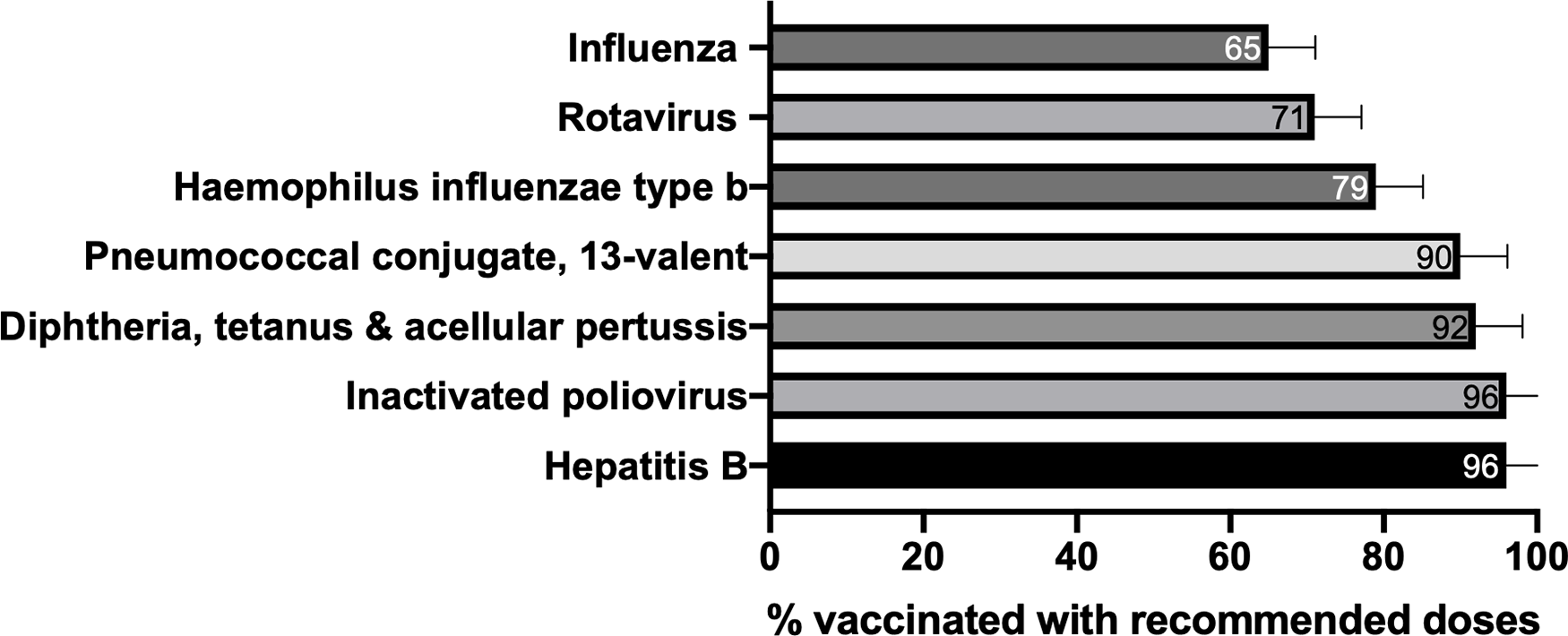
Only 60% (95% confidence interval 53.9–66.1%, 156/260) of infants were fully vaccinated at 1 year of age. Vaccination rates were lowest for influenza (64.6%), rotavirus (71.1%), and H. influenzae type b (79.3%) (Fig 1). Rates were ≥90% for the other vaccines: pneumococcal conjugate vaccine, 13-valent (90.0%); diphtheria, tetanus, and acellular pertussis (91.9%); inactivated poliovirus vaccine (96.1%); and hepatitis B (96.1%).
Rates of vaccination for individual vaccines. Subjects were considered fully vaccinated if they had received the following number of doses: 2 influenza during first eligible influenza season; 2 rotavirus; 3 Haemophilus influenzae type B; 3 pneumococcal conjugate, 13-valent; 3 diphtheria, tetanus and acellular pertussis; 2 inactivated poliovirus; and 2 hepatitis B.
Patterns of undervaccination
Undervaccinated subjects varied in the vaccines for which they had not received the recommended number of doses (Supplementary Figure S1). This diversity in patterns of undervaccination—that is, the fact that doses were not lacking for the same one or two vaccines across subjects—accounted for the higher individual vaccine rates as compared with the overall vaccination rate. Seven patients were undervaccinated for all seven vaccines at 1 year of life. The CHD lesions for these seven subjects spanned a range of complexity (Supplementary Table S1). Only two patients had not received any vaccination doses.
Thirty-seven patients classified as fully vaccinated by 1 year were found to have delay in receipt of ≥1 vaccine during the first year of life. Among 141 infants with delayed doses, the average number of days undervaccinated ranged from 45.3 [95% confidence interval 32.5–58.1] for diphtheria, tetanus, and acellular pertussis to 151 [95% confidence interval 130.2–171.8] for rotavirus (Table 2).
Average number of days undervaccinated during first year of life among infants with delay (n = 141).

Predictors of undervaccination
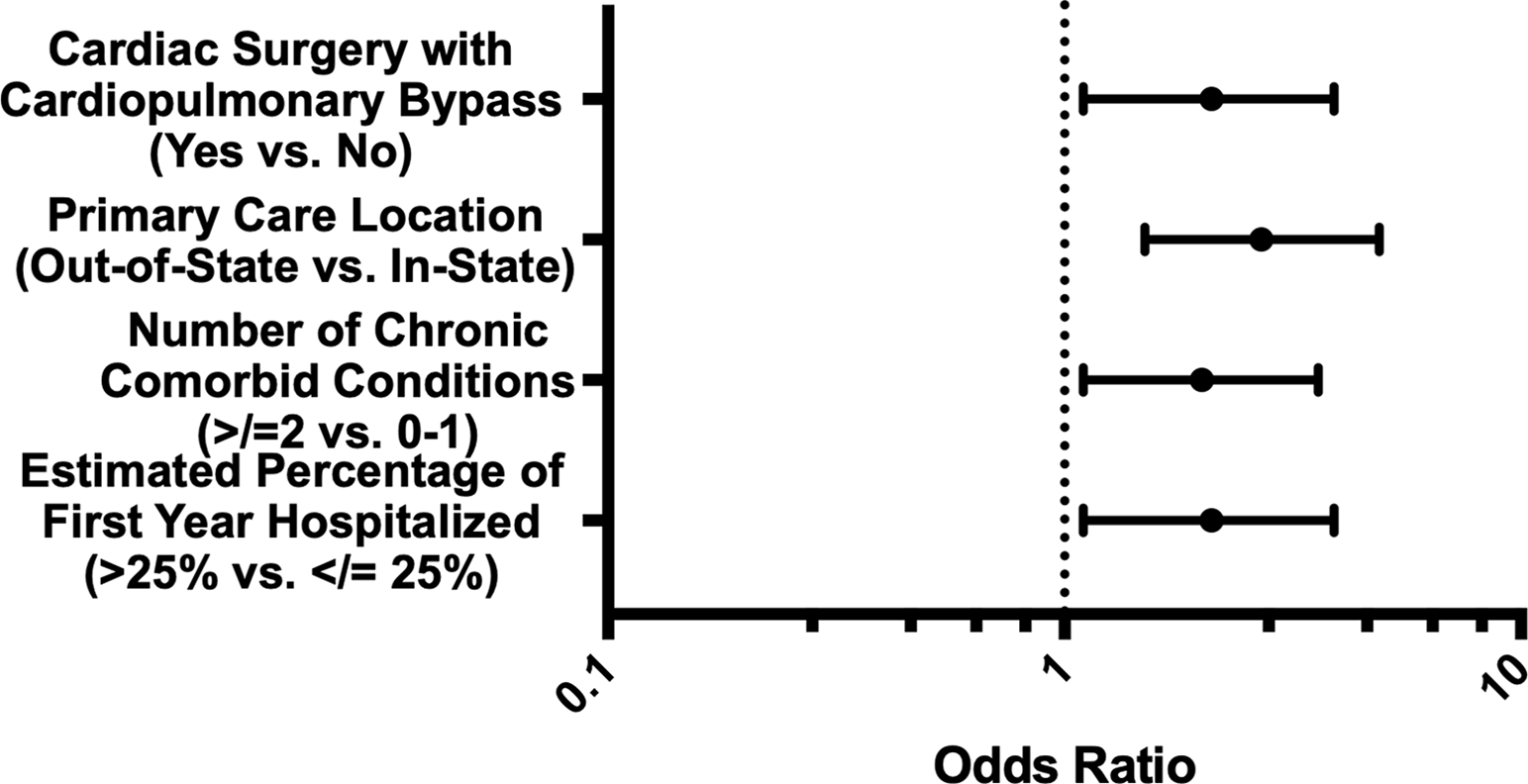
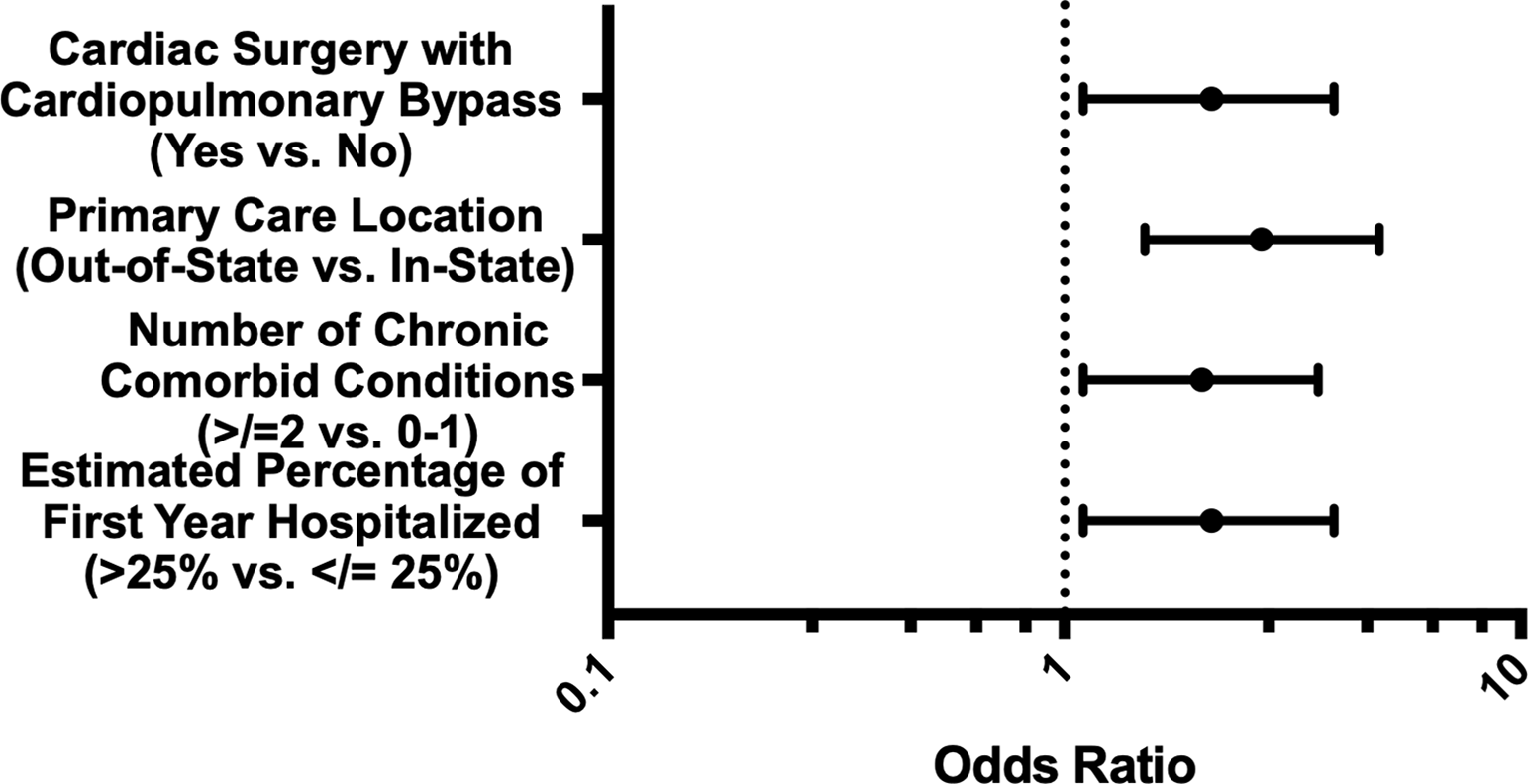
Infants who underwent cardiac surgery with cardiopulmonary bypass were significantly more likely to be undervaccinated (51.5% versus 76.4%, adjusted odds ratio 2.1 [95% confidence interval 1.1–3.9]) (Fig 2). Other predictors of undervaccination were hospitalisation for >25% of the first year of life (>25% versus ≤25%, adjusted odds ratio 2.1 [1.1, 3.9]), out-of-state primary care (adjusted odds ratio 2.7 [1.5, 4.9], and multiple comorbidities (≥2 versus 0–1, adjusted odds ratio 2.0 [1.1, 3.6]) (Fig 2). Other covariates, including gender, race/ethnicity, gestational age, and surgical category, were not significantly associated with undervaccination and not retained in the final model.
Predictors of undervaccination on multivariable analysis. Other covariates, including gender, race, gestational age, and CHD category, were evaluated as potential covariates but were not significantly associated with undervaccination and thus not retained in the final model. Error bars reflect 95% confidence intervals for the adjusted odds ratios, plotted on a logarithmic scale.
Discussion
We determined that substantial undervaccination occurs for infants with CHD, even allowing for a 6-month catch-up period, with 40% remaining undervaccinated at age 1 year. Furthermore, vaccination delays occurred among 54% of infants and were sizable, ranging by vaccine from 45 to 151 days. We found that undervaccination is significantly associated with exposure to cardiac surgery with cardiopulmonary bypass during the first year of life.
Vaccination coverage in our study cohort was lowest for influenza vaccine at 64.6%. This rate is higher than the 2012–2013 national coverage estimate of 56.6% among children aged 6 months–17 years in the general population, 17 but both of these rates fall well below the US Department of Health and Human Services Healthy People 2020 national target of 80%. 26 Moreover, low influenza vaccination coverage among infants with CHD is especially concerning because these children are at greater risk for poor outcomes related to influenza than the general population. Reference Ghimire, Chou and Moon-Grady4
Although the incidence of vaccine-preventable diseases is relatively low in the USA, timely vaccination remains imperative to maintain this achievement by providing the greatest individual protection and helping to prevent disease outbreaks. 27 However, delays in doses were common even in our subjects who eventually received recommended vaccines. For example, although >90% received the recommended doses of diphtheria, tetanus, and acellular pertussis by age 1 year, a significant percentage of subjects with vaccine delay (58%) experienced delays in receipt of diphtheria, tetanus, and acellular pertussis, with an average of 45 days undervaccinated during the first year of life. Pertussis remains an important cause of vaccine-preventable paediatric morbidity and mortality, with 20,762 cases of pertussis reported in the USA in 2015. 27
Survival for infants with CHD has improved drastically with improved operative techniques and care strategies following Stage 1 palliation surgery, but these patients remain at considerable risk for mortality during the period between stage 1 and stage 2 palliation surgery. Several strategies have been proposed to reduce the risk of sudden, unexpected death after hospital discharge in infants with single-ventricle CHD, including deferring immunisations due to concern that vaccination may cause pain, irritability, and fever and therefore predispose to increased systemic vascular resistance and hemodynamic compromise. Reference McAlvin, Clabby, Kirshbom, Kanter, Kogon and Mahle13 Although sudden death in infants with CHD has been associated with immunisations in case reports and anecdotes, Reference Leung28 studies have not found a significant association between vaccination and adverse events in infants with single-ventricle CHD, and their authors have advocated that the Advisory Committee on Immunization Practices recommendations not be altered for these patients. Reference McAlvin, Clabby, Kirshbom, Kanter, Kogon and Mahle13 Not only should infants with CHD receive routine immunisations as recommended, but some also require additional vaccines, such as meningococcal conjugate vaccine for those with functional or anatomic asplenia due to heterotaxy syndrome. Reference Shao, Wu, Wang, Hsu, Huang and Chiu12
Undervaccination in our study cohort was associated with cardiac surgery with cardiopulmonary bypass during the first year of life, perhaps reflecting uncertainty about vaccine safety and efficacy in the setting of immunomodulatory effects of cardiac surgery with cardiopulmonary bypass and anaesthesia or adverse effects of vaccine-induced inflammation on post-operative recovery. Reference Short, van der Walt and Zoanetti16 Infants often receive high-dose corticosteroids intraoperatively, which may further raise concern about the efficacy and safety of vaccination. Many infants also undergo neonatal thymectomy, resulting in questions about immune function. Reference Wells, Parkman, Smogorzewska and Barr29 Specific evidence-based guidance on routine vaccination surrounding cardiac surgery would help to address these concerns and improve vaccination rates. Findings from studies on vaccine safety and efficacy in the setting of recent or anticipated surgery, cardiopulmonary bypass, and anaesthesia are reassuring. Reference Takanashi, Ogata and Honda14,Reference Siebert, Posfay-Barbe, Habre and Siegrist15,Reference Tajima, Yamamoto and Kawazoe30 Infants who have undergone cardiac surgery with cardiopulmonary bypass and anaesthesia have normal immunological status, as reflected by lymphocyte and cytokine profiles, and normal antibody responses to H. influenzae type b. Reference Takanashi, Ogata and Honda14,Reference Siebert, Posfay-Barbe, Habre and Siegrist15,Reference Tajima, Yamamoto and Kawazoe30
We found that hospitalisation for >3 months during the first year of life was associated with undervaccination. Because the frequency of recommended preventative care visits declines after 6 months of age, there are fewer opportunities for catch-up doses for patients who were hospitalised for a significant portion of early infancy. Vaccine administration in cardiology or other specialty clinics is not a straightforward alternative because unlike primary care settings that regularly vaccinate large numbers of children, specialty care settings often lack infrastructure and trained personnel for proper storage, handling, and documentation of doses. To address these challenges with outpatient administration, immunisations could be given during hospitalisation. However, at some institutions, including ours, administration of routine childhood vaccines to inpatients is not an established practice outside of the newborn nursery or neonatal ICU, and this strategy would require overcoming concerns about giving vaccinations during the post-operative period. Alternatively, specific immunisation catch-up appointments could be made following hospital discharge.
Only 36% of our study cohort received both primary and cardiac care in Massachusetts, and the odds of undervaccination were 2.7 times greater for infants who received primary care in a different state. Ensuring timely preventative care visits and effective care coordination is inherently more complex when patients and families travel long distances away from home to receive subspecialty care. In addition, 33% of subjects had >1 non-cardiac chronic condition, consistent with a prior report that significant non-cardiac comorbidities are common in children with CHD, Reference Massin, Astadicko and Dessy31 and this was another independent risk factor for undervaccination. Given their medical complexity, infants with CHD typically require care from multiple providers in different care locations, yet involvement of another physician in a high-risk paediatric patient’s care is known to be a significant barrier to vaccination. Reference Rickert, Santoli, Shefer, Myrick and Yusuf32 It may be unclear where and when infants with CHD should be vaccinated, and several competing priorities occur at each clinical encounter. Collaboration among paediatricians, paediatric cardiologists, and other subspecialists is necessary to ensure that opportunities for vaccination are identified and capitalised upon. Education for parents on the importance of timely vaccination and risks of vaccine-preventable diseases for infants with CHD may be helpful in equipping them with the knowledge to advocate for vaccination across care settings. Many states maintain immunisation registries that could support quality improvement initiatives such as reminder and recall systems for improving vaccination uptake. Reference Jacobson Vann and Szilagyi33
Our study had strengths and limitations. We evaluated patients from a high-volume heart centre with a diversity of patients, but our findings may not be generalisable to institutions with smaller catchment areas for cardiac surgery referrals or with other differences in patient population. Additionally, because we recruited subjects who were undergoing pre-operative or pre-cardiac-catherisation evaluations, our results may not be generalisable to infants with CHD requiring no procedures at all for management of their heart conditions. Our prospective study design resulted in a relatively small cohort but enabled us to obtain immunisation histories directly from primary care records, collect race/ethnicity as reported by families, and perform chart reviews to gather precise information on surgical procedures. Our data were therefore more accurate and complete than would likely be feasible in a retrospective analysis of a larger administrative dataset. However, we did not collect data on potential predictors such as insurance status, parental choice, or family income that may be associated with undervaccination. Our study design also did not enable investigation of provider or parental beliefs and decision-making or other factors that may have mediated the relationship between cardiac surgery with cardiopulmonary bypass and undervaccination. Furthermore, evaluation of adverse outcomes associated with undervaccination was beyond the scope of our study given the long follow-up periods that would be required.
Although we identified unique predictors of undervaccination in infants with CHD, improving vaccination coverage will require further understanding of the system-based issues, as well as the patient, family, and provider factors, that affect vaccine delivery in this population. The low vaccination rates in infants with CHD who undergo cardiac surgery with cardiopulmonary bypass demand a different approach to routine vaccination surrounding planned cardiac surgery. Vaccine efficacy and safety may be perceived as differing from those of healthy infants, creating the need for education of care providers and parents. A consensus guideline that addresses the unique concerns of vaccination efficacy and safety in proximity to surgical procedures, coupled with quality improvement initiatives to disseminate the guideline; vaccination reminder and recall systems tailored to the healthcare utilisation of infants with CHD; and improved communication among primary care providers, subspecialists, and families would likely improve vaccine uptake in this high-risk population.
Supplementary material
To view supplementary material for this article, please visit https://doi.org/10.1017/S104795112200052X
Acknowledgements
Financial support
This study was supported by a Program for Patient Safety and Quality grant from Boston Children’s Hospital (A.M.M.). The funder did not participate in this work. No external funding was provided for this manuscript.
Conflicts of interest
None.
Ethical standards
The authors assert that all procedures contributing to this work comply with the ethical standards of the US Department of Health and Human Services regulations, 45 CFR part 46, and with the Helsinki Declaration of 1975, as revised in 2008, and have been approved by the Boston Children’s Hospital Institutional Review Board.