INTRODUCTION
Brain and central nervous system (CNS) tumors are the second most common form of malignancy in childhood, affecting approximately 5.13 per 100,000 children between birth and 19 years of age (Dolecek, Propp, Stroup, & Kruchko, Reference Dolecek, Propp, Stroup and Kruchko2012). Approximately 73% of those diagnosed in childhood will survive beyond 5 years, and 68% beyond 10 (Dolecek et al., Reference Dolecek, Propp, Stroup and Kruchko2012). These figures represent a substantial reduction in mortality rates over the past several decades, owed predominately to advancements in tumor detection and treatment techniques (Kirsch & Tarbell, Reference Kirsch and Tarbell2004; Kohler et al., Reference Kohler, Ward, McCarthy, Schymura, Ries, Eheman and Edwards2011). With improvements in long-term survival rates, a larger proportion of childhood brain tumor survivors are transitioning into young adulthood and beyond. As such, greater focus is being directed toward monitoring and improving psychosocial, neuropsychological, and quality of life outcomes for this population (Askins & Moore, Reference Askins and Moore2008; Butler et al., Reference Butler, Sahler, Askins, Alderfer, Katz, Phipps and Noll2008).
Treatment for childhood brain tumors is often multimodal and involves a combination of surgical resection, chemotherapy, and radiation therapy. Unfortunately, these treatments disrupt normal neuroanatomical development and increase the risk for adverse neuropsychological outcomes often referred to as neurocognitive “late-effects” (Gragert & Ris, Reference Gragert and Ris2011; Turner, Rey-Casserly, Liptak, & Chordas, Reference Turner, Rey-Casserly, Liptak and Chordas2009). These deleterious effects typically emerge within the first few years following tumor-directed treatment and are thought to be chronic in nature (Maddrey et al., Reference Maddrey, Bergeron, Lombardo, McDonald, Mulne, Barenberg and Bowers2005), primarily affecting global intellectual functioning, attention, working memory, processing speed, academic achievement, and executive functioning (Mulhern, Merchant, Gajjar, Reddick, & Kun, Reference Mulhern, Merchant, Gajjar, Reddick and Kun2004; Palmer et al., Reference Palmer, Armstrong, Onar-Thomas, Wu, Wallace, Bonner and Gajjar2013; Robinson et al., Reference Robinson, Kuttesch, Champion, Andreotti, Hipp, Bettis and Compas2010). The declines in neurocognitive functioning in survivors have been related to cerebellar dysfunction, particularly in the case of surgical resection of tumors in the posterior fossa, and global reductions in white matter secondary to tumor-directed treatments, specifically, exposure to cranial radiotherapy (Mulhern, White, et al., Reference Mulhern, White, Glass, Kun, Leigh, Thompson and Reddick2004; Reddick et al., Reference Reddick, White, Glass, Wheeler, Thompson, Gajjar and Mulhern2003).
Impaired deficit-awareness, or anosognosia, refers to a person’s diminished capacity to appreciate the full extent or severity of his or her neurological or neuropsychological limitations, which are apparent to caregivers and practitioners (Prigatano, Reference Prigatano1996). Patient-caregiver and patient-performance discrepancies in cognitive and functional abilities have been linked with cortical injury and brain dysfunction (Fotopoulou, Pernigo, Maeda, Rudd, & Kopelman, Reference Fotopoulou, Pernigo, Maeda, Rudd and Kopelman2010) and observed in several neurologically compromised populations including severe traumatic brain injury (TBI; Hart, Whyte, Kim, & Vaccaro, Reference Hart, Whyte, Kim and Vaccaro2005; Prigatano, Reference Prigatano2005b), frontotemporal dementia (Miller et al., Reference Miller, Seeley, Mychack, Rosen, Mena and Boone2001), multiple sclerosis (Prigatano, Hendin, & Heiserman, Reference Prigatano, Hendin and Heiserman2014), and young adults who were born at very low birth weight (Solsnes, Skranes, Brubakk, & Lohaugen, Reference Solsnes, Skranes, Brubakk and Lohaugen2014). Much of the research in anosognosia has focused on the executive function of individuals with TBI, who often report less executive dysfunction relative to performance-based measures and caregiver ratings (Hart et al., Reference Hart, Whyte, Kim and Vaccaro2005). Coma duration, injury severity, and number of cerebral lesions predict these discrepancies, suggesting an underlying organic, neurological etiology (Sherer, Hart, Whyte, Nick, & Yablon, Reference Sherer, Hart, Whyte, Nick and Yablon2005; Wilson, Donders, & Nguyen, Reference Wilson, Donders and Nguyen2011).
Survivors of pediatric brain tumors share many of the brain-related characteristics with other populations that demonstrate anosognosia, including disrupted white matter development and cortical function (Mulhern et al., Reference Mulhern, Reddick, Palmer, Glass, Elkin, Kun and Gaijar1999, Reference Mulhern, Palmer, Reddick, Glass, Kun, Taylor and Gajjar2001; Reddick et al., Reference Reddick, White, Glass, Wheeler, Thompson, Gajjar and Mulhern2003, Reference Reddick, Glass, Palmer, Wu, Gajjar, Langston and Mulhern2005). Due to these risk factors for brain dysfunction and for deficits in executive function (Maddrey et al., Reference Maddrey, Bergeron, Lombardo, McDonald, Mulne, Barenberg and Bowers2005; Palmer et al., Reference Palmer, Armstrong, Onar-Thomas, Wu, Wallace, Bonner and Gajjar2013; Wolfe et al., Reference Wolfe, Walsh, Reynolds, Mitchell, Reddy, Paltin and Madan-Swain2013), childhood brain tumor survivors may experience difficulties appreciating the limitations of their executive skills in young-adulthood. The intensity of tumor-directed treatments may be useful as a proxy for “injury severity” and reflect neuroanatomical vulnerability in brain tumor survivors.
While some evidence suggests that survivors of childhood brain tumor may lack insight into their cognitive limitations (Maddrey et al., Reference Maddrey, Bergeron, Lombardo, McDonald, Mulne, Barenberg and Bowers2005), this remains largely unexplored in this population, particularly as it relates to treatment-related factors. Examining cross-informant and survivor-performance discrepancies in childhood brain tumor survivors is important since research in other populations has shown that it negatively impacts rehabilitation efforts (Prigatano, Reference Prigatano2005a), precludes patients from identifying appropriate treatment goals and adhering to neurorehabilitation services (Trahan, Pepin, & Hopps, Reference Trahan, Pepin and Hopps2006), and ultimately limits functional long-term outcomes (Kelley et al., Reference Kelley, Sullivan, Loughlin, Hutson, Dahdah, Long and Poole2014; Sherer et al., Reference Sherer, Bergloff, Levin, High, Oden and Nick1998, Reference Sherer, Hart, Nick, Whyte, Thompson and Yablon2003). Therefore, identifying the presence of, and the risk factors for, cross-informant and survivor-performance discrepancies may inform rehabilitation and treatment efforts to improve survivor outcomes.
The aims of the present study were to examine the concordance among self-reported, mother-reported, and performance-based measures of executive functioning in young adult survivors of childhood brain tumor who are not living independently. Additionally, this study sought to investigate the associations between tumor-directed treatment intensity and discrepancies among these measures. It was hypothesized that (1) survivor-reported executive functioning would be moderately positively correlated with mother ratings, but not with performance-based measures of executive function; (2) treatment intensity would predict the degree of cross-informant discrepancy, such that survivors with exposure to more intense treatments would exhibit greater survivor-mother discrepancy scores than those exposed to less intense treatments, with survivors reporting less executive dysfunction relative to mothers; and (3) survivor-reported executive skills would differ significantly from performance-based executive function measures with the greatest survivor-performance discrepancies seen for those with more intense treatment histories.
METHOD
Participants
Participants were recruited as part of an Institutional Review Board-approved research protocol at a large pediatric medical center in compliance with the Helsinki Declaration. Thirty-four young adult survivors of childhood brain tumor and their respective mothers were recruited from a pool of participants in the first phase of a larger study examining caregiver competence in young adult childhood brain tumor survivors who live with their mothers at least part-time (Barakat et al., Reference Barakat, Li, Hobbie, Ogle, Hardie, Volpe and Deatrick2015; Deatrick et al., Reference Deatrick, Hobbie, Ogle, Fisher, Barakat, Hardie and Ginsberg2014). Survivors were eligible for participation in the current study if they met the following criteria: (1) 5 or more years post-diagnosis, (2) 2 or more years post treatment completion, (3) reside at least part-time with his/her mother, (4) between the ages of 18 and 30 years, and (5) able to read and understand English. Individuals were excluded if they endorsed: (1) being married or living in a partnered relationship, (2) having a genetic condition that may affect neurocognitive functioning, (3) having cognitive or developmental delays before the tumor diagnosis, (4) having non-corrected visual impairments, (5) had a tumor recurrence or resumption of treatment, and/or 6) the survivor was deceased.
Of the 71 survivors who participated in the parent study, and were available for this retrospective study, 22 did not satisfy eligibility criteria and 15 could not be reached despite multiple attempts. Exclusion occurred for various reasons, including no longer living part-time with his/her mother (n=11), outside of the designated age range (n=4), significant, non-corrected visual impairments (n=3), pre-existing cognitive impairments (n=2), a recurrence or resumption of treatment (n=1), or the survivor was deceased (n=1). No significant demographic differences were found between mothers or survivors who participated in the study and those who were ineligible or declined participation.
PROCEDURES
Data collection occurred either at the hospital during a scheduled medical appointment or at the survivor’s home. Demographic, tumor, and treatment variables were collected through review of medical records. Survivors completed a series of performance-based tasks assessing working memory and executive function followed by a questionnaire concerning their perceptions of their executive functioning. Mothers completed an informant report version of the same executive functioning questionnaire. Following protocol completion, participants received monetary compensation and a brief summary of the findings from the neurocognitive assessment measures.
Measures
Executive functioning
Performance-based measures of executive functioning included the Trail Making Test and the Tower Test from the Delis-Kaplan Executive Function System (D-KEFS; (Delis, Kaplan, & Kramer, Reference Delis, Kaplan and Kramer2001). The standard score from the Number-Letter Switching (NLS) condition of the Trail Making Test, a measure of cognitive flexibility and set-shifting, was used in analyses. The achievement score from the Tower Test (TWR-A) was used in analyses and is calculated using all points gained for each item and measures spatial planning, rule learning and inhibition (Delis et al., Reference Delis, Kaplan and Kramer2001). The validity of these tests has been well-established through correlations with other widely used measures of executive function (Delis et al., Reference Delis, Kaplan and Kramer2001).
The Behavior Rating Inventory of Executive Function-Adult Version (BRIEF-A) Self Report (BRIEF-SR) and Informant Report (BRIEF-IR) assessed survivor executive function (Roth, Isquith, & Gioia, Reference Roth, Isquith and Gioia2005). Two indices on the BRIEF-A measuring emotional/behavioral (Behavior Regulation Index) and cognitive control (Metacognitive Index) contribute to a total executive function composite (Global Executive Composite, GEC; (Roth et al., Reference Roth, Isquith and Gioia2005). The BRIEF GEC score was used in discrepancy analyses as it reflects a more stable composite of survivor and mother executive functioning compared with BRIEF indices. Both forms have displayed construct validity and clinical utility as an ecologically sensitive measure of executive functioning among a range of adult populations with neurocognitive impairment (Roth et al., Reference Roth, Isquith and Gioia2005). Internal consistency in this sample for the GEC was α=0.95 for the BRIEF-SR and α=0.98 for the BRIEF-IR.
Working memory
The Digit Span (DS) and Letter-Number Sequencing (LNS) subtests from the Wechsler Adult Intelligence Scale Fourth Edition (WAIS-IV; Wechsler, Reference Wechsler2008), which comprise the Working Memory Index (WMI), were administered to provide estimates of survivor working memory abilities. The Digit Span subtest includes Digit Span Forward (DSF), Digit Span Backward (DSB), and Digit Span Sequencing (DSS) tasks, contributing to an overall Digit Span Total (DST) score. Each subtest requires examinees to recall a list of verbally presented numbers, varying the order in which they are to be recalled. DSF requires the examinee to recall a sequence of numbers in the same order as presented whereas DSB requires individuals to recall the numbers in reverse order. LNS requires examinees to recall a list of verbally presented numbers and letters, with the numbers in ascending order and the letters in alphabetical order. The WMI, DST, and LNS subscales display good to excellent reliability (r=0.88–0.94) and construct validity (WIAT-II; Wechsler, Reference Wechsler2008).
Treatment intensity
A version of the Intensity Treatment Rating Scale-3 (ITR-3; Kazak et al., Reference Kazak, Hocking, Ittenbach, Meadows, Hobbie, Werba DeRosa and Reilly2012) modified for use with pediatric brain tumor survivors was used to quantify participants’ treatment intensity. This modified version was previously developed and used within this sample of pediatric brain tumor survivors (Deatrick et al., Reference Deatrick, Hobbie, Ogle, Fisher, Barakat, Hardie and Ginsberg2014). For the purposes of the present study, “treatment intensity” refers to the severity of tumor-directed treatments as patients are exposed to them, and does not refer to the degree of acute side-effects experienced during treatment, the patient’s subjective interpretation of the severity of their tumor-directed therapies, or the long-term impact of these treatments on the developing CNS.
Scores are derived from objective classification of treatment modalities along five levels of intensity. Ratings incorporate chemotherapy exposure defined by the following levels: “Non-Intensive” (any outpatient chemotherapy), “Moderate” (any inpatient chemotherapy regimen not including high-dose chemotherapy with stem cell rescue), and “Intensive” (high-dose chemotherapy with stem cell rescue). Overall intensity levels range from “Minimal” (surgical resection only), “Average” (focal radiation and/or non-intensive chemotherapy), “Moderate” (moderate chemotherapy with or without focal radiation), “Intensive” (craniospinal radiation with or without moderate or non-intensive chemotherapy or intensive chemotherapy), and “Most Intensive” (craniospinal radiation and intensive chemotherapy). Treatment data were abstracted from medical records and treatment intensity scores were generated by a pediatric oncology nurse practitioner (W.L.H.) and a pediatric oncologist (M.J.F.) specializing in survivorship, both blinded to participant identity. Inter-rater reliability was high (kappa=0.97) and scores ranged from 1 to 5 (M=2.44; SD=1.26). Treatment intensities rated as Moderate (n=1) and Most-Intensive (n =1) were combined into the Average/Moderate group (n=14) and Intensive/Most-Intensive group (n =11), respectively.
Data Analyses
Statistical analyses were performed with IBM SPSS (version 22). Performance-based subscale and index scores were converted to T-scores for ease of interpretation and to coincide with BRIEF composite scores for later discrepancy analyses. Additionally, BRIEF scores were reversed to coincide with performance-based T-scores, such that higher BRIEF-SR scores were indicative of better survivor-reported executive functioning. One-sample t tests were used to compare the overall sample’s performance on all measures to the normative mean (i.e., M=50; SD=10). Correlations between age at diagnosis and outcome measures, and associations between treatment intensity group and survivor sex, employment status, age at testing, and time since diagnosed were examined to determine if any of these variables should be entered as a covariate in subsequent analyses. To address our first hypothesis, intraclass correlations were used to examine the associations between survivor-reported (BRIEF-SR) and mother-reported (BRIEF-IR) measures of executive functioning, and Pearson correlations were used to assess the relationship between performance-based estimates and survivor and mother ratings. For all subsequent analyses, the sample was divided by treatment intensity according to treatment intensity scores into either the Minimal, Average/Moderate, or Intense/Most-Intense group.
A survivor-caregiver discrepancy variable was generated by subtracting BRIEF-SR GEC scores from BRIEF-IR GEC T-scores, such that higher/ more positive discrepancy scores reflect survivors’ perceptions that they have better executive functioning skills relative to mother reports. To examine cross-informant discrepancies across levels of treatment intensity, a one-way analysis of covariance (ANCOVA), controlling for survivor employment status, was conducted comparing survivor-mother discrepancy scores among the treatment intensity groups (King, Reference King1986). Follow-up post hoc paired-samples t tests with Bonferroni correction were used to examine treatment intensity group differences among discrepancy scores.
Next, survivor-performance discrepancy variables were created by subtracting reversed BRIEF-SR GEC scores from each performance-based measure of executive functioning, with higher/more positive discrepancy scores representative of survivor estimation of better executive skills relative to performance on objective measures. Multivariate analysis of covariance (MANCOVA) was used to assess for treatment intensity group differences in discrepancy scores for all performance-based measures correcting for survivor employment. Post hoc comparisons of a significant MANCOVA were conducted using a series of one-way ANCOVAs to examine survivor-performance discrepancy scores for each measure. Post hoc paired-samples t tests, with Bonferroni correction, examined the source of any significant survivor-performance discrepancies among treatment intensity groups.
RESULTS
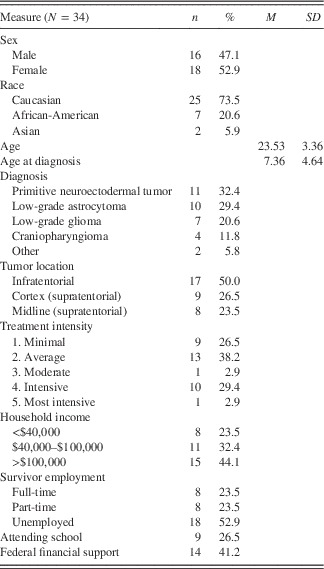
The final sample consisted of 34 survivors (52.9% female), aged 23.5 years (SD=3.4). The majority of survivors were Caucasian (73.5%), with the remainder endorsing African American (20.6%) or Asian (5.9%) ethnicity. On average, survivors were diagnosed at 7.4 years (SD=4.6) and 16.1 years (SD=5.9) post treatment. See Table 1 for survivor demographics. Mothers ranged from 38 to 65 years old (M=53.47; SD=5.67), primarily Caucasian (73.5%), and the majority were in a partnered relationship (64.7%).
Participant Demographics

Note. Treatment intensity levels based on modified ITR-3.
Minimal = resection only; Average = focal radiation ± non-intensive chemotherapy; Moderate = moderate chemotherapy ± focal radiation, but no craniospinal radiation; Intensive = craniospinal radiation ± moderate non-intensive chemotherapy OR high-dose chemotherapy with stem cell rescue; Most Intensive = craniospinal radiation and intensive chemotherapy and stem cell rescue.
Descriptive and Preliminary Analyses
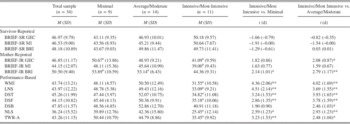
One-sample t tests revealed that both survivor-reported (M=46.53; SD=9.00; d=0.35) and mother-reported (M=44.15; SD=12.07; d=0.59) BRIEF MI composites reflected significantly (p<.05) greater executive dysfunction than the normative mean, though were both in the average range. When compared against the normative mean, no significant differences were seen for survivor- or mother-reported BRIEF GEC or BRI composites. Survivor performance-based executive skills were more variable and all were significantly lower than the normative mean, save for DSB. Age at diagnosis was not correlated with any outcome measures, and was, therefore, not entered as a covariate in subsequent analysis of variance tests. When treatment intensity groups were compared, survivors in the Intensive/Most-Intensive group evidenced significantly lower performance on all objective executive function measures when compared to both the Average/Moderate and Minimal groups, save for DSB between Intensive/Most-Intensive and Minimal groups (Table 2). No significant differences were found among treatment intensity groups in terms of sex, χ2 (N=34)=0.37, p=.83, V=.12; age at testing, F(2,31)=0.77, p=.47; time since diagnosis, F(2,31)=1.86, p=.17, or employment status, χ2 (N=34)=1.75, p=.78, V=.16.
Survivor performance on measures of executive function across treatment intensity groups

Note. All values represent standardized T-scores. BRIEF scores have been reversed to coincide with performance-based scores.
a = significant within-group difference (p ≤ .05) between BRIEF-SR GEC score (paired-samples T-test). Differences between the Minimal and Average/Moderate groups were non-significant. Negative t and d values represent better BRIEF ratings in the Intensive/Most-Intensive group.
* p≤.05.
** p≤.01.
Correlations among Survivor, Mother, and Performance-Based Executive Measures
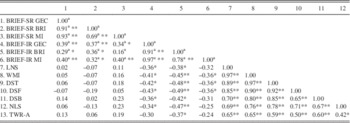
Table 3 presents intraclass and bivariate Pearson correlations among survivor-reported, mother-reported, and performance-based measures of executive functioning. Several BRIEF-SR and BRIEF-IR composite scores were significantly correlated (rs=.29 to .40), save for the relation between BRIEF-SR Metacognitive Index and BRIEF-IR Behavior Regulation Index (r=.16; p=.18). No significant associations were found between BRIEF-SR composites and scores on performance-based executive functioning measures. In contrast, several significant correlations were observed between BRIEF-IR scores and scores on performance-based executive function tests (rs=−.34 to −.49).
Correlations among survivor-reported, mother-reported, and performance-based measures of executive functioning

a Intraclass correlation coefficient.
*p≤.05.
**p≤.01.
BRIEF-SR=Survivor-reported; BRIEF-IR=Mother-reported; LNS=Letter-Number Sequencing; WMI=Working Memory Index; DST=Digit Span Total; DSF=Digit Span Forward; DSB=Digit Span Backward; NLS=Number-Letter Switching; TWR-A=Tower Achievement.
Survivor- versus Mother-Reported Executive Functioning
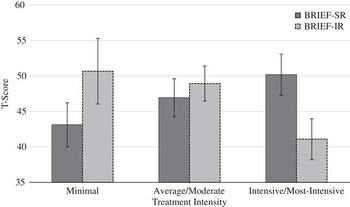
One-way ANCOVA, controlling for survivor employment status, indicated a significant effect for treatment intensity on survivor-mother discrepancy scores, F(2,31)=7.70, p<.01, ηp 2=.34. Bonferroni-corrected post hoc comparisons among treatment intensity groups revealed that the Intensive/Most-Intensive group (M=9.09; SD=12.93) had significantly greater survivor-mother discrepancy scores than the Average/Moderate group (M=−2.00; SD=7.57; p=.02) and Minimal group (M=−7.56; SD=8.03; p<.01). The Average/Moderate and Minimal groups did not differ in terms of survivor-mother discrepancy scores (p=.57). Evidenced by negative discrepancy scores, survivors in the Minimal group reported more executive difficulties than their mothers reported, and survivors in the Intensive/Most-Intensive group reported less executive problems compared with mothers. That is, survivors exposed to more intensive treatment regimens viewed their executive functioning abilities as being more intact compared to mother perceptions, whereas those with less intensive treatment histories rated their executive skills as being more impaired relative to mothers (Figure 1).
Survivor- and mother-reported executive functioning by treatment intensity group on the BRIEF GEC. Lower T-scores reflect greater executive dysfunction. Error bars represent standard errors of measurement.

Survivor-Reported versus Performance-Based Executive Functioning
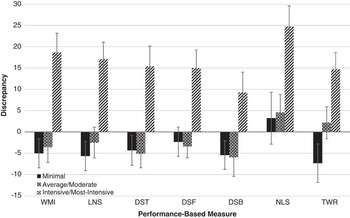
MANCOVA, controlling for survivor employment status, revealed a significant difference in discrepancy scores among treatment intensity groups, F(14,48)=2.64, p=.01, Λ=0.32, ηp 2=.44. Follow-up ANCOVAs indicated significant differences in discrepancy scores among treatment intensity groups on all measures (Fs=3.63–10.60; ps<.05). Post hoc analyses with Bonferroni correction revealed significantly greater discrepancy scores for the Intensive/Most-Intensive group compared to both the Minimal and Average/Moderate groups with respect to WMI (ps<.01), LNS (ps<.01), DST (ps≤.01), DSF (ps≤.01), and NLS (ps=.02). The Intensive/Most-Intensive group also differed from the Minimal group with respect to TWR-A discrepancy scores (p<.01), but not with the Average/Moderate group (p=.09). Survivor-performance discrepancy scores for DSB were greater for the Intensive/Most-Intensive group relative to the Average/Moderate group (p=.05), but not the Minimal group (p>.05). No significant differences were observed between Minimal and Average/Moderate treatment intensity groups on any discrepancy variable (ps≥.05). Figure 2 shows discrepancy scores among treatment intensity groups.
Treatment intensity predicts discrepancies among survivor-reported executive skills (BRIEF GEC) and performance-based measures of executive functioning. Higher/positive discrepancies reflect survivor overestimation of executive abilities relative to objective performance on EF tasks. Error bars represent standard errors of measurement.

DISCUSSION
Studies with other populations that have experienced neurodevelopmental insults suggest that pediatric brain tumor survivors may also experience cross-informant discrepancies of neuropsychological functioning due to the impact of tumor-directed treatments on the developing brain. Our findings suggest that young adult survivors of childhood brain tumor who received high intensity tumor-directed treatments may overestimate executive skills relative to mother report and performance on objective measures. In the present study, mother, but not survivor, ratings of executive functioning were correlated with performance on individually administered executive measures. Furthermore, survivors exposed to more intensive treatments (i.e., craniospinal radiotherapy and high-dose chemotherapy) demonstrated the greatest cross-informant discrepancies, perceiving their executive abilities as being more intact relative to mother perceptions. Similar findings were also noted when comparing survivor reports to performance-based measures, with those exposed to more intensive treatments overestimating their executive abilities relative to objective performance on individually administered measures.
These findings are the first to demonstrate cross-informant and self-performance discrepancies in survivors of childhood brain tumors and are consistent with prior studies of individuals with brain injury and documented executive function weaknesses (Burgess, Alderman, Evans, Emslie, & Wilson, Reference Burgess, Alderman, Evans, Emslie and Wilson1998). They underscore poor awareness as a potential issue for providers working with survivors and their families. Discordance between patient and informant ratings is not uncommon, particularly in neurologically compromised populations including TBI (Hart, Sherer, Whyte, Polansky, & Novack, Reference Hart, Sherer, Whyte, Polansky and Novack2004; Hart et al., Reference Hart, Whyte, Kim and Vaccaro2005; Prigatano, Reference Prigatano2005b; Sherer et al., Reference Sherer, Hart, Nick, Whyte, Thompson and Yablon2003), multiple sclerosis (MacAllister et al., Reference MacAllister, Christodoulou, Troxell, Milazzo, Block, Preston and Krupp2009), and spina bifida (Mahone, Zabel, Levey, Verda, & Kinsman, Reference Mahone, Zabel, Levey, Verda and Kinsman2002). Results also are consistent with research examining the contribution of disease severity on cross-informant discrepancies (Wilson et al., Reference Wilson, Donders and Nguyen2011), and suggests that survivors of childhood brain tumor may lack insight into their executive skills in young-adulthood.
Surprisingly, survivors in the current study who received the least intensive treatments endorsed greater executive dysfunction compared to mother reports. Examining individual BRIEF indices, this discrepancy was largely driven by responses on the Behavioral Regulation Index, with mothers rating survivor functioning as more intact. While this subset of survivors perceived themselves as having mild difficulty with executive functioning across Metacognitive and Behavioral Regulation Indices, mother report suggested less difficulty with emotional regulation (e.g., “mood changes frequently,” “emotionally upset easily”) and cognitive set shifting and monitoring skills (e.g., “bothered by changes in routine,” “unaware of why others are upset”). One potential explanation for this finding is that these survivors may perceive themselves as having more difficulty with regulating feelings and modulating emotions than mothers are able to perceive due to the internal nature of these factors.
These differential findings of self-perceived executive function by treatment intensity highlight the importance of evaluating self-report ratings in addition to informant reports and performance-based measures of executive functioning. Such information offers opportunities for clinicians to address potential issues related to these discrepancies. For example, survivors who perceive more difficulties than observed on informant reports or performance-based measures might not pursue activities that match their full capabilities. Alternatively, the potential lack of appreciation regarding executive function deficits in survivors who perceive fewer difficulties may hinder adherence to neuro-rehabilitation programs and negatively affect long-term functional outcomes (Sherer et al., Reference Sherer, Bergloff, Levin, High, Oden and Nick1998, Reference Sherer, Hart, Nick, Whyte, Thompson and Yablon2003). Poor insight into executive function impairments may exacerbate their negative impact on quality of life and functional outcomes in this population (Ness et al., Reference Ness, Gurney, Zeltzer, Leisenring, Mulrooney, Nathan and Mertens2008).
The current findings offer several directions for future research. First, future research should examine the influence of survivor-performance discrepancies on rehabilitation efforts and health related quality of life in survivors of childhood brain tumors. Specifically, further research is needed to establish the association of discrepancies among survivor-reported, mother-reported, and performance-based measures of executive functioning and functional and quality of life outcomes for this population and their families.
Additionally, studies examining the potential impact on social and emotional adjustment in those with greatest discrepancies are warranted, and how to best help families manage those discrepancies. Survivors of childhood brain tumor are at increased risk for social adjustment deficits (Hocking et al., Reference Hocking, McCurdy, Turner, Kazak, Noll, Phillips and Barakat2015), which may be influenced by executive function difficulties (Wolfe et al., Reference Wolfe, Walsh, Reynolds, Mitchell, Reddy, Paltin and Madan-Swain2013). Survivors lacking an appreciation of executive limitations may not enact compensatory behavioral strategies used to successfully navigate social interactions, negatively impacting peer relations. Longitudinal studies are needed to determine the developmental course of this phenomenon as survivors transition off tumor-directed treatments, which may allow for a better understanding of the development and underlying mechanisms associated with this phenomenon. Additionally, studies relating cross-informant and performance discrepancies with neuroanatomical changes may also help elucidate an underlying organic etiology proposed in other brain-injured populations.
It should be noted that performance-based measures of executive functioning have been criticized for their lack of ecological validity and their potential to provide overestimates of executive deficits relative to caregiver reports (Burgess et al., Reference Burgess, Alderman, Evans, Emslie and Wilson1998; Gioia & Isquith, Reference Gioia and Isquith2004). Whereas laboratory-based measures attempt to assess individual components of executive functioning, behavioral ratings of executive abilities may provide insight into the functional application of these skills in real-world environments (Goldberg & Podell, Reference Goldberg and Podell2000) and these estimates are often modestly and inconsistently associated (Vriezen & Pigott, Reference Vriezen and Pigott2002). Examining informant and self-reports of behavioral aspects of executive function with performance-based measures, can provide a more comprehensive understanding of a patient’s cognitive profile. Given the increasing demands placed on neuropsychologists to predict functional outcomes in real-world environments, identifying sources of variability among these estimates may help to guide appropriate treatment and rehabilitation recommendations. These findings are also particularly relevant for neuropsychologists working with young adult survivors, and underscore the importance of obtaining multiple informant ratings in this population.
The current study provides the first report of cross-informant discrepancies of executive function in young adult survivors of childhood brain tumor. Strengths of this study include the examination of treatment intensity as a modifying factor in the development of cross-informant and survivor-performance disagreement for this population and the inclusion of several performance-based measures of executive functioning rather than a broad composite estimate. However, the findings of this study must be interpreted within the context of its limitations. One important limitation is that the modified ITR-3 has yet to be validated for use with pediatric brain tumor populations in a way similar to the original ITR-3 (Kazak et al., Reference Kazak, Hocking, Ittenbach, Meadows, Hobbie, Werba DeRosa and Reilly2012). Although the modified version used in this study was created by experts in the field of pediatric neuro-oncology (M.F., W.H.), evidenced strong inter-rater reliability, and behaved consistent with pilot studies with this modified measure (Deatrick et al., Reference Deatrick, Hobbie, Ogle, Fisher, Barakat, Hardie and Ginsberg2014), future research is needed to examine the psychometric properties of this scale.
Additional limitations include the relatively small sample size with limited power, and single time-point design. Future investigations should aim to compare cross-informant discrepancies between childhood brain tumor survivors and their typically developing peers. Furthermore, young adult survivors included in this study were currently living at least part time at home with their mothers, and this sample may represent a more functionally impaired subgroup of long-term survivors. Although this group represents an important subsample of this population, results may not generalize to the childhood brain tumor survivor populations as a whole.
Future research should attempt to examine survivor and proxy-reported executive functioning in those living independently or with a spouse, partner, or roommate, to see if a similar relationship exists in a less functionally impacted subset of young adult survivors. Additionally, participants were not administered measures of global intellectual functioning in the current study, and future research should address the potential influence of IQ on executive awareness in this population. It is also important to note that participants in the present study received a brain tumor diagnosis and treatment in the mid-1990s, and results may be subject to cohort effects.
In conclusion, results provide the evidence that a subset of survivors of childhood brain tumor may experience impaired deficit-awareness with respect to executive functioning following treatment, and are at risk for misestimating executive skills in young adulthood. Findings suggest an underlying organic etiology contributing to survivor-mother and survivor-performance discrepancies in this population, which warrants further investigation. This preliminary investigation into deficit-awareness (i.e., anosognosia) in adult pediatric brain tumor survivors living dependently may contribute to our understanding of the long-term outcomes of these individuals. Clinicians should be mindful to assess executive functioning through multiple sources in this population, supplementing survivor reports with ratings from caregivers and neuropsychological tests to obtain a more comprehensive understanding of the survivor’s neuropsychological profile.
ACKNOWLEDGMENTS
The authors (Mark McCurdy, Elise Turner, Lamia Barakat, Wendy Hobbie, Janet Deatrick, Iris Paltin, Michael Fisher, & Matthew Hocking) declare that they have no conflicts of interest. Sources of financial support: This research was supported by the National Institute of Nursing Research (Grant # NINR R01 NR009651-01A1; PI: Janet A. Deatrick, PhD) and by American Cancer Society (Grant # PF-11-168-01-PCSM; PI: Matthew C. Hocking, PhD).