




No CrossRef data available.
Rural-Urban Migration and Socioeconomic Mobility in Victorian Britain
Published online by Cambridge University Press: 15 March 2005
Abstract
This article analyzes rural-urban migration in Great Britain in the latter half of the nineteenth century. Using a new dataset of 28,000 individuals matched between the 1851 and 1881 population censuses, I examine the selection process and treatment effect of migration, controlling for the endogeneity of the migration decision. I find that urban migrants were positively selected—the best of the rural labor pool—and that the economic benefits of migration were substantial. Migrants responded to market signals, and labor markets were largely efficient; however, not all gains from migration were exploited, potentially indicating some degree of inefficiency.
Information
- Type
- ARTICLES
- Information
- Copyright
- © 2005 The Economic History Association
There is a large and very old literature examining internal migration innineteenth-century Great Britain. Several factors combined to make the populace mobile. The uneven spread of industrialization and economic modernization created wage differentials that induced migration. Well-developed roadways and increasing rail coverage kept migration costs low. In addition, unlike in the early twentieth century, which saw the rise of national social welfare programs and widespread homeownership, virtually no adverse institutional incentives inhibited mobility. The resultant high rate of internal mobility, particularly from the rural to the fast-growing urban areas, was one of the most prevalent demographic features of nineteenth-century Britain. From 1841 to 1901 the rural areas of England and Wales lost more than 4 million people from internal migration, 3 million of whom moved to towns, at a rate of more than half a million per decade.1
Crouzet, Victorian Economy, p. 93.
Towns here are places of more than 2,500 inhabitants. See the “Data” section for the definition of “towns” and “cities.”
This mobility also had important efficiency implications for Britain's growing economy, as labor reallocated itself in the wake of the Industrial Revolution from areas of surplus to areas where it was in demand to fill factories. This redistribution fueled growth in at least two ways. First, labor moved from places of lower marginal product (typically rural) to higher (typically urban), resulting in efficiency gains for the economy.3
These gains are often depicted graphically with the “Harberger triangle” of deadweight loss.
Black and Henderson, “Urban Growth,” pp. 252–53. Also, Lucas, “Mechanics.”
Considering the magnitude and the demographic and economic implications of internal migration in nineteenth-century Britain, it is natural that scholars have studied it intensely. One recent survey lists 15 books and articles dating from the pioneering work of Earnst Ravenstein in 1885 to the present and covering every decade from the 1920s to the 1990s.5
Boyer and Hatton, “Migration.”
Ravenstein, “Laws”; Redford, Labour Migration; and Baines, Migration.
See, for example, Pollard, “Labour”; and Williamson, Coping.
See especially Crafts, British Economic Growth.
Though these studies, which generally analyze migration at some aggregate level such as the county, are tremendously valuable, each suffers from a limitation common to empirical investigations of pre-twentieth-century labor markets: a lack of nationally representative micro-level panel data with which to observe changes over time in the lives of individuals.9
Williamson, Coping, includes micro-level analysis, but on individuals observed only at one point in time. Pooley and Turnbull, Migration, examines impressive panel data on individuals, but the data are chronologically diffuse and may not accurately represent the population, and the authors do not include any econometric analyses of migration.
This study addresses these questions with a new dataset of approximately 28,000 individuals matched between the 1851 and 1881 Censuses of the Population of England and Wales. I develop a structural econometric model to analyze the selection and treatment effects of migration, controlling for the endogeneity of the migration decision. I find that the urban migrants of nineteenth-century Britain had not been the most destitute rural residents. They in fact had better rural prospects than did those who remained behind, and they were positively selected for migration: they performed better in the urban labor markets than the rural persisters would have had they instead chosen to move to an urban place. Potential migrants responded to labor market signals: they were more likely to move if they anticipated economic gains. In addition, the treatment effect of moving to a city was positive and large across all socioeconomic strata. These findings indicate that labor markets were generally effective in allocating labor from rural to urban areas. However, it appears that not all gains from moving were exploited: those who remained in rural areas also could have benefited from urban migration, though to a lesser extent than those who actually moved. The results, then, are largely, but not entirely, positive with respect to the efficiency of nineteenth-century British labor markets.
THE DATA
This study uses data from a new sample of 28,474 males linked from the 1851 Census of the Population of England and Wales to the 1881 census. The population censuses are the most important source of individual-level data for Great Britain from the nineteenth century. Each census, however, is only a cross-sectional snapshot of the population. Successive censuses can be used to examine changes in the nation over time but not changes in the lives of individuals over time, as no continuity exists for individuals between the censuses. But continuity can be created. The Genealogical Society of Utah in conjunction with the Federation of Family History Societies has recently computerized the entire 1881 census of the population of England and Wales. With these data, one can search for any individual or group of individuals in the 1881 census. For the dataset used in this study, I searched for individuals from a computerized, nationally representative 2-percent sample of the 1851 census.10
The 1851 sample was compiled principally by Anderson, Collins, and Stott and is available from the Data Archive at the University of Essex as study number 1316. Regarding the construction of the sample, it is noteworthy that the clustering procedure ensures that family units remain intact; for every individual in the sample, information is included for each member of that individual's household, including immediate family members and anyone else residing in the same dwelling place. For a full description, see Anderson, National Sample. The 1881 census is also available from the Data Archive, as study 3643.
For each individual, the censuses include name, address, relationship to head of household, marital status, age, sex, occupation, county and parish of birth, and whether blind or deaf and dumb. I used name, birth year, and county and parish of birth—the four pieces of information that should not have changed between enumerations—to link individuals between the two censuses. In order to be considered a true match for an individual from 1851, an individual from 1881 had to have the same name, a year of birth different by no more than five years, and the same county and parish of birth.11
I allowed name and parish of birth to have slight phonetic variation. I allowed the variation in birth year to account for age misreporting, which was common in nineteenth-century Britain. See the section “Estimation of the Model.” I also visually inspected the data to remove common name-matching errors.
Applying this matching process to an initial pool of 168,130 English and Welsh males from the 1851 2-percent sample yielded a set of 28,474 males observed both in 1851 and 1881, a success rate of 17 percent. Using age-specific mortality and emigration rates, I estimate that approximately 85,000 of the males in the initial sample would be expected to die by 1881, and that 13,500 would be expected to migrate out of England and Wales.12
Mortality rates are from Mitchell, Abstract, pp. 38–39. Emigration rates are from Baines, Migration, pp. 152–53.
The effect of emigration on the sample deserves particular attention. Unlike attrition due to mortality, emigration from England and Wales represents self-selection out of the sample. Emigration rates were high in the second half of the nineteenth century, particularly for young adult males.13
Baines finds that if the at-risk pool of potential male migrants is assumed to be those aged 15–24, the average emigration rate for the period was 15.4 percent per decade. See Migration, p. 153.
To date, I have been able to match 6,000 males from the 1851 sample into the 1880 U.S. census. See Long and Ferrie, “Tale.”
Considering the substantial rate of enumeration error present in the matching process, it is important to consider carefully the representativeness of the matched sample. Table 1 shows a comparison between the sample of matched individuals and the entire group of males from the 1851 2-percent sample.15
It also includes the smaller subsample of individuals used in the econometric analysis. I discuss this group in what follows.
Life expectancy in England at birth and at age 20 were, respectively, 39.5 and 40.4 years. See Woods, Demography, p. 224.

Because I eliminate duplicate matches, individuals with the most common names are less likely to be included in the sample. We might expect such individuals more frequently to come from the lower socioeconomic strata, and this might impart bias to the matched sample. To test for this possibility, I use all of the males in the 1851 census sample to estimate a probit regression in which the dependent variable is whether an individual's name occurs eight times or more in the 1851 sample and the explanatory variables are age, county of residence, and dummy variables indicating occupational status as laborer, farmer, or servant.17
I define “common” here so that 25 percent of the population has a common name; the eight-occurrence cutoff follows from this definition. Results are unchanged if the definition is changed to 10 percent of the population. Excluding the county variable also does not change the results.
This finding is consistent with other studies using matched data, which also fail to find evidence of a “common name” problem; see Ferrie, Yankeys, pp. 20–31; and Steckel, “Census Matching.” Also, the British censuses provide very specific birthplace information (parish) as opposed to the U.S. censuses (state), which allows for more common-name individuals to be uniquely matched and included in the sample.
For the purposes of this particular study, I extracted a smaller subsample from the 28,000 matched individuals in order to examine the rural-urban migration decision. First, in order to see what caused some to move to the city and others to remain behind, and what happened to movers versus stayers, it is necessary to consider only individuals who began the period in a rural area.19
There is no hard definition for what constitutes a “town” or a “city.” The United Nations has recommended that all places with more than 20,000 inhabitants living close together be considered as “urban.” The U.S. Census uses 2,500 inhabitants for its definition of urban. These two numbers are often considered to be meaningful cut-off points. In nineteenth-century Britain, cities of more than 20,000 inhabitants were experiencing the most rapid growth; I consider these “urban” for the purposes of this study. The populations of towns and cities in both 1851 and 1881 were calculated using the 1881 census to ensure that the effects of increasing population between the two years did not cause people to appear to urbanize simply by living in a growing town. A simple dichotomous division of all places into either rural or urban is not entirely realistic but greatly facilitates the development of the structural econometric model. The results are largely robust to the use of an alternate definition of urban as places as those with more than 10,000 inhabitants, rather than 20,000. The only noteworthy change is that the coefficient measuring the effect of anticipated socioeconomic gain (y1* − y0*) on migration probability loses its economic and statistical significance. Other important results are unchanged.
Second, I include only those who were listed as sons in the 1851 census. This group represents the largest in the matched sample, at 60 percent. (25 percent were household heads; 15 percent were grandsons, visitors, and so on) More importantly, for the sons, not only can we observe their own occupation, but also that of their father, allowing us to gauge the impact of rural-urban migration on both intra- and intergenerational socioeconomic mobility. Furthermore, the location choice of sons in 1851 is likely to be exogenously chosen by the head of household; including household heads, who would already have made a rational 1851 location choice, would introduce endogeneity into the problem.20
Only sons aged 9 (the minimum legal working age) to 29 in 1851 were included. The median age of individuals in the sample is 15 years; 73 percent are between the ages of 9 and 19. The inclusion of pre- and young adolescent sons is desirable to augment sample size and to allow a more thorough analysis of intergenerational mobility; however, it does limit the extent to which results on intragenerational mobility (from first job in 1851 to later job in 1881) truly measure the extent of career mobility. We may doubt the extent to which the job of a 12 year old, for example, truly represents that individual's starting point in the labor market. For this reason, the results using intergenerational mobility should be seen as primary. However, the results are largely robust to the exclusion of the younger sons (aged 9–13) from the sample. See Appendix 2.
Finally, in order to judge the effects of moving, or not moving, to the city, the sample must also be limited to those individuals for whom there is substantive economic information from both censuses. Unlike their U.S. counterparts, Victorian censuses provide no quantitative economic variables such as personal or real estate wealth. However, they do include detailed occupational information. The census distinguishes employer from employee and master from apprentice, and it records the number of persons employed. There were thousands of occupations listed in the enumerators' books. In the absence of wage information, some system of ranking jobs according to their desirability is necessary. Scholars generally use the ranking scheme proposed by W. A. Armstrong for this purpose. He argues that only the Registrar General's social classification schemes of 1921 and 1951 satisfy the dual requirements of being appropriate for the nineteenth-century census data and being available in published lists for categorizing the vast array of occupations listed in the census. Armstrong's scheme consists of five ranked classes of occupation: 1–Professional, 2–Intermediate, 3-Skilled, 4-Semiskilled, and 5-Unskilled.21
See Armstrong, “Use,” for a full description. Some common occupations by class are Class 1-solicitor, accountant; Class 2-farmer, carpenter (employer); Class 3-carpenter (not employer), butcher (not employer); Class 4-agricultural laborer, wool comber; Class 5-general laborer, porter.
Two sources, both published by the General Register Office of Great Britain, are needed to classify each occupation fully. The Classification of Occupations, 1921, lists approximately 16,000 different occupations and gives a three-digit code number for each. The Decennial Supplement for 1921 then provides the appropriate class rank for every code number.22
I gratefully acknowledge the assistance of Humphrey Southall, whose electronic dictionary was very useful for coding many of the occupations.
Armstrong demonstrates that job class, defined according to this system, is positively correlated with the employment of servants and negatively correlated with the incidence of shared accommodation. See “Use,” p. 212.
For an explanation and defense of the modification, see Royle, “Social Stratification.” This modification affects only 5 percent of the matched sample.
Out of the 28,474 matched individuals, 3,774 are sons living with their father in a rural area in 1851, with both son and father reporting occupational information. They are shown in the third column of Table 1 for comparative purposes, though of course this subsample is unrepresentative of the male population of England and Wales by construction. I use this group to analyze rural-urban migration.
Two important caveats concerning the use of these matched individuals to measure the economic return to rural-urban migration must be noted. First, an important feature of the matching process is that only survivors over the 30-year period are included in the sample. In nineteenth-century Britain, urban areas exhibited higher mortality rates than did rural areas. If this urban mortality bias was greater for the poor, estimates of the economic return to migration will be biased upward. We do not fully understand the relationship between socioeconomic status, urban residence, and mortality in nineteenth-century Britain. There is, however, reason to doubt that the urban mortality bias was strongly related to socioeconomic status. The basic nature of disease transmission was poorly understood, and the overall quality of health care was low; both factors limited the ability of the wealthy to insulate themselves from disease. Mortality and socioeconomic status were related, but not unambiguously. Life expectancy at age 20 was highest for Class 1 individuals, at 42.6 years; for Class 2 individuals it was 37.7 years; for Class 3, 40.7 years; and for Class 4, 38.8 years.25
Woods, Demography, p. 234.
The studies are, respectively, Steckel, “Health”; and Ferrie, “Poor.”
Wrigley and Schofield, Population History, p. 476.
The second caveat concerns return migrants. The matched data measure only permanent moves; rural-urban migrants who return to their rural origin before 1881 are observed to be rural persisters rather than urban migrants. It is entirely plausible that poor urban labor market outcomes motivated many of these return moves, which again would act to raise the estimate of the return to urban migration. It is impossible to fully address this shortcoming with the data at hand; indeed, the issue of return migration is present in virtually all empirical migration studies. Greater frequency of observation would permit a refinement of the analysis, but missing some moves due to return migration is inevitable. At issue is the question being asked. This study will estimate the economic effect of permanent relocation from rural to urban areas for those individuals who in fact decided to move. It will not ask what the effect would have been for a randomly assigned individual, nor for an individual who moved to the city but subsequently decided to return to a rural area.
George Borjas and others have demonstrated the importance of considering the endogeneity of migration decisions.
28Borjas, “Self-Selection.” See also Sjaastad, “Costs”; and more recently, Ferrie, Yankeys.


where y represents socioeconomic status and M the urban migration decision.
29For an overview of the identification and parametric and semiparametric estimation issues associated with this class of model, see Heckman, “Varieties.”
For a list of the variables included in the vectors X and Z, see Table 2. I discuss these variables in the following section.
In addition to the migration studies cited above, see Maddala, Limited-Dependent and Qualitative Variables, and Amemiya, Advanced Econometrics, for numerous examples.

where for r = 0, 1,

= E(X| M = r) and yr is a continuous variable representation of job quality derived in Appendix 1.

and

represent the endowments of the skills and attributes of the average urban migrant and average rural persister, respectively. They are simply vectors of the conditional means of the explanatory variables for each category. The selection parameters compare the outcomes predicted by the econometric model for the average migrant and the average persister. If s1 > 0 then urban migrants were positively selected: they achieved higher job quality in the urban labor market than the rural persisters would have had they chosen to move to the city. The analogous characterization holds for s0 and the selection of rural persisters.

I consider two different measures of the treatment effect of rural-urban migration. The standard measure is the effect of treatment on the treated—the economic effect of migration on the average migrant. It is

Like the selection parameters, τ1 is calculated conditional on the observables of the model and ignores any unobserved heterogeneity between individuals. If the treatment effect is positive, then migration to the city yielded a positive return in terms of socioeconomic status for the average migrant. This is an indicator of labor market efficiency— individuals were moving in response to market signals. The second treatment effect parameter is the effect of treatment on the untreated (those who remained in rural areas)

This is a hypothetical measure of the economic effect that urban migration would have had on the average rural resident who in fact chose not to move to an urban area. If τ0 is positive, then labor markets were not operating at full efficiency—migration was not sufficient to exploit all potential gains, in that some who could have benefited from moving failed to do so.32
This overstates the case somewhat, in that it ignores moving costs, higher urban cost of living, and possible compensating differentials required to induce movement into urban areas, with their higher rates of mortality and morbidity; τ0 would have to be large as well as positive to indicate inefficiency. I discuss this issue more fully in the “Empirical Results” section.
ESTIMATION OF THE MODEL
The determinants of maximum attainable job quality in 1881—the elements of X in equations 1 and 2-include class rank in 1851, father's class rank, age, age squared, age discrepancy, whether the individual lived in a town in 1851, whether the individual was the eldest son still residing in the household, whether the father was a farmer or employer, an interaction between the previous two terms, the industrial classification of the individual's occupation in 1851, the degree of age-heaping for the county of residence in 1851, and region in 1851. Table 2 shows summary statistics for these variables, and for those in the migration equation. Several of the variables require explanation. I include the individual's class rank in 1851 to measure the effect of moving to the city on the change in an individual's job class rank; it controls for individual-specific effects on the level of job quality. The job class of the father is also included. Estimating the effect of the individual's class in 1851 on his class in 1881 allows us to measure the degree of occupational mobility; including father's class in 1851 reveals the degree of intergenerational mobility. The model, then, estimates socioeconomic mobility, both intra- and intergenerational, and how mobility differed for migrants and nonmigrants.
One class included in 1851 is not a proper occupational classification at all: that of “student.” It is the second most common class in 1851, and the single most commonly reported occupation, in this sample as well as in the census as a whole. It does not fit into the Registrar General's occupational classification system, but it may be regarded as a class of its own. The 1851 census instructed parents to report their children as students (“scholars” in the language of the Victorian censuses) if they were older than five years and were “daily attending school, or receiving regular tuition under a master or governess at home.” Though we cannot know substantive details of their instruction, children older than nine who were listed as students were receiving an education. Many of their peers were not; they were working.33
See Tuttle, “Role,” for a discussion of the high incidence of gainful employment for young children in Victorian Britain.
Literacy and specific educational information are not observed, but it is possible to construct a proxy. I define “age discrepancy” as | Reported Age1881 − (Reported Age1851 + 30)|. As discussed previously, the age matching criterion is that an individual's reported age in 1881 cannot be more than five years different from what it should be: the reported age in 1851 plus 30.34
In most cases for this sample, the parents would have reported the age in 1851. It could be possible, therefore, for an individual to report his correct age and still have a nonzero value of age discrepancy, if his parents had incorrectly reported his age in 1851. This seems unlikely, though, as most people would have learned their age from their parents.
On age-enumeration in the nineteenth-century censuses, see Higgs, Clearer Sense.
There is, in fact, a correlation between age discrepancy and being a student in 1851: students were 8 percent more likely to know their exact age than were nonstudents. Under-reporting was more common at every level than over-reporting, by about 23 percent overall. There may be reason to think that those who under-report their age are less likely truly to be ignorant of their exact date of birth or of arithmetic than those who over-report; it may be simple vanity at work. To check this, the model was re-estimated with age discrepancy defined as the actual discrepancy, rather than the absolute value. I found no statistical difference between positive and negative discrepancies.
For a more thorough discussion of the economic usefulness of age heaping information, with emphasis on migration analysis, see Mokyr, Ireland.
The remaining variables are more straightforward. People living in a town in 1851, as opposed to those in the truly rural countryside, may have possessed a form of locational human capital that would ease their transition into the big-city labor market. I estimate this effect by including a dummy variable that equals one if the individual lived in a town of between 2,500 and 19,999 inhabitants. I include dummy variables indicating whether a person in the sample was the eldest son currently residing in the household and whether his father was a farmer or an employer to capture an inheritance effect.38
Note that the eldest son currently residing in the household may not in fact be the eldest son. If the eldest son has moved out of the household and is living on his own, he will not be identified in the data set.
Booth, Life.
In addition to expectation of future job prospects in both regimes, the factors that influence the migration decision—the components of Z in equation 3-include both individual- and location-specific elements. The individual-specific characteristics include age and age squared, marital status, age discrepancy, whether the person lived in a town in 1851, whether the person was living in the parish of his birth in 1851, and industrial classification. The human-capital interpretation of migration (that people migrate in order to maximize lifetime net benefit from moving) would suggest that the likelihood of migrating will decrease with age, as individuals have a shorter time span over which to reap the gains from moving and as they make more location-specific investments in their place of residence. More educated, knowledgeable people would have a lower tendency to report their age inconsistently; these same people should be better able to gather information on potential urban moves. Moving to a big city might have been a less drastic change, and so have carried a lower psychic cost, for those already living in towns in 1851. There are only two new variables in this group. The first is marital status, the expected effect of which is not clear a priori. Although studies of overseas migration generally find the typical migrant to be a young, single male, this may not be the case for shorter-distance, often local moves from countryside to city.40
For results on overseas migration, see Hatton and Williamson, “Mass Migrations.”
Baines, “Population.”
The elements of Z that depend on the individual's location in 1851 include the distance to the nearest city, the number of large cities within 100 km, a proxy for the total number of previous migrants in each nearby city, the average rural-urban wage gap, the urban unemployment rate, an interaction between the unemployment rate and distance to the nearest city, the percentage of the male workforce engaged in agriculture and in manufacturing in the home county in 1851, the degree of age heaping of the home county in 1851, and the regional dummies.
42Share in agriculture and manufacturing are from 1871 census, in Lee, British Regional Employment Statistics.
I calculated distance to the nearest city and number of large cities nearby using modern grid point references for place names from the 1991 British Census. I am grateful to Justin Hayes with MIMAS at the University of Manchester for providing me with these data.

where mij is the number of people living in city j in 1881 born in the county of residence of individual i, and dij is the distance between city j and the place of residence of individual i. This is a proximity-weighted average of the m values of all likely destination cities. I calculated the average urban-rural wage gap and the urban unemployment rate along similar lines. The wage gap is the average wage of laborers in the building trade in nearby cities minus the average wage of agricultural laborers in the origin county.
44Agricultural laborers' wages are from Hunt, “Industrialization,” table 6. They cover the years 1867–1870. Building laborers' wages are from Hunt, Regional Wage Variation, table 1.5, for the year 1886.
These data are from Southall, “Regional Unemployment,” table 3. For a discussion of its appropriateness as a proxy for the unemployment experiences of other groups, see Southall and Gilbert, “Good Time to Wed.”
Unfortunately, the occupational information from the 1851 census is not well suited to determining individual unemployment within the sample. Specific instructions regarding the unemployed were not given to enumerators until 1861; many people out of work in 1851 reported the fact, but many simply reported the job they most recently held.

The three parameter vectors β1, β2, and γ are identified under the assumptions of the model; however, if the variables in X and Z are identical, this holds only if the structure and normality assumptions of the model are exactly correct. Fortunately, in this case there are some reasonable exclusion restrictions. Z includes quite a few variables not present in X: marital status, whether the person was living in the parish of his birth in 1851, and all of the location-specific variables save age heaping and the regional dummies. X does not include quite so many unique variables: the eldest and inheritance dummies, father's job class, and own job class in 1851. These, of course, do influence the individual's migration decision, but only through their effect on ({y1i* − y0i*). With these exclusion restrictions, the parameters of the model are identified, even if the assumptions of the model do not hold exactly.
EMPIRICAL RESULTS
Occupational Class Attainment
Estimating the two job class equations, 1 and 2, yields some general insight on the nature of socioeconomic mobility in nineteenth-century Britain, and on how it differed between the rural and urban areas. Results from estimating equations 1 and 2 and as well as from estimating what may be considered the baseline model—an ordered probit estimation of job class in 1881 on X plus a dummy variable for moving to a city by 1881—are presented in Table 3. The columns labeled “Movers” show the estimates of β1, the coefficients for those who chose to move to (and remain in) an urban area by 1881, and the columns labeled “Stayers” show the estimates of β0, the coefficients for those who remained in a rural place. The ancillary parameters ρ and k do not vary between the two groups. Interpretation of ordered probit results is not straightforward. The coefficient estimates represent the effect of a change in the explanatory variable on the unobserved latent variable y*, job quality in this case. Job quality is a theoretical construct of the model, with no units or simple interpretation. The coefficient estimates reveal the sign of the effect of the explanatory variable and the precision with which the effect is estimated. For an understanding of magnitude, the marginal effect of each dependent variable must be calculated.
These are shown in Table 4, with the “Movers” and “Stayers” columns as in Table 3. Also shown are the baseline probabilities of attaining each job class conditional on moving to a city or remaining in a rural place. Each explanatory variable has a different marginal effect for each possible outcome of the ordered probit, so there is a different effect for each of the five job classes that an individual could attain in 1881. Thesign of the overall effect of each explanatory variable is unambiguous, but the sign will vary across 1881 job classes. A variable that positively influences job quality will positively influence the probability of being in the highest job class but will negatively influence the probability of being in the lowest job class.

As expected, the 1851 class variables, both own and father's, are strong influences on subsequent job quality attainment. In each case save one, the effects are as anticipated: being in a higher class in 1851 and being the son of a father in a higher class strongly predict attaining a higher quality job in 1881. For example, Table 4 indicates that migrants who began in Class 1 or 2 were 31 percentage points more likely to end up in Class 2 than were other migrants, and they were 36 percentage points more likely to end up in Class 1. The two baseline attainment probabilities of 15 and 1 percent, respectively, indicate the extreme difficulty of moving up into a Class 1 or 2 job from a lower initial class.
Perhaps most interesting with regard to the class variables is to compare their effect on those who moved to urban areas versus on those who remained in rural places. A chi-square test reveals no significant difference between the combined effect of both own and father's class on those who moved versus those who remained. However, as Table 3 shows, for urban migrants the effect of their own class in 1851 was stronger than the effect of their father's class. The reverse was true for those who remained behind, the job class of their father being a stronger influence on their 1881 class attainment than was their own class in 1851. In addition, the effect of own class was stronger for those who moved than those who did not, and the effect of father's class was weaker.47
Only the first is statistically significant. The two χ2 statistics differ from zero with 97 and 80 percent confidence, respectively.
It is noteworthy that early school attendance appears to have conveyed substantial benefits on later adult labor market outcomes. The full extent of this effect and the nature of the schooling versus labor market participation selection mechanism is an interesting issue in its own right, which I explore in greater depth in ongoing work. See Long, “Economic Return.”
Self-Selection and the Determinants of Migration
Who were the urban migrants? Table 2 gives an overview of their characteristics. Of the 3,774 individuals in the estimation sample, 896 moved from a rural to an urban area between 1851 and 1881, for an overall urban migration rate of 24 percent. Out of the entire sample of 28,474 matched individuals (younger than the population as a whole because of the survival effect in the matching process), 18,740 (66 percent) were living in a nonurban area in 1851. Of these, 4,387 moved to a city by 1881, for a rate of 23 percent over the 30-year period. Notably, the migrants were not those at the bottom of the economic and social ladder, desperate for any sort of a change. There are relatively more people with Class 3 jobs in 1851 and sons of fathers with Class 3 jobs among the pool of urban migrants than among the nonmigrants. Just the reverse is true for Classes 4 and 5, which are represented more heavily among the rural persisters. Sons described as students in 1851 were also more prevalent within the group of urban migrants than the group who remained in rural places. It decidedly was not the case that the most destitute and poverty stricken, those occupying the society's lowest class, were pouring from the countryside into the cities. The pool of urban migrants resembled the overall population, with the middle classes being somewhat overrepresented and the lowest classes being underrepresented.
Table 5 shows results from the probit estimation of the urban migration decision, which yields a more accurate and detailed picture of the characteristics of migrants. The large, positive coefficient on

indicates that in fact people were moving to the cities in order to improve their socioeconomic status and that the pull of this factor was strong relative to other factors. Interpreting the magnitude of the effect is not straightforward, as y*, job quality, is a construct of the model, not an observed variable. Every unit increase in anticipated job quality difference between the rural and urban regimes increased the odds of an individual moving to a city by 7 percentage points. The estimated cut points from Table 5 shed light on this figure. The range of y* between different job classes varies from 0.95 for Class 4 to 1.46 for Class 3. So the prospect of being one class higher in the city than in the countryside (roughly an increase in y* of 1 to 1.5) increases the odds of migration by about 7–10 percentage points—a large increase considering that the baseline predicted probability of moving is 22 percent. Understanding the other determinants of migration is simpler. As expected, people who were not living in their place of birth and those living in towns were more likely to move to a city by 1881, by 5 and 8 percentage points, respectively. Taken together, this suggests at least the possibility of a sort of intergenerational two-stage migration, with fathers moving from the truly rural areas to small towns, and their sons subsequently moving to the bigger cities. This conjecture is speculative but consistent with the data. Age did not yield the usual negative effect, almost certainly because the sample is already restricted to the young. Nor did consistent age reporting yield the expected positive informational effect. Those working in agriculture and mining in 1851 were considerably less likely to move to a city by 1881.

The location-level variables were also important factors in the migration decision. The effect of job quality did not entirely capture the economic incentive to move; the average wage gap was also a significant influence. For every shilling per week of expected wage difference between the city and the countryside, an individual was about 1 percentage point more likely to move. As anticipated, the effect of the unemployment rate was not clear-cut. The effect of urban unemployment was significantly positive, indicating that it may have been proxying for local unemployment. The test for this is to interact unemployment with distance to nearest city. The coefficient is negative, indicating that the farther away was the nearest city, the more the effect of high urban unemployment was indeed negative. Other factors, such as distance, nearby cities, and friends-and-family, exerted small or statistically insignificant effects. This result is somewhat surprising, considering that previous studies have tended to find these variables important.49
See, for example, Boyer and Hatton, “Migration.”
We have seen that the urban migrants did not begin the period at the bottom of the labor market. We turn now to the question of selection: whether the urban migrants and rural persisters were positively or negatively selected. Table 6 presents estimates for the four migration-effect parameters defined in equations 4–6. The first two summarize the selection process. Urban migrants were positively selected whereas rural persisters were negatively selected. Both results are statistically significant at the 1-percent significance level. Not only did the migrants perform better in the urban labor market than the persisters would have, they also would have outperformed the persisters in the rural labor market had they chosen not to migrate. In this sense, then, urban migrants were the “cream of the crop.” They were those whose labor market prospects were brightest.50
In this aspect they appear to be different from rural-urban migrants in the nineteenth-century United States. Ferrie, “Down on the Farm,” p. 11, reports that urban migrants in the United States between 1850 and 1860 were negatively, rather than positively, selected. They fared worse in the cities than rural persisters would have had they chosen to move.

Treatment Effect
One of the central questions of the present study concerns the effect of moving to a city on the ability of migrants to attain high quality jobs. The estimate of the treatment effect for both urban migrants and those who remained in rural areas, along with standard errors and confidence intervals, are shown in Table 6. The economic effect of moving to a city is positive for both groups, though it is larger for those who actually chose to migrate. Neither estimate is statistically significant according to the standard two-tailed test; however, the null hypothesis that τ1 ≤ 0 can be rejected at the 10-percent significance level. Moving to the city allowed the average mover to obtain a better job than he would have been able to get had he remained in a rural place, and it would have allowed the average rural persister to improve as well, had he chosen to move.
Magnitude is best interpreted by considering job class transitions rather than effects on the latent variable y*. In addition, it is informative to examine exactly for whom the treatment effects were largest. This information is presented in Table 7. Here I define the treatment effect in terms of the effect of an urban move on intra- and intergenerational occupational mobility.
51Again, because of the relatively young average age of the men included in the sample, the results on intergenerational mobility should be seen as primary. In any case, the two sets of results are quite similar.
This is, then, simply another way to look at the effect of treatment on the treated.


For example, the average mover whose father held a Class 4 job in 1851 had a 53 percent chance of moving up to a Class 1, 2, or 3 job if he moved to a city and a 42 percent chance if he chose to remain in a rural place. That same person would have a 15 percent chance of falling to a Class 5 job in the city and a 23 percent chance of falling in the countryside. So moving to the city confers an 11-percentage-point boost in the probability of making an upward move and offers an 8-percentage-point lower likelihood of falling to a lower class, for a net gain of 18 percentage points.
The first important thing to note from Table 7 is that individuals from across all socioeconomic strata realized the gains from urban migration. All individuals were more likely to improve their own socioeconomic status if they migrated to a city, and sons of fathers belonging to any class other than 1 were more likely to end up in a higher strata by 1881 than their fathers occupied in 1851 if they moved. The second feature to note from the table is that the most prevalent groups in the sample also had the largest treatment effects. As Table 2 shows, about 70 percent of the sample had fathers with Class 3 or 4 jobs. These men realized net gains to urban migration, in terms of intergenerational occupational mobility, of 13.98 and 18.55 percentage points, respectively. Eighty-six percent of the sample began the period in Class 3 or 4 or as a student. The net gain of urban migration was large for all these individuals—15.05, 15.23, and 11.05 percentage points, respectively.53
Individuals with Class 4 jobs in 1851 and sons of Class 4 fathers realized strong net gains from moving to urban areas even though many of them made the downward move from agricultural laborer (Class 4) to general laborer (Class 5). But such individuals actually realized a 65 percent gain in annual earnings, on average (Tuttle, “Role,” p. 173). If agricultural and general laborers were put into the same class, or if general laborers were ranked above agricultural, then the treatment effects would be even stronger.
It is instructive to consider some common examples. The average rural son of a Class 4, partly skilled father (an agricultural laborer, for example) who subsequently decided to move to a city was 26 percent more likely to improve the quality of his occupation over that of his father than if he had remained in a rural area (53 versus 42 percent), and he was 35 percent less likely to fall into a Class 5, unskilled occupation (15 versus 23 percent). The average Class 4 worker in 1851 was 21 percent more likely to improve his socioeconomic status if he moved to an urban place than if he remained in the countryside, and he was 27 percent less likely to find himself with a Class 5 occupation. These are substantial gains. For people like this, moving to the city was an important avenue of socioeconomic improvement. Table 7 does not include comparable results for rural persisters. The results are similar, though slightly smaller in magnitude.54
The intergenerational net gains for sons of Class 1–Class 5 fathers are −;0.075, −0.053, 0.135, 0.159, and 0.074, respectively. These are the net gains the average rural persister would have realized had he chosen to move to an urban area.
CONCLUSIONS
The two strands of the literature on internal migration in nineteenth-century Britain focus on the extent and determinants of migration on the one hand, and the efficiency implications of mobility on the other. The results in this study speak to both strands. With respect to the nature of rural-urban migration, it is clear that urban migrants were the cream of the rural labor market crop, in that their prospects in both the urban and the rural labor markets were superior to those of the rural persisters. Migrants considered anticipated labor market outcomes and were more likely to move the larger were their anticipated gains. Typically, the decision to move was a fruitful one. On average, people from all socioeconomic strata who moved to the city were substantially more successful in improving their socioeconomic status than they would have been had they remained in rural areas, and they were more likely to experience upward intergenerational occupational mobility.
The implications of these results for the efficiency of British labor markets is largely, but not entirely, positive. First, potential urban migrants responded to labor market signals, as evidenced by the large, positive coefficient on
in the migration-decision equation. In addition, migrants were well rewarded; the large, positive estimate of τ1 indicates a strong economic return to urban migration for the average migrant. Both of these features are indicative of an efficiently functioning labor market drawing migrants from areas of low to areas of high marginal product. The only evidence that labor markets might have been functioning suboptimally is the positive estimate of τ0; some rural persisters could have benefited from moving to urban areas but chose to remain rural anyway. This is not, of course, conclusive evidence of labor market failure. The present analysis does not account for higher living costs, psychic costs of moving, and any compensating differentials required to induce migration to cities with poor living standards. It is entirely possible that gains to migration went unexploited because they were insufficient to outweigh these unmeasured costs. As it stands, however, the presence of these unexploited labor market gains is at least suggestive of potential inefficiency. Even if this is the case, and the overall level of migration was less than optimal, the high quality of urban migrants must have served to offset the inefficiently low quantity. The results here indicate that urban migration was a positive selection process, whereas rural persistence was a negative selection process. The fact that urban migrants were the “cream of the crop” meant that urban, industrial labor markets were drawing the best of the rural labor pool, even if the magnitude of migration was less than optimal.
Appendix 1: The Econometric Model
First, assume a continuum of job quality, Y* ∈ (−∞, + ∞). Individuals have a utility function U(y*, θ), where y* is a realization of Y* and θ is a vector of other inputs. All individuals prefer higher quality jobs: ∂ U/∂ y* > 0. The maximum quality of job that an individual can attain in 1881, yi*, is a linear function of that person's observable traits and skills, Xi, and unobservable characteristics, εi. The function may be different in the urban labor market than in the rural, though I assume the relevant elements of Xi are the same in each


The decision facing each individual in this model is whether to migrate to a city or remain in a rural place. Define the net benefit of moving, Mi*, as a linear function of: Zi, a vector of observable individual and location specific characteristics; the difference between the individual's maximum attainable job quality in the urban regime versus that in the rural,
; and ui, unobservable characteristics

Only the outcome of the choice, Mi is observed: Mi = 1 if Mi* ≥ 0, Mi = 0 otherwise.
55Note that the decision is not whether to move or stay, as is typical in most migration studies. The decision is whether to move to an urban area or not. So an individual who moves from one rural area to another would have Mi = 0.

Assume the following relationship between job class, yi, and job quality, yi*

where k1–k4 are constants. Class 1 jobs are the most desirable, Class 5 the least. Under this formulation, not all jobs within a class are equivalent; indeed, the best job in any class is only marginally inferior to the worst job in the next highest class. In addition, the quality/class structure is identical in the rural and urban labor markets: the four threshold levels k1–k4 do not vary between the two regimes. Otherwise, an individual could change job class without changing jobs simply by moving from one regime to the other.
I estimate the three-equation system defined by equations A3 and A4 by Full Information Maximum Likelihood (FIML), which proceeds in two stages. First, by substituting equations A1 and A2 into equation A3, equation A3 can be written in reduced form, in terms of observables, as

where W contains all the elements of X and Z. I assume the disturbance terms—ε0, ε2, and v—to be i.i.d. draws from a trivariate normal distribution with mean vector zero.
56This distributional assumption is standard but not innocuous, as the literature on nonparametric estimation of treatment effects demonstrates. See Heckman, “Varieties”; Manski, “Nonparametric Bounds”; and Newey et al., “Semiparametric Estimation.”
With this distributional assumption, equation A4 becomes a standard ordered probit model with five outcomes and four threshold levels, where the outcome is determined by the latent variable y*. I jointly estimate the three equations in equation A4 and A5 by maximizing the likelihood function

where F and G are, respectively, the bivariate normal distribution functions of (ε0i, vi) and (ε1i, vi), and ρ0 and ρ1 are the correlation coefficients of the two distributions. β0 and β1 include a constant, so the four threshold levels, k, are not all identified, and k1 is normalized to zero. This estimation procedure produces consistent and asymptotically efficient estimates of the structural parameters of interest, β0 and β1.
The second stage is the recovery of the structural parameters of equation A3. With estimates of β0 and β1 in hand, predicted values of y0i* and y1i* for each individual are

, r = 0,1. Substituting these predicted values into equation A3 in place of the unobservable y0i* and y1i*, I estimate the equation by probit maximum likelihood to obtain estimates of the structural parameters γ1 and γ2.
Appendix 2: Excluding the Young
I include all male sons of working age in the estimation sample in order to achieve the maximum possible sample size and to allow for a thorough analysis of intergenerational mobility. With all sons included, results on intergenerational mobility should be seen as the primary results, and intragenerational mobility is secondary. To get a better understanding of the relationship between rural-urban migration and intragenerational mobility, the youngest males, whose jobs most likely do not represent a true starting point in the labor market, should be excluded.
Appendix Table 1 reports the key empirical results from an analysis that excludes the youngest males from the sample. The analysis follows that from the text; the only change is the omission of the 1,485 males aged 9–13 in 1851 and the 78 males older than 14 listed as “scholars” in 1851. The most important thing to note is that the results are largely unchanged. The parameter measuring the selection of the urban migrants is slightly greater, and the treatment effect for migrants is slightly smaller. For rural persisters, the selection parameter is slightly less negative, and the (implied) treatment effect is substantially lower. The effect of anticipated socioeconomic gain on migration probability is slightly smaller, though still economically and statistically significant. Perhaps the most significant change is in the effect of own class in 1851 and father's class on 1881 class attainment. For both migrants and persisters, the same essential patterns appear; however, the effect of own class in 1851 is stronger with the youngest males excluded from the analysis. With older males the 1851 class variable is more representative of their true starting point in the labor market, so it should be expected to be a better predictor of later adult socioeconomic status.

This article is based on the first chapter of my Ph.D. dissertation, Labor Mobility in Victorian Britain, Northwestern University, 2002. I am grateful to my dissertation advisors, Joel Mokyr, Joseph Ferrie, and Joseph Altonji for many helpful comments. I also benefited from conversations with Henry Siu, James Sullivan, and Christopher Taber, and from input from workshop participants at Northwestern University and participants of the 2002 All-UC Group in Economic History Conference, the 2002 Cliometrics Conference, and the 2002 Economic History Association meeting. Anonymous referees for this and another journal made careful, helpful comments on previous versions of this article. Justin Hayes and Humphrey Southall provided me with data. This research was supported by a Northwestern University Graduate Research Grant and a Pew Younger Scholars Program Fellowship.
References
Amemiya Takeshi
1986
Advanced Econometrics.
Oxford:
Basil Blackwell,
Anderson Michael.
1987
National Sample from the 1851 Census of Great Britain: Introductory User Guide.
University of Edinburgh, Dept. Of Economic and Social History, September,
[http://www.data-archive.ac.uk/doc/1316/mrdoc/pdf/a1316uab.pdf]
Armstrong W. A.
1972
“The Use of Information about Occupation.”
In Nineteenth-Century Society,
edited by E. A. Wrigley,
191–
310.
Cambridge:
Cambridge University Press
Baines Dudley
1985
Migration in a Mature Economy: Emigration and Internal Migration in England and Wales, 1861–1900.
Cambridge:
Cambridge University Press,
Baines Dudley
1994
“Population, Migration and Regional Development, 1870–1939.”
In The Economic History of Britain Since 1700,
vol 2,
edited by R. Floud and
D. McCloskey,
29–
61
Cambridge:
Cambridge University Press,
Black Duncan, and
Vernon Henderson.
1999
“A Theory of Urban Growth.”
Journal of Political Economy
107,
no. 2: 252–
84.Google Scholar
Borjas George J.
1987
“Self-Selection and the Earnings of Immigrants.”
American Economic Review
77,
no. 1: 531–
53.Google Scholar
Booth Charles, Ed.
1892–97
Life and Labour of the People in London. 9 vols.
London:
Macmillan and Co.
Boyer George, and
Timothy J. Hatton.
1997
“Migration and Labour Market Integration in Late Nineteenth-Century England and Wales.”
Economic History Review
50,
no. 4: 697–
734.Google Scholar
Crafts N. F. R.
1985
British Economic Growth during the Industrial Revolution.
Oxford: Oxford University Press.
Ferrie Joseph P.
1999
“How Ya Gonna Keep 'Em Down on the Farm [When They've Seen Schenectady]? Rural to Urban Migration in the U.S., 1850–70.” Prepared for the Cliometrics Conference, May. [http://www.faculty.econ.nwu.edu/faculty/ferrie/papers/urban.pdf].
Ferrie Joseph P.
1999
Yankeys Now: Immigrants in the Antebellum United States, 1840–1860.
New York:
Oxford University Press
Ferrie Joseph P.
2001
“The Poor and the Dead: Socioeconomic Status and Mortality in the U.S., 1850–1860.”
NBER Working Paper No. h0135,
Cambridge, MA,
August.
Great Britain. General Register Office.
1921
The Registrar-General's Decennial Supplement. England and Wales.
London: H.M.S.O..
Great Britain. General Register Office.
1924
Census of England and Wales, 1921.
Classification of Occupations.
London:
H.M.S.O.,
Hatton Timothy J., and
Jeffrey G. Williamson.
1994:
“What Drove the Mass Migrations from Europe in the Late Nineteenth Century?” Population and Development Review
20,
no. 3 (September):
533–
59.Google Scholar
Heckman James.
1990
“Varieties of Selection Bias.”
The American Economic Review
80,
no. 2: 313–
18.Google Scholar
Higgs Edward
1986
A Clearer Sense of the Census.
London:
HMSO,
Hunt E. H.
1973
Regional Wage Variations in Britain, 1850–1914.
Oxford:
Oxford University Press.
Hunt E. H.
1986
“Industrialization and Regional Inequality: Wages in Britain, 1760–1914.”
This JOURNAL
46,
no. 4: 935–
66.Google Scholar
Lee C. H.
1971
British Regional Employment Statistics, 1841–1971.
Cambridge:
Cambridge University Press.
Long Jason.
“The Economic Return to Primary Schooling in Victorian England.”
Unpublished Manuscript. [http://www.colby.edu/economics/faculty/jmlong/research/schooling.pdf].
Long Jason, and
Ferrie Joseph P.
2003
“A Tale of Two Labor Markets: Career Mobility in the U.K. (1851–81) and U.S. (1850–80).”
Prepared for the Economic History Society Annual Conference,Durham, England,
April. [http://www.colby.edu/economics/faculty/jmlong/research/usukmobility.pdf].
Lucas Jr. Robert E.
1988
“On the Mechanics of Economic Development.”
Journal of Monetary Economics
22,
no. 1 (July):3–
42.Google Scholar
Maddala G. S.
1983
Limited-Dependent and Qualitative Variables in Econometrics.
Cambridge:
Cambridge University Press.
Manski Charles.
1990
“Nonparametric Bounds on Treatment Effects.”
The American Economic Review
80,
no. 2: 319–
23.Google Scholar
Mitchell B. R., with
Phyllis Deane.
1962
Abstract of British Historical Statistics.
Cambridge:
Cambridge University Press.
Mokyr Joel
1983
Why Ireland Starved.
London:
George Allen & Unwin,
Newey Whitney K.,
James L. Powell, and
James R. Walker.
1990
“Semiparametric Estimation of Selection Models: Some Empirical Results.”
The American Economic Review
80,
no. 2: 324–
28.Google Scholar
Pollard Sidney.
“Labour in Great Britain.”
In The Cambridge Economic History of Europe, vol 7: The Industrial Economies: Capital, Labour, and Enterprise,
edited by P. Mathias and
M. M. Postan,
1978
97–
179.
Cambridge:
Cambridge University Press.
Pooley Colin, and
Jean Turnbull
1998
Migration and Mobility in Britain Since the Eighteenth Century.
London:
UCL Press
Ravenstein E. G.
1885
“The Laws of Migration.”
Journal of the Royal Statistical Society
48,
no. 2:
167–
227.Google Scholar
Redford Arthur.
1964 (1926)
Labour Migration in England, 1800–1850, 2nd ed.
Manchester:
Manchester University Press.
Royle Stephen A.
1977
“Social Stratification from Early Census Returns: A New Approach.”
AREA
9: 215–
19.Google Scholar
Sjaastad Larry A.
1962
“The Costs and Returns of Human Migration.”
Journal of Political Economy
70,
no. 5: 80–
93.Google Scholar
Southall Humphrey.
1986
“Regional Unemployment Patterns among Skilled Engineers in Britain, 1851–1914.”
Journal of Historical Geography
12,
no. 3: 268–
86.Google Scholar
Southall Humphrey, and
David M. Gilbert.
1996
“A Good Time to Wed?: Marriage and Economic Distress in England and Wales, 1839 to 1914.”
Economic History Review
49,
no. 1: 35–
57.Google Scholar
Steckel Richard H.,
1988
“Census Matching and Migration: A Research Strategy.”
Historical Methods
21,
no. 2: 52–
60.Google Scholar
Steckel Richard H.
1988
“The Health and Mortality of Women and Children, 1850–1860,”
This JOURNAL
48,
no. 2: 333–
45.Google Scholar
Tuttle Carolyn.
“The Role of Children in the Industrial Revolution.”Ph.D. diss., Northwestern University.
Williamson Jeffrey G.
1990
Coping with City Growth during the British Industrial Revolution.
Cambridge:
Cambridge University Press,
Woods Robert
2000
The Demography of Victorian England and Wales.
Cambridge:
Cambridge University Press,
Wrigley E. A., and
R. S. Schofield
1981
The Population History of England, 1541–1871.
Cambridge, MA:
Harvard University Press.
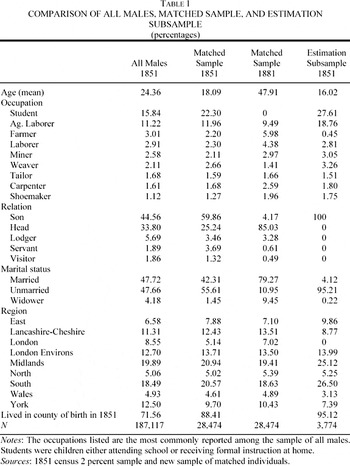
TABLE 1 COMPARISON OF ALL MALES, MATCHED SAMPLE, AND ESTIMATION SUBSAMPLE (percentages)
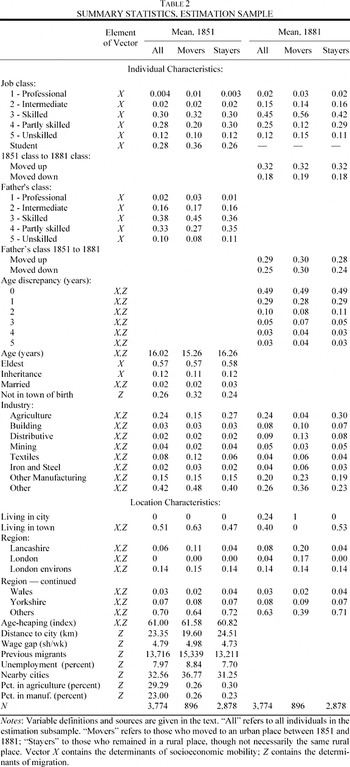
TABLE 2 SUMMARY STATISTICS, ESTIMATION SAMPLE
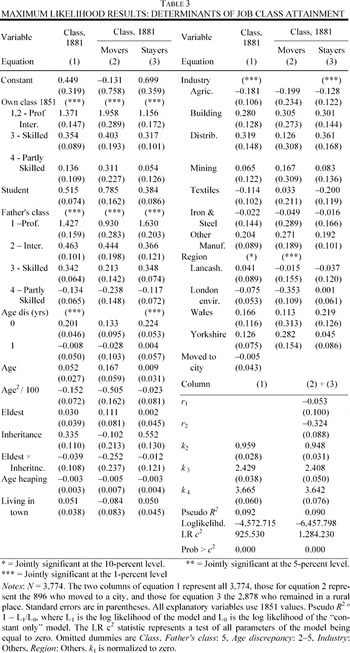
TABLE 3 MAXIMUM LIKELIHOOD RESULTS: DETERMINANTS OF JOB CLASS ATTAINMENT
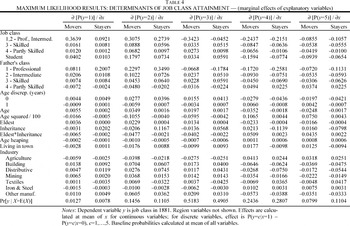
TABLE 4 MAXIMUM LIKELIHOOD RESULTS: DETERMINANTS OF JOB CLASS ATTAINMENT — (marginal effects of explanatory variables)
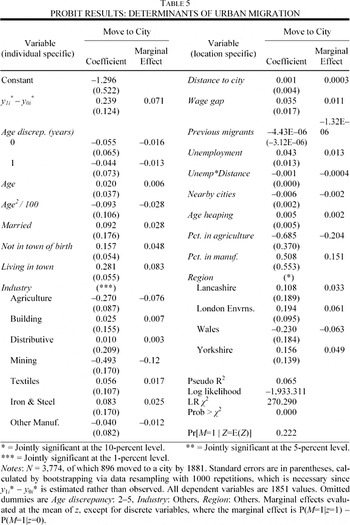
TABLE 5 PROBIT RESULTS: DETERMINANTS OF URBAN MIGRATION
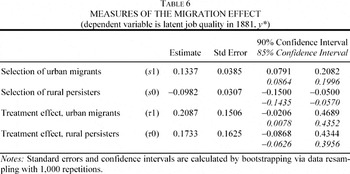
TABLE 6 MEASURES OF THE MIGRATION EFFECT (dependent variable is latent job quality in 1881, y*)
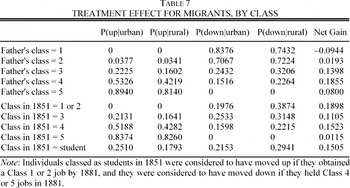
TABLE 7 TREATMENT EFFECT FOR MIGRANTS, BY CLASS
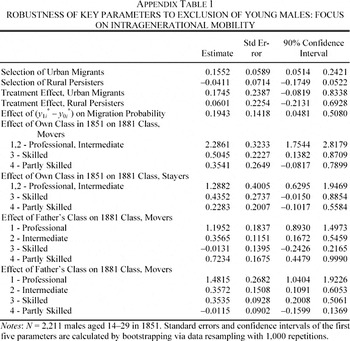
TABLE 8 ROBUSTNESS OF KEY PARAMETERS TO EXCLUSION OF YOUNG MALES: FOCUS ON INTRAGENERATIONAL MOBILITY
 You have Access
- 82
- Cited by