Introduction
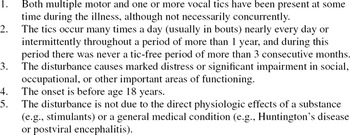
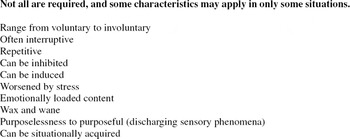
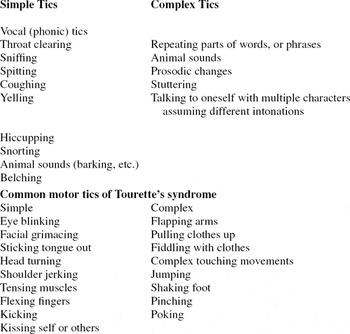
Tourette's syndrome (TS) is a neuropsychiatric developmental disorder (NPD) with onset in childhood (Gilles de la Tourette, Reference Gilles de la Tourette1885). The American Psychiatric Association, Diagnostic and Statistical Manual of Mental Disorders, 4th ed., text revision, 2000 (DSM-IV-TR) diagnostic criteria for TS are presented in Table 1. The disorder is manifest as phonic and motor tics of highly variable severity. The motor and phonic tics do not have to be present concurrently. In Table 2 we summarize the phenomenological features of tics, which are arbitrarily divided into simple and complex. In general, simple tics are brief and are composed of a single action or vocalization, whereas complex tics are often longer in duration and are composed of multiple actions or vocalizations, which are sequenced in a highly stereotyped presentation. Although tic expression can consist of an impressive range of movements and vocalizations, the most common tics seen in TS are summarized in Table 3.
Diagnostic criteria for Tourette's disorder from DSM-IV-TR

American Psychiatric Association, 2000.
A descriptive list of some of the characteristic phenomenological features of tics observed in our clinical practice

Common phonic tics found in children with Tourette's syndrome

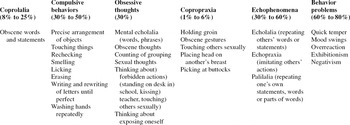
In Table 4 we summarize common associated findings in people with TS. These are not included in the diagnostic criteria for TS, but are crucial in the management of TS especially in school and in social settings (Burd & Kerbeshian, Reference Burd and Kerbeshian1992). Providing schools and parents with current and anticipatory information about associated and complex features of TS can greatly improve relationships of TS children with their parents, teachers, and peers (Burd & Kerbeshian).
Behavioral problems associated with Tourette's syndrome (rates are expressed as percentages)

NOTE: This list is not exhaustive, as a wide range of symptoms may occur in patients with Tourette's syndrome.
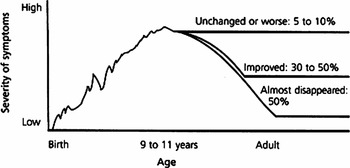
In most cases the developmental trajectory of TS is one of tic onset at around 5 years of age, which is remarkably similar across gender, countries, and clinics (Freeman et al., Reference Freeman, Fast, Burd, Kerbeshian, Robertson and Sandor2000). A peak in symptom severity typically occurs by 12–13 years of age with a gradual decline in symptom severity in late childhood continuing through adolescence (Burd et al., Reference Burd, Kerbeshian, Barth, Klug, Avery and Benz2001; Leckman et al., Reference Leckman, Zhang, Vitale, Lahnin, Lynch and Bondi1998). In Figure 1 we present data from a population-based longitudinal study of TS (Burd et al., Reference Burd, Kerbeshian, Barth, Klug, Avery and Benz2001). This study was initiated with a cross-sectional prevalence study using the State of North Dakota as the population base. This cohort was used to assess epidemiological features of TS for children and adults (Burd, Kerbeshian, Wikenheiser, & Fisher, Reference Burd, Kerbeshian, Wikenheiser and Fisher1986a). The prevalence cohort was then used to conduct a longitudinal study of TS (Burd et al., Reference Burd, Kerbeshian, Barth, Klug, Avery and Benz2001). In this study we found that most cases of TS have a developmental course characterized by a peak in symptom severity, then a course of decreasing severity during adolescence. For about 5%–10% of affected people, TS is severe and results in significant social and functional impairment in childhood and adolescence that persists into adult life. For a few patients, TS is associated with musculoskeletal injuries from the repetitive movements resulting in trauma injury to a specific site, which can be chronic and severe.
The clinical course of Tourette's syndrome. Mean age of tic onset is age 5 years, and the disorder is usually recognized several years after onset. In most children, the severity peaks at 9 to 11 years of age. About 5% to 10% of patients have an intensifying course with little or no improvement. In about 85% of patients, symptoms diminish during and after adolescence (Burd et al., Reference Burd, Kerbeshian, Westerland, Labine, Barth and Klug2002).

Only recently have we had data on TS from large collaborative studies (Freeman et al., Reference Freeman, Fast, Burd, Kerbeshian, Robertson and Sandor2000). The Tourette International Consortium (TIC) is a model of a large-scale worldwide study of a developmental disorder. The project is directed by Roger Freeman of the University of British Columbia. It collects data on the phenotypic expression of tics, TS, and diagnostic findings from 30 countries and 60 clinics that contribute subjects to TIC (Freeman et al., Reference Freeman, Fast, Burd, Kerbeshian, Robertson and Sandor2000; Burd, Freeman, Klug, & Kerbeshian, Reference Burd, Freeman, Klug and Kerbeshian2005, Reference Burd, Freeman, Klug and Kerbeshian2006;). The TIC has a database on over 7,500 subjects and has been exceptionally useful for studies of TS and related disorders which require very large data sets.
The rate of diagnosis of TS and the related comorbid disorders has increased dramatically in the past 20 years. TS was once a neuropsychiatric rarity that was commonly overlooked in the assessment of complex neurobehavioral syndromes. Today, TS is considered to be a common NPD with a prevalence of 1.0 to 10 per 1,000 in school age children (Burd, Kerbeshian, Leech, & Gascon, Reference Burd, Kerbeshian, Leech and Gascon1994; Hornse, Banerjee, Zeitlin, & Robertson, Reference Hornse, Banerjee, Zeitlin and Robertson2001; Wang & Kuo, Reference Wang and Kuo2003).
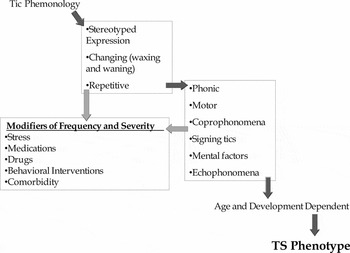
Management of people with TS has also changed with improved understanding of the developmental course of TS and the associated comorbidity. Multiple interventions are now targeted to the broader manifestations associated with TS, including comorbidity, rather than the previous more narrowly focused therapeutic goal of tic suppression (Burd, Reference Burd and Marsh2007). However, for some people with severe tics, or a single disabling tic, a therapeutic focus on tic suppression can be very useful and appropriate. The appreciation of the TS phenotype as a disorder with frequent comorbid disorders has had a major impact on treatment of people with multiple complex manifestations of TS (Comings & Comings, Reference Comings and Comings1994; Freeman et al., Reference Freeman, Fast, Burd, Kerbeshian, Robertson and Sandor2000; Kerbeshian & Burd, Reference Kerbeshian and Burd1994). Research on the developmental course of TS combined with greater understanding of the short- and long-term variability of individual tics has led to more targeted treatment for people with TS, especially children (Kerbeshian, Reference Kerbeshian and Marsh2007). The overall course of TS is one of improvement in nearly 8 out of 10 people. This finding of a gradual improvement over time has reduced the duration of pharmacological intervention in TS. The clinical intervention for patients with TS without co-occurring (comorbid) disorders may focus on management of tics (which have a waxing and waning course), resulting in intervention only over the time period when tics become severe. In Figure 2 we provide a composite of the primary components in the TS phenotype.
A model of the factors influencing tic onset, expression, and severity in Tourette's syndrome. These factors interact and are modified by severity and comorbidity.

While the recognition of TS as a common NPD has been associated with a dramatic rise in the behavioral and psychoeducational treatments for TS over the past 20 years, very few of these interventions have been adequately evaluated for efficacy and safety (Burd, Fisher, & Kerbeshian, Reference Burd, Fisher and Kerbeshian1985; Fisher, Burd, & Kerbeshian, Reference Fisher, Burd and Kerbeshian1985).
While TS has attracted a number of researchers in genetics, epidemiology, neurology, neuroanatomy, and clinical management, one area that has received much less attention has been the neuropsycholinguistic features of tics and TS. The epidemiological characteristics of TS have led to important advances in our understanding of associated disorders and impairments that are generally conceptualized as co-occurring conditions (Cohen, Leckman, & Pauls, Reference Cohen, Leckman and Pauls1997; Comings & Comings, Reference Comings and Comings1994; Kerbeshian & Burd, Reference Kerbeshian and Burd1994). Although the pathophysiology of comorbidity is not well understood, multiple mechanisms may contribute to risk for individuals. These include variable expressivity of a genotype (the phenotype is variable from the same susceptibility genes), variable penetrance (risk of the phenotype among children with the susceptibility gene), pleiotropy (one gene leads to multiple phenotypes), genetic heterogeneity (several genes may produce indistinguishable phenotypes), and epigenetics or gene environment interactions (a susceptibility gene is only expressed in the presence of an environmental exposure) (Szatmari et al., Reference Szatmari, Paterson, Zwaigenbaum, Roberts, Brian and Liu2007).
In our ongoing research on TS and other developmental disorders, we have examined the effects of comorbidity on the signs used to assess both outcome and the overall severity of impairment (Burd et al., Reference Burd, Kerbeshian, Barth, Klug, Avery and Benz2001, Reference Burd, Freeman, Klug and Kerbeshian2006; Kerbeshian & Burd, Reference Kerbeshian and Burd1994). Our longitudinal data indicate the importance of tic severity as a primary factor related to outcome (Burd et al., Reference Burd, Kerbeshian, Barth, Klug, Avery and Benz2001; Kerbeshian & Burd). However, we have also demonstrated that the number of associated comorbid conditions is a nearly equally important factor in outcome for TS and other developmental disorders (Burd et al., Reference Burd, Kerbeshian, Barth, Klug, Avery and Benz2001, Reference Burd, Kerbeshian, Westerland, Labine, Barth and Klug2002). We have denoted this finding as the complexity principle. This principle notes a strong association between the presence of an NPD and increased risk for the development of a second NPD. The presence of two disorders increases risk for development of third, and so on. This pattern may reflect the greater probability of meeting additional diagnostic criteria by aggregating an increasing number of specific symptoms variably over a range of distinct but related diagnostic possibilities. Alternatively, this may reflect increasing risk for multiple truly separable and distinct diagnostic entities. The principle argues for the importance of a detailed assessment of multiple spheres of development in people with NPDs and the importance of configuring all of these problems into the decisional algorithm for a multimodal treatment plan that can most appropriately maximize improvement for an affected person.
In this article we will review the published literature and will also use these data to discuss the syndromic features of TS that involve speech, language, and the expression of tics in TS. These data may be helpful in appreciating some aspects of TS that have not been the focus of substantial research related to TS. Although the research data are limited, the importance of the relationship between TS and neuropsychological impairments has great potential to uncover processes central to the impairments shared across multiple NPDs. In this review we will not emphasize the neurologic pathways in TS or the neurotransmitters implicated in TS because these have been well covered in multiple previous reviews (Albin, Reference Albin2006; Harris & Singer, Reference Harris and Singer2006; Mink, Reference Mink2006). We will refer selectively to the neurobiological underpinnings of speech, language, and communicational function referable to the broad TS phenotype.
We identified articles for inclusion in this review by completing a PubMed search using the terms Tourette's syndrome, tics, motor tics, phonic tics, and speech and language. We included all years and all languages for the selection of articles. We then hand-searched the reference list of the articles for additional references and publications. We organized this review and the discussion by focusing on the phenomenological components of TS depicted in Figure 2.
Tic Selection and Expression
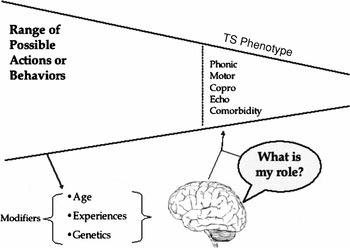
In our clinical practice with children who have TS and other tics, parents and teachers often ask, “Why does he do that?” The simplistic explanation of “it's a tic” is unsatisfactory for them, and us. However, we have remarkably little information on how tics rise to the level of or are selected for expression. In Figure 3 we present a model of a pathway for tic selection. Although this simplistic model encompasses the influences from multiple factors, it seems inadequate when one tries to understand the role on severity, developmental course, and outcome of the TS phenotype depicted in Figure 1.
A theoretical depiction of the components involved in phenotype expression in TS. The factors regulating tic selection and patterns of expression in TS and other tic disorders are not yet completely understood.

Tic Insertion into Speech
Tics are rarely interruptive of words or phrases and most often are inserted into ongoing speech at points of emphasis, at pauses for punctuation, between large units of speech, or at points of modulation of speech. It is of additional interest that most complex phonic tics consisting of phrases adhere to phonological and syntactic rules typically used in formulation of speech. However, both simple and complex tics often appear to violate semantic rules, usually because of their insertion into larger units of conversation where they have no apparent contextual meaning. Their insertion, however, does not derail the flow of the propositional sequences of language into which they are inserted. In essence, this lack of derailment is a fundamental factor in the definition of a vocal tic. These issues will be discussed in more detail later in this article.
Learning Disabilities
Greatly increased rates of learning disabilities (LD) have also been reported in people with TS (Burd, Kauffman, & Kerbeshian, Reference Burd, Kauffman and Kerbeshian1992; Burd, Kerbeshian, Cook, Bornhoeft, & Fisher, Reference Burd, Kerbeshian, Cook, Bornhoeft and Fisher1988; Comings & Comings, Reference Comings and Comings1994; Hagin, Beecher, Pagano, & Kreeger, Reference Hagin, Beecher, Pagano and Kreeger1982). Ludlow, Polinsky, Caine, Bassich, and Ebert (Reference Ludlow, Polinsky, Caine, Bassich and Ebert1982) also reported increased rates of LD among subjects with TS. They found decreased scores for rates of oral reading, writing from dictation, and reading comprehension when compared with matched controls.
In the North Dakota TS Cohort study (Burd, Kerbeshian, Wikenheiser, & Fisher, Reference Burd, Kerbeshian, Wikenheiser and Fisher1986b), it was reported that 51% of children with TS met criteria for an LD. In this cohort 21% met criteria for two or more LDs, and 11% had three or more LDs (Burd et al., Reference Burd, Kerbeshian, Wikenheiser and Fisher1986b). The rate of severe LD (defined by a discrepancy of 2 standard deviations between IQ and academic achievement) was 21% for one LD, and 9.5% for two or more LDs. Nearly 3% of children met criteria for three LDs. Thus, TS is an important indicator for increased rates of LD and or educational deficits.
We then utilized the much larger and more representative clinically ascertained TIC database to confirm the findings from the North Dakota cohort studies. In the TIC subjects the rate of LD was 22.7%, which is nearly 5 times the expected rate (Burd et al., Reference Burd, Kerbeshian, Wikenheiser and Fisher1986b). In the TIC data set LD and TS were associated with a mean of three additional comorbid disorders. The comorbid conditions that were increased in the TS and LD group compared to the TS and no LD group were attention-deficit/hyperactivity disorder (ADHD), anger, sleep, mood, social skill impairments, anxiety, increased rates of inappropriate sexual behavior, conduct disorder, coprolalia, pervasive developmental disorders, and psychosis (Burd et al., Reference Burd, Freeman, Klug and Kerbeshian2005). The prevalence rates of comorbid disorders were: ADHD 80.2% compared to 51% in the TS and no LD group, anger problems 46.3% versus 33.8%, and sleep disturbance 30.2% versus 23.7% in the TS no LD group (Burd et al., Reference Burd, Freeman, Klug and Kerbeshian2005). Using logistic regression modeling, this study identified a five-variable model for TS and LD. The model variables were being seen for evaluation before age 18, male gender, decreased number of family members with tics or TS, increased rates of perinatal factors, and increased number of comorbid disorders in subjects with a LD. The association of these variables may also be useful in identifying areas for systematic assessment when children with TS are encountered clinically. These model's parameters also suggest that these factors may be useful in developing intervention strategies for this population. In children with TS the severity of learning impairments is high, and the prevalence of severe learning disabilities is increased between 5 and 15 times the expected rates.
Speech Abnormalities
Several authors have considered some aspect of neuropsycholinguistic features of TS and tics. The first to present a detailed consideration of the relationship were Meige and Feindel (Reference Meige and Feindel1907). The authors related in narrative their clinical experience with many TS patients. They suggested a relationship between TS and dysfluency, changes in prosody and mental tics consisting of words phrases and sounds. Abwender et al. (Reference Abwender, Trinidad, Jones, Como, Hymes and Kurlan1998) found a history of tics in 11 of 22 subjects (50%) with dysfluency. They noted that tics and dysfluency have several common defining or phenomenological features. Both are inherited, are more common in males, have a childhood onset, have a developmental course with improvement over time, have a waxing and waning course, can be partially suppressed, and tend to be exacerbated by stress (Abwender et al.). A case report of tics and dysfluency was also reported by Van Borsel and Vanryckeghem (Reference Van Borsel and Vanryckeghem2000). De Nil, Sasisekaran, Van Lieshout, and Sandor (Reference De Nil, Sasisekaran, Van Lieshout and Sandor2005) also found an increased prevalence of dysfluencies in patients with TS. This was an interesting methodology because the authors asked children to report their difficulties. This study found increased rates of difficulty in speech and language formulation in expressive, receptive, and written language. It is interesting to note that they found problems in word finding, oral expression, reading, stuttering, and saying certain letters. In a case report, an 18-year-old college student reported that he had improvement in his dysfluency, but not his tics, when he pierced his tongue and inserted the tongue stud. He noted that when the stud was removed, the dysfluency returned. This relationship was repeated several times (Barnhill, Reference Barnhill2007).
Dysfluency was also noted in the TIC data, in which 7.7% of subjects with TS had dysfluencies. In these subjects dysfluency was associated with an increased difficulty in anger control, sleep disorders, coprolalia, increased tic severity, increased rates of learning disabilities, and multiple other behavior disorders (Burd et al., Reference Burd, Freeman, Klug and Kerbeshian2005; Freeman et al., Reference Freeman, Fast, Burd, Kerbeshian, Robertson and Sandor2000). Burd et al. (Reference Burd, Freeman, Klug and Kerbeshian2005) then utilized logistic modeling of tic severity and found that the best fit model for severe tics included age of onset; age at diagnosis; gender; perinatal problems; and the specific comorbidities of obsessive-compulsive disorder (OCD), mood disorders, anxiety disorders, coprolalia, copropraxia, stuttering, and sexually inappropriate behavior (Burd et al., Reference Burd, Freeman, Klug and Kerbeshian2005). When the logistic modeling for tic severity was constrained to the 21 neuropsychiatric disorders in the TIC database, the model comprised obsessive-compulsive behaviors (OCB), mood disorders, anxiety, coprophenomena, stuttering, sexually inappropriate behavior, and mental retardation (Burd et al., Reference Burd, Freeman, Klug and Kerbeshian2005). In TS dysfluency appears to be a marker for both increased syndromal and functional impairment.
The concurrence rates of dysfluency and TS have been reported to range from 15% to 31% (Comings & Comings, Reference Comings and Comings1994; Pauls, Leckman, & Cohen, Reference Pauls, Leckman and Cohen1993). Thus, in clinical settings dysfluency is a common finding and, in some cases, may be a manifestation of the tic disorder spectrum. However, we still do not know how tics and dysfluency are related. Does dysfluency in the context of tic disorders have a different neurobiological or genetic basis or are some tics atypical dysfluencies? Or is a more parsimonious explanation simply that the manifestation of dysfluency overlaps with tics? Van Borsel & Tetnowski (Reference Van Borsel and Tetnowski2007) argued that the dysfluency seen in TS is not characteristic of developmental stuttering. They stated that the behaviors, hesitations, false starts, interjections, and phrase repetitions are not characteristic of the syndrome of stuttering when current strict criteria for stuttering are applied.
Another speech abnormality we have examined is the relationship between abnormalities in prosody and voice abnormalities (mutational falsetto) and tics (Kerbeshian & Burd, Reference Kerbeshian and Burd1988). It is interesting that both of these patients also presented with moderate to severe echolalia. Both had a positive response to pharmacological intervention and psychoeducational therapy targeted at their individual developmental needs.
Expressive and Receptive Language Impairments
The phenotypic boundaries of tic expression are not yet well understood. Ludlow et al. (Reference Ludlow, Polinsky, Caine, Bassich and Ebert1982) reported deficits in language expression and comprehension in subjects with TS compared to matched controls The potential overlap of tics and language development was demonstrated in a study by Fisher and colleagues (Fisher, Kerbeshian, & Burd, Reference Fisher, Kerbeshian and Burd1986). In this study, four patients with a distinctive syndromal disorder composed of pervasive developmental disorder, tic disorder, and a characteristic pattern of speech and language impairment (severe delays in both receptive and expressive language, finger flicking, and mumbling) were treated with the dopamine blocker haloperidol. The patients had a marked response to the medication with a large gains in acquisition of speech and improvement in both receptive and expressive language (Fisher et al., Reference Fisher, Kerbeshian and Burd1986). In one patient a discontinuation of the medication led to regression, and when the medication was restarted, his speech and language again improved. The most interesting finding from this study was the clear linkage with improvement in tic severity and increased speech and language acquisition.
Another interesting case report describes an intralaryngeal injection of botulinum toxin that resulted in improvement in coprolalia (Trimble, Whurr, Brookes, & Robertson, Reference Trimble, Whurr, Brookes and Robertson1998). The pathophysiology of this intervention is not readily apparent. Alternatively, some patients have the onset of tics after exposure to some medications (Burd, Kerbeshian, & Fisher, Reference Burd, Kerbeshian and Fisher1987; Burd, Kerbeshian, Fisher, & Gascon, Reference Burd, Kerbeshian, Fisher and Gascon1986).
Coprophenomena
Coprolalia includes scatologic words and racial or social epithets (Kushner, Reference Kushner2000). The inclusion of words and phrase content for the expression of coprolalia appear to be dependent on knowledge of same (Van Lancker & Cummings, Reference Van Lancker and Cummings1999). Both Van Lancker and Cummings (Reference Van Lancker and Cummings1999), and Shapiro (Reference Shapiro1988) have provided a table of coprolalic expressions. The Van Lancker and Cummings article provided data on coprolalia from 11 different nationalities and found that the coprolalic words or phrases differed by country. Thus, coprolalia implies sophistication in the semantic content of speech (Van Lancker & Cummings). Shapiro also noted that patients with TS tend to use the most socially unacceptable terms within their own cultural context. For example, Jankovic and Fahn (Reference Jankovic and Fahn1986) reported on a patient who had coprolalia in Spanish at home around her family and coprolalia in English when she was in the hospital. We have cared for a patient with severe mental retardation who was nearly nonverbal but had coprolalia in German (his first language and the primary language of his family). Nearly half of the 15 to 20 words he was capable of saying were coprolalic. Case reports of tics and coprolalia emerging after treatment with neuroleptics has been reported (Van Lancker & Cummings). The same has also been noted for copropraxia.
Van Lancker and Cummings (Reference Van Lancker and Cummings1999) suggested that coprolalia in TS be considered as ego alien when the word or phrase is unwanted and intrusive. This may offer additional support for the research suggesting that OCD may be related to TS.
Copropraxia often has both a symbolic and communicative function and has an apparent communicational intentionality that may require a significant cognitive component, which is difficult to understand in context of tic phenomenology depicted in Table 2. In our clinical practice we have observed an updating of the corpus of coprolalia over time, which appears to be a response to changes in societal definitions of behaviors which are rapidly acquired and used by patients. The cultural, situational, and social context of coprophenomena suggests that we have much to learn about tic emergence and the influence of situational and contextual factors on tic expression.
We have iterated that the link between speech and language based communication and TS may be fruitfully investigated through the modalities of the simple and complex vocal tics. Simple vocal tics most often incorporate poorly synchronized sequences of respiratory, vocal cord, and oral articulatory mechanisms, which in some individuals may be associated with a premonitory sensation of tension or discomfort, such as a sense of irritation in the throat. A clearing of the throat, a sequence of coughs, or repetitive grunts may be among the responses. Simple vocal tics may also present as hesitations or a cluttering of the flow and rhythm of vocalizations. A disruption in the premotor aspects of speech production may be implicated. Certain complex vocal tics may include a stereotypic sequencing of a repertoire of simple motor tics. Other complex vocal tics involve specific components of language, including interruptive phonemes, which may be seen as emerging from specific simple vocal tics and single-word verbalizations. The more complex vocal tics may include pragmatically misplaced verbalizations in the form of phrases, or even sequences of complete sentences. In the complex vocal tic of echolalia, the spoken words of another may serve as an externally triggered patterned stimulus, often premonitory in its perception. Similarly, in the complex vocal tic of palilalia, the spoken words of oneself may serve as an intermediate externally heard or internally derived patterned stimulus analogous to a premonitory sensation. Palilalia is often whispered, perhaps reflective of a partially suppressed premotor cognitive repetition of what the individual has just said.
Writing and Tics
Meige and Feindel (Reference Meige and Feindel1907) reported that some patients found that writing could induce the use of specific phonic tics. Ludlow et al. (Reference Ludlow, Polinsky, Caine, Bassich and Ebert1982) reported deficits in written language expression in subjects with TS compared to age- and sex-matched controls. Lang, Consky, and Sandor (Reference Lang, Consky and Sandor1993) reported one patient with TS who had tics that were expressed by typing. Some people with TS demonstrate coprographia (Comings, Comings, & Knell, Reference Comings, Comings and Knell1989; Meige & Feindel, Reference Meige and Feindel1907).
Signing and Tics
Lang et al. (Reference Lang, Consky and Sandor1993) reported on a patient who developed tics at age 8. At age 17 she began training to learn sign language. She then began to incorporate tics into her use of sign language by finger spelling tics. She later developed coprolalia in her signing. She would sign coprolalic words (finger spelling). This would also occur when she was not talking or thinking about the word or phrase she was signing.
Premonitory Sensory Phenomena and Urges
Many TS patients report the presence of an anticipatory sensation, often localized to a specific location, which may precede the urge to tic and is relieved by a specific tic. In some patients tics may have to be repeated several times in order to be just right and to reduce or temporarily eliminate the sensation (Bliss, Reference Bliss1980). We have encountered patients who report needing to repeat phrases or to think stereotyped thoughts in a certain way to reduce these sensations. These symptoms begin to merge with the phenomenology of OCD. For children or adults who need to concentrate on academic problems, these premonitory phenomena can be quite disruptive. In young children, it is especially difficult to separate out the effects of OCB from the exact requirements of tic performance to relieve premonitory phenomena. The phenomena can involve needing to say a sound, word, or phrase exactly right or to write a letter, word, or phrase in a way that will function to eliminate the need to redo it. This can also be expressed as repeated erasing and rewriting of a letter, word, or phrase. Some people report they feel the need to rewrite or repeat to themselves the sound of word or phrase. We encounter mental phenomena requiring similar exactness of thought in order to be “right” in children. As yet we are unable to determine how to classify these behaviors, especially if the child has other symptoms of OCD. This dilemma is especially complex in patients who report that the behavior they are trying to manage is “just like my tics and not like my obsessions or compulsions.”
Situational Tics
Some tics appear to be situationally triggered. We have encountered several children who have a tic repertoire used only in specific situations. This may involve a person (uttering phrases specific to being around or thinking about a person) to situations where specific tics are uttered or expressed. Some patients report the development of long-lasting tics initiated by exposure to a specific person or situation. For some people this may be a particular behavior, personal characteristic, or physical feature of a person. For example, one of the authors has had multiple children comment on his lack of hair “shiny head” and his “chubby cheeks.” In some cases these comments are blurted out followed by an apology only to be repeated over and over again. Children note that this can be a serious problem in the presence of authority figures who are unable to appreciate the difficulty children with TS can have in modulating these utterances. El-Assra (Reference el-Assra1987) reported on a 13-year-old whose tics apparently began after exposure to a traumatic incident. Many children and adults have reported that they have “picked up” tics from a person or situation. These tics may include prosodic mannerisms, a mispronounced word, or a behavior that may be imitated for years and, in some situations, only occurs in the presence of an individual or situation.
The Integration of Neuropsycholinguistics and Tics in TS
TS and speech, language, and communicational disorders are common NPDs with highly variable severity. Although the precise nature of the relationship between the two is unclear, it is clear that for many people with TS the risk for speech and language disorders is increased. This comorbidity appears to encompass neurocognitive, affective, and neurobiological relationships that may be useful in understanding the pathophysiology of the NPDs in general. In TS the relationship among speech, language, and phonic tics (including coprolalia) seems to be an unusually compelling area for further study. Further research in this area may also be very useful in advancing our knowledge in the area of how mind–brain transduction functions and the outcomes when the transductions between these system elements are perturbed. Thus, how do tics come about? Are the tics neurocognitive impulses that are poorly regulated and inadequately inhibited, or are tics somehow selected for expression? Either model has definite weaknesses.
In a seminal PET (positron emission tomography) scan study of six patients with TS, Stern et al. (Reference Stern, Silbersweig, Chee, Holmes, Robertson and Trimble2000) correlated anatomically localized dynamic central nervous system metabolic variation with the expression of motor and vocal tics. Their work supported the work and speculations of others regarding neural circuits, the perturbation of which would be temporally associated with the expression of tics. They noted that parallel cortico-striato-thalamo-cortical circuitry may be involved in the qualitative expression of tics, via a dysmodulation of inhibitory and facilitating effect. Premotor areas, and language-based frontally localized analogs of the same, also appear to be involved, depending on the type of expression of tic. Frontally localized language areas would be particularly pertinent to neural circuitry involved in the expression of simple and complex language-based tics. They also speculated that dysfunction in the phylogenetically older basal ganglia, and limbic areas of TS-related neurocircuitry, may give rise to some of the typically primitive nature of behaviors in TS.
From the perspective of evolutionary biology, MacLean's (Reference MacLean, Boag and Campbell1973) concept of the triune brain may be pertinent to a discussion of communicative dysmodulation inherent in the expression, particularly of the complex vocal tics of coprolalia, and to some extent the complex motor, but nonetheless communicational tic of copropraxia. MacLean noted that the hierarchical architectural structure of the brain is reflective of its evolution and its phylogeny. He described three evolutionary, distinct, interacting, and complementary brain systems, which he has dubbed as the reptilian, paleomammalian, and neomammalian brains. The main structural component of the primitive reptilian brain is the basal ganglia, which includes components of the caudate nucleus, the putamen, and the globus pallidus, and critical elements of the human neural circuitry implicated in TS. Behavioral responses at the level of the reptilian brain are patterned and instinctual. They include instinctually defined sexual, aggressive, appetitive, and territorial components, including same species specific communicative display functions. It follows, then, that in the modern-day human, dysmodulation and disinhibition in the cortico-striato-thalamo-cortical circuits subserving speech, and in particular language function, would be involved in the expression of the complex vocal tics we call coprolalia. It also follows that these complex vocal tics would be nuanced by content that incorporates sexual, aggressive, appetitive, or territorial components. These reptilian, basal ganglia propensities appear to be evolutionarily highly conserved. They also appear to be highly canalized; that is, in an evolutionary sense, they are resistant to change from genetic or epigenetic (environmental) causes (Kerbeshian & Burd, Reference Kerbeshian and Burd2005). Thus, in a certain sense, when one is witness to a vocal tic, particularly the complex vocal tic of coprolalia, one is witnessing the dysregulated intrusion of one's phylogenetic past as incompletely modulated by one's phylogenetic present. The form of that intrusion is within the context of language.
Discussion
Using TS as a model to increase our understanding of how speech and language are organized in the brain may be another very useful scientific and clinical endeavor. How do the speech- and language-producing neural modules in the brain change when tics are expressed? Pursuing the answer to this question seems to be an achievable research goal by studying TS children with or without speech and language difficulties versus children without TS who have speech and language difficulties versus normal children. The group of children without TS who manifest impairments in phonology, dysfluency, and cluttering would be most interesting in comparison with children with TS who have similar speech and language impairments. The position of tic insertion into ongoing speech and language should allow us to infer a good deal about the nature of the integrated subunits of speech and language expression, assuming that tic insertion defines the lines of cleavage for the neurobiological underpinnings of units of speech and language.
TS is clearly a disorder that offers many opportunities, similar to stroke, for understanding the confluence of integrative and distributive mechanisms of speech, language, cognition, and emotional factors in the developing child. In contrast to stroke, TS is a dynamic rather than static process. Research in these areas may also offer unique insights for the development of new interventions that may have broader benefits than the currently narrowly focused interventions used for children with developmental disorders.
Multiple specific research questions could be considered. It would be important from the outset to consider these as topics that by their very nature require broadly based research teams from disparate disciplines. The organization of these research groups may be optimal if they are considered as neuropsycholinguistic research teams. They would likely need to be composed of an unusually collaborative group, including speech and language scientists; psychologists; psychiatrists; educators; neurologists; and multiple scientists in the fields of brain imaging, neuroelectrophysiology, and neurodevelopment.
The topical issues covered next are presented in no order of priority but are broadly organized into four categories in response to the issues raised in this review:
1. What is a phonic tic? Does finger snapping, sniffing, belching, flatus, or silent palalia qualify as phonic or motor tics? Must phonic tics be accompanied by a sound? Must a phonic tic involve the vocal cords, or might puffing air though the lips or clicking of the tongue also qualify? If phonic tics consist of sounds and phrases, how are we to classify prosodic changes that are specific to a tic? What if prosodic features continue after the tic (word or phrase) has waned? How are we to classify thoughts about words, sounds, or phrases? What about the patient who has tics and hears a sound repeated over and over, and reports it's just like a tic? Or is it a hallucination? What about the patient who perceives the sounds or phrases but is not aware of his or her other tics? If palalia is a phonic tic, how are we to classify silent or mental palalia? At what threshold does it become an obsession?
2. Since the early descriptions of tics, the concept of “mental tics” has repeatedly been mentioned (Meige & Feindel, Reference Meige and Feindel1907). Do tics require action, movement, or sound to be classified as tics? If the response is yes, what are we to call these mental phenomena that patients describe as “just like a tic only in my head”? And if one answers no, how might one conceptualize the mental experiences that would meet criteria for a mental tic? Certainly, a report from a patient that the phenomena is “ticlike” would be helpful, but not satisfactory, for this can be reported only by patients who are aware of tics and are of an age to discuss these complex issues with a researcher or clinician.
The future study of tics to determine if they can occur without observable expression seems to parallel our current difficulties in understanding thought disorders in young children, in persons without speech, or in people with severe cognitive impairment. Although we have considered some of these issues, research on the boundaries of tic phenomenology are still limited (Kerbeshian & Burd, Reference Kerbeshian and Burd1994; Leckman, Reference Leckman2003). These mental manifestations of TS symptomatology may well be essential to fully understand the genetics of TS and tics because the phenotypic range of TS may change substantially when these issues are more fully appreciated.
Additional questions include the following: How do tics originate? What are the effects of exposure to tic-provoking factors (e.g., stress and anxiety)? Why are some words, sounds, and phrases repeated, but not others (echophenomena)? Do tics pass clinical thresholds like obsessions or compulsions? Why are some forbidden utterances or actions expressed as tics, but not others? Why do some tics start after exposure to a situation, event, or person? Why are some tics only seen in these certain situations?
3. How can tics be highly variable across situations and in their developmental course and yet be so dependent on stereotyped expression for recognition and classification as a tic rather than as another movement disorder? Could our current classification of tics be limited and constrained by what we currently understand about the brain, neurotransmitters, and brain-signaling pathways?
Why must a tic be stereotyped in form, action, and sometimes in function? This is in essence a definitional question. Patients often, but not invariably, report the presence of a premonitory sensation preceding an urge to complete a tic, and that doing a tic reduces, “the feeling.” Like seizures, tics are stereotyped in expression. The premonitory sensation is not unlike the aura reported to precede seizures. Aura, and premonitory sensations alike, are dissipated by expression of the seizure or tic respectively. It seems likely that the future will see substantial modifications in our current conceptualization of a tic as we consider these issues and begin to accumulate new data on a wider range of factors related to tic phenomenology. What do tics share with seizures, chorea, tremors, and dystonia? Why do tics wax and wane, and why do most tics go away, only to be replaced by another tic?
4. How long (temporal duration) can a tic be? Some complex tics can consist of a behavioral repertoire of 5, 10, or even 15 highly sequenced actions. Increased clinical experience seems to support an increasingly wider diagnostic umbrella for complex tics. In our nearly 30 years of clinical experience, we have found that many patients describe complex behaviors as “tics.” Phonic tics most commonly consist of sounds or words, but can be manifest as phrases. Would lengthy repetitions of stories or recounting a single event over and over meet criteria for a tic?
Clearly, we have much to learn about the relationship between TS and speech, language, and communication disorders. Learning about one will be informative about the others. The past two decades have seen great progress in the development of genetic methodologies for the study of TS, and major advances in brain imaging. We also need advances in our understanding of how tics are channeled for expression, and why tics tend to improve and even disappear over the course of development in most patients. TS provides a unique and compelling clinical entity to develop parallel and complementary studies of the mental influences in mental disorders. We are now poised to be able to merge the great advances in the technical sciences of genetics and brain imaging with advances in our understanding effects of mental influences on tic selection and expression. Unless the future differs from the past, advances in one arena will lead to advances in another. These advances will likely also reveal new fields for scientific inquiry and also identify areas of misunderstanding of brain functioning, prompting further deliberation and study.