Introduction
Animal manure has been used as a natural fertiliser for thousands of years and waste products from poultry farming is recognised as one of the most desirable soil amendments for horticultural crops (Keating, Reference KEATING2005). Rapid expansion of the commercial chicken industry has resulted in a significant rise in the production of chicken manure and chicken litter worldwide (Nie et al., Reference NIE, JACOBI, STRACH, XU, ZHOU and LIEBETRAU2015). Thousands of metric tons of poultry waste are applied to agricultural land (Mangalgiri et al., Reference MANGALGIRI, ADAK and BLANEY2015) with considerable amounts used for production of a wide range of horticultural crops (Keating, Reference KEATING2005).
Manure and other waste products associated with chicken production (hereafter referred to collectively as manure) contains a variable mixture of faecal matter, bedding materials such as wood chips, wood shavings or sawdust, and spilled feed. It may also contain feathers, broken eggs and dead birds or parts of birds (Lopez-Mosquera et al., Reference LOPEZ-MOSQUERA, CABALEIRO, SAINZ, LÓPEZ-FABAL and CARRAL2008; Griffiths, Reference GRIFFITHS2011). The composition and nutrient content of chicken manure varies with production method, type of bedding materials, feed rations and post-collection practices such as composting and drying (Keating, Reference KEATING2005). Manure from broiler chickens typically contains approximately 3.4% N, 1.4% P and 1.7% K while manure from laying hens has higher concentrations of nutrients (6.0% N, 1.8% P and 2.3% K) (Nicholson et al., Reference NICHOLSON, CHAMBERS and SMITH1996). Chicken manure contains trace elements such as copper, zinc, manganese, boron and chloride (Warn, Reference WARN2014).
Chicken manure can be obtained as fresh or aged and in a fully or partially composted form. It can be stored for some months before use or can be used immediately and is most frequently incorporated into the soil before planting or as a layer of mulch after planting. Chicken manure can be applied at later stages of crop growth as a side dressing on soil surfaces (Wilkinson et al., Reference WILKINSON, HARAPAS, TEE, TOMKINS and PREMIER2003; Keating, Reference KEATING2005). The rate of application depends on the crop and growing conditions. The use of manure in the horticultural industry is influenced by many factors such as source and availability, transportation costs, availability and cost of spreading equipment, existing soil structure and fertility, comparative costs of traditional alternatives, proximity to ground water in the soil profile, perceived and actual risks to health and attitudes regarding odour issues (Caithness, Reference CAITHNESS2004).
Advantages and disadvantages of using chicken manure
Chicken manure has the potential to improve physical, chemical and biological characteristics of soil thereby increasing crop productivity and reducing reliance on inorganic fertilisers. Manure serves as a soil amendment and has an important role in moisture and nutrient retention in the soil (Davis et al., Reference DAVIS, SLOAN, KIDDER and JACOBS1996; Griffiths, Reference GRIFFITHS2011; Mangalgiri et al., Reference MANGALGIRI, ADAK and BLANEY2015). Chicken manure is mainly organic matter consisting of undigested carbohydrates and protein, fibre and commensal microbial biomass. The carbon content of chicken manure is typically 40% which equates to about 90% organic matter. This organic matter is in a reduced form and contains a considerable amount of energy (Keating, Reference KEATING2005). Chicken manure has a higher fraction of biodegradable organic matter than other livestock wastes (Bujoczek, et al., 2000) thus the breakdown and release of nutrients is fairly rapid. Depending on the level of decomposition, from 30-80% nitrogen and 40-100% of phosphorus is available to plants within the year of application (Warn, Reference WARN2014). Manure can increase the water holding capacity of sandy soil (Dimsey, Reference DIMSEY2004) and compost made from it has been reported to be effective in the immobilisation of cadmium in soil (Liu et al., Reference LIU, CHEN, CAI, LIANG and HUANG2009). More importantly, it is relatively cheap and abundant.
There is considerable uncertainty about the quality and consistency of manure and potential for environmental and health risks (Dorahy et al., Reference DORAHY, DOUGHERTY, CHAN and WATERS2010). For example, excessive application can lead to nitrate leaching into groundwater, phosphorus runoff into adjacent water bodies and the likelihood of elevated levels of bacterial or viral pathogens in lakes and rivers (Moore et al., Reference MOORE, DANIEL, SHARPLEY and WOOD1995). As organically-bound phosphorus is mobile in soil, there is a risk of eutrophication of water bodies, particularly in sandy soils (Keating, Reference KEATING2005). Phosphorus, zinc and copper can accumulate in soil with long-term application of chicken manure causing nutrient imbalances (Kingery et al., Reference KINGERY, WOOD, DELANEY, WILLIAMS and MULLINS1994; Redden and Wallis, Reference REDDEN and WALLIS2015). Chicken manure can contain minor levels of heavy metals (Wiedemann et al., Reference WIEDEMANN, BIELEFELD, MCGAHAN, VALENTINE and MURPHY2015).
Another major disadvantage of using manure in horticulture is the opportunity to transfer toxic substances in feed additives to humans. For example, roxarsone, a growth promoter and antimicrobial agent, is widely used as a feed additive in the poultry industry (Yao et al., Reference YAO, HUANG, HE, ZHOU and LI2013). Huang et al. (Reference HUANG, YAO, HE, ZHOU, LI, YANG and DENG2014) demonstrated that more than 96% of roxarsone in chicken feed was degraded and converted to arsenic-containing compounds when excreted and composted. Movement of harmful compounds can occur via uptake by roots and incorporation into plant material consumed by humans, leaching into groundwater and sources of drinking water or being present in dust and inhaled (Guselle and Olson Reference GUSELLE and OLSON2015; Mangalgiri et al., Reference MANGALGIRI, ADAK and BLANEY2015). Additionally, compounds such as onensin, a carboxylic polyether ionophore used in the poultry industry to control pathogens, can be detrimental to agriculturally-important soil invertebrates such as earthworms and woodlice (Žižek et al., Reference ŽIŽEK, HRŽENJAK, KALCHER, ŠRIMPF, ŠEMROV and ZIDAR2011).
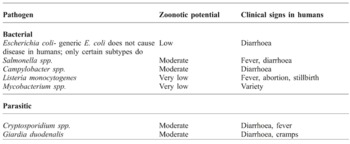
Arguably the most important limitation of the application of chicken manure is the potential for transfer of zoonotic organisms such as Salmonella spp., Campylobacter jejuni, Escherichia coli and Listeria monocytogenes to humans (Wilkinson et al., Reference WILKINSON, HARAPAS, TEE, TOMKINS and PREMIER2003; Chen and Jiang, Reference CHEN and JIANG2014; Wiedemann, Reference WIEDEMANN2015a). These pathogens ( Table 1 ) can be transmitted to humans via direct contact through wounds or inhalation, but this pathway is less common than indirect transfer through food, groundwater or soil contaminated by manure (Guselle and Olson, Reference GUSELLE and OLSON2015).
Chicken manure pathogens of public health concern. (Adapted from Guselle and Olson, Reference GUSELLE and OLSON2015).

For example, Salmonella has been isolated from leafy greens and other fresh vegetables and large outbreaks of human disease have been traced to cantaloupes and other fruits that were in contact with soil (Spencer and Guan, Reference SPENCER and GUAN2004). Washing and disinfecting produce may not be sufficient to eliminate certain pathogens such as Salmonella spp. since these microorganisms may possess mechanisms to survive or resist such processes.
Factors such as odour and dust leading to poor air quality are associated with production, storage and land application of chicken manure (Chastain, Reference CHASTAIN2003; Powers et al., Reference POWERS, ANGEL and APPLEGATE2005). Odours can induce diverse physiological and psychological reactions and reports of headaches, vomiting, loss of appetite and mental stress are frequent (Nimmermark, Reference NIMMERMARK2011; Fournel et al., Reference FOURNEL, PELLETIER, GODBOUT, LAGACÉ and FEDDES2012). Odour management guidelines have been developed in many countries to minimise issues related to chicken production and manure storage facilities (Runge et al., Reference RUNGE, BLACKALL and CASEY2007; Griffiths, Reference GRIFFITHS2011). However, odour management of chicken manure at land application sites is yet to be addressed.
Unpleasant odour and chicken manure
Unpleasant odours are inherent in all livestock management operations including chicken production (Lacey et al., Reference LACEY, MUKHTAR, CAREY and ULLMAN2004). Odour related to chicken manure can arise from various sources during poultry production, storage and land application (Chastain, Reference CHASTAIN2003; Lacey et al., Reference LACEY, MUKHTAR, CAREY and ULLMAN2004). Composting activities of manure can be a potential source of odour (Environmental Protection Authority of Victoria, 2012), however, the most significant complaint by the public is at land application sites during and after spreading (Chastain, Reference CHASTAIN2003).
Odours originating from chicken manure are a result of a combination of 60-150 odour-producing compounds including volatile fatty acids, mercaptans, esters, carbonyls, aldehydes, alcohols, ammonia and amines (Chastain, Reference CHASTAIN2003; Cai et al., Reference CAI, KOZIEL, LIANG, NGUYEN and XIN2007). These compounds may be broadcast through air as a gas or absorbed and transported by dust particles. Microbial degradation of manure can take place under aerobic and anaerobic conditions. Aerobic degradation of nitrogen-containing compounds results in the formation of ammonia, amines, indole, skatole and volatile fatty acids. Under aerobic conditions, sulphide-containing compounds are oxidised to form sulphur-containing compounds such as hydrogen sulphide, dimethyl disulphide and dimethyl trisulphide. Anaerobic breakdown of sulphide-containing compounds produces thiols, mercaptans and volatile organic sulphide (Jiang and Sands, Reference JIANG and SANDS2000). Many other compounds including organic acids (acetic, butanoic, pentanoic), sulphides (dimethyl-disulphide, dimethyl-trisulphide), nitrogen compounds (indole, 3-methylindole, 2-methyl-1H-purine), phenol, cresol, 2-furanmethanol, and 2-methyl-2-butenale contribute to the odour from chicken manure (Lacey et al., Reference LACEY, MUKHTAR, CAREY and ULLMAN2004).
Although ammonia is not the only compound that contributes to the unpleasant odour from chicken manure, it is generally accepted as having the greatest contribution (Jiang and Sands, Reference JIANG and SANDS2000). Gas composition analysis inside chicken production buildings confirmed that ammonia and dimethyl disulphide were, by volume, the major odorous constituents (Lacey et al., Reference LACEY, MUKHTAR, CAREY and ULLMAN2004). Elevated rates of production of ammonia result from high levels of organic nitrogen and relatively low levels of carbon. The two main nitrogen sources in chicken manure are undigested protein and uric acid, which form ammonia during microbial decomposition (Nahm, Reference NAHM2005; Nie et al., Reference NIE, JACOBI, STRACH, XU, ZHOU and LIEBETRAU2015). Ammonia is highly volatile (Chastain, Reference CHASTAIN2003) and its inhibition has been one of the main goals in controlling odour production from chicken manure.
Factors affecting the generation of odour from manure are complex. In chicken sheds, the condition of the manure is one of the major factors affecting odour (McGahan et al., Reference MCGAHAN, KOLOMINSKAS, BAWDEN and ORMEROD2002; Briggs, Reference BRIGGS2004) and rates of emissions can vary on a daily basis (Dunlop et al., Reference DUNLOP, RISTOVSKI, GALLAGHER, PARCSI, MODINI, AGRANOVSKI and STUETZ2013). When chicken manure is too dry it becomes dusty and can cause health problems and discomfort for birds and farm workers and increases the rate of odour transmission (McGahan et al., Reference MCGAHAN, KOLOMINSKAS, BAWDEN and ORMEROD2002). When chicken manure is too wet (i.e. when moisture levels are over 15%) it is rapidly degraded by bacteria (Keating, Reference KEATING2005). Ammonifying bacteria such as Bacillus subtilis, B. cereus, B. megatherium, Escherichia coli and species of Proteus and Pseudomonas are known to increase the concentration of ammonia within and around poultry farms (Ivanov, Reference IVANOV2001; Keating, Reference KEATING2005). In addition, wet chicken manure encourages the growth of fungi such as Atopostipes and Aspergillus spp. which have been associated with odour production (Wadud et al., Reference WADUD, MICHAELSEN, GALLAGHER, PARCSI, ZEMB, STUETZ and MANEFIELD2012).
Low oxygen levels, small particle size, high temperature and low pH encourage the activity of anaerobic bacteria and contribute to odour (Briggs, Reference BRIGGS2004). Manure with pH less than 7.5 increases the rate of odour emission by the acceleration of anaerobic bacteria activity (Jiang and Sands, Reference JIANG and SANDS2000). Odour increases on humid, windless days but dissipates quickly on dry, windy days (Mukhtar et al., Reference MUKHTAR, ULLMAN, CAREY and LACEY2004). Maintaining housing temperature to around 22°C has been reported to be effective in minimising odour and is recommended for bird health and welfare (Briggs, Reference BRIGGS2004; Butcher and Miles, Reference BUTCHER and MILES2011). Conversely, ventilation of production sheds improved bird comfort but accelerated volatilisation of odour-producing compounds (Dunlop et al., Reference DUNLOP, BLACKALL and STUETZ2016).
Measurement of chicken manure odour
Odours have certain basic properties such as threshold of recognition, intensity, persistence, degree of offensiveness (hedonic tone), character, frequency and duration that can be quantified and evaluated (Powers, Reference POWERS2004; Nicolai and Pohl, Reference NICOLAI and POHL2005). Odour threshold, intensity and persistence are the most common parameters measured while hedonic tone and character descriptors are more subjective measurements and are not typically used for regulatory purposes. The extent of objection and reaction to odour by humans is highly variable and can be based on previous experience, relationship to the odour-producing enterprise and sensitivity of the individual. Furthermore, perception of a mixture of odours, such as those in chicken manure, is very different from how each chemical would be perceived independently which makes quantification and characterisation a challenging process (Powers, Reference POWERS2004).
Odorous emissions are usually assessed using (i) concentrations by dilution olfactometry, (ii) chemical analysis of compounds using online monitors and gas chromatography coupled with mass spectrometry (GC-MS), or (iii) sensory-instrumental analysis of odours using non-specific sensor arrays such as electronic noses. Sensory measurements that use a panel of human assessors to characterise odours in terms of their perceived effect are useful, but do not provide information regarding composition. In contrast, analytical measurements characterise odours in terms of their chemical composition but give little information about the perception of odour (Hobbs et al., Reference HOBBS, MISSELBROOK and PAIN1995; Parcsi et al., Reference PARCSI, PILLAI, SOHN, GALLAGHER, DUNLOP, ATZENI, LOBSEY, MURPHY and STUETZ2011). Measuring intensity alone is not sufficient to assess human perception of odour (Brewer and Cadwallader, Reference BREWER and CADWALLADER2004). Odours can be characterised by their strength and hedonic tone with the help of human assessors. Odour strength is evaluated by a panel of judges as the amount of fresh air needed to dilute odorous air to an imperceptible threshold odour level (OU/m3) while the hedonic tone, also known as the odour pleasantness, is more subjectively rated. It is possible to establish a link between hedonic tone as a function of odour concentration (Fournel et al., Reference FOURNEL, PELLETIER, GODBOUT, LAGACÉ and FEDDES2012).
Continuous odour monitoring devices and senso-instrumental systems such as the electronic nose are becoming popular for odour management. Several studies have reported successful use of the electronic nose in assessing chicken manure (Pan and Yang, Reference PAN and YANG2007; Sohn et al., Reference SOHN, HUDSON, GALLAGHER, DUNLOP, ZELLER and ATZENI2008). The electronic nose has the capacity to act in a manner similar to the human nose. It consists of an air sampling apparatus and an array of gas sensors interfaced with computing facilities for pattern recognition. A feature that distinguishes an electronic nose from other instruments used for odour measurement is the ability of its sensor array to respond differently to various odours which may contain multiple volatile organic compounds (Sohn et al., Reference SOHN, HUDSON, GALLAGHER, DUNLOP, ZELLER and ATZENI2008). Another advantage of the electronic nose is the possibility of deployment in the field during manure composting and spreading operations. However, current non-specific sensor array configurations are not effective in detecting the major contributing odorants to annoyance (Parcsi et al., Reference PARCSI, PILLAI, SOHN, GALLAGHER, DUNLOP, ATZENI, LOBSEY, MURPHY and STUETZ2011).
Classic analytical spectrometry methods such as GC-MS are able to identify and measure individual chemical compounds in samples of odour from chicken manure (Yasuhara, Reference YASUHARA1987). Dunlop et al. (Reference DUNLOP, RISTOVSKI, GALLAGHER, PARCSI, MODINI, AGRANOVSKI and STUETZ2013) analysed the odour and volatile organic compound emissions from chicken sheds using a thermal desorber coupled with a GC-MS and odour detection port (ODP), commonly referred to as TD-GC-MS/O. This approach enabled differentiation and identification of key chemical compounds in terms of odour annoyance (i.e. receptor impact) and chemical abundance (Parcsi et al., Reference PARCSI, PILLAI, SOHN, GALLAGHER, DUNLOP, ATZENI, LOBSEY, MURPHY and STUETZ2011). The application of GC-MS/O analysis offers the potential to identify key odorous markers from different emission sources. Other devices include a simple gas monitor fitted with a biased sensor for measuring ambient ammonia concentrations (Hayes et al., Reference HAYES, CURRAN and DODD2006). Saraz et al. (Reference SARAZ, ALEXANDER, FERREIRA TINOCO, GATES, ROCHA, SULLIVAN and ZAPATA MARÍN2015) used a specially designed polyurethane sponge sampler to trap ammonia emissions from chicken sheds coupled with conventional Kjeldhal chemical analysis. A mass balance approach, a method that characterises the flow of nitrogen through a system, can be used to quantify gas emissions responsible for unpleasant odours from chicken manure in sheds, storage areas and in the field during land application operations (Wang et al., Reference WANG, ZHAO, WANG, MANUZON, LI, DARR, KEENER, HEBER and NI2009; Fournel et al., Reference FOURNEL, PELLETIER, GODBOUT, LAGACÉ and FEDDES2012).
Measuring odour from chicken manure is difficult and time consuming. Some of the sampling and analytical limitations can be overcome in confined areas of production sheds and storage areas, but sampling in the field with an unconfined airshed becomes problematic. Odour dispersion models have been used to predict downwind concentrations from large production facilities (Jiang and Sands, Reference JIANG and SANDS2000) but this has not been attempted for land application sites. At present, little information is available related to measuring of odour emission from horticultural land during and after manure spreading activities mainly due to the complexity of the odour-causing compounds.
Strategies for odour management
For an odour to be detected, odorous compounds must be formed, released to the atmosphere, and transported to the receptor site. These three steps provide the basis for most odour management strategies related to chicken manure and intervention at any point will result in diminishing undesirable smells (Chastain, Reference CHASTAIN2003). Therefore, management strategies should focus on minimising generation of odour and emissions from chicken manure and increasing dispersal. Odour control measures can be applied at sites of production, storage and land application and, for the most effective control of odour, it is necessary to apply suitable measures at all levels.
Odour management at production sites
Biological and chemical technologies as well as mechanisms which promote the dispersion of odorous gases can be used for control from sites of chicken manure production (Dunlop and Galvin, Reference DUNLOP and GALVIN2013; McGahan et al., Reference MCGAHAN, BARKER, POAD, WIEDEMANN and BATSTONE2013; Wiedemann et al., Reference WIEDEMANN, BIELEFELD, MCGAHAN, VALENTINE and MURPHY2015). This can be achieved by managing odour-generating processes, including good practices for bird health such as ventilation and cooling systems and manipulation of diets by providing animals with highly digestible amino acids, reducing dietary protein and providing fermetable carbohydrates to facilitate microbial digestion of feed ingredients. Other strategies include removal of odour from air prior to release from chicken sheds (e.g. air scrubbers, ozone sterilisation; biofilters) or the innovative design of production facilities (e.g. tree breaks and vegetation cover surrounding production buildings, wind break walls and air outlet stacks) (Nahm, Reference NAHM2002; Briggs, Reference BRIGGS2004; Nahm, Reference NAHM2007; Dunlop et al., Reference DUNLOP, GALLAGHER and SOHN2010; Dunlop and Galvin, Reference DUNLOP and GALVIN2013; McGahan et al., Reference MCGAHAN, BARKER, POAD, WIEDEMANN and BATSTONE2013). A recent Australian study revealed that multi-batch litter reuse resulted in only a minor increase in odour and dust emissions compared to single-batch litter, and, although ammonia production increased with multi-batch litter reuse, concentrations were well below the threshold value of 25 ppm (Wiedemann et al., Reference WIEDEMANN, BIELEFELD, MCGAHAN, VALENTINE and MURPHY2015).
Spreading chicken manure directly from the production shed maximises its value as a fertiliser and prevent costs of double-handling (Griffiths, Reference GRIFFITHS2011). Fresh chicken manure generates more odour compared to composted manure, however, direct land application may reduce odour duration through reduced handling. Chicken manure is generally stored at the production site before land application, due mainly to limited availability of suitable land and weather conditions. Proper storage of chicken manure is essential to maintain its value as a fertiliser and to minimise health and pollution risks. In addition, odours from improperly stored manure can be more offensive during and after land application (Ogejo and Collins, Reference OGEJO and COLLINS2009; Griffiths, Reference GRIFFITHS2011).
Odour management at storage sites
During storage of manure, factors such as the type and size of storage facilities, weather conditions (including rain and wind direction) and storage time need to be considered when managing odour issues. Storage conditions influence the level of odours that are acceptable to the public in terms of frequency, intensity, duration and offensiveness so distance to neighbours and public areas and local regulations need to be considered. Construction of windbreaks around storage areas, maintaining buffer distances from occupied dwellings and effective communication with neighbours are important control measures for minimising potential conflicts related to odour issues (Ogejo and Collins, Reference OGEJO and COLLINS2009; Griffiths, Reference GRIFFITHS2011). In the development of new storage sites or expansion of existing enterprises, odour dispersion models can be used for planning purposes (Featherstone et al., Reference FEATHERSTONE, POLLOCK and POWER2014).
Chicken manure is stored in solid form or, less commonly, as a liquid or slurry. Liquid poultry manure contains less than 150 g/kg dry matter and generally originates from cleaning operations at production sites using some form of pit system (i.e. flushing manure/liquid pitting system). Open stockpiles of solid manure are the cheapest and most commonly used storage methods. They pose the greatest risk for nutrient loss and environmental pollution, including the release of odours. For solid chicken manure, selecting a well-drained site away from watercourses reduces some of these risks. Avoiding excess moisture is an important measure for reducing odours and dehydration of poultry litter using commercial dryers prior to storage has resulted in manure with less offensive odours compared to fresh manure (Mukhtar et al., Reference MUKHTAR, ULLMAN, CAREY and LACEY2004).
Providing protection from unfavourable weather conditions during storage results in chicken manure with relatively less odour and facilitates easier land application. Roofing or coverings such as plastic sheeting, tarpaulins or geotextiles may be effective in reducing odour emissions by keeping solid manure dry. Concrete pads or containers are the most effective means of containing odour, particularly for liquid manure storage systems (Mukhtar et al., Reference MUKHTAR, ULLMAN, CAREY and LACEY2004; English and Fleming, Reference ENGLISH and FLEMING2006; Schmidt et al., Reference SCHMIDT, JACOBSON and JANNI2015). Although the capital requirement for this is high, concrete structures are durable and require less labour and maintenance. In storage facilities for liquid manure, other materials such as floating clay balls, perlite, rigid foam and oil have been used as covers and wood and steel have been used for containment. Regardless of the form of manure or the type of material used for storage, regular maintenance is necessary to control emissions from stockpiles of chicken manure (Mukhtar et al., Reference MUKHTAR, ULLMAN, CAREY and LACEY2004; Schmidt et al., Reference SCHMIDT, JACOBSON and JANNI2015).
Anaerobic lagoons and digesters are widely used in liquid manure management systems. The costs of construction, management and energy requirements of an anaerobic poultry manure digester are very high and odour production still needs to be managed. Discharge pipes that enter below the surface of the lagoon may help controlling odour emissions (Schmidt et al., Reference SCHMIDT, JACOBSON and JANNI2015). Aerobic processing of solid and liquid manure requires the presence of oxygen to allow bacteria to decompose organic matter, and aerobic lagoons, ditches and composting are the main methods used for processing of chicken manure. Common forms of composting are passive (without forced air), static piles and aerated static piles. Emissions of volatile sulphur-containing compounds can be reduced by up to 90% using aeration (Derikx et al., Reference DERIKX, SIMONS, DEN CAMP, VAN DER DRIFT, VAN GRIENSVEN and VOGELS1991; Mukhtar et al., Reference MUKHTAR, ULLMAN, CAREY and LACEY2004). Anaerobic microenvironments accelerate the production of odour compounds and contribute to ammonia levels (Mukhtar et al., Reference MUKHTAR, ULLMAN, CAREY and LACEY2004), and circulation of air prevents the development of anaerobic zones and decreases odour emission.
Composting requires certain conditions of moisture and aeration to produce thermophilic (>45°C) temperatures for enhanced microbial degradation. Offensive odours result when moisture and temperature conditions are not met (Mukhtar et al., Reference MUKHTAR, ULLMAN, CAREY and LACEY2004). Blending chicken manure with other compostable materials, such as sawdust, provides a carbon:nitrogen ratio in the vicinity of 30:1 which improves the efficacy of composting (Griffiths, Reference GRIFFITHS2011). Mixing pineapple leaves with chicken manure resulted in a product with low odour (Ch'ng et al., Reference CH'NG, AHMED, KASSIM and AB MAJID2013). Composted manure tends to be denser, cheaper to transport and is safer and easier to handle. However, it must be stored for a relatively long time compared to fresh manure which increases the cost of production.
Incorporation of chemical or biological products can help control the generation of odours during the composting process and during land applications by masking, neutralising or altering odours (Schmidt et al., Reference SCHMIDT, JACOBSON and JANNI2015). Incorporation of up to 20% biochar into manure during composting reduced ammonia and hydrogen sulphide emissions without negative effects on its value as a fertiliser (Steiner et al., Reference STEINER, DAS, MELEAR and LAKLY2010). Activated carbon and silica gel reduced the amount of volatiles produced (Pillai et al., Reference PILLAI, PARCSIA, WANGA and STUETZ2012), and, similarly, zeolite, a compound with a high surface area and cationic exchange properties, has been investigated as an absorbing agent to control odour emissions during storage of manure (Cai et al., Reference CAI, KOZIEL, LIANG, NGUYEN and XIN2007). Odour-masking techniques, such as the addition of anise fragrance, may help, however, a more ‘natural earthy’ odour is more desirable (Enticknap et al., Reference ENTICKNAP, NONOGAKI, PLACE and HILL2006). There is a potential for inoculating manure with spores of soil actinomycetes bacteria to reduce offensive odours during composting, because they produce volatile compounds with earthy aroma (Gerber and Lechevalier, Reference GERBER and LECHEVALIER1965; Enticknap et al., Reference ENTICKNAP, NONOGAKI, PLACE and HILL2006).
Odour management during land application
The most significant complaint about odour from poultry manure is related to land application (Dorahy et al., Reference DORAHY, DOUGHERTY, CHAN and WATERS2010). Despite this, the effectiveness of good farming practices, planning tools and new technologies for the reduction of odour from chicken manure at sites of horticultural land application have not been well examined. At the time of land application, logistic factors, such as access to spreading equipment and sufficient manpower for efficient application, are important (Mukhtar et al., Reference MUKHTAR, ULLMAN, CAREY and LACEY2004; Griffiths, Reference GRIFFITHS2011). Surface spreading of chicken manure without incorporation into the soil usually causes the greatest emission of odours. Hence, incorporation into the soil immediately after application or injection under the soil surface results in less odour (Chastain, Reference CHASTAIN2003; Dorahy et al., Reference DORAHY, DOUGHERTY, CHAN and WATERS2010). Incorporation of chicken manure into soil within at least 24 hours of application has been reported to reduce odour as well as resulting in greater retention of nitrogen (Chastain, Reference CHASTAIN2003; Wiedemann, Reference WIEDEMANN2015b). When incorporated into soil, composted chicken manure breaks down quickly (usually within a week) and odour issues do not prevail for long periods of time after a single application (Keating, Reference KEATING2005). However, optimal use of chicken manure to promote high yield and quality vegetables involves its incorporation into soil before planting and as a side dressing every two weeks until harvest (Keating, Reference KEATING2005). Therefore, odour production can prevail for the duration of a crop. Measures such as spreading a greater amount of chicken manure in a single operation, application to established crops only in the form of small droplets and choosing crops with short growing duration may help in reducing odours associated with horticultural production.
Weather conditions significantly affect odour emissions. Application of manure in mornings on sunny days and when the wind is blowing away from neighbours (considering both wind direction and speed) is most effective in controlling odour emission during land application. The best weather conditions for application of manure are when air mixes to a great height above the ground, typically during sunny, windy mornings followed by cloudy windy nights, as these conditions ensure quick dispersal of odours (Chastain, Reference CHASTAIN2003). Choosing days when neighbours have a higher probability of being away from home can help to minimise issues during application. Using manure on steeply sloping land when there is an imminent risk of heavy rain will enhance odour issues as well as accelerate surface water run-off (Chastain, Reference CHASTAIN2003; Redden and Wallis, Reference REDDEN and WALLIS2015).
Developing good communication channels and relationships with neighbours regarding spreading times is effective in minimising complaints (Dorahy et al., Reference DORAHY, DOUGHERTY, CHAN and WATERS2010; Wiedemann, Reference WIEDEMANN2015b). Taking a pro-active approach by engaging all stakeholders is essential. In many developed countries, including Australia, growers must develop acceptable odour management practices and establish procedures for responding to complaints. Growers are responsible for notifying relevant environmental authorities to provide an opportunity for immediate responses to any complaints received and to monitor compliance to avoid any potential conflict (Dorahy et al., Reference DORAHY, DOUGHERTY, CHAN and WATERS2010).
Where odour management remains a problem, even after a range of strategies have been implemented, it may be better to consider using stabilised products such as dried or pelletised chicken manure as fertiliser for horticultural land (Dorahy et al., Reference DORAHY, DOUGHERTY, CHAN and WATERS2010). Although production of chicken manure pellets can be expensive, the product is reasonably accessible in developed countries, and there is an increasing demand for dried and pelletised chicken manure throughout the world (Sich, Reference SICH2002). Drying and pelletising is a promising approach for reducing odour and facilitating storage, transport and land application of chicken manure (John et al., Reference JOHN, ADEOYE and SRIDHAR1996). The process increases the fertiliser value, environmental acceptability and financial value of the manure (Lopez-Mosquera et al., Reference LOPEZ-MOSQUERA, CABALEIRO, SAINZ, LÓPEZ-FABAL and CARRAL2008) and may reduce pathogen load and antibiotic residue content of fresh chicken manure (Sims and Wolf, Reference SIMS and WOLF1994). For example, Escherichia coli and Salmonella spp. counts in poultry manure were reduced by nearly 99% with drying for 1 hour at 55-65°C under laboratory conditions (Wilkinson et al., Reference WILKINSON, TEE, TOMKINS, HEPWORTH and PREMIER2011). To produce pellets, fresh manure is passed through a drying tunnel at high temperature (250°C), followed by trituration (reduction in particle size), homogenisation and pelletising (Sich, Reference SICH2002; Lopez-Mosquera et al., Reference LOPEZ-MOSQUERA, CABALEIRO, SAINZ, LÓPEZ-FABAL and CARRAL2008). The size of the resulting pellet varies according to the manufacturer but is generally 5 mm in diameter and 12-14 mm in length with approximately 10% moisture content. The odour of pelletised chicken manure is less noxious than fresh manure and has more stable nutrient characteristics (Lopez-Mosquera et al., Reference LOPEZ-MOSQUERA, CABALEIRO, SAINZ, LÓPEZ-FABAL and CARRAL2008).
Biochar, defined as charred organic waste created by thermal decomposition under limited or oxygen-free conditions, is another stabilised product with potential for minimising odours associated with chicken manure. It is commonly used as a soil amendment, fertiliser replacement to enhance soil quality and provides an option for carbon sequestration (Devi and Saroha, Reference DEVI and SAROHA2013). Biochar can be produced as the main product or as a by-product of energy generation processes using organic wastes. Chicken manure has properties that may make it suitable for energy production through processes such as combustion (drying at 100°C), gasification (a thermal process which converts organic materials into a hydrocarbon gas) and pyrolysis involving decomposition by heat in the absence of oxygen (McGahan et al., Reference MCGAHAN, BARKER, POAD, WIEDEMANN and BATSTONE2013; Wiedemann, Reference WIEDEMANN2015c). Biochar made from chicken manure is a nutrient-rich, stabilised carbonaceous soil conditioner with high fertiliser value (Wiedemann, Reference WIEDEMANN2015c). While soil enhancing properties of biochar made from chicken manure have recently been investigated (Schmidt, Reference SCHMIDT2012; Khan et al., Reference KHAN, CLARK, SÁNCHEZ-MONEDERO, SHEA, MEIER and BOLAN2014), there is still limited data on odour production either during the conversion process into biochar or at the time of land application. Although the cost of production is high, biochar from chicken manure could be potentially used as a fertiliser with less odour emissions compared to traditional fresh or composted manure.
Conclusions
Chicken manure is one of the best fertilisers and soil amendments in many horticultural applications. Other than microbial safety concerns, odour is arguably the most significant issue related to the use of chicken manure. Many factors can influence the production of odours and to minimise issues related to odour during horticultural land application, it is necessary to adopt management plans which incorporate a range of strategies to reduce or eliminate odours. Ideally, such measures should start at the site of manure production and should encompass activities related to storage, transportation and application to horticultural land. Proper measures to control odours for chicken manure include design and location of chicken sheds with facilities such as adequate temperature control and ventilation systems, ensuring bird health and adherence to proper management practices. To reduce odour emissions during storage of chicken manure it is essential to protect stockpiles from unfavourable weather conditions, including excessive moisture. Control of aerobic and anaerobic processing can minimise odour emissions during storage. Some control measures on horticultural land include use of dried composted chicken manure, and in particular pelletised manure, instead of fresh manure, immediate incorporation of chicken manure into soil, planning manure-spreading activities according to the weather and soil conditions, and taking pro-active approaches such as developing good communication strategies and relationships with neighbours.
Most of the odour management strategies presented in the literature focuses on management of odour from chicken manure at the site of production with less information available about odour emissions from storage and land application sites. Unfortunately much of this literature does not appear in peer-reviewed journals and sits within industry reports, conference proceedings and other unpublished, largely experimentally untested studies. To harness the benefits of chicken manure in the horticultural industry, more scientifically-defensible research is needed for developing and testing cost-effective control measures of odour at land application sites and for recommending robust guidelines and code of practices for use of chicken manure.
Acknowledgements
This research was funded by Horticulture Innovation Australia Limited (Project Number: VG13039) using the Vegetable Industry Levy, co-investment from the University of Sydney and funds from the Australian Government.