

Introduction
Tea being a perennial monoculture crop is subject to attack by numerous arthropod pests (Hazarika et al., Reference Hazarika, Bhuyan and Hazarika2009) that become a limiting factor to its production (Majumder et al., Reference Majumder, Pathak and Hath2012). One of these major pests is the red spider mite, Oligonychus coffeae Nietner (Acarina: Tetranychidae), which is known to cause moderate to severe yield loss in tea (Roy et al., Reference Roy, Muraleedharan and Mukhopadhyay2014a ). The application of synthetic acaricides has been widely practised to manage this acarine pest (Gurusubramanian et al., Reference Gurusubramanian, Rahman, Sarmah, Roy and Bora2008), but due to the growing demand among consumers for agricultural commodities that are free from pesticides, there has been an increasing trend to use alternative management strategies to minimise the use of acaricides in tea. Non-chemical interventions and sustainable tea production have gained considerable importance with the implementation of the Plant Protection Code (PPC) by the Tea Board, Government of India, which restricts the choice of pesticides to be used in tea against arthropod pests (Roy et al., Reference Roy, Handique, Muraleedharan, Dashora, Roy, Mukhopadhyay and Babu2016a ). Given this demand, tea cultivators have tried to shift to other alternative approaches of plant protection that are necessary for sustainable tea production.
One such approach is the gradual replacement of synthetic insecticides by plant-based crude extracts or botanicals. During the course of co-evolution, plants have developed secondary defence chemicals or secondary metabolites that have toxic, repellent, and/or anti-nutritional effects on herbivores (War et al., Reference War, Paulraj, Ahmad, Buhroo, Hussain, Ignacimuthu and Sharma2012), which make them instrumental in integrated pest management (IPM). Aqueous crude plant extracts of Acorus calamus, Xanthium strumarium, Clerodendron infortunatum, Aegle marmelos, Terminalia chebula (Roy et al., Reference Roy, Handique, Muraleedharan, Dashora, Roy, Mukhopadhyay and Babu2016a ), and Duranta repens (Roy et al., Reference Roy, Muraleedharan, Handique, Rahman and Barua2016b ) have been evaluated against O. coffeae in North East India and found to exhibit various levels of control in the spider mite (Roy et al., Reference Roy, Muraleedharan and Mukhopadhyay2014a ). However, the choice of botanicals should not be restricted to only a few plants; thus, the search for other potential botanicals should continue, so that farmers may have a wider choice of these protectants.
Handique et al. (Reference Handique, Barua, Bora and Roy2015) studied the relative toxicity of a few botanicals, namely N. arbor-tristis L. (Oleaceae), P. thyrsiformis Nees (Acanthaceae), and Sapindus mukorossi L. (Sapindaceae) against O. coffeae. These plants are commonly available around the northeastern region of India (Puri et al., Reference Puri, Saxena, Saxena, Saxena, Srivastava and Tandon1994; Kalita and Deb, Reference Kalita and Deb2004; Phurailatpam et al., Reference Phurailatpam, Singh, Chanu and Ngangbam2014), where they are used in folk medicine and also serve as Indigenous Technical Knowledge against insect pests of field crops (personal observation). However, an in-depth study related to LC50 values and field efficacy of these botanicals is lacking. To fill this gap, we conducted laboratory and field studies on the effectiveness of these botanicals against O. coffeae. In addition, we also undertook this study to evaluate the safety of these plant extracts against Stethorus aptus (Kapur), a major coccinelid predator of O. coffeae (Barua et al., Reference Barua, Babu and Rajkhowa2013).
Materials and methods
Maintenance of Oligonychus coffeae culture
A culture of red spider mites, O. coffeae, collected from the Borbhetta Experimental Garden of the Tocklai Tea Research Institute was maintained for six generations in the laboratory by following the detached leaf culture method of Roy et al. Reference Roy, Rahman, Phukan and Muraleedharan(2014b) on a highly susceptible tea clone, TV1. From the culture, adult mites were transferred to fresh tea leaves (6 cm2) placed on moistened cotton pads (ca. 1.5 cm thick) in plastic trays (42 × 30 × 6.5 cm). The laboratory temperature was maintained at 25 ± 2 °C, RH at 75 ± 5% and photoperiod at 16L:8D h. Withered leaves were replaced with new ones at 2-day intervals.
Collection and preparation of plant extracts
The matured leaves of P. thyrsiformis and N. arbor-tristis and fruits of S. mukorossi were collected from their natural surroundings from different localities of Jorhat (26°45′18.5“N, 94°12′32.4”E), Assam, India. The aqueous extract of the dry leaves of P. thyrsiformis and N. arbor-tristis and the dry pericarp of the fruits of S. mukorossi were prepared according to the method described by Roy et al. Reference Roy, Rahman, Phukan and Muraleedharan(2014b). Next, they were shade dried and ground to a powder using an electric grinder, passed through a 20-mesh sieve, and kept in polypropylene bags. The powdered products were then labelled accordingly. Different quantities of the powdered products were weighed separately into glass containers (2-L capacity) containing 1 L of distilled water to make different concentrations on a weight/volume basis. These extracts were shaken for 8 h in a mechanical shaker and then kept for 24 h. Each concentration of the crude aqueous extract was separated using a double-folded muslin cloth and further filtered using a vacuum filter. All the spray fluids (treatment and untreated control) were either mixed with Teepol (Teepol-AG®, National Organic Chemical Industries Limited, Mumbai, India) or three drops from a needle tip added to give the extracts a slightly sticky consistency. The extracts were then labelled ready for application.
Effect of aqueous plant extracts on adults of Oligonychus coffeae
Tests were performed in laboratory conditions at 26–28 °C and a photoperiod of 16:8D (light: dark). Adults of O. coffeae were initially exposed to a wide range of concentrations, and on the basis of the resulting mortality, a series of concentrations with narrower ranges were tested further. The second series was determined on the basis of the concentrations causing mite mortality above 20%. Mature tea leaves from TV1 clones were washed thoroughly with distilled water and briefly air dried. Tea leaves were then dipped in test solutions of the various plant extract concentrations for about 5 s to ensure complete wetting and then three such treated leaves were kept under ceiling fans for 15 min for the emulsion to evaporate, before placing them flat on Petri dishes (6 cm2 diameter). Tea leaves dipped in demineralised water served as the control. Cotton strips, 1 cm in width, soaked in water were laid around the margin of each treated and untreated leaf with half over the leaf and half over the cotton wool bed. Twenty adult mites (1-day old) from stock culture were released onto the treated tea leaves of TV1. A series of five to seven doses was tested for each of the plant extracts and the control. Each treatment, including the control, was replicated three times by following a randomised complete block (RCB) design. The number of live mites was recorded after 48 h and data expressed as percent mortality of mites at each dose, in relation to the untreated control. Mortalities were corrected using Abbott's formula (Abbott, Reference Abbott1925). Lethal concentrations for 50% mortality of the exposed population (LC50) and 95% mortality of the exposed population (LC95) were calculated based on the Finney probit analysis method (Finney, Reference Finney1973).
Effect of aqueous plant extracts on eggs of Oligonychus coffeae
To assess the ovicidal properties of the aqueous extracts, 20 gravid female red spider mites were released on TV1 mature leaves for 12 h for oviposition. Those leaves containing 30 eggs were selected for the bioassays and were sprayed with different concentrations of the plant material extract using a glass atomiser (constant pressure 2.5 kg/cm2). Water served as a control. One leaf containing 30 eggs comprising one replication and three such replications were made for each concentration. Hatchability was determined for both treated and control batches of eggs for a period of 15 days after oviposition. Eggs that failed to hatch after this period were considered non-viable (Roy et al., Reference Roy, Rahman, Phukan and Muraleedharan2014b ). The non-hatchability of eggs was expressed as percent mortality of the eggs at each dose in relation to untreated control mortalities using the formula of Abbott's (Reference Abbott1925) correction as needed (mortality above 10%), to correct the natural mortality effects. The lethal dose for 50% (LC50) was calculated based on the Finney (Reference Finney1973) probit analysis method.
Bioassay on repellence and ovipositional deterrence of aqueous plant extracts on Oligonychus coffeae using Abbott's (Reference Abbott1925) correction formula
The ovipositional deterrent and repellent effects of P. thyrsiformis, N. arbor-tristis and S. mukorossi extracts on O. coffeae were tested according to the choice test method described by Roy et al. Reference Roy, Muraleedharan, Handique, Rahman and Barua(2016b). Tea leaf discs (mature TV1) were placed with the adaxial surface facing upwards in a Petri dish lined with moist cotton wool. Half of the mature leaf (lamina/blade one side of mid rib) was painted with one of the four concentrations of P. thyrsiformis, N. arbor-tristis and S. mukorossi (2, 4, 6, and 8%) with a camel hair brush and after drying, the other half of the leaf was painted with water, which served as the control. Twenty gravid females of O. coffeae were placed on the midrib of each leaf. Each treatment comprised five replicates. The observations on repellence (mites that left the treated portion were considered as repelled) were recorded after 24 h and the number of eggs laid on each half recorded 3 days post-exposure. The discrimination quotient (DQ) was calculated using the following formula (after Roobakkumar et al., Reference Roobakkumar, Subramaniam, Babu and Muraleedharan2010; Roy and Mukhopadhyay, Reference Roy and Mukhopadhyay2012):
 $$\begin{equation*}
{\rm{DQ}} = [({\rm{C}} - {\rm{T}})/({\rm{C}} + {\rm{T}})],
\end{equation*}$$
where C = number of eggs on control leaves and T = number of eggs on treated leaves. The DQ has a range from 0 to 1 and is an index for determination of the effect of any chemical on the ovipositional behaviour of insects.
Effect of aqueous plant extracts on the natural enemy Stethorus aptus
A direct spray test was carried out to determine the effects of aqueous crude extracts on S. aptus as per the method described by Leatemia and Isman (Reference Leatemia and Isman2004). Five adults of S. aptus (1-day old) and five freshly emerged third instar larvae were placed in a Plexiglas box (2 × 3.5 cm), lined with filter paper. Larvae and adults were sprayed with 2, 4, 6, and 8% crude aqueous plant extracts (1.2 mL over 5 s) along with the control (water + Teepol) using a glass atomiser (constant pressure 2.5 kg/cm2). There were five replicates for each treatment. After treatment, larvae and adults were transferred individually to clean, sealed Plexiglas boxes (2 × 3.5 cm) lined with moistened filter paper with perforated lids fitted with a small piece of cloth. Both larvae and adults of S. aptus were provided with 50–60 red spider mites daily on strips of fresh, mature tea leaves. The means obtained against each treatment were compared with the means of the untreated control (0%).
Field evaluation of aqueous plant extracts on Oligonychus coffeae
A field trial was conducted in the Borbheta Experimental Garden (26.72° N latitude, 94.195° E longitude) of the Tocklai Tea Research Institute, to evaluate the efficacy of aqueous extracts of N. arbor-tristis, P. thyrsiformis and S. mukorossi (6% and 8% w/v) along with propargite 57% EC (organosulfurs: ®Allmite, EID Parry India Ltd., at the Tea Research Association recommended dose of 0.25%) and the untreated control (water + Teepol) against O. coffeae. Mixed Assam tea clones TV1, TV24 and TV25 (100 × 65 cm planting space) were chosen for the field trials following a randomised block design (RBD) with three plots per treatment. Each plot in the experiment was separated by two buffer rows (6-m spacing) of non-experimental plots. There were 100 bushes per plot for the chosen test substances, including the untreated control. Since infestation of the red spider mite varied from plot to plot, a pre-treatment of mite population count (initial population prior to plant extract applications) was taken in the respective plots, after which three rounds of foliar spray of each plant extract were applied at 15-day intervals with a hand-operated calibrated knapsack sprayer (hollow cone NMD 60450 nozzle, droplet diameter 1.6 mm, droplet size 140 mL, discharge 450 mL/min at 40 psi pressure, and distance between nozzle and target 30–45 cm at 400 L/ha), after selection of the plots. Post-treatment observations were recorded for three weeks in each treatment plot. Observations on mite population were made on both adaxial and abaxial surfaces of 30 randomly collected mature leaves per 50 bushes for each test substance in each plot (Roy et al., Reference Roy, Rahman, Phukan and Muraleedharan2014b ). Mean population reduction of mites per treatment was calculated using the following formula:
 $$\begin{eqnarray*}
&& \hbox{Mite population reduction} = \hbox{[Pre treatment}\\
&&\quad \hbox{population count} - \hbox{Post treatment population}\\
&&\quad \hbox{count} / \hbox{Pre treatment population count]} \times 100
\end{eqnarray*}$$
The population density data obtained were subjected to analysis of variance (ANOVA) and critical difference (CD; P = 0.05) was calculated (Snedecor and Cochran, Reference Snedecor and Cochran1989).
Phytotoxic effect
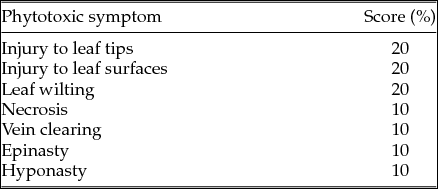
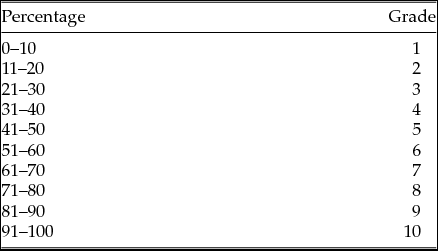
A scoring method described by Roy et al. (Reference Roy, Mukhopadhyay and Gurusubramanian2010) was followed to assess the phytotoxic effect of the test substances. The scoring method was observed in the field trials of the red spider mite at weekly intervals after spraying and continued for 60 days. The scale used to assess the phytotoxicity symptoms is described in Table 1. Weekly observations of the phytotoxic symptoms in each plot and corresponding scores were pooled and compared with the untreated control. The phytotoxic effect of selected plant extracts was graded as per Table 2 following Roy et al. Reference Roy, Rahman, Phukan and Muraleedharan(2014b).
Scale used to assess the phytotoxicity symptoms

Source: Roy et al. Reference Roy, Rahman, Phukan and Muraleedharan(2014b).
The gradation of phytoxic effect of selected plant extracts

Source: Roy et al. Reference Roy, Rahman, Phukan and Muraleedharan(2014b).
Tainting and organoleptic test
Another field trial was conducted to determine whether the aqueous extracts caused any taint (foreign taste and odour) to black tea. There were four treatments, namely three concentrations of 2, 4, 6, and 8 g/L along with the untreated control (water spray). Spraying was carried out with a hand-operated knapsack sprayer using a spray volume of 400 L/ha. Tea shoots were harvested on the 7th and 14th day after spraying and processed separately in a mini CTC machine. The samples were forwarded to a tea taster to assess whether there was a taint or not, and for an organoleptic test. Leaf infusions and liquor strength were considered for organoleptic test and a score was given as 1−2 = poor, 3–5 = moderate, 6–8 = good, and 10 = very good (Roy et al., Reference Roy, Rahman, Phukan and Muraleedharan2014b ).
Results
Effect of aqueous plant extracts on adults of Oligonychus coffeae
The three studied plant species extracts were found to be toxic to adult O. coffeae. However, the toxicity assay of the three aqueous plant extracts at the different concentrations showed varied levels of mortality in adults of O. coffeae. The slopes of regression lines and the lethal concentration values at 50% kill (LC50) are shown in Table 3. Mortality data (48 h post exposure), and the slope values, showed that the most toxic botanical to O. coffeae adults was S. mukorossi (LC50 = 2.126%) followed by N. arbor-tristis (LC50 = 2.962%) and P. thyrsiformis (LC50 = 4.466%). The trend was similar for lethal concentration values at 95% kill with S. mukorossi (LC95 = 13.489%) being the most toxic botanical to adults of O. coffeae followed by N. arbor-tristis (LC95 = 16.822%) and P. thyrsiformis (LC95 = 18.500%) (Table 3).
Toxicity of aqueous extracts of Phlogacanthus thyrsiformis, Nyctanthes arbor-tristis and Sapindus mukorossi on adults of Oligonychus coffeae

1 Number of mites tested; 2Fiducial limit; df = degrees of freedom.
Effect of aqueous plant extracts on the eggs of Oligonychus coffeae
The results of the ovicidal bioassay suggest higher egg mortality with an LC50 value of 1.03% for P. thyrsiformis followed by N. arbor-tristis (LC50 = 4.75%). In comparison, S. mukorossi exhibited a low mortality of eggs with an LC50 value of 5.47% (Table 4). The slopes of regression lines and the lethal concentration values at the 50% kill (LC50) are shown in Table 4. There was no significant difference between N. arbor-tristis and S. mukorossi, based on the overlap of the fiducial limits of LC50. Based on these values, the order of ovicidal activity was P. thyrsiformis > N. arbor-tristis > S. mukorossi contrary to the toxicity effect observed on the adults.
Effect of aqueous extracts of Phlogacanthus thyrsiformis, Nyctanthes arbor-tristis and Sapindus mukorossi on Oligonychus coffeae eggs viability

1 Number of mites tested; 2Fiducial limits; df = degrees of freedom.
Repellence and ovipositional deterrence of aqueous plant extracts to Oligonychus coffeae
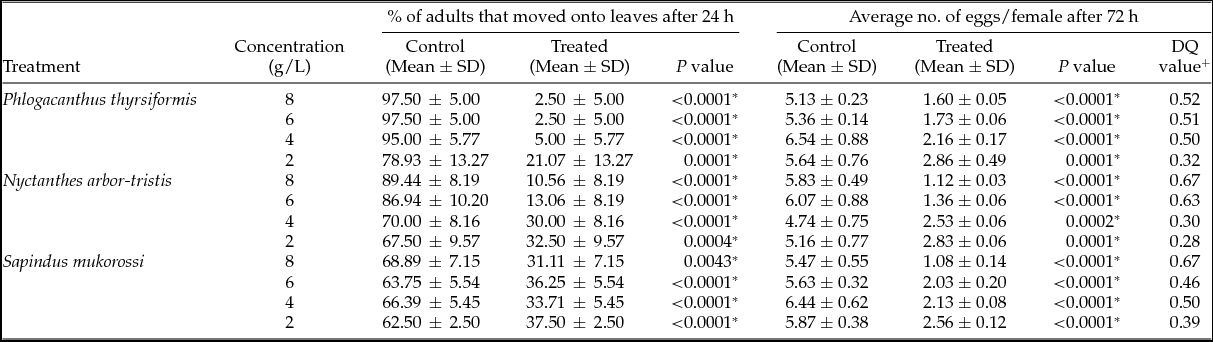
Repellence tests showed that the three plant extracts had a significant repellent effect on the mites at 2, 4, 6, and 8% concentrations. However, P. thyrsiformis offered more than 90% repellence at 4, 6, and 8% concentrations compared to N. arbor-tristis and S. mukorossi (Table 5). All the three plant extracts showed a significant effect on adult female oviposition for all the concentrations compared to the control. Ovipositional deterrent and DQ values of the different botanical extracts on O. coffeae are indicated in Table 5. In this study, the results show that the highest DQ value is observed for N. arbor-tristis and S. mukorossi (0.67) at a higher concentration of 8% compared to 0.52 for P. thyrsiformis (Table 5).
The percentage of female Oligonychus coffeae that remained on the leaves where introduced, and the numbers of eggs oviposited on the treated or untreated tea leaves with aqueous plant extracts of Phlogacanthus thyrsiformis, Nyctanthes arbor-tristis and Sapindus mukorossi, in choice tests

Means with * are significantly different between treated and untreated by t-test (mean ± S.D., P ≤ 0.05); +DQ is the Discrimination quotient.
Effect of aqueous plant extracts on the natural enemy Stethorus aptus
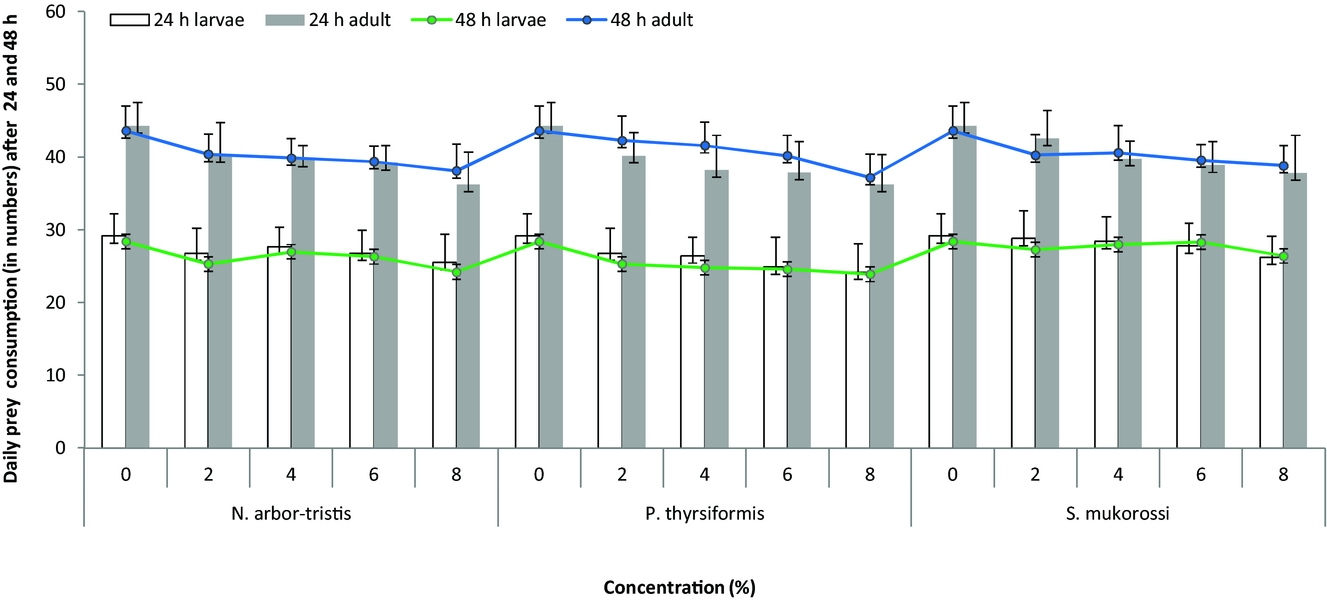
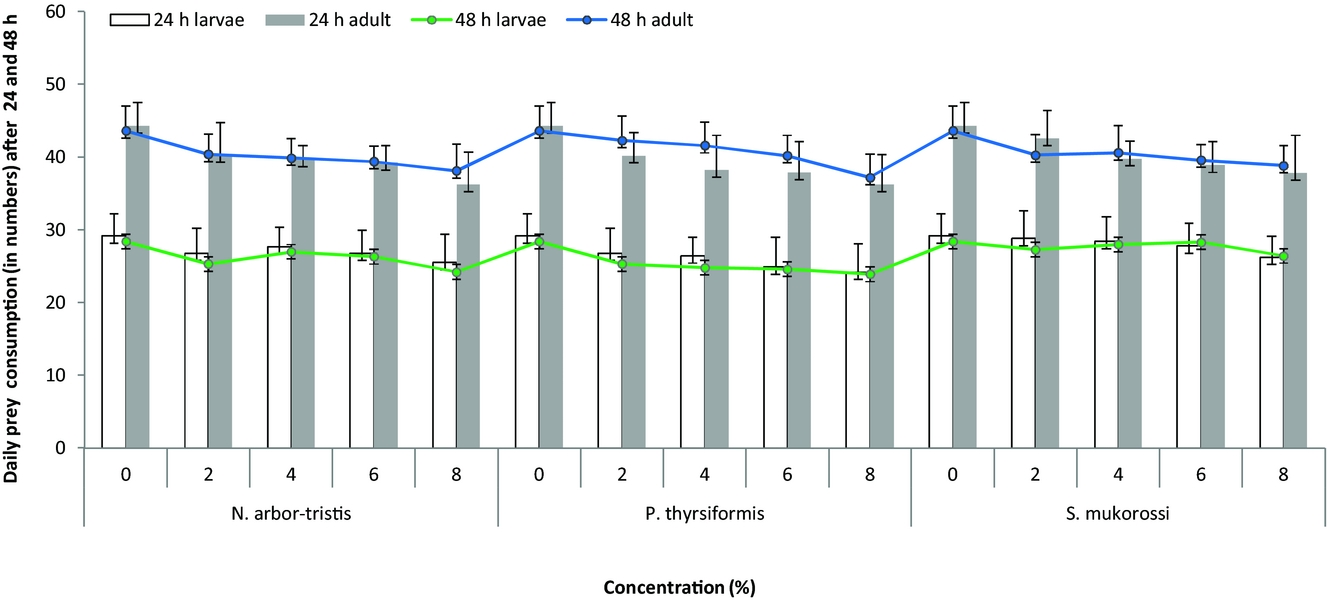
The effect of the various plant extracts on the predator S. aptus revealed that there was no significant difference in their predatory potential when compared to the control (Fig. 1). The crude plant extracts had no significant impact on S. aptus prey consumption performance after 48 h of observation. In addition, no mortality was observed up to 14 days post-treatment in all the treatments and after 3–4 days, all third instar grubs underwent the pupal stage.
Effect of aqueous plant extracts of Phlogacanthus thyrsiformis, Nyctanthes arbor-tristis and Sapindus mukorossi on prey consumption and mortality of adults of Stethorus aptus.
Field evaluation of aqueous plant extracts on Oligonychus coffeae
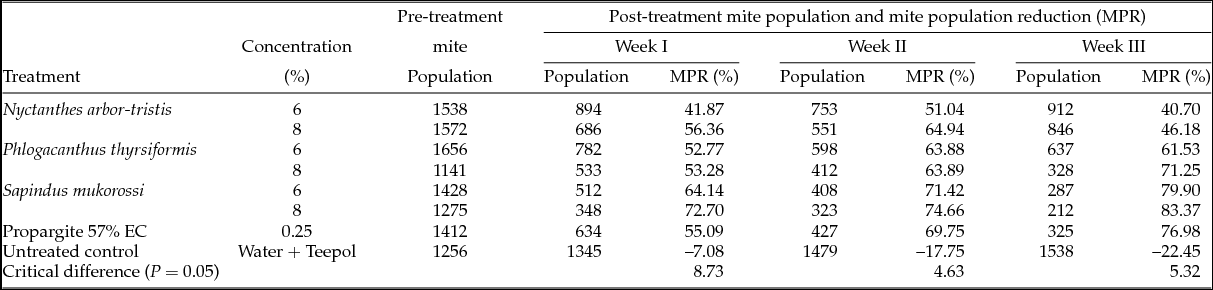
Data on the bioefficacy of aqueous plant extracts of N. arbor-tristis, P. thyrsiformis, and S. mukorossi under field conditions against O. coffeae are summarised in Table 6. The three plant species’ extracts significantly reduced the mite population levels compared to the control at both selected concentrations. At 6% concentration, aqueous extract of N. arbor-tristis, P. thyrsiformis, and S. mukorossi reduced mite population incidence to 40.70–41.87%, 52.77–61.53%, and 64.14–79.90%, respectively, whereas at 8%, the aqueous extract reduced mite population incidence to 46.18–56.36%, 53.28–71.25%, and 72.70–83.37%, respectively. The efficacy of aqueous extracts of S. mukorossi was found to be higher than the other two plant extracts and even suppressed the mite population more than the standard acaricide propargite 57% EC at 6 and 8% concentrations in field trials for the first three weeks of observations. However, the efficacy of N. arbor-tristis and P. thyrsiformis was lower when compared with the acaricide in most of the treatments (Table 6). No phytotoxic symptoms were observed up to 60 days after spraying the aqueous extracts of N. arbor-tristis, P. thyrsiformis, and S. mukorossi (score 0–5%; grade 1) under field conditions. In addition, made tea samples prepared after treatment had no taint and achieved an organoleptic score of 6.0–7.0, indicating good liquor, strength, colour, and quality.
Bioefficacy of aqueous plant extracts of Phlogacanthus thyrsiformis, Nyctanthes arbor-tristis and Sapindus mukorossi against Oligonychus coffeae (mean population variations before and after treatments) under field conditions

Discussion
Crude plant extracts contain complex mixtures of active compounds that may act synergistically or show greater overall bioactivity compared with the individual constituents, and insect resistance is much less likely to develop with these mixtures (Roy et al., Reference Roy, Gurusubramanian and Nachimuthu2011). These reasons support the use of crude, chemically unrefined plant extracts, containing mixtures of bioactive plant compounds rather than the use of the pure individual compounds (Kaur and Renu, Reference Kaur and Renu2012). Moreover, from a practical point of view, aqueous plant extracts require less expertise and can be easily prepared at farmers’ level. This reason has made crude aqueous extracts popular among the tea farmers of North East India. In the present study, we demonstrated that the aqueous extracts of the three tested plants have both lethal and repellent effects against O. coffeae under laboratory and field conditions. Phlogacanthus thyrsiformis showed excellent ovicidal properties against the mites, which may be attributed to the presence of terpenoids as major bioactive compounds in this genus (Phurailatpam et al., Reference Phurailatpam, Singh, Chanu and Ngangbam2014), and which are known to possess ovicidal characteristics as demonstrated against Pediculus humanus capitis (Yang et al., Reference Yang, Choi, Choi, Clark and Ahn2004a). Aqueous plant extracts of Melia azedarach (Roy and Mukhopadhyay, Reference Roy and Mukhopadhyay2012) and T. chebula (Roy et al., Reference Roy, Rahman, Phukan and Muraleedharan2014b) are also known to produce good ovicidal properties against eggs of O. coffeae. These plants are also reported to have abundant terpenoid compounds (Borges et al., Reference Borges, Ferri, Silva, Silva and Silva2003; Tariq and Reyaz, Reference Tariq and Reyaz2013), which make them excellent ovicides. The results also suggest that S. mukorossi is more effective as an adulticide, but also possesses low ovicidal properties as compared to the other two plant extracts. Such strong insecticidal properties of S. mukorossi may be due to the presence of saponins in the pericarp of the fruit, which are known to cause mortality and/or growth inhibition in insects (Upadhyay and Singh, Reference Upadhyay and Singh2012), as observed previously in the case of Sitophilus oryzae and P. humanus (Rahman et al., Reference Rahman, Rahman, Begum, Khan and Bhuiyan2007). Nyctanthes arbor-tristis is known to have strong anti-insect properties against mosquito species (Mathew et al., Reference Mathew, Anitha, Bala, Sivakumar, Narmadha and Kalyanasundaram2009), but in this study, it was also found to be equally effective against eggs and adults of O. coffeae. As a result, further studies are warranted to identify the key chemical compounds present in these three plant extracts with acaricidal properties.
In addition to adulticidal and ovicidal properties, the three tested aqueous plant extracts also exhibited a repellency action against adults of O. coffeae. The plant extracts may, therefore, have some repellent effects that discourage movement and feeding behaviour of the mites. Roy et al. Reference Roy, Muraleedharan, Handique, Rahman and Barua(2016b) also made similar observations when they sprayed leaf extracts of D. repens against O. coffeae. Repellent properties of plant extracts were also evaluated and confirmed against other pests such as whitefly, Bemisia tabaci (Al-mazra'awi and Ateyyat, Reference Al-mazra'awi and Ateyyat2009), Aedes aegypti (Yang et al., Reference Yang, Lee, Lee, Lee and Ahn2004b), and Culex tritaeniorhynchus (Karunamoorthi et al., Reference Karunamoorthi, Ramanujam and Rathinasamy2008). The aqueous extracts of N. arbor-tristis, P. thyrsiformis, and S. mukorossi also exerted ovipositional deterrent effects against red spider mites by preventing the mites from laying eggs on the treated tea leaves. This finding is in conformity with the results of Chauhan et al. (Reference Chauhan, Sharma, Sharma and Bhadoria2008) who reported that ethanol extract of N. arbor-tristis showed ovipositional deterrence against the gram pod borer, Helicoverpa armigera. The findings are also in conformity with the results of Roobakkumar et al. (Reference Roobakkumar, Subramaniam, Babu and Muraleedharan2010), Roy and Mukhopadhyay (Reference Roy and Mukhopadhyay2012), and Roy et al. (Reference Roy, Muraleedharan, Handique, Rahman and Barua2016b) as regards plant extracts against O. coffeae.
The two concentrations (6 and 8%) of the three aqueous plant extracts caused various degrees of reduction in number of O. coffeae, and offered various levels of protection to tea in sprayed plots throughout the experimental period, compared to the water sprayed control plots. Reduction in the populations of the pest in the field was significant and comparable with that of propargite, a synthetic acaricide. This may be due to the collective acaricidal, ovicidal, and ovipositional deterrent effects of the extracts on O. coffeae (Roy et al., Reference Roy, Rahman, Phukan and Muraleedharan2014b ), which confirms the results obtained in the laboratory. The present findings corroborate the previous findings of Roy and Mukhopadhyay (Reference Roy and Mukhopadhyay2012) and Roy et al. (Reference Roy, Rahman, Phukan and Muraleedharan2014b , Reference Roy, Muraleedharan, Handique, Rahman and Barua2016 b) who had observed a reduction in mite incidence of 80 to 90% at concentrations of 6 and 8% in field trials.
Besides, the crude plant extracts had no significant impact on prey consumption of S. aptus, a natural enemy of O. coffeae and no mortality was observed when they were treated with the aqueous plant extracts. Leatemia and Isman (Reference Leatemia and Isman2004) studied the toxicity of crude extracts of Annona squamosa to natural enemies and showed that Chrysoperla carnea larvae were less susceptible to the extracts than Orius insidiosus adults, which exhibited moderate to high toxicity to O. insidiosus. However, in this case, these plant extracts had no detrimental effects on the predator, S. aptus. Moreover, all the three plants are used traditionally as prophylactic or therapeutic treatments for many pharmacological diseases (Dolui et al., Reference Dolui, Sharma, Marein and Lalhriatpuii2004; Jaiswal, Reference Jaiswal2010); thus, preparations made from these materials are unlikely to pose any health hazard to man and livestock.
Akhtar and Isman (Reference Akhtar and Isman2004) stressed the need for conducting multiple types of bioassays while screening botanical pesticides. Therefore, in the current investigation, we evaluated multiple types of effects of the plant extracts on the mite and also on its natural enemy. This study showed that significant bioactivity differences occurred between treatments and controls in laboratory and field experiments, an outcome that stresses the importance of conducting additional field experiments on a large scale, to validate the efficacy of these botanicals. Results from this field trial are of practical value for tea growers, who can easily prepare water-based extracts of these botanicals according to the procedure adopted. Further study is needed, to identify the acaricidal properties demonstrated by the compounds present in the plant extracts. This will ensure a low-cost, eco-compatible, pest management strategy with minimal residue problems that can serve as an important tool for O. coffeae management in tea plantations.
Acknowledgements
This study was partially funded by SYST, SEED Division, Department of Science and Technology, Government of India. The authors are indebted to other members of the Entomology Department, Tocklai Tea Research Institute, who provided necessary help and expertise in the present investigation.