




No CrossRef data available.
Microarrays: new tools to unravel parasite transcriptomes
Published online by Cambridge University Press: 01 June 2005
Abstract
The ability to monitor the expression levels of thousands of genes in a single microarray experiment is a huge progression from conventional Northern blot analysis or PCR-based techniques. Microarrays can play a pivotal role in the mass screening of genes in a wide range of fields including parasitology. The relatively few parasites that can be readily cultured or isolated from a host, as compared with cell lines or tissue sources, makes microarray technology ideal for maximizing experimental results from a limiting source of starting material. Khan et al. (1999a) commented in an early review of microarray technology “With this system in place, one can anticipate a time when data from thousands of gene expression experiments will be available for meta-analysis…..… leading to more robust results and subtle conclusions”. Now in 2005, microarrays represent a very powerful resource that can play an important role in the characterization and annotation of the transcriptomes of many parasites of medical and veterinary importance.
Information
- Type
- Review Article
- Information
- Copyright
- © 2005 Cambridge University Press
INTRODUCTION
Microarrays are specially produced slides that have thousands of individual DNA probes attached in an ordered array to the surface. They provide the user with the ability to monitor the expression level of thousands of genes simultaneously. In 1995, Schena and co-workers reported the first complementary DNA microarray analytical procedure using 45 genes from the plant Arabidopsis (Schena et al. 1995). Since then, this technology has greatly expanded the applications of genomic research. In addition, entry-level array probe printing machines have made the production of chips less expensive (Khan et al. 1999b). Microarray technology is a new discipline that has generated its own terminology and acronyms. Some of the key terminology is presented in Table 1.
Table 1. Key terminology used in microarray design, construction, utilization and analysis (Adapted from Rosetta BioSoftWare: http://www.rosettabio.com/tech/geml/omg/lsr_ge_glossary.doc.)

MICROARRAY PRODUCTION AND EXPERIMENTAL CONDITIONS
There are multiple methods in which microarrays may be manufactured, but all share similar characteristics. (1) Complementary DNA (cDNA) array chips. The cDNA probe is transferred to a glass slide by an array-printing machine and stored until use (see Clontech 2001). (2) Simple oligonucleotide spotting, in which the manufacture of oligos is performed separately and then chips are facilitated by simple array printing machines; this makes this method inexpensive compared to others (Street, 2002). (3) Photolithography is used to produce high density microarray chips, in a similar way to the production of computer chips (Hughes et al. 2001). Lithographic masks are required to control the exposure of light for each round of oligonucleotide synthesis. High costs are usually associated with this method especially if a custom designed array is utilized. (4) Ink-jet chips, which like photolithographic chips, are high in density. This method utilizes a robotic spotting method to deposit individual nucleotides onto the specially prepared surface, one layer at a time, building up an oligonucleotide probe (Hughes et al. 2001).
The longer DNA lengths of cDNA arrays enhance the specificity of hybridization, but require significantly more time and associated costs of the pre-printing setup. Oligonucleotides have less printing set up costs, with acceptable specificity (Hughes et al. 2001; Summan et al. 2003), but require an additional design process that can guarantee appropriate thermodynamic properties for hybridization and to ensure no cross-hybridizations occur. There are a number of software systems that can help in the process including OligoWiz (Nielsen, Wernersson and Knudsen, 2003) or Array Designer (http://www.premierbiosoft.com/dnamicroarray/) for those wanting to design oligo-probes for a microarray. Various considerations are required in the oligonucleotide probe design process, including melting temperature, GC content, self-annealing and secondary structure potential, all of which are discussed in a paper by Tolstrup et al. (2003), who also described another design program, OligoDesign.
The difficulties of designing cDNA probes is addressed in a paper by Chen et al. (2004a), who made special reference to the problems associated with incomplete genomes, a common limitation with parasites. The authors developed a ‘sequence diversity index, SDI’ which monitored the diversity that was present between and within dynamic clustering. This method was under-scored with broad Gene Ontology (GO) allocations that allowed cross- hybridization to be addressed in relation to varying degrees of clustering. The ability to design microarray probes without the need to cluster ESTs enables the construction of multi-species or cross-species microarrays, an important application in parasitology.
MIAME
The need for a standard of Minimum Information About a Microarray Experiment (MIAME) was first highlighted during a meeting organized by the European Bioinformatics Institute in 1999. After development and discussion, MIAME was proposed as standard practice and presented in Nature Genetics in 2001 (Brazma et al. 2001). MIAME is a detailed list of information that describes the experiment from construction of the chip to data analysis.
MIAME is made up of 2 major sections:
Array design description
- Array related information, including design name, platform type, and number of features.
- Information about the probes, sequence, type, attachment, location on array and controls.
Gene expression experiment description
- Experimental design, including authors, type of experiment, experimental factors (time dose), and quality controls.
- Samples used, extract preparation and labeling, sex, developmental stage, type, biomaterial manipulations, protocol, conditions, treatments, hybridization extract preparation protocol, external controls.
- Hybridization procedures and parameters, batch serial numbers, blocking agent, wash procedure, quantity of target.
(Modified from MIAME; http://www.mged.org/Workgroups/MIAME/miame.html).
Most of these experimental conditions represent good general research practice. However, the consensus and formatting presented in MIAME makes it much easier to access information, adding to the design and utilization of larger databases that correlate with individual microarray datasets.
GENOMICS, EXPRESSED SEQUENCE TAGS AND MICROARRAY PRODUCTION
Advances in genomics and particularly in sequencing methods (see Knox, 2004) have enabled the establishment of many sequencing projects focusing on a range of parasites of medical and veterinary importance. This wealth of new data provides the basis for the design and construction of microarrays from a wide range of parasite taxa.
The most high-profile sequencing program in parasitology to date is that involving Plasmodium (Carucci et al. 1998; Wilson, 2004). Huge insights have been gleaned from numerous EST and genomic sequencing projects, and the subsequent microarray analysis has followed to help better understand the biology and pathogenesis of malaria. Another prominent parasite group subject to large-scale sequencing efforts are the filarial nematodes, and these studies have led to major advances in our understanding of the genome of Brugia malayi (Williams et al. 2000), particularly in the area of chromosome mapping and functional genomics (Blaxter et al. 2002; Foster et al. 2004).
One of the priorities of the World Health Organization has been to address the major problem of human schistosomiasis through the formation of the Schistosoma Genome Network (see http://www.nhm.ac.uk/hosted_sites/schisto/index.html). This program consists of a number of laboratories that aim to use expressed sequence tags (EST), and genomic sequencing strategies to identify novel genes. These sequencing efforts have culminated in the release of large amounts of EST sequence for Schistosoma japonicum (Hu et al. 2003) and Schistosoma mansoni (Verjovski-Almeida et al. 2003).
A summary of major sequence projects involving parasites is presented in Table 2. All of the databases listed are available in the public domain databases and, as such, are accessible for future clustering, probe design and microarray construction. The power of in silico design and automated oligonucleotide synthesis and spotting makes the transition of raw sequence to a laboratory tool a quick, though relatively expensive proposition.

APPLICATIONS OF MICROARRAYS
Some of the uses of microarrays for the study of parasite transcriptomes are detailed in Table 3, some specific examples of which follow.

(1) Comparison of gene expression during the parasite life-cycle
A very good example of the use of microarrays in parasitology has been the monitoring of the transformation of Trypanosoma cruzi from the trypomastigote to the amastigote (Minning et al. 2003). This study utilized 4400 probes principally of partly sequenced genomic material and some material from an ORF library that was made from 200–400 bp size DNA. The library used a GFP (Green Fluorescent Protein) expression-based bacterial system for selection. The T. cruzi DNA fragments were inserted upstream from the GFP gene lacking a start codon. Thus, clones expressing GFP were selected for use on the microarray. Most of the differential expression was due to the up-regulation of 60 genes in the developing amastigote. Of these, 14 were found to have been characterized previously, 25 were novel, with the remainder being redundant. A subset of genes was validated using real-time PCR that correlated well with the microarray results. The authors aimed to find vaccine targets and identify amastigote-specific genes using this approach. While a relatively large amount of novel genes were identified, the nature of the microarray construction hampered some of the goals of the project. Probe material on the chip could have been more effective if amastigote cDNA had been utilized in an EST strategy study, to enable the maximal chance of finding stage-specific gene expression. No doubt limitations in sample size and the amount of mRNA that can be isolated from T. cruzi were a considerable problem, but since this microarray was probably produced in 2002, if not earlier, recently improved cDNA library construction kits may allow this research to be further developed. This in turn may produce a significantly improved microarray. Technological advances in RNA processing, including amplification kits (such as Ambion MessageAmp™ aRNA Kit) that can start with as little as 10 ng of mRNA and library construction kits (such as Invitrogen CloneMiner) starting with only 1–5 μg of mRNA. In addition, improved selection markers,result in larger insert sizes and more rapid library construction, from small amounts of material, a common limitation when working with parasites.
The strategy of using more specific cDNA probes was utilized in a later study by Baptista et al. (2004). This group constructed a relatively small cDNA microarray (665 genes; 730 sequences) to examine gene expression and genomic organization in different isolates of T. cruzi. Firstly a comparison of the genome between strains was carried out using genomic DNA that detected differential hybridization in 68 genes, of which a subset was validated by Southern blot analysis. The Southern analysis revealed variations in gene copy number and sequence differences that contributed to the hybridization differences evident in the microarray experiments. These researchers then tested cDNA for hybridizations that yielded information on gene expression between the two strains. They found that 84 probes were differentially expressed, of which a subset was validated by Northern blot analysis. Only 20% of the genes overall had variations in both expression profile and genomic copy number (and/or sequence variation), when these two groups of differentially hybridized genes were compared. This indicated that there was no correlation between the abundance of a particular gene within the genome and the expression of that gene as RNA, demonstrating a high degree of gene expression control and regulation.
(2) Comparative gene expression between related species and evolutionary considerations
There have been few investigations of inter-specific genomic variation using microarray technology generally, and, specifically, in parasitology. There are significant limitations in using a microarray platform with limited sequence homology or incomplete sequence, that result in low efficiency hybridizations.
The limited physical length of sequence available in short cDNA or oligonucleotide probe microarrays requires a high degree of homology with the RNA that is probed in order to obtain a hybridization signal. A low level of homology will result in a limited hybridization, which may be misinterpreted as a low gene expression level. However, in either situation, differential expression on the microarray will highlight the probability of a variation in sequence identify or gene expression, which can be further investigated by sequencing efforts. Two examples of successful interspecies analysis include cDNA-based microarrays from fish – Astatotilapia (Renn, Aubin-Horth and Hofmann, 2004) and Salmo (Rise et al. 2004). Gene expression between the different fish species was, as expected, more successful in the closer-related species, than with others further diverged. In both studies the principle of using a microarray platform to examine a wide range of species and present evolutionary and ecologically relevant data were demonstrated. Other microarray studies have examined different species of Drosophila (Watanbe et al. 2004) and interspecies variations in yeast (Gu et al. 2004). The large-scale examination of genes can identify small variations that occur between closely related species or strains, making microarray analysis an excellent method for taxonomic classification. The conclusions from these inter-species microarray studies can readily be adapted to parasitology. While, as discussed previously, a number of parasites are currently subject to major genome sequencing projects, a large number of species will not have such thorough examination, at least in the medium term. Microarray analysis between species may provide useful insights into evolutionary traits. A strategy to achieve this would be to use using data reduction techniques such as principle component analysis (Randall et al. 2003) or multidimensional scaling (Dugas et al. 2004). By simplifying the microarray data, broad relationships between species could then be demonstrated. As previously mentioned, extensive differential expression may either identify genes that have diverged between species or are even absent in one of the examined species. Such divergence or total absence of genes may reflect key evolutionary differences between species. The presentation of unique genes within a species may be indicative of relatively newer evolutionary adaptations to environmental pressures.
In regard to the malaria parasites, information regarding life-cycle and inter-species studies are presented in the informative database ‘PlasmoDB – The Plasmodium Genome Resource’ [http://plasmodb.org/] (see Bahl et al. 2003 for review). In addition to presenting Plasmodium proteomics, primary sequence, and both cDNA and oligonucleotide microarray data, the web site also provides inter-correlations tools, such as plotting taxonomic divergence against sequence similarity, giving a representation of inter-species variation. Presently, the microarray data contained within the site is from P. falciparum and there are no reports of cross-species/strain hybridizations. The only comparisons made have been performed in silico from proteomic or sequence data. However, the framework and organization provided does present a suitable format for future microarray data that will arise from other species of Plasmodium that can be subjected to further analysis.
(2) Plasmodium microarray studies, leading the way in parasitology
Two landmark papers in 2003 described the construction of an oligonucleotide microarray for P. falciparum (Bozdech et al. 2003; Le Roch et al. 2003). Bozdech et al. (2003) developed software to aid in the design of 70mer oligonucleotide probes to 6000 Open Reading Frames from the parasite genome. The microarray was then used to analyse the gene expression of the trophozoite and schizont stages. As expected, major differences in the transcriptional profiles of these stages were detected. This study represents a good example where public domain sequences could be accessed, a design process followed, and a microarray produced by a non-commercial entity. The work also emphasized the advantage of in silico design of probes (as compared to using cDNA clones), so that by controlling GC content and other parameters, hybridization efficiencies can be enhanced. The work of Le Roch et al. (2003) again utilized an oligonucleotide design strategy for microarray construction but presented this on a much larger scale. In this study, a microarray (multiple chips) containing 260596 features from predicted coding regions (genomic) and 106630 probes from non-coding regions, was constructed. One of the distinct advantages of using probes designed from genomic sequences, as opposed to ESTs, is that the detection of gene expression is not limited to the life-cycle stages from which the ESTs were originally derived. This was an important consideration in this study since 9 different life-cycle stage of P. falciparum were examined using the microarray, and gene expression across the life-cycle was more effectively monitored with genome-derived probes. The authors were able to correlate and cluster genes based on similar expression levels with specific life-cycle stages to group genes with assumed similar functions. A major drawback of this study was the use of 25-mer oligonucleotides which may have had a deleterious effect on the specificity of the probes used in the hybridizations. The use of 60 mers has been reported to provide much higher specificity in hybridization for microarray analysis (Hughes et al. 2001; Summan et al. 2003).
Recent microarray studies in P. falciparum have become more focused. Specific cellular activities including cell cycle elements, overall gene regulation and factors involved in transcriptional control of gene expression, have all be examined in a recent publication by Gissot et al. (2004). PCR products ranging in size from 300–1500 bp were printed from 150 genes with homology to known proteins involved in signal transduction or the cell cycle. Differential expression of these prospective candidates was compared between a ‘normal’ clone of P. falciparum and a subclone with a defect in gametocytogenesis. When the two strains were examined during a gametocytogenesis time-course experiment, 114 genes consistently provided clear microarray data, of which 106 genes were identical in expression profile between the two clones. Eight genes were differentially expressed between the two strains during the time-course to differing extent. These experiments identified genes important in the dynamic events leading up to gametocytogenesis in P. falciparum.
Host responses to malaria were examined in an animal model, using P. cynomolgi bastianellii and rhesus monkeys (Ylostalo et al. 2005). A commercial oligonucleotide chip of the human genome (Affymetrix HG-U133A) was used to follow a time-course of infection, with RNA isolated from whole blood, before infection, during the initial liver phase, during peak parasitaemia and at the first/second relapses. A wealth of information was obtained but the most significant findings included a general down-regulation of genes during the initial liver phase of parasite infection, demonstrating a host response to the infection at the transcriptional level. In addition, ‘defensive-response’ genes were also identified by distinctive up-regulation. Some examples of these genes include α enolase (ENO1) which regulates inflammatory responses, and a NFE2L3 which regulates many erythroid specific genes.
(4) Investigation of schistosome transcriptomes with microarray technology
Highly informative microarray studies have been published for schistosomes (Hoffmann, Johnston & Dunne, 2002; Fitzpatrick et al. 2004). This group utilized cDNA microarrays consisting of ESTs from adult S. mansoni (576 features) and S. japonicum (457 features) to identify sex-specific gene expression; sex-associated genes were identified by microarray analysis and confirmed by RT-PCR. In the S. japonicum study (Fitzpatrick et al. 2004) functional studies (enzymatic assays and localization) were also presented to further demonstrate the gender-specific differences occurring at the transcriptional level. The report also presented some sex-specific gene differences that were evident between geographical isolates (Anhui and Zhejiang) of the Chinese strain of S. japonicum. More differential expression may have been detected in comparing geographical strains with more pronounced phenotypic difference such as the Philippine and Chinese strains of S. japonicum.
A recent addition to this work includes a report of the construction of a 7335 S. mansoni element microarray using a spotted oligonucleotide approach (Fitzpatrick et al. 2005). The oligo-probes were designed from 17329 S. mansoni EST sequences and represent approximately 50% of the estimated schistosome transcriptome. Again the focus of the study was to identify sex-biased genes, which resulted in the identification of 141 genes up-regulated in the female adult S. mansoni and 86 genes up-regulated in the male. Good correlations with previous data from this group were made, in addition to greatly extending the list of genes for analysis. Although the authors demonstrated strong reproducibility between their array experiments, as reflected in the R coefficient values, the confidence levels (or error modelling) for individual genes in individual microarray experiments were not presented. The authors further mentioned that all included data points were within 90% confidence limits in 3 of 5 experiments, but a higher confidence level would have provided more depth to their analysis and in the microarray in general.
Two almost simultaneous releases of EST data from S. japonicum (Hu et al. 2003) and S. mansoni (Verjovski-Almeida et al. 2003) have provided the platform for study of the schistosome transcriptome. A large proportion of the EST sequences generated still require characterization as only 45% of the S. mansoni and 65% of the S. japonicum ESTs showed similarity to sequences already in GenBank. The S. japonicum EST data were structured into 13131 clusters, including 8527 singletons of varying sizes and probably represent the majority of the transcriptome, estimated to contain approximately 15000 genes (Johnston et al. 1999). We have recently designed and utilized an oligonucleotide microarray based on the S. japonicum and S. mansoni EST data sets. The designed microarray contains 7055 S. japonicum and 12166 S. mansoni probes, effectively providing a much wider coverage of the schistosome transcriptome, which will facilitate in-depth comparative studies of the two species represented on the microarray.
(5) Microarray analysis of infected host tissues and the effects of parasitism
Another use for microarrays in parasitology is to examine the differential gene expression of host tissues in response to parasitic infections. A report by Sexton et al. (2004) described the use of a commercial oligonucleotide mouse array to monitor the effects of malaria infection. They identified hundreds of genes that were altered in response to the parasite. Modification in specific gene profiles that were related to glycolysis, immunology, and erythropoiesis were correlated with the underlying pathology of the infected host. While the study was comprehensive in terms of the microarray used, information of sampling numbers and whether tissues were pooled or not, was not provided. Significant variation in gene expression can occur between individuals, and this would be more pronounced with out-bred mice due to the wider genetic profile in the population under investigation. Fortunately, Sexton et al. (2004) used inbred C57BL/6 that would have given a more even genetic response. In pooling samples, subtle fluctuations in gene expression can be lost, or, alternatively, a single large variation in gene expression in one individual may present a misleading indication when the pooled group is examined. It is fully acknowledged that microarray experiments are expensive, but the study would have benefited if gene expression variation between individuals could have been determined. A compromise may have been to use a validation method (such as real-time PCR) to investigate individual RNA samples, in order to determine if any significant inter-individual variation occurred.
A similar study by Hoffmann et al. (2001) examined gene expression in schistosome-infected mouse liver using a cDNA microarray. They monitored various genes encoding immunological proteins in response to granuloma formation caused by S. mansoni infection. The unique pattern of gene regulation that was apparent, allowed a profile to be formulated that was able to differentiate a healthy host from an infected host by the gene expression within the liver.
A recent article by Diez-Tascon et al. (2005) has adapted a microarray resource to investigate the mechanism that leads to host immunity to parasitic infections. They utilized a bovine microarray to examine the transcriptional profile between genetically resistant and susceptible lambs infected with a mixture of naturally occurring nematode infections (including Haemonchus contortus, Trichostrongylus colubriformis and Ostertagia sp. although the precise composition of the initial infection was not clearly reported). The authors compared gene expression within the duodenum of the infected host, using a 10204-element cDNA microarray derived from a previously undescribed bovine library. It can only be assumed that a microarray derived from ovine material was not constructed since the bovine microarray was available and homology between the two species is high (average nucleotide homology 96%, Diez-Tascon et al. 2005) in the coding region. Differential expression in 126 genes was detected, with 112 of these having reduced expression in the resistant host breed compared to susceptible animals. These differentially expressed genes were subjected to lexical analysis (aligned into known pathways) and then, assigned Gene Ontology. Two distinct metabolic pathways were identified one of which was involved in immune response acquisition and the other in intestinal smooth muscle neogenesis.
Other studies that have investigated the host-parasite interplay include, monitoring the mosquito host of the malaria parasite, for susceptibility, using a 1200 cDNA microarray (based on Aedes aegypti ESTs), with 28 genes identified that were differentially expressed between susceptible and resistant mosquito strains (Chen et al. 2004b). In addition, the responses to Eimeria acervulina and Eimeria maxima infections were analysed in avian hosts using a 400 element cDNA microarray consisting of unique chicken genes, revealed both up and down-regulation of a number of genes (Min et al. 2003). Both studies demonstrate the utility of microarrays to address very specific and unique questions in parasitology.
CONCLUDING REMARKS
Microarrays provide the perfect tool for the monitoring of gene expression in parasites given the inherent technical difficulties associated with tissue collection and the complexity of many parasite life-cycles. The formulation of a complete transcriptional profile of a parasite during its development and differentiation throughout the life-cycle, or in response to external insults such as a drug or vaccine, can reveal many facets of its adaptive biology including the development of resistance (see Table 3).
The authors would like to thank Dr Malcolm Jones for comments on this review. G.N.G. is a Howard Florey Fellow (NHMRC Australia), L.P.M. holds a CQU UPRA. This work is supported by the Wellcome Trust (UK), NHMRC (Australia) and the Sandler Foundation for Parasitic Diseases (USA).
References
REFERENCES
Bahl, A.,
Brunk, B.,
Crabtree, J.,
Fraunholz, M. J.,
Gajria, B.,
Grant, G. R.,
Ginsburg, H.,
Gupta, D.,
Kissinger, J. C.,
Labo, P.,
Li, L.,
Mailman, M. D.,
Milgram, A. J.,
Pearson, D. S.,
Roos, D. S.,
Schug, J.,
Stoeckert, C. J. Jr and
Whetzel, P. (
2003).
PlasmoDB: the Plasmodium genome resource. A database integrating experimental and computational data.
Nucleic Acids Research
31,
212–215.Google Scholar
Baptista, C. S.,
Vencio, R. Z.,
Abdala, S.,
Valadares, M. P.,
Martins, C.,
De Braganca-Pereira, C. A. and
Zingales, B. (
2004).
DNA microarrays for comparative genomics and analysis of gene expression in Trypanosoma cruzi.
Molecular and Biochemical Parasitology
138,
183–194.CrossRefGoogle Scholar
Blaxter, M.,
Daub, J.,
Guiliano, D.,
Parkinson, J. and
Whitton, C. (
2002).
Filarial Genome Project. The Brugia malayi genome project: expressed sequence tags and gene discovery.
Transactions of the Royal Society of Tropical Medicine and Hygiene
96,
7–17.Google Scholar
Bozdech, Z.,
Zhu, J.,
Joachimiak, M. P.,
Cohen, F. E.,
Pulliam, B. and
Derisi, J. L. (
2003).
Expression profiling of the schizont and trophozoite stages of Plasmodium falciparum with a long-oligonucleotide microarray.
Genome Biology
4,
R9.CrossRefGoogle Scholar
Brazma, A.,
Hingamp, P.,
Quackenbush, J.,
Sherlock, G.,
Spellman, P.,
Stoeckert, C. J.,
Aach, J.,
Ansorge, W.,
Ball, C. A.,
Causton, H. C.,
Gaasterland, T.,
Glenisson, P.,
Holstege, F. C.,
Kim, I. F.,
Markowitz, V.,
Matese, J. C.,
Parkinson, H.,
Robinson, A.,
Sarkans, U.,
Schulze-Kremer, S.,
Stewart, J.,
Taylor, R. and
Vingron, M. (
2001).
Minimum information about a microarray experiment (MIAME) – toward standards for microarray data.
Nature Genetics
29,
365–371.CrossRefGoogle Scholar
Carlton, J.,
Silva, J. and
Hall, N. (
2005).
The genome of model malaria parasites, and comparative genomics.
Current Issues in Molecular Biology
7,
23–37.Google Scholar
Carucci, D. J.,
Gardner, M. J.,
Tettelin, H.,
Cummings, L. M.,
Smith, H. O.,
Adams, M. D.,
Hoffman, S. L. and
Venter, J. C. (
1998).
The malaria genome sequencing project.
Expert Reviews in Molecular Medicine
1,
1–9.CrossRefGoogle Scholar
Chen, H.,
Wang, J.,
Liang, P.,
Karsay-Klein, M.,
James, A. A.,
Brazeau, D. and
Yan, G. (
2004 b).
Microarray analysis for identification of Plasmodium-refractoriness candidate genes in mosquitoes.
Genome
47,
1061–1070.Google Scholar
Chen, Y. A.,
McKillen, D. J.,
Wu, S.,
Jenny, M. J.,
Chapman, R.,
Gross, P. S.,
Warr, G. W. and
Almeida, J. S. (
2004 a).
Optimal cDNA microarray design using expressed sequence tags for organisms with limited genomic information.
BMC Bioinformatics
5,
191.Google Scholar
Clontech Laboratories (
2001).
Creator SMART cDNA library construction kit user manual, [>available at http://www.bdbiosciences.com/clontech/techinfo/manuals/PDF/ PT3577-1.pdf]. BD Biosciences.
Diez-Tascon, C.,
Keane, O. M.,
Wilson, T.,
Zadissa, A.,
Hyndman, D. L.,
Baird, D. B.,
McEwan, J. C. and
Crawford, A. M. (
2005).
Microarray analysis of selection lines from outbred populations to identify genes involved with nematode parasite resistance in sheep.
Physiological Genomics
21,
59–69.CrossRefGoogle Scholar
Dugas, M.,
Merk, S.,
Breit, S. and
Dirschedl, P. (
2004).
MDCLUST – exploratory microarray analysis by multidimensional clustering.
Bioinformatics
20,
931–936.CrossRefGoogle Scholar
Fitzpatrick, J. M.,
Johansen, M. V.,
Johnston, D. A.,
Dunne, D. W. and
Hoffmann, K. F. (
2004).
Gender-associated gene expression in two related strains of Schistosoma japonicum.
Molecular and Biochemical Parasitology
136,
191–209.CrossRefGoogle Scholar
Fitzpatrick, J. M.,
Johnston, D. A.,
Williams, G. W.,
Williams, D. J.,
Freeman, T. C.,
Dunne, D. W. and
Hoffmann, K. F. (
2005).
An oligonucleotide microarray for transcriptome analysis of Schistosoma mansoni and its application/use to investigate gender-associated gene expression.
Molecular and Biochemical Parasitology
141,
1–13.CrossRefGoogle Scholar
Foster, J. M.,
Kumar, S.,
Ganatra, M. B.,
Kamal, I. H.,
Ware, J.,
Ingram, J.,
Pope-Chappell, J.,
Guiliano, D.,
Whitton, C.,
Daub, J.,
Blaxter, M. L. and
Slatko, B. E. (
2004).
Construction of bacterial artificial chromosome libraries from the parasitic nematode Brugia malayi and physical mapping of the genome of its Wolbachia endosymbiont.
International Journal for Parasitology
34,
733–746.CrossRefGoogle Scholar
Gissot, M.,
Refour, P.,
Briquet, S.,
Boschet, C.,
Coupe, S.,
Mazier, D. and
Vaquero, C. (
2004).
Transcriptome of 3D7 and its gametocyte-less derivative F12 Plasmodium falciparum clones during erythrocytic development using a gene-specific microarray assigned to gene regulation, cell cycle and transcription factors.
Gene
341,
267–277.CrossRefGoogle Scholar
Gu, Z.,
Rifkin, S. A.,
White, K. P. and
Li, W. H. (
2004).
Duplicate genes increase gene expression diversity within and between species.
Nature Genetics
36,
577–579.CrossRefGoogle Scholar
Hoffmann, K. F.,
Johnston, D. A. and
Dunne, D. W. (
2002).
Identification of Schistosoma mansoni gender-associated gene transcripts by cDNA microarray profiling.
Genome Biology
3,
0041.1–0041.11.Google Scholar
Hoffmann, K. F.,
McCarty, T. C.,
Segal, D. H.,
Chiaramonte, M.,
Hesse, M.,
Davis, E. M.,
Cheever, A. W.,
Meltzer, P. S.,
Morse, Hc 3rd and
Wynn, Ta. (
2001).
Disease fingerprinting with cDNA microarrays reveals distinct gene expression profiles in lethal type 1 and type 2 cytokine-mediated inflammatory reactions.
FASEB Journal
15,
2545–2547.CrossRefGoogle Scholar
Hu, W.,
Yan, Q.,
Shen, D. K.,
Liu, F.,
Zhu, Z. D.,
Song, H. D.,
Xu, X. R.,
Wang, Z. J.,
Rong, Y. P.,
Zeng, L. C.,
Wu, J.,
Zhang, X.,
Wang, J. J.,
Xu, X. N.,
Wang, S. Y.,
Fu, G.,
Zhang, X. L.,
Wang, Z. Q.,
Brindley, P. J.,
McManus, D. P.,
Xue, C. L.,
Feng, Z.,
Chen, L. and
Han, Z. G. (
2003).
Evolutionary and biomedical implications of a Schistosoma japonicum complimentary DNA resource.
Nature Genetics
35,
139–147.CrossRefGoogle Scholar
Hughes, T. R.,
Mao, M.,
Jones, A. R.,
Burchard, J.,
Marton, M. J.,
Shannon, K. W.,
Lefkowitz, S. M.,
Ziman, M.,
Schelter, J. M.,
Meyer, M. R.,
Kobayashi, S.,
Davis, C.,
Dai, H.,
He, Y. D.,
Stephaniants, S. B.,
Cavet, G.,
Walker, W. L.,
West, A.,
Coffey, E.,
Shoemaker, D. D.,
Stoughton, R.,
Blanchard, A. P.,
Friend, S. and
Linsley, P. S. (
2001).
Expression profiling using microarrays fabricated by an ink-jet oligonucleotide synthesizer.
Nature Biotechnology
19,
342–347.CrossRefGoogle Scholar
Johnston, D. A.,
Blaxter, M. L.,
Degrave, W. M.,
Foster, J.,
Ivens, A. C. and
Melville, S. E. (
1999).
Genomics and the biology of parasites.
Bioessays
21,
131–147.3.0.CO;2-I>CrossRefGoogle Scholar
Khan, J.,
Bittner, M. L.,
Chen, Y.,
Meltzer, P. S. and
Trent, J. M. (
1999 a).
DNA microarray technology: the anticipated impact on the study of human disease.
Biochimica et Biophysica Acta
1423,
M17–28.Google Scholar
Khan, J.,
Saal, L.,
Bittner, M.,
Chen, Y.,
Trent, J. and
Meltzer, P. S. (
1999 b).
Expression profiling in cancer using cDNA microarray.
Electrophoresis
20,
223–229.Google Scholar
Kissinger, J. C.,
Gajria, B.,
Li, L.,
Paulsen, I. T. and
Roos, D. S. (
2003).
ToxoDB: accessing the Toxoplasma gondii genome.
Nucleic Acids Research
31,
234–236.CrossRefGoogle Scholar
Knox, D. P. (
2004).
Technological advances and genomics in metazoan parasites.
International Journal for Parasitology
34,
139–152.CrossRefGoogle Scholar
Kurella, M.,
Hsiao, L. L.,
Yoshida, T.,
Randall, J. D.,
Chow, G.,
Sarang, S. S.,
Jensen, R. V. and
Gullans, S. R. (
2001).
DNA microarray analysis of complex biologic processes.
Journal of the American Society of Nephrology
12,
1072–1078.Google Scholar
Le Roch, K. G.,
Zhou, Y.,
Blair, P. L.,
Grainger, M.,
Moch, J. K.,
Haynes, J. D.,
De La Vega, P.,
Holder, A. A.,
Batalov, S.,
Carucci, D. J. and
Winzeler, E. A. (
2003).
Discovery of gene function by expression profiling of the malaria parasite life cycle.
Science
301,
1503–1508.CrossRefGoogle Scholar
Min, W.,
Lillehoj, H. S.,
Kim, S.,
Zhu, J. J.,
Beard, H.,
Alkharouf, N. and
Matthews, B. F. (
2003).
Profiling local gene expression changes associated with Eimeria maxima and Eimeria acervulina using cDNA microarray.
Applied Microbiology and Biotechnology
62,
392–399.CrossRefGoogle Scholar
Minning, T. A.,
Bua, J.,
Garcia, G. A.,
McGraw, R. A. and
Tarleton, R. L. (
2003).
Microarray profiling of gene expression during trypomastigote to amastigote transition in Trypanosoma cruzi.
Molecular and Biochemical Parasitology
131,
55–64.CrossRefGoogle Scholar
Nielsen, H. B.,
Wernersson, R. and
Knudsen, S. (
2003).
Design of oligonucleotides for microarrays and perspectives for design of multi-transcriptome arrays.
Nucleic Acids Research
31,
3491–3496.CrossRefGoogle Scholar
Randall, R. L.,
Wade, M.,
Albritton, K. H.,
Coffin, C. M. and
Joyner, D. E. (
2003).
Validation of cDNA microarray analysis to distinguish tumor type
ex vivo Clinical Orthopaedics and Related Research
415S,
S110–S119.Google Scholar
Renn, S. C.,
Aubin-Horth, N. and
Hofmann, H. A. (
2004).
Biologically meaningful expression profiling across species using heterologous hybridization to a cDNA microarray.
BMC Genomics
5,
42.CrossRefGoogle Scholar
Rise, M. L.,
Von Schalburg, K. R.,
Brown, G. D.,
Mawer, M. A.,
Devlin, R. H.,
Kuipers, N.,
Busby, M.,
Beetz-Sargent, M.,
Alberto, R.,
Gibbs, A. R.,
Hunt, P.,
Shukin, R.,
Zeznik, J. A.,
Nelson, C.,
Jones, S. R.,
Smailus, D. E.,
Jones, S. J.,
Schein, J. E.,
Marra, M. A.,
Butterfield, Y. S.,
Stott, J. M.,
Ng, S. H.,
Davidson, W. S. and
Koop, B. F. (
2004).
Development and application of a salmonid EST database and cDNA microarray: data mining and interspecific hybridization characteristics.
Genome Research
14,
478–490.CrossRefGoogle Scholar
Schena, M.,
Shalon, D.,
Davis, R. W. and
Brown, P. O. (
1995).
Quantitative monitoring of gene expression patterns with a complimentary DNA microarray.
Science
270,
467–470.CrossRefGoogle Scholar
Sexton, A. C.,
Good, R. T.,
Hansen, D. S.,
D'Ombrain, M. C.,
Buckingham, L.,
Simpson, K. and
Schofield, L. (
2004).
Transcriptional profiling reveals suppressed erythropoiesis, up-regulated glycolysis, and interferon-associated responses in murine malaria.
Journal of Infectious Diseases
189,
1245–1256.CrossRefGoogle Scholar
Street, M. (
2002).
DNA microarrays: manufacture and applications.
Australasian Biotechnology
12,
38–39.Google Scholar
Summan, M.,
McKinstry, M.,
Warren, G. L.,
Hulderman, T.,
Mishra, D.,
Brumbaugh, K.,
Luster, M. I. and
Simeonova, P. P. (
2003).
Inflammatory mediators and skeletal muscle injury: a DNA microarray analysis.
Journal of Interferon and Cytokine Research
23,
237–245.CrossRefGoogle Scholar
Tolstrup, N.,
Nielsen, P. S.,
Kolberg, J. G.,
Frankel, A. M.,
Vissing, H. and
Kauppinen, S. (
2003).
OligoDesign: Optimal design of LNA (locked nucleic acid) oligonucleotide capture probes for gene expression profiling.
Nucleic Acids Research
31,
3758–3762.CrossRefGoogle Scholar
Verjovski-Almeida, S.,
Demarco, R.,
Martins, E. A.,
Guimaraes, P. E.,
Ojopi, E. P.,
Paquola, A.C,
Piazza, J. P.,
Nishiyamamy, J. R.,
Kitajima, J. P.,
Adamson, R. E.,
Ashton, P. D.,
Bonaldo, M. F.,
Coulson, P. S.,
Dillon, G. P.,
Farias, L. P.,
Gregorio, S. P.,
Ho, P. L.,
Leite, R. A.,
Malaquias, L. C.,
Marques, R. C.,
Miyasato, P. A.,
Nascimento, A. L.,
Ohlweiler, F. P.,
Reis, E. M.,
Ribeiro, M. A.,
Sa, R. G.,
Stukart, G. C.,
Soares, M. B.,
Gargioni, C.,
Kawano, T.,
Rodrigues, V.,
Madeira, A. M.,
Wilson, R. A.,
Menck, C. F.,
Setubal, J. C.,
Leite, L. C. and
Dias-Neto, E. (
2003).
Transcriptome analysis of the acoelomate human parasite Schistosoma mansoni.
Nature Genetics
35,
148–157.CrossRefGoogle Scholar
Verma, P. and
Sharma, Y. D. (
2003).
Malaria genome project and its impact on the disease.
Journal of Vector Borne Diseases
40,
9–15.Google Scholar
Watanabe, T.,
Murata, Y.,
Oka, S.,
Iwahashi, H. (
2004).
A new approach to species determination for yeast strains: DNA microarray-based comparative genomic hybridization using a yeast DNA microarray with 6000 genes.
Yeast
21,
351–365.CrossRefGoogle Scholar
Williams, S. A.,
Lizotte-Waniewski, M. R.,
Foster, J.,
Guiliano, D.,
Daub, J.,
Scott, A. L.,
Slatko, B. and
Blaxter, M. L. (
2000).
The filarial genome project: analysis of the nuclear, mitochondrial and endosymbiont genomes of Brugia malayi.
International Journal for Parasitology
30,
411–409.CrossRefGoogle Scholar
Wilson, R. J. (
2004).
The transcriptome: malariologists ride the wave.
Bioessays
26,
339–42.CrossRefGoogle Scholar
Xu, P.,
Widmer, G.,
Wang, Y.,
Ozaki, L. S.,
Alves, J. M.,
Serrano, M. G.,
Puiu, D.,
Manque, P.,
Akiyoshi, D.,
Mackey, A. J.,
Pearson, W. R.,
Dear, P. H.,
Bankier, A. T.,
Peterson, D. L.,
Abrahamsen, M. S.,
Kapur, V.,
Tzipori, S. and
Buck, G. A. (
2004).
The genome of Cryptosporidium hominis.
Nature
431,
1107–1112.CrossRefGoogle Scholar
Ylostalo, J.,
Randall, A. C.,
Myers, T. A.,
Metzger, M.,
Krogstad, D. J. and
Cogswell, F. B. (
2005).
Transcriptome profiles of host gene expression in a monkey model of human malaria.
The Journal of Infectious Diseases
191,
400–409.CrossRefGoogle Scholar
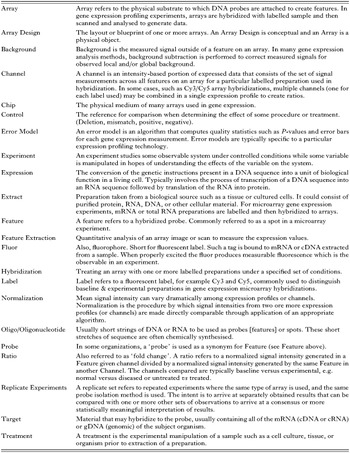
Table 1. Key terminology used in microarray design, construction, utilization and analysis
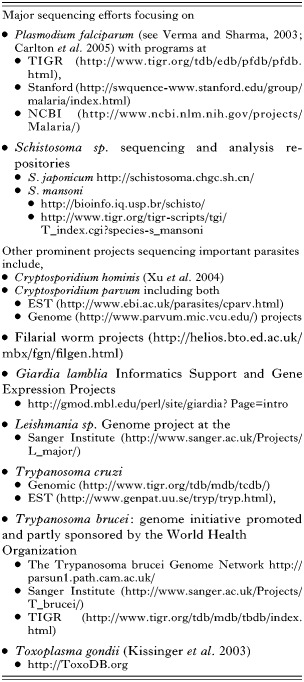
Table 2. Summary of ongoing parasite sequencing projects
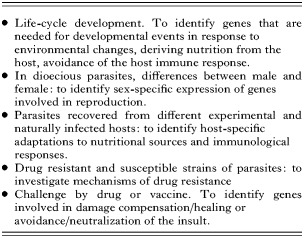
Table 3. Some applications of microarrays in parasitology
 You have
Access
- 12
- Cited by