




No CrossRef data available.
PRICES IN THE OTTOMAN EMPIRE, 1469–1914
Published online by Cambridge University Press: 01 August 2004
Extract
Despite the considerable expansion of research in Ottoman economic and social history in recent decades, our knowledge of the long-term trends in prices in the Ottoman Empire, and more generally in the Balkans and the Middle East, is very limited. Economic and social historians of these regions in the late medieval and early modern eras are still unable to make sense of the most basic of monetary magnitudes involving prices, wages, and wealth, even though inter-temporal comparisons of these magnitudes are the most basic prerequisites for studying the long durée.
Information
- Type
- ARTICLES
- Information
- Copyright
- 2004 Cambridge University Press
Despite the considerable expansion of research in Ottoman economic and social history in recent decades, our knowledge of the long-term trends in prices in the Ottoman Empire, and more generally in the Balkans and the Middle East, is very limited. Economic and social historians of these regions in the late medieval and early modern eras are still unable to make sense of the most basic of monetary magnitudes involving prices, wages, and wealth, even though inter-temporal comparisons of these magnitudes are the most basic prerequisites for studying the long durée.
The study of long-term price trends may also reveal new evidence regarding the long-term economic cycles and conjunctures in Ottoman history. There exists a strong, two-way interaction between monetary and economic conditions. Monetary stability often helps pave the way for the expansion of trade and production. Similarly, monetary instability or shortages of specie often have adverse effects on credit, production, and trade. Conversely, economic prosperity or expansion of economic activity often enables the state to raise additional fiscal revenue, which contributes to monetary stability. There may exist, therefore, a good deal of correlation in the long term between price trends and economic conditions.
The findings of this study indicate, for example, that the period of most rapid debasement and inflation in Ottoman history was not the late 16th and the early 17th centuries, the era of the so-called Price Revolution, as economic historians had come to believe, but the early decades of the 19th century before Tanzimat, a period of wars, internal rebellions, and reform. Establishing in more detail the causes, magnitudes, and consequences of this rapid wave of price increases could thus shed considerable light not only on economic and social history but also on the politics of that period.
A comparison of price trends in the Ottoman Empire with those of other areas around the Mediterranean and beyond for which similar series are available should also provide new insights into the degree of integration of markets and economies and how that degree of integration may have changed over time. Our results indicate that prices in other Ottoman cities moved together with those in the capital city in the medium and long term. There was also a correlation between the prices in Istanbul expressed in grams of silver and the prices in grams of silver around the Mediterranean in the medium and long term. These results confirm that, due to the strength of maritime trade, the empire remained reasonably well linked to markets and economies thousands of miles away.
Based on a large research project in the Ottoman archives in Istanbul, this paper establishes for the first time the long-term trends in consumer prices for Istanbul and other Ottoman cities from the second half of the 15th century until World War I. It also examines the leading causes of Ottoman price movements during these five centuries. A comparison with the price trends in leading European cities for which detailed data are available for the same period is undertaken in the last section of the paper.
CONSTRUCTION OF A CONSUMER PRICE INDEX
This study used data on the prices of standard commodities (food and non-food items) collected from more than 6,000 account books and price lists for Istanbul and, to a lesser extent, for other leading cities of the Ottoman Empire from the 15th to the 20th century. In the first stage of the study, three separate food price indexes were constructed for Istanbul with these annual observations. One of these is based on the account books and prices paid by the many pious foundations (vakıf), both large and small, and their soup kitchens (imaret). Another index is based on the account books of the Topkapi palace kitchen, and the third uses the officially established price ceilings (narh) for the basic items of consumption in the capital city.1
Most of the account books of the pious foundations used in this study are available from the Maliyeden Müdevver (MM); Bab-ı Defteri; Başmuhasebe Kalemi (BŞM); Evkaf Defterleri (EV); and Evkaf Nezareti, Haremeyn Muhasebeciliǧi (EV.HMH) Collections at the Prime Ministry, Ottoman Archives (Başbakanlık Osmanlı Arşivleri [BOA]) in Istanbul. The account books of the Topkapi palace kitchen are available from the Bab-ı Defteri, Matbah Emini (D.BŞM.MTE); Bab-ı Defteri, Başmuhasebe Kalemi (D.BŞM); MM; Kamil Kepeci (KK); Cevdet Saray (CS); Maliye Nezareti, Mesarifat Muhasebesi (ML.MSF); Bab-ı Defteri, Odun Emini (D.BŞM.ODE); and Bab-ı Defteri, İstanbul Aǧası (D.BŞM.ISA) Collections, also at the BOA, and the Dosya (D) Collection, at the Topkapı Palace Archives. The narh lists were approved by the local judges (kadi) and were taken from the Istanbul, Üsküdar, and Galata Islamic court archives in Istanbul. Complete lists of all archival documents used in this price study are available on a year-to-year basis from the appendixes in Şevket Pamuk, Istanbul ve Diger Kentlerde 500 Yıllık Fiyatlar ve Ucretler, 1469–1998 (Ankara: State Institute of Statistics, 2000).
To the extent possible, standard commodities were used in the construction of these indexes to minimize the effects of quality changes. Each of the three food indexes includes the prices of eight to ten leading items of consumption—namely, flour, rice, honey, cooking oil, mutton, chickpeas, lentils, onions, eggs, and olive oil for burning. Among these, flour, rice, cooking oil, mutton, olive oil, and honey provided the most reliable long-term series and carried the highest weights in our food budget. In cases where the prices of one or more of these items were not available for a given year, the missing values were estimated using an algorithm that applied regression techniques to the available values.
The medium- and long-term trends shown by the three food price indexes are quite similar. In addition, account books found in the Ottoman archives showing the private purchases by the households of high-level bureaucrats also point to similar long-term trends in food prices at the retail level.2
Annual values of these four food-price indexes are not provided here because of space limitations. For further details, see Pamuk, 500 Yıllık Fiyatlar, Figs. 2.2, 2.3.
Şevket Pamuk, A Monetary History of the Ottoman Empire (Cambridge: Cambridge University Press, 2000), 9–19.
Even though narh prices moved together with prices paid by the palace and the pious foundations, the study gives greater weight to the prices paid by the soup kitchens and the pious foundations because the palace and narh prices might be considered official or state-controlled prices. For the sake of consistency, the narh prices and the retail prices paid by the households of high-level bureaucrats were not included in the final index.
Since the availability and quality of price observations varied over time for most of the foodstuffs in our list, the 400-year period until 1860 was divided into five sub-periods, and indexes were calculated separately for each. In each sub-period, some commodities had to be excluded from the index because of the unavailability of price observations. The weights of the individual commodities were kept constant as long as they were included in the index.
Based on the available evidence regarding the budget of an average urban consumer, the weight of food items in the overall indices was fixed between 75 and 80 percent. The weight of each commodity in the overall index was then based on the shares of each in total expenditures of the pious foundations. To cite two prominent examples, in the absence of long series on bread prices, the weight of flour—mostly wheat flour—varies mostly between 32 and 40 percent of food expenditures and 24 to 32 percent of overall expenditures, depending on the fluctuations in prices. Similarly, the weight of meat (mutton) varies between 5 and 8 percent of the overall budget. It is likely that the diets of private households in the capital city differed from those offered by the soup kitchens. At this stage, however, it is not possible to approximate the private diets more closely.
What follow are the relative weights of commodities used most frequently in the food-price index:
11 kile of flour (1 kile in Istanbul equaled 37 liters; 1 kile of flour equaled 20.5 okka; 1 okka equaled 1,280 grams)
4 kile of rice (1 kile of rice in Istanbul equaled 10 okka)
9 okka of animal-based cooking oil
13 okka of honey
40 okka of mutton
0.2 kile of chickpeas (1 kile of chickpeas equaled 10 okka)
5 okka of olive oil
One important reason that the weights of the individual commodities were kept constant over time was the unavailability of consumer budgets for different points in time. It is likely that the changes in the commodity composition of the consumer budget were small since increases in average incomes were limited during these centuries. Nevertheless, some substitution must have occurred over time from commodities whose prices rose faster toward those whose prices declined in relative terms.
In the second stage of the study, prices of non-food items obtained from a variety of sources—most important, the palace account books—were added to the indexes. These commodities are soap, wood, coal, and nails by weight (used in construction and repairs). From the various account books of the imperial palace, it is possible to obtain long-term price series on two types of woolen cloth, the locally produced çuha and the çuha Londrine imported from England. Both the absolute level and long-term trends in the more reliable woolen-cloth prices suggest, however, that these were not the varieties worn by ordinary people but expensive types of cloth purchased by high-income groups.4
Halilsah Sahillioǧlu, “Yeniçeri Çuhası ve II. Bayezid'in Son Yıllarında Yeniçeri Çuha Muhasebesi,” Güney-Doǧu Avrupa Araştırmaları Dergisi 2–3 (1973–74): 415–65.
It is well known that pre-modern prices showed large short-term fluctuations due to harvest conditions, difficulties in transportation, wars, and other causes. In the case of our indexes, however, a number of factors worked in the same direction to reduce year-to-year fluctuations. First, the capital city was subject to a higher degree of government involvement in price formation, which tended to reduce price volatility even if it did not have a medium- or long-term impact on the level of prices. Second, it is likely that soup kitchens and the imperial palace were subject to a smaller degree of price variation than the private households. Third, in the processing of price observations from the archival documents, we excluded prices more than 100 percent higher or more than 50 percent lower than the value of the previous year, unless the new price level was observed again in later years. Most of the excluded observations reflected errors in the original document, although some of them must have represented actual prices. As a result, we do not have a high degree of confidence in the year-to-year fluctuations of our indexes but are quite confident about the level of prices at the medium and long term.
For the period 1860–1914, data from the palace, pious, and narh sources are very limited. For this reason, the detailed quarterly wholesale prices of the Commodity Exchange of Istanbul covering about two dozen commodities were used. Indexes based on these prices were then linked to those for the earlier period with the help of detailed data for both retail prices of individual commodities and prices at the Commodity Exchange for 1860–62 and 1913–14.
OVERVIEW OF THE RESULTS
We have thus obtained for the first time for the Middle East—in fact, for the first time for anywhere in the non-European world—detailed price series for these four and a half centuries. For Istanbul, the results have been extended from 1914 to the present since published data on consumer prices is readily available for the recent period.5
Pamuk, 500 Yıllık Fiyatlar, chap. 1.

Consumer price index for Istanbul, 1469–1914 (1469=1.0)

The indexes show that Istanbul experienced a significant wave of inflation from the late 16th to the middle of the 17th century, when prices increased about fivefold. This is the period usually associated with the Price Revolution of the 16th century. The indexes also show, however, that a much stronger wave of inflation occurred beginning in the late 18th century and lasting into the 1850s, when the prices increased 12–15 times. Most of these increases were associated with the debasements that began in the 1780s and accelerated during the reign of Mahmud II (1808–39). In contrast, the overall price level was relatively stable from 1650 to 1780 and from 1860 until World War I. (For a period-by-period review of the price trends, see the Appendix.)
Istanbul was chosen primarily because the data were most detailed for the capital city.6
Detailed indexes of the prices of basic foodstuffs expressed in grams of silver and the terms of trade between foodstuffs and manufactured goods have also been calculated from the Istanbul data: ibid., chap. 2.
Ljuben L. Berov, Prices in the Balkans During the 16th–19th Centuries and the European Revolution of Prices (in Bulgarian) (Sofia: Publishing House of the Bulgarian Academy of Sciences, 1976). A summary is available in L. Berov, “Changes in Price Conditions in Trade Between Turkey and Europe in the 16th–19th Century,” Etudes Balkaniques 3 (1974): 168–78.
Pamuk, 500 Yıllık Fiyatlar, apps.; Andre Raymond, Artisans et commerçants au Caire au XVIIIe siècle (Damascus: Institut Français de Damas, 1973–74), 1:17–80. For these calculations, the silver content of the Cairo para is taken from Pamuk, Monetary History, 95–101, 172–78.
Pamuk, 500 Yıllık Fiyatlar, Fig. 3.2.

Food prices in Ottoman cities, 1469–1865 (Istanbul, 1469=1.0)
A MORE DETAILED LOOK AT THE INDEX
As pointed out earlier, some commodities were excluded from our price indexes because of the unavailability or poor quality of data. It would be useful to see how sensitive the long-term results are to the insertion of these commodities into our consumer price index. Cloth prices had been excluded from the index for the period before 1860 because they belonged to expensive types of cloth worn by high-income groups. Nevertheless, since long-term trends in the available Istanbul cloth-price series broadly paralleled those in Western Europe, they can be used in the index. Prices of woolen cloth decreased by about 80 percent in relation to our overall consumer price index from 1700 to 1860. Given a 7 percent share in the initial consumer budget, the inclusion of cloth prices would decrease the overall consumer index by a total of approximately 5 percent between these two dates.10
As a measure of cloth prices in Western Europe in the early modern era we have used the textile-price index for the Netherlands constructed by Jan Luiten Van Zanden. This index is available in nominal and grams-of-silver terms from the International Institute of Social History's website at www.iisg.nl/hwp.
Another relatively important item excluded from our index is rents on residential housing. In view of the importance of this item in urban consumer budgets, some allowance can perhaps be made for this item by studying long-term trends in rental prices of residential housing elsewhere in European cities for which data are available. In view of the growth of Istanbul as an urban center, one should expect rents on residential housing to rise over time. Taking into account patterns in housing ownership, we estimated, as a first-round approximation, that rent payments on urban housing doubled in relation to the overall index, and the share of rents in the average urban budget rose from about 5 percent to about 10 percent from the 16th to the early 20th century. The inclusion of rents in our index would thus increase the overall index by 5 percent and match in the opposite direction the impact of the inclusion of cloth prices.
Finally, we consider the inclusion of sugar and coffee in the price index. Istanbul sugar prices declined by about 50 percent relative to the overall index during the 16th century and by an additional 50 percent during 1820–60. The available price series for coffee in Istanbul moved together with the overall index until the 19th century but declined by about 60 percent in relation to the index during 1820–60.11
Sugar and coffee were brought to Istanbul from Egypt in the earlier period. It was the arrival of imports from Atlantic sources that led to the sharp decline in the prices of both commodities during the 19th century.
Our index includes prices of imported cotton cloth, sugar, and coffee after 1860: see Pamuk, 500 Yıllık Fiyatlar, apps., for details.
The inclusion of these items in the consumer budgets would change much more significantly the relative prices faced by lower- and higher-income groups, however. Since cloth, sugar, and coffee had larger shares in the budgets of higher-income groups, the decline in their prices should reduce prices faced by these groups more than others. However, the inclusion of rent payments in the budgets would tend to raise prices faced by lower-income groups more than those faced by higher-income groups, since the latter are likely to own their dwellings. We thus expect that the inclusion of these four items in the consumer budgets would shift relative prices in favor of higher-income groups. For example, we estimate that the inclusion of these items in the consumer budgets would widen the difference between the purchasing power of skilled and unskilled workers by approximately 10 percent for the entire period. At least until the late 19th century, the incomes of skilled construction workers must have been above the average for the urban population as a whole.
Another important characteristic of the Istanbul price series is the important divergences in relative prices over the course of these four and a half centuries. Prices of some foodstuffs (meat, flour, milk, eggs) and wood for burning rose 400- to 700-fold during this entire period, while prices of other foodstuffs—olive oil, honey, coffee, onions, and all manufactured items for which price series are available—rose less than 200-fold. To the extent the commodities with higher rates of price increases were essentials and had a higher share in the budgets of lower-income consumers, the overall rate of inflation faced by the lower-income groups must have been higher.13
Prices of flour, meat, and wood increased faster than the overall index after 1750. This may be due—at least, in part—to a decrease in, if not the end of, government attempts to regulate the prices of essentials in the capital city. All annual price observations used in the study are presented in ibid.
When we combine the differential impact of the more rapid rise in the prices of essentials with differential impact on the lower- and higher-income groups of the items excluded from our indexes, we arrive at a cumulative difference of about 20 percent between the prices faced by unskilled and skilled workers during these four and a half centuries. In other words, we estimate that the cumulative rate of inflation faced by unskilled workers from 1469 to 1914 was 10 percent higher and the overall inflation faced by skilled construction workers was 10 percent lower than the averages provided by our consumer price index. The divergence between cumulative prices faced by unskilled workers and higher-income groups was probably even wider.14
A recent study of prices and inequality in Europe since 1500 similarly argues that relative price movements favored higher-income groups and increased income inquality in Western Europe from 1500 to 1800: Philip Hoffman, David Jacks, Patricia A. Levin, and Peter H. Lindert, “Prices and Real Inequality in Europe Since 1500,” Working Paper Series no. 102, Agricultural History Center, University of California, Davis, October 2000. For a study of urban real wages in the Ottoman Empire during these four centuries utilizing wage data from the same archival sources, see Süleyman Özmucur and Şevket Pamuk, “Real Wages and Standards of Living in the Ottoman Empire, 1489–1914,” Journal of Economic History 62 (2002): 292–321.
CAUSES AND CONSEQUENCES OF PRICE CHANGES
There were many causes of inflation during the early modern period, as shown in the large literature and extensive debates on the subject. In the short term, harvest conditions and wars were the two most important causes of price fluctuations. From the long-term perspective offered by these price indexes and our study of the Ottoman currency, however, debasements or the reduction of the specie content of the currency by the monetary authority emerge as the most important cause of Ottoman price increases.
The relationship between debasements and the price level can be established more closely by following the silver content of the Ottoman currency after 1450. Figure 3 presents the annual silver content of the akçe and the kuruş after 1720, with 1 kuruş equal to 120 akçes. The vertical axis is again in log scale so that the slope of the curve indicates the rate of debasement. Figure 3 shows that the silver content of the Ottoman currency declined most rapidly during the late 16th and early 17th centuries and also during the late 18th and early 19th centuries. In contrast, prices were relatively stable after 1860, when the silver content of the Ottoman currency remained unchanged. The correlation between Figure 1 and Figure 3 is quite clear.

Silver content of the Ottoman monetary unit (akçe), 1469–1914 (in grams)
An alternative way to examine the relationship between debasements and the price level would be to construct price indexes expressed in grams of silver, which is obtained by multiplying the value of the price index by the silver content of the Ottoman currency for the same year. Figure 4 and the third column of Table 1 combine the evidence in Figures 1 and 3 and present the overall price index for Istanbul in grams of silver. The series was extended beyond 1870 even though world silver prices declined sharply after that date, because the nominal value of silver coinage was not changed under the Ottoman monetary system until World War I.

Consumer prices in Istanbul, 1469–1914 (in grams of silver; 1469=1.0)
It is remarkable that even though nominal prices in Istanbul increased about 300 times, prices expressed in grams of silver stayed within the relatively narrow range of 1.0 to 3.0 during these four and a half centuries. There were medium-term movements in prices expressed in grams of silver. Prices expressed in grams of silver increased by as much as 60 percent from 1500 until the second half of the 17th century, during the period of the Price Revolution; declined during the first half of the 18th century; and then more than doubled until the second half of the 19th century.15
For differing views on the extent of silver inflation and its causes and consequences during the 16th and 17th centuries, see Ömer Lütfi Barkan, “The Price Revolution of the Sixteenth Century: A Turning Point in the Economic History of the Near East,” trans. Justin McCarthy, International Journal of Middle East Studies 6 (1975): 3–28; and Şevket Pamuk, “The Price Revolution in the Ottoman Empire Reconsidered,” International Journal of Middle East Studies 33 (2001): 69–89. The latter study shows that silver inflation accounted for a smaller part, and debasements accounted for a larger part, of Ottoman price increases during the period 1500–1650 than Barkan suggested a quarter-century ago.
Pamuk, 500 Yıllık Fiyatlar, chap. 2 (figs.).
The causes and consequences of pre-modern debasements have been the focus of much debate.17
C. M. Cipolla,“Currency Depreciation in Medieval Europe,” Economic History Review 15 (1963): 413–15, provides a useful list of the causes of debasements and a good starting point. See also Harry A. Miskimin, Money and Power in Fifteenth Century France (New Haven, Conn.: Yale University Press, 1984); Michael D. Bordo, “Money, Deflation and Seigniorage in the Fifteenth Century,” Journal of Monetary Economics 18 (1986): 337–46; and Nathan Sussman, “Debasements, Royal Revenues and Inflation in France During the Hundred Years' War, 1415–1422,” Journal of Economic History 53 (1993): 44–70.
The persistence of debasements throughout the medieval and early modern periods suggests that these interventions could not simply be futile efforts. Although they did not solve the problems of specie shortages, debasements did provide fiscal relief for the states, and there lay their appeal. Since the obligations of the state to the soldiers, bureaucrats, and suppliers are expressed in terms of the monetary unit of account, a reduction in the silver content of the currency enabled the state to increase the amount it could mint from, or the payments it could make with, a given amount of silver. As a result, debasements were frequently used as an alternative to additional taxation.
Prices almost always rose in the aftermath of debasements because a debasement typically increased the nominal value of coinage in circulation. Even if the prices did not rise quickly because of the shortages of specie or some other reason, long-distance trade acted as the ultimate equalizer in the longer term. If prices expressed in grams of silver in a given region became less expensive vis-à-vis the neighboring areas, increased demand for the lower-priced commodities attracted large quantities of silver, thus raising prices. Price adjustments after a debasement tended to be more rapid the more open the economy and the more frequently debasements were used.18
Bordo, “Money, Deflation and Seigniorage.”
Another possible cause of debasements was the pressure from some social groups in favor of inflation. Even if a social group did not always benefit from debasements and inflation, it could still prefer debasements to additional taxation. For example, merchants sometimes preferred debasements to increased taxation when the government faced fiscal difficulties. This is because the prices of goods held by the merchants typically rose together with other prices after a debasement. On the other side were social groups who stood to lose from debasements and the accompanying inflation and therefore opposed them. Under these circumstances, the fate of the currency was not determined solely by the government. It often depended on the struggle between it and various social groups. Before we begin an examination of Ottoman debasements, therefore, it would be useful to examine how different groups in Ottoman society fared in the face of debasements.
For a long time it has been assumed that the use of money in the Ottoman Empire was limited to long-distance trade and parts of the urban sector.19
F. Braudel, Civilization and Capitalism, 15th–18th Century, Vol. III: The Perspective of the World (New York: Harper and Row, 1984), 471–73.
S. Faroqhi, “The Early History of Balkan Fairs, “Südost-Forschungen 37 (1978): 50–68; idem, “Sixteenth Century Periodic Markets in Various Anatolian Sancaks,” Journal of the Economic and Social History of the Orient 22 (1979): 32–80; and idem, “Rural Society in Anatolia and the Balkans During the Sixteenth Century,” Turcica 9 (1977): 161–96, and 11 (1979): 103–53; Pamuk, Monetary History, 74–76.
Second, small-scale but intensive networks of credit relations developed in and around the urban centers. Evidence from thousands of court cases in these towns and cities involving lenders and borrowers leave no doubt that the use of credit, small and large, was widespread among all segments of urban and parts of rural society. It is clear that neither the Islamic prohibitions against interest and usury nor the absence of formal banking institutions prevented the expansion of credit in Ottoman society.21
Pamuk, Monetary History, 77–87.
As a result, debasements had an impact on virtually all groups in Ottoman society, and in turn each group took a position. Most men and women, urban and rural, were clear about the consequences of different ways of dealing with the coinage and about who gained and who lost. In general, all those who had future obligations expressed in terms of the unit of account—most important, borrowers and tenants paying fixed rents in cash—stood to gain from debasements. Conversely, those who expected to be paid fixed amounts in terms of the unit of account stood to lose from debasements.
In the rural areas, taxes and rents on public and privately held lands were paid almost entirely in kind during the 18th and 19th centuries. Moreover, those producers who sold part of their crop in local markets received higher prices during periods of inflation. As a result, debasements and inflation did not have a major impact on rural producers. The significant exception, of course, were the lenders and borrowers in the countryside. Local court records indicate that numbers of court cases involving lending and borrowing by rural as well as urban residents typically showed sharp increases during periods of frequent debasement and rapid inflation.
In the urban areas, a dense network of credit relations existed, most of which was involved small-scale lenders and small cash vakıfs that lent on interest. The local moneychangers (sarrafs), with their expert knowledge of the markets, often benefited from the uncertainty and fluctuations in exchange rates as well as from the requirement to surrender old coins in the aftermath of debasements. Most of them were net lenders, however, and they stood to lose from the inflation that followed debasements. As the fiscal problems of the Ottoman state intensified in the second half of the 18th century, the sarrafs of Istanbul began to provide larger loans to the state, using their connections to the financial markets in Europe. This lucrative process soon transformed the traditional moneychangers into the so-called Galata bankers, named after the financial district in the capital city. The Galata bankers also held considerable amounts of esham, or long-term government bonds.22
Araks Şahiner, “The Sarrafs of Istanbul: Financiers of the Empire” (unpublished M.A. diss., Department of History, Bogaziçi University, Istanbul, 1995); Islam Ansiklopedisi, vol. 11 (Istanbul, 1995), 376–80, s. v. “Esham” (Mehmet Genç). It would be interesting to explore the attitudes of the notables or ayan of the provinces toward money and inflation during the 18th and early 19th centuries. Many ayan were the holders of various types of tax farms, both short term and long term. To the extent that the tax farmers were expected to make fixed payments to the state each year, they tended to benefit from debasements and inflation. At the same time, however, many ayan were engaged in trade, especially long-distance trade. In their role as long-distance merchants, they must have favored monetary stability.
Merchants and shopkeepers in the urban areas did not appear to lose from debasements, since the prices of goods they sold tended to rise during periods of inflation. There was always the risk, however, that the government would impose price ceilings on essential goods sold in the urban markets when prices rose too fast. As a result, merchants and shopkeepers were also wary of debasements.
The groups that stood to lose the most from debasements were those who were paid fixed amounts in terms of the unit of account. The most important groups in this category were the employees of the state, the bureaucracy, the ulama, and, especially, the janissaries. A large overlap existed between the guild members and the janissaries after the latter began to moonlight as artisans and shopkeepers in the 17th century.
Given this configuration of winners and mostly losers from debasements, Ottoman governments' attitudes toward debasements entailed the weighing their short-term fiscal benefits against their short- and long-term costs. If the government perceived these costs to be lower than the expected fiscal benefits, then a debasement or a series of debasements could be adopted. In other words, far from being an exercise in futility, the debasements were viewed by the Ottoman administrators as a potentially effective instrument of fiscal policy, especially in the short term. At the same time, however, there were significant economic and political constraints on the state's ability to take advantage of debasements.
The fiscal benefits of a debasement are not difficult to establish. The government was able to issue a larger amount of coinage in nominal terms with the same amount of specie and meet a larger fraction of its obligations.23
Contemporary Ottoman commentators argued that debasements were not useful for the state because the prices rose and the state revenues, which were fixed in nominal terms, declined in real terms after each debasement: Cezar, Osmanlı Maliyesinde Bunalım (Istanbul: Alan Yayincilik), 147. This argument, however, does not take into account the revenue obtained by the state during the first round by issuing additional coinage. With the time horizon severely shortened under the pressure of war and severe financial crises, it thus made sense to pursue debasements for short-term fiscal gains.
On the other side there were a number of costs that might be borne by the state as a result of debasements. As prices rose, including those paid by the state in the aftermath of a debasement, many of the state revenues that were fixed in nominal terms declined in real terms. In other words, debasements generated an initial surge in revenues, followed by a decline in real terms due to the inflation they created. In the longer term, a debasement might even lead to a real decline in revenues if the government did not adjust upward the taxes and other revenues that had been fixed in nominal terms.
Second, if the public lost confidence in the currency and began to anticipate further debasements, it became increasingly difficult for the government to take advantage of further reductions in the specie content of coinage. In the open mint system, for example, the public might begin holding another currency and stay away from the mints. A large degree of currency substitution must have taken place during the period of high inflation from 1585 to 1650 and during the reign of Mahmud II (1808–39) as varieties of foreign coinage were free to circulate.24
For an episode of currency substitution arising from the instability of the akçe during the 17th century, see Şevket Pamuk, “In the Absence of Domestic Currency: Debased European Coinage in the Seventeenth-Century Ottoman Empire,” Journal of Economic History 57 (1997): 345–66; and idem, Monetary History, 138–58.
A third cost of Ottoman debasements was the spread of counterfeiting. When the government issued new coins with lower specie content, counterfeiters immediately began to mint the new coins with the same or even higher silver content to share the fiscal revenues of the state. This opportunity declined, however, when precious-metal prices adjusted upward along with other prices. Price ceilings on the specie and government attempts to obtain the specie at those official prices also encouraged counterfeiting.
Yet another cost was the adverse implications of debasements for the ability of the state to borrow domestically. As the government began to make use of debasements, the public typically began to anticipate more, and it became increasingly difficult to borrow from the public at large. There is evidence that with the acceleration of debasements after 1808, rates of interest increased even further, and it became even more difficult for the government to sell the government paper called esham. For example, it appears that the ratio between the initial sale price of esham and the annual payments declined after 1808 when the government began to use debasements more frequently.25
Cezar, Osmanlı Maliyesinde Bunalım, 79–89, 133–35, 239–41.
The most important cost of Ottoman debasements, however, was the political opposition they generated among the urban groups, especially in the capital city. One group that disliked debasements included the guild members, shopkeepers, small merchants, and wage-earning artisans. Another group that stood to lose from debasements were those who were paid fixed salaries by the state: the bureaucracy, the ulama, and the janissaries stationed permanently in the capital. This broad opposition acted as a major deterrent to the more frequent use of debasements by the government not only in the capital but also in the provincial centers. It would be interesting to explore the causal linkages between the debasements and the urban rebellions of the late 18th and early 19th centuries in Syria, Iraq, and elsewhere in the empire.26
I am indebted to Dina Rizk Khoury for information on the urban uprisings in Syria and Iraq during the period 1770–1830.
The effectiveness of this urban opposition should not be measured in terms of the frequency of rebellions, however. Just as E. P. Thompson argued in his study of the moral economy of the English crowd in the 18th century that the effectiveness of the bread riots should not be measured in terms of their frequency, the threat of rebellions proved just as effective in the longer term.27
E. P. Thompson, “The Moral Economy of the British Crowd in the Eighteenth Century,” Past and Present 50 (1971): 76–135. See also Charles Tilly, “Food Supply and Public Order in Modern Europe,” in The Formation of Nation States in Western Europe, ed. Charles Tilly (Princeton, N.J.: Princeton University Press, 1975), 35–151.
Into this framework of costs and benefits and interaction between the state and society wars enter as exogenous shocks—events that raised both the need for short-term revenues for the state and the willingness of the public to accept extraordinary measures such as debasements. As the urgency of generating revenues increased, the state often invoked references to holy wars and even linked the new coinage explicitly to the ongoing wars—for example, calling the new issues of coins and bonds cihadiyye, or of holy war.
Mahmud II was well aware of the limitations imposed by the janissaries and related urban groups. From the very beginning of his reign in 1808, he wanted to replace the janissaries with a Western-style army. During the early years of his long reign, however, he did not have the political support to make this critical move. After the janissaries were finally defeated and the order was abolished in 1826 (in what is usually considered one of the most important political events of this period, the Vaka-i Hayriye, or the “Auspicious Event”) a major constraint in the way of debasements was lifted. Only two years later, the government began the largest debasement ever in Ottoman history, reducing the specie content of the kuruş by 79 percent within a period of four years.
COMPARISONS ACROSS EUROPE
In a recent study of prices and wages in European cities from the Middle Ages to World War I, Robert Allen uses a large body of data, most of which was compiled during the early part of the 20th century by studies commissioned by the International Scientific Committee on Price History, founded in 1929.28
Arthur Cole and Ruth Crandall, “The International Scientific Committee on Price History,” Journal of Economic History 24 (1964): 381–88.
Robert Allen, “The Great Divergence in European Wages and Prices from the Middle Ages to the First World War,” Explorations in Economic History 38 (2001): 411–47.
Allen argues that even though prices in a single city can be accepted as a barometer of prices and wages in the whole economy, international comparisons need to be made between cities at similar levels in the urban hierarchy. Since his study uses data from cities at the top of their respective urban hierarchies, such as London, Antwerp, Amsterdam, Milan, Vienna, Leipzig, and Warsaw, it would make sense to insert Istanbul, another city at the top of the urban hierarchy of its region, into this framework. This is not difficult to do, because prices are already expressed in grams of silver in the present study. However, it is still necessary to express Istanbul prices in terms of the Allen base of Strasbourg 1700–49 equalling 1.0. For this purpose, Ottoman commodity prices for the interval 1700–49 were applied to Allen's consumer basket with fixed weights. A second and equally useful method of linking Istanbul's price level to the price levels of other European cities in the Allen set was to employ the detailed annual commodity-price series gathered by Earl Hamilton for Valencia and Madrid for 1500 to 1800 and compare them with the Istanbul prices for the same commodities.30
Earl J. Hamilton, American Treasure and the Price Revolution in Spain, 1501–1650 (Cambridge, Mass.: Harvard University Press, 1934); and idem, War and Prices in Spain, 1650–1800 (Cambridge, Mass.: 1947).

Consumer price indexes for European cities, 1450–1913 (prices in grams of silver; Strasbourg, 1700–49=1.0).
One revision in the Allen series concerns price levels during the 1850–99 and 1900–13 intervals. To remain consistent throughout, Allen continued to express all prices and wages in grams of silver, even after 1870, when silver prices declined sharply and most European countries abandoned the bimetallic system in favor of the gold standard. While technically correct, this procedure gives the impression that most European cities experienced a high rate of inflation during this period, while in fact nominal prices and wages remained quite stable. We chose to express all price and wage levels in gold after 1870 by deflating the Allen series by 1.3 and 2.1 for 1850–99 and 1900–13, respectively.
The insertion of Istanbul prices into this framework raises some questions and leads to a number of interesting observations. First, European price series indicate that during the first half of the 16th century, before the impact of the Price Revolution began to be felt, prices were higher in southern Europe than elsewhere in Europe. Similarly, my indexes show that in the early 16th century, prices in Istanbul were higher than prices in all of the sixteen cities covered by Allen (Figure 5). Second and relatedly, the rise in Istanbul prices expressed in grams of silver was slower than elsewhere in Europe until 1650. As a result, Istanbul prices expressed in grams of silver tended to converge with those in other Mediterranean and European cities during the era of the Price Revolution, with the exception of Spain, where prices rose fastest and remained higher than anywhere else in Europe.
Third, the European series indicate that, despite the huge growth in trade, the spread of European prices expressed in grams of silver was just as wide on the eve of World War I as it had been in 1500. European prices and price disparities began to increase after 1800, with London leading the way. Istanbul prices expressed in grams of silver began to rise in the second half of the 18th century but lagged behind other European cities during the 19th century. On the eve of World War I, Istanbul prices in grams of silver or gold were comparable to but lower than all of the other cities in the Allen set.
Istanbul and other Ottoman port cities remained linked to other European ports during these four centuries through the Black Sea and especially the Mediterranean. In the future, it would be useful to examine the issue of price integration more closely by applying statistical techniques to the annual Istanbul and other European price series. Even if prices on the eve of World War I do not show any greater degree of convergence than in 1500, it would be useful to identify more precisely the periods in which Istanbul prices tended to converge with those in other European cities and when they tended to move apart during these four centuries.
CONCLUSION
Based on a large research project in the Ottoman archives in Istanbul, this paper has established for the first time the long-term trends in consumer prices for Istanbul and other Ottoman cities from the second half of the 15th century until World War I. Our results indicate that prices increased about 300 times from 1469 until World War I. This overall increase corresponds to an average increase of 1.3 percent per year, end to end. Our price indexes also show that the Ottoman Empire experienced a significant wave of inflation from the late 16th to the middle of the 17th century, when prices increased about fivefold. This is the period usually associated with the Price Revolution of the 16th century. The indexes also show, however, that a much stronger wave of inflation occurred beginning in the late 18th century and lasting into the 1850s, when prices increased 12–15 times. Most of those increases were associated with currency debasements that began in the 1780s and accelerated during the reign of Mahmud II. In contrast, the overall price level was relatively stable from 1650 to 1780 and from 1860 until World War I.
Even though nominal prices in Istanbul increased about 300 times, prices expressed in grams of silver stayed within the relatively narrow range of 1.0 to 3.0 during these four and a half centuries. This result indicates that the so-called silver inflation contributed to the changes in the overall price level, but debasements were by far the most important determinant of Ottoman prices increases in the long term. Debasements were undertaken by the Ottoman government mostly for fiscal gain. Far from being an exercise in futility, the debasements were viewed by the Ottoman administrators as a potentially effective instrument of fiscal policy, especially in the short term. At the same time, however, there existed significant economic and political constraints on the state's ability to take advantage of debasements.
The last section of the article offered a comparison with the price trends in leading European cities for which detailed price data are available for the same period. Our comparisons indicate that in the early 16th century, prices in Istanbul expressed in grams of silver were higher than prices in most, if not all, of the leading urban centers of Europe. During the Price Revolution of the 16th and early 17th centuries, however, prices expressed in grams of silver rose much faster in Western Europe and exceeded Ottoman prices. By the 19th century, Istanbul prices expressed in grams of silver or gold were comparable to but lower than prices in most other cities in Europe.
APPENDIX: LONG-TERM TRENDS OF THE INDEX
Based on trends in money and prices, it is best to examine these four and a half centuries in five distinct time periods. Piecewise regressions were used to estimate separate trend lines for each period. Data on the silver content of the Ottoman currency are taken from Pamuk's A Monetary History of the Ottoman Empire.
The first period, from 1469 until 1585, is characterized by stable money, rising population, and rising prices expressed in grams of silver (the era of the so-called Price Revolution). The trend lines indicate that the silver content of the currency declined at an annual rate of 0.52 percent, and prices rose at an annual rate of 1.13 percent during this period.
During the second period, from 1585 to 1690, there was a high degree of monetary and price instability, together with declining population. The silver content of the currency fluctuated wildly and declined at an annual rate of 1.05 percent. Prices rose at an annual rate of 0.67 percent during this period.
The third period, from 1690 to 1768, was once again a period of monetary and price stability. The silver content of the currency declined at an annual rate of 0.30 percent, and prices rose at an annual rate of 0.44 percent.
The fourth period, from 1769 to 1843, is characterized by the most rapid rates of debasement in Ottoman history, high inflation, and rising real wages. The silver content of the currency declined at an annual rate of 3.49 percent, and prices rose at an annual rate of 3.81 percent during this period.
The fifth period, from 1844 to 1914, witnessed stable money under bimetallism, rapidly expanding international trade, and stable prices. The silver content of the currency remained unchanged, and prices increased at an annual rate of 0.67 percent until World War I. Most of the price increases occurred early in the period and were the lagged result of the debasements of the previous period.
Author's note: This research project has been supported by the State Institute of Statistics of Turkey, Academy of Sciences of Turkey, and Boǧaziçi University, Research Fund, through projects 99HZ02 and 01Z101. In addition to these institutions, the author thanks Figen Taşkın, Nadir Özbek, and Işık Özel for valuable research assistance. Thanks are also due to Robert Allen for sharing his data, insights, and experience.
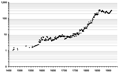
Consumer price index for Istanbul, 1469–1914 (1469=1.0)
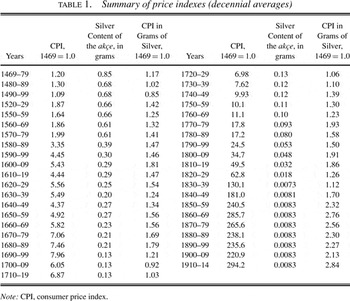
Summary of price indexes (decennial averages)
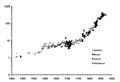
Food prices in Ottoman cities, 1469–1865 (Istanbul, 1469=1.0)
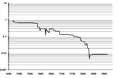
Silver content of the Ottoman monetary unit (akçe), 1469–1914 (in grams)
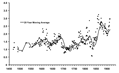
Consumer prices in Istanbul, 1469–1914 (in grams of silver; 1469=1.0)
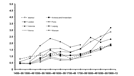
Consumer price indexes for European cities, 1450–1913 (prices in grams of silver; Strasbourg, 1700–49=1.0).
 You have Access