




No CrossRef data available.
Article contents
Effects of therapeutic beta blockade on myocardial function and cardiac remodelling in congenital cardiac disease
Published online by Cambridge University Press: 18 April 2005
Abstract
Background: Cardiac remodelling is now recognised as an important aspect of cardiovascular disease progression and is, therefore, emerging as a therapeutic target in cardiac failure due to different etiologies. Little is known about the influence of different therapies for cardiac failure on the remodelling seen in infants with congenital cardiac disease. Methods: During follow-up of a prospective and randomized trial, we investigated therapeutic effects on neurohormonal activation, ventricular function, and myocardial gene expression. We compared the data from 8 infants with severe congestive heart failure due to left-to-right shunts, who received digoxin and diuretics alone, to 9 infants who received additional treatment with propranolol. Results: In these infants, β-adrenergic blockade significantly reduced highly elevated levels of renin, from 284 ± 319 μU/ml compared to 1061 ± 769 μU/ml. Systolic ventricular function was normal in both groups, but diastolic ventricular function was improved in those receiving propranolol, indicated by significantly lower left atrial pressures, lower end-diastolic pressures, and less pronounced ventricular hypertrophy, the latter estimated by lower ratios of myocardial wall to ventricular cavity areas on average of 42%. Further hemodynamic parameters showed no significant differences between the groups, except for the lower heart rate in infants treated with propranolol. In those treated with digoxin and diuretics, there was a significant downregulation of β2-receptor and angiotensin-2 receptor genes, and up-regulation of endothelin A receptor and connective tissue growth factor genes, that were partially prevented by additional treatment with propranolol. Conclusions: β-blockade is a new therapeutic approach for congestive heart failure in infants with congenital cardiac disease, producing with significant benefits on neurohormonal activation, diastolic ventricular function, and cardiac remodelling.
Keywords
Information
- Type
- Original Article
- Information
- Copyright
- © 2003 Cambridge University Press
The conceptual model for cardiac failure has changed radically over the past twenty years. No longer considered a simple hemodynamic paradigm of pump dysfunction, cardiac failure is now characterized as a complex clinical syndrome with release of many neurohormones1 and cytokines,2 which are believed to be most responsible for progression of the disease.3 This change in the understanding of the pathophysiology has important therapeutic implications. Interventions aimed solely at correcting a low cardiac output, or reduced flow of blood, do not necessarily slow the progression of the cardiac failure or reduce mortality.3 Cardiac remodelling, as defined by Mann,4 is now recognised as an important aspect of the progression of cardiovascular disease. It is, therefore, emerging as a therapeutic target in the setting of cardiac failure due to different etiologies.
Congestive heart failure in infants with congenital cardiac disease is usually not caused by pump dysfunction,5 but is characterized by hemodynamic disturbances due to left-to-right shunts, pulmonary overcirculation, and volume overload. Recently published data in such infants suggest that the “neurohormonal hypothesis”,6, 7 as well as the “cytokine hypothesis”,8 may also be valid in this population.
Corrective cardiac surgery in early infancy seems to be the most effective therapy with which to reverse neurohormonal activation, and probably cardiac remodelling, in these patients.9 Infants with complex cardiac anomalies, nonetheless, frequently may not undergo a complete repair in infancy. Instead, they may require palliative surgery, such as banding of the pulmonary trunk or creation of an aortic-pulmonary shunt, which may have a negative impact on their prognosis.10, 11 In these patients, cardiac hypertrophy seems to be the most important risk factor, for example, for a poor outcome of the Fontan operation.12, 13 The hypertrophy seems to be a marker of cardiac remodelling induced by volume overload and neurohormonal activation.14
The prospective and randomized CHF-PRO-INFANT trial, standing for Congestive Heart Failure in Infants treated with Propranolol, compared the therapeutic effects of digoxin and diuretics in infants with severe congestive cardiac failure due to left-to-right shunts to additional treatment with propranolol. Recently published data obtained during the first month of this trial showed significant clinical and neurohormonal benefits due to β-blockade.15 Further measurements of neurohormonal activation, ventricular function, expression of myocardial genes, and invasively obtained hemodynamic data, were performed during the follow-up of the patients in order to investigate myocardial function and cardiac remodelling.
Materials and methods
Study design
The CHF-PRO-INFANT trial was performed as a prospective, randomized, and open trial in infants with severe cardiac failure due to left-to-right shunts. The German Federal Institute for Drugs and Medical Devices, and the local ethics committee, approved the protocol, which was conducted in accordance with the Declaration of Helsinki II and the Note for Guidance on Clinical Investigation of Medicinal Products in Children. Written informed consent of the parents was obtained.
We enrolled 20 infants aged up to three months referred to our hospital with defined clinical symptoms of congestive cardiac failure. At the time of enrollment, all infants were known to suffer from congenital cardiac disease with significant left-to-right shunts (Table 1), and showed a heart failure score of more than 6 points using Ross's scheme,16 which corresponds to classes III and IV in the grading of the New York Heart Association for adults. All patients received digoxin and diuretics during the first week after enrollment, and then were randomized to receive standard therapy with furosemide, spironolactone and digoxin alone, or standard therapy plus additional treatment with propranolol. Patients who were randomized to beta-blockade received incremental doses of propranolol during a mean titration period of 17 days, starting with 1 mg/kg/day, and aiming for a final dosage of 2 mg/kg/day. The increase in, and the final, dosage were determined by the investigator on the basis of clinical response and heart rate. A flowchart of the trial and the time intervals were published recently.15
Table 1. Cardiac diagnoses in the CHF-PRO-INFANT trial.

The data of this follow-up study were obtained at the time of preoperative cardiac catheterization at a mean age of five months, with a mean follow up of 3.5 ± 2.4 months from enrollment. In one patient, who developed severe sepsis following resection of bowel during the early period of titration, receiving 0.45 mg/kg/day propranolol, we stopped the beta-blockade in the intensive care unit. In 2 patients receiving standard therapy, there was spontaneous closure of their ventricular septal defect. They did not need cardiac catheterization or cardiac surgery. The data of these patients were excluded from the subsequent analysis. Myocardial biopsies from 15 infants were obtained during cardiac surgery approximately one month after cardiac catheterization, having obtained written consent from the parents.
Clinical parameters
We graded the presence and severity of congestive cardiac failure using the Ross Score,16 along with a previously published score6 based on the following variables: respiratory rate, need for diuretics, weight gain and degree of perspiration. In contrast to the Ross Score, this score does not include heart rate, which was directly influenced by betablockade.
Neurohormonal activity
Venous blood for determination of plasma neurohormonal levels was drawn from non-sedated infants by an experienced pediatrician during a routine collection of blood.
Levels of norepinephrine and epinephrine were measured by a high-performance liquid chromatography with fluorescence detection. Determinations for concentrations of immunoreactive renin-, and aldosterone, were performed with commercially available immunoradiometric assays (Nichols Institute Diagnostika GmbH, Bad Nauheim, Germany). Levels of endothelin levels were obtained using a commercially available assay (Immundiagnostik GmbH, Wien, Austria).
Hemodynamic parameters and ventricular function
Hemodynamic data were compared with those obtained at the preoperative cardiac catheterization. Systemic and pulmonary flows were calculated by the Fick principle, using a measured consumption of oxygen (Deltatrac™ II, HOYER Medizintechnik, Bremen, Germany). Right atrial pressure, pulmonary arterial pressure, and mean systemic arterial pressure, were measured invasively. Left atrial pressure was measured directly, or estimated from the pulmonary capillary wedge pressure. The indexes of systemic and pulmonary vascular resistance were calculated from the differences in pressure, and the specific flows, in the corresponding circulations. Ejection fraction, and end-diastolic left ventricular volume, was determined by bi-plane volumetric measurements from cineangiocardiograms made in the systemic ventricle. Data that depend on body surface area were indexed.
To elucidate the left ventricular contractile state and function, we used a noninvasive assessment of wall stress that related the velocity of circumferential fiber shortening as a modification of the original method of Colan and colleagues.17 For noninvasive evaluation of this parameter, we utilized an algorithm to derive the endsystolic pressure in the ascending aorta from oscillometric measurements of blood pressure.18 The degree of myocardial hypertrophy was estimated by deriving the ratio of the myocardial wall during systole to the area of the ventricular cavity area as measured in the short axis cross-sectional echocardiographic view.
Expression of myocardial genes
Myocardial tissue was obtained from right atrium during cardiac surgery after connection with the heart-lung-machine, and was immediately frozen on dry ice and stored at −80°C. Ribose nucleic acid was extracted with RNAzol™ (Lorei + Pasel, Germany) and subjected to a deoxyribonuclease digest. Yields of ribose nucleic acid before and after the deoxyribo-nuclease digest were comparable in all groups (data not shown). From each sample, 250 ng of ribose nucleic acid was reverse transcribed with random hexamers and SuperScript™ (Gibco™, Germany). To control the efficient digestion of deoxyribonucleic acid, all samples were run after digestion in a polymerase chain reaction with the specific primers used before reverse transcription. Primers for angiotensin2-, endothelin A-, β1- and β2-adreno-receptor, transforming growth factor β, connective tissue growth factor, cardiotrophin-1, collagen-1, fibronectin, angiotensin converting enzyme, glyceralaldehyde-3-phosphate dehydrogenase, and 18S r-ribose nucleic acid, were designed using Dnasis version 2.1™ and the PrimerExpress Software™ (PerkinElmer Applied Biosystems, Germany). Sequences of all oligonucleotides used as forward primers, reverse primers and fragment length are available on demand from the corresponding author.
All polymerase chain reactions had efficiencies of about 1.9. The reaction and measurements were performed in quatriplets with the GeneAmp5700 Sequence Detection system (PerkinElmer Applied Biosystems) or Light Cycler™ instrument (Roche, Germany). In both systems, the specifity of the reaction was evaluated by performing a melting reaction. A “hot start” polymerase chain reaction procedure (TaqStart antibody) with SYBR Green I™ was used. SYBR Green I™ signals from each probe were related to a standard curve in each assay (50 ng, 25 ng, 12.5 ng, 6.25 ng and 3.125 ng of total ribose nucleic acid from equal amounts of ribose nucleic acid from pooled samples). The expression of the target gene was normalised to the expression of 18S r-ribose nucleic acid or glyceralaldehyde-3-phosphate dehydrogenase by using the delta-delta-ct-method.
Reference values of expression were estimated in myocardial biopsies of 10 infants with cyanotic cardiac defects with less severe heart failure and a Ross Score below five points, who underwent surgery at our institution.
Analysis of data
In our analysis, we used data from 8 infants, who were randomized to standard therapy, in comparison to 9 infants, who received additional treatment with propranolol up to the time of cardiac surgery. Statistical differences between the groups were analysed by the nonparametric, unpaired Student's t test, using the Mann-Whitney test when the data did not conform to a Gaussian distribution.
Results
Clinical and neurohormonal parameters
Cardiac diagnoses were comparable between the two groups (Table 1). Infants treated with propranolol (Table 2, Fig. 1) underwent cardiac surgery at an older age, and a higher bodyweight, due to their improved clinical condition as assessed by the two scores for cardiac failure. It proved possible to stop treatment with Furosemide in 8 of the 9 infants who received propranolol, while all patients on standard treatment continued to require furosemide up to the time of their cardiac surgery.
Table 2. Preoperative characteristics and drug therapy of patients in follow up study.$


Figure 1. Clinical signs of cardiac failure measured by the Ross Score during the CHF-PRO-INFANT trial. There is a slight decrease of the Ross Score during the first week after starting treatment with digoxin and diuretics, but a more pronounced decrease at the end of the titration of propranolol in this group (□). The Ross Score remained higher in those receiving digoxin and diuretics ([xcirc ]) up to the time of their preoperative evaluation.
Neurohormonal data at the time of cardiac catheterization, displayed in Table 3, showed a significant activation of the renin-angiotensin-aldosterone system in those treated with digoxin and diuretics. This activation was related in time to the beginning of treatment (Fig. 2), and paralleled increasing values of creatinine and hyponatremia. Levels of norepinephrine and endotheline were elevated in both groups, albeit with no significant differences.
Table 3. Neurohormonal data and clinical laboratory of patients in follow up study.§


Figure 2. Levels of renin during the CHF-PRO-INFANT trial. The levels became highly elevated during the first week of treatment with digoxin and diuretics, and remained elevated in those only receiving these drugs ([xcirc ]) up to the time of preoperative evaluation. There is a significant decrease in the levels in those also receiving propranolol (□).
Hemodynamic parameters and ventricular function
Hemodynamic data (Table 4) showed significant pulmonary hypertension, and reduced systemic cardiac indexes, with pulmonary overcirculation, in both groups. Some patients had a decrease in pulmonary flow during the study period, leading to the high standard deviations in the ratio of pulmonary to systemic flows. The mean uptake of oxygen, and pulmonary vascular resistances, were normal, and mean systemic saturation of oxygen was slightly reduced in both groups. Heart rate was significantly lower in those treated with propranolol.
Table 4. Preoperative hemodynamics and ventricular function.§

Systolic ventricular function was normal in all patients, measured by echocardiography and angiography. Wall stress related velocity of circumferential fiber shortening was within the normal range, both at baseline and preoperatively, in both groups (Fig. 3). A significant difference was noted in endsystolic wall stress, however, paralleled by an increase of myocardial hypertrophy, in those treated with digoxin and diuretics compared to the decrease in hypertrophy seen in those receiving propranolol (Table 4). End-diastolic left ventricular pressures, and mean left atrial pressures, were also higher in those having standard treatment compared to those also receiving propranolol (Table 4).

Figure 3. Left ventricular contractile state and function during the CHF-PRO-INFANT trial. Wall stress related velocity of circumferential fiber shortening (VcFc) was assessed non-invasively using a modification of the original method of Colan and colleagues. VcFc is normal or slightly elevated on enrollment (□, [xcirc ]) and at preoperative evaluation ([squf ], [bull ]), not only in those receiving digoxin and diuretics ([bull ], [xcirc ]), but also in those treated with propranolol ([squf ], □). Endsystolic wall stress decreased in those treated only with digoxin and diuretics, but increased in those receiving additional propranolol. These changes are related to a progressive myocardial hypertrophy measured by the ratio of myocardial wall to cavity in those treated with digoxin and diuretics.
Expression of myocardial genes
Due to the lack of normal values, we compared expression in the two groups of patients with findings in a group of 10 children with cyanotic heart defects without severe congestive cardiac failure. Expression of β-receptor genes was reduced in those treated only with digoxin and diuretics, but only genes for β2-receptors showed a significant downregulation, that was not seen in those receiving propranolol (Table 5). Genes for angiotensin receptors and endothelin A receptors were upregulated only in those treated with digoxin and diuretics, no significant differences being found in those receiving propranolol, who showed a trend to lower myocardial expression of angiotensin converting enzyme.
Connective tissue growth factor was significantly upregulated in both groups, but more pronounced in those treated with digoxin and diuretics. Due to high standard deviations, higher expression of fibronectin and collagen 1 in these infants did not reach statistical significance (Table 5). Expression of transforming growth factor β and cardiotrophin-1, and of the reference genes glyceralaldehyde-3-phosphate dehydrogenase and 18 S r-ribose nucleic acid, was not significantly different between the groups.
Table 5. Expression of myocardial genes.§

Discussion
The CHF-PRO-INFANT trial compared two different therapeutic strategies in infants with severe cardiac failure due to congenital cardiac disease, based on two different pathophysiologic models of understanding cardiac failure. Digoxin and diuretics should optimize systolic ventricular function and reduce ventricular preload according to the hemodynamic model. The second therapeutic strategy, based on the neurohormonal model,1 attempted to reduce the highly activated neurohormonal systems by the use of the betablocker propranolol, with a cautious use of loop diuretics, that seems to be responsible for an additional activation of the renin-angiotensin-aldosterone system. In our first publication about the CHF-PRO-INFANT trial,15 we demonstrated during the first month a beneficial effect of increasing doses of propranolol on elevated levels of renin and clinical symptoms measured by the Ross score for heart failure. We now report the results of a second evaluation at the time of cardiac surgery, comparing differences of invasively measured hemodynamic data, ventricular function, and expression of myocardial genes between the two groups in order to explain the pathophysiologic effects of additional β-blockade.
Systolic ventricular function was normal in all patients during the whole course of the study, and was not a problem.5 Despite giving therapeutic doses of furosemide in those treated also with digoxin, mean left atrial pressures were significantly higher compared to those also receiving propranolol, who received lower doses of furosemide. The different mean atrial pressures seemed to be related to different end-diastolic pressures in the left ventricle as evidence for impaired diastolic ventricular function in those treated with digoxin and diuretics. This observation is in accordance with recent studies of β-adrenergic blockade on the properties of left ventricular diastolic relaxation in patients with dilated cardiomyopathies.19, 20 Impaired diastolic ventricular function may also be related to more pronounced ventricular hypertrophy, indicated by significantly higher ratios of myocardial wall thickness to the area of the ventricular cavity in those receiving digoxin and diuretics. The ventricular hypertrophy, and impaired diastolic ventricular function, seen in these infants may be due, in part, to neurohormonal activation,14, 21 indicated by highly elevated levels of renin-, aldosterone-, and norepinephrine.
These neurohormonal effects likely have led to significant differences in expression of myocardial genes. Selective upregulation of the cardiac endothelin system has recently been described in an animal model with increased pulmonary blood flow.22 In accordance with these data, we observed significant upregulation of the endothelin A receptor, that was prevented by beta-blockade. These data may be of functional importance if it holds true that an upregulation of the endothelin and angiotensin receptor are a specific type of gene expression in isolated diastolic cardiac failure.23
Additional treatment with propranolol, which was introduced for infants with left-to-right shunts because of its beneficial effect on clinical symptoms and neurohormonal activation,15 may prevent downregulation of beta-receptors. The difference in expression of myocardial β1 and β2-receptors between those treated and untreated with propranolol, however, is low, and significant only for the β2-adrenoceptor. Further studies are needed to confirm the effectiveness of preoperative medical treatment with antagonists of β-adrenoceptors on the downregulation of receptors, and to evaluate possible benefits on postoperative recovery after surgical repair for congenital cardiac disease.24
Downregulation of β2-receptors has not been observed in adults with congestive cardiac failure from systolic dysfunction, but has been seen in adults with volume overload.25 Wu et al26 investigated the density of β-adrenergic receptors in the lymphocytes of infants with left-to-right shunts, and demonstrated significantly lower values in patients with cardiac failure than in those without. There is evidence that β2-receptors in neonatal myocytes are coupled differently from those in adult cells.27, 28
Agents that block beta-adrenergic receptors are now considered to represent the standard of care for the treatment of chronic congestive cardiac failure in adults, with increasing acceptance for use in children.29, 30 In infants with congenital cardiac disease, β-adrenergic blockade has beneficial effects on the activated renin-angiotensin-aldosterone and sympathetic systems that may possibly promote better diastolic ventricular function and less pronounced ventricular hypertrophy. Expression of myocardial genes in our infants treated with digoxin and diuretics showed significant downregulation of β2-receptors and connective tissue growth factor, along with upregulation of endothelin A- and angiotensin2-receptors that was partially prevented by treatment with propranolol.
Footnotes
This study was supported by grant DFG Re 662/2-3
References
Packer M. The neurohormonal hypothesis: A theory to explain the mechanism of disease progression in heart failure. J Am Coll Cardiol 1992; 20: 248–254.Google Scholar
Dibbs Z, Kurrelmeyer K, Kalra D, et al. Cytokines in heart failure: Pathogenetic mechanisms and potential treatment. Proc Assoc Am Physicians 1999; 111: 423–428.Google Scholar
Cohn JN, Ferrari R, Sharpe N. Cardiac remodelling – Concepts and clinical implication: A consensus paper from an international forum on cardiac remodelling. J Am Coll Cardiol 2000; 35: 569–582.Google Scholar
Kimball TR, Daniels SR, Hannon DW, Khoury P, Schwartz DC. Relation of symptoms to contractility and defect size in infants with ventricular septal defect. Am J Cardiol 1991; 67: 1097–1102.Google Scholar
Buchhorn R, Ross RD, Wessel A, Hulpke-Wette M, Bürsch J. Activity of the renin-angiotensin-aldosterone and sympathetic nervous system and their relation to hemodynamic and clinical abnormalities in infants with left-to-right shunts. Int J Cardiol 2001; 78: 225–230.Google Scholar
Buchhorn R, Hammersen A, Bartmus D, Bürsch J. The pathogenesis of heart failure in infants with congenital heart disease. Cardiol Young 2001; 11: 498–504.Google Scholar
Buchhorn R, Wessel A, Hulpke-Wette M, Bürsch J, Werdan K, Loppnow H. Endogenous nitric oxide production and soluble tumor necrosis factor-receptor levels are enhanced in infants with congenital heart disease. Crit Care Med 2001; 29: 2208–2210.Google Scholar
Ross RD, Danniels SR, Schwartz DC, Hannnon DW, Kaplan S. Return of plasma norepinephrine to normal after resolution of congestive heart failure in congenital heart disease. Am J Cardiol 1987; 60: 1411–1413.Google Scholar
Franklin RCG, Spiegelhalter DJ, Sullivan ID, et al. Tricuspid atresia presenting in infancy. Survival and suitability for Fontan operation. Circulation 1993; 87: 427–439.Google Scholar
Jenkins KJ, Gauvreau K, Newburger JW, Spray TL, Moller JH, Iezzoni LI. Consensus-based method for risk adjustment for surgery for congenital heart disease. J Thorac Cardiovasc Surg 2002; 101: 110–118.Google Scholar
Seliem M, Muster AJ, Paul MH, Benson DW. Relation between preoperative left ventricular muscle mass and outcome of the Fontan procedure in patients with tricuspid atresia. J Am Coll Cardiol 1989; 14: 750–755.Google Scholar
Kirklin JK, Blackstone EH, Kirklin JW, Pacifico AD, Bargeron LM. The Fontan operation. Ventricular hypertrophy, age, and date of operation as risk factors. J Thorac Cardiovasc Surg 1986; 92: 1049–1064.Google Scholar
Hunter JJ, Chien KR. Signaling pathways for cardiac hypertrophy and failure. N Engl J Med 1999; 341: 1276–1283.Google Scholar
Buchhorn R, Hulpke-Wette M, Hilgers R, Bartmus D, Wessel A, Bürsch J. Propranolol treatment of congestive heart failure in infants with congenital heart disease: The CHF-PRO-INFANT Trial. Int J Cardiol 2001; 79: 167–173.Google Scholar
Ross RD, Bollinger RO, Pinsky WW. Grading the severity of congestive heart failure in infants. Ped Cardiol 1992; 13: 72–75.Google Scholar
Colan SD, Borrow KM, Neumann A. Left ventricular end-systolic wall stress-velocity of fiber shortening relation: a load-independent index of myocardial contractility. J Am Coll Cardiol 1984; 4: 715–724.Google Scholar
Wessel A, Buchhorn R, Löber M, Eigster G, Hulpke-Wette M, Bürsch J. Nichtinvasive Bestimmung des Kontratilitätsindex “wandspannungsbezogene zirkumferentielle Verkürzungsgeschwindigkeit des linken Ventrikels” bei Kindern. Z Kardiol 1999; 88: 802–811.Google Scholar
Kim MH, Devlin WH, Das SK, Petrusha J, Montgomery D, Starling MR. Effects of beta-adrenergic blocking therapy on left ventricular diastolic relaxation properties in patients with dilated cardiomyopathy. Circulation 1999; 100: 729–735.Google Scholar
Senzaki H, Paolocci N, Gluzband YA, et al. Beta-blockade prevents sustained metalloproteinase activation and diastolic stiffening induced by angiotensin II combined with evolving cardiac dysfunction. Circ Res 2000; 86: 807–815.Google Scholar
Katz AM. The cardiomyopathy of overload: An unnatural growth response in the hypertrophied heart. Ann Intern Med 1994; 121: 363–371.Google Scholar
Black SM, Bekker JM, Johengen MJ, Parry AJ, Soiffer SJ, Fineman JR. Altered regulation of the ET-1 cascade in lambs with increased pulmonary blood flow and pulmonary hypertension. Pediatr Res 2000; 47: 97–106.Google Scholar
Yamamoto K, Masuyama T, Sakata Y, et al. Local neurohumoral regulation in the transition to isolated diastolic heart failure in hypertensive heart disease: absence of AT 1 receptor downregulation and overdrive of the endothelin system. Cardiovasc Res 2000; 46: 421–432.Google Scholar
Buchhorn R, Hulpke-Wette M, Ruschewski W, et al. β-adrenoceptor downregulation in children with congenital heart disease: a risk factor for complications after surgical repair? Ann Thorac Surg 2002; 73: 610–613.Google Scholar
Brodde OE, Zerkowski HR, Doetsch N, Motomura S, Khamssi M, Michel MC. Myocardial beta-adrenoceptor changes in heart failure: concomitant reduction in beta 1- and beta 2-adrenoceptor function related to the degree of heart failure in patients with mitral valve disease. J Am Coll Cardiol 1989; 14: 323–331.Google Scholar
Wu JR, Chang HR, Huang TY, Chiang CH, Chen SS. Reduction in lymphocyte β-adrenergic receptor density in infants and children with heart failure secondary to congenital heart disease. Am J Cardiol 1996; 77: 170–174.Google Scholar
Steinberg SF. The molecular basis for distinct beta-adrenergic receptor subtype actions in cardiomyocytes. Circ Res 1999; 85: 1101–1111.Google Scholar
Kuznetsov V, Pak E, Robinson RB, Steinberg SF. Beta2-adrenergic receptor actions in neonatal and adult rat ventricular myocytes. Circ Res 1995; 76: 40–52.Google Scholar
Shaddy RE. Optimizing treatment for chronic congestive heart failure in children. Crit Care Med 2001; 29 [Suppl.]: S237–240.Google Scholar
Ross RD. Medical management of chronic heart failure in children. Am J Cardiovasc Drugs 2001; 1: 37–44.Google Scholar
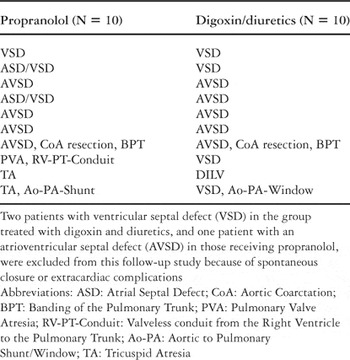
Table 1.
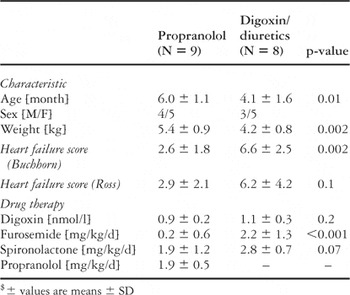
Table 2.

Clinical signs of cardiac failure measured by the Ross Score during the CHF-PRO-INFANT trial. There is a slight decrease of the Ross Score during the first week after starting treatment with digoxin and diuretics, but a more pronounced decrease at the end of the titration of propranolol in this group (□). The Ross Score remained higher in those receiving digoxin and diuretics ([xcirc ]) up to the time of their preoperative evaluation.
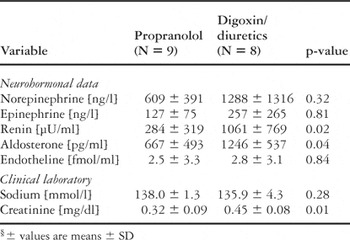
Table 3.

Levels of renin during the CHF-PRO-INFANT trial. The levels became highly elevated during the first week of treatment with digoxin and diuretics, and remained elevated in those only receiving these drugs ([xcirc ]) up to the time of preoperative evaluation. There is a significant decrease in the levels in those also receiving propranolol (□).
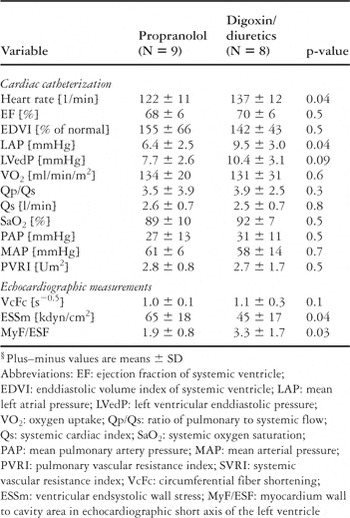
Table 4.

Left ventricular contractile state and function during the CHF-PRO-INFANT trial. Wall stress related velocity of circumferential fiber shortening (VcFc) was assessed non-invasively using a modification of the original method of Colan and colleagues. VcFc is normal or slightly elevated on enrollment (□, [xcirc ]) and at preoperative evaluation ([squf ], [bull ]), not only in those receiving digoxin and diuretics ([bull ], [xcirc ]), but also in those treated with propranolol ([squf ], □). Endsystolic wall stress decreased in those treated only with digoxin and diuretics, but increased in those receiving additional propranolol. These changes are related to a progressive myocardial hypertrophy measured by the ratio of myocardial wall to cavity in those treated with digoxin and diuretics.
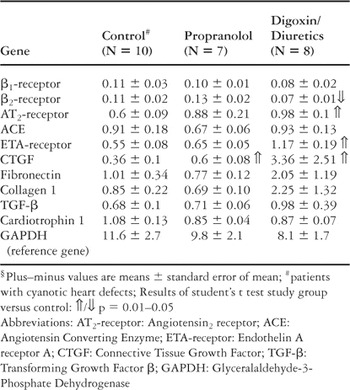
Table 5.
 You have
Access
- 24
- Cited by