Hypertension is a leading global health challenge, affecting more than 1·28 billion adults worldwide, with a substantial proportion remaining undiagnosed or poorly controlled(Reference Zhou, Carrillo-Larco and Danaei1). In addition to being a major risk factor for cardiovascular conditions including heart disease and stroke, hypertension damages organs in a number of different systems, highlighting the need for better treatment methods(Reference Zhou, Perel and Mensah2). Although hypertension cannot be fully cured, it can be managed effectively through lifestyle modifications, such as regular physical activity (PA), dietary adjustments, stress reduction and improved sleep quality, combined with consistent monitoring of blood pressure. These measures, alongside appropriate medical treatments, are crucial in controlling hypertension and mitigating the risk of associated health complications(Reference Frisoli, Schmieder and Grodzicki3–5).
Vitamin D serves both as a nutrient and a hormone, integral to numerous physiological processes. It is mostly produced by the skin when exposed to UVB rays, and it is also obtained through diet from foods like egg yolks, oily seafood and fortified meals(Reference Holick and Chen6,Reference El Khatib and Abou Shahine7) . Its active form, 1,25(OH)D, provides regulatory effects on the immune system and other cellular pathways and is essential for preserving the Ca and phosphate balance necessary for bone health(Reference Bouillon, Marcocci and Carmeliet8–Reference Dawson-Hughes10). A lack of vitamin D is increasingly being linked to poor cardiovascular outcomes. It is believed that low vitamin D levels contribute to the pathophysiology of CVD by mechanistically upsetting Ca homoeostasis, compromising endothelial function and fostering systemic inflammation(Reference Wang, Pencina and Booth11–Reference Vimaleswaran, Cavadino and Berry13). Furthermore, deficiencies have been linked to hypertension, possibly as a result of high blood pressure-raising processes including arterial stiffness and increased vascular resistance. The wider function of vitamin D in vascular health and its possible consequences for the prevention and treatment of hypertension are highlighted by these findings(Reference Burgaz, Orsini and Larsson14,Reference Kheiri, Abdalla and Osman15) .
Vitamin D deficiency can be effectively addressed by adopting a healthy lifestyle that incorporates routine exercise, optimising sun exposure and consuming a nutrient-dense diet(Reference Pludowski, Takacs and Boyanov16). Frequent exercise is especially important as it improves vascular health by enhancing endothelial function, regulating sympathetic nervous system activity and decreasing systemic vascular resistance(Reference Denche-Zamorano, Basilio-Fernández and Herrera-Guerrero17,Reference Walton, Pugh and Gelderloos18) . While PA is well established as beneficial for reducing risks of CVD(Reference Kyu, Bachman and Alexander19–Reference Pandey, Garg and Khunger21), its relationship with hypertension, as well as the combined effects of PA and 25(OH)D, remains insufficiently explored. Therefore, this study aims to investigate their joint influence on hypertension risk.
Methods
Study population
The present study utilised data from Wave 6 of the English Longitudinal Study of Ageing (ELSA)(Reference Steptoe, Breeze and Banks22), a representative sample of the English population aged 50 years and older. Wave 6 was specifically selected for this analysis as it provided the necessary data on blood 25-hydroxyvitamin D [25(OH)D] levels. Of the 8054 participants in Wave 6, we excluded individuals aged under 50 years (n 164), those with missing data on 25(OH)D levels or PA (n 1942), those without hypertension information (n 327) and those lacking data on other relevant covariates (n 294). The final analytic sample consisted of 5327 participants. Online Supplementary Figure 1 illustrates the detailed flow of participant selection.
Ethical criteria
This study was conducted in accordance with the guidelines of the Declaration of Helsinki. Ethical approval was granted by the NRES Committee South Central – Berkshire on 28 November 2012 (11/SC/0374). Written informed consent was obtained from all participants.
Assessment of exposures
Blood samples were obtained from participants during Wave 6’s health check, which was the first to measure 25(OH)D concentrations. Participants on anticoagulant therapy (e.g. warfarin), those with a history of seizures, those with bleeding problems (e.g. hemophilia or low platelet counts) and those without written consent were excluded. The DiaSorin Liaison® immunoassay was used to analyse the samples. According to the Institute of Medicine’s (IOM) standards, participants were classified based on their 25(OH)D levels as sufficient, insufficient or deficient, with thresholds of ≥ 50 nmol/l, ≥ 30 to < 50 nmol/l and < 30 nmol/l, respectively(Reference Del Valle, Yaktine and Taylor23).
The three intensity categories of PA – light, moderate and vigorous – were reported by the participants. Using the following choices – ‘more than once a week’, ‘once a week’, ‘1–3 times per month’ and ‘rarely/never’ – they indicated how frequently they participated, with sample activities included for each intensity. We estimated a monthly ’bout’ score for each intensity, assuming 4·3 weeks each month, in order to quantify these activities. The following is the conversion of the frequency categories: 8·6 bouts per month were associated with ‘more than once a week’, 4·3 with ‘once a week’, 2·0 with ‘1–3 times per month’ and 0 with ‘rarely/never’. The overall PA score was then calculated by multiplying the scores by the corresponding metabolic equivalents of task values for each activity level. Online Supplementary Table 1 contains comprehensive information on the weight computation, which adheres to accepted procedures from earlier research(Reference Ainsworth, Haskell and Herrmann24,Reference Li, Ma and Hua25) . To improve clarity in reporting, participants were grouped into tertiles based on their PA scores, with the higher two tertiles combined and compared with the lowest tertile.
Assessment of outcome
A systematic approach was followed for taking blood pressure readings. A manual sphygmomanometer was used to collect three measurements at 30-s intervals following a 5-min rest period. The mean of these measurements was used to compute systolic and diastolic values. Hypertension was defined as systolic blood pressure ≥ 140 mmHg, diastolic blood pressure ≥ 90 mmHg or a self-reported hypertension diagnosis, including antihypertensive drug usage(Reference Whelton and Carey26).
Assessment of other covariates
Sociodemographic covariates included age, sex, marital status (married/partnered v. single/other), wealth (tertiles of non-pension wealth), education level and ethnicity (White v. non-White). Health behaviours included smoking status (current v. non-smoker), alcohol consumption frequency, sleep duration (short < 6 h, optimal 6–8 h and long > 8 h) and BMI (kg/m2). Medical history included diabetes, cancer, lung disease, cardiovascular conditions, arthritis, stroke and high cholesterol. Information on the season of blood measurement (Spring, Summer, Autumn and Winter) was also recorded to account for seasonal variations in vitamin D levels.
Statistical analysis
Baseline characteristics were compared between normotensive and hypertensive groups using t tests for continuous variables and χ 2 tests for categorical variables. Comparisons were also conducted between included and excluded participants to assess potential selection bias. Multivariable logistic regression models were employed to estimate OR and 95 % CI for the associations of 25(OH)D and PA with hypertension. Models were fully adjusted for age, sex, ethnicity, education, marital status, wealth, smoking, alcohol consumption, sleep duration, BMI, co-morbidities and the season of measurement. We assessed the joint effects of 25(OH)D and PA, incorporating an interaction term to evaluate multiplicative interaction, while the relative excess risk due to interaction (RERI) was calculated to assess additive interaction. Population attributable fractions (PAF) were estimated to determine the potential public health impact. To handle missing data on covariates, we performed multiple imputation by chained equations to generate five imputed datasets, assuming data were missing at random. Pooled results from the imputed datasets were used for sensitivity analysis (online Supplementary Table 4). All statistical analyses were performed using R software (version 4.2.2).
Mendelian randomisation analysis
We employed a two-sample Mendelian randomisation (MR) design to investigate the causal associations between 25(OH)D levels, PA and hypertension. This approach leverages genetic variants as instrumental variables to reduce confounding and reverse causation biases. Three core assumptions were satisfied: relevance, independence and exclusion restriction. Summary-level data were restricted to individuals of European ancestry. Genetic instruments were selected based on genome-wide significance (P < 5 × 10⁻⁶) and independence (R² < 0·01 within a 10 000 kb window). The primary causal estimates were calculated using the random-effects inverse-variance weighted method. Crucially, since both the PA exposures and the primary hypertension outcome were derived from the UK Biobank, there was substantial sample overlap. To explicitly address the potential bias (winner’s curse and weak instrument bias) arising from this overlap, we applied the MRlap method to correct the inverse-variance weighted estimates. Sensitivity analyses including MR-Egger, weighted median and MR-PRESSO were conducted to detect pleiotropy and heterogeneity. All statistical analyses were performed using R software (version 4.2.2) with the TwoSampleMR, MRPRESSO and MRlap packages. Detailed methodology regarding data sources and instrument selection is provided in online Supplementary Appendix 1.
Results
Baseline characteristics
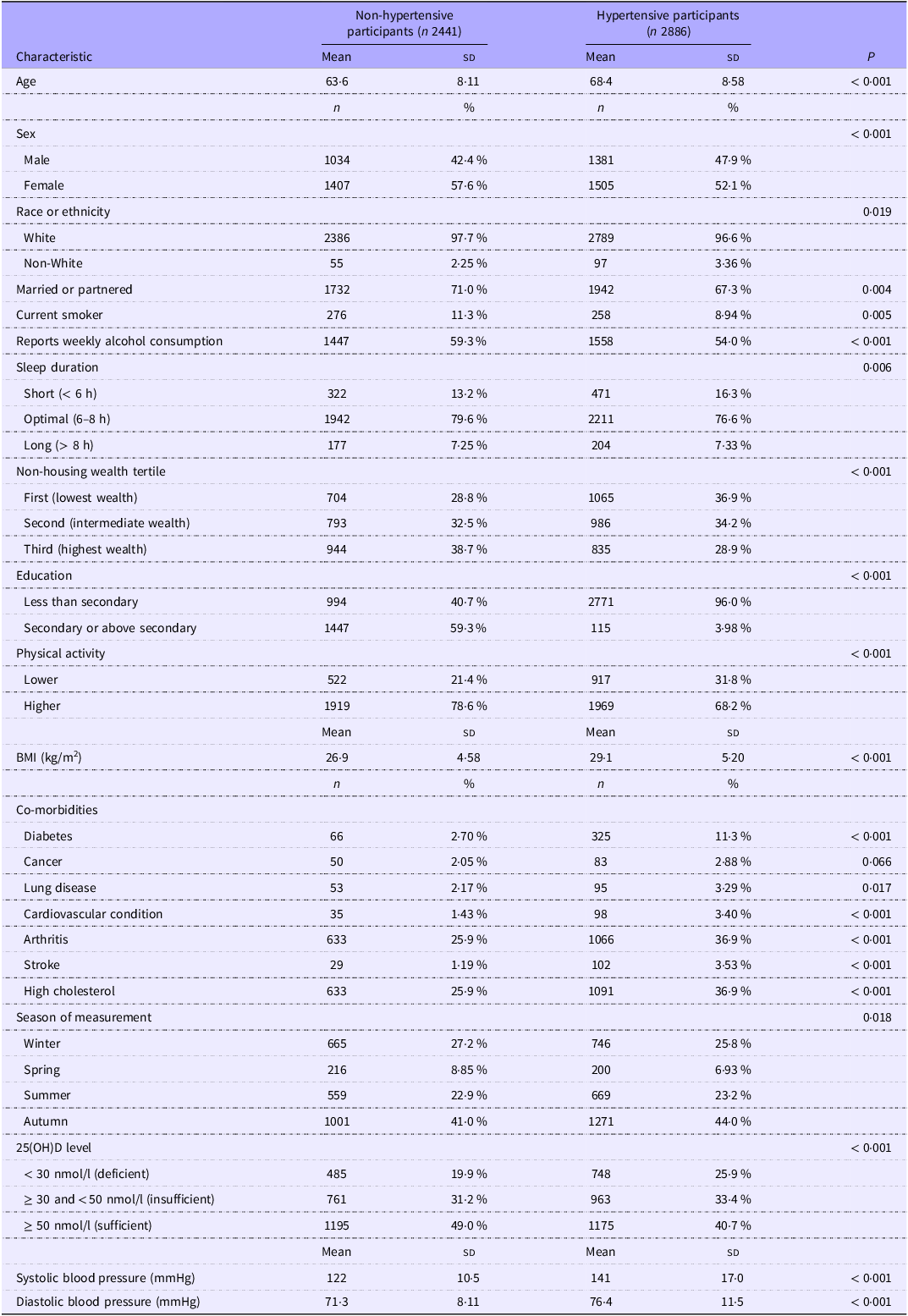
A total of 5327 participants aged 50 years and older were included in this cross-sectional analysis. Of these, 2441 (45·8 %) were classified as normotensive, while 2886 (54·2 %) were identified as hypertensive. The mean age of participants in the hypertensive group was significantly higher than that in the normotensive group (68·4 (sd 8·58) v. 63·6 (sd 8·11) years). Males comprised 47·9 % of the hypertensive group, a significantly higher proportion compared with 42·4 % in the normotensive group. Demographic characteristics, lifestyle behaviours and health conditions differed significantly between the normotensive (reference) and hypertensive groups (Table 1). Participants with hypertension were more likely to be older, male, of non-White ethnicity and to have lower socio-economic status (indicated by lower educational attainment and non-housing wealth). Furthermore, this group was characterised by lower PA levels, higher BMI and a greater prevalence of co-morbidities – including diabetes, arthritis and cardiovascular conditions – whereas rates of current smoking and weekly alcohol consumption were lower compared with normotensive participants (Table 1).
Baseline characteristics of participants
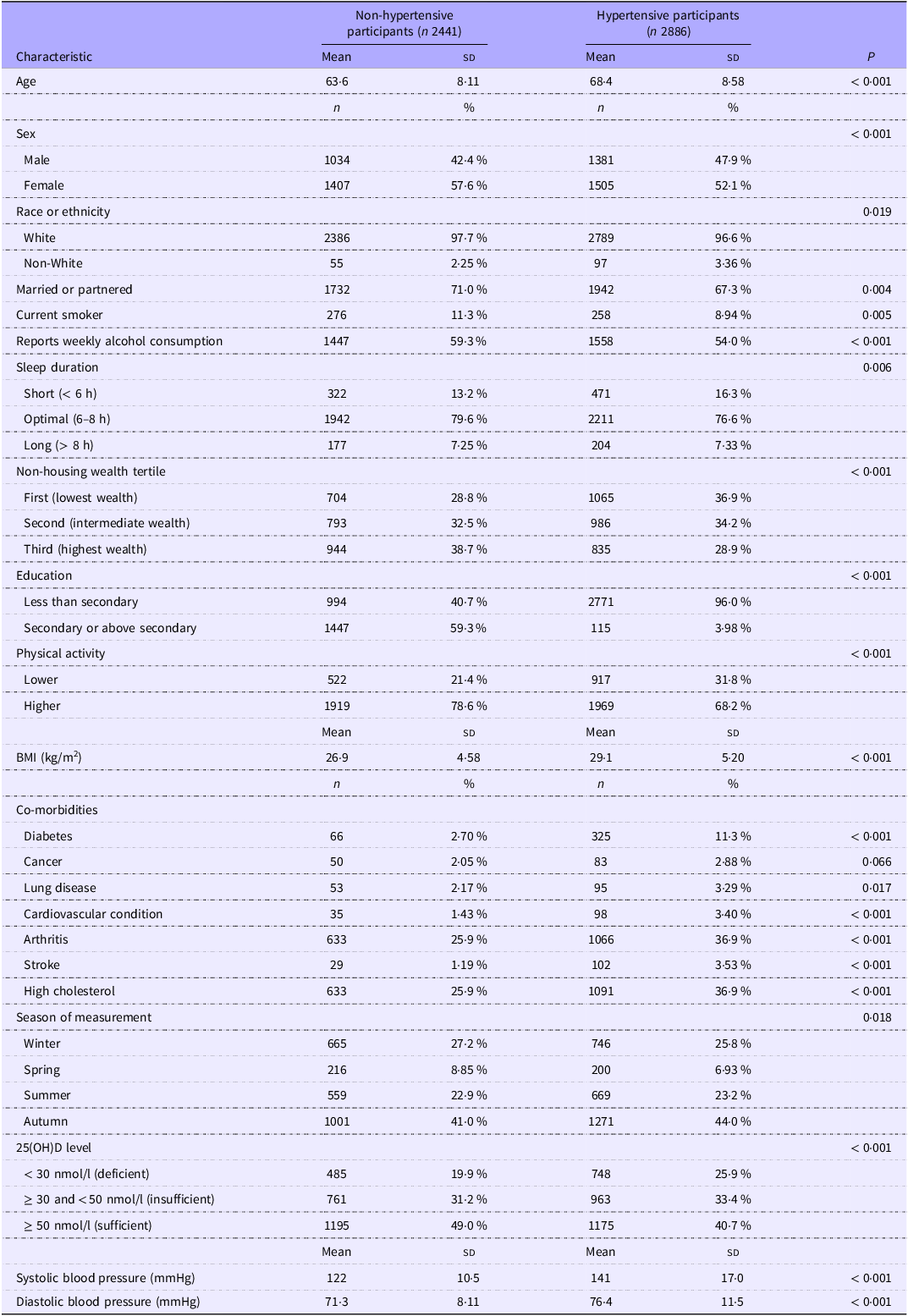
Table 1 Long description
A table comparing characteristics of non-hypertensive and hypertensive participants. The table has 24 rows and 10 columns. Column headers are: Characteristic, Non-hypertensive participants (n 2441) Mean, Non-hypertensive participants (n 2441) sd, Hypertensive participants (n 2886) Mean, Hypertensive participants (n 2886) sd, P. Row labels include Age, Sex, Race or ethnicity, Married or partnered, Current smoker, Reports weekly alcohol consumption, Sleep duration, Non-housing wealth tertile, Education, Physical activity, BMI (kg per square meter), Co-morbidities, Season of measurement, 25(OH)D level, Systolic blood pressure (mmHg), Diastolic blood pressure (mmHg). Each row provides mean, standard deviation, and percentage values for non-hypertensive and hypertensive participants, along with P values indicating statistical significance.
25(OH)D, 25-hydroxyvitamin D.
Continuous variables are expressed as means and standard deviations or medians and interquartile ranges, and categorical variables are expressed as percentages.
Association of physical activity and 25-hydroxyvitamin D levels with hypertension
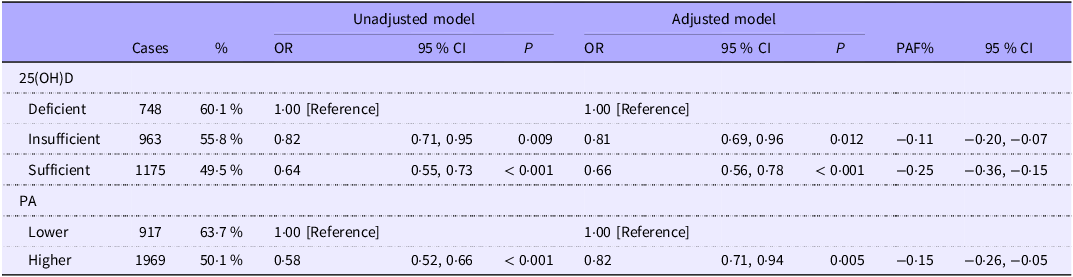
Table 2 presents the associations of PA and 25(OH)D levels with hypertension. After adjusting for sociodemographic factors, lifestyle behaviours, co-morbidities and season of measurement, higher 25(OH)D levels were significantly associated with reduced odds of hypertension. Compared with the deficient group, the multivariable-adjusted OR were 0·81 (95 % CI 0·69, 0·96) for insufficient levels and 0·66 (95 % CI 0·56, 0·78) for sufficient levels. Similarly, higher PA was independently associated with a lower risk of hypertension (OR = 0·82, 95 % CI 0·71, 0·94). PAF analysis estimated that maintaining sufficient vitamin D levels and higher PA could potentially lower the prevalence of hypertension by 25 % and 15 %, respectively.
Association of 25(OH)D levels and PA with hypertension among participants
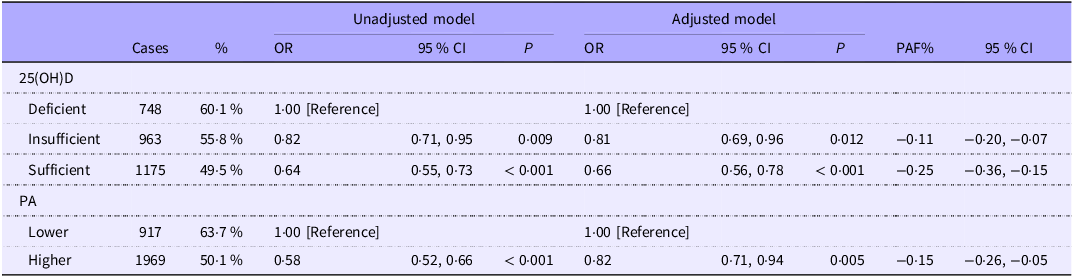
Table 2 Long description
A table comparing the association of 25(OH)D levels and physical activity (PA) with hypertension among participants. The table has 8 rows and 10 columns. Column headers are: Cases, Percent, Unadjusted model OR, Unadjusted model 95 percent CI, Unadjusted model P, Adjusted model OR, Adjusted model 95 percent CI, Adjusted model P, PAF percent, PAF 95 percent CI. Row labels are: 25(OH)D Deficient, 25(OH)D Insufficient, 25(OH)D Sufficient, PA Lower, PA Higher. Row 1: 748, 60.1 percent, 1.00 [Reference], , , 1.00 [Reference], , , , . Row 2: 963, 55.8 percent, 0.82, 0.71, 0.95, 0.009, 0.81, 0.69, 0.96, 0.012, -0.11, -0.20, -0.07. Row 3: 1175, 49.5 percent, 0.64, 0.55, 0.73, < 0.001, 0.66, 0.56, 0.78, < 0.001, -0.25, -0.36, -0.15. Row 4: 917, 63.7 percent, 1.00 [Reference], , , , 1.00 [Reference], , , , . Row 5: 1969, 50.1 percent, 0.58, 0.52, 0.66, < 0.001, 0.82, 0.71, 0.94, 0.005, -0.15, -0.26, -0.05.
25(OH)D, 25-hydroxyvitamin D; PA, physical activity; PAF, population attributable fraction.
Data are presented as OR and 95 % CI. Multivariable-adjusted model: adjusted for age, sex, ethnicity, education, cohabitation status, current smoking, non-housing wealth, alcohol consumption, sleep duration, BMI, season of measurement, co-morbidities (diabetes, stroke, CVD, chronic lung diseases, cancer, arthritis and high cholesterol) and mutually adjusted for 25(OH)D and PA.
Joint association physical activity and 25-hydroxyvitamin D with hypertension
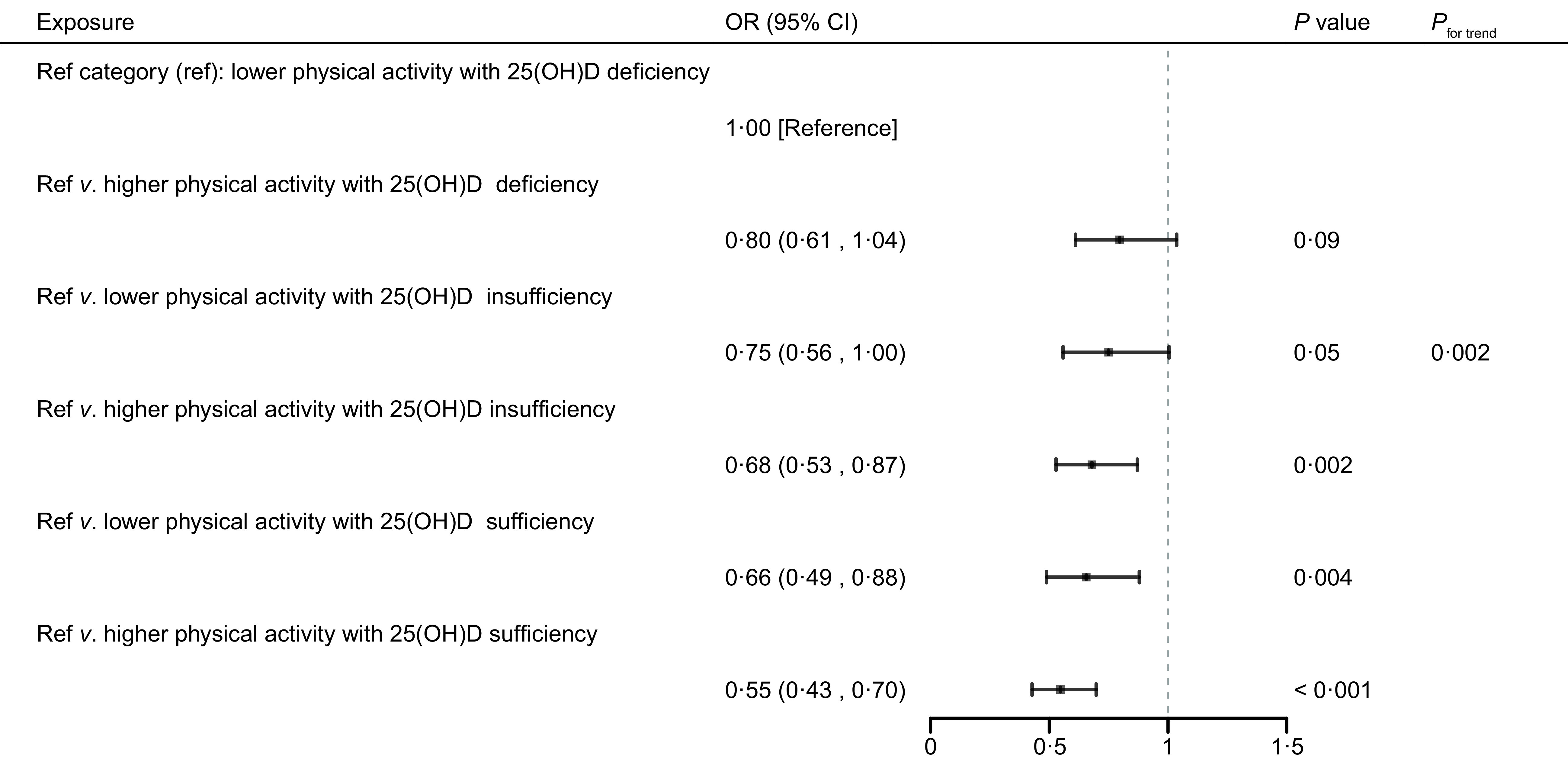
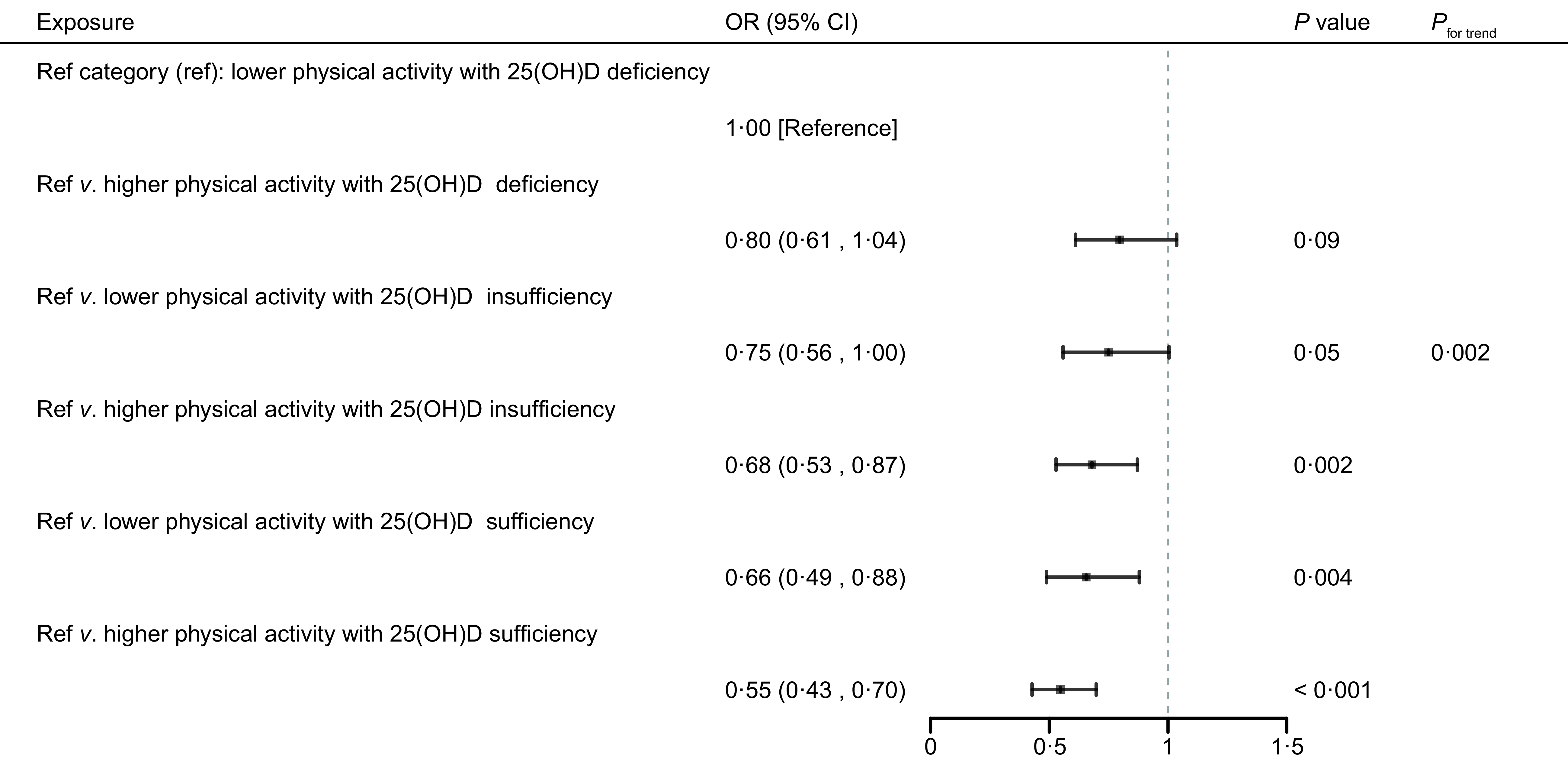
Joint association of PA and 25(OH)D with hypertension as shown in Figure 1 illustrates the combined association of PA and 25(OH)D with the prevalence of hypertension after multivariable adjustment. Compared with the reference group (lower PA and vitamin D deficiency), participants with higher PA and sufficient 25(OH)D levels exhibited the lowest odds of hypertension (OR = 0·55, 95 % CI 0·43, 0·70). A significant inverse dose–response relationship was observed, with the likelihood of hypertension decreasing as the combination of PA and 25(OH)D levels improved (P for trend < 0·001). Further analyses revealed a significant additive interaction between these factors (RERI = 0·61; attributable proportion (AP) = 0·24; synergy index (S) = 1·65), indicating a synergistic effect where the combined risk exceeds the sum of individual risks (online Supplementary Table 3). No multiplicative interaction was observed.
Joint association of PA and 25(OH)D levels with hypertension. Multivariable-adjusted model additionally adjusted for age, sex, ethnicity, education, cohabitation status, current smoking, wealth, alcohol consumption, sleep duration, diabetes, stroke, CVD, chronic lung diseases, cancer, arthritis, high cholesterol, season and BMI. PA, physical activity; 25(OH)D, 25-hydroxyvitamin D.
Sensitivity and subgroup analyses
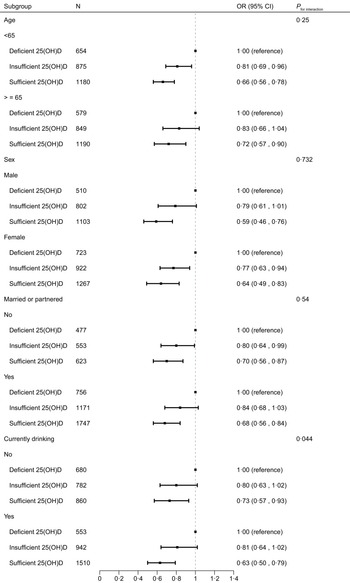
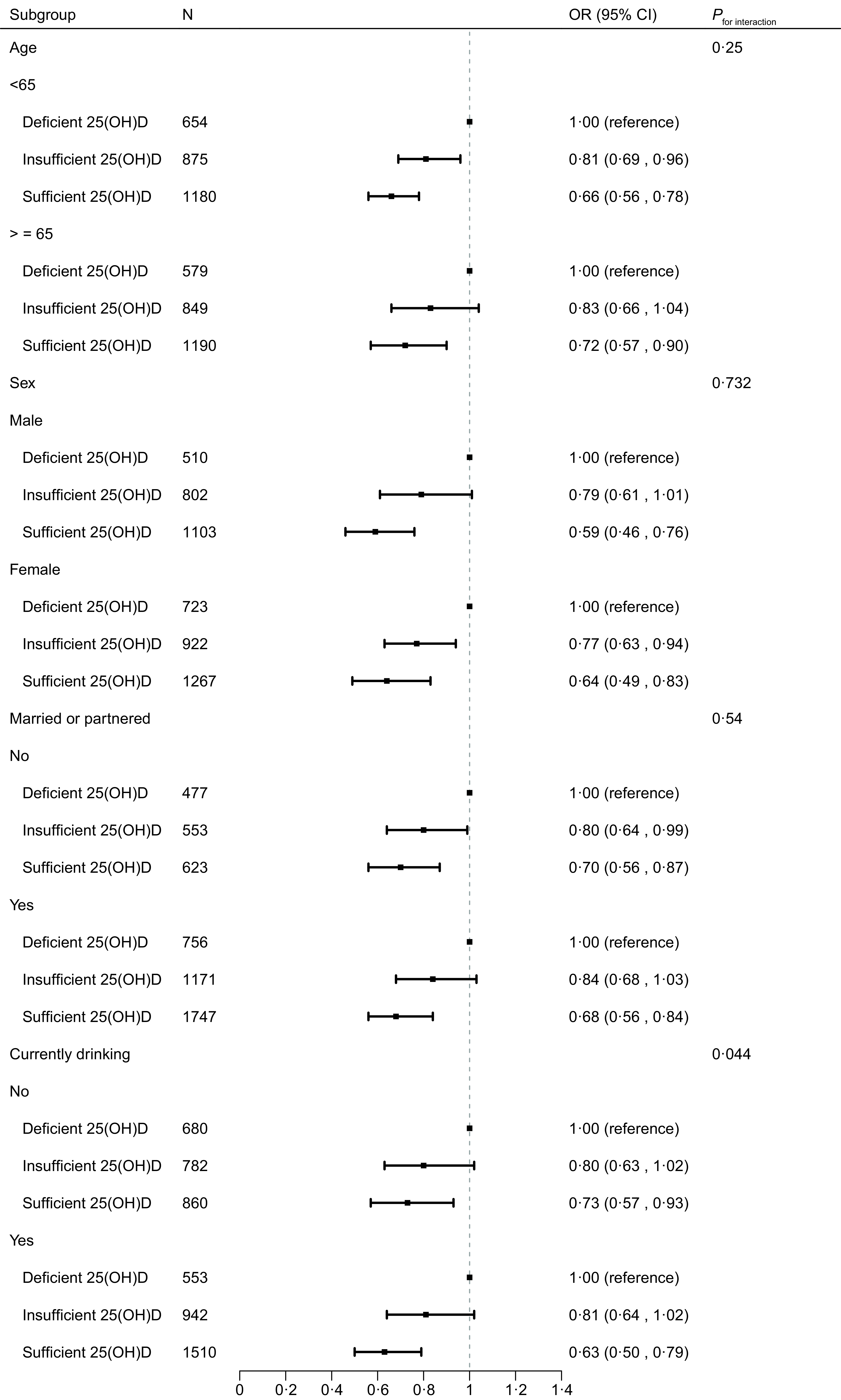
Subgroup analyses (Figure 2) indicated generally consistent associations between 25(OH)D, PA and hypertension across most strata, with a significant interaction observed among alcohol users (P < 0·05). Regarding data completeness, significant differences in baseline characteristics were found between included and excluded participants (online Supplementary Table 2). However, analyses based on multiple imputation datasets yielded results consistent with the primary analysis (online Supplementary Table 4). Additionally, in analyses stratified by antihypertensive medication use, the inverse associations of higher PA and sufficient 25(OH)D with hypertension remained statistically significant among participants not taking medication (online Supplementary Table 5).
Association of 25(OH)D levels and hypertension stratified by potential risk factors. 25(OH)D, 25-hydroxyvitamin D.
Results of Mendelian randomisation analysis
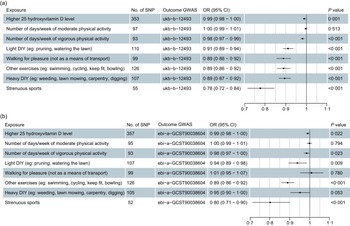
The primary MR analysis using the inverse-variance weighted method identified significant inverse causal associations between 25(OH)D levels (OR = 0·99, 95 % CI 0·98, 1·00; P = 0·001) and the risk of hypertension, as illustrated in Figure 3. Similarly, a genetic predisposition to vigorous PA was associated with a marked reduction in hypertension risk (OR = 0·98, 95 % CI 0·97, 0·99; P < 0·001). As shown in Figure 3, other specific physical activities – including light household tasks, walking for pleasure, other exercises, heavy physical tasks and strenuous sports – also demonstrated significant protective effects (all P < 0·001). Crucially, to address potential bias arising from sample overlap within the UK Biobank, we applied MRlap correction (online Supplementary Table 6). This rigorous adjustment confirmed the consistency of our findings, yielding robust causal estimates and indicating even stronger effect sizes for vigorous PA and strenuous sports after accounting for overlap structure.
MR analyses for the causal effects of PA and 25(OH)D on the risk of hypertension by using IVW method based on GWAS of UKB (a) and EBI (b). MR, Mendelian randomisation; PA, physical activity; 25(OH)D, 25-hydroxyvitamin D; IVW, inverse-variance weighted; GWAS, genome-wide association studies; EBI, European Bioinformatics Institute.
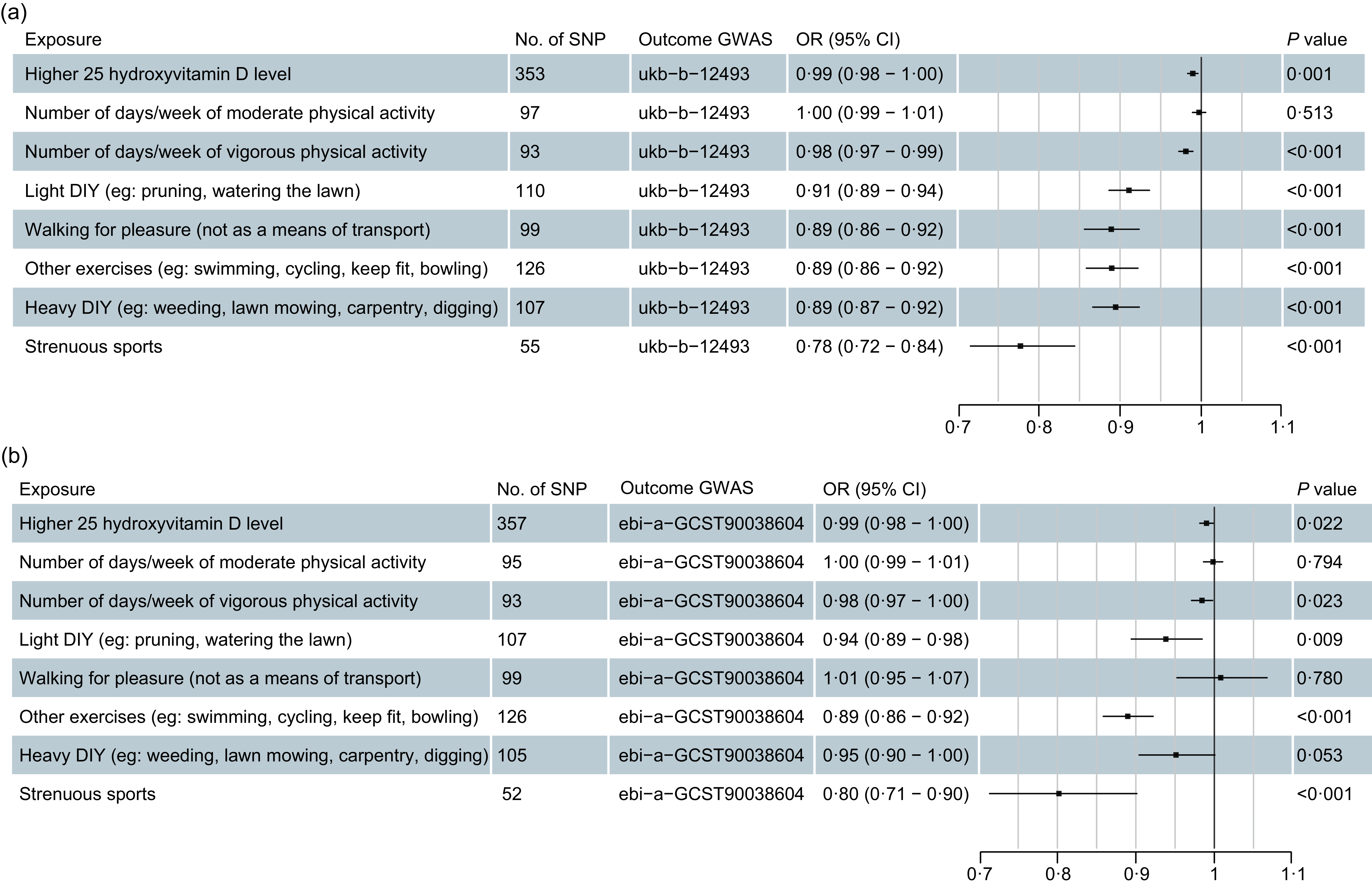
Validation in the independent European Bioinformatics Institute (EBI) dataset largely corroborated these protective associations (online Supplementary Table 7). The causal effects remained statistically significant for 25(OH)D (OR = 0·99, P = 0·022), vigorous PA (OR = 0·98, P = 0·023), light household tasks, other exercises and strenuous sports. However, the associations for walking for pleasure and heavy physical tasks did not reach statistical significance in the replication cohort. To further ensure the validity of these causal inferences, comprehensive sensitivity analyses were performed. We found no evidence of significant horizontal pleiotropy or heterogeneity based on MR-Egger intercept tests and Cochran’s Q statistics, respectively. Additionally, visual inspection of leave-one-out plots confirmed that the observed associations were not driven by any single influential variant (online Supplementary Figures 3–16).
Discussion
This study identified associations between PA, 25(OH)D levels and the prevalence of hypertension. Notably, the interaction between PA and 25(OH)D was observed, with the combined presence of sufficient vitamin D levels and PA showing a stronger protective effect against hypertension. Additionally, MR analysis provided further evidence supporting the relationship between PA, 25(OH)D and hypertension risk.
Our findings on the protective role of vitamin D are consistent with prior epidemiological meta-analyses that report an inverse dose–response association between serum 25(OH)D and hypertension risk(Reference Mokhtari, Hajhashemy and Saneei27). Earlier evidence indicates that a 25 nmol/l increase in 25(OH)D corresponds to an approximate 7 % reduction in hypertension likelihood(Reference Zhang28). In contrast to studies assessing vitamin D status alone, our results show that individuals who also engage in regular PA derive greater cardiovascular benefit, suggesting that behavioural factors may modify the magnitude of vitamin D-related protection. The convergence of observational and genetic evidence supports the reliability of this relationship, while highlighting the need to evaluate multiple modifiable exposures jointly rather than independently(Reference Li, Kong and Wei29–Reference Del Pinto and Ferri32).
Evidence has consistently shown that regular PA is associated with lower blood pressure and reduced hypertension risk(Reference Huai, Xun and Reilly33). Lu et al. reported that individuals achieving the recommended 150 min per week of moderate-intensity activity had a 6 % lower hypertension risk compared with sedentary individuals(Reference Liu, Zhang and Liu34). Exercise interventions in other cohorts have documented systolic blood pressure reductions of 2·4–5·2 mmHg and diastolic blood pressure reductions of 2·2–4·1 mmHg(Reference Cornelissen, Buys and Smart35–Reference Williamson, Foster and Reid37). Unlike previous research focusing on isolated lifestyle effects, our findings suggest that considering activity frequency alone may underestimate its preventive value, particularly when micronutrient status is not simultaneously accounted for. The additional mental health benefits of PA reported in earlier studies(Reference Denche-Zamorano, Basilio-Fernández and Herrera-Guerrero17,Reference Walton, Pugh and Gelderloos18) may also contribute indirectly to a more favourable cardiovascular risk profile, supporting the broader systemic value of PA in chronic disease prevention.
The synergistic interaction between PA and vitamin D status constitutes a central finding of clinical and public health relevance. Although vitamin D sufficiency is associated with a substantially lower risk of hypertension, our results indicate that individuals who also maintain regular PA demonstrate the most favourable cardiovascular risk profile. Importantly, the additive interaction analysis shows that physical inactivity and vitamin D deficiency jointly confer a disproportionately elevated risk of hypertension, exceeding the expected sum of their individual effects. This supra-additive risk pattern underscores that PA remains a relevant protective exposure regardless of vitamin D status and is essential for a more comprehensive risk reduction strategy. This interaction also has practical implications, particularly for populations in which vitamin D deficiency is common, as outdoor PA may simultaneously support cardiovascular conditioning and increase opportunities for solar UVB exposure, a key contributor to endogenous vitamin D synthesis. Evaluating these modifiable factors jointly rather than independently provides a more realistic framework for understanding hypertension vulnerability and helps inform integrated lifestyle-based prevention strategies(Reference Al-Othman, Al-Musharaf and Al-Daghri38–Reference Khan, Claeson and Khan40).
This study has several strengths. First, the inclusion of a large, representative sample enabled a detailed analysis of vitamin D levels in the UK population. Second, we rigorously adjusted for the season of measurement to minimise environmental confounding. Furthermore, the application of MR methods significantly enhances the reliability of our causal inferences.
However, there are limitations to acknowledge. The cross-sectional design of the observational analysis limits strict causal interpretation, and potential reverse causality cannot be fully excluded, as individuals with hypertension may reduce activity due to co-morbidities or treatment-related factors. Our analysis captured PA frequency but not duration or intensity, and self-reported measures may introduce recall bias. It is noteworthy that the ELSA PA questionnaire did not distinguish between indoor and outdoor activities. Therefore, the proposed mechanism linking outdoor activity, UVB exposure and vitamin D synthesis should be interpreted with caution. The absence of data on vitamin D supplementation prevented direct adjustment for this confounder, although MR findings provided partial mitigation by leveraging genetic proxies less susceptible to behavioural or environmental bias. Finally, replication in longitudinal and ethnically diverse cohorts is warranted to confirm external generalisability.
Conclusion
In conclusion, this study indicated that regular exercise and sufficient 25(OH)D are associated with a lower risk of hypertension. A realistic strategy for preventing hypertension is to combine regular exercise with maintaining appropriate vitamin D levels. These results provide credence to the creation of lifestyle modifications targeted at effective hypertension management.
Supplementary material
For supplementary material/s referred to in this article, please visit https://doi.org/10.1017/S0007114526107053
Acknowledgements
The authors express our deep thanks to the participants, researchers, data providers and funders of the English Longitudinal Study of Ageing (ELSA) for providing a valuable source of data, as well as the providers of the genome-wide association studies (GWAS) data used in this study. Data collection in ELSA was approved by the NRES Committee South Central – Berkshire (11/SC/0374) in accordance with the Declaration of Helsinki.
This work was supported in part by the Noncommunicable Chronic Diseases-National Science and Technology Major Project of China (no. 2024ZD0543300), in part by the National Natural Science Foundation of China (no. 82504548), in part by the Guangdong Basic and Applied Basic Research Foundation (nos. 2021A1515111025 and 2025A1515012013), in part by the Guangdong Provincial Medical Foundation (A2024100) and in part by the Science and Technology Development Fund (FDCT) of the Macao Special Administrative Region (no. 0004/2025/AKP).
X. X., X. Z., Y. X. and Z. X.: conceptualisation; X. X., X. Z., H. Z., L. L. and C. L.: methodology, investigation and validation; X. X. and X. Z.: software development, formal analysis and writing – original draft preparation; Y. X., H. Z., L. L., C. L. and all other authors: writing – review and editing; Y. X. and Z. X.: supervision, project administration and funding acquisition. All authors read and agreed to the published version of the manuscript.
The authors declare that they have no conflicts of interest with the contents of this article.