Introduction
Compared to caregivers of patients with other diseases, caregivers of dementia patients (hereafter, “caregivers”) experience a greater psychological burden that corresponds to the severity of the care recipients’ condition (Onishi et al., Reference Onishi, Suzuki, Umegaki, Nakamura, Endo and Iguchi2005; Muraki et al., Reference Muraki2008). Caregivers are also prone to hypertension (Shaw et al., Reference Shaw, Patterson, Ziegler, Dimsdale, Semple and Grant1999) and ischemic heart disease (Mausbach et al., Reference Mausbach, Patterson, Rabinowitz, Grant and Schulz2007) and have high mortality rates (Schulz and Beach, Reference Schulz and Beach1999). While various factors may contribute to the high incidence of vascular lesions, one potential underlying mechanism is the higher blood coagulability of caregivers compared to non-caregivers (Von Kanel et al., Reference Von, Dimsdale, Adler, Patterson, Mills and Grant2005), which might be attributed to the psychological stress associated with caregiving.
We previously reported that the degree of perceived care burden among elderly caregivers is related to the extent of reduced physical activity, in particular, leisure activities other than sports (Hirano et al., Reference Hirano2011a). Leisure activities have the advantages of entertainment, rest, and self-development (Suzuki, Reference Suzuki2004), and reportedly increase the quality of life (Daniel and Manigandan, Reference Daniel and Manigandan2005).
Japan's population is rapidly aging, and by 2015, an estimated 25% of Japan's total population will be elderly. Nuclearization of families carries with it the social challenge of increased perceived care burden among elderly caregivers within the family. In Sweden, “housing, work, and leisure” are considered basic rights of living. In other words, leisure is considered a right. Yet, previous studies have suggested that elderly caregivers lack sufficient time to rest and have little time to spare (e.g. for leisure activities), given the large amount of time spent on caregiving. As a result, they have difficulty securing opportunities for periodic leisure activities.
Many interventional studies aimed at reducing perceived care burden have focused on counseling and education, and in one study, satisfaction with leisure improved after intervention (Burgio, Reference Burgio2003). In studies of leisure that targeted caregivers, activities involving going out, such as dancing, eating at restaurants, and going to concerts, improved physical symptoms and depression and increased happiness when both caregivers and care recipients participated in the activities together (Wilz and Fink-Heitz, Reference Wilz and Fink-Heitz2008).
In many cases, elderly caregivers often suffer from physical disorders which limit their ability to exercise, or are limited by movement disorders. Moreover, some caregivers have difficulty performing exercises at the same slow pace as their care recipients. Thus, there is clearly a need to develop a program that increases the amount of leisure activities for caregivers at home, in order to reduce the perceived care burden over a broader population base. To this end, we examined whether caregivers performing leisure activities at home together with care recipients improves caregiver health and reduces perceived care burden. We hypothesized that periodic leisure activities would reduce perceived care burden and improve biochemical parameters related to hypertension and ischemic heart disease.
The development of a program that reduces perceived care burden among at-home caregivers who have difficulties going out due to care obligations, or for caregivers limited by chronic illnesses, would immeasurably contribute to society. Such a program would not only reduce perceived care burden through leisure activities, but would also maintain and improve caregiver health and prevent vascular diseases by improving the balance of the sympathetic and parasympathetic nervous systems.
Materials and methods
Participants
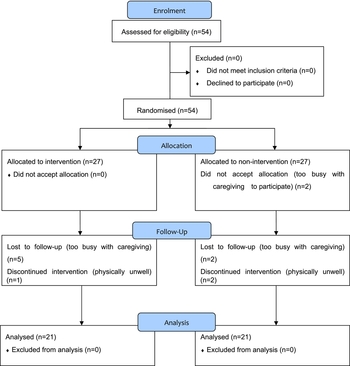
Participants were 54 caregivers living with patients aged 65–80 years who fit the DSM-IV criteria for Alzheimer's dementia (APA, 1994), as diagnosed by geriatric physicians. Although we targeted healthy caregivers, we also included those with satisfactory control of their chronic diseases (e.g. hypertension, diabetes, and dyslipidemia) through periodic treatment at medical facilities. Those with a history of cerebrovascular or heart disease, such as stroke and myocardial infarction, or liver disease were excluded. Moreover, caregivers who performed leisure activities for more than three months before enrolling in the study were excluded, as were those who had been habitually performing leisure activities once or more a week (Figure 1).
Outline of research process.

Study design
Participants were randomly assigned to one of two groups, i.e. the intervention or non-intervention group, in sequential order before investigating baseline characteristics. The intervention group performed a leisure activity program three times a week (30 min each) for 24 weeks together with care recipients, and the non-intervention group underwent normal care activities. We assessed changes in the primary and secondary outcome measures discussed below before intervention, and six months after intervention, to determine whether leisure activities reduce perceived care burden.
Assessed factors and scales
The primary outcome measure was caregiver burden as measured by the ZBI (Zarit et al., Reference Zarit, Reever and Bach-Peterson1980). We used the 22-item Japanese version of the ZBI questionnaire. The questionnaire converts physical burden, psychological burden, and economical difficulties associated with caring for individuals with care needs at home into a care burden score.
Secondary outcome measures included plasma levels of three fractions of catecholamines (adrenaline, noradrenaline, and dopamine), cortisol, aldosterone, and renin. Renin and aldosterone, hormones with vasopressor activity which are easily influenced by stress, are involved in the modulation of electrolyte levels and the volume of bodily fluids, and increase blood pressure upon stimulation of sympathetic nerves. The higher these values, the more likely increases in circulating blood volume leads to hypertension.
Cortisol is involved in sugar, protein, and fat metabolism, has anti-inflammatory and immunosuppressive effects, and its levels are influenced by stress. High cortisol levels are associated with increased blood sugar, accelerated anabolism (i.e. generation of proteins), accelerated fat metabolism (accumulation of fat), anti-inflammatory effects, and immunosuppressive effects (inhibits inflammation and dampens immunity). Adrenaline not only increases blood pressure, but also increases blood sugar levels.
These endocrine hormones, when considered long-term, are factors that influence hypertension and ischemic heart disease. Levels of the endocrine hormones assessed in this study change in response to psychological stress, room temperature, body movements, and diurnal variation. Thus, blood was collected in a room with a fixed temperature in the resting state so as to avoid psychological stress and body movements. To avoid the influence of diurnal variation in plasma cortisol levels, blood was collected each time at approximately the same time of the day.
Calculation of leisure score
A daily living activity survey was conducted to measure total physical activity (Voorrips et al., Reference Voorrips, Ravelli, Dongelmans, Deurenberg and Van Staveren1991). Total physical activity consists of scores for housework, sports, and leisure, and higher total scores indicate a higher level of physical activity. For calculating the leisure score, activities other than housework and sports activities (e.g. walking, playing golf, gymnastics) were defined as leisure activities (e.g. gardening, ceramic art). The intensity of physical activity for leisure activities ranged between 1.5 and 2.5 metabolic equivalents (Mets). These activities were chosen from those that the caregiver considered possible to perform on a continuing basis, e.g. gardening, drawing (sketching), watercolour painting, calligraphy, woodcarving, singing/karaoke, playing instruments (e.g. castanet, harmonica), cooking (other than everyday foods), creating (e.g. handcrafts), and tea ceremony/flower arrangement.
Intervention
After participants were randomly assigned to one of the two groups, those assigned to the intervention group were asked to choose a specific leisure activity from a list that could be enjoyed and continued together with care recipients (who were also interested in the activity), and could be incorporated into the participants’ daily routine relatively easily. As a general rule, intensities of these leisure activities were equivalent to 1.5–2.5 Mets of physical activity. Non-listed activities with comparable physical intensities were also permitted. The intervention group was instructed to continue a leisure activity program three times a week (30 min each) for 24 weeks together with care recipients, while the non-intervention group underwent normal care activities.
Activities excluded as leisure activities included reading, working on computers, listening to music, and activities that do not require continuous use of hands and fingers. In other words, activities involving only one action over a few minutes and minimal physical activity were excluded as leisure activities.
Cognitive and neuropsychiatric assessments
As a simple tool to evaluate the cognitive function of dementia patients, we used the Japanese version of the Mini-Mental State Examination (MMSE; Folstein et al., Reference Folstein, Folstein and McHugh1975), one of the most widely used screening instruments to assess cognition. Details of the MMSE have been described elsewhere. The Japanese version of the Neuropsychiatric Inventory (NPI) was used to assess psychological and behavioral disturbances in dementia patients (Hirono et al., Reference Hirono1997). The NPI consists of questions about the frequency and severity of ten psychopathological symptoms in care recipients. Each item had a maximum score of 12 points, for a total possible NPI score of 120.
Statistical analysis
Statistical data were analyzed with SPSS Ver 20.0. Unpaired t-tests were used to compare baseline characteristics between the two groups. Comparisons before and after intervention in the two groups were performed with a paired t-test. p < 0.05 was considered statistically significant.
Ethical considerations
This study was approved by the Nagoya University Department of Medicine Ethics Committee, and written consent for participation was obtained from participants. Ethical considerations were made to ensure that participation was voluntary.
Results
Of the 54 recruited participants, 2 declined after enrollment and 10 dropped out during the program. The reason for dropping out was difficulty continuing the intervention due to circumstances in the caregiver's life. Twenty one participants in the intervention group periodically carried out leisure activities (39.0±7.5 min/per session, 3.0±0.2 days/week, for 24 weeks; drawing (sketching), watercolour painting, calligraphy, woodcarving, playing instruments (e.g. harmonica), cooking (other than everyday foods), and creating (e.g. handcrafts)), and another 21 participants were allocated to the control group. Thus, the study was carried out with a total of 42 participants (59.5% female; mean age±SD, 75.0±4.7 years).
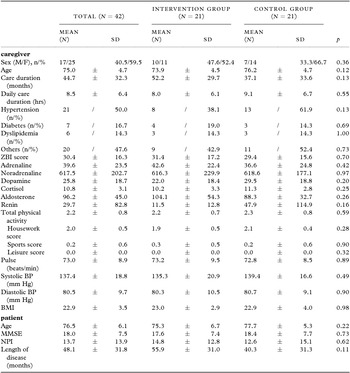
Table 1 shows baseline participant characteristics. There were no significant differences between the two groups.
Baseline participant characteristics

*p < 0.05; **p < 0.01.
Data are presented as mean±SD.
SD, Sandard Deviation; ZBI, Zarit Burden Interview; BP, Blood Pressure; BMI, Body Mass Index; MMSE, Mini-Mental State Examination; NPI, Neuropsychiatric Inventory.
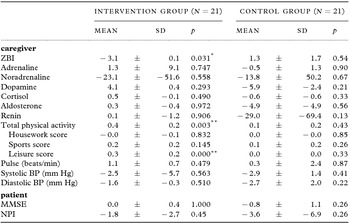
Table 2 shows changes in measured values from baseline. The ZBI score significantly decreased after intervention in the intervention group (p < 0.05), while no significant difference was observed in the control group.
Changes in outcomes after intervention

Change after intervention (Δ) = post-intervention value – baseline value.
*p < 0.05; **p < 0.01.
Data are presented as mean±SD.
SD, Standard Deviation; ZBI, Zarit Burden Interview; BP, Blood Pressure; NPI, Neuropsychiatric Inventory.
With respect to endocrine hormones, mean levels of adrenaline, dopamine, and cortisol increased, while SBP and DBP decreased, in the intervention group. In the control group, mean levels of all endocrine hormones decreased. There were no significant differences in the levels of adrenaline, noradrenaline, dopamine, and cortisol between the intervention and control groups.
Discussion
This study demonstrated the efficacy of periodic leisure activities in reducing perceived care burden in caregivers living with Alzheimer's dementia patients. While mean levels of endocrine hormones other than noradrenaline increased in the intervention group, and those of all endocrine hormones decreased in the control group, no significant difference in levels was noted between the two groups.
ZBI scores decreased significantly after intervention in the intervention group (p < 0.05), while no significant difference was observed in the control group. Thus, participation in a program involving leisure activities which aimed to increase physical activity levels improved ZBI scores and temporarily reduced stress in the present study. Increased caregiver burden was reported to increase the risk of developing depression in caregivers (Kuroda et al., Reference Kuroda, Tanaka, Kobayashi, Ito, Ushiki and Nakamura2007). It was also reported that caregivers with higher burden showed a decrease in the negative effects associated with increased satisfaction with leisure activities (Mausbach et al., Reference Mausbach, Harmell, Moore and Chattillion2011). We believe that the home-based leisure program in the present study, which was designed to comply with the caregiver's pace of life, not only allowed participants to enjoy what the program offers but also provided them with temporary relief from the care burden they may perceive as constant.
Unchanged overall MMSE scores for care recipients in the intervention group suggest that decreased care burden of caregivers may have had a positive effect on cognition of care recipients. Caregivers as well as care recipients may have also been involved in leisure activities. Therefore, potential increases in physical activity among the care recipients could have led to the maintenance of cognitive function observed in the present study.
Given that stress plays a role in the pathophysiology of many diseases (Chrousos, Reference Chrousos2009), psychological stress from perceived care burden may contribute to disease onset. Regardless of type, stress is known to cause a non-specific systemic response (Cannon, Reference Cannon1935) which is regulated by the hypothalamic–pituitary–ACTH–adrenal hormone axis. Stress also exacerbates infectious and allergic diseases (Glaser and Kiecolt-Glaser, Reference Glaser and Kiecolt-Glaser2005). Large amounts of serotonin and noradrenaline are released from synaptic vesicles in response to psychosocial stress (Tanaka et al., Reference Tanaka, Tsuda, Yokoo, Yoshida, Ida and Nishimura1990), and in response, hyperactivation of the sympathetic nervous system leads to physiological changes in the cardiovascular system (e.g. increased blood pressure and arrhythmia) (Amaral, Reference Amaral2002; Tranel et al., Reference Tranel, Gullickson, Koch and Adolphs2006) and circulatory diseases (Jiang et al., Reference Jiang1996).
In general, when levels of endocrine hormones decrease, the consequent alleviation of nervousness leads to a change of pace, and the caregiver is temporarily relieved from care-related stress. Yet, in this study, we found that mean levels of adrenaline, dopamine, and cortisol increased in the intervention group, while SBP and DBP decreased. Moreover, in the control group, while the mean levels of all assessed hormones decreased, no significant differences in adrenaline, noradrenaline, dopamine, and cortisol levels were found between the intervention and control groups. One possible explanation for this is that adrenaline, noradrenaline, and dopamine secretion increased due to hyperactivation of the sympathetic nervous system when participants carried out leisure activities they enjoyed. An important consideration is that baseline standard deviations of adrenaline, noradrenaline, and dopamine levels were statistically variable, and inter-individual differences in data were considerable. Also, while we attempted to collect blood at the same time of the day each time, it is possible that caregiver stress at blood collection, changes in stress in daily life, or differences in physical condition among participants resulted in different levels of adrenaline secretion. Indeed, secretion of the assessed endocrine hormones is known to vary widely with stress. Diurnal variation is also a major issue; AUC (Area Under the Curve) analysis with measurements over time may have been an appropriate way to address this issue.
There were no significant differences between aldosterone and renin levels between the intervention and control groups. Thus, we suspect that the levels of these hormones were stable despite the fact that stimulation of the sympathetic nervous system is known to increase their levels.
Negative experiences such as anxiety increase cortisol levels (Jin, Reference Jin1992), while psychological improvements through exercise have the opposite effect (Rudolph and McAuley, Reference Rudolph and McAuley1995). In the present study, no significant difference in cortisol levels were observed in the intervention group. Cortisol is secreted almost immediately after awakening, and its levels decrease thereafter, resulting in a large diurnal variation (Kirschbaum and Hellhammer, Reference Kirschbaum and Hellhammer1989). Given that the timing of blood collection in the morning corresponded to the time at which cortisol levels begin to decrease, it is possible that the effects of slight stress may not have been apparent. Moreover, cortisol levels increase in proportion to exercise intensity and time (Rudolph and McAuley, Reference Rudolph and McAuley1998). Since elderly caregivers busy with care obligations likely performed the interventions numerous times and/or for long periods, the interventions may have physically burdened them due to difficulties with accommodating and balancing both care obligations and interventions, or due to the simple increase in physical activity.
Providing a structured activity program with fixed leisure activity contents, physical activity intensity, and number of times allowed us to maintain the quality of the interventional study. In the future, a program that can be conducted at home periodically (e.g. twice a week for 20 min each) will need to be developed in order to further reduce the perceived psychological burden of caregivers.
This study has some limitations worth noting. First, although blood was collected after 24 weeks, levels of the assessed hormones exhibit strong diurnal variations which are easily influenced by the stress each participant feels. Thus, the unstable nature of hormone levels and individual variations may have made it difficult to observe a significant result. Developing a method for continuous monitoring or finding surrogate markers that correlate well with a perceived sense of burden may help understand how the program influences the health and stress of caregivers. Other factors related to care recipients, such as type of dementia or length of disease, may have affected the results. Future studies that take into consideration these factors are warranted. Finally, the number of participants in this study was small; it will be necessary in the future to increase the size of the sampled population. There is also a need for long-term follow-up in order to accurately assess the effects of the program described herein, as well as a need to develop an activity program that is tailored to the degree of perceived care burden.
Conflict of interest
None.
Description of authors’ roles
Akemi Hirano and Hiroyuki Umegaki conceived the idea and designed the study. Akemi Hirano carried out data analysis and interpretation. Akemi Hirano wrote the first draft of the manuscript, and Hiroyuki Umegaki and Yusuke Suzuki critically reviewed all versions of the manuscript and appraised the final version prior to submission. Toshio Hayashi recruited the participants, and Masafumi Kuzuya contributed to the overall supervision of the present study.
Acknowledgments
We thank all individuals, including researchers and patients and their families, who participated in this study. This study was supported by a Grant-in-Aid for Scientific Research from the Japan Society for the Promotion of Science.