Over the past several decades, researchers from a range of gerontology disciplines have explored the proposition that relationships with companion animals, or “pets”, may be especially beneficial for older adults, helping them to maintain or even improve physical health and emotional well-being throughout old age. Just as population aging is recognized as a global phenomenon (United Nations, 2015), such a trend has also been noted for pet ownership (McNicholas et al., Reference McNicholas, Gilbey, Rennie, Ahmedzai, Dono and Ormerod2005), including among older adults. For instance, in most Western countries, between a quarter and a third of older adults (≥ 65 years) live with a pet (Bennett, Trigg, Godber, & Brown, Reference Bennett, Trigg, Godber and Brown2015; Himsworth & Rock, Reference Himsworth and Rock2013; McNicholas, Reference McNicholas2014; Peak, Ascione, & Doney, Reference Peak, Ascione and Doney2012; Pikhartova, Bowling, & Victor, Reference Pikhartova, Bowling and Victor2014), and pet ownership is also on the rise as a cultural practice in Japan and China (Hansen, Reference Hansen2013; Headey, Na, & Zheng, Reference Headey, Na and Zheng2007). Thus, consideration for pets within organized efforts to promote aging-in-place, that is, enabling older adults to live independently and safely in the community throughout old age (Menec, Means, Keating, Parkhurst, & Eales, Reference Menec, Means, Keating, Parkhurst and Eales2011), may contribute to the health and well-being of the aging population.
In Canada, over one-quarter of older adults (≥ 65 years) have previously reported residing with a pet that provides companionship (Himsworth & Rock, Reference Himsworth and Rock2013). The popularity of pet ownership among older adults might also be expected to increase in the coming years. The older cohort of Canadians, reflecting the aging baby boom generation (those born between 1946 and 1964), is projected to increase from approximately 17 per cent in 2017 to 25 per cent by 2031 (Statistics Canada, 2017), and findings from several countries suggest that members of the baby boom generation may increasingly view pets as “kin” or family (Fox, Reference Fox2006; Perrin, Reference Perrin2009; Power, Reference Power2008; Putney, Reference Putney2013). Canada, like many other countries, has embraced the World Health Organization’s (2007) age-friendly communities framework as an overarching strategy to support the aging population (Public Health Agency of Canada, 2016). Yet the age-friendly agenda pays little attention to ways that pets fit into experiences of aging, despite their plausible links to health and well-being. Given the WHO movement’s global influence (Menec et al., Reference Menec, Means, Keating, Parkhurst and Eales2011; Plouffe & Kalache, Reference Plouffe and Kalache2011; Steels, Reference Steels2015), this omission has arguably led to an absence of pet-related considerations within local efforts to promote aging-in-place, regardless of pets’ prevalence within the aging population.
Background
Pets and Health Later in Life
Research into companion animals and aging dates back several decades, and scholars continue to hone methodological approaches to try to capture the complex qualities of the human-animal bond and its potential to impact health later in life (McNicholas et al., Reference McNicholas, Gilbey, Rennie, Ahmedzai, Dono and Ormerod2005). There is general agreement that longitudinal studies are needed, and that outcomes that can both consider the quality of people’s relationships with their companion animals (e.g., attachment to a pet) and the multifaceted impacts (i.e., considering physical, mental, and social health and well-being) are needed. As an early contribution that adopted such an approach, a Canadian study by Raina, Waltner-Toews, Bonnett, Woodward, & Abernathy (Reference Raina, Waltner-Toews, Bonnett, Woodward and Abernathy1999) produced longitudinal evidence that pets may support both physical function and psychological well-being for older adults as they age. Other studies have also suggested that pets may support both the mental and physical health of community-dwelling older adults who are managing chronic diseases like type 2 diabetes (Peel, Douglas, Parry, & Lawton, Reference Peel, Douglas, Parry and Lawton2010), as well as those recovering from a stroke (Johansson, Ahlström, & Jönsson, Reference Johansson, Ahlström and Jönsson2014) or cardiovascular events (Chowdhury et al., Reference Chowdhury, Nelson, Jennings, Wing and Reid2017; Friedmann, Thomas, & Son, Reference Friedmann, Thomas and Son2011).
Several sources have explored different ways that pets may contribute to the mental health and emotional well-being of older adults in positive ways. For instance, Swift and Tate (Reference Swift and Tate2013) reported that animal companionship is perceived by some older adults as making a positive contribution to what they view as “successful” aging. Along these lines, a recent Australian study was able to demonstrate that the amount of time older adults spent simply in the presence of their companion animal throughout the day seemed to support several dimensions of positive mood and mental health (Bennett et al., Reference Bennett, Trigg, Godber and Brown2015). At the same time, a longitudinal analysis of English data highlighted the complex ways that pets may both reflect and offset loneliness among older adults as they age-in-place (Pikhartova et al., Reference Pikhartova, Bowling and Victor2014). Findings from the United States have also suggested that although older pet owners were more likely to be lonely than non-owners, they were also protected from negative consequences such as depression when compared to non-owners who were similarly lonely (Krause-Parello, Reference Krause-Parello2012).
Yet links between pets and mental health appear to be neither straightforward nor uniformly positive. A recent Canadian cohort study found that having a pet was correlated with lower life satisfaction for a nationally representative sample of older Canadians (Himsworth & Rock, Reference Himsworth and Rock2013), although divorced pet owners who were living alone appeared more likely to be satisfied with life than non-owners living in the same circumstances. And, while rarely considered, pet loss may trigger severe grief for some pet owners, to the extent that their lives lose meaning (Adams, Bonnett, & Meek, Reference Adams, Bonnett and Meek2000; Morley & Fook, Reference Morley and Fook2005). Older adults with pets have also been reported to experience more boredom and to have poorer mental health than their non-pet-owning counterparts (Enmarker, Hellzén, Ekker, & Berg, Reference Enmarker, Hellzén, Ekker and Berg2015; Parslow, Jorm, Christensen, Rodgers, & Jacomb, Reference Parslow, Jorm, Christensen, Rodgers and Jacomb2005; Wells & Rodi, Reference Wells and Rodi2000). Taken together, these studies point to the complex ways that relationships between pets and older adults may manifest in both improved and diminished health outcomes. Findings thus far have highlighted both domestic circumstances, that is, marital arrangements and household composition (Himsworth & Rock, Reference Himsworth and Rock2013), and low levels of social support (Raina, Waltner-Toews, Bonnett, Woodward, & Abernathy, Reference Raina, Waltner-Toews, Bonnett, Woodward and Abernathy1999) as contributing factors.
Pets and the “Places” Where People Age
To date, studies exploring pets and aging have primarily focused upon the individual attributes of older adults and their pets. However, alongside a growing interest in aging-in-place as a concept, scholarship has also begun to highlight the importance of considering “place” in relation to the implications of pet ownership for the aging population. Perhaps more than any other pet-related public health interest, research on dog ownership and physical activity later in life has confirmed that dog-walking – which generally takes place in public spaces such as neighbourhood parks, pathways, and sidewalks – can help to maintain recommended levels of physical activity, thus supporting mobility while also contributing to physical and mental health and social well-being (Curl, Bibbo, & Johnson, Reference Curl, Bibbo and Johnson2016; Dall et al., Reference Dall, Ellis, Ellis, Grant, Colyer, Gee and Mills2017; Feng et al., Reference Feng, Dibben, Witham, Donnan, Vadiveloo, Sniehotta and McMurdo2014; Garcia et al., Reference Garcia, Wertheim, Manson, Chlebowski, Volpe, Howard and Thomson2015; Thorpe et al., Reference Thorpe, Simonsick, Brach, Ayonayon, Satterfield, Harris and Kritchevsky2006; Toohey, McCormack, Doyle-Baker, Adams, & Rock, Reference Toohey, McCormack, Doyle-Baker, Adams and Rock2013). In drawing a conceptual link between dog-walking and perceptions of public space, Toohey et al. (Reference Toohey, McCormack, Doyle-Baker, Adams and Rock2013) found that older adults who walked their dogs more frequently reported a more positive sense of community in their neighbourhoods, and were also more physically active than older dog owners who were infrequent dog walkers, and non-dog owners. Other studies have also found that older adults feel safer in their neighbourhoods when walking their dogs (Knight & Edwards, Reference Knight and Edwards2008).
Dog-walking and dog-supportive public spaces may also serve to contribute to community mobility for some older adults (Gardner, Reference Gardner2014). In exploring social engagement among elderly (≥ 75 years) persons living independently, albeit alone, it became apparent that for some participants, social identity was linked to an affinity for dogs. Maintaining this identity, in turn, facilitated participants’ efforts to remain mobile and engaged in their neighbourhoods and local dog-walking area, which involved committed negotiation of both personal and environmental challenges (Gardner, Reference Gardner2014). Researchers have also suggested that cats may help to facilitate relationships between neighbours and regular outings (Mahalski, Jones, & Maxwell, Reference Mahalski, Jones and Maxwell1988; McNicholas, Reference McNicholas2014). These various findings point to the value of integrating a social ecological dimension into explorations of pets and aging, as a means of recognizing “dynamic interrelations among various personal and environmental factors” (McLaren & Hawe, Reference McLaren and Hawe2005, p. 12) that might mediate or confound ways that pets influence human health. Importantly, social ecological theory offers a bridge that can link research into pets and aging with policies that promote aging-in-place (Menec et al., Reference Menec, Means, Keating, Parkhurst and Eales2011; Plouffe et al., Reference Plouffe, Garon, Brownoff, Eve, Foucault, Lawrence and Toews2012; Plouffe & Kalache, Reference Plouffe and Kalache2011; Scharlach & Lehning, Reference Scharlach and Lehning2013; Steels, Reference Steels2015).
Pets and Organized Efforts to Promote Aging-in-place
Canadian policy approaches to promote aging-in-place have been largely shaped by the World Health Organization–led age-friendly movement (Menec et al., Reference Menec, Means, Keating, Parkhurst and Eales2011; Plouffe et al., Reference Plouffe, Garon, Brownoff, Eve, Foucault, Lawrence and Toews2012; World Health Organization, 2007), yet attention to pets is absent from this agenda. As discussed above, this omission is concerning, given the popularity of pet ownership in Canada (Perrin, Reference Perrin2009) and worldwide (McNicholas et al., Reference McNicholas, Gilbey, Rennie, Ahmedzai, Dono and Ormerod2005). Even prior to the baby boom cohort’s starting to turn 65 years old, nationally representative data collected in 2008–2009 indicated that nearly 27 per cent of older Canadian adults had a pet that provided companionship (Himsworth & Rock, Reference Himsworth and Rock2013). At that time, over half of all Canadian households included at least one dog or cat (Perrin, Reference Perrin2009). These national results were weighted to represent the socio-demographic composition of the Canadian population, and indicate that we might anticipate a rising prevalence of pet ownership among older adults as the population continues to age. Thus, there is a growing need to align research into pets and aging with current aging policy frameworks, and with the World Health Organization’s age-friendly communities framework in particular, given its sweeping influence.
At their core, age-friendly initiatives are intended to “optimiz(e) opportunities for health, participation and security in order to enhance quality of life as people age” (World Health Organization, 2007, p. 1). An overarching goal of age-friendliness is to promote social inclusion and to reduce loneliness and social isolation. Social participation as a concept is generally viewed as an antidote to social isolation, and is thus positioned as a key strategy for enhancing social inclusion of older adults living in a wide range of social circumstances (World Health Organization, 2007). The definition of social participation remains broad, subsuming various forms of engagement in social, recreational, and formal group activities that may include, but are not limited to, cultural, educational, spiritual, and volunteer activities and events (World Health Organization, 2007). Conceptually, social participation is also relevant to understanding roles that pets play within the context of aging-in-place, given underlying concerns that pets may disrupt relationships with other people (Beck & Katcher, Reference Beck and Katcher2003; Chur-Hansen, Winefield, & Beckwith, Reference Chur-Hansen, Winefield and Beckwith2009; Wells & Rodi, Reference Wells and Rodi2000). These concerns, however, also contradict growing evidence that positions pets as contributing to social engagement and to a positive sense of community for older adults (Gardner, Reference Gardner2014; Mahalski et al., Reference Mahalski, Jones and Maxwell1988; Rogers, Hart, & Boltz, Reference Rogers, Hart and Boltz1993; Toohey et al., Reference Toohey, McCormack, Doyle-Baker, Adams and Rock2013; Wood, Giles-Corti, Bulsara, & Bosch, Reference Wood, Giles-Corti, Bulsara and Bosch2007). Even so, relatively little attention has been paid to the impact that physical and social environments may be having on older adults’ experiences of pet ownership, and how these factors may also be influencing their patterns of social participation.
To begin to address this knowledge gap, in this study we sought to better understand ways that older adults’ relationships with pets might be relevant to social participation and life satisfaction as growing numbers of Canadians are aging-in-place. We framed our analysis within a social ecological understanding of aging-in-place, and thus considered the potential influences of both individual and structural factors. Our specific research objectives were to (1) describe the baseline characteristics of older Canadian pet owners and non-owners (≥ 65 years) participating in the Canadian Longitudinal Study on Aging (CLSA) to better understand ways that pet ownership may be distributed across the aging population; and (2) assess associations between measures of social participation and life satisfaction for older Canadian pet owners and non-owners. Through this study, we hope to begin to link the policy frameworks guiding age-friendly movements with novel understandings of the complexities of human–animal relationships, as experienced by older adults throughout the aging process.
Theoretical Model: Pets and Human Health
McNicholas et al. (Reference McNicholas, Gilbey, Rennie, Ahmedzai, Dono and Ormerod2005) have proposed a theoretical model that accounts for three different mechanisms by which pet ownership may be associated with human health. These include (1) a non-causal association that rests upon common factors (e.g., income and housing) that may facilitate pet ownership, but that also have independent associations with improved health; (2) a direct effect, such that pet ownership itself – that is, “exposure” to a pet – may lead to specified health benefits; and (3) an indirect effect, whereby having a pet may facilitate contact with people, which in turn may contribute to health. In aligning with the age-friendly priority of social inclusion, our study is primarily engaged with the “indirect effect” mechanism, in trying to understand ways that people’s relationships with pets have the potential to influence social participation. A social ecological conception of aging-in-place accounts for its active construction at the individual level, yet also acknowledges the potential roles of enablers and constraints within physical and social environments that reflect policy priorities and societal values (Richard, Gauvin, & Raine, Reference Richard, Gauvin and Raine2011). Accordingly, by adopting a social ecological stance, we seek to consider both individual attributes and broader structural factors as we explore pets, life satisfaction, and social participation.
Methods
Data Source and Study Sample
The Canadian Longitudinal Study on Aging is a national longitudinal study of adult development and aging. Methods for CLSA sampling, recruitment, retention, and data collection, as well as an overview of measures, are described in detail by Raina et al. (Reference Raina, Wolfson, Kirkland, Griffith, Oremus, Patterson and Brazil2009). As an overview, the CLSA has recruited more than 50,000 Canadians between the ages of 45 and 85 years, who will be followed for 20 years, with contact re-established every 3 years. Of this population, over 20,000 Canadians living in both urban and rural settings were recruited to form a representative sample to participate in telephone interviews designed to facilitate provincial-level estimates of health determinants, health status, and health system usage (i.e., the “telephone interview cohort”). The CLSA is overseen by a collaborative Research Ethics Board forum chaired at McMaster University.
After having our own proposed study approved by the University of Calgary Conjoint Research Ethics Board (Ethics Certification REB14-1445), we acquired access to CLSA data through a panel-reviewed application process (Canadian Longitudinal Study on Aging [CLSA], 2016). Our study considered data from the initial data collection cycle for the telephone interview cohort (i.e., Baseline Tracking Version 3.0 – alphanumeric questionnaire data), as described by Kirkland et al. (Reference Kirkland, Griffith, Menec, Wister, Payette, Wolfson and Raina2015). The CLSA recruited their cohort of participants in three different ways: (1) 3,923 participants were recruited via the Canadian Community Health Survey (CCHS) on Healthy Aging (CCHS 2008-2009) conducted by Statistics Canada; (2) 3,810 participants were recruited via mail-outs from provincial health ministries; and (3) 13,508 participants were recruited through random-digit dialing (Kirkland et al., Reference Kirkland, Griffith, Menec, Wister, Payette, Wolfson and Raina2015). Eligible participants at baseline were community-dwelling older adults who were 45–85 years of age; fluent in English or French; and the CLSA’s trained interviewers determined that they had no identifiable signs of cognitive impairment. Of the 21,241 eligible tracking cohort participants recruited, 8,845 were aged 65 and older at the time of the interview. Baseline telephone tracking interviews took place between September 2011 and May 2014; were 60 to 70 minutes in length; and employed computer-assisted telephone interview software to minimize data transcription errors and optimise data security.
Measures
To achieve our research objectives, we explored measures of life satisfaction, social participation, and pet ownership, as well as conceptually relevant socio-demographics that were captured in the CLSA Telephone Tracking cohort.
Life Satisfaction
We used the Satisfaction with Life Scale (SLS) to assess subjective well-being (Diener, Emmons, Larsen, & Griffin, Reference Diener, Emmons, Larsen and Griffin1985). This scale offers robust psychometric properties, including high internal consistency (reported coefficient alphas have ranged from 0.79 through 0.89) and test-retest reliability scores that suggest moderate temporal stability while being subject to change over time (Pavot & Diener, Reference Pavot and Diener2008), and which has also been validated in French (Raina, Wolfson, & Kirkland, Reference Raina, Wolfson and Kirkland2008). The SLS asks participants to indicate their level of agreement with five items: (1) in many ways my life is close to ideal; (2) the conditions of my life are excellent; (3) I am satisfied with my life; (4) so far, I have gotten the important things I want in life; and (5) if I could live my life over, I would change almost nothing. We then summed levels of agreement, which we assessed using a 7-point Likert scale, and aggregated them into seven categories: extremely dissatisfied (score = 5–9); dissatisfied (10–14); slightly dissatisfied (15–19); neutral (20); slightly satisfied (21–25); satisfied (26–30); and extremely satisfied (31–35) (Pavot & Diener, Reference Pavot and Diener2008). The overall Cronbach’s alpha for the life satisfaction scale within our CLSA dataset was 0.78, with coefficients for each item ranging from 0.71 to 0.79, confirming an acceptable level of internal consistency for the scale. Life satisfaction was also skewed towards higher scores in our sample, and thus we dichotomized this measure around the score of 26, with scores below 26 indicating lower life satisfaction.
Social Participation – Levels and Barriers
The CLSA interview module on social functioning considered several dimensions of social participation, which have been developed and tested for use in other longitudinal cohort studies on aging (Raina et al., Reference Raina, Wolfson and Kirkland2008). In measuring levels of participation in community activities, CLSA interviewers asked participants to report the extent (i.e., daily, weekly, monthly, yearly, or never) to which they participated in the following activities: (a) family or friendship-based activities outside of the household; (b) church or religious activities; (c) sports or physical activities done with other people; (d) educational or cultural activities involving other people; (e) service club or fraternal organization activities; (f) neighbourhood, community or professional association activities; (g) volunteer or charity work; and (h) other recreational activities involving people (e.g., hobbies, games, gardening, etc.). We derived a measure of “frequent social participation” using an approach described by Gilmour (Reference Gilmour2012), such that frequent participation was defined as (1) at least weekly for one or more family/friendship activities; church-related activities; sports or physical activities; or other recreational activities that include people; and (2) at least monthly participation in educational/cultural activities involving others such as courses, concerts, museums; service club or fraternal organization activities; neighbourhood, community, or professional association activities; or volunteer and charity work. We then calculated the number of activities considered “frequent” for each participant (i.e., none, one, two, etc., through six or more).
Interviewers also asked participants whether they had felt like they wanted to participate in more social, recreational, or group activities over the past 12 months. Those who answered “yes” to this question were then asked to identify any barriers that had prevented them from participating more often. Interviewers coded responses into the following categories: (a) cost; (b) transportation problems; (c) activities not available in the area; (d) location not physically accessible; (e) location is too far; (f) health condition/limitation; (g) time of the activities not suitable; (h) don’t want to go alone; (i) personal or family responsibilities; (j) language-related reasons; (k) too busy; (l) afraid or concerns about safety; and (m) other.
Pet Ownership and Socio-demographic Co-variates
Within the CLSA’s social functioning module, participants were asked to answer “yes” or “no” to the question “Do you have a household pet that provides you with companionship?” In addition to pet ownership, we considered several co-variates that are conceptually relevant to aging-in-place with pets, including age, gender, marital status, sexual orientation (i.e., heterosexual or LGBTQ), ethnicity (i.e., White or visible minority), household composition (i.e., living alone or with others), homeownership (i.e., owning or renting), level of education, and annual household income. With the exception of homeownership and sexual orientation, we had identified these co-variates based on earlier studies that have suggested possible confounding effects (e.g., Enmarker, Hellzén, Ekker, & Berg, Reference Enmarker, Hellzén, Ekker and Berg2012; Himsworth & Rock, Reference Himsworth and Rock2013; Pachana, Ford, Andrew, & Dobson, Reference Pachana, Ford, Andrew and Dobson2005; Pikhartova et al., Reference Pikhartova, Bowling and Victor2014; Raina et al., Reference Raina, Waltner-Toews, Bonnett, Woodward and Abernathy1999). We included homeownership as a prospective confounder (Power, Reference Power2017), and also because access to appropriate and affordable housing is a priority of the age-friendly agenda (World Health Organization, 2007). Sexual orientation was included for its relevance to social inclusion and the growing diversity of the older adult cohort, combined with indications that pets may play particularly supportive roles for older adults who identify as LGBTQ individuals (Putney, Reference Putney2013). We also considered self-reported health as a plausible confounder.
Statistical Analysis
The final sample was established by our excluding individuals with missing responses for any of the measures included in the analysis. Next, we determined baseline characteristics of both pet owners and non-owners. In calculating proportions, we applied probability weights to adjust for sampling probabilities and used F-tests to assess whether differences were statistically significant at a significance level of 0.05. We then ran multivariate logistic regression models to explore differences between pet owners and non-owners in terms of life satisfaction, social participation, and barriers to social participation, thus generating odds ratios (OR) and 95% confidence intervals for the different measures. Finally, we used multivariate logistic models to assess cross-sectional associations between our different measures of social participation and life satisfaction, comparing pet owners with non-owners to understand both similarities and differences. All regression analyses were adjusted for socio-demographic co-variates and sampling probabilities. We completed the statistical analyses with STATA/IC 14.2 software.
Results
After eliminating observations with missing data, our final sample included 7,474 valid observations: 2,464 (33.0%) older adults who indicated that they had a household pet that provides companionship and 5,010 (67.0%) who did not. The average age of study participants in our sample, adjusted for probability weighting, was 72.6 years. As we report here on our findings, note that we considered results to be statistically significant if they achieved a 0.05 level of significance.
Baseline Description of Participants
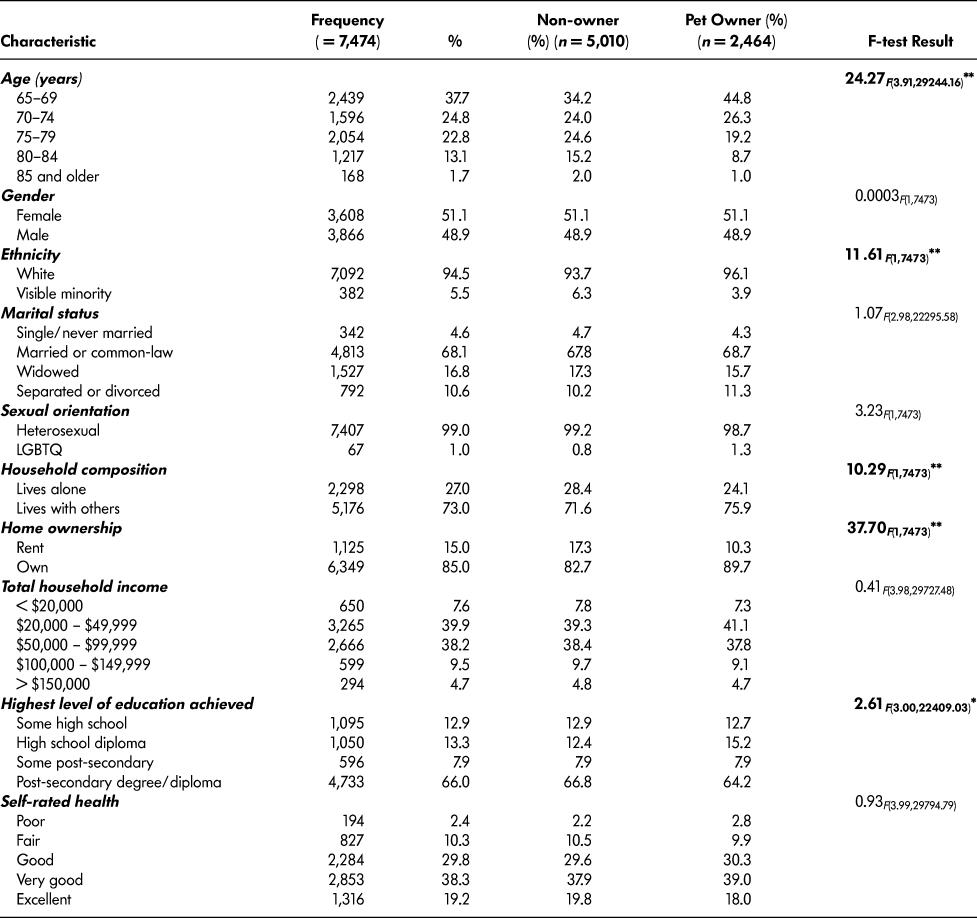
As shown in Table 1, pet owners and non-owners as a whole differed in several ways. After adjusting for probability weights, we found that compared with non-owners, significantly lower proportions of pet owners were 75 years or older, lived alone, rented their homes, reported belonging to a visible minority, and had completed post-secondary education. Even so, 22 per cent of the renters in our sample reported having pets, as did 29 per cent of participants who lived alone, 31 per cent of those whose household incomes were under $20,000 per year, 23 per cent of those belonging to a visible minority, and 46 per cent of those who identified as LGBTQ. Within the age subcategories of our CLSA participants, we observed that pet ownership was reported by 39 per cent of participants aged 65–69 years, 35 per cent of those aged 70–74 years, 27 per cent of those aged 75–79 years, 22 per cent of participants aged 80–84 years, and 19 per cent of participants 85 years or older.
Baseline socio-demographic description of older Canadians (≥ 65 years) participating in the Canadian Longitudinal Study on Aging (CLSA), comparing pet owners with non-owners

* p < .05; ** p < .001.
Note. CLSA sampling weights are applied to all analyses to adjust for sampling probabilities.
Life Satisfaction
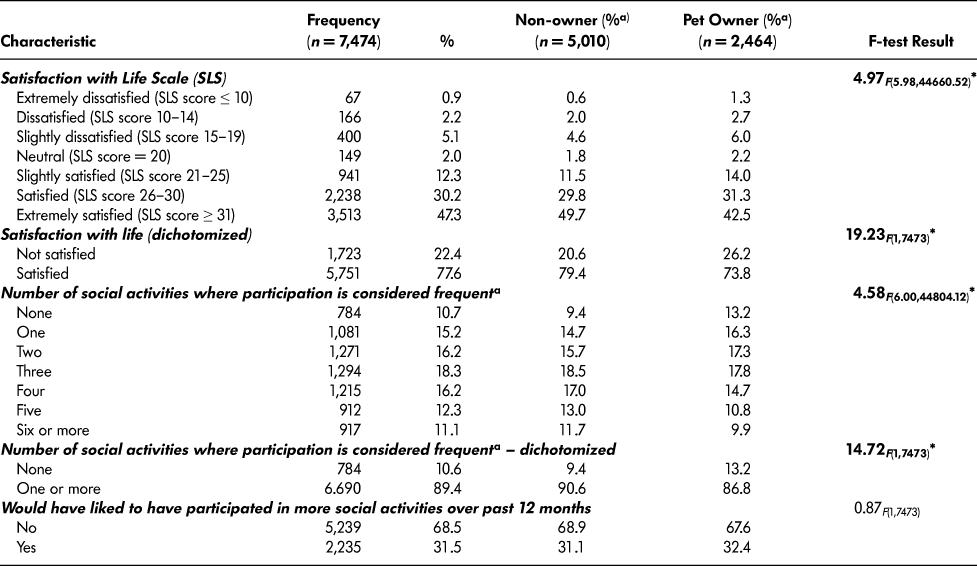
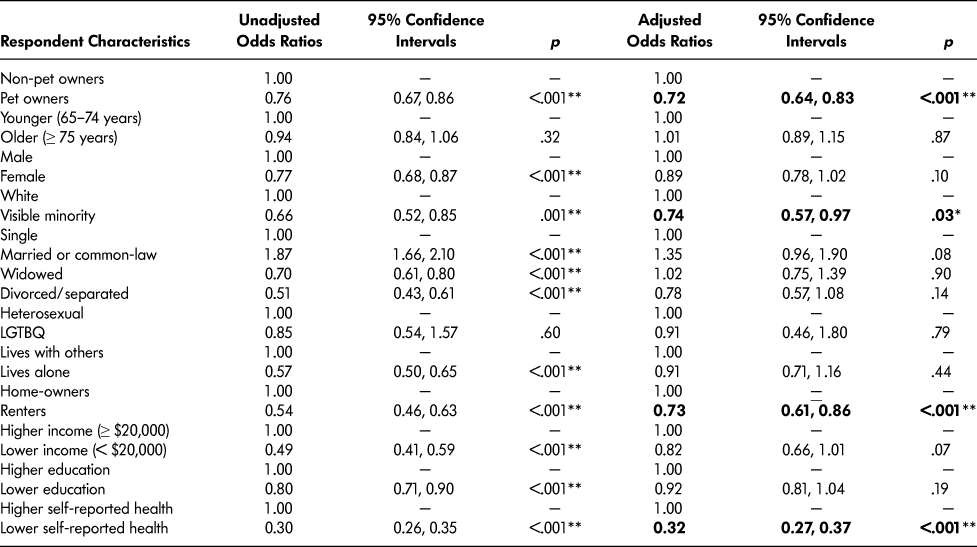
Table 2 illustrates that, in general, pet owners had lower scores on the life satisfaction scale compared with non-owners. Table 3 shows that after adjusting for sampling probability and socio-demographic co-variates (i.e., age, gender, ethnicity, marital status, sexual orientation, household composition, home ownership, household income, education, and self-reported health), pet owners were less likely to report higher life satisfaction than were non-owners. Co-variates that were significantly associated with lower life satisfaction included belonging to a visible minority, renting versus owning one’s home, and having poorer self-reported health.
Distribution of satisfaction with life scores and levels of social participation for older Canadians (≥ 65 years) participating in the Canadian Longitudinal Study on Aging (CLSA), comparing pet owners with non-owners

* p < .001.
Note. CLSA sampling weights are applied to all analyses to adjust for sampling probabilities.
a As per Gilmour (Reference Gilmour2012), frequent participation was defined as at least weekly for family/friendship activities outside of the household; church-related activities; sports or physical activities with others; other recreational activities, which include people, such as hobbies, games, etc.; and at least monthly for educational/cultural activities involving others such as courses, concerts, museums; service club or fraternal organization activities; neighbourhood, community or professional association activities; volunteer and charity work.
Odds ratios for reporting life satisfaction for older adult (≥ 65 years) participants in the Canadian Longitudinal Study on Aging (CLSA) (n = 7,474)

* p < .05, ** p < .001.
Note. CLSA sampling weights are applied to all analyses to adjust for sampling probabilities. Findings are adjusted for age, gender, ethnicity, marital status, orientation, household composition, home ownership, income, education, and self-reported health.
Levels of Social Participation
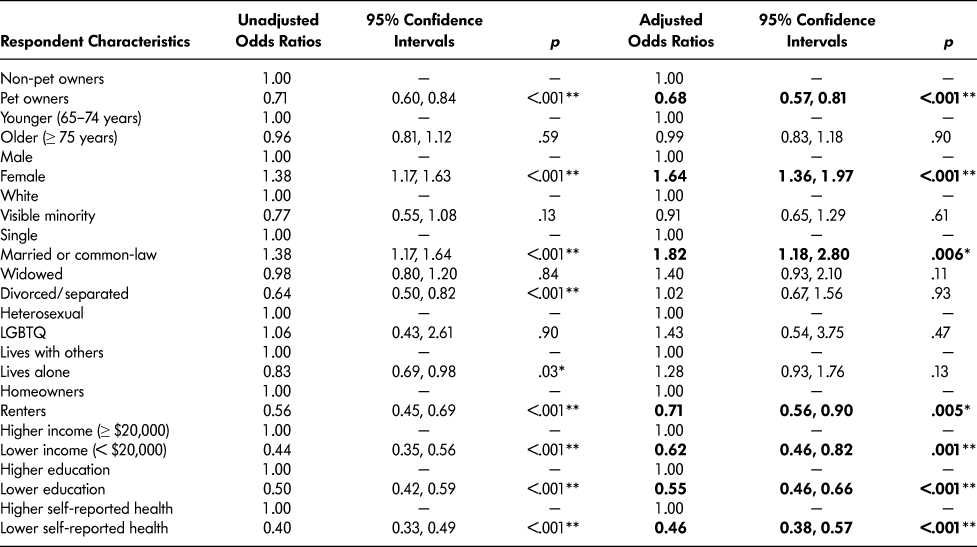
We found that, as a group, fewer pet owners reported frequent participation in one or more social, recreational, or group activities compared with non-owners (Table 2). Results listed in Table 4 indicate that after adjusting for sampling probability and socio-demographics, pet owners were less likely than non-owners to report frequent participation in one or more social activities. Other co-variates that were significantly associated with lower levels of social participation included renting versus owning one’s home, having a lower household income, having a lower level of education, and having poorer self-reported health. Conversely, co-variates that were significantly associated with higher levels of social participation included being female and being married or common-law.
Odds ratios for indicating frequent participation in one or more social, recreational or group activity for older adult (≥ 65 years) participants in the Canadian Longitudinal Study on Aging (CLSA) (n=7,474)

* p < .05, ** p < .001.
Note. CLSA sampling weights are applied to all analyses to adjust for sampling probabilities. Findings are adjusted for age, gender, ethnicity, marital status, orientation, household composition, home ownership, income, education, and self-reported health.
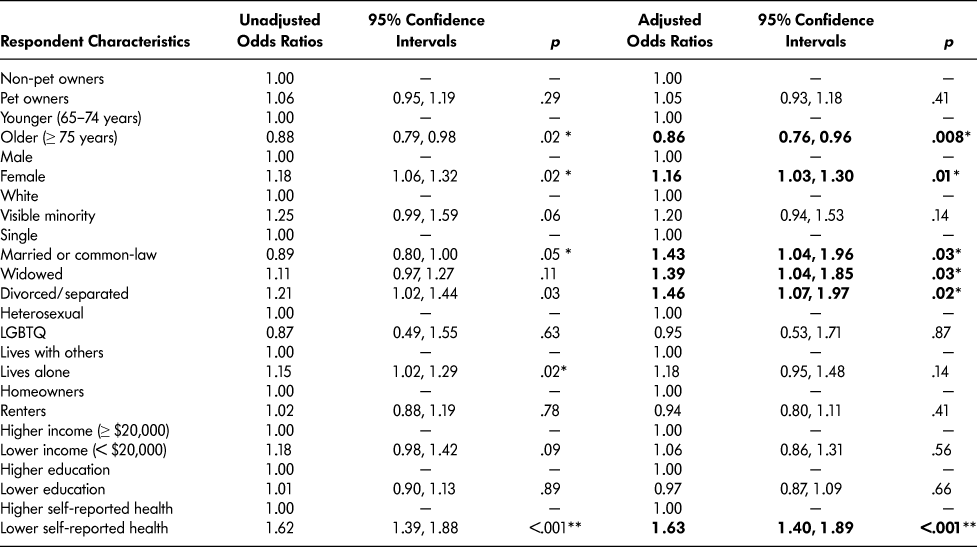
Table 5 shows that pet owners and non-owners did not differ significantly in terms of being satisfied or dissatisfied with their current level of participation in social, recreational, and group activities over the past 12 months. Co-variates that were significantly associated with being dissatisfied with current levels of social participation included being female; being married or common-law, widowed, or divorced; and having poorer self-reported health. Participants who were 75 years or older were more likely to be satisfied with their current levels of social participation.
Odds ratios for having wanted to participate in more social, recreational or group activities over the past 12 months for older adult (≥ 65 years) participants in the Canadian Longitudinal Study on Aging (CLSA) (n = 7,474)

* p < .05, ** p < .001.
Note. CLSA sampling weights are applied to all analyses to adjust for sampling probabilities. Findings are adjusted for age, gender, ethnicity, marital status, orientation, household composition, home ownership, income, education, and self-reported health.
Barriers to Social Participation
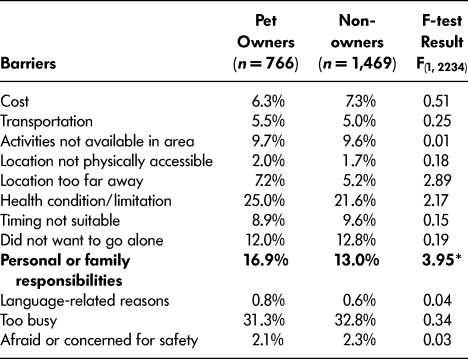
A sub-sample of 2,235 participants (32%) indicated that they had wanted to participate in more social activities over the past year, comprising 766 pet owners (34%) and 1,469 non-owners (66%). For these participants, we explored which barriers to social participation they identified as being pertinent, and whether these differed for pet owners and non-owners.
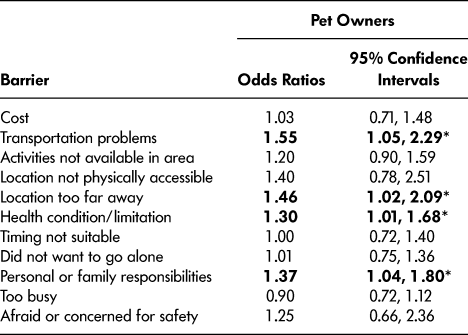
As presented in Table 6, the most common barriers to social participation identified by these participants were being too busy, having a health condition or limitation, having personal or family responsibilities, not wanting to go alone, and having no activities in the area. Having personal or family responsibilities was the only barrier that a significantly higher proportion of pet owners identified compared with non-owners, without considering co-variates. Logistic regression findings presented in Table 7 suggest that compared with non-owners, and after adjusting for co-variates, pet owners had significantly higher odds of identifying barriers related to location, including transportation issues and activities being located too far away. Pet owners were also more likely than non-owners to identify having experienced health conditions or limitations and personal or family responsibilities as barriers to social participation.
Proportions of older adult (≥ 65 years) pet owners and non-owners participating in the Canadian Longitudinal Study on Aging (CLSA) that identified a range of barriers to social participation (n = 2,235)

* p < .05.
Note. CLSA sampling weights are applied to all analyses to adjust for sampling probabilities. Multiple barriers could be identified by each respondent.
Likelihood of older adult (≥ 65 years) pet owners selecting a range of barriers to social participation, compared to non-owners (n = 2,235)

* p < .05.
Note. CLSA sampling weights are applied to all analyses to adjust for sampling probabilities. Findings are adjusted for age, gender, ethnicity, marital status, orientation, household composition, home ownership, income, education, and self-reported health. Language-related reasons was not included in the analysis due to low representation of participants who indicated this barrier (n = 11 or 0.7% of respondents; 5 pet owners, 6 non-owners).
Associations between Levels of Social Participation and Life Satisfaction
For both pet owners and non-owners, frequent participation in one or more social, recreational, or group activities was associated with higher life satisfaction, with non-owners being somewhat more likely to have higher life satisfaction (OR = 1.93, 95% CI [1.50, 2.48], p < .001) compared with pet owners (OR = 1.88, 95% CI [1.42, 2.48], p < .001). Both pet owners and non-owners who had wanted to participate in more social activities over the past year were significantly less satisfied with life, and the association was more pronounced for pet owners (OR = 0.38, 95% CI [0.31, 0.47], p < .001) compared with non-owners (OR = 0.43, 95% CI [0.37, 0.51], p < .001).
We also examined whether there was a threshold for levels of social participation after which gains towards life satisfaction were minimal. As shown in Table 8, the odds of being satisfied with life increased for both pet owners and non-owners as their levels of social participation increased. However, while non-owners’ satisfaction with life appeared to level off at three to four social activities, pet owners’ life satisfaction rose substantially if they participated in five or more social activities, and exceeded non-owners’ odds of being satisfied with life when experiencing a similarly high level of social participation.
Exploring thresholds for number of frequent social activities associated with life satisfaction for pet owning older adults and non-pet-owning older adults (≥ 65 years) participating in the Canadian Longitudinal Study on Aging (CLSA) (n = 7,474)

* p < .01, ** p < .001.
Note. CLSA sampling weights are applied to all analyses to adjust for sampling probabilities. Findings are adjusted for age, gender, ethnicity, marital status, orientation, household composition, home ownership, income, education, and self-reported health.
a As per Gilmour (Reference Gilmour2012), frequent participation was defined as at least weekly for family/friendship activities outside of the household; church-related activities; sports or physical activities with others; other recreational activities, which include people, such as hobbies, games, etc.; and at least monthly for educational/cultural activities involving others such as courses, concerts, museums; service club or fraternal organization activities; neighbourhood, community or professional association activities; volunteer and charity work
Associations between Barriers to Social Participation and Life Satisfaction
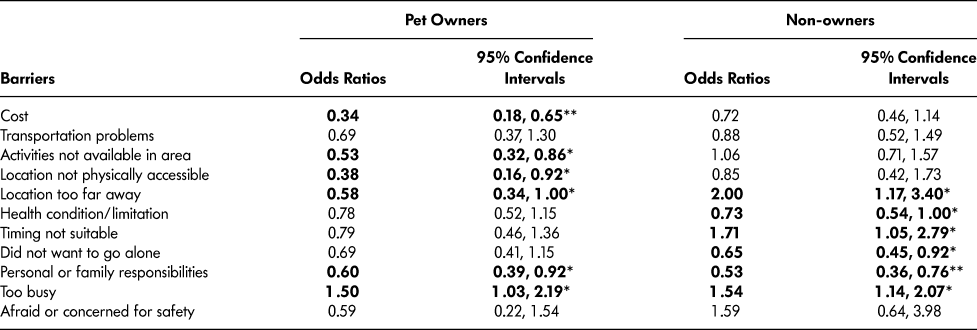
Finally, as presented in Table 9, we explored associations between experiencing barriers to social participation and life satisfaction, comparing pet owners and non-owners. In terms of similarities, having personal or family responsibilities was associated with lower life satisfaction for pet owners and even more so for non-owners, while being too busy to participate was associated with higher life satisfaction for both pet owners and non-owners. We also found several differences between pet owners and non-owners. For pet owners, barriers associated with lower life satisfaction were cost, having no activities available in the area, and finding that locations were not physically accessible. For non-owners, barriers associated with lower life satisfaction included not wanting to go alone, having a health condition/limitation, and finding timing to be unsuitable. Indicating that locations of activities were too far away was associated with higher life satisfaction for non-owners, but with lower life satisfaction for pet owners.
Associations between experiencing barriers to social participation and satisfaction with life, for older adult (≥ 65 years) pet owners and non-owners who had wanted to participate in more social activities over the past 12 months (n = 2,235)

* p < .05, ** p < .001.
Note. CLSA sampling weights are applied to all analyses to adjust for sampling probabilities. Findings are adjusted for age, gender, ethnicity, marital status, orientation, household composition, home ownership, income, education, and self-reported health. Language-related reasons was not included in the analysis due to low representation of participants who indicated this barrier (n = 11 or 0.7% of respondents; 5 pet owners, 6 non-owners).
Discussion
The purpose of our study was to illuminate the relevance of pet ownership for aging-in-place by assessing the extent to which pet ownership was associated with measures of social participation and life satisfaction for older Canadians. Overall, we found that older pet owners in Canada had lower life satisfaction and lower levels of social participation than non-owners, and yet pet owners were not more likely to be dissatisfied with their levels of social participation when compared with non-owners. For pet owners experiencing barriers to social participation, pets appeared to be protective of life satisfaction in some circumstances, including health limitations or not wanting to go alone. Costs and personal responsibilities, which might plausibly be linked to pet ownership, also appeared somewhat more likely to obstruct social participation for pet owners than for non-owners. We cannot determine from our study whether pets themselves may have been barriers to social participation – that is, disrupting the “indirect effect” mechanism linking pet ownership with human health (McNicholas et al., Reference McNicholas, Gilbey, Rennie, Ahmedzai, Dono and Ormerod2005), although it was notable that pet owners were significantly more likely to identify personal responsibilities as barriers to social participation. Even so, whereas pet owners who identified this barrier were less satisfied with life, non-owners identifying this barrier appeared to fare somewhat worse than their pet-owning counterparts, as the negative association with life satisfaction was more pronounced for non-owners.
Our findings highlight the extent to which interconnections between pet ownership, social participation, and aging-in-place are complicated. Just as Himsworth & Rock (Reference Himsworth and Rock2013) discussed the influence of domestic relationships on the quality of older adults’ relationships with pets, our findings point to relational interactions involving older pet owners’ individual circumstances, their levels of social participation, and their satisfaction with life. For example, older pet owners in our sample who identified either as (1) not wanting to participate alone or (2) experiencing health-related limitations as barriers to social participation did not necessarily report lower life satisfaction, whereas non-owners who identified these barriers had significantly lower life satisfaction scores. This result appears to be consistent with Raina et al.’s (Reference Raina, Waltner-Toews, Bonnett, Woodward and Abernathy1999) conclusion that pets may buffer some older adults from the deleterious mental health consequences of having low levels of social support, although we acknowledge that social participation and social support are distinct, if plausibly interrelated, concepts.
These two specific barriers – not wanting to go alone and experiencing health-related limitations – may signal increased vulnerability to social isolation for those participants who identified them. In understanding why pet owners who faced these two barriers to social participation also fared somewhat better than non-owners in terms of life satisfaction, pet companionship itself may be a contributing factor (Bennett et al., Reference Bennett, Trigg, Godber and Brown2015; McNicholas, Reference McNicholas2014), as may be the meaningful occupation and sense of control that caring for pets may generate for some older adults (Raina et al., Reference Raina, Waltner-Toews, Bonnett, Woodward and Abernathy1999; Swift & Tate, Reference Swift and Tate2013; Zimolag & Krupa, Reference Zimolag and Krupa2009) as they undergo physical, social, and psychological transitions related to aging. Ultimately, however, we found that pet owners with the highest levels of social participation also had the highest satisfaction with life, even when compared to non-owners who were similarly engaged in social activities.
In keeping with our interest in the indirect mechanism by which pets may influence older adults’ health and well-being (McNicholas et al., Reference McNicholas, Gilbey, Rennie, Ahmedzai, Dono and Ormerod2005), our findings also confirm the value of adopting a social ecological perspective to explore the extent to which pet ownership, social participation, and aging are embedded within the physical and social environments where aging-in-place occurs. These environmental attributes, in turn, may be actively shaped by policy efforts to achieve age friendliness (Menec et al., Reference Menec, Means, Keating, Parkhurst and Eales2011; Plouffe et al., Reference Plouffe, Garon, Brownoff, Eve, Foucault, Lawrence and Toews2012; Plouffe & Kalache, Reference Plouffe and Kalache2011).
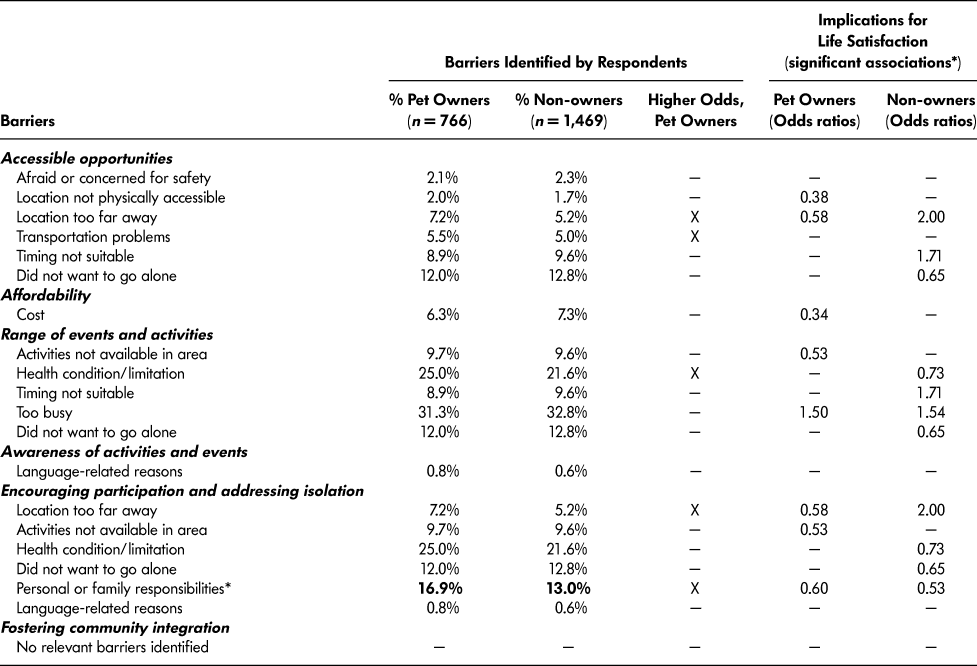
Table 10 illustrates the different barriers that pet owners and non-owners in our study faced, which we re-organized by drawing upon the WHO age-friendly guidelines for promoting social participation (2007, pp. 38–44). We found that pet owners may be more susceptible than non-owners to experiencing barriers in areas of accessibility (i.e., overcoming challenges around distance and transportation), the range of activities available (i.e., choices available for those with health-related limitations), and social isolation (i.e., prohibitive distance from activities and constraints around personal responsibilities).
Aligning barriers to social participation identified by older adult (≥ 65 years) Canadian Longitudinal Study on Aging (CLSA) participants with the World Health Organization (WHO; 2007) age-friendly communities framework for social participation

* p < .05.
Note. Canadian Longitudinal Study on Aging (CLSA) sampling weights are applied to all percentages to adjust for sampling probabilities. Findings are adjusted for age, gender, ethnicity, marital status, orientation, household composition, home ownership, income, education, and self-reported health. Language-related reasons not included in the analysis due to low representation of participants who indicated this barrier (n = 11 or 0.7% of respondents; 5 pet owners, 6 non-owners).
We also observed that pet owners who experienced structural barriers related to cost, accessibility, and a shortage of nearby opportunities had significantly lower life satisfaction, which was not the case for non-owners. Further investigation is needed to understand why pet owners disproportionately experience these barriers, yet it is possible that these findings may reflect situations where pet-related responsibilities are prioritized over social opportunities (see, e.g., Wells & Rodi, Reference Wells and Rodi2000), especially for participants who have no one in their lives available to provide short-term relief from pet care. This suggestion underscores the need to ensure that ample opportunities for social participation are available in all communities, do not hinge on existing social networks, and are subsidized so as to be affordable. Although these types of initiatives may benefit all older adults regardless of whether they have pets (Richard et al., Reference Richard, Gauvin, Kestens, Shatenstein, Payette, Daniel and Mercille2013; Richard, Gauvin, Gosselin, & Laforest, Reference Richard, Gauvin, Gosselin and Laforest2009), they hold promise to ease some of the constraints that pet owners appear most susceptible to experiencing, and that ultimately might obstruct achieving desired levels of social participation.
In understanding our findings, we must acknowledge limitations around operationalizing the social participation concept, which is still evolving (Levasseur, Richard, Gauvin, & Raymond, Reference Levasseur, Richard, Gauvin and Raymond2010). In particular, we are concerned that current approaches to measuring social participation may not adequately capture some of the indirect ways that pets may support human health through contact with people (McNicholas et al., Reference McNicholas, Gilbey, Rennie, Ahmedzai, Dono and Ormerod2005). Dogs in particular have been posited as catalysts for social interactions and other forms of social inclusion for older adults (Gardner, Reference Gardner2014; Graham & Glover, Reference Graham and Glover2014; Knight & Edwards, Reference Knight and Edwards2008; Toohey & Rock, Reference Toohey and Rock2011). For example, dog-walking may help to catalyze inter-generational interactions within neighbourhoods and parks (Gardner, Reference Gardner2014; Graham & Glover, Reference Graham and Glover2014; Wood et al., Reference Wood, Giles-Corti, Bulsara and Bosch2007), which could further instill into older adults’ lives a sense of being socially connected. Thus, optimizing neighbourhood environments to support dog-walking for older adults, as discussed by Toohey and Rock (Reference Toohey and Rock2011), may help to facilitate informal opportunities for social participation by supporting efforts to remain active and engaged within the community (Gardner, Reference Gardner2014) while also contributing to both increased physical activity and a heightened sense of community for older dog walkers (Toohey et al., Reference Toohey, McCormack, Doyle-Baker, Adams and Rock2013). We caution, however, that the tool used to assess levels of social participation in the CLSA may not be sensitive to detecting dog-walking as an impactful mode of social participation, given the tool’s emphasis on organized versus informal social activities taking place outside of the home. Levels of social participation for the dog owners in our sample, therefore, may have been inadvertently underestimated.
Importantly, the benefits to older adults who are aging-in-place may not be exclusive to dog owners alone – for instance, non-owners may benefit through getting to know regular dog walkers in their neighbourhoods (Toohey & Rock, Reference Toohey and Rock2011); by walking with friends, family, or neighbors, and their dogs (Peel et al., Reference Peel, Douglas, Parry and Lawton2010); or by simply being identified and appreciated for having an interest in dogs (Gardner, Reference Gardner2014). Although less public in nature, cats and other species of pets may also contribute to social participation for older adults through catalyzing social interactions and by access to positive dimensions of social capital (Mahalski et al., Reference Mahalski, Jones and Maxwell1988; McNicholas, Reference McNicholas2014; Wood, Giles-Corti, & Bulsara, Reference Wood, Giles-Corti and Bulsara2005; Wood et al., Reference Wood, Giles-Corti, Bulsara and Bosch2007). In our study, however, we were unable to consider social participation patterns in relation to species of pets since this information is not collected in the CLSA, despite its theoretical value. Similarly, we could not account for the quality of the bond that participants shared with their pets, even though this factor is relevant to the health-promoting potential of pets (Garrity, Stallones, Marx, & Johnson, Reference Garrity, Stallones, Marx and Johnson1989; Poresky & Daniels, Reference Poresky and Daniels1998; Raina et al., Reference Raina, Waltner-Toews, Bonnett, Woodward and Abernathy1999).
Because over one third of older Canadian adults are aging-in-place with pets, including those older adults who may be subject to social exclusion (e.g., because of having lower income, belonging to a visible minority, and identifying as LGBTQ), we suggest that both quantitative and qualitative approaches to understanding older adults’ social circumstances may benefit from increased attention to the ways that pets are integrally involved in peoples’ lives (also see Ryan & Ziebland, Reference Ryan and Ziebland2015). In being more attentive to the influence of human-animal relationships within people’s routines and decisions, we might also gain insights into ways that diverse older pet owners could potentially be enticed to participate more regularly in social settings. For instance, we observed that nearly half of the self-identified LGBTQ respondents in our sample reported having a companion animal. One study that we are aware of has explicitly discussed inclusion of gay men within efforts to appropriate public lands to create a dog park within a gentrified neighbourhood (Tissot, Reference Tissot2011), and there is also a small but compelling series of studies that have explored the importance of human-animal bonds within the aging experiences of older lesbian women (Putney, Reference Putney2013, Reference Putney2014). Graham and Glover (Reference Graham and Glover2014) observed that status of pet owner could transcend typical social stratification based upon gender, race, age, ethnicity, and others within dog-walking communities, and we similarly propose that social participation opportunities that take pet ownership into consideration, or even include pets (for instance, through organized dog-walking groups, or basic pet grooming workshops), might facilitate improved integration of diverse older adults into social life.
In adopting such a strategy, we also point to the need for social and public policies that enable improved access to pet-friendly environments (Morley & Fook, Reference Morley and Fook2005). Aside from efforts to promote dog-walking for older adults (Curl et al., Reference Curl, Bibbo and Johnson2016; Toohey et al., Reference Toohey, McCormack, Doyle-Baker, Adams and Rock2013; Toohey & Rock, Reference Toohey and Rock2011), this approach is currently missing in relation to encouraging social participation, and plausibly improving life satisfaction, for pet-owning older adults. Although pets are generally restricted from many public spaces and venues, there may be appropriate times and appropriate sites where these restrictions might be eased in order to facilitate social participation. Such a barrier was highlighted by dog owners living in a Canadian setting where dogs are not allowed to be tied unattended outside of shops or cafés (Degeling & Rock, Reference Degeling and Rock2012). This local bylaw reflects the public policy priority of minimizing risk of injury via interactions with temporarily unattended dogs rather than promoting dog-walking as a viable means of increasing both social participation and daily physical activity for a substantial proportion of the population. Rethinking the sweeping nature of pet prohibitions in public places, including on public transportation, might also serve to create connections among pet owners to a greater extent than otherwise would happen, ideally expanding social networks and strengthening social support (McNicholas & Collis, Reference McNicholas and Collis2000; Morley & Fook, Reference Morley and Fook2005). Such initiatives must also, however, be underscored by effective policies around responsible pet ownership (Rock, Reference Rock2013).
In addition to rethinking the nature of and settings for social activities themselves, we might also make concerted efforts to improve social connectedness for older adults within their immediate neighbourhoods, since these may lead to both pet-related and non-pet-related forms of assistance and a broader sense of social inclusion (Toohey & Rock, Reference Toohey and Rock2011; Wood et al., Reference Wood, Giles-Corti and Bulsara2005, Reference Wood, Giles-Corti, Bulsara and Bosch2007). Such efforts could be made in tandem with establishing organized volunteer-based or subsidized services designed to offer older adults occasional or regular respite from pet-care duties, yet without exorbitant costs attached. Keeping in mind the notable prevalence of pet ownership within socio-culturally and socio-economically diverse cross-sections of Canada’s aging population, we propose that greater attention to pet-friendliness may potentially contribute to efforts to promote age-friendliness.
In terms of methodological limitations, our cross-sectional study design prevented us from being able to assess the extent to which associations between pet ownership, social participation, and life satisfaction are causal. Methodological biases may also exist within our sample, given that our data were collected via telephone interviews. There is a possibility of selection bias, should those who declined to participate in the CLSA differ in a systematic way from those who agreed to participate, although such a difference was not detected during pilot testing (Raina et al., Reference Raina, Wolfson and Kirkland2008). Our data may also be subject to recall and social desirability biases, given reliance on self-reporting. Social desirability might serve to overestimate our measures of both social participation and life satisfaction in positive directions, if these were perceived by respondents as representing idealized notions of socially acceptable lifestyles. However, we would not expect pet owners and non-owners to differ in terms of the frequency or direction of these potential biases.
Even as we consider these limitations, we suggest that our findings serve to highlight the importance of viewing aging-in-place with pets as a relational experience (Putney, Reference Putney2013) that is shaped by an array of both individual and environmental factors. Understanding these interactions merits increased attention, particularly around the structural influences on older adults’ negotiations of both pet-related responsibilities and opportunities to participate in social life. In the future, the CLSA will offer invaluable opportunities for researchers to further explore questions around pet ownership and aging-in-place. For instance, it will be important to consider the impact of pet acquisition on social participation patterns. Pet loss, which can result in profound grief and distress (Adams et al., Reference Adams, Bonnett and Meek2000; Morley & Fook, Reference Morley and Fook2005), also merits closer study for its potential to alter social participation patterns in both positive and negative directions (Degeling & Rock, Reference Degeling and Rock2012; Knight & Edwards, Reference Knight and Edwards2008).
Given the breadth of CLSA data available, it will also be possible to account for changes in social networks, social support, and loneliness over time (Pikhartova et al., Reference Pikhartova, Bowling and Victor2014) and to explore the extent to which these factors interact with pet ownership, social participation, and life satisfaction. Further longitudinal analyses will also enable increasingly nuanced understandings of the roles of animal companionship amid life transitions like retirement, loss of loved ones, or changes in health status, so as to better understand the implications of pet ownership for both social isolation and social participation. Finally, and importantly, longitudinal analyses of CLSA data will enable opportunities to track the extent to which the implementation of policies and practices designed to promote social participation are effective for both pet owners and non-owners who are aging-in-place in Canadian settings.
Conclusion
Our study has found that pets appear to be relevant to both social participation and life satisfaction for older Canadian adults, and that the direction of effect may be contingent upon both individual circumstances and structural considerations that shape the places where aging-in-place occurs. Our findings suggest that increased attention to pets is justified for two overarching reasons. The first relates to the socio-demographics of the aging population. Pet ownership was reasonably prevalent across the entirety of our sample and might be expected to increase as growing numbers of the diverse and heterogeneous baby-boomer generation enter the older adult cohort. The second reason relates to the differential impacts of barriers to social participation that pet owners and non-owners appear to be experiencing. Since many of the barriers that our study participants identified also fit within age-friendly strategies to promote social participation, these offer clear targets for intervention and redress.
Overall, we subscribe to the importance of differentiating – but not diminishing – the beneficial qualities of relationships with pets from desires to interact with other people. We caution readers not to view pets as replacements for social inclusion, or as avenues to achieving life satisfaction. Simply because a person has a companion animal does not necessarily mean that they do not wish to or need to remain active participants in social life as they age. Clearly, we cannot lose sight of the need to balance opportunities for all older adults to age-in-place in ways that are meaningful and inclusive. By ensuring that pets are considered as we seek to create age-friendly communities, we might leverage the potential of both relationships with pets and social participation to effectively promote health and well-being via aging-in-place.