Introduction
External dacryocystorhinostomy (DCR), now widely practised, was first described by Toti in 1904.Reference Toti1 Endonasal DCR was first described in 1893 by Caldwell,Reference Caldwell2 and was modified and popularised by West in 1910.Reference West3 McDonogh and Meiring first used endoscopes in endonasal DCR in 1989.Reference McDonogh and Meiring4 In the following period, many studies have reported modifications of endoscopic DCR to obtain higher success rates, fewer complications, and shorter operation and recovery times.
Endoscopic DCR is commonly used because of its advantages, which include the prevention of an external scar, maintenance of the lacrimal pumping function, reduced operative time, shorter post-operative recovery time, minimal bleeding and the ability to simultaneously treat intranasal pathologies that may cause treatment failure.Reference Tsirbas, Davis and Wormald5 However, endoscopic DCR is linked to other factors that can lead to failure, including granuloma development, adhesions between the ostium and middle turbinate, and synechia between the ostium and nasal septum. Post-operative complications have been reported at rates of 0.6–11 per cent.Reference Allen and Berlin6
One of the major factors affecting endoscopic DCR success is ostial patency.Reference Linberg, Anderson, Bumsted and Barreras7 Various modifications have been used to enhance ostial patency, including the development of nasal mucosal and/or lacrimal sac flaps,Reference Tsirbas, Davis and Wormald5 the use of mitomycin C or nasal packing to reduce fibrosis formation,Reference Selig, Biesman and Rebeiz8 changing the dimensions of the osteotomies,Reference Sham and van Hasselt9 lacrimal sac incision,Reference Apaydin, Fisenk, Karayalcin, Akar and Saka10 and silicone tube stenting.Reference Tabatabaie, Heirati, Rajabi and Kasaee11
This study investigated how placing a stent into the newly formed ostium affects ostial patency, and success and complication rates in endoscopic DCR patients. This article presents an easy manoeuvre for ostial stent fixation.
Materials and methods
This study was conducted in the Department of Otorhinolaryngology at the Gaziosmanpasa Taksim Research and Training Hospital, Istanbul, Turkey. The study protocol was approved by the local Ethics Committee of Bakırköy Dr Sadi Konuk Education and Training Hospital, Istanbul, Turkey (approval number: 2016- 159), and it adhered to the tenets of the Declaration of Helsinki. An informed consent form was read to and signed by all patients included in the study.
Patient selection
All patients were diagnosed with chronic dacryocystitis, as evaluated by lacrimal probing and irrigation. The eyelid inspection focused on the location of the lacrimal punctum and the degree of lower lid laxity. Dacryoscintigraphy was performed on each patient to determine the level of obstruction in the nasolacrimal duct.
A detailed otolaryngological assessment was carried out, and the nasal passage, nasal mucosa and septum were evaluated endoscopically. The presence of nasal pathologies, including septal deviation, polyps and carcinomas, was excluded with pre-operative endoscopic nasal assessment.
Patients with symptomatic epiphora, and lacrimal sac or distal obstruction of the nasolacrimal duct, confirmed by lacrimal irrigation and radiological findings, were included in this study. Exclusion criteria included punctal ectropion, epiphora due to lower lid laxity, lithiasis, proximal obstruction, tumour, and a previous history of ocular or nasal surgery.
Operative technique
All surgical procedures were performed under general anaesthesia by the same surgeon (MED).
Each patient was placed in a supine position and their head was elevated. Nasal packs soaked in 0.5 per cent adrenaline solution were applied to the nasal cavity to induce nasal vasoconstriction. Two per cent lidocaine and 1.25:100 000 adrenaline solution (Jetokain Amp; Adeka, Istanbul, Turkey) was infiltrated into the lateral wall of the nasal cavity, anterior to the middle turbinate.
A mucoperiosteal flap (2 × 1.5 cm width) was created anterior to the middle turbinate with a sickle knife. The mucosal flap was then elevated posteriorly from the underlying bone with a Freer elevator. An osteotomy (8 mm × 10 mm) was created using a 45 degree, 2 mm bite Kerrison bony rongeur (Aesculap, Center Valley, Pennsylvania, USA). After the lacrimal sac was fully exposed, the lacrimal sac was tented using a probe through the superior canaliculus, and incised vertically using a sickle knife to create a large posterior lacrimal sac flap. The medial flap was trimmed, and the lateral flap was flattened on the lateral nasal mucosal wall. Lacrimal irrigation was then performed with normal saline, and the lacrimal system was intubated with a bicanalicular silicone tube (Bika; FCI Ophthalmics, Pembroke, Massachusetts, USA).
The operation subsequently followed different routes depending upon which group the patient had been randomly assigned to. In group 1, both silicone tube intubation and ostial stenting were performed. In group 2, only silicone tube intubation was performed.
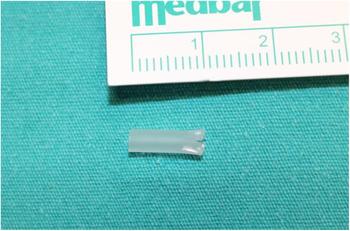
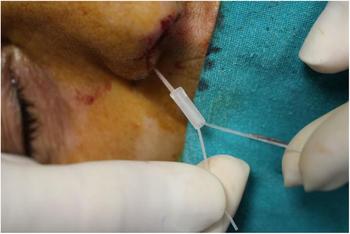
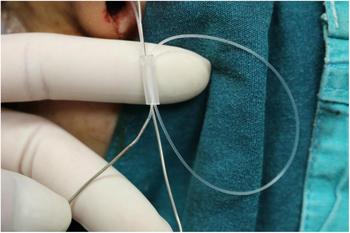
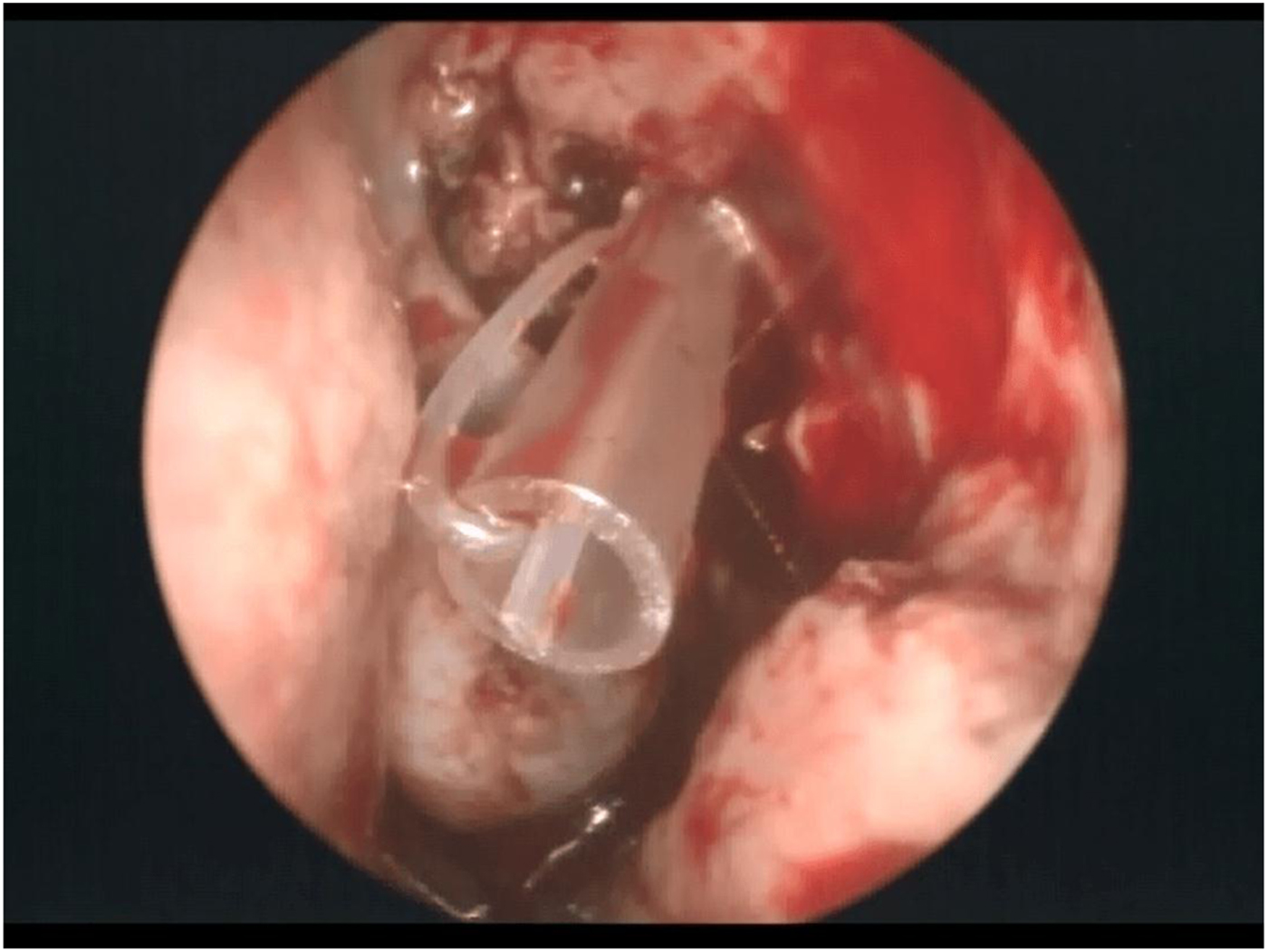
In group 1, ostial stenting involved the use of a 7 mm piece of a 14 gauge aspiration catheter, with multiple 1 mm vertical cuts on one end (Figure 1). The stent fixation technique was performed as we have described previously.Reference Ulusoy, Dizdar and Dinç12 The free ends of the silicone tube were drawn out through the ostial stent, in which the tip being cut faces the newly formed fenestra (Figure 2). Then, the silicone tube was looped, once more, through the ostial stent, before the stainless steel tips of the silicone tube were cut (Figure 3). After the distal ends of the silicone tube were fixed with one hand outside the nose, the ostial stent was moved over the silicone tube with the aid of forceps, to place it as close to the bony window as possible. The cranial side of the ostial stent was embedded into the medial part of the sac after the tube was knotted six to eight times within the nasal cavity, below the stent (Figure 4).
Ostial stent involved use of a 7 mm piece of 14 gauge aspiration catheter with multiple 1 mm vertical cuts on one end.

The free ends of the silicone tube were drawn out through the ostial stent, in which the tip being cut faces the newly formed fenestra.

The silicone tube was looped, once more, through the ostial stent, before the stainless steel tips of the silicone tube were cut.

The cranial side of the ostial stent was embedded into the medial part of the sac after the tube was knotted six to eight times within the nasal cavity, below the stent.

In group 2, the silicone tube inserted in the lacrimal canal was fixed with six to eight surgical knots, tied at its ends, and embedded into the medial part of the sac.
The tubes were removed after two months in both groups.
Post-operative care and follow up
In the post-operative period, patients were taught how to conduct nasal irrigation with physiological saline solution, and were prescribed eye drops with tobramycin and oral amoxicillin/clavulanic acid. All patients were discharged from the hospital on the day after surgery. All surgical interventions were performed by the same two otolaryngology surgeons. At follow-up visits, patients were assessed using a nasal endoscope, and any crust or debris was cleaned with suctioning and forceps to carefully avoid obstruction of the ostial site.
The patency of the canal was established endoscopically by lacrimal irrigation. Any complaints of patients were noted. The silicone tubes were removed at eight weeks post-operatively by cutting the loop between the punctum and retrieving it from the nose.
Outcome measures
Surgical treatment and anatomical success, operative time, and post-surgical complications during the follow-up period were investigated in each group. Anatomical success was defined as the persistence of complaints, including eye watering, despite ostial patency on lacrimal irrigation and nasal endoscopy. We also assessed post-surgical complications, including stenosis, granuloma formation, synechia, infection and haemorrhage, at the follow-up visits.
Statistical analyses
The Number Cruncher Statistical System 2007 software (NCSS, Kaysville, Utah, USA) was used for statistical analyses. When the study data were evaluated, descriptive statistics (mean, standard deviation, median, interquartile range, frequency, percentage, minimum and maximum) and the normal distributions of quantitative data were tested with the Shapiro–Wilk test and graphical analyses. The independent samples t-test was used for two-group comparisons of normally distributed quantitative variables, and the Mann–Whitney U test was used for two-group comparisons of quantitative variables that were not normally distributed. Pearson's chi-square test and Fisher's exact test were used for comparisons of qualitative data. Statistical significance was set at p < 0.05.
Results
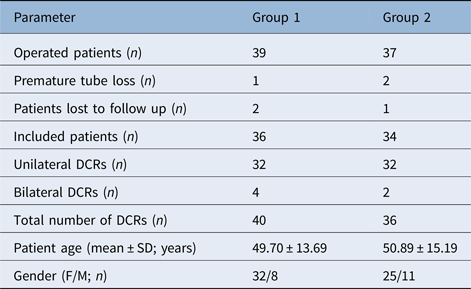
In total, 76 eyes of 70 patients were corrected by endoscopic DCR. Of these, 43 were left eyes and 33 were right eyes. There was no statistically significant difference between the mean ages of the groups (p = 0.721). Table 1 lists patient and operation information.
Characteristics of patients in each group

Group 1 = silicone tube intubation and ostial stenting; group 2 = silicone tube intubation only. DCR = dacryocystorhinostomy; SD = standard deviation; F = females; M = males
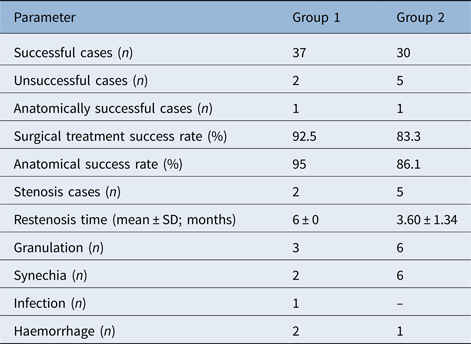
In group 1 (silicone tube intubation and ostial stenting), 37 of the 40 eyes (92.5 per cent) maintained patency of the canal and the patients did not have any further complaints of eye watering; these results were accepted as successful. One case was classified as anatomically successful (Table 2). The two cases that did not have a successful result had mucosal narrowing around the osteotomised area; the narrowing was seen during the sixth month post-operatively. Because obstruction of the lacrimal canal was seen after a symptom-free period, this condition was considered to be a recurrence. One of the cases with an unsuccessful result was lost to follow up. The other case was operated on again using the same technique. To date, this latter patient is symptom-free.
Group comparison of success and complications

Group 1 = silicone tube intubation and ostial stenting; group 2 = silicone tube intubation only. Post-op = post-operative; SD = standard deviation
In group 2 (silicone tube intubation only), 30 of the 36 eyes (83.3 per cent) maintained patency of the canal and had no further complaints of eye watering. Lacrimal irrigation was conducted and the flow was observed endoscopically. These results were accepted as successful. One case was classified as anatomically successful (Table 2). The five cases that did not have a successful result had mucosal narrowing around the osteotomised area; the narrowing was seen at the third and sixth months post-operatively (mean of 3.6 months). Two of the cases with an unsuccessful result were lost to follow up. The other three patients were operated on again using the same technique. To date, those three patients are symptom-free.
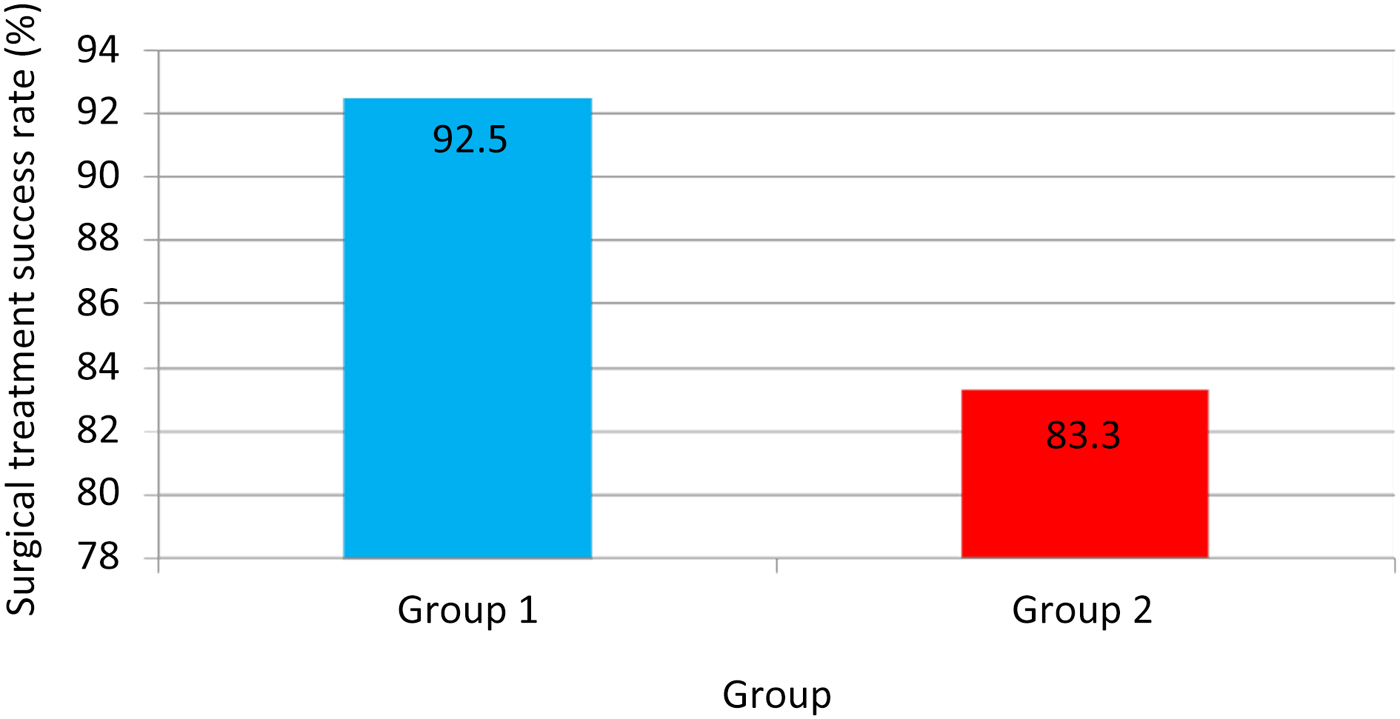
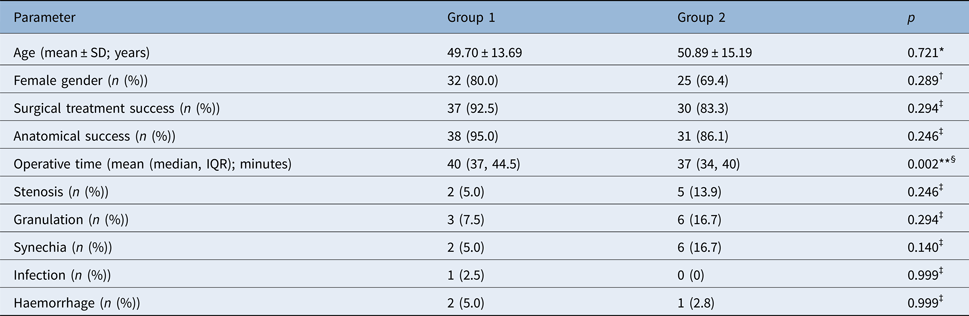
The surgical treatment success rates were 92.5 per cent and 83.3 per cent for groups 1 and 2 respectively. However, the difference was not statistically significant (p = 0.294; Table 3 and Figure 5).
Surgical treatment success rates of group 1 (silicone tube intubation and ostial stenting) and group 2 (silicone tube intubation only).

Statistical comparison of the two groups

Group 1 = silicone tube intubation and ostial stenting; group 2 = silicone tube intubation only. *Independent samples t-test; †Pearson chi-square test; ‡Fisher's exact test; **Mann–Whitney U test; §p < 0.01. SD = standard deviation; IQR = interquartile range
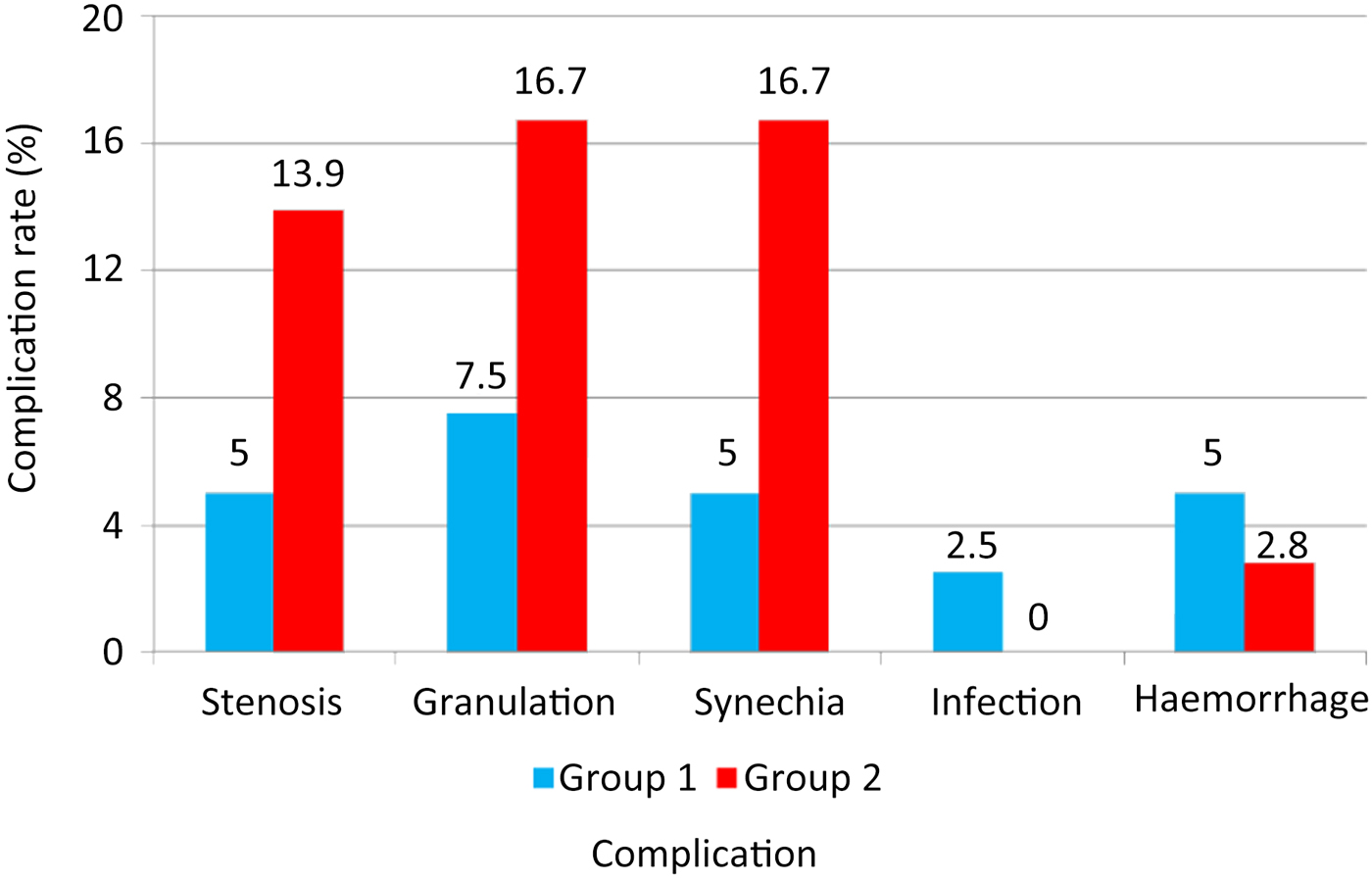
The complication numbers and rates for the groups are shown in Tables 2 and 3, and in Figure 6. Any haemorrhages that occurred during surgery were controlled with minimal tamponades, and post-operative infections were overcome with antibiotic treatment.
Complication rates of group 1 (silicone tube intubation and ostial stenting) and group 2 (silicone tube intubation only).

The duration of the surgical procedure differed significantly between groups 1 and 2 (p = 0.002); the operative time was longer in group 1.
Discussion
Recently, minimally invasive surgical techniques have been popularised, and the results are comparable to conventional procedures. Although the endonasal approach has long been known, developments in imaging systems and technical advances in endonasal probes have provided the opportunity to use endoscopes in nasolacrimal surgical procedures. To date, several different techniques have been used for endoscopic DCRs to obtain better results. All of these approaches focus on large osteotomies to reduce excessive secondary intention healing processes. In this study, we examined the efficacy of ostial stent application in primary dacryostenosis patients.
Endoscopic DCR has advantages over an external DCR approach; these include: avoiding a scar, keeping the lacrimal pumping function, maintaining the medial canthal ligament, decreasing operative times, reducing the post-operative recovery period, minimising bleeding and concurrently managing other intranasal pathologies that may lead to treatment failure.Reference Tsirbas, Davis and Wormald5 Disadvantages of the endonasal approach include: bleeding, risk of orbital injury, difficulties in removing a sufficient amount of bone to expose the sac, development of synechia due to excessive instrument use in the septal and middle turbinate regions, and development of canaliculi.Reference Saroj and Rashmi13
An essential aspect that affects the success of endoscopic DCR is restenosis of the newly formed ostium. In both endoscopic and external DCR operations, the main cause of obstruction of the fenestra is regeneration of the mucosa, rather than a bone callus. Prevention of ostium patency by the regenerating mucosa appears to be a major factor influencing the success rate of the operation.Reference Linberg, Anderson, Bumsted and Barreras7 Studies that have investigated the use of mitomycin C to prevent restenosis support this. Indeed, adjuvant mitomycin C has been demonstrated to significantly increase the success rate of primary endoscopic DCR.Reference Selig, Biesman and Rebeiz8
Kim et al. placed a polyvinyl chloride stent into the ostium, which covered the silicone tube and prevented restenosis, instead of cutting down the maxilla and making a larger osteotomy.Reference Kim, Lee, Kim and Lee14 This improved their success rate from 91 to 96 per cent, although this difference did not reach statistical significance. We used a different method for ostial stent fixation. In our technique, the silicone tube was looped once more, while the silicone tube was left exuberant, and the aspiration catheter was moved over the silicone tube with the aid of forceps as far as possible within the bony window. Kim et al. tied the stent to the silicone tube to avoid the risk of dislocation, and pushed the stent into the fundus of the lacrimal sac using the silicone tube as a guide.Reference Kim, Lee, Kim and Lee14 The ostial stent that we used had a very low risk of dislocation because the silicone tube was both looped through the stent and knotted six to eight times below the ostial stent.
Similarly, Shin et al. used a polytetrafluoroethylene tube as an ostial stent, and their success rate was higher than the 76.5 per cent in the control group.Reference Shin, Kim, Lee and Park15 Griffiths obtained a large intranasal mucosal ostium using Griffiths’ collar buttons as stents, together with bicanalicular silicone tubes.Reference Griffiths16 However, the Griffiths’ collar button is a commercial product, which adds cost. The stent we used is inexpensive because it is prepared by cutting an aspiration catheter.
Kashkouli et al. compared the effectiveness of endoscopically assisted balloon dacryocystoplasty and silicone tube intubation versus silicone tube intubation alone in patients with nasolacrimal duct obstruction.Reference Kashkouli, Beigi, Tarassoly and Kempster17 They found that the success rates for each technique were not statistically significantly different. Unlike balloon dilatation, an ostial stent affords a longer duration of pressure (against the mucosa), ensuring ostial patency. However, again, the results obtained in the two groups did not differ significantly.
Kirtane et al. sutured mucosal and medial lacrimal sac flaps together, with size 5-0 vicryl sutures, to prevent restenosis. They reported primary success in 19 of 20 patients with nasolacrimal duct obstructions.Reference Kirtane, Lall, Chavan and Satwalekar18
The practice of using silicone tubes remains controversial. Some authors think that silicone tubes are too thin to avoid future stenosis and may enhance granulation, consequently raising the failure rate.Reference Mohamad, Khan, Shakeel and Nandapalan19 However, we did not detect a higher rate of granulation tissue formation in group 1, in which both a silicone tube and ostial stent were used. In fact, we observed less granulation formation in group 1 than in the control (silicone tube intubation only) group.
The complications observed in our study included stenosis, granulation tissue formation, synechia, infection and haemorrhage. We assessed the rate of each complication in groups 1 and 2; all of the differences were statistically insignificant. Stenosis and granulation were lower in group 1 in which the ostial stent was used.
• Endoscopic dacryocystorhinostomy (DCR) has advantages over external DCR
• These include: scar avoidance, lacrimal pump function retention and concurrent management of other intranasal pathologies that may lead to failure
• In endoscopic and external DCR operations, the main cause of fenestra obstruction is mucosal regeneration rather than bone callus
• Prevention of ostium patency by regenerating mucosa appears to be a major factor influencing operational success
• Compared with a silicone tube alone, the addition of an ostial stent did not significantly increase the success rate in nasolacrimal duct obstruction
We found that the size of the ostium frequently decreased for several weeks following surgery. One previous prospective case series observed the greatest reduction of ostium size during the first four weeks.Reference Chan and Selva20 In our study, the mean restenosis time in group 1 was 6 ± 0 months; in group 2 it was 3.60 ± 1.34 months. We think that this may be due to the barrier effect of the stent on the mucosa for two months.
Despite concerns that the silicone tube may trigger the formation of granulation,Reference Ciftci, Erşanli, Civelek, Baloglu, Karadayi and Güngör21 the rate of granulation tissue formation was lower in group 1, in which we used the ostial stent. The synechia rate was also lower in group 1. This may be because the inserted stent served as a barrier between the concha and septum and the ostium.
Infection was observed in only one patient in group 1, in the early post-operative period; this was overcome with short-term oral antibiotic therapy. Haemorrhages occurred during surgery in two patients, one in each group, and were controlled with minimal tamponades. Neither group showed any serious complication, such as orbital perforation or skin fistula.
The main limitations of our study were the small sample size and the lack of a patient-reported outcome measure. Thus, studies involving more patients are required.
Compared with the use of a silicone tube alone, the addition of an ostial stent did not significantly increase the success rate in nasolacrimal duct obstruction patients. The differences between complication rates in both groups were statistically insignificant. Nevertheless, the use of an ostial stent facilitated silicone tube removal after two months.
Competing interests
None declared