Introduction
Dizziness and migraine are both common in the general population. However, there is increasing evidence that they can be inter-related.Reference Eggers1–Reference Neuhauser, von Brevern, Radtke, Lezius, Feldmann and Ziese4 Vestibular migraine, as an individual clinical entity, is gradually being recognised as a cause of episodic vertigo, affecting approximately 2.7 per cent of adults with a lifetime prevalence of 0.98 per cent.Reference Neuhauser, Leopold, von Brevern, Arnold and Lempert3,Reference Neuhauser, Radtke, von Brevern, Feldmann, Lezius and Ziese5
However, this is felt to be an underestimate because it is likely that vestibular migraine is under-diagnosed.Reference Sohn6.7 This is in part because of the broad variability in presentation alongside the absence of a widely accepted pathophysiological model that links migraine with vertigo. The overlap of vestibular migraine, anxiety and depression should also be considered.
Vestibular migraine typically presents with episodes of acute imbalance or vertigo that can last for minutes to days. Although it is sometimes associated with a migrainous headache (pulsatile, but not always unilateral), it is more frequently associated with aura type symptoms, such as photophobia or phonophobia. Vestibular migraine can present at any age, with a reported male-to-female ratio of 1.5:5.Reference Cass, Furman, Ankerstjerne, Balaban, Yetiser and Aydogan8
The pathophysiology of vestibular migraine is poorly understood and predominantly based on the knowledge of migraine. This shared aetiology is based on the response of vestibular migraine to classical migraine therapy.Reference Baloh and Jen9 Neurotransmitters thought to be involved in migraine, such as noradrenaline, serotonin and dopamine, may also be involved in vestibular migraine. This, in turn, impacts the treatment options.Reference Cass, Furman, Ankerstjerne, Balaban, Yetiser and Aydogan8,Reference Cutrer and Baloh10,Reference Johnson11 A further theory regarding its pathophysiology is the possibility of reciprocal connections between structures that modulate trigeminal nociceptive inputs and the brainstem vestibular nuclei.Reference Sohn6 In particular, the trigeminal-cervical complex can provide sufficient explanation for the wide variety of pain distribution in migraine as well as the involvement of other cranial nerves and nuclei.Reference Dodick12,Reference Kontorinis and Tyagi13 The proximity and connections of the trigeminal nerve to certain structures and cranial nerves provides sufficient explanation of symptoms related to temporary dysfunction of such nerves.Reference Dodick12,Reference Kontorinis and Tyagi13
Diagnosis relies on the clinical history and the exclusion of other causes of dizziness, such as Ménière's disease or benign paroxysmal positional vertigo, because outside of an acute attack, neuro-otological examination is either inconclusive or normal.Reference von Brevern, Zeise, Neuhauser, Clarke and Lempert14,Reference Teggi, Colombo, Bernasconi, Bellini, Comi and Bussi15 At present, the definition of vestibular migraine is based on the diagnostic criteria outlined by the Bárány Society and the International Headache Society.Reference Lempert, Olesen, Furman, Waterston, Seemungal and Carey16
Given the association with migrainous headaches and the lack of an alternative pathophysiological mechanism, prophylactic treatment of vestibular migraine is based on that offered for classical migraine.Reference Lee, Jeong, Kim, Kim, Choi and Choi17–Reference Maione19 Empirically, this includes calcium channel blockers, β-blockers, anti-depressants and anti-epileptics. Lifestyle changes, such as sleep hygiene and dietary modifications (avoiding red wine, chocolate, coffee and glutamate), have also been shown to reduce the intensity and frequency of attacks.Reference Bisdorff20
At present, no guidelines exist for the management of vestibular migraine, with treatment largely being based on an individual clinician's personal preferences and familiarity with various drugs. To date, most evidence regarding the prophylactic management of vestibular migraine is based on retrospective or observational studies, frequently lacking a control arm. Given the increasing prevalence of vestibular migraine, its debilitating impact on people's quality of life and the lack of strong evidence for a treatment regimen, we conducted a systematic review and meta-analysis to determine the effectiveness of current available prophylactic medication used in vestibular migraine.
Materials and methods
Protocol and registration
Prospero registration was completed (registration number: CRD42020207295). We performed our review according to the Preferred Reporting Items for Systematic Review and Meta-Analyses (‘PRISMA’) checklist.Reference Moher, Liberati, Tetzlaff and Altman21
Literature search
A literature search was performed using PubMed, Ovid and Embase databases. The following medical subject headings search terms were included: vestibular migraine, migraine-associated vertigo, migraine and vertigo, migraine-associated dizziness, head and vertigo, and migraine and disequilibrium. This study aimed to review what the prophylactic treatment options are for vestibular migraine as well as review the available evidence. Because of the emerging nature of the diagnosis, the search was limited to publications in the last 20 years and those written in English and German. Case reports, abstracts and conference proceedings were excluded.
All publications were assessed by two authors independently (CY and LH) using the following eligibility criteria: (1) studies assessing only the management of vestibular migraine, with those including other causes of vertigo excluded and; (2) management to include at least one pharmacological treatment.
We excluded studies with: (1) patients under the age of 16 years; (2) purely conservative management without any medication, and; (3) a focus solely on epidemiology or pathogenesis or descriptive studies.
In case of discrepancies, a decision was made following discussion with the senior author (GK) to reach consensus.
Documented factors
In addition to basic demographic data, the following information was also collected: study design (type, randomisation, and whether it was prospective or retrospective); whether study power was recorded; treatment and, if used, control arms; outcome (both how this was defined and measured and the result); and side effects.
Risk of bias assessment
The Risk of Bias 2 tool was used for randomised, controlled trial (RCT) studies.Reference Sterne, Savović, Page, Elbers, Blencowe and Boutron22 Meanwhile, non-RCTs were evaluated using the Risk of Bias in Non-Randomised Studies of Interventions tool.Reference Sterne, Hernán, Reeves, Savović, Berkman and Viswanathan23 Assessments were performed by the third author independently (MS), and these were then subsequently validated by two other authors (CY and LH).
Data extraction and statistical analysis
Meta-analysis was performed using the R-language when equal to or more than two studies addressed the outcome measures with the same prophylactic medication.Reference Harrer, Cuijpers and Furukawa24,Reference Balduzzi, Rücker and Schwarzer25 Trials reporting outcomes based on validated patient-reported outcome measures for vestibular migraine, such as the Dizziness Handicap Inventory and Vertigo Symptom Scale were extracted independently by one of the authors (MS) to enable prophylactic treatment effect size exploration based on the pre- and post-treatment mean differences. Proportionate meta-analysis with the Freeman–Tukey double arcsine transformation for prophylactic treatment successful event rate was also performed on studies reporting outcomes for complete control of vestibular migraine symptoms only. Mean differences for frequency of headache and vertigo were also explored. The random effect model was selected because of the variation in prophylactic treatment available for vestibular migraine.Reference Harrer, Cuijpers and Furukawa24 The Egger's test and meta-regression were not performed because there were less than 10 studies identified.Reference Harrer, Cuijpers and Furukawa24
Results
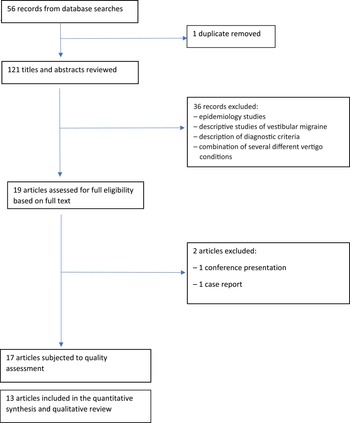
Out of an initial 56 publications, a total of 13 publications were identified (Fig. 1) meeting the inclusion criteria.
Preferred Reporting Items for Systematic Review and Meta-Analyses (‘PRISMA’) flow diagram. Moher D et al.Reference Moher, Liberati, Tetzlaff and Altman21

Basic demographic data
The median number of patients included in each study was 39 (range: 12–100).Reference Bisdorff20,Reference Jay-du Preez and Van Papendorp26–Reference Baier, Winkenwerder and Dieterich37 The gender ratio of 1 male to 2.8 females (152 males and 428 females) was in keeping with the reported female preponderance, although this ratio was slightly lower than reported elsewhere.Reference Bisdorff20,Reference Jay-du Preez and Van Papendorp26–Reference Baier, Winkenwerder and Dieterich37
Study design
Of the 13 publications reviewed, only three were RCTs,Reference Lepcha, Amalanathan, Augustine, Tyagi and Balraj27,Reference Liu, Ma, Che, Wang and Yu35,Reference Salviz, Yuce, Acar, Karatas and Acikalin36 and the remaining 10 studies were non-RCTs.Reference Bisdorff20,Reference Jay-du Preez and Van Papendorp26,Reference Iwasaki, Ushio, Chihara, Ito, Sugasawa and Murofushi28–Reference Van Ombergen, Van Rompaey, Van de Heyning and Wuyts34,Reference Baier, Winkenwerder and Dieterich37 The majority (61.5 per cent) were retrospective studies,Reference Bisdorff20,Reference Iwasaki, Ushio, Chihara, Ito, Sugasawa and Murofushi28–Reference Çelebisoy, Gökçay, Karahan, Bilgen, Kirazlı and Karapolat32,Reference Van Ombergen, Van Rompaey, Van de Heyning and Wuyts34,Reference Baier, Winkenwerder and Dieterich37 with only 5 studies (38.5 per cent) being prospective.Reference Jay-du Preez and Van Papendorp26,Reference Lepcha, Amalanathan, Augustine, Tyagi and Balraj27,Reference Teggi, Colombo, Gatti, Comi and Bussi33,Reference Liu, Ma, Che, Wang and Yu35,Reference Salviz, Yuce, Acar, Karatas and Acikalin36 The following drugs were evaluated within the RCTs: propranolol, venlafaxine, valproic acid and flunarizine. The following drugs were evaluated in the non-RCTs: acetazolamide, venlafaxine, cinnarizine, amitriptyline, valproate, lomerizine, propranolol, metoprolol, topiramate, lamotrigine, flunarizine, butterbur root extract and nortriptyline. Power calculations were only performed in 3 (23.1 per cent) studies.Reference Çelik, Tanyeri Toker, Eskiizmir, İncesulu and Şahin Süyür30,Reference Liu, Ma, Che, Wang and Yu35,Reference Salviz, Yuce, Acar, Karatas and Acikalin36
The minimum follow-up time was three months (seven studies),Reference Bisdorff20,Reference Lepcha, Amalanathan, Augustine, Tyagi and Balraj27,Reference Taghdiri, Togha, Razeghi Jahromi and Refaeian29,Reference Salmito, Duarte, Morganti, Brandão, Nakao and Villa31,Reference Çelebisoy, Gökçay, Karahan, Bilgen, Kirazlı and Karapolat32,Reference Liu, Ma, Che, Wang and Yu35,Reference Salviz, Yuce, Acar, Karatas and Acikalin36 with one study following patients up for six monthsReference Teggi, Colombo, Gatti, Comi and Bussi33 and only two studies for longer than six months.Reference Çelik, Tanyeri Toker, Eskiizmir, İncesulu and Şahin Süyür30,Reference Baier, Winkenwerder and Dieterich37 Three studies did not specify a follow-up period.Reference Jay-du Preez and Van Papendorp26,Reference Iwasaki, Ushio, Chihara, Ito, Sugasawa and Murofushi28,Reference Van Ombergen, Van Rompaey, Van de Heyning and Wuyts34
Risk of bias assessment
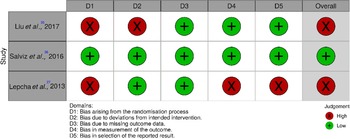
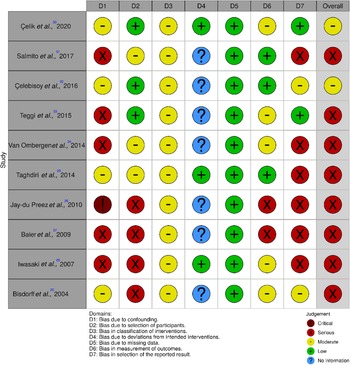
Three studies were RCTs (Fig. 2),Reference Lepcha, Amalanathan, Augustine, Tyagi and Balraj27,Reference Liu, Ma, Che, Wang and Yu35,Reference Salviz, Yuce, Acar, Karatas and Acikalin36 and 10 studies were non-RCTs (Fig. 3).Reference Bisdorff20,Reference Jay-du Preez and Van Papendorp26,Reference Iwasaki, Ushio, Chihara, Ito, Sugasawa and Murofushi28–Reference Van Ombergen, Van Rompaey, Van de Heyning and Wuyts34,Reference Baier, Winkenwerder and Dieterich37 One study had a low degree of bias,Reference Salviz, Yuce, Acar, Karatas and Acikalin36 2 studies had a moderate degree of biasReference Çelik, Tanyeri Toker, Eskiizmir, İncesulu and Şahin Süyür30,Reference Çelebisoy, Gökçay, Karahan, Bilgen, Kirazlı and Karapolat32 and 10 studies were judged to have a high degree of bias.Reference Bisdorff20,Reference Jay-du Preez and Van Papendorp26–Reference Taghdiri, Togha, Razeghi Jahromi and Refaeian29,Reference Salmito, Duarte, Morganti, Brandão, Nakao and Villa31,Reference Teggi, Colombo, Gatti, Comi and Bussi33–Reference Liu, Ma, Che, Wang and Yu35,Reference Baier, Winkenwerder and Dieterich37
Risk of Bias 2 tool domains diagram.

Risk of Bias in Non-Randomised Studies of Interventions domains diagram.

Patient-reported outcomes of prophylactic treatment
Propranolol
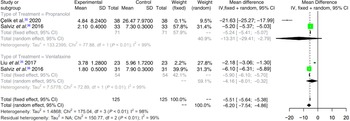
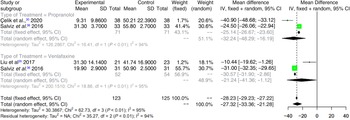
Two recent studies (Fig. 4) evaluated the prophylactic impact of propranolol on vestibular migraine and reported their outcomes based on the Vertigo Symptom Scale.Reference Çelik, Tanyeri Toker, Eskiizmir, İncesulu and Şahin Süyür30,Reference Salviz, Yuce, Acar, Karatas and Acikalin36 Here, propranolol improved the Vertigo Symptom Scale score by −13.31 points (95 per cent confidence interval (CI) = −29.41 to 2.79) following treatment (p < 0.01). However, the included studies were highly heterogeneous (I2: 99 per cent). Dizziness Handicap Inventory was also reported in these studies (Fig. 5).Reference Çelik, Tanyeri Toker, Eskiizmir, İncesulu and Şahin Süyür30,Reference Salviz, Yuce, Acar, Karatas and Acikalin36 Beneficial impact by −32.24 points (95 per cent CI = −48.29 to −16.19) was noted (p < 0.01). Again, heterogeneity was high (I2: 94 per cent).
Forest plot showing the meta-analysis for VSS (Vertigo Symptom Scale) mean differences. SD = standard deviation; IV = inverse variance; CI = confidence interval; NA = not available

Forest plot showing the meta-analysis for DHI (Dizziness Handicap Inventory) mean differences. SD = standard deviation; IV = inverse variance; CI = confidence interval; NA = not available

Venlafaxine
Two studies (Fig. 4) evaluated the impact of venlafaxine using the Vertigo Symptom Scale, showing improvement by −4.16 points (95 per cent CI = −8.01 to −0.32; p < 0.01; I2: 99 per cent).Reference Liu, Ma, Che, Wang and Yu35,Reference Salviz, Yuce, Acar, Karatas and Acikalin36 Beneficial impact was also noted for Dizziness Handicap Inventory (Fig. 5) by −21.24 points (95 per cent CI = −41.36 to −1.12; p < 0.01; I2: 95 per cent).
Prophylactic treatment successful event rate outcomes
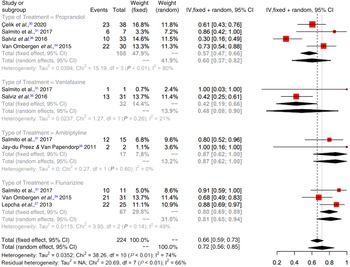
Eleven studies (Fig. 6) reported appropriate outcome measures to enable meta-analysis for the proportional successful event rate on achieving complete vestibular migraine symptoms control. These were based on four types of prophylactic treatment: propranolol,Reference Çelik, Tanyeri Toker, Eskiizmir, İncesulu and Şahin Süyür30,Reference Salmito, Duarte, Morganti, Brandão, Nakao and Villa31,Reference Van Ombergen, Van Rompaey, Van de Heyning and Wuyts34,Reference Salviz, Yuce, Acar, Karatas and Acikalin36 venlafaxine,Reference Salmito, Duarte, Morganti, Brandão, Nakao and Villa31,Reference Salviz, Yuce, Acar, Karatas and Acikalin36 amitriptylineReference Jay-du Preez and Van Papendorp26,Reference Salmito, Duarte, Morganti, Brandão, Nakao and Villa31 and flunarizine.Reference Lepcha, Amalanathan, Augustine, Tyagi and Balraj27,Reference Salmito, Duarte, Morganti, Brandão, Nakao and Villa31,Reference Van Ombergen, Van Rompaey, Van de Heyning and Wuyts34 On average, any of these prophylactic treatments will achieve successful complete control of their vestibular migraine by 72 per cent (95 per cent CI = 0.56 to 0.85; p < 0.01; I2: 74 per cent). Overall, a statistically significant impact can be appreciated from the propranolol group only, with a beneficial trend from the venlafaxine, amitriptyline and flunarizine groups.
Forest plot showing the proportional meta-analysis of vestibular migraine with successful control. IV = inverse variance; CI = confidence interval; NA = not available

Propranolol
Four studies evaluated the outcome with propranolol, with 60 per cent of patients (95 per cent CI = 0.37 to 0.82; p < 0.01; I2: 80 per cent) achieving complete vestibular migraine symptoms control, although there was considerable heterogeneity.Reference Çelik, Tanyeri Toker, Eskiizmir, İncesulu and Şahin Süyür30,Reference Salmito, Duarte, Morganti, Brandão, Nakao and Villa31,Reference Van Ombergen, Van Rompaey, Van de Heyning and Wuyts34,Reference Salviz, Yuce, Acar, Karatas and Acikalin36
Venlafaxine
Two studies evaluated the outcome with venlafaxine, with 48 per cent (95 per cent CI = 0.08 to 0.90; p = 0.26; I2: 21 per cent) achieving vestibular migraine control.Reference Salmito, Duarte, Morganti, Brandão, Nakao and Villa31,Reference Salviz, Yuce, Acar, Karatas and Acikalin36 However, these results did not reach statistically significant difference, with only one sample size contribution from Salmito et al. despite acceptable heterogeneity.Reference Salmito, Duarte, Morganti, Brandão, Nakao and Villa31,Reference Salviz, Yuce, Acar, Karatas and Acikalin36
Amitriptyline
Two studies evaluated the outcome with amitriptyline, with 87 per cent (95 per cent CI = 0.62 to 1.00; p = 0.60; I2:0 per cent) achieving vestibular migraine control.Reference Jay-du Preez and Van Papendorp26.Reference Salmito, Duarte, Morganti, Brandão, Nakao and Villa31 This analysis showed complete homogeneity of the data but did not reach a statistically significant difference and there was small sample size.Reference Jay-du Preez and Van Papendorp26,Reference Salmito, Duarte, Morganti, Brandão, Nakao and Villa31
Flunarizine
Three studies evaluated flunarizine in vestibular migraine prophylaxis.Reference Lepcha, Amalanathan, Augustine, Tyagi and Balraj27,Reference Salmito, Duarte, Morganti, Brandão, Nakao and Villa31,Reference Van Ombergen, Van Rompaey, Van de Heyning and Wuyts34 Vestibular migraine control was achieved by 81 per cent of patients (95 per cent CI = 0.65 to 0.94; p = 0.14; I2: 49 per cent).Reference Lepcha, Amalanathan, Augustine, Tyagi and Balraj27,Reference Salmito, Duarte, Morganti, Brandão, Nakao and Villa31,Reference Van Ombergen, Van Rompaey, Van de Heyning and Wuyts34 Even though the sample size was bigger than the venlafaxine and amitriptyline groups, it failed to reach statistically significant difference despite having substantial heterogeneity.
Other prophylactic medication outcomes
Cinnarizine
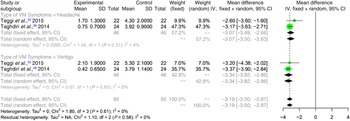
Cinnarizine was explored by two studies.Reference Taghdiri, Togha, Razeghi Jahromi and Refaeian29,Reference Teggi, Colombo, Gatti, Comi and Bussi33 Teggi et al. noticed improvement in the frequency of vertigo and headache following treatment, with 18 per cent and 68 per cent of patients reporting 50 per cent symptom improvement, respectively.Reference Teggi, Colombo, Gatti, Comi and Bussi33 Decreases in the frequency of vertigo and headache were also seen by Taghdiri et al.Reference Taghdiri, Togha, Razeghi Jahromi and Refaeian29 Subsequent explorative meta-analysis at the end of each study follow up (Fig. 7) showed a decrease in the frequency of vestibular migraine symptoms during the treatment (mean differences: −3.19; 95 per cent CI = −3.50 to −2.87; p = 0.61; I2: 0 per cent) but this was not statistically significant for either headache (mean differences: −3.06; 95 per cent CI = −3.50 to −2.63; p = 0.31; I2: 4 per cent) or vertigo (mean differences: −3.34; 95 per cent CI = −3.82 to −2.86; p = 0.80; I2 = 0 per cent) despite homogeneity.
Forest plot showing the meta-analysis for the mean differences in headache and vertigo for vestibular migraine. SD = standard deviation; IV = inverse variance; CI = confidence interval; NA = not available

Valproate and valproic acid
Single agent usage of either valproate or valproic acid was explored by three studies only.Reference Salmito, Duarte, Morganti, Brandão, Nakao and Villa31,Reference Liu, Ma, Che, Wang and Yu35,Reference Baier, Winkenwerder and Dieterich37 Liu et al. had the largest sample size (n = 20) and was the only study that explored Vertigo Symptom Scale (5.8 ± 1.82 vs 5.3 ± 1.08; p = 0.27) and Dizziness Handicap Inventory (46.80 ± 13.45 vs 38.7 ± 13.58; p = 0.02), which both showed a benefit of valproate or valproic acid.Reference Liu, Ma, Che, Wang and Yu35 All studies reported improvement in the frequency of attacks; however, the information disclosed was not sufficient to enable meta-analysis to be performed.Reference Liu, Ma, Che, Wang and Yu35,Reference Baier, Winkenwerder and Dieterich37
Side effects
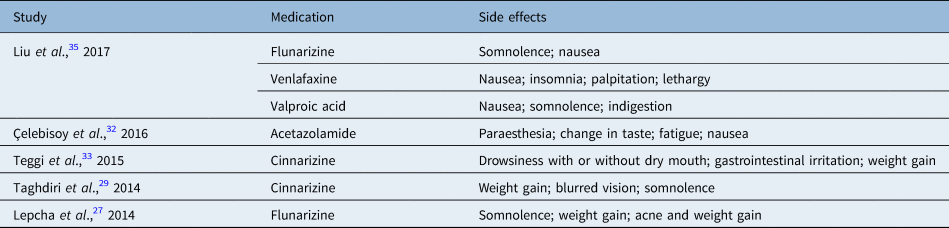
Side effects were not recorded in seven studies.Reference Bisdorff20,Reference Jay-du Preez and Van Papendorp26,Reference Iwasaki, Ushio, Chihara, Ito, Sugasawa and Murofushi28,Reference Çelik, Tanyeri Toker, Eskiizmir, İncesulu and Şahin Süyür30,Reference Salmito, Duarte, Morganti, Brandão, Nakao and Villa31,Reference Van Ombergen, Van Rompaey, Van de Heyning and Wuyts34,Reference Salviz, Yuce, Acar, Karatas and Acikalin36 Of the six studies that recorded side effects, five discussed them in some detail, and these are summarised in Table 1.Reference Lepcha, Amalanathan, Augustine, Tyagi and Balraj27,Reference Taghdiri, Togha, Razeghi Jahromi and Refaeian29,Reference Çelebisoy, Gökçay, Karahan, Bilgen, Kirazlı and Karapolat32,Reference Teggi, Colombo, Gatti, Comi and Bussi33,Reference Liu, Ma, Che, Wang and Yu35 Baier et al. only briefly mentioned side effects.Reference Baier, Winkenwerder and Dieterich37
Reported medication side effects

Discussion
Main findings
The lack of understanding of vestibular migraine pathophysiology, coupled with the lack of specific findings on clinical examination, has led to considerable difficulties in both the diagnosis and management of this condition. However, increasing awareness of the problem means that the need for effective management strategies is coming to the attention of clinicians. The restrictions associated with this poor understanding means that the principles of management have been ‘borrowed’ from that of classical migraine. Although there is some evidence that these treatments are effective, it does not negate the need for specific, evidence-based treatments targeted at vestibular migraine.
Based on our meta-analysis (Figs. 4, 5 and 6), we would recommend propranolol as the first-line prophylactic treatment because its impact on vestibular migraine symptoms control has been explored using both validated patient-reported outcome measures and subjective measures, which have showed statistically significant impact. However, both studies that assessed subjective measures (Table 2) used a different dosing regimen; thus, we are not able to conclude which one is the best, although the importance of titration is emphasised.Reference Çelik, Tanyeri Toker, Eskiizmir, İncesulu and Şahin Süyür30,Reference Salviz, Yuce, Acar, Karatas and Acikalin36
Propranolol and venlafaxine vestibular migraine prophylactic regimen

Venlafaxine has shown some promising impact on vestibular migraine symptoms control based on patient-reported outcome measures (Figs. 4 and 5) without reaching the level of statistical significance in our meta-analysis. Subjective vestibular migraine symptoms control evaluation also did not show any substantial and meaningful improvement from either venlafaxine or amitriptyline (Fig. 6). Venlafaxine, with a better side effect profile when comparing it against amitriptyline, should be considered as the second-line prophylactic treatment for vestibular migraine (Table 2).Reference Liu, Ma, Che, Wang and Yu35,Reference Salviz, Yuce, Acar, Karatas and Acikalin36,Reference Sauer, Huppertz-Helmhold and Dierkes38
What has become apparent from exploring the pathophysiology of vestibular migraine is the overlap with anxiety and depression.Reference Yuan, Yu, Shi, Ke and Zhang39,Reference Formeister, Rizk, Kohn and Sharon40 Anxiety and depression should also be considered as potential confounding factors when deciding on appropriate treatment and assessing treatment response. Whether this represents a shared pathophysiological pathway, suggests a somatic element to vestibular migraine or a combination of both is unknown. The effect of diet and lifestyle needs to be considered as well as any co-existing anxiety or depression. This link can also be seen in the aetiology of classical migraine. Consequently, the importance of holistic management, including the potential for psychological interventions, should always be considered when assessing therapeutic options for vestibular migraine. However, assessing lifestyle changes was not the purpose of the present work. We believe that it would be valuable to assess not only the significance of lifestyle modifications on the control of vestibular migraine but also the role of vestibular rehabilitation.
A recent meta-analysis by Byun et al. was unable to determine a preferred treatment for vestibular migraines because of the lack of standardised reporting of outcomes as well as heterogenicity of the studies.Reference Byun, Levy, Nguyen, Brennan and Rizk41 While the aim of their meta-analysis was the same as ours and we encountered similar limitations, there are several differences that may account for the different outcomes. First, they included non-pharmacological treatment in the form of vestibular rehabilitation, whereas we limited our analysis to purely pharmacological interventions. Second, the outcomes reported also differed. Instead of just Dizziness Handicap Inventory, we also included the Vertigo Symptom Scale. Our event rate of success was defined as the proportion of patients who have complete symptomatic control based on the selected studies rather than vertigo frequency, or more than 50 per cent reduction in subjective symptoms. This improved the number of studies eligible for the meta-analysis to 11 when compared with the 6 (vertigo frequency) and 7 (symptom improvement) studies used in Byun et al.Reference Byun, Levy, Nguyen, Brennan and Rizk41 Lastly, our approach to data extraction and analysis may also have contributed to the different conclusions. We also chose to discuss the pros and cons of medications included in this analysis, making our review unique.
Pros and cons of medication
The evidence in this review points to propranolol being used as first-line therapy. The advantages of this medication include beneficial scores obtained from Dizziness Handicap Inventory and Vertigo Symptom Scale, with significant numbers of patients obtaining successful complete vestibular migraine symptoms control (Figs. 4, 5 and 6). As it is an established drug, its safety profile is well documented. However, it needs to be used with caution in patients with a history of cardiac pathology or on anti-hypertensive medication, or in those with asthma or another obstructive airway disease.
Patients treated with venlafaxine also improved (Figs. 4, 5 and 6). However, given the small numbers of patients included in the studies, it was not possible to draw any statistically significant conclusions, and we therefore believe that it should be used as a second-line therapy. The fact that it can also be used to treat any anxiety or depression is advantageous. It should, however, be used with caution in patients with known epilepsy or bleeding disorders, and it is high risk for causing cardiac arrhythmias, heart disease and diabetes.
Amitriptyline is commonly used to treat neuropathic pain and migraine, both classical and vestibular. However, no statistically significant differences were seen (Fig. 6) despite the homogeneity of the studies. Unlike venlafaxine, it should not be used in patients with a history of significant mental health problems. It is also contraindicated in pregnancy and should be used with caution in patients with cardiac, liver or renal co-morbidities as well as those with diabetes and glaucoma. It has been shown to increase seizure activity in patients with epilepsy.
Flunarizine also failed to reach a statistical significance on successful vestibular migraine symptoms control rate despite a larger sample size than for venlafaxine and amitriptyline. Like amitriptyline, it is contraindicated in patients with depression. Because of the risk of extra-pyramidal side effects, it could be used with caution in older patients and with those known to have extra-pyramidal disorders, such as Parkinson's disease. Meanwhile, cinnarizine has been shown to be beneficial at decreasing the frequency of headache and vertigo in vestibular migraine based on individual studies,Reference Taghdiri, Togha, Razeghi Jahromi and Refaeian29,Reference Teggi, Colombo, Gatti, Comi and Bussi33 but it failed to show significant impact on meta-analysis (Fig. 7).
Limitations
The heterogeneity of the studies demonstrated in this review, both in terms of study design, level of bias and also in terms of the therapeutic regimen means that it is difficult to reach a statistically sound conclusion. However, we felt that meta-analysis exploration of the current evidence was needed to pave the way for better future study design. Thus, caution should be applied when interpreting the meta-analysis here (Figs. 4, 5, 6, 7).
Further heterogeneity is introduced by the fact that a variety of outcome measures were used. This ranged from the use of validated questionnaires, such as Dizziness Handicap Inventory and Vertigo Symptom Scale, to patient-reported reduction in severity, duration and frequency of vertigo attacks. Several studies used a combination of outcome measures. One of the included studies did not even specify what outcome measure was used.Reference Jay-du Preez and Van Papendorp26 Although it is positive that there is now an accepted definition of vestibular migraine through both the International Headache Society and Bárány Society, there is still a large range of alternative terms used to describe vestibular migraine. This has the potential to create ambiguity in the literature and contribute to the difficulty in ascertaining the true effect of various treatments.
Vertigo Symptom Scale and Dizziness Handicap Inventory have been shown to give similarly sound scores when it comes to patient-reported outcome measures; thus, they have been used in the literature to assess how patients perceive their vertigo severity. If we accept that both scales assess the severity of symptoms equally well, then despite the heterogeneity in the dizziness severity assessment methods among studies, propranolol appears to be the best first-line prophylactic treatment (Figs. 4 and 5).
Another potential confounding factor is the use of lifestyle factors or changes as a potential management technique. Several of the studies included in this systematic review included lifestyle changes as an intervention.Reference Teggi, Colombo, Gatti, Comi and Bussi33,Reference Baier, Winkenwerder and Dieterich37 However, these changes in lifestyle modifications are frequently poorly described and, unlike a pharmaceutical intervention, it is extremely difficult to regulate the degree of compliance and replicability in the other studies. In addition, what is meant by ‘conservative management’ is also poorly defined. This has an understandable knock-on effect to the overall results. What is more, it is almost impossible to standardise the lifestyle changes themselves. Collectively this means that careful thought and planning needs to occur for any study that includes lifestyle changes as a therapeutic option, and results should be interpreted with caution. If vestibular rehabilitation exercises are to be included in any treatment plan, this also needs to be clearly defined and documented as accurately as possible.
Although vestibular migraine may be frustratingly vague in its aetiology and presentation, we feel that it is important that future research continues to explore its management. Although it is positive that several therapeutic interventions show promise in managing vestibular migraines, there ultimately needs to be robust prospective RCTs assessing these options. These should assess the effect of non-pharmaceutical interventions, such as lifestyle, diet and vestibular rehabilitation, alongside the more traditional medical management used in classical migraine. We believe reaching a consensus on the best outcome measure for response to treatment would be fundamental to this.
Conclusion
Based on the available evidence so far, propranolol, if not contraindicated, should be offered as the first-line treatment followed by venlafaxine for the prophylactic treatment of vestibular migraine. Although amitriptyline, flunarizine and cinnarizine showed a trend for symptoms improvement, we were unable to identify any statistically significant differences. However, patient factors, such as co-morbidities and current medication, and a clinician's familiarity with the medication and the relevant side effects should always be taken into account.
Acknowledgements
The authors would like to thank the library services at Greater Glasgow and Clyde NHS Trust for their help with the literature search.
Competing interests
None declared.