Introduction
The environment's social, political, technical, and economic transformations offer important market difficulties that firms must overcome in order to succeed (Lv, Chen, & Lv, Reference Lv, Chen and Lv2022a). This information will be progressively crucial as a foundation for service offering or deciding factor in business procedure management, planning, and control. Throughout a business model, business procedures are described as a functional and organizational-border connection of value-added activities that provide the intended client advantages. As the importance of the services (e.g., procurement, design, and decision-making, logistics and marketing) in the manufacturing value chain has gradually increased, traditional manufacturing industry has been changed and arrived into service-oriented manufacturing (Lei, Hui, Xiang, Zelin, Xu-Hui, & Evans, Reference Lei, Hui, Xiang, Zelin, Xu-Hui and Evans2021). Business process management (BPM) is a systematic technique for detecting, customizing, executing, documenting, measuring, and controlling automated and non-automated procedures (Ozdenizci Kose, Reference Ozdenizci Kose2021). BPM is a management strategy that analyzes, designs, and implements procedures throughout organizational units. It provides several tools and methodologies for defining and implementing sequences of activities that deliver value to the client to promote continuity and efficiency in organizational operations (Badakhshan, Conboy, Grisold, & vom Brocke, Reference Badakhshan, Conboy, Grisold and vom Brocke2020). Furthermore, BPM is generally defined as a topic that focuses on ‘how to effectively manage the (re)design of individual business procedures and how to establish a core BPM capacity in enterprises catering to a range of objectives and scenarios’ (Baiyere, Salmela, & Tapanainen, Reference Baiyere, Salmela and Tapanainen2020). Agile development has expanded to imply management philosophy and is increasingly being explored in company management literature. One cause might be the increased convergence of software programmers and conventional labor as a result of digitalization. In a business environment, agility refers to the capacity to adapt to alterations by leveraging market information to capitalize on profitable opportunities in uncertain markets (Vuojamo, Reference Vuojamo2019).
On the other hand, firms and institutions significantly use digital technologies to facilitate decision-making such as neural networks (Li, Xu, Chaudhuri, Yumer, Zhang, & Guibas, Reference Li, Xu, Chaudhuri, Yumer, Zhang and Guibas2017). Information technology (IT) has dramatically changed the nature of business, health sector, and industries (Vahdat, Reference Vahdat2020). Management systems, including BPM, are no exception. The fast growth of Internet-centered and distributed platforms like cloud computing, fog computing, Internet of Things (IoT), and edge computing has resulted in massive data increases (Heidari, Jabraeil Jamali, Jafari Navimipour, & Akbarpour, Reference Heidari, Jabraeil Jamali, Jafari Navimipour and Akbarpour2020; Sun, Lin, Si, Xu, Li, & Gope, Reference Sun, Lin, Si, Xu, Li and Gope2022). Cloud computing technology has been successful in business processes because it has added significant value to its scalability and flexibility (Heidari & Navimipour, Reference Heidari and Navimipour2021b). It has made BPM systems more efficient, faster, and cost-effective. Cloud-based information systems are one of the newest trends in IT. Transferring BPM to the cloud is a unique and innovative solution that can help companies save significantly. The advent of cloud computing technology has created new opportunities and challenges for companies to develop their agility. Cloud computing is a powerful solution for storing, accessing, and using data over the Internet. It enables storing large amounts of information in the clouds and provides tremendous computing capabilities for innovation in systems development. However, its potential has not yet been fully explored in various applications. Thus, the present article examines the influence of cloud-based information systems on the agile development of industrial business process management (IBPM). The objectives of this article are:
• to the best of our knowledge, this is the first study to look into cloud-based information systems for agile development of IBPM, using a partial least squares structural equation modeling (PLS-SEM) method and an advanced technique (importance–performance map analysis [IPMA]);
• we present a comprehensive framework for agile development of IBPM;
• we examine the effect of technical, financial, environmental, and security factors of the cloud-based information systems on the agile development of IBPM;
• we used IPMA in the last part of the research to evaluate the performance of critical factors influencing the key dependent variables.
In the subsequent section, the relevant literature is summarized. The study methodology by describing the statistical society, sample size determination, method, measuring tools of research credibility and reliability, and data analysis method are discussed in the third section. In the fourth section, the results are analyzed and discussed. At last, the suggestions for the upcoming study and conclusion are provided in the last section.
Literature review
The effect of neural networks, deep learning, and IT is creating a different world yet not fully understood (Lv, Guo, & Lv, Reference Lv, Guo and Lv2022b; Zheng & Yin, Reference Zheng and Yin2022). The amount and speed of economic, daily life, and community shifts are hard to estimate without understanding the technological driving forces (Jamali, Bahrami, Heidari, Allahverdizadeh, & Norouzi, Reference Jamali, Bahrami, Heidari, Allahverdizadeh and Norouzi2020). Cloud computing is an important technique for processing data and executing programs on a pay-as-you-go basis. Hence, several businesses migrate their services to cloud infrastructures (Heidari & Navimipour, Reference Heidari and Navimipour2021a). Thanks to two essential enablers, its infrastructures are expected to lead in the upcoming 5G networks (Antonopoulos, Reference Antonopoulos2020). This section contains a literature review. Initially, a review of the theoretical foundations of the study is offered. Following that, the suggested conceptual framework and research hypotheses are proven.
Related work
Okic et al. (Reference Okic, Sarrigiannis, Fattore, Xiang, Redondi, Nitto and Contreras2022) looked at how resources are shared, projected, and transferred from abstract infrastructure to on-demand computing. The optimization methodology for concurrently optimizing and controlling mobile edge computing resources for baseband processing is also taken into account. The findings revealed that the suggested approach outperforms the current design. Also, Wang, Wang, Su, and Ge (Reference Wang, Wang, Su and Ge2020) explored the fundamental process of business analytics affordances for improving cloud data security management. The data were examined utilizing an SEM based on PLS. The findings revealed a progression from analytics affordances to decision-making affordances of cloud. Furthermore, data-driven culture and IT business procedure integration had a favorable mediating influence on the interaction among business analytics affordances and cloud computing data security decision-making affordances.
Nieuwenhuis, Ehrenhard, and Prause (Reference Nieuwenhuis, Ehrenhard and Prause2018) discussed how the value network of corporate software solutions changes due to the transition from on-premise to cloud-based technologies. A literature review and 15 interviews conducted in three case studies created a general value network for cloud-based corporate software. They assessed the influence of the network's migration to cloud-based corporate software on each stakeholder. The findings revealed that the consultative partner's role is increasingly concentrated on BPM, while technical consulting remains important owing to IT security, interface definition, data migration, customization, and mobile app creation. Moreover, Sadok, Okba, Souraya, and Oueslati (Reference Sadok, Okba, Souraya and Oueslati2017) created a model for app construction in cloud computing centered on the BPM approach's description of manipulating ideas of an application area. A set of empirical tests was carried out to assess the efficacy of this proposition. Compared to the typical way in this field, a non-composite application, the findings revealed that the composite application outperforms the non-composite application in terms of reaction time-to-time with the minimum complexity.
Finally, Cocconi, Roa, and Villarreal (Reference Cocconi, Roa and Villarreal2017) presented a cloud-based platform for collaborative BPM (CBP). The platform delivers cloud services that allow on-demand production and implementation of process-aware information systems needed to execute the agreed-upon CBPs and CBPs. The findings revealed that the stated platform structure could meet the CBP management's primary functional necessities: a global perspective of message exchange, decentralization, organization autonomy, and peer-to-peer interactions.
Conceptual framework and hypotheses
In this subsection, the main concepts of the research, including the agile development of the IBPM and cloud-based information systems, are first defined. Afterward, the hypotheses and research model are presented.
Agile development of the IBPM
Multi-stage manufacturing process quality management is difficult because it requires integrating knowledge and data from several areas (data, business, and production) into a unified management paradigm. IBPM responds to this difficulty by delivering a process-driven knowledge management methodology and tool support tailored to industrial procedures' demands (Utz & Lee, Reference Utz and Lee2017). BPM is a method for increasing organizational performance through a systematic strategy. BPM refers to the management of the entire business process cycle, which includes four main stages: define, manage, execute, and control. In further detail, process management entails (Papadopoulos, Kechagias, Legga, & Tatsiopoulos, Reference Papadopoulos, Kechagias, Legga and Tatsiopoulos2018):
• documenting the procedure to gain a better understanding of the company's workflow;
• assigning process ownership to develop management responsibility;
• managing the procedure to increase performance and resource utilization;
• increasing the efficiency and quality of the procedure by enhancing and managing it.
We concentrated on the rapid growth of IBPM in this article. Because agile encourages shifting needs, determining success in an agile setting may be tricky. Nevertheless, Misra, Kumar, and Kumar (Reference Misra, Kumar and Kumar2009) suggested five criteria for determining the success of agile advancement projects, with the most crucial success factors falling into any of these categories (Zheng, Reference Zheng2012):
• enhanced return on investment;
• decreased delivery schedules;
• boosted flexibility to satisfy the variable customer needs;
• enhanced potential to satisfy the present customer needs;
• developed business processes.
Cloud-based information systems
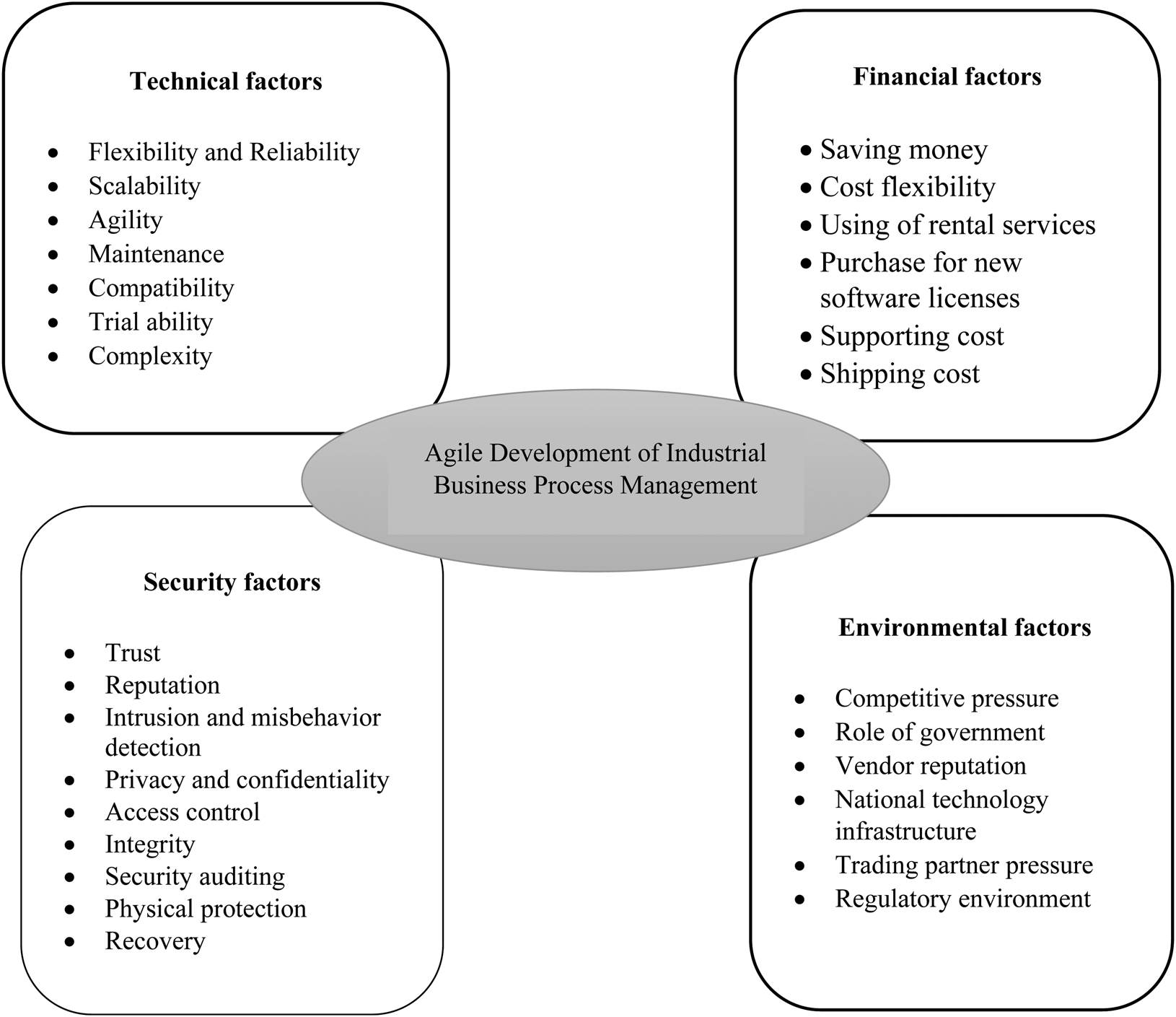
Networking, informatization, and intelligence have increasingly become a reality in power systems (Mou, Duan, Gao, Liu, & Li, Reference Mou, Duan, Gao, Liu and Li2022). Power systems have increasingly accomplished this using modern IT such as computation, communication, control, and sensing (Dehghani et al., Reference Dehghani, Ghiasi, Niknam, Kavousi-Fard, Shasadeghi, Ghadimi and Taghizadeh-Hesary2021; Ye, Jin, Fei, & Ghadimi, Reference Ye, Jin, Fei and Ghadimi2020). Fog computing, IoT, and cloud computing are examples of intelligent computing techniques that may be utilized to achieve intelligence. IoT is a network of interconnected gadgets. It can collect and deliver data, making human existence more structured and convenient. Besides, fog computing has evolved as a solution for operations that are sensitive to position and delay. It is a useful addition to cloud computing that allows users to provide resources and services outside of the cloud, close to their end devices (Haghi Kashani, Rahmani, & Jafari Navimipour, Reference Haghi Kashani, Rahmani and Jafari Navimipour2020). Nowadays, due to the utilization of new Internet platforms like cloud computing and emerging business models, organizations are able to establish collaborative networks for executing collaborative business processes flexibly (Cocconi & Villarreal, Reference Cocconi and Villarreal2020). Cloud computing has brought together previous technologies like grid computing, virtualization, and broadband networks, dramatically altering previous norms in terms of IT resource expansion and cost reduction. As a result, the cost of managing information systems has decreased (Bouaynaya, Lyu, & Zhang, Reference Bouaynaya, Lyu and Zhang2018). Lately, cloud computing has emerged as a promising information solution and commercial trend. Several cloud-based information systems have made their cloud-based resources easily accessible. With these cloud-based resources, anyone may construct a novel integrated application (Lin & Hsu, Reference Lin and Hsu2019). This paper focuses on four dimensions of cloud-based information systems: technical factors, financial factors, security factors, and environmental factors. Each dimension will be described in depth in the sections that follow.
Technical factors: Data confidentiality and security are the primary issues of cloud computing users, particularly in the industry, because of the unique nature of the technology (Wu, Song, Cao, Luo, & Zhang, Reference Wu, Song, Cao, Luo and Zhang2020b). For instance, clients' electronic records require a secure environment requiring additional security measures. Previous research has indicated that the complexity of information systems impacted the decision to employ technology (Zheng, Zhou, Liu, Tian, Yang, & Yin, Reference Zheng, Zhou, Liu, Tian, Yang and Yin2022). The degree to which implementing an invention is difficult is referred to as complexity. Cloud computing services must be accessible at any time and from any location, allowing subscribers and clients to use them effortlessly. Users are motivated to utilize technology when services are available. Another important aspect of the technological component is the amount of system compatibility. Cloud computing can be more effective and feasible if the technology is compatible with existing applications and systems in business centers.
Financial factors: Using cloud services means that companies can work faster on projects and implement concepts at no great cost. Companies only pay for the resources they consume. Cloud proponents often cite the concept of agility in business as a fundamental advantage. The ability to upgrade and use new services without time and effort has advantages over traditional IT systems (Deng & Zhao, Reference Deng and Zhao2022). Getting faster with new apps is easier. Using cloud-based information systems, companies can utilize rental services and provide licenses to purchase new software. On the other hand, support and transportation costs are reduced; thus, companies can save costs.
Security factors: Security is a very important global issue (Tian, Wang, Chen, Zhang, & Qin, Reference Tian, Wang, Chen, Zhang and Qin2021). Due to the security issues in the cloud-computing network, it should be possible to prevent and deal with any intrusion of user data. Therefore, systems have been provided that can automatically detect any suspicious operations along with the cloud computing network, including unauthorized entry, passing the firewall, preventing the sending of viral data, etc. This system, known as an intrusion detection and prevention system can be installed as independent software on cloud computing and other computer networks. This system can protect against any intrusion or attack on the network (Yang, Chen, Xiong, Xu, Liu, & Zhang, Reference Yang, Chen, Xiong, Xu, Liu and Zhang2021). The intrusion detection system works like an antivirus with a firewall, but an advanced type.
Environmental factors: The regulatory environment and trade partner indicators are used to define the environmental factor, which is founded on past research (Jianwen & Wakil, Reference Jianwen and Wakil2019). The legislative environment can positively or negatively impact innovation. Governments enact rules to encourage technological innovation and compel businesses to adhere to specific technological standards. Regulative constraints, such as data security rules in the healthcare and financial services industries, can be imposed by governments, making cloud less appealing. Hence, enterprises burdened by stricter regulatory requirements will be less likely to implement (Borgman, Bahli, Heier, & Schewski, Reference Borgman, Bahli, Heier and Schewski2013). Environmental factors are one of the most important things to consider while implementing new information systems. Another issue affecting the choice to employ cloud computing is reliance on the seller (Panda & Rath, Reference Panda and Rath2021). Dependence on the seller is one of the conditions in which the buyer is dependent on the seller and cannot buy the goods or services he needs from another seller. It is because the first seller forces the buyer to buy his goods or services in usually unhealthy ways. It means that national infrastructure, support mechanisms, and the ability to support systems are the important and determining factors in the use of technology.
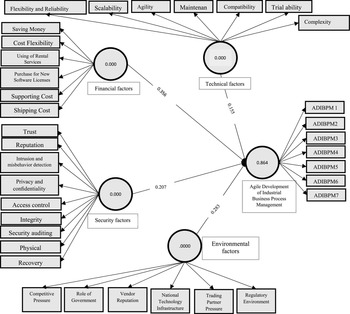
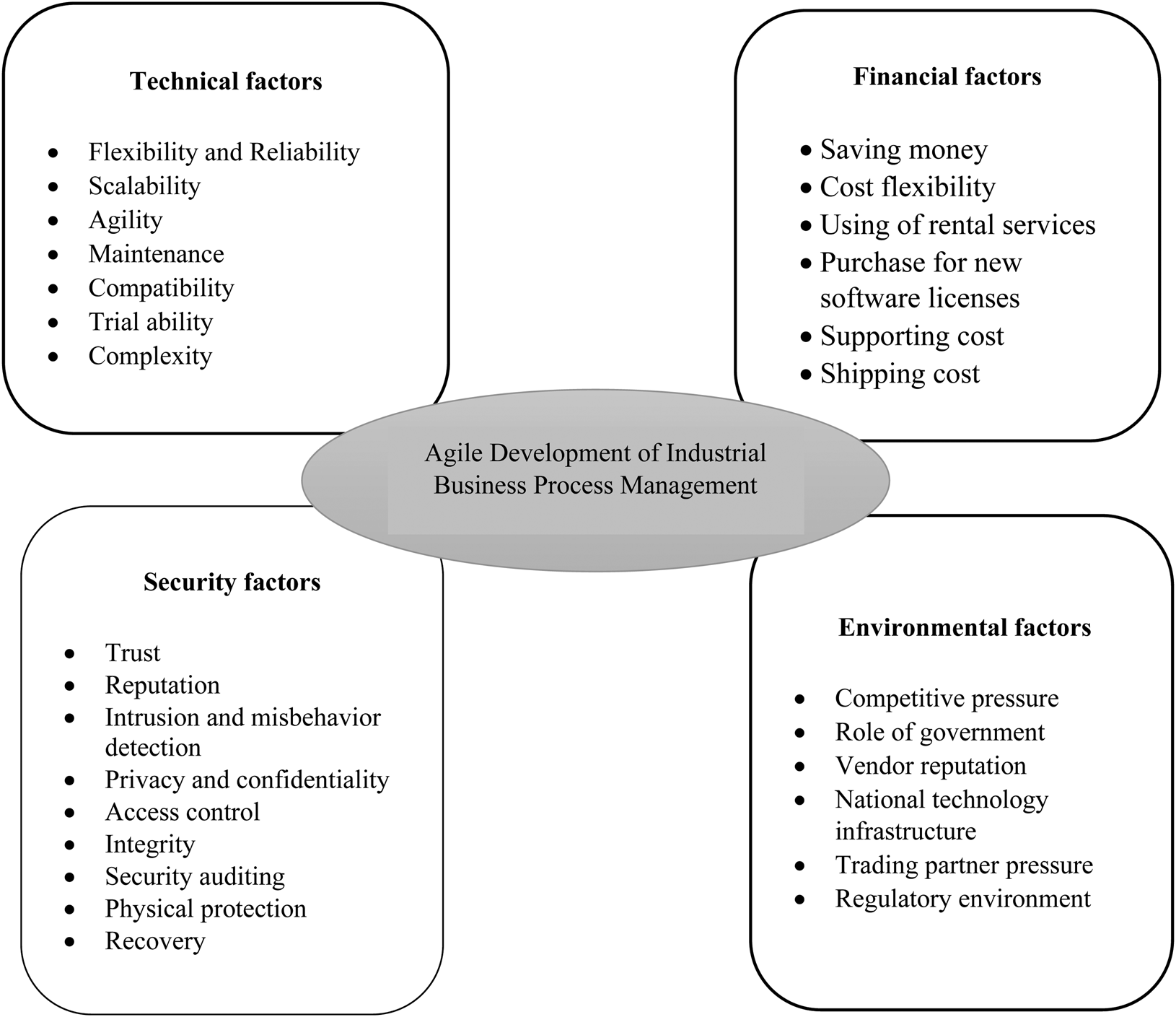
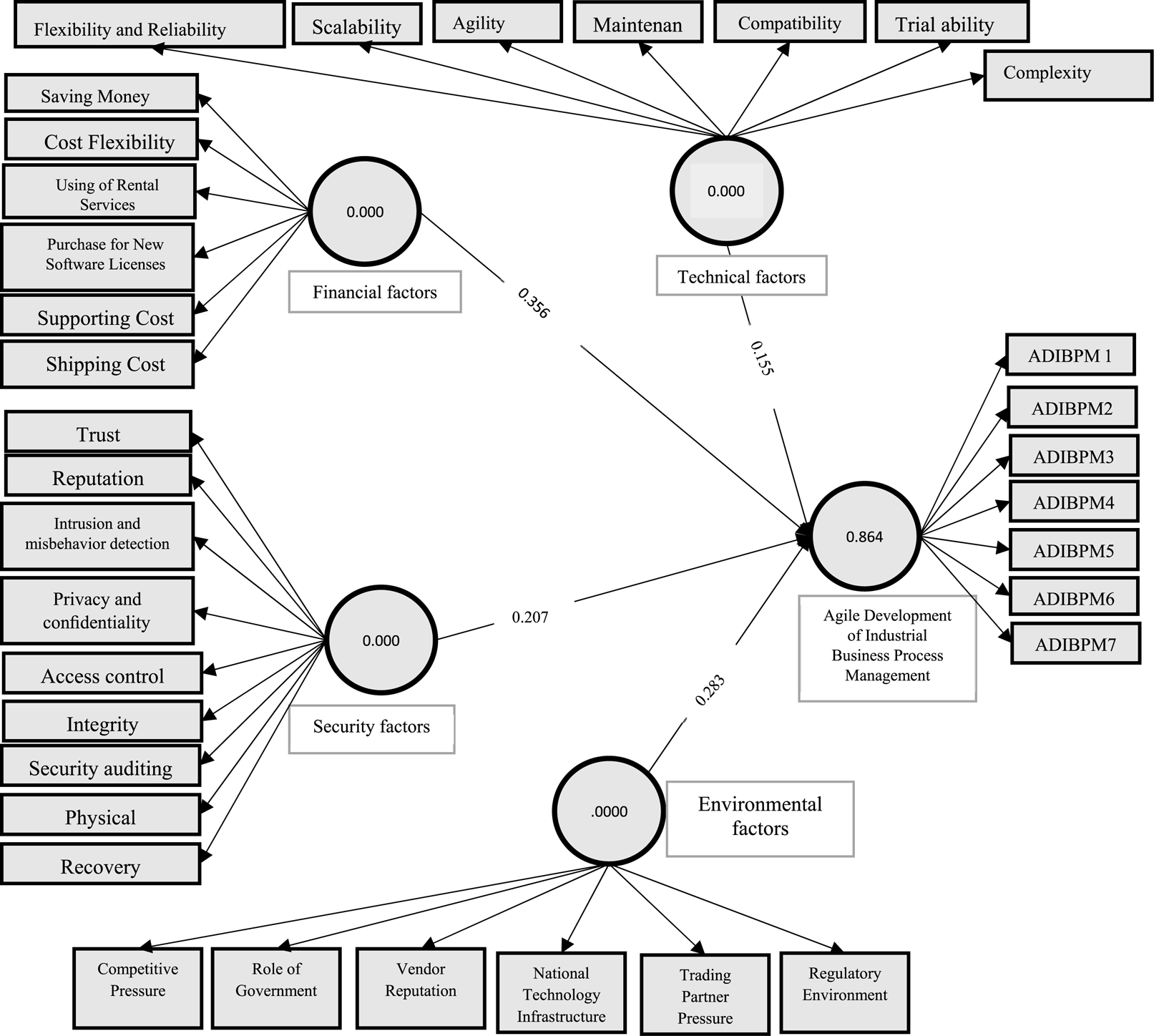
According to the mentioned topics and studies, the research model is summarized and demonstrated in Figure 1. Research hypotheses also include:
Hypothesis 1 Technical factors of cloud-based information systems are positively associated with the agile development of IBPM.
Conceptual model of research.
Hypothesis 2: Financial factors of cloud-based information systems are positively associated with the agile development of IBPM.
Hypothesis 3: Security factors of cloud-based information systems are positively associated with the agile development of IBPM.
Hypothesis 4: Environmental factors of cloud-based information systems are positively associated with the agile development of IBPM.
Research methodology
The PLS-SEM approach analyzed the data. In the realm of strategic management, the PLS-SEM is growing in popularity. PLS methods with Smart PLS 3.0 and bootstrapping with 500 re-samples evaluated the suggested model (Ringle, Wende, & Becker, Reference Ringle, Wende and Becker2015). The reliability and validity of the measurement model were investigated initially. After each study construct's discriminant, the hypothesized assumptions were investigated using SmartPLS, and convergent validities were validated. PLS was selected for a variety of reasons. Initially, the sample size was modest, and PLS is better suited to small data samples. Second, when the study model has not been well tested, PLS is a better choice. Third, PLS offers the benefit of evaluating both structural and measurement models simultaneously (Wu, Rivas, & Chen, Reference Wu, Rivas and Chen2019).
Construct operationalization
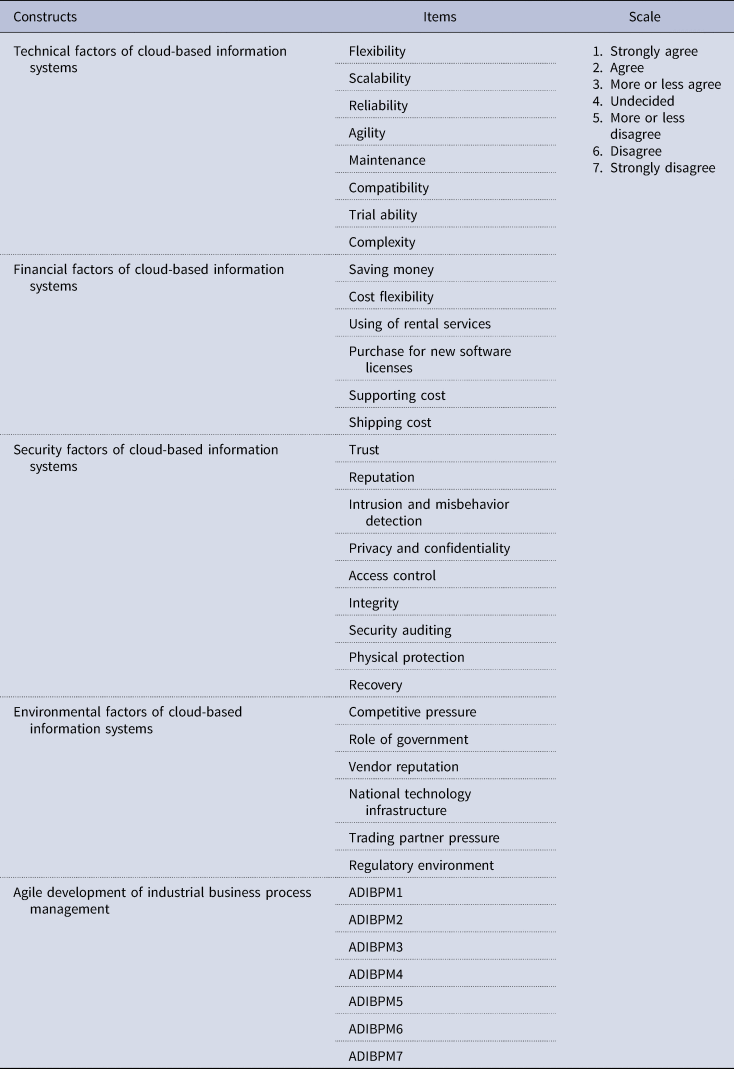
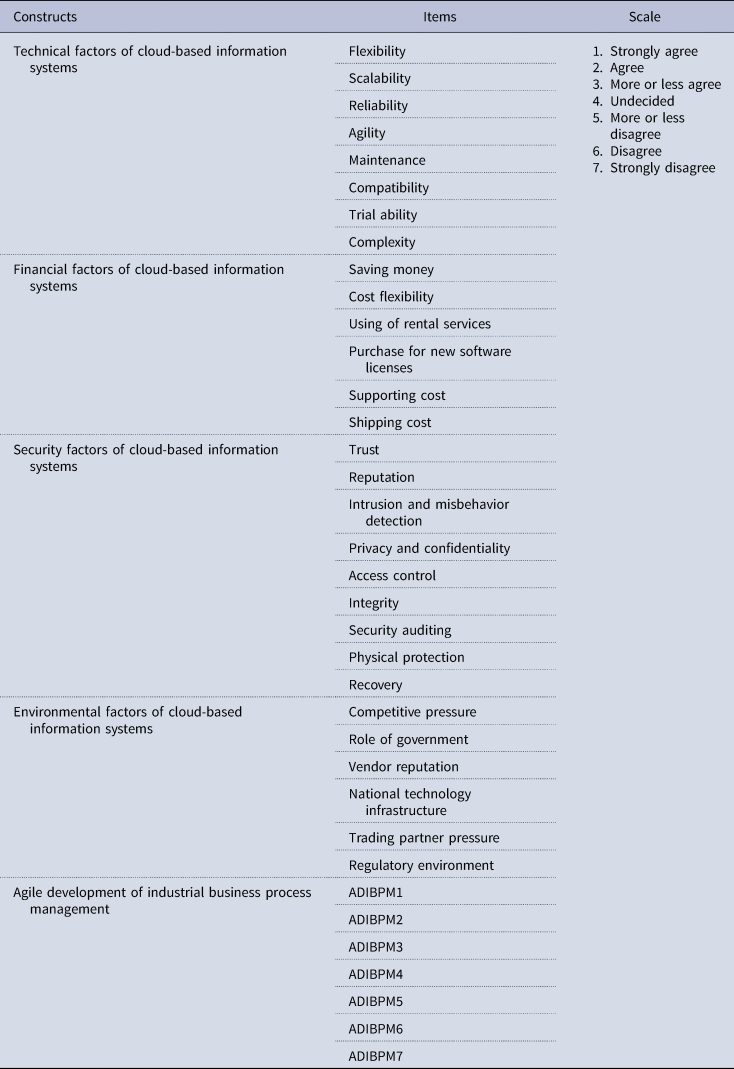
The measurement items derived from well-established scales and pilot-tested are listed in Table 1. On a 7-point Likert scale, the items were evaluated.
Scale items
Sample demographics
The firms that took part in this survey were big or medium-sized, with over 1,000 workers in China Industrial Town. Regarding age and gender, several survey participants (85.7%) were men, with a split of 35–45 years old (36.6%) and >45 years old (45.4%). Majority of the respondents (90.5%) had earned a Bachelor's or Master's degree. The firms' average age was 35 years, showing that they were well-established corporations.
Data analysis and results
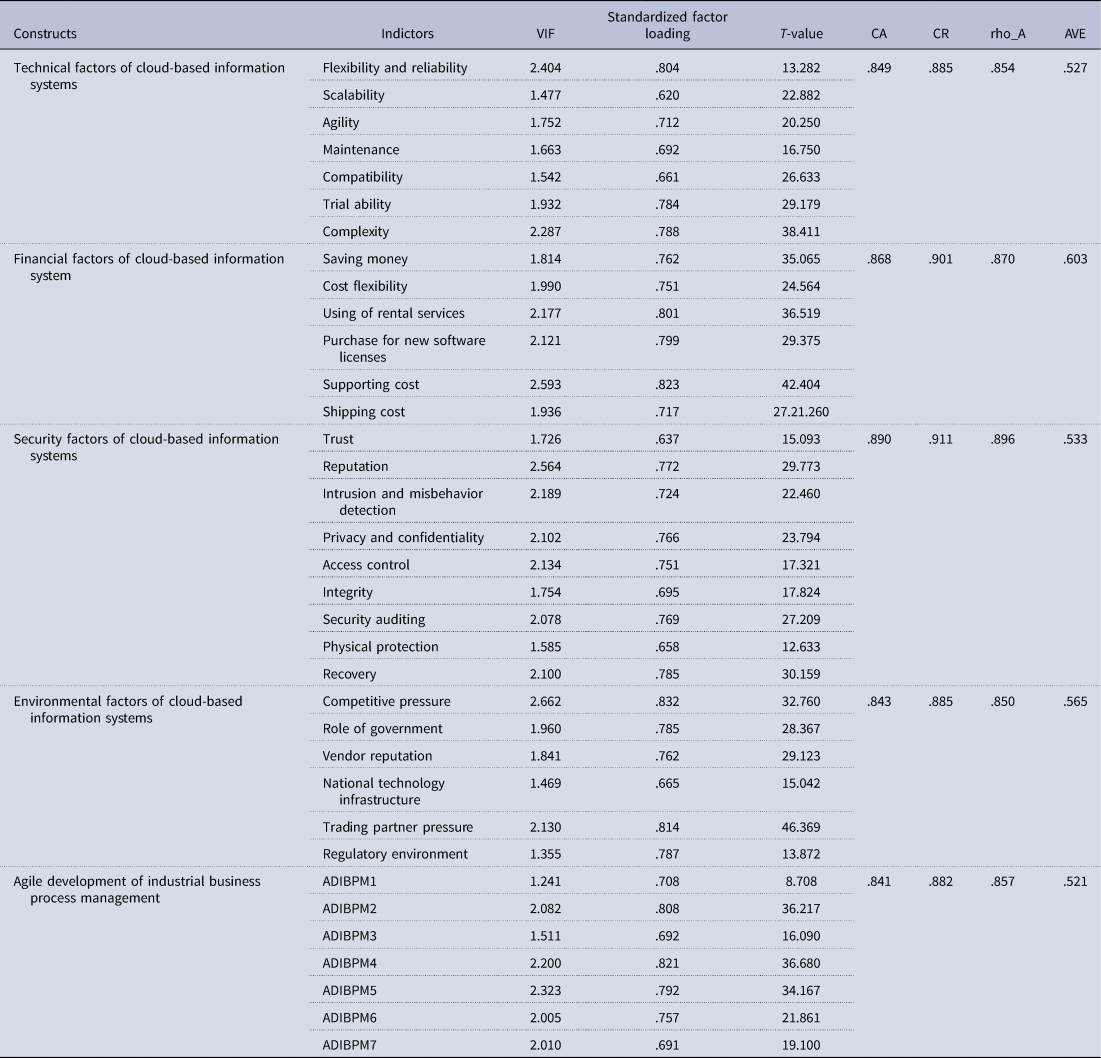
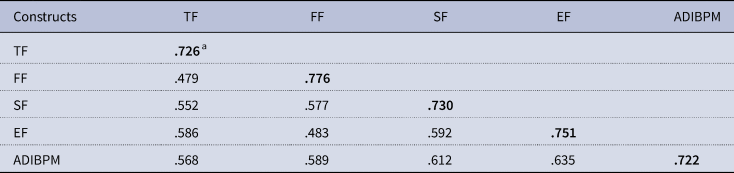
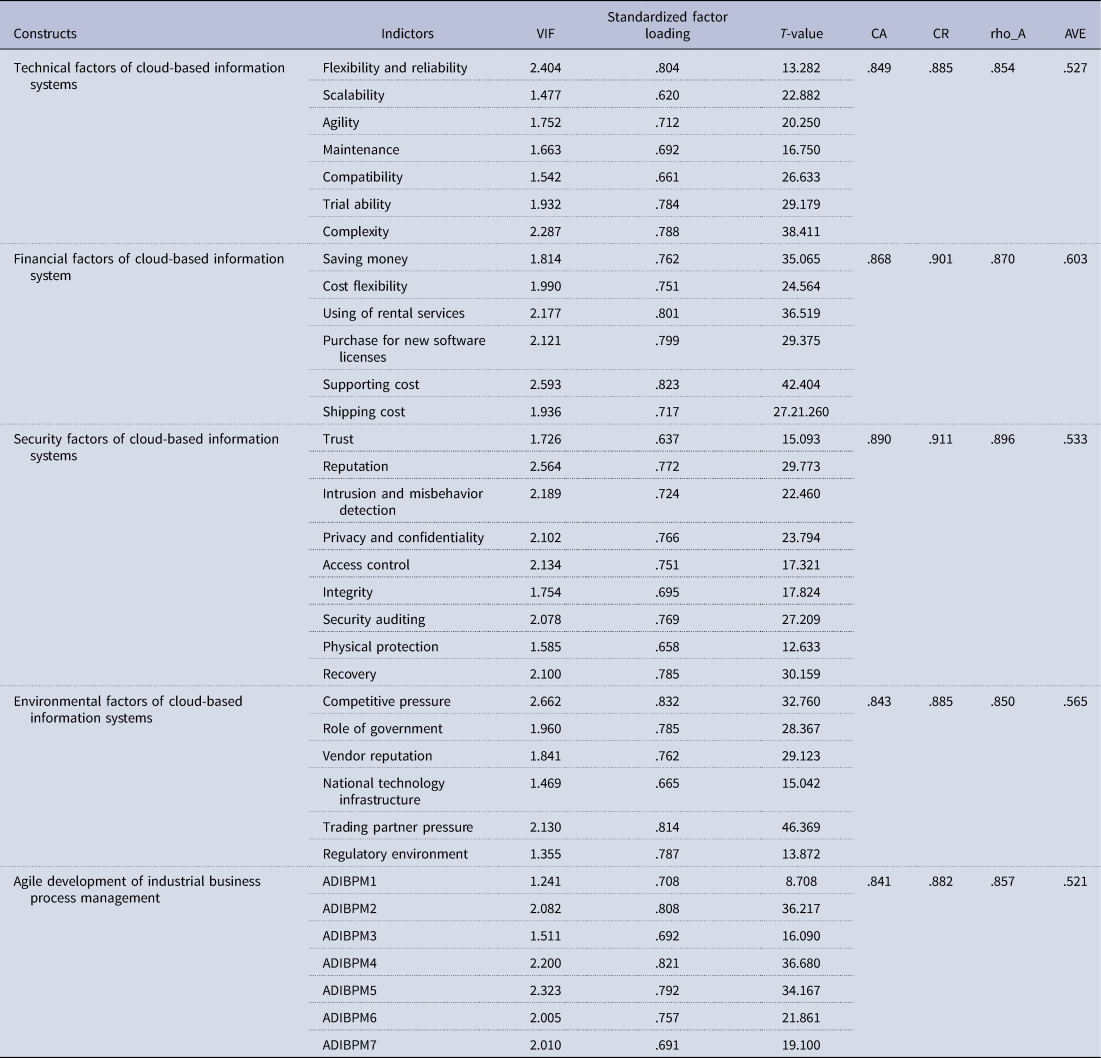
PLS simultaneously evaluates the relationships between measurements and constructs and the links among various constructs. Besides, a PLS model is assessed and evaluated in two steps: the measurement model's reliability and validity and the structural model's reliability and validity. Before making inferences about the nature of construct connections, this procedure assures that the investigator obtains valid and reliable construct measurements (Jerez-Gómez, Céspedes-Lorente, & Pérez-Valls, Reference Jerez-Gómez, Céspedes-Lorente and Pérez-Valls2019). The present investigation looked at the measurement model technique for evaluating the constructs' reliability, average variance extracted (AVE), and composite reliability (CR). Table 2 indicates Cronbach's alpha (CA), CR, and average variance. Using CA and CR scores over .7 and AVE scores over .5, the data showed acceptable convergent validity. The square root of AVE for each construct is larger than the related correlations, indicating reasonable discriminant validity (Farivar, Turel, & Yuan, Reference Farivar, Turel and Yuan2017) (see Table 2). The variance inflation factor (VIF) is examined, which is available in most statistical applications. Multicollinearity is impractical to be concerned about if the VIF is 3.0 or lower (Olague, Etzkorn, Gholston, & Quattlebaum, Reference Olague, Etzkorn, Gholston and Quattlebaum2007). In prior studies, the optimal VIF threshold was considered 5.0, but new research suggests that this level is too high.
Outcomes of confirmatory factor analysis for the measurement model
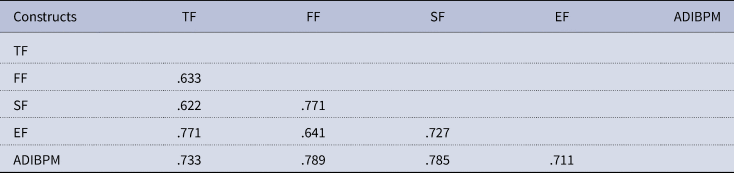
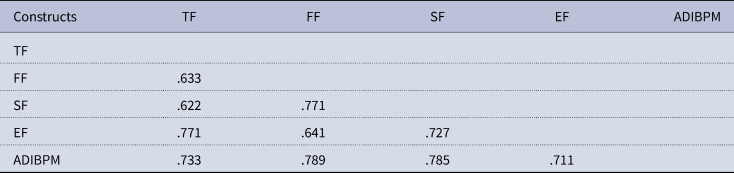
The Fornell and Larcker (Reference Fornell and Larcker1981) criteria have recently been criticized for failing to identify the lack of discriminant validity in frequent research contexts (Henseler, Ringle, & Sarstedt, Reference Henseler, Ringle and Sarstedt2015). They provide an alternate technique for assessing discriminant validity in the form of a heterotrait–monotrait (HTMT) ratio of correlations using the multitrait-multimethod matrix (Ramayah, Yeap, Ahmad, Halim, & Rahman, Reference Ramayah, Yeap, Ahmad, Halim and Rahman2017). Henseler, Ringle, and Sarstedt (Reference Henseler, Ringle and Sarstedt2015) used a Monte Carlo simulation analysis to illustrate the technique's higher performance. Consequently, we used this new recommended approach to verify discriminant validity, and the outcomes are displayed in Table 3. If the value of the HTMT is higher than this threshold (HTMT .85 (Kline, Reference Kline2011) or HTMT .90 (Gold, Malhotra, & Segars, Reference Gold, Malhotra and Segars2001)), one can conclude that there is a lack of discriminant validity. All the values passed the HTMT .90 (Gold, Malhotra, & Segars, Reference Gold, Malhotra and Segars2001) and the HTMT .85 (Kline, Reference Kline2011), as shown in Table 4, specifying that discriminant validity has been ascertained.
Correlations with square roots of the AVE
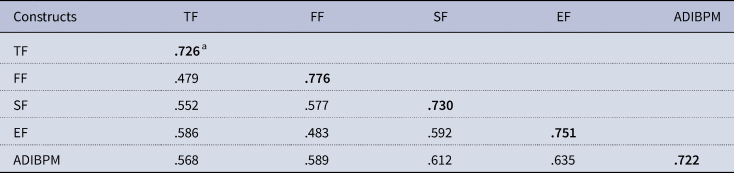
TF, technical factors; FF, financial factors; SF, security factors; EF, environmental factors; ADIBPM, agile development of industrial business process management.
aThe square roots of AVE estimates.
HTMT ratio of correlations
R 2 (Hair, Sarstedt, Pieper, & Ringle, Reference Hair, Sarstedt, Pieper and Ringle2012) and the goodness of fit (GoF) (Vinzi, Trinchera, & Amato, Reference Vinzi, Trinchera and Amato2010) are two critical measures. The R 2 value is .853, as illustrated in Figure 2, indicating that the model has high explanatory power. Additionally, the GoF score of .68 was higher than the .36 cut-off value for significant R 2 effect sizes. It means that when compared to the normal criterion, this score indicated that this model had a stronger estimating capability (i.e., the GoF criteria).
PLS algorithm (R 2 and β).
In order to supply an admissible data fit, the confirmatory factor analysis results illustrated the initial measurement model. According to Sarstedt, Ringle, and Hair (Reference Sarstedt, Ringle, Hair and Homburg2017), distance squared Euclidean (D_LS), normed fit index (NFI), root mean squared residual, root mean squared residual covariance matrix (RMS_Theta), and distance geodesic (D_G) indexes can recognize a set of model misspecifications (Dijkstra & Henseler, Reference Dijkstra and Henseler2015). Thus, based on Table 5, the hypothesized measurement model with three factors was considered appropriate for the SEM.
Summary of the GoF indices for the measurement model

The next component to calculate prediction is the Q 2 value, often known as blindfolding (Stone, Reference Stone1974). Some authors consider this factor as an evaluation of out-of-sample predictive capacity, which it is to some extent. However, it clearly falls short of PLS prediction as a model prediction statistic. When evaluating Q 2, positive numbers are important, whereas negative ones illustrate the absence of predictive significance. Besides, Q 2 values above .25 and .50 show the PLS-SEM model's medium and wide predictive relevance (Hair, Howard, & Nitzl, Reference Hair, Howard and Nitzl2020). The predictive relevance (Q 2) value measurements for endogenous architectures are above zero (agile development of IBPM: .325), indicating that the model has appropriate predictive quality.
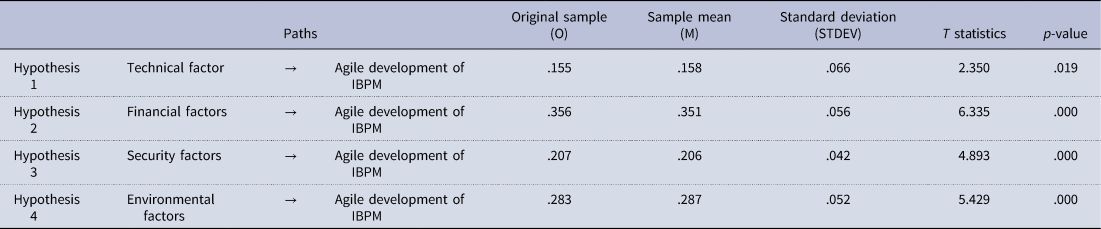
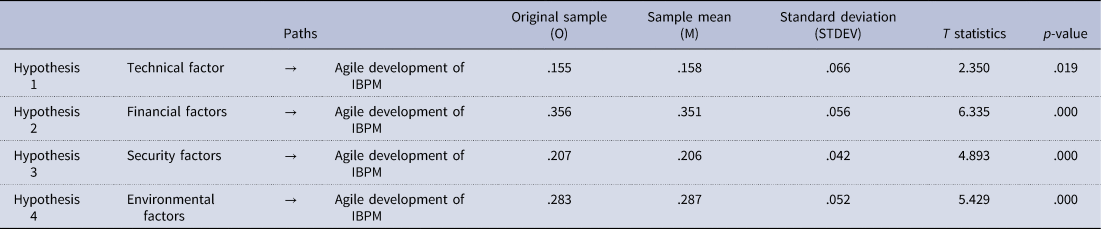
SEM and Smart PLS 3.2 tools were utilized to assess the psychometric characteristics of the measurement model in the present study. It also takes into account the structural model's parameters. Similarly, the bootstrapping method is used to evaluate the component-based technique for the SEM. Furthermore, in the SmartPLS, the structural model has two paths: (inner) measurement model and (outer) structure model (Ahmad, Bin Mohammad, & Nordin, Reference Ahmad, Bin Mohammad and Nordin2019). In Table 6, the SEM analysis has illustrated that green factors have a significant and positive relation to the agile development of IBPM.
Results of hypotheses
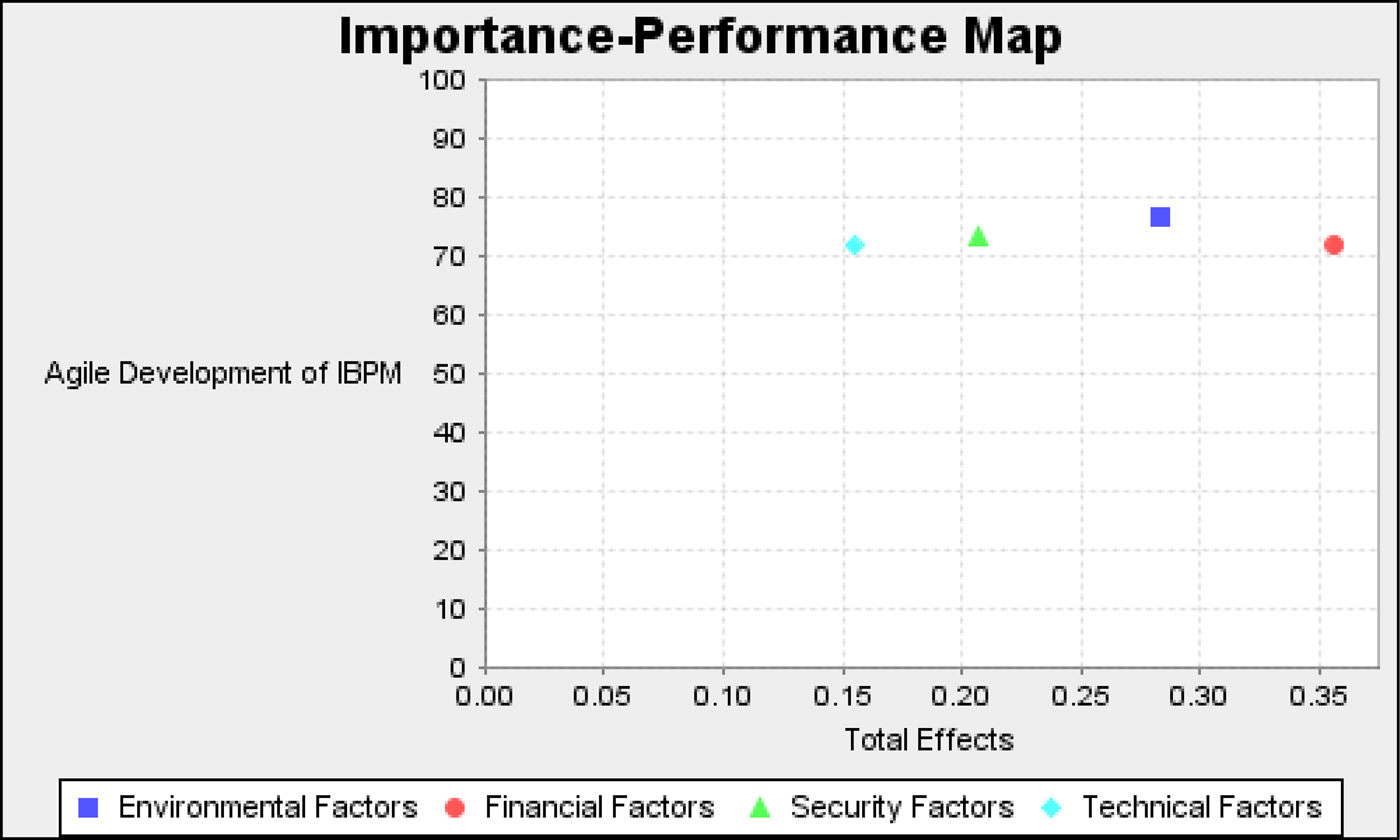
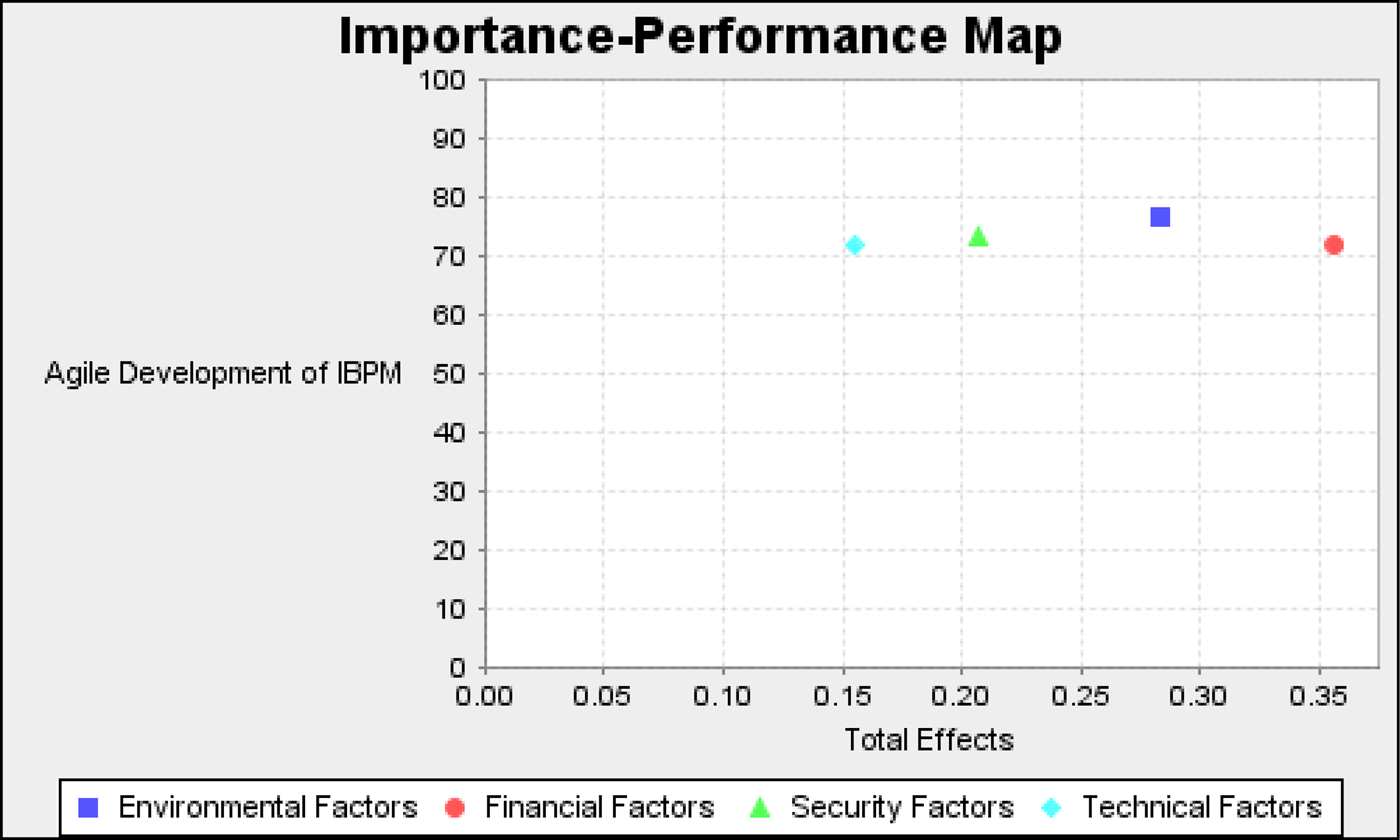
The last step in the research was the IPMA to identify the gap between the importance and the performance levels of factors in the model. IPMA results are presented by the two-dimensional graph, where the horizontal axis defines the ‘importance’ of significant factors using a scale from 0 to 1, and the vertical axis denotes their performance using a scale from 0 to 100 (Sternad Zabukovšek, Bobek, Zabukovšek, Kalinić, & Tominc, Reference Sternad Zabukovšek, Bobek, Zabukovšek, Kalinić and Tominc2022). The graphs in Figure 3 reveal that the most critical construct was the financial factor, environmental, security, and technical factors.
IPMA for the endogenous variable extended use of the agile development of IBPM.
Discussion and implication
Cloud computing is critical for offering web-based business services and generally managing IBPs. This approach is a hybrid of previous principles, including virtualization, distribution, and grid computing. In this section, the results are discussed, which include the following:
Hypothesis 1: Technical factors of cloud-based information systems positively affect the agile development of IBPM. This hypothesis is confirmed with a T-value of 2.350 at a significance level of 95%. The indicators identified for this variable are as follows: flexibility, scalability, reliability, agility, maintenance, compatibility, trial ability, and complexity. Cloud computing has shown to be an enticing, high-performing multitenant platform that provides aggregator systems, business process delivery, business services, and business content in a creative environment. Thus, integrating BPM with the cloud will result in a flexible and cost-effective platform for developing new corporate applications.
Hypothesis 2: Financial factors of cloud-based information systems positively affect the agile development of IBPM. This hypothesis is confirmed with a T-value of 6.335 at a significance level of 99.9%. The indicators identified for this variable are as follows: saving money, cost flexibility, using rental services, purchasing new software licenses, support costs, and shipping costs. The advantages of online apps are combined with the power and flexibility of the BPM software ecosystem when BPM software and apps are linked to the cloud. BPM is a cloud-based software as a service that is changing how organizations approach application development and maintenance cost structure.
Hypothesis 3: The security factors of cloud-based information systems positively affect the agile development of IBPM. This hypothesis is confirmed with a T-value of 4.893 at a significance level of 99.9%. The indicators identified for this variable are as follows: trust, reputation, intrusion and misbehavior detection, privacy and confidentiality, access control, integrity, security auditing, physical protection, and recovery. Organizations can manage several business procedures at once by linking BPM systems to the cloud, so software development activities become more accessible. The use of BPM in a cloud computing context is intended to give insight into BPM's service in current businesses. Cloud-based information systems may play a critical role in offering an effective IBPM and all of the necessary resources such as dynamicity, scalability, and cost-effectiveness. These needs and additional benefits such as pay-per-use, security, availability, and flexibility were met, thanks to cloud computing.
Hypothesis 4: Environmental factors of cloud-based information systems positively affect the agile development of IBPM. This hypothesis is confirmed with a T-value of 5.429 at a significance level of 99.9%. The indicators identified for this variable are as follows: competitive pressure, the role of government, vendor reputation, national technology infrastructure, trading partner pressure, and regulatory environment. The most important issue in studies related to organizational change is the environment around the organization. The domain in which organizations are formed and changed is the environmental component of structures used to evaluate and understand the concept of the organizational environment. This research tries to identify the environmental dimensions and components affecting the agile development of IBPM and evaluate their impact on BPM. The current article indicates a desirable path by evaluating cloud-based information systems and rapid IBPM development. It makes an implicit contribution to literature and knowledge by stressing the performance of cloud-based information systems.
Conclusion, limitations, and future research
Today, business processes are the key to the success of any organization. Therefore, having a strong IBPM approach in organizations is important. Organizations have observed that managing an industrial business process is a strong investment in coping quickly with environmental changes. We live in a world that is always changing. Due to globalization, artificial intelligence, automation, and machine learning, the industry is quickly changing. Organizational units are getting more meta-tasked; work and information sharing are moving quicker than ever before. Enterprises must do more than simply cope with the changes. They must seize control of it as a chance to address market and consumer expectations. IBPM systems provide organizational agility and the possibility of optimizing business models at the management level by designing and modifying business models without the need for programing. These systems increase the speed of the organization's processes, reduce costs, increase the speed of updates, etc. Agility and stability are not incompatible. Organizational agility requires stability. Agility does not mean throwing away structures and processes that have worked hard to build and improve. Some processes and structures create stability in an agile organization while providing speed and flexibility to enable fast movement for competitive advantage. On the other hand, cloud computing is an emerging technology that uses virtual resources to access IT services in Internet technology. Besides, cloud computing is an IT service model whose computing services are based on customer service requests, independent of equipment and location. The operational models of outsourced information systems are comparable to cloud computing. Both have resource utilization, virtualization, reliability, and agility. The cloud-based information system provides a platform for all processes in the organization to be automated; thus, all routes lead to cloud-based information systems as the core of enterprise systems to increase the performance of organizations. The present article investigated the effect of cloud-based information systems on the agile development of IBPM through PLS software. The results demonstrate that all four identified variables, including technical, financial, environmental, and security factors, positively and significantly affect the agile development of IBPM.
Researchers can examine this model with a comparative approach to other companies. It is also suggested that the present study be reviewed at different time intervals, and the results are compared to previous investigations to obtain the change rate over time. In addition, researchers and experts in this field are recommended to make the results of this study more practical by conducting similar studies and increasing the generalizability of the results. Finally, considering other factors such as deep learning (Zheng et al., Reference Zheng, Tian, Yang, Liu, Ding, Tian and Yin2022) and online product ratings (Wu, Cao, Wang, Wang, Zhang, & Wu, Reference Wu, Cao, Wang, Wang, Zhang and Wu2020a) can be done in future research. There are always limitations in taking a step toward a goal; this research is no exception as a process to solve the research problem. Thus, the limitations of the present study are mentioned as follows:
(1) Inherent shortcomings related to the questionnaire-based research method are recognized as the most important limitations affecting the generalizability of research results.
(2) Because this study has been conducted at present, its results do not have the necessary certainty for all periods and its generalization to other periods requires careful consideration.
(3) The present study considers only a limited number of information system-based factors affecting the IBPM; considering other components in this field may change the generalizability of the results.
(4) Also, several problems occurred in collecting questionnaires due to sending 600 electronic questionnaires via email and refusing and ignoring the majority of users to complete the questionnaires.
(5) Finally, considering other methods such as deep learning and neural network (Han & Ghadimi, Reference Han and Ghadimi2022) can be done in future research.
Acknowledgements
This work was supported by Shanwei High-Level Talent Introduction Project.