Introduction
As early age at onset of psychotic illness is associated with poor outcome (Lauronen et al. Reference Lauronen, Miettunen, Veijola, Karhu, Jones and Isohanni2007) and with more frequent hospitalizations over the course of illness (Rabinowitz et al. Reference Rabinowitz, Levine and Hafner2006), better insight into factors that are associated with an early age of onset of psychotic disorders is important.
One of the factors associated with an earlier age at first psychotic episode is cannabis use (Buhler et al. Reference Buhler, Hambrecht, Loffler, an der Heiden and Hafner2002; Veen et al. Reference Veen, Selten, van der Tweel, Feller, Hoek and Kahn2004; Barnes et al. Reference Barnes, Mutsatsa, Hutton, Watt and Joyce2006; Mauri et al. Reference Mauri, Volonteri, De Gaspri, Colasanti, Brambilla and Cerruti2006; Addington & Addington, Reference Addington and Addington2007; González-Pinto et al. Reference González-Pinto, Vega, Ibáñez, Mosquera, Barbeito, Gutiérrez, Ruiz de Azúa, Ruiz and Vieta2008; Ongur et al. Reference Ongur, Lin and Cohen2009; Sugranyes et al. Reference Sugranyes, Flamarique, Parellada, Baeza, Goti, Fernandez-Egea and Bernardo2009; Barrigon et al. Reference Barrigon, Gurpegui, Ruiz-Veguilla, Diaz, Anguita, Sarramea and Cervilla2010; Foti et al. Reference Foti, Kotov, Guey and Bromet2010; Pelayo-Terán et al. Reference Pelayo-Terán, Pérez-Iglesias, Mata, Carrasco-Marin, Vazquez-Barquero and Crespo-Facorro2010; De Hert et al. Reference De Hert, Wampers, Jendricko, Franic, Vidovic, De Vriendt, Sweers, Peuskens and van Winkel2011; Large et al. Reference Large, Sharma, Compton, Slade and Nielssen2011). In a recent meta-analysis, the mean age at onset of psychosis was 2.70 years lower in cannabis users compared to non-users (Large et al. Reference Large, Sharma, Compton, Slade and Nielssen2011). However, some studies have not found differences in age at onset of psychosis between cannabis users and non-users (Bersani et al. Reference Bersani, Orlandi, Kotzalidis and Pancheri2002; DeRosse et al. Reference DeRosse, Kaplan, Burdick, Lencz and Malhotra2010; Goldberger et al. Reference Goldberger, Dervaux, Gourion, Bourdel, Lôo, Laqueille and Krebs2010).
A second factor associated with age at onset of psychosis is gender: males are 3 to 4 years younger at illness onset compared to females (Hambrecht et al. Reference Hambrecht, Maurer, Häfner and Sartorius1992; Szymanski et al. Reference Szymanski, Lieberman, Alvir, Mayerhoff, Loebel, Geisler, Chakos, Koreen, Jody and Kane1995; Castle et al. Reference Castle, Sham and Murray1998; Leung & Chue, Reference Leung and Chue2000; Hafner, Reference Hafner2003). As cannabis use is more prevalent among male patients with schizophrenia (e.g. Hambrecht & Hafner, Reference Hambrecht and Häfner1996; González-Pinto et al. Reference González-Pinto, Vega, Ibáñez, Mosquera, Barbeito, Gutiérrez, Ruiz de Azúa, Ruiz and Vieta2008; Sevy et al. Reference Sevy, Robinson, Napolitano, Patel, Gunduz-Bruce, Miller, McCormack, Lorell and Kane2010), some studies have investigated the relationship between cannabis use and age at onset of first psychosis after correction for gender. These studies showed that cannabis use remained an independent predictor of an earlier age at first psychotic episode after correction for gender (Veen et al. Reference Veen, Selten, van der Tweel, Feller, Hoek and Kahn2004; Barnes et al. Reference Barnes, Mutsatsa, Hutton, Watt and Joyce2006; González-Pinto et al. Reference González-Pinto, Vega, Ibáñez, Mosquera, Barbeito, Gutiérrez, Ruiz de Azúa, Ruiz and Vieta2008; Ongur et al. Reference Ongur, Lin and Cohen2009; Sugranyes et al. Reference Sugranyes, Flamarique, Parellada, Baeza, Goti, Fernandez-Egea and Bernardo2009; Barrigon et al. Reference Barrigon, Gurpegui, Ruiz-Veguilla, Diaz, Anguita, Sarramea and Cervilla2010; De Hert et al. Reference De Hert, Wampers, Jendricko, Franic, Vidovic, De Vriendt, Sweers, Peuskens and van Winkel2011). In only one of these studies (Barnes et al. Reference Barnes, Mutsatsa, Hutton, Watt and Joyce2006) did gender remain an independent predictor for age at onset of psychosis after adjusting for cannabis use. This suggests that the frequently reported association between gender and age at onset is spurious or might be the consequence of a lack of power in the studies that did not find this relationship because most of these studies included a relatively small number of female patients (range of number of included females was 36–99). However, lack of power was not an issue in the one study that did include a relatively large number (n=236) of females (De Hert et al. Reference De Hert, Wampers, Jendricko, Franic, Vidovic, De Vriendt, Sweers, Peuskens and van Winkel2011).
A third factor that could confound the association between cannabis use and age at onset of psychosis is the use of other illicit drugs, such as stimulants (Brady et al. Reference Brady, Lydiard, Malcolm and Ballenger1991; Satel et al. Reference Satel, Southwick and Gawin1991; Landabaso et al. Reference Landabaso, Iraurgi, Jimenez-Lerma, Calle, Sanz and Gutierrez-Fraile2002; McKetin et al. Reference McKetin, McLaren, Lubman and Hides2006) and hallucinogens (Vardy & Kay, Reference Vardy and Kay1983), that have been reported to precipitate psychotic symptoms. Although these drugs have not yet been shown to have an additional affect on age at onset of psychosis (Barnes et al. Reference Barnes, Mutsatsa, Hutton, Watt and Joyce2006; González-Pinto et al. Reference González-Pinto, Vega, Ibáñez, Mosquera, Barbeito, Gutiérrez, Ruiz de Azúa, Ruiz and Vieta2008; Barrigon et al. Reference Barrigon, Gurpegui, Ruiz-Veguilla, Diaz, Anguita, Sarramea and Cervilla2010), the non-significant relationship between these other illicit drugs and age of onset might also be the result of insufficient power.
In the current study we assessed the independent effects of gender, cannabis use and additional drug use on age at onset of first psychosis in a large sample of patients receiving treatment for non-affective psychotic illness, including a relatively large sample of females, and users of drugs other than cannabis.
Method
Participants
The patients took part in the Genetic Risk and Outcome of Psychosis (GROUP) study, a multisite longitudinal cohort study in The Netherlands and Belgium that focuses on vulnerability and resilience factors for variation in expression and course of treatment-seeking patients with non-affective psychotic disorders (Korver et al., in press). Inclusion criteria for patients were: (1) age between 16 and 50 years, (2) a diagnosis of non-affective psychotic disorder [schizophrenia, schizophreniform disorder, schizo-affective disorder, delusional disorder, brief psychotic disorder, psychotic disorder not otherwise specified (NOS)] according to DSM-IV (APA, 1994), (3) onset of contact with psychiatric caregivers for psychosis less than 10 years before study entrance, and (4) good command of the Dutch language. In selected representative geographical areas in The Netherlands, patients were identified by clinicians working in regional or academic psychosis centres whose caseloads were screened for inclusion criteria (prevalence sample). In addition, all consecutive patients presenting at these services, as either out- or in-patients, were recruited for the study (incidence sample). All participants gave written informed consent after complete description of the study. The study was approved by the human subject review boards of all four academic centres.
Measures
Clinical measures
To establish a DSM-IV (APA, 1994) diagnosis of psychotic disorder, two different structured diagnostic instruments were used in the four GROUP study sites: three sites used the Comprehensive Assessment of Symptoms and History (CASH; Andreasen et al. Reference Andreasen, Flaum and Arndt1992; Divisie Psychiatrie Academisch Ziekenhuis Utrecht, 2003) and one site used the Schedules for Clinical Assessment in Neuropsychiatry (SCAN 2.1; Wing et al. Reference Wing, Babor, Brugha, Burke, Cooper, Giel, Jablenski, Regier and Sartorius1990; Giel & Nienhuis, Reference Giel and Nienhuis2001). All raters had completed training in one of these instruments.
Age at onset of psychosis
Age at onset of first psychosis was defined by the age of the patient at the time of onset of the first psychotic episode. To determine the age at first psychosis: (1) we used the CASH and the SCAN to assess psychotic symptoms retrospectively; (2) we determined whether psychotic symptoms met the criteria for a ‘psychotic episode’, defined by the occurrence of at least one of the following psychotic symptoms during at least 1 week: (a) hallucinations, (b) delusions and/or (c) formal thought disorders; and (3) we determined when the onset of these symptoms occurred by asking the patient and by using information from medical files and collateral information from parents and/or psychiatric caregivers.
Substance use
Substance use was assessed with a short version of the Composite International Diagnostic Interview (CIDI; WHO, 1994), sections B (tobacco use), J (alcohol use) and L (drug use). This version comprises items on the quantity of tobacco use and alcohol use in the past year, and items on the quantity and severity of illicit drug use over the past year and lifetime. According to the CIDI, patients were considered drug users if they had used a particular drug five or more times.
Nicotine use was defined as daily use of cigarettes for at least 1 month in the past 12 months. Alcohol use in the past year was defined as having consumed more than 12 alcoholic drinks in the past 12 months. Heavy alcohol use in the past year was defined as having consumed more than 21 alcoholic units per week. Age at onset of cannabis use was not assessed but we did assess age at most intense cannabis use, defined as the age at which the cannabis was used most frequently. To determine whether most intense cannabis use had occurred prior to psychosis onset, we subtracted age at most intensive cannabis use from age at onset of first psychosis.
In addition to the structured interviews, we used urinalysis to detect current cannabis use [the presence of the tetrahydrocannabinol (THC) metabolite 11-nor-delta-9-THC-9-carboxylic acid was assessed with immunoassays with a cut-off of 50 ng/ml], current amphetamine use (the presence of d-methamphetamine was assessed with immunoassays using a cut-off of 1000 ng/ml) and current cocaine use (the presence of benzoylecgonine was assessed with immunoassays using a cut-off of 300 ng/ml).
We defined three subgroups based on drug use history:
-
(a) a subgroup of patients who never used drugs (no drug use), that is patients who (1) reported no illicit drug use in the past year or lifetime in the CIDI, and (2) had negative urine screens for THC, cocaine and amphetamines.
-
(b) a subgroup of patients who had used cannabis but no other illicit drugs (only can), that is patients who (1) reported cannabis use in the past year and/or lifetime but no other drug use in the CIDI, and (2) had negative urine screens for amphetamines and cocaine.
-
(c) a subgroup of patients who had used cannabis and other illicit drugs that can precipitate psychosis (can+other drugs), that is patients who reported cannabis use and other drug use (cocaine, ecstasy, hallucinogens and/or stimulants) in the past year and/or lifetime in the CIDI.
Statistical analysis
χ2 tests were used to determine group differences for categorical variables. One-way between-groups analyses of variance (ANOVAs) and t tests were conducted to explore group differences for continuous variables.
A linear regression model was fitted with age at onset of first psychosis as the dependent variable, and patient subgroup (no drug use, only can, can+other drugs), gender and patient subgroup by gender interaction as independent variables. Nicotine use and alcohol use in the past year were entered as covariates.
We used Kaplan–Meier analyses to assess the effect of drug use history (no drug use, only can, can+other drugs) on age at onset of first psychosis. The log-rank test was used to compare the survival distributions between the different subgroups. As the survival curves of the different subgroups crossed, we decided not to perform Cox regression analysis (because the proportional hazards assumption implies non-crossing survival curves). Separate Kaplan–Meier analyses were performed for males and females.
Results
Sample characteristics
In 785 patients [599 males (76.3%) and 186 females (23.7%)], inclusion criteria for one of the subgroups according to drug use history (no drug use, only can, and can+other drugs) were met. The numbers of patients per subgroup were: no drug use 281 (35.8%), only can 223 (28.4%), can+other drugs 281 (35.8%). In the can+other drug group (n=281), lifetime prevalence was 51.6% for stimulant use, 52.7% for cocaine use, 48.8% for hallucinogen use, and 66.9% for ecstasy use.
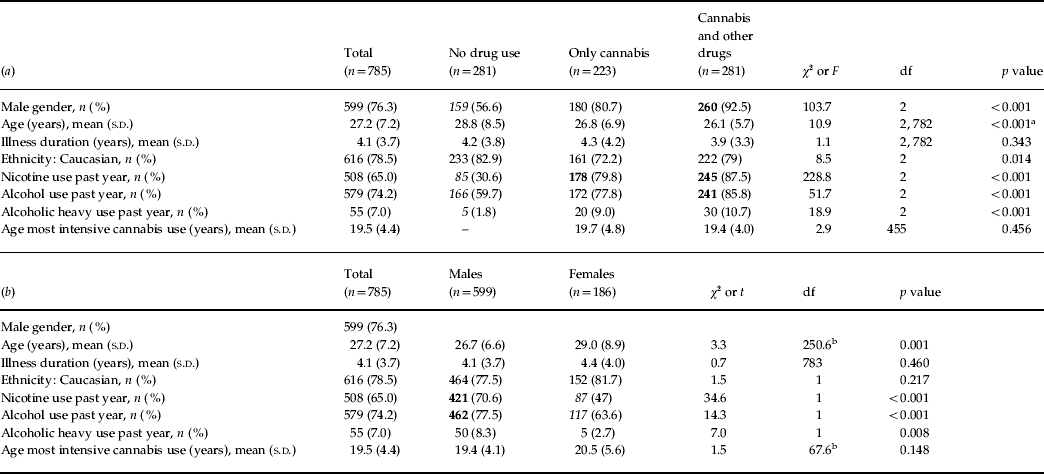
DSM-IV diagnoses of the patients were: schizophrenia (n=528, 67.3%), schizo-affective disorder (n=93, 11.8%), schizophreniform disorder (n=44, 5.6%), psychotic disorder NOS (n=79, 10.1%), and other psychotic disorders (n=41, 5.2%). Sample characteristics stratified by drug use history and gender are shown in Table 1. For 457 patients (398 males and 59 females), the age at most intensive cannabis use was available (mean=19.5, s.d.=4.4 years; Table 1). Age at most intensive cannabis use did not differ statistically (p=0.148) between males (mean=19.4, s.d.=4.1 years) and females (mean=20.5, s.d.=5.6 years). In 63.5% of the patients, age at most intensive cannabis use preceded the age at onset of first psychosis, with a mean of 4.4 years (s.d.=3.8). There were no statistically significant differences between males and females in this percentage (64.3% v. 57.6%, χ2=1.0, p=0.319).
Sample characteristics of total study sample (n=785), stratified by (a) drug use history and (b) gender

s.d., Standard deviation; df, degrees of freedom.
a Post-hoc Bonferroni test: no drug use >only can, no drug use >can+other drugs.
b Equal variances not assumed.
Figures in bold have adjusted standardized residuals >3.0; figures in italics have adjusted standardized residuals <−3.0.
Percentages in the columns and means are sometimes based on less than n presented in the top row, because of missing data in the CIDI data.
Comparison of age at onset of first psychosis between subgroups according to drug use history
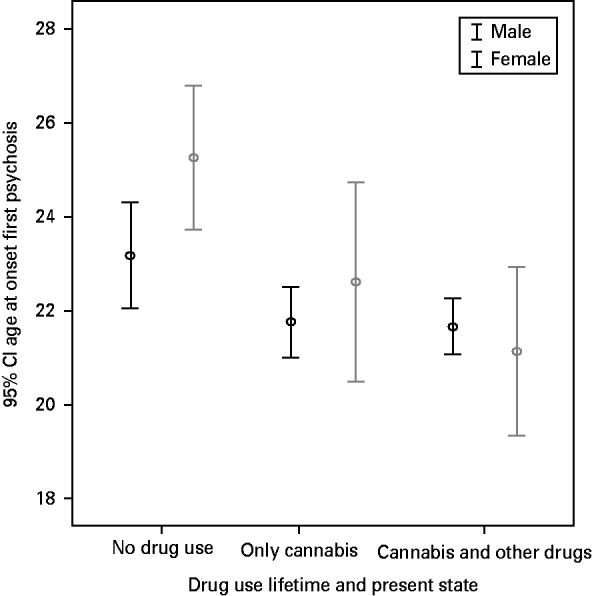
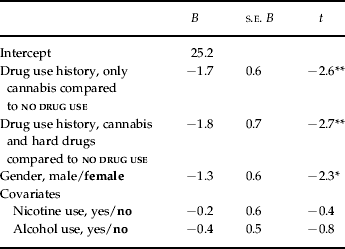
Fig. 1 shows the mean age at onset of first psychosis with 95% confidence intervals (CIs), stratified for subgroups according to drug use history and gender. As no statistically significant gender by drug use history interaction was found in the prediction of age at onset of first psychosis, only main effects without the gender by drug use history interaction are presented (Table 2).
Mean ages at onset of psychosis with 95% confidence intervals (CIs), stratified for subgroups according to drug use history and gender. Males: mean age (95% CI) no drug use 23.2 (22.0–24.3), only can 21.8 (21.0–22.5), can+other drugs 21.7 (21.0–22.3) years. Females: mean age (95% CI) no drug use 25.3 (23.7–26.8), only can 22.6 (20.5–24.8), can+other drugs 21.1 (19.4–22.9) years.

Summary of general linear regression analysis, with total patient sample (n=785)Footnote a,b

s.e., Standard error.
a General linear regression analysis, with age at onset of psychosis as the dependent variable and drug use history and gender as independent variables. The covariance structure is unstructured. The B coefficient indicates the individual contribution of each predictor to the model. This value indicates that, as the predictor increases by one unit, age at onset of psychosis increases by the B value. A positive B value means that, compared to the reference category, the component score increases. A negative B value means that, compared to the reference category, the component score decreases. The t value indicates whether the predictor is making a significant contribution to the model. The larger the value of t, the greater the likelihood that the predictor makes a contribution to the model.
b Bold is used to indicate the reference category.
* p<0.05, ** p<0.01.
After controlling for gender, nicotine use and alcohol use in the past year, mean age at onset of psychosis was significantly different between patients from the no drug use, only can and can+other drugs subgroups (F 2,772=4.3, p=0.014). Mean age at onset of first psychosis in patients from the only can group was significantly lower than mean age at onset of psychosis in patients from the no drug use group (adjusted difference of 1.7 years; B=−1.7, s.e.=0.6, t=−2.6, p=0.009). Furthermore, mean age at onset of first psychosis in patients from the can+other drugs group was also significantly lower than the mean age at onset of psychosis in patients from the no drug use group (adjusted difference 1.8 years; B=−1.8, s.e.=0.6, t=−2.7, p=0.008). There was no significant difference in age at onset between the only can and can+other drugs group.
Comparison of age at onset of first psychosis between males and females
Gender was significantly related to age at onset of psychosis, above and beyond illicit drug use, nicotine use and alcohol use. Mean age at onset of psychosis was significantly lower in males than in females (adjusted difference 1.3 years; F 1,772=5.6, p=0.018).
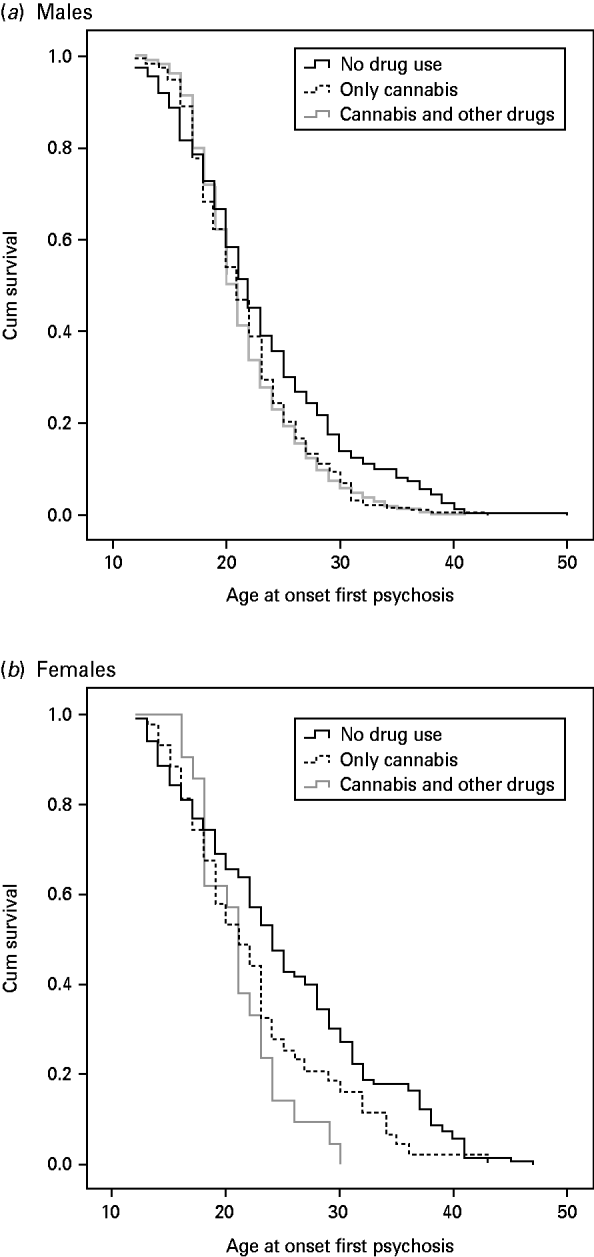
Fig. 2(a, b) shows Kaplan–Meier survival curves for onset of first psychosis stratified by drug use history for male and female patients respectively. Log-rank tests showed that, in both males and females, age at onset of psychosis was significantly different between the no drug use, only can and can+others drugs subgroups (males: log rank χ2=11.40, df 2, p=0.003, females: χ2=11.05, df 2, p=0.004). As shown in Fig 2, differences in age at onset of first psychosis between the no drug use group and the only can and can+other drugs are most pronounced in the later-onset group. This was confirmed in a post-hoc regression analysis performed on a younger subsample, that is in a subgroup (n=426) of patients aged ⩽26 years (we chose this cut-off because the median age of the total group was 26 years). After controlling for gender, nicotine use and alcohol use in the past year, drug use status was not statistically significant in predicting age at onset (F 2,416=2.8, p=0.06) in this subgroup of patients.
Kaplan–Meier survival curves for age at first psychosis stratified by drug use history for (a) males (n=599) and (b) females (n=186).

Discussion
This large cohort study of patients treated for non-affective psychotic illness confirms previous findings that a history of cannabis use is associated with a lower age at onset of first psychosis, independent of the effects of gender or use of other drugs. Furthermore, males had an earlier age at onset of psychotic illness compared to females irrespective of the use of cannabis, and the majority of both males and females who had used cannabis had done so most intensively prior to onset of psychotic illness.
Our finding that cannabis use was associated with earlier age at onset of psychotic illness, independent of the effect of gender, is in line with the results of a recent meta-analysis on this topic (Large et al. Reference Large, Sharma, Compton, Slade and Nielssen2011). We speculate that earlier onset of first psychosis in cannabis-using patients could be explained by (early) cannabis use precipitating the onset of psychotic illness in vulnerable subjects. Support for this hypothesis comes from studies in which age at onset of cannabis use is positively associated with age at onset of high-risk symptoms for psychosis (Dragt et al. Reference Dragt, Nieman, Becker, van de Fliert, Dingemans, de Haan, van Amelsvoort and Linszen2010) and with age at onset of psychotic illness (Barnett et al. Reference Barnett, Werners, Secher, Hill, Brazil, Masson, Pernet, Kirkbride, Murray, Bullmore and Jones2007; Estrada et al. Reference Estrada, Fatjó-Vilas, Muñoz, Pulido, Miñano, Toledo, Illa, Martín, Miralles, Miret, Campanera, Bernabeu, Navarro and Fañanás2011). Of note, the difference in age of onset between the cannabis users and non-cannabis users seems to be most pronounced in the group with a relatively late age of onset (Fig. 2 a, b). The survival curve from the study of González-Pinto et al. (Reference González-Pinto, Vega, Ibáñez, Mosquera, Barbeito, Gutiérrez, Ruiz de Azúa, Ruiz and Vieta2008), with comparable subgroups of patients, shows a similar pattern. This may also explain why some studies in schizophrenia patients did not find differences in age at onset between cannabis users and non-users: the age at onset of psychosis in these studies was around 20 years, which is earlier than the age range where differences occurred in our study (Bersani et al. Reference Bersani, Orlandi, Kotzalidis and Pancheri2002; DeRosse et al. Reference DeRosse, Kaplan, Burdick, Lencz and Malhotra2010; Goldberger et al. Reference Goldberger, Dervaux, Gourion, Bourdel, Lôo, Laqueille and Krebs2010). It may also explain why the absolute differences in age at onset between cannabis users and non-users differs substantially across studies. Studies with a later age at onset than in our study may find a larger difference in age at onset between users of cannabis and non-users. However, in a recent meta-analysis on cannabis use and age at onset of psychosis (Large et al. Reference Large, Sharma, Compton, Slade and Nielssen2011), the finding of an association between the proportion of cannabis users and earlier age at onset was statistically independent of age inclusion criteria.
Our finding that cannabis-related differences in age at onset of psychosis are seen only in the group with a relatively late age of onset might be explained by recent findings from a genetic study (Pelayo-Terán et al. Reference Pelayo-Terán, Pérez-Iglesias, Mata, Carrasco-Marin, Vazquez-Barquero and Crespo-Facorro2010). In this study, age of onset of first psychosis in non-users of cannabis was significantly later in the catechol-O-methyltransferase (COMT) Met/Met genotype carriers than in the COMT Val/Val and COMT Val/ Met genotype carriers, whereas this association was absent in users of cannabis. The authors suggest that use of cannabis could exert a modulator effect on the genotype, suppressing the delay effect for the age of onset in the case of the Met allele patients. Although this could be an explanation for our findings, further studies are needed to confirm our preliminary findings and to clarify possible other neurobiological mechanisms that make people vulnerable to the precipitating effects of cannabis on psychotic illness.
We did not find a significant difference in age at onset between patients who had used only cannabis and patients who had used both cannabis and other illicit drugs. Our findings suggest that the additional use of other drugs has no independent effect on age at onset of psychosis when adjusted for cannabis use.
We found that male patients had a lower age of onset of first psychotic episode compared to female patients, irrespective of the use of cannabis or other illicit drugs. This is similar to the findings of Barnes et al. (Reference Barnes, Mutsatsa, Hutton, Watt and Joyce2006), but in contrast to those of other studies (Veen et al. Reference Veen, Selten, van der Tweel, Feller, Hoek and Kahn2004; González-Pinto et al. Reference González-Pinto, Vega, Ibáñez, Mosquera, Barbeito, Gutiérrez, Ruiz de Azúa, Ruiz and Vieta2008; Ongur et al. Reference Ongur, Lin and Cohen2009; Sugranyes et al. Reference Sugranyes, Flamarique, Parellada, Baeza, Goti, Fernandez-Egea and Bernardo2009; Barrigon et al. Reference Barrigon, Gurpegui, Ruiz-Veguilla, Diaz, Anguita, Sarramea and Cervilla2010; De Hert et al. Reference De Hert, Wampers, Jendricko, Franic, Vidovic, De Vriendt, Sweers, Peuskens and van Winkel2011), which may be explained by the low power due to small groups of female patients in most of these studies. However, lack of power was not an issue in the one study that did include a relatively large number (n=236) of females (De Hert et al. Reference De Hert, Wampers, Jendricko, Franic, Vidovic, De Vriendt, Sweers, Peuskens and van Winkel2011). It might be that using a different proxy for age at onset resulted in different results regarding gender differences in age at onset, because De Hert et al. (Reference De Hert, Wampers, Jendricko, Franic, Vidovic, De Vriendt, Sweers, Peuskens and van Winkel2011) used age at onset of admission as a proxy for age at onset and we used age at onset of psychosis.
Later age at onset of psychosis in females has been related to the modulating effect of oestrogen, which is thought to play a protective role in the disease process of schizophrenia, resulting from a hypothesized anti-dopaminergic effect that could delay the development of the disease (Szymanski et al. Reference Szymanski, Lieberman, Alvir, Mayerhoff, Loebel, Geisler, Chakos, Koreen, Jody and Kane1995). Another explanation might be that psychosis is later recognized by the environment in females compared to males, resulting in treatment delays (Aleman et al. Reference Aleman, Kahn and Selten2003). Although we found significant gender differences in age at onset of psychosis irrespective of the use of cannabis, we did not find gender differences for the mean age at most intensive use of cannabis (males 19.4 and females 20.5 years of age). Although other studies on gender and age at most intensive cannabis use are lacking, there are a few studies comparing age at onset of first cannabis use between males and females. Those studies did not find a difference between age at first use of cannabis between male and female patients (mean 15.5 v. 15.4 years; Dekker et al. Reference Dekker, de Haan, Berg, Gier, Becker and Linzen2008), or they found a trend towards earlier first use of cannabis in males than in females (mean 15.6 v. 17.9 years; Barnett et al. Reference Barnett, Werners, Secher, Hill, Brazil, Masson, Pernet, Kirkbride, Murray, Bullmore and Jones2007).
In the current study, 63.5% of cannabis users had used cannabis most intensively prior to the onset of first psychosis, with no statistical difference in proportion of males and females. As many patients from both sexes use cannabis prior to first psychosis and cannabis affects age at onset of first psychosis in both males and females, treatment interventions for cannabis use in prodromal and ultra-high-risk populations should focus on both males and females.
Finally, as the largest proportion of patients used cannabis most intensively before the onset of psychosis, the self-medication hypothesis does not seem to be supported in this study, at least not in the majority of patients. However, this finding does not fully exclude the possibility of intensive cannabis use as an attempt to reduce dysphoric or otherwise discomforting prodromal symptoms.
A limitation of the current study is that the age of first cannabis use was not assessed. A comparison between patients who started cannabis use prior to the onset of psychosis and non-using patients might have provided more robust conclusions about the possible contribution of cannabis use to the onset of psychotic illness. However, many of the cannabis-using patients (64%) in the current study had used cannabis most intensively prior to the onset of psychosis, which corresponds with previous first-episode studies reporting that 62–98% of cannabis-using patients had started using cannabis before the onset of the first psychosis (Linszen et al. Reference Linszen, Dingemans and Lenior1994; Buhler et al. Reference Buhler, Hambrecht, Loffler, an der Heiden and Hafner2002; Mauri et al. Reference Mauri, Volonteri, De Gaspri, Colasanti, Brambilla and Cerruti2006; Barnett et al. Reference Barnett, Werners, Secher, Hill, Brazil, Masson, Pernet, Kirkbride, Murray, Bullmore and Jones2007; Goldberger et al. Reference Goldberger, Dervaux, Gourion, Bourdel, Lôo, Laqueille and Krebs2010; Sevy et al. Reference Sevy, Robinson, Napolitano, Patel, Gunduz-Bruce, Miller, McCormack, Lorell and Kane2010). Furthermore, studies in comparable patient populations have reported a mean age at first cannabis use of 15.6 and 15.4 years (Dekker et al. 2008, Reference Dekker, Smeerdijk, Wiers, Duits, van Gelder, Houben, Schippers, Linszen and de Haan2010), which is at least 5 years earlier than the mean age at onset of psychosis in the current sample. Another limitation of this study is that there could have been recall bias on the dates of psychotic symptom onset and dates of most intensive cannabis use. However, by including only patients in whom psychiatric care for psychosis had started less than 10 years ago (mean illness duration was 4.1 years), recall bias was probably limited.
The strengths of our study are: (1) the large study sample; (2) we included patients presenting consecutively either as out-patients or in-patients, reflecting a sample of treated patients, which enhances the generalizability of our findings; (3) a larger number of females than in most of the previous studies, allowing us to perform a sufficiently powered regression analysis in which the independent effect of gender on age at onset of psychosis was tested; and (4) we checked urine for the presence of drugs in addition to self-reported drug use.
In summary, this study shows that both cannabis use and gender are independently associated with an earlier age at onset of psychotic illness, above and beyond the effect of possible confounders, and that the difference in age at onset between cannabis users and never users seems to manifest itself in the subgroup with a relatively late age of onset, that is from the age of 23 years in males and 20 years infemales. Our findings do not support the self-medication theory, but point towards cannabis as a precipitating factor in the development of psychosis. Future studies are needed to clarify the neurobiological factors that make people vulnerable for the precipitating effects of cannabis use on age at onset of psychotic illness.
Acknowledgements
We are grateful for the generosity of time and effort by the participants and their families, and all researchers who made this GROUP project possible. The infrastructure for the GROUP study is funded through the Geestkracht programme of the Dutch Health Research Council (ZON-MW, grant no. 10-000-1002) and matching funds from participating universities and mental health care organizations (Amsterdam: Academic Psychiatric Centre of the Academic Medical Centre and the mental health institutions GGZ Ingeest, Arkin, Dijk en Duin, Rivierduinen, Erasmus Medical Centre, GGZ Noord Holland Noord. Maastricht: Maastricht University Medical Centre and the mental health institutions GGZ Eindhoven, GGZ Midden-Brabant, GGZ Oost-Brabant, GGZ Noord-Midden Limburg, Mondriaan Zorggroep, Prins Clauscentrum Sittard, RIAGG Roermond, Universitair Centrum Sint-Jozef Kortenberg, CAPRI University of Antwerp, PC Ziekeren Sint-Truiden, PZ Sancta Maria Sint-Truiden, GGZ Overpelt, OPZ Rekem. Groningen: University Medical Centre Groningen and the mental health institutions Lentis, GGZ Friesland, GGZ Drenthe, Dimence, Mediant, GGZ De Grote Rivieren and Parnassia psycho-medical centre, The Hague. Utrecht: University Medical Centre Utrecht and the mental health institutions Altrecht, Symfora, Meerkanten, Riagg Amersfoort, Delta).
Declaration of Interest
None.