Sacrifice, Suicide, and Mutilations? A Critical Review of Lothrop Reference Lothrop1954
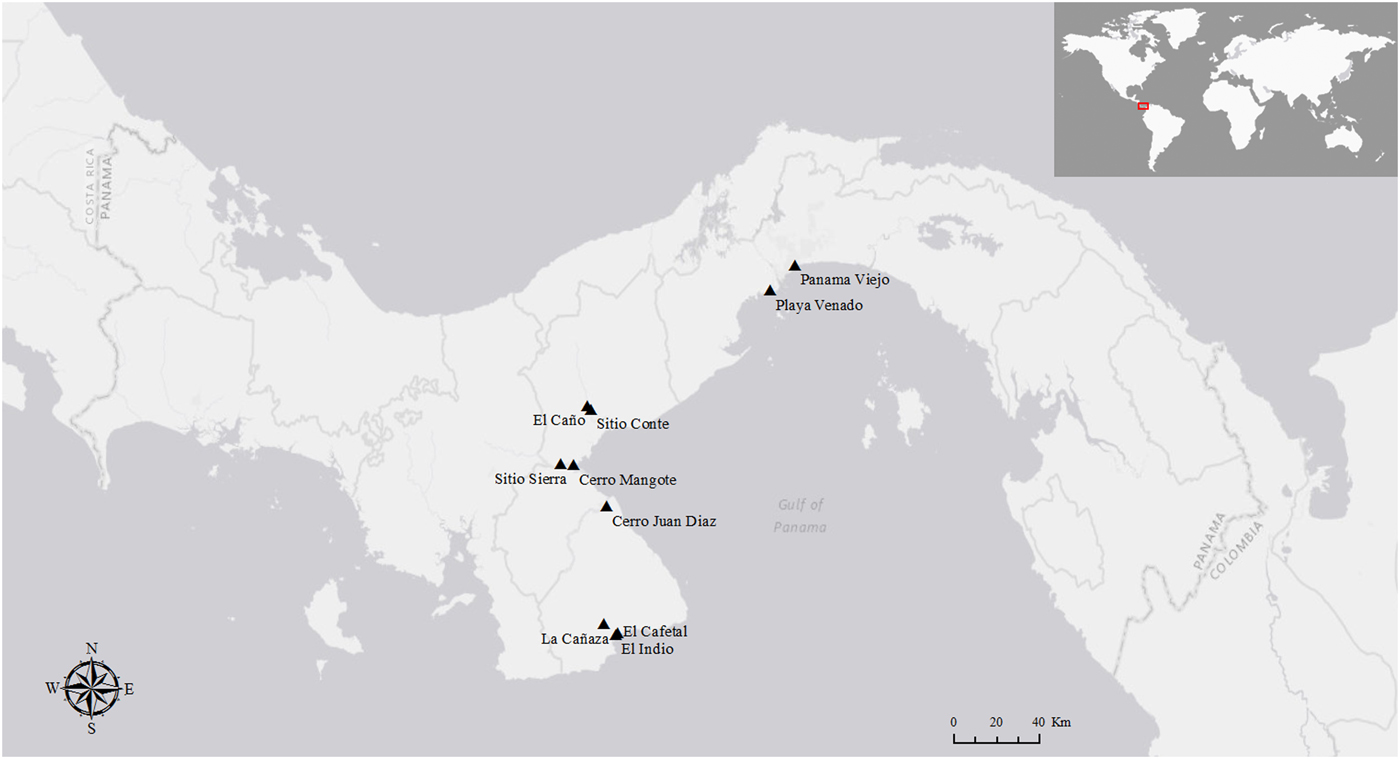
One of the most captivating precolumbian archaeological sites in Panama is that of Playa Venado (or Venado Beach), located on the central Pacific coast of Panama Bay, approximately 10 km southwest of modern-day Panama City (Figure 1). Owing in part to its accessible location within the former Canal Zone, the site was almost completely sacked by avocational archaeologists and professional dealers in antiquities in the 1950s. Nevertheless, one scientific exploration at the site led by Harvard Peabody Museum archaeologist Samuel K. Lothrop in 1951 provided some contextual grounding for the diverse cultural materials contained therein. Among these materials were several eye-catching pieces of fine cast gold work and carved shell ornaments (see Lothrop Reference Lothrop1956; Lothrop et al. Reference Lothrop, Foshang and Mahler1957). Lothrop's main interpretations for the burials he encountered at Playa Venado focused on the presence of inferred irregularities in mortuary features, which he took as evidence of the sacrificial burials described by Spanish chronicler Gonzalo Fernández de Oviedo (Lothrop Reference Lothrop1954).
Map of Panama showing the location of Playa Venado and other precolumbian sites mentioned in the text. Dates for the human remains recovered from these sites include the following: Cerro Mangote (3000 BC–AD 200); Sitio Sierra early (40 BC–AD 300); Cerro Juan Díaz early (AD 50–700); El Cafetal (AD 300–550); El Indio (AD 400–550); Playa Venado (AD 550–850); La Cañaza (AD 700–850); Sitio Conte (AD 750–950); El Caño (AD 750–1020); Sitio Sierra late (AD 900–1200). Map by Nicole E. Smith-Guzmán. Esri ArcGIS basemap sources: Esri, DeLorme, HERE, MapmyIndia. (Colour online)

The interpretation of violence and ritual killing in the past can be challenging, even in the least ambiguous of cases (Arkush Reference Arkush, Chacon and Mendoza2012; Jackes Reference Jackes and Roksandic2004; Klaus et al. Reference Klaus, Centurión and Curo2010; Tiesler Reference Tiesler, Tiesler and Cucina2007). Archaeological interpretation of violence can contain biases stemming from personal experience, current events, religion, and preconceived notions of the population (Arkush Reference Arkush, Chacon and Mendoza2012; Berggren Reference Berggren, Andrén, Jennbert and Raudvere2006; Wilk Reference Wilk1985). Specialists in human osteology are uniquely poised to address the question of violence and sacrifice in the past through careful scrutiny of physical evidence of purported postsacrificial association on the human remains from archaeological sites (Walker Reference Walker2001). The considerable influence exerted by Lothrop's Reference Lothrop1954 paper, “Suicide, sacrifice and mutilations in burials at Venado Beach, Panama” upon current understandings of precolumbian mortuary behavior and ritual practices warrants closer examination of the evidence for such claims of violence at Playa Venado. Here, we consider evidence drawn from field notes, photographs, and osteological analysis of the human remains recovered from the site.
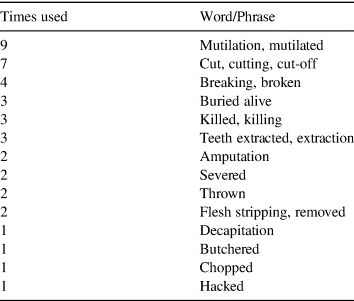
Through the use of repeated violent terms (see Table 1), Lothrop paints a picture of ritual killing or sacrifice at the site in the form of sharp-force trauma to the body, including the amputation of whole limbs of the victims. To reach these conclusions, Lothrop points to the disarticulation of various skeletal elements and teeth, an open space between the jaws, and the disarticulation of spinal elements (Lothrop Reference Lothrop1954:229). Human sacrifice is a fascinating subject, and the telling of its practice by past populations weaves a morbid tale that captivates the lay person. Indeed, Lothrop's violent interpretation of the Playa Venado burials has been cited over 35 times, including by several authors within the last 25 years as evidence of general violence, cannibalism, or trophy head taking in ancient societies (Bishop and Knüsel Reference Bishop, Knüsel, Parker-Pearson and Thorpe2005; Chacon and Dye Reference Chacon, Dye, Chacon and Dye2007; Drennan Reference Drennan and Earle1993; Hurlbut Reference Hurlbut2000; Ibarra Rojas Reference Ibarra Rojas2012; Melbye and Fairgrieve Reference Melbye and Fairgrieve1994; Ross-Stallings Reference Ross-Stallings, Chacon and Dye2007; Winegard et al. Reference Winegard, Reynolds, Baumeister, Winegard and Maner2014). Some authors have also conflated Lothrop's representation of the site with a “mass burial” and a “manifestation of conflict” (Creamer and Haas Reference Creamer and Haas1985:746).
Terms Indicative of Violence Used in Lothrop (Reference Lothrop1954).

Sensationalism in archaeology and biological anthropology undermines the facts drawn from scientific investigations of past populations (cf. McGuire and Van Dyke Reference McGuire, Van Dyke, Nichols and Crown2008; Muckle Reference Muckle2017). Prudent readers acknowledge the time-frame of Lothrop's work within the so-called era of “Romantic archaeology” (Card and Anderson Reference Card, Anderson, Card and Anderson2016), a time when emphasis on archaeology as exploration and adventure funded the fledgling field prior to efforts of processual archaeologists to incorporate the scientific method into archaeological research. Nevertheless, the exaggeration of Lothrop's original claims in the literature and its impact on overall understanding of precolumbian mortuary customs on the Isthmus warrants a closer scrutiny of the evidence he presents in his paper, as well as evidence from primary sources (i.e., archival and osteological materials from the site).
Materials and Methods
A variety of materials were used in the reanalysis of Playa Venado mortuary context described in this paper, including archival documents, photos, and human remains collected from the site during the Peabody excavation in 1951, as well as documents and photos from other nonofficial excavations by Neville Harte and other avocational archaeologists during the period of approximately 1950–1958. Documents included field notes and drawings, correspondences, and published and unpublished writings by the individuals involved in these excavations. We also consider ethnohistorical accounts made by early Spanish chroniclers, describing their interactions with indigenous populations around the time of European contact.
Archival Documents
The first author analyzed all archival documents and photographs pertaining to the 1951 Peabody Playa Venado excavation available in the Peabody Museum of Archaeology and Ethnology at Harvard University, which comprises primarily four field notebooks containing notes and watercolor field drawings, various drafts of an unpublished summary monograph, and photographs of each burial context excavated. In addition to these extensive Peabody Museum archival collections, we used archival copies of field notebooks and photographs made by avocational archaeologists who excavated extensively at the site during the 1950s. These were housed in archival collections at several museums in the United States, including field notebooks of Neville Harte and Colonel Lee Montgomery archived at the National Museum of the American Indian and the Metropolitan Museum of Art, respectively.
It should be noted here that although the Peabody excavation was documented carefully and in a highly organized manner, that of the avocational archaeologists was nearly the opposite. The field notebook given to the National Museum of the American Indian (NMAI) by Neville Harte appears fairly detailed and organized at first glance; nonetheless, there are several contradictions in the burial contents described in this notebook when compared with Harte's correspondences with Samuel Lothrop, and later to archaeologist Warwick Bray (the latter having received a photocopy of a partial notebook by Harte with striking differences from the notebook housed in the NMAI archives; Warwick Bray, personal communication 2016). Furthermore, of the few photographs left by Harte at the Museo Antropológico Reina Torres de Araúz in Panama City, sent to Warwick Bray, and those currently archived in avocational archaeologist Kenneth Vinton's estate, none have associated contextual information nor can be matched to individual burial contexts described and drawn in either of the two versions of his notebook. The avocational archaeologists who excavated at Playa Venado did not, as far as we have been able to determine, retain any of the human skeletal material from the field, leaving no way to verify osteological details described in their field notes. Thus, we do acknowledge the information given in the most complete version of Harte's field notebook (i.e., that housed in the NMAI) in this analysis, but we take this information with caution due to the inconsistencies noted above.
Osteological Analysis of Human Remains
The human remains collected by Samuel Lothrop during his 1951 excavation at Playa Venado were shipped back to Harvard and subsequently sent to biological anthropologist T. Dale Stewart for analysis at the National Museum of Natural History (NMNH) in Washington, DC, where they remain today. The condition of the skeletal elements is excellent, particularly considering their long-term storage for around 65 years since the original excavation and transport to the United States. Although the field notebooks detailing the Peabody excavations detail the excavation of approximately 220 human individuals, the skeletal elements kept from the field and sent to the NMNH consist of a minimum of 71 and a maximum of 77 individuals. In consulting with the archival material at the Peabody Museum at Harvard University, it seems the human remains collected from the field represented only elements of specific importance to Lothrop. These included intact crania (a rare occurrence at the site), mandibles by which Lothrop was attempting to determine the sex of the individuals (detailed description in the sections to follow), and other elements that seemed unusual to Lothrop in their burial contexts. As is often the case with archaeological collections that are transported overseas and between different institutions, there were many instances of commingling and mixed provenience information among the human remains stored at the NMNH. These issues were handled on a case-by-case basis and attempted to be corrected through consultation with field notes and photos from the Peabody Museum archives as well as published articles.
Assessment of the human remains consisted of macroscopic observation to create a biological profile of each individual (i.e., age, sex, ancestry, stature). Adult age was estimated using standard methods based on morphological changes of the pubic symphysis (Brooks and Suchey Reference Brooks and Suchey1990) and auricular surface (Lovejoy et al. Reference Lovejoy, Meindl, Pryzbeck and Mensforth1985) when available, but cranial suture closure (Meindl and Lovejoy Reference Meindl and Lovejoy1985) was used conservatively in individuals lacking observable pelves. Nonadult age was estimated primarily using dental development (AlQahtani et al. Reference AlQahtani, Hector and Liversidge2010), and secondarily using long bone lengths and epiphyseal fusion stages (Schaefer et al. Reference Schaefer, Black and Scheuer2009). Sex was determined only in adults and older adolescents (over 16 years of age) using standard morphological features of the pelvis and cranium (Acsádi and Nemeskéri Reference Acsádi and Nemeskéri1970; Buikstra and Ubelaker Reference Buikstra and Ubelaker1994; Phenice Reference Phenice1969). Stature estimation was estimated using the formulae developed by Genoves (Reference Genoves1967), which works best for this Central American region; nevertheless, stature estimation was only possible in the six individuals with a complete femur or tibia.
To identify any indications of violence, the human remains were scrutinized macroscopically for any marks of trauma. Any other signs of disease, metabolic conditions, and developmental anomalies were recorded for each individual. All of the osteological data were recorded and maintained through the Smithsonian Institution's Osteoware software.
Results and Discussion
Ethnohistorical Evidence
Samuel Lothrop's earlier work at the ancient necropolis of Sitio Conte in the 1930s featured complex multiple burial contexts in which several adult individuals encircled a central principal occupant in the grave (Lothrop Reference Lothrop1937). Such burial features mimic ethnohistorical accounts of suicide and sacrifice rituals by early Spanish chroniclers, informing Lothrop's interpretation of the site and its uses. In his 1954 article, Lothrop attempts to suggest a similar interpretation of the burial features at Playa Venado; however, these features were very different from those found at Sitio Conte. Under modern scrutiny, Lothrop provides no evidence to back up his claims of violent deaths at Playa Venado that would stand up to cautious and holistic interpretations of violence in the archaeological record as outlined by specialists in bioarchaeology (Berryman Reference Berryman, Chacon and Dye2007; Cucina and Tiesler Reference Cucina, Tiesler, Tiesler and Cucina2007; Walker Reference Walker2001). Chroniclers’ tales often prove helpful in understanding the Spanish perspective of the indigenous groups during the conquest period but do not constitute unbiased ethnographical observation of the groups to which they refer. Rather, these chroniclers were often motivated to portray these indigenous groups as savage and ruthless, in need of conquering by a civilized nation (Besom Reference Besom2010; Meyers Reference Meyers2010) and thus should be used with caution in making archaeological interpretations (Scherer Reference Scherer2015).
Furthermore, some of the accounts by Spanish chroniclers may have resulted from misunderstandings of cultural practices involving secondary burial and ancestor veneration, as described by other colonial texts (Espinosa Reference Espinosa and Jopling1994:63–64; Martyr D'Anghera Reference Martyr D'Anghera and MacNutt1912:219–220). According to Espinosa and Martyr, the bodies of important individuals were preserved by smoking the corpse and suspending the shrouded bodies in hammocks, not unlike the smoke embalming rituals found in modern-day Indonesia and Papua New Guinea (Hutton Reference Hutton1928; Pearson Chinnery Reference Pearson Chinnery1919). The similarity of mortuary practices in these two geographically distinct areas were likely motivated by their shared hot, humid climates, necessitating the processing of the deceased in prolonged ancestor veneration rituals. The ritual practice of keeping of the dead as an integral part of living society is thought to maintain relationships between kin groups and deceased individuals long after death (Hutchinson and Aragon Reference Hutchinson and Aragon2002). At Playa Venado, the documented existence of primary and secondary burials, as well as disturbed burials that signal the reuse of mortuary contexts in antiquity, more closely follows this model of ancestor veneration and suggests that the site was used continually in such mortuary rituals associated with social memory and identity (Joyce Reference Joyce2001).
Physical Evidence of Skeletal Trauma
In his description of the human skeletal remains excavated by Lothrop at Playa Venado, Dale Stewart emphasizes the complete absence of cut marks on the bones (Stewart Reference Stewart1958:46). In fact, upon completion of the skeletal analysis, the only findings mentioned by Stewart in correspondence to Lothrop in 1953 were the presence of artificial cranial modification on the skulls and widespread pathological lesions suggestive of treponemal infection on the Playa Venado remains (996-27, Samuel Kirkland Lothrop and Joy Mahler Lothrop papers, 1911–1992, Peabody Museum of Archaeology and Ethnology, Harvard University). The first author's reanalysis of the human remains from Playa Venado housed at the NMNH concords with Stewart's findings—the skeletal elements are devoid of cut marks but notable in their high frequencies of periosteal reactions (likely from Treponema infection) and obelionic-type artificial cranial modification.
Perimortem Trauma
Biological anthropologists, especially those who have experience working within forensic contexts, acknowledge the inability to determine definitively the cause of an individual's death in the absence of soft tissue. Evidence of perimortem trauma, however, can be interpreted on both archaeological and forensic remains. Lothrop suggests that several individuals recovered from Playa Venado were buried with perimortem traumatic vertebral fractures. Although conceivable, the photographs he provides as evidence for broken backs or necks make this interpretation dubious in nature. Lothrop's Figure 63 shows an individual with a purported broken neck (Lothrop Reference Lothrop1954:231). This individual appears to be in a tightly flexed position with legs and arms tucked together to the left, and the head turned to the right. The ribs and right clavicle of the person appear to be directly centered in the supine position. Because no visible trauma is seen on the cervical vertebrae, and these appear to be in the proper position for someone whose head is turned to the right, the interpretation of traumatic injury is unlikely.
The photograph of the purported broken back shown in Lothrop's Figure 62 shows postmortem breaks to the forearms which lay directly over the sharp-edged breaks to the anterior bodies of two lower thoracic vertebrae (Lothrop Reference Lothrop1954:230). Spinal fractures from blunt force trauma would more likely affect the area of the vertebrae closest to the skin surface (i.e., the posterior aspect or pedicles) rather than the anterior aspect of the vertebral bodies (Tersigni-Tarrant Reference Tersigni-Tarrant, Passalacqua and Rainwater2015). There is a turn in the orientation of the vertebrae at the level of the vertebral breaks, but both of these characteristics appear to be postmortem. There also appears to be a gap between the thoracic and cervical vertebrae, further supporting an interpretation of postmortem displacement and taphonomical fracturing of the bones in this burial. Upon analysis of this skeleton in 2017, the first author noted no evidence of perimortem fractures in the spine or in other elements. The only osseous pathology noted was spondylolysis of the fifth lumbar vertebra, a feature associated with repeated loading and lower back stress (Merbs Reference Merbs1989).
The absence of any other marks of perimortem violence stands in contradiction to Lothrop's interpretation of violent death at the site. Upon close examination, Lothrop's description of the mortuary patterns found at Playa Venado do not seem violent at all but rather appear to represent a careful and respectful form of secondary burial. Take, for instance, Lothrop's mention of the careful placing of skeletal and dental elements on a shell next to the body (Lothrop Reference Lothrop1954:232). These represent elements that would have been some of the first to disarticulate naturally from the rest of the body during normal taphonomical processes of decomposition (i.e., phalanges and isolated teeth). Only in the presence of abnormal mortuary patterns or physical trauma present on the skeletal elements should a violent interpretation of this disarticulation be made.
Antemortem Trauma
Only two incidences of antemortem trauma were previously described for this collection. Unfortunately, because both of these cases were described in the field notebook of Neville Harte, neither the human remains nor any archival photographs of these burial contexts were available for reanalysis, and thus, their reporting remains unverified. In the first instance, Harte describes a skeleton found with a stingray barb firmly lodged through two thoracic vertebral bodies, appearing to be oriented downward at an oblique angle from above (Neville A. Harte: Field Notebook, Venado Beach; 1950–1951; National Museum of the American Indian/Heye Foundation Records, Box 247, Folder 6). The position of the barb in the body makes it unlikely to have been lodged there by the stingray itself; rather, it was most likely propelled at high velocity as a weapon from a human assailant. This individual likely died of complications related to this injury after surviving several days as evidenced by surrounding reactive bone suggestive of the initiation of the healing process. Curiously, this evidence of trauma is not mentioned in Lothrop's Reference Lothrop1954 paper. The only traumatic injury described by Lothrop is that of the second case described by Harte: a potential leg amputation occurring well before the death of the individual as evidenced by surrounding bony reaction and infection (Lothrop Reference Lothrop1954:232). Nevertheless, it should be noted that photographs of these two skeletons were not found in any of the available archival material from the Playa Venado excavations, and thus, their existence is also unverified. Indeed, Harte's description of the second case as belonging to a “giant” leads one to doubt the authenticity of his descriptions (Neville A. Harte: Field Notebook, Venado Beach; 1950–1951; National Museum of the American Indian/Heye Foundation Records, Box 247, Folder 6).
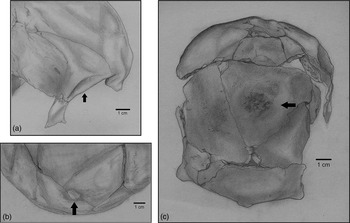
The first author's analysis of the human remains from Playa Venado found antemortem trauma present in only 11% of the 46 observable individuals (those individuals represented by more than just one skeletal element). Of these, only one individual showed marks of healed blunt force cranial trauma that could have been the result of interpersonal violence. Based on the accompanying tags, this individual (NMNH no. P381829) came from Lothrop's excavation of Area B, Trench 5, Burial 3 at Playa Venado, which contained a bundle burial and the cranium of a second individual that was later matched with the postcranial elements found in Burial 6. The cranium of this middle adult male showed two well-healed depressed fractures—one located just superior to the right orbit of the frontal bone, consisting of a lengthy, depressed scar measuring 25 mm by 7 mm, and the other located on the right parietal, central and just superior to the temporal line, consisting of a round, depressed scar measuring 13 mm by 14 mm (Figure 2a–b). The first author has noted such blows to the head on the crania of individuals from other precolumbian sites in Panama, but these typically involve a single injury to the left side of the forehead of females. The positioning of these injuries on the right side of this male individual from Playa Venado may suggest that the attacker was left handed (Maples Reference Maples and Reichs1986).
Artistic renderings of crania from Playa Venado, with arrows indicating areas of antemortem blunt force trauma: (a, b) a healed area and a depressed area of cranial bone, above the right orbit, and to the right parietal, respectively, from Area B, Trench 5, Burial 3 of Lothrop's Playa Venado excavation; and (c) possible healing trauma to the midfrontal of Skeleton 1 from Lothrop's Area C, Trench 4. Illustrations by Scarlett Mora Lorenzo, used with permission.

Another possible antemortem cranial injury in the form of a circular depression with an irregular, undulating surface was seen near the midline of the frontal bone of Skeleton 1 from Lothrop's Area C, Trench 4 (NMNH no. P381837), a male of middle to old adult age (Figure 2c). Nonetheless, surrounding irregular (i.e., reactive and healing) bone made it unclear if this lesion was of traumatic or infectious origin. If traumatic in nature, these injuries may have been the result of interpersonal conflict using weapons such as wooden sword-clubs known as macanas (Martyr D'Anghera Reference Martyr D'Anghera and MacNutt1912:218). Still, as is the pattern at many other precolumbian sites in central Panama, the skeletons recovered from Playa Venado show very low rates of trauma in general.
Evidence from Mortuary Contexts
Abnormal Body Positioning
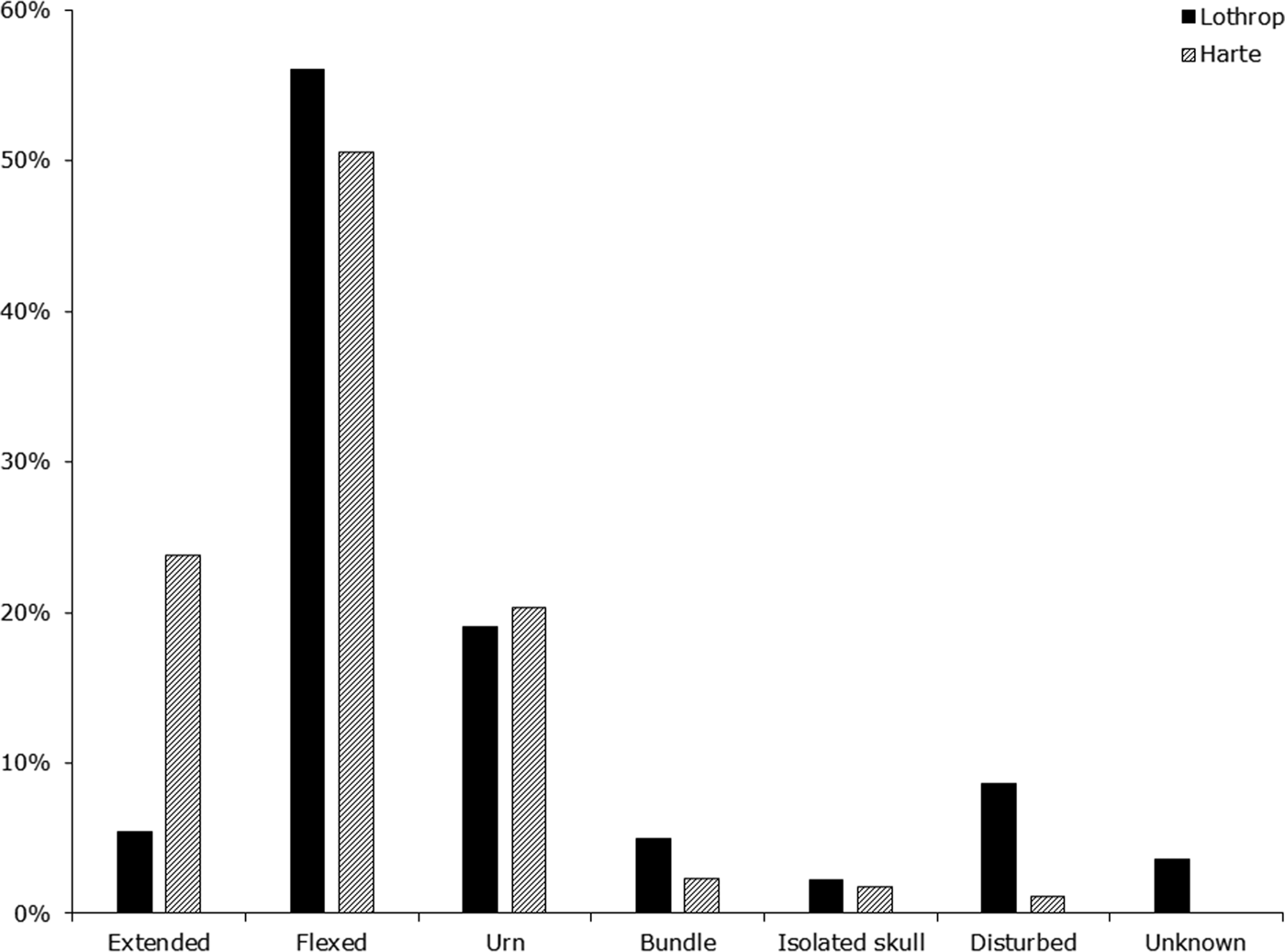
In addition to physical evidence of trauma left on the bones of the interred, human sacrifice may be evident through the body's position in the grave indicating bound limbs (Schwartz Reference Schwartz, Porter and Schwartz2012) or abnormal demographic characteristics (i.e., age and sex of the interred). At Playa Venado, both Harte and Lothrop describe the mode of the burials as falling within four characteristic types: flexed, extended, urn, and bundle burials (Figure 3). Of the primary burials recorded by Lothrop, all of the extended burials were placed in a supine position. Most of the flexed burials were also positioned supine (87 individuals; 73%), with a minority positioned laterally (32 individuals; 27%), and only 1 individual buried prone (1%). The existence of isolated skulls accompanying some of the burials, and other partially articulated but disturbed burial contexts, highlights the reuse of mortuary space and manipulation of the human remains contained within. This displacement of skeletal elements lacking perimortem cut marks or evidence of binding in primary burial contexts supports the interpretation of secondary burial practices rather than sacrifice or suicide to accompany a central figure in the afterlife (Verano Reference Verano, Benson and Cook2001).
Burial types at Playa Venado based on Samuel Lothrop's (n = 219) and Neville Harte's field notes (n = 172).

The practice of secondary burial within indigenous populations of the isthmus has been recorded both by Spanish chroniclers, and through archaeological evidence of mortuary structures (Carvajal et al. Reference Carvajal, Diaz, Herrera and Cooke2006:101–105; Espinosa Reference Espinosa and Jopling1994:63–64). In many instances, primary burials (either flexed or extended) at Playa Venado were accompanied by secondary urn burials, usually containing the remains of infants or small children. Only very rarely were urns containing human remains found in isolation, perhaps signifying the belief that children needed to be accompanied by an adult to care for them in the afterlife. Alternatively, this pattern could simply reflect the logistical convenience of burying small children, who died relatively more frequently, in ceramic vessels and only digging burial pits when adults died, at which point the child burials in pots were placed alongside.
Demography
Normal patterns of demography that are expected in nonindustrial societies follow a typical U-shaped curve, with a large proportion of the population dying in infancy and young childhood, followed by a waning of mortality during adolescence and young adulthood, which begins to rise again in middle to older adults. Abnormal patterns in demography, in which the majority of the interred consist of adolescents and young adults may be indicative of postsacrificial deposits, particularly when the remains of mostly young males are encountered (Tiesler Reference Tiesler, Tiesler and Cucina2007). In considering the demography of the individuals buried at Playa Venado, the graves excavated by Lothrop, according to his field notes, contain mostly adult female remains and 43 urn burials (20% of the 220 total), which contained almost exclusively nonadult remains. Nevertheless, caution must be taken in interpreting the age and sex categorizations made by Lothrop, who incorrectly categorized age-at-death 13% of the time and incorrectly estimated sex 28% of the time, based on comparisons with the first author's recent analysis of the human remains, discussed below. This level of error can be attributed to the methods Lothrop used for age estimation, as specified in his notes on file at the Harvard Peabody Museum archives, transcribed here:
For sex estimation, Lothrop notes the following method, transcribed here:
“Square and rounded jaws. While no one feature can definitely determine sex, this is one of the most reliable” (996-27, Samuel Kirkland Lothrop and Joy Mahler Lothrop papers, 1911–1992, Peabody Museum of Archaeology and Ethnology, Harvard University).
This high error rate due to unrefined methodology is to be expected, as physical anthropology was still in its infancy at the time of Lothrop's university training, and even the most skilled physical anthropologists are noted to have been underestimating the number of female skeletons and nonadults, while overestimating the age of adults (Ruff Reference Ruff1981). Nevertheless, it should also be noted that Lothrop's demography estimations for the burials at Playa Venado are undoubtedly more accurate than those made by avocational archaeologists such as Harte who had no formal training at all.
From Neville Harte's excavation notes, the number of urn burials described also represent 20% of the burials encountered (35 out of 172), which combined with nonadult remains buried outside of urn contexts, brings the total age demography according to Harte to 40 nonadults (26%) and 115 adults (74%). Harte only rarely noted skeletal robusticity. However, if we are to take his few notes as correct, there seem to have been equal proportions of males and females represented (four males and four females). These demographic estimations concord with the age and sex estimations made by medical doctor Hans Feriz (Reference Feriz1959) of six human burials excavated at Playa Venado in February 1956—one child urn burial (17%) and five flexed middle-age to advanced-age adult burials (83%), including three males and two females.
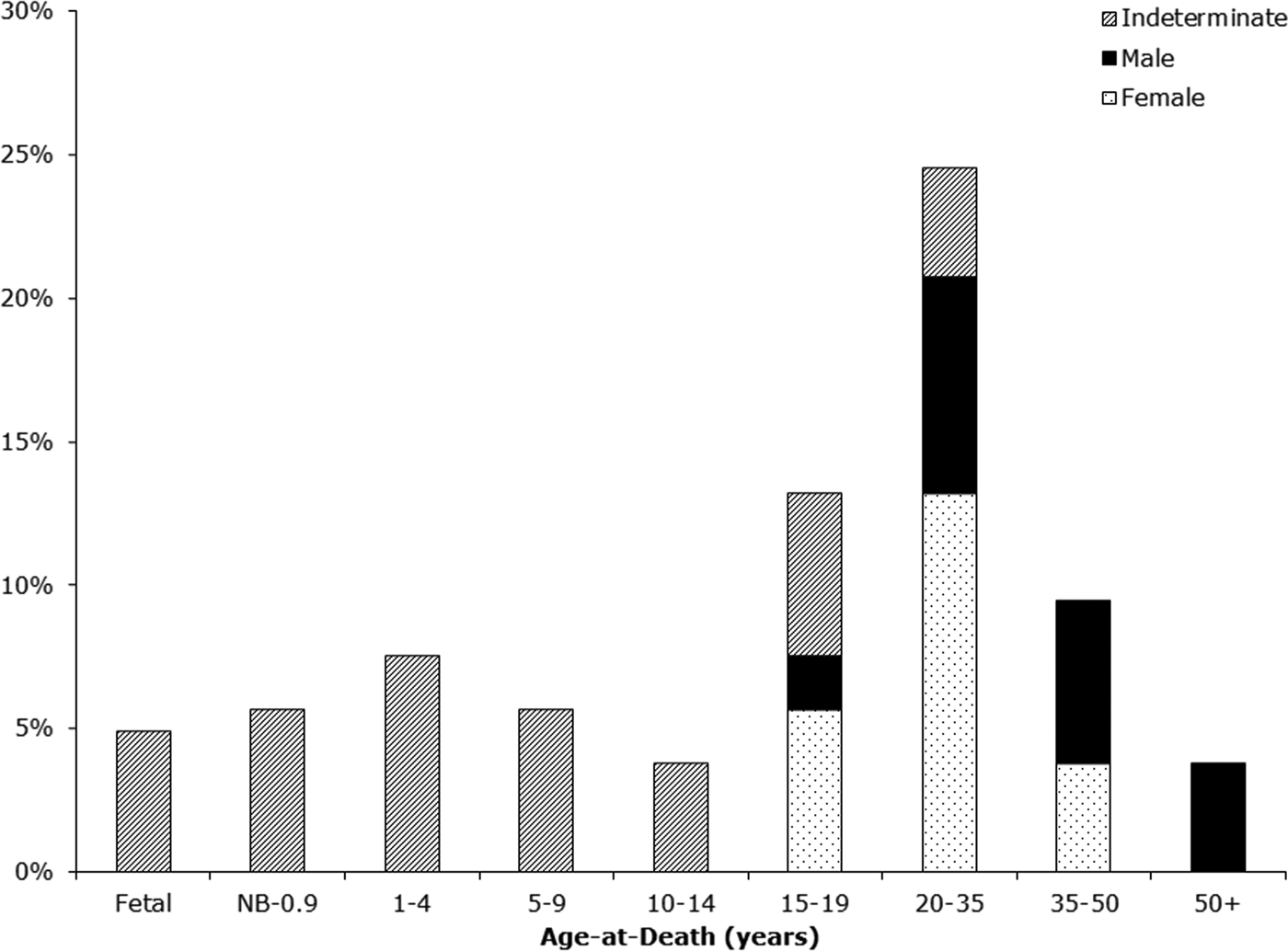
Of the 77 individuals that Lothrop sent to T. Dale Stewart for analysis, the first author's reanalysis found 2 fetuses, 4 infants, 6 children, 9 adolescents, and 56 adults (Figure 4). As is apparent in Figure 4, the high frequency of adolescents and young adults in this sample suggests that some of these individuals may have died from unnatural causes, which adds support to Lothrop's claims of sacrifice or suicide at the site. It is doubtful, however, that this sample of Playa Venado individuals sent to the NMNH represents an unbiased characterization of the population interred at the site. Lothrop appears to have been selecting the skeletal elements kept from his excavation based on their perceived usefulness (996-27, Samuel Kirkland Lothrop and Joy Mahler Lothrop papers, 1911–1992, Peabody Museum of Archaeology and Ethnology, Harvard University). Typically, he seems to have retained skeletal remains from burials that were associated with special types of artifacts or that he considered unusual or unique. Furthermore, the remains of infants and children have long been neglected in archaeology due to the additional care necessary to excavate the fragile bones coupled with the belief that nonadults are not statistically useful for research (Lewis Reference Lewis and Lewis2007; Pinhasi and Turner Reference Pinhasi, Turner, Pinhasi and Mays2008). Thus, it is likely that many more nonadult remains from Lothrop's excavations were simply not recovered from the field, which could have a skewing effect on the representation of demography presented in Figure 4.
Age-at-death distribution at Venado Beach is based on the human skeletal remains held by the National Museum of Natural History (n = 41). The remaining 36 adult individuals were too partial to assign an age category estimate. The proportion of sexes for the late adolescent and adult age groups is shown.

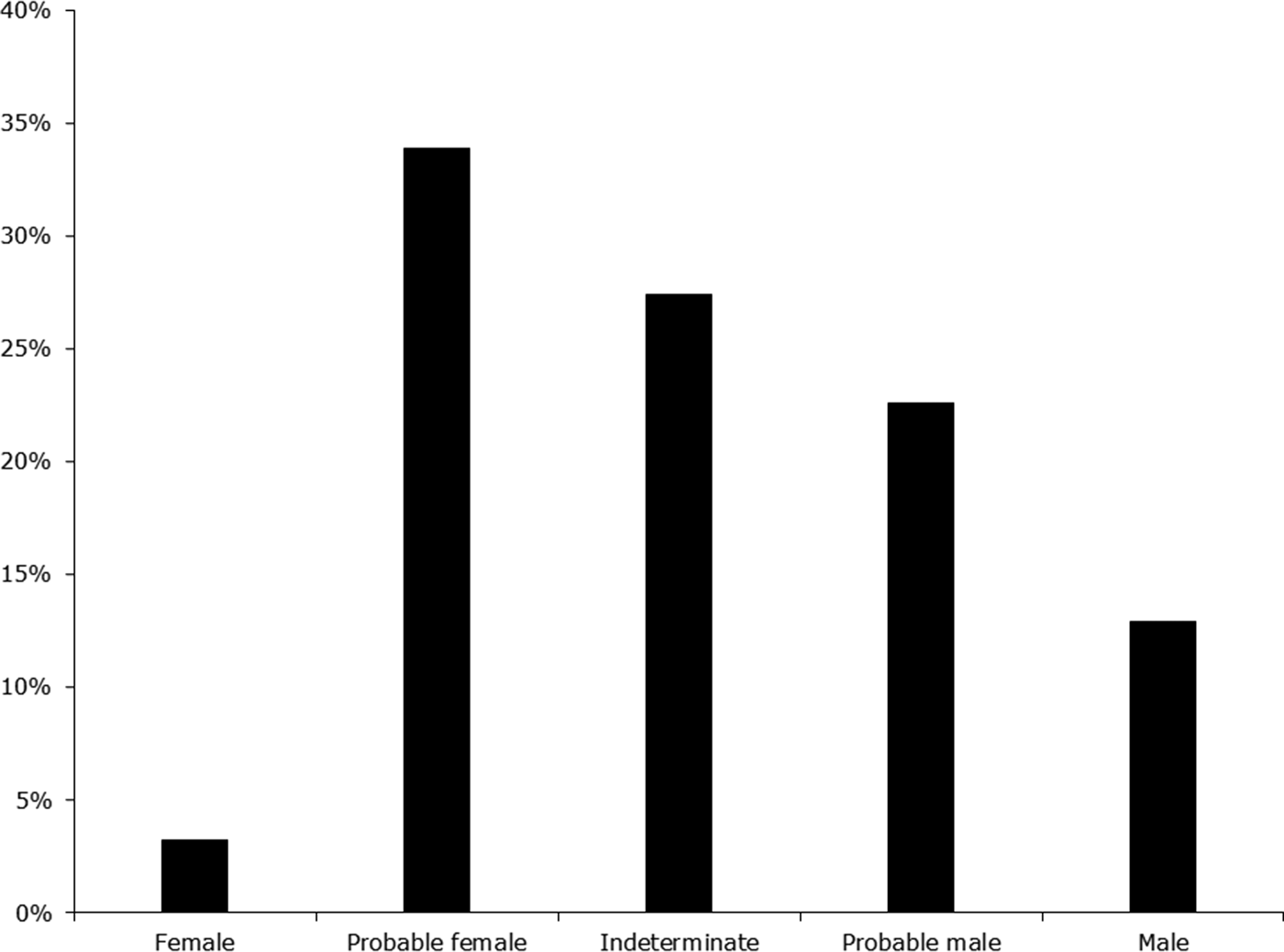
Of the 62 adults and older adolescents assessed for sex at the NMNH by the first author, 37% were female or probably female, 35% were male or probably male, and 27% were indeterminate (Figure 5). There was no difference in burial mode between males and females. In taking a cautious approach toward the reliability of the age and sex estimates for Playa Venado as per the discussion regarding error above, only the 77 individuals analyzed by the author are included in the following intersite comparison.
Sex distribution at Venado Beach based on the adult human skeletal remains held by the National Museum of Natural History (n = 62).

Playa Venado in a Regional Perspective
Demography and Body Positioning
The demographic composition of the Playa Venado burials is striking in comparison to burials at the neighboring mortuary precincts at Sitio Conte and El Caño, both of which contain primary, simultaneous burials suggestive of sacrifice, or alternatively, postwar or epidemic mass burial (Mayo Torné et al. Reference Mayo Torné, Torné, Bueno, Hervás Herrera and López2016: 41). Although the human skeletal remains from neither Sitio Conte nor El Caño have yielded physical evidence of cut marks or other traumatic injury, likely due to the reportedly poor preservation of the bones, the demographic characteristics at both sites fit with Tiesler's (Reference Tiesler, Tiesler and Cucina2007) postsacrificial deposit model in that they contain high frequencies of adolescent and young adult males (Briggs Reference Briggs1989; Mayo Torné et al. Reference Mayo Torné, Torné, Bueno, Hervás Herrera and López2016; Trujillo-Mederos Reference Trujillo-Mederos2015). Furthermore, the burial modes for many mortuary contexts at both sites are abnormal for the region, containing multiple primary extended burials, closely encircling a principal seated individual. These differences have led many to describe the two sites as necropolises, or large funerary ritual centers for the elite (Briggs Reference Briggs1989, Haller Reference Haller2008, Mayo Torné et al. Reference Mayo Torné, Torné, Bueno, Hervás Herrera and López2016).
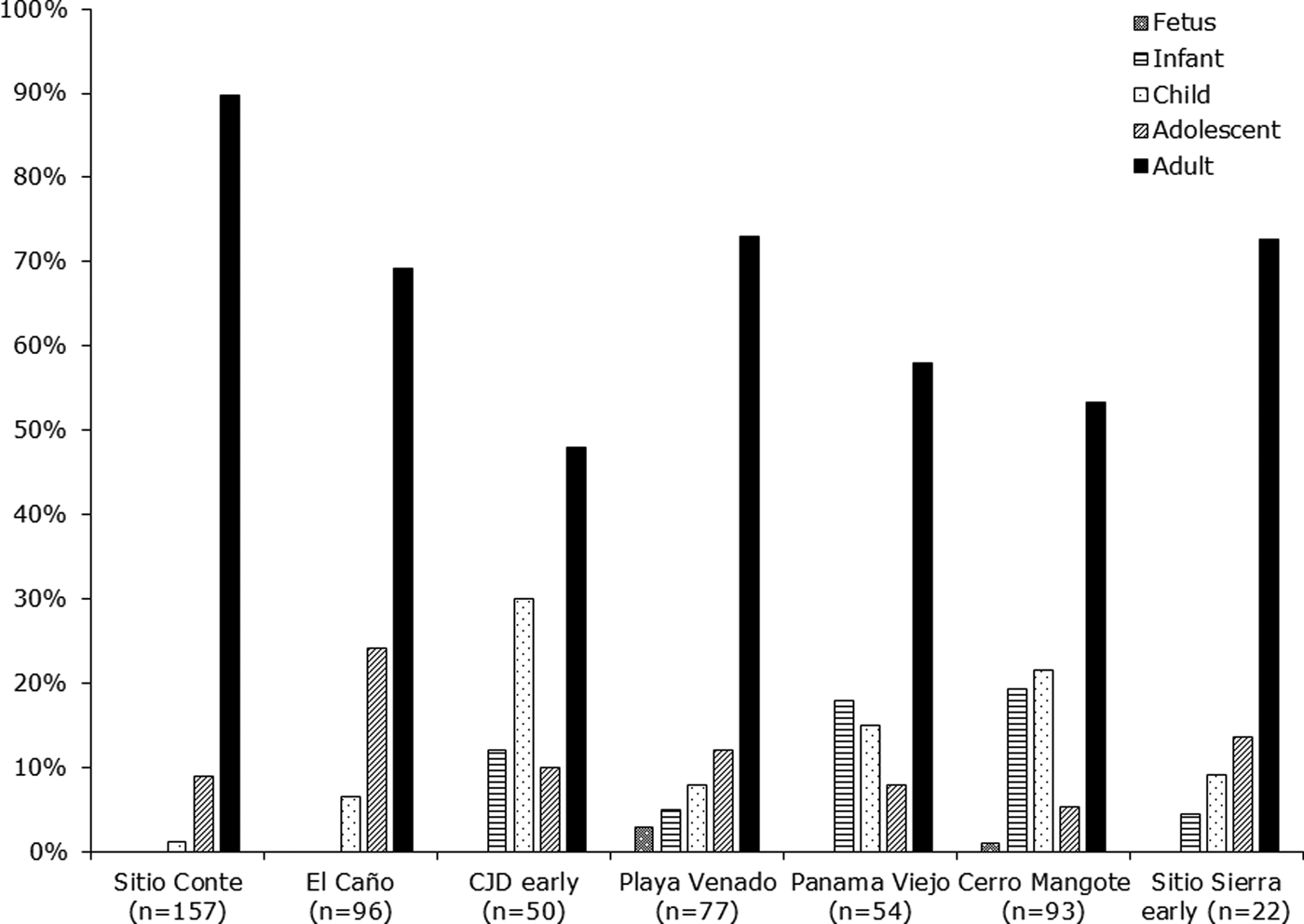
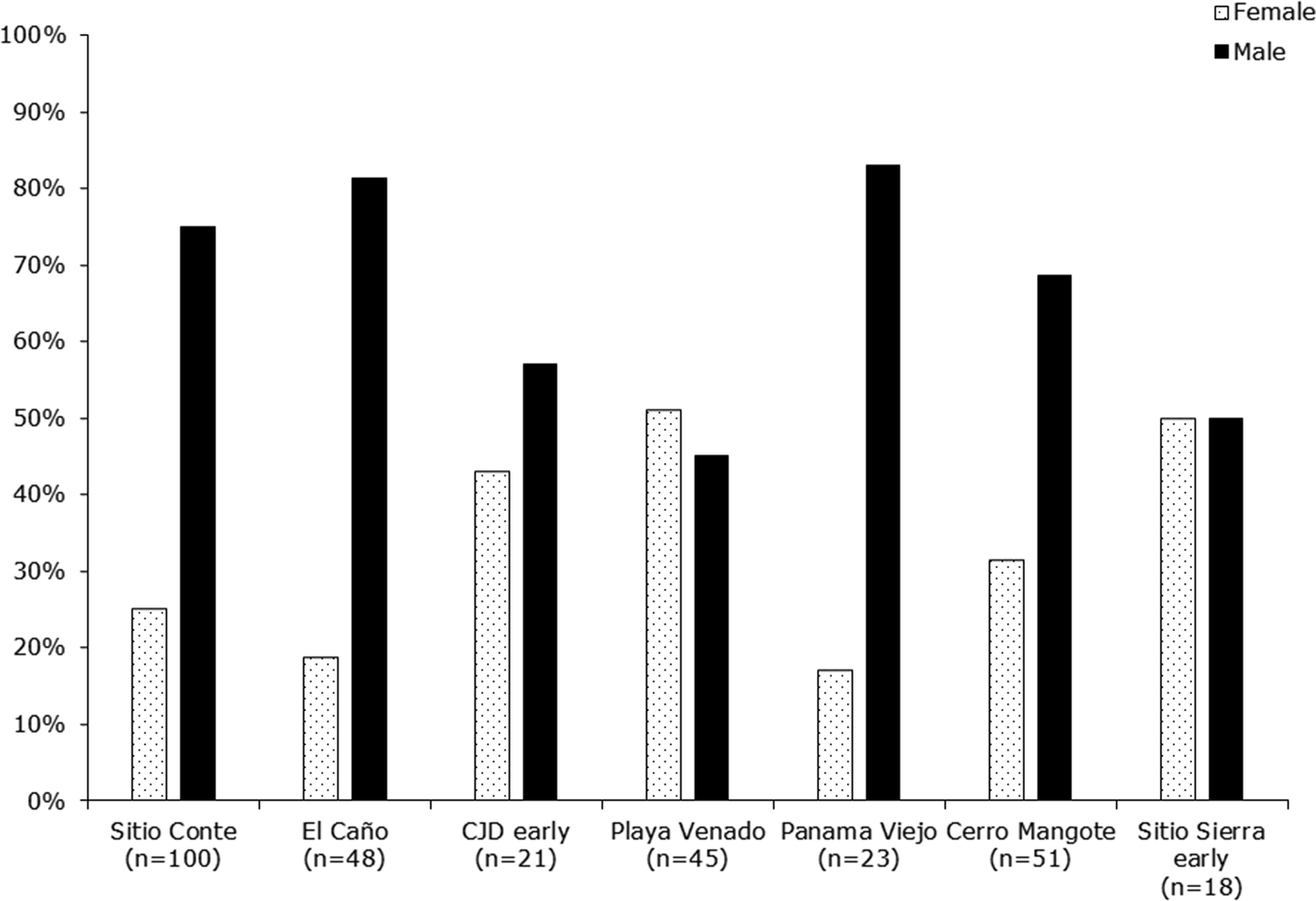
Comparatively, the demography of Playa Venado follows more closely to the early (cf. “sub-oven”) burials found at Cerro Juan Díaz (Figures 6 and 7)—a site similar to Playa Venado in many archaeological attributes, including burial style, material culture iconography, and artificial cranial modification (Carvajal et al. Reference Carvajal, Diaz, Herrera and Cooke2006; Cooke Reference Cooke2011; Cooke et al. Reference Cooke, Sánchez Herrera, Isaza Aizpurúa and Yancky1998; Cooke et al. Reference Cooke, Sánchez, Udagawa and McEwan2000: Figure 8-5; Sánchez Reference Sánchez, Snarskis, González and Sánchez2000; Stewart Reference Stewart1958). Other non-elite sites in the central region of Panama follow similar normal demographic patterns expected for nonindustrial populations, with higher proportions of infants, young children, and older adults represented in the cemeteries than adolescents and young adults. At many of these sites, as is the case with Playa Venado (see Figure 4), a greater proportion of females are represented in the adolescent and young adult age groups, likely due to the health impacts of parturition (Smith-Guzmán Reference Smith-Guzmán2016, Reference Smith-Guzmán2017).
Age-at-death distribution of seven precolumbian sites in Panama. Data for Sitio Conte and El Caño were taken from Briggs (Reference Briggs1989) and Trujillo-Mederos (Reference Trujillo-Mederos2015), respectively. Other data are original from the first author's own analyses. Age categories defined as follows: Fetus: < 0 years; Infant: 0–2 years; Child: 3–12 years; Adolescent: 13–20 years; Adult: 21+ years. CJD: Cerro Juan Díaz.

Sex distribution of human remains from seven precolumbian sites in central Panama. Probable males and females were grouped with definitive sex estimates for clarity. Data for Sitio Conte and El Caño were taken from Briggs (Reference Briggs1989) and Trujillo-Mederos (Reference Trujillo-Mederos2015), respectively. Other data are original from the first author's own analyses. CJD: Cerro Juan Díaz.

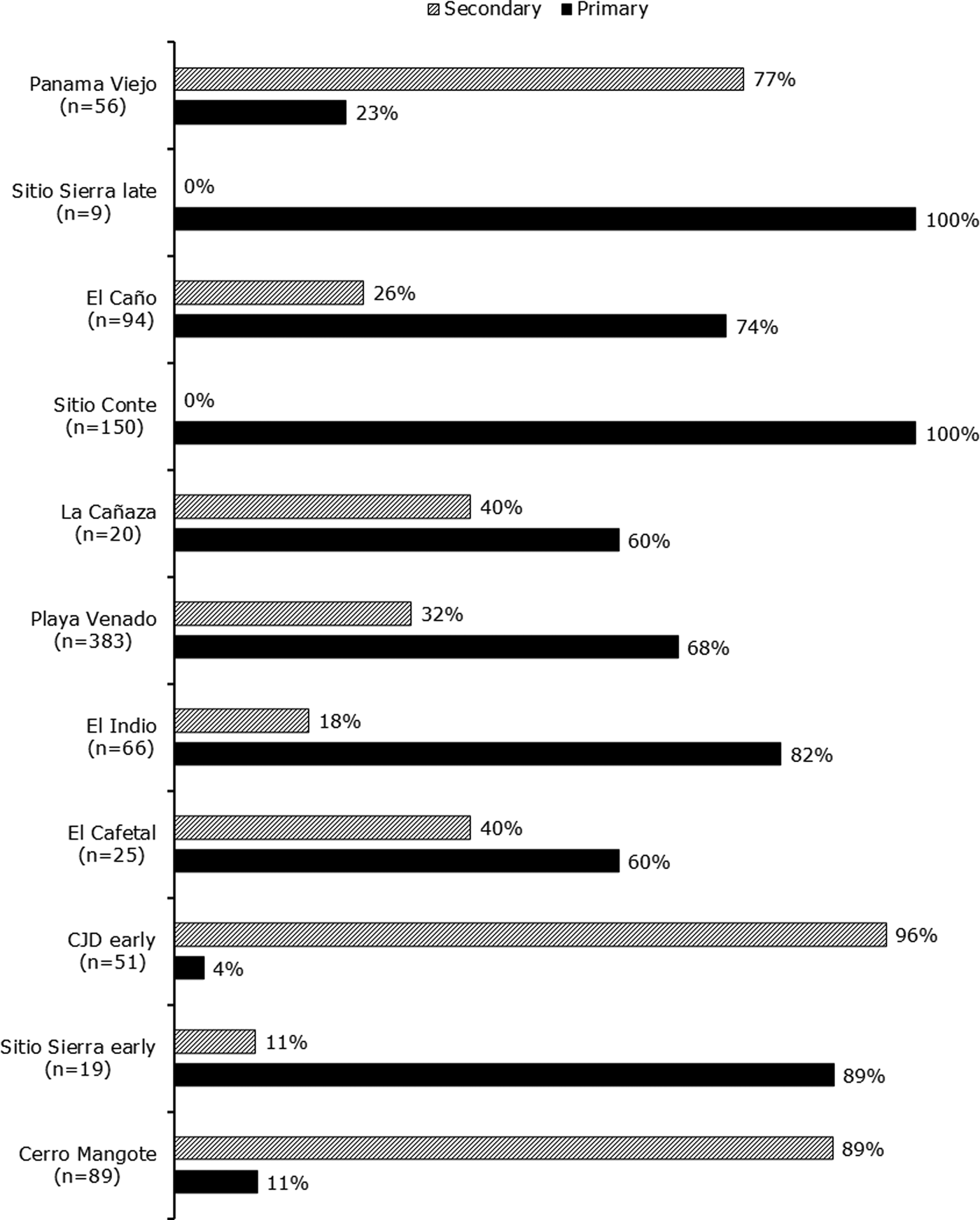
A comparison of burial modes at precolumbian sites in the central region of Panama shows no outstanding trends (Figure 8). There does seem to be a slight increase in primary burials over time, but caution must be taken due to the low sample size for the Sitio Sierra late burials, and the potential for confusion between primary flexed burials and secondary tightly flexed or bundle burials. If indeed the ancient populations of Panama were actively preserving the corpses of their dead as the ethnohistorical data suggest, this practice may have resulted in the secondary burials of fully or partially articulated skeletons that mimic the appearance of primary burials. Similarly, a disturbed primary burial involved in the reuse of mortuary space in antiquity may appear to the archaeologist as a secondary burial.
Distribution of burial types at sites in central Panama, with sites in descending order by approximate date range. Data for Sitio Conte, La Cañaza, El Indio, and El Cafetal are from Briggs (Reference Briggs1989). Data for and El Caño are from Trujillo-Mederos (Reference Trujillo-Mederos2015). Other data are original, from the first author's own analyses. CJD: Cerro Juan Díaz.

The appearance of secondary “caches” of human skeletal remains in the region, which contain numerous isolated skulls, jaws (cf. Carvajal et al. Reference Carvajal, Diaz, Herrera and Cooke2006:104), or perforated human teeth (Ladd Reference Ladd1964:150; Mitchell Reference Mitchell1964:570), suggests that precolumbian populations in Panama interacted with the dead in ritual contexts over long periods of time. A prime example of this interaction was found in a burial under the Plaza Mayor of the old city of Panama (“Panama Viejo”), whose primary occupant was a 35–45-year-old female who lay extended, supine, and surrounded by 9 male skulls, one of which dates to at least 600 years older than the woman (Mendizábal Reference Mendizábal2004). Intriguingly, around the neck of this principal female individual was a Spondylus shell necklace similar in overall shape to the exquisite shell gorget found around the neck of a male skeleton at Playa Venado (currently housed at the Dumbarton Oaks museum, object PC.B.387), but with a slightly different pendant-bead type.
Material Culture
The individual bead-pendants that make up the gorgets found at Playa Venado occur on the eastern shore of the Azuero Peninsula (Ladd Reference Ladd1964: Plate 19, n, p, r, and t). They are known as “walking-stick beads” (cuentas de bastón in Spanish), and are also recorded in cast gold (cf. National Museum of the American Indian object 24/2465). A workshop for manufacturing walking-stick beads from Pacific giant conch (Lobatus galeatus) was found at Cerro Juan Díaz, and cross dated by reference to the predominant Cubitá Group ceramics stratified within it to cal AD 500–700 (Cooke Reference Cooke2011; Mayo and Cooke Reference Mayo and Cooke2005). A worked L. galeatus shell similar to the one described by Mayo and Cooke (Reference Mayo and Cooke2005: Figure 9, a) was found housed with the human remains from Playa Venado at the NMNH, suggesting that the walking-stick bead-pendants were also manufactured at this site.
The development of decorated pottery categories between around 400 BC and AD 500 in east and west Panama provinces, and in the Chagres River basin, bears witness to a recognizable regional ceramic style that nonetheless exhibits developmental parallels with ceramic sequence evolution in Coclé, Azuero and southern Veraguas (Martín et al. Reference Martín, Cooke, Bustamante, Holst, Lara and Redwood2016; Núñez Cortés Reference Núñez Cortés2015). The most intensive use of the Playa Venado mortuary precinct spans the period AD 550–850 based on the radiocarbon dating of cultural and geological features, and pottery typology (Smith-Guzmán et al. Reference Smith-Guzmán, Sánchez Herrera, Cooke, Bray, Díaz, Acosta, Redwood, Ranere, McEwan, Cockrell and Hoopes2018). During this time span, a large proportion of the decorated pottery buried with the deceased at Playa Venado resorts to the same decorative modalities as coeval Greater or Gran Coclé wares manufactured in Pacific Coclé and Veraguas and the Azuero Peninsula, but most of the Playa Venado vessels appear to have been locally made (Cooke Reference Cooke2011; Cooke et al. Reference Cooke, Sánchez, Udagawa and McEwan2000; Lothrop Reference Lothrop1942; Sánchez-Herrera and Cooke Reference Sánchez Herrera and Cooke2000).
One hypothesis posits that these distributional changes in pottery between AD 500 and 900 are related to broadening contacts between the collection centers and manufacturing workshops for fine shell ornaments in pearl oyster (Pinctada mazatlanica), and at least two varieties of thorny oyster (Spondylus calcifer and S. princeps; Cooke and Sánchez Reference Cooke and Herrera1997; Cooke et al. Reference Cooke, Sánchez Herrera, Isaza Aizpurúa and Yancky1998; Sánchez Herrera and Cooke Reference Sánchez Herrera and Cooke2000). These links in material culture around Panama Bay, from the south of the Azuero Peninsula to Playa Venado and Panamá Viejo, are mirrored by similarities in mortuary behavior at non-elite burial grounds in this region, as discussed above.
By about AD 1000, another more categorical change occurs in pottery distribution in Panama to the east of the El Valle volcano. Pottery distribution across this region after this date, and until Spanish conquest, is broadly co-terminus, not only with the archaeological concept of a Greater or Gran Darién culture area (Cooke Reference Cooke1976; Martín-Rincón Reference Martín-Rincón, Guillermo, Rovira and Martín2002; Mendizábal Reference Mendizábal2004), but also with the “language of Cueva” that was used either as a vernacular or as a trade language (Constenla Umaña Reference Constenla Umaña1991, Reference Constenla Umaña, Campbell and Grondona2012; Cooke Reference Cooke and Camargo2016; Romoli Reference Romoli1987). This is an intractable dataset, however, that compromises the relative robustness of alternate hypotheses (Grugni et al. Reference Grugni, Battaglia, Perego, Raveane, Lancioni, Olivieri, Ferretti, Woodward, Pascale, Cooke, Myres, Motta, Torroni, Achilli and Semino2015:S1 file; Cooke Reference Cooke and Camargo2016).
Shifting Interpretations
Having reevaluated the physical evidence from archival materials and the human remains recovered from the site, we argue that the interpretation of Playa Venado as a postsacrificial deposit should be revised in light of the lack of physical marks of perimortem violence on the skeletons, the demographic distribution representing all members of the population, and the comparison of the burial types present at other sites within the region and interaction sphere. Playa Venado does not correspond to the postsacrificial demographic and mortuary features present at the mortuary precincts of Sitio Conte and El Caño, which were ostensibly used to bury very wealthy and powerful individuals, but rather corresponds more closely to non-elite sites such as Cerro Juan Díaz. Although lacking evidence for perimortem violent events such as sacrifice, many of the characteristics present in the burials at Playa Venado agree with the chroniclers’ accounts of postmortem body processing and maintenance prior to burial (Espinosa Reference Espinosa and Jopling1994; Martyr D'Anghera Reference Martyr D'Anghera and MacNutt1912). Thus, we propose an alternative interpretation of the site as a cemetery associated with ritual ancestor veneration as described by Espinosa (Reference Espinosa and Jopling1994). Rather than an example of violent death and careless deposition, Playa Venado presents an example of how precolumbian societies in the Isthmo-Colombian area showed respect and care for their kin after death.
Acknowledgments
The authors would like to thank the following individuals who assisted in the process of obtaining the data used in this article: David Hunt (National Museum of Natural History), Katherine Meyers (Harvard Peabody Museum Archives), and Brian Cockrell (Metropolitan Museum of Art). Ilean Isaza kindly helped document the archival materials at the Peabody Museum. We acknowledge the help and encouragement of the interdisciplinary research team that is currently reevaluating the site of Playa Venado on a broad scale: Luis A. Sánchez Herrera, Claudia Díaz, Stewart Redwood, Máximo Jiménez, Anthony J. Ranere, and Warwick Bray. We are grateful to Scarlett L. Mora Lorenzo (Universidad de Panamá) for the artistic renderings of the crania shown in Figure 2. Thanks also go to María Fernanda Martínez Polanco for her assistance in editing the Spanish abstract.
Data Availability Statement
Digital data compiled and used in this manuscript may be made available for research purposes by contacting the corresponding author.