Introduction
The development of human beings is inseparable from the advancement of science and technology, but the rapid progress of science and technology often leads to environmental pollution and destruction. Therefore, researching new materials and expanding the application range of materials is an important issue that researchers need to solve urgently [Reference Hu, Zhou, Gong, Liu, Liu, Sun, Wang, Shao, Liu, Qiu and Guo1, Reference Zhang, Li, Zhang, Wang, Tang, Liu, Shao, Ding, Umar and Guo2, Reference Zhao, Bai, Misra, Dong, Guan, Li, Zhang, Tan, Gao, Ding, Du and Guo3, Reference Zhao, Guan, Zhang, Zhao and Bai4, Reference Xie, Cheng, Chu, Chen and Long5, Reference Zhao, Qi, Jin, Wang, Tian and Han6, Reference Hou, Wang, Du, Wang, Du, Liu, Zhang, Hou, Dang, Zhao and Guo7, Reference Xie, Chen, Cheng, Chu and Kuang8, Reference Kirubasankar, Murugadoss, Lin, Ding, Dong, Liu, Zhang, Li, Wang, Guo and Angaiaha9, Reference Sheng, Yang, Wang, Liu, Liu, Yan and Guo10, Reference Jiang, Wang, Li, Sun, Wu, Yan, Xing, Qi, Li, Liu, Wei, Wang, Ding and Guo11, Reference Ma, Wang, Qi, Shi, Wei, Xiao, Huang, Liu, Yu, Teng, Liu, Murugadoss, Zhang, Wang and Guo12, Reference Xie, Cheng, Kuang, Chen and Chu13, Reference Jiang, Murugadoss, Wang, Lin, Ding, Wang, Shao, Wang, Liu, Lu, Wei, Angaiah and Guo14, Reference Liang, Qi, Ma, Xiao, Wang, Liu, Zhang, Guo, Liu, Xie, Ding and Lu15, Reference Dong, Li, Liu, Liu, Wujcik, Shao, Ding, Mai, Shen and Guo16, Reference Dong, Wang, Liu, Liu, Shen, Zhang, Jia, Ding and Guo17, Reference Zhao, Li, Yin, Qian, Huang, Liu, Zhang, Wang, Ding and Guo18, Reference Shi, Wu, Gu, Liang, Xu, Liu, Zhang, Hou, Zhang and Guo19, Reference Guo, Song, Liu, Luo, Ren, Ding, Khan, Young, Liu, Zhang, Kong and Guo20, Reference Cheng, Fan, Ren, Ding, Qian, Guo, Li, An, Lei, Yin and Guo21, Reference Zhao, Li, Bai, Qu, Liang, Liao, Wu, Huo, Liu and Zhang22, Reference Le, Wang, Wang, Wang, Shao, Murugadoss, Wu, Liu, Liu, Gao and Guo23, Reference Hao, Zhao, Peng, Sun, Li, Liu, Wang, Umar and Guo24, Reference Wang, He, Xie, Mai, Li, Li, Zhao, Yan, Liu, Wujcik and Guo25, Reference Shi, Wu, Wu, Liu, Xu, Deng, Gu, Liu, Zhang, Umar, Ma and Guo26, Reference Shi, Jia, Wang, Deng, Xu, Wu, Dong and Guo27, Reference Hou, Tai, Zhao, Zhai, Hou, Fan, Dang, Wang and Liu28, Reference Jiao, Zhang, Liu, Liang, Li, Zhou and Zhang29, Reference Zhao, Bai, Li, Li, Wu, Huo and Tan30, Reference Xu, Shi, Zhao, Deng, Dong, Liu, Murugadoss, Mai and Guo31, Reference Zhao, Zhang, Hou, Chen and Wang32, Reference Zhao, Tian, Zhao, Sun, Guo, Dong, Liu, Wang, Guo, Umar and Hou33]. With the development of intensive aquaculture and feed industry, oxytetracycline is commonly and widely used as feed additives in livestock and poultry industry, resulting in an increase in the total amount of livestock fecal contamination as well as antibiotic contamination. 80% of large-scale farms lack necessary pollution control facilities. As a result, a large number of livestock manures are directly discharged into the environment, causing environmental pollution. Oxytetracycline can rarely be absorbed by organs through oral or intramuscular injection into animals, of which 30–90%, in the form of the original drug and metabolites by animal feces and urine, enter into rivers, lakes, and other drinking environments. Trace amount of antibiotics contaminant often has high bioaccumulation ability; however, current water treatment technologies cannot effectively remove these organic pollutants, posing a serious threat to safe drinking water and human health [Reference Samsuri, Sadegh-Zadeh and Seh-Bardan34, Reference Ameloot, Graber and Verheijen35, Reference Aghababaei, Ncibi and Sillanpää36].
Looking for a cost-effective new adsorbent, which is suitable for drinking water treatment has become the focus in the field of environmental science and engineering. Activated carbon, organic clay, and triolein-activated carbon composite adsorbents are involved [Reference Chen, Chen, Chen, Chen, Lehmann, McBride and Hay37, Reference Cruz, Fournier, García, Molina, Chavarría, Alfaro, Ramírez and Rodríguez38, Reference Luo, Li, Ge, Müller, Yu, Huang, Li, Tsang, Bolan, Rinklebe and Wang39], but researches on environmentally friendly biochar sorbents are few. Adsorption of organic pollutants in the environment belongs to a typical chemical behavior, determining its migration and transformation in soil and water environments, fate, biological, and ecological effects, restoration/mitigation pathways, and their mechanisms [Reference Hu, Zhou, Gong, Liu, Liu, Sun, Wang, Shao, Liu, Qiu and Guo1, Reference Gong, Hu, Yao, Li, Sun, Shao, Qiu and Guo40, Reference Xie, Huang, Zhang, Tong, Liao, Guo, Qin and Guo41, Reference Sun, Zhu, Liu, Wu, Dai, Liu, Shen, Guo, Zheng and Guo42, Reference Kang, Cheng, Lai, Ma, Liu, Mai, Wang, Shao, Xiang, Guo and Guo43, Reference Li, Wang, Qin, Wang, Liu, Shao, Wang, Zhang, Wang, Shen and Guo44, Reference Zhang, Lyu, Zhou, Gu, Ma, Wang, Ding, Shao, Liu and Guo45, Reference Zhang, Wang, Liu, Lv, Wang, Zheng, Liu, Liu, Guo and Shen46, Reference Gong, Hu, Xiao, Cheng, Liu, Wang, Qiu and Guo47, Reference Zhao, An, Lin, Feng, Murugadoss, Ding, Liu, Shao, Man, Wang, Gu, Angaiah and Guo48, Reference Huang, Cao, Shao, Peng and Guo49, Reference Huang, Li, Cao, Peng, Cao, Shao, Liu and Guo50, Reference Gong, Guo, Zhao, Hu, Liu, Sun, Li, Qiu and Guo51]. Therefore, the study of adsorption mechanism has been one of the hot directions in environmental science.
Corn stover is an abundant crop residue in rural Chinese communities. Burning as a traditional disposal method has resulted in persistent air pollution issues. Conversion of corn stover into biochar has been proposed as an environmentally friendly strategy, given the unique characteristics of biochar. In recent years, some scholars have carried out researches on the use of biochar in the treatment of organic pollutants in the environment [Reference Das, Kim, Hedenqvist, Lin, Sarmah and Bhattacharyya52, Reference Thorsten, Nicola, Andreas and Schmidt53, Reference Wang and Xing54, Reference Xu, Xiao, Yuan and Zhao55, Reference Yang, Lin, Wei, Zhao and Wang56]. The biochar adsorbent prepared by oxygen-limited carbonization at low and moderate temperatures has the advantages of high yield, low energy consumption, and short adsorption equilibrium time. In this article, biochar adsorbents were prepared at different carbonization temperatures (200–500 °C), which were controlled within the low to middle temperature range. Oxytetracycline was used as the research object to study the biochar adsorption of oxytetracycline and its mechanism.
Results and analysis
The yield rate of biochar adsorbent
The yield rates of biochar adsorbents prepared at different temperatures (200–500 °C) are shown in Table I.
Yield of biochar adsorbents at different carbonization temperatures.

From Table I, we can see that, with the rising of carbonization temperature, the yield of biochar adsorbents decreased. When the carbonization temperature was 200 °C, the yield was up to 82.28%. Even when the carbonization temperature was 300 °C, the yield was 47.09%. But when the carbonization temperature was 500 °C, the yield was reduced to only 24.57%.
Chemical composition and BET results of biochar adsorbents
As there were uniform structures in biochar adsorbents obtained at different carbonization temperatures, the contents of C, H, N, and O elements; atomic ratios of H/C and (N + O)/C; and surface characteristics of biochar are shown in Table II.
Chemical composition and surface characteristics of four groups of biochar adsorbents.

With the rising of carbonization temperature, the C content of the adsorbents went up from 49.32 wt% (CS200) to 71.61 wt% (CS500), and the corresponding H and O contents decreased from 5.07 wt% to 3.87 wt%, from 42.42 wt% to 20.50 wt%, respectively. The H/C and (N + O)/C atomic ratios were often used to represent aromaticity and polar index of biochar adsorbents, respectively. A smaller H/C represented a higher aromaticity, whereas a smaller (N + O)/C ratio represented a smaller polarity. It can be seen from Table II that sample CS200 was highly polar and fatty. With increasing carbonization temperature, the aromaticity of biochar adsorbents sharply increased, but their polarity was drastically reduced. With the reduced polarity and increased aromaticity, biochars were transformed from “soft carbons” to “hard carbons.” It can be seen that the temperature can regulate the surface structure and biological properties of biochars, which shall have an important impact on the adsorption characteristics and their mechanism. The surface characteristics of biochar were analyzed by N2 adsorption method. Both the specific surface area and pore volume were increased with the increase of the carbonization temperature.
SEM of biochar adsorbents
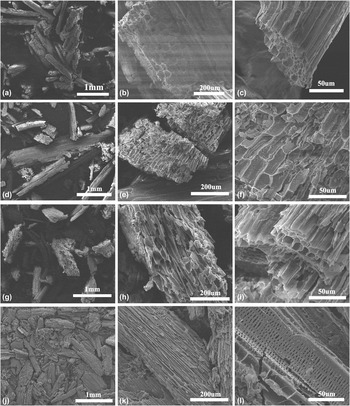
It can be seen from the SEM results that the temperature had an important impact on the surface morphology of biochars. As shown in Fig. 1, pores were regular on the stover surfaces when the carbonization temperature was low. They were similar to the honeycombs and uniformly distributed. When the carbonization temperature was above 400 °C, the pore distribution was relatively disordered. As the temperature rose to 400 °C, the walls of micropores were melted and burned. At the temperature of 500 °C, the walls of micropores were collapsed, increasing the surface roughness of the stover. The destruction of pores may be due to the release of large amount of energy from the inside suddenly and burst through the inner pore paths. The stover pore distribution was thus made disordered, increasing the surface roughness.
SEM images of CS200 under three different magnifications (a) 100×, (b) 500×, and (c) 2000×; CS300 under three different magnifications (d) 100×, (e) 500×, and (f) 2000×; CS400 under three different magnifications (g) 100×, (h) 500×, and (i) 2000×; CS500 under three different magnifications (j) 100×, (k) 500×, and (l) 2000×.

Determination of COD in wastewater
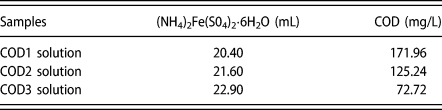
Chemical oxygen demand (COD) reflects the degree of pollution by reducing substances in aqueous. To determine the concentration of organic pollutants in wastewater, the aqueous samples were diluted into three grads, which were 1.658 g/L, 0.329 g/L, and 0.164 g/L. The COD value of each grad solution was measured, and the results of COD values were marked by COD1, COD2, and COD3, respectively, (as shown in Table III).
COD values of wastewater with different concentrations.
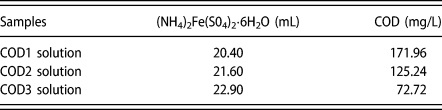
Note: The consumption of (NH4)2Fe(S04)2·6H2O in the blank test was 24.70 mL.
The higher the concentration of wastewater, the greater the CODs. Because the molecular size and molecular type of organic pollutants may affect the contact ability with the adsorption sites on the surface of biochar, they also affect the adsorption strength of biochar on them. The concentration of oxytetracycline and the coexisting organic pollutants may affect the adsorption of oxytetracycline by biochar. Due to competition, the adsorption capacity of oxytetracycline by biochar will be reduced.
Adsorption equilibrium time of biochar adsorbents
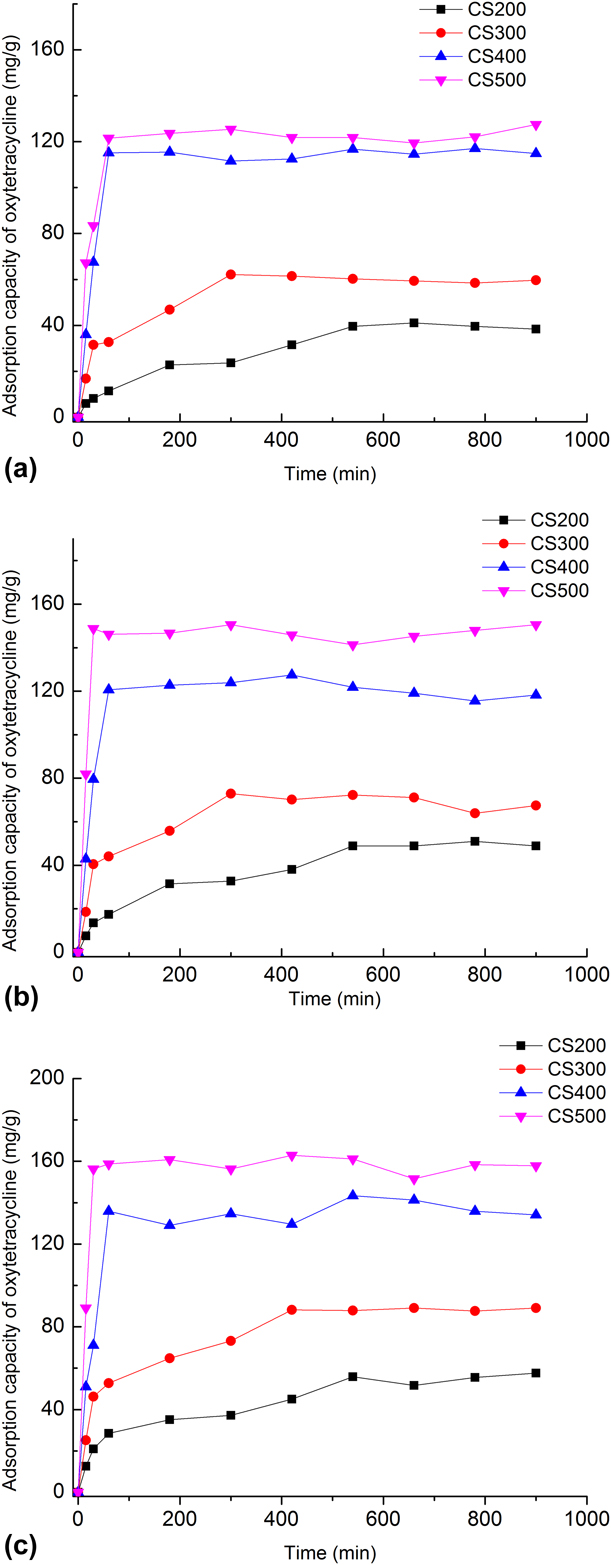
The adsorption curves of oxytetracycline on biochar adsorbent were determined, which are shown in Fig. 2. At 30 °C, 0.5 g biochar (CS200, CS300, CS400, and CS500) was added to 50 mL wastewater with 60 mg/L oxytetracycline.
Adsorption equilibrium time of different biochar adsorbents for oxytetracycline in (a) COD1, (b) COD2, and (c) COD3 solutions.
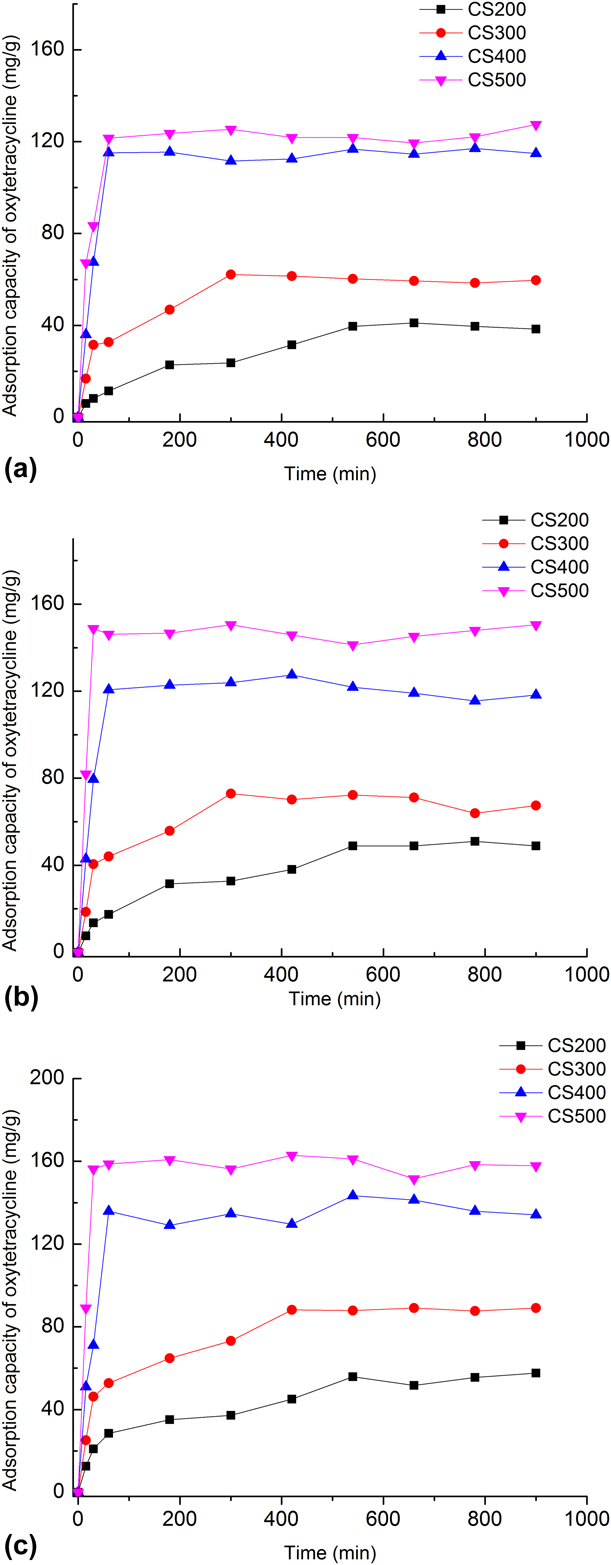
As shown in Figs. 2(a)–2(c), when the adsorption time reached 3 h, the adsorption capacity of CS200 to oxytetracycline in COD1 solution reached 57% of the equilibrium adsorption capacity, and the adsorption capacity in COD2 solution exceeded 64% of the equilibrium adsorption capacity, and the maximum adsorption capacity of CS200 appeared in COD3 solution. At this time, the adsorption capacity of CS200 to oxytetracycline was 35.1 mg/g. The adsorption equilibrium of CS300 for COD1 and COD2 solutions appeared at 5 h, whereas that for COD3 solutions, the adsorption equilibrium was reached at 3 h. The adsorption equilibrium of CS400 and CS500 in COD1 solution was reached at 1 h, and the equilibrium adsorption capacity was 115.2 mg/g and 121.5 mg/g, respectively. The equilibrium adsorption time of CS400 in COD2 and COD3 solutions was 1 h, and the equilibrium adsorption capacity was 120.6 mg/g and 135.9 mg/g, respectively. The equilibrium adsorption capacity of CS500 in COD2 and COD3 solutions was 148.8 mg/g and 156.3 mg/g, respectively, which appeared at 0.5 h at the beginning of the reaction. The adsorption capacity of four kinds of biochars to oxytetracycline was CS500 > CS400 > CS300 > CS200.
The adsorption of oxytetracycline was very fast at the beginning for the CS200 of biochar. The adsorption capacity of the biochar to oxytetracycline had reached 60% of the equilibrium adsorption capacity in 3 h, and the adsorption rate reached more than 80% in 7 h. After that, the adsorption rate gradually decreased and reached the equilibrium at 9 h. It can be inferred that the adsorption of oxytetracycline by biochar from corn straw can be divided into early rapid reaction stage and late slow equilibrium stage. All oxytetracycline were adsorbed rapidly on the easily accessible adsorption sites nearly. With the continuous adsorption, the surface adsorption sites were gradually decreased. At this time, oxytetracycline diffused into the pores of biochar, so the adsorption effect in the later stage was slower than that in the first stage. At the same time, the coexisting pollutants in the solution can affect the form of oxytetracycline in wastewater and the surface charge distribution of biochar, thus affecting the adsorption of oxytetracycline. The coexisting pollutants in the solution could compete with oxytetracycline and also reduce the adsorption of oxytetracycline on the surface of adsorbent to a certain extent.
Determination of saturation adsorption of biochar
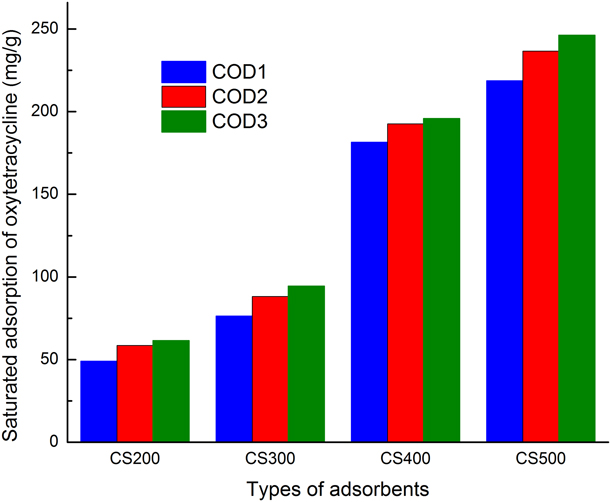
The adsorption of oxytetracycline by biochar is a physical process of rapid adsorption in the early stage and slow equilibrium in the middle and late stages. The results of saturated adsorption of biochar are shown in Fig. 3.
Saturated adsorption capacity of oxytetracycline in three CODs with different concentrations by biochar.
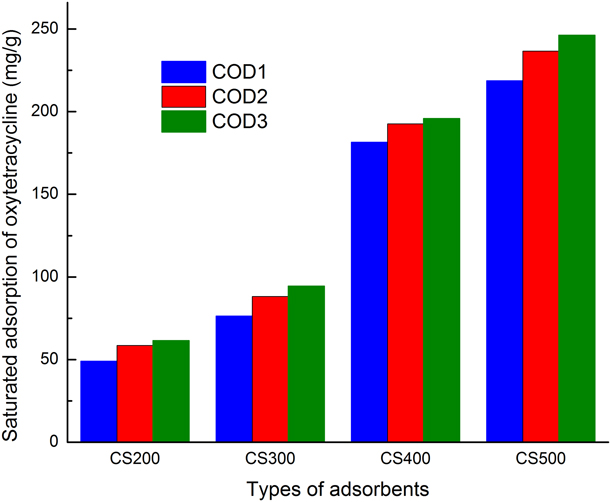
According to Fig. 3, the minimum saturated adsorption capacity was 48.9 mg/g, which appears in COD1 solution, whereas the maximum saturated adsorption capacity of COD3 solution was 61.5 mg/g. The order of saturated adsorption capacity is COD3 > COD2 > COD1. The maximum saturated adsorption capacities of the three COD solutions were 218.7, 236.7, and 246.3 mg/g, which all appeared in the adsorption performance test of CS500. With the increase of preparation temperature, the saturated adsorption capacity of the four biochars was increased in turn, i.e., the adsorption performance of CS500 was the best. The results may be due to the structural characteristics of CS500. The higher the temperature is, the more uniform the particle size is. The aromaticity was increased while the polarity was decreased. The adsorption capacity of organic compounds can be enhanced with the increase of their aromaticity. Therefore, the biochar prepared at higher temperature is expected to be used as a cheap adsorbent to inhibit the migration of oxytetracycline in wastewater. Similar results had been reported. Results showed that the biochars from forest residues have the highest removal efficiencies of oxytetracycline at 263.8 mg/g [Reference Chen, Zhang and Luo57]. Although the saturated adsorption capacity was higher than that of this experiment, its biochar must be treated by 5 M H3PO4, which might cause some pollution to the environment.
Effect of contact time and adsorption kinetics
For the data in Fig. 5, both pseudo–first-order kinetic model and pseudo–second-order kinetic model were used in the kinetic mechanism analysis. The representations of the two models are shown in the following equations:
Pseudo–first-order kinetic model:
 $$\ln \left( {{q_{\rm{e}}} - {q_t}} \right) = \ln \;{q_{\rm{e}}} - {k_1}t\quad .$$
Pseudo–second-order kinetic model:
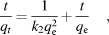 $${t \over {{q_t}}} = {1 \over {{k_2}q_{\rm{e}}^{\rm{2}}}} + {t \over {{q_{\rm{e}}}}}\quad ,$$
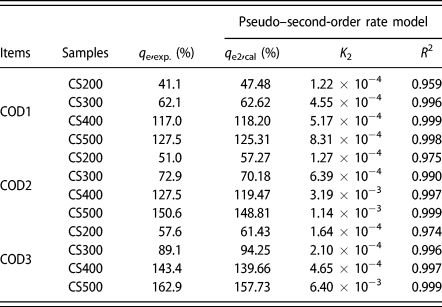
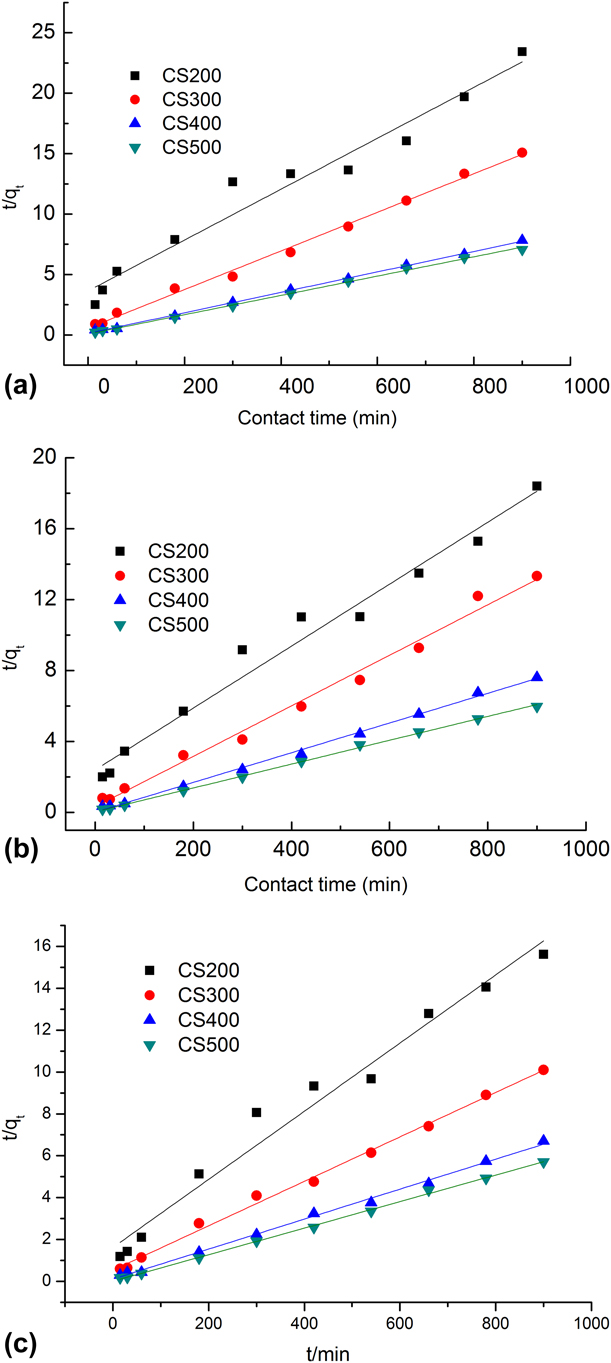
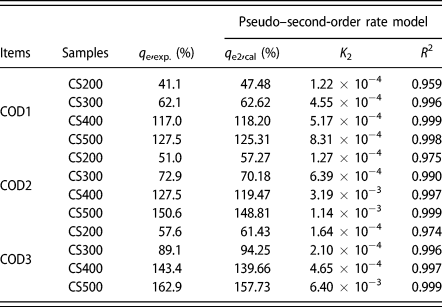
where the values of q e and q t (mg/g) are the adsorption capacity at equilibrium and t-time, respectively, K 1 value (min−1) is the adsorption rate constant of pseudo–first-order kinetic equation, and K 2 value (min−1) is the adsorption rate constant of pseudo–second-order kinetics equation. The obtained parameters of the relevant models are shown in Table IV and the linear curves in Fig. 4.
Kinetics model constants and correlation coefficients for the adsorption of CS200, CS300, CS400, and CS500 to COD, COD2, and COD3 at 30 °C.
Adsorption kinetics of different biochar adsorbents for oxytetracycline in (a) COD1, (b) COD2, (c) COD3 solutions at 30 °C.
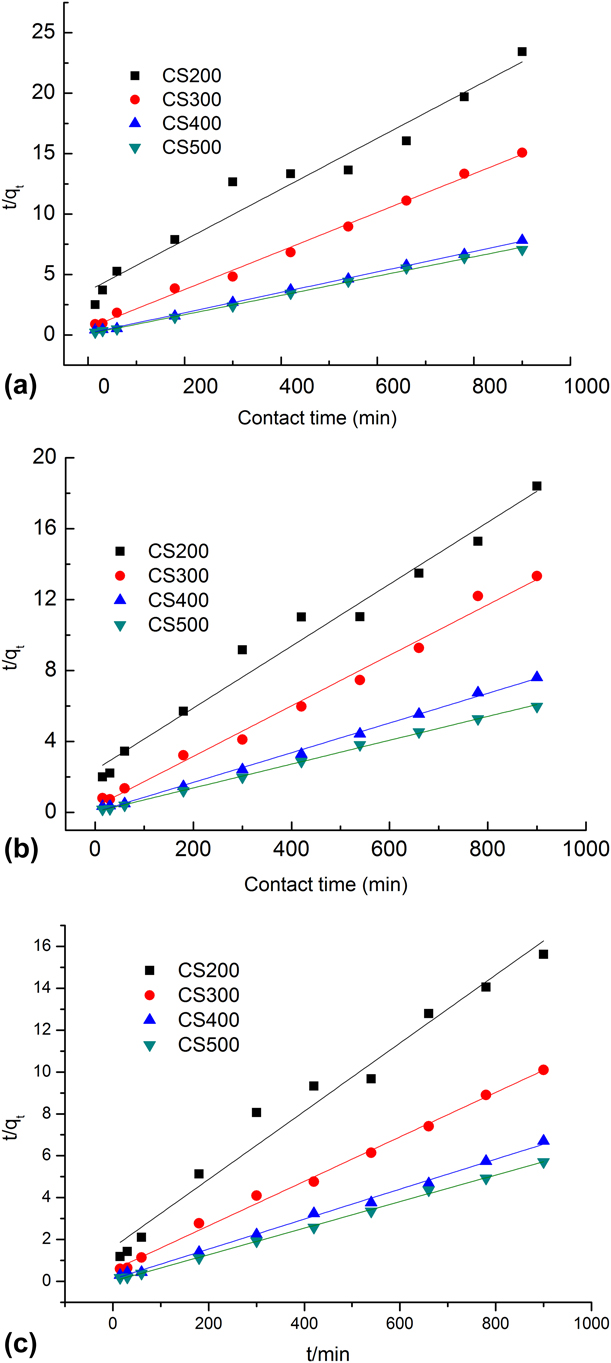
According to the fitting results of adsorption kinetics model in Table IV, pseudo–first-order kinetic model is incompatible and pseudo–second-order kinetic model can well describe the adsorption process of biochar adsorbents for oxytetracycline. It shows that the adsorption of oxytetracycline by biochar was mainly chemical adsorption. It further proved that biochar has a good adsorption capacity for oxytetracycline. The equilibrium adsorption capacity of adsorbent CS200–CS500 increased with the rising carbonization temperature.
Conclusions
The biochar was conducted with the method of limited-oxygen heating-up carbonization using the materials of corn stover. Biochar adsorbents showed a strong adsorption capacity of aquatic antibiotics. The carbonization temperature can regulate their surface and structural characteristics, and thus determine its adsorption properties and mechanisms. Adsorption kinetics process of biochar adsorbents complied with pseudo–second-order kinetic model. Combining the SEM analysis results, it can be seen that the pore deformation of stover was intensified with the elevation of carbonization temperature. As a result, the surface roughness was increased and the pore effect was easier to play, improving the adsorption properties. With this unique structure and high electrical conductivity of carbon, this material can be used for many other applications such as sensors, electromagnetic interface (EMI) shielding, fillers for nanocomposites, energy storage/conversion, etc. [Reference Luo, Pei, Wang, Qian, Miao, Pan, Chen and Feng58, Reference Liu, Meng, Yang, Zhao and Liu59, Reference Qian, Yuan, Wang, Liu, Zhang, Shi, Guo and Wang60, Reference Zhao, Ge, Liu, Shao, Mai, Zhao, Hao, Wu, Yu and Guo61, Reference Sun, Zhang, Dang, Liu, Fei, Shao, Lin, Guo, Xiang, Yerra and Guo62, Reference Wang, Zhou, Luo, Guo, Lin, Shao, Guo, Liu, Shen, Wang and Guo63, Reference Wang, Zhou, Luo, Liao, Wang, Shao, Guo and Guo64, Reference Du, Wang, Zhan, Sun, Kang, Jiang, Zhang, Shao, Dong, Liu, Murugadoss and Guo65, Reference Sun, Yang, Pu, Dou, Wang, Wang, Hao, Chen, Shao, Dong, Wu, Ding and Guo66, Reference Lin, Lin, Chen, Yu, Li, Gao, Dong, Shao, Wu, Ding and Guo67, Reference Wu, Xu, Wang, Wang, Liu, Liu, Shao, Liu, Gao and Guo68, Reference Xie, Zhu, Yi, Kuang, Cheng, Tang and Deng69, Reference Liu, Yang, Sun, Lai, Zhao, Peng and Liu70, Reference Gu, Xu, Dong, Xie, Shao, Fan, Liu, Wu, Wei and Guo71, Reference Wu, Liu, Xu, Liu, Liu, Liu, Zhang, Xie and Guo72, Reference Qu, Shi, Wu, Liu, Jiang and Yan73, Reference Zhu, Cui, Zhang, Chen, Dong, Liu, Shao, Ding, Wu and Guo74, Reference Liu, Li, Zhou, Chen, Liu and Liu75, Reference Yang, Yang, Wang, Dong, Liu, Wujcik, Shao, Wu, Ding and Guo76, Reference Lin, Lin, Wang, Chen, Wang, Dong, Gao, Shao, Wu, Ding, Liu and Guo77].
Materials and methods
Material
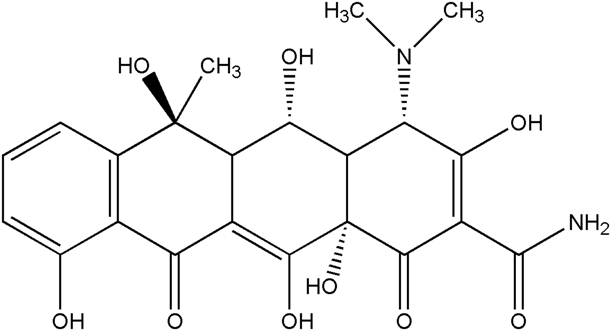
Corn stovers were provided by Shenyang Agricultural University test sites. Oxytetracycline was purchased from Yifang Science & Technology Co., Ltd. (Tianjin, China) with a reported purity of 95%, and the molecular structure is presented in Fig. 5. Potassium dichromate, phenanthroline, ferrous sulfate, ammonium ferrous sulfate, ammonium acetate, acetonitrile, concentrated sulfuric acid, and silver sulfate were purchased from Sinopharm Chemical Reagent Co., Ltd. (Shanghai, China). All the chemicals were analytical grade and used as received.
Molecular structural of oxytetracycline.

Preparation of oxytetracycline solution
500 mg oxytetracycline was dissolved in 500 mL distilled water. After sufficient stirring, the solution was transferred into a 1000 mL volumetric flask to a constant volume. This solution was 500 mg/L oxytetracycline mother solution.
Preparation of COD solutions
The wastewater was diluted into three concentrations. The COD of different concentration was determined by potassium dichromate method, named as COD1, COD2, and COD3 solution [Reference Amenta78]. 10 mL potassium dichromate standard solution was added into a 500 mL conical bottle, and then water was added to dilute to about 110 mL, and 30 mL concentrated sulfuric acid was slowly added and mixed well. After cooling, 0.45 mL of indicator solution was added and titrated with ammonium ferrous sulfate solution. The color of the solution was yellow, and the end point was blue-green to reddish-brown.
Preparation of biochar
Corn stovers were filtered with 30-mesh sieves and then washed three times with distilled water. They were dried overnight under 80 °C in a drying oven. 10 g pretreated corn stovers were put into a 50 mL stainless steel sealed container, which was then stamped, sealed, and placed in a muffle furnace for carbonization. After the muffle furnace was heated to 100 °C for 1 h of carbonization, the temperatures were then adjusted to 200 °C, 300 °C, 400 °C, and 500 °C for further carbonization of 3 h. After carbonization, the reactor was cooled down to room temperature. Then the carbonized biochars were soaked with 1 mol/L hydrochloric acid for 24 h and washed with distilled water to neutral. They were then dried overnight under 80 °C. After that, they were filtered with 30-mesh sieves again and stored with brown bottles in desiccator. Their codes were CS200, CS300, CS400, and CS500, respectively, where CS represented corn stovers and the numbers represented the carbonization temperature.
Determination of the yield rate
The yield rate was calculated as following: yield rate of biochar adsorbents = quality of carbonized biochars/quality of corn stovers ×100%.
Elemental analysis and surface characteristics of biochar adsorbents
C, H, and N elements in four kinds of biochar adsorbents CS200, CS300, CS400, and CS500 were determined with elemental analyzer (German Elementar Company, vario EL III, Düsseldorf, Germany). Because the samples were used after removing ashes, their O element content was obtained by subtraction. All samples were parallel measured three times. H/C and (N + O)/C atomic ratios of the four groups were calculated with the above averages, wherein the H/C represented aromaticity of biochar absorbents and (N + O)/C represented the polarity of biochar absorbents. The specific surface area, pore volume, and pore size of biochar were measured by BET-N2 method with a physical adsorbent (Micromeritics ASAP2460, Norcross, Georgia).
Scanning electron microscopy (SEM) analysis
The surface morphology was observed with a TM1000 Scanning Electron Microscope (SEM; Hitachi Company, Tokyo, Japan).
Determination of adsorption characteristics of biochar adsorbents
Adsorption equilibrium time
0.5 g of four groups of biochars (CS200, CS300, CS400, and CS500) were added into 50 mL oxytetracycline solution (60 mg/L) after drying in an oven for 24 h, respectively. The adsorption equilibrium time test was conducted at 30 °C in a 100 r/min shaking incubator. After absorbing for the appropriate time, the biochars were filtered out. The concentration of oxytetracycline was determined by a high-performance liquid chromatography (Agilent 1260, Santa Clara, California) using an ultraviolet detector and a C18 column. The analyses were dissolved in the mobile phase (ammonium acetate:acetonitrile = 85:15) at a low rate of 1 mL/min at 30 °C. The injection volume was fixed at 20 µL. Ultraviolet detection was conducted at 280 nm.
Saturated adsorption capacity
0.5 g of four groups of biochars (CS200, CS300, CS400, and CS500) was added into 50 mL oxytetracycline solution with three COD values. The concentrations of oxytetracycline solution were 10, 20, 30, 40, 50, 60, 70, 80, 90, 100, 110, and 120 mg/L, respectively. Each gradient had three parallels. The flasks were shaken at 30 °C and 100 r/min for 24 h until adsorption equilibrium. They were then filtered and the filtrates were measured for oxytetracycline content.
Adsorption kinetics
The experiments were conducted under 30 °C. Adsorption kinetics was investigated to evaluate the rate of oxytetracycline adsorption and the equilibrium time during the adsorption of oxytetracycline by biochar adsorbent. The adsorption rate was confirmed by the pseudo–second-order model.
Acknowledgments
This work was financially supported by the Innovative Talents Promotion Plan of Ministry of Science and Technology, China (No. 2017RA2211), the Project of Promoting Talents in Liaoning Province, China (No. XLYC1802094), the National Natural Science Foundation of China (No. 31400442), and the Project of Natural Science Foundation in Liaoning Province of China (No. 20180550984).