


Over February 16–17, 2007, after careful deliberation and consideration of the Association's Bylaws and the Council's charge as articulated by President Robert Axelrod, and after canvassing the membership for suggestions as articulated in the APSA Constitution, the 2006–2007 Nominating Committee submitted the following slate of elective Officers. In its deliberations, the Committee was mindful of giving due regard to diversity, geographical distribution, fields of professional interest, type of institution, academic/nonacademic employment status, as well as to the Council's guidance to take into account non-Ph.D.-granting institutions in the nomination of candidates, and to avoid selecting a nominee for president of the same gender for more than two consecutive years.
The 2006–2007 APSA Nominating Committee consisted of Charles Beitz (Princeton University), John Carey (Dartmouth College), Frances Hagopian (Notre Dame), Desirée Pedescleaux (Spelman College), Laura Stoker (UC Berkeley), and Jennifer Hochschild (Harvard) as chair.
President-Elect 2007–2009
Peter J. Katzenstein, Cornell University
Peter J. Katzenstein is the Walter S. Carpenter, Jr. Professor of International Studies at Cornell University. His research and teaching lie at the intersection of the fields of international relations and comparative politics. Katzenstein's work addresses issues of political economy, security, and culture in world politics. His current research interests focus on the politics of civilizational states on questions of public diplomacy, law, religion, and popular culture; the role of anti-imperial sentiments, including anti-Americanism; regionalism in world politics; and German politics. Recent and forthcoming books include: Analytical Eclecticism, with Rudra Sil; The Politics of European Identity Construction (Cambridge University Press, 2008–2009), co-edited with Jeffrey T. Checkel; Rethinking Japanese Security (Routledge, 2008); Anti-Americanisms in World Politics, co-edited with Robert O. Keohane (Cornell University Press, 2007); Religion in an Expanding Europe (Cambridge University Press, 2006), co-edited with Timothy A. Byrnes; Beyond Japan: East Asian Regionalism (Cornell University Press, 2006), co-edited with Takashi Shiraishi; A World of Regions: Asia and Europe in the American Imperium (Cornell University Press, 2005); and Rethinking Security in East Asia: Identity, Power, and Efficiency (Stanford University Press, 2004), co-edited with Allen Carlson and J. J. Suh. He is the author, coauthor, editor, and coeditor of numerous other books, book chapters, and papers.

Katzenstein is the recipient of the APSA's 1974 Helen Dwight Reid Award for the best dissertation in international relations, of the APSA's 1986 Woodrow Wilson prize for the best book published in the United States on international affairs, and, together with Nobuo Okawara, of the 1993 Masayoshi Ohira Memorial Prize. One of his edited volumes, The Culture of National Security, was selected by Choice magazine as one of the top 10 books in international relations in 1997. In 1987, he was elected to the American Academy of Arts and Science. Katzenstein has held numerous visiting fellowships. He continues to serve on the editorial boards and academic advisory committees of several journals and organizations both in the U.S. and abroad.
Since 1982, Katzenstein has served as the series editor of about 100 books that Cornell University Press has published under the imprint of the Cornell Studies in Political Economy.
Katzenstein received Cornell's College of Arts and Science Stephen and Margery Russell Distinguished Teaching Award in 1993 and, in 2005, was made one of Cornell University's Stephen H. Weiss Presidential Fellows, in recognition of sustained and distinguished undergraduate teaching.
Vice President 2007–2009
Valerie Martinez-Ebers, Texas Christian University
Valerie Martinez-Ebers is associate professor at Texas Christian University and last year's president of the Western Political Science Association. A former co-president of the Race, Ethnicity and Politics Related Section of the APSA, Martinez teaches courses in race, ethnicity, and politics, public policy, research methods, and civil liberties and political tolerance. Many of her publications are on the consequences of education policy for minority students but she also has publications on topics in Latino politics, methods of survey research, and aging policy. Her forthcoming book with UT Press is entitled Politicas: Latina Trailblazers in the Texas Political Arena. She is a co-principal investigator of the Latino National Survey (LNS) funded by the Ford, Carnegie, Russell Sage, Hewlett, Joyce, and National Science Foundations. Completed in August 2006, the LNS is an 8,600 respondent state-stratified survey of Latinos in the U.S. Her most recent journal article, “Su Casa Es Nuestra Casa: Latino Politics Research and the Development of American Political Science,” was co-authored with the other LNS principals and published in the February 2006 volume of APSR. Martinez received her Ph.D. from Ohio State University and taught eight years at the University of North Texas before moving to TCU.

Susan Stokes, Yale University
Susan Stokes is the John S. Saden Professor of Political Science and director of the Yale Program on Democracy. She received her Ph.D. from Stanford University in 1988. Her research has been supported by the National Science Foundation, the Guggenheim Memorial Foundation, the MacArthur Foundation, the American Philosophical Society, and the Russell Sage Foundation. Her research interests include democratic theory and how democracy functions in developing societies, with a focus on Latin America.
Her most recent book is Democracy and the Culture of Skepticism: Political Trust in Argentina and Mexico (with Matthew Cleary, Russell Sage Foundation, 2006). Mandates and Democracy: Neoliberalism by Surprise in Latin America (Cambridge, 2001), received prizes from the APSA Comparative Democratization section and from the Society for Comparative Research. Other recent publications include “Perverse Accountability” (American Political Science Review) and “Endogenous Democratization,” with Carles Boix (World Politics). She teaches courses on Latin American politics and development, political parties and democracy, and clientelism, patronage, and vote buying.
Dennis F. Thompson, Harvard University
Dennis F. Thompson is the Alfred North Whitehead Professor of Political Philosophy, professor of government, and in the faculty of arts and sciences at Harvard. He is also professor of public policy in the Kennedy School, and the founding director of the university-wide Edmond J. Safra Foundation Center for Ethics. He has served as associate provost and senior adviser to the president of the University.

Thompson's most recent books are: Restoring Responsibility: Ethics in Government, Business, and Healthcare; Just Elections: Creating a Fair Electoral Process in the United States; and Why Deliberative Democracy? (with Amy Gutmann). His other books include: The Democratic Citizen: Social Science and Democratic Theory in the 20th Century; John Stuart Mill and Representative Government; Ethics in Congress: From Individual to Institutional Corruption; and Political Ethics and Public Office, which won the APSA's Gladys M. Kammerer award. He has edited and contributed to: Truth versus Justice: The Morality of Truth Commissions (with Robert Rotberg); Redeeming American Political Thought: Collected Essays of Judith Shklar (with Stanley Hoffman); and Ethics and Politics (with Amy Gutmann). His articles have appeared in such journals as the American Political Science Review, Philosophy & Public Affairs, Political Theory, and Ethics.
Thompson's first book on deliberative democracy, Democracy and Disagreement, co-authored with Amy Gutmann, and published in 1996, is the subject of many commentaries, including another entire book of critics and defenders. Thompson has worked to apply the ideas of deliberative democracy to such institutions as the U.S. electoral process, the Truth and Reconciliation Commission in South Africa, the British Columbia Citizens' Assembly, and the healthcare bodies in the United Kingdom.
Thompson has served as a consultant to the Joint Ethics Committee of the South African Parliament, the American Medical Association, the U. S. Office of Personnel Management, the Department of Health and Human Services, and Robert Bennett, then the Special Counsel for the Senate Ethics Committee, in the investigation of the so-called Keating Five. Thompson also served for 10 years as a member of Board of Trustees of Smith College, the last five as vice-chair.
Thompson graduated from the College of William and Mary in 1962, and took a first-class honors degree in philosophy, politics and economics at Balliol College, Oxford University. He earned a Ph.D. in political science from Harvard in 1968. He taught at Princeton University for 18 years before returning to Harvard in 1986.
Secretary 2007–2008
Cathy J. Cohen, University of Chicago
Cathy J. Cohen is professor of political science at the University of Chicago and director of the Center for the Study of Race, Politics and Culture at the University of Chicago from 2002–2005. She received her Ph.D. from the University of Michigan in 1993. She began her academic career at Yale University where she received tenure. In 2002, Cohen joined the faculty of the University of Chicago.

Cohen is the author of the award-winning The Boundaries of Blackness: AIDS and the Breakdown of Black Politics (University of Chicago Press, 1999). Cohen is also co-editor with Kathleen Jones and Joan Tronto of Women Transforming Politics: An Alternative Reader (NYU Press, 1997). Her work has been published in numerous journals and edited volumes including the American Political Science Review, GLQ, NOMOS and Social Text. While her general field of specialization is American politics, Cohen's interests include African-American politics, women and politics, lesbian and gay politics, social movements, and Black feminist theory. Cohen is currently completing a book project on the lives and political world of African American youth.
Cohen is the recipient of numerous awards including the Robert Wood Johnson Investigator's Award, the Robert Wood Johnson Scholars in Health Policy Research Fellowship, and a major research grant from the Ford Foundation for her current work on African American youth. She serves on a number of national advisory boards and is the co-editor with Frederick Harris of a book series at Oxford University Press entitled Transgressing Boundaries: Studies in Black Politics and Black Communities.
In addition to her academic work, Cohen continues to be politically active. She was a founding board member and former cochair of the board of the Audre Lorde Project in NY. She was also on the board of Kitchen Table: Women of Color Press as well as the Center for Lesbian and Gay Studies (CLAGS) at CUNY. Cohen was a founding member of Black AIDS Mobilization (BAM!) and one of the core organizers of the international conference “Black Nations / Queer Nations?” Cohen has also served as an active member in numerous organizations such as the Black Radical Congress, African American Women in Defense of Ourselves, and the United Coalition Against Racism.
Treasurer 2007–2009
Janet Box-Steffensmeier, Ohio State University
Janet M. Box-Steffensmeier is the Vernal Riffe Professor of Political Science, director of the program in statistics and methodology, and courtesy faculty of sociology at the Ohio State University. She holds a B.A. in mathematics and political science from Coe College (1988) and a Ph.D. in political science from the University of Texas at Austin (1993).

Box-Steffensmeier's primary focus is American politics, though her work in methodology has moved her into international relations and public policy as well. She is the coauthor of Event History Modeling: A Guide for Social Scientists (Cambridge University Press, 2004). In progress is a coedited volume with Henry Brady and David Collier, Oxford Handbook of Political Methodology, which offers commentary not just on where the field has been in the realms of quantitative and qualitative methodology, but positive suggestions about where it ought to be heading by being inclusive of alternative methodologies.
She is an executive committee member of the APSA organized section on Legislative Studies, past executive committee member of the Elections, Public Opinion, and Voting Behavior Section and president-elect of the Political Methodology Section, as well as past office holder for this section. She is a council member and past program co-chair of the Midwest Political Science Association. Previous APSA responsibilities include serving on the Annual Meeting Committee and Technology Ad-hoc Committee. In 2004, she became the coeditor of the Legislatures and Parliaments Series for Ohio State University (with David Canon). She has recently served on the editorial boards of the American Political Science Review, American Journal of Political Science, Journal of Politics, Electoral Studies, Legislative Studies Quarterly, Political Analysis, and Women and Politics. She will be serving as an associate editor for the American Journal of Political Science starting in 2006.
Her awards include the Emerging Scholar Award given by the Elections, Public Opinion, and Voting Behavior Section of the APSA (2001) and the Gosnell Award for best work in political methodology on two occasions (1994, 2002). She has received the Excellence in Mentorship Award from the Women's Caucus in Political Science, Mortar Board Recognition for Outstanding Teaching, and Honorable Mention for the Rowman & Littlefield Award for Innovative Teaching in Political Science (with John Freeman).
Council 2007–2009
Wendy Brown, University of California, Berkeley
Wendy Brown is professor of political science at the University of California, Berkeley, where she is also a faculty affiliate of the interdisciplinary graduate programs in critical theory and in women, gender and sexuality. Prior to her 1999 appointment at Berkeley, she taught at the University of California, Santa Cruz, and at Williams College. Her Ph.D in political philosophy is from Princeton University, and her bachelor's degree, in economics and politics, is from UC Santa Cruz. She has held visiting appointments at the University of Jyvaskyla in Finland, the Institute for Advanced Study in Princeton, the Institute for Human Sciences in Vienna, the Goethe University in Frankfurt, and the Humanities Research Institute in Irvine. She has also been the recipient of distinguished teaching awards and fellowships, including awards from the American Council of Learned Societies, the Ford Foundation, and the American Association of University Women.

Brown is the author of Manhood and Politics: A Feminist Reading in Political Theory (Rowman and Littlefield, 1988), States of Injury: Power and Freedom in Late Modernity (Princeton University Press, 1995), Politics Out of History (Princeton University Press, 2001), Left Legalism/Left Critique, co-edited with Janet Halley (Duke University Press, 2002), Edgework (Princeton University Press, 2005), and Regulating Aversion: Tolerance in the Age of Identity and Empire (Princeton University Press, 2006). Selections of her recent essays are also forthcoming as books in French, Greek, Bulgarian, and Swedish. Her articles appear in a range of journals and anthologies in the fields of political theory, philosophy, law, literature, cultural theory, and feminist theory.
For the APSA, Brown has served on the Professional Ethics and Freedoms Committee, as annual meeting program chair for the Normative Political Theory section, and on the selection committees for the Victoria Shuck book award and the David Easton book award. She was also a founding member of the Gay-Lesbian Caucus and has been its program chair. Among the many editorial boards on which she serves are two political science journals, Polity and Political Research Quarterly. She is also on the executive editorial board of Political Theory, the executive council of the Foundations of Political Theory section, and was a founding board member of Theory and Event.
As an APSA council member, Brown would be committed to diverse approaches to the study of politics, the development of productive connections between political science and other disciplines, internationalizing the outlook of political science, and the status of women and scholars of color in the profession.
Wendy K. Tam Cho, University of Illinois at Urbana-Champaign
Wendy K. Tam Cho is associate professor with appointments in the department of political science and the department of statistics and senior research scientist at the National Center for Supercomputing Applications at the University of Illinois at Urbana-Champaign. She has also been a faculty member at Northwestern University. She received her B.A. in political science and mathematics, her M.A. in political science and statistics, and her Ph.D in political science, all from the University of California at Berkeley. Her scholarly interests lie in the areas of political methodology, American politics, racial/ethnic politics, and computational solutions to social science problems. Her work has been funded by the National Science Foundation and has appeared in the American Journal of Political Science, Journal of Politics, British Journal of Political Science, and Political Analysis, among others.

She currently serves on the editorial boards of American Politics Research, Journal of Politics, Political Analysis, PS: Political Science and Politics, State Politics and Policy Quarterly. She is associate editor of Political Analysis, and has also served as member-at-large for the APSA Section, Society for Political Methodology, chair of the Methodology Section for several conferences, and as a member of the award committees for the R. H. Durr, Harold Gosnell, and Warren Miller awards.
Harry N. Hirsch, Oberlin College
H N (Harry) Hirsch is professor of politics at Oberlin College, where he has also served as dean of the faculty of arts and sciences. He has held faculty appointments at Harvard, the University of California, San Diego, where he served as department chair, and at Macalester College, where he held an endowed chair. He has published two monographs in the field of public law, and most recently an edited volume, The Future of Gay Rights in America (2005), as well as several articles exploring political attitudes in sexual minority communities. He has held fellowships from the National Endowment for the Humanities and the Mellon Foundation, and his dissertation at Princeton won the APSA's Edward S. Corwin Prize. He has also chaired the APSA's GLBT Status Committee.
John Ishiyama, Truman State University
John Ishiyama is professor of political science and director of the Ronald E. McNair program at Truman State University in Kirksville, Missouri. The federally-funded McNair program prepares first-generation college, low-income students, and students from groups underrepresented in higher education, for graduate study. He holds a Ph.D. in political science from Michigan State University, an M.A. in Russian and East European studies from the University of Michigan, and a B.A. from Bowling Green State University. He is the author or editor of three books, 83 journal articles (in such journals as the American Political Science Review, PS: Political Science and Politics, Comparative Political Studies, Comparative Politics, Political Science Quarterly, Political Research Quarterly, Europe-Asia Studies, and Party Politics) and book chapters on party politics, ethnic politics, and post-communist Russian, European, and African politics. He has also written widely on curriculum development, educational opportunity, and educational assessment. In addition, he is a research fellow at the University of Kansas' Center for Russian and East European Studies. Currently, he serves as editor-in-chief (and was founding editor) of the Journal of Political Science Education, the journal of the APSA Political Science Education (formerly Undergraduate Education) section.

He was selected as the 2004 Missouri Professor of the Year by the Council for the Advancement and Support of Education (CASE) and the Carnegie Foundation for the Advancement of Teaching. He was named a 2003–2004 National Carnegie Foundation Scholar, and received the 2003 Allen Fellowship for Faculty Excellence, the 2003 Missouri Governor's Award for Excellence in Teaching, the 2003, 2004, 2005, and 2006 APSA/Pi Sigma Alpha Awards for Teaching in Political Science, and the 1999 William O'Donnell Lee Award for academic advising. He has also been an Educator of the Year Finalist at Truman eight times.
He has been a member of the APSA's Teaching and Learning Committee since 2005 and was on the APSA's Teaching and Learning Conference program committees in 2004, 2005, and 2006. He was also the chair of the APSA's Undergraduate Education Section from 2002–2005. He is currently the president of the International Studies Association-Midwest, and is a member of International Studies Association's Professional Development Committee. In addition, he is a social science councilor in the Council of Undergraduate Research. He serves on the editorial boards of Party Politics and Controversia and was previously the editor of the Political Science Educator (section newsletter) and a reviews editor for International Politics.
Nonna Mayer, Centre de Recherches Politiques de Sciences Po (CEVIPOF)
Nonna Mayer has belonged to the French National Centre for Scientific Research (CNRS) since 1974. She is research professor at the centre for political research of Sciences Po (CEVIPOF) and teaches political sociology in the research master program of Sciences Po “Politics and Societies in Europe.” Since 1991, she has also been visiting professor at the Stanford Overseas Program in Paris. She received a B.A in public law from the University of Paris X-Nanterre, an M.A in public law from the University of Paris II, an M.A. and Ph.D. in political science from Sciences Po, and is a doctor honoris causa of the Free University of Brussels (ULB).

Her main fields of expertise are political and electoral sociology, right-wing extremism, racism, and anti-Semitism. Her books include La boutique contre la gauche (Presses de Sciences Po, 1986), Le Front national à découvert (Presses de Sciences Po, 1989–1996, with Pascal Perrineau), Les comportements politiques (Armand Colin, 1992), The French Voter Decides (University of Michigan Press, 1993, with Daniel Boy), L'électeur a ses raisons (Presses de Sciences Po, 1997, with Daniel Boy), Ces Fran[,]cais qui votent Le Pen (Flammarion, 2002), La démocratie à l'épreuve: Une nouvelle approche de l'opinion des Fran[,]cais (Presses de Sciences Po, 2002, with Gérard Grunberg and Paul M. Sniderman), Le nouveau désordre électoral: Les le[,]cons du 21 avril 2002 (Presses de Sciences Po, 2004, with Bruno Cautrès), and Extreme Right Activists in Europe: Through the Magnifying Glass (Routledge, 2006, with Bert Klandermans).
Her current research projects are on racism and anti-Semitism in France and in Europe, serving as an expert for the annual survey on racism, anti-Semitism, and xenophobia for the French National Consultative Commission for Human Rights (CNCDH), involved in the Racism and Xenophobia European Network (RAXEN), and as a member of the international Group Focused Enmity project (GFE).
She is on the editorial board of Patterns of Prejudice and on the advisory board of the Swiss Political Science Review, Political Research Quarterly, French Politics, and International Journal of Conflict and Violence. Since 2005, she has been president of the French Political Science Association. Her major aims are to strengthen cooperation between political science associations on both sides of the Atlantic, promote diversity, and question the priorities of political science in the world of today.
Thomas L. Pangle, University of Texas at Austin
Thomas L. Pangle holds the Joe R. Long Chair in Democratic Studies in the department of government at the University of Texas at Austin. He held previously the University Professorship in the department of political science at the University of Toronto, and is a fellow of the Royal Society of Canada. He has taught at Yale, Dartmouth, the École des Hautes Études en Sciences Sociales, the University of Oklahoma, where he was Feaver MacMinn Visiting Scholar, and the University of Chicago, where he also delivered the Exxon Distinguished Lectures in Humane Approaches to the Social Sciences.

Educated at Cornell University (B.A.) and the University of Chicago (Ph.D.), he has won Guggenheim, Isaac Waltam Killam, Canada Council, Connaught, Social Sciences and Humanities Research Council, Carl Friedrich von Siemens, and four National Endowment for the Humanities fellowships.
He has been awarded the Benton Bowl, Yale University (for contribution to education in politics) and the Robert Foster Cherry Great Teacher of the World Prize, Baylor University. At the invitation of the Bavarian Academy of Sciences, he recently delivered the Werner Heisenberg Memorial Prize Lecture.
He is general editor of the Agora Editions (Cornell University Press), and is a member of the editorial boards of Political Research Quarterly and Polis, Journal of the Society for the Study of Greek Political Thought; on the Advisory Board of the Centre for Liberal Education, Carleton University, Ottawa; on the Research Council, International Forum for Democratic Studies of the National Endowment for Democracy; and on the Council, North American Chapter, Society for the Study of Greek Political Thought. He served as senior advisory editor, Books in Canada: The Canadian Review of Books, 1995–1998.
He is the author of Montesquieu's Philosophy of Liberalism (University of Chicago Press, 1973); The Spirit of Modern Republicanism: The Moral Vision of the American Founders and the Philosophy of Locke (University of Chicago Press, 1988); The Ennobling of Democracy: The Challenge of the Postmodern Age (Johns Hopkins University Press, 1992); The Learning of Liberty: The Educational Ideas of the American Founders, co-authored with wife Lorraine (University Press of Kansas, 1993); Justice Among Nations: On the Moral Basis of Power and Peace, coauthored with Peter J. Ahrensdorf (University Press of Kansas, 1999); Political Philosophy and the God of Abraham (Johns Hopkins University Press, 2003); and Leo Strauss: An Introduction to His Thought and Intellectual Legacy (Johns Hopkins University Press, 2006).
Dan Reiter, Emory University
Dan Reiter is professor and, starting in fall 2007, chair of the department of political science at Emory University. He received his B.A. from Northwestern University in 1989 and his Ph.D. from the University of Michigan in 1994. He was a post-doctoral fellow at the Olin Institute at Harvard from 1994–1995. He served as a Winship Research professor at Emory from 2000–2003. He has authored or coauthored three books and monographs, Crucible of Beliefs: Learning, Alliances, and World Wars (1996), Democracies at War (2002) (with Allan C. Stam), and Preventive War and Its Alternatives: The Lessons of History (2006). His books, articles, and chapters in edited volumes cover an array of topics, including the democratic peace, the Bush Doctrine, why democracies win wars, international alliances, the causes of suicide terrorism, the international sources of democratization, military strategy, the causes of war, counter-proliferation strategy, coercive airpower, learning in foreign policy, the application of advanced statistical methods to international relations scholarship, rally 'round the flag effects, nationalism and military effectiveness, and others. In 2002, he received the Karl Deutsch Award from the International Studies Association, an award “presented annually to a scholar under the age of forty, or within ten years of the acquisition of his or her Doctoral Degree, who is judged to have made, through a body of publications, the most significant contribution to the study of International Relations and Peace Research.” His current research focuses on war termination, absolute war, postwar peace duration, and the bargaining model of war.

Leonard Wantchekon, New York University
Leonard Wantchekon, is professor of politics and economics at New York University. He taught at Yale University (1995–2000), and was a visiting fellow at the Center of International Studies at Princeton University (2000–2001). He received his Ph.D. in economics from Northwestern University (1995) and his M.A. in economics from Laval University and the University of British Columbia (1992).

He is the author of several articles on post-civil war democratization, resource curse, electoral clientelism, and experimental methods in the Quarterly Journal of Economics, American Political Science Review, World Politics, Comparative Political Studies, Journal of Conflict Resolution, Constitutional Political Economy, Political Africaine and Afrique Contemporaine. He is the editor of the Journal of African Development, formally known as Journal of African Finance and Economic Development. He is the founding director of the Institute for Empirical Research in Political Economy, which is based in Benin (West Africa) and at New York University.
He is currently serving on the APSA international committee as well as the APSA Africa Initiative Committee. He was also a division chair at the 2005 APSA Annual Meeting in Washington, D.C.
He is committed to promoting research agendas that integrate the substance and methodology of various subfields in political science. The goal is to improve the interaction between comparativists working on developing nations with those working on Western democracies and the U.S. For instance, it would be greatly beneficial to the political science discipline if advances made in the study of the U.S. Congress and Supreme Court could be more accessible to those working on parliaments and courts in developing countries and if there were a serious dialogue between political scientists working on electoral clientelism in Africa and those working on campaign financing in the U.S.
Continuing Officers and Council:
President 2007–2008
Dianne M. Pinderhughes, University of Notre Dame
Dianne Pinderhughes is full professor in the departments of Africana studies and political science at the University of Notre Dame. Before coming to Notre Dame, she taught at Dartmouth College and the University of Illinois, Urbana Champaign. She holds a B.A. from Albertus Magnus College and an M.A. and a Ph.D. in political science from the University of Chicago. Her teaching focuses on racial and ethnic politics in the U.S., voting rights policy, and American urban politics. Pinderhughes' research addresses issues of inequality with a focus on racial and ethnic politics and public policy, explores the creation of American civil society institutions in the twentieth century, and analyzes their influence on the formation of voting rights policy.

Pinderhughes' research addresses issues of inequality with a focus on racial and ethnic political participation. She compared political participation among Europeans and African Americans in American urban politics in Chicago; explores the creation of American civil society institutions in the twentieth century, and analyzes their influence on the formation of voting rights policy. Pinderhughes also examines the intersection of race and gender in American electoral representation, and brings a comparative perspective to the development of race and civil society in the Americas.
Her publications include Race and Ethnicity in Chicago Politics: A Reexamination of Pluralist Theory and numerous articles addressing race and public policy. Her current research project is The Evolution of Civil Rights Organizations in the Twentieth Century: Voting Rights and African American Politics. She has led the Social Science Methodology Workshop of the Race and Democracy in the Americas Project: Brazil and the USA, funded by the Ford Foundation. She is currently PI, with Christine Sierra, Carol Hardy-Fanta, and Pei-te Lien, of the Gender and Multicultural Leadership Project, also funded by the Ford Foundation. She has held fellowships with the Open Society Institute, the Woodrow Wilson International Center for Scholars, the Ford Foundation, the University of Illinois Center for Advanced Studies, and UCLA's Center for Afro-American Studies. Some of her awards include University Scholar (University of Illinois), the Mary Lepper Award (the Women's Caucus of the APSA), and the Fannie Lou Hamer Community Service Award (the National Conference of Black Political Scientists).
Pinderhughes was president of the National Conference of Black Political Scientists and has served on the Council of the Midwest Political Science Association. She is a member of the Board of Governors of the Joint Center for Political and Economic Studies. In the APSA she has held positions as a member of the Council, as vice president, as a member of the Task Force on Inequality and American Democracy, and was awarded the Frank J. Goodnow Distinguished Service Award. She was co-president of the Race, Ethnicity, and Politics Organized Section and served as president of the Urban Politics Organized Section.
Council 2006–2008
Lisa Baldez, Dartmouth College
Lisa Baldez is associate professor of government and latin american, Latino, and Caribbean studies at Dartmouth College. Prior to her appointment at Dartmouth, she taught at Washington University in St. Louis, Harvard University, the University of Rochester, and the Rochester Institute of Technology. She holds a B.A. in politics from Princeton University (1986) and a Ph.D. in political science from the University of California, San Diego (1997). In 2005, Dartmouth College awarded her the Linda B. and Kendrick R. Wilson III 1969 Fellowship in recognition of her teaching and scholarship.

Her research examines the ways in which gender is relevant to politics, both in Latin America and the U.S. She has worked on legislative politics, budgetary policy, social movements, and judicial politics. She is the author of Why Women Protest: Women's Movements in Chile (Cambridge University Press, 2002). Her article, “Elected Bodies: Gender Quotas for Female Legislative Candidates in Mexico,” (Legislative Studies Quarterly, 2004) was awarded Best Article by the Comparative Democratization Section of the APSA. She has published articles in the American Journal of Political Science, Comparative Politics, Journal of Legal Studies, Tennessee Journal of Law and Politics, and Women & Politics. Her current research focuses on candidate nominations and gender quotas in Latin America.
She is one of the founding editors, with Karen Beckwith, of Politics & Gender, a new journal sponsored by the Women and Politics Research Section of the APSA and published by Cambridge University Press. She is currently on the APSA Publications Committee and was a member of the Executive Board of the Women and Politics Research Section (1998–2000). She served as president of the Midwest Women's Caucus (2002–2003), as a member of the Nominating Committee (2002–2003) for the Midwest Political Science Association, and as chair of the Gender and Politics Section for the Midwest meeting in 2000.
Susan Burgess, Ohio University
Susan Burgess is professor of political science at Ohio University. Her field of expertise is U.S. public law, with a particular interest in its intersections with new institutionalism, popular culture, and queer theory. Burgess is the author of two books: Contest for Constitutional Authority: The Abortion and War Powers Debates and Who's Your Daddy? The Founding Fathers and Popular Culture in Contemporary Constitutional Discourse. Her work has also appeared in numerous disciplinary and interdisciplinary journals, including Political Research Quarterly; Polity; Review of Politics; PS: Political Science and Politics; Law and Society Review; Law, Culture, and the Humanities; Studies in Law, Politics, and Society; and Differences: A Journal of Feminist Cultural Studies.

Burgess has held many leadership roles in the profession. She is on the editorial board of Political Research Quarterly and has served on the Executive Council of the WPSA. She has been secretary of the MPSA's Women's Caucus and a member of APSA's Committee on the Status of Women. She has served as head of APSA's GLBT Caucus and was a member of APSA's Committee on the Status of GLBT Scholars in the profession. She worked as program organizer for the Constitutional Law and Jurisprudence Section of APSA and has served on the Executive Committee of the Law and Courts Section.
In addition, Burgess sits on the Editorial Board of Law and Social Inquiry. She has been director of women's studies at the University of the Wisconsin-Milwaukee and Ohio University, where she launched an undergraduate major in women's studies. She has also won several awards for excellence in undergraduate teaching.
Dennis Chong, Northwestern University
Dennis Chong received his B.A. from the University of British Columbia in Vancouver, Canada, and his Ph.D. from the University of California, Berkeley. He has spent his entire professional career at Northwestern University in Evanston, Illinois where he is the John D. and Catherine T. MacArthur Professor of Political Science and a faculty fellow in the Institute for Policy Research.

He specializes in the study of American national politics and has written extensively on political ideology, social norms, rationality, political psychology, tolerance and civil liberties, and collective action, among other topics. He employs a variety of methodologies in his scholarship including large-scale surveys, mathematical models, in-depth interviews, case studies, and experimentation. His most recent publications have addressed broad racial issues and themes, including the changing status of racial expression in the United States, and the influence of economic status on the development of group identity among racial and ethnic minorities. He is currently engaged in studies of opinion formation on conservation and growth issues, the effect of information on preferences, the relationship between hate speech attitudes and behavior, and the general conditions in which the framing of communications will affect public opinion in competitive electoral campaigns.
He is the author of two books. Collective Action and the Civil Rights Movement (University of Chicago Press, 1991) is a theoretical study of the dynamics of collective action as well as an empirical analysis of the American civil rights movement and the local and national politics that surrounded it. Rational Lives: Norms and Values in Politics and Society (University of Chicago Press, 2000) is a comprehensive examination of value formation and change, group identification, and conflict over social norms and lifestyles. Collective Action and the Civil Rights Movement won the William Riker Prize given by the Political Economy Section of the APSA.
Within the APSA, he has served recently on the E. E. Schattschneider awards committee and the Heinz Eulau awards committee.
He is on the editorial board of the Journal of Politics and is the co-editor of the Cambridge University Press book series, Cambridge Studies in Public Opinion and Political Psychology.
Michael W. Doyle, Columbia University
My career as a political scientist has combined teaching, inter-disciplinary scholarship, and university and public service. I have taught at the University of Warwick (UK), Johns Hopkins University, and Princeton University, where I directed the Center of International Studies and chaired the editorial committee of World Politics. I am now at Columbia University, where I am appointed in the School of International and Public Affairs, the Law School, and the department of political science. I worked as assistant secretary-general and special adviser to Secretary-General Kofi Annan.
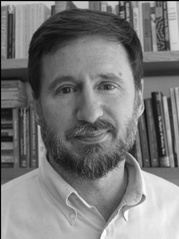
My scholarly interests have centered on three topics. I first examined issues of hegemony and empire in Empires, my revised dissertation. I next explored peace among liberal democracies in articles in Philosophy and Public Affairs and the APSR and investigated the sources of peace and war in the Realist balance of power and Socialist international solidarity in Ways of War and Peace. I joined with colleagues to explore the range of the field in New Thinking in International Relations Theory, which John Ikenberry and I edited. I then focused on peacekeeping. Drawing on field work, I examined the lessons that should be drawn from the peace operations in Cambodia, El Salvador, Eastern Slavonia (Croatia), and Brcko (northern Bosnia), each of which I visited between 1993 and 2000. These studies were reflected in UN Peacekeeping in Cambodia and a book co-edited with Ian Johnstone and Robert Orr, Keeping the Peace. In 2000 I co-authored with Nicholas Sambanis an analysis of all civil wars since 1944, which appeared in the APSR. Nicholas and I will be publishing Making War and Building Peace, a book that combines cases and data analysis, this summer. My current research focuses on the law, ethics, and politics of preventive self-defense.
While on a public service leaves, I was the vice-president of the International Peace Academy. I joined advisory committees of the UN High Commissioner for Refugees and the Department of Peace-Keeping Operations. In 2001–2003, Secretary-General Kofi Annan appointed me assistant secretary-general and special adviser in his Executive Office. My responsibilities included strategic planning (the “Millennium Development Goals”), outreach to the international corporate sector (the “Global Compact'), and relations with Washington. I continue a connection to the UN community as chair of the Academic Council of the United Nations System, organizer of the Global Colloquium of University Presidents, and member of the Advisory Board of UNDEF (the recently established UN Democracy Fund).
Kerry L. Haynie, Duke University
Kerry L. Haynie is associate professor and associate chair of political science at Duke University. He also serves as co-director of Duke's Center for the Study of Race, Ethnicity, and Gender in the Social Sciences. Prior to his appointment at Duke in 2003, he held faculty appointments at the University of Pennsylvania (1994–1996) and Rutgers University-New Brunswick (1996–2003). He has also been a visiting lecturer at the University of Natal-Pietermaritzburg, South Africa. He earned a B.A. in political science and peace, war, and defense from the University of North Carolina at Chapel Hill (1985), a Masters of Public and International Affairs from the University of Pittsburgh (1988), and a Ph.D. in political science from UNC-CH (1994).

Haynie's primary research areas are African American politics, race, gender, and political representation, and politics and political institutions in the American states. Along with articles in the Journal of Politics, the International Journal of Africana Studies, Legislative Studies Quarterly, and the Journal of Women Politics and Politics, he is the author of African American Legislators in the American States (Columbia University Press, 2001) and co-author of Stepping Stones or Stumbling Blocks? Campaign Finance Reform and Minority Group Representation (with Kathleen A. Bratton, Stanford, forthcoming, 2007). In addition, he is co-editor of The Encyclopedia of Minorities in American Politics, Vols. I & II (with Jeffery D. Schultz, Andrew Aoki, and Anne McCulluch, Oryx Press, 2000) and New Race Politics: Understanding Minority and Immigrant Voting (with Jane Junn, Cambridge, forthcoming, 2006).
Haynie is an active participant in the profession. He is currently a member of APSA's Committee on the Status of Blacks in the Profession, the Executive Council of APSA's Organized Section on State Politics and Policy, and a member of the Ralph Bunche Summer Institute selection committee. He has served on the Southern Political Science Association's Executive Council, chaired the V. O. Key Book Award Committee, been a member of the Ted Robinson Award Committee, and served as section chair for panels at the SPSA annual meeting. Haynie is on the editorial boards of the Journal of Politics, Politics and Policy, and State Politics and Policy Quarterly.
Arthur Lupia, University of Michigan
Arthur Lupia is professor in the department of political science and research professor of the Institute for Social Research at the University of Michigan. Earlier, he taught at the University of California, San Diego (1990–2001). He holds a B.A. in economics from the University of Rochester (1986) and a Ph.D. in social science from the California Institute of Technology (1991).

His research covers topics such as voting behavior, elections, persuasion, civic education, coalition governance, and legislative-bureaucratic relationships. He often approaches these problems from an interdisciplinary perspective. His books include The Democratic Dilemma: Can Citizens Learn What They Need to Know? and Elements of Reason: Cognition, Choice, and the Bounds of Rationality. His articles have appeared in many places, including leading academic journals and major newspapers.
His work has received many honors, including some from broad scholarly organizations. In 1998, he became the first political scientist to win the National Academy of Science's annual Initiative in Research Award. In 2003, he was named a fellow of the American Association for the Advancement of Science.
Since 2005, he has served as a Principal Investigator of the American National Election Studies. Prior to that he served as a member of its Board of Overseers (1999–2005). Since 2001, he has served as co-Principal Investigator of TESS (Time-Shared Experiments for the Social Sciences), a program which he created with Diana C. Mutz that allows students and faculty from many academic fields to run innovative studies on nationally-representative subject pools.
He serves on the editorial boards of the American Political Science Review, the American Journal of Political Science, and Political Behavior. He has also served on the editorial boards of the Journal of Politics and Political Analysis. Since 2003, he has served on the Council of the Midwest Political Science Association. He has also worked with or advised a range of non-partisan organizations including the World Bank, the Department of Justice, the Department of State, and the Elections Assistance Commission.
Within APSA, he is president-elect of the Organized Section on Political Psychology, chair of the E. E. Schattschneider Award Committee, a member of the APSA Working Group on Collaborative Research, and APSA's official liaison to the AAAS. He has been a section head for the Annual Meeting and has served in various other capacities for APSA and its organized sections.
Anna Sampaio, University of Colorado at Denver
Anna Sampaio is associate professor of political science at the University of Colorado at Denver and Health Sciences Center, where she teaches and researches in the areas of Latina/o politics, gender politics, immigration, post-colonialism, and transnational-ism. She received her B.S. in political science with a minor in ethnic studies from Santa Clara University and her M.A. and Ph.D. in political science from the University of California at Riverside. Prior to coming to Denver in 1998 she taught at CSU Hayward, at Santa Clara University, and at the University of California, Santa Cruz.

Sampaio currently serves as the president of the APSA Latino/a Caucus and the WPSA Women's Caucus. She is active in both the WPSA and APSA where she has served as a member of the APSA Committee on the Status of Latinos and Latinas in the Profession, as section chair for the 2006, 2004, and 2003 WPSA Annual Meetings, as an Executive Council member of the APSA section on Race, Ethnicity and Diversity, in addition to other committee appointments. She is currently a member of the editorial board of PS: Political Science and Politics and Latin American Perspectives
Sampaio's research is driven largely by questions of intersectionality; namely, work that brings together analyses of race, gender, class, as well as work that transgresses traditional geographic, political, and disciplinary boundaries. In this vein, she has recently published “Theorizing Women of Color in a New Global Matrix” (2004) in the International Journal of Feminist Politics highlighting the transnational political organizing taking place between Latinas in the U.S. and Mexico and “Crossing Disciplinary Borders: Re-examining Latino/a Studies and Latin American Studies in the 1990s” (2003) in the Journal of Latino-Latin American Studies. Similarly, her co-edited book, Transnational Latino/a Communities: Politics, Processes and Cultures (2002) from Rowman and Littlefield, examines the formation of bi-national and transnational Latino/a communities and their political expressions. Sampaio's current research centers on the impact of post 9-11 immigration policies on Latino/a immigrants.
Sampaio was twice recognized by the APSA Pi Sigma Alpha National Honor Society for excellence in teaching. In addition, she has received awards for teaching, research, and service from the University of California, the University of Colorado, and from community organizations in Colorado. Outside the university, Sampaio has worked as a political consultant on candidate races and statewide initiatives and serves on the board of non-profit organizations supporting the political empowerment of women and ethnic minority populations locally and nationally.
Melissa S. Williams, University of Toronto
Melissa Williams is professor of political science and founding director of the new Centre for Ethics at the University of Toronto. She is author of Voice, Trust, and Memory: Marginalized Groups and the Failings of Liberal Representation (Princeton, 1998), and co-editor (with Patrick Hanafin) of Identity, Rights, and Constitutional Transformation (Ashgate, 1999). She serves as editor of NOMOS, the Yearbook of the American Society for Political and Legal Philosophy, and recently co-edited Political Exclusion and Domination: NOMOS 46 (New York University Press, 2005) (with Stephen Macedo) and Humanitarian Intervention: NOMOS 47 (with Terry Nardin), and Toleration and Its Limits (co-edited with Jeremy Waldron). Williams is author of articles on issues in contemporary democratic theory and the history of political thought, ranging across the themes of citizenship, deliberative democracy, toleration, education, Aboriginal rights, feminist theory, representation, and affirmative action. Currently, she is working on two book projects, Equality and Reconstructing Impartiality.

Williams received her M.A. and Ph.D. from Harvard University and her B.A. from Bryn Mawr College. She has also held appointments as a visiting professor or visiting scholar at Harvard University, Princeton University, and the University of Amsterdam.


