Introduction
Electroconvulsive therapy (ECT) as a treatment modality is in use since 1938 and has survived even after the emergence of pharmacotherapy in last 65 years. ECT is now a well-recognised somatic treatment strategy for severe and treatment-resistant depression with/without suicidal behaviour (Reference Pagnin, DeQueiroz, Pini and Cassano1,Reference Kellner, Fink, Knapp, Petrides, Husain, Rummans, Mueller, Bernstein, Rasmussen, O’connor, Smith, Rush, Biggs, McClintock, Bailine and Malur2). Although, in recent years, especially in developed countries, ECT is most commonly used for management of depression, but historically, ECT was initially used for management of psychotic disorders. It was first used in patients with psychotic illness by Cerletti (Reference Cerletti3). Thereafter, ECT was used for patients with psychotic disorders for nearly next two decades till the introduction of chlorpromazine. With the advent of antipsychotics (APs) and despite the introduction of anaesthesia, the use of ECT in patients with psychotic disorders gradually went into the glooms in the developed countries (Reference Swartz4) and its use was restricted to affective disorders (Reference Thompson and Blaine5). However, some studies did prove its efficacy in patients with schizophrenia in certain situations which prompted the National Institute of Mental Health (NIMH) in 1985 to advocate research on the use of ECT in schizophrenia (Reference Runck6). Since then there has been a difference in the trends in use of ECT in schizophrenia all over the world.
Over the years, many studies have evaluated the efficacy and effectiveness of ECT among patients with schizophrenia. Researchers have also carried out meta-analysis and have reviewed the available studies to evaluate the efficacy of ECT among patients with schizophrenia. However, over the last 3–4 years, new studies have been published in this area. Accordingly, this review attempts to update the available information in this area with specific emphasis upon indications, efficacy and effectiveness, use in treatment-resistant cases and adverse effects of ECT among patients with schizophrenia.
Methodology
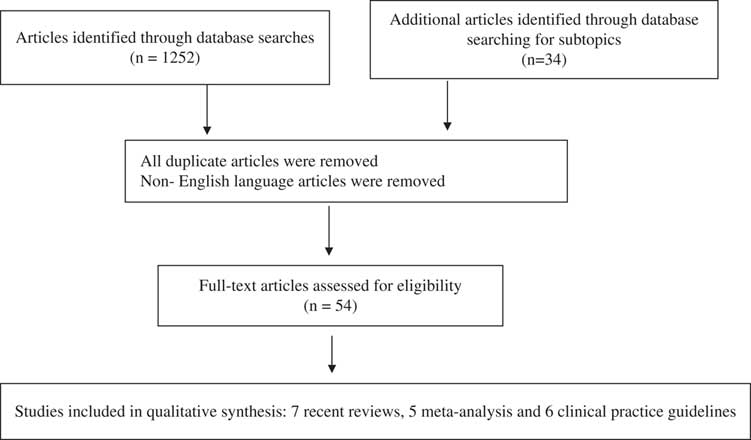
For this review, electronic searches were carried out using Pubmed, Google Scholar, Science Direct, EMBASE and Scopus using the key words ‘ECT/Electroconvulsive therapy’, ‘schizophrenia’/‘psychosis’, ‘effectiveness’, ‘efficacy’, ‘indications’, ‘treatment resistance’, ‘clozapine resistant’, ‘side effects’ and ‘practices and trends’. These key words were used in different permutation and combinations, and we took into account all available original research, systematic review, guidelines and recent review articles on this topic. Initial search yielded 1252 articles. The full text of the articles were retrieved and manually reviewed to locate additional references. This step yielded additional 34 references. All the available articles were independently reviewed by the authors and articles which were considered relevant by all the authors were included. Articles, which were selected by one of the authors, but not by the other authors, were re-evaluated and final decision to include or not to include was made after reaching the consensus. For the subtopics like ‘treatment-resistant schizophrenia’, ‘clozapine resistant’, ‘indications of ECT in schizophrenia’ for which reviews are already available, an attempt was made to evaluate the recently published articles. After reviewing all articles in this topic, a consensus opinion of all authors was limited to include 54 articles for the review which included 5 meta-analysis and 7 recent reviews in addition to the treatment guidelines [American Psychiatric Association (APA) ECT task force, APA guidelines for schizophrenia, Royal College of Psychiatrists’ guidelines for ECT, National Institute for Health and Clinical Excellence (NICE) guidelines for schizophrenia, RANZEP Clinical guidelines for schizophrenia, Clinical Practice Guidelines (CPGs) of Indian Psychiatric Society for Schizophrenia] on the topic (Fig. 1). Only English-language papers/articles were included. To address the lacunae in the available literature, we conducted a narrative review covering recent literature on different aspects of ECT in schizophrenia.
PRISMA flow diagram for the evidence of use of ECT in schizophrenia.

Trends in use of ECT in schizophrenia
A recent review evaluated the trends in use of ECT worldwide. This review included the data published during 1990 to 2010 in terms of utilisation of ECT for patients treated in various psychiatric settings (inpatients or outpatients). This review revealed that in the United States, most of the European countries and the Australia, ECT was predominantly used in patients with affective disorders. Patients with schizophrenia form a very small proportion (8–29%) of patients who receive ECT. However, in Asian and African countries, ECT was mainly used for psychotic disorders, with patients of schizophrenia and other psychotic conditions forming 60–83% of all patients receiving ECT (Reference Leiknes, Jarosh-von Schweder and Høie7). This suggests that there exists a global variation in the trends of use of ECT in schizophrenia. A recent study, which evaluated the trends in use of ECT among inpatients over the time period from 2001 to 2009 in Asian patients with schizophrenia revealed a rising trend of use of ECT over the years from 1.8% in 2001 to 4.9% in 2009, suggesting an increase in use of ECT for schizophrenia over a decade in Asia (Reference Xiang, Ungvari, Correll, Chiu, Lai, Wang, Si, Lee, He, Yang, Chong, Kua, Fujii, Sim, Yong, Trivedi, Chung, Udomratn, Chee, Sartorius, Tan and Shinfuku8). From this review of literature, it can be concluded that, when compared to developed countries, ECT is more frequently used in patients with psychotic disorders in developing countries.
Indications for use of ECT in schizophrenia
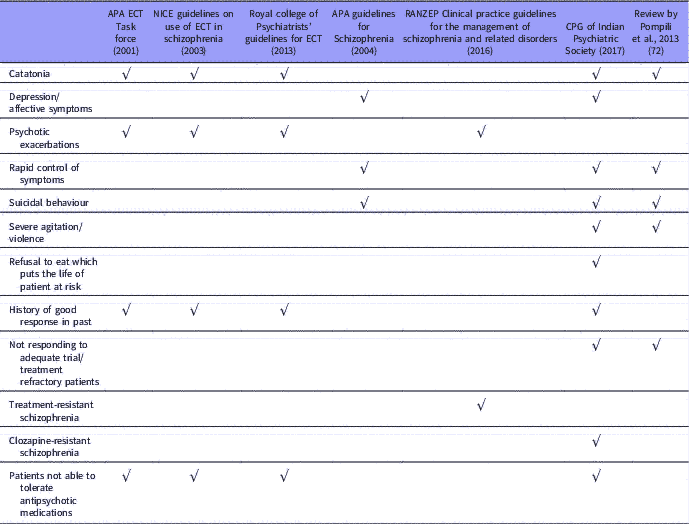
Various treatment guidelines suggest indications and recommendations for the use of ECT in schizophrenia. These guidelines can be categorised as those making recommendations for use of ECT and those making recommendations for management of schizophrenia. APA Task force on the use of ECT in schizophrenia (9), NICE guidelines on the use of ECT in schizophrenia (10) and Royal College of Psychiatrists’ Guidelines for ECT (Reference Scott11) suggest that evidence for the effectiveness of ECT in schizophrenia was inconclusive and ECT is not recommended as the first-line treatment for schizophrenia. These guidelines suggest that the use of ECT could be beneficial for psychotic exacerbations, catatonic schizophrenia, those who have a past history of favourable outcome with ECT and those who are unable to tolerate or respond poorly to neuroleptic medications equivalent to 500 mg of chlorpromazine daily. Additionally, the Royal College of Psychiatrists’ Guidelines (2013) further recommends the use ECT as an option for treatment-resistant schizophrenia (TRS) and where treatment with clozapine had been proven to be ineffective or intolerable (Reference Scott11).
In general, various treatment guidelines for management of schizophrenia usually consider use of ECT as one of the last resort treatment. APA treatment guidelines for the treatment of schizophrenia recommend use of ECT for patients with comorbid depression and/or suicidal ideation in situations where a rapid therapeutic response is needed (Reference Lehman, Lieberman, Dixon, McGlashan, Miller, Perkins and Kreyenbuhl12), though the level of evidence for this recommendation of ECT in these situations is low, that is, evidence is in the form of uncontrolled studies and case reports. The recent Royal Australian and New Zealand College of Psychiatrists guidelines for the management of schizophrenia and related disorders recommends that ECT may be of value when used in combination with AP medications, both in the treatment of acute schizophrenia and in TRS (Reference Galletly, Castle, Dark, Humberstone, Jablensky, Killackey, Kulkarni, McGorry, Nielssen and Tran13). Treatment Guidelines of Indian Psychiatric Society (2017) for management of schizophrenia recommends the use of ECT in patients with schizophrenia for catatonic symptoms, affective symptoms, situations which require rapid control of symptoms, presence of suicidal behaviour which puts the life of the patient at risk, presence of severe agitation/violence which puts the life of others at risk, refusal to eat which puts the life of patient at risk, history of good response in past, patients not responding to adequate trial of an AP medication, clozapine-resistant schizophrenia and for patients not able to tolerate AP medications (Reference Grover, Chakrabarti, Kulhara and Avasthi14).
A recent systematic review which evaluated all the studies published during the years 1945–2012 suggests that ECT is used in patients with schizophrenia to augment pharmacotherapy, with most common symptoms which led to use of ECT being presence of catatonia, aggression and suicide. Based on the available information, the authors concluded that ECT can be recommended in patients with schizophrenia who are drug resistant, experiencing catatonia, exhibit severe aggression and/or suicidal behaviour and when a rapid global improvement and reduction of acute symptomatology is warranted (Reference Pompili, Lester, Dominici, Longo, Marconi, Forte, Serafini, Amore and Girardi15).
A comparison of indications for ECT as per various guidelines is provided in Table 1. It is evident that, in general, there is consensus between different professional associations in terms of use of ECT among patients with schizophrenia for catatonia, psychotic exacerbation, those exhibiting suicidal behaviour, having past history of response to ECT and those who are not able to tolerate AP medications due to various reasons.
Indications for use of ECT in schizophrenia

APA, American Psychiatric Association; ECT, electroconvulsive therapy; NICE, National Institute for Health and Clinical Excellence.
Efficacy/effectiveness of ECT in schizophrenia
Limited numbers of studies have evaluated the effectiveness of ECT in schizophrenia. The evidence in this regard is in the form of case reports/series, prospective open label studies, retrospective chart reviews, single/double blind randomised controlled trials (RCTs) and meta-analysis. There is a wide variation in the study designs, and some of the studies have compared ECT plus placebo with placebo, ECT plus APs with AP alone, ECT plus AP with ‘sham’ ECT plus AP and lastly ECT alone with AP alone and ECT plus AP. The differences in the methodology of the various studies make it difficult to compare the available literature.
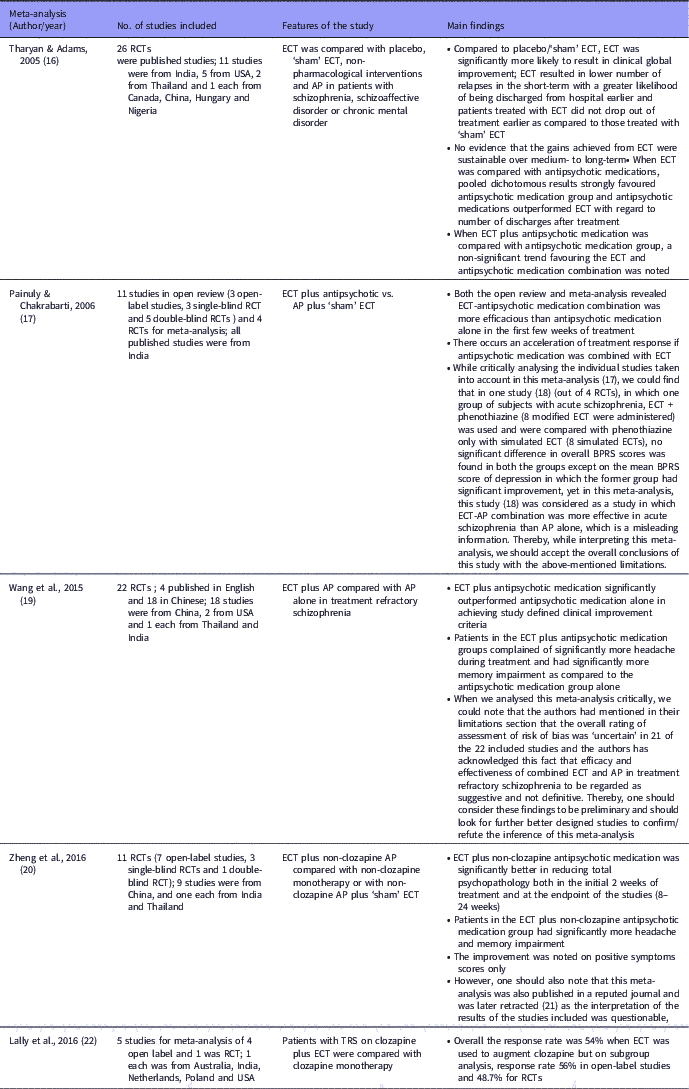
In last few years, many authors have carried out systematic reviews and meta-analysis on this topic (Table 2). Most of these reviews have concluded that ECT has beneficial effect in the management of schizophrenia. However, all the authors have also concluded that the available studies are of inferior quality and small sample sizes. Cochrane review and meta-analysis on the use of ECT in schizophrenia included 26 RCTs, 15 of which were double-blind RCTs (Reference Tharyan and Adams16). The RCTs included in this review compared ECT with placebo, ‘sham’ ECT, non-pharmacological interventions and AP in patients with schizophrenia, schizoaffective disorder or chronic mental disorders. This meta-analysis revealed that when ECT is compared with placebo/‘sham’ ECT, ECT was significantly more likely to result in global improvement and use of ECT was associated with less number of relapses in the short-term (n = 47;2 RCTs; Relative Risk (RR) fixed-0.26), with a greater likelihood of being discharged from hospital earlier. Further data suggest that patients treated with ECT did not drop out of treatment earlier as compared to those treated with ‘sham’ ECT. But there was no evidence that the gains achieved with ECT were sustainable over medium- to long-term. When the efficacy of ECT was compared with AP medications, though the data were heterogeneous, pooled dichotomous results strongly favoured AP group (n = 175; RR-2.18) and AP medications outperformed ECT with regard to number of discharges after treatment (n = 135; RR fixed −1.98). When ECT plus AP was compared with AP group, a non-significant trend favouring the ECT and AP combination was noted (n = 203; RR-0.76). Further, it was also found that ECT and AP combination was superior to AP alone or continuation ECT (C-ECT) alone in reducing relapses and reducing psychopathology scores as measured by Brief Psychiatric Rating Scale (BPRS). The authors of this review also concluded that the available studies were of poor quality and the process of randomisation was poorly described in most of the trials. The authors concluded that overall ECT appears to benefit those individuals who show a limited/poor response to AP medications and there was no clear evidence to refute the use of ECT in schizophrenia despite its short-term benefits (Reference Tharyan and Adams16). The second review and meta-analysis in this area was limited to data arising from India (Reference Painuly and Chakrabarti17). The authors included 11 studies (n = 651) for the open review and 4 RCTs (n = 113) for meta-analysis. The studies included in the meta-analysis compared AP plus ‘sham’ ECT with AP plus ECT. Both the open review and meta-analysis revealed that ECT-AP combination was more efficacious than AP alone in the first few weeks of treatment and there occurs an acceleration of treatment response if both are used together. However, the authors acknowledged that there were several methodological issues because of which the evidence of use of the combination was inconclusive (Reference Painuly and Chakrabarti17). While critically analysing the individual studies taken into account in this meta-analysis (Reference Painuly and Chakrabarti17), it is evident that in 1 (Reference Agarwal and Winny18) out of the 4 RCTs which was included in the meta-analysis there was some discrepancy in the interpretation of the results by the authors of the meta-analysis. This study included subjects with acute schizophrenia who were treated with ECT plus phenothiazine (eight modified ECT were administered) and they were compared with phenothiazine and simulated ECT (eight simulated ECTs), and the authors reported no significant difference in overall BPRS scores in both the groups except for the mean BPRS score for depression, with significant improvement in the group of patients receiving ECT (Reference Agarwal and Winny18). However, in the meta-analysis, this study was considered as a study in which ECT-AP combination was more effective in acute schizophrenia than AP alone. Thereby, while interpreting this meta-analysis, one should accept the overall conclusions of this study with the above-mentioned limitations.
Meta-analyses evaluating the effectiveness of ECT in schizophrenia

ECT, electroconvulsive therapy; RCT, randomised controlled trial; TRS, treatment-resistant schizophrenia.
The third, systematic review and meta-analysis included 22 RCTs (of which 18 were from China) which evaluated the efficacy and safety of treating patients with refractory schizophrenia with AP medications and adjunctive ECT (Reference Wang, Pu, Jiang, Cao, Wang, Zhao and LI19). The quality of evidence for assessment of efficacy was of moderate quality as assessed using standardised instruments (Grades of Recommendation, Assessment, Development, and Evaluation, GRADE). The results suggested that ECT plus AP significantly outperformed AP alone in achieving study defined clinical improvement criteria (defined as reduction in symptoms by 30–50%) in patients refractory to AP medications. Overall the quality of evidence was rated as moderate, when graded on GRADE criteria, and majority of items included in the assessment of risk of bias were rated as ‘uncertain’. Patients treated with ECT plus AP complained of significantly more headache during treatment (RR-9.10) and had significantly more memory impairment (RR-6.48) when compared to those treated with AP group alone. But the quality of evidence with regard to assessment of adverse effects was found to be very low, questioning the validity of the results in this regard. The authors concluded that their findings suggest that the combination treatment to be beneficial in treatment refractory schizophrenia (Reference Wang, Pu, Jiang, Cao, Wang, Zhao and LI19). When one looks at this meta-analysis, it is evident that the authors themselves mention in their limitations that the overall rating of assessment of risk of bias was ‘uncertain’ in 21 of the 22 included studies, and the authors acknowledge this fact that efficacy and effectiveness of combined ECT and AP in treatment refractory schizophrenia need to be regarded as suggestive and not definitive. Thereby, one should consider these findings to be preliminary and should look for further better designed studies to confirm/refute the inference of this meta-analysis (Reference Wang, Pu, Jiang, Cao, Wang, Zhao and LI19).
Fourth meta-analysis evaluated the available RCTs in which ECT was used to augment non-clozapine medications among patients with TRS (Reference Zheng, Cao, Ungvari, Xiang, Guo, Liu, Wang, Forester, Seiner and Xiang20). This meta-analysis included 11 RCTs of which 7 were classified as of high quality (JADAD score-3), and meta-analysis revealed lack of publication bias in this area. Most of the studies (n = 9) were from China and the sample sizes of the included studies ranged from 25 to 160. The non-clozapine AP used in these studies were fluphenazine (n = 1), chlorpromazine (n = 1), olanzapine (n = 5), risperidone (n = 1), ziprasidone (n = 2) and quetiapine (n = 1). While in seven studies, ECT was used as an augmentation strategy, in four studies, ECT and AP were started together. In these studies, ECT plus AP groups were compared with AP monotherapy or with AP plus ‘sham’ ECT. This meta-analysis showed that ECT plus AP led to significantly higher improvement in the total psychopathology scores as measured by rating scales (BPRS/Positive and Negative Symptom Scale (PANSS)) both in the initial 2 weeks of treatment (SMD = −0.58; p <0.00001) and at the endpoint of the studies (8–24 weeks) (SMD = −0.67; p <0.00001). With regard to study-defined response and study-defined remission, adjunctive ECT to non-clozapine AP therapy was also shown to be superior with NNT of 6 and 8, respectively. However, patients receiving ECT plus non-clozapine AP more often reported headache (NNT-6; p = 0.02) and more memory impairment (NNT-3; p = 0.001) (Reference Zheng, Cao, Ungvari, Xiang, Guo, Liu, Wang, Forester, Seiner and Xiang20). It is important to note that this meta-analysis was later retracted (Reference Zheng, Xiang, Ungvari, Ng, Chiu, Liu, Cao, Guo, Wang, Seiner and Xiang21) as the interpretation of the results of the studies included was questionable. However, this meta-analysis got published again in another journal (Reference Zheng, Cao, Ungvari, Xiang, Guo, Liu, Wang, Forester, Seiner and Xiang20); hence, we included this meta-analysis in this review. But one should be cautious while interpreting the results of this meta-analysis (Reference Zheng, Cao, Ungvari, Xiang, Guo, Liu, Wang, Forester, Seiner and Xiang20).
The fifth systematic review and meta-analysis includes studies in which ECT was used for augmentation of clozapine in patients with TRS (Reference Lally, Tully, Robertson, Stubbs, Gaughran and MacCabe22).The authors included both controlled and non-controlled studies as well as retrospective chart reviews and case series/reports in the open review. Studies in which ECT was used along with clozapine for any other psychiatric disorder other than schizophrenia/schizoaffective disorder were excluded. Further this review also excluded studies in which clozapine was added after ECT was started and when both clozapine and ECT were not used concurrently. The review included data of 192 patients in the open review. Overall response to augmentation of clozapine with ECT was found to be 76%, with mean number of 11.3 (range 4–30) ECT sessions and mean clozapine dose of 412.3 mg/day. In a non-controlled study for which follow-up data were available, relapse was noted in 32% of patients after initial response to clozapine augmentation with ECT. Adverse effects were reported in 14% of the cases (24 out of 166 cases). For the meta-analysis, 5 studies (4 open labels and 1 RCT) with a total of 71 participants were included and the response rate was 54%. Although there was evidence of some heterogeneity (I 2 = 69%), but no publication bias was detected. Further, when subgroup analysis was conducted, it was noted that the response rate to ECT augmentation of clozapine was 56% in open-label studies and 48.7% in the RCT. On the basis of their findings, the authors concluded that ECT was safe and effective clozapine augmentation strategy in patients with TRS (Reference Lally, Tully, Robertson, Stubbs, Gaughran and MacCabe22).
Besides these systematic reviews and meta-analyses, a recent review evaluated the evidence for use of ECT among patients of schizophrenia receiving clozapine. This review included 40 reports, involving 208 patients. Majority of reports were in the form of case reports and case series, with 13 retrospective or open-label studies with sample size varying from 6 to 39. The majority of patients were aged between 18 and 65 years and diagnosed with schizophrenia or schizoaffective disorder. Most of the patients refractory to clozapine were started on ECT as an augmentation therapy; however, in some reports, both ECT and clozapine were started concurrently, and in few cases clozapine was started after ECT. The review reported that 37.5–100% of patients improved in the short-term and sustained long-term improvement (3 weeks to 24 weeks) was mentioned in only few studies. Reported side-effects of the combination were delirium (n = 5), tachycardia (n = 5) and prolonged seizures (n = 4). Overall, the authors concluded that the combined use of ECT and clozapine was safe and effective (Reference Grover, Hazari and Kate23).
In the recent years, few more studies have evaluated the effectiveness of combined used of clozapine and ECT. A retrospective study from India evaluated the effectiveness of ECT in 59 patients with TRS (Reference Grover, Chakrabarti, Hazari and Avasthi24). The treatment sequence followed in these patients was both ECT and clozapine started together (when second intervention was started within a period of less than 2 weeks of starting of first intervention), ECT followed by clozapine (difference between starting of two interventions more than 2 weeks) and clozapine followed by ECT (difference between starting of two interventions more than 2 weeks). The first subgroup included 22 (37%), second subgroup included 16 (27%) and the third subgroup included 21 (36%) patients. In the third subgroup, 13 patients were categorised as clozapine-refractory schizophrenia, that is, patients who showed minimal or partial response to clozapine after a trial of 12 weeks’ duration. The results of the study revealed a mean reduction in PANSS score by 31.65% (in terms of percentage reduction) and about 60% of patients had more than 30% reduction in PANSS scores. When the effectiveness was evaluated in terms of more than 20% reduction in PANSS scores, 81% (43 out of 53) scored above the cut-off. In the clozapine-refractory patients, 9 (69%) out of 13 patients had more than 30% reduction in PANSS scores and when the effectiveness was considered as more than 20% reduction in PANSS, 85% (11 out of 13) responded to the augmentation of clozapine treatment with ECT. In this study improvement was seen in all the three domains of PANSS, that is, positive symptoms, negative symptoms and general psychopathology subscales. Commonly documented side effects during ECT therapy were transient rise in blood pressure (n = 10), transient bradycardia (n = 1), delirium (n = 2), prolonged seizures (n = 7) and cognitive impairments (n = 8). During the mean follow-up duration of 29.7 (SD 32.3; range: 1–120) months, majority of these patients (34 of the 47 or 72%) continued taking clozapine and remained relatively well (i.e., maintained the symptomatic improvement gained or improved further). Additional ECTs were required in three patients only (Reference Grover, Chakrabarti, Hazari and Avasthi24). Second study evaluated augmentation of clozapine with ECT in clozapine-resistant schizophrenia in an 8-week randomised single-blind RCT (Reference Petrides, Malur and Braga25). This study followed a crossover design. This study used stringent criteria to define clozapine resistance, that is, clozapine resistance was defined as persistent psychotic symptoms despite at least 12 weeks of clozapine administration with blood levels over 350 ng/ml. In this study, 19 patients were assigned to treatment as usual or a course of bilateral ECT plus clozapine (ECT plus clozapine group; n = 20). Non-responders from the clozapine-only group received an 8-week open trial of ECT (crossover phase). Thrice a week ECT was administered for first 4 weeks, followed by twice a week for last 4 weeks with constant clozapine dosages. Results of the study revealed that half of the patients in the ECT plus clozapine group met the response criterion (<40% reduction in baseline BPRS scores), but none of the patients in the clozapine-only group met response criterion. In the crossover phase, all the patients in the clozapine-only group received ECT, which resulted in a 47% response rate (Reference Petrides, Malur and Braga25).
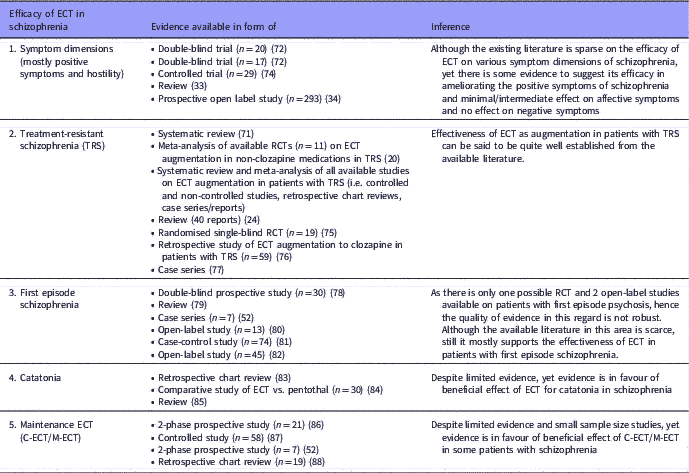
Effectiveness of ECT in schizophrenia has also been evaluated in several subgroups of patients with schizophrenia like (1) patients with specific subtype of schizophrenia, (2) patients with first episode schizophrenia (FES) and (3) adolescents. Studies which have evaluated the effectiveness of ECT in catatonic schizophrenia have been inconclusive, with some suggesting no significant beneficial effects of ECT in patients with chronic catatonic schizophrenia (Reference Miller, Clancy and Cumming26,Reference England, Öngür, Konopaske and Karmacharya27). One recent double-blind randomised study, randomised 14 patients with non-affective (schizophrenia and psychosis NOS) catatonia of varying duration of illness, non-responsive to lorazepam to 2 groups (ECT plus placebo vs. risperidone plus ‘sham’ ECT) (Reference Girish and Gill28). Patients who received ECT showed significant and rapid decrease in the Bush-Francis Catatonia Rating Scale scores and shorter duration of illness correlated with greater response rate with ECT (see Table 3). In view of lack of consensus, more studies with larger sample size are required to establish the effectiveness of ECT in this subtype of schizophrenia (Reference Girish and Gill28).
Evidence on the efficacy of ECT in schizophrenia

C-ECT, continuation electroconvulsive therapy; M-ECT, maintenance ECT; RCT, randomised controlled trial.
Studies which have evaluated the effect of ECT on some of the specific symptoms in paranoid subtype of schizophrenia (see Table 3) suggest that symptoms like delusions of control, delusion of reference, delusional mood, thought disorders and auditory hallucinations are found to be more responsive to ECT (Reference Taylor and Fleminger29). Additionally, when compared with AP therapy alone, significant improvement has been noted in symptoms of hostility and persecutory ideations with ECT in patients with paranoid schizophrenia (Reference Brandon, Cowley, McDonald, Neville, Palmer and Wellstood-Eason30–Reference Smith, Surphlis, Gynther and Shimkunas32). However, no recent study with better methodology is available which has particularly looked into the symptom profile and its responsiveness to ECT. Studies which have evaluated the effect of ECT in affective symptoms in patients with schizophrenia suggest that use of ECT leads to improvement in positive symptoms irrespective of change in affective symptoms (Reference Johns and Thompson33). Another study which evaluated the response to ECT plus flupenthixol combination for the BPRS symptoms and factor scores of patients with refractory schizophrenia(n = 293) reported a response rate of 54.6% with a marked improvement in positive symptoms, intermediate improvement in affective symptoms but no improvement in negative symptoms (Reference Chanpattana and Chakrabhand34).
The first episode of psychosis has been found to occur typically during adolescence/early adulthood. Earlier studies observed that ECT can be quite beneficial in patients with FES, especially when associated with marked excitement, over-activity and severe positive symptoms. Some of the recent studies have expanded the literature on effectiveness of ECT among patients with FES (see Table 3). A double-blind prospective study from India (n = 30) included drug-naive adult males with FES randomised into two groups, that is, ECT versus ‘sham’ ECT. True ECT involved the use of six bilateral sinusoidal wave treatments administered on alternate days, thrice a week with a fixed dose of AP (haloperidol 15 mg/day) in both groups. Use of ECT in the initial 3 weeks led to improvement in symptomatology but at the end of 6 months, there was no significant difference between the two groups (Reference Sarkar, Andrade, Kapur, Das, Sivaramakrishna, Harihar, Pandey, Anand and Dharmendra35). A case-control study from China evaluated the effectiveness of ECT in adolescents with FES. This study included 74 patients treated with combination of ECT and AP and a comparison group of 38 patients managed with AP only. This study showed that combination of ECT and AP led to significant reduction in the duration of hospitalisation and higher cumulative response rate (AP alone group) along with a greater improvement in sleep efficiency, rapid eye movement latency and density of sleep (as per polysomnography test) (Reference Zhang, Chen, Wang, Wang, Xue, Feng and Tan36). A prospective open-label study from Nepal which included 45 patients with FES, out of which 12 received ECT along with AP and 33 received AP only revealed that use of ECT was associated with shorter duration of hospital stay and significant improvement in psychopathology scores (BPRS scores) and on global functioning scores (GAF scores) after ECT course, at 1st month, 6th month and 12th month post discharge (Reference Adhikari37). Another open-label study from Turkey which included 13 patients with FES (5 patients had catatonia in whom ECT was considered as treatment of choice, 1 patient – ECT + AP, ECT used for rapid improvement and in remaining 7 patients ECT was used due to lack of response to AP therapy after 2 weeks) also showed significant improvement in all the patients, suggesting that ECT may be a viable treatment option among patients with FES (Reference Uçok and Cakir38). A case series which included 7 patients, aged 15–35 years, with intractable FES (failure to respond to neuroleptics) showed significant improvement in total psychopathology scores (as measured by BPRS) and global functioning (as measured by Global Assessment of Functioning Scale, GAF) with lack of significant adverse effects with 11.4 (SD-4.3; range:7–20) ECT sessions during the ECT course (Reference Suzuki, Awata, Takano, Ebina, Takamastu, kajiwara, Ito, Shindo, Funakoshi and Matsuoka39). All these studies highlight that ECT may be useful in patients with FES. However, it is important to note that the data are limited to only one RCT and two open-label studies (see Table 3).
Limited data are available on beneficial effects of ECT in adolescent patients with schizophrenia. Two retrospective studies in which adolescent patients with schizophrenia, who were treated with ECT due to treatment resistance or catatonia, showed that use of ECT led to significantly better outcome in overall psychopathology scores (Reference Flamarique, Castro-Fornieles, Garrido, de la Serna, Pons, Bernardo and Baeza40,Reference Grover, Malhotra, Varma, Chakrabarti, Avasthi and Mattoo41). The response rate in adolescents with schizophrenia has been reported to be 76.3% (Reference Grover, Malhotra, Varma, Chakrabarti, Avasthi and Mattoo41). The efficacy and safety of ECT among adolescents (aged 13–20 years) with first episode psychosis showed significantly higher cumulative response rate (74.3%) in the ECT group. No significant adverse events were reported (except for transient headache and dizziness in the ECT-treated group). From the available evidence, it can be concluded that there is some evidence to suggest that ECT can be safely used in adolescents with schizophrenia. However, more studies with specific subgroup analysis are required to establish clinical efficacy/effectiveness of ECT in this population of patients with schizophrenia.
Effectiveness/efficacy of continuation ECT (C-ECT) and maintenance ECT(M-ECT) in schizophrenia (see Table 3)
ECT beyond the acute course, that is, treatment spaced at intervals of 1 week to 1 month after successful ECT course has been reported in patients with schizophrenia (Reference Chanpattana42). Usually C-ECT has been defined as use of ECT in the initial 6 months after recovery from acute illness and maintenance ECT (M-ECT) is use of ECT thereafter (Reference Zervas, Theleritis and Soldatos43). However, the term ‘continuation ECT’ (C-ECT) and ‘maintenance ECT’ (M-ECT) are frequently used interchangeably and many authors often do not differentiate between C-ECT and M-ECT (Reference Andrade and Kurinji44). Few studies suggest that use of C-ECT is associated with significant decrease in relapse rates after months of C-ECT (Reference Chanpattana42). Further there is significant decrease in the mean duration of yearly hospitalisations with improvement in quality of life in patients with treatment refractory schizophrenia who are maintained on M-ECT therapy (Reference Lévy-Rueff, Gourevitch, Lôo, Olié and Amado45). Another study showed that besides reduction in number of relapses in patients with TRS, combination of C-ECT and AP therapy is associated with better social functioning and improved quality of life (Reference Chanpattana, Chakrabhand, Sackeim, Kitaroonchai, Kongsakon, Techakasem, Buppanharun, Tuntirungsee and Kirdcharoen46). One study evaluated the efficacy of C-ECT with AP among patients with catatonic schizophrenia, who had relapsed after an initial acute ECT course, and concluded that C-ECT was quite efficacious in sustaining remission in patients with catatonic schizophrenia (Reference Suzuki, Awata, Takano, Ebina, Iwasaki and Matsuoka47) (see Table 3). However, it is important to note that there is lack of consensus on the exact duration and frequency of C-ECT or M-ECT to be administered in patients with schizophrenia.
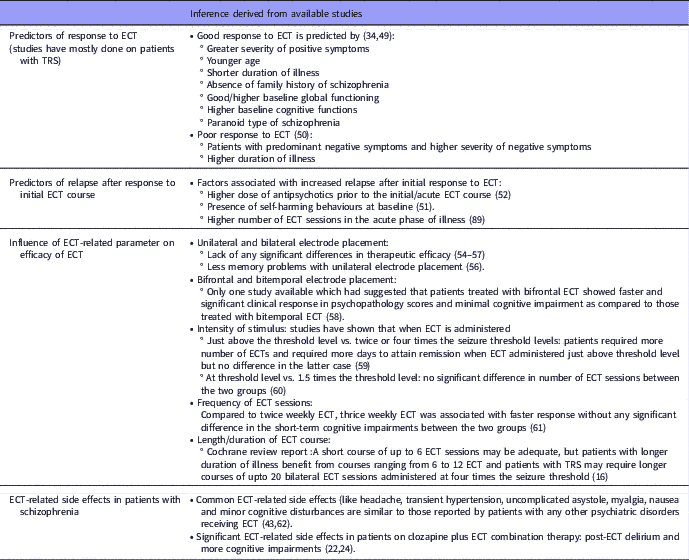
Predictors of response to ECT in schizophrenia (see Table 4)
A seminal study in 1983 suggested that absence of first rank symptoms (FRSs) of schizophrenia in association with affective symptoms predict improvement with ECT and that those patients without FRSs had a significantly better ECT outcome scores than those with FRSs (Reference Koehler and Sauer48). However, no further attempts have been made to substantiate this finding. Recent studies which have mainly focused on TRS patients show that response to ECT is predicted by severity of positive symptoms, younger age, shorter duration of illness, absence of family history of schizophrenia, having baseline good/higher global functioning (as per GAF), having higher baseline cognitive functions (as per Mini Mental State Examination Scores) and paranoid type of schizophrenia (Reference Chanpattana and Chakrabhand34,Reference Chanpattana and Sackeim49).
Predictors of response to ECT, predictors of relapse after response, influence of ECT related parameter on efficacy/effectiveness and side effects in patients with schizophrenia

ECT, electroconvulsive therapy; TRS, treatment-resistant schizophrenia.
Studies which have focused on TRS patients with negative symptoms suggest that patients with higher duration of illness and higher severity of negative symptoms (as per BPRS) respond poorly to combination treatment with ECT and AP and the only significant predictor to ECT in these patients was a shorter duration of illness (Reference Pawełczyk, Kołodziej-Kowalska, Pawełczyk and Rabe-Jabłońska50).
Predictors of relapse after response to initial ECT course in schizophrenia (see Table 4)
Some of the studies have reported that there is a very high relapse rate (as high as 60%) at 1 year after initial ECT in patients with schizophrenia (Reference Hustig and Onilov51). Studies which have attempted to evaluate the factors associated with relapse at 1 year suggest that higher dose of AP prior to the initial/acute ECT course (Reference Suzuki, Awata and Matsuoka52) and presence of self-harming behaviours at baseline predict high risk to relapse after initial ECT response (Reference Hustig and Onilov51). However, a recent retrospective study of 43 patients who were treated with AP therapy after acute ECT course showed relapse free rate of 57.3% at 1 year with a median relapse-free period to be 21.5 months. This study showed that higher number of psychotic episodes in the past, higher BPRS scores after acute ECT course and higher number of ECT sessions were associated with high risk of relapse (Reference Shibasaki, Takebayashi, Fujita and Yamawaki53). Besides these variables, this study suggested that use of a mood stabiliser (Lithium, Valproate, carbamazepine) (37.2%) might have helped in reducing the risk of relapse in some patients (Reference Shibasaki, Takebayashi, Fujita and Yamawaki53). It is interesting to note that in this study age of onset of illness, age at ECT, gender, chlorpromazine equivalence dose of AP before ECT course and baseline BPRS course were not associated with relapse rate after ECT course (Reference Shibasaki, Takebayashi, Fujita and Yamawaki53). However, multivariate analysis of all the above-mentioned factors revealed that only the number of ECT sessions was significantly associated with risk of relapse (hazard ratio: 1.159, p = 0.033) and all other factors were found to be insignificant (Reference Shibasaki, Takebayashi, Fujita and Yamawaki53).
Influence of ECT-related parameters on efficacy/effectiveness and side effects in patients with schizophrenia (see Table 4)
Very few studies have focused on various ECT-related parameters in patients with schizophrenia. Unfortunately there is lack of research in this area among patients with schizophrenia and it is assumed that the findings in patients with depression can be extrapolated to patients with schizophrenia. Studies which have compared unilateral and bilateral electrode placement in patients with schizophrenia suggest lack of any significant difference in therapeutic efficacy between both the types of electrode placements (Reference El-Islam, Ahmed and Erfan54–Reference Bagadia, Abhyankar, Pradhan and Shah57). However, these studies are criticised because of several methodological problems like no mention of diagnostic criteria and use of different treatment schedules. In terms of side effect, preliminary data suggest that unilateral ECT was associated with less memory problems (Reference Doongaji, Jeste, Saoji, Kane and Ravindranath56). A randomised control study (n = 122) from India compared the clinical and cognitive effects of bifrontal (n = 62) and bitemporal (n = 60) electrode placements among patients with schizophrenia and reported that patients treated with bifrontal ECT showed faster and significant clinical response in psychopathology scores and minimal cognitive impairment as compared to those treated with bitemporal ECT (Reference Phutane, Thirthalli, Muralidharan, Naveen Kumar, Keshav Kumar and Gangadhar58). This study suggested the superiority of use of bifrontal ECT over bitemporal ECT with regard to clinical and cognitive outcomes in patients with schizophrenia.
In terms of intensity of stimulus, available data suggest that compared to patients receiving ECT twice or four times the seizure threshold, those receiving ECT at the seizure threshold level require more number of ECTs and require more days to attain remission, but there was no significant difference between those who received at ECT twice or four times the seizure threshold levels (Reference Chanpattana, Chakrabhand, Buppanharun and Sackeim59). Another retrospective chart review from India reported lack of significant difference between patients who received bilateral ECT at threshold level and at 1.5 times the threshold level and also did not find any significant difference in number of ECT sessions between the two groups (Reference Thirthalli, Kumar, Bangalore and Gangadhar60). In terms of frequency of ECT sessions, preliminary data suggest that compared to twice weekly ECT, thrice weekly ECT was associated with faster response without any significant difference in the short-term cognitive impairments between the two groups (Reference Chanpattana, Kitaroonchai, Prasertsuk, Chakrabhand and Choovanichvong61). Some of the studies have also evaluated the length of ECT course in patients with schizophrenia. A Cochrane review suggests a short course of up to 6 ECT sessions may be adequate; but patients with longer duration of illness benefit from courses ranging from 6 to 12 ECT and patients with TRS may require longer courses of upto 20 bilateral ECT sessions administered at four times the seizure threshold (Reference Chanpattana, Kitaroonchai, Prasertsuk, Chakrabhand and Choovanichvong61).
ECT-related side effects in patients with schizophrenia
Common ECT-related side effects in patients with schizophrenia are similar to those reported by patients with any other psychiatric disorders receiving ECT. Available data suggest that the common ECT-related side effects in patients with schizophrenia are headache, transient hypertension, uncomplicated asystole, myalgia, nausea and minor cognitive disturbances (Reference Zervas, Theleritis and Soldatos43,Reference Datto62). Some studies have shown significant ECT-related side effects like post-ECT delirium and cognitive impairments in patients with schizophrenia who are given ECT while receiving clozapine (Reference Lally, Tully, Robertson, Stubbs, Gaughran and MacCabe22,Reference Grover, Chakrabarti, Hazari and Avasthi24) (see Table 4).
Discussion
To start with ECT was recommended for management of patients with schizophrenia. However, over the years use of ECT has been limited to patients with affective disorders, especially depression. The present review suggests that there is limited research on use of ECT in patients with schizophrenia. Possibly a host of reasons have contributed to this. There is a negative attitude of public and possibly mental health professionals towards ECT. These factors are possibly more prevalent in the developed countries than the developing countries. This is reflected in the practice of ECT, as the available data suggest that schizophrenia is the most common psychiatric diagnosis among patients undergoing ECT in developing countries from Asia, Africa and South America; whereas patients with schizophrenia form a very small proportion of patients who received ECT in countries like United States, most of the European countries, Australia and New Zealand (Reference Leiknes, Jarosh-von Schweder and Høie7). It can also be said that emergence of safe and effective AP medications have also influenced the practice and research in the area of ECT among patients with schizophrenia. Research in this area is also possibly hampered by lack of funding in this area and ethical issues. Funding agencies are in general not interested in funding research on ECT and many a times, patients are also unwilling to participate in the ECT research.
Although the data are limited in terms of efficacy/effectiveness of ECT among patients with schizophrenia, available data suggest its beneficial effect among patients with schizophrenia. Studies in the form of prospective RCTs and retrospective studies suggest the beneficial effect of ECT among patients of TRS not responding to typical or atypical APs and patients of TRS not responding to clozapine (Reference Zheng, Cao, Ungvari, Xiang, Guo, Liu, Wang, Forester, Seiner and Xiang20,Reference Grover, Chakrabarti, Hazari and Avasthi24,Reference Petrides, Malur and Braga25,Reference Suzuki, Awata, Takano, Ebina, Takamastu, kajiwara, Ito, Shindo, Funakoshi and Matsuoka39,Reference Kim, Kim, Lee, Youn, Lee, Chung, Kim and Chung63). Double-blind prospective studies has also showed the beneficial effect of ECT in patients with FES who do not respond to adequate pharmacotherapy (Reference Zheng, Cao, Ungvari, Xiang, Guo, Liu, Wang, Forester, Seiner and Xiang20,Reference Grover, Chakrabarti, Hazari and Avasthi24,Reference Petrides, Malur and Braga25,Reference Suzuki, Awata, Takano, Ebina, Takamastu, kajiwara, Ito, Shindo, Funakoshi and Matsuoka39,Reference Datto63). However, it is important to remember that the good quality data in the form of double-blind randomised trials are scarce in this area.
In terms of symptoms profile, ECT has also been shown to be of benefit in patients with positive symptoms and those with catatonic features (Reference Suzuki, Awata, Takano, Ebina, Takamastu, kajiwara, Ito, Shindo, Funakoshi and Matsuoka39,Reference Suzuki, Awata, Takano, Ebina, Iwasaki and Matsuoka47). However, these data are in the form of small open-label studies. Available data in the form of RCTs also support that among patients with acute exacerbation, ECT accelerates the treatment response during the initial few weeks, although in the long run (i.e., 8–24 weeks) there is no significant difference between the AP versus combined ECT and AP group (Reference Tharyan and Adams16,Reference Painuly and Chakrabarti17). Despite the available evidence in favour of the use of ECT in schizophrenia, major treatment guidelines like APA, NICE are still skeptical about efficacy of ECT in patients with schizophrenia and recommend as a treatment of last resort.
From the available evidence, it can be concluded that ECT has its own place in the management of schizophrenia. Most of recent treatment guidelines recommend ECT in patients with TRS, after clozapine (Reference Scott11,Reference Galletly, Castle, Dark, Humberstone, Jablensky, Killackey, Kulkarni, McGorry, Nielssen and Tran13,Reference Grover, Chakrabarti, Kulhara and Avasthi14). When one compares the effectiveness of ECT to other treatment modalities like augmentation of clozapine with another AP (Reference Taylor, Smith, Gee and Nielsen64), mood stabiliser (Reference Tiihonen, Wahlbeck and Kiviniemi65), antidepressants (Reference Rogóż66), agents like glycine (Reference Tsai and Lin67) etc., it is clearly evident that the effectiveness of ECT is much better than any of these treatment modalities. Hence, it can be said that among patients of schizophrenia, who do not respond to clozapine, ECT can be considered as a treatment option and can be offered to the much needy patients.
Available evidence does suggest that cognitive deficits with ECT are an important concern among patients with schizophrenia too (Reference Zervas, Theleritis and Soldatos43). Accordingly, proper precautions must be taken to minimise the cognitive deficits associated with ECT.
To conclude, it can be said that evidence for beneficial effect of ECT among patients cannot be refuted or brushed aside. The side effects with ECT among patients with schizophrenia are comparable to those experienced by patients with depression. Accordingly, ECT need to be given due consideration in management of schizophrenia.
However, at present there are large gaps in research in terms of well-designed large sample size studies evaluating the efficacy of ECT in patients with schizophrenia. Little is known about efficacy of ECT on various symptom domains of schizophrenia. Similarly, impact of ECT on the longitudinal course of schizophrenia is also poorly understood. Although preliminary evidence provides reassuring results in terms of beneficial effects of ECT among patients with TRS and clozapine-resistant schizophrenia, there is a need to expand this body of research to make evidence-based recommendations for various treatment guidelines. Although preliminary evidence suggests some role of C-ECT and M-ECT among patients with schizophrenia, available evidence is grossly insufficient to make any recommendations for clinical practice. Negative impact of anticholinergic medications on cognitive functions are well known (Reference Ogino, Miyamoto, Miyake and Yamaguchi68). Many APs are also known to have high anticholinergic properties (Reference Chew, Mulsant and Pollock69). These facts must be taken into account while choosing various APs, especially while considering ECT. Few studies have evaluated the beneficial effect of concomitant use of cholinesterase inhibitors and other cognitive enhancers during the ECT in minimising the cognitive deficits in patients with depression (Reference Henstra, Jansma, Van derVelde, Swart, Stek and Rhebergen70). However, such kind of research is lacking among patients with schizophrenia. Further, there is lack of data on long-term consequences of cognitive deficits and impact of the same on quality of life of the patients. Data on long-term effectiveness/efficacy is also grossly lacking. Overall, it can be said that quality of evidence for ECT in patients with schizophrenia is not robust, due to inferior study designs and inclusion of small number of subjects. Further research in the form of well-designed multi-centric, multinational, large sample RCTs, involving patients from different ethnic background, can help in expanding the literature and providing better insights into the role of ECT among patients of schizophrenia. Future studies need to focus on both short-term and long-term consequences of use of ECT among patients with schizophrenia.