“A plague upon you if you are deceiving us, and if among these madmen you are hiding enemies of the people.”
– Philippe Pinel, on freeing the “lunatics” of l’Hôpital Bicêtre Footnote 1
“At the entrance of Pavilion 7 we observed a patient (No. 8849) with a diagnosis of profound mental retardation who was lying on the ground naked, except for a bedsheet pulled over his head, totally still. We asked the staff what was the matter and they said he was sleeping. We saw that he had large fibrous scars on his abdomen [suggesting nephrectomy, kidney removal]. When questioned, the nurse in charge said she had no idea where the scars came from, but that they were probably self-inflicted, and gave no importance to them.”
– Liliana Magrini and Mario Ganora, 2000 Footnote 2
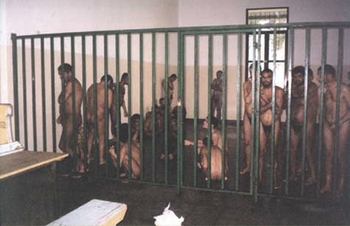
No rhetorical flourishes: this work-in-progress is intended to provoke a long-overdue public dialogue on an ugly topic that refuses to stay disappeared. It treats a hidden battleground of Argentina's Dirty War (1976–1983), a ‘petite war,’ a war within the war, directed by a military-appointed doctor against the mentally deficient inmates concentrated at the national psychiatric hospital, the Colonia Nacional Dr. Manuel A. Montes de Oca in Torres, and its sister institution, the Colonia Psiquiátrica Domingo Cabred, in Lujan, both in Buenos Aires province. Buried in the historical, statistical, legal, and archival records, along with the key informant interviews, ethnographic observations, and photos is shattering evidence of medical human rights abuses committed under the necropolitics of the Dirty War against an abandoned population of mental “defectives” who were condemned to gratuitous suffering and early deaths at the psychiatric colony (see Figure 1). In the worst instances, the abuses were crimes against humanity.
Caged Inmates on View in Dining Hall at Pavilion 7, Colonia Montes de Oca, 2000

More immediate than a “militant” or “barefoot” anthropology, this is anthropology-by-the-seat-of-the pants, with much research conducted undercover: quick, episodic, heretical, and acutely disturbing. More graphic than ethnographic, my forthcoming book, from which this article is excerpted, is in part a psychiatric detective story.Footnote 3 However, it is foremost a medical human rights investigation.Footnote 4 If I am wrong, I should be sued for libel. But if I am right, the Argentine Ministry of Health should be called on to establish a commission to investigate the unexplained deaths, the missing and the unidentified, the ‘NN’ patients (from the Latin non nominates: those with no name), the unregistered pregnancies and births, and the removals and informal placements of infants born in the Colonia Nacional Montes de Oca, especially under the directorship of Florencio Sánchez, who became director there in 1978.Footnote 5
The ghastly reality of Montes de Oca is one that I have for some time treated with uncharacteristic reserve, because I found myself, as I studied it, immersed in a long-standing Argentine national nightmare, hallucinatory in quality, about the disappearance of a beautiful young psychiatrist, Cecilia Giubileo, from the Colonia grounds in 1986. Her body has never been found.Footnote 6 The questions that brought me to Colonia Montes de Oca in January 2000 for the first of four brief anthropological expeditions in 2000, 2001, 2008, and 2011 had nothing to do with the famous missing doctor—the last registered politically disappeared person in Argentina. (In fact, her disappearance occurred two years after the Dirty War was over.) Rather, my mission, as director of Organs Watch and in the company of Hernán Reyes, medical director of the International Committee for the Red Cross (ICRC), was to investigate an article published in the British Medical Journal in 1992.Footnote 7 The article reported the arrest of the director of the Colonia, Dr. Florencio Sánchez, and 11 members of his staff, charged with embezzlement of federal funds, dereliction of custodial duties, patient abuse, and tissue and blood trafficking.Footnote 8 They were also called on to account for the missing inmates and unexplained deaths at the mental colony. The charges included evidence that Sánchez and the Colonia staff had used mentally deficient inmates as guinea pigs in experimental research, and that some were allegedly injected with blood tainted with the vector of Chagas disease. At Montes de Oca, it appeared, confiscations of blood, tissues, cornea, and infants were normalized, routine practices.
Between 2000 and 2011, I interviewed more than 100 persons, including lawyers, judges, doctors, pathologists, journalists, detectives, human rights activists, psychologists and psychiatrists, and members of various nongovernmental organizations. At a Carmelite convent, I spoke with a sister whose religious order had worked in the women's pavilion at Montes de Oca during the Dirty War. I spoke with staff at the Bureau of Missing Persons in the police department of La Plata, at the Argentine Torture Treatment Center, at the headquarters of the Argentine Forensic Anthropology Team (Equipo Argentino de Antropología Forense, or EAAF), and at transplant centers and eye and tissue banks. I met with officials at the Argentine Ministry of Health and visited the archives of all the major newspapers.
In January 2000, I went undercover to visit the grounds and inmates of the Colonia for the first time. After an abortive attempt to enter the Colonia during a period of deep economic strife in July 2001, I continued with external interviews and submitted a report of my observations to public officials in Argentina. In 2008, I was invited by the Argentine Ministry of Health for an official visit to the Colonia to observe the first phase of its institutional reform. I returned most recently in 2011 to interview staff and patients and to retrieve such data from the asylum archives as I would be allowed to see. What followed from those efforts is a tragic story of malignant neglect, hidden genocide, and bio-theft from the most vulnerable population of subcitizens in Argentina, the mentally deficient.
What began in the early twentieth century as a mental colony of utopian ideals was transformed into a psychiatric death camp during the Dirty War, as a rogue military state turned against its own citizens. While much of the tragic history of state terror, kidnappings, disappearances, torture, murder, and the death flights that dropped drugged but still-breathing suspects into the south Atlantic is known, the abuses unleashed against medical-psychiatric patients during that traumatic period of Argentine history have never been acknowledged. Thus, they persisted after the return to democracy, flagrantly through 1992, and to a far lesser degree up to 2011, despite a serious effort at reform. I argue here that buried within the politics of the Dirty War was a clandestine war within the war against the hapless inmates of Argentina's national colony for the profoundly mentally disturbed and deficient. Organ and tissue theft from the inmates was far from the worst they suffered.
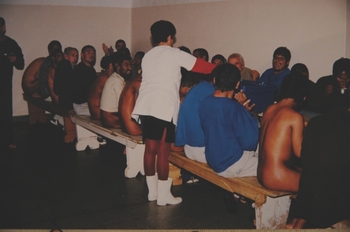
The superintendent of Montes de Oca, military appointee Florencio Sánchez, had complete authority over some 1,300 to 1,500 inmates between 1978 and 1992. The asylum's official censuses for those years document the deaths under questionable circumstances of 1,350 patients and the escape, loss, or other disappearance of another 1,400. However, during two official inquests (1986 and 1992) spurred by reports of irregularities at the Colonia, the judges were most positively impressed by Dr. Florencio Sánchez.Footnote 9 A self-described modern psychiatrist, Sánchez allowed patients to freely wander the grounds (an “open door” policy) and even to go beyond the gates and to enjoy many “human rights.” The decision to wear clothing, for example, was left to personal “choice”; patients often came to the dining room tables naked (see Figure 2).
Meals at Montes de Oca: Clothing Not Required, 2003

As Sánchez himself noted, an unfortunate side effect of this open-door policy, was that patients would sometimes get ‘lost.’ Sánchez allowed the inmates what he called a “controlled freedom”; it included sexual relations with each other (and with visitors), the right to become pregnant (but not to raise their children), and the right to refuse food, clothing, and medications, even when they were unable to feed themselves or to protect themselves from sexual exploitation. These rights were to be exercised, even when doing so resulted in the patient's death.
The history of the medically disappeared at Colonia Montes de Oca, and its sister institution, Colonia Cabred has been relegated to the realm of urban legend, rumor, and moral panic.Footnote 10 Kidnappings were a signal aspect of the Dirty War, but here no kidnappings were necessary; the condemned persons had already been handed over to their untrained, socially isolated executioners, recruited over four generations from the same village that depended almost exclusively on the Colonia for employment. There was no “torture”; the physical restraints and isolation cells and the confiscations of food, yerba maté, even water and clothing were described as therapy. Of course, there were no interrogations of the inmates, who “had no brains to wash,” as Florencio Sánchez wrote in his prison diary while awaiting his own trial.
The “locas de Oca,” the subcitizens, the mentally deformed ‘objects,’ the “eyesores,” the “walking scandals,” the “gatosos” (those who walked on all fours and urinated like cats), the NNs, the “oligofrénicos” (mental defectives)—these “ex-humanos”—were given permission to disappear and in doing so to kill themselves. Among the comments of medical and custodial staff, spoken variously to me, to judges, and to the media, are: “We are not jailers”; “This is not a prison”; “If they go missing, if they get lost—it wasn't us that disappeared them”; “If they die of starvation, it is because they have lost the desire to eat”; “If the food is contaminated, it wasn't us who contaminated it”; “If they die of hypothermia, we didn't take off their tunics.”
The Dirty War was also a war of words, of double-think and double-speak. Here, I am indebted to the writings of Marguerite Feitlowitz.Footnote 11 Ordinary and innocuous words such as capucha (hood), interrogación (questioning), and asado (roasted) were drafted into what she has called a lexicon of terror—’asado’ was a reference to an electrocuted human body. People became desaparecidos (disappeared objects/vanished persons) and were chupado (sucked up/kidnapped), and trasladado (transferred/taken away to be killed). A kidnapping victim was identified as mercadería (merchandise). These words were intended to intimidate, to foster a sense of horror and uncertainty. Torture victims were told, “You don't exist; you are nobody.” Mass graves were filled with mutilated corpses, stray limbs, decapitated trunks, and other body parts, which were labeled “NN.” The term NN had been in common use before the Dirty War, to refer to anonymous, unidentified bodies brought to police morgues and buried in common graves. During the war, the term was appropriated to mask the politics of extermination, to facilitate the removal of living ‘nobodies.’
At Colonia Montes de Oca, the stigmatizing NN label was applied to the socially abandoned inmates who had no official civil identity and who were at particularly high risk of losing their human status.Footnote 12 According to the judicial inquest of 1992, as many as 120 of the stable population of 1,300 inmates were categorized as NNs. (By 2010, all but 17 NNs had been identified.) The lexicon of the Proceso (the various government activities conducted to advance the Dirty War) was likewise replete with medical metaphors of disease and contamination that supported the notion of surgical removal of ‘cancerous tumors’ (undesirable persons) from the social body. Thus, torture was referred to as terapia intensiva (intensive therapy), the torture chamber became the operating room (quirófano), and the torturer was called ‘the doctor.’ Language, run amok, was used to turn the world upside down and to create a cordon sanitaire within which abominations could be defended. Later, after the war was over, mass assassinations were excused by the military as unfortunate excesses. Language is a primary vehicle of normalization, and the perversion of words and meanings in the lexicon of terror facilitated the routinization of violence and energized its practice.
Similar processes of normalizing terror and death through the corruption of words and distortions of professional roles, discourses, and medical ethics were central to turning the Colonia into a place where it was easy for the inmates to self-disappear, and to die. Malicious and intentional neglect was described by Sánchez as restoring freedom and human rights to the depósitos (abandoned ones) and the gatosos. Unacknowledged as it was, the culture of terror inside the grounds of the Colonia could be and was maintained through the end of the dictatorial period and on through the death of Florencio Sánchez in 1992, and even through the period between 1992 and 2008 when a dozen directors charged with “intervention” came and went in turn, shaking their heads at their inability to reform the violent institution that existed on the extreme margins of Argentine society. The reform movement finally began in earnest following three separate human rights investigations and reports by Argentine and US human rights activists, including the author.Footnote 13
Florencio Sánchez's perverse discourse claimed to restore mental patients rights, but it resulted in the creation of a psychiatric concentration camp. In Europe and the United Sates during the 1960s a social and medical professional movement based on deinstitutionalization emerged. The movement advocated patients’ rights to freedom and mobility, and advocated an open-door structure.Footnote 14 Sánchez introduced a new regime based on allowing the inmates to make free choices and to engage in behavior that, he admitted, might seem “repulsive” outside the asylum but was normalized inside. At Colonia Montes de Oca, the vaunted open door was a trapdoor leading to the institution's open sewers and water tank, and a large unprotected swamp that was the primary escape route for the hapless inmates.
Misfits of Many Stripes
Jorge Rafael Videla, a career military officer and president of Argentina from 1976 to 1981 imagined the Proceso as a social and moral cleansing that would bring about a “profound transformation of consciousness.” The Dirty War was intended to bring about that transformation—it was a war against all who were either against or neutral toward the military dictatorship and its war of extermination. Targets included radicals, students, the poor, those who cared for the poor and hungry, writers, artists, freethinkers, and anyone not committed to Proceso goals, and extended to the removal of nobodies.Footnote 15
Like the perceived political opposition and those who did not adequately support the Proceso, the socially abandoned, mentally impaired depósitos—those who were dumped off at the Colonia by their families or by police—were an obstacle to the modernization and beautification of Argentina. Sánchez wrote in his prison diary: “There are many in our society who would like to see the Colonia and all its patients disappear.” But if they did indeed disappear, it was not because of the institution. A former administrator of the Colonia told me irritably in 2008, “Of course they disappear! What do you expect? The only solution would be to chain them to their beds.” Citing the Stockholm Convention of 1967, which established the rights of prisoners and the mentally disabled, Sánchez acknowledged that the open-door policy was an invitation for some patients to wander and get into trouble, but justified such risk as “the burden of liberty.” Just how the freely roaming patients managed to get past the locked gates at the entrance of the facility and past security guards was a mystery. “The chicos (boys) had their ways,” Sánchez told authorities, “Some are very strong. Their mental disabilities do not diminish their physical strength.”
An elderly staff member vividly recalled a particular day (possibly in 1978) when Sánchez made his first rounds of the asylum's pavilions: “Dr. Sánchez came into each pavilion, and he announced to the workers that from now on the patients would be free, on their own, just like normal people. They would be able to do as they pleased, to eat or not eat, to wear clothing or go without clothing, to sleep or to go outside and wander. If they got lost, they had made the decision to do so. They were not children.” Thus, when a patient ‘went missing,’ it was not uncommon that the nurse in charge might not notice it until two or more days had passed. Often, patients were lost and never heard from again. The hospital census did not begin to monitor the fugas (leaks), as they called the missing, or the number of fugas who returned to the Colonia until 1984, the year that Sánchez died. No one knows what happened to the 665 patients who were recorded as missing between 1976 and 1983—how many returned, how many died, how many got lost in the swamp or in the forest, or along the highway.
The war-within-a-war conducted against the mentally deficient led to a set of practices that to this day are confusing and embarrassing to caretakers from the Colonia-dependent village of Torres, some of whom are the fourth or even fifth generations of their families to hold those jobs. Yes, nudity was acceptable, they will tell you—it had to do with freedom. The missing inmates, the unexplained deaths, and the precarious status of the NNs were routine and normalized. “Isn't it that way everywhere?” I was asked. The custodial staff was as colonized and dependent as their abandoned charges.
When Videla appointed Florencio Sánchez to take control of the national asylum, he knew he could depend on him. Videla had disappeared his own son at the Colonia just 10 years before he became president and led the nation into the worst period of violence in the history of Argentina. My argument is based on Sánchez's public statements and his prison diary; observations and interviews at the Colonia with retired and current staff; the disorganized but fascinating hospital census data; interviews with Argentine officials, public intellectuals, human rights activists, legal scholars, historians, psychologists, anthropologists, and journalists; materials bearing on three judicial interventions (1986, 1992, 2004); and the data found in combing Buenos Aires newspaper archives (Clarín, La Prensa, Crónica, La Nación, Página/12), and a number of periodicals.
It is my argument that Sánchez and his staff were involved in a war against the socially abandoned, mentally impaired, and cognitively deficient, many of whom who died at an early age of starvation, hypothermia, dehydration, and drowning—in short, of malignant neglect. If I am correct, these deaths should be included in the numbers of Argentina's politically disappeared. The fate of these vulnerable wards of the Argentine state cannot be explained simply by administrative laziness, ignorance, and malfeasance; rather, they were the victims of the fascist necro-biopolitics of the Dirty War. The elimination of the insane was not an accidental outcome of bureaucratic indifference but rather an effort to wipe clean a repulsive stain, the stain of mental incompetency, on the national and personal pride of the modern, cosmopolitan Argentine citizen.
This much is known—this much is fact. Medical records subpoenaed from Colonia Montes de Oca reveal that between 1976 and the date of the judicial intervention in 1992, 1,400 patients went missing; some 1,200 did not. During the same period, 1,350 patients, many of them reported to be young and physically healthy, died without or explanation or autopsy. Among them was the 19-year-old profoundly mentally handicapped first-born son of General Jorge Rafael Videla. The general did not simply drop his son off at the door in exasperation; it was an ideological choice to do so. While not a wealthy man, Videla was a military officer and had many other options, including placing his son in the care of one of the private, charitable homes run by Catholic nuns. Moreover, it was President Videla who appointed Florencio Sánchez to reorganize and direct the mental colony where his own son was secretly detained as a young, healthy teenager and died almost a decade earlier.Footnote 16
In interviews, former staff members at Montes de Oca expressed puzzlement that a general who was to become president of the nation would place his son in such a pitiful public institution. It was a mystery to these former custodial staff members, who said that they were ordered to treat the boy, Alejandro, an epileptic and severely cognitively challenged, no differently from the other unfortunate depósitos in Pavilion 9, one of the most restrictive and abusive pavilions. A former Colonia caretaker described Videla's son as a beautiful, fair-haired youth of angelic appearance, unlike his swarthy father. “What a shame!” he commented. “The boy had scarcely the mind of a five-year-old.” Another staff member commented that the general's placement of his disabled son in the Colonia was perhaps the general's only democratic act. The Colonia was from its very beginnings an institution for the poorest and least educated people of Argentina.
In a perverse sense, the Proceso of the Dirty War years was itself fairly “democratic.” Those targeted for extermination by the military included not only members of guerrilla organizations, but union leaders, student activists, journalists who raised questions about the legitimacy of the military regime, artists and writers whose work was judged decadent or indecent, psychiatrists infected by the germ of Jewish psychoanalysis, nuns and priests who worked with the poor, and any friends or acquaintances of any of the above. Thousands were abducted, tortured, and killed. The lucky ones were buried in collective graves; others were thrown from Air Force planes into the waters of the Río Plata.
Collaboration with the regime was equally democratic, in a similarly perverse sense. It was not only military professionals, but doctors, lawyers, judges, and important members of the Catholic hierarchy who supported the Proceso. Doctors were needed to monitor the vital signs of those interrogated in torture chambers, nurses had to care for pregnant prisoners, judges were needed to transfer paternal rights of infants and young children stolen from their “terrorist” parents and awarded as tokens of appreciation to childless military couples and their friends. And let us here include the work of the psychiatrists and custodial staff at public psychiatric institutions, like Montes de Oca and Colonia Cabred, who were called upon to cleanse Argentine society of its repulsive, ugly, disowned, and unwanted mental deficients.
The body politic imagined in the fascist ideology of the military junta did not have a place for the “mentally degenerate” in its utopian scheme. In his prison diary, Sánchez refers to the “repellent” appearance of some of the “grotesque” naked bodies displayed by his innocent but demented chiquitos, whose clothing had in fact been confiscated by the institution itself. “But what is the point of dressing them?” he wrote in his prison diary. “We tried everything. Clothe them and tie them up, clothe them and keep them inside; clothe them and punish them, but all these negative reinforcements failed. Ultimately we had to ask, what was the point of dressing them?” (p. 27). There was also the problem of hygiene: “It was better to leave them only partly dressed to prevent them from wallowing in their own filth. One practical solution was to provide short tunics (shirts) that would allow patients to use the toilet without having to bother with buttons or strings. They could relieve themselves without having to pull down or pull up their pants” (p. 28).
The male inmates easily discarded the tunics, while the Carmelite sisters who lived and worked at the Colonia dedicated themselves to keeping the women clothed. The nuns were less concerned about modesty than about the exploitation and rape of their wards. In fact, the practice of nudity allowed unwanted sexual assaults, as well as sexual relations among the inmates. Therapeutic nudity was an odd philosophy to be introduced by Sánchez, an extremely socially conservative Catholic at a time when restoring “decency” and Christian family values was vociferously espoused by the junta.
Was the nudity meant to make manifest the less than human status of the inmates?Footnote 17 “Without their clothing,” Sánchez wrote, “the patients become a public spectacle and produce horror in the general public. But we as doctors must confront all kinds of horrors dispassionately, such as amputations and war wounds.” He acknowledges that the nudity and the display of deformities of the patients violated social and aesthetic norms, but goes on to explain: “But while some patients are grotesque and display repulsive bodies, others have sound bodies.” In a final coup de grâce Sánchez asked rhetorically, “What is the difference between the psychiatric colony and a nudist colony of vacationers?”
A night nurse from Torres expanded on this notion. “Well, yes, sex is their right. . . Really, sex is the thing they like most, maybe the only thing they like about their lives. They crave affection like any other creatures. And this was Dr. Sánchez's philosophy. He was very progressive, very modern.” The sexual experiment resulted in many pregnancies and births, some taking place in the infirmary on the grounds of the Colonia. The infants, never registered at birth, were taken from their ‘mentally incompetent’ mothers, and removed to other, private hands.
Just One Death: Cecilia Enriqueta Giubileo
On the evening of June 16, 1985, two years after the official end of the Dirty War, a pretty dark-haired psychiatrist, Cecilia Giubileo, vanished from the 250-acre grounds of the Colonia.Footnote 18 The 28-year-old doctor, separated from her husband, a leftist student activist who was forced into exile in Spain after his brother was disappeared, lived alone in an apartment in Torres, except when she was assigned to spend the night in the infirmary of the Colonia, as she was expected to do on the night she disappeared. Those closest to the doctor later reported that she had suffered a crisis of conscience and was about to make certain revelations public. “I can no longer live with what is happening at the Colonia,” Giubileo told a friend, Graciela, just days before she disappeared. Two physicians employed at Colonia Cabred/Open Door informed police that Giubileo had been writing in her notebooks about certain activities bearing on the safety of patients. A few days earlier, on June 10, Cecilia had phoned her mother, Maria Lanzeti de Giubileo, telling her of death threats coming from a senior official, a military man. Cecilia was falling to pieces and she begged her mother to come and stay with her. When Lanzeti arrived in Torres she found her daughter's apartment bolted and Cecilia barricaded inside. It was the last visit the two would have.
On June 17, Giubileo did not appear for breakfast at the hospital canteen, nor did she show up for her morning shift at the Colonia or her afternoon appointments at her private office in Torres. Her worried co-workers notified Florencio Sánchez that she was missing; Sánchez urged the staff to be patient and not jump to conclusions. The doctor might be involved in a personal matter, he suggested, perhaps a romantic interlude, and it would be professionally devastating to have her absence reported to the police. Meanwhile, the director was preoccupied with the arrival of a team of construction workers who were assigned to a major renovation of the infirmary where Giubileo had her office. The building was thrown into chaos as furniture, file cabinets, and medicine chests were removed, the walls stripped, and tiles removed. Patients and staff were transferred to a temporary infirmary in another pavilion until the work was completed several weeks later.
When another day passed without any news from the doctor, Giubileo's mother and her supporters demanded that the hospital authorities report her daughter as a missing person to police in the city of Lujan.Footnote 19 But Sánchez refused to involve the police, saying: “We have to keep our calm and not let our imaginations run away with us.” The director's reticence forced the doctor's friends to take action. A neighbor, Julian Sequeira, known throughout the pampas as a skilled hunter and trapper, traced Giubileo's footprints at the Colonia. They began at the infirmary and led to Pavilion 7, where the most regressive, incontinent, and aggressive patients were kept, many of them confined with physical restraints. Finally, the footprints led to an abandoned building near the back of the Colonia where prints made by a woman's high-heeled shoes were found next to car tire tracks.Footnote 20 The tracks did not match those of Giubileo's car, which was left behind in the colony, but, Cinderella-like, the shoe tracks matched the size of a different pair of the doctor's shoes. Sequeira filed a missing-person report in the police station of Lujan four days after she disappeared. When the police arrived to begin their investigations, Giubileo's office in the infirmary had been dismantled; they next found that her home in the village of Torres had been ransacked. Many of her personal belongings, including her files and notebooks, were gone.
The police chief in Lujan determined that on the night of her disappearance the doctor had signed in for her evening shift, filled out a death certificate for a patient, and then gone to the infirmary to examine a patient with acute pneumonia. While there, she was called to attend to a problem in Pavilion 7. Giubileo had disappeared somewhere between the infirmary and Pavilion 7. A high-functioning patient had also disappeared, and it did not take long for an ad hoc search party to find her wandering alone in the woods adjacent to the asylum. The female patient was scantily clad, cold, dehydrated, and disoriented. She spoke of having been forced into an ambulance or van by two men wearing hoods, aided by a deaf-mute inmate. She was taken to a house in the woods where she was tied up. Next to her, gagged and hog-tied, she said, was her friend, Dr. Giubileo. The woman's testimony would never reach a judge. As a mental patient, she was legally incompetent to give testimony.Footnote 21 Sánchez dismissed her story as the fantasy of a feeble-minded person who missed her friend.
When news of the missing psychiatrist appeared in the media, Sánchez told the press just what he had told the police: “Of course we are very worried about our friend, but we have to control our emotions so they don't contaminate our ability to make a rational and objective analysis of the situation. I have concluded that the doctor left the Colonia voluntarily and I have no reason to believe otherwise.” Meanwhile, journalists were flocking to the asylum to document its “horrors”—the word most frequently used by the media. “A chamber of horrors,” they called it, “an anteroom of hell,” a “depository of skeletons.” They made sure to photograph what they found: the “grotesque,” naked, abject, and emaciated patients who followed the cameras begging for sweets, cigarettes, and kisses.Footnote 22 Whenever the chiquitos were questioned about the missing doctor or about their beloved “Papacito Sánchez,” they scattered off like frightened rabbits.Footnote 23
Several hypotheses arose in the weeks following the doctor's disappearance. Giubileo's friends and family dismissed speculation that she was a lesbian and involved in drugs. A second hypothesis linked Giubileo's disappearance to her ex-husband's ties to the Ejército Revolucionario del Pueblo (ERP), one of the guerrilla groups blamed for the military coup and subsequently for the ferocious repression.Footnote 24 Was Giubileo possibly involved in documenting the history of the Colonia as a secret detention site? Was she informing others about politically disappeared suspects, who could be hidden away at the Colonia, drugged with sedatives that were readily available there, then murdered with chemical injections and their remains dumped in the swamp or the woods surrounding the asylum? Others said that she had gone into exile in a border town between Ecuador and Colombia.
The third hypothesis—the one that stuck—concerned Giubileo's expressed misgivings about medical abuses of the inmates and gross corruption at the Colonia.Footnote 25 An unnamed staff member told police that Giubileo had kept a diary of illicit medical experiments and pharmaceutical clinical trials conducted on inmates. Another informant said that the doctor, as head of the hematology unit at Montes de Oca, was aware of regular blood harvesting from the patients.Footnote 26 In fact, each inmate's personal medical chart listed his or her blood type on the first page, along with other identifying information. The doctor might also have been aware of the harvesting of heart valves and of eyeball extractions from the dead by Florencio Sánchez and one of his staff assistants. In 2011, I was able to interview the assistant, a practical nurse now retired: “As head of the hematology lab, it is possible that Giubileo may have been involved in illicit activities herself.” The late crime journalist, Enrique Sdrech, who helped our team to find a way into the Colonia in 2000, believed that Giubileo had been killed on the grounds of the Colonia to keep her from revealing the dirty secrets of blood, tissue, cornea, and organ theft.
Our visit to the home in Lujan of the elderly and genial retired nurse, a faithful protégé of Florencio Sánchez, was informative. He had been recruited, groomed, and trained by him and was eventually entrusted with the handling of blood taken from the living and corneas extracted from the dead. He explained:
If I am not mistaken, in 1978 Dr. Sánchez brought me to the Colonia to do hematology. And because I had an interest in it I also performed autopsies. It was simple work. I accomplished everything with two pairs of pliers. The entire globe of the eye was carefully removed, scooped out, and placed in a jar covered in penicillin. Within a few hours the cornea had to be frozen. The whole process, from the time the patient died to the time the cornea was removed and frozen, took five hours. There were no technical or clinical problems, as long as there were no social problems. As long as they were abandoned people, no one would ever say or know anything about what we were doing. I don't remember how many bodies I worked on. They say—the judicial inquests say—that anywhere from 500 to 600 corpses were harvested. But did they excavate all those bodies to decide on this number? All of my notes were carefully written down in a large book, but they were confiscated during one of the investigations. I am sorry not to have them to show you.
I asked the nurse if he knew about the blood extractions.
Yes, I do. The blood was taken and delivered to a genetics lab at the Colonia. There was a doctor there, Dr. Caputo was his name, now dead, who was in charge of that line of work. They were doing research of some kind. Caputo worked directly under the Ministry of Health. I worked under the direction of Dr. Sánchez in the hematology department of the Colonia. All I would do was pick up and deliver the patients, and then I would bring the vials of blood for Giubileo for her medical research on Chagas disease.
The Giubileo case and reports of its links to organ and blood trafficking at Colonia Montes de Oca resulted in two federal judicial inquests, in 1986 and 1992. In 1986, the judge concluded that the allegations were generated by a combination of a hungry and sensationalist press, frivolous lawsuits, and the ignorance of the general public regarding the technical requirements for organ harvesting and transplants. Blood harvesting was defended as a necessity, and the judge accepted defendant Sánchez's argument that the blood removed from the inmates—hundreds of pints—was recycled within the Colonia. There were many anemic inmates, and the blood was used to bolster those who were emaciated and weak. “Some of the inmates were as strong as horses,” Sánchez wrote. The puny and weak were not discussed. If the 1986 inquest revealed anything, it was the impunity of the medical hierarchy. Florencio Sánchez was commended by the judge for his service to the nation. He was considered an accomplished medical scientist, and treated as one.Footnote 27
Thus, the bleeding and harvesting continued. Finally, the evidence of financial corruption, organized crime, drug trafficking in liquid cocaine, and medical malfeasance at the national mental colony grew so strong that a second judicial inquest was initiated in 1992. During these investigations, Florencio Sánchez and his colleagues were suspended from their regular duties at the Colonia, and arrested. This time, the doctor was less a distinguished guest in the courtroom than a key suspect. The judge who heard the inquest report also hoped to solve the enigma of Giubileo's disappearance, and to get to the bottom of the medical and human rights abuses at the Colonia. He offered Sánchez immunity in exchange for turning state's witness, but the inquest was cut short when Sánchez, died suddenly in his jail cell, of a heart attack, just days before he was to testify in court.
However, before his death Sánchez wrote in his prison memoir that he believed it highly likely that Giubileo was still alive and that she might have been a political double agent. Why did the media not consider that Giubileo was once married to a militant, a subversive? “During the repression anyone related to a known subversive could not possibly be approved for a position in a federal institution after 1976,” Sánchez wrote. “Can we imagine that Giubileo's competitive and controlled federal position was given to her in exchange for information about subversive activities going on in the country at that time? If so, and it became known to her former comrades, the paramilitary groups, they could [implement] and use her disappearance to create chaos and a scandal against the government.”
“Operation Giubileo”
I began my investigations into Montes de Oca with a strong hunch about the links between medical disappearances there and the political disappearances of the Dirty War. What else could account for the lack of concern, even within the Argentine human rights community, for so many missing bodies? For the exclusion of the Montes de Oca inmates from the list of Argentina's officially disappeared people? They were ‘no-body’ in life, no-body in death. Stripped of their clothing, their blood and corneas, and their newborn infants, their gruesome stories seemed to be known to no one.
Of all the thousands of unaccounted deaths and persons missing from the Colonia, the only missing body that ever mattered to the nation was that of Cecilia Giubileo. Like Che Guevara, whose death photo created a global following, or Elvis she has become a mythological creature in Torres and Lujan. “She is alive and hiding out in Uruguay”; “She has remarried and lives in Spain and has many children”; “She has had plastic surgery and lives in a high-rise apartment in Rio de Janeiro. She has been seen on Copacabana beach”; “She was raped and strangled, and her body is in the swamp”; “Her body is in the woods”; “Her body is in heaven.” In August 2011, I was warned in writing by the Colonia administration that I must never speak of Giubileo to the hospital staff. But that which cannot be spoken becomes an obsession, and so it is that “Giubileo”—never called “Cecilia,” or “the doctor,” but only and forever by her felicitous Italian surname, Giubileo, suggesting joy, bliss, jubilation—appears unbidden in the midst of other conversations, the uninvited guest, like an apparition. But Giubileo, the joyous one, is also La Llorona, the sorrowful, disconsolate woman who walks the world searching for her missing children, the chiquitos and chiquitas of Montes de Oca.
Those who live in Torres and work in the Colonia cannot keep silent about the beautiful young doctor with her large, deep, soulful eyes. She continues to haunt the Colonia and the village of Torres. Giubileo is the first ghost, the first lady, and the patron saint of the missing ghosts of Montes de Oca. What is the purpose of revisiting an old story that is a wound, by now a scar, on the body politic of Argentina? What is at stake in this project? Before he died in 2003, Enrique Sdrech told me, “Montes de Oca is like a thin scab on the body of the nation. Just saying the name of the place is like invoking a curse. . . No one trusted the judicial system to come up with the truth; the judges were as corrupt as the medical staff of the asylum.”
An Unannounced Visit to the Colonia
When Hernán Reyes and I arrived in Buenos Aires in January 2000 for the first visit, the crime journalist Enrique Sdrech introduced us to a private detective, José Marín, who had represented the family of Cecilia Giubileo and had conducted undercover work at Montes de Oca in preparation for the prosecution of Florencio Sánchez and several of his administrative staff in 1992. Marín had degree in clinical psychology, and he assured us that many of the “mute” inmates of that “living graveyard” were capable of telling us what was going on there. But it would be unsafe for them, and for us. To be on the safe side, however, Marín carried a gun.
En route to the Colonia, Marín described how he had prepared for his first undercover visit by trying to imagine himself a profoundly mentally incapacitated person. He stopped speaking, shaving, showering, or washing his hair. He dressed in rags and when he felt ready, he parked his car at a distance and walked to the gates of Montes de Oca, arriving after dark and presenting himself as a “vagabond-madman,” mumbling incoherently. A night watchman let him in and assigned him a bed in one of the men's pavilions. His mattress was filthy. The odor of sweat, urine, feces, blood, and infection was suffocating, and the night cries were intolerable: “I felt that I had died and gone to Dante's inferno.” During his three days and two nights at the Colonia, José Marín never met a doctor, was never offered a shower or clean clothing, and was never registered or given a case number. Dressed as a depósito in borrowed pajama-like pantaloons, he was never noticed by the indifferent staff as an interloper, although a few of the patients caught on immediately. “You are not one of us, you are too high-functioning,” a patient told him.
Marín was thus free to wander the colony and record his observations. The inmates were like ghosts, he said, who sometimes bumped into each other. When he tried to talk to them, they would walk away. When he asked them about Dr. Giubileo, he was warned, “Be quiet! If they catch you talking about these things, the nurses will slap you with wet sheets. They will tie you up. They will put you in Pavilion 7!” Poking around in the administrative buildings after hours, Marín found price lists for blood, heart valves, kidneys, and corneas from local hospitals and a private tissue bank. But it was the discovery of post-dated medications and ampoules of injectable liquid cocaine that became a centerpiece of the 1992 inquest. “They couldn't get Sánchez on organ trafficking, so they tried to get him for drug trafficking,” Marín said.
At the entrance to the Colonia we were stopped by a guard at a kiosk. Marín introduced me as an American visitor searching for a senile great-aunt who might have been “deposited” at the Colonia. Following tense telephone exchanges with the “administration,” we were waved in with the warning not to enter any of the pavilions but to search the grounds only. Marín told us not to worry: there was so little surveillance and control of the colony that no one would notice us. What we saw during that initial site visit was far worse than organ and tissue theft. We had stumbled on a psychiatric death camp filled with emaciated, naked, listless, caged “ex-humans.” As soon as the first pavilions came into view, our car was surrounded by a throng of bodies, a tangle of grasping arms and legs, clamoring for attention. A few inmates thrust their faces up to the open windows of the car, others stuck scrawny arms through the window to grab at us, all the while begging for cigarettes, coins, and candies, the currency that Director Sánchez used to pacify his “chicos.”
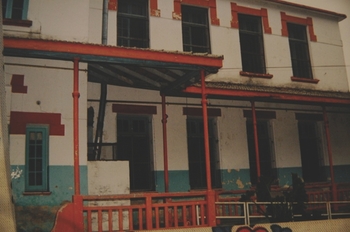
Montes de Oca was what João Biehl in Vita: Life in a Zone of Social Abandonment would call a zone of social abandonment, a “place in the world [allotted] to exiled ex-humans.”Footnote 28 In its camp-like space one was forced to contemplate the awfulness of power over human life. There were pavilions for men, for adult women, for geriatric cases, for children and adolescents, and one—Pavilion 6—for the incorrigible and the aggressive. Finally, there was the infamous Pavilion 7, housing the incontinent, the deformed, the catatonic, and the so-called gatosos. But these designations were permeable, and patients wandered in and out of the pavilions with the exception of Pavilion 7, the black hole of the Colonia (see Figure 3).
Run-down Pavilion at Colonia Montes de Oca, 2000 (Color online)

Once it was clear that we did not come bearing gifts, the inmates fell back into a state of depressed and indifferent lethargy, milling around the buildings, on the steps, on the porches, alone or in bunches. Some were clothed in what looked like cast-off hospital togs. Some wore tops without bottoms, and others wore bottoms without tops. Many were beanpole-thin, and some had shaved heads, no doubt due to lice. “Why are they so thin?” I asked. “They are tired of eating,” a nurse explained. Some were curious and stared, others rocked forlornly back and forth, lost in a private world. Some were mute, others gestured in a kind of sign language, others babbled incoherently. Some were aloof and silent, some of the “high-functioning” did not descend into the rabble surrounding our car. When we stepped out of the car I stumbled on the inert body of a large, naked woman, lying in a patch of muddy grass surrounded by cows that grazed around her, as if she were a discarded tire or another discarded object.
Each pavilion housed between eighty and one hundred patients. Each contained a dormitory of jumbled beds, a toilet and showers, and a dining hall with long wooden tables and benches. Meals were served from plastic buckets that resembled slop pails, from which individual servings were tossed onto tin plates. The only utensils were spoons, no glasses or cups. Those who were thirsty drank directly from hoses or bathroom taps. Some patients took their meals on the floor or in the filthy shower stalls. Others rummaged for staff leftovers in the garbage. Some patients complained of not having access to yerba maté, a symbol of their total exclusion from the national culture.
Approaching Pavilion 7, I was filled with anxiety and uncertainty. “Why?” José asked. “Are you too soft to see patients caged like gorillas rattling their bars, pacing like hyenas, tied with sheets to their beds, crouched on the floor whimpering to themselves? To stare at the unsightly, the crawlers (the ones they call “the cats”) pulling themselves across the floor, eating filth from wastepaper baskets?” Perhaps the detective was right and merely viewing such humiliation turned every observer into an accomplice. Unless one was willing to disrupt the violent institution, the psychiatric camp, as Franco Basaglia had done in the Gorizia asylum in the 1960s, unless one was willing to destroy and neutralize the institution, observation seemed like the work of a pimp trafficking in human misery, a misery imposed on the least able by the asylum-as-camp to exacerbate their mental disabilities.Footnote 29
The Colonized Village of Torres
In the village of Torres, three hundred families make their living from the psychiatric colony. On this first and subsequent visits I interviewed two dozen staff members on duty at the Colonia during each visit there, and a half dozen staff and their families in two visits to the village itself, where most staff lived. José Marín provided a caution: “Their dependency makes the residents of Torres seem odd and a bit stupid,” he explained. “Most were blind to the events taking place because the Colonia is the only reality they have ever known.” After stopping at a few shops to try to locate an employee from the Colonia, we were directed to a small house where Penelope (not her real name), a night nurse, woke up to open the door. “Is something wrong?” she asked. Her hands were shaking as she invited us to sit down in the garden. “I’m sorry but it is quite a shock for me.” We explained that we were foreigners, an American anthropologist, a Swiss doctor, and a psychologist—José's other diploma—and that we had seen the long-standing charges against the Colonia and wanted to see if anything had changed in recent years.
Where shall I begin? I am not the best person to talk with you as I have been working at the Colonia for only two years, so whether it is better or worse than what it was, I do not know. But it is a very harsh place. I never imagined that I could work in such a place. OK, it's a hospital for mental defectives, mentally handicapped people. There are light, medium, and severe cases. But the light cases often become worse the longer they are with the others. They pick up their behaviors. It is very sad. They are left here by their families who never come back to see them. We give them a place to sleep, food, and some medications. But I am still not comfortable working here.
Penelope paused, then continued:
There is a lot of neglect. Most are abandoned people anyway who don't expect to get much attention. They are left to themselves and they roam around unsupervised. Often they are looking to have sex. That's their main activity. Sometimes at night I find a couple of patients in bed having homosexual relations and I have to break them apart. But most of our patients are bisexual, they go either way depending on the opportunities they encounter, and most have a stronger sexual appetite than normal people. Or maybe it's just the boredom. Even though there are men's wards and women's wards, they do always find ways to get together. The grounds are large and there is plenty of high grass.
What about pregnancy?
Yes, usually one or two women are pregnant in the women's pavilions. You can't always tell right away, and none of them pays any attention to their periods. They are allowed to stay with the infants for a week to 10 days to nurse them. But then the babies are sent away and the women come back here. It is very sad for some of them. But I tell them that it is the best for their babies. They certainly can't raise them here!
Do you think it is right to let patients get pregnant under the sad circumstances?
Well, this is actually a policy of the Colonia since the time of Dr. Florencio Sánchez. In the book he wrote before he died he said that you cannot repress the sexual drives of mentally handicapped patients. He said they had a right to have sex and to be free without clothes if they wanted. It was actually part of the therapy of the colony. The doctor's ideas were very progressive.
Why not protect the women patients with birth control?
Oh, the Catholic Church would not allow that.
But isn't this a state institution?
Yes, but still the Colonia follows the rules set down by the [Catholic] Church.
And not every patient is a severe case. Some are mild defectives. Some are able to have sexual relations with normal people, with visitors and things, and sometimes their babies are quite normal, quite healthy. Many people come here looking for bab –
Penelope had stopped in mid-sentence. I waited a few seconds, then said, “It looks like you almost said something you weren't wanting to say!” She blushed. I continued, “There are stories of babies being sold to adoption brokers.” “No,” she replied, “there is no sale of babies. The healthy ones are adopted. That's all I know. There is a judge who decides this.”
What is it that bothers you about working at the Colonia?
The way patients are punished. I’ve never gotten used to that. It goes against the training I got from the Red Cross people. The patients are slapped by the staff. And the way the food is just brought out to the middle of the table on one big platter and the patients have to grab at it and eat like animals. Some don't have the courage to eat and they get very malnourished.
Do you think things have improved in recent years, given all the attention the Colonia has gotten? Penelope's answer was oblique, unexpectedly lauding Dr. Sánchez.
I think it's even worse today. They accused Dr. Sánchez of all kinds of things. They made him into a monster. And then they killed him in jail. But the Doctor was loved here and loved in the village. He was like a god to the patients. He walked around the grounds almost every day. He touched people. The new director never comes inside the pavilions. They don't see what we have to see: deaf, dumb, blind idiots tied inside cribs alongside the ones who crawl around the floor. It isn't right. No one talks except to yell at them.
What are the most common medical problems on your ward?
Many are very skinny. Some refuse to eat. The food is ugly and tasteless. Everything is mashed together so that every meal looks and tastes the same. You can't tell what it's made of. Some prefer to eat out of the garbage. So food, I would say, is a big problem. The patients also have a lot of mycosis, infected sores, skin rashes and fungus infections. The patients get into accidents quite frequently. Cars and delivery trucks coming in don't look out carefully and we have traffic fatalities every year. [Author's note: No such deaths are recorded in the hospital census.]
Can you tell me about patients who have disappeared?
Missing, yes, they go missing. But they do not disappear. The patient files are centralized. They are very detailed. Every patient has his blood type listed. But sometimes the identity of the patient is not known. And some arrive with false identities. The family will bring in a patient who they say is José Pérez, but he is not really José Pérez and when we find out later by accident who he really is, then we have to change his name in the files. Some patients have more than one file, each with a different name. Some families abandon a person at night, without a wallet or identification of any kind.Footnote 30 So, the person is listed on the charts as an NN. Right now, I have four in my ward. These are the patients who often wander off. Sometimes they come back, and sometimes they die and their bodies are found later. But when you say disappeared, it sounds like something else.
‘Habeas Data’: The Bureaucratic Contrary
To pursue this investigation, I had to deal with considerable government apparatus. In particular, I was confronted with the ‘habeas data’ provision (Article 43) of the 1994 Argentine constitution: “Any person shall file this action to obtain information on the data about himself and their purpose, registered in public records or data bases, or in private ones intended to supply information; and in case of false data or discrimination, this action may be filed to request the suppression, rectification, confidentiality or updating of said data.” Unfortunately, Argentina's freedom of information act, its ‘writ of habeas data,’ does not apply to the right of foreign scholars to access public materials and archives.
I made multiple requests to the Ministry of Health and the new reform-minded director of the Colonia for census data from the 1970s forward on admissions, diagnoses, ages at death and causes of death, pregnancies and births, escaped or lost inmates, and numbers of unidentified inmates. Finally, I was handed photocopies of several carefully typed sheets of paper, all showing columns of numbers that had been altered. Diagnoses were overwritten with changes, and there were erasures and text covered with opaque correction fluid. The plain paper had no letterhead and none of the stamps, seals, or official signatures one would expect on a document from a federal institution such as the Ministry of Health. The tables showed the total number of inmates and of beds; they were identical. The number of NNs, those patients lacking an official civic identity, in the tables did not match the data presented in the two judicial investigations for the years 1976 through 2011. Deaths by age group were not correlated to gender, cause of death, birthplace, or ethnicity. The data on causes of death began with 1976, although the bed and inmate counts began at 1970. The deaths were counted by year, and the diagnoses by year and age, but neither was counted by gender. The causes of death were a laundry list of medical and non-professional diagnoses, but the primary cause of death was not a diagnosis but a statement after the fact: “heart and respiration stopped.”
Statistics are never neutral, even in the hands of the coroners or pathologists, as I have learned in the police mortuaries of South Africa, Brazil, and Israel during periods of political conflict. Public records and statistical inferences based on them do not mirror reality; at best, they are filters and collective representations. However, even the most incomplete or poorly kept public records can reveal the basic nature and values of a society or an institution: What are the classifications? What is worthy of being recorded or counted? At the very least, public records can reveal some of what is missing, what is being hidden.
Causes of Death at Montes de Oca (1976–2010)
Of the 1,945 deaths reported at Colonia Nacional Montes de Oca between 1976 and 2010, 26.6 percent (517 inmates) were recorded without a diagnosis. The notation “heart and respiration stopped” indicates only that a death occurred but says nothing about the cause. Two-thirds (74 percent) of the deaths were attributed to specific causes, but these vary from basic medical diagnoses (heart failure, respiratory infection, cancer, stroke) to ethno-medical or folk diagnoses such as ‘muerte súbita’ (sudden death) or ‘caquexia’ (wasting); and they include “natural” alongside “suspicious” (traumática) deaths. This information and the data following comes from the hospital's census records.
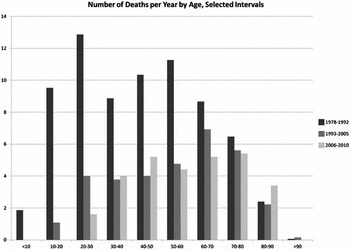
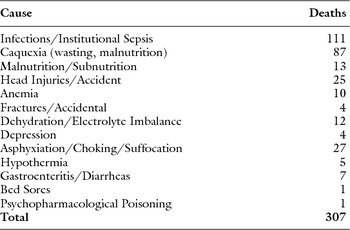
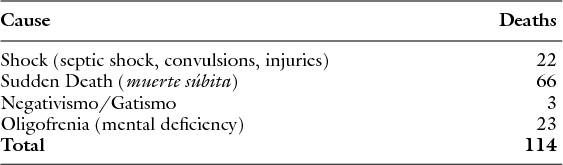
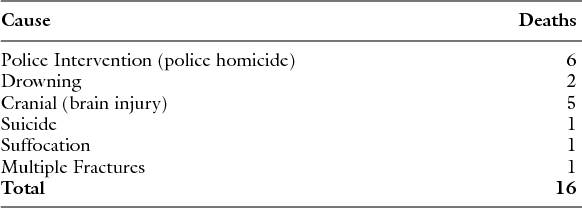
Colonia officials reported only sixteen of the 1,945 deaths as unnatural or traumatic. But I would question this number in light of the 517 patients who died without any registered cause of death, and the 307 deaths that suggest custodial and medical neglect. Also, some of the stated causes of death are social stigmas rather than medical diagnoses, for example, those who died of being cat-like “gatosos,” or those who died of “negativismo.” It is unclear what was meant by muerte súbita. It cannot possibly apply to the deaths of infants—no infants were housed at the Colonia—and sudden death for adults can mean anything at all. Although a very small number of the deaths were tagged as “traumatic” and therefore reportable to police, there were hundreds of suspicious deaths that any medical historian or medical anthropologist would want to know more about. Figure 4 shows a distribution of the various ages at which patients died, over time intervals. It is not hard to conclude that there was a definite risk of early unexplained deaths under the administration of Florencio Sánchez during the Dirty War, and even up through his death in prison in 1992. It is important to note that the hospital census remains stable, even if deaths are accounted for. All available beds were filled, with inmates replaced as they died off. We shall return to the consideration of premature deaths in the section following the tables below.
Distribution of Deaths by Age, Over Selected Time Intervals (1978–2010)

Premature and Unexplained Deaths
Figure 4 (above) shows the distribution of average deaths by age group per year within a span of years. Between 1978 and 1992, the 14 years of the Sanchez directorship that overlaps with the dirty war and until his death in prison in 1992, 336 of the recorded 540 deaths of inmates, were of young adults under 40 years. During the Sanchez years, an average of two patients under ten died each year (or 28 children), an average of 13 young adults, 20 and 30 years, died each year (182 deaths) and nine inmates between 30–40 years died each year (126 deaths). These 336 premature deaths give witness to an eliminationist agenda, a small war against the mentally “deficient.” These premature deaths of otherwise physically strong and healthy individuals was normalized in the hospital census as natural deaths, “non-traumatic.” Figure 4 shows that the medical dictatorship of Florencio Sanchez was a mortal disaster and a moral collapse, with patients’ deaths scattered across the younger age groups. It seems to have been easy enough for a patient to die at any age.
We will look now at four tables that present the categories and diagnoses associated with patient deaths in the Colonia In the following tables (Tables 1–4), I have sorted the causes of death into categories that conform to what are usually considered normal or natural deaths—heart failure, respiratory infection, neurological deterioration, stroke, cancer, and organ failure—as well as those that might raise a red flag for a medical or anthropological investigator. Tables 1–4 break down the deaths by causes, as registered by the Statistics Department at Colonia Montes de Oca. It is noteworthy that the deaths were never correlated by staff with year, age, or gender. The total number of deaths is 1,945.
Deaths by Natural Causes (1976–2010)

Source: Statistics Department at Colonia Montes de Oca, data provided in 2008 and updated in 2011.
Deaths Suggesting Institutional Neglect (1976–2010)

Source: Statistics Department at Colonia Montes de Oca, data provided in 2011.
Questionable Diagnoses Recorded as Cause of Death (1976–2010)

Source: Statistics Department at Colonia Montes de Oca, data provided in 2011
Causes of Death Associated with Physical Violence, 1976–2010

Source: Statistics Department at Colonia Montes de Oca, data provided in 2011
In my review of the causes of death, 517 have no diagnosis. An additional 307 deaths strongly suggest institutional neglect (see Table 2). There are 114 questionable diagnoses (Table 3), and 16 deaths resulting from physical violence by staff, police, or other patients (Table 4).
‘Fugas’: Disappearing in Plain Sight
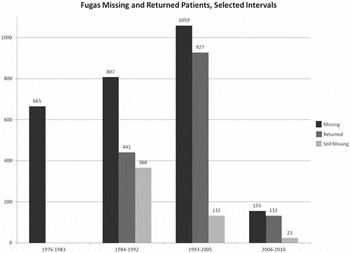
Between 1976 and 2010 at least 2,686 patients of the Colonia Montes de Oca got lost, ‘went missing,’ or tried to escape. Regardless of the cause, no one was ever to use the word “disappeared” to describe their fate. The preferred bureaucratic term was, in fact, not escapes but fugas (leaks). There is no data on the outcomes of the 665 human ‘leaks’ in the years 1976–1983, the Dirty War years. The missing bodies are presumed to have wandered away, vaporized, gone down the drain. In fact, some of the missing did quite literally go down the drain, later washed up on the grounds of the Colonia, as unidentifiable human remains (see note 7) or as recently decomposed bodies.
Beginning in 1984, following the end of the Dirty War, there is a record of the missing who were returned, except for 1990 when 110 inmates ‘abandoned themselves’ (another bureaucratic distortion) with no record of what happened to them. Between 1984 and 2010, a total of 466 patients left or escaped, and were not found. The chart in Figure 5 shows the numbers of inmates who went missing or escaped during four time intervals, for analysis and comparison. The Dirty War (first interval) had far greater numbers than did the second one, which represents the remaining years of Sánchez's administration and the years afterward, up to his arrest and death, from 1984 through 1992 (the second interval). The third interval covers the period during which the administration of the Colonia was officially under federal receivership, with several visiting “intervention directors” serving in turn (1993–2005). The fourth and final interval covers the fugas of the early years of the period of reform (2006–2010), which continues through today.
The ‘Fugas’: Missing and Returned Patients, by Selected Time Intervals (1976–2010)

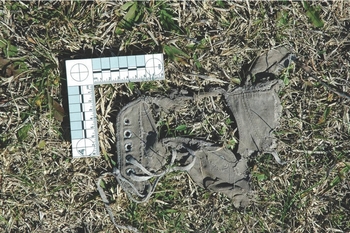
The outcomes for the missing were sometimes abominable (see Figure 6).
Sneaker Found Next to Swamp Outside the Grounds of the Colonia, 2008

Although Colonia administrators recognize that the census for the Dirty War years is incomplete, it is striking that there are no census records at all about the recovery, return, or discovery of the patients recorded as missing. The 1986 inquest mentioned elsewhere in this article was authorized after a ghastly discovery in this regard. Not long after the disappearance of Cecilia Giubileo, workers called into the Colonia to fix a blocked cistern discovered that the blockage was caused by disarticulated body parts. The police were called and an autopsy found that the remains included decomposed parts of two persons, neither of them those of the missing doctor. The 1986 inquest that resulted exonerated Dr. Sanchez.
Beginning in 1984, the census began to register not only the escaped or otherwise missing inmates but, by judicial order, the numbers of missing inmates who were found and returned to the colonia and the numbers of missing for whom there was no information. In the years in which there was no permanent residential director, the number of fugas increased; however, the missing persons were monitored and the vast majority were returned to the Colonia. There were major changes following the appointment of Jorge Rosetto as permanent Reform Director of the colonia in 2006; this story deserves its own space and will be discussed in my forthcoming book.
Left to the Dogs: A Natural Death in 2010
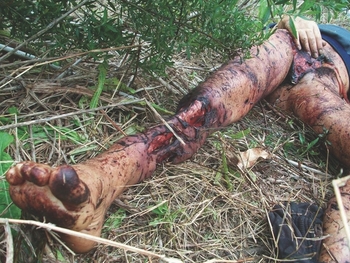
In 2010, a young man was reported missing overnight from the Colonia Cabred. No search party was sent out, but a local journalist, Oswaldo Cabral of Lujan, scoured the woods and found the young man's body inside the grounds of the Colonia. His body had already been attacked and eaten by animals. He was an NN, a young man of no civil status, an unidentified person. Known as Norberto, he was profoundly mentally deficient and perhaps a little more than thirty years old. Neither Colonia staff nor local police found the missing inmate. When Cabral found his body, he was lying across a wooded path, semi-naked (see Figure 7). Cabral, seeing that his soft tissues and organs—genitals and intestines—had been torn away, hypothesized that Norberto had been eaten by wild dogs or feral pigs. However, the case never went to court. Norberto's death, a dog's death one could say, was recorded by the medical staff of the Colonia as a natural death. Michael Taussig would call this the “abnormality of the normal.”Footnote 31
Remains of Norberto, Young Patient Eaten by Animals. Colonia Open Door, August 30, 2010

Conclusions
To be sure, Argentina is not the only state in the late twentieth century to recognize the value of the human body—the body of the enemy, the body of disposable subcitizens, the body living or dead—to supply scarce and valuable medical, surgical, and reproductive material.Footnote 32 In their worst form, however, the Dirty War abuses were egregious and in a class by themselves. Transparency in such circumstances is irrelevant because those in power believe they are in direct combat with a larger evil force, be it a lethal disease or political enemies of the state. In the process, the victims are stripped of humanity and personhood, reduced to the status of ex-humans. Primo Levi described the awful hierarchy of bodies at Auschwitz in Nazi-occupied Poland. At the lowest rung were the prisoners labeled “Muselmann,” those who were like walking dead men, their eyes receded into their sockets, their legs unsteady, unable to stand, without the will to survive.Footnote 33
Life at Colonia Montes de Oca certainly bore resemblances to Levi's descriptions of the German extermination camp at Auschwitz-Birkenau. The Colonia was hardly the pleasant residence for vacationers that Florencio Sánchez fondly imagined in his prison diary. The hierarchy of bodies in the Colonia was graded downward from “high-functioning,” through several stages of deficiency to the “ambulatory,” and on to the bare lives of the gatosos, the pissers and the crawlers, the zoë, the homo sacer, and the Muselmann, the categories themselves serving as an indictment of the political, moral, and medical system that created them, perhaps in its own warped likeness.
My goal is to challenge Argentine social scientists, medical and public health professionals, and the president of the nation to acknowledge the tragedy and to establish a commission charged with verifying the hundreds of unexplained and premature deaths, and the whereabouts of those who disappeared into thin air between 1976 and 1992. Because these abuses and crimes against humanity were never acknowledged publicly or privately after the Dirty War—except for the death of Cecilia Giubileo—they continued after the return to democracy, leaving traces that can be found in the present day. The disappearance of one woman, Giubileo, cannot continue to serve as the proxy for several hundred inmates who were medically disappeared.
The current reform, to be described in my upcoming book, is of great importance. However, the history of the Colonia between during the time of terror remains sealed. So, we ask, “What of the past? What of the uncanny and unquiet dead, the ghosts of Montes de Oca? What of their doctor, herself a ghost who walks among them?”