Introduction
In the early part of the 20th century, almost every small flock of chickens would have self-reproduced and the farmers considered themselves breeders as well as producers. Although they lacked most of the characteristics of today's primary breeders, these individuals were involved in selling breeding stock rather than table eggs and regarded their operations as a hobby. However, in the late 1940s, a few breeders began to develop poultry breeding as a business. Later on, stock intended for commercial egg production were selected according to a very specialized set of criteria. Considerable research has been conducted into the general area of breeding for egg production by different layer breeding companies. They applied quantitative genetics to selection of birds for egg production.
Since 1950, breeding firms have become much fewer in number and much larger in size. The reduction in number of breeding firms has been due to international competition and to the high cost of maintaining breeding, marketing and distribution programmes in comparison with potential income. However, following mergers, competition is still intense, some of it among companies within the same groups and also very little useful genetic variation was lost during the mergers. In fact, the current major players have a broad spectrum of breed combinations on offer, and are less vulnerable to changing demand than smaller companies with a limited range of products (Flock and Preisinger, Reference FLOCK and PREISINGER2002; Arthur and Albers, Reference ARTHUR and ALBERS2003).
The three major layer breeding companies in the world are Erich Wesjohann (with Lohmann Tierzucht (LTZ), Hy-Line and H & N (Heisdorf and Nelson Farms Inc.)), Hubbard-ISA (with ISA, Shaver, Babcock and Hubbard) and Hendrix poultry (with Hisex, Bovans and Dekalb) (Flock and Preisinger, Reference FLOCK and PREISINGER2002). Three- or four-way crossing is commonly used to produce the commercial layer, with four way being the most common. Hence, all the parent breeder males and females will be hybrids. Crossing is carried out to exploit hybrid vigour. Generally, the fitness traits for production and liveability are most likely to benefit from this maintained heterosis. The layer breeding companies have utilised different breeding and selection programmes at different periods of time. In this review strategies followed for the improvement of egg production, feed efficiency, skeletal problems, internal quality of the eggs along with recent molecular genetic studies on these economic traits are discussed.
Breeding goals
All breeding plans for commercial breeding companies have one major objective in common: to increase the genetic potential of the stock to produce saleable, high quality products at minimum cost in a given production system. Breeders of egg-type chickens concentrate on four major objectives. They are:
• Maximum number of saleable eggs per hen housed
• Low feed cost per egg or per kg egg mass
• Optimal internal and external egg quality
• Low mortality and high adaptability to different environments
Layer breeding companies apply selection to improve over 30 traits important for commercial egg production. In general, there are no worldwide or country wise standardised breeding goals set. Differences in economic, social and ecological production environments give rise to different approaches and needs in terms of human welfare and well-being. Breeders today select for (or at least monitor) the age at sexual maturity, rate of lay, liveability, egg weight, body weight, feed conversion, shell colour, shell strength, albumen height, egg inclusions (blood and meat spots) and temperament. From the early 1980s percentage of solids and lipids in eggs have been added as additional traits (Groen, Reference GROEN2003).
Selection strategies for egg production
Egg production has always been the cornerstone of the selection criteria applied to egg laying stock. A variety of measures are known to contribute to lifetime egg production. Because all hens placed in the laying house contribute to the cost of the flock, many commercial operations base their judgements on hen-housed egg production data. This is the total number of eggs produced divided by the number of hens placed. Hen-housed egg production is a combination of age at first egg, rate of egg production and viability. However, emphasis has been shifting to persistency of lay. As flocks maintain high rates of lay for longer periods of time, they can be kept for advanced ages without being moulted. In recent years there has been an increase in the use of induced moulting to extend the laying life of the hen in many parts of the world.
Traditionally, ‘part production record’ selection has been advocated by several authors (Bohren et al., Reference BOHREN, KINNEY, WILSON and LOWE1970) as a means of shortening generation interval to increase genetic progress. Because part record is an integral piece of annual egg production, resulting in a substantial built-in correlation, greater genetic progress in annual egg production has been generally predicted and, in some cases, observed. However, several authors have raised doubts about the validity of this hypothesis (Gowe and Strain, Reference GOWE and STRAIN1963; Muir, Reference MUIR1990). Hence, apart from part-production, annual production is also taken into account for selection decision. However, use of whole production records will double the generation interval. In order to optimise genetic gain per unit of time, multi-stage selection is followed as it reduces the cost and efforts (by discarding inferior birds at early age) and generation interval is minimised (Hicks et al., Reference HICKS, MUIR and STICK1998).
persistency of egg production
A typical egg production curve for a flock increases rapidly during the first eight or nine weeks of production, maintains a constant production for a certain time, and then decreases slowly. A hen with a flatter egg production curve is considered to be more persistent than a hen with a curve that decreases rapidly after peak production. Persistency of egg production, therefore is an important determining factor for total egg production. Hens with the same total production can exhibit different egg production curves because of differences in persistency. Hens that are more persistent can be more desirable because the producer can depend on a longer period of constant production. The definition for persistency of egg production used in the literature seems to vary. Persistency of production is defined explicitly as ‘average weekly or monthly drop in egg production after peak’ or ‘number of weeks in production until the flock has to be replaced, say 60 per cent of production’. The persistency of egg production is defined commonly as the decline in egg production after peak production and is measured, therefore, by slope of the decline (Grossman et al., Reference GROSSMAN, GOSSMAN and KOOPS2000).
Grossman and Koops (Reference GROSSMAN and KOOPS2001) developed a model for individual egg production in chicken using weekly egg production curve. They concluded that prediction of annual (52-week) egg production based on part-record production (first 22 weeks) might lead to over-prediction because persistency of production lasts longer than the part record. Genetic gain from selection to improve annual production, therefore, might be increased if selection accounted for persistency of egg production curve, and if data were summarised by 4-week intervals and cumulated.
Anang et al. (Reference ANANG, MIELENZ and SCHÜLER2001) and Anang et al. (Reference ANANG, MIELENZ and SCHÜLER2002) investigated the use of monthly production records for genetic evaluation of laying hens using test day model with random regression. The models were compared on the basis of Spearman rank correlations of individual breeding values and sire breeding values estimated from sub-sets of full-sibling split data. The hens which ranked highest on their estimated breeding values from different models were compared phenotypically with their full records. Based on the results, it was concluded that the genetic evaluation based on monthly production may be better than using cumulative production and RRMAS (Random Regression with covariates derived from the regression of Ali and Schaffer) appeared to be the best among the models tested.
clutch length
Selection for part or whole record egg numbers or laying rate is a normal approach for improving egg production which has shown to yield positive genetic progress. In order to better identify the genetic factors underlying egg production variability, some genetic studies have focused on the time interval between consecutive ovipositions, the mean time of oviposition and the intra-clutch mean lag of oviposition time, in which the view for increasing egg production was ascribed to an increase in the rate of passage of egg through the oviduct and to an increase in the follicular maturation rate. Chen and Tixier-Boichard (Reference CHEN and TIXIER-BOICHARD2003) studied the correlated effect to long-term selection for clutch length. In response to 16 generations of direct selection for increased average clutch length, other egg production traits such as laying rate and total egg number have been indirectly improved. The clutch length had genetic correlations with egg number (0.777), laying rate (0.863) and clutch number (-0.845). They concluded that selection for clutch length was an effective method for increasing the egg production in which the clutch length was more heritable than laying rate and egg number.
In general, intensive selection for egg production over the decades resulted in a significant reduction in genetic and phenotypic variations in egg number; however the decrease in genetic variation observed in commercial lines are not yet critical. Peak production is approaching the biological limit of one egg a day, but in early (at sexual maturity) and late production (persistency) periods, genetic variation is still high. Including these traits in the selection criteria could improve the egg production in commercial birds. In addition studies have been focused on clutch length and oviposition time. So, in future they will also play an important role in further genetic improvement of layers.
Feed consumption and selection strategy
The trait with most impact on profitability is feed conversion. Feed expenses are the main cost in egg production and account for more than 60% of the production costs in laying hens. The conversion of feed into eggs is primarily a function of egg numbers. It is also influenced by egg size and body weight. Breeders improved feed conversion throughout the 20th century by selection on increased egg mass and smaller body size, and these remain the most important traits involved in variation of the feed consumption (Arthur and Albers, Reference ARTHUR and ALBERS2003). The most commonly used criteria for feed efficiency in laying hens are daily feed intake per hen, feed intake per egg, feed conversion (kg feed per kg egg mass) and egg income minus feed cost.
residual feed consumption (rfc)
Residual feed consumption is the difference between observed and predicted feed intake and has been investigated quite extensively in poultry research with respect to efficiency of feed usage of layers (Bordas et al., Reference BORDAS, TIXIER-BOICHARD and MERAT1992; Schulman et al., Reference SCHULMAN, TUISKULA-HAAVISTO., SIITONEN and MANTYSAARI1994). RFC is defined as the difference between observed feed intake and expected feed intake based on metabolic body weight, body weight gain and egg mass production. Hence, RFC is the feed consumption corrected for egg mass production, body weight and body weight gain. It measures the remaining part of the variation in feed consumption not accounted for by these three traits. To estimate RFC, feed consumption is measured for individual hens. The expected feed consumption for each hen is calculated from the bird's egg mass and body size using linear model. Hens with high levels of RFC are culled. The linear model for calculating RFC to measure feed efficiency is as follows:
FI= b1+BWb2+b3+∆W+e
Where FI= Feed intake (g/wt), BW=Average body weight between two recordings (g), ∆W=Body weight gain (g/wt), b1, b2, b3 = Partial regression coefficients, e=Error (this is considered to be residual feed intake) (Van Eerden et al., Reference VAN EERDEN, VAN DEN BRAND, PARMENTIER, DE JONG and KEMP2004b)
Bordas and Minvielle (1999) studied the pattern of growth and feed intake in divergent lines of laying domestic fowl selected for residual feed consumption and reported that the body weights of males at 28 weeks of age in low intake line (R-) and high intake line (R+) were 2,974 and 2,893 g with feed consumption of 1,228 and 1,411 g respectively. However, in R+ lines the length of wattles was 21% higher and the shanks were 8% longer than those observed in R- line. Van Eerden et al. (2004a, b) carried out phenotypic selection for RFC and found no difference in body weight between R- and R+ birds. However, differences in feed intake were pronounced with R+ birds taking significantly more feed than R-birds. Studies on humeral immune responses in growing laying hens between lines revealed that R+ birds had a higher level of non-antigen specific antibodies, as indicated by the higher antibody response to salmonella protein.
Genetic correlations
Luiting and Urff (Reference LUITING and URFF1991) found a positive genetic correlation between RFC and feed consumption. The genetic correlations between RFC and egg mass, number of eggs, egg weight, age at first egg, body weight and weight gain were all reported to be close to zero. This was further confirmed by Schulman et al. (Reference SCHULMAN, TUISKULA-HAAVISTO., SIITONEN and MANTYSAARI1994). They reported that the genetic correlation between RFC and feed consumption was 0.50 but, as expected, correlations with body weight and egg production were not significant. They also reported a small positive correlation between RFC and body weight gain (0.09) and a small negative correlation between RFC and age at first egg (-0.11). The genetic correlations between RFC and other traits reported by Tixier-Boichard et al. (Reference TIXIER-BOICHARD, BOICHARD, GOENEVELD and BORDAS1995) are as follows:

Response to selection
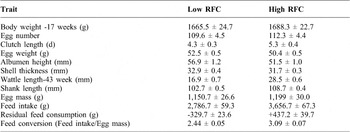
Bordas et al. (Reference BORDAS, TIXIER-BOICHARD and MERAT1992) reported that after 14 generations of selection, the females of the high versus low producers differed by 21g feed/day and the males by 28 g/day during a test period of 33 to 37 weeks. Schulman et al. (Reference SCHULMAN, TUISKULA-HAAVISTO., SIITONEN and MANTYSAARI1994) reported moderate genetic progress in RFC from 1983 to 1987 due to selection for this trait. The genetic progress was in total -6.13 g/hen/day. This is approximately -1.53 g/hen/day/generation. Bordas et al. (Reference BORDAS, MERAT and MINVIELLE1996) reported that feed consumption decreased as a result of selection for RFC; however no change could be found in egg mass, number of eggs, egg weight, age at first egg or body weight. The body weight and egg production parameters of traits divergently selected for RFC are presented Table 1.
Gabarrou et al. (Reference GABARROU, GERAERT, FEANCOIS, GUILLAUMIN, PICARD and BORDAS1998) reported that divergent selection for RFC resulted in a large difference in feed intake, i.e. 41 g/day between high and low lines without causing any changes in body weight and egg production.
Body weight and egg production parameters in high and low RFC lines (Bordas et al., Reference BORDAS, MERAT and MINVIELLE1996).

Shortcuts to reduce feed consumption without direct measurements
Apart from selection for egg mass and body weight to reduce feed consumption, several shortcuts have been suggested to improve feed efficiency without measuring individual feed consumption in large numbers of hens. One of the shortcuts used to reduce feed consumption is the use of sex-linked dwarf gene to lower metabolic body weight and increase egg output per kg body weight. The advantage of using dwarf gene on feed efficiency has been studied by several authors (Cole, Reference COLE2000; Missohou et al., Reference MISSOHOU, DIENG, HORST, ZARATE, NESSEIM and TCHEDRE2003). The sex-linked dwarf gene (dw) reduces body weight by approximately 30 per cent, as well as egg size primarily due to the reduction in body size. However dwarf layers are more efficient than non-dwarf layers due to their low maintenance requirements.
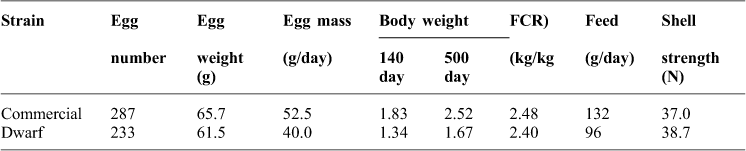
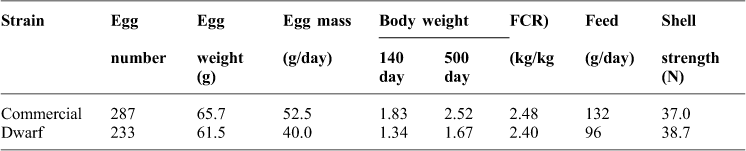
When a comparison was made between non-dwarf and dwarf hens, enhanced feed efficiency was obtained due to dw gene. A line of brown-egg dwarf layers was developed at China Agricultural University by four repeated backcrosses of the meat type dwarf ISA-Vedette to the female CAU brown-egg layer (Yang et al., Reference YANG, NING, WANG, LI and WU1996). Body weight of this brown-egg dwarf commercial layer at 20 weeks of age was about 1,200g. Total egg numbers up to 72 weeks was approximately 285 with an average egg weight of 56 g. The comparative performance of dwarf (dw) versus brown-egg commercial line is presented in Table 2. The brown egg dwarf layers were 30% smaller than the current standard size (2.0-2.1 kg) but had better feed efficiency and shell strength. The possibility of one bird more per cage or two more per m2 in floor housing system might be economically important in future (Zhang et al., Reference ZHANG, NING, XU, HOU and YANG2005).
Comparative performance of dwarf and non-dwarf strain of chicken (Zhang et al., Reference ZHANG, NING, XU, HOU and YANG2005).
From majority of the selection experiments reported in the literature and parameters estimated from large commercial populations, it is apparent that a significant residual component of feed intake has been shown to exist, independent of body weight and egg mass output, at different ages. In recent years, because of high heritability and absence of significant negative effect on production parameters, residual feed consumption is used as selection criteria to improve the feed efficiency. Measurement or subjective scoring of correlated traits such as comb size, wattle length, body temperature or activity may produce useful additional data for basic research, but their practical value for line improvement is limited once individual feed consumption data are included (Flock, Reference FLOCK1998). As a result of selection, feed conversion in the USA and Canada has improved from 2.95 g feed/g of egg in 1960 to 2.01 g feed/g of egg in 2001. Further continued improvement will be aided by better understanding of the factors influencing feed conversion.
Egg weight
In general egg size averaged 60-61 g across world; however there are regional preferences for egg sizes that can influence the choice of genetic strain. In South Africa, the market preference averages around 58.5 g, whereas Israel and Spain prefer very large eggs (around 70 g and above). This indicates that the weight has been a difficult target to meet, because of varying demand in different markets. Hence, selection emphasis placed on these characteristics varies widely. Most breeders attempt to hold egg weight at current levels and would apply slight upward selection pressure. This is done to offset the tendency of natural selection to reduce egg weight. Because egg weight changes with age, some attention has been given to the shape of the relationship between egg weight and age. This is because, in almost all markets, the lower egg weight categories are less in demand and uneconomic production of over-sized eggs occurs late in the pullet year. Thus it would be advantageous if the age x egg weight curve were altered. Sheldon (Reference SHELDON2000) reported that selection for reduced variability in egg size would solve this problem. The author also reported that selection of birds with flatter production curves yielded a correlated response of higher egg production. Francesch et al. (Reference FRANCESCH, ESTANY, ALFONSO and ISLESIAS1997) reported that heritability values for egg weight ranged between 0.20 and 0.33 among different breeds. However, Zhang et al. (Reference ZHANG, NING, XU, HOU and YANG2005) reported a high heritability value of 0.63 for egg weight.
Breeding chickens to meet egg quality needs
Worldwide, egg customers prefer eggs which have a sound shell, uniform shell colour, freedom from obvious blood and meat spots and a reasonably upright egg white. However, there are also regional preferences that can strongly influence the choice of genetic type for particular market. The genetic strategies followed for improving different egg quality are discussed below.
eggshell quality
Eggshell quality has received added emphasis as a result of changing commercial practices, with minimising cracked and broken eggs in commercial systems as the eventual target. A variety of techniques have been used to measure the eggshell thickness. Some breeders routinely use direct measurements of shell thickness on eggs sampled from the flock. Other methods include specific gravity, breaking strength, non-destructive deformation and puncture score.
Eggshell thickness
Non-destructive deformation is one of the indicators of eggshell strength. A smaller value means stronger eggshell. Selection has been conducted in the White Leghorn population for increased (weak line) or decreased (strong line) non-destructive deformation. As a result of selection, in generation 10, non-destructive deformation was reduced to 51.9 micro m/kg in the strong line and 100.6 micro m/kg in the weak line. The breaking strength in strong and weak lines was 3.75 kg and 2.17 kg respectively. Non-destructive deformation had a heritability value of 0.33 and genetic correlations were -0.77, -0.89 and -0.94 with breaking strength, shell thickness and percentage of shell in weak line. Selection for non-destructive deformation was effective in improving eggshell strength and selection for strong shell could increase the egg weight but reduce rate of lay (Nirasawa et al., Reference NIRASAWA, NAGAMINE, TAKAHASHI, TAKEDA, FURUKAWA and TAKEDA1998).
Recently, dynamic stiffness (acoustic test used to distinguish between cracked and intact eggs) has been used for eggshell measurement. This trait has high heritability and genetic and phenotypic correlations with other shell quality traits, including eggshell breaking strength. The dynamic stiffness has a correlation of 0.60 with eggshell thickness (De Ketelaere et al., Reference DE KETELAERE, COUCKE and DE BAERDEMAEKER2000). In another study, De Ketelaere et al. (Reference DE KETELAERE, GOVAERTS, COUCKE, E., VISSCHER, DECUYPERE and DE BAERDEMAEKER2002) reported that the correlation between dynamic stiffness measurements and eggshell thickness as 0.78. Dunn et al. (Reference DUNN, BAIN, EDMOND, WILSON, JOSEPH, SOLOMAN, B., DE BAERDEMAEKER, SCHMUTZ, PREISINGER and WADDINGTON2005) studied a pedigree population of laying hens which had previously undergone selection for breaking strength and found that the dynamic stiffness had high heritability (0.53) and high genetic and phenotypic correlations with eggshell breaking strength, with the values around 0.50. Bain (Reference BAIN2005) reviewed recent advancements in assessment of eggshell quality and reported that the measures including ultrastructural analysis, crystallographic texture and Quasi-static compression tests are more difficult and expensive and, of the methods currently being developed, only the dynamic stiffness measurement could be immediately adopted as a tool in the commercial environment. Zhang et al. (Reference ZHANG, NING, XU, HOU and YANG2005) reported a heritability value for eggshell index, eggshell thickness (mm) and eggshell strength (kg/cm2 ) as 0.40, 0.34 and 0.24 respectively.
In Europe, as a result of proposed changes in legislation concerning laying hens that will see a move from cage to more welfare friendly systems (probably non-cage system) by 2012, there is an increased risk of eggshell breakage. Hence, research emphasis has been focused on improved resistance to breakage using selection of Quasi-static compression, specific gravity or dynamic stiffness measurement. Among these dynamic stiffness measurements better reflect properties of the egg. In future, identification of quantitative trait loci (QTL) and candidate gene will be helpful in further genetic improvement of eggshell quality.
Shell colour
Shell colour is an important characteristic and completely separate breeding programme exists for the production of white and brown-shelled eggs. The brown-egg type dominates the markets of most of Europe, Southeast Asia, Australia, New Zealand and much of the African and some of the South American countries. Francesch et al. (Reference FRANCESCH, ESTANY, ALFONSO and ISLESIAS1997) reported that heritability estimates for eggshell colour ranged between 0.27 and 0.49 among different breeds. Zhang et al. (Reference ZHANG, NING, XU, HOU and YANG2005) reported a heritability value of 0.46 for eggshell colour, hence selection is practised for improvement. Brown eggs are selected for a dark shell and among white egg lines, any hen with tinting in the shell is removed to assure that the commercial line continues to have pure white eggs. The genetic correlations between the eggshell colour with external and internal egg quality traits were low ranging from -0.23 to 0.13, suggesting a minor relationship between shell colour and physical attributes of the shell as well as internal egg quality in brown-egg dwarf layers.
albumen height
All consumers prefer that the albumen in a broken-out egg is reasonably thick. In the USA, standards are set for minimum acceptable Haugh unit level. The US Department of Agriculture specified that AA quality eggs have a firm, white albumen with a Haugh unit value of 72 or more. Zhang et al. (Reference ZHANG, NING, XU, HOU and YANG2005) estimated heritability at 0.51 for albumen height, 0.59 for albumen weight and 0.41 for Haugh units. Because of consistent selection for albumen height, Haugh units have increased steadily over time.
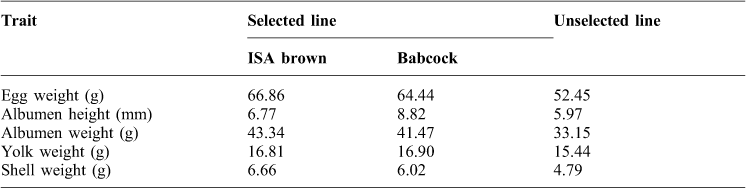
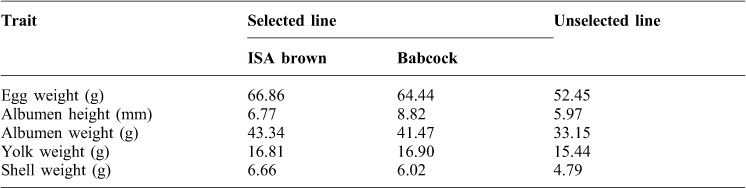
As a result of selection for egg quality traits, improvement (Table 3) has been noticed between selected (ISA Brown, Babcock) and unselected (Brown leghorn) populations over the years (Silversides et al., Reference SILVERSIDES, KORVER and BUGELL2006).
Quality of eggs of three strains of layer (Silversides et al., Reference SILVERSIDES, KORVER and BUGELL2006).
Considerable research has been made on egg weight, eggshell strength and internal quality of the eggs, and improvements have been made as a result of selection. With the reintroduction of floor systems and consumer interest in processed eggs, in future more emphases have to be given to the eggshell strength and internal quality of the eggs.
Genotype x environment interactions
Poultry production in the unfavourable environment conditions of the tropics mainly suffers from direct and indirect heat stress leading to a general depression in performance, which may not be uniform in all genotypes, revealing significant genotype-environment interactions. A series of experiments was conducted at the Institute of Animal Production, Berlin, over a period of 20 years to explore various aspects of such interactions in layers (Mathur, Reference MATHUR2003). Significant genotype-environment interaction may be caused not only by specifically differentiated genotypes such as breed or lines, but also by single major gene effects. Several major genes found in tropical local populations have revealed significant genotype-environment interactions. The naked neck gene (Na) responsible for general reduction of feathers over the body surface and total loss of feather in the neck region has shown very favourable results under heat stress . The heterozygous naked neck layers had significantly higher egg number, egg weight, egg mass and body weight under constant heat stress. The frizzle gene (F) also revealed its favourable effect on productivity but they were less pronounced than the naked neck gene. The dwarf gene reduces body size and thereby causes a reduction in egg number and egg size but there is a significantly lower depression due to heat stress in dwarf layers than in the normal types. Thus the dwarf gene improves productive adaptability to heat stress. An especially favourable effect of this gene is improvement in feed efficiency.
Horst et al. (Reference HORST, MATHUR and VALLE-ZARATE1995) studied the effect of three major genes (naked neck, frizzle and dwarf) in commercial brown-egg layer line in Turkey, Egypt, Cuba, Burundi, Bolivia and in Malaysia. The effect of naked neck gene was mainly observed on egg number, egg weight, egg mass and productivity index (egg mass production in relation to metabolic body weight). The frizzle gene showed favourable effect on egg production. The dwarf gene had a mainly depressing effect on body weight (ranging from 24 to 36 per cent). This was also associated with reduction in egg number, egg weight and egg mass production. However, considering the productivity index, this gene seems to have very favourable effects.
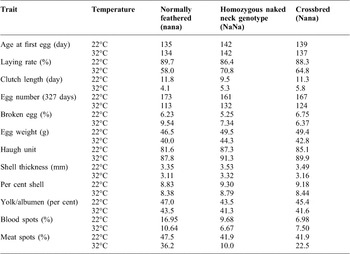
Chen et al. (Reference CHEN, BORDAS and TIXIER-BOICHARD2002) studied the performance of normally feathered and birds with naked neck gene at high ambient temperature and are presented in Table 4. Egg numbers were decreased by 35, 18 and 26% in normally feathered, homozygous naked neck and heterozygous naked neck birds respectively. Both homozygous and heterozygous naked neck genotypes performed better at high ambient temperature with respect to egg number, egg weight, laying rate, clutch length and Haugh units.
Performance of normally feathered and naked neck genotypes at two different ambient temperatures (Chen et al., Reference CHEN, BORDAS and TIXIER-BOICHARD2002).

Mahrous et al. (Reference MAHROUS, GALAL, FATHI and EL-DEIN2003) studied the effect of naked neck and frizzle gene in hot environmental conditions and reported that naked neck and naked neck frizzle genotypes attained sexual maturity earlier than normally feathered females by about 4.3 and 3.4 days respectively. The presence of naked neck, frizzle and naked neck-frizzle genes significantly increased egg mass, egg number, egg weight, eggshell weight, eggshell percentage and eggshell thickness. They concluded that the effect of Na allele is similar or greater than that of F allele and combination of the two alleles in heterozygous state (NanaFf) results in better performance than those genes considered separately.
Chen et al. (Reference CHEN, HUANG, GOURICHON, LEE, TIXIER-BOICHARD and BORDAS2008) investigated the possibility of combining the naked neck gene with a flock with a genetic background that has been optimised for feed efficiency of laying hens in both temperate and sub-tropical environments. Growth performance, anatomical traits, laying traits, and feed efficiency were recorded in each country. The study revealed that the performance was generally lower and mortality of laying hens was higher in Taiwan (11%) than in France (1%). Genotype × environment interactions were rare and were only observed for body weight at 10 weeks of age, and were close to significance for egg weight. Laying performance was significantly decreased in Taiwan by about 25%. The naked neck genotype had a negative effect on body weight and a positive effect of clutch length and egg weight. Based on results they concluded that the introduction of the NA*NA mutation appeared to be favourable from the viewpoint of feed efficiency, but it did not improve laying performance in a sub-tropical environment. Other factors rather than temperature, such as diet composition and lighting regimen, may be involved.
Chen et al. (Reference CHEN, GOURICHON, HUANG, LEE, BORDAS and TIXIER-BOICHARD2009) compared the laying performance of dwarf laying hen lines segregating for the naked neck mutation (NA locus) in two different environmental conditions i.e. Taiwan and France. Genetic parameters for laying traits were estimated in each environment and the ranking of sire breeding values was compared between environments. The study revealed that the laying performance for dwarf laying hens was lower and mortality was higher in Taiwan than in France. The line by environment interaction was highly significant for body weight at 16 weeks, clutch length and egg number, with or without using Box-Cox transformations. The selected line was more sensitive to environmental change but in Taiwan it maintained higher egg numbers than the control line. The rank correlations between sire breeding values were low within the selected line and slightly higher in the control line. A few sire families showed good ranking in both environments, suggesting that some families may adapt better to environmental change.
In general, studies by different authors indicated that there is a reduction in performance of layers under high ambient temperature. The results regarding utilisation of the naked-neck and frizzle gene in high ambient temperatures are encouraging. Hence, in future, these genes will play an important role in production of layer lines suitable for high ambient temperature to overcome the genotype-environment interaction.
Skeletal problems in layers and selection strategies
In laying strains, intensive selection for egg production has resulted in birds of low body weight that laid a large number of eggs on low food intakes. Throughout the laying year, the amount of calcium the bird deposit in their shells could be up to 20 times their total body content. Bones act as a store for much of the calcium deposited in shells, and it is perhaps not surprising that stresses in bone formation and resorption can result in skeletal problems in these birds. Bone breakage in layers during production, depopulation and processing reduces egg production and the value of carcasses of spent hens. Two factors are now causing a rethink in the commercial emphasis on intensive selection for egg production; First, the economic cost of lost egg production in layers resulting from skeletal defects and secondly, increasing concern in many countries regarding the welfare implications of these disorders for the birds. As a result, there is now renewed interest in determining the genetic basis for these disorders, establishing the genetic link between these disorders and egg production and devising genetic or other strategies for minimising the occurrence of severity of the disorders (Whitehead et al., Reference WHITEHEAD, FLEMING, JULIAN and SØRENSEN2003).
major skeletal problems
The main skeletal problems in table-egg laying hens are associated with loss of bone mineral during the laying period. The loss of bone mineral may have two causes. They are:
• Osteomalacia: This is characterised by defective mineralisation of bone tissue, with a thick seam of poorly, mineralised organic matrix. It is primarily associated with nutritional deficiency of calcium, phosphorus or vitamin D and has not been shown to have a genetic component (Whitehead et al., Reference WHITEHEAD, FLEMING, JULIAN and SØRENSEN2003).
• Osteoporosis: It is defined as a decrease in the amount of fully mineralised structural bone, leading to increased fragility and susceptibility to fracture. Unlike osteomalacia, osteoporosis is an altogether more complex problem, has a complex aetiology, with many factors involved (Whitehead and Fleming, Reference WHITEHEAD and FLEMING2000; Whitehead et al., Reference WHITEHEAD, FLEMING, JULIAN and SØRENSEN2003). The hallmarks of the osteoporotic bones are increased porosity, fragility and fracture susceptibility caused by a decrease in structural bone content.
Genetics of osteoporosis
Bone characteristics of osteoporosis were first described in caged laying hens by Couch (Reference COUCH1955), who reported a problem termed ‘cage layer fatigue involving bone brittleness, paralysis and death’. Generally, osteoporosis is not so severe as to result in cage layer fatigue, but widespread bone loss can lead to high incidence of fractures at various sites throughout the skeleton. This loss has been shown to start when hens reach sexual maturity and to continue throughout the laying period, so that osteoporosis is most severe in hens at the end of lay. The origin of osteoporosis is not well-defined. It has been suggested that the problem is partly genetic in origin, resulting from the breeding of light weight, energetically efficient birds that maintain a high rate of lay over a prolonged period on a low feed intake (Cransberg et al., Reference CRANSBERG, PARKINSON, WILSON and THORP2001). Most modern hybrid strains seem to be susceptible to osteoporosis. However, there is a wide individual variation, with some hens retaining good bone quality at the end of lay. Hence, genetic selection seems to offer the best prospects for improving bone quality and resistance to osteoporosis in hens.
Methods of assessing bone quality
The selection procedure used to date has involved retrospective selection on the basis of hen post-mortem data, but this is not practical for application to commercial breeding programmes. Recently, several newer techniques have been identified. One of the most common techniques used in the past was the determination of bone mineral content by ashing (Hall et al., Reference HALL, SHIRLEY, BAKALLI, AGGREY, PESTI and EDWARDS2003) followed by measurement of bone calcium content using atomic adsorption spectrophotometry (Cransberg et al., Reference CRANSBERG, PARKINSON, WILSON and THORP2001). Bone breaking strength (humerus strength and tibia strength) is a common means of determining functional characteristics of bone as a material. Radiography, digitised fluoroscopy, image analysis and quantitative computer tomography have also been used (Fleming et al., Reference FLEMING, MCCORMACK, MCTEIR and WHITEHEAD1998; Korver et al., Reference KORVER, SAUNDERS-BLADES and NADEAU2004). Among the different techniques, ashing, Ca level and breaking strength are necessarily done on post-mortem and radiography requires large doses of radiation and specialised equipment and facilities. Measurement of bone mass using quantitative computer tomography is a new technology, which gives precise answer regarding distribution of mineral density within bone. In addition, amplitude-dependent speed of sound ultrasound and dual-energy X-ray absorptiometry have been used to assess bone quality (Fleming et al., Reference FLEMING, KORVER, MCCORMACK and WHITEHEAD2004; Hester et al., Reference HESTER, SCHREIWEIS, ORBAN, MAZZUCO, KOPKA, LEDUR and MOODY2004).
Genetic parameters and response to selection
Bishop et al. (Reference BISHOP, FLEMING, MCCORMACK, FLOCK and WHITEHEAD2000) studied the inheritance of traits related to osteoporosis over five generations in a commercial pure line of White Leghorns previously selected for high egg production. Measurements were made on a range of morphometric, radiological and strength characteristics of different bones in hens at the end of the laying period to determine the heritabilities for different traits. The heritability values for different traits are as follows:

Restricted selection index was monitored to improve bone characteristics by keeping body weight constant with the above three moderately heritable traits. The index was
Bone index= 0.27x KRD+0.37 x HSTR+0.61 x TSTR-0.25 x BW
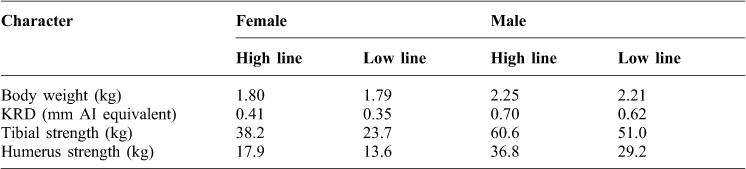
The three body measurements in the index had moderate to high positive correlations with each other and also with body weight. This indicated that selection for improved strength characteristics alone, without the restriction placed on body weight would have resulted in considerably heavier birds. They reported a heritability of 0.40 for bone index. As a result of selection on bone index, the high and low lines differed by 17% for KRD, 30% for HSTR and 60% for TSTR, in hens after five generations (Table 5). Body weight between lines did not differ in either sex. These results indicated that genetically improving the bone strength would decrease the incidence of bone fracture.
Bone characteristics and body weight at the end of the laying period in female and male chickens divergently selected for high and low bone index (Bishop et al., Reference BISHOP, FLEMING, MCCORMACK, FLOCK and WHITEHEAD2000).

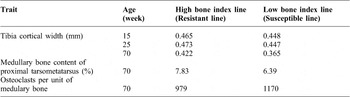
Whitehead et al. (Reference WHITEHEAD, FLEMING, JULIAN and SØRENSEN2003) reported that comparisons of tibial cortical thickness at different ages showed that the superior thickness in the high bone index line at the end of the lay was attributable to two factors, namely a greater amount of bone formation during growth and, more importantly, less bone resorption during the laying period. High bone index hens contained more medullary bone and fewer osteoclasts (Table 6).
Bone characteristics of hens selected for resistance and susceptibility to osteoporosis (Whitehead et al., Reference WHITEHEAD, FLEMING, JULIAN and SØRENSEN2003).

Silversides et al. (Reference SILVERSIDES, KORVER and BUGELL2006) studied the effect of genetics on bone strength in layers and reported that selection has decreased humeral breaking strength rather than tibial strength, resulting in higher incidence of bone fracture in commercial layers.
relationship between osteoporosis and other traits
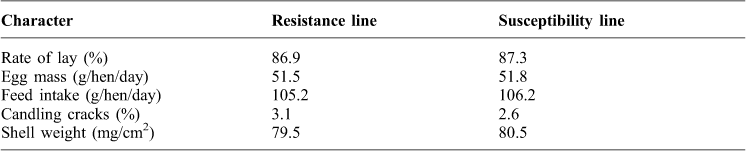
Rennie et al. (Reference RENNIE, FLEMING, MCCORMACK, MCCORQUODALE and WHITEHEAD1997) reported that the correlation between egg production and bone strength ranged between 0.00 and 0.16 and suggested that egg production has little or no effect on bone quality. Bishop et al. (Reference BISHOP, FLEMING, MCCORMACK, FLOCK and WHITEHEAD2000) also observed no significant difference in mean egg production or egg weight between the high and low bone index lines over a laying year (Table 7).
Egg production and shell characteristics of resistant and susceptible osteoporosis line.

Various studies by different authors revealed a large individual difference in the bone characteristics of hens at the end of the lay, phenotypically unrelated to egg production in a flock of highly productive hens. This suggests that osteoporosis may be alleviated by genetic selection perhaps without serious consequences for egg productivity (Whitehead et al., Reference WHITEHEAD, FLEMING, JULIAN and SØRENSEN2003; Webster, Reference WEBSTER2004).
Selection for behaviour in poultry
The strong selection for improved egg production has brought about changes that seem to reduce bird's adaptability. This together with the introduction of specialised production systems has resulted in a range of behavioural problems that reduce well-being. Huber-Eicher (Reference HUBER-EICHER1997) reported that feather pecking in commercial layers is due to redirection of behaviour related to foraging by selection for high production and alteration in husbandry practices. Vaisanen and Jensen (Reference VAISANEN and JENSEN2004) studied behavioural characteristics in jungle fowl and White Leghorns, and reported that the adaptability of the bird to their social and physiological environment may have been influenced by means of selection for increased production capacity. Leghorns may have greater problems in adapting to new environment. Bessei (Reference BESSEI1995) reported that selection for egg output might exacerbate feather pecking problems.
Commercial layer lines have been selected in cages for many generations, where the expression of behaviour was restricted. The genetic variation of the behaviour was of little economic importance under these conditions. Increasing concern for animal welfare has resulted in strict legislation concerning animal housing. In poultry industry there is a shift from battery cages to large group housing systems. With the return of husbandry systems for laying hens from conventional cages to floor or aviary systems, behaviour is becoming more important not only with regard to welfare but also to economical aspects. In layers, the major problem is injurious pecking behaviour. Selection for higher production combined with lower body weight has led to higher levels of feather pecking and cannibalism.
feather pecking
Feather pecking is characterised as picking and pulling of feathers of another bird. In a group of chickens, most members will take part in feather pecking. In pullets and adult hens, close to 50 per cent are observed to feather peck, and in layer chickens, feather pecking has been reported as early as 7 days of age. One or more peaks in feather pecking can be seen at 3 to 15 weeks of age. At the age of 15 weeks to sexual maturity, the level of feather pecking is low. Pecking rises at the onset of laying and this is the time when the risk of cannibalism is greatest. This rise has been attributed to an increase in gonadal hormones (Kjaer and Mench, Reference KJAER and MENCH2003). There are different forms of feather pecking. The two common types are gentle pecks (mainly directed to tips of feather) and severe feather pecks. Severe feather pecking causes damage to the bird, results in bald patches and is painful. Feather pecking is a serious problem in layers besides impaired animal welfare; feather loss due to feather pecking can lead to heat loss resulting in higher energy requirement (Buitenhuis et al., Reference BUITENHUIS, RODENBURG, WISSINK, VISSCHER, KOENE, BOVENHUIS and VAN DER POEL J.J.2004).
cannibalism
Cannibalism is an extreme form of feather pecking. Feather pecking can result in severe damage of the integument including wounds to the skin. Wounded birds may be pecked to death, which is regarded as cannibalism and is the final phase of feather pecking. There has been a continuous increase in mortality caused by cannibalism in all brown-layer strain crosses tested at the random sample test stations in Germany since the late 1980s, suggesting that selection for higher egg production and lower body weight has led to higher levels of cannibalism. Recent data from German random sample testing stations (Table 8) illustrates differences in mortality and other characteristics with or without beak trimming. The changes from conventional cages to floor pens may cost in terms of more mortality and more feed (Flock et al., Reference FLOCK, LAUGHLIN and BENTLEY2005).
Mortality, egg production and feed conversion of commercial layers in different management systems (Flock et al., Reference FLOCK, LAUGHLIN and BENTLEY2005).

genetics of feather pecking
Feather pecking in layers is a multi-factorial problem, which can be caused by environmental, genetic or nutritional factors. Various measures have been made to control this vicious behaviour. Since management measures (except beak trimming) have failed to effectively control these problems, genetic selection has been put forward as a potential means to improve the situation (Bessei, Reference BESSEI2002; Buitenhuis and Kjaer, Reference BUITENHUIS and KJAER2008). Variation among breeds and hybrid lines for feather pecking behaviour and/or feather damage have been reported by different authors (Ambrosen and Peterson, 1997; Kjaer and Sørensen, Reference KJAER and SØRENSEN1997).
Heritability
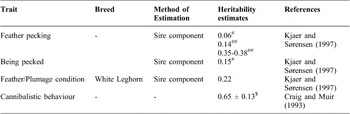
Heritability estimates for different measures of feather pecking are presented in Table 9. The heritability for actively feather pecking ranged from 0.07 to 0.56 and for receiving feather pecking from 0.15 to 0.25.
Heritability estimates for feather pecking behaviour.

* - Male, ** -Female; # - 6 weeks, ##-38 weeks , ###-69 weeks; + - 42 weeks, ++ - 59 weeks , +++- 67 weeks; $- Realised heritability
Kjaer and Sørensen (Reference KJAER and SØRENSEN1997) reported that the trait performing feather pecking behaviour had an additive genetic variability, with heritability of low to moderate size.
Divergent selection for three generations of feather pecking resulted in a significant difference between high and low lines with regard to feather pecking behaviour. The high pecking hens were on an average heavier than low pecking hens at the age of 27 weeks (1435 g vs. 1371 g). In general, plumage condition was better in low pecking line on the neck, back, wings and tail as well as over the whole body. This indicated that feather pecking could be reduced by selection (Kjaer, Reference KJAER1999; Kjaer, Reference KJAER2001; Kjaer et al., Reference KJAER, SØRENSEN and SU2001). The generation-wise feather pecking activity is as follows:

(Source: Kjaer, Reference KJAER2001)
The diurnal rhythm of feather pecking seems to vary between strains. Kjaer (Reference KJAER2004) found a rise in feather pecking activity in the last hour of the day in brown shell strains. However, White Leghorns behave significantly differently, with a more even distribution of feather pecking during the day and no rise in feather pecking activity just before dark.
Strain differences in mortality due to cannibalism have been found (Sørensen and Kjaer, Reference SØRENSEN and KJAER1999). Craig and Muir (Reference CRAIG and MUIR1993), Muir and Craig (Reference MUIR and CRAIG1998) and Muir (Reference MUIR1996, Reference MUIR2003) were successful in selecting against cannibalistic behaviour in poultry. They reported that group selection has been very effective in reducing the incidence of beak-inflicted injuries in caged hens at high stocking densities and under condition of high social stresses and competition. Commercial breeders have used similar approaches for a number of years, but their results are less spectacular, because most of the commercial strains have a lower initial incidence of cannibalism and selection for multiple objectives requires more time to change additional traits.
So far limited selection pressure has been applied for feather pecking. Direct selection has been shown to be feasible, using individual selection against feather pecking (Kjaer et al., Reference KJAER, SØRENSEN and SU2001) or group selection against mortality (Craig and Muir, Reference CRAIG and MUIR1993; Muir, Reference MUIR1996).
Measures of feather pecking
Both direct and indirect measures of feather pecking are available. Some of the direct measures include visual observation of feather pecking and scores based on damage as a result of pecking (Kjaer et al., Reference KJAER, SØRENSEN and SU2001). Plumage condition is an indirect measure of feather pecking and can be biased by abrasion.
Genetic correlations with performance traits
Kjaer and Sørensen (Reference KJAER and SØRENSEN1997) found a negative genetic correlation between feather pecking and body weight of hens at 51 weeks of age. It is a clear indication that small body size, which is desirable in commercial breeding programmes, contributed to the feather pecking problems in laying hens. Hence selection for largest birds will indirectly select against feather pecking; but direct selection will presumably be more effective.
Buitenhuis et al. (Reference BUITENHUIS, RODENBURG, WISSINK, VISSCHER, KOENE, BOVENHUIS and VAN DER POEL J.J.2004) found a negative phenotypic correlation between gentle feather pecking and egg weight, however no significant genetic correlation was observed. They reported significant additive genetic correlation (0.79) between feather pecking and antibody response to Keyhole Limpet Haemocyanin.
Ground pecking showed a negative correlation with breaking strength of the eggshell at the genetic level meaning that selecting for stronger eggs would reduce ground pecking behaviour. The genetic correlation between ground pecking and eggshell strength at 35, 44 and 50 weeks of age were -0.86, -0.81 and -0.76 respectively. Ground pecking is a foraging behaviour and the commercial laying lines showed less foraging behaviour compared with lines not selected for egg production (Buitenhuis et al., Reference BUITENHUIS, RODENBURG, WISSINK, VISSCHER, KOENE, BOVENHUIS and VAN DER POEL J.J.2004).
Feather pecking is an undesirable behaviour, which causes major problems in non-cage systems. With the phasing out of conventional cages by 2012 (as per EU Council Directive 99/74/EC), more producers are likely to adopt non-cage systems. While national legislation in some countries in Western Europe will ban beak trimming as well. This may lead to increased risk of feather pecking and cannibalism in laying hens. So, methods of reducing the incidence and severity of pecking are urgently needed.
Several authors have identified a hereditary basis of feather pecking behaviour, which is suggested by strain differences. Hence, selection of birds with no or very low tendency to perform feather pecking should reduce the incidence. The trait for receiving feather pecking is probably influenced more by group composition and social organisation, and reported heritability values were low. Hence the trait for receiving feather pecking in selection cannot be recommended. Recently QTL involved in gentle and severe feather pecking have been identified on chicken chromosome two. In future, they may play an important role in reducing feather pecking and cannibalism in commercial layer by way of marker-assisted selection.
Molecular genetic studies
In animal selection and breeding programmes, within each generation geneticists identify and subsequently reproduce those individuals with the best traits. This selection ultimately results in an increase in the frequency of those gene variants that cause desirable effects on the traits under selection. The egg layer industry is particularly challenged, as most of the traits of interest are measurable only in mature females (‘female limited traits’). Egg production traits, including age at start of lay and lifetime production, as well as egg quality traits, such as shell strength, shell colour, albumen height, and egg solids can only be measured in females that lay eggs. Both males and females have the gene variants for better egg production, but direct measurement can only be done in females. Indirect selection is done by selecting those males whose sisters or whose daughters have the best traits. This is much less accurate than directly selecting based on individual performance. Molecular genetics allows direct selection to be done in males even for female limited traits. In addition, since the DNA that directs the trait expression is present in the chick at hatch, genetic variation can be measured at day of age, instead of at sexual maturity or even later in life. Thus selection based on DNA can be done at a much earlier age in the lifecycle of the chicken. Accuracy of trait measurement is critical. Without accurate trait information, data will reflect environmental variation.
quantitative trait loci and candidate gene studies
Body weight
Studies dealing with QTL for body weight using different crosses, such as layer x layer (Tuiskula-Haavisto et al., Reference TUISKULA-HAAVISTO, HONKATUKIA, VILKKI, DE KONING, SCHULMAN and MAKI-TANILA2002), broiler x layer (Sewalem et al., Reference SEWALEM, MORRICE, LAW, WINDSOR, HALEY, IKEOBI, BURT and HOCKING2002) and layer x Red Jungle Fowl (Carlborg et al., 2003) have revealed a number of QTL controlling growth. Tuiskula-Haavisto et al. (Reference TUISKULA-HAAVISTO, HONKATUKIA, VILKKI, DE KONING, SCHULMAN and MAKI-TANILA2002) detected a highly significant QTL on chromosome four for body weight at 40 weeks of age, which mapped to the same area as the QTL for egg weight. The QTL explained 25.8% of the phenotypic variance. Carlborg et al. (2003) identified 22 significant loci contributing to the body weight in chickens. Epistasis was more pronounced prior to 46 days of age. Whereas, additive genetic effects explained major portion of the genetic variance later in life. Several of the loci affected either early or late growth but not both. Very few loci affected the entire growth process, which points out that early and late growth, at least to some extent, have different genetic regulation.
Siwek et al. (Reference SIWEK, CORNELISSEN, BUITENHUIS, NIEUWLAND, BOVENHUIS, CROOIJMANS, GROENEN, PARMENTIER and VAN DER POEL2004) identified three QTLs (On GGA2, GGA3 and GGA9 ) for body weight at four weeks of age, three QTL (On GGA2, GGA3 and GGA6) for body weight at six weeks of age , one QTL ( On GGA7) for body weight at eight weeks of age and one QTL (on GGAZ) for body weight at 12 and 18 weeks of age by half-sibling analysis. The different location of QTL indicated that different sets of genes are involved in the early and late growth.
Jiang et al. (Reference JIANG, LI, QU, LI and YANG2004) reported that a single nucleotide polymorphism in chicken pituitary specific transcription factor (POU1F1) resulted in alterations to codon 299 from AAC to ATC, which substitutes asparagine to isoleucine. The allele (A and T) and genotype (AA, AT and TT) frequencies differed significantly between meat-type chicken (higher frequency of A allele (0.91) and AA genotype (0.84)) and layer-type chickens (frequencies of A allele was ranged from 0.57 to 0.72 and AA genotype was 0.37 to 0.50). Bennett et al. (Reference BENNETT, HESTER and SPURLOCK2006) reported that a significant association between IGF1 and osteopontin (SPP1) and five week body weight and between insulin (INS) and 55-week body weight.
Egg production
Schreiweis et al. (Reference SCHREIWEIS, HESTER, SETTAR and MOODY2005) identified a QTL for egg production from 16 to 25 weeks of age in chromosome four at 20 cm and it explained 6.2% of the phenotypic variation. A QTL affecting age at first egg was found on chromosome Z and explained 4% of the phenotypic variation (Tuiskula-Haavisto et al., Reference TUISKULA-HAAVISTO, HONKATUKIA, VILKKI, DE KONING, SCHULMAN and MAKI-TANILA2002).
Feed intake and feed efficiency
Tuiskula-Haavisto et al. (Reference TUISKULA-HAAVISTO, HONKATUKIA, VILKKI, DE KONING, SCHULMAN and MAKI-TANILA2002) detected a QTL for feed intake at 32 to 36 weeks of age in chromosome four and explained 5% of the phenotypic variance.
Chicken insulin-like growth factors 1 and 2 (IGF1 and IGF2) are polypeptide hormones that exert effect on body composition, growth rate and lipid metabolism in poultry. Amills et al. (Reference AMILLS, JIMENEZ, VILLALBA, TOR, MOLINA, CUBILO, MARCOS, FRANCESCH, SANCHEZ and ESTANY2003) studied the polymorphism in IGF1 and IGF2 and reported that a suggestive associations were found between IGF1-SNP1 and average daily weight gain at 107 days and feed efficiency at 44, 73 an 107 days.
Egg quality traits
Quantitative trait loci affecting Haugh unit at 40 weeks and 60 weeks were detected on chromosome two and they explained 7 and 6% of the phenotypic variance. In addition, a QTL affecting egg white thinning (Haugh unit at 40 weeks) was detected on chromosome four at 215 cm and on chromosome eight at 11 cm. For eggshell quality (breaking strength) at 40 weeks, a QTL at the end of the chromosome Z was detected. It explained 5% of the phenotypic variation and the 90% confidence interval ranged from 97 to 142 cm. A QTL affecting specific gravity of eggs at 40 weeks was detected in chromosome 5 and explained 4% of the phenotypic variation. QTLs for egg weight were found on the chromosome 3, 4 and Z. The QTL at chromosome 4 explained 14.5 to 16% of the phenotypic variation (Tuiskula-Haavisto et al., Reference TUISKULA-HAAVISTO, HONKATUKIA, VILKKI, DE KONING, SCHULMAN and MAKI-TANILA2002). Honkatukia et al. (Reference HONKATUKIA, REESE, PREISINGER, TUISKULA-HAAVISTO, WEIGEND, ROITO, MAKI-TANILA and VILKKI2005) also reported two QTL on Chromosome two each for egg quality and egg white thinning.
Fishy-odour in eggs is caused by abnormally high amounts of excreted trimethylamine (TMA). Usually TMA is not excreted because the liver enzyme flavin-containing mono-oxygenase three (FMO3) catalyses oxidation of TMA to odourless trimethylamine N-oxide. Fishy-odour is mainly a problem in brown egg layers. Honkatukia et al. (Reference HONKATUKIA, REESE, PREISINGER, TUISKULA-HAAVISTO, WEIGEND, ROITO, MAKI-TANILA and VILKKI2005) found a missence mutation (T329S) in the chicken FMO3 gene that has been associated with elevated levels of TMA and fishy taint in egg yolks of commercial brown egg layers. In another study, Honkatukia et al. (Reference HONKATUKIA, REESE, PREISINGER, WEIGEND, ROITO, TUISKULA-HAAVISTO, MAKI-TANILA and VILKKI2006) reported that the egg taint disorder and FMO3 gene map to the same location on chicken chromosome eight. Genotyping of the SNP of the FMO3 gene revealed that TT homozygotes expressed high TMA-N content and the AT and AA homozygotes expressed low TMA-N content in the egg yolk.
Schreiweis et al. (Reference SCHREIWEIS, HESTER, SETTAR and MOODY2005) detected two QTL (230 and 215 cm) on chromosome two for eggshell colour and one QTL on chromosome four at 219 cm and they explained 5 to 5.3% of the phenotypic variation. In addition, chromosome four has multiple QTL for egg weight (204 and 206 cm), albumen weight (206 and 209 cm) and one QTL for shell percentage. The QTL for egg weight accounted for 10.3 to 17.5% of the phenotypic variation. The QTL for albumen weight explained 16.1 to 18.5% phenotypic variation. This indicated that chromosome four harbours multiple genes that contribute to the extreme phenotypic divergence observed among layer, broiler and ancestral chicken populations.
Chicken insulin-like growth factors 1 and 2 (IGF1 and IGF2) are polypeptide hormones that exert effect on body composition, growth rate and lipid metabolism in poultry. Nagaraja et al. (Reference NAGARAJA, AGGREY, YAO, ZADWORNY, FAIRFULL and KUHNLEIN2000) reported that an RFLP in 5’ end of the IGF1 gene was associated to egg and eggshell weight in White Leghorn chicken. Sazanov et al. (2007) reported that the CR523443 (Gallus gallus finished cDNA, clone ChEST985k21) was highly correlated with shell thickness and suggested that it was a candidate gene for shell thickness at 53 weeks of age. This gene is highly correlated (0.85) with shell thickness.
Feather pecking behaviour
Buitenhuis et al. (2003 a, b) identified a suggestive QTL on GGA10 for gentle feather pecking at six weeks of age. At 30 weeks of age suggestive QTL were detected on GGA1 and GGA2 for gentle feather pecking. The results indicated that feather pecking behaviour at six weeks of age is regulated by different genes than feather pecking at 30 weeks of age. The results open the possibility to reduce the feather pecking problem and improvement of poultry welfare using molecular genetics.
Skeletal traits
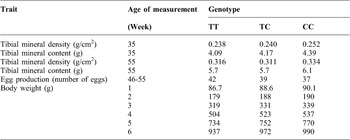
Bennett et al. (Reference BENNETT, HESTER and SPURLOCK2006) found a significant association between vitamin D receptors and bone mineral content of the humerus at 35 weeks of age. Bennet et al. (2007) found an association between single nucleotide polymorphism in Transforming Growth Factor -β2 gene and bone traits (Table 10). In general the CC genotypes had higher bone mineral content, bone mineral density and body weight.
Association between Transforming Growth Factor -β2 and bone, egg production and body weight traits (Bennet et al., 2007).

Chicken lines had previously been successfully selected for shorter shanks because it was considered that the longer shank was a source of leg problems in heavy-bodied chickens. Yu et al. (Reference YU, ZHIQIANG, XIAOXIANG, XUEMEI and NING2006) detected eight static QTL affecting shank length from 1 to 12 weeks of age. Strong evidences were found on chromosome two and 23 and explained 5.49 to 6.16% and 4.93 to 8.39% of the phenotypic variation respectively.
The locations of significant QTL for different traits have been reviewed in an elaborate manner by Hocking (Reference HOCKING2005) and Abasht et al. (Reference ABASHT, DEKKERS and LAMONT2006) and they concluded that the Despite differences in experimental conditions and populations used for QTL mapping, independent studies found QTL for similar traits in similar locations in several instances. For millennia improvement of domestic animal species has been done by selection and subsequent breeding of those animals with the more desirable traits. Improvements in traits have been slow and steady. Within the 20th century, progress in performance related traits has improved considerable as better breeding tools were developed. Increased understanding of what controls the traits (i.e. genes), realisation of the environmental influences on gene expression, development of statistical analysis tools and the evolution of rapid computational methods has resulted in the extremely efficient breeding stock that are utilised in production today. Molecular genetics provides yet another set of tools for even more enhanced selection progress and efficiency (Fulton, Reference FULTON2008)
Conclusions
Layer breeding companies have contributed immensely over the decades in the improvement of egg production and feed efficiency. In addition, considerable research has been made on egg weight, eggshell strength and internal quality of the eggs and improvements have been made as a result of selection. Poultry breeding prior to this decade was based mainly on what could be observed or measured at the phenotypic level. Unfortunately those types of traits are also influenced by random environmental factors, such as feed quality, pecking order, temperature and disease. Clearly, random environmental factors are a hindrance to breeding superior genetic stock, however, even greater problems include sex limited traits which can only be measured in one sex, such as egg production, and traits which cannot be measured on either sex in live animals, such as disease resistance and meat quality. In those cases the breeder must rely entirely on information from relatives to make selection decisions. The desire of poultry breeders has always been to get directly at the underlying genetic worth of the bird, free from environmental effects, and on all poultry regardless of sex or ability to measure the phenotype. Modern biochemical techniques allow scientists to probe directly into the genetic code of life. These advances seem to provide the answer to selecting superior animals without the complications of environmental efforts. Recent molecular studies have provided complete genome sequencing, identification of several quantitative trait loci affecting production and reproduction traits and identification of the genes responsible for different phenotypic variation. In future, genomics could well play an important role in unravelling the biological mechanism and supporting breeders in selection programmes.