INTRODUCTION
The growing prevalence of chronic illness in developed countries presents a significant challenge. Chronic illness—and its treatment—negatively impact the physical and emotional well-being of both patients and family members, particularly caregivers. Despite the growing acceptance of palliative care (PC) for end-of-life care, it has become increasingly clear that patients and their families require not only physical care but also comprehensive emotional care. Although all aspects of PC—including the emotional and social support components—have steadily evolved and improved over time, in most cases this improvement has been ad hoc rather than systematic (Kamal et al., Reference Kamal, Currow and Ritchie2013). As a result, psychosocial and spiritual needs are often overlooked or considered secondary to physical and treatment-related needs.
Several studies have demonstrated the importance and value of psychosocial support for terminally ill patients (Goodwin et al., Reference Goodwin, Leszcz and Ennis2001; Bruera & Yennurajalingam, Reference Bruera and Yennurajalingam2012). Given the complexity of such patients and the substantial resources required for their care, a comprehensive approach to meeting the multidimensional needs of these patients and their families is urgently needed. Many studies have investigated the value of community-based PC programs (Aiken et al., Reference Aiken, Butner and Lockhart2006; Brumley et al., Reference Brumley, Enguidanos and Jamison2007; Hughes et al., Reference Hughes, Bath and Ahmed2010; Rabow et al., Reference Rabow, Dibble and Pantilat2004; Zimmer et al., Reference Zimmer, Groth-Juncker and McCusker1985; Bakitas et al., Reference Bakitas, Lyons and Hegel2009; Jordhøy et al., Reference Jordhøy, Fayers and Saltnes2000), although, as Seow and colleagues (Reference Seow, Brazil and Sussman2014) observed, the psychosocial aspects of PC generally receive little or no attention in such studies due to financial limitations and, perhaps more importantly, because PC remains an evolving concept. Despite the aforementioned development of local community-based PC models, to our knowledge, no truly comprehensive programs have been implemented on a national or regional basis.
According to a recent qualitative analysis carried out in Spain, the main aspects of PC most in need of improvement lie within the spiritual, psychosocial, and bereavement domains (Gómez-Batiste et al., Reference Gómez-Batiste, Ferris and Paz2008a ; Reference Gómez-Batiste, Caja and Espinosa2012; Reference Gómez-Batiste, Blay and Martínez-Muñoz2016). In this context, a recent proposal called for development of a comprehensive model of care to address the multidimensional needs of patients with chronic illness (Maté-Méndez et al., Reference Maté-Méndez, González-Barboteo and Calsina-Berna2013). The present report found that patients with advanced conditions have numerous essential (i.e., nonphysical) needs, including the following: spiritual-existential necessities, dignity, autonomy, love, tenderness, and hope.
In short, the psychosocial needs of patients and their families comprise an important but largely ignored component of PC. Recent studies of psychological therapies have yielded relevant results in terms of effectiveness and have demonstrated improvement regarding life meaning and well-being in end-of-life patients (Rosenfeld et al., Reference Rosenfeld, Saracino and Tobias2016; Breitbart, Reference Breitbart and Heller2003; Breitbart et al., Reference Breitbart, Rosenfeld and Pessin2015; Chochinov et al., Reference Chochinov, Kristjanson and Breitbart2011; Gil Moncayo & Breitbart, Reference Gil Moncayo and Breitbart2013; Breitbart et al., Reference Breitbart, Rosenfeld and Gibson2010).
The idea for the need to develop a new approach to psychosocial care of terminally ill patients and their families arose from two previous studies carried out to assess the status of PC programs in Spain (Gómez-Batiste et al., Reference Gómez-Batiste, Nabal Vicuna and Trelis Navarro2008b ; Reference Gómez-Batiste, Ferris and Picaza2008c ). These studies identified several key but underserved areas in the public health and PC realms in need of improvement: the emotional, social, and spiritual aspects of care, as well as care during the bereavement process. Such an innovative approach was developed in Spain under the auspices of the Spanish National Strategy for Palliative Care.
The first step in developing this program was to identify the main psychosocial care needs of the population. Once these were determined, a program was specifically designed to meet those needs as efficiently and effectively as possible. The primary aims of this program—managed jointly by the “La Caixa” Foundation (LCF) and the World Health Organization Collaborating Center for Palliative Care Public Health Programs (WHOCC) (Ela et al., Reference Ela, Espinosa and Martínez-Muñoz2014)—were to improve the psychosocial and spiritual aspects of PC for both patients and families. Importantly, given the lack of existing models for delivery and organization of this type of care within a PC model, this program was created from the ground up. Although the primary objective of the project was to improve patient care, an important secondary aim was to accumulate evidence about the interventional and organizational models that work best in this population (Mateo-Ortega et al., Reference Mateo-Ortega, Gómez-Batiste and Limonero2013).
The LCF–WHOCC program involves a total of 29 psychosocial support teams (PSTs) comprised of psychologists, social workers, nurses, and other professionals (primarily physicians, but in some cases physiotherapists and chaplains). Early results in terms of psychological and spiritual well-being were promising, with significant improvements on numerous parameters—including anxiety, emotional distress, life meaning, peace of mind, and forgiveness (Gómez-Batiste et al., Reference Gómez-Batiste, Buisan and González2011).
We report herein the updated qualitative and quantitative results obtained through patient medical records and satisfaction surveys of relevant stakeholders (patients, relatives, and PC teams). To our knowledge, this is the first large-scale program of its kind. The only other psychosocial initiative on this scale that we are aware of—“Improving Access to Psychological Therapies” (IAPT)—was developed in the United Kingdom (Clark et al., Reference Clark, Layard and Smithies2009) but with a very different focus (the general emotional care of patients with anxiety or depression), rather than specific care for advanced chronically ill patients. The LCF–WHOCC organizational model presented here, in which highly specialized and well-trained PSTs were created specifically to coordinate and deliver care in cooperation with existing palliative or conventional care services, is completely novel and unique in terms of its size (more than 100,000 individuals), its model of organization based on support teams, and its national scope (Figure 1). Briefly, our study was a collaborative effort funded by the LCF (a private foundation) and the WHOCC, which in Spain includes the Qualy End-of-Life Observatory at the Catalan Institute of Oncology in Barcelona. This program and the use of data were approved by the ethics committee of the Bellvitge University Hospital in Barcelona, Spain.
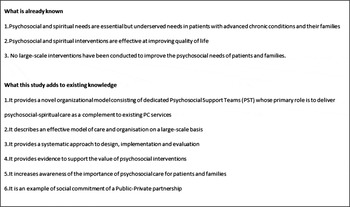
Key points of this article.

METHODS
A theoretical model of care and organization was developed. This model first defined the psychosocial dimensions of care and then created a systematic approach to meet those specific psychosocial and spiritual dimensions. The main focus—and the novelty of the approach—was the creation of specialized dedicated teams of specialists (i.e., the PSTs), whose role was to complement preexisting PC services. The PSTs were given the task of providing emotional support, spiritual care, and bereavement assistance for patients and their families. The program was led by a full-time management team of five professionals from the LCF and the WHOCC, supported by an expert group of experienced PC professionals.
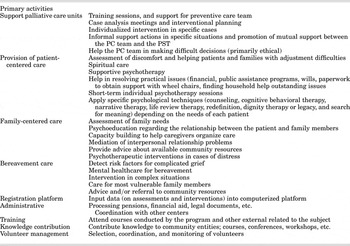
Each PST was composed of three full-time professionals, one of whom acted as the team leader (on either a full- or part-time basis). A total of 133 professionals were appointed and assigned to 29 different PSTs, which were tasked with providing support to 61 PC teams (mean = 3.58 PC teams per PST). Later, when PSTs had gained more experience and efficiency, they also provided support for an additional 134 PC teams. Each PST was organized by a variety of not-for-profit organizations. Table 1 describes the primary duties of the PSTs.
Main activities of the psychosocial support teams

Training of PST Members
All members received comprehensive training on the key aspects of psychosocial PC. The training program consisted of 12 on-site two-day sessions, covering all topics and methodologies relevant to the psychosocial approach. A member of the core team was responsible for monitoring each PST and for individualizing improvements when necessary. The staff also received online training to complement the in-person training. The PST teams began their initial activity, in most cases, during January of 2009.
Quantitative Data Collection and Analysis
All data were entered into a computer database, including the following: patient and family data (characteristics, types, number); output data (duration of visits, first follow-up, place of care, etc.); and intervention (assessment/follow-up, number of assessments). The majority of the data for the present report was retrieved from an intranet created to allow the care teams to systematically enter all relevant data. Access to this platform was fully confidential and restricted to professionals involved in the program.
Clinical Variables and Outcome Measures
Patients and Families
For the purposes of the present prospective study, we evaluated all data from January 1 to September 30, 2012. This study period was selected for two reasons: (1) changes were made to the online platform and the variables after September 30, 2012, thus making future comparisons more difficult; and (2) the aim of this project was to achieve continuous improvement, thus necessitating regular assessments and modifications to the program. In this case, our goal was to evaluate the data collected during the first nine months of the year, with the intention of assessing the data in order to develop and implement modifications at the start of the next year.
Patient data were retrieved from clinical records. The effectiveness of the intervention was assessed by comparing the score at the baseline visit (visit 1) to, at least, the next two successive visits (visits 2 and 3). The sample included subjects with at least three interventions. Analysis was performed up to the fifth follow-up visit. Not all subjects supplied answers for every evaluated dimension, but to those which applied in each case.
The following parameters were assessed at admission and at all follow-up visits for patients: mood, discomfort, anxiety (on a numerical scale from 0 to 10), degree of adjustment or general adaptation to disease (on a numerical-verbal scale from 1 to 5), and suffering (on a categorical scale from short to long). The four dimensions of the spiritual pain scale are those that were used at the San Diego Hospice/Institute of Palliative Medicine (Ferris et al., Reference Ferris, Balfour and Bowen2002; Reference Ferris, Gómez-Batiste and Fürst2007). The scale assessed relationships, peace of mind, hope, and meaning in life using a Likert-type scale methodology, ranging from “not at all” to “very much.”
Regarding family members, the following psychosocial dimensions were assessed: discomfort, anxiety, depression, and insomnia (on a numerical scale from 0 to 10). Assessment was also performed using a Likert-type scale methodology, ranging from “not at all” to “very much.”
Organizational Audits
A leadership team (LT) tasked with overseeing program implementation was created. This team was staffed jointly by the LCF and the WHOCC. The LT regularly performed in-situ visits to all teams. During these visits, a semistructured survey was administered to collect data on the following: clinical activity, quality of care, team training, and relationships with PC teams and other stakeholders. In addition to interviewing PST members, the LT also interviewed the directors and managers of these teams.
External Audits
A professional auditor (Pricewaterhouse Coopers [PWC], London, United Kingdom) carried out an external organizational audit to assess the following areas: management, coordination, activity, and services. The audit also involved in-situ visits to all teams, a review of a random sample of clinical charts, the clinical activity of the teams, and an economic and budgetary follow-up analysis.
Qualitative Measurements
Numerous qualitative assessments were performed, including a randomized chart review, stakeholder survey, and satisfaction surveys for patients and families. The assessments and instruments utilized in these assessments are described below.
An expert social worker (senior psychosocial care professional) and a data manager were tasked with evaluating a random sampling (n = 348) of patient and family clinical psychosocial records. The social worker qualitatively assessed the following dimensions: needs assessment, objectives, therapeutic plan, and use of correct terminology. The objectives of this qualitative assessment were to identify the patient's main concerns and problems, to determine the psychosocial diagnosis used to establish the therapeutic plan and objectives, and to assure coherence between initial assessment and case follow-up. These assessments were performed for all individuals who received care from the PST (i.e., both patients and family members).
The following were identified as stakeholders in the PST program: (1) members of PC teams supported by PSTs, (2) managers of both providers and PC teams, (3) policymakers from regional departments of health, and (4) key professional leaders (e.g., leaders of related medical societies and the Spanish Association of Psychologists). A total of 506 stakeholders were identified, and a structured survey (>100 questions on various domains) was sent to all these individuals by post. The survey questions included the following domains: (1) knowledge of the program; (2) knowledge of the functions of PSTs; (3) program acceptance; (4) relationship and degree of coordination between PSTs and PC teams; (5) evaluation of the care delivered by PST professionals; (6) assessment of PST professionals (training/preparation, competence, commitment); (7) contribution of PSTs to the care of patients/family members (psychological support, detection of mental health problems, reduction of anxiety or depressive symptoms, spiritual support, improvement in quality of life); (8) overall satisfaction with the program; (9) continuity of the program (likelihood, necessity); and (10) value added by the program. In most cases, these domains were assessed on an 11-point scale (from 0 to 10).
When a patient death occurred, a survey was sent to the family (600 families) three months after the death to assess: (1) the perceived quality of the psychosocial care for the patient, (b) the quality of care received (by patient and family), and (c) suggestions for service improvement.
Statistical Analysis
All study variables were analyzed at the baseline visit and again at follow-up visits using the appropriate descriptive statistics depending on the nature of the variable. The continuous variables included number of observations, mean, standard deviation (SD), standard error of the mean (SEM), minimum, median, and maximum. Categorical variables included number of observations and column percentages (n, %).
Training
After the initial postgraduate course on psychosocial palliative care, other formal training activities and follow-up were instituted. The directors were trained in how to improve managerial and mentoring skills, and clinical and methodological training were reinforced. Additionally, all teams had ongoing access to the LT for consultation and support for both the organizational and clinical aspects of the program.
RESULTS
A total of 29 PSTs involving 133 professionals were created. Most teams included at least one psychologist and one social worker, and usually either a nurse or doctor, or both (less commonly, a physiotherapist or chaplain). Each team comprised a mean of 3.6 professionals (2.5 psychologists, 0.83 social workers, and 0.27 nurse/doctor/other [chaplain, physiotherapist]). These 29 PSTs served a total of 134 PC teams: 74 based in hospitals and 60 PC home units.
Quantitative Results: Patients and Families
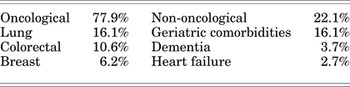
During the inclusion period, a total of 8,964 patients (54.8% male) attended. The mean age was 70.4 years (range = 1–103 years). Most patients (77.9%) had a cancer diagnosis (primarily lung, colorectal, or breast cancer), while the remaining 22.1% had other chronic diseases or conditions (mainly geriatric frailty, multimorbidity, dementia, or cardiac/respiratory failure) (Table 2). A total of 92 pediatric patients (excluded from the effectiveness analysis) received care from PSTs, primarily for cancer, including leukemia, brain cancer, bone cancer, and lymphoma.
Main patient pathologies

A total of 11,810 family members attended during the inclusion period. The average age of family caregivers was 55.3 years (SD = 15.8). Most caregivers were female (70.2%). After first contact, 45.9% had at least one follow-up visit, and 24.3% had two or more. By relationship with the patient, most family members were either children (42.5%) or spouses (28.1%). Retired family members made up 21.6% of the sample.
A total of 23,436 patient and family consultations were performed. The mean duration of each intervention was three weeks. Slightly more than half (51.8%) of patients required at least one follow-up intervention (31.5% required ≥2). A mean of two follow-up interventions were performed per patient, with a median length of seven days between visits. Most interventions (64.4%) were performed at an institutional unit, with the remaining interventions occurring at home (23.7%) or in an outpatient clinic (9.6%) (data missing for 2.3% of cases).
Effectiveness of Interventions
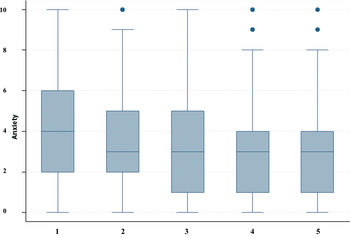
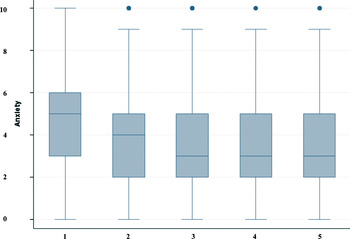
For analysis of effectiveness, a total of 2,823 patients were included. Figure 2 shows a mixed-effects model adjusted by gender and age in 2,069 patients who answered questions about anxiety on three or more visits. The PST visit effect was significant (likelihood ratio [LR] = 657.64, p < 0.0001). Anxiety decreased by 7% between the first and second visits and by 12% between the first and third.
Anxiety in patients: changes from first to fifth PST visit.

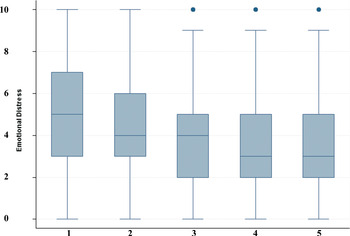
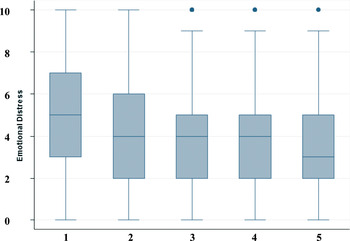
Figure 3 shows a mixed-effects model adjusted by gender and age in 2,104 patients who answered questions about emotional distress on three or more visits. We employed a visual analog scale (0–10). The visit effect was significant (LR = 757.44, p < 0.0001). Emotional distress decreased by 9% between the first and second visits and by 14% between the first and third.
Emotional distress in patients: changes from first to fifth PST visit.

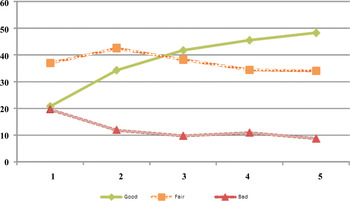
Figure 4 shows that the 2,296 patients were twice as likely (OR = 2.03, CI 95% = 1.98–2.15) to have a good or average mood state at the second versus the first visit. At the third PST visit, the corresponding OR was three times that of the first.
Mood state in patients: changes from first to fifth PST visit.

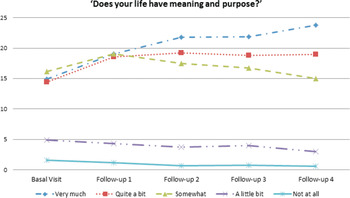
Figure 5 shows a mixed-effects model adjusted by gender and age in 1,234 patients who answered questions about meaning on three or more visits. The visit effect was significant (LR = 248.30, p < 0.0001), with life meaning scores decreasing by 4% between the first and second visits and by 7% between the first and third.
Meaning in life for patients: changes from first to fifth PST visit.

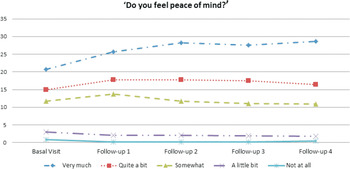
In 1,175 patients who were interviewed on three or more visits, the visit effect was significant for peace of mind/forgiveness (LR = 190.94, p < 0.0001), decreasing by 3% between the first and second visits and by 6% between the first and third (Figure 6).
Peace of mind and forgiveness for patients: changes from first to fifth PST visit.

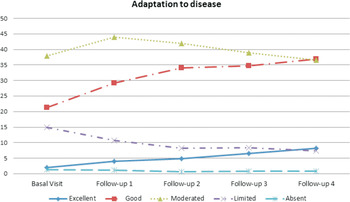
In 2,229 patients who were interviewed on three or more visits, the visit effect for general adaptation was significant (LR = 653.09, p < 0.0001), decreasing by 4% on the adaptation score between the first and second visits and by 7% between the first and third (Figure 7).
General adjustment or adaptation to disease in patients: changes from first to fifth PST visit.

Regarding relatives, a total of 2,802 family members were included for the analysis of effectiveness. Figure 8 depicts a mixed-effects model adjusted by gender and age in 2,537 relatives who answered questions about emotional distress on three or more visits. The visit effect was significant (LR = 1138.78, p < 0.0001), with emotional distress decreasing by 10% between the first and second visits and by 14% between the first and third.
Emotional distress in family members: changes from first to fifth PST visit.

Figure 9 shows a mixed-effects model adjusted by gender and age in 2,535 relatives who answered questions about anxiety on three or more visits. The visit effect was significant (LR = 1123.74, p < 0.0001), with anxiety scores decreasing by 9% between the first and second visits and by 14% between the first and third.
Anxiety in family members: changes from first to fifth PST visit.

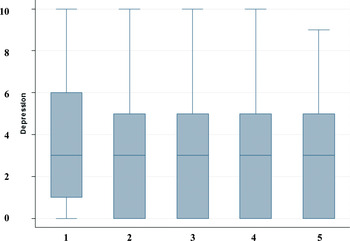
Figure 10 shows a mixed-effects model adjusted by gender and age in 265 relatives who answered questions about depression on three or more visits. The visit effect was significant (LR = 16.99, p < 0.0002), with the depression score decreasing by 4% between the first and second visits and by 8% between the first and third.
Depression in family members: changes from first to fifth PST visit.

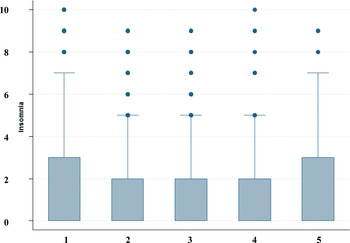
Figure 11 shows a mixed-effects model adjusted by gender and age in 189 relatives who answered questions about insomnia on three or more visits. The visit effect was significant (LR = 8.32, p = 0.0156), with insomnia in family members decreasing by 0% between the first and second visits and by 5% between the first and third.
Insomnia in family members: changes from first to fifth PST visit.

Overall, significant improvements were observed on all follow-up assessments, and changes were significant for both patients and family members.
External Audit
The external audit team (PWC) visited all PC departments, interviewed the directors and managers of PC teams, and reviewed clinical and organizational documentation. The audit team carried out a total of 1,268 checks to assess 10 areas related to the following: availability of clinical guidelines, compliance with data protection laws, economics, the structure of the PST, volunteer management, and administrative data. The auditors found some minor deviations from standard procedures (e.g., lack of compliance with patient/family visit timetable, incompletely justified expenses, and minor administrative errors) in 199 cases (15.7% of checks). In addition, of the 892 managerial aspects evaluated (financial, structural, procedural, volunteer management), 74 (8%) were considered in need of improvement. A total of 163 specific recommendations for improvement were made.
Random Psychosocial Chart Review/Qualitative Analysis
Of the 348 clinical records reviewed, qualitative analysis showed that 62% met the overall quality criteria. In most cases (79%), the clinical record described and prioritized patient issues in a clear and specific manner. However, only 53% used appropriate terminology, while 62% defined “clear and specific” intervention objectives. Based on these results, we proposed improvements to individual teams and staff.
Stakeholder Survey
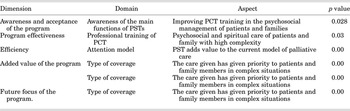
Overall, stakeholders reported a strong (8.1 out of 10) positive perception of the project in terms of both qualitative and quantitative measures. Stakeholders were surveyed about seven different dimensions (100 questions), providing responses on a numerical scale ranging from 0 to 10. An inferential analysis was performed using the Kruskal–Wallis method (p ≤ 0.05 considered significant). The most important quantitative results of the survey of stakeholders are summarized in Table 3.
Main significant results: stakeholders' survey

Satisfaction
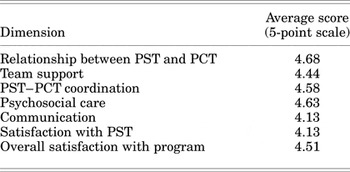
A total of 85 professional leaders of PC departments (78% of the PC teams in the program) responded to the 25-question survey (numerical scale ranging from 0 to 5, in which 0 was “absolutely disagree” and 5 “absolutely agree”). The main results are shown in Table 4.
Satisfaction of palliative care professionals with the psychosocial support teams

DISCUSSION
The main objectives of the present study were to describe the structure and main outputs and assess the effectiveness of an innovative model of palliative care focused on the psychosocial and spiritual needs of patients (and their families) with an advanced chronic disease. We found that this program is both feasible for and effective in improving the psychosocial and spiritual care of both patients and family members. To our knowledge, this is the first program of its kind and scope (29 dedicated full-time teams and >100,000 individuals attended throughout Spain). Moreover, the model of psychosocial support—highly trained PSTs working in close concert with medical PC teams—developed here provides a template that can be adopted by other regions and countries.
Our study was carried out in Spain, where approximately 300,000 people die each year from a chronic illness. The large number of patients with chronic illnesses indicates a strong demand for PC services, which may last for months or even years due to the chronic nature of such diseases. Palliative care itself is a relatively new specialty, emerging over the past 20 to 30 years as a consequence of the growth in the prevalence of chronic illness due to population aging and other health-related factors (Clark, Reference Clark2007). Traditionally, the primary focus of PC has been to deliver palliative treatments to reduce the physical burden of disease. Although the need for psychological support has also long been recognized, this aspect of care has received far less attention until relatively recently. Various studies have demonstrated the value of psychological interventions in this population (Rosenfeld et al., Reference Rosenfeld, Saracino and Tobias2016; Breitbart, Reference Breitbart and Heller2003; Breitbart et al., Reference Breitbart, Rosenfeld and Pessin2015; Chochinov et al., Reference Chochinov, Kristjanson and Breitbart2011; Gil Moncayo & Breitbart, Reference Gil Moncayo and Breitbart2013; Breitbart et al., Reference Breitbart, Rosenfeld and Gibson2010); however, most such interventions have been organized on an ad-hoc basis. To our knowledge, ours is the first study to systematically investigate and demonstrate the effectiveness and value of a large-scale program for patients and families in a large Western European nation.
In the United Kingdom, a large-scale initiative called “Improving Access to Psychological Therapies” was developed to improve depression and anxiety disorders (Clark et al., Reference Clark, Layard and Smithies2009). There, large numbers of patients were successfully treated with low-intensity interventions (e.g., guided self-help). Importantly, more than half of the patients who received at least two treatment sessions (including the assessment interview) were considered to have recovered. Crucially, treatment gains were largely maintained at 10-months follow-up. These findings support the benefit of such approaches and served to help inspire our own efforts in Spain.
Rabow et al. (Reference Rabow, Dibble and Pantilat2004) carried out a controlled trial involving 50 patients with advanced chronic illnesses with a life expectancy ranging from 1 to 5 years and compared these to a control group of 40 patients. All of their intervention patients were treated by an interdisciplinary palliative medicine team called the “comprehensive care team,” composed of a social worker, nurse, chaplain, pharmacist, psychologist, art therapist, volunteer coordinator, and three physicians who addressed physical, emotional, and spiritual issues. All team members (except for the volunteer coordinator) had expertise in PC. The program integrated various interventions, including consultation with the primary care physician (PCP), case management, volunteer and group support, chaplaincy consultation, and artistic expression. In the intervention group, PCPs received multiple PC team consultations, and patients received advance care planning, psychosocial support, and family caregiver training. Those authors found significant post-intervention improvements in the treatment group, which had significantly less dyspnea, less anxiety, and improved sleep quality and spiritual well-being. However, no significant differences in terms of pain, depression, quality of life, or, surprisingly, satisfaction with care were observed. Overall, this small trial showed that consultation with a palliative care medical team that included psychosocial support led to improved patient outcomes on certain important measures of well-being but failed to improve pain or depression. Although the study by Rabow and colleagues (Reference Rabow, Dibble and Pantilat2004) was conducted on a much smaller scale than the one reported herein, it does demonstrate the potential benefits of comprehensive PC and the growing interest in such models. However, as the authors noted, there are multiple barriers to implementation, not the least of which is the cost and complexity of such a program.
Model of Care
The major achievement of the LCF–WHOCC program described herein is that we developed a successful model of care that responds to the essential needs of patients. To develop this model, we first defined the psychosocial dimensions of clinical care (see Barbero Gutierrez et al., Reference Barbero Gutiérrez, Gómez Batiste and Maté Méndez2016) using a systematic approach for each of these psychosocial dimensions. Similarly, the model of organization of services was based on the concept of “support teams,” involving a specialized psychosocial support team acting in support of preexisting PC services (Gómez-Batiste et al., Reference Gómez-Batiste, Espinosa and Porta-Sales2010). The role of the support teams was clear and did not conflict in any way with the medical/nursing PC team. The primary emphasis of the PST interventions was to provide emotional support for patients and their families, as well as spiritual care, bereavement process assistance, and support for the PC team. We carefully reviewed the existing knowledge on spirituality and provided extensive training to PSTs. Some of the highlights in terms of achievements in advancing our understanding of spirituality with regard to end-of-life care include the development of a book on end-of-life spiritual care that summarizes the specific aspects of end-of-life care for most common religions (Sobrevia & Torradeflot, Reference Sobrevia and Torradeflot2013) and organization of a symposium on the essential needs of end-of-life care held in Barcelona during March of 2014 (with around 400 attendees).
Another important, yet uncommon, aspect of the model of care developed herein was the focus on providing psychosocial support not only for patients but also for their caregivers. As Noble et al. (Reference Noble, King and Woolmore2015) recently reported, home-based care can result in substantial emotional, social, and physical demands on informal caregivers. Consequently, there is an acute need for new models of specialist PC provision at home. For that reason, Noble and colleagues (Reference Noble, King and Woolmore2015) developed a novel specialized hands-on PC model delivered in a community setting in England, with the important aim of supporting both patients and home-based caregivers. As we have shown in our study, it is possible to improve the psychosocial well-being of both patients and family members, and it seems probable that interventions with both groups are mutually reinforcing, as improvements for patients and caregivers further improve outcomes.
As is evident from the preceding discussion, several studies and small-scale interventions have been carried out, but none with the wide scope of ours. In many ways, the program described herein represents the first wide-scale effort to greatly expand the role of psychosocial and spiritual care to palliative care services to encompass both patients and their families. However, this program and approach are still being perfected as we attempt to identify the most effective model. Nevertheless, as our results demonstrate, we have learned much from this ongoing program, and the benefits for patients and families are clear. In terms of clinical outcomes, improvement was observed on all measured parameters. The most significant changes were produced between the first and third interventions, suggesting that at least three interventions are necessary to achieve maximum benefit in most cases. The fact that these improvements were achieved in patients previously treated by existing PC services underscores the added benefit of psychosocial care delivered by trained specialists, particularly considering that PC interventions are typically more effective than generalist interventions. In terms of qualitative results, it is clear that satisfaction is high among patients, families, and PST staff. The stakeholders also confirm that this model has improved the quality of existing PC and is a value-added service worth incorporating. This proposed model of psychosocial care, developed to address the essential needs of patients and their families, is based on well-established existing models, as well as on the experience of senior pioneers in Spain involved in the training and monitoring of PSTs.
STRENGTHS AND LIMITATIONS OF THE STUDY
Our study describes an innovative program implementing 29 full-time psychosocial/spiritual support teams with a nationwide scope in Spain; involving common training, policies, and documentation; and with a comprehensive and systematic evaluation of results. The methodology to explore effectiveness with a quasiexperimental pre/post survey needs to be complemented with other methods (randomized trials), which are currently ongoing. In addition, variability among the interventional approaches and data registration practices of the various PSTs could be a limitation. However, to minimize this variability, we attempted to standardize procedures to the greatest possible extent, but because part of the aim of our study was to gain experience, there were likely differences among the teams in terms of composition (i.e., varying mixes of professionals from different fields [psychologists, social workers, nurses, physicians, chaplains]) and the specific approach to psychosocial care. Finally, neither efficacy nor cost-effectiveness was evaluated.
CONCLUSIONS
The present paper describes the organization and outcomes of a comprehensive national psychosocial support program for patients with advanced chronic illness and their families. Overall, our results demonstrate the effectiveness of the program and confirm the general satisfaction of patients, family members, and other stakeholders. These results are in agreement with preliminary findings reported previously.
This model of psychosocial care could serve as a template for other regions or countries that wish to further improve psychosocial support for this highly vulnerable and often underserved population. However, it is clear that we are still in the early stages of developing this model of care, and more research is needed to develop greater standardization to ensure the replicability and consistency of such programs. Nevertheless, this model has already begun to spread beyond Spain, with two trials currently underway in Mexico and China (Hong Kong).
According to a growing body of literature, psychosocial interventions play a key role in improving outcomes in patients with advanced chronic illnesses. The benefits are myriad, including reduced symptom burdens, improved quality of life, better survival outcomes, improved satisfaction with care, and reduced healthcare resource utilization. The importance of the present project is that it provides a proven model for operationalizing delivery of psychosocial support in conjunction with existing outpatient palliative care services.
ACKNOWLEDGMENTS
The authors hereby certify that they have no conflicts of interests to declare. We would like to express our deep gratitude to the staff of the Area of Social Integration at LCF (Barcelona, Spain)—Marc Simón, Montserrat Buisan, Verónica de Pascual, Marta González, Lidia Albert, and Mireia Guardiola—for their commitment and support in the implementation of our program. We are also thankful for all the healthcare professionals who worked on the psychosocial teams. We would also like to specifically thank the following institutions for their support in the implementation of the program: the Spanish Ministry of Health, the general management of the Catalan Institute of Oncology, and the Catalan Department of Health. The authors would also like to thank Mr. Brad Londres for his support in reviewing, providing final language editing, and improving this document.
FUNDING
This study received no additional funding.