1. Introduction
Lawrence Sklar in his book, Physics and Chance (Reference Sklar1993), proposes a sophisticated account of reduction of thermodynamics (TD) by statistical mechanics (SM). Traditionally the relationship of TD and SM has been regarded as a prime example of successful reduction in science (cf. Nagel Reference Nagel1961). More specifically, we are often told that SM explains the fundamental nature of thermal behaviors, whereas TD can describe them only phenomenologically. In the same vein, Putnam maintains that “temperature is mean molecular kinetic energy” as an empirical identity is an uncontroversial case of what he calls “empirical reduction” (Putnam Reference Putnam and Putnam1975, 431).
In contrast, Sklar does not believe that any simplistic view of reduction can do justice the complicated relationship between TD and SM. For instance, he admits that in order to “derive” TD's theoretical results from SM, we need extra resources outside of SM, sometimes from observations and sometimes from the “derived” theory, TD, itself.Footnote 1 Given these he is not happy with either Kemeny-Oppenheim-type reduction or Nagel-type reduction as regards TD and SM. Again he accepts that the reduced theory usually suffers changes through the reduction procedure. It is because “the very acting of reducing one theory to another usually leads us to find flaws in the reduced theory as it was originally formulated, and to look for an alternative to it better suited to the reduction procedure” (Sklar Reference Sklar1993, 339). Nevertheless he concludes that broadly reductive relations hold between TD and SM, although we need to be careful about exactly what reductive relations they are.
I shall argue that Sklar's analysis of the alleged reduction of TD by SM is problematic in several respects. More specifically, I will consider a few counterexamples to show that none of what Sklar takes to be the central features of successful reduction in science holds in the case of TD and SM. Then I will suggest the broader conclusion that a more useful way of understanding the relationship between TD and SM is as collaboration and competition among alternative methodologies, rather than reduction of one theory to another.
2. Sklar's Reduction of TD to SM
Three themes are prominent in Sklar's view on reduction: unification, identification, and the importance of background reduction.
2.1. Unification
Sklar takes the progress of science to be “marked by the continual success of attempts to unify a greater and greater range of phenomena in more and more comprehensive theoretical schemes.” One way of achieving this unification is reduction, with “the full range of phenomena handled by the reduced theory now being handled by the reducing theory” (Sklar Reference Sklar1993, 333).
2.2. Identification
Sklar contrasts two kinds of concept-bridging between different theories: mere correlation and identification. For example, in the reduction of optics by classical electrodynamics, we can say either that each electromagnetic wave is accompanied by a light wave, or that light waves are nothing but electromagnetic waves. According to Sklar, in the first case we will wonder about the reason for these associations and consequently seek some explanation of them; the second case does not call for explanation. Thus, he argues, theoretical identification should be favoured in reduction (Sklar Reference Sklar1993, 340).
2.3. Background Reduction
Finally, the identificatory reduction takes place in a background program of reduction, which aims for “the reduction of the theory of macroscopic matter to its microconstituents by the identification of the macroscopic entities as structured out of microscopic entities” (Sklar Reference Sklar1993, 341).
3. Unificatory Reduction of TD to SM?
One should be puzzled about the claim that SM unifies TD, for it looks the other way around if we focus not on the principles of the two but rather on their concepts. What identificatory reduction boils down to in the case of TD and SM is finding out, case-by-case, SM's equivalents of TD's general concepts in every specific kind of thermodynamic systems. For instance, TD's temperature is identified with the average kinetic energy of molecules in a particular ideal-gas in a box, and with some function of the energy density of photons for radiation in a particular cavity.Footnote 2
It seems more faithful to the spirit of theoretical unification, then, to say that TD's general concepts, such as temperature, “unify” diverse SM manifestations across radically different systems. TD's concepts have every characteristic that advocates for unification would long for: truly general concepts applicable for a whole range of phenomena, simple and clear relations among themselves, etc….
In response, one might admit that there are ambiguities in the concept of theoretical unification. The kind of unification Sklar takes as progress in science is not just the minimization of theoretical concepts while maximizing the coverage of phenomena under those concepts. Rather, the desirable unification should give us, roughly speaking, the more correct ontology of the world with a more accurate description of it.Footnote 3
Sklar also thinks that, in unificatory reduction, “the very act of reducing one theory to another usually leads us to find flaws in the reduced theory” (Sklar Reference Sklar1993, 339). SM as a more correct theory should explain why TD is wrong in some of its results as well as why it is right in others. So one way of cashing out the claim that SM unificatorily reduces TD is the following:
(1) SM gives us, if not ultimately accurate, more accurate descriptions than TD.
(2) SM can correct shortcomings of TD, but not vice versa.
But, I will argue, SM is not always more accurate than TD, as we will see in the following examples. Moreover, it is in fact corrected by TD to describe certain phenomena as accurately as TD does.
In TD, pressure and temperature are intensive variables, not dependent upon the size of the system. This implies that they are independent of the shape of the system. On the other hand, internal energy and entropy are extensive variables, proportional to the size of the system. This implies that if we conceptually split a system into two parts, total internal energy and entropy are just the sum of those parts. Whether this distinction holds or not in a given system can be tested experimentally. As long as it is experimentally valid, SM should be able to reproduce the distinction if it is to be as accurate in this respect as TD (cf. Griffiths Reference Griffiths and Domb1972, 11).
But SM's treatment of finite systems cannot exactly reproduce the distinction. Roughly speaking, TD's distinction between intensive and extensive variables is tantamount to ignoring the surface effects; TD deals with only the bulk properties of its systems. But surface effects do contribute to the partition function of a finite system, and consequently to all SM quantities.
The way for SM to evade this difficulty is to consider infinite systems, to take the thermodynamic limit. Basically, the infinite size makes shape irrelevant for SM's pressure. Similarly, the infinite system with realisticFootnote 4 interactions among its constituents makes SM's entropy and internal energy truly extensive because the ratio of the summation of surface interactions to that of bulk interactions goes to zero in the thermodynamic limit. But surely real systems, however large they may be, are still finite. So here we have a clear case where TD “corrects” SM so that SM can accommodate certain experimentally verified phenomena.
But one might argue that TD's distinction between intensive and extensive variables is only approximately valid rather than exactly valid even in the systems that TD can successfully deal with. SM's treatment of finite systems as finite is actually correct, but owing to the residual surface effects, it is too cumbersome to use in practice. That is why we usually use the infinite system formalism of SM after taking the thermodynamic limit. The analogy here might be the case of Newtonian mechanics and the special theory of relativity. The mass of a moving object is not actually constant, but can be regarded as constant for most practical purposes, provided the speed of the object is much slower than that of light. Likewise TD's distinction is not exactly correct; nevertheless it is simple, versatile, and therefore worth keeping in SM.
Personally, I do not think TD is approximately accurate in the sense that Newtonian mechanics is. Unlike the case of the Newtonian mechanics and the special theory of relativity, there is no well-defined approximation procedure taking us from SM to TD. The surface effects generally do not smoothly vanish as the size of a system goes to infinity. Moreover the justification for ignoring surface effects in a given finite system is sensitive to the specifics of the system (Griffiths, Reference Griffiths and Domb1972). But I shall not pursue this point for there is a case that looks hopeless to understand in terms of “being approximately accurate.”
There are phase transitions around us: water boils to vapor, ferromagnets spontaneously align themselves along a certain axis, etc. TD has no intrinsic problem in dealing with these phenomena, but Yang and Lee showed that no SM treatment of finite systems can have phase transitions. The introduction of infinite systems into SM is a necessary (but not sufficient) condition for describing phase transitions within the SM formalism (Yang and Lee Reference Yang and Lee1952). This has to do with the analyticity of SM's partition function for finite systems; SM represents the abrupt phase-changes of a system as singularities of its partition function. But no partition function of a finite system can have these singularities; only infinite systems can.
The important point is that the difference here between infinite systems and finite systems is not just quantitative but qualitative: the (non)existence of phase transitions. Unlike the intensive/extensive variables case, SM of infinite systems cannot be regarded as an “approximately accurate” substitute for the “accurate” SM of finite systems. Moreover, here, “taking the thermodynamic limit,” despite its clear unrealistic posits, actually improves the accuracy of SM in describing phase transitions. And the addition of this procedure to SM is motivated and justified by TD. Clearly TD corrects SM again in the region where it is more accurate, not vice versa. Consequently the (desirable kind of) unificatory reduction of TD by SM is not attained. What we find in actual practice is mutual correction rather than uni-directional unification.
4. The Case of Temperature: Reduction or Alternative Methodologies?
I shall use the case of temperature to illustrate the following theses:Footnote 5
(TH1) Sklar's analysis of temperature as an example of identificatory reduction is problematic.
(TH2) TD and SM are not theories at some particular level, but general methodologies.
(TH3) A better way to look at the relationship between TD and SM is to take them as alternative methodologies.
Sklar divides the temperature of SM into two kinds: First there are SM concepts that are correlated with TD temperature in each specific kind of individual system, such as temperature as the mean kinetic energy of molecules of a particular ideal gas at a particular time. Then there are SM concepts applicable to ensembles, such as a defining parameter of a canonical ensemble (Sklar Reference Sklar1993, 351).
Sklar admits that there are subtleties in relating these two kinds of SM temperature concepts, but I won't discuss them. Nevertheless, he does think that “insofar as it is temperature as the instanced property of a particular system…there seems nothing to block a strict assertion of the identity for that particular system with the appropriate microscopically characterized feature of it instanced at the same time” (Sklar Reference Sklar1993, 353, my italics). And he suggests the determinable-determinate relationship (such as color-red) to be the right sort of relation for TD's temperature and its corresponding microfeatures.
But it seems odd to say that the temperature of a certain gas-system, which is a property of the system, is “identical” to the mean kinetic energy of gas molecules in the same way that light is identical to electromagnetic waves. After all temperature, whether it is used as a general theoretical term or as a more concrete one represented by individual thermometer readings, is not material stuff. And the literal identification of properties represented by concepts with different histories, different usages, and different measurement techniques takes a lot of metaphysical back-up before it becomes clearly intelligible, let alone plausible. So why give up on the metaphysically less cumbersome claim that temperature is “correlated” with the mean kinetic energy of gas molecules?
As we saw, Sklar emphasises that when we have correlation rather than identification we need to explain the correlation. Interestingly, the above case of temperature is exactly like correlation in this respect. In order to make sense of what temperature means in a given concrete system, we have to find out the suitable “correlates” of temperature in the system. This job is done not by just identifying certain plausible quantities in the system, but rather by setting a model of the correlation and explaining (or making intelligible) the correlation.
Consider the case of an ideal gas as an illustration. In order to find out the suitable “correlates” of temperature, we set up a concrete model where one mole of a gas is confined to a rigid rectangular container. We consider the collisions between gas molecules and the container wall, and thereby the resulting pressure upon the wall. From this we can derive the explicit formula for the pressure,

where P x is the pressure exerted on the wall in the x-direction, p x, the x-component of the momentum of a gas molecule, n, the number of such molecules per unit volume. Then we can employ the standard statistical mechanics formalism to “correlate” the quantities in the above summation with their ensemble averages. Employing these correlations, we get,

where V is the volume of the system, <…>, the ensemble average, and E k, the mean kinetic energy of the system. Then, here comes the final step. We recall another well-known correlation in thermodynamics, namely, Boyle-Charles' law (
 $PV=kT$
), which relates the pressure and the volume of a system with its average temperature. Combining (2) with this “correlation,” we see that the temperature of a gas can be correlated with the mean kinetic energy of the gas system. When we want to take into account the interactions among gas molecules, we have to generalize (2). The result is the Virial theorem, relating the mean kinetic energy and the mean potential energy with temperature in a gas with interactions (Toda, Kubo, and Saitô Reference Toda, Kibo and Saitô1983, 12–17). As we have seen, we explain why temperature is correlated with the mean kinetic energy of the molecules in the gas-system by setting up a concrete model. We don't just identify them with each other.
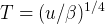
Consider another case: the temperature of radiation in a cavity. Here, to follow Sklar, we would say that the temperature is “identical” to the fourth-order root of the energy density over a constant,Footnote 6 which sounds absurd. On the other hand, as soon as we start to think in terms of “correlation,” this absurdity disappears. In fact, the correlation between the temperature of radiation in a cavity and the pressure of radiation is usually explained, again, by setting up a concrete model of a radiation system. And here the famous Stefan-Boltzmann law plays an important role in correlating these two quantities (Toda, Kubo, and Saitô Reference Toda, Kibo and Saitô1983, 74–78). The absurdity emerges more clearly if we remember that in this system pressure is a third of energy density.Footnote 7 Then should we say that temperature in the radiation-system is somehow “identical” to suitably modified pressure?Footnote 8 Certainly, temperature being functionally “correlated” with pressure is more natural.
Still, it is true that we have an intuition that molecular kinetic energy has more than mere correlation to do with temperature in a gas-system. I guess the idea behind this intuition is that gas-molecules in an ideal gas are somehow “responsible” for its temperature reading as well as for its pressure reading. Similarly, we can say photons in a radiation system are responsible for its temperature and pressure readings. It will be interesting to clarify what this “responsible” means. But identification seems the wrong approach. Rather they are more or less (causal) correlations.
Even Sklar himself is not very consistent about this point. In one place he talks about “the microscopic feature of the system associated with its temperature” (Sklar Reference Sklar1993, 352; my italics). Yet in another, he says “the appropriate microscopic feature of the system with which to identify temperature” (Sklar Reference Sklar1993, 353; my italics).
In order to understand the complicated relations between various concepts of temperature, I suggest we distinguish four different concepts of temperature:
TD-temperature1: TD's theoretical concept, absolute temperature related to the efficiency of an ideal heat engine;Footnote 9
TD-temperature2: TD's phenomenological concept, thermometer reading of a concrete equilibrium system;
SM-temperature1: SM's theoretical concept, the derivative of entropy by internal energy, or physically speaking, the tendency-parameter of change of the number of accessible states with respect to the change of internal energy;
SM-temperature2: manifestations of SM-temperature1 in a concrete system.
The determinable/determinate relationship might hold between TD-temperature1 and TD-temperature2, and/or SM-temperature1 and SM-temperature2. For there is a sense of generic/specific in each pair. Historically, TD-temperature1 was chosen among infinitely many absolute temperatures in such a way that TD-temperature2 as measured on the Celsius scale could approximate it (Ter Harr and Wergeland Reference Ter Harr and Wergeland1966, 20–23; Chang and Yi Reference Chang and Yi2002). On the other hand, when we try to find SM-temperature2 in a SM system, we use our physical intuition based on SM-temperature1 to think hard to find what the manifestation of this abstract concept in this particular system could be. Still it is not similar to color: for instance, a mixed sytem where different kinds of constituents are in equilibrium with each other can manifest several kinds of SM-temperature2 simultaneously, while this is not possible for colors.
But the determinable/determinate relation holds neither between TD-temperature1 and SM-temperature2 nor between SM-temperature1 and TD-temperature2. The generic/specific relations do not hold for them. We cannot use our physical intuition about the efficiency of an ideal heat engine to find our SM-temperature2. Neither can we use our physical intuition about how the number of accessible states of a SM system changes given the change of its internal energy to find our TD-temperature2. The correct relation between TD-temperature1 and SM-temperature2 is correlation (based on some specific model) rather than identification. Again, the correct relation between SM-temperature1 and TD-temperature2 seems better thought of as correlation.
The correlation between two concrete temperatures, TD-temperature2 and SM-temperature2, could have been used to calibrate SM-temperature2 in a system in terms of its pre-established TD-temperature2 counterpart. In fact this calibration is crucial for SM to be operationalized. Finally, the determinable/determinate relation cannot hold between TD-temperature1 and SM-temperature1 for these are theoretically independent of each other as they stand.
These observations point to a more general fact: TD-temperature1 and SM-temperature1 belong to two conceptually alternative theoretical schemes. In each scheme, they guide us to find the concrete counterparts of themselves in individual systems, namely, TD-temperature2 and SM-temperature2. The case of negative temperature, which Sklar takes to be an example of “concept-extension,” illustrates this point well. TD-temperature1 cannot be negative, for efficiency cannot be over 100 percent. But SM-temperature1 can be negative since in some, nonequilibrium stationary, two-level spin systems, you can make more ordered states by putting more energy into the system (Toda, Kubo, and Saitô Reference Toda, Kibo and Saitô1983, 40). There is nothing fancy about SM's negative temperature because it naturally follows the definition of SM-temperature1. There is no shame about TD's nonnegative temperature because as an equilibrium concept, TD-temperature1 cannot be applied to nonequilibrium situations. Each concept is valid under its own prescribed conditions. SM-temperature1 is an alternative to, rather than an extension of, TD-temperature1.
5. TD and SM: Alternative, Competing Methodologies
In fact, physicists view TD and SM as two distinct, not necessarily incompatible, ways of doing physics: two alternative methodologies. That's why they think that TD and SM do not fit into the usual object-specific classification of physics, including atomic physics, condensed matter physics, or laser physics.
As methodologies, models of TD and SM are widely used across these fields, provided the interpretation of the models is satisfactory. What TD and SM amount to in specific applications critically depends on which interpretations the models under consideration assume. We tend to think of TD as a macroscopic theory and of SM as a microscopic theory, and that hence it is natural for a microscopic theory, SM, to reduce a macroscopic theory, TD. But this is not correct. Many models in SM are interpreted in dramatically diverse ways. For instance, the “spin” of the Ising-Lenz model is interpreted as a microscopic portion of a ferromagnet, or as a macromolecule of haemoglobin, or as lots of other things. Moreover, all of these interpretations, as long as they are successful, are equally legitimate. There is no single correct interpretation of “spin.” Consequently, models of SM are not microscopic but abstract: Their contents are determined only through their applications (Yi Reference Yi2000). Accordingly, SM is not a predestined microscopic theory. Rather, it is a general methodology with lots of abstract models, but without the SM-picture of the world.
On the other hand, TD is not macroscopic, but rather phenomenological in the sense that it starts with certain fundamental postulates the validity of which can be ascertained only by examining the phenomenon under consideration. The distinction of intensive/extensive variables in equilibrium TD is a good example. So is the extension of this distinction in nonequilibrium TD. The starting point of nonequilibrium TD is to assume that “local equilibrium” is established in the system, which requires intensive variables of equilibrium TD to be variables of positions and time, and extensive variables, density-like quantities (cf. Kondepudi and Prigogine Reference Kondepudi and Prigogine1998). Roughly speaking, this assumption is tantamount to postulating the validity of a hydrodynamic treatment, the existence of smoothly varying quantities averaged over microscopically large but macroscopically small regions of the system.
These observations point to the conclusion that TD and SM are not theories at some fixed level, but general methodologies. They often collaborate, as in the proof of the existence of phase transitions in the two-dimensional Ising-Lenz model,Footnote 10 or compete, as in the early theory of superfluidity.Footnote 11 The relationship between TD and SM is more usefully understood as fruitful interaction between alternative methodologies rather than as one reducing the other.
Perhaps that is why Sklar emphasizes the importance of background reduction: It can make the otherwise separate TD and SM talk about the same objects, “macroscopic, but microscopically structured.” Still, his reduction fails, for TD and SM per se are neither microscopic nor macroscopic. But, one might hope to “reduce” all models of TD macroscopically interpreted by certain models of SM microscopically interpreted. I want to point out though, that this “stretched” sense of reduction cannot be guaranteed merely by hopes for the background reduction program. It is a substantial question, and therefore should be carefully examined with respect to concrete examples.Footnote 12 No matter what the verdict is, however, it is a separate issue from my point that TD and SM as such are alternative methodologies.