INTRODUCTION
Post-traumatic stress disorder (PTSD) is a psychiatric condition that occurs following exposure to a traumatic event that involves threat of death or serious injury and evokes intense fear, helplessness, or horror (American Psychiatric Association, 1994). The National Co-morbidity Survey Replication (NCS-R) estimated that, among adults in the United States, the lifetime prevalence of PTSD was 6.8% (Kessler et al., Reference Kessler, Berglund and Demler2005a) and the prevalence of PTSD over a 12-month period was 3.5%, with 36.6% of cases defined as “serious” (Kessler et al., Reference Kessler, Chiu and Demler2005b).
PTSD was first categorized as a psychiatric disorder in the third edition of Diagnostic and Statistical Manual of Mental Disorders (DSM-III) (American Psychiatric Association, 1980), amidst converging clinical evidence pointing toward a common syndromic consequence of trauma and the lobbying efforts of anti-war psychiatrists and veteran advocacy groups following the Vietnam war (McNally, Reference McNally2003). PTSD is unusual among DSM psychiatric syndromes in that it is diagnostically linked to an etiological event, the traumatic stressor. The DSM-III architects had in mind such qualifying stressors as combat, natural disaster, and rape. Fourth edition of Diagnostic and Statistical Manual of Mental Disorders (DSM-IV) (American Psychiatric Association, 1994) significantly broadened the Criterion A traumatic stressor definition by omitting the description of the event as “outside the range of normal human experience” and prompted further debate about an already controversial psychiatric disorder. Expansion of the Criterion A stressor to include experiences such as being diagnosed with a life-threatening disease has prompted the growth of the literature on PTSD among patients with medical disorders such as cancer (Mundy & Baum, Reference Mundy and Baum2004).
Predictors of PTSD symptomatology following cancer diagnosis, across studies of PTSD in adult cancer patients, include psychological disturbances prior to cancer diagnosis, elevated psychological distress subsequent to the diagnosis, younger age, female gender, lower socioeconomic status and less education, poor social functioning and support, emotionally reactive temperament, avoidant coping style, and reduced physical functioning (Kangas et al., Reference Kangas, Henry and Bryant2002). Several cross-sectional studies, as reviewed in Kangas et al. (Reference Kangas, Henry and Bryant2002), have shown an increased incidence of PTSD among cancer patients and survivors relative to the general population, with rates ranging from 5% to 19% based on the self-reported PTSD Checklist Civilian Version (PCL-C).
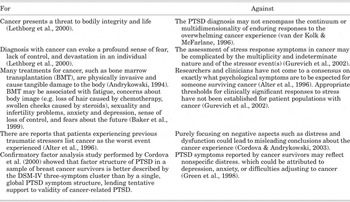
McNally (Reference McNally2003) argues that the broadening of what comprises the Criterion A traumatic stressor in DSM-IV codified a “conceptual bracket creep” by expanding the construct of PTSD to the extent that it renders the diagnosis less meaningful and clinically useful. Indeed, some authors have suggested that PTSD may not be the right model to represent the distress that patients with cancer feel, because their experience may differ from those suffering more traditionally studied traumatic stressors (Mundy & Baum, Reference Mundy and Baum2004). Table 1 lists arguments for and against the conceptual fit of PTSD to patients with cancer. Although the PTSD diagnosis captures many symptoms associated with the response to a severe trauma such as cancer diagnosis and treatment, it may not encompass the continuum or multidimensionality of enduring responses to this overwhelming experience (van der Kolk & McFarlane, Reference Van, Kolk, McFarlane, Van der Kolk, McFarlane and Weisaeth1996). The assessment of stress response symptoms in cancer may be complicated by the multiplicity and indeterminate nature of the stressor event(s). Diagnostic and treatment procedures, being a witness to the suffering of fellow patients, and cancer recurrence form an “accumulated burden of adversity,” which leads to chronic stress responses (Gurevich et al., Reference Gurevich, Devins and Rodin2002).
Arguments for and against the conceptual fit of PTSD to patients with cancer

Diagnostic Criterion B requires the persistent re-experiencing of a past traumatic event; however, medical-related stressors may be characterized by future-centered intrusive thoughts. As an example, Green and colleagues (1998) studied women with early-stage breast cancer and found that the most traumatizing aspects of the cancer experience were informational and abstract in nature, such as receiving the diagnosis and waiting for node dissection test results. Although this concern is not directly related to the treatment's physical invasiveness, it triggers intrusive worries about the future as opposed to intrusive recollections of past events, which led the authors to question the conceptual fit of PTSD to patients with cancer. In addition, symptoms related to numbing of general responsiveness (Criterion C) and increased arousal (Criterion D) may reflect treatment side effects and/or disease process (Cordova & Andryowski, Reference Cordova and Andrykowski2003).
In examining pathologic stress reactions to cancer diagnosis and treatment, it is important to understand normal stress reactions in this context. However, researchers and clinicians have not come to a consensus on exactly what psychological symptoms are to be expected from someone surviving cancer (Alter et al., Reference Alter, Pelcovitz and Axelrod1996), and appropriate thresholds for clinically significant responses to cancer-related stress have not been established (Gurevich et al., Reference Gurevich, Devins and Rodin2002). This is especially important in light of research showing that even sub-threshold PTSD leads to clinically meaningful levels of functional impairment in association with post-traumatic symptoms (Stein et al., Reference Stein, Walker and Haze1997).
Research has shown that following cancer diagnosis and treatment, a broad range of both positive and negative psychosocial outcomes may emerge (Cordova & Andrykowski, Reference Cordova and Andrykowski2003). This suggests that purely focusing on negative aspects such as distress and dysfunction could lead to misleading conclusions about the cancer experience. In particular, patients with cancer undergoing highly challenging life circumstances may experience post-traumatic growth in several life domains, including greater personal strength, enhanced interpersonal relationships, and a richer existential and spiritual life (Tedeschi & Calhoun, Reference Tedeschi and Calhoun2004). The impact of perceived growth on psychological outcomes is largely undetermined (Jim & Jacobsen, Reference Jim and Jacobsen2008), but reports of post-traumatic growth among cancer patients lend weight to the view of cancer as a psychosocial transition with potential for both positive and negative outcomes (Cordova & Andrykowski, Reference Cordova and Andrykowski2003).
This article will review studies examining the relationship between cancer and PTSD, pathophysiologic underpinnings of the two disorders, and the diagnosis and psychopharmacologic treatment of cancer-related PTSD symptoms.
IS PTSD A VALID DIAGNOSIS IN PATIENTS WITH CANCER?
Empirical factor analytic studies of PTSD symptoms in individuals with cancer are essential to examine the construct validity of the diagnosis, given that the model deemed to be of choice for this patient population may hold important implications with regard to assessment, diagnosis, and treatment (Asmundson et al., Reference Asmundson, Frombach and McQuaid2000). In factor analysis, distinct factors may correspond to unique mechanisms (Cattrell, 1978); therefore, factor analytic studies can advance the understanding of post-traumatic stress reactions (Taylor et al., Reference Taylor, Kuch and Koch1998). Exploratory factor analysis (EFA) is used to identify the underlying dimensions of a measure when there are no a priori expectations based on theory or previous research about its structure (Floyd & Widaman, Reference Floyd and Widaman1995). Confirmatory factor analysis (CFA) explicitly tests the fit of a hypothesized factor structure with the observed covariance structure of the data (Floyd & Widaman, Reference Floyd and Widaman1995). EFA is not necessarily inappropriate for assessing the symptom structure of PTSD; however, CFA is a more powerful, direct method of testing a hypothesized factor structure such as PTSD as implied by DSM-IV (Cordova et al., Reference Cordova, Studts and Hann2000). The DSM-IV PTSD diagnostic criteria reflect a multidimensional, higher-order model of PTSD, with the second-order of PTSD giving rise to three first order symptom clusters (i.e., Criteria B, C, and D) (Cordova et al., Reference Cordova, Studts and Hann2000).
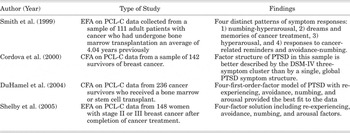
The PTSD PCL-C was designed specifically to assess responses to traumatic experiences encountered in the course of civilian living (Weathers et al., Reference Weathers, Litz and Herman1993). Several studies have sought to examine the validity of this assessment tool in patients with cancer (Table 2). Smith and colleagues (1999) performed an EFA on data collected from a sample of 111 adult patients with cancer, who had undergone bone marrow transplantation an average of 4.04 years previously, to assess the validity and psychometric properties of the PCL-C. The analysis yielded four distinct patterns of symptom responses: (1) numbing-hyperarousal, (2) dreams and memories of cancer treatment, (3) hyperarousal, and (4) responses to cancer-related reminders and avoidance-numbing. Individuals likely meriting a PTSD diagnosis based on their PCL-C scores had, relative to those with subclinical or absent PTSD symptom levels, significantly worse social functioning and mental health as measured by the Brief Symptom Inventory (BSI; Derogatis, Reference Derogatis1975) and the Mental Functioning subscale of the Medical Outcomes Study Short-Form 36 (MOS SF-36; Ware & Sherbourne, Reference Ware and Sherbourne1992). In addition, respondents meeting the PTSD symptom criteria on the PCL-C were significantly more distressed as measured by the Impact of Events Scale (IES; Horowitz et al., Reference Horowitz, Wilner and Alvarez1979) than those with some or no PTSD symptoms; this finding showed that the PCL-C related to other patient characteristics (i.e., distress) in a manner consistent with clinical expectations, therefore providing further support for construct validity of the measure. The lack of correlation between respondents' pain level and PCL-C scores provided support for the PCL-C's discriminant validity, as physical pain is not a construct conceptually linked to PTSD symptoms. The authors concluded that the PCL-C may be effective as a brief screening assessment for PTSD symptoms (Smith et al., Reference Smith, Redd and DuHamel1999).
Factor analytic studies of PTSD in cancer

CFA, confirmatory factor analysis; EFA, exploratory factor analysis; PCL-C PTSD Checklist Civilian Version.
Cordova et al. (Reference Cordova, Studts and Hann2000) performed a CFA to evaluate the extent to which the PTSD factor structure implied by DSM-IV was replicated in a sample of 142 breast cancer survivors. PTSD symptoms were measured using the PCL-C. The results revealed that the factor structure of PTSD in this sample is better described by the DSM-IV three-symptom cluster than by a single, global PTSD symptom structure. This finding addressed concerns about the validity of cancer-related PTSD, as Green and colleagues (1998) proposed that PTSD symptoms reported by cancer survivors may reflect nonspecific distress, which could be attributed to depression, anxiety, or difficulties adjusting to cancer. If this were the case, a CFA model with a global, first-order “distress” factor would be expected to fit the data; these results showed the first order “distress” model to be a poor fit to the data. This study substantiated the dimensional similarity of cancer-related PTSD symptoms to PTSD as conceptualized in DSM-IV. Cordova and colleagues concluded that the results provided tentative support for the DSM-IV tripartite model of PTSD, but do not rule out competing models. Indeed, post-hoc analysis showed a second-order, four-factor model separating numbing and avoidance symptoms to be statistically superior to the DSM-IV model (Cordova et al., Reference Cordova, Studts and Hann2000).
DuHamel and colleagues (2004) used CFA to test seven different models of the PCL symptom structure (including the DSM-IV-based three symptom cluster model) with data from 236 cancer survivors who received a bone marrow or stem cell transplant. The results showed that a four-first-order-factor model of PTSD with re-experiencing, avoidance, numbing, and arousal provided the best fit to the data (DuHamel et al., Reference DuHamel, Ashman and Keane2004). Duhamel et al. (2004) noted that these results may reflect poor factorial validity of the PCL, or perhaps an alternative presentation to the DSM-IV conceptualization of PTSD. Disaggregating avoidance and numbing may necessitate increasing the number of avoidance and numbing symptoms to make it easier for a patient to be identified as meeting either or both cluster criteria. Duhamel et al. (2004) concluded that the PCL met Watson's (Reference Watson1990) criteria for comparing and evaluating measures for PTSD, which include reliability and criterion validity. However, they noted that testing the predictive validity of the three- versus four-symptom cluster models as well as different item requirements within each cluster with an external criterion, such as the Structured Clinical Interview for DSM-IV (SCID, the gold standard for diagnosis of PTSD, First et al., Reference First, Spitzer and Gibbon2002), may help elucidate what would be the best requirement for diagnosis of PTSD in cancer patients (DuHamel et al., Reference DuHamel, Ashman and Keane2004).
Shelby and colleagues (2005) performed an EFA on PCL-C data from 148 women with stage II or III breast cancer after completion of cancer treatment. Their data did not support the DSM-IV PTSD symptom clusters but instead identified a four-factor solution including re-experiencing, avoidance, numbing, and arousal factors. Shelby et al. (2005) chose to conduct EFA because they were specifically interested in symptom item performance, and this strategy provides more information about item loadings across factors than does CFA. EFA allows all items to load on all factors and does not force any factor loadings to zero. Shelby et al. (2005) noted that the chronic nature of cancer may have impacted the factor solution identified in this study, which lends credence to the theory that the clinical phenomenon of PTSD may differ by trauma characteristics. Therefore, requiring individuals to have a minimum number of symptoms from each symptom cluster may be inappropriate. The data also showed that four PCL-C items (“Feeling your future will be cut short”; “Being super-alert, watchful, or on guard”; “Having physical reactions to reminders”; “Having difficulty concentrating”) may be confounded with illness or cancer treatment-related symptoms and fail to represent PTSD symptom dimensions for cancer patients. Shelby et al. (2005) proposed that removing these items may result in a more accurate measure of PTSD symptoms for cancer patients and reduce the risk of inflating PTSD symptom rates (Shelby et al., Reference Shelby, Golden-Kreutz and Andersen2005).
In summary, multiple studies have demonstrated the validity of the PCL-C in diagnosing PTSD in patients with cancer. Research has shown that PTSD as defined in DSM-IV appears to be a better model for conceptualizing distress in patients with cancer than a generalized “distress” model. The divergent models identified by factor analytic investigations may differ from one another, at least in part, as a function of unique aspects of different trauma groups studied and as a result of differences in various assessment measures used to evaluate PTSD symptoms (Asmundson et al., Reference Asmundson, Frombach and McQuaid2000). Future research should investigate whether or not the factor structure of cancer-related PTSD differs from that of PTSD in other trauma populations by using parallel methodology to evaluate the PTSD factor structure across different populations (Cordova et al., Reference Cordova, Studts and Hann2000).
CLINICAL IMPLICATIONS: PTSD HAS A NEGATIVE IMPACT ON PREVENTIVE HEALTH BEHAVIORS, HEALTH-RISK BEHAVIORS, AND PHYSICAL MORBIDITY
Increasing evidence shows that chronic PTSD is associated with higher risks for physical morbidity (Buckley et al., Reference Buckley, Mozley and Bedard2004). Some researchers have hypothesized that repeated stress responses with an augmented sympathetic nervous system output places individuals with PTSD at increased risk for medical illnesses (Buckley & Kaloupek, Reference Buckley and Kaloupek2001). PTSD in military veterans is associated with the presence and severity of atherosclerosis measured by coronary artery calcium (CAC) scanning, and predicts mortality independent of cardiovascular risk factors (Ahmadi et al., Reference Ahmadi, Hajsadeghi and Mirshkarlo2010). The documented relationship between PTSD and certain adverse health behaviors (e.g., smoking, alcohol and drug abuse/dependence, poor nutrition, lack of exercise, and decreased preventive health care visits) may also contribute to the negative correlation between PTSD and physical health (Buckley et al., Reference Buckley, Mozley and Bedard2004). Other contributing factors may include disturbed sleep physiology and psychological variables such as depression, maladaptive coping, anger, and hostility (Schnurr & Spiro, Reference Schnurr and Spiro1999).
In a study of a large cohort (N = 826, mean age 52 years) of consecutive treatment-seeking patients presenting to an outpatient Veterans Affairs PTSD clinic, Buckley and colleagues (2004) found poor health behavior practices as measured by the Health Risk Appraisal (HRA). Nearly one-half of the veterans >50 years of age reported that it had been >1 year since their last colorectal or prostate cancer screening examination and 11% reported never having had the test. Similarly, 39% of the veterans >50 years of age reported that it had been >1 year since their last fecal occult blood test (FOBT), with 10% reporting never having had such a screen. Buckley et al. (2004) also reported increased prevalence of cancer of any type, with 10.5% of the group having a lifetime diagnosis of cancer as compared to 6% of males aged 45–54 based on Centers for Disease Control Data).
Poor health behaviors in patients with PTSD may also lead to nonadherence with medical treatment. Nonadherence to cancer treatment can adversely impact local and distant recurrences, as evidenced by a recent retrospective study comparing clinical and pathologic features and outcomes of breast cancer patients who adhered to recommended radiation, chemotherapy, and hormonal therapies, with those of breast cancer patients who did not (Ma et al., Reference Ma, Barone and Wallis2008). In this study, nonadherence with tamoxifen was shown to impact 5-year local and distant disease-free survival rates.
In summary, PTSD may be associated with increased cancer risk through both direct mechanisms and adverse health behaviors.
PATHOPHYSIOLOGY OF PTSD AND CANCER
Another factor potentially contributing to disease modulation in cancer and PTSD is the immune system. Pro-inflammatory cytokines play a beneficial role in cancer by enhancing immunologic responses and directly inducing tumor cell death (Dinarello, Reference Dinarello2006). However, the chronic effects of inflammatory cytokines paradoxically contribute to carcinogenesis, tumor growth, and metastasis (Dinarello, Reference Dinarello2006). Proinflammatory cytokines (e.g., tumor necrosis factor-alpha [TNF-α], interleukin-1 [IL-1], and interleukin-6 [IL-6]) released during innate immune activation and inflammation can have a profound impact on behavioral symptoms in both medically ill and medically healthy individuals (Miller et al., Reference Miller, Ancoli-Israel and Bower2008). PTSD patients have elevated serum IL-6 levels (Maes et al., Reference Maes, Lin and Delmeire1999), and exposures to less extreme stressors are also associated with elevated cytokine levels. Elevated levels of TNF-α, IL-6, and interferon- gamma (IFN-γ) were found in students just prior to taking an exam (Maes et al., Reference Maes, Song and Lin1998), and chronic stress, such as marital discord and caregiving, was associated with increases in several inflammatory biomarkers including C-reactive protein (CRP) and IL-6 (Kiecolt-Glaser et al., Reference Kiecolt-Glaser and Loving2005; McDade et al., Reference McDade, Hawkley and Cacioppo2006). Animal and human studies show that peripheral administration of pro-inflammatory cytokines, such as interferon-alpha (IFN- α), can induce a “sickness behavior” syndrome similar to the psychophysiologic alterations often experienced by cancer patients, including cognitive dysfunction, fatigue, impaired sleep, anorexia, and depression (Musselman et al., Reference Musselman, Lawson and Gumnick2001).
Peripheral cytokine signals activate inflammatory responses within the brain, which interact with neurobiological substrates, including the hypothalamic–pituitary–adrenal (HPA) axis and monoamine neurotransmitters implicated in anxiety (Miller et al., Reference Miller, Ancoli-Israel and Bower2008). Cytokines may influence HPA axis function through effects on negative feedback regulation, and cause glucocorticoid resistance (Miller et al., Reference Miller, Maletic and Raison2009). Chronic stress can induce chronic activation of the immune system through the HPA axis. The prolonged and heightened elevation of glucocorticoid levels may lead to desensitization of glucocorticoid receptors and a glucocorticoid-resistant state in the central nervous system (CNS) and immune cells (e.g., macrophages). This, in turn, impairs two critical glucocorticoid-mediated pathways including negative feedback regulation of the HPA axis and feedback inhibition of cytokine production, which can lead to elevated levels of proinflammatory cytokines such as IL-6. In PTSD patients, both HPA axis dysregulation (Mason et al., Reference Mason, Wang and Yehuda2002 and elevated levels of IL-6 (Maes et al., Reference Maes, Lin and Delmeire1999) have been found.
Once cytokine signals reach the brain, they can influence the synthesis, release, and reuptake of neurotransmitters including serotonin, norepinephrine, and dopamine (Miller, Reference Miller2009). Cytokines may exert a “double hit” on both monoamine synthesis and reuptake, leading to depletion of serotonin. Alterations in serotonin, 5-hydroxytryptamine (5-HT), may play a role in the pathophysiology of PTSD, leading to symptoms of hostility, impulsivity, aggression, hypervigilance, depression, and suicidality (Heim & Nemeroff, Reference Heim and Nemeroff2009). Evidence for altered 5-HT neurotransmission in PTSD includes decreased 5-HT serum concentrations, decreased platelet 5-HT uptake site density, altered responsiveness to CNS serotonergic challenge, and demonstrated efficacy of selective serotonin reuptake inhibitors (SSRI) (Heim & Nemeroff, Reference Heim and Nemeroff2009). Cytokine-induced depletion of serotonin may cause or exacerbate PTSD symptoms in patients with cancer. Pro-inflammatory cytokines may also contribute to alterations in behavior through their impact on regional brain activity in areas such as the dorsal anterior cingulate cortex (dACC) (Paulus et al., Reference Paulus, Feinstein and Simmons2004; Capuron et al., Reference Capuron, Pagnoni and Demetrashvilli2005; Miller et al., Reference Miller, Ancoli-Israel and Bower2008).
In summary, proinflammatory cytokines released during innate immune activation and inflammation can deregulate the HPA axis, modify neurotransmitter synthesis and reuptake, and affect regional brain activity. These cytokine-induced alterations may potentially lead to psychiatric sequelae. Patients with cancer exposed to immune cytokines may be prone to develop PTSD symptoms because of the effects of the cytokines on these neurobiological substrates.
PHARMACOLOGIC TREATMENT OF PTSD: DRUG INTERACTIONS BETWEEN PSYCHOTROPICS AND ANTICANCER AGENTS AND THEIR IMPLICATIONS ON MEDICAL OUTCOME
The American Psychiatric Association's Practice Guidelines for PTSD list four reasons that SSRIs are first-line medications of choice for PTSD: (1) they ameliorate all three PTSD symptom clusters (re-experiencing, numbing/avoidance, and hyperarousal); (2) they are effective for psychiatric disorders frequently comorbid with PTSD such as depression, panic disorder, and social phobia; (3) they may reduce aggressive, impulsive, and suicidal behaviors that often complicate management of PTSD; and (4) they have relatively few side effects (American Psychiatric Association Work Group on ASD and PTSD, 2004). Findings from several controlled multicenter trials have shown efficacy for the SSRI and serotonin/norepinephrine reuptake inhibitor (SNRI) drugs in the treatment of PTSD (Davidson et al., Reference Davidson, Connor, Zhang, Schatzberg and Nemeroff2009). Two SSRIs are approved by the Food and Drug Administration (FDA) for the treatment of PTSD, paroxetine IR and sertraline. SSRIs and SNRIs improve symptoms with acute treatment and also result in continued and sustained improvement, and in some cases remission, with long-term Treatment lasting up to 15 months (Davidson et al., Reference Davidson, Connor, Zhang, Schatzberg and Nemeroff2009). Research also indicates that tricyclic antidepressants (TCAs) and monoamine oxidase inhibitors (MAOIs) are more effective than placebo in the short-term treatment of PTSD in male combat veterans (Davidson et al., Reference Davidson, Connor, Zhang, Schatzberg and Nemeroff2009). Limited evidence supports the use of atypical antipsychotics such as risperidone as adjuvant treatment of PTSD, however these medications have been used with increasing frequency in the treatment of PTSD (Davidson et al., Reference Davidson, Connor, Zhang, Schatzberg and Nemeroff2009). Although often prescribed, the evidence does not support the use of long-term benzodiazepines in managing PTSD, and these medications are contraindicated in the International Society for Traumatic Stress Studies (ISTSS) PTSD treatment guidelines (Foa et al., Reference Foa, Keane and Friedman2008). In addition, anticonvulsant medications have been used extensively in the treatment of PTSD; however, recent randomized, placebo-controlled trials of monotherapy with tiagabine (Davidson et al., Reference Davidson, Brady and Mellman2007) and divalproex (Davis et al., Reference Davis, Davidson and Ward2008; Hamner et al., Reference Hamner, Faldowski and Robert2009) have been negative.
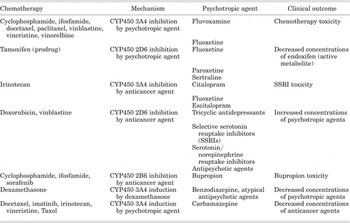
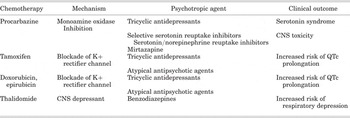
Drug–drug interactions are an ongoing concern in the treatment of cancer, especially when cytotoxic drugs, with narrow therapeutic windows and steep dose-toxicity curves, are being used (Beijnen & Schnellens, Reference Beijnen and Schellens2004). Many medications used in the treatment of PTSD can lead to pernicious pharmacokinetic drug interactions with anticancer agents, as psychotropic agents and anticancer agents may share a common metabolic pathway, the hepatic oxidative cytochrome P450 isoenzyme system (CYP450) (Yap et al., Reference Yap, Tay and Chui2011). Pharmacokinetic drug interactions between these medications may involve CYP450 enzyme induction or inhibition. Enzyme induction results in an increased rate of metabolism and decreased serum concentration of the parent drug, and possible loss of treatment efficacy. Alternatively, enzyme inhibition results in decreased rate of metabolism and possible drug toxicity. The importance of drug interactions in the treatment of patients with cancer and co-morbid psychiatric illnesses is well illustrated by a study showing statistically significant decreases in the concentrations of the active tamoxifen metabolite following co-administration with the SSRI paroxetine (Stearns et al., Reference Stearns, Johnson and Rae2003). Clinically relevant pharmacokinetic interactions (Table 3) and pharmacodynamic interactions (Table 4) between anticancer agents and psychotropic medications for PTSD treatment may impact medical outcome.
Potential pharmacokinetic interactions between anticancer agents and psychotropic agents for PTSD treatment

CYP450, cytochrome P450 isoenzyme system.
Potential pharmacodynamic interactions between anticancer agents and psychotropic agents for PTSD treatment

PSYCHOTHERAPY FOR PTSD SYMPTOMATOLOGY IN PATIENTS WITH CANCER
Cancer often takes a toll on an individual's physical and cognitive abilities, functioning, and self-concept (Breitbart & Heller, Reference Breitbart and Heller2003). This may lead to a profound loss of meaning, which may be associated with a variety of psychiatric constructs (depression, hopelessness, desire for hastened death, and suicidal ideation). Symptoms of PTSD in patients with cancer, such as feelings of detachment and sense of a foreshortened future, may be conceptualized as manifestations of loss of meaning and purpose. Trauma-focused cognitive-behavioral therapy (TFCBT), a psychological treatment specifically addressing the patient's troubling memories of traumatic events and the personal meanings of the events and their consequences, is a well-studied treatment for chronic PTSD (Bisson et al., Reference Bisson, Ehlers and Matthews2007) and may offer benefits for individuals with cancer suffering from PTSD symptoms.
Classen and colleagues (Reference Classen, Butler and Koopman2001) evaluated the effectiveness of 1 year of supportive-expressive group psychotherapy for reducing mood disturbance and traumatic stress symptoms in women with metastatic breast cancer. This modality of therapy was unstructured and existentially based, as terminal illness often amplifies existential concerns such as death and meaning. Classen et al. (Reference Classen, Butler and Koopman2001) found small to moderate effect sizes and concluded that the intervention has clinical value given the importance of alleviating distress in this population. Another study examined a structured group-based cognitive behavior intervention in patients with nonmetastatic breast cancer (stage 0-III) following surgery for breast cancer, and showed reduction of thought intrusions, interviewer ratings of anxiety, and emotional distress across 1 year with beneficial effects maintained well past the completion of adjuvant therapy (Antoni et al., Reference Antoni, Wimberly and Lechner2006).
Breitbart and Greenstein at Memorial Sloan-Kettering Cancer Center in New York City designed an 8-week, group-focused, manualized support group intervention for patients with advanced cancer called Meaning Centered Group Psychotherapy (MCGP) (Greenstein & Breitbart, Reference Greenstein and Breitbart2000). This therapy uses a mixture of didactics, discussion, and experiential exercises focused on themes related to meaning and purpose, and is informed by the work of psychiatrist and Holocaust survivor Viktor Frankl (Frankl, Reference Frankl1992). A randomized control trial in patients with advanced cancer comparing MCGP with supportive group psychotherapy showed significantly greater improvements in spiritual well-being and sense of meaning, and decreased anxiety and desire for death in the MCGP group, with even greater improvements seen 2 months after completion of therapy (Breitbart et al., Reference Breitbart, Rosenfield and Gibson2010). This treatment represents an important part of the psychiatrist's armamentarium in palliative care, and may offer considerable benefits to patients with cancer who have PTSD symptoms.
CONCLUSIONS AND FUTURE DIRECTIONS
The cancer experience qualifies as a traumatic event, and represents a unique pathway by which a person may develop PTSD. Multiple cross-sectional studies have demonstrated an increased incidence of PTSD symptoms among cancer patients and survivors relative to the general population. Prospective studies are needed to identify disease-specific variables as potential risk factors for PTSD, including tumor site and pathology, staging, recurrence, and treatment interventions (e.g., chemotherapy, radiation). Poor health behaviors and decreased adherence to medical treatment regimens have been associated with PTSD. These behaviors may increase the risk of cancer, decrease early detection, and worsen treatment outcome. Future research examining the effect of PTSD on adherence to cancer treatment and remission, recurrence, and mortality rates will help to further elucidate this relationship.
A better understanding of the possible neurobiologic mechanisms underlying the co-morbidity of cancer and PTSD is needed. Specific attention to the interplay among the HPA axis, inflammation, and the immune system in the pathogenesis of anxiety disorders in patients with cancer is needed. Further study of bone marrow transplant patients who develop PTSD in the context of different clinical scenarios (e.g., germ-free isolation rooms, graft versus host disease, or disease recurrence) may provide a unique model to study the role of inflammation in PTSD.
Randomized-controlled treatment interventions with SSRIs and other pharmacologic and psychotherapeutic treatments for PTSD are lacking in patients with cancer-related PTSD. Future studies of PTSD in patients with cancer are needed to increase recognition, optimize treatment, improve quality of life, and determine the impact of effective PTSD treatment on cancer outcome. Although it is unlikely that the diagnostic boundaries of PTSD fully encompass the traumatic nature of the cancer experience, screening patients with cancer for PTSD symptoms will alert clinicians to debilitating symptoms such as intrusiveness, physiological arousal, and avoidance phenomena, which adversely impact functioning, healthcare use, and, ultimately, cancer outcome.
FINANCIAL DISCLOSURE
M. Beatriz Currier has served on the speakers' bureau for Eli Lilly and Forest Laboratories.