Introduction
The diversity of Coleoptera communities in natural ecosystems depends on biotic (vegetation and interactions) and abiotic factors (temperature, humidity, precipitation, soil type, and elevation) (Halffter and Edmonds Reference Halffter and Edmonds1982; Escobar and Chacón de Ulloa Reference Escobar and Chacón de Ulloa2000; Lobo and Halffter Reference Lobo and Halffter2000; Arriaga et al. Reference Arriaga, Halffter and Moreno2012). However, in agricultural ecosystems (traditional and non-traditional), there are some additional factors such as landscape fragmentation, crop type, and land usage that influence the diversity, structure, and abundance of beetles. Unfortunately, those factors are poorly understood (Morón Reference Morón1987). Farming is one of the main reasons for land use change, and it is the cause of the greatest biodiversity loss in the world (Curiel and Garibay Reference Curiel, Garibay, Cruz, Ordorica, Valero and Melgarejo2017). The knowledge of beetle diversity in crops is essential for biodiversity conservation, especially in states such as Jalisco, Mexico, where severe erosion occurred in 19% of the land area, and where 43% of the natural vegetation is vulnerable to climate change (Curiel and Garibay Reference Curiel, Garibay, Cruz, Ordorica, Valero and Melgarejo2017). This region is considered a priority for conservation (Jardel et al. Reference Jardel, Santana, Graf, Hernández, Valencia, González, Meiners, Cruz, Ordorica, Valero and Melgarejo2017), and is part of the area where the distilled beverage tequila can be produced according to the “Appellation of Origin Tequila” (also called the Denomination of Origin Tequila) for Agave tequilana Weber (Asparagaceae) (Diario Oficial de la Federación de los Estados Unidos Mexicanos 1977). In 2016, this zone had a harvest area of about 17387.61 ha in five states: Jalisco, Michoacán, Tamaulipas, Nayarit, and Guanajuato (Secretaría de Agricultura, Ganadería, Desarrollo Rural, Pesca y Alimentación 2017). In the same year, the state of Jalisco contributed approximately 90% of tequila produced, representing 1.20 billion USD in exports (Secretaría de Agricultura, Ganadería, Desarrollo Rural, Pesca y Alimentación 2017).
Although A. tequilana is one of the most important crops in the state of Jalisco (Rosales et al. Reference Rosales, Cevallos, Olvera, Figueroa, Cruz, Ordorica, Valero and Melgarejo2017; Secretaría de Agricultura, Ganadería, Desarrollo Rural, Pesca y Alimentación 2017), only a few studies so far have focussed on the diversity of beetles associated with this crop (Lugo-García et al. Reference Lugo-García, Ortega-Arenas, González-Hernández, Aragón-García, Romero-Nápoles, Rubio-Cortés and Morón2011). Most previous research concentrated on pest species or use of biological control agent (Halffter Reference Halffter1957; González et al. Reference González, Solís, Pacheco, Flores, Rubio, Rojas, González, Del Real and Solís2007), and none evaluated the diversity of Coleoptera that occur on carrion in A. tequilana plots. Necrocolous beetles may be attracted to tequila fields by the manure fertiliser (Instituto Nacional de Estadística y Geografía 1997), carrion, or the burrows of animals that live in the agave region and surrounding habitats, such as Baiomys taylori Thomas (Rodentia: Cricetidae), Microtus mexicanus Saussure (Rodentia: Cricetidae), Neotona mexicana Baird (Rodentia: Cricetidae), Peromyscus maniculatus Wagner (Rodentia: Cricetidae), Sigmodon hispidus Say and Ord (Rodentia: Cricetidae), Liomys irroratus Gray (Rodentia: Heteromyidae), Liomys pictus Thomas (Rodentia: Heteromyidae), and Silvilagus floridanus Allen (Lagomorpha: Leporidae) (Halffter Reference Halffter1957; Ceballos and Oliva Reference Ceballos and Oliva2005).
The term necrocolous refers to beetles that are attracted to carrion (Naranjo-López and Navarrete-Heredia Reference Naranjo-López and Navarrete-Heredia2011). The necrocolous beetle families examined in this study – Scarabaeidae: Scarabaeinae, Silphidae, and Trogidae – are excellent bioindicators of the anthropogenic disturbances and community structure interactions (Favila and Halffter Reference Favila and Halffter1997). The ecological affiliations of these groups are well known, and taxonomy is relatively stable. These beetles provide ecological services such as waste disposal, secondary seed dispersal, suppression of Vertebrata parasites, nutrient recycling, and soil fertilisation (Nichols et al. Reference Nichols, Larsen, Spector, Davis, Escobar and Favila2007, Reference Nichols, Spector, Louzada, Larsen, Amezquita and Favila2008; Navarrete-Heredia Reference Navarrete-Heredia2009). They use the manure and decaying organic material as food and nesting resources (Nichols et al. Reference Nichols, Larsen, Spector, Davis, Escobar and Favila2007; Navarrete-Heredia Reference Navarrete-Heredia2009).
Species of necrocolous beetles have been recorded in cocoa crop (Theobroma cacao Linnaeus; Malvaceae), coffee (Coffea arabica Linnaeus; Rubiaceae), mahogany (Swietenia macrophylla King; Meliaceae), rubber (Hevea brasiliensis (Willdenow ex Jussieu) Müller Argoviensis; Euphorbiaceae), coconut (Cocos nucifera Linnaeus; Arecaceae), citrus (Citrus Linnaeus; Rutaceae species), corn (Zea mays Linnaeus; Poaceae), radishes (Raphanus raphanistrum Linnaeus; Brassicaceae), banana plantations (Musa paradisiaca Linnaeus; Musaceae), palm oil plantations (Elaeis guineensis Jacquin; Arecaceae), forest plantations (Paraserianthes falcataria (Linnaeus) Nielsen and Acacia mangium Willdenow; Fabaceae), and pastures (Poaceae) (Nichols et al. Reference Nichols, Larsen, Spector, Davis, Escobar and Favila2007, Reference Nichols, Spector, Louzada, Larsen, Amezquita and Favila2008; Navarrete-Heredia Reference Navarrete-Heredia2009). However, beetle species diversity in A. tequilana crop fields has not been well studied. Therefore, the objective of this research was to evaluate how agronomic and environmental factors influence the diversity patterns and seasonal distribution of necrocolous beetles in 2–4-year-old A. tequilana fields, located in three municipalities (Arandas, Tequila, and Magdalena) in the state of Jalisco, Mexico.
Materials and methods
Study area
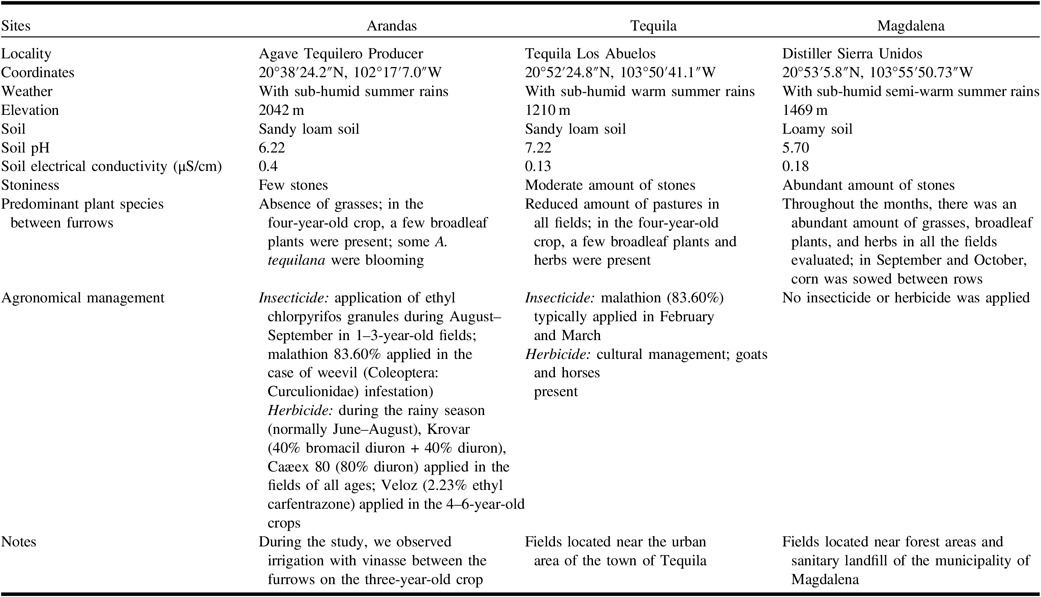
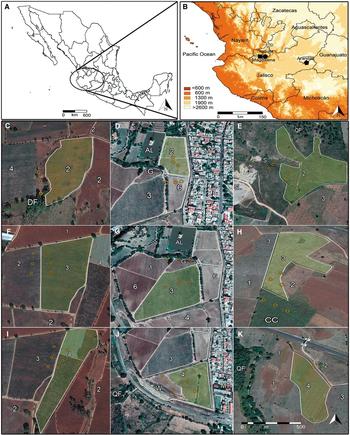
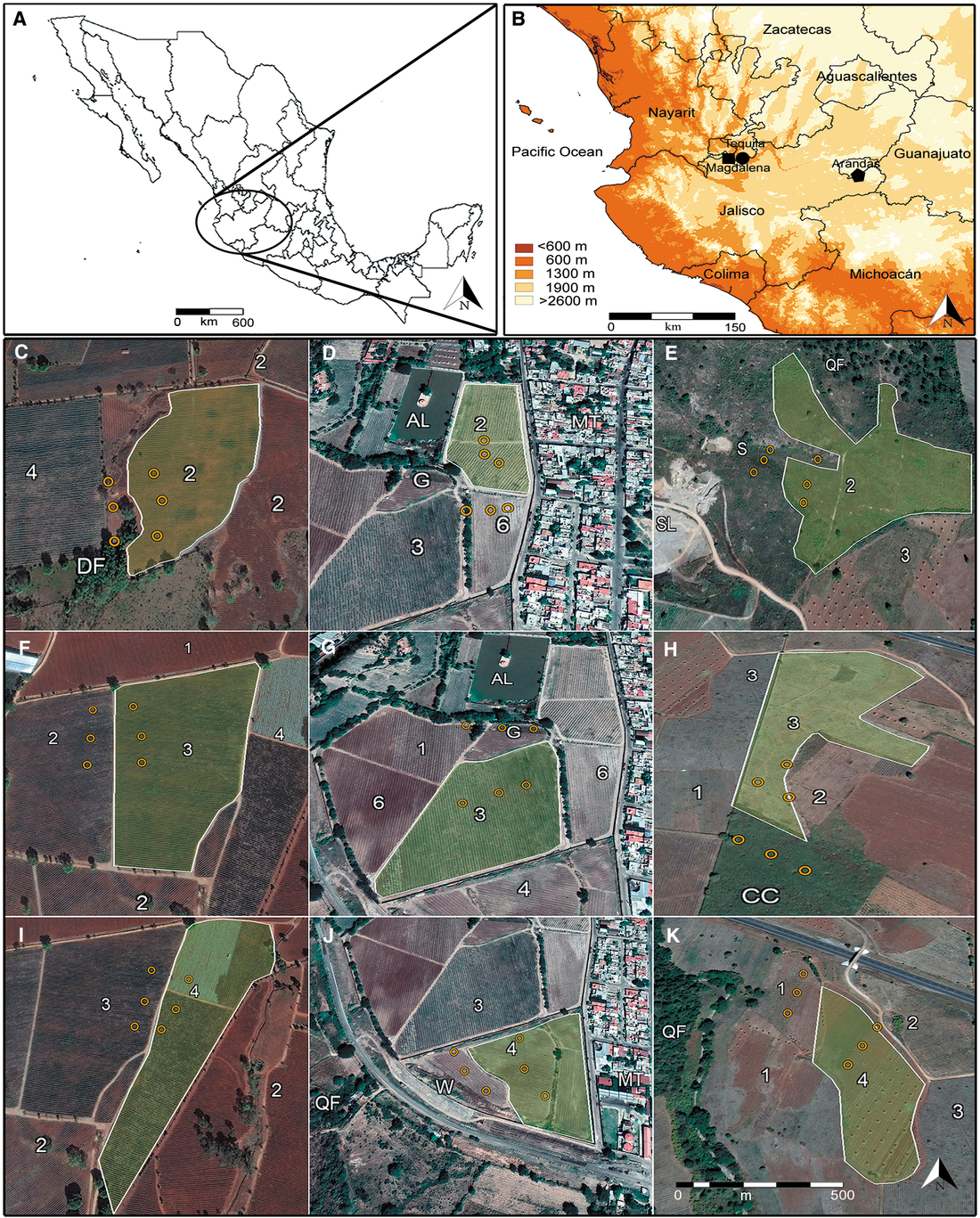
The study area is located west of the Mexican Volcanic Belt, in Arandas, Tequila, and Magdalena municipalities of the state of Jalisco, Mexico (Table 1; Fig. 1). The intensive exploitation and optimal agro-ecological conditions in these areas are essential to the production of A. tequilana in Mexico (Ruíz Corral Reference Ruíz Corral, Rulfo, Pérez, Real and Byerly2007). Arandas is located in Los Altos region, while Tequila and Magdalena are located in the Valley region of the state. These municipalities differ in their climate and geological history (Gómez-Tuena et al. Reference Gómez-Tuena, Orozco-Esquivel and Ferrari2005). Images of the study area were taken using Google Earth (www.google.com/earth) allowing us to view close-ups of the agave fields.
Description of study areas in each municipality from the tequila-producing region of Mexico.

Study area with Agave tequilana fields. A, Mexico; B, Jalisco; C–E, two-year-old fields; F–H, three-year-old fields; I–K, four-year-old fields. C, F, I, Arandas; D, G, J, Tequila; E, H, K, Magdalena. The areas delimited with a green background indicate the targeted field; the yellow circles are the location of carrion traps; the numbers inside the figures indicate the age of the crop in years. AL, artificial lake; CC, corn crop; DF, Quercus forest patch; G, area with grass; MT, municipality of Tequila; QF, Quercus forest; S, scrub; SL, landfill; W, Agave tequilana waste area. Images of the study area were modified from Google Earth images.
Sampling
Samplings were conducted monthly, from May to November 2016, in nine preselected farms (three per municipality). In other studies on Mexican necrocolous beetles, these months were the most appropriate to do research on beetle assemblages (Hernández and Navarrete-Heredia Reference Hernández and Navarrete-Heredia2018). This study took place in 2–4-year-old A. tequilana fields. Six permanent carrion traps, as described by Rodríguez and Navarrete-Heredia (Reference Rodríguez and Navarrete-Heredia2014), with a metal mesh and quadrants of 30 mm, were set per crop field (each trap consisted of a 1-L container buried at ground level and filled to one-fourth with 70% ethanol and 30 g fresh squid bait). Ethanol and squid were replaced every month. The traps were spaced out by a 50-m distance, and distributed as follows: three traps in the A. tequilana field and three in the adjacent area, separated by 100–150 m (Fig. 1). Three hundred and seventy-eight samples (six traps/nine fields/seven months) were collected during the study period (189 within the field and 189 in the adjacent areas). Data loggers registered the temperature and humidity at each site, while the precipitation information was received from the National Aeronautics and Space Administration data (Stackhouse et al. Reference Stackhouse, Westberg, Hoell, Chandler and Zhang2015). For each municipality, we collected the historical data of the atmospheric variables from 1951 to 2016 (Stackhouse et al. Reference Stackhouse, Westberg, Hoell, Chandler and Zhang2015; Ruíz Corral Reference Ruíz Corral2018) to lower potential variations in environmental variables during the sampling period.
Taxonomic work
The specimens were determined using the following taxonomic works: Vaurie (Reference Vaurie1955), Halffter (Reference Halffter1961), Howden and Cartwright (Reference Howden and Cartwright1963), Edmonds (Reference Edmonds1994), Kohlmann and Solís (Reference Kohlmann and Solís1997), Zunino and Halffter (Reference Zunino and Halffter1997), Rivera-Cervantes and Halffter (Reference Rivera-Cervantes and Halffter1999), Howden and Génier (Reference Howden and Génier2004), Deloya (Reference Deloya2005), López-Guerrero (Reference López-Guerrero2005), Kohlmann and Solís (Reference Kohlmann and Solís2006), Peraza and Deloya (Reference Peraza and Deloya2006), Navarrete-Heredia (Reference Navarrete-Heredia2009), Edmonds and Zídek (Reference Edmonds and Zídek2010, Reference Edmonds and Zídek2012), Vaz-de-Mello et al. (Reference Vaz-de-Mello, Edmonds, Ocampo and Schoolmeesters2011), Génier (Reference Génier2012), and González-Alvarado and Vaz-de-Mello (Reference González-Alvarado and Vaz-de-Mello2014). The beetles captured were preserved in 70% ethanol and some of them pinned in a series of species represented by each sex and deposited in the Entomological Collection of the Center for Zoological Research, University of Guadalajara (Guadalajara, Mexico). Additional specimens are in ethanol, housed in the same collection. Vouchers will also be deposited at the entomological collection of the Institute of Biology of the Autonomous National University of Mexico (Mexico City, Mexico).
The distributional affinities of species in this study were assessed on the basis of data in existing literature (Halffter Reference Halffter1987; Morón Reference Morón2003; Navarrete-Heredia Reference Navarrete-Heredia2009; Halffter and Morrone Reference Halffter and Morrone2017; Hernández and Navarrete-Heredia Reference Hernández and Navarrete-Heredia2018).
Data analysis
The Chao et al. (Reference Chao, Gotelli, Hsieh, Elizabeth, Ma, Colwell and Ellison2014) method was used to assess the sampling and the components of alpha diversity in the fields at each municipality. The authors extended the rarefaction and the species richness extrapolation models (Hill number qD , where q = 0) to taxon diversity measurements, including the relative abundance (i.e., for any Hill number qD , q = 0), and showed a unified approach for the data based on abundance and on samples of incidence data. Thus, to compare beetle diversities among the fields, the abundance in each site was extrapolated to double the number of beetles collected. For each fixed value of q (q = 0, 1, and 2), we based the sample size on rarefaction and extrapolation of each field with 95% confidence intervals. The 1.3.0 iNEXT package (Hsieh et al. Reference Hsieh, Ma and Chao2013) in R studio (R Core Team 2013) was used for data analysis. Species replacement among the fields of the municipalities and field-adjacent areas was quantified using Baselga beta diversity index (Baselga Reference Baselga2010) to examine the difference in species composition due to species replacement or nesting. The beta part package (Baselga and Orme Reference Baselga and Orme2012) was used in R studio. The assemblage structure was compared using range abundance curves (Whittaker Reference Whittaker1965) to identify differences in assemblage evenness. Changes in the hierarchical position of species among the 2–4-year-old A. tequilana fields, in different municipalities, were established by identifying differences in assemblage evenness through changes in the slope of the curve. Complementarity and similarity among plots were evaluated with the Bray Curtis modified index proposed by Aguirre et al. (Reference Aguirre, Guevara, García and López2010), based on richness and weighted abundance. The analysis of variance and the Kruskal–Wallis tests were used for quantitative richness and abundance variables.
A principal component analysis was used to reduce the dimensionality of the historical abiotic data through time. The canonical principal coordinate analysis proposed by Anderson and Willis (Reference Anderson and Willis2003), based on Bray–Curtis distance matrix and including a 1000 permutations test, was carried out to explore the relationships between atmospheric variables (precipitation, temperature, and humidity) and beetle abundance in each municipality over time. This analysis was performed with the Vegan 2.2-1 package (Oksanen et al. Reference Oksanen, Guillaume Blanchet, Roeland, Pierre, O’Hara and Gavin2015) in R studio.
Results
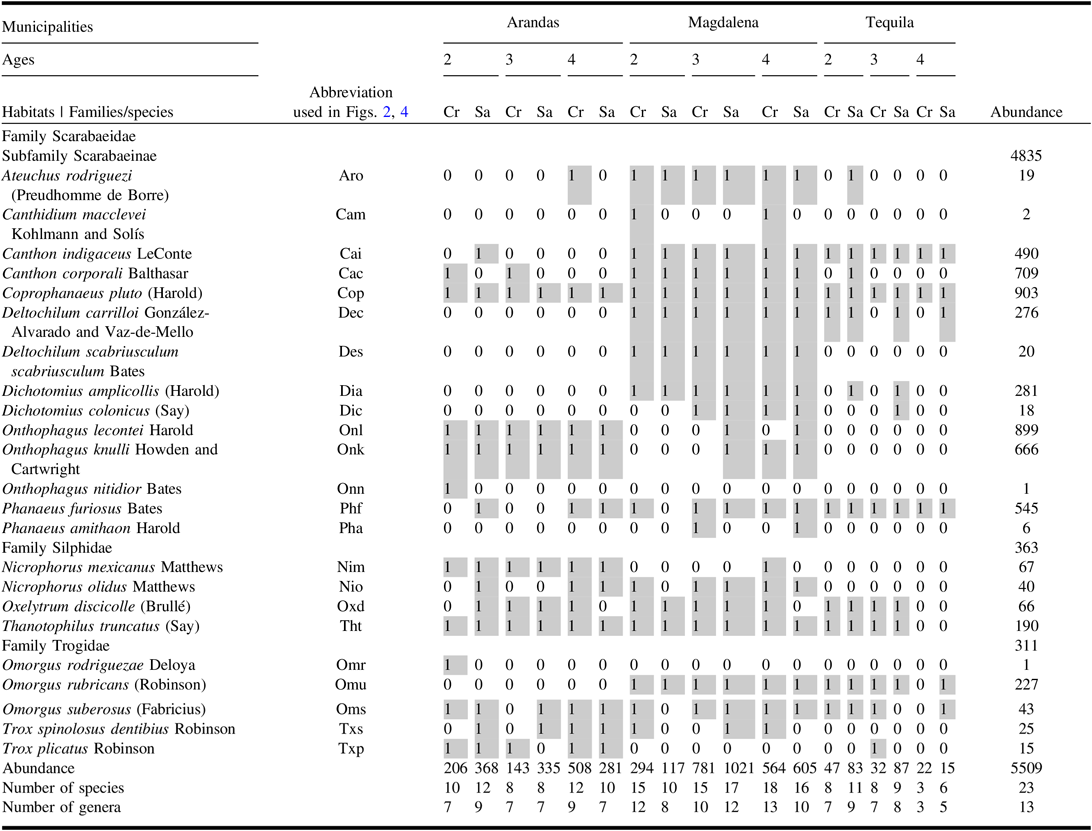
A total of 5509 individuals were collected during this study. The specimens represented 23 species (14 Scarabaeidae: Scarabeinae, four Silphidae, and five Trogidae). The most abundant species were Coprophanaeus pluto (Harold) with 903 individuals, followed by Onthophagus lecontei Harold, Canthon corporali Balthasar, and Onthophagus knulli Howden and Cartwright, each represented by 666–899 individuals. The less abundant species were Omorgus rodriguezae Deloya, Onthophagus nitidior Bates, Canthidium macclevei Kohlman and Solis, and Phanaeus amithaon Harold, each represented by less than six individuals. Only one individual was collected in Arandas of both Omorgus rodriguezae and Onthophagus nitidior (Table 2).
Richness and abundance of necrocolous beetles in 2–4-year-old Agave tequilana plots.
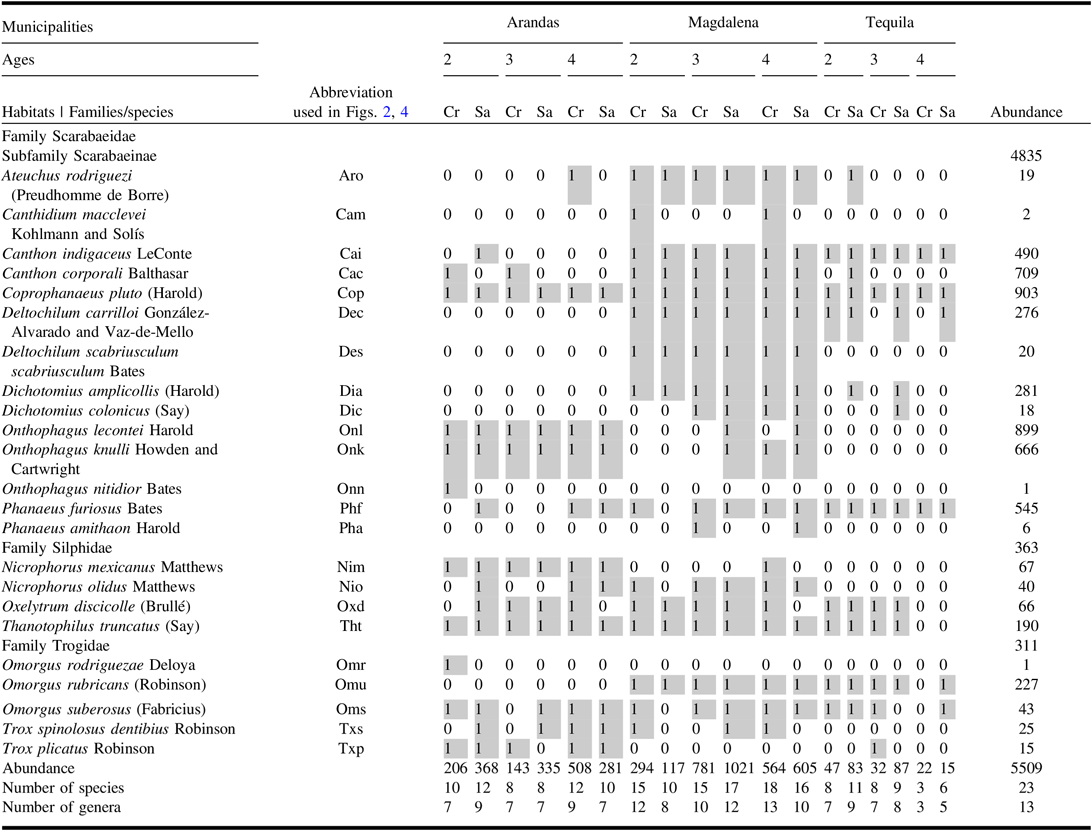
The age of crop in years indicated by numbers 2, 3, and 4; 1 with shading indicates the presence of species; and 0 without shading indicates the absence of species. Cr, crop; Sa, adjacent area.
Diversity and composition of beetles in Agave tequilana fields
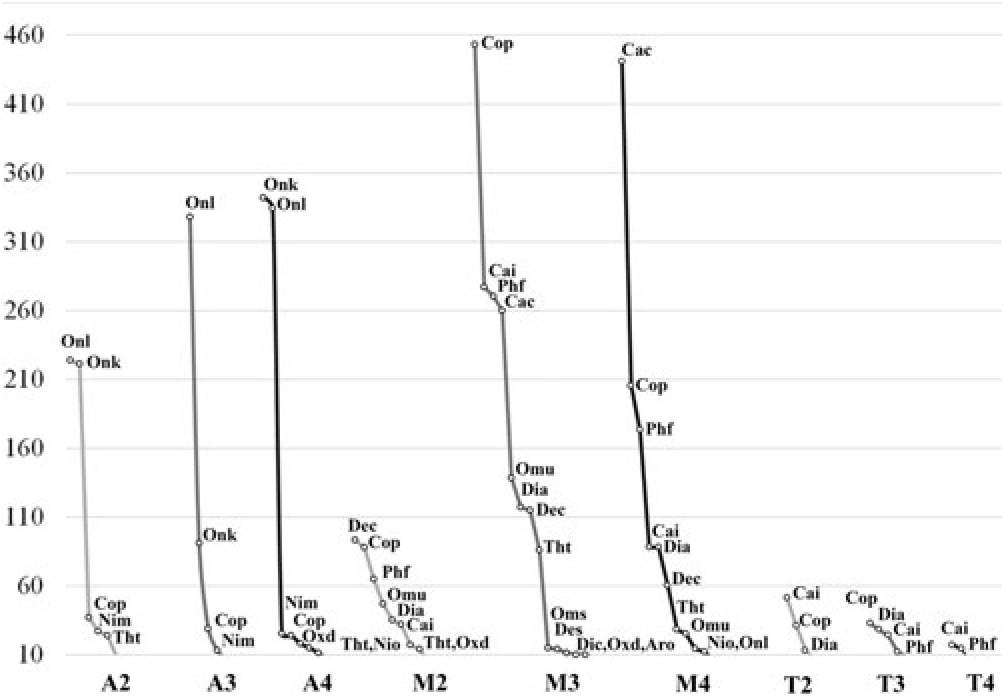
Species richness in A. tequilana fields ranged from 6–20, without a defined pattern in relation to the age of the crop. Whittaker curves (Fig. 2) show that abundance of Onthophagus lecontei in Arandas, and Canthon corporali in Magdalena, increased in relation to the age of the crop. In the case of Canthon indigaceus LeConte, at Tequila, the abundance decreased with the age of the crop. The most dominant species in the Arandas plots were Onthophagus lecontei and Onthophagus knulli; in the Tequila plots were Canthon indigaceus and Coprophanaeus pluto; and in Magdalena plots, dominance varied among three species – Deltochilum carrilloi González-Alvarado and Vaz-de-Mello, Coprophanaeus pluto, and Canthon corporali (Fig. 2).
Range abundance graph of necrocolous beetle species (with an abundance > 10 individuals). A2, M2, T2, two-year-old fields in Arandas, Magdalena, and Tequila, respectively; A3, M3, T3, three-year-old fields in Arandas, Magdalena, and Tequila, respectively; A4, M4, T4, four-year-old fields in Arandas, Magdalena, and Tequila, respectively. See Table 2 for species name abbreviations.

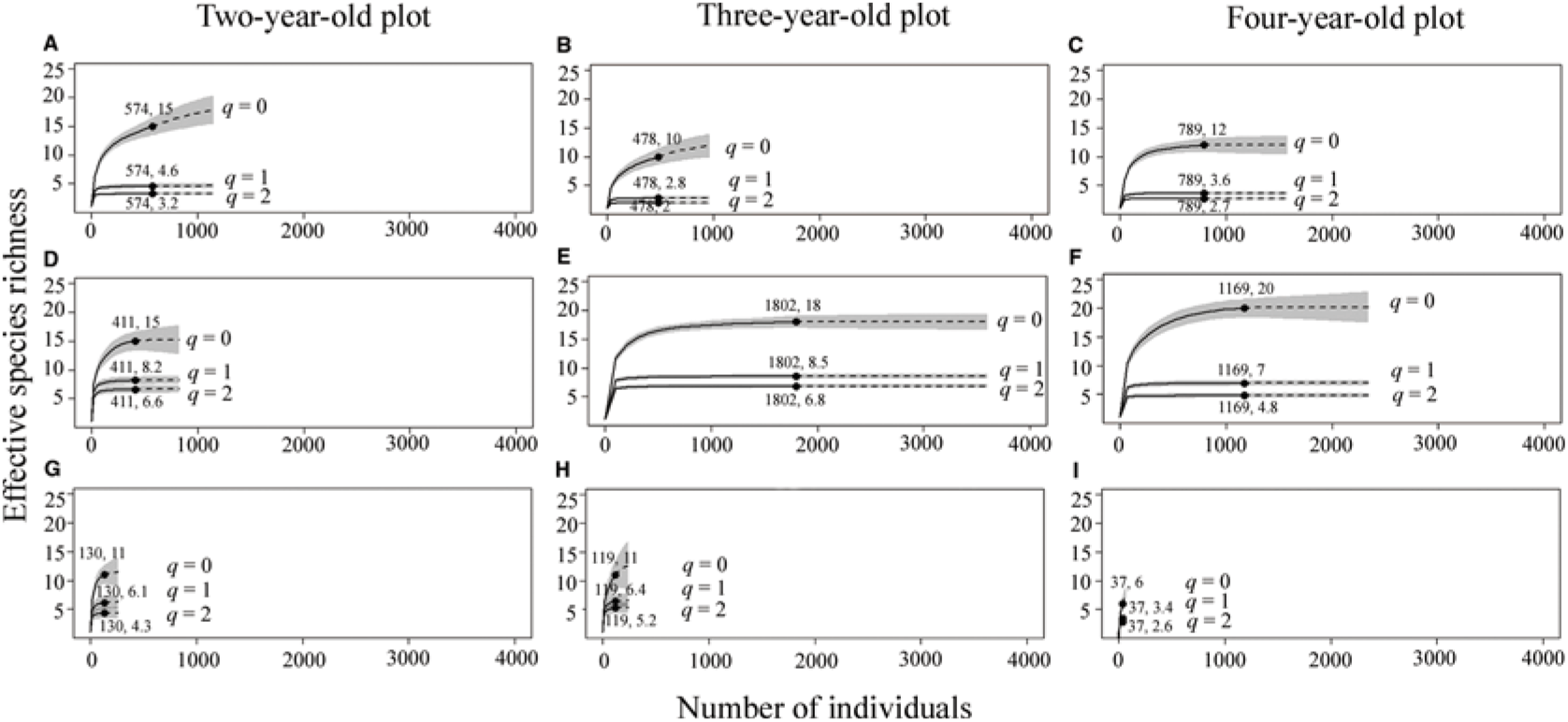
The fields in Magdalena were characterised by the highest species richness (q = 0) with 98%, 100%, and 99.2% species representation, for the 2–4-year-old fields, respectively. An additional species was predicted for the two-year-old and four-year-old plots. The fields with fewer species were those of Tequila with 96.2%, 86.8%, and 77.4% species representation, one or two species predicted, and 11, 11, and six species observed in the 2–4-year-old fields. In Arandas, the species representation was 83.7%, 84%, and 100%, of 18, 12, and 0 species predicted, and 15, 10, and 12 species observed in the 2–4-year-old fields, respectively (Fig. 3).
Size of the sample based on rarefaction (solid lines) and extrapolation (broken lines) of the diversity of species of each plot of Agave tequilana based on order Hill numbers q = 0, 1, 2. A–C, Arandas; D–F, Magdalena; G–I, Tequila. A solid point denotes the reference sample in each plot of A. tequilana.

The beetle composition among municipalities was relatively high and similar (F = 1.83, P = 0.19), with 65.6% on average. Statistically significant differences were found throughout the sampling months (H = 10.56, P = 0.005), in abundance and the age of the crops (F = 8.62, P = 0.005). We observed the highest abundance and number of species in the rainy season (June and July) and a gradual decline until the last collection period (October and November).
The Magdalena fields were characterised by the highest diversity and abundance (20 species, 3382 individuals), followed by the plots in Arandas (16 species, 1841 individuals) and Tequila (13 species, 286 individuals).
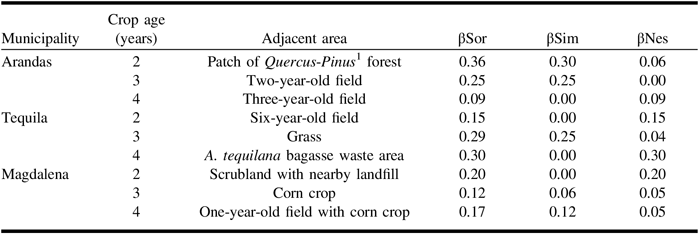
The beta diversity consisted of species replacement (βSim) and nesting (βNes) components in the plots of A. tequilana, and it became clear that the processes underlying these beta diversity values are different (Table 3). The differences in beta diversity values between Tequila and Arandas (βSor = 0.31), as well as between Magdalena and Arandas (βSor = 0.22), may be explained by the replacement of species (βSim = 0.23, 0.12), while the assemblage nesting (βNes = 0.19) may be explained by the Magdalena–Tequila difference (βSor = 0.27).
Beta diversity for 2–4-year-old Agave tequilana crops and type of adjacent areas.

1 Quercus Linnaeus (Fagaceae), Pinus Linnaeus (Pinaceae).
βSor, beta diversity; βSim, species replacement; βNes, nesting.
Beetle assemblage correlations and environmental conditions
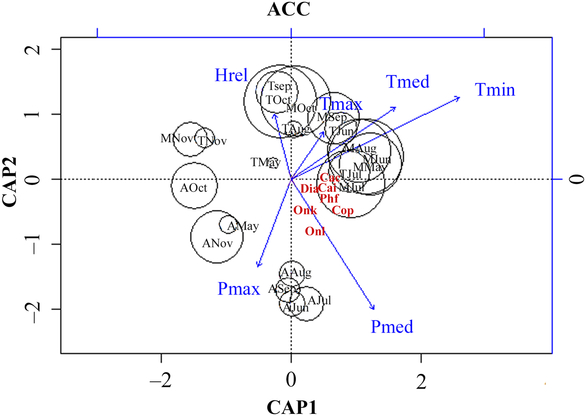
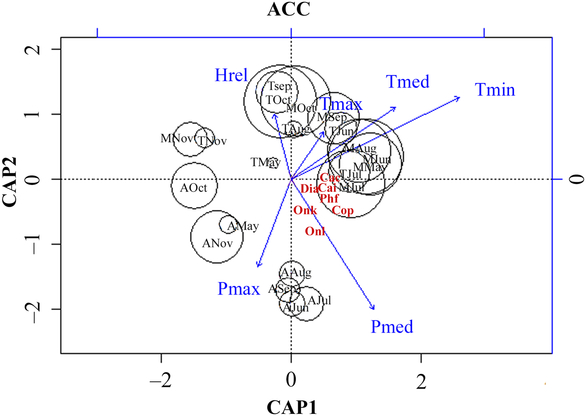
The results of the principal component analysis showed that the two principal axes explained 99% of the variability. For the three municipalities, the historical precipitation indicated the rainiest months (June–August), the historical temperature of the driest months (May, October, and November), and the month of September was highly correlated with humidity. The analysis of the principal coordinates showed a significant correlation between the beetle assemblage structure and environmental conditions by municipality (P < 0.001, Fig. 4). Precipitation and temperature components (minimum, maximum, and average) explained the beetle assemblage variability in Arandas, Magdalena, and Tequila municipalities, respectively. The species characteristics of local assemblages associated with precipitation included Onthophagus lecontei and O. knulli, which were dominant in Arandas with 886 and 654 individuals. The species correlated with temperature included Canthon corporali and Canthon indigaceus, which were abundant in Magdalena with 704 and 397 individuals, respectively. In Tequila, Canthon indigaceus was a dominant species represented by 92 individuals (Figs. 2, 4).
Graph of the coordinate analysis. The size of the circles represents the abundance of the assemblage; the red letters are the species (see Table 2 for species name abbreviations); most of the species clustered around the centre and are not shown. The species shown are those that present a different tendency; the first letter indicates the initial of the municipality with months. A, Arandas municipality; M, Magdalena municipality; T, Tequila municipality; Hre, relative humidity; Tmin, minimum temperature; Tmed, medium temperature; Tmax, maximum temperature; Pmed, average rainfall; Pmax, maximum rainfall.
Overall, 61% of the species collected had Neotropical distributional affinities, 30% had Paleoamerican distributional affinities (as defined by Halffter Reference Halffter1987; Halffter and Morrone Reference Halffter and Morrone2017), and the remaining 9% had Nearctic distributional affinities. However, in the municipalities sampled, 86% of the species collected in Arandas had Paleoamerican affinities, while 88% of the species captured in Tequila and Magdalena had Neotropical affinities.
Discussion
The diversity of necrocolous beetles in 2–4-year-old A. tequilana fields is adequately described in this study. Therefore, the comparisons of diversity and composition presented here allow us to discuss several important factors relevant to the responses of these beetle communities to different agronomic management practices and environmental conditions prevalent in the sites.
The composition, abundance, and diversity of beetles captured in A. tequilana fields were different from those found in sites with similar climatic conditions, but representing different land usage. For instance, 60% of the necrocolous beetle genera in a silvopastoral location in Los Altos, Jalisco region (Hernández and Navarrete-Heredia Reference Hernández and Navarrete-Heredia2018), were represented by only one species. The A. tequilana fields were characterised by a low generic and tribal diversity, with 38% of the genera collected represented only by one species; and most of its specific diversity occurred in the genera represented by two or three species. This indicates that the diversity in A. tequilana fields was quantitatively and qualitatively low, with fewer tribal and generic lineages (Table 2) than recorded on the coastal plains of Soconusco, Chiapas, where the forest has been replaced by pastures, cotton (Gossypium Linnaeus; Malvaceae) fields, and corn fields. The necrocolous beetle species there were different in terms of diversity, composition, and abundance (Móron Reference Morón1987).
Samples from all the municipalities studied were characterised by a lower diversity than those from natural and silvopastoral habitats. Natural vegetation was replaced by agricultural crops, causing necrocolous beetle communities to respond in several ways. Species replacement occurred in different municipalities, and was affiliated with species distributional affinities, which resulted in differences in species composition and high complementary values between the municipalities of Los Altos (Arandas) and Valley (Magdalena and Tequila) regions throughout the year. For example, in Arandas, the Neotropical distributional affinities (eight species, 148 individuals) had the tendency to be less abundant than the Paleoamerican distributional affinities (six species, 1582 individuals). In contrast, in Magdalena and Tequila, Neotropical distributional affinities (13 species, 2979 individuals; nine species, 249 individuals, respectively) dominated over Paleoamerican distribution affinities (four species, 60 individuals; two species, seven individuals, respectively). These results indicate that distribution affinities, typically Neotropical, increased in municipalities at lower elevations, possibly due to different vertical and horizontal colonisation processes (Escobar et al. Reference Escobar, Lobo and Halffter2006; Barragán et al. Reference Barragán, Moreno, Escobar, Bueno-Villegas and Halffter2014; Moctezuma et al. Reference Moctezuma, Halffter and Escobar2016; Arriaga-Jiménez et al. Reference Arriaga-Jiménez, Rös and Halffter2018), resulting from drastically different geological processes that the region had undergone. Nearctic distributional affinities did not show marked differences among the regions, because their representative beetle species, such as Nicrophorous mexicanus Matthews and Thanotophilus truncatus (Say), are widely distributed elevationally (Navarrete-Heredia Reference Navarrete-Heredia2009).
Neotropical genera – Canthon Hoffmannsegg, Coprophanaeus D’Olsoufieff, and Phaneus MacLeay (Coleoptera: Scarabaeidae: Scarabaeinae) – were dominant in Tequila and Magdalena plantations (Fig. 2). The species of these genera are resistant to high levels of insolations (Halffter et al. Reference Halffter, Favila and Halffter1992; Rivera-Cervantes and Halffter Reference Rivera-Cervantes and Halffter1999); for this reason these were abundant in Tequila and Magdalena where the temperature regulated beetle assemblage variability (Fig. 4). The species of the genus Onthopaghus Latreille with Paleoamerican distributional affinities (Hernández and Navarrete-Heredia Reference Hernández and Navarrete-Heredia2018) were dominant in Arandas (Fig. 2) because of the elevation, species distributional affinity, and the montane component. It is also possible that the beetle assemblage was influenced in these plots by precipitation, moist soils (Fig. 4), and the burrowing habits of the species.
The relative abundance of scarabs (Scarabaeidae: Scarabaeinae) decreased to less than 85%, while that of burying beetles (Silphidae) and trogids (Trogidae) increased in the two-year-old and three-year-old fields, which were close to grasses, shrubs, and small forest fragments (Fig. 1). Neither trogids nor burying beetle individuals were captured in the four-year-old plot in Tequila, possibly because this site was harvested during the last two months of the sampling period. Except for Tequila municipality, where the four-year-old field had the highest beta diversity (βSor), the two-year-old plot and adjacent areas in Arandas and Magdalena municipalities had the highest beta diversity values (βSor). It is possible that harvesting at the Tequila fields promoted the exchange of species found in the site and its adjacent areas (Table 3). Species replacements were correlated with beta diversity in the fields with corn crops, grass, or small forest patches around bordering areas, while nesting was correlated with beta diversity in plantations where adjacent areas included A. tequilana fields of different ages or considerably disturbed zones, such as the scrubland near the landfill (Fig. 1; Table 3).
It is possible that noticeable differences in beetle diversity observed among the fields within the municipalities were due to differences in agronomic practices (Table 1) and the type of habitats adjacent to the plots (Fig. 1). For example, in Magdalena, the forest areas adjacent to the sites and vegetation between agave furrows could have provided shelter and resources for the food and reproduction needs of the beetles (e.g., faeces, mammal carrion). Thus, beetle composition there had a high frequency of species replacement among the plots (Table 3), high richness (q = 0: 15–20), diversity (q = 1: 7.0–8.5), and evenness (q = 2: 4.8–6.8). This is in contrast to the other plots of Arandas and Tequila, where agrochemicals have been applied. In Arandas, there were forest patches bordering the fields, but the use of herbicides and insecticides was common, and there was little vegetation between the furrows. Beetle composition richness (q = 0: 10–15), diversity (q = 1: 3.6–4.6), and evenness (q = 2: 2.0–3.2) were lower there than found in Magdalena. The highest species replacement occurred among the fields and forest patches (Table 3). In Tequila, the plots were mostly bordering urban areas where vegetation between furrows was almost non-existent because of occasional grazing by horses (Equus ferus Boddaert; Perissodactyla: Equidae) and goats (Capra aegagrus Erxleben; Artiodactyla: Bovidae) and due to applied insecticides. Therefore, richness (q = 0: 6–11) was lower than in other municipalities (q = 0: 6–11), but diversity (q = 1: 3.4–6.4) and beetle composition evenness (q = 2: 2.6–5.2) did not decrease as in Arandas (Fig. 3).
Ateuchus Weber, Canthidium Erichson, Canthon, Dichotomius Hope, Onthophagus, and Phanaeus species were frequently found in/on dung, but many species have adopted to a variety of foods. The species of Phanaeus and Canthon examined were attracted to carrion traps but could also be detritivorous, depending on the availability of resources (Halffter and Halffter Reference Halffter and Halffter2009). It is interesting to note that dung was rarely observed in the studied plots.
The high beta diversity observed in the two-year-old A. tequilana plots in Magdalena and Arandas, as well as its adjacent areas (Table 3), may be attributed to the exchange of species in the genus Canthon (Halffter et al. Reference Halffter, Favila and Halffter1992) and Onthophagus (Trujillo-Miranda et al. Reference Trujillo-Miranda, Carrillo-Ruiz, Rivas-Arancibia and Andrés-Hernández2016). Both genera have an affinity towards open areas and light incidence conditions, occurring in the furrows of Magdalena and Arandas plantations. However, the high beta diversity found in the four-year-old Tequila field and bordering areas was due to the displacement of species caused by harvesting. The same factors may explain why there is a higher species replacement (Table 3) among A. tequilana fields and adjacent areas with corn, grass, and small forest patches (Fig. 1), These adjacent areas offered more stable resources of diversity (“islands” of more stable biodiversity), and provided shelter to the species strongly affected by crop agronomic management practices in A. tequilana fields.
The diversity of necrocolous beetles in A. tequilana fields depends mainly on species distributional affinities, geographic location, environmental conditions (temperature, humidity, precipitation), and local crop management practices that influence the community composition in A. tequilana-producing regions. The negative effects of intensive crop management practices in Agave tequilana plots on the diversity of necrocolous beetles are shown in Figs. 1–2, and Table 1. In support of the conservation of biodiversity, it is important to moderate or completely reduce the usage of agrochemicals in order to preserve or enhance the presence of weeds and natural forests between the plots and adjacent areas. When these conditions are not well balanced, it impacts the diversity and abundance of beetle communities, possibly reducing their functional capacity of environmental services, as pointed out by Nichols et al. (Reference Nichols, Larsen, Spector, Davis, Escobar and Favila2007) for other modified habitats.
For biodiversity conservation, it is essential to implement strategies to converse A. tequilana-producing regions, and to diagnose, programme, and regulate agronomic management in order to protect the diversity and ecosystem services of beetles. It is important to consider not only reducing agrochemicals usage but also the protection of forest patches and secondary vegetation adjacent to A. tequilana crops (Estrada and Coates-Estrada Reference Estrada and Coates-Estrada2002). The plants between the furrows and around A. tequilana fields can act as important reservoirs of regional biodiversity, and it enhances beetle diversity in the A. tequilana crop of the entire region.
Conserving the diversity of necrocolous beetles in A. tequilana crops is an important aspect of biodiversity conservation in general. Any attempt to improve crop management, as discussed above, to maximise the biodiversity is a positive aspect, which may contribute to a greater social acceptance of crop production. Necrocolous beetles may be considered an indicator of a healthy or unhealthy system of Agave production. Additional research is needed on the values of indicator species for biodiversity conservation.
Acknowledgements
The authors thank the National Council of Science and Technology (CONACYT), Mexico, for the postgraduate fellowship 554194/300885 and the Ph.D. programme in Biosystematic, Ecology, and Management of Natural and Agricultural Resources (BEMARENA) of the University of Guadalajara. We appreciate assistance of the campaign against the regulated pest of Agave tequilana (Servicio Nacional de Sanidad, Inocuidad y Calidad Agroalimentaria-Consejo Regulador del Tequila A.C.) for logistical support in this study. We thank Adolfo Schalk Quintanar, Victor A. Arámbula Guzman, Emmanuel Bugarín, and Hugo Mercado Contreras for their field support and Dr. Benjemín Hernández for his taxonomic comments. Special thanks to the agave field owners (Destiladores Sierra Unidos, Tequila Los Abuelos and Productores de Agave tequilero) for allowing us to conduct this research on their farms. Dr. Salvador García translated the first Spanish draft of the manuscript into English, and Alvaro Machado of Calgary, Alberta, Canada, made corrections to the Canadian/British spellings. The first author is grateful to the Rodriguez family (Colombia) and Moreno Jiménez family (Mexico) for their support during this investigation. We thank the two anonymous reviewers for their comments.