Introduction
The Reference Library and Archives at the Yale Center for British Art (YCBA) houses a photo archive of nearly 140,000 black and white photos of British works of art from collections around the world, both public and private. In its heyday in the mid-1980s, there were three dedicated photo cataloguers who added nearly 10,000 photographs to the collection each year. Historically a unique and important visual tool for art historians, the growing ubiquity of art images online precipitated a swift descent into relative obscurity for many photo archive collections. The Center's collection had no digital visual component and suffered grievously with the explosion of the internet. When I started at the Center in 2005 the cataloguers had been re-assigned and no new photos were being acquired for the archive. Use of the photo archives by Center staff had slowed to a trickle of diehards – most students didn't know it existed and those that did had no concept of how it could be used.
YCBA and PHAROS
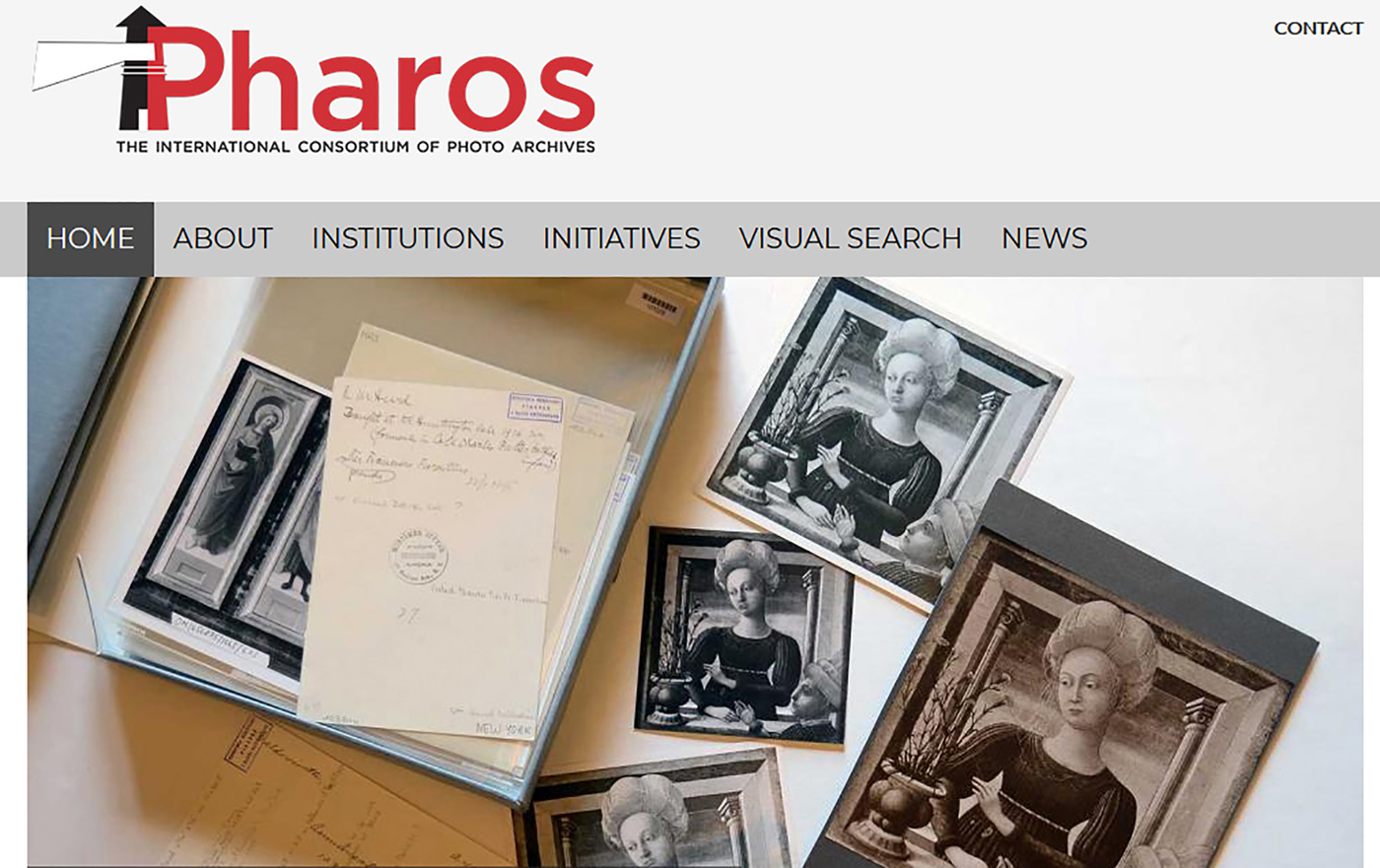
In 2013 the YCBA came together with 13 international institutions and formed a consortium of photo archives dedicated to reinventing how these collections could be used in art historical research. The group (called PHAROS) recognized the inherent importance of these collections as well as the opportunity in an online and linked data environment to greatly enhance discovery and to facilitate research. In the wake of the Center's unveiling of its policy of open access to images and information, the YCBA began a project to digitise the photo archive collection of 140,000 images, marrying hi-resolution images and rich metadata records with the goal to make them available to the widest possible swath of users and uses. In conjunction with the main tenets of PHAROS, access to these images would be free of charge and discovery and wider connections would be augmented by linked open data.
London
In December of 2017 I bundled up and headed to chilly London just as Christmas decorations were going up on Oxford Street and throughout London. My fellowship was centred at the Courtauld where the staff of the Digital Media Department was endlessly patient with my questions and always ready to include me in meetings and events at the institute. My space in the beautiful Somerset House was amongst the Digital Media staff of the Courtauld who were tasked with digitizing the entire Witt and Conway Photographic collections, as well as other collections of the museum.
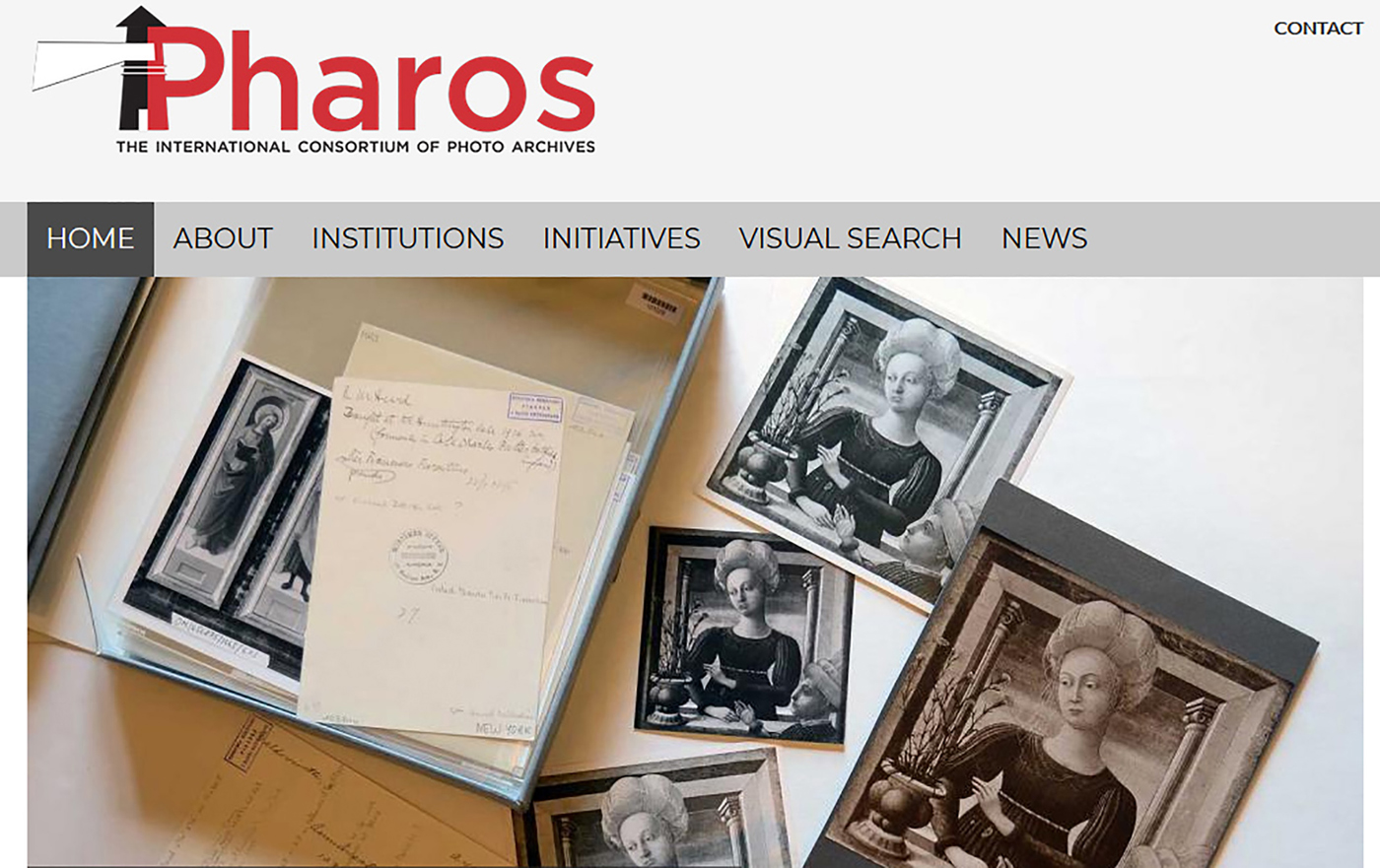
PHAROS website. Screenshot capture by the author.
Along with my time at the Courtauld Institute, I visited the Paul Mellon Centre, the National Gallery, the National Portrait Gallery, the Royal Academy, and the Chelsea College of Arts, University of London. I formulated a set of questions that I posed to the keepers of London art library collections to help me to understand the current state of individual photo collections, how they are used and how they might be used: who are the users of your collections? How are students and staff introduced to the them? How is collection development performed? Has the collection undergone collection analysis? What types of bibliographic instruction do you undertake? And many more along those lines. I wanted to create a snapshot of several London art libraries but to also be able to extrapolate those findings to some conclusions about the current field of photo archives in London and in general.
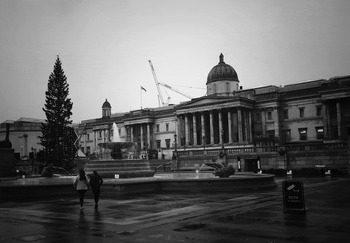
The National Gallery, London, December 2017. Photo by the author.

There were three larger concepts that all the questions orbit around:
A. The current state and use of the photo archives; B. The future and potential use of photo archives; and; C. How are photo archives understood institutionally – how are they discovered?
By looking at these three central ideas through the lens of several of the most important art libraries in London I hoped to more fully understand the ingrained and changing perceptions of photo archives and visual collections.
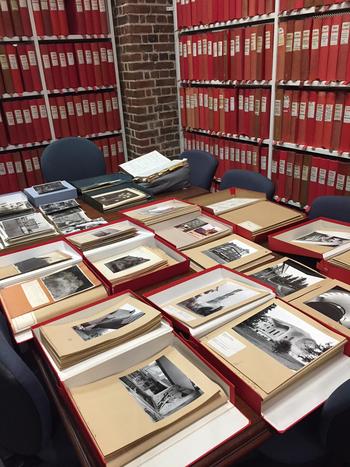
Conway Collection, Courtauld Institute of Art, London. Photo by the author.
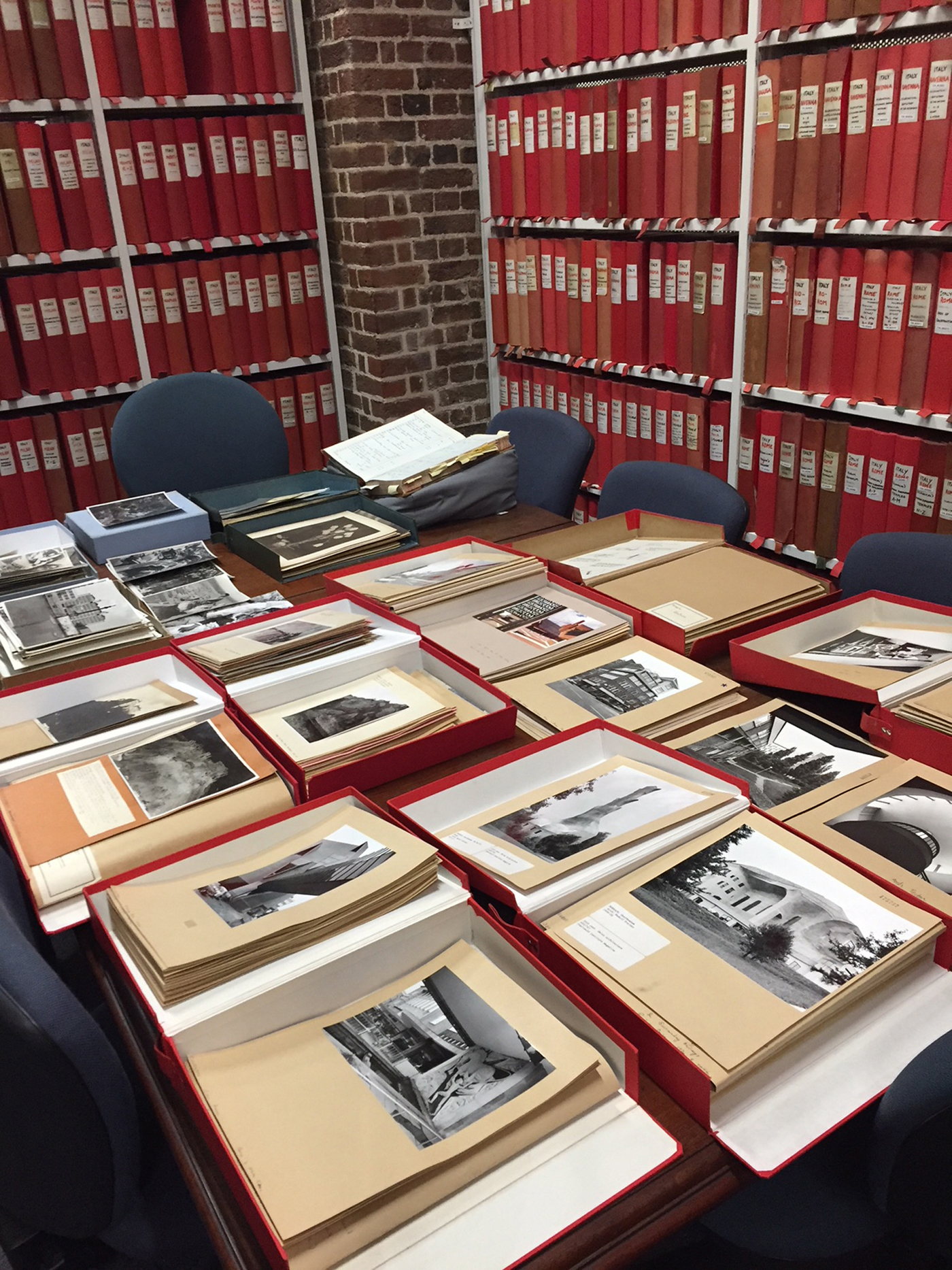
What is the current state and use of the photo archives? —or— ‘Does anyone really comb through these dusty boxes’?
I found that this varied widely from institution to institution. Not surprisingly, those collections that are leaders in the field (the Courtauld's Witt and Conway collections, comprising over 3 million images, and the NPG's Heinze Archive and Library, with its renowned sitter and artist boxes as well as its 240,000 photographs) are still used regularly by a variety of researchers and scholars. Also, not surprisingly, the use of these collections has diminished in recent decades and indeed, those institutions with smaller and more focused photo archive collections have found that the use of these collections has stagnated. Interestingly, the Paul Mellon Centre's collection is growing, having added the Tate's Photographic Archive to its own unique collections. The very fact that the scholars at the Tate decided that their archive was not worth keeping, let alone updating, speaks volumes to how contemporary curators and scholars have come to view these collections.
Most of the photo archive collections I visited are no longer growing and the staff dedicated to them has been reduced drastically. The largest and most established collections still have dedicated users, but where these collections were once the research grounds of scholars and art historians it is now art dealers and commercial interests that constitute a significant segment of the patron group.
Who are the future and potential users of the photo archives? —or— ‘Will anyone ever open these dusty boxes again’?
Thinking about current and future users of these photo archive collections puts them in stark relief to their past users. Photo archives have a celebrated history as the earliest methods for art historians to study faithful (so it was thought) reproductions of paintings in far flung collections and on different continents. The use of the emerging field of photography to document works of art was a landmark moment in art history and photography would forever be interwoven into the fabric of art history's development as a discipline in the second half of the 19th century. As early as 1873 the renowned art historian Wilhelm Lübke wrote in the journal Kunstchronik (9):
‘To no technical aid of the present time is art history so indebted as it is to photography. It was really photography that first enabled us to conduct comparative studies with a security no longer influenced by changing subjective moods, lighting, time of day, and site of conservation’.
Importantly, photography had taken the hand of the artist out of the study of art history. That is, the hand of the engraver or painter who created copies of art was no longer needed to interpret them visually. Photographic reproductions of works of art held the promise of veracity and evidence – they were seen as the reproduction of reality able to provide an ‘objective’ facsimile of the original. Certainly now, the objective nature of photographs is no longer assumed, and digital images online, easily manipulated with simple software, have not made this issue any clearer.
Today, photo archives are not used for memory aids or as comparisons for art historians – they are simply no longer needed in that way. Interestingly though, it is precisely the nature of photographs as a snapshot in time, as a fixed point from which history unfolds backwards and forward in time before and after the shutter opens, that imbues photo archives with much of their current worth. However, photograph archives today are often seen as a distant memory of art history as it was once practiced, a quaint trip back in time to connoisseurship but no longer a vital tool in today's research.
The Courtauld, however, is envisioning new generations of researchers of all types and is developing tools and programs to not only aid users but to also attract them. Visual searching, in which the user starts with an image (instead of words) that is matched against the institution's collection and to open source libraries will be a facet of searching their photo archives. In the near future, a roving digitisation studio (in a truck) will bring parts of the Conway Collection of architectural photos to regional locations to engage local groups interested in photography, history, and/or architecture. The historical uses of the collections are not being neglected – digital access will also replicate how photo boxes were accessed in person (i.e. physically pulled from the shelf). This preserves the original context of the collection and nods to the historical uses of photo archives.
The Paul Mellon Centre, dealing with a smaller, though very rich collection, is grappling with the issues surrounding providing access to images from private collections – indispensable and often hidden resources in the field. The PMC is also thinking about the possibilities of automatic connections between photos, artists, works of art and collections, in a linked open data environment and in an online space that facilitates coordinated research of many collections.
‘How are photo archives understood institutionally’? —or— ‘Are these things important at all’?
The evidence that photo archives retain importance to the field is manifest in the myriad of ways in which art libraries teach its users about these collections: as part of bibliographic instruction for staff members; as a component of ‘onboarding’, ‘induction’ or ‘welcome days’ for new institutional staff; the photo archives are often included in orientations for visiting scholars and fellows. The National Portrait Gallery has plans to include all or portions of their visual collections in the public access version of the library's catalogue and to even integrate user's searches across different portions of the institution (archives, library, museum collections). Photo archive collections are often now included in general and very specific orientations for students and classes, and the NPG has specific orientation sessions for their sitter boxes and participates in a ‘history day’ that connects researchers with the public. For most institutions, the users of these collections still have a wide range of motivations but there is real new potential for art historians, historians of all types, and the general public. It is the potential for new uses in a digital environment that really makes these collections poised to again reinvent how art historical scholarship is conducted.
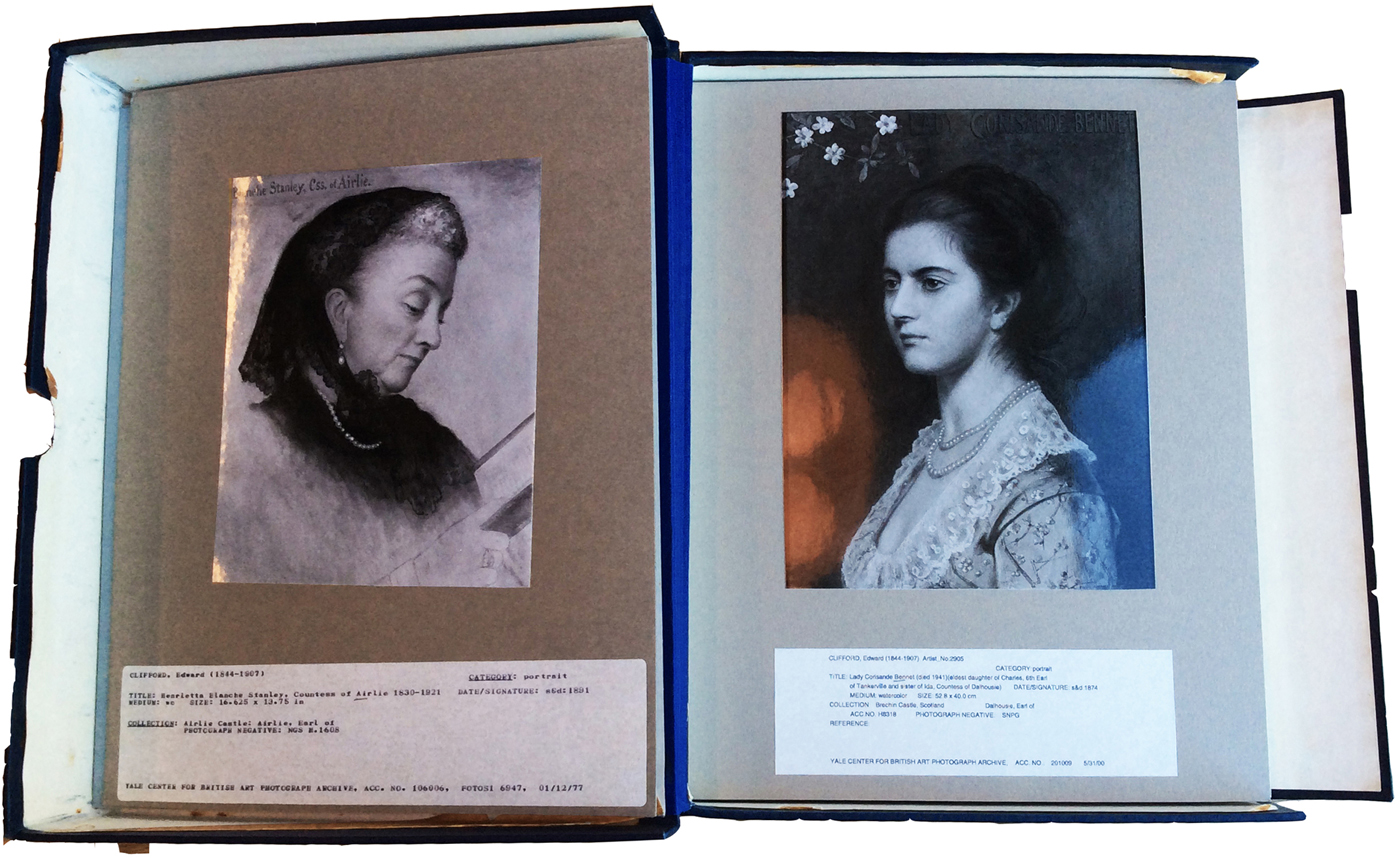
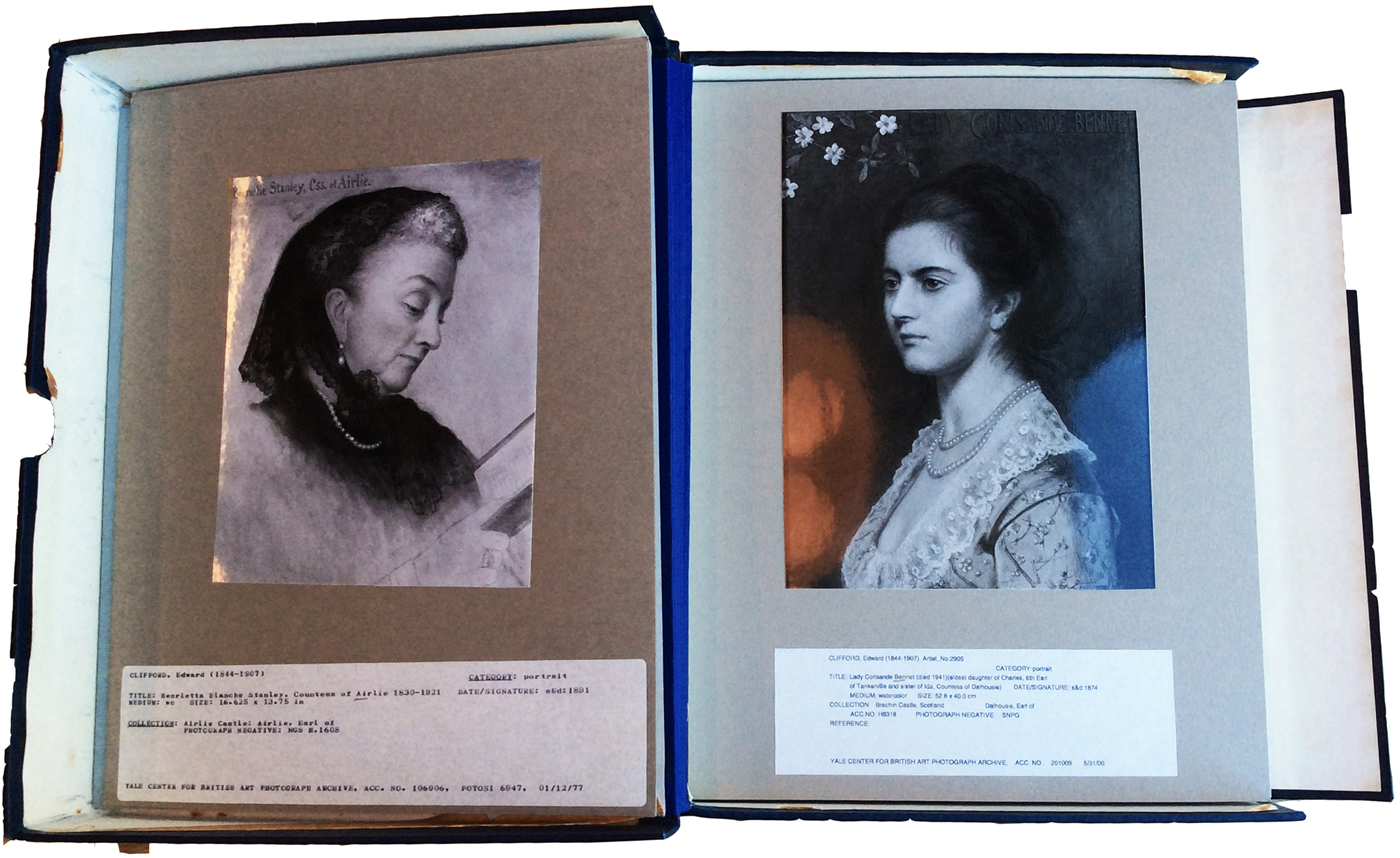
Photo Archive box from the Yale Center for British Art. Photo by the author.
Conclusions
There is remarkable work being done in London art libraries to anticipate new users and new uses of photo archives, and to aid digital scholarship. None of the photo collections I visited have nearly the same staff levels that they enjoyed in their heyday – the research, planning and implementation of projects is achieved on shoe-string budgets with skeletal staff. The art institutions in London are some of the oldest and most significant in the world and their attendant libraries are steeped in traditions that make change and innovation difficult. However, I am greatly encouraged by the efforts of art libraries large and small to meet the evolving needs of their students and researchers, often in the digital realm. Digitising photo archives and visual collections will not automatically make them more useful. But digitisation in conjunction with strong efforts to maximise discovery and to unlock potential connections starts to open the potential of these collections: visual searching, exposure of the collections to new groups, adopting linked open data protocols and the integration of these collections within a research space outside of institutional silos are all key. There are certainly challenges – art libraries have been facing staffing and budgetary challenges almost as long as they have existed, and this type of work takes dedication and commitment from the institution. But most would probably agree that the potential for impacting future scholars to this extent doesn't happen every day. The search for ever more veracity in reproductions created a close relationship between photography and art history, and now changing notions of the photographs themselves coupled with digital tools, and online connections and discovery, are on the verge of reinventing photo archives for new generations of users.