


‘The mobile industry changed Africa. I must admit we were not smart enough to foresee that. What we saw was a real need for telecommunication in Africa, and that need had not been fulfilled. For me that was a business project.” Mo Ibrahim, as quoted by Livingston (Reference Livingston2011, 10).
This quote from Mo Ibrahim, a Sudanese-born cell phone magnate, exemplifies the increasing influence new media technologies have in Africa. During the recent events of the Arab Spring, cell phones and other new media technologies have worked as catalysts for political collective action (Aday et al. Reference Aday, Henry, Marc, John and Freelon2012; Breuer, Landman, and Farquhar 2012). While many commentators describe the effect of modern communication technologies on political action, social scientific research is only slowly catching up (but see, for example, Aday et al. Reference Aday, Henry, Marc, John and Freelon2012; Breuer, Landman, and Farquhar 2012; Shirky Reference Shirky2008). In this article we ask whether modern communication technology has affected political collective action in Africa. Specifically we ask if the rapid spread of cell phone technology has increased organized and violent forms of collective action.
We focus on the connection between communication technology and violent, organized forms of collective action for several reasons. While scholars in economics and other fields have been concerned with the beneficial effects of cell phones for various development outcomes (Abraham Reference Abraham2007; Aker Reference Aker2010; Aker, Ksoll, and Lybbert Reference Aker, Ksoll and Lybbert2012; Aker and Mbiti Reference Aker and Mbiti2010), the implications of increased cell phone communication are much less clear when it comes to politics.Footnote 1 The existing discussion in political science on new media and collective action is rather qualitative and lacks a specific focus on cell phones and their relationship to political violence.Footnote 2 Much of this literature stresses the possible positive effects of new media and technology for democracy, transparency, and accountability. While the quick and cheap spread of communication technology can improve political accountability through various mechanisms, private communication technology (and cell phones specifically) may also facilitate organized violence.
The vast literature on civil conflict onset and duration has explored structural determinants such as economic development, growth shocks, natural resources, elections, ethnic diversity, and political exclusion (see, for example, Cederman, Weidmann, and Gleditsch Reference Cederman, Weidmann and Gleditsch2011; Collier and Hoeffler Reference Collier, Hoeffler, Sandler and Hartley2007; Collier et al. Reference Collier, Elliott, Hegre, Hoeffler, Reynal-Querol and Sambanis2003; Fearon, Kasar, and Laitin Reference Fearon, Kasara and Laitin2007; Fearon and Laitin Reference Fearon and Laitin2003; Metternich Reference Metternich2011; Ross Reference Ross2006; Sambanis Reference Sambanis2002; Weidmann Reference Weidmann2009; Wucherpfennig et al. Reference Wucherpfennig, Metternich, Cederman and Gleditsch2012). A smaller, but growing, body of research has investigated important factors at the individual and group level (Blattman Reference Blattman2009; Weinstein Reference Weinstein2007; Wood Reference Wood2003). On the other hand, little explicit attention has been given to the role of technology in facilitating violence. While some recent studies analyze the potential effects of mass media, like television and radio broadcasting (Warren Reference Warren2013; Yanagizawa-Drott Reference Yanagizawa-Drott2012), hardly any empirical research deals with individual-to-individual communication.Footnote 3
We argue that private, mobile long-distance communication addresses crucial free-rider and coordination problems endemic to insurgent activity. Similar to other organizational technologies (Weinstein Reference Weinstein2007), cell phones facilitate in-group organization and the implementation of insurgent activity against the greater power of the state. Given the motivation and opportunity for political violence through structural context conditions, cell phone coverage, ceteris paribus, should then increase the likelihood of violent collective action.
To test this proposition we use highly spatially disaggregated data on cell phone coverage and violent conflict in Africa. Today, Africa is the largest growing cell phone market in the world, with yearly growth rates of around 20% and an estimated 732 million subscribers in 2012 (The Economist 2012). What makes Africa special in this context is that cell phones not only provide a new way for communication, but in many areas are the only way for interpersonal, direct communication over distance. Many areas that are now covered by cell phone networks were never connected to land lines. At the same time, Africa is host to a large number of active or simmering civil conflicts (The World Bank 2011), often in areas with newly expanded access to cell phone technology. This directly poses the question: how does the introduction of easy interpersonal communication affect the incidence of organized violence on the continent?
We match proprietary data from the GSM Association (GSMA), an interest group of cell phone providers, on the spatial extent of GSM2 network coverage on the African continent and conflict events from the UCDP Georeferenced Event Dataset (Melander and Sundberg Reference Melander and Sundberg2011; Sundberg, Lindgren, and Padskocimaite Reference Sundberg, Lindgren and Padskocimaite2011) to a lattice of 55 km × 55 km grid cells in Africa (PRIO-GRID), created by the Peace Research Institute Oslo (PRIO) (Tollefsen, Strand, and Buhaug Reference Tollefsen, Strand and Buhaug2012).
We then implement three complementary estimation strategies to assess the potential effect of cell phone coverage on violent collective action. First, we exploit spatial variation in conflict and cell phone coverage by estimating a series of statistical models and adjusting for important covariates using cross-sectional data. Second, to safeguard against reverse causality and to improve the identification of a causal effect, we rely on an instrumental variable strategy. Prior research on the spread of cell phone technology in Africa has established the importance of regulatory quality and competitive private markets (Buys, Dasgupta, and Thomas Reference Buys, Dasgupta and Thomas2009), which we use as an instrument for the extent of cell phone coverage. Third, we expand our analysis to a three-year panel of grid cells to exploit variation in cell phone coverage over time, controlling for any grid-level time-invariant factors.
We are able to document a clear positive and statistically significant effect of cell phone coverage on violent collective action across all three approaches. In other words, modern means of private long-distance communication not only have economic benefits, but also facilitate overcoming collective action and coordination problems in the political realm. Under specific structural context conditions this translates to more organized violence.
This finding carries meaningful implications for research on civil conflict and collective action more generally. Our research indicates the importance of technological shifts for organized violence and calls for further research on the role of modern communication technology for both enabling and curbing violence. Echoing the findings of research on civil society (Berman Reference Berman1997), we find that improvements in the ability to organize collective action do not automatically produce purely beneficial effects for overall society. Rather they empower political agents and groups more generally, which can raise the human costs of political struggles.
CELL PHONES AND COLLECTIVE ACTION
Given the breathtaking spread of cell phone technology worldwide and the particularly fast expansion on the African continent, citizens across many regimes have vastly improved means for private, direct, and immediate long-distance communication. The availability of cell phone technology and networks to citizens in some of the poorest regions in the world has been lauded as an important transformative force for economic development. In particular, the decrease in communication costs associated with the rising availability of cell phones has been linked to a boost in labor and consumer market efficiency (Abraham Reference Abraham2007; Aker Reference Aker2010; Aker and Mbiti Reference Aker and Mbiti2010). This research emphasizes the diminishing effect of cell phone technology on information asymmetries between market participants. For example, in the case of Indian fishers, cell phone technology allowed for the monitoring of prices in nearby markets without the need to personally attend the market, while also giving fishers access to sell goods to markets at further distances (Abraham 2007). Similar developments have been noted for agricultural markets in Africa (Aker Reference Aker2010; Aker and Mbiti Reference Aker and Mbiti2010). In addition, African entrepreneurs are developing ways in which cell phones can be used to increase market efficiencies and deliver services to customers.Footnote 4 The increasing availability of cell phone coverage has gone hand in hand with the use of mobile money and mobile banking (Donner and Tellez Reference Donner and Tellez2008). In fact, the development to make payments and transfers via mobile money instead of cash or credit cards has proliferated widely in Africa and lowers transaction costs for many market participants and citizens.Footnote 5
Interestingly, in Africa, this digital revolution is largely driven by private entrepreneurs, which have built up an extensive wireless infrastructure in a matter of years, often independent of governments or government-funded infrastructure.Footnote 6 Private cell phone providers have increased coverage at a vastly faster rate than landline providers. Today many areas that had never been connected to landline communication networks are covered by cell phone networks (Africa Partnership Program 2008; The World Bank Reference Foster and Garmendia2010). One of the advantages of cell phone networks is that the expansion is much costly in terms of infrastructure investments and thus a more decentralized expansion is possible.
Existing economics research provides evidence of lower transaction costs through the provision of cell phones. While much of this work has emphasized the positive effects of this new technology on economic outcomes, research on the direct effects of cell phones in the political sphere is not quite as common. However, Aker, Collier, and Vincente (Reference Aker, Collier and Vincente2011) show that in the case of Mozambique, cell phones can be used for voter education and can increase political participation in elections, as well as demands for accountability. The major takeaway is that cell phone usage, the availability of hotlines to voters, and text messaging can have positive effects on the political information available to voters as well as their political participation. In a similar vein Bailard (Reference Bailard2009), using country level analysis as well as provincial data for Namibia, finds that the use of cell phones by citizens can decrease corruption. She argues that cell phones change the information environment, as they decentralize and increase the spread of information. In addition, the proliferation of cell phones increases the probability of detection of corrupt officials and thus alters “the cost-benefit calculus of corrupt behavior by strengthening oversight and punishment mechanisms” (Bailard Reference Bailard2009, 337). Evidence further suggests that, through text messaging services, cell phones have been used to inform citizens of government wrongdoings, monitor elections, or report violence in many African states (Diamond Reference Diamond, Diamond and Plattner2012, 11).
More generally, observers of current events have linked cell phone technology to collective action, in particular peaceful protest, producing a new “protest culture” (Lapper Reference Lapper2010). In the context of authoritarian regimes, examples of cell phones aiding the organization of protests around the world are abundant, ranging from China in 1999, where Falun Gong was able to stage a large protest in a secure government complex, to Manila, Philippines in 2001 (Philippine Daily Inquirer 2001), or Kiev, Ukraine during the Orange Revolution (Diamond Reference Diamond, Diamond and Plattner2012, 12).Footnote 7
Yet, cell phone technology does not only affect collective action in authoritarian governments. Protesters in Madrid, Spain in 2004 were able to organize quickly using text messaging (Shirky Reference Shirky2008, 180). The increased organization capabilities of protesters have been noted by the police in the riots in London in the summer of 2011, as well as protests over G20 summits (Bradshaw Reference Bradshaw2009; Sherwood Reference Sherwood2011).
The link between political behavior and cell phone usage is also borne out in survey data. The 2008 wave of the Afrobarometer public opinion survey includes a question on the usage of mobile phone technology and protest behavior (Mattes et al. Reference Mattes, Bratton, Davids and Africa2010). A simple regression of the protest item on cell phone usage, controlling for a number of socioeconomic factors, reveals a positive and highly statistically significant effect, i.e., cell phone users are more likely to participate in protests.Footnote 8
While these observations and emerging scholarship highlight the positive effects of cell phone technology for peaceful forms of collective action, we argue that cell phones have another important effect: improved communication through cell phones can facilitate organization and coordination of groups for the purpose of violent collective action.
In a recent working paper, Shapiro and Weidmann (Reference Shapiro and Weidmann2012) pose a similar question about the spread of cell phone coverage and political violence in Iraq. The authors start from a theoretically ambiguous point. On the one hand, they emphasize that the availability of cell phones could lead to increased violence as it strengthens the position of insurgents against the coalition forces. On the other hand, cell phones could allow for better insurgent surveillance by U.S. and Iraqi forces, as well as lower the cost of whistle blowing on terrorists for the local population. Using district level data and a difference-in-difference design, the authors find that the expansion of the cell phone network in Iraq is associated with decreases in successful violent attacks by insurgent forces. Shapiro and Weidmann (Reference Shapiro and Weidmann2012) contend that this is due to the extensive use of cell phone surveillance by U.S. and Iraqi anti-insurgent forces as well as successful whistle-blower programs. Similarly, in the African context, Livingston (Reference Livingston2011) argues, that while cell phones might empower rebel groups and produce more violence, there also exists the potential for a reduction in violence through improved monitoring for international peacekeeping or governmental forces, although such efforts have been rare so far.
While improved monitoring and well-organized counterinsurgency activities can leverage cell phone coverage to increase the capacity of the state to uphold the monopoly of violence, it is unclear how easily this can be achieved in the African context. Furthermore, there exist strong theoretical considerations that suggest the marginal benefits of improved communication technology are substantial for insurgent groups.
Organizing violence is fraught with challenges. Successful insurgent activity requires solving various collective action and coordination problems (Kalyvas and Kocher Reference Kalyvas and Kocher2007; Wood Reference Wood2003), such as the free-riding problem (Olson Reference Olson1965). This is particularly true when it comes to the organization of political violence, where participation is risky and benefits are often unclear (Shadmehr and Bernhardt Reference Shadmehr and Bernhardt2011). Free riding within groups arises because members of insurgent groups have to endure the high costs of engaging in violence, but the potential payoffs for toppling the government will accrue to the wider population. Hence, rebel leaders have to ensure that group members actively contribute continuously throughout the conflict. Collective action problems also arise in the support network of rebel groups. Effective insurgencies rely strongly on the tacit support of the local population (Kalyvas Reference Kalyvas2006). Here, insurgents have to convince supporters to offer material support or valuable information from local residents, who themselves have an incentive to free ride.
In addition, insurgent groups suffer from strong coordination problems. Even if rebel groups can convince members to actively fight and the local population offers tacit support, military action needs to be carefully coordinated to be successful. Warfare against state forces with superior military technology, firepower, and training relies on careful plotting of attacks, appropriate timing, coordination of group movements in target areas, and managing the retreat to safe havens. While organizing protests is often about getting the right people together at the right time and place, insurgent violence requires the coordinated interplay of independent groups across distant geographic locations and time.
Recent work on mass media and violence has shown preliminary evidence on how radio and television can facilitate or block civil violence (Warren Reference Warren2013; Yanagizawa-Drott Reference Yanagizawa-Drott2012). Warren (Reference Warren2013) shows a reduction in militarized challenges to the state, if mass media access is widespread across its territory. The “soft power” of mass media enables the government to dissuade insurgent collective action through dissemination of progovernment propaganda. Observers of propaganda radio in Africa have highlighted the potential dangers for ethnic strife and violence (Livingston Reference Livingston2011). Going beyond qualitative accounts, Yanagizawa-Drott (Reference Yanagizawa-Drott2012) uses data on radio access in Rwandan villages to document the effects of “hate radio” on killings between Hutu and Tutsi during the genocide. Here, the use of mass media by one conflict faction shifted public perception and facilitated violent collective action. Both arguments emphasize the role of mass media in creating shared beliefs about the enemy and the convergence of privately held information. This can facilitate or hinder collective action and coordination. The formal literature on information and coordination problems in collective action against the government has also emphasized the importance of public (potentially government controlled) and private signals (Edmond Reference Edmond2012; Shadmehr and Bernhardt Reference Shadmehr and Bernhardt2011).
We contend that, in contrast to mass media, access to individual communication technology like cell phones can undermine the effects of government propaganda and, more importantly, play an integral part in overcoming other specific collective action and coordination problems inherent in insurgent violence. Through improved communication and monitoring, cell phone technology aids overcoming internal collective action problems, allows the distribution of information to tacit supporters in the wider population, and, on an operational level, allows for real-time coordination of insurgent activity.
Several organizational technologies can be used to improve cooperation among group members when dealing with the free-riding dilemma. Selective incentives and external punishment can be used effectively by rebel leaders to elicit support from rank-and-file insurgents and civilian supporters. At the same time, free-riding behavior can also be curbed through repeated interaction, increased communication, and improvement in the monitoring of group member's actions. The cheap availability of cell phones naturally improves and increases the communication between group members and allows for the tightening of group networks. The interaction between group members becomes more likely as the provision of cell phones makes long distance communication easier, especially in the context of rural insurgencies in which factions operate apart from each other for longer periods of time. The reduction of transaction costs resulting from the access to cell phone technology is especially valuable in many infrastructure-poor African regions, where this development makes personal long-distance communication possible for the first time. It is important to note that this does not require each individual to own a cell phone device, as cell phones can be shared collectively between group members or villagers.
Enlarging the communication network of rebel groups as well as increasing the rate of communication by group members should raise in-group trust between individual participants. The possibility for fast and easy communication boosts the propensity and rate of information sharing within groups, creating a shared awareness among group members. As Shirky (Reference Shirky2008, 51) writes, collective action is critically dependent on group cohesion. The expansion of within-group communication is likely to foster shared beliefs and awareness of groups, thus providing one channel of easing collective action. The higher rate of communication between individual group members also makes the transmission of messages and instructions from group leaders through the decentralized network more likely and efficient. Furthermore, the increase in two-way communication vastly raises opportunities for monitoring each other's behavior. Rebel leaders can exert better control over their rank and file and their wider support network, thus limiting free-riding behavior.
On a more general level, the spread of personal communication technology to the general population aids the flow of information and the coordination of beliefs not only within the particular groups, but also in the population. In instances when public or corporate private news sources are unavailable or pro-regime, the increased possibility of cell phone communication can aid the distribution of news. Anecdotal evidence suggests that cell phone communication can be useful as a substitute to traditional media, where the press is suppressed.Footnote 9 Indeed, tipping-point models of protest and popular support (Kuran Reference Kuran1991; Lohmann Reference Lohmann1994) suggest that if citizens are able to communicate their privately held beliefs about the regime, without fear of reprisal, public support for the regime can quickly transform into widespread opposition. The spread of cell phones makes the transmission of news to citizens throughout the country more likely. The support for insurgent activity can increase in the general population when news about government wrongdoings are communicated through citizen communication. For example, when news about indiscriminate killings by the government are more likely to travel through the population via cell phones, the general population may adjust the calculus of participation in nonviolent protests or even insurgent groups (Kalyvas and Kocher Reference Kalyvas and Kocher2007). Reportedly, cell phones have been used effectively by Syrian rebels to spread information on government atrocities and rebel victories, greatly aiding insurgency efforts (Peterson Reference Peterson2012). The ability to spread information about government violence against civilians or other forms of repression through private communication networks should thus improve the position of the insurgents within the population.
Apart from affecting a group's ability to address collective action problems, the distribution of cell phones aids the coordination of actions, especially during asymmetric insurgent warfare. On a basic level, it allows insurgent commanders to better plan and implement operations. As noted above, successful insurgent warfare against the state requires high levels of coordination. The availability of cell phones can aid violent groups in the planning and execution of operations. Reportedly, Charles Taylor successfully utilized mobile phone technology to coordinate and control his rebel commanders in Liberia's civil conflict (Reno Reference Reno2011, 4). Similarly, while Shapiro and Weidmann (Reference Shapiro and Weidmann2012) find a negative effect of cell phone availability on violence in Iraq, other research suggests that insurgents were aware and made use of the advantages of cell phones. One simple indication is that cell phone towers, in contrast to other infrastructure, were spared from insurgent attacks (Brand Reference Brand2007). In addition, the use of cell phones to communicate enemy movements, scouting, and other intelligence has been emphasized (Cordesman Reference Cordesman2005; Leahy Reference Leahy2005). Stroher (Reference Stroher2007) highlights the use of cell phones by Iraqi insurgents as an organizational tool, for the spread of information, as well as to provide propaganda to group members and the population.
This also indicates that the gain of cell phone technology by rebels can possibly close the technological gap between government troops and the rebel movement. Prior to the availability of cell phone communication to private citizens, it is likely that the government had a significant advantage when it comes to in-group communication and group coordination. This likely affects combat strategies as well as, indirectly, the probability of winning for each side. The availability of cell phones may thus decrease or close the size of this gap. Common conflict models assume technology as an important factor in determining the probability of winning of the fighting parties (Blattman and Miguel Reference Blattman and Miguel2010; Grossman Reference Grossman1991). Increasing the probability of winning by insurgents or rebels in turn should make the onset of conflict more likely.
While modern communication technology can play an important role for peaceful collective action in the form of protests, the marginal benefit of coordination is likely to be larger for organized violence. Protest in dense urban environments already enjoys several advantages for information sharing, monitoring, and coordination. Urban environments often offer other tools and opportunities to spread information and long-distance communication is less important in cities. Rural insurgents, on the other hand, can derive large benefits from private, mobile long-distance communication outside of major population settlements.
Empirical Implications
Given the logic laid out above we believe that, overall, the ability to communicate, monitor, coordinate, and spread information through private cell phone networks should improve the ability of rebel groups to organize political violence. Hence we contend that local cell phone coverage will increase the probability of an occurrence of political violence. We will test this proposition in the empirical section.
DATA
Testing the above specified argument requires a sample of cases in which violent collective action can conceivably be influenced by cell phone technology, as well as spatially disaggregated data on conflict and cell phone coverage. Given these requirements, focusing on the African continent offers several advantages over other world regions. The African continent has been, and still is, a major hotspot for organized violent conflict (The World Bank 2011), yet also exhibits strong temporal and spatial variation thereof. At the same time, cell phone technology has proliferated at a rapid pace across the continent in the last 15 to 20 years (Buys, Dasgupta, and Thomas Reference Buys, Dasgupta and Thomas2009), including to regions with characteristics that make them more prone to hosting violent events (e.g., aggrieved populations, poverty, difficult terrain, etc.). Often cell phones are the first long-distance communication device available in those areas. This confluence of factors creates an ideal environment to assess the impact of modern communication technology on facilitating violent collective action. Most other world regions lack such a high level of variance in conflict and access to cell phone technology. In addition, high-quality georeferenced data on conflict events is scarce for most regions of the world. Fortunately, recent years have seen an increase in the number of available conflict datasets that provide this type of information, in particular, for Africa.
For our primary analysis, we rely on the recently updated conflict data provided in the UCDP Georeferenced Event Dataset (UCDP GED) (Melander and Sundberg Reference Melander and Sundberg2011; Sundberg, Lindgren, and Padskocimaite Reference Sundberg, Lindgren and Padskocimaite2011). The UCDP GED includes yearly event data on organized violence in Africa from 1989 up to 2010. Violent events are included in the data if the conflict with which the event is associated has totaled 25 or more deaths and the event itself led to at least one death.Footnote 10 We use data on organized forms of violent collective action, instead of data on protests, for two reasons: First, our theoretical argument is geared specifically to the effects of cell phone communication technology on organized and violent forms of collective action. Second, quality and coverage of georeferenced data on organized violent collective action in Africa is higher than for other, more spontaneous and nonviolent forms of collective action.
Each event in the conflict dataset is specified to a location through longitude and latitude coordinates and by a date. We can use these data to map violent events across Africa for a number of years.Footnote 11
Importantly, since the event data are based on news reports, one might expect the danger of measurement bias, as cell phone coverage may affect the probability of reporting of events. This is a valid concern, but we believe it is mitigated through several factors. For one, the UCDP coding team relies on a large number of print, radio, and television news reports from regional newswires, major and local newspapers, secondary sources, and expert knowledge, attempting to cover events even in remote locations without access to cell phone coverage. Furthermore, the focus on events with at least one death increases the likelihood of better event coverage in comparison to more low intensity events like peaceful protests or strikes.Footnote 12 A quality comparison of the UCDP-GED and ACLED data by Eck (Reference Eck2012) concludes that the UCDP data have higher quality and report often dramatically more events in rural or remote areas compared to ACLED. In addition, we also control for a number of other factors that would account for measurement bias in the event count in our empirical models, such as distance to the capital, local GDP per capita, or population size. Conditional on these factors, it is unlikely that cell phone coverage will be associated with any further over-reporting of events.Footnote 13
Data on cell phone coverage are provided through Collins Coverage by Harper Collins Publishers. The data are made available by cell phone companies via the GSMA or Collins Bartholomew.Footnote 14 The availability and extent of coverage is represented via spatial polygons. We received data on GSM 2G network coverage for the first quarter of 2007, 2008, and 2009.Footnote 15 Our data only indicate the availability of cell phone services, not network traffic and usage by citizens. Information on usage is simply not available and without further information on the number of subscribers might also be misleading with regard to the role of cell phone communication for collective action in the wider population. As noted above, the argument does not require the ownership of cell phones by each individual, as phones can be shared within groups and villages. More importantly, we believe assessing the effect of coverage is more relevant from a policy perspective. While individual use of cell phones is hard to measure and control, coverage is the first and most important step in extending access of cell phone technology to the wider population.
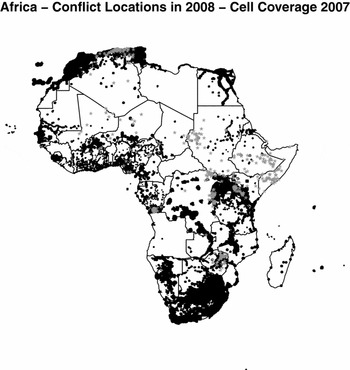
Figure 1 shows the distribution of conflictual events in Africa in 2008, as well as areas with available GSM 2G coverage in 2007. As one can easily see, cell phone coverage is most widely spread in South Africa, Namibia, Kenya, as well as in northern Africa (specifically Morocco, Tunisia, and Egypt). However, coverage has expanded massively in the past years and has become more and more available in other areas of the continent. While coverage is more likely in coastal areas, the map clearly shows that it has been expanded further into the continent and away from population centers. Areas with a clear overlap in cell coverage and conflict events are in Algeria, the DRC, Kenya, Nigeria, Uganda, and Zimbabwe.
Cell Phone Coverage 2007 (black) and Conflict Locations 2008 (gray) in Africa

To analyze the relationship between the local availability of cell phone coverage and the occurrence of violent events we follow Buhaug and Rød (Reference Buhaug and Rød2006) in relying on spatially disaggregated grid cells as our units of analysis. Our grid is partitioned into 0.5×0.5 decimal degree resolution cells, i.e., each grid cell is approximately 55 km × 55 km large. Using such high-resolution spatial units of analysis allows us to avoid problems of data aggregation common in cross-national studies of violence. The grid was created by Tollefsen, Strand, and Buhaug (Reference Tollefsen, Strand and Buhaug2012) at the Peace Research Institute Oslo (PRIO). The PRIO-Grid dataset provides grid cells and data for the whole world on a yearly basis from 1946 to 2008. Given our particular interest, we only use the data concerning Africa.
Using the grid provided in the PRIO-Grid dataset we create our dependent variables based on conflict locations in the UCDP GED dataset (Melander and Sundberg Reference Melander and Sundberg2011; Sundberg, Lindgren, and Padskocimaite Reference Sundberg, Lindgren and Padskocimaite2011). First, we generate a conflict indicator, a binary variable that takes the value of 1 in cases where one or more conflictual events were registered by UCDP GED in the given grid cell in 2008, and 0 otherwise. Our dataset consists of 10,674 cells, of which 3.3% experience violent conflict in 2008, thus conflict is quite rare. Second, for additional robustness checks we create a conflict count variable that counts the number of conflictual events in 2008 according to the UCDP GED data for each grid cell. Despite the increase in variation between grid cells, we use the count measure only as a secondary variable, because multiple counts within each grid-cell year are likely to be realizations of the same conflict process.
Our main independent variable of interest is generated in a similar manner. For each grid cell an indicator for cell phone coverage is created that takes the value of 1 if cell phone coverage existed in 2007 and 0 otherwise.Footnote 16 The distributions of cell phone coverage in 2007 and conflict locations in 2008 are presented in Figure 1. In 2007, cell phone coverage was available in 37% of grid cells; in 2008 this increased to 38%.
To identify a potential causal effect of cell phone coverage on violent conflict events we rely on three complementary strategies: First, we use a series of standard models on the cross-sectional data for 2008 and control for a number of potential confounding factors to approximate the potential causal effect of cell phone coverage. Second, we take the same cross-sectional data and implement an instrumental variable strategy that leverages exogenous variation in our main independent variable. Third, we use conflict data and lagged cell phone coverage for 2008, 2009, and 2010 to construct a short panel for African grid cells and implement a set of panel data approaches that exploit over-time variation.
Confounding Variables
A large literature on civil conflict has identified a collection of theoretically motivated factors that contribute to organized violence. It will be important to understand the effects of cell phone coverage in a context that provides motive and opportunity for violent collective action (Collier et al. Reference Collier, Elliott, Hegre, Hoeffler, Reynal-Querol and Sambanis2003). The existing literature has emphasized structural factors that affect the motivation of parties potentially seeking violent conflict with the state, such as poverty, inequality, ethnic fractionalization, or ethnic exclusion. At the same time, other factors, for example mountainous terrain, forests, or natural resources, can impact the ability of groups to rebel and have also been identified as drivers of violence. For our first set of cross-sectional models it will be particularly important to control for other variables that contribute to conflict. It is reasonable that those variables which drive conflict are also likely to correlate with the availability of cell phone coverage and might thus induce omitted variable bias in our findings. The majority of control variables in our models are also provided in the PRIO-Grid dataset, but originally come from other sources. Time varying independent variables were lagged by one year (2007) to control for the possibility of reverse causality.
Our models include a measure of the distance to the capital as well as distance to the border for each grid cell, as certain conflicts are more likely to occur close to the capital or close to other countries (Buhaug and Rød Reference Buhaug and Rød2006).Footnote 17 Similarly, conflict is more likely to occur in regions with larger populations (Fearon and Laitin Reference Fearon and Laitin2003). Hence, an estimate of population size for each grid cell is included. These variables are particularly important since cell phone providers are most likely to build infrastructure around the capital and population centers. The data on capital and border distance are provided through the PRIO Grid, as are the population data, which originally stem from CIESIN (2005).Footnote 18 We also include a variable measuring prior conflict levels for each grid cell, based on UCDP conflict events in each grid cell from 1989 to 2000.
In addition, we include controls for the percent of mountainous terrain, as this may be advantageous to guerrilla warfare and thus may make fighting more likely. It may also affect the likelihood of coverage availability.Footnote 19 This variable was originally collected by the UN Environment Programme (UNEP-WCMC World Conservation Monitoring Centre 2002), but is available in the PRIO GRID. In addition, we control for the percent of area in a grid cell that is equipped for irrigation.Footnote 20 This variable is again provided in the PRIO-Grid dataset, but was originally collected by Siebert et al. (Reference Siebert, Döll, Hoogeveen, Frenken, Frenken and Feick2007).
Violent conflict is often thought to be more likely in poorer regions, where the substitution costs for engaging in violence are particularly low and grievances with the current government are high (Blattman and Miguel Reference Blattman and Miguel2010; Collier and Hoeffler Reference Collier and Hoeffler2004; Fearon and Laitin Reference Fearon and Laitin2003). Cell phone coverage, on the other hand, is more likely in richer areas of the continent. Thus controlling for income is highly warranted. Economic data are provided in the PRIO-Grid dataset as well, and originally stem from the G-Econ dataset by Nordhaus (Reference Nordhaus2006). We use per capita GDP for 2000 calculated for each grid cell.Footnote 21
For further robustness checks we control for potential ethnic grievances by including a variable on the exclusion of ethnicities. To do so we match data on the identity of ethnic groups in each grid cell with data on the political exclusion of ethnic groups in a given country, recording how many local ethnic groups are politically excluded. The spatial data on settlement patterns of ethnic groups originally stems from Weidmann, Rød, and Cederman (Reference Weidmann, Rød and Cederman2010) and were merged with data on political exclusion by Cederman, Wimmer, and Min (Reference Cederman, Wimmer and Min2010).
Furthermore, we include data on the location of natural resources. This may be warranted as cell phone companies are likely to extend coverage to areas with important economic activity. In addition, as rebel groups try to capture natural resources, fighting in these areas is also more likely. We therefore include indicators for the location of diamond mines (Gilmore et al. Reference Gilmore, Gleditsch, Lujala and Rød2005) as well as known gas and oil deposits (Lujala, Rød, and Thieme Reference Lujala, Rød and Thieme2007). Summary statistics for all variables are included in the online Appendix.
CROSS-SECTIONAL ANALYSIS
Using the data described in the prior section, we estimate a series of cross-sectional statistical models to evaluate our hypothesis. The main measure of conflict we use is the simple binary conflict indicator for each grid cell. Naturally, we utilize the generalized linear model framework to formulate our probability models. The dependent variable yi for each grid cell i in 2008 is binary,
 \begin{equation*}
y_{i} = \left\lbrace \begin{array}{c@{}c}1 & \textrm {conflict,} \\
0 & \textrm {otherwise,} \end{array} \right.
\end{equation*}
 \begin{equation*}
\eta _{i}= \mathbf {x}_{i}^{\prime }\mathbf {\beta } + c_{i}^{\prime }\gamma,
\end{equation*}
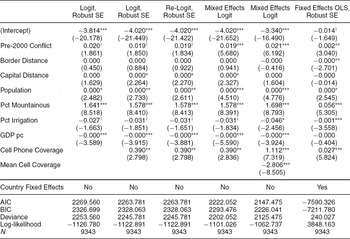
We consider five alternative estimation approaches. Each of these models has certain advantages and disadvantages. They address distinct issues present in our data and differ in the severity of assumptions needed to attribute causal effects to the estimated cell phone coverage parameter. Table 1 shows parameter estimates and z statistics for all models. The first column shows a baseline specification of only control variables, estimated with a standard logit model and robust standard errors to address issues of heteroskedasticity. The second column simply adds our cell phone coverage indicator as a covariate. The third column presents the results of a rare-events logistic regression to account for rare events bias (Tomz, King, and Zeng Reference Tomz, King and Zeng2003). The fourth logit model includes country-level random effects to vary baseline levels of conflict across countries.Footnote 22 The standard random intercept model assumes zero correlation between the random effects and other covariates. To further control for potential omitted variable bias, we present in column 5 the results for a mixed effects logit model that also includes the country-level means of the cell phone coverage indicator. Including the country-level mean of the variable of interest allows for a correlation between the country random effect and the mean level of cell phone coverage (Gelman and Hill Reference Gelman and Hill2008, 506), removing the effects of country-level unobservables that affect cell phone coverage (Bell and Jones Reference Bell and Jones2012). Last, we also include the estimates of a linear probability model estimated via OLS that allows the inclusion of country-level fixed effects to control for any unobserved time-invariant country characteristics that might bias our findings.Footnote 23
Binary DV Models

† p = 0.1. *p = 0.05. **p = 0.01. ***p = 0.001.
The baseline specification in column 1 shows that a number of our control variables perform as expected. Prior levels of conflict have a statistically significant and positive effect on experiencing a conflict event in 2008. Similarly, population counts in the grid cell and mountainous terrain also increase the probability of conflict. On the other hand, in line with theoretical expectations and prior empirical findings the percentage of land with irrigation technology and GDP per capita reduce conflict (Buhaug and Rød Reference Buhaug and Rød2006; Lujala, Buhaug, and Gates Reference Lujala, Buhaug and Gates2009; Buhaug et al. Reference Buhaug, Gleditsch, Holtermann, Østby and Forø2011; Fearon and Laitin Reference Fearon and Laitin2003).
Across all models which include our measure of cell phone coverage, the cell phone coverage indicator is estimated to increase the probability of conflict and is precisely estimated—statistically significant below the 1% or even the 0.1% level. Even when controlling for the country level of cell phone coverage and only exploiting within country variation, as in the mixed effects logit model, or including country fixed effects, we always find a clear positive effect. Given that we control for a sizable number of confounding variables, as well as unobserved country-level factors, the results in Table 1 offer a good first approximation of the effect of cell phone coverage on political violence. In addition, including the cell phone coverage variable improves model fit statistics. A likelihood ratio test between a model including cell phone coverage and the nested model results in a significant test statistic at the 1% level in favor of the model including our variable of interest. We implement further analyses of the model fit, amongst others using separation plots (Greenhill, Ward, and Sacks Reference Greenhill, Ward and Sacks2011); these are displayed in the online Appendix.
Substantive Effects
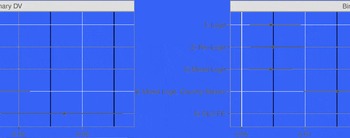
Before implementing further robustness checks, we evaluate the substantive effects of cell phone coverage. To evaluate the impact of access to cell phone technology we simulate first differences of predicted probabilities for the cell phone coverage indicator, setting all control variables at their respective means (King, Tomz, and Wittenberg Reference King, Tomz and Wittenberg2000). Figure 2 plots the mean effects and 95% confidence intervals for each model. The baseline probability of conflict in a grid cell with all variables at their means, but with no cell phone coverage, is approximately 1%. A grid cell with the same configuration of control variables, but with access to cell phone coverage is expected to see an increase of roughly 0.5 percentage points. The estimated effect is even larger (one to three percentage points) in the models where we control for the mean level of coverage or include country fixed effects. Thus, holding everything constant and extending cell phone coverage to a grid cell is estimated to increase the probability of a conflict event occurring by 50% for the standard logit model and up to nearly 300% for the fixed effects model.
First Differences, With and Without Cell Phone Coverage, Binary Dependent Variable, Baseline P(Y = 1|X) ≈ 0.01

These results imply that cell phone coverage facilitates violent collective action. Whereas the probability of conflict is still very low, the marginal effect of cell phone provision holding all other variables constant is quite large. Compared to the baseline probability with no cell phone coverage, areas with cell phones are much more likely to experience violent events. This indicates that in areas with structural conditions that favor violence, cell phone coverage enables groups to overcome their collective action and coordination problems more easily, which translates to more organized conflict events.
Spatial Dependence
A common problem in the analysis of conflict, especially when using highly spatially disaggregated data, is spatial dependence between units of observation. The plot of conflict events in Figure 1 clearly shows a spatial clustering that suggests issues of nonindependence, i.e., a conflict event in one grid cell might increase the probability of a conflict event in a neighboring cell. Recently, the analysis of spatial dependence in comparative politics and international relations has gained increased attention (Beck, Gleditsch, and Beardsley Reference Beck, Gleditsch and Beardsley2006; Franzese and Hays Reference Franzese and Hays2008; Hays and Franzese Reference Hays and Franzese2007; Neumayer and Plümper Reference Neumayer and Plümper2012). Neglecting to account for spatial dependence in the data-generating process can lead to biased and inconsistent parameter estimates (LeSage and Pace Reference LeSage and Pace2009). A popular approach to modeling spatial dependence in the standard linear framework relies on the inclusion of a spatial lag. Usually a spatial lag represents the weighted average of the dependent variable in “neighboring” units. The neighborhood structure is defined through a spatial weights matrix and can be based on adjacency, nearest-neighbor, distance or other geographic or social connectivity concepts. The use of spatial lags for binary dependent variables or other distributions in the GLM setting has been employed in the analysis of conflict (Ward and Gleditsch Reference Ward and Gleditsch2002; Weidmann and Ward Reference Weidmann and Ward2010) but presents formidable computational challenges (LeSage and Pace Reference LeSage and Pace2009). The correct estimation of parameters in the presence of the simultaneity between the dependent variable and the spatial lag becomes especially harrowing for large datasets.
Given that our African lattice has over 10,000 cells, computational hurdles become prohibitively high. Short of a correctly specified spatial lag model, many researchers rely on a simpler approach to avoid the computational issues of nonlinear spatial lag models. Any direct simultaneity can be avoided if the spatial lag is also temporally lagged. It is then only a standard covariate and can be included as such in the GLM specification. While not ideal, this approach is feasible and does capture some of the spatial dependence in the data. We calculate for our binary dependent variable a spatial conflict lag based on a six-nearest-neighbor spatial weights matrix in 2007. The online Appendix presents a table with the models from Table 1, including spatial lags. Across all models we find a statistically significant and positive effect of the spatial lag, suggesting that conflict in neighboring grids increases the likelihood of violence and underscores the presence of spatial dependence in the data. The cell phone coverage indicator is uniformly estimated to be positive, but just misses significance at the 10% level in the logit models. If we include country random effects and a control for the country mean of cell coverage to allow for correlated random effects or simply include country-level fixed effects, the effect is found to be significant below the 0.1% level.
Count Models
As an alternative to the indicator of conflict, we also employ the number of conflictual events in each grid cell as a dependent variable. The online Appendix shows parameter estimates and associated z statistics for a simple Poisson regression with robust standard errors, a negative binomial model to allow for overdispersion in the counts, and the same models with spatial lags. As with the binary dependent variable, the cell phone coverage indicator is estimated to have a positive effect on conflict counts and is statistically significant below the 0.1% level in the Poisson model and below the 10% level in the negative binomial model.
Alternative Measures, Natural Resources, and Ethnicity
One problem with using the UCDP conflict events as our dependent variable is potential measurement error in the conflict location. The UCDP data pinpoint latitude and longitude for each conflict event, but the accuracy of the location varies. For some events the exact location is identifiable, whereas for others, only the administrative unit or region is available. In the second case, UCDP uses the unit centroid as the location identifier. Fortunately, for each event the UCDP data record the quality of geographic information on a seven-point scale. We thus create a dependent binary and count variable that only considers events with fairly exact geographic information, to make sure our results are not biased by events where the exact location or spatial extent was unclear.Footnote 24
In addition, we also consider the ACLED (Raleigh et al. 2010) conflict event data available for Africa from 1997 to 2010, which differs slightly in the definition of conflict events from UCDP. Importantly, ACLED also covers violent protests with death counts below the 25 person threshold. We repeat all analyses using binary and count dependent variables based on the alternative (precise) UCDP events and the ACLED events. Across both alternative measures, we obtain the same results in terms of substantive and statistical significance. For some models statistical significance even increases (all results are available in the online Appendix).
Our last alternative measure for the dependent variable takes advantage of new geo-coded data on social unrest in Africa (Salehyan et al. Reference Salehyan, Hendrix, Case, Linebarger, Stull and Williams2012). The “Social Conflict in Africa Database” (SCAD) codes news on a multitude of social conflict events, covering protests, riots, strikes, intercommunal conflict, and government violence against civilians, on the African continent from 1990 to 2011. Using this measure allows us to capture low intensity collective action that did not necessarily end in a large number of deaths. SCAD also provides the geographic coordinates of events. Identical to the previous analyses, we create an indicator and a count variable based on SCAD events for each grid cell. We use those observations that are geo-located with sufficient quality and are not already included in the ACLED database.Footnote 25 We run the same set of binary dependent variable models, count, and spatial lag models as before. While the results for our control variables change, reflecting the difference in processes between organized rebel violence and social unrest, for all models we still find a clear positive and highly statistically significant effect of cell phone coverage on the incidence of social conflict events (all results are available in the online Appendix).
Apart from considering alternative measures for the dependent variable, we also address two additional concerns of omitted variable bias. Recent studies on civil conflict and ethnicity have established a link between the political exclusion of ethnic minorities and the propensity for group conflict (Cederman and Girardin Reference Cederman and Girardin2007; Cederman, Weidmann, and Gleditsch Reference Cederman, Weidmann and Gleditsch2011; Cederman, Wimmer, and Min Reference Cederman, Wimmer and Min2010). If politically excluded ethnic groups are more prone to engage in violent collective action and at the same time locations in which these groups are dominant are provided with less cell phone access, omitting information on ethnicity from our analysis might bias our estimates. To control for this possibility we utilize information on politically relevant local ethnic groups in each grid cell provided by the PRIO-GRID data, based on the Geo-referencing of Ethnic Groups (GREG) project (Weidmann, Rød, and Cederman Reference Weidmann, Rød and Cederman2010). Given the group identifier in each grid cell we join information on the status of political inclusion or exclusion at the national level in the Ethnic Power Relations Dataset for each group (Wucherpfennig et al. Reference Wucherpfennig, Weidmann, Girardin, Cederman and Wimmer2011). We repeat the analysis for the binary and count models including a variable that measures the share of local ethnic groups that are politically excluded. For most models, we find that political exclusion of ethnic groups increases the probability of conflict, but has no effect on the direction or statistical significance of the cell phone coverage indicator (results are available in the online Appendix).
Similarly, as noted above, local natural resources might provide motives for local rebel groups to engage in extraction to secure access to economic rents (Collier and Hoeffler Reference Collier and Hoeffler2004; Lujala, Gleditsch, and Gilmore Reference Lujala, Gleditsch and Gilmore2005). In addition, regions with lucrative petroleum or diamond deposits might receive better cell phone coverage as mining and oil companies can influence the construction of cell phone towers. To correct for potential omitted variable bias, we use information on the geographic location of diamond mines (Gilmore et al. Reference Gilmore, Gleditsch, Lujala and Rød2005) and oil and gas deposits (Lujala, Rød, and Thieme Reference Lujala, Rød and Thieme2007) and include an indicator variable for grid cells that cover a known resource deposit. As before, we re-estimate all models and find some evidence that petroleum increases the probability of conflict and diamond mines surprisingly reduce the incidence of violence. Though neither variable has any effect on the role of cell phone coverage, which stays consistently positive and statistically significant (results available in the online Appendix).
Matching
Alternative to the estimation of parametric models, we also explore the effect of cell phone coverage using matching methods. In particular, we rely on “Coarsened Exact Matching” (CEM) (Iacus, King, and Porro Reference Iacus, King and Porro2012). CEM bins observations into coarsened strata and matches based on the new groupings. This matching approach reduces imbalance in the sample based on all properties of the covariate distributions, not just differences of means or similar univariate statistics (Iacus, King, and Porro Reference Iacus, King and Porro2011). Details on the matching procedure are reported in the online Appendix. Overall, our matching-based estimates are very similar in magnitude to our original estimates and confirm the main finding.
INSTRUMENTAL VARIABLES
One important concern is the potential endogeneity between conflict events and cell phone coverage in each grid cell. It is plausible that conflict destroys cell towers and reduces coverage, suggesting a potentially negative relationship in the data. Although we lag cell phone coverage by one year in our models to address causal ordering and the estimated positive effect suggests we might actually underestimate the true relationship, we aim to address fundamental endogeneity concerns with an explicit identification strategy relying on an instrumental variable.
Prior work on the spread of cell towers in Africa has identified a number of geographic characteristics that predict cell phone tower locations (Buys, Dasgupta, and Thomas Reference Buys, Dasgupta and Thomas2009). However, in our case, for most of these variables the exclusion restriction of the instrumental variable estimator is likely to be violated since remoteness, difficult terrain, or population density have been found to predict conflict as well. Yet, in addition, Buys, Dasgupta, and Thomas (Reference Buys, Dasgupta and Thomas2009) identify the regulatory environment of African countries as an important predictor of cell phone coverage. A series of studies has found that healthy private competition in the cell phone market leads to better coverage and provision of cell phone services, in comparison to single-provider state-run systems (for references see Buys, Dasgupta, and Thomas (Reference Buys, Dasgupta and Thomas2009, 1495)). A World Bank study on telecommunications policy reform in 24 African economies finds important policy changes pertaining to privatization, increased competition, the formalization of regulations, and the creation of regulatory agencies, all contribute to improved coverage (The World Bank Reference Foster and Garmendia2010). Buys, Dasgupta, and Thomas (Reference Buys, Dasgupta and Thomas2009) find the World Bank's Country Policy and Institutional Assessment (CPIA) measure of regulatory quality is an important variable that affects cell phone coverage, even for highly spatially disaggregated data. We argue that the CPIA regulatory coverage measure is a good instrument for our purposes, since it is a robust predictor of cell phone coverage, i.e., avoids “weak instrument” criticisms, and has a strong claim to justifying the exclusion restriction. While regulatory quality affects private market competitiveness and the extent of cell phone coverage, we believe it is unlikely that an alternative, unmeasured causal link to violence exists.Footnote 26
A potential issue could be that poorer African countries were forced to introduce regulatory reform in light of budgetary pressures and demands by outside actors. However, we find no aggregate link between the level of development and a country's regulatory score, as measured by the World Bank data. Furthermore, the estimated models include a control for GDP per capita levels and hence any effects regulatory quality might exert on violent collective action through poverty is accounted for.
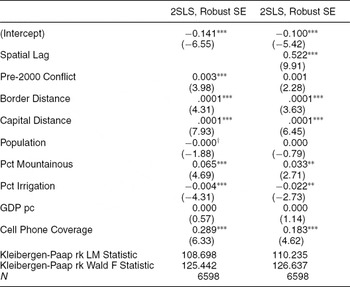
We use the average CPIA regulatory quality score from 2005 to 2007 as our instrument for cell phone coverage. Initially we estimate a simple linear probability model via two-stage least squares (2SLS) and robust standard errors, which generally does well in identifying marginal effects, even with binary dependent variables (Angrist and Pischke Reference Angrist and Pischke2009, 197–205). We estimate models with and without the spatial conflict lag. For both models in the first stage regression of cell phone coverage on regulatory quality, our instrument, is highly statistically significant. The Kleibergen-Paap rk LM statistic and the Wald F statistic are very high and we are able to reject the null hypothesis of under- and weak identification. The results of the second stage are reported in Table 2, showing coefficient estimates and z statistics for the binary dependent variable models. Controls largely perform as expected, but more importantly the instrumented cell phone coverage variable is positive and highly statistically significant for both models. The exogenous variation in cell phone coverage induced by the regulatory quality increases the probability of local conflict events.Footnote 27
Instrumental Variable Models

† p = 0.1. *p = 0.05. **p = 0.01. ***p = 0.001.
PANEL DATA
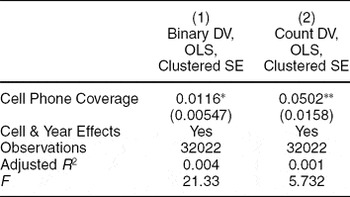
Our last approach to estimate the effect of cell coverage on violent collective action exploits variation over time. Data on cell phone coverage is available for 2007, 2008, and 2009. We utilize these data to construct a short, three-year panel of our grid cells in 2008, 2009, and 2010. This offers us an additional opportunity to not only use geographic variation in coverage, but also changes over time. While in 2007 cell phone coverage existed in 36.9% of all grid cells, that value increased to 37.8% in 2008 and 42.5% in 2009. The expansion of cell phone coverage allows us to compare grid cells before and after the expansion. In a first step, we estimate OLS models for the binary and count dependent variable with country and year fixed effects and our standard set of controls, clustering standard errors at the country level. Again, we find a highly statistically significant and positive effect of cell phone coverage on violent conflict events (detailed results are presented in the online Appendix). More importantly, the panel structure allows us to now include grid-cell fixed effects. Here, we control for all observed and unobserved factors for each grid cell in the three-year period from 2008 to 2010. Since our standard control variables at the grid level are constant over time, we only include the cell phone coverage indicator as a predictor, apart from the grid cell and year effects. Table 3 shows the estimated coefficient for the cell phone coverage indicator for the binary and count measure.
Panel Data

*p < 0.05. **p < 0.01.
Clustered standard errors in parentheses.
For both models, the cell phone coverage variable is estimated to be positive and is statistically significant below the 5% and 1% level, respectively. The coefficient size suggests an increase of one percentage point for the linear probability model and 0.05 events with the count dependent variable, very much in line with our prior estimates of the effect size. The results are substantively unchanged if we log-transform the count to make the distribution appear more normally distributed or alternatively estimate a Poisson fixed effects model. Again, this confirms our previous findings that the expansion of cell phone coverage in Africa facilitates violent conflict events.
Overall, our quantitative models demonstrate a clear positive association between cell phone coverage and the occurrence of violent organized collective action. This effect persists when controlling for a series of standard explanations of violence, as well as unobserved, time-invariant factors at the country and even grid level. Plainly, our results suggest that local cell phone coverage facilitates violent collective action on the African continent.
CONCLUSION
Whereas prior research has emphasized the positive consequences of expanding cell phone coverage across the African continent, this article is concerned with possible negative externalities. In general, increasing cell phone coverage in developing countries has been associated with higher levels of market efficiency, especially across labor markets and private goods markets. Cell phones decrease information asymmetries between market participants and facilitate economic exchange. However, few works have been concerned with the effect of new communication technologies in the political sphere. In particular, to our knowledge only Shapiro and Weidmann (Reference Shapiro and Weidmann2012) have examined how cell phone technology affects the propensity for political violence. Shapiro and Weidmann (Reference Shapiro and Weidmann2012) find that in the case of Iraq, the location of cell phone towers is negatively associated with violence.
In contrast, in this article we argue and provide evidence to show that cell phone technology can increase the ability of rebel groups to overcome collective action problems. In particular, cell phones lead to a boost in the capacity of rebels to communicate and monitor in-group behavior, thus increasing in-group cooperation. Furthermore, cell phones allow for coordination of insurgent activity across geographically distant locations.
We test the empirical relationship between cell phone coverage and the location of violent conflict across the African continent. To do so we utilize a grid of 55 km × 55 km cells across Africa. Using data on GSM2 coverage provided by the GSMA and georeferenced data on conflictual events by UCDP (Melander and Sundberg Reference Melander and Sundberg2011; Sundberg, Lindgren, and Padskocimaite Reference Sundberg, Lindgren and Padskocimaite2011), we create measures for each grid cell indicating whether cell phone coverage was available in 2007, as well as an indicator and count of conflictual events for 2008. In addition we include numerous other covariates to avoid potential omitted variable bias.
Across a wide range of empirical models, including various control variables and robustness checks, we find that cell phone coverage has a significant and substantive effect on the probability of conflict occurrence. When cell phone coverage is present, the likelihood of conflict occurrence is substantially higher than otherwise. We consistently find a relationship between cell phone coverage and violent conflict across standard logit models, models including controls for spatial correlation, random or fixed effects, as well as count models. In addition to traditional robustness checks, we furthermore include instrumental variable regressions to test for the possibility of endogeneity and panel data models.
The results in this article stand in contrast to the findings presented by Shapiro and Weidmann (Reference Shapiro and Weidmann2012) regarding the relationship between cell phones and violence in Iraq. However, we believe it is reasonable that the effects of cell phones are different across these cases. The context of political violence in African countries is much different from that in Iraq. The military capacity of the anti-insurgent forces is likely higher in the case of the U.S. military and government forces in Iraq. While government forces in Iraq have the ability to monitor cell phone activity of insurgents, this is much less likely for many African governments, especially with the more prominent role of private enterprises in spreading technology. In addition, explicit whistle blower programs have so far only been used rarely in Africa (Livingston Reference Livingston2011). Similarly, the technological and strategic capacity of anti-insurgency forces in Iraq is likely to be much higher than that of many African forces. Thus the expansion of cell phone coverage may be less advantageous to Iraqi insurgents, whereas in the right context, rebels can make great use of it. At a minimum our findings suggest that we need further research investigating the specific conditions under which modern technology plays a role in insurgent and counterinsurgency activities.
Numerous exciting avenues for future research exist. First, a better theoretical understanding on how communication technology can affect collective action is warranted. The underlying mechanism for our findings needs to be unpacked further. Distinguishing between collective action and coordination problems might be particularly important. Our results only imply an association at the aggregate level of the spatial unit and do not reveal the exact causal mechanism in operation or the role of individual-level behavior. Naturally, future research will have to engage these questions in more detail and bring different data to bear. We suspect that the use of communication technology varies across contexts, rebel and insurgent groups, as well as counterinsurgency strategies. Exploring potential interactions with country or group-level variables will further illuminate the effects of communication technology on violence. Prior research on internal rebel group organization and the use of violence has focused on the role of internal norms and discipline (Weinstein Reference Weinstein2007). Similar to recruitment strategies and the use of violence against civilians, the adoption of technology and its effects on rebel group behavior appear as promising topics of research to complement our aggregate-level findings.
Second, cell phone coverage should similarly have an effect on other forms of collective action, such as nonviolent protests. We do present some auxiliary evidence on the link between cell phone coverage and protest behavior using aggregate data (SCAD), but more research is warranted. The marginal benefits of modern communication technology likely varies across violent and nonviolent activities, which could lead to important substitution effects.
We do not believe that the spread of cell phone technology has an overall negative effect on the African continent. The increase in violence induced by better communication might represent a short-term technological shock, while the positive effects of better communication networks on growth and political behavior may mitigate root causes of conflict in the long run.
If the economics literature is correct in assuming that cell phone technology increases the productivity of farmers or service-oriented industries, then the spread of cell phones throughout Africa increases the returns to productive economic activity in the long term. This implies that the opportunity costs to violence (i.e., lost wages) increase, reducing the incentive to fight. Several formal models have identified this potential link between violence and economic activity (Chassang and Padro-i-Miguel Reference Chassang and Padro-i-Miguel2009; Dal Bó and Dal Bó Reference Dal Bó and Bó2011; Grossman Reference Grossman1991; Grossman and Kim Reference Grossman and Kim1995). Some empirical work has shown a link between increased returns to labor-intensive production and lower violence in Colombia (Dube and Vargas forthcoming), while another study on the link between unemployment and insurgent activity in Iraq and the Philippines finds the opposite effect (Berman, Felter, and Shapiro Reference Berman, Felter and Shapiro2009). However, the effect of cell phones on incomes is likely to be a long-term process. If cell phone coverage increases economic activity and economic growth in the long run, it may indirectly lower political violence in the long term. However, we find that given contextual factors which make conflict likely, in the short run, cell phones increase the propensity for violent events.
Finally, the effect of communication technology on other aspects of the political arena is still quite unclear and has not been studied widely. More research is needed on whether the availability of widespread communication between citizens decreases the likelihood of electoral fraud or government repression, as, for example, found by Aker, Collier, and Vincente (Reference Aker, Collier and Vincente2011) and Bailard (Reference Bailard2009). Can the possibility of private communication serve as a substitute for free and fair media and what are the effects across different political regimes? The increasing availability of spatially disaggregated data in combination with these data on cell phone coverage in Africa should allow us to answer a number of these questions in future projects.




Comments
No Comments have been published for this article.