Introduction
Specialty care centres are increasingly functioning as medical homes, making specialty healthcare providers key players in managing the primary care components of chronic conditions.Reference Reif, van Olmen and McNairy1 However, current healthcare systems often struggle with poor coordination and fragmented care, which hinder the effective management of psychosocial concerns.Reference Kovacs, Brouillette and Ibeziako2,Reference Foy, Green and Earls3 Integrating psychosocial health services in paediatric surgical specialty care is crucial, as psychological, behavioural, and social aspects of illness, as well as behavioural health and family factors significantly impact pre-, peri-, and postoperative health outcomes.Reference Foy, Green and Earls3,Reference Wissow, Van Ginneken, Chandna and Rahman4 This is particularly important for CHD patients, who are at higher risk of depression, anxiety, and attention-deficit/hyperactivity disorder. Caregivers and family members of children with chronic conditions, such as CHD, play a critical role in shaping their child’s health outcomes. Their involvement in the care journey often places significant physical, emotional, and psychological demands on them. Research highlights a strong connection between the child’s health outcomes and the mental well-being of their caregivers, particularly parents.Reference Gonzalez, Kimbro and Cutitta5–Reference Dalir, Manzari, Kareshki and Heydari7
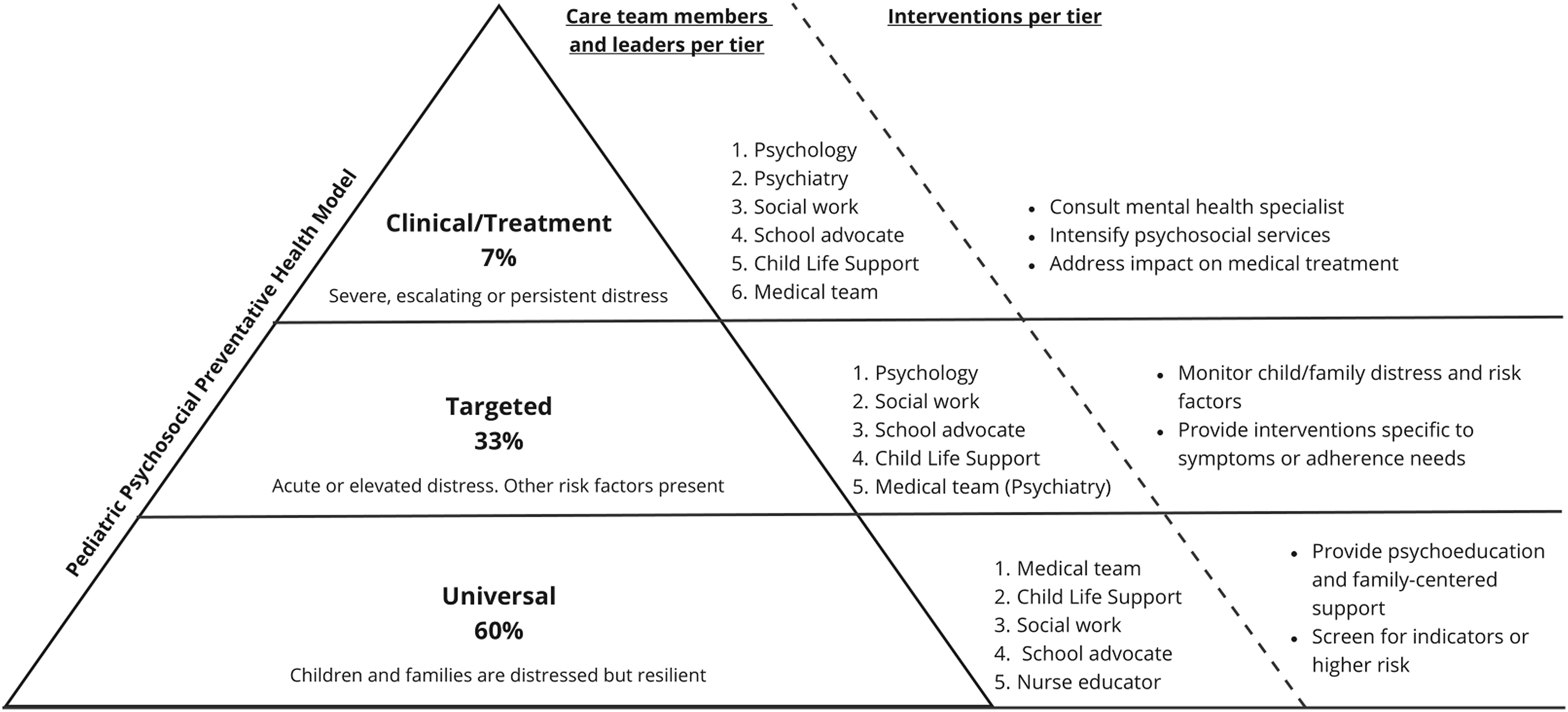
Integration of psychosocial health services into care can promote equitable access to high-quality, evidence-based, and trauma-informed care, particularly for underrepresented groups.Reference Lines8 Two models that support this integration are the Pediatric Psychosocial Preventative Health Model and Pediatric Integrated Primary Care. The Pediatric Psychosocial Preventative Health Model, introduced by Kazak et al. in 2006, was first used to categorise levels of risk for ongoing psychosocial difficulties and related treatment approaches for children and families in haemato-oncology.Reference Kazak9 It categorises patient and family needs into low (universal, approx. 60% of patient population), moderate (targeted, 30%), and high (clinical, 10%), facilitating psychosocial needs identification and how to address them within the medical setting.Reference Kazak, Scialla, Deatrick and Barakat10 Meanwhile, the paediatric Integrated Primary Care model focuses on the continuum of primary care services within pre-existing healthcare systems.Reference Lines8,Reference Syed, Syed and Lee11,Reference Tang, Chen, Wu, Tsai and Tsai12 Originally introduced in the mid-1980s in the United States, integrative care initially focused on addressing the needs of patients with mental health conditions, who were at higher risk of developing chronic physical illnesses compared to the general population. Nowadays, it has evolved to cover inter-professional working, integrated care pathways, and ultimately, inter-organisational systems in countries such as Europe, Australia, and the US.Reference Syed, Syed and Lee11
The quality of communication between medical teams has a profound impact on patient outcomes, affecting patient satisfaction, decision-making, patient–provider relationships, and healthcare resource utilisation and expenditures.Reference Tang, Chen, Wu, Tsai and Tsai12 We propose an integrated psychosocial care framework for paediatric patients and their families who are undergoing congenital heart surgery consultations. This framework combines the Pediatric Psychosocial Preventative Health Model and Integrated Primary Care models to effectively identify and prioritise patient and family needs, enabling clinicians to deliver personalised, high-value care across both inpatient and outpatient settings.
Materials and methods
With the establishment of an interdisciplinary heart centre in 2018, there was a unique opportunity to rethink care delivery by fostering collaboration between behavioural health experts and medical teams. However, integrating different behavioural health providers posed challenges. Role definitions were unclear, leading to overlapping responsibilities among team members. This limited specialists from fully utilising their skills and working at the top of their licenses. Paediatric psychologists also faced time limitations due to the relative value unit system, which prioritised clinical productivity over interdisciplinary collaboration. These constraints often prevented them from attending interdisciplinary meetings, highlighting the need for clearer role delineation and better integration of psychosocial care within the heart centre.
The formation of the Heart Center’s psychosocial teams at Dell Children’s Medical Center in Austin, TX aimed to bring together professionals from various psychosocial disciplines, including child life specialists, paediatric psychologists, and social workers, to provide comprehensive support for patients and families. Nurse navigators were part of the medical team, while psychiatrists were available on a consult basis but is not routinely integrated into the day-to-day workflow of the cardiac care team.
The Integrated Primary Care and Pediatric Psychosocial Preventative Health Model frameworks were selected to guide team workflow, specifying which members would administer screening tools and assess family biopsychosocial needs during congenital heart surgery consultations. These frameworks also helped determine the team composition required to meet the tailored needs of each patient and family.
The psychosocial team provided continuous behavioural health support to patients and families, regardless of their care setting. They collaborated across specialties, including cardiac intensive care, congenital heart surgery, and cardiology, and seamlessly integrated care across both inpatient and outpatient settings. This structure allowed the team to establish individualised care plans for each family early in the care process (Figure 1). Instead of being limited by rigid role definitions, the team prioritised meeting the specific resource needs of patients and families. This approach focused on the importance of professionals working to the full extent of their licensure.
Pediatric psychosocial preventative health model (PPPHM) with designated interventions and care leaders per tier.

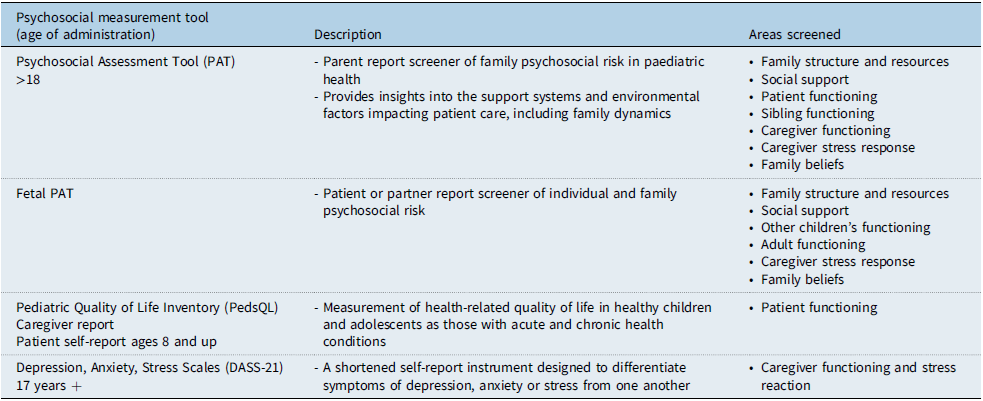
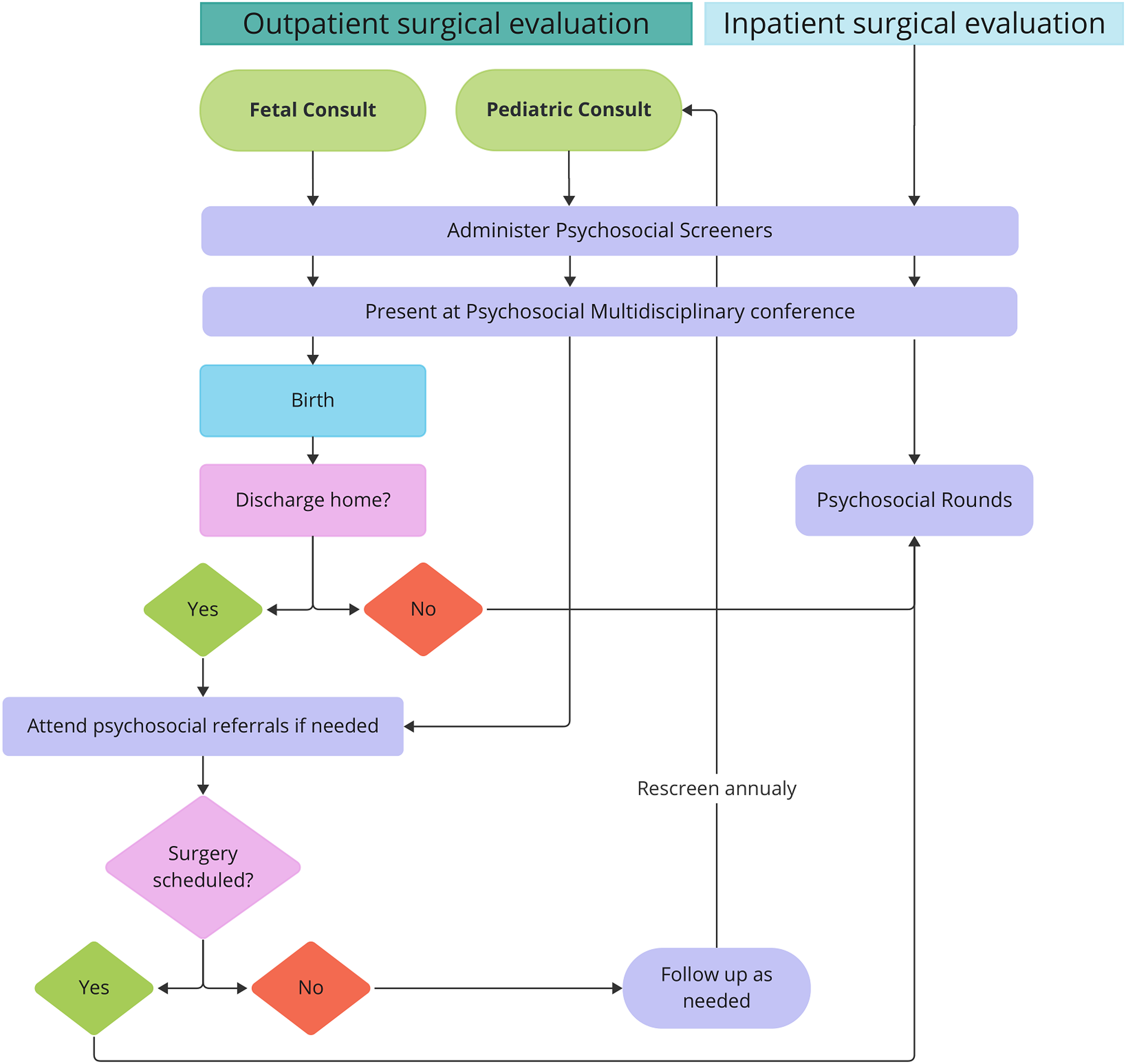
The psychosocial team assesses all patients and families at the initial cardiac surgery consultation using a set of screeners to determine the psychosocial needs of all patients and families (Table 1). Patients are seen alongside their scheduled surgical visit. They first meet the patient and family with the advanced practice providers to gather background information, after which the advanced practice providers updates the physician, allowing time to collect additional relevant details. The tools administered are the Psychosocial Assessment tool or Fetal Psychosocial Assessment Tool in the setting of a prenatal cardiac surgery consultation, Pediatric Quality of Life Inventory, the Ages and Stages Questionnaire, and Depression, Anxiety, and Stress Scales. These screeners were selected based on their established use and support in the literature. The Psychosocial Assessment Tool has been extensively used in paediatric haematology-oncology settings, providing a robust framework for assessing psychosocial risks in chronic paediatric conditions, which aligns well with the needs of the cardiac surgery population.Reference Kazak, Hwang and Chen13 The Depression, Anxiety, and Stress Scales and Ages and Stages Questionnaire were incorporated as part of the Cardiac Neurodevelopmental Outcome Collaborative protocol, allowing for consistent and reliable repeated measures of emotional distress and risk of neurodevelopmental delay over time.Reference Lee and Loomba14 Lastly, the Pediatric Quality of Life Inventory was selected due to its widespread acceptance as a gold standard for evaluating health-related quality of life in paediatric populations.Reference Uzark, Jones, Burwinkle and Varni15
Psychosocial measurement tools utilised by the psychosocial team to assess the diverse needs of patients and families

Caregivers and patients completed all screeners in approximately 35–40 minutes: the Psychosocial Assessment Tool (∼10 minutes), Depression, Anxiety, and Stress Scales (5–10 minutes), Ages and Stages Questionnaire (10–15 minutes), and Pediatric Quality of Life Inventory (5–10 minutes). For families needing more time, short-term telehealth consults were offered to support upcoming medical care or facilitate transition to longer-term services. Patients flagged for additional psychosocial support would receive their follow-up screeners in the waiting area before their clinical evaluation. These were administered annually if families returned for repeat cardiac surgery consultations. Areas assessed included patient and siblings’ well-being, caregiver functioning, family beliefs, structure, resources, and social support. The care team as a whole would then use the scores to classify which psychosocial team members would need to follow the family through their care journey and at what consistency.
Results
Since the launch of the Texas Center for Pediatric and Congenital Heart Disease through October 2024, 1,775 unique patients and families were invited to complete psychosocial screeners, generating 4,720 reports. This includes input from multiple family members during surgical consultations and the linkage of prenatal (fetal Psychosocial Assessment Tool) screeners to postnatal records. Of the screeners administered, 3,408 (72.2%) were completed and scored. Screeners were offered in English (n = 1,554, 89.6%) and Spanish (n = 221,12.5%). The median patient age at consultation was 6.0 years [interquartile range:0.0–22.0] and 1,168 (65.8%) underwent surgery. Overall, 328 (18.5%) patients and families were referred for follow-up psychosocial care after the initial consultation.
A total of 1,329 Depression, Anxiety, and Stress Scales screeners were completed, with the majority completed by caregivers (n = 884,66.5%), followed by self-reports from patients (n = 278,31.4%), partners (n = 108,8.1%), and respondents with unspecified relationships (n = 59,4.4%). Among caregiver responses, most depression (n = 754,85.3%), anxiety (n = 702,79.4%), and stress (n = 647,73.2%) scores fell within normal limits. Elevated caregiver depression scores were reported in 27 (3.1%) mild, 56 (6.3%) moderate, 14 (1.6%) severe, and 33 (3.7%) extremely severe cases. Anxiety scores were elevated in 52 (5.9%) mild, 51 (5.8%) moderate, 20(2.3%) severe, and 59 (6.9%) extremely severe cases. Stress scores were elevated in 41 (4.6%) mild, 88 (9.9%) moderate, 30 (3.4%) severe, and 78 (8.8%) extremely severe cases.
Among patient self-reports, the majority of depression (n = 213,76.6%), anxiety (n = 212,76.3%), and stress (n = 204,73.4%) scores were also within normal limits. Elevated patient depression scores included 19 (6.8%) mild, 28 (10.1%) moderate, 6 (2.2%) severe, and 12 (4.3%) extremely severe cases. Patient anxiety scores were elevated in 17 (6.1%) mild, 22 (7.9%) moderate, 10 (3.6%) severe, and 17 (6.1%) extremely severe cases. Stress scores were elevated in 11 (4.0%) mild, 34 (12.2%) moderate, 10 (3.6%) severe, and 19 (6.8%) extremely severe cases.
A total of 610 Psychosocial Assessment Tool screeners were completed by caregivers, with 449 (73.6%) classified as within normal limits, 145 (23.8%) as targeted/at risk, and 16 (2.6%) as clinical. Among 137 fetal Psychosocial Assessment Tool screeners completed during prenatal surgical consultations, 103 (75.2%) were within normal limits, 33 (24.1%) were targeted/at risk, and 1 (0.7%) was clinical. For the Ages and Stages Questionnaire, 375 screeners were completed, most commonly at 4 months (n = 78,19.5%) and 2 months (n = 65,16.3%), without adjustment for prematurity. Across communication scores, 259 (68.9%) were within normal limits, 65 (17.3%) were at risk, and 52 (13.8%) were clinical. For gross motor development, 225 (59.4%) were within normal limits, 50 (13.2%) were at risk, and 104 (27.4%) were clinical. Fine motor scores were within normal limits for 237 (63.0%), at risk for 74 (19.7%), and clinical for 65 (17.3%). For problem-solving, 253 (66.9%) were within normal limits, 57 (15.1%) were at risk, and 68 (17.9%) were clinical. Personal-social scores were within normal limits for 243 (64.8%), at risk for 59(15.7%), and clinical for 73 (19.4%).
Finally, 957 Pediatric Quality of Life Inventory screeners were completed, including 621 (64.9%) parent-proxy reports and 336 (35.1%) patient self-reports, with the infant (1–12 months) version being the most frequently administered. Among caregivers, the median total score was 83.7 [interquartile range: 72.8–94.4], with 158 (25.4%) classified as at risk (<65.42). Median physical functioning and psychosocial functioning scores were 85.9[interquartile range: 68.8–96.9] and 83.3[interquartile range: 71.7–95.2], respectively, with 169 (27.2%) and 151 (24.3%) classified as at risk based on cut-offs of <63.28 and <64.38. Among patient self-reports, the median total score was 81.4 [interquartile range: 67.4–91.3], with 141 (41.9%) classified as at risk (<69.71). Median physical functioning was 81.3 [interquartile range: 62.5–93.8], with 145 (43.2%) at risk (<72.98).
When comparing follow-up screener results to initial responses from unique patients and families, the following changes were observed: The Depression, Anxiety, and Stress Scales total score showed a mean absolute reduction of 3.59 points (standard deviation = 17.39). However, this change was not statistically significant (p = 0.124). Similarly, Psychosocial Assessment Tool total scores demonstrated a modest mean decrease of 0.07 points (standard deviation = 0.48; p = 0.274). For the Ages and Stages Questionnaire, all subcategories reflected declines in scores, indicating worsening outcomes across domains. Among these, only the change in the problem-solving domain reached statistical significance with a score reduction of 6.86 points (standard deviation = 17.70, p = 0.028). Finally, Pediatric Quality of Life Inventory follow-up scores also declined, with the total health-related quality of life score averaging 3.67 points lower than at the initial consultation (standard deviation = 18.78, p = 0.369). (Supplement 1)
Across all screeners administered, an average of 68.9% of responses were classified as normal, 20.9% were targeted or at risk, and 10.2% were clinically significant. For those 68.9% in the Universal tier or low-needs patients and families, care was focused on psychoeducation family-centered support, and screening for indicators of higher risk. This included promoting optimal development, managing early developmental delays, sleep hygiene, daily routines, and behavioural activation by nurse navigators, social workers, child life, and the medical team. Patients and families that had no distress were still included in the universal tier psychosocial monitoring and would continue to get screened annually at their cardiac surgery appointments. Children and families in this tier are characterised by the Pediatric Psychosocial Preventative Health Model model as usually distressed but resilient. For the 20.9% of responses at risk, Targeted tier care or moderate-need involved intensive, collaborative efforts between psychology, social work, child life, and the medical team to meet heightened behavioural resource needs. More one-on-one time with child life specialists is prioritised and interventions such as cognitive behavioural therapy and family therapy took place. This tier, which potentially will have higher social health/resource needs, would also involve psychiatry if deemed necessary for medication management, focusing on monitoring child and family distress and risk factors while providing interventions specific to symptoms or adherence needs.
Finally, the 10.2% of patients and families in the Clinical tier, or high risk, required specialised, intensive interventions, including advanced cognitive behavioural therapy, exposure therapy, modified Parent-Child Interaction Therapy, pain protocols, behaviour plans, and medication management. After their initial cardiac surgery consult, the psychosocial team determines a follow-up strategy model that is tailored for each patient and family based on their evaluation (Figure 2).
Initial consultation and assessment workflow of TCPCHD congenital heart psychosocial teams.

Communication strategies
Psychosocial teams can play a pivotal role in fostering communication among clinical silos. Several strategies were implemented by the psychosocial team to minimise the fragmented, or “siloed,” care that patients can often experience:
Between group strategies
-
1. Interdisciplinary conference: Members of the psychosocial team attend the Heart Center conference to ensure that all Heart Center providers are aware of a family’s psychosocial needs and medical status. This includes weekly morning conference as well as attendance at weekly fetal conference. Team members are also part of specialised cardiac programs such as the heart transplant/heart failure, the Interdisciplinary Monitoring Program for Ambulatory Cardiac Care of Central Texas known as the IMPACT program (for patients with single ventricle CHD), and Adult Congenital Heart Disease (ACHD) programs, since some of these patients will be evaluated for surgery. This helps collect information from the inpatient-to-outpatient ‘drop’ or ‘dead zone’ on behavioural needs, so that psychosocial interventions can be set in place prior to patients undergoing surgery, or being discharged home.
-
2. Inpatient multidisciplinary rounds: During inpatient multidisciplinary rounds, the psychosocial team provides the medical team with crucial information to enhance patient care. This includes details about the patient’s neurodevelopmental status, results from neuropsychological assessments, and any factors that may influence interactions with the patient and family. Information gathered during the cardiac surgery consultation, such as resource needs, mental health concerns, or challenges with medical care, is shared with the inpatient team via email upon the patient’s admission for surgery. This ensures a seamless flow of relevant psychosocial insights, supporting tailored care delivery.
-
3. Developmental care collaboration: During the initial cardiac surgery consultation, the psychosocial team provides education on developmental outcomes, and services available from birth into adulthood (so the family knows the importance of developmental care). In addition, the team meets with the neurodevelopmental team, identifying patients who meet the pre-identified risk criteria for neurodevelopmental follow-up. This then allows for a warm handoff as the neurodevelopment nurse practitioner comes to the unit and meets families before discharge. Once outpatient, the neurodevelopmental team informs the psychosocial team about upcoming appointments. This provides the psychosocial team with the opportunity to share any specific inpatient or outpatient services being offered.
Within group communication
Most importantly, the psychosocial team has worked to create internal cohesion and maintain the ability to triage concerns.
-
1. Internal cohesion: The psychosocial team has an email address that includes all the psychosocial team members and one account within the Health Insurance Portability and Accountability Act-compliant application used at the institution. If providers reach out to any of the psychosocial team members, it will alert all psychosocial team members. The goal is to reduce the burden on providers to determine who they should consult for the patients and families they care for.
-
2. Trust: By extension, the psychosocial team has learned to represent each other at every meeting. Respective team members represent each other and relay information between themselves and the medical teams.
Discussion
Since its launch, Texas Center for Pediatric and CHD has created a 5-year database with 1,775 unique patients and families’ psychosocial screeners that give psychosocial teams a broad stroke of their behavioural health during their surgical evaluations. For Depression, Anxiety, and Stress Scales screeners, most caregiver and patient responses fell within normal limits, though notable proportions reported elevated depression, anxiety, and stress. The Psychosocial Assessment Tool identified 26.4% of families as at risk or clinical, while the fetal Psychosocial Assessment Tool flagged 24.8%. Ages and Stages Questionnaire results showed the greatest concerns in gross and fine motor domains. Pediatric Quality of Life Inventory data revealed that over 25% of caregivers and over 40% of patients had quality of life scores in the at-risk range. Follow-up screening suggested modest, nonsignificant reductions in distress (Depression, Anxiety, and Stress Scales, Psychosocial Assessment Tool), but lower Ages and Stages Questionnaire and Pediatric Quality of Life Inventory scores, indicating potential developmental concerns and quality of life perceptions over time.
This study demonstrates the feasibility of integrating psychosocial care into a congenital heart cent’s workflow through the application of the Pediatric Psychosocial Preventative Health Model and the Interprofessional Collaborative framework. The Integrated Primary Care model was applied to integrate psychosocial health services in medical care, and the Pediatric Psychosocial Preventative Health Model categorisation created levels of need to determine which psychosocial clinicians were going to become part of the care team. The use of these frameworks facilitated a systematic approach to identifying and addressing psychosocial risk factors, allowing for tailored interventions based on patient and family needs. Families benefitted from a streamlined process where psychosocial and medical care were seamlessly coordinated, minimising the risk of fragmented care. Additionally, enhanced communication between providers ensured that psychosocial considerations were embedded in treatment planning, promoting a family-centered model of care
The findings align with prior research demonstrating the importance of psychosocial care integration in paediatric subspecialties, such as haemato-oncology and primary care. Scoping reviews on preoperative psychosocial interventions in the oncologic population highlight how psychoeducation, cognitive interventions, relaxation techniques, and integrated approaches were effective in reducing stress, fatigue levels, and postoperative complications, ultimately leading to improving psychological readiness, and enhancing postoperative recovery.Reference Hanalis-Miller, Nudelman, Ben-Eliyahu and Jacoby16,Reference Lanini, Amass and Calabrisotto17 Early interventions also allow providers to fully utilise their expertise efficiently, increasing family support without increasing team size. Moreover, the implemented model promotes value-based care by facilitating appropriate resource allocation from inpatient and outpatient settings, ensuring that the benefits of a collaborative team persist throughout the patient and family’s healthcare journey.
At our institution, the presence of a psychosocial team member who regularly attends rounds and engages directly with patients and families reflects a broader commitment to integrated, multidisciplinary care. We acknowledge that this level of staffing may not be feasible at all institutions, especially those with limited resources or smaller patient volumes. Rather, we advocate for flexible models that reflect institutional capacity and patient needs. In larger programmes with higher patient volumes, a full-time psychologist dedicated to the cardiac team may be ideal. For smaller programmes, psychologists may be shared across complementary services, or responsibilities may be distributed among an integrated psychosocial team that includes social workers and child life specialists.
Importantly, paediatric psychologists are typically able to bill for clinical services including diagnostic evaluations, brief interventions, and therapy sessions, which can offset the cost of their role. Internal data support the sustainability of this model as reimbursement rates for psychological services are often sufficient to cover the cost of employing a full-time psychologist. This recommendation aligns with guidelines from the American Academy of Pediatrics and the American Heart Association, which emphasise the importance of integrated psychosocial services in paediatric cardiac care and endorse the inclusion of mental health professionals as part of the multidisciplinary.Reference Sood, Newburger and Anixt18 The key principle is ensuring that psychosocial care is thoughtfully incorporated into the care model, regardless of staffing structure.
For the psychosocial team to effectively support the CHD population, it is essential to maintain consistent team members, strong leadership, regular meetings, and mutual interdisciplinary support. This structured approach ensures a unified vision for care goals across all disciplines involved with the patient and family. The primary aim of this system is to optimise health outcomes throughout an acute phase of care for the CHD population and to support the problem-solving mechanism within each family, promoting autonomy and independence.
The successful integration of psychosocial care in this setting has significant implications for broader clinical practice. By serving as a model for other paediatric subspecialties, this framework highlights the importance of addressing psychosocial risk factors in conjunction with medical care. Adoption of similar frameworks across subspecialties could lead to widespread improvements in care coordination, patient outcomes, and family engagement.
Limitations
Several limitations should be considered when implementing this psychosocial care model for the CHD population. Despite efforts to minimise survey fatigue and optimise wait times during surgical consultations, completing the screeners still required a significant portion of the clinic visit. As a result, 27.8% of administered screeners were left incomplete or blank. Additionally, follow-up appointments were often scheduled alongside cardiology or surgical visits, making it difficult for the psychosocial team to consistently adhere to annual evaluations. Due to the complexity of their child’s care, families often preferred to consolidate appointments, which may have impacted the consistency of data collection and allocation of services. Ongoing strategies, such as offering tablets instead of paper screeners and incorporating family feedback, continue to improve response rates and the overall care model. Furthermore, follow-up data were limited to a small subset of patients and families who completed both initial and follow-up screeners. This limited sample size reduces statistical power and may explain why observed absolute differences over time did not reach statistical significance.
Conclusion
This article highlights the critical need to integrate psychosocial health services into the initial evaluation of patients with CHD and their families, addressing the broader psychological, behavioural, and social dimensions of care. The proposed model advocates for a systematic approach to designate psychosocial interventions, promoting a collaborative, interdisciplinary care approach that breaks down siloes in CHD care. This framework aims to minimise psychological risks, alleviate distress, and improve overall family functioning.
Supplementary material
The supplementary material for this article can be found at https://doi.org/10.1017/S1047951125101066
Financial support
This research received no specific grant from any funding agency, commercial, or not-for-profit sectors
Competing interests
The authors declare none.