Since the end of the 1980s a number of research studies have been published about the history of the 1948 war and the established order that ensued. According to the historian Benny Morris, two factors contributed to the appearance of these studies. The first was the availability of thousands of declassified documents held in various archives in Israel and abroad which gave historians access to new material. The second was the emergence of a new, relatively young generation of scholars who did not hesitate to reopen the discussion and make a critical revision of the entire body of narrative written about that war. Historians of the older generation were inhibited from doing so because, as Morris says, “they felt obliged to show loyalty to the tale of glorious heroism in the rebirth of the Jewish people.”1
Benny Morris, Tikkun Ta'ut: Yehudim ve-Aravim be-Eretz Yisrael, 1936–1956 (Correcting a Mistake: Jews and Arabs in the Land of Israel, 1936–1956) (Tel Aviv: Am Oved, 2000), 27.
Among the leading publications on this subject are those by Benny Morris, Ilan Pappé, Avi Shlaim, and others.2
Idem, The Birth of the Palestinian Refugee Problem, 1947–1949 (Cambridge: Cambridge University Press, 1987); idem, 1948 and After: Israel and the Palestinians (Oxford: Clarendon Press, 1990); Ilan Pappé, The Making of the Arab–Israeli Conflict, 1947–1951 (London: I. B. Tauris, 1992); Avi Shlaim, Collusion across the Jordan: King Abdullah, the Zionist Movement and the Partition of Palestine (Oxford: Clarendon Press, 1988); Avi Shlaim and Eugene Rogan, ed., The War for Palestine: Rewriting the History of 1948 (Cambridge: Cambridge University Press, 2001).
With the appearance of their studies, a sharp polemical dispute over their contents and conclusions broke out, and a number of articles were published in this connection, such as those by Anita Shapira, Yehiam Weitz, Avi Barel, Pinhas Ginnosar, and others.
3 See, for example, Avi Barel and Pinhas Ginossar, ed., Ha-Zionut Pulmus Ben Zmanenu: Gishot Mehkariot ve-Ideologiot (Zionism as a Modern Polemic: Research and Ideological Approaches) (Beer Sheva: Ben Gurion Heritage Center, 1996); Yehiam Weitz, ed., Ben Hazon le-Revizia (Between Vision and Revision) (Jerusalem: Zalman Shazar Center for the History of Israel, 1997); Anita Shapira, Yehudim Hadashim, Yehudim Yeshanim (New Jews, Old Jews) (Tel Aviv: Am Oved, 1998).
Over time, two schools of thought emerged. The first is known as the “new history,” which Morris has called “one of the signs of Israel's maturity.”4
Morris, Correcting a Mistake, 41.
The second is called the “old history” or “official history,” which sees new history as a symptom of weakness and decadence.
The argument between the two schools focuses on what took place in Israel during and after the 1948 war.5
See, for example, Avi Shlaim, “The Debate about 1948,” International Journal of Middle East Studies 27 (1995): 287–303. See also Morris, Correcting a Mistake, 25–41.
Shlaim notes that the argument in Israel is similar to the arguments among U.S. historians over the Cold War and the Vietnam War. But in the United States, a third school of thought emerged over the years: “post-revisionism,” which does not place blame on one side but tries to understand the dynamics of the controversy. Shlaim has expressed sorrow that Israel has not yet reached the stage of synthesis, and that the struggle between the old and the new history, each influenced by particular political outlooks, is ongoing.
6 Shlaim, “The Debate about 1948,” 302.
It is interesting that the battle for Safad, as for most rural cities, remained to some extent outside the circle of discussion, even though that city was the capital of a large regional district and served as the administrative, economic, and cultural center for the residents of the eastern part of Upper Galilee and the Hulah Valley. Moreover, the battle over Safad had immediate repercussions on the entire Arab population in the region, and in Galilee in general.
Although the subject here concerns a battle at the micro level of historical research, I believe that a study of the war on both micro and macro levels is essential to obtain a clearer picture. Admittedly, this sometimes involves a discussion of minute details, but these are significant especially when mentioned or written about by the commanders who participated in the battle, who saw what was taking place with their own eyes and reported on the events in their war diaries or recorded them in their memoirs. In my opinion, further micro-level studies might lead to a far deeper understanding of a war that has had a great and lasting impact on two peoples—the Israelis and the Palestinians—to this day.
Most of the information published about the battle reflects what has come to be called the “Israeli Zionist narrative.” In that narrative, the battle for Safad is described as one of the glorious battles of the 1948 war, in which a Jewish minority, cut off and isolated, was victorious over an Arab force that was ten times larger in terms of manpower, arms, and ammunition, and that was about to attack and annihilate it. This minority, however, managed to withstand the onslaught and win a decisive victory.7
A. Z. Heller, Ha-Krav Al Zfat: Agada u-Meziut (The Battle for Safad: Legend and Reality) (Safad: Friedman Press, 1973), 5; Meir Mayberg, Be-Tzel ha-Metzudah: Amidatah Shel Zfat be-Tashah (In the Shadow of the Citadel: The Safad Stand in 1948) (Tel Aviv: Milo, 1997), 13; Yehuda Slutzki, Sefer Toldot Ha-Haganah: Mi-Ma'avak la-Milhama (History of the Hagana: From Struggle to War), vol. 3, pt. 2 (Tel Aviv: Am Oved, 1973), 1580–85.
The narrative goes on to describe the Arabs of Safad as warriors8
Nethanel Lorch, Korot Milhemet Ha'Azma'ut (The Events of the War of Independence) (Tel Aviv: Masada, 1989), 181.
who were bold, aggressive,
9 Zerubabel Gilad, ed., Sefer Ha-Palmah (The Book of the Palmach) (Tel Aviv: Hakibbutz Hameuhad, 1957), 2:279.
fierce, and fanatic. They were Zionist-haters who were devoted to their people and uncompromising, and they spread terror over the surrounding area. They carried the banner of nationalism, and even their voices were described as menacing.
10 Yehezkel Hameiri, Zfat bi-Zvat: Zfat ba-Krav u-Matzor (Safad in a Vise: Safad in War and Siege) (Tel Aviv: Ministry of Defense, 1988), 182; General A. Luria, Ha-Krav al Zfat (The Battle for Safad), Israel Defense Forces (hereafter, IDF) Archives, file no. 212/922/75, 2.
They are portrayed as if they had been active for years in the movement of national extremists that fought against the Jews.
11 Elad Peled, Zichronot Zfat (Memories of Safad), IDF Archives, file no. 214/922/75, 2. It should be noted that the Hagana archives contain an identical file, but the first twenty pages are missing.
It was also said that Safad was a symbol for all of the Arabs in the country and the center of incitement for the Arabs of Galilee.
12 Moshe Kelman, Hagana Archives, file no. 13/65, 22; Peled, Memories of Safad, 2.
But without defining Safad as a symbol of something in particular, why should it have become a symbol at all?
These sources relate that, at the end of the battle, the Arabs of Safad fled their city in panic, without any logical or adequate reason. The sources even express wonder and amazement at this flight, especially since no one was pursuing the Arabs or forcing them to leave their fortified homes.13
Heller, Legend and Reality, 5; Mayberg, In the Shadow, 343; Hameiri, Safad in a Vise, 182– 83.
Such descriptions exemplify the main official narrative of the history of the battle for Safad in 1948. This article discusses the central questions connected with this battle and tries once again to review the body of explanations and answers given by many of those who have studied it. The questions are: how did the two sides—Jews and Arabs—prepare for battle? What was role of the local residents in the defense of their city? What role was played by the Arab Rescue Forces and by the forces of the Hagana and Palmach? What was the proportionate strength of the Jews and the Arabs in the city? Was the battle really a contest of few against many, a battle between David and Goliath? Was the Jewish quarter under siege, and what was the situation in the Arab quarters in relation to this? What was the stance of the British? And finally, did the Arabs of Safad flee their homes, as was claimed, or were they driven away intentionally?
To discuss these questions, I will call on various types of sources. The first comprises the documents and military records of the Arab Rescue Forces (more often termed the Arab Liberation Army), found in the Israel State Archives in Jerusalem. These documents contain extensive primary material sent by the commanders of the Arab forces in Safad to the officers of the Arab Rescue Forces and vice versa. They are important because they chronicle the development of the battle and the course of events on the Arab side in real time.
The second source comprises the documents of the Hagana and Palmach forces and the testimony of the battle commanders Elad Peled and Moshe Kelman. Although these sources—especially the testimonies—attempt to present exaggerated and even inaccurate descriptions of everything connected with the Arabs, they contain important information that has not been given sufficient attention, apparently because it does not tie in with the official narrative and therefore has been disregarded.
The third source consists of books written by Jewish residents of Safad about their participation in the battle. These contain a lot of interesting information but also a measure of exaggeration and inaccuracy regarding the Arabs of Safad that far exceeds that contained in the testimonies and reports of the Hagana and Palmach commanders. Those accounts seem more balanced in comparison.
The fourth source is the private archive of Subhi al-Khadra, which was found in his family's home in Amman. It contains thousands of first-hand documents that can contribute to a deeper understanding of everything connected with the battle. It should be noted that the material available in the private and family archives of those who held senior positions in the Palestinian national movement, including Subhi al-Khadra, a founder and leader of the Istiqlal Party, is of vital importance because government archival material in Arab countries remains classified. The fifth source is the documents of the Liddell Hart Centre for Military Archives in Kings College, London, which includes a number of reports about the battle. In addition, there is a wide variety of primary and secondary sources. This article attempts to match all of these sources to the questions raised earlier, with the aim of gaining a more profound understanding of the confrontation that developed from the time of the partition decision until the battle ended.
COMBAT PREPARATIONS AND THE BEGINNING OF HOSTILITIES
On 29 November 1947, the United Nations General Assembly decided to partition Palestine into two states, Arab and Jewish. Most Arabs strongly rejected the decision, whereas the Jews accepted it with joy and satisfaction. For the first time, international recognition had been given to the rights of the Jewish people to a Jewish state. In Safad, as in all of the other cities, a general strike was declared; demonstrations were held; and denunciations were heard everywhere, especially because a city with an Arab majority (84%) was included in the Jewish state.14
Bayan al-Hut, Al-qiyadat wa al-Muasasat al-Siyasiya fi Filastin, 1917–1948 (Leadership and Political Institutions in Palestine, 1917–1948) (Acre: Dar al-Aswar, 1984), 577.
At the initiative of the Hagana, the Jews of Safad were well prepared and ready for the critical moment in good time. During the years 1944–46, the Hagana carried out all of the necessary preparations, including fortification, training, and obtaining ammunition. It even conducted a wide-ranging exercise in October 1947 called the “War Before the War.”15
On the preparations by the Hagana and the Jews in the city during that period, see the extensive explanation in Mayberg, In the Shadow, 50–117. See also Shmaryahu Ben Pazi, “Zfat ha-Yehudit be-Shanim 1947–1948: Kehilah ba-Milhamah” (Jewish Safad during the Years 1947–1948: A Community at War) (M.A. thesis, Hebrew University of Jerusalem, 2000), 22–26.
In contrast, organizing on the Arab side came quite late, beginning only in 1946, when a branch of the al-Najjadah organization was established in the city. This organization aimed to give young men military training and exercise under the guise of sports activities. The organization was active in Safad for about two years but failed totally in achieving its goals because of opposition from the authorities and because of inner conflicts in the Palestinian national movement.16
On the Najjadah organization in Safad and its activities, see Mustafa Abbasi, “Zfat bi-Tkufat ha-Mandat: Hebetim Hevrati'im u-Politi'im” (Safad during the Mandate Period: Social and Political Aspects) (Ph.D. thesis, University of Haifa, 1999), 313–19.
After the United Nations' partition decision, the Higher Arab Committee initiated the formation of National Councils in all regional and district centers.17
It dictated regulations for establishing these councils and decided that the number of council members would correspond to the size of the settlements, ranging from five to twenty members. The Higher Arab Committee demanded that a list of candidates be presented to it in advance for confirmation. It was also decided that members of the Higher Arab Committee in each city would become members of the local National Councils. The election of council secretaries would be subject to the committee's confirmation, and the National Councils' expenses would be covered by the committee.
The committee also ruled that the local National Councils would serve as branches of the Higher Arab Committee in their area and imposed various responsibilities on them, such as supervision of all matters concerning the administration of the city; ensuring internal security; dealing with social and economic matters and essential services; and cooperating with all institutions and bodies engaged in national affairs.18
See the regulations for the establishment of the National Councils in the Israel State Archives (hereafter, ISA), file no. 412/3847, document dated 14 December 1947.
In the wake of these preparations, an expanded National Council was set up in Safad that included thirty members.19
Safad National Council, ISA, file no. 346/1481. n.d.
A list of its members suggests that they represented all sectors of the city: the elders, the ulema, merchants, landowners, professionals and high-ranking officials, family representatives, activists in various organizations, and former Arab revolutionaries.
However, the number of council members in Safad exceeded that allowed by the Higher Arab Committee's regulations, which set a limit of five to twenty. Safad's residents were required to reduce the membership of the city's council, causing internal dissent. The disputes continued until 10 April 1948, when Adib Shishaqli, commander of the Arab Rescue Forces in the north, intervened. He gathered all of the representatives together with Akram Hourani, who was with him, and under pressure from them a new National Council was elected.20
Abd al-Rahman al-Khadra, Suqut Safad (The Fall of Safad), doc. no. 500, Damascus, 1 September 1948, 1–6. The papers are kept in the family home of the Khadra family in Amman.
The new council had only eleven members.
21 Yassar al-
Askari, Qisat Madinat Safad (The Story of the City of Safad) (n.d.), 120.
A comparison of the first and second councils shows clearly that the elders among the ulema, the merchants, the high officials, and the landowners had pushed aside the younger leadership, which had grown and become strong mainly during the third decade of the Mandate period. They included activists and party functionaries in the youth organizations and in various unions, as well as those who were prominent during the 1936–39 Arab revolt against British rule. This suggests that the new leadership, which had replaced that of the traditional “notables” during the revolt, could not maintain its influence over the Palestinian population at this critical juncture, perhaps because it was not strong or experienced enough to do so. At the same time, however, the traditional leadership had been weakened since the revolt.
After the second National Council was established, the Arabs of Safad succeeded in organizing a force of 444 local volunteers. The force was given the name “Hamiyat Safad” (defense force of Safad) and comprised five companies (sirāyā).22
These forces included five companies. The first was under the command of Abdullah al-Shar, with 84 volunteers; the second was under Muhammad Othman al-Kurdi, with 108 volunteers; the third was under Aref Ghunim, with 84 volunteers; the fourth was under Faiz Kadoura, with 84 volunteers; and the fifth was under Muhammad Kilani, with 84 volunteers, totaling 444 volunteers: ISA, file no. 401/3480/P. The file contains detailed lists of the names of the volunteers for the month of April 1948.
At first glance, the number of recruits appears large and impressive. An examination of the list of those carrying arms, however, reveals that not all of those 444 recruits participated in military activities: only 218 of them received arms.23
Ibid., file no. 401/3476/F, April 1948, 1–6.
Once the Arabs of Safad completed their preparations, anticipation and tension began to grow in the city, accompanied by clashes and mutual attacks.
It is important to note that, even after the partition decision, there was no absolute break in relations between Arabs and Jews in Safad. Water, electricity, health, and postal services made cooperation necessary, and mercantile activities continued in the retail markets.
These relationships continued until 13 December 1947 when Menahem Mizrahi, who had been sent by the Hagana on a patrol through the market in the Arab area, was killed. For the Jews, this was the war's opening shot, and in response they killed three Arabs.24
Peled, Memories of Safad, 10; Mayberg, In the Shadow, 122; Hameiri, Safad in a Vise, 16.
All contact was then broken off, and even the municipality stopped functioning.
A number of shooting exchanges followed the market incident. The most serious of these took place on 2 January 1948, when the Jewish quarter was attacked. Fire opened on positions along the dividing line, but the attackers were repulsed.25
Mayberg, In the Shadow, 125–27.
These incidents and others showed from the very start that the both Jewish and Arab local forces would be unable to decide the battle. Only outside forces would be able to do so.
On 7 January 1948, a group of Sixty Syrian volunteer soldier joined the local Arab forces. Commanding this group was an officer named Ihsan Kam-Ulmaz. Because of Ulmaz's military talent, the local platoon commanders agreed to transfer overall command of their forces to him and to obey his orders. From then on, he was known as the commander of the defense forces of Safad. The sources do not say to whom Ulmaz was answerable, but because of his close coordination with the local National Council, it can be assumed that he was subject to the authority of the Higher Arab Committee and to the mufti.
Ulmaz and his forces, together with the volunteers, conducted a sustained barrage from their fortified positions, but all of their attempts to break through to the Jewish quarter failed. In spite of this, the Arabs of Safad highly commended him for his activities and bravery, and in their view the battle was in their favor as long as he commanded the forces.26
Al-
Askari, City of Safad, 121.
In response to the attacks in Safad, the Palmach commanders decided to initiate further activities in the village area of the district.
PALMACH ACTIVITIES AGAINST ARAB VILLAGES IN THE DISTRICT
At the end of 1947, the Palmach began increasing its activities in the region of Safad. The Third Battalion of the Palmach, which had installed itself in garrisons on Mount Canaan, in Birya, in Ein Zeitim, and in the Hulah Valley, were in fact the main Jewish force that was active in the battle arena of Safad and its surroundings from November 1947 until the conquest of Safad on 10 May 1948. During this period, the Palmach conducted a number of raids and attacks on Arab villages that severely undermined the morale of the Arab population and forced it to deploy all of its inadequate forces for defense.
On 18 December 1947, the village of Khisas in the north of the Hulah Valley was attacked after a Jew was assaulted and killed nearby. Although there was no proof of any connection between the Arabs of the village and the deed, and despite the village's good relations with the nearby Jewish settlements, the Third Battalion's commanding officers decided to carry out an act of reprisal against the village. In doing so, they ignored the opposition of Nahum Horowitz, a resident of Kfar Giladi. Moshe Kelman, who was then the commander of the Third Battalion, and those above him in rank saw the murder as an act of war and decided to respond immediately.27
Uri Milstein, Toldot Milhemet ha-Atzma'ut: ha-Hodesh ha-Rishon (The History of the War of Independence: The First Month) (Ramat Ef'al: Sredot, 1999), 2:114–18.
During the raid, ten of the village's residents were killed, and a number of houses were blown up and destroyed. Ezra Danin, one of the heads of the Arab Branch of the Jewish Agency's Foreign Policy Department, viewed the action gravely. According to him, it caused an unnecessary widening of the hostilities in the Hulah region, which generally had been quiet.28
Public record of the colonial office (hereafter C.O)/557/2280, Fortnightly Report, 6 January 1948; Falastin, 20 December 1947; Morris, Birth of the Palestinian Refugee Problem, 33.
But the action that astonished the Arab residents of Safad was the attack on the village of Sa
sa on 14 February 1948. The village lay to the north of Mount Meron in the heart of the Arab region, about 20 kilometers from Safad. The Palmach commander Yigal Allon chose Sa
sa as a target and assigned the task of attacking it to Kelman and the Third Battalion of the Palmach.
According to Kelman, Sa
sa was selected, among other reasons, because of its location on an important crossroads on the Lebanese–Palestinian traffic artery. Thus, the attack would hamper the movement of Arabs in the area. The action was meant to “take away the initiative from the Arabs and to force them to confine their arms and manpower to guarding their villages … and to prove to ourselves and to the Yishuv that it is possible to penetrate into enemy territory.”
29 Kelman, Hagana Archives, file no. 65/13, 5.
Kelman left his base in Mount Canaan, where Company A–Shelah of the Palmach was stationed, with seventy soldiers. The assignment was to “blow up 20 houses and kill as many fighters as possible.” After the action, which Kelman said was “like the overthrow of Sodom and Gomorrah,” 35–40 houses in the village had been destroyed, 11 residents had been killed, and 60–80 others had been injured.30
Ibid., 4–8; Slutzki, History, vol. 3, pt. 2, 1417–18; C.O/537/3853, Fortnightly Report, 21 February 1948; General Staff Historical Branch, Toldot Milhemet ha-Komemiut (History of the War of Independence) (Tel Aviv: Ma'arachot, 1972), 95–97.
The Palmah carried out another major raid on 12 March 1948 on the village of Huseiniya (Kelman called it “Ahsiniya”), in the center of the Hulah Valley. According to Kelman, the attack was launched for two reasons: first, to eliminate interference with Jewish movements in the Hulah Valley by Arab forces stationed in Huseiniya; and second, to retaliate for the killing of two of his friends while dismantling an explosive device placed, he believed, by a gang from the village. Kelman saw Huseiniya as responsible for the action and decided to act against it. “[I]n my heart,” he said, “I resolved to annihilate the village.”31
Kelman, Hagana Archives, file no. 65/13, 10.
In a joint action of the Hulata Squad and some of the forces in Ayelet Hashahar, the soldiers burst into the village, placed explosives, and blew up houses. Kelman adds that he rose early the next morning and mounted the fence around Kibbutz Ayelet Hashahar to look out over the village. He saw that it had been destroyed, except for one house. He states that the action killed scores of villagers and four among his own forces.32
Ibid., 9–11; Elhanan Oren, “Ha-Ma'arachot al ha-Galil be-Milhemet ha-Atzma'ut” (The Battles for Galilee in the War of Independence) in Artzot ha-Galil (Lands of the Galilee), pt. 2, ed. Avshalom Shmuel (Haifa: Haifa University, 1983), 824. Stockwell Papers 6/25/2 report, 13 March 1948, Liddell Hart Centre for Military Archives, Kings College, London.
Huseiniya was the first village in the Safad region to be destroyed and emptied of its Arab residents.
The success of the actions in Khisas, Sa
sa, and Huseiniya indicate above all the superior strength of the Jews and the weakness of the Arabs, who had already lost the initiative at this early stage of the conflict. They stood helpless against the Palmach, which could act at any time and in any area it pleased.
The clashes continued in the city of Safad, and both sides continued to reinforce themselves in their own areas. As in the first stage of attacks, all attempts at invasion and encroachment by the Arab defensive forces failed.
THE QUESTION OF THE SIEGE
The general impression accepted by most Israeli sources is that the residents of Safad's Jewish quarter were under siege while the Arab quarters' residents enjoyed freedom of movement. Rabbi A. Z. Heller described the situation in the Jewish quarter as “a small group of Jews cut off and isolated.”33
Heller, Legend and Reality, 5.
Yehezkel Hameiri, who indicates in the title of his book
Safad in a Vise that the Jewish quarter was besieged, noted that “the Jewish quarter was surrounded on all sides by a wall of hostility, targeted like prey, and in danger of being cut off at any time.”
34 Hameiri, Safad in a Vise, 15.
Meir Mayberg uses a similar title for his first book,
Safad from Siege to Liberation, and notes that the Jewish quarter was subjected to a nearly total siege.
35 Meir Mayberg, Zfat mi-Matzor le-Shihrur (Safad from Siege to Liberation) (IDF Cultural Services, n.d.), 18–20.
He further claimed that the Arabs had found that the easiest way to vanquish Jewish Safad was by siege—through control of the roads and of the supply of food, which was growing scarce.
36 Luria, Battle for Safad, 3.
A study of other sources suggests that these descriptions are exaggerated and that, in fact, both parts of the city suffered from difficulties with traffic mobility during the first months of the struggle. I use the word “difficulties” rather than disconnection, although toward the final and decisive stage of the battle (1–10 March) the Arabs were besieged on three fronts, excluding the western front.
The supply of food continued as usual, although fruit, vegetables, meat, and dairy products were scarce in the Jewish quarter, in part because these products were originally bought from the Arab villages. But the supply of flour was sufficient—some flour was even transferred to the Palmah forces stationed around the city.37
Ben Pazi, “Jewish Safad,” 43.
It is true that the Arabs controlled Safad's main access road, which went through the Arab quarter of Harat al-Akrad. This forced the Jews to use armored vehicles and to travel in convoys. It is also true that the Arab forces attacked a number of buses traveling on the highway from Safad to Rosh Pinna; these buses were used by the Jews, and the attacks resulted in many casualties among them.38
For example, when a Jewish bus was blown up by an exploding mine, eight passengers were killed and fifteen injured.
But at the same time, the Jews were able to tie up the traffic on the route from Safad to Acre, which was used by the Arabs. This was done from three positions: from the base in Ein Zeitim; from a position called “Signpost No. 1” near that base,
39 Peled, IDF Archives, file no. 922/75, 18–21.
and from a position north of the Jewish quarter that commanded the highway from a point opposite the village of Ein Zeitun.
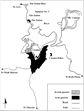
Elad Peled, the Palmach commander in the city, confirms this and states that when traffic to and from the Jewish quarter was halted, it was halted also in the Arab quarters surrounded in the north by three Jewish settlement positions, Mount Canaan, Birya, and Ein Zeitim (Figure 1). In addition, the Palmach forces sometimes could block that highway. For instance, Kelman notes that, after the raid on the Sa
sa and during his retreat to his base in Mount Canaan, the soldiers in Ein Zeitim blocked the Acre–Safad highway with rocks and placed mines.
40 Kelman, Hagana Archives, file no. 65/13, 9.
Because of the traffic difficulties, many of the Arab residents of Safad were forced, from the start of the clashes, to go on foot or on the backs of animals over mountain paths along Wadi Lemon to the village of Meirun. Only from there could they continue by car. These paths provided the only route that served the Arabs during the mass exodus after their defeat.41
Al-
Askari, City of Safad, 136–37.
Thus, the traffic difficulties affected both parts of the city. However, after the conquest of the villages of Ein Zeitun and Birya on 1 May, during the nine decisive days of the battle, the Jewish quarter was linked with its northern hinterland. This allowed for the unhindered entry of reinforcements and supplies, while the Arabs remained under a more serious siege. Except for that single route, they had no contact with the outside world.42
Peled, Hagana Archives, file no. 80/222, 24–25; Mayberg, In the Shadow, 190–93; Al-
Askari, City of Safad, 137.
THE BRITISH POSITION
In the period between the partition resolution and the evacuation of the British forces from Safad on 16 April, the British acted with extreme caution. The main purpose of the district commander, Colonel Gordon Watson, was to leave the city in a peaceful manner and to avoid endangering the lives of his soldiers. He tried outwardly to give the appearance of friendship toward both sides and kept in constant contact with them through his liaison officers, who conducted regular meetings with them.
Nevertheless, the Arab commanders accused the British of favoring the Jews. They complained that the British had prevented them from acting at an early stage against the establishment of the two Jewish garrisons in Ein Zeitim and Birya. This foiled the Arab plan to subjugate them and to link the Arab section of Safad with its village hinterland in the north via the Acre–Safad highway.
Adib Shishaqli, commander of the Arab Rescue Forces in the north, asked for permission more than once to attack Ein Zeitim and Birya, but the British district commander rejected his request. Even when Shishaqli held a meeting on 12 April 1948 with General Hugh Stockwell and other British commanders in the northern district, the British rejected his request to attack and said that he would be able to do so only after their departure.43
Al-Khadra, Fall of Safad, 3; Ben Pazi, “Jewish Safad,” 54. On Arab complaints about British assistance for the Jews see also Al-
Askari, City of Safad 125–30. Report on the events leading to the evacuation of a Safad town, 17 April 1948, Liddell Hart Centre for Military Archives.
The Hagana commanders, for their part, accused the British of pressuring the Jews of Safad through their Community Council. According to Mayberg, at the meeting between representatives of the community and British officers on 12 and 14 April, the latter suggested that the Jews evacuate a number of positions overlooking the Arab quarter; they even proposed that the Hagana forces leave Ein Zeitim and Birya in return for an Arab guarantee of peace. The British commander proposed, “If you wish, I will mediate between the Jews and Arabs here. We will bring you an Arab charter which ensures your human and civil rights, and we will guarantee this.”44
Mayberg, In the Shadow, 232–33; see also Hameiri, Safad in a Vise, 62–64. Ben Pazi notes that the British viewed the Community Council as the authorized and official representative of the Jewish community and kept regular contact with it on various matters that arose. The permanent members who held these contacts were Pedazur, Klinger, D. Weill, and Mayberg: see Ben Pazi, “Jewish Safad,” 45.
Shmaryahu Ben Pazi claims that the British proposals were mainly Arab propaganda that Watson transmitted in return for a promise by the commander of the Arab Rescue Forces and the Arab City Council to honor and protect the lives and property of the Jews in the city.45
The Hagana firmly rejected the British proposals and even accused the British of conducting a war of nerves against them. In the Hagana's view, the British were doing this through their “recommendations,” in which they frequently harped on the fact that the battle against the Arabs was futile and that it was best for the Jews not to fight, but if they had already decided to fight, they had better evacuate the women, children, and elderly. The Hagana alleged that the British wanted to soften up the Jews to increase their dependence and “to prepare them for voluntary surrender.”
46 Mayberg, Siege to Liberation, 13.
In view of the British exhortations, and counter to the wishes of the Hagana, most of the members of the Jewish Community Council in Safad agreed at a meeting held on the morning of 16 April to comply with the British proposal and evacuate the women and children. It was decided that the evacuees would be transferred to the cities of Tel Aviv, Haifa, and Tiberias. The Hagana members in the council expressed their strong objection to the evacuation proposal, and the council's decision met with sharp opposition by the Palmach commanders, who intervened forcefully and banned any contact with the British Army. They were afraid that if the women and children were sent away, there would be no one for their men to defend, and the Jews would flee right from the start.47
Peled, Hagana Archives, file no. 80/222, 59; Ben Pazi, “Jewish Safad,” 57–58.
Elad Peled also noted that the British conducted searches and confiscated arms in the Jewish quarter and spread rumors about the size of the Arab forces, thus affecting the morale of the Jewish residents.
48 Peled, Memories of Safad, 8.
Despite this pressure, the three commanders—Mayberg, Peled, and Kelman—testify to the sympathetic attitude of the British in a number of crucial instances. Mayberg says that the soldiers of the First Battalion Irish Guards that was part of the British forces stationed in the city—and especially Captain Lambert, the British liaison officer with the Hagana—secretly assisted and even cooperated with them.49
Mayberg, In the Shadow, 161–63.
Peled gives an additional example of British assistance, according to which the British Army helped the Jewish forces of thirty to forty fighters in Ein Zeitim to repel Arab attacks launched before the arrival of the Arab Rescue Forces. In one of the attacks, the British intervened on behalf of the Jews, and this caused injury to one of their numbers. In addition, the British took charge of the evacuation of wounded Jews and the transportation of supplies, food, and water to the Palmach base on Mount Canaan and to the residents of Safad.50
Peled, Hagana Archives, file no. 80/222, 22.
Kelman indicates that the British gave assistance to his forces when they returned from the Sa
sa action, taking two wounded men to the hospital. He claims that they expressed their admiration for this brilliant exploit and said they would not object to further actions of this kind.
51 Kelman, Hagana Archives, file no. 65/13, 9.
From this, one can assume that, except for exerting pressure to evacuate women and children, the British position toward the Jews was not a negative one. The Arab side, by contrast, received no military assistance, and in at least one instance, as mentioned earlier by Peled, the Arab forces were even compelled to withdraw after British intervention.
THE WAR OF ATTRITION
April was one of the most difficult months for the city of Safad. Although the date for the British departure was unknown, both sides felt it was drawing close and that it would be wise to improve their positions and strongholds. On 4 April, the attacks grew stronger along the demarcation lines where Jewish and Arab houses bordered each other. From then on, the clashes intensified daily and hourly.52
Mayberg, In the Shadow, 220–25; Hameiri, Safad in a Vise, 58–61.
On 15 April, the tension reached its peak. The Hagana commanders made their last preparations for battle, and it was declared that the “plan for the final stand” that had been drawn up in advance, was to be implemented. The residents living near the demarcation line were evacuated. Food, fuel, and essential commodities were placed in readiness. On that day, the Arab forces opened an attack on a vocational school that served as one of the important forward positions of the Hagana and that overlooked the Harat al-Akrad and the entrance to the Arab quarters. After bitter fighting, the Hagana vacated this position.53
Mayberg, Siege to Liberation, 23.
The Arab National Council of Safad immediately informed Fawzi al-Qawuqji, head of the Arab Rescue Forces, of the developments and demanded that he send his “Rescue Forces” without delay so they might take complete control of the city.
54 Safad National Council to Shishaqli, ISA, file no. 413/3901/F, document dated 15 April 1948.
On Friday, 16 April, the day the British left the city, the tension rose to its highest pitch. Mayberg, the Hagana commander in the city, proclaimed a general recruitment and a state of full alert. At 3 P.M., the British moved out, leaving behind a divided city steeped in hatred. The British completed their evacuation swiftly, first vacating the police station and then the larger base on Mount Canaan. Because those bases were in the Arab sector, the Arab forces succeeded in gaining control over them immediately after the British had left.
The Arab hold over the two bases gave them a sense of great security. Once the last of the British soldiers had gone, hell-fire broke loose in the city, and the battle for Safad began, continuing until 10 May 1948. It was a bitter and bloody battle and was seen by both sides as being of momentous consequence. Kelman, who finally won the battle, described its importance and influence on the Arab side: “Safad was the nerve-center and the focal point of all enemy activities in the Galilee region, and to some extent it was a symbol for all the Arabs in the country. It was clear that once we succeeded in conquering Safad, it would undermine the whole basis for the secure existence of Arab settlement in Galilee, and the control over the entire eastern part of that region would come into our hands very easily.”55
Kelman, Hagana Archives, file no. 65/13, 22.
The residents and defenders of the Jewish quarter were convinced that if the Arabs were victorious and broke into their part of the city, they would all be massacred. For them the battle was not just a conflict that would pass, as others had before. The sources that deal with the battle are full of ominous descriptions suggesting that if the Jews had not won, the Arabs would have slaughtered all of the residents of that quarter. Heller, one of the prominent rabbis of the city, described it in this way: “[a] tiny island of Jews in a sea of Arabs whose evil-intending waves threaten to overcome it with rage and fury, to destroy and annihilate it entirely.”56
Heller, Legend and Reality, 5.
Yeshayahu Ashani, who took part in some of the fighting in Safad, wrote: “[t]he battle for the liberation of Safad is a new example of a 20th century David and Goliath battle; if the Arabs should, God forbid, break into the Jewish quarter they will slaughter everyone.”57
Yeshayahu Ashani, Bo Imi li-Zfat (Come with Me to Safad) (Safad: Safad Publications, n.d.), 27.
Mayberg described the battle by saying, “The long, tedious resistance against the nearly incessant pressure of weeks and months … with the clear realization that at any moment of time you might be annihilated.”
58 Mayberg, Siege to Liberation, 3.
These gloomy descriptions are greatly exaggerated. The battle was certainly fierce, but in nearly all its stages the Jews had the advantage. The Hagana and Palmach commanders were well aware of the balance of forces and were not afraid of such a terrible forecast. One of the problems they faced was to persuade the leaders of the Jewish quarter and the heads of the Community Council that there was nothing to fear; that the Jewish quarter was not a second “Masada,” and that it would never fall into the hands of the Arabs.
It is quite probable that the feeling of fear was associated with the Jews' painful memories of the events in Safad in 1929 and with their own demographic inferiority. A sense of fear was also present among the Arabs, who were receiving information about Jewish victories from other parts of the country. But they refused to believe that, in a city and region that had a decisive Arab majority, the Jews could be victorious.
To strengthen the defenses, a Palmach company was sent to Safad from Mount Canaan. The company was under the command of Elad Peled and comprised thirty-five soldiers who were fully armed.
59 Hameiri, Safad in a Vise, 80–81; Mayberg, In the Shadow, 255–72; Nathan Shor, Toldot Zfat (History of Safad) (Jerusalem: Ariel, 2000), 259; Ben Pazi, “Jewish Safad,” 61–62.
The company entered the city on the eve of 16 April and took part in the bitter fighting. Mayberg claims that it was their entry that saved Safad.
60 Mayberg, Siege to Liberation, 33.
Peled, who was known by the nickname “Cana
ani,” took over command from Mayberg. On 18 April Peled published a manifesto to the Jews of the city in which he announced the establishment of military rule over the quarter and demanded absolute obedience.
61 Peled, Hagana Archives, file no. 80/222, 38.
In addition, Peled gave the order for a general recruitment that would include all men from age 15 to 50 and all women from age 15 to 35.
62 The recruitment of women in this traditionally orthodox city was a very bold and far-reaching step, but it was accepted with understanding, as was the decision by the rabbis of Safad to allow building and fortification work on the Sabbath and the Passover holiday, which occurred during the period of warfare.
In the military sphere, a new stage in the mutual war of attrition began after the failure of the Arab assault on 16 April. At the same time, both sides continued to prepare for the decisive battle that was fast approaching. Peled's confidence and belief in his ability to win is seen in an order dated 19 April: “[w]arriors of Safad, listen to me. Stand at attention in memory of our brothers and remember that we will overcome our enemies if we intensify our strength and grip our hands firmly. The battle is hard but the end is victory. The flag of Israel which fell in the ghetto war will fly again on the citadel of Safad—and Safad will be our capital in Galilee.”63
THE THIRD BATTALION VERSUS THE YARMUK BRIGADE: THE CAPTURE OF EIN ZEITUN VILLAGE AND ITS REPERCUSSIONS
The Third Battalion was one of the four Palmach battalions deployed in the country in the early days of the war.64
It should be noted that the number of Palmach battalions increased later. At the beginning of May, during the Yiftah operation, the First and Third Battalions were united to form the Yiftah Brigade. On the structure of the Palmach, see Slutzki, History, vol. 3, pt. 2, 1486–87, 1490–91.
Its forces, numbering 930 men, were spread over the eastern Galilee region, the Hulah Valley, and Safad. It was they who decided the fate of eastern Galilee, conquered Safad, and were victorious over the Arab Rescue Forces.
65 The Second Yarmuk Brigade arrived in the country in the framework of the Arab Rescue Forces (Jaysh al-Inqadh)66
For details on the structure of this army, see Hani al-Hindi, Jaysh al-Inqadh (The Rescue Forces) (Beirut, 1992); Avraham Sela, “Ha-Kohot ha-Aravaim ha-Bilti Sedirim” (The Irregular Arab Forces), in Lehimat ha-Aravim be-Milhemet ha-Azma'ut, 1947–1948 (Arab Fighting in the War of Independence) (Ramat Ef'al: Sredot, 1990), 5–18. See also Abd al-Karim Omar, ed., Mudhkrat al-Hajj Muhammad Amin al-Husayni (Memoirs of Hajj Amin al-Husayni) (Damascus: al-Ahali, 1999), 343.
and was under the command of the Syrian officer Adib Shishaqli. His forces were composed of 800 volunteers. The brigade entered the country between 9 and 23 January 1948 and were spread over various parts of the Galilee. Its command center was situated in Safsaf village, about 11 kilometers north of Safad.
67 Jadu Az al-Din, “Suqut Madinat Safad” (Fall of the City of Safad), in Shu'un Falistiniya (Beirut: Institute for Palestine Studies, 1973), 92–93; Al-Hindi, The Rescue Forces, 52–55; Al-Mufti, Memoirs, 504.
In his contacts with the British, Shishaqli pledged to avoid taking his forces into Safad so long as the British troops had not retreated from there, and it was only on 16 April that the Arab Rescue Forces entered Safad. These forces included a group of 70 to 80 Syrian volunteers under the command of Hashim al-
Azim. A volunteer group of 112 Transjordanian soldiers were under the command of Sari Fnaish and his aide Imil Jma
in.
68 Az al-Din, “Fall of the City of Safad,” 95; al-Khadra, Fall of Safad, 1–6;
Arif al-
Arif, Nakbat Filastin wa al-Firdaws al-Mafqud (The Palestinian Nakba and the Lost Paradise) (n.d.), 302–303.
Immediately after these forces entered the city, Shishaqli appointed Sari Fnaish to be commander of all of the Arab forces in Safad and demanded that the National Council cooperate with him. This appointment aroused the resentment of Ulmaz, who had commanded the Arab defense forces in the city since his entry on 7 January 1948. He and his men continued to act on their own without coordination with Shishaqli and the new commander, as when they attacked the Jewish quarter on 28 April and caused losses to the Arab side.69
Al-Khadra, Fall of Safad, 1–6; Mayberg, In the Shadow, 299–300.
Resentment quickly turned into sharp dispute between the two men and their forces. Sari demanded that Ulmaz refrain from action without explicit orders from him. Ulmaz and his men were not prepared to submit to Sari's authority, and in response Sari decided to send him away from Safad. On 29 April Ulmaz left the city with a group of Safad people. Yassar al-
Askari claims that when Ulmaz left, he addressed the residents of Safad, who had urged him to stay, saying, “oh, men of Safad, leave your city because Sari and Imil are soon going to hand it over to the Jews.”
70 Al-
Askari, City of Safad, 131; al-Mufti, Memoirs, 504–505.
These words are not confirmed by any other source but they show that there was no trust between the two commanders: Ulmaz accused Sari of being a traitor and of being ready to surrender the city to the Jews.
Sari continued to try to control the city and declared military rule, even threatening to execute anyone who disobeyed the rules. He also demanded that people remain in their homes; anyone who dared to desert the city would endanger himself, he said, and his property would be confiscated and his home blown up.71
Sari to the residents of Safad, ISA, file no. 400/3404/F, doc. dated 25 April 1948.
Sari's announcement confirms that, by this stage, some of the Arab residents had begun leaving Safad. They saw that even in this critical hour, the Arab forces were unable to unite; this also reveals a lack of discipline and confusion in the Arab community. In addition, Sari issued orders to the five companies organized by the local National Council and that were already in action before the entry of the Arab Rescue Forces. In these orders the residents of the city were required to take part in guarding the quarters according to the allotment set down by Sari.
72 Sari to company commanders, ISA, file no. 401/3473/F docs. dated 26 April 1948, 28 April 1948.
Once the forces on both sides had completed their preparations, the last stage of the war began. It lasted from 20 April until 10 May. In the first days after the evacuation of the British, the morale of the Arab forces was high despite their failure in the attack of 16 April. This is shown in the correspondence between the commanders and Shishaqli. On 17 April Ulmaz sent a telegram to Shishaqli in which he wrote, “The morale is very strong, the youngsters are enthusiastic, we will slaughter them.” In another telegram, he said, “There is nothing special to note. The clashes are localized.”73
Ulmaz to Shishaqli, ISA, file no. 413/3901/F, doc. dated 17 April 1948.
On 19 April, Jma
in, Sari's aide, sent a telegram to Shishaqli saying, “The clashes continue, the situation in the city is good, morale is high.”
74 Amil to Shishaqli, ISA, file no. 368/2393/F, doc. dated 19 April 1948.
Faiz Kadoura, a commander of one of the voluntary companies that organized the city's Arabs, noted that, during the fighting, some Arabs thought they could overcome the Jews with sticks and stones.
75 Nafez Nazzal, “The Flight of the Palestinians from Galilee, 1948: An Historical Analysis” (Ph.D. diss., Georgetown University, Washington D.C., 1974), 1–15.
These words—especially those of Ulmaz that sound so sure of victory—demonstrate the Arab commanders' utter contempt for the Hagana and Palmach forces and their lack of intelligence about their numbers. Ulmaz's extravagant language proves that even the commander of the Arab forces in the city misled the public.
Arab optimism quickly changed. From 21 April on, we find several reports of soldiers deserting their positions and fleeing. Many telegrams sent from the command center at Safad demanded the arrest and punishment those soldiers. But this was useless, and the flight continued. Most of those who fled were Jordanian volunteers, and a few were Syrian volunteers.76
See the relevant telegrams from Safad to Shishaqli, ISA, file no. 368/2393/P, docs. dated 21 April 1948, 25 April 1948, 30 April 1948; file no. 413/3901/P, docs. dated 24 April 1948, 25 April 1948, 26 April 1948, 1 May 1948.
It should be noted that on 21 April the Palmach commander, Yigal Allon, visited Safad and its surroundings and closely assessed the military situation. When he returned to Tel Aviv he submitted his recommendations to Yigal Yadin and Israel Galili for a number of measures to be taken in the framework of Plan D, among them “the harassment of Arab Safad in order to speed up its evacuation.”77
Morris, Birth of the Palestinian Refugee Problem, 101.
Plan D was the master plan defining the aims and missions of the Hagana, which included, among other things, taking control over strategic positions, crossroads, main arteries, and settlement blocs of the Arab population in the region. It was later superseded by the decision to destroy villages in strategic areas and along crucial routes.
78 For detailed account of Plan D, see Baruch Kimmerling, “The Social Construction of Israel's ‘National Security,’” in Democratic Societies and their Armed Forces: Israel in Comparative Context, ed. Stuart A. Cohen (London: Frank Cass, 2000), 215–53. Plan D is discussed on pp. 219–21.
Thus, in addition to the desertion of the soldiers, some of the residents began to leave the city, leading to Sari's announcement made mentioned earlier: that anyone leaving the city would endanger himself, and his property would be confiscated and his house blown up.79
Sari to Safad residents, ISA, file no 400/3403/F, doc. dated 25 April 1948.
It is doubtful that Sari's threats made any impression on the terrified population.
Additional evidence of the worsening condition of the Arab forces can be seen in a secret, panic-stricken letter Sari sent to his commanding officer, Shishaqli, informing the latter that the Palmach forces had managed to send reinforcements into the city during the night by armed convoy along the main highway that passed very close to the Arab quarter of Harat al-Akrad. The Arab forces could prevent neither their entry nor their exit. Sari demanded arms, ammunition, and explosives, and complained that the ammunition in his men's possession was ineffective.80
Sari to Shishaqli, ISA, file no. 400/3403/F, doc. dated 26 April 1948.
Lack of ammunition and military equipment was one of the most difficult problems the Arab Rescue Forces faced in the city at this stage. From the beginning of May, Sari ceaselessly sent telegrams demanding ammunition. On 4 May 1948, five days before the crucial battle, Sari notified his commander that he had run out of ammunition and requested that immediate measures be taken.81
Sari to Shishaqli, ISA, file no. 368/2393/F, docs. dated 1 May 1948, 4 May 1948. In this connection, Kelman notes that after the conquest of Safad, his forces gathered considerable quantities of explosives, arms, and ammunition: see Kelman, Hagana Archives, file no. 65/13, 43. It can be assumed that this ammunition was brought into the city during the last two days of the battle, when the Arab forces were already in the stage of collapse.
At this juncture, and to take advantage of the situation of the Arab forces, Kelman decided to introduce his own forces into the arena. He states that he brought three more companies of the Third Battalion to Mount Canaan, in addition to the previous one that had been stationed there and had controlled that area.82
Kelman, Hagana Archives, file no. 65/13, 22. Moshe Kelman was appointed commander of the battalion at the end of April in place of Shmuel (Mula) Cohen and immediately made preparations for the battle of Safad.
After the battalion's unsuccessful attack on the Nabi Yush
a police station on 20 April 1948 and the serious blow to the soldiers' morale, Kelman decided on some speedy action “to eliminate the taste of failure and to restore the self-confidence which is so important for fighting units. In view of all these considerations, I resolved conclusively to march on Safad.”
83 Kelman thought that it would be possible to achieve a swift victory and raise his men's morale. After completing extensive preparations, transferring military equipment and ammunition from Rosh Pinna, and obtaining the consent of Yigal Allon, who was apprehensive of an imminent Arab invasion, the decision was made to detach Safad from its Arab hinterland in the north. This hinterland maintained a feeble link with the city because of the partial siege imposed by the Hagana garrisons in Birya, Ein Zeitim, and Signpost No. 1. At first, Kelman decided to conquer the village of Ein Zeitun, which he called a village of murderers, and to create a direct link with the Jewish quarter.
On 1 May, during the early morning hours, the soldiers of the Third Battalion moved under Kelman's command, equipped with Davidka mortar bombs, which were introduced into the war for the first time. After thunderous barrage by a few mortar bombs, the forces charged forward and, in a pincer-like formation, broke into the village and captured it almost without resistance. At the same time that Ein Zeitun was attacked, the battalion forces overran the village of Birya bordering Safad on the north.84
IDF Archives, file no. 1226/922/75, 121/2.; Hameiri, Safad in a Vise, 124–29; Morris, Birth of the Palestinian Refugee Problem, 102; Nazzal, “Flight,” 103–106; Michael Palumbo, The Palestinian Catastrophe: The 1948 Expulsion of a People from Their Homeland (London: Quartet Books, 1987), 110–11.
Kelman wanted to use the effect of the conquest of Ein Zeitun and decided, as he says, “to blow up the village buildings [of Birya and Ein Zeitun] one by one during daylight hours so that the Arab residents of Safad who were on the opposite ridge could see what was in store for them.” Kelman adds that he gave the order to begin demolishing the houses as planned.85
Kelman, Hagana Archives, file no. 65/13, 27.
In the report sent to headquarters on 2 May he says, “Birya has been evacuated after a violent raid,” and that “Ein Zeitun is being guarded by patrols which are conducting searches in the village and destroying all that remains.”
86 IDF Archives, file no. 1226/922/75, 121/4.
The destruction of the village did achieve its purpose and had a negative effect on the Arab residents of Safad, as can be seen it what ensued. The newspaper Kol Zfat (Voice of Safad) wrote that the destruction of the village was a kind of “repayment of an old debt to the Arabs of Ein Zeitun who were exceptionally cruel in the riots of 1929 and they have been given their punishment.” The motto of this exploit was “The Vengeance of Gideon.”87
Kol Zfat, 2 May 1948, 1. Kol Zfat a local newspaper that was issued by order of the Safad commander on behalf of the Organization for Jewish Defense in Eretz Israel. According to Peled, eleven issues were published, including three booklets: Peled, Hagana Archives, file no. 80/222, 68; Mayberg, In the Shadow, 305–308; al-
Arif, Palestinian Nakba, 304.
Peled also describes what happened at Ein Zeitun: “[a]t noon, our men began blowing up the village. The intoxication of victory blinded them and they went berserk, breaking and destroying property. The Jews of Safad saw Ein Zeitun blown up and crushed, and were overjoyed. This was the vengeance for the slaughter that the Arabs of Ein Zeitun carried out against the Jews of Safad and Ein Zeitim.”88
Peled refers to the murder of three residents of the Ein Zeitim settlement during the riots of 1929. The residents of the settlement were engaged in constant dispute with the village of Ein Zeitun over land and began calling it the village of murderers.
Morris records that, in the course of that vengeful raid, the Palmach forces were not satisfied with destroying the village; by order of Commander Kelman, they shot and killed seventy or so Arab prisoners, apparently including thirty-seven village youngsters who had been taken captive. The report for that day, in an Israeli Defense Force war diary, says that thirty young prisoners were captured.89
Morris, Birth of the Palestinian Refugee Problem, 102; IDF Archives, file no. 1226/922/75, 2/121, report dated 1 May 1948, 3 P.M.
In this connection, Kelman notes that after the Palmach forces took control, “we numbered all the villagers whom we had captured and released all the women, children and old people, and men up to the age of twenty and from the age of forty. They descended to Wadi Lemon and walked on towards Safad or Meirun.”90
Kelman, Hagana Archives, file no. 65/13, 27. On the rounding up and numbering of the youngsters, see also Nazzal, “Flight,” 107, where he relies on testimony taken from village refugees living in Lebanon.
Full and detailed testimony is given by Netiva Ben-Yehuda, a sabotage officer in the Palmach who took part in the battle against Ein Zeitun and Safad. According to Ben-Yehuda, when the village was conquered, “they rounded up all those who seemed to be real soldiers or who were actually officers. That is, they seemed to be officers. They took all these, tied their hands and feet and threw them down into the deep wadi under Ein Zeitun and left them lying there for two days.”91
Netiva Ben-Yehuda, Mi-be
ad la-
Avotot: Roman Shel Shloshah Hodashim be-1948 (Through the Binding Ropes: A Three Months' Romance in 1948) (Jerusalem: Domino Press, 1985), 243.
Ben-Yehuda relates that a problem arose over what to do with the captured prisoners, and that one of the commanders of the Third Battalion, “Marika” (apparently a code name for Kelman), thought that they should be disposed of within two hours—“and let's get rid of this problem altogether”—because he was unable to take charge of the captives. A quarrel broke out between him and other commanders, and in the end he managed to convince “two members of the battalion” who, according to Ben-Yehuda “mingled in” with the battalion, to dispose of the captives.
On 5 May, the atrocity was made known to foreign agencies, and there was talk of their intention to come and verify the matter. Then “Marika” asked some of the soldiers, including Ben-Yehuda, to go to the site of the massacre and untie the prisoners' hands and legs. Ben-Yehuda obeyed and later described the scene: “[t]his is the moment that changed my life for me …. I had never before seen such a thing … a bloodbath, a real bloodbath. … [H]ow could they have finished them all off? And then to go back there?”92
. One of the region's elders, a resident of a village near Ein Zeitun, testified that the prisoners were buried in a mass grave above the ravine of Wadi Lemon near the fountain called “Ein al-Ward.”
The subjugation of the village and the massacre of the captives exposed the weakness of the Arab Rescue Forces, which had stood helplessly aside and did not intervene in what was taking place before their eyes a few hundred meters away. For the residents of Safad, this was the end. They were terrified by what they had seen and even more terrified at the impotence of the Arab forces. The stream of fugitives deserting the city and villages in the Hulah region became even larger; thus, Kelman's purpose was achieved through the destruction of the Ein Zeitun village.93
As a result, the road to the Jewish quarter was free of obstructions, and on 2 May the forces of the Third Battalion entered Safad with all their arms and equipment. This entry drastically changed the balance of forces in the city.
THE BALANCE OF FORCES
Most of the Hebrew sources give exaggerated figures for the number of Arab forces that took part in the battle for Safad. In History of the Hagana, one of the sources that contains the official version of the events, the number of foreign fighters is listed as 700, in addition to 1,000–2,000 local combatants.94
Slutzki, History, vol. 3, pt. 2, 1582.
Peled, the Palmach commander, gives similar figures: “[a]ccording to the information in our possession it is said that the enemy forces number 700 foreign fighters—Iraqi and Lebanese—and about 1,000–2,000 local fighters carrying arms.”95
Peled, Hagana Archives, file no. 222/80, 68.
The Hagana commander, Mayberg, gives even more exaggerated data: “Arab soldiers participating in the Safad battles were about 1,000–2,000 from the city and neighboring villages, a few hundred fighters of the Arab Rescue Forces and also fighters from the armed forces of Syria, Lebanon and Iraq led by commissioned officers in their ranks.”
96 Mayberg, In the Shadow, 347.
The journalist Yehezkel Hameiri went much further than all the others in his estimates: according to him, the Arabs of Safad recruited 3,000 fighters, who were backed up by 1,000 villagers. Under the slogan, “The Few against the Many,” he wrote, “these paltry [Jewish] forces face an Arab population in the city of Safad of nearly 12,000 people, including 2,500 young fighters…. Adib Bey Shishaqli is recruiting hundreds of volunteers…. [T]hey are being organized in the framework of the Second Yarmuk Brigade…. Shishaqli heads this battalion and marches to Safad with it at the beginning of January 1948…. Joining these forces are more than 700 regular soldiers from the armies of Iraq, Syria and Lebanon…. [T]he city of Safad is surrounded by more than 50 villages containing 50,000 zealous inhabitants of which 10,000 are fighters. Facing them in the approaches to Safad are only three Jewish population centers, Ein Zeitim, … Birya and Mount Canaan in which there are altogether 126 fighters.”97
Hameiri, Safad in a Vise, 12–13.
Yeshayahu Ashani writes, “These 150 fighters stood up against 3,500–4,000 Arab combatants including the Iraqi, Syrian and Lebanese reinforcements and the ‘Jihad’ holy warriors of the Rescue Forces (Jaysh al-Inqadh) under the command of Fawzi Bey Qawuqji.”98
Ashani, Bo Imi li-Zfat, 27.
Rabbi Heller expresses wonder at the cause of the “flight” of the Arabs of Safad and its surrounding villages, in spite of their numerical superiority, writing, “The number of Arab fighters who took part in the battle for Safad was 3,000, of which 2,000 were residents of the city and the surrounding areas, and 700 regular soldiers of the above-mentioned Arab armies.”
99 Heller, Legend and Reality, 36.
After studying the many documents of the Arab Rescue Forces, which for some reason have not been utilized, it appears that the Arab forces amounted to only 690 fighters by May 1948, of whom 444 were volunteers, as mentioned earlier, and only 218 bore arms. This is indicated in the original list of names in which the number of weapons held by each volunteer is noted.100
See also the detailed list of volunteers in ISA, file nos. 401/3476/F, dated April 1948; 401/3480/P and 389/3045/P, dated 19 March 1948; and 385/2862.
Arif al-
Arif gives a similar estimate, saying that the number of Arab forces was about 600, of which about 500 were local residents and the rest were from the Arab Rescue Forces.
101 Al-
Arif, Palestinian Nakba, 300.
But it is important to stress that this number decreased daily, especially on the eve of the decisive battles of 6 May and 9 May. Then, the forces consisted of merely 160–200 fighters, mostly of the Jordanian company of Az al-Din al-Tal, which entered combat on 9 May. The decrease in numbers was the result of desertion and flight by a large number of soldiers.
The number of Hagana and Palmach forces who entered the city on 1 May, after the conquest of Ein Zeitun, is also under dispute. Before this date, there were 375 Hagana and Palmach infantry known as the defenders of the city.102
Peled, Hagana Archives, file no. 80/222, 69; Slutzki, History, vol. 3, pt. 2, 1582.
According to Peled, they were reinforced by three companies of the Third Battalion,
103 Peled, Hagana Archives, file no. 80/222, 74. He claims that each company numbered 130 soldiers, together amounting to 390.
while Kelman notes that only 180 battalion fighters entered Safad.
104 Kelman, Hagana Archives, file no. 65/13, 42.
It is difficult to know which of the two versions is correct. If one accepts Peled's version, the number is 765; if one accepts Kelman's version, the number is 555 trained and disciplined fighters who had battle experience and were well supplied.
Most of the Arab forces, by contrast, were local volunteers, and, as noted earlier, the majority of them lacked any military experience and some were without arms. The Arab Rescue Forces also were dissimilar in structure: there were differences in armament between the Syrians and Jordanians, in addition to tension and non-coordination. Another point to be considered is that, counter to the claims made by some of the sources, regular army forces did not take part in the battle for Safad because the conquest of Safad was completed before the official date for the entry of Arab armies at the end of the Mandate period on 15 May. Also, the Iraqi volunteer forces did not participate. They were under the command of Jadu Az al-Din and, at Shishaqli's request, they remained in their bases in the villages of Meirun and Safsaf. He preferred to send Jordanian forces to Safad to preserve harmony and because they were better armed.105
Az al-Din, Fall of the City of Safad, 99.
Thus, the balance of forces during the decisive battle was at least three to one in favor of the Jews, and all the talk about thousands of Arab fighters has no basis whatsoever.
THE PALMACH ATTACK AND THE DEFEAT OF THE ARAB FORCES
Sari, who had anxiously followed the course of events, bypassed Shishaqli and appealed directly to Fawzi al-Qawuqji. He informed him of the latest developments and that, as a result of the conquest of the villages to the north and east of Safad, contact with the Arab hinterland had been broken and total siege was gradually being imposed on his forces. Sari noted that with his limited forces and inadequate military equipment he would be able to last for only two hours. He warned that it was imperative to introduce forces, equipment, and mortar cannons immediately, and that if his demands were not met he would be forced to withdraw from the city: “[a]llow me to say openly that if these demands are not met immediately, I will have to leave the city with my forces in order to save it from annihilation, and to leave the residents of Safad to enemy fire raining upon it from all sides. I have no doubt that the city cannot hold out for more than two hours, after which there will be a catastrophe for which I do not know who is to be held responsible.”106
Sari to Shishaqli, ISA, file no. 400/3403/F, doc. dated 5 May 1948.
Interestingly, despite this cry of distress, which reflected the actual situation, Sari's forces repelled the Third Battalion's attack on 6 May. The aim of the attack was to take over the citadel which, Safad's residents saw clearly, would lead to control over the whole city. The battalion forces and the Safad defenders launched an intensive attack supported by mortar fire from the Davidkas, but after bitter and bloody combat, their attack failed and they suffered heavy losses. The failure of the attack caused great disappointment in the Jewish quarter. Kelman, who commanded the forces, described the residents' attitude: “[t]hey were sure that the Palmach was all-powerful, and when they emerged from the barricades and found that the attack had failed they were disillusioned. They complained and even made disparaging remarks, and there were feelings of panic and even hostility towards the battalion.”107
Kelman, Hagana Archives, file no. 65/13, 30.
The unsuccessful Palmach attack deeply disappointed its commanding officers. On 7 May, Yigal Allon, commander of the Palmach and the Yiftah Brigade, arrived in Safad and examined the situation at close hand. He wanted to end the battle for Safad quickly and told Kelman, “We are facing an invasion on May 15 and it is imperative to finish with Safad before that date.” During his brief stay, together with Kelman and Peled, he laid plans for a second attack and then returned to Rosh Pinna.108
Hameiri, Safad in a Vise, 148–51; Kelman, ISA, file no. 65/13, 31.
The repulsion of the first attack, which seemed to be a military success for the Arabs, did not reflect the real state of mind among the Arab forces. There was an atmosphere of panic and collapse. Hashim al-
Azim, the commander of the Syrian volunteers, sent a telegram to Shishaqli, who was then near Meirun, describing the panic that had taken hold among the residents and fighters: “[o]ur soldiers are thoroughly exhausted and are fleeing one after the other. We will transfer to you the names of those who deserted. The residents are also fleeing, even the Moslems among them. If reinforcements do not arrive, the situation will deteriorate hourly because of the limited number of armed men and the exhaustion of the soldiers who have not slept for three days.”
109 Defenders of Safad to the Command Center, ISA, file no. 413/3901/P, doc. dated 7 May 1948.
The serious plight of the Arabs of Safad raised heavy doubts as to their fate, and they appealed to Arab states for help. However, in spite of the protests addressed to the British by the general secretary of the Arab League,
Azam Pasha, and also on behalf of the Syrian government, in which they demanded intervention to save the Arabs from expulsion, the British did nothing about this matter.
110 Morris, Birth of the Palestinian Refugee Problem, 103.
In view of this situation, Shishaqli paid a quick visit to the city on the following day, 8 May, and saw with his own eyes the exhausted and worn-down state of the forces. He reached the same conclusion as did Allon: that it was necessary to act fast to save the situation. He decided to conduct a general attack on the Jewish quarter at 4 A.M. on 10 May. Shishaqli's plan was that the external forces would attack the city through its main entrance and the Meirun road, while the internal forces would attack the Jewish quarter. For this purpose he sent in the Jordanian company under the command of Az al-Din al-Tal. As noted earlier, this company had arrived on 9 May and stationed itself on the front lines in place of the Syrian forces, even though it was not familiar with the battle arena. This hastened the defeat of the Arabs when the Palmach forces opened their attack.111
Shishaqli to Sari, ISA, file no. 368/2393, docs. dated 8–9 May 1948, Az al-Din, Fall of the City of Safad, 98–100; Al-
Arif, Palestinian Nakba, 306.
At the same time, the Arab Rescue Forces began shelling the city with mortar cannons set up in Ein al-Tina, near Meirun. This was the first time that this weapon was used in the battle. The residents of the Jewish quarter went into a state of panic and dread, and a number of Jews asked Peled, the Hagana commander, to raise a white flag of surrender because they believed there was no chance of winning the battle.112
IDF Archives, file no. 1226/922/75, 6/121; Kelman, Hagana Archives, file no. 65/13, 32; Peled, Hagana Archives, file no. 80/222, 59; Slutzki, History, vol. 3, pt. 2, 1583; al-
Arif, Palestinian Nakba 307.
In addition, Peled says, one of the eminent Sephardi residents of the Jewish quarter, Selim Cohen, who had contacts with Arabs, offered himself as arbitrator between the Jewish and Arab communities. According to him, if the Hagana and Irgun (Etzel) forces left the city, the Jews who were veteran residents of Safad could reach a complete understanding with their long-time neighbors.
113 Peled, Hagana Archives, file no. 80/222, 58–59.
Thus, not only did some of the Jewish residents seem to desire a cease-fire and dialogue, but so did the Arabs, who tried to do so through a British officer from Haifa. The offer was transmitted to Allon, the Palmach commander, but he rejected it forcefully, saying, “The enemy's fate is sealed and Safad will soon be liberated.”
114 Mayberg, In the Shadow, 318; Gilad, Book of the Palmach, 283–84.
Thus, the two communities were weary and wished to end the warring confrontation. But the military forces, who were also exhausted, thought that the decision could be made only on the battlefield. After receiving information about Shishaqli's plans, the Palmach forces decided to forestall his attack. On the night of 9 May the second and last battle took place. The Palmach slogan this time was “Liberate Safad.”
The attack began at 9:35 P.M. After heavy shelling, the Third Battalion, in contrast to the attack of 6 May, attacked in three prongs at the same time. The first was in the direction of the citadel; the second, in the direction of the local police station; and the third, in the direction of Bet Shalva. During the night, their forces managed to conquer the citadel and Bet Shalva, but bitter fighting went on in the local police station from floor to floor and room to room. The last of the Syrian soldiers retreated to the building's roof and held out for several days, refusing to surrender.115
IDF Archives, file no. 1226/922/75, 7/121, 8/121; Kelman, Hagana Archives, file no. 65/13, 33–37; Peled, Hagana Archives, file no. 80/222, 71–73.
From an examination of Arab documents, it appears that there was panic and disorder during the attack. Sari left the city three hours before the Jewish attack began,116
Al-Khadra, doc. no. 500, 2. Al-Khadra quotes from a report by Shishaqli: Nazzal, “Flight,” 117.
while some of his soldiers kept fighting. A document that records the last conversation between one of the Arab commanders and Shishaqli notes severe deficiencies in the Arab command structure: “[o]ur soldiers have retreated from the front line of the citadel, and they are now taking up their positions in the second line. Your mortar cannons have not been fired strongly enough so far, and their mortar cannons are being fired. The citadel is aflame. … [T]he soldiers have left the citadel, reinforcements have not arrived. Many of the mujahadeen have fled. … Not one of the soldiers remained; most of them have fled. It is best that you give the order to retreat. Has Adib Bey said that the Jews have captured … Yes, they captured everything, even the police station. … Is Sari with you? Commander Sari is not to be found here.”
117 Commander of the Arab Defense Forces in Safad to Shishaqli, ISA, file no. 413/3901/F, doc. dated 10 May 1948.
The next day, Kelman sent a telegram to Allon informing him of the completion of the assignment: “[t]he whole city of Safad [is] in our hands, including the Mount Canaan police station. The Jewish flag flies over the police building.”118
IDF Archives, file no. 456/53/531, doc. dated 11 May 1948.
The Arabs blamed Sari for acting contemptuously and even with treason. Shishaqli claimed that Sari was usually absent before attacks. These accusations led to Sari's arrest in Syria and his imprisonment for a short period of time.119
Al-Khadra, Fall of Safad, 1–2; Az al-Din, Fall of the City of Safad, 102.
Morris says that the Jordanians were apparently following the instructions of King Abdullah of Jordan, who alleged that the city was within the Syrian and Lebanese defense area. According to Morris, there was a rumor about the intention of the mufti of Jerusalem to return to the country and set up a temporary Palestinian government, with Safad as its capital, and this aroused Abdullah's suspicions.
120 Morris, Birth of the Palestinian Refugee Problem, 104; Al-Mufti, Memoirs, 507. Hajj Amin hinted about this plot in his memoirs (pp. 408, 504) and notes that King Abdullah saw Safad as part of the Jewish State according to the partition resolution: see also Palumbo, Palestinian Catastrophe, 114.
In addition to everything else, there was the news about the fall of Haifa and Tiberias and of the villages to the south and east of the city that had been conquered earlier in the “Matateh (broom)” operation.
121 On the “Matateh” (broom) operation, see Gilad, Book of the Palmach, 2:281; Milstein, History of the War of Independence, 136.
This completely broke the spirit of Safad's Arab residents, who felt that their encirclement was gradually becoming complete.
FLIGHT OR EXPULSION
When the fighting ended, the combing through and cleaning up stage began, as the Palmach called it, and lasted for several days. The Palmach commander noted, to his astonishment, that the Arab section of the city was empty of all its residents. The Jews of Safad could not believe their eyes, and they danced and sang in the streets.122
Peled, Hagana Archives, file no. 80/222, 74.
Rabbi Heller described the exit of the Arabs from Safad in the following words: “[a] miracle of miracles, and a wonder of wonders … not only did a handful of Jews succeed in defending themselves and holding strong … but these enemies, so many and well-armed, fled from the city for their very lives, pursued by fear and terror without any reasonable or logical explanation.”
123 Heller, Legend and Reality, 5.
Mayberg, the former Hagana commander, described what took place in the Arab part of the city: “[y]ou walk as in a dream through the Arab city which suddenly appears to be a ghost city…. [Y]ou go into the houses and see everything just as it was, the food on the table … the beds arranged for sleeping, the cat circling around and mewing as usual, and you imagine that the tenants have just gone out for a moment and will come back instantly…. The question that remains with no answer is why they fled, who forced them to desert such homes and fortifications and to flee in such terror.”124
Mayberg, In the Shadow, 343.
Hameiri also described the Arab desertion of Safad based on a verbal account by a pilot who had circled over the city after its conquest: “[a] dead city—where have the 12,000 inhabitants, the fighters, the women and children disappeared to?… The secret of this mystery is suddenly revealed. Arab Safad with its thousands have fled as by a magic wand towards the slopes … thousands upon thousands push against each other among donkeys laden with burdens along the paths that descend from the city. A mass flight, a human tidal wave, some barefoot and half naked, some on the backs of mules and donkeys. All the paths are full of them as far as Ein al-Tina and Meirun. It is a miracle or perhaps the fear of the Palmach has fallen upon them. Can a handful of fighters chase a multitude with just a few Davidkas?”125
Hameiri, Safad in a Vise, 181–82.
The question to be asked is, Why did the Arabs desert Safad? What caused them to behave in this way? Did they flee, as the Hagana and Palmach sources indicate, or were they expelled, as the Arab sources have noted? A study of the battle in Safad from both Jewish and Arab sources shows that Arabs deserted their homes in three stages.
The First Stage
Stage one began immediately after the British withdrawal on 16 April. On that day, the Arab forces launched a general attack on the Jewish quarter, which ended in failure. This failure for some people was a sign of what was to come, and they began leaving.
But what escalated the desertion was the quarrel that broke out between the Jordanian commander, Sari, and the Syrian commander, Ulmaz, who refused to accept Sari's authority. This quarrel came to a climax after the failure of the attack led by Ulmaz at his own initiative against the Jewish quarter on 28 April. Sari accused Ulmaz of disobeying orders, of contempt, and of irresponsibility. The next day, Ulmaz was forced to leave the city and called on the Arabs to leave their city, because Sari intended to hand it over to the Jews.
The Second Stage
This stage began immediately after the conquest of the Ein Zeitun village on 1 May. The capture of this village—so close to Safad and linked to it by ties of family and trade—the destruction of the houses in full daylight, and the massacre of the captives while the soldiers of the Arab Rescue Forces in the city stood by without intervening broke the spirit of the Safad Arabs. The influence of the conquest was exactly as predicted by Kelman, who took part in the operation. He intended that “the Arab residents of Safad who lived on the opposite slopes could see what was in store for them.”126
Kelman, Hagana Archives, file no. 65/13, 27.
Peled also noted the influence of the Ein Zeitun conquest upon the Safad Arabs. According to him, their “exodus from Egypt” began after this.
127 Peled, Hagana Archives, file no. 80/222, 68.
In the same connection, Yeshayahu Ashani notes that the smoke and flames rising over Ein Zeitun frightened away the wealthy class, followed by other refugees.
128 Ashani, Bo Imi li-Zfat, 33.
Al-
Arif reported that the many reinforcements that entered the Jewish quarter after the conquest of Ein Zeitun terrified the Arabs and increased the numbers of deserters.
129 Al-
Arif, Palestinian Nakba, 304–305.
From this one sees that, in the second stage, from 1–9 May, the desertion of Safad was the result of the destruction and massacre in Ein Zeitun.
There were also rumors about the fall of coastal cities and massacres at Deir Yassin and other places. These rumors had a very negative effect on the Arab residents of Safad and increased their fear.130
See Frances S. Hasso, “Modernity and Gender in Arab Accounts of the 1948 and 1967 Defeats,” in International Journal of Middle East Studies 32 (2000): 491–510.
The Third Stage
At this stage, the Palmach commanding officers took overt steps to expel the Arab residents, especially by firing mortar bombs in the direction of the Arab neighborhoods. In Safad, the Davidka was put to extensive use. This mortar cannon could fire a large amount of explosives, their major effect being tremendous and deafening bursts rather than damage to buildings. The Davidka mortar shells caused shock and panic among the Arab residents and were meant to scare them. Kelman explicitly said that his aim was to create panic by firing mortar bombs: “I gave the order to send a Davidka shell every few hours after nightfall over the Arab quarter in order to create panic and rouse the fears of the residents.”131
Kelman, Hagana Archives, file no. 65/13, 27.
Elad Peled made a similar report: “[a]fter a quarter of an hour of noise on the ‘Pitma’ [citadel], the fire was directed at the rear of the enemy. The purpose of the noise was to disrupt the enemy reinforcement routes and to sow panic among the civilian population.”132
Peled, Hagana Archives, file no. 80/222, 72.
Following the same policy, Allon, who had planned the battle for Safad during his hasty visit to the city on 7 May, demanded that his forces leave an open route for the enemy to escape. He ordered that the western direction leading to the wadis of Meirun be left clear of any threat.133
Mula Cohen, “Tveria Zfat Lod ve-Ramle” (Tiberias, Safad, Lydda and Ramle), in Kibush he-‘Arim ha-‘Arviyot veha-Me’uravot be-Milhemet ha-‘Azma’ut (The Conquest of the Arab Cities Involved in the War of Independence) (Ramat Ef'al: Sredot, 1989), 14; Hameiri, Safad in a Vise, 181.
Even after the fighting ended and during the combing sweep of the city, it was found that 137 ill and elderly residents remained in their homes. It was then decided to expel them, as well. The Muslims were exiled to Lebanon, and the Christians were transferred to a convent in Haifa.
134 Morris, Birth of the Palestinian Refugee Problem, 105.
After the taking of Safad, twelve soldiers continued to hold out on the roof of the local police station in the city center. They were surrounded and continued to exchange fire with the Palmach for several days. According to Mayberg, a few of them managed to escape via cables torn from telephone lines.135
Mayberg, In the Shadow, 331–32.
Mayberg does not indicate what happened to the eight soldiers who did not escape and who surrendered after the siege and bitter fighting. Ben-Yehuda, who was in the basement for interrogation together with Naomi, the interrogation officer, reported that the severely wounded prisoners were killed by the same officer after being beaten with a stick.
136 Ben-Yehuda, Binding Ropes, 274. For further details about this matter, see pp. 274–84, See also Palumbo, Palestinian Catastrophe, 114.
In continuation of the policy to sow panic among the citizens, the commander of the Third Battalion says that thousands of Safad residents wandered around and hid in the wadis surrounding Safad. To eliminate any possibility of their return, piper planes were given orders to drop bombs in the surrounding area to induce them to run away. Kelman said, “In order to speed the flight, we asked for piper planes to drop a few bombs on groups of retreating residents and we also fired a few mortar shells in the direction of the wadis to chase away those who still remained there.”137
Kelman, Hagana Archives, file no. 65/13, 39.
All of this clearly indicates the kind of policy adopted by the Palmach commander in the city and its close environs and his attitude toward the Arab residents.
CONCLUSION
In this article, I have attempted to review once again the battle for Safad, the decisive battle that had such far-reaching effects on Arab control over the Galilee region and the Hulah Valley. I examine the extent to which the so-called official narrative, or the Israeli Zionist narrative, reflects what actually happened in the city and the surrounding area. According to this narrative, the battle for the city was almost heroic: the few and weak were besieged, with insufficient arms, but overcame the many and strong, who were able to move freely and had a large quantity of arms. What is more, the stronger Arabs fled for no logical reason. As I have shown, this narrative overlooks and even neglects certain important matters.
The Jewish side was well prepared for war in advance, whereas the Arab leadership was not. The Arab leaders were divided among themselves, as the arguments over the composition of the National Council clearly demonstrate. At every stage of the battle, the Hagana and Palmach forces had the upper hand. They acted deep within the Arab area without restrictions, and their raids on the villages of Khisas, Huseiniya, and Sa
sa leave no doubt as to their superiority. The local Arab leadership did not show any intiative of its own and was immobilized by external factors. The battle for Safad is an especially good example of the state of weakness, anarchy, breakdown, and collapse that generally prevailed among the Palestinians in the country.
In the article, I also show that the local Arab residents showed their willingness to be organized only at a later stage, when they enlisted volunteer forces. But these volunteers (444 in number) were inexperienced in warfare and did not all possess arms. Morever, they were neutralized to a great extent by the entry of the Arab Rescue Forces. Strangely enough, the commanders of these forces gave the impression that it was possible to vanquish the Hagana and Palmach forces with relative ease, and so deluded the public. They did not have any clearly defined strategy and refrained from offering help even to villages that were very near Safad, leaving them to the mercy of the Palmach forces. Each village had to stand alone to face its inevitable fate. Another point relating to the Arab Rescue Forces was their vehement call to the residents to stay in their city, which counters the claim that the residents were called on to leave temporarily.
With regard to the balance of forces, I show that throughout the battle, both the numerical and qualitative balance was in favor of the Jews. The local volunteer forces, who participated only minimally in the fighting that took place before the British left, totally lacked military experience. I also show that, even among the rescue forces that entered the city, there was disharmony between the Syrian and Jordanian soldiers, and their numbers kept decreasing as the day of the decisive battle approached. On 10 May there were only 160–200 Arab fighters left in the city, facing 600 Jewish fighters, mostly battle-trained members of the Palmach. This makes the David-versus-Goliath analogy completely baseless.
Regarding the siege, I specifically show that the two sections of the city—Arab and Jewish—experienced communication difficulties in the early stages of the conflict, but that there was never a total siege or real privation in the Jewish quarter. This contradicts nearly every written account of the battle for Safad. Another point I make on this subject is that during the ten days before the battle on 10 May 1948, it was the Arabs of Safad who were under tight siege: besides the mountain paths, which were very difficult to traverse, they had no contact with the outside world.
About the British position, I stress that, contrary to bitter complaints and criticism against them and the accusation that they exerted pressure against the Jewish residents, most of the British tended to support the Jewish side and assisted it on a number of occasions. They blocked any activity by the Arab Rescue Forces against Jewish targets in the city and in the nearby bases.
And with regard to the final question, the battle for Safad shows the maximum advantage taken by the Palmach forces of their superiority and their victory vis-à-vis the helplessness of the Palestinians. The expulsion of the Arab residents of the city and nearby villages was done in the cruelest manner, and the slaughter and destruction in Ein Zeitun leaves no doubt as to the policy that was conducted by these forces. In my opinion, their behavior and actions were not random or carrying out the initiative of a single commander. It is difficult to believe that a local commander would decide about destroying complete villages or the total evacuation of an Arab city without permission from his superior officers.