Introduction
Anthropogenic impacts on the southern right whale (Eubalaena australis) population along the western border of the South Atlantic began due to whaling, a period when thousands of whales were captured in a zone between south-eastern Brazil, Uruguay and Argentina (Ellis, Reference Ellis1969). Even after the enactment of species protection and prohibition against captures in the 1930s (Kenney, Reference Kenney, Perrin, Würsig and Thewissen2009), human activities continued to have a negative impact on E. australis populations. Along the Brazilian coast, whales are threatened by human activities such as drilling, fishing and boat traffic (Best et al., Reference Best, Bannister, Brownell and Donovan2001; Figueiredo et al., Reference Figueiredo, Santos, Siciliano and Moura2017). The increase in vessel traffic is additionally responsible for noise pollution intensification, especially at low frequencies, which overlap the communication band for baleen whales. It may also increase the production of stress-related metabolites, which can lead to responses such as behavioural and vocal changes and habitat shifts (Rolland et al., Reference Rolland, Parks, Hunt, Castellote, Corkeron, Nowacek, Wasser and Kraus2012).
The presence of right whales on the Brazilian coast occurs during migration to breeding and calving grounds in warmer subtropical coastal waters during winter and spring in the southern hemisphere (Lodi et al., Reference Lodi, Siciliano and Bellini1996). The Brazilian coast is used by E. australis as a calving and breeding ground from the north-eastern coast, at approximately 8°S where sightings are occasional, to the southern limit of the country's coastline at 32°S. Higher concentrations of whales along the coast of Brazil can be found on the southern portion of Santa Catarina State coast (Groch et al., Reference Groch, Palazzo, Flores, Adler and Fabian2005). Therefore, the national right whale protection area ‘Área de Proteção Ambiental da Baleia Franca’ was established in 2000 to safeguard the visiting whales in the area during their calving and breeding season.
Individuals of the species are commonly reported in shallow waters inside bays along the south and the south-eastern coast of Brazil, where they remain for several days or weeks (Ellis, Reference Ellis1969; Lodi et al., Reference Lodi, Siciliano and Bellini1996; Groch, Reference Groch2001; Santos et al., Reference Santos, Siciliano, de Souza and Pizzorno2001). Right whales are usually found in groups ranging from one to six individuals, and mother and calf pair is the most common group formation found (Lodi et al., Reference Lodi, Siciliano and Bellini1996; Groch, Reference Groch2001; Santos et al., Reference Santos, Siciliano, de Souza and Pizzorno2001).
Even though there are indications that the population in the southern hemisphere is recovering (see Best et al., Reference Best, Bannister, Brownell and Donovan2001; Groch et al., Reference Groch, Palazzo, Flores, Adler and Fabian2005), the number of sightings of right whales along the south-eastern Brazilian coast is decreasing in possible relation to the increase in vessel traffic in the area (Figueiredo et al., Reference Figueiredo, Santos, Siciliano and Moura2017).
Considering that right whales have a preference for calm coastal waters (Corkeron & Connor, Reference Corkeron and Connor1999; Best et al., Reference Best, Bannister, Brownell and Donovan2001) and that the location of ports and marinas are usually dependent on those features, the conflict between species protection and coastal urbanization is inevitable. Therefore, the aim of this study was to spatially and temporally correlate the use of coastal waters by right whales with relevant geomorphology, urbanization and oceanographic features, along with the impacts of the historical development of local whaling activities in a poorly known breeding ground in south-eastern Brazil. To address this objective, a simple method is proposed with easily obtainable criteria, which was tested by evaluating the overlap between whale sighting locations and the best-ranked habitat areas.
Materials and methods
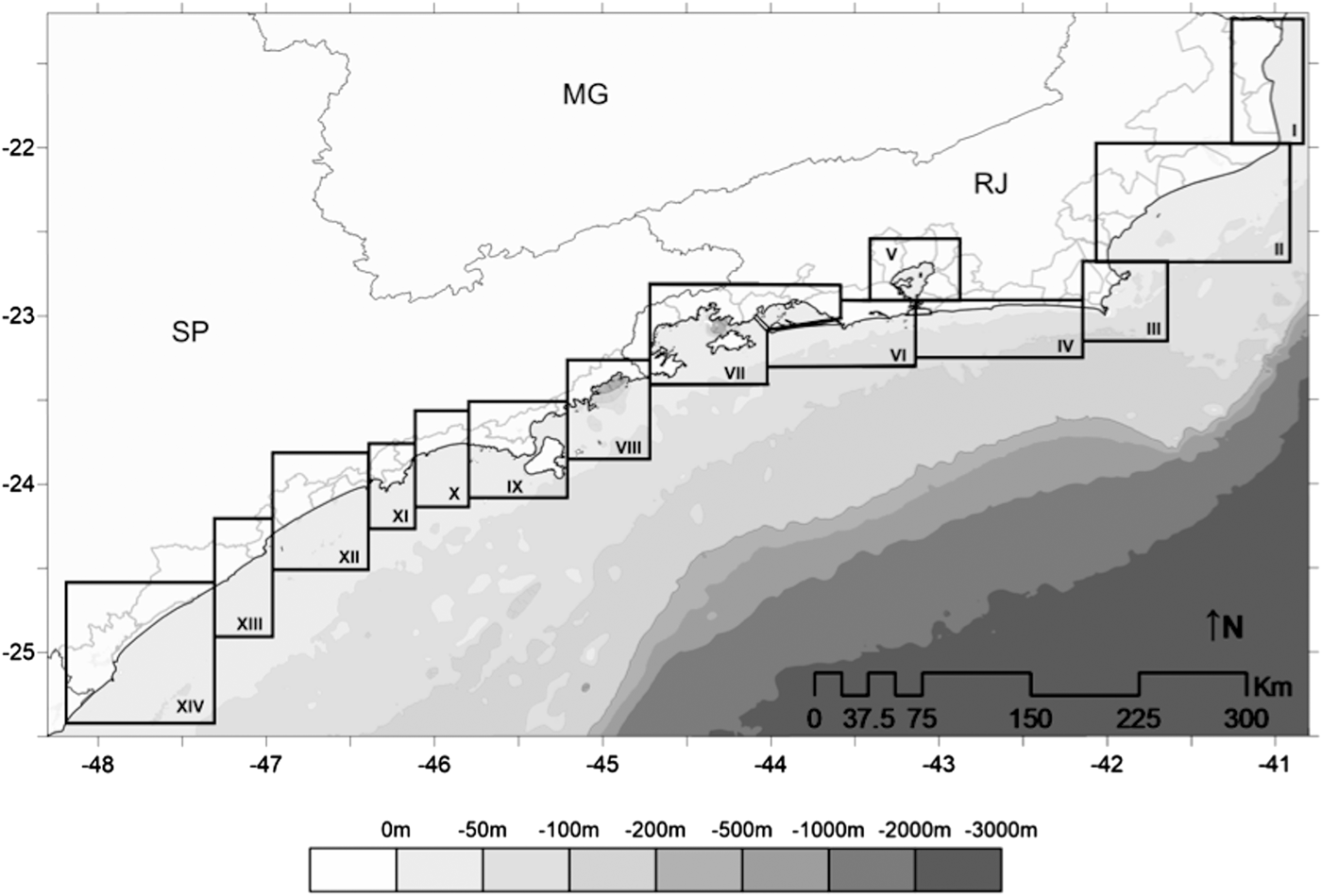
The Brazilian coastline is 7408 km. Approximately 36% is within the right whales’ breeding ground, with the majority of them found along the 3.5% in Santa Catarina State. The study area comprises the densely populated São Paulo and Rio de Janeiro states, 14% of the Brazilian coastline extent (Figure 1) with a wide array of coastal features and economic uses.
Map showing the study area and the 14 sub-areas determined based on the geological and geomorphological characteristics of the south-eastern Brazilian coastline.

Right whale sightings along the south-eastern coast of Brazil were compiled from citizen-science data between 2000 and 2015, from opportunistic sightings gathered from cruises along the coast, newspaper files, museums, the internet and other research groups that provided pictures or videos of right whales with confirmed date and location (see detailed table in Figueiredo et al., Reference Figueiredo, Santos, Siciliano and Moura2017). A total of 57 sightings (3.2 ± 2.0 per year) were divided into solitary individuals and mother and calf pairs. When considering the mother and calf pairs, sightings were divided into pairs in motion when it was possible to follow their movements on consecutive days along the shore, and resting pairs when they were reported to be in the same area for a few consecutive days. Special care was taken when the images permitted individual identification of a sighted right whale based on the callosity pattern to better evaluate their movements along the coast, as well as to use sightings from closer timeframes in adjacent areas to avoid overestimation of distinct individuals. For the cases in which individual identification was not possible, sightings were considered to be of different whales.
The study area was divided into sub-areas based on the geometry and geomorphology of the coast. The presence of larger rivers was included in the analysis, because that could influence the bottom sedimentation and the shape and orientation of the coastline, which in turn affect the incidence of waves.
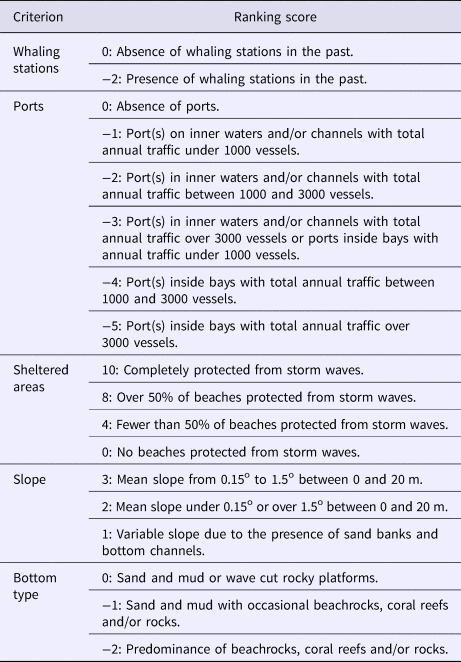
A series of criteria was established based on the environmental requirements described for the species (see Elwen & Best, Reference Elwen and Best2004a, Reference Elwen and Best2004b), the impacts that could threaten these whales (Van Waerebeek et al., Reference Van Waerebeek, Baker, Félix, Gedamke, Iñiguez, Sanino, Secchi, Sutaria, Van Helden and Wang2007; Rolland et al., Reference Rolland, Parks, Hunt, Castellote, Corkeron, Nowacek, Wasser and Kraus2012) and the species' relation to former whaling grounds (Carroll et al., Reference Carroll, Rayment, Alexander, Baker, Patenaude, Steel, Constantine, Cole, Boren and Childerhouse2014). The ranking scores were determined according to the role they played and to the influence they have on the whales. The scores are positive if their effects can induce favourable conditions for the presence of right whales, and negative if their effects will results in bad conditions for the whales. The sub-areas with the highest ranking scores should be the ones that best fit right whales’ requirements for reproductive grounds (Table 1).
Criteria applied to evaluate the suitability of sub-areas to be used by right whales in a breeding ground in the south-east coast of Brazil
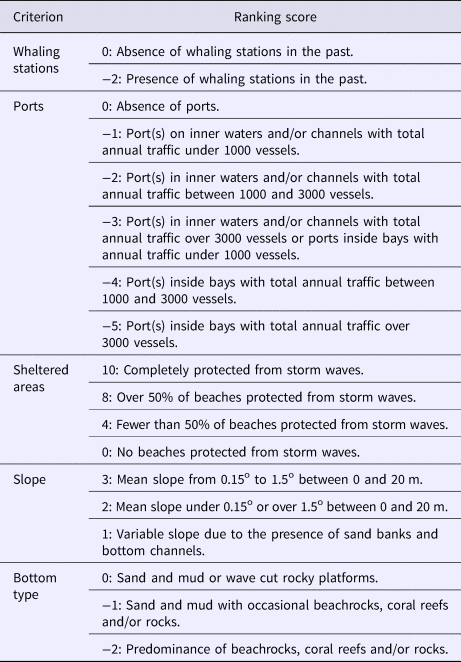
Negative scores indicate a negative influence on the presence of right whales. Positive values are related to positive characteristics that could attract the whales to the surveyed sub-area. Ranking scale can theoretically vary between −9 and +13.
The presence of whaling stations in the past could have a negative impact as the hunting pressure might have led the population to shift to other grounds. Clapham et al. (Reference Clapham, Aguilar and Hatch2008) suggest that the memory of a breeding ground can be lost with the extermination of the group that used that area. Historical information about whaling stations was gathered from literature available concerning whaling activities (Ellis, Reference Ellis1969). The presence of a port increases noise pollution (Rolland et al., Reference Rolland, Parks, Hunt, Castellote, Corkeron, Nowacek, Wasser and Kraus2012) and the probability of strikes (Kraus & Rolland, Reference Kraus, Rolland, Kraus and Rolland2007). The annual number of vessels that use the area was defined based on the annual reports of port authorities. The protection from storm waves (in this case, defined as the waves from the S and SE) was evaluated considering the geometry and geomorphology of the sub-area. The presence of bays and small beaches facing different directions can provide more sheltered areas than long beaches open to storm waves. The slope of the seafloor was measured in degrees from the shoreline to bottom depths of 20 m using the information available on nautical charts made by the Brazilian navy. The 20 m isobath was chosen as a reference because it includes coastal sightings and it is easily assessed from nautical charts. The literature available for the area was used to classify the bottom coverage type (Francisconi et al., Reference Francisconi, Costa, Coutinho and Vicalvi1979; Rodrigues et al., Reference Rodrigues, Furtado, Tessler and Mahiques2003; Muehe et al., Reference Muehe, Lima, Lins-de-Barros and Muehe2006; Tessler et al., Reference Tessler, Goya, Yoshikawa, Hurtado and Muehe2006).
Since the variables are non-quantitative, a Spearman test was applied to validate the methodology and assess if the presence of whales positively correlated with sub-areas with higher scores. The test was made using the cor.test available in R software version 3.2.4 (R Core Team, 2016). Since the sub-areas had different sizes, the total number of sightings was divided by the available area in km2. The available area was considered the zone extending to 3 km from the shore, as it is the maximum distance that right whales are usually found (Elwen & Best, Reference Elwen and Best2004a).
Results
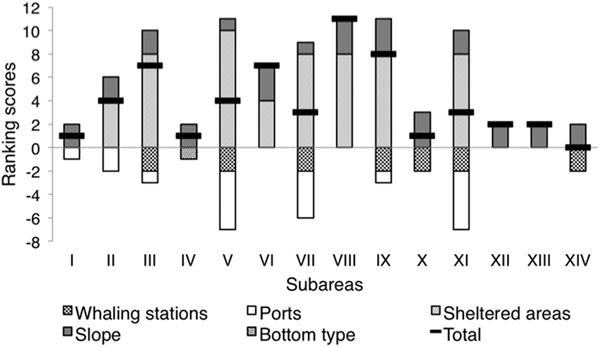
The study area was divided into 14 sub-areas (Figure 1). Each sub-area received a final score after the application of the proposed criteria (Figure 2). Sub-areas III, VIII and IX received the highest scores. Sub-areas I, IV, X, XII, XIII and XIV received the lowest scores. The presence of ports had the greatest influence on lowering the scores for sub-areas V, VII and XI, even though they host the largest bays in the area and could offer suitable shelter for right whales.
Chart showing the final scores for each evaluated sub-area along the south-eastern coast of Brazil according to the proposed criteria for evaluation of areas suitable for usage by southern right whales. The black line indicates the final score.
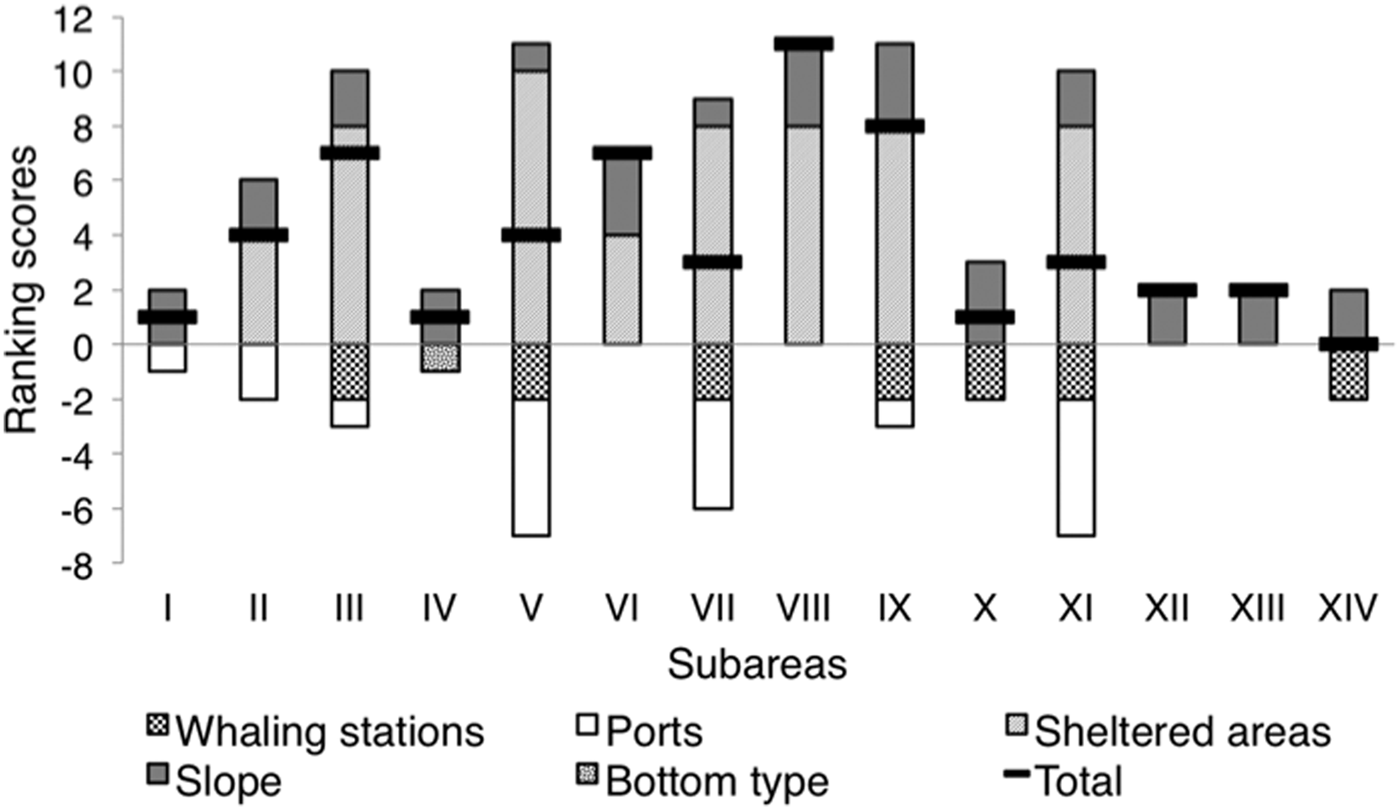
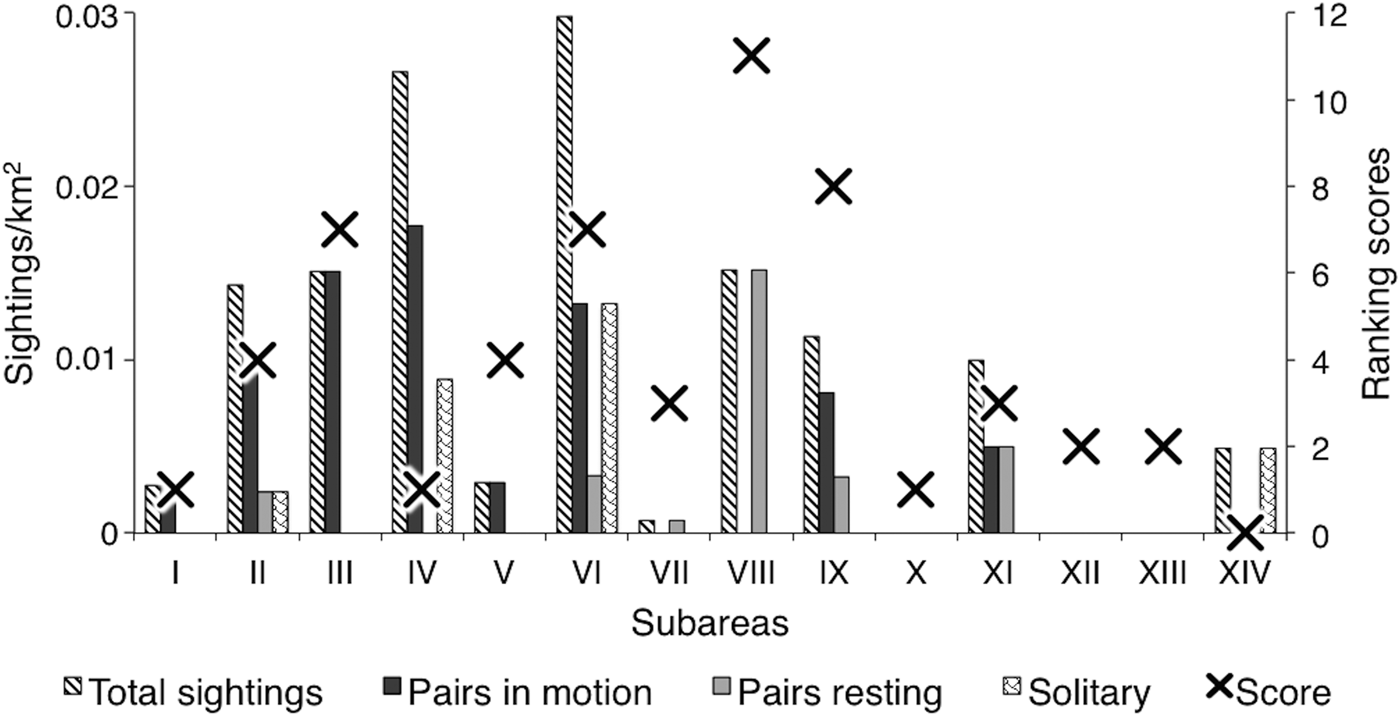
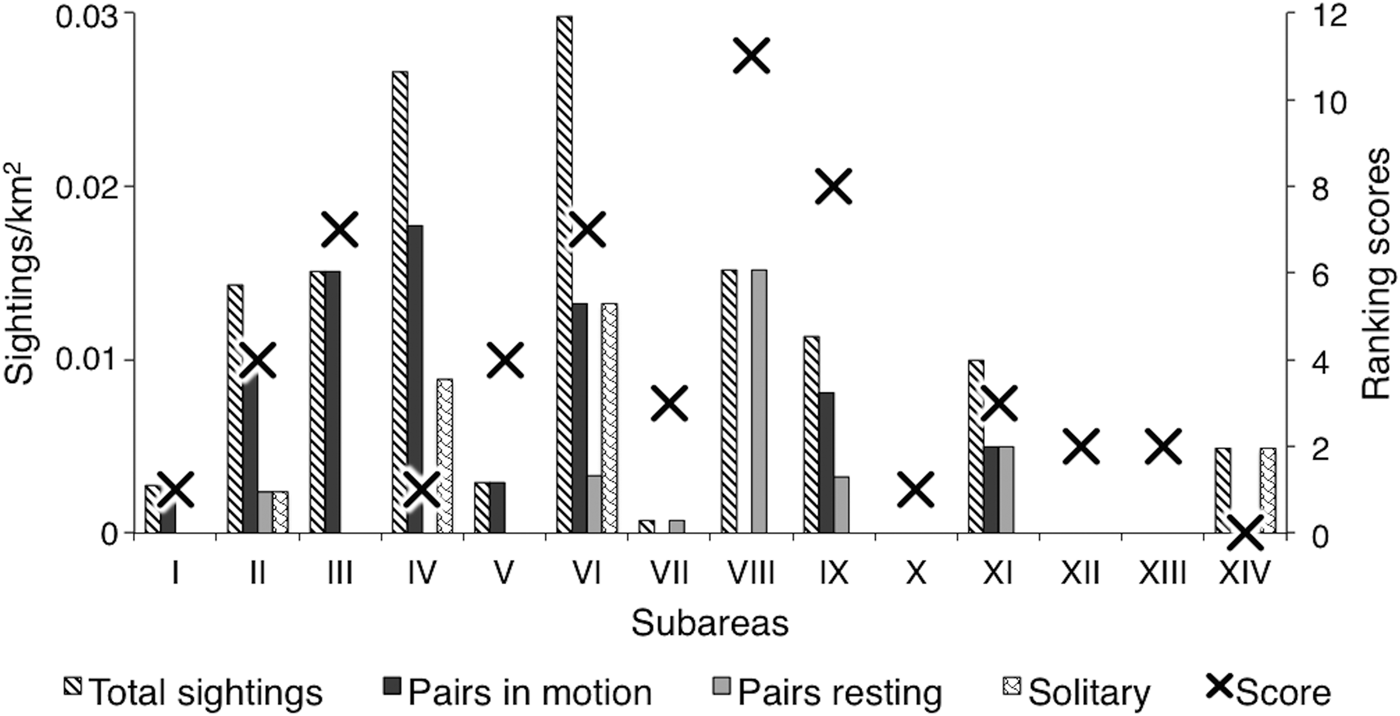
Figure 3 and Supplementary Figure S1 show the distribution of the number of sightings per km2 among the sub-areas with the final score of each sub-area according to Figure 2. Sub-areas IV and VI had the highest number of sightings per km2 when considering all sightings. Sub-area VIII showed the highest sighting rate of resting mother and calf pairs. Mother and calf pair sightings (resting and in motion) coincided with peaks in score rankings, with the exception of sub-area IV.
Number of right whales sightings by km2 for each sub-area along the south-east coast of Brazil. Sightings were divided into total number of sightings, mother and calf pairs in motion, mother and calf pairs resting, and solitary individuals. (X) indicates the final score for each sub-area according to the criteria.
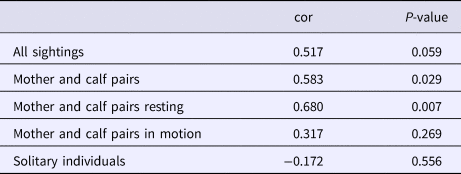
The Spearman correlation test showed that mother and calf pairs, both for resting pairs and for in motion and resting combined, showed a positive correlation with the proposed criteria.
Discussion
Only a few studies describe the characteristics of reproductive grounds for southern right whales and their suitability during breeding and calving seasons. Elwen & Best (Reference Elwen and Best2004a) presented a detailed description of right whale breeding grounds in South Africa. However, their methodology was developed for application exclusively in that area, thus not adequate for reproduction in other wintering grounds. Considering this limitation, the presented study focused on providing tools that can be easily applied to other areas with their own peculiarities.
Dividing the surveyed area into sub-areas based on local features was important to avoid joining regions with distinctly different characteristics into the same sub-area. Elwen & Best (Reference Elwen and Best2004a) compartmentalized the surveyed sub-areas of their study in sectors based on regular latitudinal bands of 20′. This kind of division is not recommended when considering coastlines with heterogeneous orientation and distinct geomorphological and oceanographic features. In this study, the sub-areas were established based mainly on the geomorphological and oceanographic features of the coastline as these have been described as the main factors influencing the presence of right whales. Thus, several sub-areas may present peculiarities that differ from neighbouring areas; these characteristics should be considered when analysing the final results.
Since right whales are known for their use of calm waters in breeding and calving areas (Corkeron & Connor, Reference Corkeron and Connor1999; Best et al., Reference Best, Bannister, Brownell and Donovan2001), the sheltered area criterion was established as the most important in this study. Areas that could offer protection from storm waves (S and SE, in this case) were classified as sheltered areas. Waves coming from other directions tend to be smaller and weaker (Castro & Miranda, Reference Castro, Miranda, Robinson and Brink1998) and, therefore, are assumed to have a smaller impact on the presence of right whales (Elwen & Best, Reference Elwen and Best2004a).
Several different human activities affected and still affect the dynamics of right whale populations temporally and spatially. In the past, whaling was the main threat. Right whales were hunted along the Brazilian southern and south-eastern coast from small boats with little capacity to stray far from land-based stations (Ellis, Reference Ellis1969; Richards, Reference Richards2009). The establishment of a whaling station in Barra Grande, Santos, despite the previously established Bertioga whaling station nearby, is evidence of the limited range of right whale capture in the past. Although whaling station locations indicate areas of prior high concentrations of E. australis, they also indicate areas where the whalers depleted the species. Therefore, the presence of whaling stations was included in this survey as a historical criterion that has a negative influence on the presence of right whales. Carroll et al. (Reference Carroll, Rayment, Alexander, Baker, Patenaude, Steel, Constantine, Cole, Boren and Childerhouse2014) described that right whales are starting to re-establish former wintering grounds in New Zealand. Those authors reported that these whales were not sighted around the main island for four decades; only six decades after capture was banned did sightings become annual. The ability of whale stocks to assimilate experiences over time which could induce changes in behaviour should be considered when surveying current use, although it is not an easy task to understand how individual-level experiences would lead to population level consequences proven by solid evidence.
Currently, vessels are responsible for the main threats to right whales due to ship strikes and noise pollution. The presence of ports, which receive heavy load vessels, is responsible for the increase in vessel traffic and noise pollution (Richardson et al., Reference Richardson, Greene, Malme and Thomson1995; Parks & Clark, Reference Parks, Clark, Kraus and Rolland2007; Rolland et al., Reference Rolland, Parks, Hunt, Castellote, Corkeron, Nowacek, Wasser and Kraus2012). Noise pollution should always be addressed even when those vessels are alongside the coast, since they do not always turn their engines off. The increase in vessel traffic is also responsible for the increase in the likelihood of ship strikes. Ports are usually built in sheltered areas and usually cause habitat loss for right whales. As an example, the ports inside Guanabara Bay in Rio de Janeiro (in sub-area V) not only occupy and pollute the bay, but also increase the number of vessels coming in and out of the area, turning a former historically known breeding ground once visited by hundreds of right whales into an uninhabitable area. Figueiredo et al. (Reference Figueiredo, Santos, Siciliano and Moura2017) suggested that ports might be responsible for a reduction in sightings along the south-east coast of Brazil, as was the case for the North Atlantic right whale (Kraus & Rolland, Reference Kraus, Rolland, Kraus and Rolland2007). Therefore, in our study the presence of ports was selected as one of the most important criteria to be evaluated when considering right whale reproductive grounds.
The presence of small boats was not evaluated since there are no available data concerning their numbers and distribution along the Brazilian coast, or on the effects they may pose to the presence of right whales. Yet, since marinas are built inside protected bays, coves and channels, they compete for sheltered areas and can have a negative influence on the presence of Eubalaena australis. Santos et al. (Reference Santos, Siciliano, Vicente, Alvarenga, Zampirolli, de Souza and Maranho2010) described the inappropriate approach of right whales by small speedboats in the northern coast of São Paulo state (sub-area VIII), which led to a collision between a boat and an adult right whale. It is deemed important to access the influence of small boats on right whales and to better understand if they might be responsible for the decline in sightings in sheltered areas.
Another human threat for right whales is entanglement in fishing gear (Johnson et al., Reference Johnson, Kraus, Kenney, Mayo, Kraus and Rolland2007). However, there are no reports of the influence of such interactions triggering avoidance of a specific area by right whales. Fishing operations are very important to the local economy along the south-eastern Brazilian coast, but maps of fishing effort zones are not readily available for the surveyed area. Therefore, we decided to avoid including fishing operations as one of the evaluated criteria.
The substrate characteristics were similar among the surveyed sub-areas. However, it was included as one of the criteria in this analysis because it has an important influence in other breeding grounds, as reported for the right whale population found in South Africa (Elwen & Best, Reference Elwen and Best2004a). Nonetheless, no sightings were made close to any rocky shore areas and all sightings were observed where the substrate was covered with sand, showing that right whale presence did not coincide with local rocky formations.
Elwen & Best (Reference Elwen and Best2004a) reported that mother and calf pairs in South Africa were seen in areas with mean slopes that varied from 0.67o to 0.95o. Sightings in the studied area followed the same pattern, especially when considering pairs that were resting. Mild slopes were also related to beaches with fewer and smaller waves. The high number of sightings of mother and calf pairs in motion in sub-areas with steeper slopes (IV and VI) may be related to individuals in search of areas with suitable features. Steeper slopes coincide with greater depths close to shore; even if the animals were using deeper water to travel, that would make them easier to be sighted by local onlookers.
Mother and calf pair sightings were positively related to higher scored sub-areas, unlike solitary individuals, which showed no correlation (see Table 2). This result corroborates observations made by Elwen & Best (Reference Elwen and Best2004a), who described different strategies for use of a surveyed area by solitary individuals compared with mother and calf pairs, so their requirements in wintering grounds might be different. Female calf pairs may be more selective than solitary individuals when it comes to habitat selection, especially pairs that are resting, which in our study were concentrated in the area with the highest score (VIII).
Results of the Spearman correlation tests between the sighting rates and the scores of the sub-areas
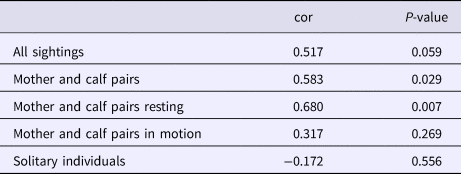
The null hypothesis that the variables were not related is rejected when the P-value is smaller than 0.05. Cor, varying from −1 to 1, indicates the correlation between the variables.
The presented method is useful as a primary diagnostic; we recommend that it be tested and adjusted for other calving grounds. It is especially important when considering areas with opportunistic sighting data with no regular sighting efforts for right whales. The proposed criteria can be easily adapted to any coastal area and are particularly helpful for areas that do not have enough available environmental data for modelling the presence of the whales. However, it does not exclude the need to better understand the distribution of right whales along the shore, their migratory routes, and the evaluation of the dimensions of any human impacts on living stocks. Refined evaluations to understand which areas are the most adequate for use by right whales represent an important step to address conservation actions to protect populations in their breeding and calving grounds.
Supplementary material
The supplementary material for this article can be found at https://doi.org/10.1017/S0025315418001042
Acknowledgements
The authors thank Ph.D. Moyses Tessler and Ph.D. Eduardo Siegle for their valuable support in the initial development of the proposed criteria presented in this study. The authors dedicate this manuscript to the memory of Peter B. Best, our main inspiration to invest much of our energy and time to study and protect right whales. The editor, Dr Marie Louis, the reviewer Matthieu Authier and an anonymous reviewer made important suggestions to improve the first version of the manuscript. Linda Waters reviewed the text flow and grammar.
Financial support
This study was supported by Conselho Nacional de Desenvolvimento Científico e Tecnológico (G.C.F., CNPq – process number 106275/2012-7), Fundação de Amparo à Pesquisa do Estado de São Paulo (FAPESP process number 2011/51543-9). We thank William Rossiter from The Cetacean Society International for supporting G.C.F. to attend international conferences to share these results.