A growing body of evidence now links nutrition in early life to an increased risk of disease in adulthood, and the rapid increase in the prevalence of metabolic and allergic disease across the globe. Australia and New Zealand have not been immune to this major health problem.
The risk of developing metabolic and allergic disease is influenced by a range of factors across each individual’s lifespan. Environmental exposures during fetal development and infancy are now considered responsible for a significant part of lifetime disease risk, as they can have long-term effects on both health and disease.
Critical time periods have been identified, both before conception and during fetal and postnatal development, where exposure to environmental factors, including altered nutrition, can cause adaptations to occur in the growing fetus and infant.Reference Jang and Serra 1 , Reference Singhal 2 Although these effects may be adaptive in the short term, they may also be associated with adverse outcomes in childhood and later life, including a greater risk of obesity,Reference Bammann, Peplies and De Henauw 3 type 2 diabetes, heart diseaseReference Roseboom, van der Meulen and Osmond 4 – Reference Eriksson 7 and allergy.Reference Prescott and Saffery 8
Significant contributions to this literature have been made by a number of long-term studies such as the British-based Avon Longitudinal Study of Parents and ChildrenReference Golding 9 , Reference Lawlor, Cooper and Bain 10 and the Dutch-based Generation R Study.Reference Gaillard, Steegers, Franco, Hofman and Jaddoe 11 , Reference Jaddoe, van Dujin and Franco 12
Maternal and paternal nutrition may be important determinants of pregnancy outcomes and the longer term health of the offspring. Furthermore, these effects can be transmitted to subsequent generations, thus perpetuating a cycle of metabolic disorders. Identifying vulnerable periods in fetal and postnatal development provides an important opportunity for parents and healthcare professionals to intervene and optimize future health outcomes.
Nutrition is one of the most easily modifiable environmental factors during early life. It has been shown to influence both fetal and postnatal growth and development,Reference Langley-Evans 13 and the risk of metabolic and allergic disease in childhood and adult life.Reference Bammann, Peplies and De Henauw 3 – Reference Prescott and Saffery 8
This review provides an overview of the importance of early life nutrition, focussing on the situation in Australia and New Zealand.
Impact of maternal and paternal nutrition before conception
It is well accepted that the health of a woman before conception has a significant impact on pregnancy outcomes and thus a lifelong impact on her child’s health. 14 Obesity reduces fertility and affects the health of the human oocyte.Reference Robker 15 Overweight and obesity in women during their reproductive years is of increasing concern. In Australia, over 12 million men and women (~60%) are overweight or obese with that figure having increased by 5% since 1995. Over 30% more people living in outer regional and remote areas are obese than people living in major cities. 16 In New Zealand, there has been an increase in obesity in men from 17% in 1997 to 30% in 2013 and an increase in women from 21 to 32% over the same time period; a further 34% of adults are overweight. There are also marked ethnic disparities with adult obesity rates of 48 and 68% for Maori and Pacific Islanders, respectively. 17
Women who are obese before becoming pregnant are also more likely to develop gestational diabetes (GDM) when pregnant, which in turn increases the risk of diabetes and overweight in the offspring.Reference Torloni, Betrán and Horta 18
Increased paternal body mass index (BMI) has also been linked to impaired embryo and fetal development, as well as reduced pregnancy rates and pregnancy loss.Reference Bakos, Henshaw, Mitchell and Lane 19 – Reference Ramlau-Hansen, Thulstrup and Nohr 22 Conversely, paternal exposure to famine or undernutrition has been associated with a higher BMI in offspring compared with the offspring of fathers who were not exposed to famine.Reference Veenendaal, Painter and de Rooij 23 An animal study involving male rats fed long-term, high-fat diets found that glucose intolerance and impaired insulin secretion developed in their adult female offspring.Reference Ng, Lin and Laybutt 24 These associations between paternal nutrition and health outcomes in the offspring appear to reflect epigenetic changes in the sperm in response to altered nutrition.Reference Lambrot, Xu and Saint-Phar 25
Nutrition during pregnancy
Maternal undernutrition increases metabolic risk in offspring
The Dutch famine provided one of the first insights into the importance of maternal undernutrition and the development of disease in offspring in later life.Reference Roseboom, van der Meulen and Osmond 4 – Reference Painter, de Rooij and Bossuyt 6 , Reference de Rooij, Painter and Roseboom 26 In the Netherlands, there were serious food shortages and a major reduction in daily food intake over a 7-month period during the winter of 1944–1945. Official daily rations for the general adult population fell to between 400 and 800 calories a day. This calorie restriction had a significant impact on the offspring of women who were pregnant at the time, and of note is that the effects differed according to the timing in gestation of the exposure to the famine.
Children born to women exposed to the famine early in the gestation period have been shown to have a significantly greater risk of obesity, heart disease, type 2 diabetes and renal dysfunction 40–50 years later.Reference Roseboom, van der Meulen and Osmond 4 – Reference Painter, de Rooij and Bossuyt 6 , Reference de Rooij, Painter and Roseboom 26 , Reference Ravelli, van der Meulen and Osmond 27 These effects were also transmitted to the second generation.Reference Painter, Osmond and Gluckman 28 This suggests that in the face of energy restriction the fetus becomes conditioned to become highly energy efficient, known as a predictive adaptive response.Reference Bateson, Gluckman and Hanson 29 A child born into a world where food is plentiful, they tend to consume excessive energy because the hunger/satiety set-points have been altered during development, possibly via epigenetic mechanisms.Reference Waterland 30
Maternal obesity, excessive gestational weight gain (GWG), diabetes and stress during pregnancy increase the risk of obesity in the offspring
Several other environmental circumstances have been found to drive obesity in the offspring. These primarily define the ‘set-points’ or sensitivity for obesity and associated risk factors, for example, hunger and satiety, adipose tissue development and metabolism.Reference Gluckman, Lillycrop and Vickers 31 – Reference Heindel and vom Saal 33
Maternal obesity
A 2015 study from Auckland showed that the risk of having an obese mother was double in Maori and Pacific infants compared with New Zealand European infants (OR 2.23 95% CI 1.23–4.04).Reference Howe, Ellison-Loschmann and Pearce 34 Overweight or obese mothers are significantly more likely to have overweight children, with evidence showing that a woman’s BMI at the start of pregnancy is a strong predictor of her offspring’s risk for obesity in adult life.Reference Kim, Sharma and Sappenfield 35 In addition, maternal obesity often precedes GDM.Reference Kim, Sharma and Sappenfield 35 A systematic review found that maternal pre-pregnancy BMI is directly associated with the risk of developing GDM.Reference Torloni, Betrán and Horta 18
Excess GWG
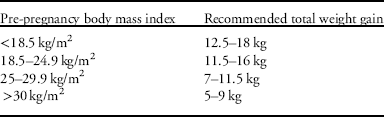
A recently published Australian studyReference Dodd 36 reported that in a cohort of over 2000 women 42% had a GWG above international guidelines, 37 figures similar to previously published smaller studies. In one such study, 38% of Australian women gained more weight during their pregnancy than recommendedReference de Jersey, Nicholson, Callaway and Daniels 38 and in another, 54% of Australian women gained more than recommended (see Table 1).Reference Hure, Collins, Giles, Paul and Smith 39
Recent data from New Zealand are more disturbing still. Over 74% of women in a multicentre study that included Auckland gained more weight during pregnancy than recommended in the international guidelines. Further, 70% of New Zealand woman surveyed were unaware of how much weight gain was appropriate during pregnancy.Reference Fieldwick, Peterson and Stephen 40 Clearly excessive GWG is an important issue to address in Australasia.
The Southampton Women’s Survey found that children born to mothers who gained excessive weight during pregnancy had a greater fat mass at birth and at 6 years than children whose mothers’ GWG was within the recommended range.Reference Crozier, Inskip and Godfrey 41 This study also reported that excessive weight gain in pregnancy was common, and most marked in women who were overweight or obese before becoming pregnant.
The timing of excess weight gain in pregnancy can also affect the health of the offspring. Davenport et al.Reference Davenport, Ruchat and Giroux 42 reported that women following guidelines for healthy living during pregnancy who gained excessive weight during the first half of pregnancy had offspring with a greater heel-crown length, higher birth weight and higher body fat at birth than women who did not gain excessive weight during this time (including those who gained excessive weight during the second half of pregnancy). Excessive weight during the first half of pregnancy was found to be a stronger predictor of excessive body fat in the offspring at birth than total excessive maternal weight gain.Reference Davenport, Ruchat and Giroux 42
Maternal diabetes
Gestational or maternal diabetes mellitus in Australasia is of significant concern. In Australia, analysis of the Midwives Perinatal Data Collection from 2000 to 2009 in over 120,000 indigenous women and nearly 3.5 million non-indigenous women showed a crude prevalence of 5.1 and 4.5%, respectively, a small but highly significant difference (P<0.0001). Moreover, in older (35+ years) indigenous women the crude prevalence of GDM was about 14%.Reference Chamberlain, Banks and Joshy 43 Prevalence rates in New Zealand are also around 5% but appear to have risen from around 3% between 2008 and 2012. 44
Maternal GDM has been shown to result in a number of both short- and long-term complications in offspring,Reference Mitanchez, Yzydorczyk and Siddeek 45 including a greater BMI at 18 years of age.Reference Lawlor, Lichtenstein and Langstrom 46 Recent work by Leng et al.Reference Leng, Li and Zhang 47 examined the association between pre-pregnancy BMI, GWG and anthropometry in the offspring of mothers with GDM. Offspring born to GDM mothers with pre-pregnant overweight or obesity or excessive GWG were associated with increased risks of large for gestational age and macrosomia at birth, and childhood overweight at 1–5 years old, compared with those born to GDM mothers with pre-pregnancy normal weight and adequate GWG.
In addition, animal studies have shown that macrosomic offspring of diabetic mothers exhibit many disorders associated with the metabolic syndrome.Reference Yessoufou and Moutairou 48 , Reference Pereria, Fonseca and Campbell 49
Maternal stress
A study involving Danish army recruits found that those recruits born to mothers bereaved during pregnancy had an overall higher risk of overweight in early adult life than those whose mothers did not. There was also an increased risk of overweight when the mother was bereaved in the 6 months before conception.Reference Hohwü, Li, Olsen, Sørensen and Obel 50
The mechanisms that link maternal obesity, excessive GWG, diabetes and stress during pregnancy to later disease risk in the offspring involve a range of factors. These include epigenetic changes that reset fetal energy metabolism, appetite and adipose tissue development, an abnormal intrauterine environment and poor or restricted placental development.Reference Godfrey, Sheppard and Gluckman 51 , Reference Gardosi 52 These factors, although currently largely associative in nature, may subsequently provide a causal link to the likelihood of developing obesity later in life,Reference Hohwü, Li, Olsen, Sørensen and Obel 50 with the effects of a sedentary lifestyle and modern energy-dense diets exacerbating these effects in affected offspring.
Birth weight is associated with later disease risk
There are clear links between birth weight and subsequent disease risk. While not a causal factor, many studies use birth weight as a proxy measure or clinical marker of the impact of developmental factors on later disease risk. Both low and high birth weights have been associated with an increased risk of childhood and adult obesity, as well as heart disease, stroke and type 2 diabetes later in life.Reference Gluckman, Lillycrop and Vickers 31 , Reference Osmond, Barker and Winter 53 – Reference Osmond, Kajantie and Forsen 57
The United States Nurses’ Health Study involving more than 70,000 women found that in full-term offspring an increased risk of hypertension was associated with low birth weight, whereas an increased risk of obesity was associated with high birth weight.Reference Curhan, Chertow and Willett 58 In birth cohorts from Finland, mortality from stroke and heart disease was greater in people born at a low birth weight.Reference Eriksson, Forsen and Tuomilehto 56 , Reference Osmond, Kajantie and Forsen 57 A British study involving more than 15,000 people found that death rates from heart disease fell with increasing birth weight.Reference Osmond, Barker and Winter 53 , Reference Barker, Osmond, Winter, Margetts and Simmonds 59
Although overweight and obesity, excessive GWG and GDM are all associated with large for gestational age infants,Reference Kim, Sharma and Sappenfield 35 maternal obesity can also lead to low birth weight infants. A New Zealand retrospective analysis of more than 26,000 pregnancies found that maternal obesity was an independent risk factor for small-for-gestational age infants.Reference Anderson, Sadler and Stewart 60 Several mechanisms may account for these counter intuitive findings, including a reduced likelihood that intrauterine growth restriction is detected and acted upon in obese mothers.Reference Gardosi 52 Further, animal studies suggest that a maternal high-fat diet may lead to fetal growth restriction due to placental insufficiency and reduced nutrient transport.Reference Mark, Sisala and Connor 61
Influence of maternal macronutrient intake on appetite and food preferences in the offspring
Programming of appetite and food preferences may occur during fetal development. A study comparing maternal nutrient intake of protein, fat and carbohydrate during pregnancy with the maternal, paternal and child dietary intake of the same nutrients following birth found that the maternal diet during pregnancy was most strongly associated with later childhood intake (assessed at 10 years of age) of the same nutrients, particularly protein and fat. This association was greater than those observed for postnatal paternal and maternal intake, suggesting that some programming of appetite in the offspring may occur during fetal development.Reference Brion, Ness and Rogers 62
Maternal carbohydrate intake has also been associated with alterations in epigenetic markers at birth and later childhood.Reference Godfrey, Sheppard and Gluckman 51
A study involving the Dutch famine cohort found that the offspring of mothers exposed to famine in early gestation were twice as likely to consume a high-fat diet in later life.Reference Lussana, Painter and Ocke 63 Experimental models have also shown that alterations in the maternal nutritional environment can programme altered appetite and food preferences in offspring.Reference Gugusheff, Ong and Muhlhauser 64 For example, a reduction in maternal protein intake can result in a preference for high-fat foods in offspringReference Langley-Evans, Bellinger and McMullen 65 and maternal undernutrition can lead to persistent hyperphagia in offspring in later life.Reference Vickers, Breier, Cutfield, Hoffman and Gluckman 66
Early life nutrition affects the developing immune system and risk of allergic disease
Early life nutrition has a substantial impact on the developing immune system, which is highly sensitive to environmental changes. Although many immune system disorders are inherited, genetic factors alone cannot explain the dramatic rise in many immune diseases in recent years. For example, Australia has one of the highest rates of food allergy in the worldReference Prescott and Allen 67 and there have been reports that there has been a 10-fold increase in specialist referrals for food allergy and a five-fold increase hospitalization for food-related anaphylaxis in recent years.Reference Mullins 68
Surprisingly, there are few if any good data on the prevalence of food allergy in New Zealand. It has been suggested, however, that based on the similar rates of asthma in New Zealand, Australia, the United Kingdom and the United States that the prevalence of food allergy might also be similar to that in Australia. 69 These changes, particularly the rise in food allergy, highlight the vulnerability of the developing immune system to early environmental exposure.Reference Jaddoe, van Dujin and Franco 12 , Reference Langley-Evans 13
Allergic disease may be manifest very early in life, often in the first few months after birth. There are demonstrated differences in the immune function of newborns that develop allergic disease compared with those who do not, suggesting that alterations in immune system function begin during fetal development.Reference Prescott and Saffery 8 , Reference Prescott 70 , Reference Prescott and Clifton 71 A range of environmental cues have been shown to influence immune development and function, including maternal nutrition, microbial burden and pollutants such as cigarette smoke.
In addition, the rising rates of maternal allergy – itself a risk factor for the development of allergic disease in the offspring – may further amplify the effects of environmental exposures on the developing immune system.Reference Prescott and Saffery 8 Women with a history of allergy appear to have altered immune interactions with their fetus, so that the fetal immune response to environmental cues may be modified.Reference Prescott and Saffery 8 In addition, maternal allergy is a stronger predictor of allergic risk in offspring than paternal allergy.Reference Prescott and Saffery 8
Some maternal nutritional changes have been associated with altered immune programming. These include a reduced intake of omega 3 polyunsaturated fatty acids, folate and zinc.Reference Langley-Evans 13 The recently released Australian Bureau of Statistics/Food Standards Australia New Zealand Australian Health Survey: Usual Nutrient Intakes, 2011–12, 72 reveals that about 10% of women aged 19–50 years have an inadequate intake of folate and between 10 and 15% of women in the same age range have an inadequate intake of zinc.
The LISA PLUS study, a prospective study involving more than 3000 infants, found that a high maternal intake of margarine, vegetable oils and some fruits and vegetables (celery, citrus fruit, sweet peppers) during pregnancy may be associated with an increased risk of allergies, especially eczema.Reference Sausenthaler, Heinrish and Koletzko 73
Gut colonization and microbial diversity in the offspring differs between vaginal and caesarean delivery,Reference Azad, Konya and Maughan 74 which may have an impact on the later development of allergic disease;Reference Kolokotroni, Middleton and Gavatha 75 breastfeeding also influences the establishment of the gut microbiota. Low gut microbial diversity and disturbances in gut colonization patterns during infancy and childhood have been associated with later onset of allergic disease.Reference Abrahamsson, Jakobsson and Andersson 76 , Reference Ismail, Oppedisano and Joseph 77
The rate of fetal growth may affect allergy risk. In the UK Southampton birth cohort, rapid fetal abdominal growth between 11 and 19 weeks’ gestation followed by slowing of abdominal growth was associated with later atopy.Reference Pike, Crozier and Lucas 78
Other key maternal nutritional factors that alter the risk of allergic disease and obesity in the offspring
Several other key nutrients, including antioxidants (selenium, zinc, vitamins A, C, D and E), long-chain polyunsaturated fatty acids (LCPUFA) and pre- and probiotics have been linked to multiple health outcomes, including asthma and allergic disease and obesity. The recent Australia New Zealand Australian Health Survey: Usual Nutrient Intakes, 2011–12 72 shows that vitamin A deficiency is around 26% in 14–18-year-old women but falls to around 15–20% in women aged 19–50 years. The number of women with an inadequate intake of vitamin C and selenium is low, being around 5%. Data for vitamin D and vitamin E were not reported.
Antioxidants
In vitro studies in human macrophages have shown that antioxidants can favourably improve immune function.Reference Utsugi, Dobashi and Ishizuka 79 Observational studies suggest that higher dietary intakes of antioxidant-rich foods, such as fresh fruit and vegetables, or higher antioxidant levels measured in pregnancy may reduce the risk of wheezing, asthma and/or eczema in the offspring,Reference Devereux, Turner and Craig 80 although there is inconsistency in the evidence.Reference Martindale, McNeill and Devereux 81
LCPUFA
Dietary omega 3 LCPUFA have been shown to have multisystem anti-inflammatory benefits in terms of immune and metabolic outcomes. Several randomized control trials of maternal fish oil supplementation during pregnancy have found beneficial immunomodulatory effects in terms of reduced allergen sensitization and allergic disease outcomes in the offspring.Reference Dunstan, Mori and Barden 82 – Reference Prescott, Barden, Mori and Dunstan 84 Other studies have shown beneficial effects on metabolic programming and cardiovascular risk with higher dietary intakes of omega 3 LCPUFA in early life.Reference Innis 85 – Reference Skilton, Ayer and Harmer 87
Vitamin D
There is consistent geographical variation in the prevalence of vitamin D status, which has been associated with the incidence of allergic disease. Specifically, a low prevalence of allergic disease is seen in equatorial regions (where vitamin D levels are generally higher), and a higher prevalence of allergic disease with increasing distance from the equator (where vitamin D levels are typically lower).Reference Kimlin 88 This association is reported for food allergy, eczema and asthma.Reference Camargo, Clark and Kaplan 89 – Reference Krstic 91 A systematic review and meta-analysisReference Aghajafari, Nagulesapillai and Ronksley 92 concluded that vitamin D insufficiency during pregnancy is associated with an increased risk of GDM, pre-eclampsia and small-for-gestational age infants. A recent Australian cohort study of infants with a parental history of allergic disease found that lower cord blood vitamin D concentrations were significantly associated with eczema at 1 year of age.Reference Jones, Palmer, Zhang and Prescott 93 Vitamin D deficiency in pregnancy had been called a potential ‘threat’ to the child, an indication of the perceived importance of vitamin D status during this time.Reference Savendahl 94 Moreover, a 2014 publication from South Australia revealed that an inadequate vitamin D status (<50 nmol/l) was present in about 21% of women aged 24–34 years and in about 27% of women aged 35–44 years.Reference Gill, Hill and Shanahan 95
Prebiotics and probiotics
Modern diets typically contain more processed, low-fibre foods and less fruit, vegetables, unprocessed grains, nuts and seeds.Reference Cordain, Eaton and Sebastian 96 , Reference Kuhnlein and Receveur 97 This dietary pattern is associated with changes in gut microbial biodiversity, another common risk factor now strongly linked with both allergy and obesity.Reference Renz, Brandtzaeg and Hornef 98 The maternal gut microbial environment is also emerging as a potential risk/protective factor for allergy in the offspring, with maternal microbial transfer to the fetus likely to begin during pregnancy. This early exposure may help to prepare the fetus for extensive microbial exposure during vaginal delivery and after birth.Reference Rautava, Luoto and Salminen 99 A healthy balance of specific microorganisms in the gut is essential for healthy immune system development; infants who develop allergic disease have an altered balance of gut microorganisms in early life.Reference Nauta, Ben Amor and Knol 100 , Reference Nylund, Satokari and Nikkila 101 Animal models have shown that gut microbiota modulate immune programming and can reduce the risk of allergic disease as well as the risk of obesity, cardiovascular disease and other metabolic disease.Reference Renz 102 – Reference Turnbaugh, Ley and Mahowald 104 Similarly, the use of soluble ‘prebiotic’ fibre (oligosaccharides) has been shown to have beneficial effects on both immune status and metabolic homoeostasis.Reference van Hoffen, Ruiter and Faber 105 , Reference Cani, Possemiers and Van de Wiele 106
Nutrition during the first years of the life
It is not just health and nutrition during pre-conception and pregnancy that can impact on later disease risk. Exposures during infancy and as toddlers can also affect the risks of developing allergic and metabolic disease in later life.
During the early months after birth, nutrition is provided in the form of milk – either human milk via breastfeeding or formula milk via bottle feeding when breastfeeding is not possible. There are long-term health benefits in infants who are breastfed for any length of time, including protection against some immune-mediated disorders,Reference Dogaru, Nyffenegger and Pescatore 107 a reduced risk of obesityReference Arenz, Ruckerl and Koletzko 108 as well as positive effects on cognitive function.Reference Kramer, Aboud and Mironova 109 Breastfed babies may also gain weight at a slower rate than formula-fed babies, which has implications for the subsequent reduced risk of overweight and obesity.
Although infant-feeding guidelines have typically recommended exclusive breastfeeding until around 6 months of age, 110 there is emerging evidence that introducing solids after 17 weeks (~4 months) and before 6 months of age (while continuing breastfeeding) has potential benefits in terms of reducing the risk of some food allergies.Reference Du Toit, Katz and Sasieni 111 – Reference Koplin, Osborne and Wake 113 There may be a time window for the child to develop appropriate immunological gut tolerance beginning at around 4 months of age.Reference Prescott, Smith and Tang 112 In line with these findings, the Australasian Society of Clinical Immunology and Allergy 114 has advised relaxing recommendations to avoid certain food groups and allow the introduction of solid foods after 17 weeks, while continuing breastfeeding. The ideal time to introduce solids is a topic of significant debate, and it may be too soon to draw definite conclusions, although most recommendations state that it is important that the introduction of solids does not occur before 17 weeks of age, before which the infant may not be developmentally ready to be able to consume solids. Moreover, two recent reviews found that introducing solid foods any earlier may increase the risk of childhood overweight or obesity, although the evidence is not strong.Reference Pearce, Taylor and Langley-Evans 115 , Reference Daniels, Mallan, Fildes and Wilson 116 A recent contemporary Australian study based in Queensland reported that in a group of first-time mothers, 21% had given their infant non-milk foods before 17 weeks of age.Reference Newby and Davies 117
The composition and quality of milk and early solid foods may also influence changes in BMI and lead to obesity.Reference Weber, Grote and Closa-Monasterolo 118 For example, a high intake of protein during infancy has been linked to obesity in childhood. The Childhood Obesity Project compared lower protein and higher protein content formula (both levels within recommended ranges) during the first year of life.Reference Weber, Grote and Closa-Monasterolo 118 The study found that infants fed the higher protein content formula had a significantly higher BMI at 6 years of age and a greater risk of obesity. Although the optimal upper limit of dietary protein intake has not been firmly established, a systematic review found that a higher protein intake (i.e. comprising 15–20% of energy intake) in infancy and early childhood was associated with increased growth and an increased risk of being overweight in later childhood.Reference Hörnell, Lagström, Lande and Thorsdottir 119
The rate of growth during infancy influences metabolic risk in later life
Weight gain during the first year of life, often in the form of rapid ‘catch-up’ growth, is a strong predictor of later obesity risk.Reference Baird, Fisher and Lucas 120 , Reference Monteiro and Victora 121 Moreover, in premature infants at least, the rate of early growth in infancy has been related to long-term cardiovascular health.Reference Singal, Cole, Fewtrell, Deanfield and Lucas 122
This, however, has to be considered in the light of evidence that rapid growth and ‘aggressive’ nutrition in such infants is associated with improved cognitive function in childhood.Reference Ziegler, Thureen and Carlson 123
Importance of early eating patterns and behaviours
The first 2–3 years after birth are critical times for programming of long-term energy regulation, especially establishing patterns of healthy nutrition and physical activity.124 It is also a key time during which a child’s taste patterns and food preferences are set. Importantly, children’s eating and lifestyle behaviours are heavily influenced by parenting practices. Young children may be at greater risk of becoming overweight or obese due to parental modelling of behaviours that predispose children to weight gain.124
Conclusion
Nutrition and lifestyle factors throughout pre-conception, pregnancy, infancy and early childhood have a profound influence on a child’s development and long-term health.
The evidence contained in this publication is designed to assist healthcare professionals in their efforts to maximize this critical window of opportunity when the foundations of future health are created.
As the findings of further research become available, recommendations for optimizing early life nutrition should be formulated and made widely available as part of the preventative health policy agenda in both Australia and New Zealand.
Recommended weight gain during pregnancy 37

Acknowledgements
The authors acknowledge the assistance from Sue Markham, Medical and Science writer at Superscript Medical Writing who collated the authors input and drafted an initial report for critical review and revision by the authors, as well as the assistance of John Morton from Ethical Strategies who played a coordination, facilitation and administration role for the initial meeting of the authors and also kept a version control of the document.
Financial Support
The authors also acknowledge that the initial meeting of the authors was organized by Nutricia/Danone Australia/New Zealand. Nutricia/Danone funded accommodation, flights, where required, and an honorarium to each member of the ANZ Early Life Nutrition Working Party for their attendance at the meeting, but had no input into the original document, the current manuscript or the recommendations therein. The production of this manuscript was supported via a donation to the Children’s Nutrition Research Centre, University of Queensland from Nutricia/Danone.
Conflicts of Interest
None.