



LEARNING OBJECTIVES
After reading this article you will be able to:
-
• identify the aims and applications of ten review types commonly used in psychology and psychiatry
-
• select the most appropriate type of review study for your research, based on the research question, the level of available evidence and practical constraints
-
• recognise common pitfalls in choosing a review type and avoid them.
Evidence synthesis – in the form of literature reviews – is the cornerstone of evidence-based health sciences, providing integrated knowledge to guide research, practice and policy. Since the first reviews appeared in the scientific literature, the methodological scope of reviews has expanded, such that Sutton and colleagues identified 48 different types of review study (Sutton Reference Sutton, Clowes and Preston2019). These different types have emerged in response to diverse research questions and objectives (Gordon Reference Gordon2016), and it is likely that with the development of broader questions in the future, more review methods will be devised.
Brief history of the review
The earliest scientific reviews, which date back hundreds or even thousands of years, were mostly narrative reviews that, while summarising experts’ perspectives, were prone to selection bias. In 1753, James Lind, in his research, attempted to review all available evidence, marking a turning point in the development of a new type of review study, namely systematic reviews (Lind Reference Lind1753). The proliferation of this type of study in the late 20th century signalled a paradigm shift towards the methodological and reproducible synthesis of research literature: a search of PubMed for systematic reviews published between 1980 and 2000 retrieves 2234 records.
In 1976, Gene Glass introduced the term meta-analysis to describe the statistical synthesis of evidence for the first time (Glass Reference Glass1976). In the years that followed, with the expansion of diverse research questions and objectives, new types of review also emerged. For example, to compare the effectiveness of different treatments for a given condition simultaneously, network meta-analysis was introduced (Chaimani Reference Chaimani, Caldwell and Li2019; Caldwell Reference Caldwell, Ades and Higgins2005); to examine the impact of study design features on study results, meta-epidemiological studies were developed (Sterne Reference Sterne, Egger and Smith2001; Puljak Reference Puljak, Makaric and Buljan2020); and to identify research gaps across domains, mapping reviews were created (James Reference James, Randall and Haddaway2016; Miake-Lye Reference Miake-Lye, Hempel and Shanman2016). Accordingly, nearly 50 distinct types of review study have been identified so far (Sutton Reference Sutton, Clowes and Preston2019).
With choice comes confusion
The proliferation of review types in recent years, although reflecting the growth of methodology in the health sciences, can also lead to confusion among researchers – particularly students and early-career scholars – because determining which type of review is most appropriate for a specific research objective is not always straightforward. Even experienced researchers may encounter this ambiguity. For instance, in a personal experience, I recently reviewed a manuscript for a well-known journal. The author was a highly recognised and distinguished researcher in the field of suicide; however, despite his extensive experience, he had chosen the wrong type of review. Given the aim of the study, he should have used a scoping review, but instead had conducted a systematic review. Interestingly, along with myself, four other reviewers had also evaluated the paper, yet none of them noticed this issue. After I explained the matter to the author, he acknowledged the mistake.
This personal experience, along with repeated observations of researchers’ confusion in selecting the appropriate type of review, motivated me to write this article to compare and clarify the types of review most frequently used in psychiatric and psychological research in terms of objectives, research questions and applications. Such clarification can help researchers and students select the most suitable review method according to their aims and research questions, thereby avoiding common mistakes. This article focuses on ten review types commonly used in psychiatric and psychological evidence synthesis. Specialised qualitative evidence synthesis approaches are outside its scope because they have a different nature and require separate, dedicated discussion.
Types of review study
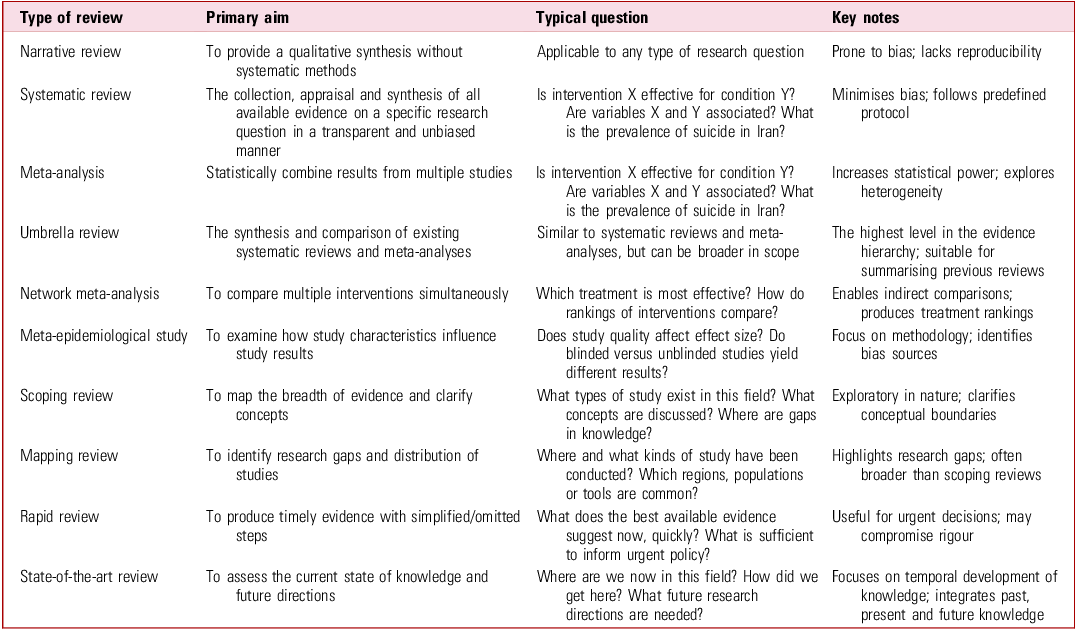
Psychiatry and psychology researchers can choose from a wide spectrum of review types, depending on their specific research questions and objectives. To date, various classifications of review studies have been proposed (e.g. Munn Reference Munn, Stern and Aromataris2018a; Sutton Reference Sutton, Clowes and Preston2019). Explaining all types of review in full detail and outlining how each is conducted would require an enormous amount of material – so much that even a 1000-page book might not suffice. In this article, I have focused on describing ten types of review that, based on my personal experience, are most commonly used in psychiatric and psychological research and are those researchers are most likely to encounter. Table 1 provides a structured overview of the key features of these review types. This typology of widely used reviews not only helps those intending to conduct a review to select the appropriate type, thereby saving time and resources and producing the required evidence in the shortest possible time, but also assists policymakers in understanding which type of review can provide the most relevant evidence for their aims, and in determining which type of review to commission and invest in.
Overview of the ten types of review most commonly used in psychiatric and psychological research

TABLE 1 Long description
A table with ten rows and four columns. The columns are labeled Type of review, Primary aim, Typical question, and Key notes. The rows are labeled with different types of reviews: Narrative review, Systematic review, Meta-analysis, Umbrella review, Network meta-analysis, Meta-epidemiological study, Scoping review, Mapping review, Rapid review, and State-of-the-art review. Each row provides details on the primary aim, typical questions, and key notes for each type of review.
The ten review types discussed here are: narrative reviews; systematic reviews; meta-analyses; umbrella reviews; network meta-analyses; meta-epidemiological studies; scoping reviews; mapping reviews; rapid reviews; and state-of-the-art reviews.
Narrative reviews
Narrative review is one of the most traditional and common types of review in academic writing, with a history spanning thousands of years. The primary aim of this type of review is to provide a comprehensive, qualitative synthesis of the existing literature on a particular topic, without employing a systematic search strategy or predetermined criteria for study selection (Mahdavinoor Reference Mahdavinoor, Ladan-Moghadam and Mahdavinoor2025).
Narrative reviews are highly susceptible to bias. For example, suppose we intend to examine the association between overweight and depression through a narrative review. If, worldwide, 100 articles have been published on this topic, of which only 15 report a significant association and 85 do not, in a narrative review, one could selectively cite from either set of studies and present a conclusion aligned with one’s viewpoint (Mahdavinoor Reference Mahdavinoor, Ladan-Moghadam and Mahdavinoor2025). Another challenge with this type of review is its lack of reproducibility. Scientific research should be replicable by other researchers, but narrative reviews lack this feature because of the absence of a transparent methodology. Moreover, the possibility of conflict of interest is present because of the selective inclusion of studies (Mahdavinoor Reference Mahdavinoor, Ladan-Moghadam and Mahdavinoor2025).
For these reasons, some journals may be less inclined to publish narrative reviews. Even when they do accept them, conditions are often imposed; for instance, they may only consider submissions from recognised experts, or specify that such reviews can only be submitted by invitation. Nevertheless, narrative reviews can be useful for readers unfamiliar with a topic who seek a broad overview of a particular field. They may also provide researchers with a platform to articulate new ideas within a given domain.
For practical guidance on writing narrative reviews, see Chaney (Reference Chaney2021), Sarkar & Bhatia (Reference Sarkar and Bhatia2021) and Ferrari (Reference Ferrari2015).
Systematic reviews
A systematic review is a structured and rigorous methodology for synthesising research evidence using explicit, transparent and reproducible methods. Unlike narrative reviews, systematic reviews follow a predefined protocol in which the research question, inclusion and exclusion criteria, data extraction procedures, methods for quality assessment and strategies for data synthesis are specified in advance.
In a systematic review, all records retrieved from specified databases for a defined time frame are screened, and studies that meet the predefined inclusion criteria are included, regardless of the direction of their results. This minimises bias and makes the findings reproducible and reliable. For example, if we aim to conduct a systematic review on the effectiveness of cognitive–behavioural therapy for adolescents with depression, we first develop a protocol in which the methods are described in detail (including the research question, eligibility criteria, search strategy, etc.). We then conduct the search in accordance with this protocol. In this specific example, we might search Scopus and PubMed and screen records indexed between 2000 and 2025. If the search yields, for instance, 3000 records, we are required to screen all retrieved records against the predefined inclusion criteria to determine which studies should be included. This structured process helps minimise researcher selection bias and improves transparency and reproducibility.
Systematic methods versus systematic reviews: definition of terms
It is useful to distinguish between using systematic methods and conducting a systematic review as a specific review type. Several review designs, such as scoping reviews, mapping reviews, umbrella reviews and rapid reviews, may use systematic methods, including explicit search strategies, predefined eligibility criteria and transparent study selection. However, this does not by itself make them systematic reviews in the narrower typological sense, because they differ in their primary aim, scope and typical research question.
In this article, the term ‘systematic review’ is used to refer to a distinct review type that addresses a more specific and narrowly framed research question by identifying, appraising and synthesising eligible studies through predefined and reproducible methods. For example, ‘Does cognitive–behavioural therapy reduce depressive symptoms in adolescents?’ is a question suited to a systematic review. By contrast, ‘What kinds of intervention have been studied for adolescent depression, in which populations, settings and outcomes?’ is a question suited to a scoping review. Both reviews may use transparent and reproducible search methods, but they remain different review types because their aims, questions and outputs are different.
For practical guidance on conducting a systematic review, see Higgins et al (Reference Higgins, Thomas and Chandler2024) and Pollock and Berge (Reference Pollock and Berge2017).
Meta-analyses
Meta-analysis refers to the statistical combination of results from two or more studies (Higgins Reference Higgins, Thomas and Chandler2024). In practice, when multiple primary studies exist in a given field (e.g. the effectiveness of drug X on depression) and these studies have reported different results, we can combine the findings and assign weights to the individual studies in order to obtain a pooled estimate along with a confidence interval (Dekkers Reference Dekkers2018). As another example, suppose there are 31 provinces in Iran, and in each province a cross-sectional study has been conducted to estimate the prevalence of suicide among university students. By performing a meta-analysis of these prevalence estimates across provinces, we can calculate an overall percentage that represents the approximate prevalence of suicide among university students in Iran.
Meta-analysis serves several purposes, including increasing statistical power, exploring heterogeneity across studies and providing a more precise estimate of effect (Box 1) (Borenstein Reference Borenstein, Hedges and Higgins2009; Higgins Reference Higgins, Thomas and Chandler2024). A systematic review may lead to a meta-analysis if the quantitative data extracted are sufficiently similar and not highly heterogeneous. Sometimes, researchers proceed to a meta-analysis without adequately considering the degree of methodological heterogeneity among the included studies, which can call the credibility of the results into question. When methodological heterogeneity is high, it may be preferable to present a systematic review without meta-analysis (Borenstein Reference Borenstein, Hedges and Higgins2009; Higgins Reference Higgins, Thomas and Chandler2024).
Clinical scenario: Meta-analysis – a focused question and combinable data
A clinician wants to know whether cognitive–behavioural therapy for adolescents with depression, compared with a waiting list control, leads to a significant reduction in symptom severity. Preliminary evidence suggests that there are a relatively large number of randomised trials with broadly comparable outcomes (e.g. depression scores measured using standardised instruments).
In this case, conducting a systematic review is necessary to identify and select studies in an organised way, and if data heterogeneity is not high, a meta-analysis can provide a more precise estimate of the effect size through statistical pooling.
For practical guidance on conducting a meta-analysis, see Higgins et al (Reference Higgins, Thomas and Chandler2024) and Tawfik et al (Reference Tawfik, Dila and Mohamed2019).
Umbrella reviews
The findings of primary studies are often inconsistent, which can create confusion in clinical decision-making and health policy (Mahdavinoor Reference Mahdavinoor, Ladan-Moghadam and Mahdavinoor2025; Ioannidis Reference Ioannidis2005). To address this challenge, systematic reviews and meta-analyses – considered second-level studies – have been designed to synthesise and analyse the results of primary studies, thereby providing a more comprehensive and reliable picture of the available evidence. For example, suppose that 20 primary studies worldwide have investigated the effect of a particular drug on reducing blood pressure. A systematic review and meta-analysis would attempt to summarise these 20 studies and statistically combine their results to generate an overall and trustworthy estimate of the drug’s effectiveness. However, in some cases, multiple independent systematic reviews and meta-analyses are published on the same topic. This is where the umbrella review comes into play: a third-level study that synthesises, evaluates and compares the findings of existing systematic reviews and meta-analyses to provide a higher-level summary of the evidence (Fernandez Reference Fernandez, Sharifnia and Khalil2025).
An umbrella review is a type of review that focuses not on primary studies, but rather on systematic reviews and meta-analyses (Fernandez Reference Fernandez, Sharifnia and Khalil2025). In other words, an umbrella review examines systematic reviews and meta-analyses rather than primary studies. Compared with meta-analyses, the research questions in umbrella reviews are usually broader (Asgarizadeh Reference Asgarizadeh and Zardkhaneh2024). For instance, a single meta-analysis may assess whether one particular factor is a risk factor for depression. Globally, multiple meta-analyses have been conducted to identify various risk factors for depression, and even for a single factor, several meta-analyses may exist. An umbrella review, by contrast, would examine all risk factors for depression and synthesise the results of all relevant meta-analyses to provide a comprehensive and precise picture of the risk factors for depression.
Currently, umbrella reviews sit at the top of the hierarchy of evidence (Paolo Reference Paolo and Joaquim2018; Asgarizadeh Reference Asgarizadeh and Zardkhaneh2024) because they synthesise findings from existing systematic reviews and meta-analyses; however, this position refers to the level of synthesis, not to inherent methodological superiority or certainty of evidence. It is important to emphasise that no review type is intrinsically better than another; the most appropriate approach depends on the research question, the level and state of the available evidence, and practical constraints such as time and resources.
For practical guidance on conducting an umbrella review, see Fernandez et al (Reference Fernandez, Sharifnia and Khalil2025), Paolo and Joaquim (Reference Paolo and Joaquim2018), Biondi-Zoccai (Reference Biondi-Zoccai2016) and Aromataris et al (Reference Aromataris, Fernandez and Godfrey2015).
Network meta-analyses
Suppose there are several different treatments for depression, each shown to be effective in individual studies. How can we determine which of these treatments is most effective? Network meta-analysis enables the simultaneous comparison of multiple interventions within a single analysis by combining both direct and indirect evidence (Lumley Reference Lumley2002).
The advantage of network meta-analysis is that it maximises the use of available evidence and allows for comparisons that have not been directly tested, thereby producing a coherent analysis of an entire set of interventions. For example, if one trial compares treatment A with treatment B, and another trial compares treatment B with treatment C, a network meta-analysis allows us to indirectly compare treatment A with treatment C. In addition, by ranking interventions, network meta-analysis provides clinicians with a clearer sense of the relative priority of treatment options (Box 2) (Salanti Reference Salanti2012; Higgins Reference Higgins, Thomas and Chandler2024).
Clinical scenario: Network meta-analysis – comparing multiple interventions simultaneously
A psychiatrist works in a clinic with adolescents with depression and wants to know which of several treatment options is most effective. A preliminary check shows that multiple clinical trials exist, but not all treatments have been compared head-to-head within a single trial; some studies have evaluated treatment A against a waiting list, some have compared treatment B with usual care, and some have compared a combined treatment with one of the options.
In this situation, a network meta-analysis may be a more appropriate option, because it allows direct and indirect evidence to be combined, enables simultaneous comparison of multiple treatments and can even provide a ranking of interventions (where appropriate).
One mistake that researchers may unintentionally make when choosing this review type is to conduct a network meta-analysis simply because multiple interventions exist, even when the available evidence is too limited, uncertain or unsuitable for reliable indirect comparisons and treatment rankings (Mbuagbaw Reference Mbuagbaw, Rochwerg and Jaeschke2017; Higgins Reference Higgins, Thomas and Chandler2024).
For practical guidance on conducting a network meta-analysis, see Higgins et al (Reference Higgins, Thomas and Chandler2024).
Meta-epidemiological studies
Why is it recommended that blinding (masking) be performed in trials whenever possible? What advantage does blinding provide? How about random allocation? Do lower-quality studies tend to produce larger effect estimates compared with higher-quality studies? Meta-epidemiological studies are conducted to answer such questions. Put simply, meta-epidemiology investigates how study characteristics influence study results across multiple studies (Naylor Reference Naylor1997; Puljak Reference Puljak, Makaric and Buljan2020). In this approach, the focus shifts from a clinical question such as ‘Is this intervention effective?’ to a methodological one: ‘Does the way studies are conducted influence the results we obtain?’
For practical guidance on conducting a meta-epidemiological study, see Zhang (Reference Zhang2016).
Scoping reviews
The JBI Scoping Review Methodology Group defines scoping reviews as a form of evidence synthesis conducted with the aim of systematically identifying and mapping the breadth of studies available on a particular topic, field or issue, without being restricted to a specific type of source (such as primary studies, reviews or non-empirical evidence). These reviews can help clarify key concepts and definitions in the literature and identify important features or factors related to the topic under investigation, including methodological aspects (Munn Reference Munn, Pollock and Khalil2022).
Put more simply, a scoping review is an exploratory method of evidence synthesis that seeks to determine ‘what exists’ in a research area, rather than ‘what works’ (Munn Reference Munn, Pollock and Khalil2022). In contrast to systematic reviews, which typically address a precise question (e.g. ‘Is treatment X effective for condition Y?’), a scoping review aims to chart the entire field (e.g. ‘What types of study have been conducted on condition Y?’ or ‘What concepts have been discussed in the literature regarding treatment X?’).
The objectives of scoping reviews include (Munn Reference Munn, Peters and Stern2018b):
-
(a) identifying the types of evidence available in a particular field;
-
(b) refining and clarifying essential terms and definitions used in the literature;
-
(c) clarifying key concepts and definitions in the literature;
-
(d) identifying important features or factors related to a concept;
-
(e) serving as a preliminary step towards a systematic review;
-
(f) identifying and analysing existing knowledge gaps in the field.
A fundamental distinction between scoping reviews and systematic reviews lies in the research question and the scope of evidence eligible for inclusion. In a systematic review, the research question is usually narrow and specific, focusing on evaluating the effectiveness of an intervention, a risk factor or a particular association between variables. Accordingly, the included evidence is usually limited to the study designs or publication types most appropriate for answering that specific question; for example, a systematic review may include only randomised controlled trials (RCTs), only observational studies, or another clearly defined type of evidence, depending on its aim. In scoping reviews, however, the question is usually broader and more exploratory, and a wider range of evidence sources and publication types may be included within the same review, from letters to the editor to meta-analyses and RCTs (Munn Reference Munn, Pollock and Khalil2022; Pollock Reference Pollock, Peters, Tricco, Aromataris, Lockwood and Porritt2024). For instance, suppose we wish to investigate interventions for reducing anxiety among university students. If our aim is solely to assess the effectiveness of each intervention, a systematic review and meta-analysis would be appropriate. However, if the goal is to identify the full range of interventions implemented, the types of population studied, the methods of delivery, the assessment tools used and the contexts of research, then a scoping review would be the method of choice.
For practical guidance on conducting a scoping review, see Munn et al (Reference Munn, Pollock and Khalil2022), Pollock et al (Reference Pollock, Peters, Tricco, Aromataris, Lockwood and Porritt2024) and Mak & Thomas (Reference Mak and Thomas2022).
Mapping reviews
To my knowledge, this type of review was first introduced by the Evidence for Policy & Practice Information Centre (EPPI Centre) at University College London (Gough Reference Gough, Oliver and Thomas2017; EPPI Centre 2005). Its primary aim is to answer questions such as ‘What do we know about a topic?’ or ‘What research exists, and where, within a specific field?’ (Campbell Reference Campbell, Tricco and Munn2023). In other words, the main purpose of a mapping review is to identify research gaps in a given area. For example, suppose we plan to conduct a mapping review on studies of suicide among university students in Iran. We would need to address questions such as: What types of study design have been conducted most frequently? What measurement tools have been used? In which regions have most studies been carried out? What has been the trend in the growth and publication of relevant articles over time? By reviewing studies related to suicide among Iranian students and answering these and similar questions, we can identify existing research gaps.
Mapping reviews may sometimes have a broader focus than scoping reviews but extract more limited data from the included studies (Campbell Reference Campbell, Tricco and Munn2023).
For practical guidance on conducting a mapping review, see James et al (Reference James, Randall and Haddaway2016) and Khalil et al (Reference Khalil, Welch and Grainger2025).
Rapid review
A rapid review is a form of knowledge synthesis that accelerates the process of conducting a traditional systematic review by simplifying or omitting certain methodological steps to produce evidence in a resource-efficient and timely manner (Hamel Reference Hamel, Michaud and Thuku2021).
Traditional systematic reviews, by adhering to rigorous guidelines, can provide relatively reliable evidence, but their completion can take a long time – often more than a year. At times, however, policymakers need to make urgent decisions and therefore require trustworthy evidence quickly (Box 3). In such situations, conducting a traditional systematic review may not be feasible, and instead, a type of review is needed that can be carried out within a shorter time frame. Rapid reviews fulfil this need by expediting the systematic review process through the simplification of certain steps (e.g. data extraction carried out by a single reviewer instead of two) or omission of others (e.g. skipping the quality appraisal of included studies), making them feasible within a limited time (Hamel Reference Hamel, Michaud and Thuku2021). For instance, suppose a novel infectious disease is spreading across a country, and the government needs to decide whether drug X is effective enough to be included in treatment guidelines. In such circumstances, where quick decision-making is essential, conducting a rapid review would be the most suitable option.
Clinical scenario: Rapid review – time and resource constraints
A hospital committee must decide within 2 weeks whether to develop an internal guideline for managing acute anxiety among healthcare staff, and there is not enough time to conduct a full systematic review. The research team is small, and it is not possible to complete all steps of traditional systematic reviews and meta-analyses within such a short time frame. However, the clinical decision still needs to be based on the available evidence.
In this situation, a rapid review is a more appropriate option, because while maintaining the overall logic of structured reviews, it transparently streamlines certain steps (e.g. limiting databases or the time window, or using a single screener and omitting quality control).
For practical guidance on conducting a rapid review, see Hamel et al (Reference Hamel, Michaud and Thuku2021), Tricco et al (Reference Tricco, Langlois and Straus2017) and Garritty et al (Reference Garritty, Hamel and Trivella2024).
State-of-the-art reviews
This type of review, which is time-oriented, examines the current state of knowledge about a phenomenon and suggests directions for future research (Grant Reference Grant and Booth2009). Questions such as ‘Where are we now in a particular field of science? Where were we before, and how did we get here? And where are we heading?’ are typically addressed in state-of-the-art reviews (Barry Reference Barry, Merkebu and Varpio2022a). For example, suppose we intend to conduct a state-of-the-art review of treatments for depression. We would first examine when treatments for depression were initially introduced and trace their historical trajectory to the present point (for instance, beginning with psychoanalysis, then the emergence of cognitive–behavioural therapy, followed by pharmacotherapy and, most recently, artificial intelligence-based interventions). Next, we would analyse why the treatment pathways developed as they did (e.g. why pharmacological treatments became dominant). Finally, we would assess where the field currently stands and what potential directions lie ahead for the future. A common mistake is to provide only a descriptive history or a fragmented summary of the literature. A state-of-the-art review should instead interpretively show where the field currently stands, how it has reached this point and where it may move in the future.
For practical guidance on conducting a state-of-the-art review, see Barry et al (Reference Barry, Merkebu and Varpio2022a, Reference Barry, Merkebu and Varpio2022b, Reference Barry, Merkebu and Varpio2022c).
Reporting guidelines
In addition to signposting methodological resources for designing and conducting each type of review, it is equally important to report completed work using established reporting guidelines. Reporting guidelines specify what information should be included in each section of a manuscript (e.g. which methodological items should be reported in the Methods) to improve transparency and completeness.
One of the most widely used repositories of reporting guidelines is the EQUATOR Network (https://resources.equator-network.org/). Examples include PRISMA (for systematic reviews), PRISMA-ScR (for scoping reviews), PRISMA-NMA (for network meta-analyses), PRIOR (for umbrella reviews/overviews of reviews), STROBE (for observational studies) and CONSORT (for clinical trials).
A common mistake is to state that a study was ‘designed and conducted’ according to a reporting guideline, for example PRISMA; in fact, reporting guidelines are primarily intended for reporting what was done, rather than prescribing study design or execution. Accordingly, manuscripts should be described as ‘reported in accordance with’ the relevant guideline. In other words, design and conduct guidance is used before and during the study, whereas reporting guidelines are used after the study is completed to report the study transparently and completely.
Discussion
As demonstrated, different types of review are designed for different purposes, each involving trade-offs in accuracy, breadth, depth and timeliness. The key point is that no single review method is inherently ‘better’. The appropriateness of a method depends on the nature of the research question, the state of the evidence and the needs of end-users.
For researchers – especially those at the early stages of their careers – the first step in planning a review is to clearly articulate the research question or objective. Is the goal to obtain a precise answer regarding the effectiveness of an intervention? To identify research gaps on a particular topic? To provide rapid evidence for decision-making? Or perhaps to synthesise the findings of existing reviews? Once the question or objective is precisely defined, the type of review is usually evident.
Of course, the choice may also depend on the existing body of evidence and the practical constraints at hand. For example, if numerous meta-analyses have already been published in a given field, conducting another meta-analysis may not be necessary; in such cases, an umbrella review could be more appropriate. Alternatively, if there is insufficient time to conduct a traditional systematic review, a rapid review may be the practical option.
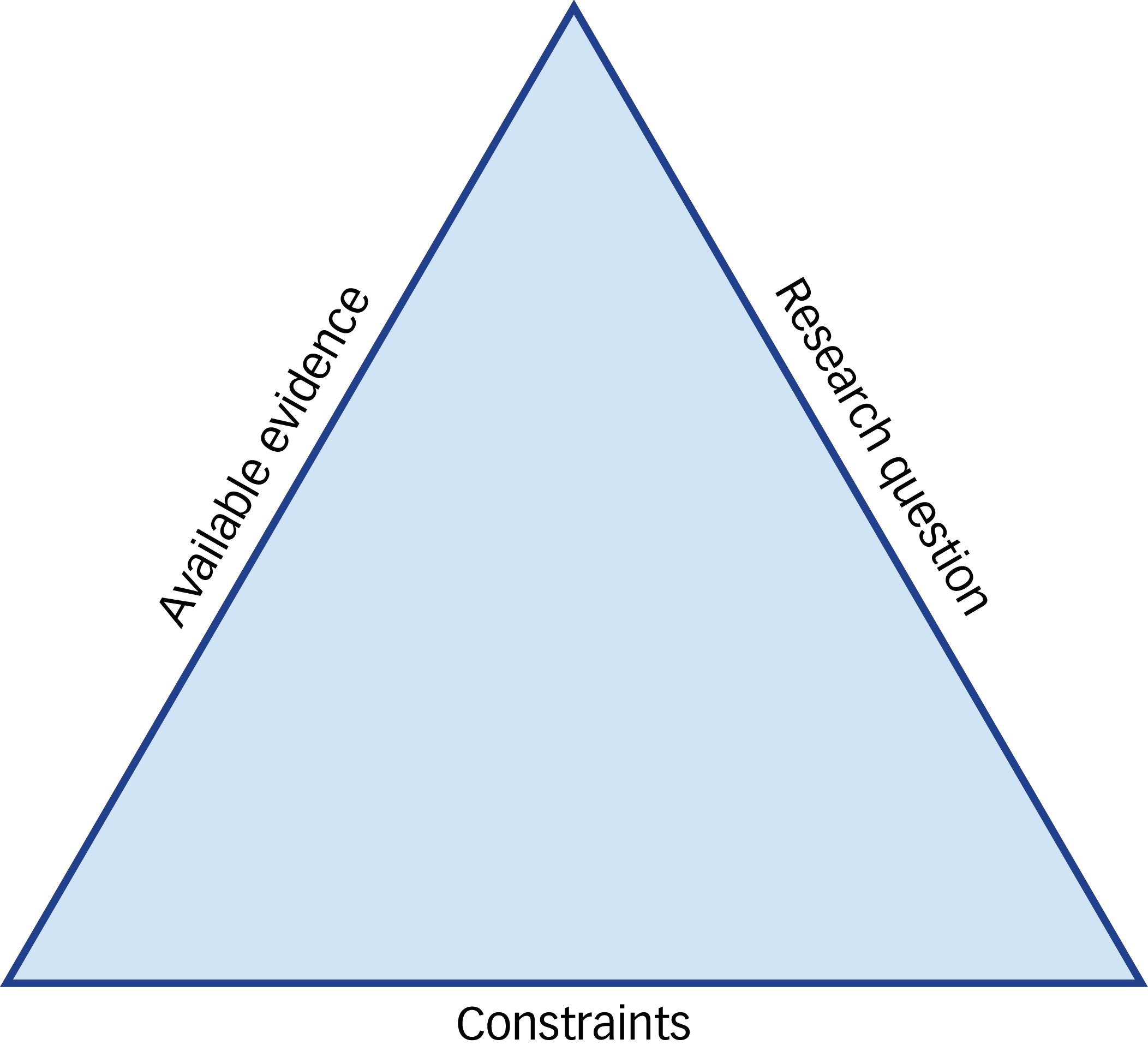
In essence, determining the type of review requires considering three interrelated factors (Fig. 1): the research question, the amount of existing evidence and the practical constraints. Once these three elements are clarified, the appropriate type of review typically becomes clear. If any of these are not properly defined, researchers risk choosing an unsuitable review method.
Three key factors in choosing the type of review most appropriate for a specific research objective.

After identifying the appropriate review type, researchers should proceed in accordance with the guidelines established for designing and conducting that specific type of review.
An important point regarding review studies is that the pace of development of new review approaches is very rapid, and the degree of overlap among these approaches is so substantial that even presenting a classification of review types may not always be useful (Gough Reference Gough, Thomas and Oliver2012). Researchers must therefore stay continually updated in this field and clearly understand the purpose of each review – what question it is intended to answer, with what body of evidence and under what constraints. Moreover, owing to the considerable overlap of different methods, researchers may sometimes use the terms interchangeably (Campbell Reference Campbell, Tricco and Munn2023). Recognising both the similarities and the distinctions among review types is crucial to avoid such mistakes.
In this study, I explained ten of the most commonly used types of review study in psychiatric and psychological research. The proposed typology is intended as a practical guide rather than a rigid classification, given the substantial overlap among review approaches.
Limitations
This article focuses on commonly used review types for evidence synthesis and on providing a practical structure for selecting an appropriate review design. Although qualitative evidence syntheses are highly valuable in psychiatry and psychology, I did not discuss specialised qualitative review approaches because they have a different nature and would require separate, dedicated coverage beyond the scope of this article. In addition, given the space limitations of the article, I was not able to provide detailed methodological guidance on how to conduct each review type; instead, my emphasis was on helping readers select the most appropriate review type based on the research question, the available evidence and practical constraints.
MCQs
Select the single best option for each question stem
-
1 Which review type is most appropriate for comparing the effectiveness of multiple treatments for a single disorder?
-
a Narrative review
-
b Rapid review
-
c Network meta-analysis
-
d Scoping review
-
e Meta-epidemiological study.
-
-
2 If you want to examine whether study design characteristics influence study results, which review type is most appropriate?
-
a Umbrella review
-
b Meta-epidemiological study
-
c Mapping review
-
d Qualitative evidence synthesis
-
e State-of-the-art review.
-
-
3 When there is limited time and resources but a structured synthesis is still needed, which review type is most appropriate?
-
a Rapid review
-
b Network meta-analysis
-
c Umbrella review
-
d Scoping review
-
e Mapping review.
-
-
4 You have prevalence estimates of suicide attempts for each US state and want to compute an overall national prevalence using appropriate weighting. Which review type is most appropriate?
-
a Narrative review
-
b Scoping review
-
c Meta-analysis
-
d Meta-epidemiological study
-
e Umbrella review.
-
-
5 Which of the following scenarios best illustrates a common mistake in selecting an appropriate review type?
-
a Conducting a rapid review and clearly reporting which methodological steps were streamlined
-
b Conducting an umbrella review when multiple meta-analyses already exist on the same question
-
c Conducting a meta-analysis despite substantial variation across studies in outcomes, measurement instruments and follow-up time points
-
d Conducting a scoping review to clarify concepts and map the evidence in an emerging field
-
e Conducting a network meta-analysis to compare multiple interventions.
-
MCQ answers
-
1 c
-
2 b
-
3 a
-
4 c
-
5 c
Acknowledgement
Artificial Intelligence use: The author made use of ChatGPT (GPT-5, OpenAI) as a language model solely for translation purposes in preparing this manuscript. The author remains solely responsible for the interpretation and final content.
Funding
This work received no specific grant from any funding agency, commercial or not-for-profit sectors.
Declaration of interest
None.



eLetters
No eLetters have been published for this article.