Polycystic ovary syndrome (PCOS) is a complex endocrine disorder that affects 5–21 % of women of reproductive age worldwide(Reference Lizneva, Suturina and Walker1,Reference Wolf, Wattick and Kinkade2) . It is characterised by hormonal imbalances, insulin resistance and abnormalities in ovarian function, leading to irregular menstrual cycles, infertility, high levels of androgens and the development of multiple cysts in the ovaries(Reference Balen, Morley and Misso3,Reference Teede, Tay and Laven4) . Women with PCOS face an elevated likelihood of developing various metabolic disorders, including dyslipidemia, obesity, type 2 diabetes, hypertension and CVD(Reference Carmina5). Depression is a common co-existing condition in women with PCOS, with a prevalence rate of up to 60 %(Reference Cooney, Lee and Sammel6,Reference Dokras, Clifton and Futterweit7) , particularly those with hormonal imbalances, such as insulin resistance and hyperandrogenism. The chronic nature of PCOS and its impact on physical appearance, weight gain, fertility and body hair can lead to anxiety, depression and reduced quality of life(Reference Dokras, Clifton and Futterweit7,Reference Thomson, Buckley and Lim8) . Therefore, it is essential to identify effective interventions to improve the mental health and quality of life of women with PCOS.
Based on the latest international evidence-based guidelines, lifestyle modifications such as dietary approaches and physical activity should be recommended in women with PCOS for improving general health, quality of life and preventing weight gain(Reference Teede, Tay and Laven4,Reference Hajizadeh-Sharafabad, Moludi and Tutunchi9) . In recent years, there has been an increasing interest in investigating the connection between diet and depression(Reference Gianfredi, Dinu and Nucci10,Reference Kunugi11) . Research studies indicate that adopting a diet that includes abundant plant-based foods and n-3 fatty acids, while minimising the intake of processed and fast foods, may have positive effects on managing or preventing depression(Reference Kunugi11). Several studies investigated the effect of dietary approaches on psychological well-being in patients with PCOS(Reference Thomson, Buckley and Lim8,Reference Galletly, Moran and Noakes12,Reference Mavropoulos, Yancy and Hepburn13) . Thomson and colleagues reported improved depression and health-related quality of life (HRQOL) scores after 20 weeks dietary restriction in overweight and obese women with PCOS(Reference Thomson, Buckley and Lim8). One pilot study demonstrated an improvement in HRQOL after 24 weeks on a low-carbohydrate ketogenic diet(Reference Mavropoulos, Yancy and Hepburn13). Another study reported that a 16-week high-protein diet, compared with a high-carbohydrate diet, significantly improved depression and self-esteem despite similar weight loss (7–8 kg)(Reference Galletly, Moran and Noakes12). These provided evidence that, in addition to weight loss, specific dietary interventions may also affect psychological outcomes in PCOS. Nevertheless, further studies are needed in this area.
The Mediterranean and Dietary Approaches to Stop Hypertension (DASH) diets are two well-known dietary patterns that have been extensively studied for their beneficial effects on health outcomes(Reference Bach-Faig, Berry and Lairon14,Reference Foroozanfard, Rafiei and Samimi15) . The Mediterranean diet (MD) is characterised by high consumption of fruits, vegetables, whole grains, legumes, nuts, olive oil as the primary lipid source in food preparation, moderate consumption of fish, eggs, and dairy products, low consumption of red meats, and a moderate intake of alcohol, generally wine during meals(Reference Bach-Faig, Berry and Lairon14). The DASH diet emphasises the consumption of fruits, vegetables, whole grains and low-fat dairy products and limits the intake of Na, red and processed meats, sweets (simple sugar) and sugar-containing beverages, and saturated fats(Reference Foroozanfard, Rafiei and Samimi15). Each of DASH and MD includes only some food groups one might consume. For instance, MD does not include the consumption of sweets and pastries, and DASH diet does not consider consumption of full-fat dairy products, fast foods, butter and margarine(Reference Aminianfar, Hassanzadeh Keshteli and Esmaillzadeh16). While both the Mediterranean and DASH diets are beneficial for overall health, they fall short in specifically addressing brain health and discouraging potentially harmful food choices. The Mediterranean-DASH Intervention for Neurodegenerative Delay (MIND) diet is a hybrid of the Mediterranean and DASH diets, which has been effectively bridges these gaps by incorporating the strengths of both diets and emphasising specific dietary components that promote brain health while discouraging harmful food choices. This focused approach makes it a compelling choice for individuals seeking to optimise their cognitive function and reduce their risk of age-related cognitive decline(Reference Kheirouri and Alizadeh17). The MIND diet includes foods that are rich in nutrients (vitamin E, folate, flavonoids and carotenoids) that have been shown to support brain health, such as leafy green vegetables, berries, nuts, whole grains, fish, poultry and olive oil. It also limits the intake of foods that are associated with cognitive decline, such as red meat, butter, cheese, pastries and fried foods(Reference Morris, Tangney and Wang18). Several studies have demonstrated the beneficial effects of the Mediterranean, DASH and MIND diets on mental health outcomes, including depression and anxiety(Reference Cherian, Wang and Holland19–Reference Salari-Moghaddam, Keshteli and Mousavi21). The MIND diet due to its anti-inflammatory and antioxidant effects may have potential effects in alleviating the symptoms of mental, hormonal and metabolic disorders(Reference Ardekani, Vahdat and Hojati22). However, the effectiveness of the MIND diet in improving depression and quality of life in women with PCOS has not been definitively established. Therefore, we hypothesised that the MIND diet with restricted energy would improve the depression, anxiety, stress, hormonal and metabolic parameters, and quality of life in women with PCOS.
Materials and methods
Study design
This parallel randomised controlled clinical trial took place in Kermanshah, Iran, spanning from February 2023 to June 2023. The eligible participants were randomly assigned to either a modified energy MIND diet group (N 26) or a low-energy diet group (N 26) using a computer-generated random table in sealed envelopes for a duration of 8 weeks. The study adhered to the principles outlined in the Declaration of Helsinki, and the study protocol received approval from the ethics committee of Kermanshah University of Medical Sciences (IR.KUMS.REC.1401.427). Additionally, the study was registered in the Iranian Registry of Clinical Trials (IRCT) under the identifier IRCT20180712040438N8, Registration date: 2023-01-18. For access to full trial protocol, please see https://irct.behdasht.gov.ir/trial/66335. Prior to the commencement of the study, written informed consent was obtained from all participants. It was not possible to blind the participants due to the nature of the diet; however, there was no interaction between the two groups. Furthermore, to minimise bias, the outcome assessors and the data analysts were blinded.
Sample size
To calculate the sample size, we used a randomised clinical trial sample size calculation formula. We considered the type I error of 5 % (α = 0·05) and type II error of 20 % (β = 0·2, power = 80 %). Based on Shabani’s paper(Reference Shabani, Foroozanfard and Kavossian23), we used mean and standard deviation of depression as the primary outcome to calculate sample size, and we ended up with twenty-four participants in each group; after considering 10 % dropout, we expanded the sample size to twenty-six participants in each group, and the final sample size was fifty-two participants.
Participants
We recruited all the trial participants from those who were referred by gynecologists. Fifty-two overweight or obese (BMI ≥ 25 kg/m2) women in reproductive age diagnosed with PCOS based on Rotterdam criteria(24) were enrolled in this study. Inclusion criteria were as follows: patients with PCOS based on the Rotterdam diagnostic criteria (at least two of three between oligo- and/or anovulation, clinical and/or biochemical signs of hyperandrogenism and polycystic ovaries confirmed with ultrasound), age range from 18 to 45 years old, desire to cooperate, BMI ≥ 25 kg/m2, no recent weight loss or having special diet within previous 3 months. We excluded individuals with known metabolic, neurological and liver diseases, major systemic diseases such as malignancies, use of antidepressant medications or history of depression diagnosis within the previous year, and use of medications that affect appetite and body weight, such as corticosteroids or other supplements.
Intervention diets
The participants in the intervention group received the MIND diet with modified energy content, and in the control group, they received a low-energy diet for 8 weeks. In both groups, the intervention diets were delivered by trained dietitians. Daily energy requirements were individually specified in both study groups based on the Mifflin St. Jeor formula(Reference Mifflin, St Jeor and Hill25), and finally, 500–750 kcal were reduced from the total calculated energy content. In both groups, macronutrient distribution consisted of 50–55 % carbohydrates, 15–20 % proteins and 30 % total fats(Reference Arjmand, Abbas-Zadeh and Eftekhari26).
The MIND dietary pattern used for this trial was based on the MIND diet developed by X. Liu and colleagues in 2021(Reference Liu, Morris and Dhana27). However, in this study, wine consumption was not recommended because of its forbidden usage in our country. Therefore, the participants were encouraged to consume grape and grape juice, as well as currant and raisins, instead of the wine. The components and servings of the MIND diet are shown in online Supplementary Table 1. It must be noticed that this study was not a feeding trial; therefore, we did not prepare foods for participants, and just a 7-d menu was developed for participants, meeting the required number of servings per d. Participants in the control group received a low-energy diet as shown in online Supplementary Table 1. They also received oral and written advice about healthy food choices based on ethical issues. The dietary records were based on estimated values in household measurements. To obtain the nutritional value of the participants’ diet based on 3-d food records, we used Nutritionist IV software (First Databank, San Bruno, CA, USA, version 3.5.2.) modified for Iranian foods. Participants were followed up every 2 weeks, and 3-d food records (2 weekdays and 1 weekend day) and MIND diet score were collected at baseline and end of the trial to measure dietary adherence(Reference Probst and Zammit28). The MIND diet adherence of participants was evaluated using a fourteen-item scoring system (wine consumption was not considered in the score calculation), with higher scores indicating stricter adherence. Significantly, about 80 % of those in the MIND diet group scored above 11. This finding implies that these participants demonstrated a strong commitment to following the MIND diet guidelines. The dietary intakes of Na, potassium, Mg, folate and vitamin E were assessed based on 3-d food records, at baseline and at the end of the trial in both groups.
Trial outcomes
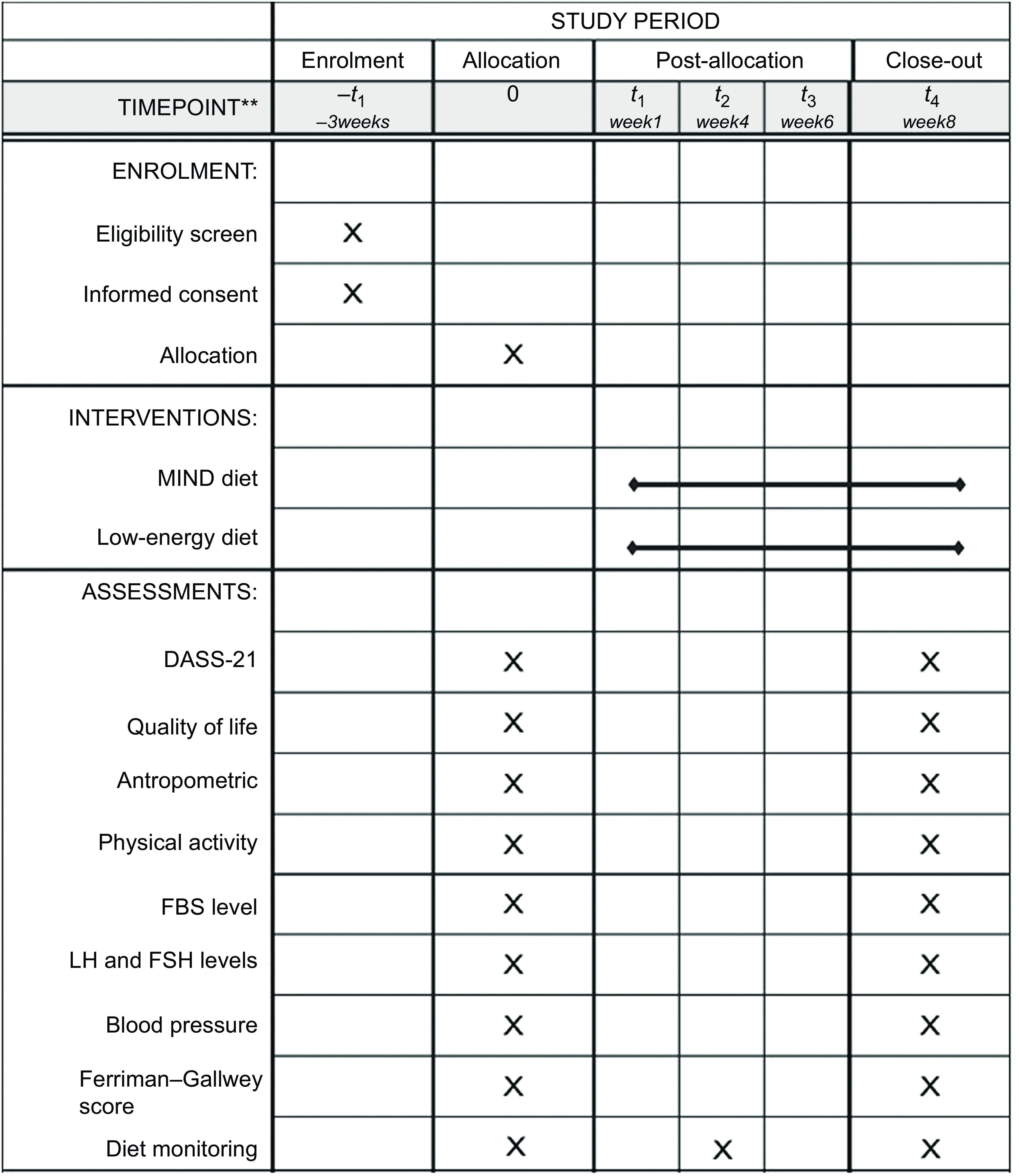
The primary outcomes of the study were depression, anxiety and stress status, and the secondary outcomes were hormonal and metabolic parameters, hirsutism and HRQOL. Outcomes were assessed at baseline and at the end of the 8-week follow-up period. The study timeline is shown in Fig. 1.
Study timeline. Standard Protocol Items: Recommendations for Interventional Trials (SPIRIT) schedule of enrolment, interventions and assessments for the duration of the study. MIND diet, Mediterranean-DASH Intervention for Neurodegenerative Delay diet; DASS-21, Depression Anxiety Stress Scales 21; FBS, fasting blood sugar; LH, luteinising hormone; FSH, follicle-stimulating hormone.

Primary outcomes
Depression, anxiety and stress status
The level of depression, anxiety and stress were assessed at baseline and at the end of the trial using the Iranian-validated Depression Anxiety Stress Scales 21 (DASS-21) questionnaire(Reference Sahebi, Asghari and Salari29), a self-report measure rated on a four-point Likert scale regarding mood over the past week. This questionnaire has three subscales, and each of them consists of seven items. Each seven-item scale has four response options ranging from 0 (did not apply to me at all) to 3 (applied to me much, or most of the time). The score of each subscale was attained by adding the scores of relevant questions. Since this questionnaire is a short form of the DASS-42, the score of each subscale was multiplied by 2 to make the scores comparable to the DASS-42. In each subscale, higher scores indicated worse outcomes(Reference Kordi and Heravan30).
Secondary outcomes
Anthropometric assessment
Body weight (kg) was measured at baseline and after 8 weeks of intervention, using a digital scale (Seca769Scale, Seca gmbh, Hamburg) nearest 0·1 kg, with light clothing and no shoes. Height (cm) was measured to the nearest 0·5 cm without shoes in the standing position using the stadiometer. Then, for calculating BMI, we divided the weight (kilograms) by the squared height (metres). Waist circumference (cm) was measured at the minimum circumference between the iliac crest and the lowest rib at baseline and end of the trial.
Quality of life assessments
The participants’ quality of life was assessed at baseline and end of the intervention using a self-administered PCOS Health-Related Quality of Life (PCOSQ) questionnaire that has previously been validated in patients with PCOS in Iran(Reference Leila, Behzad and Ali31). This questionnaire consisted of twenty-six items encompassing five domains related to HRQOL: emotions (8 items), hirsutism (5 items), body weight (5 items), infertility (4 items) and menstruation (4 items). Each item was rated on a seven-point scale, with a score of 7 indicating optimal function and 1 indicating maximum impairment. The total score in each domain was calculated as the mean score of all items within that domain. Consequently, the results for each domain were presented as a score ranging from 1 to 7, and the higher scores indicated better outcomes(Reference Cronin, Guyatt and Griffith32).
Hirsutism
Hirsutism was assessed at baseline and after an 8-week intervention using a modified Ferriman–Gallwey (mFG) scoring system that was validated for Iranian women(Reference Ramezani Tehrani, Minooee and Simbar33).This scoring system consists of three regions: the upper lip, lower abdomen and thighs. Each region is assigned a score ranging from 1 to 4. The minimum score on this questionnaire is 3, while the maximum score is 12. A score of 4 or higher was considered indicative of hirsutism in the diagnosis process.
Blood pressure assessment
Blood pressure (mmHg) was measured in the right arm at baseline and at the end of the trial using a mercury sphygmomanometer with an appropriate-sized cuff after sitting for 15 min with both feet on the floor. Two measurements were taken at each visit, and their average was reported as blood pressure.
Biochemical variables
10 cc blood samples were taken at baseline and after 8-week intervention at the Kermanshah reference laboratory after an overnight fasting. Fasting blood sugar (FBS) (mg/dl) was measured by glucose oxidase method, luteinising hormone (LH) (mIU/ml) and follicle-stimulating hormone (FSH) (mIU/ml) were measured by chemiluminescence immunoassay method. Commercial kits (Pars Azmoon, Tehran, Iran) were used for all laboratory assays.
Physical activity assessment
The level of physical activity was investigated with the International Physical Activity Questionnaires (IPAQ) short form that was validated for Iranian population(Reference Vasheghani-Farahani, Tahmasbi and Asheri34), and it was explained that they should not change their level of physical activity throughout the intervention. Based on the principle of the questionnaire, metabolic equivalent task (MET) of each level of physical activity intensity (walking, moderate and vigorous) during the last 7 d was calculated. IPAQ categories of physical activity were considered low (< 600 MET/min/week), medium (600–2999 MET/min/week) and high (≥ 3000 MET/min/week).
Statistical analysis
To ensure data integrity, we scrutinised the dataset for outliers exceeding 2 sd from the mean. Upon discovering an outlier, it was eliminated from the database. To handle missing data, we employed multiple imputation(Reference White, Royston and Wood35). The normality of the data distribution was assessed using the Kolmogorov–Smirnov test. Descriptive statistics were used to present the quantitative variables as mean (sd) and the qualitative variables as frequency (percentage). To compare the baseline characteristics between the groups, independent sample t tests and χ 2 test were employed for normal quantitative and qualitative variables, respectively. Within-group differences were evaluated using paired samples t test. Multiple linear regression models were used to examine the treatment effects on study outcomes while adjusting for baseline values and potential confounding factors, including energy intake, physical activity, weight and age. The effect sizes were reported as mean differences with 95 % CI. The intention-to-treat principle was applied for the analysis, and missing values were handled through multiple imputation(Reference Groenwold, Moons and Vandenbroucke36). All statistical analyses were conducted using Statistical Package for the Social Sciences version 18 (SPSS Inc., Chicago, Illinois, USA), with statistical significance defined as P-values less than 0·05.
Results
Participant characteristics
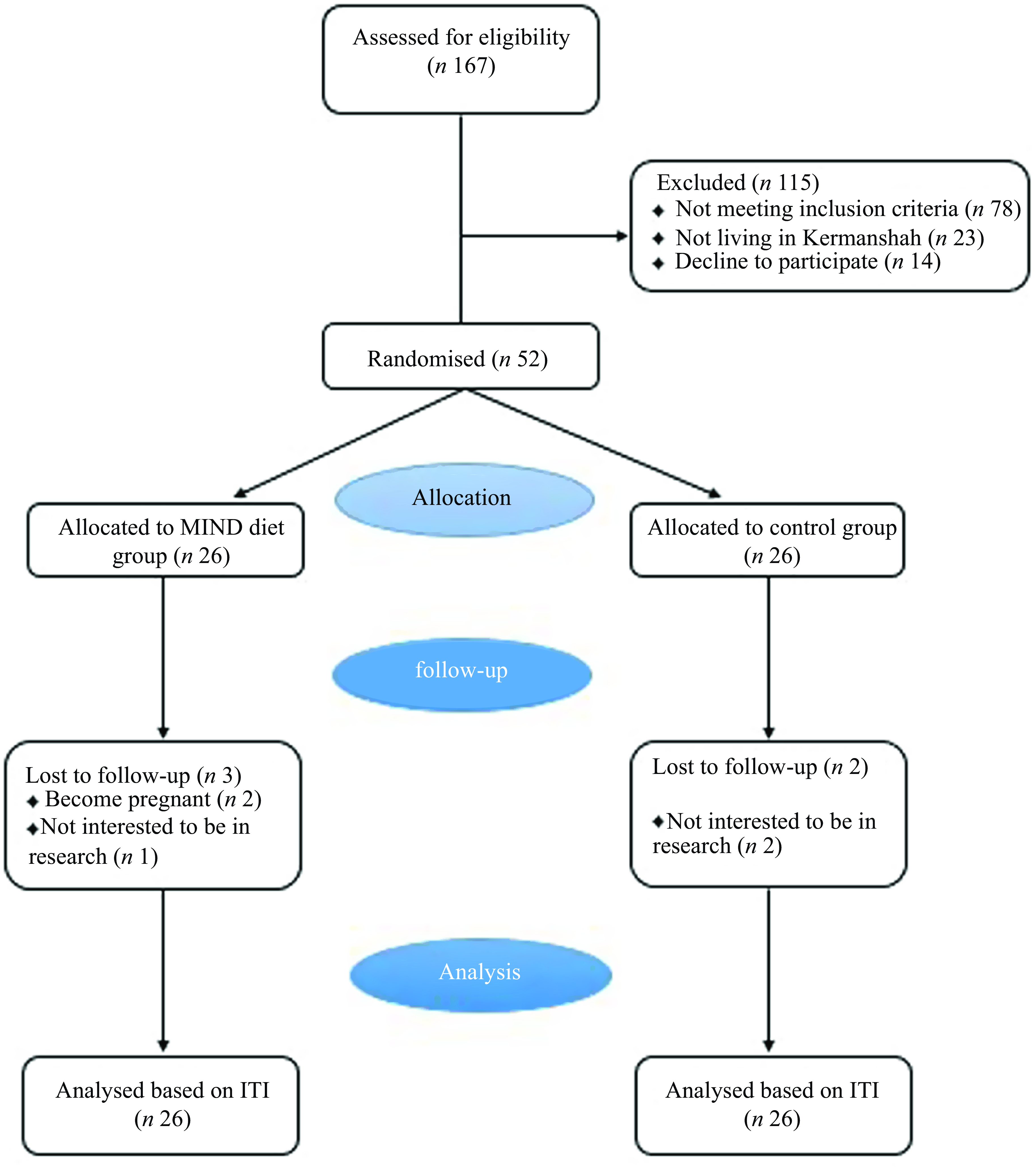
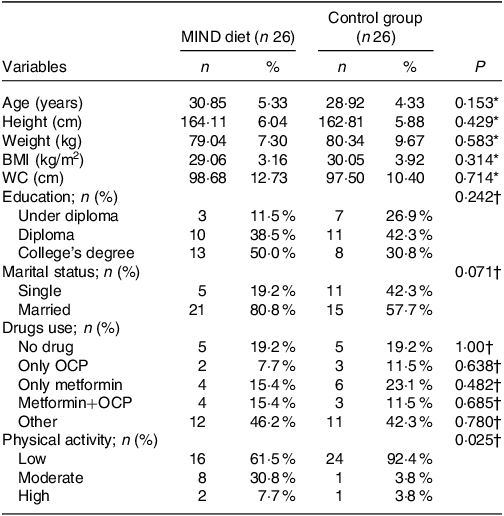
According to the study flow diagram (Fig. 2), three participants from the MIND diet group were excluded due to pregnancy (N 2) and lack of interest in participating (N 1). Additionally, two participants from the control diet group were excluded because they were not interested in being part of the research. At the end, a total of forty-seven participants (twenty-three in the MIND diet group and twenty-four in the control diet group) completed the trial, and no adverse effects have been reported. However, for the final analysis, all fifty-two participants (twenty-six in each group) were included based on the intention-to-treat principle. Table 1 presents the initial characteristics of the participants categorised by the study groups.
Consort flow diagram of participants. MIND, Mediterranean-DASH Intervention for Neurodegenerative Delay; ITT, intention-to-treat.

Baseline characteristics of participants according to the group studies

MIND, Mediterranean-DASH Intervention for Neurodegenerative Delay; WC, waist circumference; OCP, oral contraceptive pill.
Data are shown as a mean (standard deviation) or frequency (percentage) for continuous and categorical variables, respectively.
* Obtained from independent sample t-test.
† Obtained from χ 2 test.
Physical activity was categorised into the following levels: low: < 600 (MET/min/week), medium: 600–2999 (MET/min/week) and high: ≥ 3000 (MET/min/week).
Dietary intakes
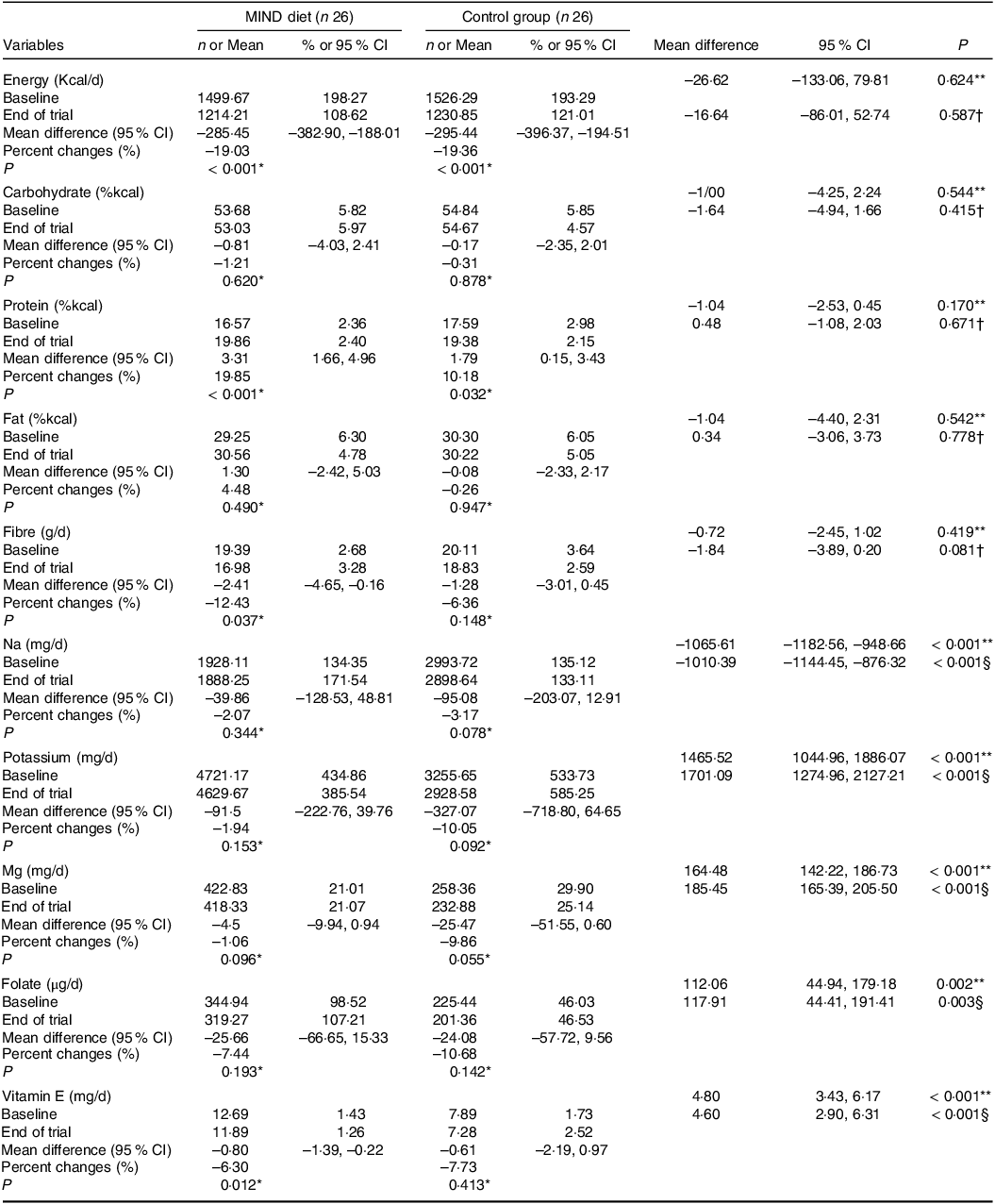
As presented in Table 2, there were no significant differences in baseline energy and macronutrient intakes between the two groups (P > 0·05). After adjusting for baseline values, the between-group analyses at the end of the study indicated no significant disparities in these dietary intake parameters. However, regarding macronutrient distribution as a percentage of total energy intake, both the MIND and control groups experienced notable reductions in energy intake and percentage of energy from carbohydrate and total fat. Notably, there was a significant decrease in dietary fibre intake observed only in the MIND diet group (P = 0·037). The study found a significant increase in the proportion of total energy content derived from protein by the end of the intervention. Specifically, the MIND group demonstrated a rise from 16·57 % to 19·86 % (P < 0·001), while the control group showed an increase from 17·59 % to 19·38 % (P = 0·032). Also, according to Table 2, significant differences in dietary intakes of Na, potassium, Mg, folate and vitamin E were observed between the two groups at baseline and at the end of the trial (P < 0·05).
Dietary intakes of the study participants at the baseline and after 8 weeks of intervention

MIND, Mediterranean-DASH Intervention for Neurodegenerative Delay.
Data are shown as mean and standard deviation.
* Obtained from paired sample t-test.
** Obtained from independent sample t-test.
† Linear regression with adjusted for baseline values.
§ Linear regression with adjusted for energy intake.
Anthropometric measurements
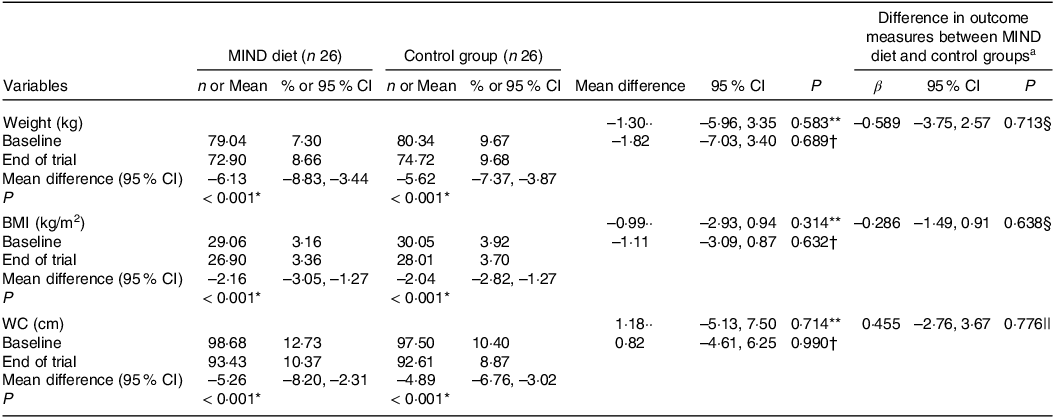
According to Table 3, participants in both the MIND diet and control groups experienced a significant reduction in their body weight, BMI and waist circumference after 8-week follow-up (P < 0·05).
Anthropometric measurements of the study participants at the baseline and after 8 weeks of intervention

MIND, Mediterranean-DASH Intervention for Neurodegenerative Delay; WC, waist circumference.
Data are shown as mean (standard deviation).
a ‘Outcome measures’ refers to the change in values of measures of interest between baseline and week 8. β (difference in the mean outcomes measures between intervention groups (MIND diet group=1 and control group=0)).
* Obtained from paired sample t test.
** Obtained from independent sample t test.
† Linear regression with adjusted for baseline values.
§ Linear regression with adjusted for baseline values, energy intake and physical activity.
|| Linear regression with adjusted for baseline values, energy intake, physical activity and weight.
The findings from a multiple linear regression analysis, which considered adjustments for baseline values and confounding variables such as energy intake, physical activity and weight revealed that the MIND diet resulted in a mean weight reduction of 0·589 kg compared with the control group. However, this difference was not statistically significant (P = 0·713). Additionally, the MIND diet showed a mean decrease in BMI of 0·286 kg/m2 compared with the control group, but again, this difference was not statistically significant (P = 0·632). Interestingly, the waist circumference increased by 0·455 cm in the MIND diet group compared with the control group, but this change was not statistically significant (P = 0·776), Table 3.
Mental health parameters
Changes in Depression Anxiety Stress Scales 21 subscales
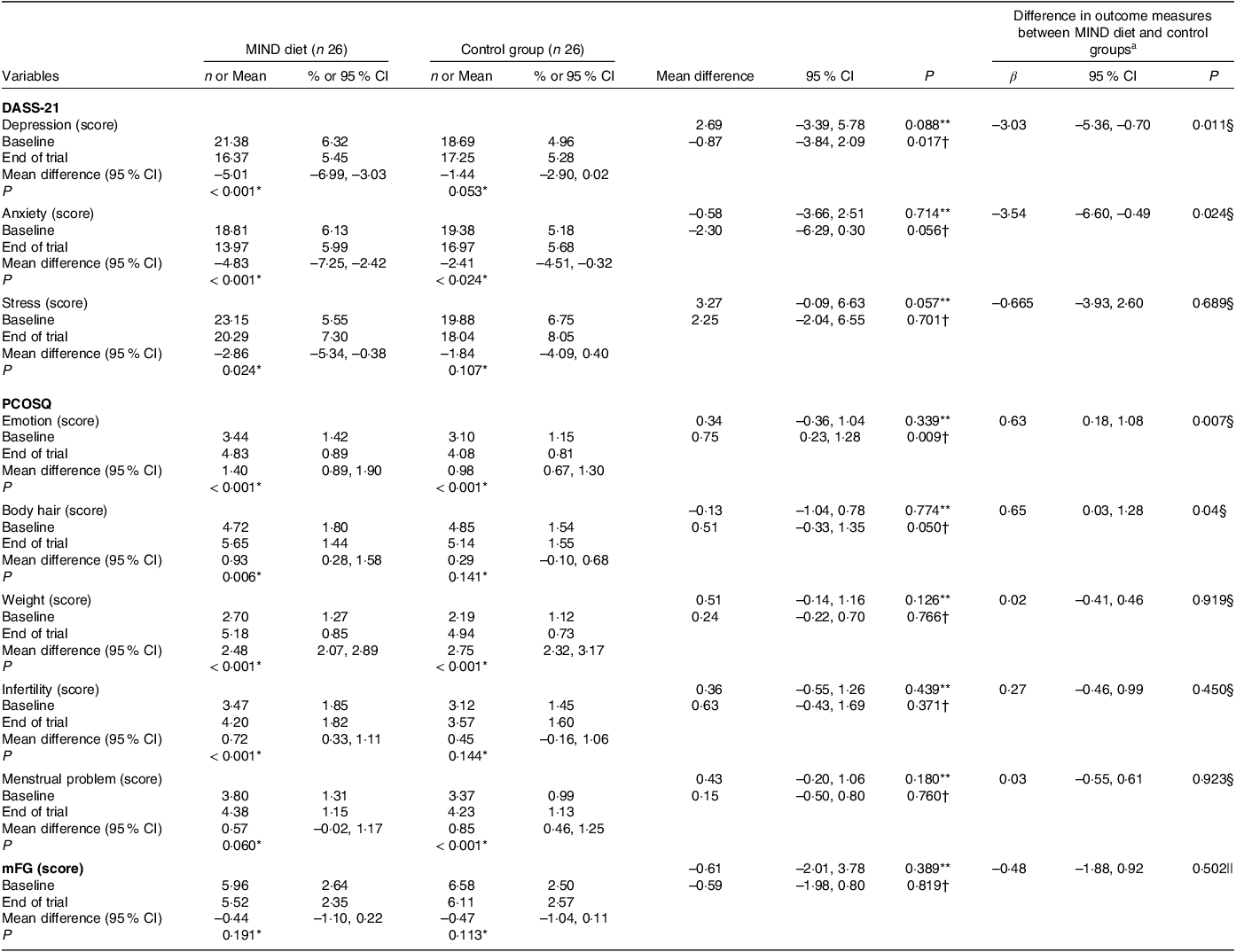
According to the DASS-21 questionnaire, after an 8-week intervention, significant reductions in depression, anxiety and stress were observed in the MIND diet group (P < 0·001, P < 0·001 and P = 0·024, respectively). However, only anxiety showed a significant decrease in the control group (P = 0·024). Adjusting for baseline values, energy intake, physical activity levels, weight and age, the between-group analysis revealed that the MIND diet led to significant decreases in depression and anxiety scores (P = 0·011 and P = 0·024, respectively) with no significant changes in stress score (P = 0·689) compared with the control group (Table 4).
Mental health parameters and hirsutism score of the study participants at the baseline and after 8 weeks of intervention

MIND, Mediterranean-DASH Intervention for Neurodegenerative Delay; DASS-21, Depression Anxiety Stress Scales 21; PCOSQ, Polycystic Ovary Syndrome Quality of Life scale; mFG, modified Ferriman–Gallwey.
Data are shown as mean (standard deviation).
a ‘Outcome measures’ refers to the change in values of measures of interest between baseline and week 8. β (difference in the mean outcomes measures between intervention groups (MIND diet group=1 and control group=0)).
* Obtained from paired sample t test.
** Obtained from independent sample t test.
† Linear regression with adjusted for baseline values.
§ Linear regression with adjusted for baseline values, energy intake, physical activity, weight and age.
|| Linear regression with adjusted for baseline values, energy intake, weight and age.
Changes in Polycystic Ovary Syndrome Quality of Life domains
Table 4 displays the changes in PCOSQ domains. In the MIND group, there was a significant increase in the emotion domain (P < 0·001), body hair domain (P = 0·006), weight domain (P < 0·001) and infertility domain (P < 0·001). However, the menstrual problem domain did not show a significant increase in this group (P = 0·060). The control group also experienced significant increases in the emotion, weight and menstrual problem domains (P < 0·001), but no further significant increases were observed in the other domains within the same time frame. Adjusting for baseline values, energy intake, physical activity levels, weight and age, the between-group analysis indicated that the MIND diet led to significant increases in the emotion and body hair domains, with no significant changes in the weight, infertility and menstrual problem domains compared with the control group (Table 4). It must be noticed that higher scores on the PCOSQ domains indicated better outcomes.
Hirsutism
As shown in Table 4, after 8 weeks of intervention, there were no significant changes in the mFG score compared with baseline values for both the MIND group (P = 0·191) and the control group (P = 0·113). Furthermore, at the end of the study, there was no statistically significant difference in this parameter between the groups after adjusting for baseline values, energy intake, weight and age (P = 0·502).
Metabolic and hormonal parameters
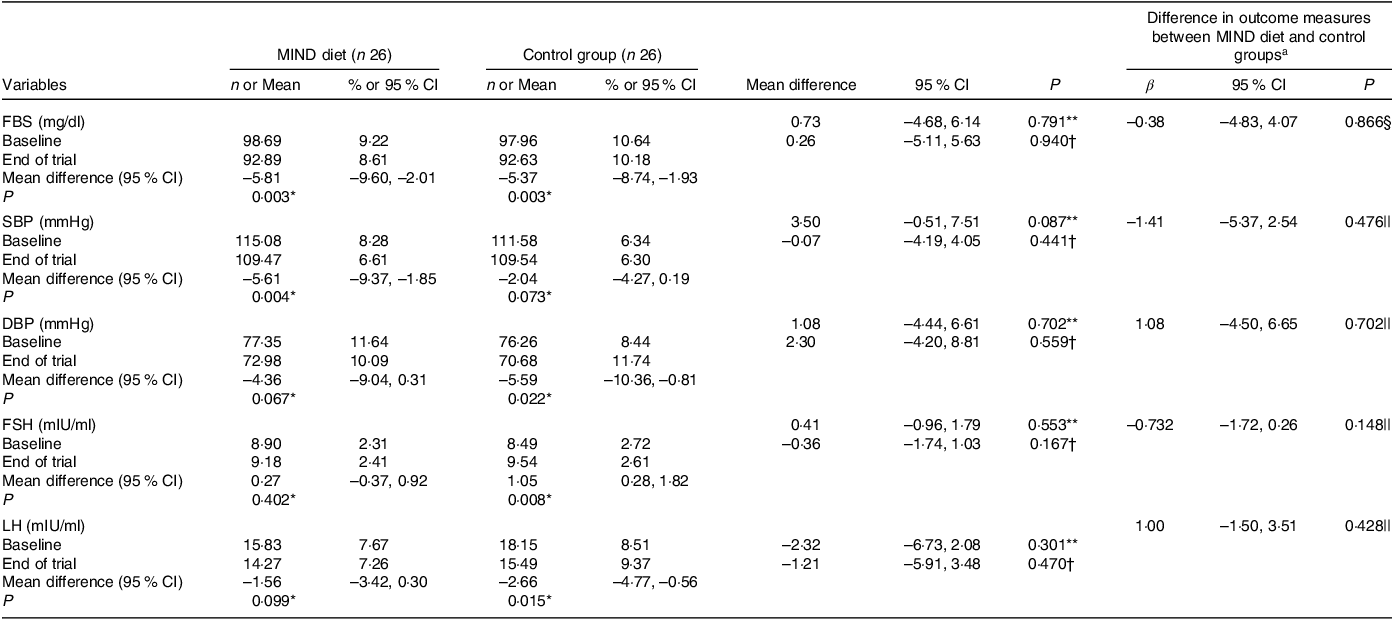
Both study groups exhibited a significant reduction in FBS (P = 0·003), while only the MIND group showed a significant decrease in systolic blood pressure (P = 0·004) after 8 weeks of intervention. Diastolic blood pressure (P = 0·022), FSH levels (P = 0·008) and LH levels (P = 0·015) also significantly changed in the control group compared with baseline values (Table 5). After adjusting for baseline values, energy intake, physical activity levels and weight, the MIND diet did not significantly change systolic blood pressure, diastolic blood pressure, FSH levels and LH levels compared with the control group. FBS levels, after adjusting for baseline values, energy intake, physical activity levels, weight and metformin usage, did not significantly change in the MIND group compared with the control group (Table 5).
Metabolic and hormonal parameters of the study participants at the baseline and after 8 weeks of intervention

MIND, Mediterranean-DASH Intervention for Neurodegenerative Delay; FBS, fasting blood sugar; SBP, systolic blood pressure; DBP, diastolic blood pressure; FSH, follicle-stimulating hormone; LH, luteinising hormone.
Data are shown as mean (standard deviation).
a ‘Outcome measures’ refers to the change in values of measures of interest between baseline and week 8. β (difference in the mean outcomes measures between intervention groups (MIND diet group=1 and control group=0)).
* Obtained from paired sample t test.
** Obtained from independent sample t test.
† Linear regression with adjusted for baseline values.
§ Linear regression with adjusted for baseline values, energy intake, physical activity, weight and metformin.
|| Linear regression with adjusted for baseline values, energy intake, physical activity and weight.
Discussion
This study was the first to investigate the effects of an 8-week MIND diet intervention on dietary intakes, anthropometric measurements, mental health parameters, PCOSQ domains, hirsutism, and metabolic and hormonal parameters in women with PCOS. The MIND diet was associated with significant improvements in mental health and some aspects of the PCOSQ, but no significant changes were observed in hirsutism or metabolic and hormonal parameters, such as LH and FSH.
The study initially ensured successful randomisation, with balanced characteristics between the MIND diet group and the control group. There were no significant differences in energy and macronutrient intakes at the beginning of the study, and these differences remained non-significant even after the intervention. However, both groups showed significant reductions in energy, carbohydrate and total fat intakes. Anthropometric measurements demonstrated significant reductions in body weight, BMI and waist circumference in both the MIND diet and control groups throughout the 8-week follow-up period. These results indicated that both interventions effectively promoted weight loss and improved anthropometric parameters. Some previous studies have reported significant weight loss and improvements in body composition parameters with the MIND diet, while others have found mixed results or no significant effects (Reference Aminianfar, Hassanzadeh Keshteli and Esmaillzadeh16,Reference Arjmand, Abbas-Zadeh and Eftekhari26,Reference Mohammadpour, Ghorbaninejad and Janbozorgi37) . The variation in findings may be attributed to differences in study duration, sample size, participant adherence to the diet and the inclusion of additional lifestyle interventions such as physical activity. The nature of the MIND diet, including high content of plant-based foods with a low glycemic index, high fibre and water content, and less content of energy-dense foods, can lead to weight loss (Reference Mohammadpour, Ghorbaninejad and Janbozorgi37).
Our results demonstrated that the MIND diet intervention led to significant reductions in depression and anxiety scores compared with the control group. The observed reductions in depression and anxiety are particularly noteworthy, as these are common co-morbidities associated with PCOS. The control group also experienced a significant decrease only in anxiety, although the magnitude of improvement was greater in the MIND diet group. The findings of this study are consistent with previous researches that have demonstrated the beneficial effects of various dietary interventions on mental health outcomes in individuals with PCOS, including high-protein, low-carbohydrate diet and Mediterranean-style diets (Reference Galletly, Moran and Noakes12,Reference Celik and Akbulut38) . The current study adds to the existing literature by specifically examining the effects of the MIND diet on mental health parameters in individuals with PCOS. Additionally, the MIND diet group exhibited significant increases in the emotion and body hair domains of the PCOSQ compared with the control group. On the other hand, all domains of PCOSQ, except the menstrual problem domain, showed significant increases from baseline to the 8-week follow-up in the MIND diet group. These improvements indicate positive changes in emotional well-being, body hair perception, weight-related concerns and fertility-related quality of life. It is important to note that the control group also experienced significant increases in the emotion, weight and menstrual problem domains. The observed improvements in HRQOL are in line with previous studies that have shown positive effects of dietary interventions on quality of life and body image perception (Reference Shooli, Darand and Khayyatzadeh39,Reference Mantzorou, Mentzelou and Vasios40) . A cross-sectional study in adolescent girls demonstrated that higher adherence to the MIND diet was related to lower depression and better QOL (Reference Shooli, Darand and Khayyatzadeh39). In another study by Mantzorou et al., higher adherence to MD was correlated with favourable HRQOL in a representative Greek elderly population (Reference Mantzorou, Mentzelou and Vasios40). The mechanisms underlying the observed improvements in mental health parameters and PCOSQ domains in the MIND diet group are likely multifactorial. The MIND diet is rich in folate, vitamin E, carotenoids, flavonoids, B-vitamins, MUFA, n-3 PUFA and phenolic compounds, which have antioxidant and anti-inflammatory effects, that may exert beneficial effects on brain function, mood regulation and overall well-being (Reference Kheirouri and Alizadeh17,Reference Ardekani, Vahdat and Hojati22,Reference Barkhordari, Namayandeh and Mirzaei41) . In addition, the MIND diet contains limited amounts of unhealthy foods that may be harmful to brain health by increasing inflammation and oxidative stress (Reference Barkhordari, Namayandeh and Mirzaei41). However, it is important to acknowledge that factors other than the dietary intervention may have contributed to the observed improvements, and additional research is needed to fully comprehend the mechanisms underlying the effects of the MIND diet on mental health outcomes and quality of life in individuals with PCOS.
No significant changes in hirsutism, as measured by the mFG score, were observed in either the MIND diet group or the control group. Additionally, there was no statistically significant difference in hirsutism between the two groups. These findings suggest that the MIND diet intervention did not have a significant impact on hirsutism in individuals with PCOS. Several previous studies exploring the impact of dietary interventions on hirsutism have also reported mixed results or limited effectiveness (Reference Krouni, Forouhari and Namavarjahromi42,Reference Shishehgar, Mirmiran and Rahmati43) . For example, a randomised controlled trial by Krouni et al. (2017) investigated the effects of a 12-week high-fibre, low-energetic balanced diet in women with hirsutism and found no significant improvements compared with the control group (Reference Krouni, Forouhari and Namavarjahromi42). However, another study by Shishehgar et al. demonstrated significant improvements in mean FG scores after 24 weeks of a restricted-energy low-glycemic index diet (Reference Shishehgar, Mirmiran and Rahmati43). Probably, dietary interventions may be able to reduce the severity of hirsutism through their effects on reducing body weight, insulin resistance and hyperandrogenism (Reference Krouni, Forouhari and Namavarjahromi42). In this trial, the relatively short duration of the intervention (8 weeks) may have constrained the probability of substantial shifts in mFG score, as tangible improvements in hirsutism typically demand long-term interventions. Further research is needed to explore the potential synergistic effects of dietary interventions and other treatment modalities on hirsutism in individuals with PCOS.
The results of a significant improvement in FBS levels in both groups are in line with previous research indicating that dietary interventions can have positive effects on blood sugar regulation in individuals with PCOS (Reference Panjeshahin, Hosseinzadeh and Ghadiri-Anari44–Reference Behrooz, Vaghef-Mehrabany and Moludi46). A systematic review conducted by Shang et al. (2021) highlighted the beneficial effects of dietary approaches such as low-glycemic index diets and Mediterranean-style diets on glycemic control in women with PCOS. These dietary interventions are believed to stabilise blood sugar levels by reducing the consumption of high-glycemic index foods and emphasising the intake of nutrient-dense, low-glycemic index foods (Reference Shang, Zhou and He45). By incorporating these dietary strategies, individuals may experience better blood sugar control, which is particularly important for individuals with PCOS who may be at an increased risk of insulin resistance and impaired glucose metabolism (Reference Teede, Misso and Costello47). Although the study did not find a significant difference between the MIND diet group and the control group in terms of FBS levels, the overall trend of reduced blood sugar levels in both groups supports the notion that dietary modifications can be effective in managing blood sugar levels in individuals with PCOS. Future studies with larger sample sizes and longer intervention durations are needed to further explore the potential benefits of specific dietary approaches and to better understand the individual variability in response to these interventions.
Interestingly, only the MIND diet group exhibited a significant decrease in systolic blood pressure, while the control group showed significant changes in diastolic blood pressure. These findings suggest that the MIND diet intervention may have a positive impact on blood pressure regulation in individuals with PCOS. The mechanism underlying this effect may be attributed to the nutrient composition of the MIND diet, which emphasises the consumption of foods that are beneficial for cardiovascular health (Reference Golzarand, Mirmiran and Azizi48). In addition, rich sources of quercetin, flavonoid and folate, through their antioxidant and vasoprotective effects, as well as the high potassium and Mg content of the MIND diet, can have beneficial effects on blood pressure (Reference Morris, Tangney and Wang18,Reference Akhlaghi49,Reference Serban, Sahebkar and Zanchetti50) .
While the MIND diet may not have been directly studied in relation to LH and FSH levels, it can still be beneficial for overall hormonal health. This dietary pattern provides essential nutrients and antioxidants that support hormonal balance and promotes the reduction of processed foods and unhealthy fats, which can contribute to inflammation and hormonal imbalance (Reference Morris, Tangney and Wang18). Furthermore, Mediterranean and DASH diets, by improving insulin sensitivity, may help to reduce androgen levels and ultimately improve LH and FSH balance in PCOS patients (Reference Le and Haubrick51). The current study is the first to investigate the effects of the MIND diet on FSH and LH levels in women with PCOS over an 8-week period. The results of the study showed that the MIND diet did not significantly affect FSH or LH levels compared with the control group. Previous studies have investigated the effects of different diets on LH and FSH levels (Reference Foroozanfard, Rafiei and Samimi15,Reference Mei, Ding and Wang52) . A study on women with PCOS found that a 12-week DASH diet did not have significant effect on LH and FSH levels (Reference Foroozanfard, Rafiei and Samimi15). Another study on women undergoing a low-carbohydrate MD was associated with decreased LH and LH/FSH (Reference Mei, Ding and Wang52). The lack of significant findings in the current study may be due to the relatively small sample size. Additionally, the study only lasted for 8 weeks, which may not have been enough time to see a significant change in FSH and LH levels. So, more research is needed to confirm the effects of the MIND diet on FSH and LH levels in women with PCOS. While statistical significance indicates a measurable change, it is crucial to critically assess whether these alterations translate into clinically meaningful outcomes for patients with PCOS. This evaluation necessitates considering the magnitude of effect, the clinical context and patient-specific factors. With regard to the magnitude of effect, the observed changes in hormonal and metabolic parameters were moderate and not statistically significant. However, potential clinical benefits, such as improvements in mental health parameters and certain domains of the PCOSQ, are practically valuable for patients with PCOS. Additionally, the normalisation of menstrual cycles could enhance quality of life and reduce the risk of endometrial hyperplasia and endometrial cancer in the future (Reference Ismael, Hamdan and Shujaie53). Moreover, we are aware that increasing the duration of intervention could lead to further improvements in these variables.
The present study had several limitations. First, the sample size was small (n 52), which may have limited the generalisability of the findings. Second, the study duration was short (8 weeks), which may not have been enough time to see a significant change in hirsutism status, and FSH and LH levels. Third, the study did not assess the blood levels of androgens and variables that could affect FSH and LH levels, such as insulin levels and inflammatory markers. Fourth, the study was conducted in a specific population of women with PCOS (BMI ≥25 kg/m2). The results may not be generalisable to other populations of women with PCOS. While our study employed rigorous methods, potential biases could affect the interpretation of our findings. Selection bias arising from tertiary care centre recruitment may limit generalisability. Performance bias from researcher knowledge could influence interventions or assessments. To address, we blinded personnel and standardised protocols. Attrition bias from dropout differences could distort results. To mitigate, we maintained contact, provided incentives and offered flexibility. Reporting bias from selective reporting could favour hypothesis. To prevent, we conducted thorough analysis and presented all findings transparently.
Conclusion
Our results support our hypothesis stating that the MIND diet intervention can lead to significant improvements in mental health parameters and certain domains of the PCOSQ in individuals with PCOS. However, no significant changes in hirsutism or metabolic and hormonal parameters were observed. These results support the potential role of dietary interventions in managing psychological well-being and improving quality of life in individuals with PCOS. Further research is warranted to explore the long-term effects of the MIND diet and to elucidate the underlying mechanisms of its impact on mental health in this population.
Acknowledgements
The authors are grateful to the participants who took part in the study.
This research was partially supported by Kermanshah University of Medical sciences (grant number: 4010670).
J. M. designed the study. S. S. K. and A. S. completed the entire clinical studies. S. S. K. and M. Z. collected and analysed the data. J. M. and S. S. K. prepared the manuscript. Jalal moludi conducted statistical analysis. All of authors edited the manuscript.
The authors declare that there is no conflict of interest.
All data generated and analysed during this study are included in the manuscript.
Our study was accepted by our local ethics committee of Kermanshah University of Medical sciences as a proposal for MSc grade in Nutritional Sciences (IR.KUMS.REC.1401.427) and also was listed in the Iranian Registry of Clinical Trials (IRCT) (IRCT20180712040438N8).
All authors support the submission to this journal.
Informed consent was obtained from all individual participants included in the study.
Supplementary material
For supplementary material/s referred to in this article, please visit https://doi.org/10.1017/S0007114524001168