In the early twentieth century, incarcerated people across much of the United States constructed roads and highways. The laborers who built the roads in the early twentieth century and the convict labor programs under which they toiled reveal the varied forms of Progressive Era reform and regional and national power dynamics across the United States. While the guard system programs in states like Georgia and North Carolina bolstered racial hierarchies and exploited coerced labor, the honor system programs of Colorado and Arizona, despite the reality that they also exploited coerced labor, sought genuine reform of convicts. Under the guard system, convicts wore striped uniforms and shackles, were overseen by armed guards, and generally lived in cages at the work site. The honor system, however, did not differentiate convicts by dress, included no armed guards or overseers, relied on trust and self-discipline instead of physical abuse, and offered compensation in both pay and a reduced sentence.Footnote 1
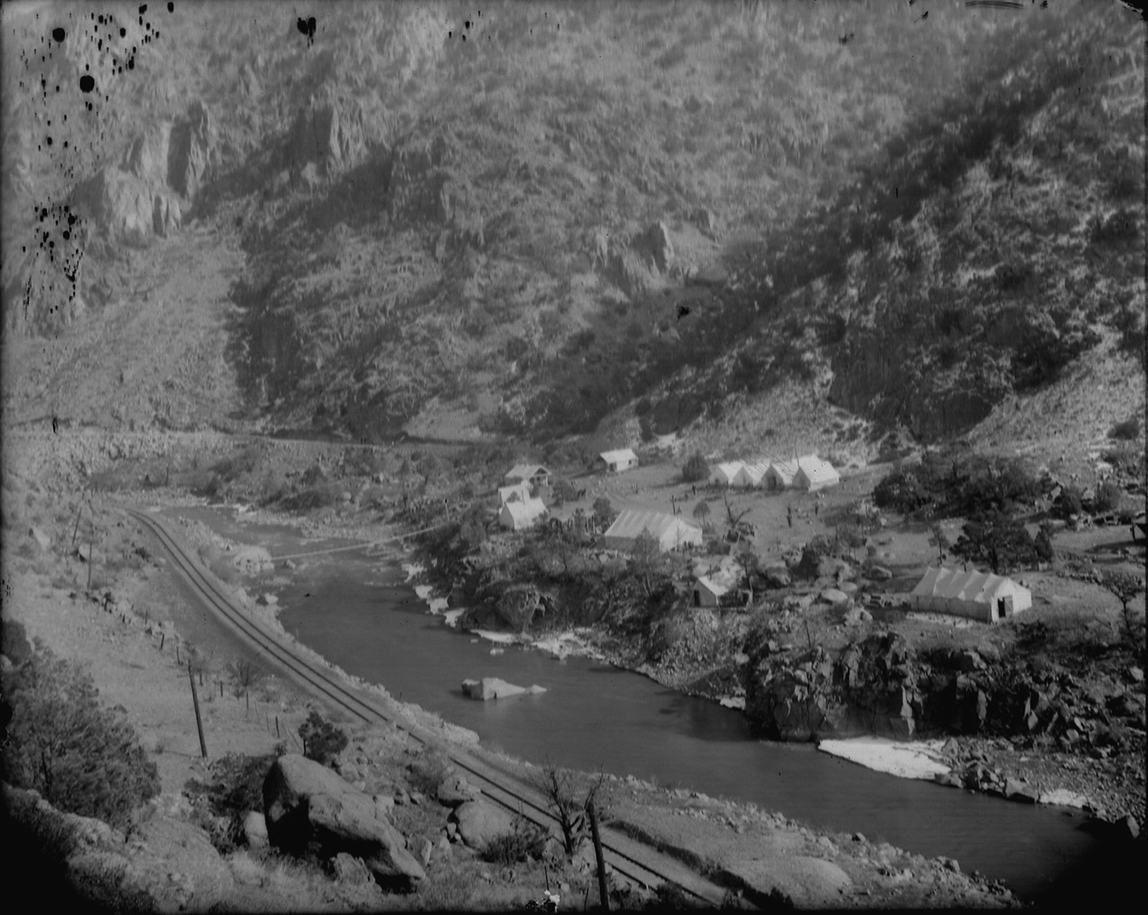
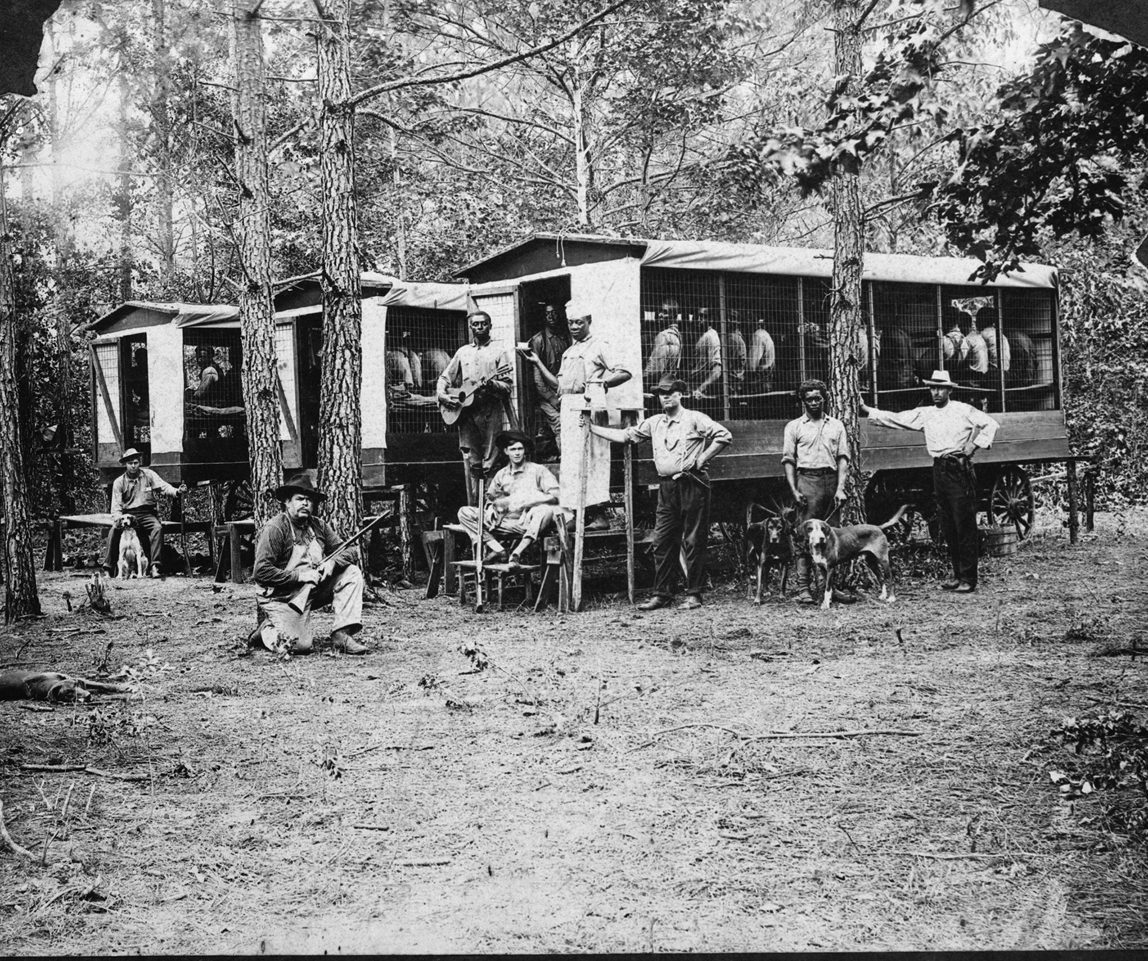
Thomas J. Tynan, the warden of the Colorado State Penitentiary from 1909 to 1927 and the man most responsible for developing and publicizing the honor system argued that this program benefited both society and the incarcerated. “Instead of sending broken, revengeful men back into the world—in no wise reformed, but simply trained to greater cunning—we are restoring mended men, eager and willing to be of such use as Society will permit.”Footnote 2 While the goal of the good roads and the nationwide crisis of imprisonment transcended regional bounds, the forms that forced labor systems took differed.Footnote 3 The tension between reformers who believed they could rehabilitate incarcerated men and the reality of a state institution justifying a program of forced labor exposes the gulf between ideals and practice. The ideological variations in so-called progressive convict labor programs reveal much about how ideas and rhetoric of reform manifested across the country (fig. 1 and fig. 2).
This figure shows a typical honor guard work camp under Warden Tynan in which the housing differed dramatically from the “barbaric” cages used in some road camps and the lack of armed guards similarly differed. This form of housing was semi-permanent. Courtesy of Colorado Museum of Prisons.

This image shows the mobile housing wagons for chain gang inmates in Pitt County, NC in 1910, which contrasts with the housing employed in Colorado. This picture also captures an armed overseer and bloodhounds used for running down escaping inmates. Courtesy of Library of Congress, Prints & Photographs Division, Farm Security Administration/Office of War Information Black-and-White Negatives.

In the first decades of the twentieth century, progressive reformers and prison administrators articulated a new form of punishment that countered the models of penitentiary caging and of leasing convicts to private entities. This new mode of punishment attempted to use honor convict labor programs to inculcate industrial and citizenship values intended to reform the incarnated and prepare him for life after prison.Footnote 4 This article expands our understanding of reform, punishment, and race by exploring the ideology, goals, and actions of these early twentieth-century prison reformers who were prison administrators, social scientists, penologists, good roads advocates, moral reformers, religious leaders, and politicians. Scholars of incarceration and prison reform have articulated the role of capitalism in spurring new convict labor models and the failure of reform to alter fundamentally the prison system.Footnote 5 Scholars, too, have highlighted the limitations of reform by emphasizing the experience of the incarcerated population and how prison reformers replicated and exacerbated racialized systems of control and punishment.Footnote 6 These narratives that center capitalism, limited reforms, and incarcerated experiences often highlight continuity, but contingency matters in understanding how the reformers’ plans reflected changing visions of society and citizenship. By delving into the intentions and efforts to shape the incarcerated population, we can see how penal experts pursued social justice by means of social control with unfree labor.
Prison reform during the Progressive Era offers a glimpse into representative trends in this moment in U.S. history, and four contemporaneous impulses provide the context for the development of nationwide convict road labor. First, Progressive Era reformers sought individual and national uplift, pervading and reforming nearly every facet of society, including penal reform.Footnote 7 Second, penal reform at the turn of the twentieth century reached a tipping point during which states searched for a means of punishment more humane than leasing and contract labor. Despite this turn-of-the-century reform, penologists maintained a belief in hard labor as the key to reform and rehabilitation.Footnote 8 Third, the scope and scale of state development expanded dramatically with new notions of federal and state authority. Enmeshed within this expansion of government authority were new state and federal powers regarding crime and punishment, which, as historian Lisa McGirr contends, “constituted the formative years of the federal penal state.”Footnote 9 Lastly, the context of the Good Roads Movement and the democratization of the automobile led to state authority over infrastructure development. Good roads advocates called on the state to finance and oversee road development, which led to a shift to more centralized state-level road planning and a commitment to improved highways that linked prominent towns.Footnote 10 Prison administrators and reformers employed the state's convict labor programs to experiment with progressive reforms and build good roads.
Colorado's unique history and demography provides an opportunity for scholars to highlight national trends while challenging regional paradigms regarding race, reform, and state power. In 1868, Colorado's Territorial Legislature decreed a prison to be built at Canon City, which was completed in 1871.Footnote 11 When Colorado became a state in 1876, this became the state penitentiary. By 1907, the prison included four cell houses able to hold over five hundred men, a hospital, an insane ward, a bakery, and a ward for women. These expansions were completed by convicts who quarried the stones and built the structures. In addition to construction and maintenance, early convict labor included farming and gardening and by 1879 work on the first outside contract with a boot and shoe manufacturer. By 1900, Warden John Cleghorn established a small road building program, and when the governor appointed Thomas J. Tynan as warden in 1909, Tynan expanded this program dramatically. He inaugurated a new form of convict road labor that he deemed the “honor system.”
Colorado's demographic reality challenges historians to recognize regional variations to convict labor programs based on political, cultural, economic, and racial differences. The incarcerated population during these decades was not representative of Colorado's free population: while Colorado's population was over 97 percent white, the prison population was disproportionately African American and Mexican.Footnote 12 Countering race-based and hereditarian models of criminality with a system that privileged the potential for reform complicates our understanding of how carceral policies varied across the nation.Footnote 13 Colorado's history is unique in the scope of the honor system's implementation and the demographics of the incarcerated population, yet its rhetoric and ideology are representative of and in conversation with national penal and social reform movements. Colorado's history as a territory unmarred by slavery before the Civil War, as a frontier location with extractive industries and a dramatic early twentieth-century population boom, and an overwhelmingly white population made for a noteworthy and instructive penal history.
Historian Elinor Myers McGinn's study of the Colorado State Penitentiary emphasizes the economic aspects of the prison during its first seventy years, showing its profitability and local political benefit. McGinn's analysis of the economics, though, can be enhanced by placing the prison's development in the cultural and intellectual milieu of early twentieth-century prison reform efforts.Footnote 14 This article traces Warden Tynan's tenure at the Colorado State Penitentiary to illuminate the ways in which Tynan's experimental labor programs both paralleled and deviated from nationwide penal trends. This article tells the story of the reformers and their motivations to uncover a fuller picture of the early twentieth-century United States.Footnote 15
Convict Road Labor
Prison administrators and politicians faced a “crisis of imprisonment” at the turn of the twentieth century.Footnote 16 This crisis forced many states to abandon leasing and contract systems. Generally, states leased convicts through contracts or bids to enterprises that oversaw convicts’ room and board, daily work regimen, discipline, and welfare and safety. Beginning in the 1880s, this system faced criticisms. Organized labor objected on the grounds that they could not compete economically with the convict laborers for mine and factor jobs.Footnote 17 Penologists and humanitarian reformers also objected, arguing that the leasing model neither reformed prisoners nor deterred crime.Footnote 18 The states that dismantled leasing and contract work needed to concoct a new moral form of punishment that was economical and publicly acceptable. In her history of prisons in the United States from the Revolution through World War II, historian Rebecca McLennan argues that the continuity in prison policy over these centuries was the belief in hard labor as central to the ethos of imprisonment. In the face of this crisis at the turn of the century, McLennan argues, reformers articulated “a constitutionally viable, labor-based disciplinary order for the prisons … and foster[ed] the articulation of a new, self-consciously progressive penology.”Footnote 19
States, then, turned to public works by linking punishment and the movement for good roads. Although states reformed the system under which convicts labored, the idea that hard labor could both punish and reform persisted. “It is necessary,” the governor of Massachusetts opined in 1913, “if we are ever to have in America a sane and hopeful system of penology, that all able-bodied prisoners be given the opportunity to work at something that will help restore their sense of usefulness and responsibility.”Footnote 20 Colorado, like the majority of states, promoted convict road labor as a form of punishment that was progressive, economical, rehabilitative, and labor-intensive. Colorado turned to convict road labor to solve the problem of occupying the incarcerated that Warden John Cleghorn bemoaned in 1906: “For many years the unfortunate complications that have existed concerning labor conditions in Colorado have so moulded public sentiment as to render it impossible to give employment to the inmates of the Penitentiary to any considerable extent.”Footnote 21 While free laborers objected to any convict labor scheme that competed with their livelihood, the significant capital investment required to create a prison factory rendered that alternative unfeasible. Beginning in 1899, Cleghorn worked a few convicts on roads in the area surrounding the Colorado State Penitentiary, and he offered a plan for state-wide convict road labor, which the penitentiary's Board of Commissioners endorsed.Footnote 22
As Colorado administrators and politicians crafted a plan to employ convicts on road building, other states and the federal government undertook parallel efforts. The federal government had little formal power over the development of roads throughout the country or the labor programs used to build these roads until the 1916 and 1921 federal highway acts when the United States entered, as historian of federal road policy Bruce Seely terms it, “the Golden Age of highway building.”Footnote 23 Despite this limitation, the federal government supported the nationwide move toward good roads and state-use convict labor by offering advice and centralizing information.Footnote 24 In 1893, the federal government established the Office of Road Inquiry to advise state and local officials on road construction issues.Footnote 25 In 1900, Logan W. Page joined the Office of Public Road Inquiries, and as that federal division became the Office of Public Roads, Page was promoted to be its director. Page, as the Federal Highway Administration historian Richard Weingroff argues, “believed that scientific experts could best address the nation's road problems by applying apolitical judgment, based on irrefutable data, free of political taint and corrupt influence.”Footnote 26 Working with state legislators and engineers, Page encouraged the establishment of state highway departments helmed by engineers. The American Association of State Highway Officials, which Page helped found in 1914, was central in drafting the 1916 federal aid legislation that cemented the federal role in highway funding and organization. Because the federal government and administrators like Page recognized much power rested at the state level in these early years, these federal authorities had to accrue informal power by virtue of having centralized and useful information.Footnote 27
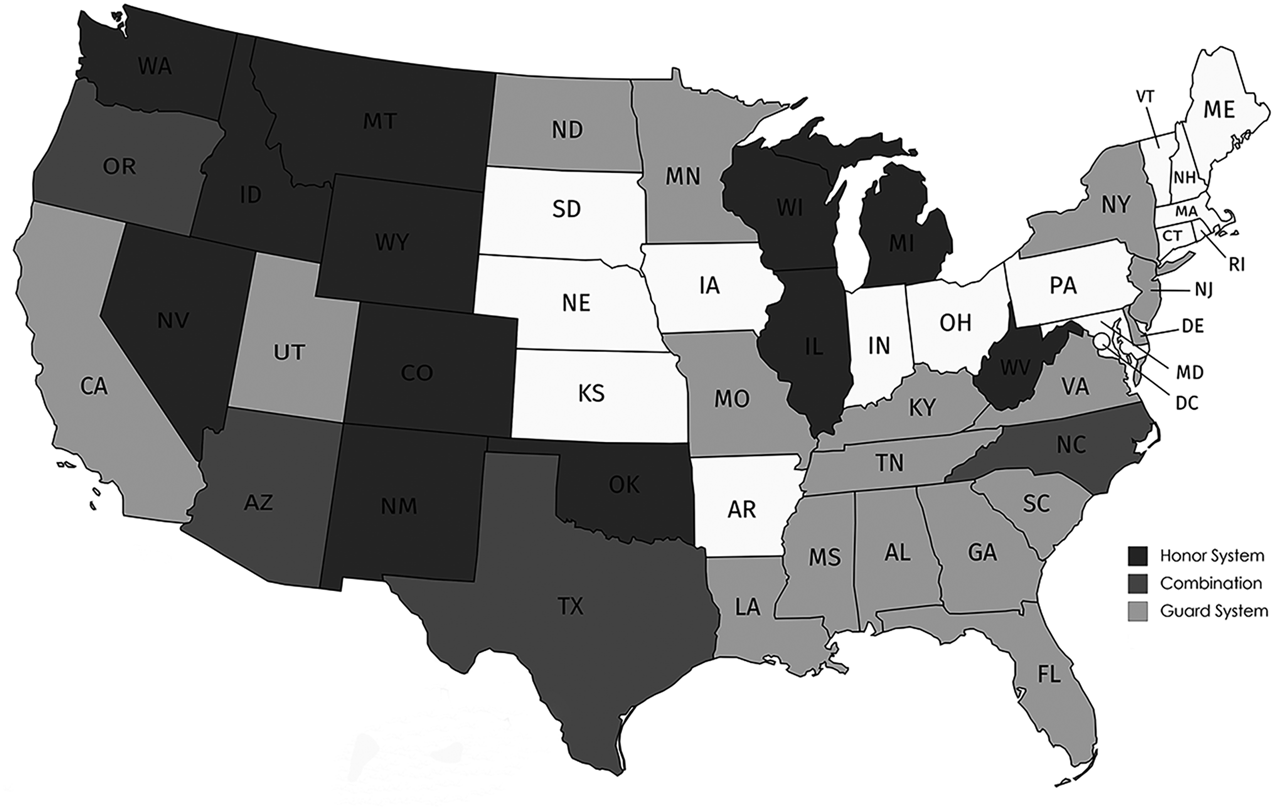
In 1914 and 1915, for instance, the Division of Road Economics of the Office of Public Roads and Rural Engineering and the U.S. Public Health Service carried out a national study of convict road labor.Footnote 28 All but four states used convict labor on roads in some form by 1913, so the authors noted the tremendous differences they encountered.Footnote 29 This study came in the context of the federal government accruing influence as an information broker. Responding to calls for more data on convict labor administration, the USDA and Office of Public Roads (OPR) sent out questionnaires to hundreds of state and local administrators asking about the form of convict labor, the effectiveness of the program, the role of the engineer, the sanitation and housing of the convicts, and a cost breakdown of the program. The OPR enlisted the Public Health Service to involve health and sanitation experts, explaining to the Surgeon General: “In order that the study may be exhaustive in character, and thereby useful in the highest degree, it is our desire to include in the scope of our investigations not only methods of management, construction, and maintenance, and the economic results of the convict labor, but also such intimately related subjects as sanitation, the health of the convicts, the facilities for the care of the sick and injured.”Footnote 30 These investigators visited camps around the country to conduct in-person reviews of the various programs. The final 1916 report, Bulletin 414, laid bare the details of convict labor programs, exposing conditions and recommending improvements. Of the six different forms of convict labor that existed in the United States, the USDA report found that nearly all convict road laborers toiled under the Public Works and Ways System, the category for inmate labor employed outside the prison on public infrastructure projects. The USDA's data showed seventeen states using the guard system, fourteen using the honor system, and four using a combination (fig. 3).
This figure shows the geographic variation of the honor and guard system in the U.S. in 1916 based on USDA survey data. Although the honor system dominated the West and the guard system dominated the South, the great variation in the southwest, Pacific coast, and North defies useful geographic paradigms. Data from: J.E. Pennybacker, H.S. Fairbanks, and W.F. Draper, “Convict Labor for Road Work,” United States Department of Agriculture Bulletin No. 414. (Washington: Government Printing Office, 1916). Map by author.

Bulletin 414 exhibits the nationwide shift to state-run convict labor road programs, and by the early 1920s, prisons employing convicts on public roads had supplanted convict leasing to private enterprise.Footnote 31 While this shift allowed states to control incarcerated peoples’ time and bodies, the state faced questions of whether it would adopt the honor system that purported to reform convicts and help prepare them to integrate back into society or the chain gang system that sets convicts apart from society. Regardless of the model chosen, this turn to state-run convict labor sought to achieve two primary goals: efficient building of good roads and minimal cost to taxpayers. The convict road labor ideology echoed broader penal reforms that recognized the purpose of the prison as rehabilitation, and reformers linked road work and rehabilitation by arguing that productive labor in a healthful environment reformed these men. Writing to the prison reformer and warden Thomas Mott Osborne in January 1914, the New York Commissioner of Highways articulated this linkage between roads and rehabilitation: “I believe vast good can be done, not only for the men themselves but for the State, by the utilization of the services of the inmates of our penal institutions in this type of wholesome, healthy outdoor work.”Footnote 32
The Colorado Honor System
In 1909, Thomas Tynan became Colorado State Penitentiary's Warden, and he dramatically expanded his predecessor's plans for convict road labor. Tynan developed an honor system program that he subsequently propagated across the country within reform and penal networks. He promised that this system reformed convicts by molding them into ideal citizens. The argument for the honor system encompassed both financial and progressive motivations: “The value of road building to the State has been proven, and its benefits to the convicts fully attested. Not only have splendid highways been shot through regions hitherto almost inaccessible, but many men, under skilled overseers, have been taught scientific road work.”Footnote 33 While the return to the state in labor's value must be recognized, the belief in reform cannot be overlooked.
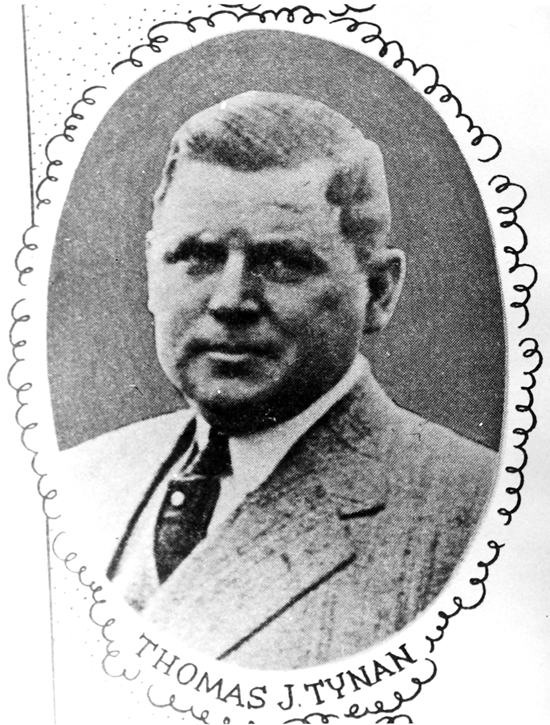
The honor system originated in the West, unlike the guard system that developed in the South. Colorado, Montana, New Mexico (as a territory), and Oregon all vie for the title of first honor program circa 1909–1912, yet Colorado takes credit for developing and propagating a model system on the national stage. Between 1909 and 1913, Tynan perfected the “honor system” into the “Colorado system,” and he employed lessons from his prior experience as a traveling mercantile salesman to astound his colleagues with the data he presented.Footnote 34 Promoting this model, Tynan declared: “This system has revolutionized penology and has demonstrated that through it the greatest good from financial, commercial and industrial vantage points can be gained for the community, as well as for the reformation and reclamation of the criminal element.”Footnote 35 The Colorado system, according to Tynan, succeeded on two levels: the system built much-needed roads inexpensively, and it helped convicts develop morally and physically. Tynan explained how he rewarded good convicts with the opportunity to work who then earned a “good time” credit that reduced their sentence, how these convicts worked hard and did not attempt escape, and how the public benefited from the good roads built in the state. In 1915, one supporter summarized Tynan's accomplishments: “If there is any man in Colorado who occupies a national position, and who has done splendid things to attract favorable attention to Colorado, it is Tynan, not only because of the original and remarkable social experiment he is working out, but through his economical building of such excellent roads”Footnote 36 (fig. 4).
Warden Thomas J. Tynan of the Colorado Department of Corrections. He transformed the “honor system” into the “Colorado system,” while nationally promoting the model. Warden Thomas J. Tynan 1909–1927. Denver Public Library, Western History Collection, X-17944.

Tynan boosted the system by welcoming visitors to Colorado and traveling the country to present. Academic social scientists, government field investigators, humanitarian reformers, and politicians and penal administrators visited the Colorado State Penitentiary to see firsthand the benefits of the system.Footnote 37 Additionally, with his “two thousand feet of motion picture film and two hundred colored slides, illustrating the work that is now being done by our prisoners,” Tynan traversed the country giving speeches on convict labor and roads.Footnote 38 This boosterism fostered alliances between reformers, good roads advocates, politicians, and penal administrators. In 1914, for example, Tynan published “Convict Labor on Road Work” in Good Roads Magazine that made the case for spreading the honor system based on its proven success in Colorado, Oregon, Michigan, and Ohio.Footnote 39 Other states adopted the Colorado template. In Michigan, for example, Governor Chase S. Osborn declared: “The Colorado honor system seems to be especially good.”Footnote 40 With support from a study by the Michigan State Board of Agriculture in 1915, Michigan adopted the system.Footnote 41 California, too, “adopted a duplicate of the Colorado law,” which would “put a great many men on the roads.” To ensure the success of the Colorado system in California, Tynan pushed George Asher, who had worked under Tynan as a road camp overseer, to get a job with the California State Highway Commission to oversee convict road camps and wrote Asher a recommendation.Footnote 42
The Colorado system even won converts from reform-minded politicians in states that employed the guard system. Governor Benjamin Hooper of Tennessee, for example, found the conditions of his state's chain gangs contrary to his progressive ideals: “Confining fifteen or twenty men in a cage on wheels, with but little ventilation and sanitation, as has been done in several counties is brutal. I also doubt whether the working of men in stripes and chains before the public gaze is wholesome either for the men or public.” After a national investigation of convict road labor, Hooper concluded: “In Colorado, state convicts are worked on the public highways on the honor system. This plan has been successful.” Hooper lobbied, albeit unsuccessfully, for his state's legislature to adopt the Colorado system.Footnote 43 New Jersey, too, bought into Tynan's ideals: although the state used a hybrid honor-guard system, the governor promoted it as an honor system based on the Colorado model. When describing the system, Governor James Fairman Fielder echoed Tynan in tying together reform, roads, and public health ideology. “I am opposed to confinement of prisoners,” Fielder argued, “in idleness within stone walls and behind bars, they must not brood over their unfortunate past and speculate as to the uncertainty of the future. I favor the use of prison labor in the construction and management of public highways, it gives the prisoner the necessary bodily labor in the open and good conduct men can be chosen as a reward to them and an incentive to their fellows and the value of honor demonstrated.”Footnote 44
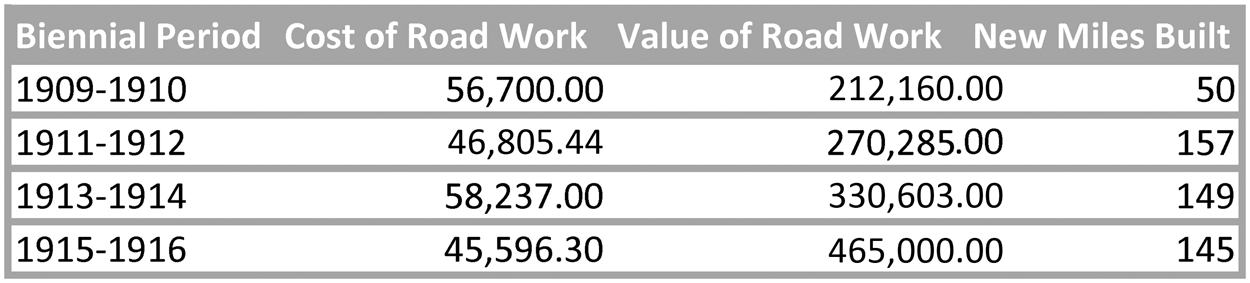
Tynan never lost sight of the costs of correctional institutions to taxpayers, so he complemented the rhetoric of reform with the data of cost effectiveness. Every other year, Tynan delivered a report to the governor of Colorado that calculated the return on investment of the road program compared to the appropriations for the penitentiary. These reports need to be read critically because they were embellished to serve two political purposes: increase the penitentiary's appropriation and build support for the honor system.Footnote 45 “This,” Tynan concluded after his calculations in the 1910 Biennial Report, “is the result in dollars and cents of the present system of handling prisoners. But there has been a greater saving the men themselves. We have not only had a smaller actual per cent in the loss from escapes, but the men are being paroled at the end of their terms, healthy and without the usual prison pallor, in a better condition to earn their living and with the habit of industry acquired”Footnote 46 (fig. 5). The data in figure 5 shows how Tynan argued that the honor system provided the state a cost-effective service by comparing the costs of the convict labor with the calculated value of the road work based on paying free laborers the prevailing wages for the same time. To stave off critiques that convict road labor diminished opportunities for free laborers, Tynan noted how counties could not otherwise have afforded the work and thus free laborers would not have had this opportunity.
This table, calculated using the data from the Warden's Biennial Reports, shows how the prison administration justified convict labor to the state based on economic benefit to taxpayers. Table by author.

Tynan paired finances and reform, showing how both factors motivated the new penology. Historians have asked important questions about convict labor and prison reform including the following: What is the goal of incarceration, and are prison reforms fundamentally capitalistic or do they exist to achieve the goal of rehabilitation?Footnote 47 Historians have complicated our carceral history by showing how the goals varied by locality and context. Although the goals of maintaining white supremacy, realizing financial profits, and training industrial workers are central to the new penology, the context of progressive reforms and Tynan's boosterism forces us to take seriously the rhetoric, ideals, and actions of prison reformers as a reflection of society's values.Footnote 48 Because Tynan's contemporaries invoked reform, it ought to be recognized as a legitimate motivator of policy changes and site of analysis for historians.
The Colorado honor system was not solely a means to keep a captive population of forced laborers, but also to mold productive citizens. Hard labor was the vehicle to achieve this. Both honor and guard system literature noted the positive influence of outdoor work on the convict's soul: “Hard manual labor, in close touch with nature and its fresh air and sunshine, is universally recognized as most beneficial.”Footnote 49 These ideals of outdoor physical activity pervaded Tynan's penal ideology beyond the convict road labor camps; he dramatically expanded the penitentiary's farm and ranch work opportunities, and in 1916 he successfully lobbied for funds to expand recreational facilities for convicts.Footnote 50 Tynan believed that men who worked effectively, did not agitate or run from camps, and learned construction skills could return to society. He affirmed this belief through good-time compensation in which prisoners’ sentences were reduced by ten days for every thirty worked. “The greatest good,” Tynan argued, “comes to the men themselves,” and he backed his belief that he could mold individuals for societal good by advocating for this reduced sentence incentive.Footnote 51 This system contributed to the definition of an ideal citizen as a disciplined industrial laborer. In a Bureau of Labor Statistics report on convict labor in 1923, the section on rehabilitation notes that the government “is coming more and more to recognize the value of education, both academic and industrial, as at least a coordinate factor in promoting good citizenship.”Footnote 52
Beyond invoking manhood and citizenship through labor and education, Tynan capitalized on the broader reform movement to usher change for the incarcerated and the guards. Tynan tapped into the rhetoric of efficiency and technocracy to convince others of the effectiveness of his model prison system. He lauded this honor system road construction model as “the most efficient system that Colorado has ever enjoyed.”Footnote 53 In addition to reforming labor for the incarcerated, Tynan regularly lobbied the state to pass an eight-hour workday law for the guards and staff.Footnote 54 Indeed, this system ideally would eliminate corrupt contracts with highway construction companies. Beyond using labor to reform convicts, Tynan argued that incarcerated people could be Americanized and achieve social uplift through education and religious instruction. Beginning in the early 1910s with the purchase of a motion-picture projector, Tynan exhibited films that “ha[d] been carefully selected along educational lines, with enough of the comic to render a great deal of enjoyment.”Footnote 55 The prison library and school also educated inmates and taught them to read and write, especially those born outside of the United States. “There is a large number of Mexicans, several Italians, three Japanese, and representatives of several other nationalities,” the prison chaplain wrote in 1916, “learning to read and write the English language.”Footnote 56 Beyond his responsibility for overseeing the school, the chaplain ensured that Protestant services were conducted every Sunday, and the local Catholic priest would conduct services one Sunday each month. The success of the education program led the chaplain to recall one account of a motivated prisoner who epitomized the successful honor convict: “One of the men at the [road] camp, who had attended school last year, requested to be brought back to the prison and forego his good time to again gain that advantage.”Footnote 57 These religious and educational opportunities strengthened the Americanization program by inculcating spiritual values in addition to industrial labor values.
The rhetoric of reform had to be balanced with the reality of economics and politics, especially as the reform drive of the 1910s faded after World War I. By the 1920s, free laborers in Colorado began agitating for road contracts. Beginning in 1920, Warden Tynan reported that the State Highway Commission “has been so liberal with money that some of the Board of Commissioners have preferred to let contracts to private individuals for the construction of these public highways … even though we have been doing work with prisoners for 21 percent of the cost of contractor's prices.”Footnote 58 The opposition, Tynan noted, spoke in terms of financial benefit and loss, foregoing any ideal of reform through incarceration. Throughout the 1920s, Colorado's Highway Commission and legislature began to favor private contractors, ultimately—and paired with the resignation of Tynan himself—dooming the honor camp system. Convict road labor had previously been supported by major labor unions because it did not compete with union labor. Samuel Gompers, president of the American Federation of Labor, had blessed the plan to employ convicts on roads: “It is my opinion that the least possible competition of prisoners as against free labor would ensure in the building of roads which would not only be beneficial to the prisoners, but would to some extent relieve the taxpayer.”Footnote 59 But, that view shifted by the 1920s, and unions across the country fought against convict road labor. In Montana, for example, “road projects were the most visible of the convict labor programs and almost immediately drew fire from labor unions.”Footnote 60 Tynan's power in the Colorado State Penitentiary and in the nation's prison movement faded as did the power of the ideals he sought to realize: reforming men by inculcating ideals of masculinity, employing outdoor productive labor, and providing religious and educational services.
Regional Practice, National Trends
Tynan propagated the honor system to a national audience by aligning it with two of the goals of the Progressive Era: economic efficiency and social reform. The honor system's effectiveness depended on reformers harnessing the power of the state to advance democracy. The Colorado system varied from other convict road labor programs across the country. Demographic realities, local politics, and relevant historical precedents informed the reception of penal reform. Despite how Colorado's experience was premised on its status as a Western state with strong labor and immigrant influences in its extractive economies, Tynan contended that productive labor had the power to transcend race and region. The honor system, he concluded, could Americanize the nation's diverse body politic.
Warden Tynan's progressive ideology shaped the way he sold the honor system: he portrayed the Colorado system in direct contrast to the South's penal program. Although many Southerners saw the chain gang as a progressive development in relation to the lease and contract systems, they differed from Tynan in that they subscribed to a Calvinist view of human depravity. This view bolstered an understanding of the government as the entity to discipline and control individuals, which informed the contours of the South's convict labor programs.Footnote 61 Douglas Blackmon's history of the South's convict labor program argues that the post-emancipation legal system kept Black people living in slave-like conditions, and this system that was upheld by government and private actors established a form of personal control of Black workers, families, bodies, and time. A race-based view of criminality reinforced mechanisms for social control and a societal hierarchy. Another historian of the Southern post-emancipation penal system argues that “the Southern region leaps out as one with a distinctive way of handling prisoners” because of its brutal treatment of leased convicts in which labor and legal policies enforced a racial hierarchy with discipline.Footnote 62 The Colorado system challenged the hereditarian view of criminality and religious view of depravity by contending that the environment, not natural endowments, led individuals to criminal behavior.Footnote 63 Coming from an environmentalist perspective, Tynan argued that the state ought to both prevent crime and rehabilitate individuals. Colorado honor system convicts worked on roads over three hundred miles from the penitentiary without any armed guards, and about half of the prison's total charges, including prisoners with life sentences, worked on roads under Tynan's tenure. In recommending his system, Tynan argued that “seventy-five per cent of all the prisoners in the different penitentiaries throughout the United States can be worked with perfect safety on the public highways under our system.”Footnote 64 This view reveals Tynan's challenge to the South's system by affirming his belief that any convict regardless of term of sentence, type of crime, or race and nativity could prove trustworthy and benefit from this system.
While the Southern systems (both chain gang and leasing) helped maintain a racial hierarchy, some Western programs challenged popular racial thought.Footnote 65 Tynan contrasted the honor system with the Southern penal system to contest the goal of incarceration: reform versus maintaining social order. This challenge reveals the role of race and the ideals of citizenship in different locales. Historians have noted that the Southern penal system grew out of Reconstruction as a means of maintaining racial order and subjugating African Americans.Footnote 66 These programs exploited African American labor and time to maintain white supremacy. In the post-Civil War South, “southern whites responded to African American claims on freedom,” historian Heather Ann Thompson contends, “by redefining crime and imprisoning unprecedented numbers of black men.”Footnote 67 After Georgia abolished its lease system, Alex Lichtenstein argues, they turned to the more progressive form of chain gangs, but this system “merely shifted from the private to the public sector” the effort of racial control and infrastructure development. In spite of how Georgians characterized their system as humanitarian, modern, efficient, and progressive, “The chain gang of mostly black convicts working the roads of the Deep South came to exemplify the brutality of southern race relations, the repressive aspect of southern labor relations, and the moral and economic backwardness of the region in general.”Footnote 68
Unlike in the South where African Americans made up most of the prison population, Mexicans and Mexican Americans occupied the prominent place in the Western penal system. Mexicans and Mexican Americans, alongside Euro-Americans, built roads primarily under the honor system. Tynan and his penological adherents, including wardens in Arizona and California, integrated work camps. This integration challenged racial stereotypes in the late 1910s and early 1920s. When a Bureau of Public Roads investigator visited an integrated camp, he remarked: “It is believed by the writer, that the prevailing opinion in this country regards the Mexican as highly untrustworthy, but it was practically the unanimous opinion of all prison and highway officials with whom we talked in the Western States that Mexican criminals are fully as worthy of trust as the average American criminal.”Footnote 69 When progressive penologists approached criminality as contingent, they advanced a view of the penitentiary intended to rehabilitate.
While Colorado's prison records obscure the races of individual convicts in the honor program, the record does contain the race and/or nativity of convicts on their intake papers. During the height of Tynan's honor labor program, the prison intake records reveal a disproportionately high number of African American convicts compared to the state's population at 8.6 percent of the penitentiary population. This data also shows that beginning in 1910, a plurality of foreign-born prisoners received were born in Mexico. During the decade following 1910, an average of nearly 30 percent of inmates received were foreign-born and nearly 40 percent of the foreign-born were born in Mexico.Footnote 70 The diversity of Colorado's inmates can also be seen in the fact that at least three—and as many as nineteen in the 1911–12 biennium—staff teachers taught English as a second language through the 1910s.Footnote 71 Similarly, despite Protestants outnumbering Catholics in Colorado's free population, the Colorado State Penitentiary held a disproportionate number of Catholics.
Tynan believed in this labor program to Americanize domestic- and foreign-born convicts, English speakers and non-native English speakers, and individuals who had committed violent and nonviolent crimes. Tynan's biennial reports account for habits of life, including religion, marital status, degree of education, and habits (tobacco, alcohol, morphine, and/or cocaine usage) as part of a holistic approach to individual reform.Footnote 72 Colorado's overwhelmingly white population with significant African American and Hispanic convict populations, coupled with the historical lack of institutionalized slavery, allowed Tynan to introduce reforms that empowered convicts and put them in public positions. In the decades following statehood, Colorado failed to pass extensive Jim Crow laws to assert a racial hierarchy that had not previously existed in the territory.
Honor system proponents in Colorado invoked the significant Hispanic population of the prisons to show that trust and honor were universal values that could be instilled through hard labor. In Southern penitentiaries, however, the population was overwhelmingly African American, and where integrated facilities existed, treatment by race was unequal. Take, for example, a Bureau of Public Roads investigative report into the housing conditions in one South Carolina camp: “The beds for the white prisoners consisted of wire springs and iron frames supported one foot above the ground … The tent for the negro convicts was provided with a flooring consisting of loose boards laid across small logs on the ground. The beds were made up by spreading a tarpaulin over the floor and laying the mattresses and blankets on it.”Footnote 73 Tynan, however, foresaw the power of integration and labor to transcend views of inherent criminality.
Honor system boosters emphasized the stark differences between their system and the guard system, and in doing so, they articulated a form of competitive regionalism. Although the South characterized the switch from lease to chain gang as progressive, Tynan and his fellow honor system boosters contrasted their program with that of the South, invoking the South's historical form of brutal punishment. Warden Tynan, for instance, distanced the Colorado system from the Southern system “where,” as he put it in 1913, “men are sold at auction to the highest bidder.”Footnote 74 This trope represents a greater struggle among the honor system states: they attempted to distance their program from the South. Unlike under the Southern “slave” system, men in Colorado “worked with an energy and a zeal that has never before been equaled … because they felt they were working for themselves.”Footnote 75 Morally distancing themselves, honor system supporters evoked conscious ideals of competitive regionalism as measured by “progress.” Edward Ayers and Peter Onuf write, “the development of regional consciousness was predicated on awareness of other regions in a competitive political context.”Footnote 76 Progressive ideals manifested differently based on local conditions and precedent, yet they operated in a nationwide competitive cultural context. Colorado's honor road labor experiment offers a case study in local conditions that took on national importance as Thomas Tynan became enmeshed in a national network of progressive penal reformers helping define state-run convict labor systems.
Conclusion
By the 1920s, Thomas Tynan's honor system experiment had essentially run its course: by 1926, no prison road work was being performed on public highways in the state.Footnote 77 Facing the ire of free laborers competing for jobs, the State Highway Commission stopped awarding contracts to the Colorado State Penitentiary.Footnote 78 Inmates continued to work on the prison's ranches, farms, and canning factory, as well as in construction of new prison facilities. With the demise of public convict labor on roads, the state moved its convict labor behind walls and away from the gaze of the public and its reformers. The popularity of automobiles spurred a new form of convict labor within the prison, and in 1925, the state built an automobile license and road signage factory. This factory was a state-run manufacturing plant that had contracts with the Colorado State Highway Department and within two years began to ship road markers out of state.Footnote 79 This in-prison manufacturing provided cheap forced labor without the benefits Tynan valued in road work: honor, physical labor, and outdoor time. Throughout the 1920s and early 1930s, many states and the federal government followed Colorado in banning convicts on public roads, privileging free and organized labor.
Wherever roads went, convicts toiled. Spreading across the country, politicians, road advocates, and penologists relied on Progressive Era reform ideology and the Thirteenth Amendment's criminal exemption clause. In Colorado, unique history and demographics, combined with a reform-minded warden and public clamor for good roads, led to an honor convict road labor model. Penologists, citizens, and reformers all believed that convicts owed a debt to society, and they believed convict road labor could simultaneously allow the convict to repay his debt while gaining dignity and skills. These reformers reflect a moment in which the model of the penitentiary was debated due to new ideals of human behavior and criminality.
These reformers questioned the premise that incarceration required removal from the public and armed oversight, offering an alternative in which administrators could select, trust, and rehabilitate convicts without danger to the public and inculcate industrial breadwinner manhood. “The knell has been sounded,” O.F. Lewis, a leading penologist and leader of many prison reform organizations, declared “of the old-style congregate prison, with its ten or fifteen acres of walled-in space, packed densely with prison buildings, and contributing in the maximum degree to the gloom of the traditional prison.” The new style of prison transformed not only treatment of those incarcerated, but also the environment in which convicts spent their time. “The doom of the old-time prison has sounded, for in the future, as in part at present, prison will be a place for the restoration of physical and mental health.”Footnote 80 For a time, these reformers offered a model for incarceration without walls and armed guards but with industrial training opportunities that purportedly helped individuals successfully return to society.